Tourist places of India

India is one of the famous tourist place in the world. Because India has all types of tourists destination in one place. Spiritual places, adventurous places, natural places, desert, wild safaris, historical places were in India. Especially, India is famous for its spices and our cuisine is world famous. The most visited state by foreign people in India is Maharashtra. Over 4.5million foreigners arrived in 2014. It has a large number of popular and many religious places were there. Maharashtra was the most attractive state in India. India’s prettiest state is Kerala. Kerala is also known as “God’s own country”. It has the most stunning beaches in Varkala, Kovalam, and many more.

Kashmir is known as”the heaven of India “. The natural beauty that exists in the place makes it one of the most beautiful places on earth and particularly in India. Madhya Pradesh has unique features than other states in cultural history and in rich natural resources. It is considered as the ” heart of India” because of its geographical location. India is also famous for its unique food culture from various states. Various types of dishes like biryani, samosas, dal makhani, tandoori meat, chat are the most preferable foods by foreigners. India is a country which has one of the richest and vivid histories and heritage. Our country is the home to ancient Indus Valley Civilization. The country is famous across hundreds of things.

Trapped in music.

You know music is the best therapy, without any medication and special treatments which will help us heal our wounds, obviously not the physical ones..! Those which kills you internally. When people fails to understand you then music becomes your vibing partner which changes the mood for quite sometime. Not just the sadistic or sentimental mood but, the joyous moments which can be expressed through music. When you feel too shy to express your emotions music can help you put it before them(helps in proposing ; ) Music taste differs from person to person, everyone have their own playlist which vibes accordingly. You cannot ask one to vibe through your sense of music…! Being it party bummer or a post breakup story…every mood can be sorted through it. Being a music lover one can have the great taste in music, but what they do is they listens to the song on loop which turns out to loose interest and catch on another song. Irrespective of language barriers the music serves great..you need not to understand the lyrics always..sometimes the rhythm, the tuning, the instruments will take you along with them to the different fantasy world beyond the nasty reality.

Speaking about Hindi songs and English songs. According to me the emotions which are put into the song with the true feelings can be felt through hindi songs. Not just through hindi but other than hindi which is spoken in India. Hindi songs are well known to express emotion in the better way! One can feel the emotion and the expression used behind the songs. The popularity of hindi songs in foreign countries are as high as english songs have here in India. Even the English songs are dope. The craze of english songs is increasing with the matter of two subjects either to look cool or they are genuinely interested in listening. There are many songs which vibe well with our personality, and gives you wonderful and meaningful song with the beautiful tunes and sound tracks into it.

Sometimes hindi songs bring trash songs, which are disastrous..which gives utter disappointment as a music lover. Even the english songs are made that way. Both the languages has their best and worst songs. We cannot judge through the language. Sometimes you just need to take the song as it is, as the art has no meaning and is deemed to see as it is shown not always but basically.

Hindi songs are coming up with the remix versions of old songs which are being destructive. Even some songs have the worst lyrics which makes no sense at all and looks hilarious while listening. And then they are poured with hate and nasty statements everywhere over the remixes, worst lyricism, copying of english songs and their tunes here in India. Other side are english songs who didn’t plagiarize the songs, tunes or music strategies of others as far as i know. They make fresh contents. Music is scared. It does not have any colour, language, religion or physique. So enjoy the beauty of the song and try to criticise less. It takes lots of struggle…not as of Ananya pandey but some real struggle as of Sidhant chaturvedi(just a meme material..don’t get offended).

Ps:- Some of my personal favourites songs both hindi and english put up randomly.

1- Dil chahta hai

2- Humraah

3- Chale aana

4- We don’t talk anymore

5- Shape of you

6- Closer

‘Drug’ Enemy Of A Person’s Life

Intoxication affects physical health badly. This puts the addict at risk of health problems such as cardiac arrest, stroke and abdominal pain. It also causes mental health issues such as depression, insomnia and bipolar disorder to name a few. Apart from affecting a person’s health, intoxication also affects human behavior. All types of drugs, including cocaine, marijuana, and weed, affect the brain’s instinct and cause mood swings, resulting in behavioral problems.

Intoxication falters with a person’s brain function. It interferes with the way a person behaves and the kind of choices they make.

A person who is under the influence of drugs can be highly aggressive. Drug addicts often get angry over trivial matters. This behavior is not seen only when they are experiencing a high. The frequent use of drugs somehow communicates aggression in their personality. It is difficult to get along with such people. You need to be very vigilant around them as they can throw up frequent bouts of anger and aggression.
Drug addiction bars a person’s ability to think rationally. Drug users are unable to make appropriate decisions. Their decision is impaired. They can no longer distinguish between what is right and what is wrong.

Drug users also display impulsive behavior. They act and react without much thought. This behavior is usually displayed when they are feeling high. However, they may also exhibit impulsive behavior when they return to their normal state. Drug addicts mostly take decisions that they later regret.
Drug addiction dominates the minds of addicts and they lose self control. They cannot control their actions even if they want to. They have a strong craving for drugs and are difficult to resist even if they want to. They also cannot control their reaction to things. Drugs dominate their decisions, actions, reactions and behavior.
A person who is a drug addict experiences a performance decline at work / school. He is unable to concentrate on his work and constantly thinks about taking drugs. When he does not get his supplies he feels lethargic and low on energy. All of this is a major hurdle to work with.
It has been noted that people under the influence of drugs often have hallucinations. They see things and hear noises that don’t really exist. Medications specifically known for hallucinations include salvia, mescalin, LSD, psilocybin mushrooms, and ketamine.
Trying to conceal your drug addiction from family and friends’ drug addicts often leads to latent diseases. They usually avoid spending time with their parents / children / spouse. They often socialize with other drug addicts and stop going out with other friends. This often makes them socially awkward.

Drug addiction can cause behavioral problems that can negatively affect a person’s personal as well as professional life. It is an addiction that the person should get rid of as soon as possible. A person may struggle to make positive changes in his behavior long after he has given up his intoxication.

Nope, I would rather die instead!

Six humans trapped by happenstance
In bleak and bitter cold.
Each one possessed a stick of wood
Or so the story’s told.

The poet begins by recounting that six people were trapped in a place by chance amidst very bitter cold weather. Each of those six people had a stick of wood according to everyone retelling the story.

Their dying fire in need of logs
The first man held his back
For of the faces round the fire
He noticed one was black.

They were trapped in the bitter cold and the fire that was keeping them warm was dying and it needed wood to keep burning.  However, the story takes a selfish turn when the first man kept back his log and didn’t add it to the dying fire for he had checked each of the remaining five strangers and noticed that one of them was black. This was subtle racism at play. He didn’t want a black man to be kept warm with his log of wood.

The next man looking ‘cross the way
Saw one not of his church
And couldn’t bring himself to give
The fire his stick of birch.

The next person saw a guy in the group who was not of his church and he thus couldn’t bring himself to add the log of wood to the fire. This shows religious intolerance on the part of the man.

The third one sat in tattered clothes.
He gave his coat a hitch.
Why should his log be put to use
To warm the idle rich?

The third man who was wearing tattered clothes pulled his coat closer to his body to keep himself warm. He being poor didn’t want to give his log of wood to the fire as he didn’t want the rich to be benefited from his action. The class indifference looms large.

The rich man just sat back and thought
Of the wealth he had in store
And how to keep what he had earned
From the lazy shiftless poor.

The rich man just sat and thought of the wealth he had amassed and how to keep his wealth from falling into the hands of the poor lazy poor. The animosity towards poor people is evident in his action.

The black man’s face bespoke revenge
As the fire passed from his sight.
For all he saw in his stick of wood
Was a chance to spite the white.

The black man wanted revenge and he finally realised the opportunity to get back at the white people for mistreating him.  He kept back his stick of wood to himself too.

The last man of this forlorn group
Did nought except for gain.
Giving only to those who gave
Was how he played the game.

The final man of this sad group never did anything for free and he contributed only when others did. Thus seeing nobody giving their stick of wood to feed the fire, he kept his stick of wood to himself too.

Their logs held tight in death’s still hands
Was proof of human sin.
They didn’t die from the cold without
They died from the cold within.

The final stanza paints a grim picture of all the six people frozen to death whilst still selfishly holding their log of wood. The poet says that nature’s cold and harsh weather didn’t kill them but the coldness of their heart and nature brought about their premature death.

We, The People

“We, The People”

It was in 2015, the 125th birth anniversary year of Baba Bharat Ratna Saheb Dr Bhimrao Ambedkar that the Government of India decided to celebrate 26th November, as ‘Constitution Day’ every year. The year 2019 marked the 70th year of the adoption of the Constitution. To reiterate our gratitude to the chief architect of our Constitution, and publicise the glorious and rich composite culture and diversity of our nation, the Government is celebrating the spirit of Constitution through a series of initiatives and activities till 26th November 2020. It is a tribute to the legacy of this great man and the greatness of the Constitution. The document written over 70 years ago is the most relevant at these times for the government, judiciary and citizens alike. Withstanding its core principles of justice, liberty and equality, reminding the citizens of their fundamental duties to uphold unity and integrity, and the Directive Principles for the government, our Constitution is the guiding light for the Indian society as a whole. The Constitution of India is a result of exhaustive research and deliberations of a body of experts. These makers of our Constitution, with their foresight and wisdom, prepared a futuristic and vibrant document that reflects our ideals and aspirations on the one hand and protects the future of all Indians on the other. They are credited to bring in the best features of all the hitherto existing related documents and making it the most lengthy and detailed constitutional document in the world.
The document in itself is well equipped for future amendment provisions. It was made sure that the Constitution should neither be too rigid nor too flexible. The hundred-plus amendments over the seven decades have strengthened it further and made the constitution even more relevant in the present times.
The Preamble to the Constitution declares India to be a sovereign, socialist, secular democratic republic and a welfare state committed to secure justice, liberty and equality for the people and for promoting fraternity, the dignity of the individual and unity and integrity of the nation. These Rights go hand-in-hand with the Fundamental Duties.
Every citizen must abide by the Constitution and respect its ideals and institutions; to cherish and follow the noble ideals of our freedom struggle; to renounce practices derogatory to the dignity of women, and to value and preserve the rich heritage of our culture. The Rule of Law has been a core civilisational value of Indian society since ages. India has been cherishing values of trust and faith towards justice that inspire our Constitution. About 1500 archaic laws have been repealed. And speed has been demonstrated not only in doing away with irrelevant laws but also in enacting new legislation aimed at strengthening the social fabric.
The architect of our Constitution, Dr B. R. Ambedkar had said: “Constitution is not a mere lawyer’s document, it is a vehicle of life, and its spirit is always a spirit of the age.” In legislating the rights for transgender, the law against the practice of Triple Talaq, expanding the rights of Persons with Disabilities, the government has worked with complete sensitivity and responsiveness to the needs of modern society.
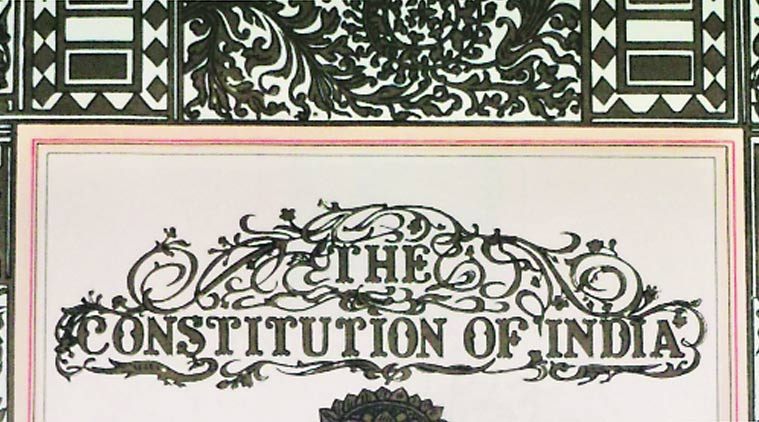
The ‘Constitution of India’ lies at the foundation of the world’s largest democracy. This is the supreme document in the country’s democratic framework and it continuously guides us in our endeavours.

Analysis and Research Work on Larkin’s poetry by Debalina Mukherjee


The compound qualities of “dignity” and “greatness” pervade Stevens’s thoughts throughout the novel “The Remains of the Day.” Early in the novel, Stevens discusses the qualities that make a butler “great,” claiming that “dignity” is the essential ingredient of greatness. He illustrates the concept with a number of examples, finally concluding that dignity “has to do crucially with a butler’s ability not to abandon the professional being he inhabits. “Professional principles are the driving force in James Stevens’s life. Over decades of service, he has immersed himself in his profession, dedicating his existence to the principles of dignity, duty, and loyalty. His ultimate goal is to be recognized as a “great” butler.
Dignity is foremost among the principles which Stevens links to greatness in a butler. It requires placing service to his master above all else and binding his own destiny to his master’s. Dignity requires restraint; to not “run about screaming” at the slightest hint of trouble. It demands he wear his professionalism “as a decent gentleman will wear his suit,” taking it off only when he wishes to do so and in privacy, when he is entirely alone. However, once Stevens achieves this level of dignity, it leaves no room for intimacy and separates him from his humanity. All ability to bestow or receive human warmth is blocked. In the presence of others, he must always deny and displace his real feelings.
Again, devotion to the principle of duty becomes the outward expression of Stevens’s struggle for dignity and greatness. He works hard to please his employer and takes pride in his subservience. When he stoically carries out his duties during the great conference of 1923 while his father is upstairs dying, Stevens experiences “a large sense of triumph” at the end of it all. In the face of everything, he had displayed dignity worthy of a great butler. Similarly, he feels a sense of triumph on the evening he loses Miss Kenton forever because he has submissively served his lordship well, “in a manner even my father might have been proud of.”
Loyalty is linked to duty and according to Stevens it is another aspect of greatness. Loyalty as an unquestioned principle does not permit Stevens to examine the actions of Lord Darlington as his lordship becomes deeply mired in international affairs. He stubbornly represses any feelings of curiosity or doubt, trusting in his lordship’s good judgment. In his desire for greatness, Stevens dedicates his loyalty to a gentleman whom he perceives to have fine and noble intentions. This blind loyalty, which Stevens believes he has “intelligently bestowed,” proves ruinous and casts doubt on the life path he has taken.
The art of bantering is something Stevens lacks, but it is a skill he wants to improve. Bantering is a theme which holds the novel together, as well as making the novel more comical, and throughout the story Stevens practices bantering. A good example of it is when he meets the locals at the pub the Coach and Horses in Taunton, Somerset (p. 138) This is where the lack of Stevens bantering-skills becomes obvious. The conversation(p. 138) ends up with Stevens expressing his feelings of disappointment as the reaction to his apparent witticism he recieved from the locals was not what he had hoped for .
The art of bantering can also be connected to the theme of butlers and dignity. This is because that if Stevens learns the art of bantering he may please his master Mr. Farraday, and it will make Stevens more professional, according to Stevens himself and his image of ‘the perfect butler’. During the journey Stevens undergoes personal change, and bantering has a great deal of importance for the processes. He considers the modification necessary for his employment as well as a significant pre-requisite for his profession.
Another detail of importance is the fact that the theme bantering opens up as well as ends the novel. In the beginnig of the nove Stevens and Mr Farraday are having a light conversation. As they speak of Miss Kenton, Mr Farraday involves witticism and Stevens reaction is total embarrassment. Stevens is not used to those kind of words from his employer, though he says: ‘The most embarrassing situation, one in which Lord Darlington would never have placed an employee’. At the end of the novel though, Stevens sees the bantering as a start of his future life. Stevens makes the conclusion of bantering as the solution of pleasing his master and becoming the ‘perfect’ butler.
Bantering provides an element of lightness and humor in the narrative, yet it is still one that ultimately demonstrates the degree to which Stevens has become an anachronism. Stevens repeatedly tells of various failed attempts at bantering, and muses over why Americans like his new employer, Mr. Farraday, like to speak in such a casual and seemingly meaningless manner. By the end of the novel, Stevens cedes that perhaps bantering can be a way to exhibit warmth, and he resolves to try again with renewed zeal. The fact that Stevens uses the word “bantering” instead of “joking around” or “sense of humor” in itself shows how old-fashioned and formal he is.

THE FUTURE OF EDUCATION IS HERE

Until recently, people at Lido Learning, a new educational startup company, would often be cut short by potential customers as soon as they heard “online tuitions.” Of the parents who did not hang up, only a quarter of the rest or one out of three would end up buying a subscription. By March, Lido Learning, whose educators gave math, science and English lessons on the internet to students from grade IV-IX in real time, had sold to students from grade IV-IX.

The organization increased its subscription revenue over the following three months.  Students are currently spending 90 minutes on an average on the network each day, which can be seen as a substantial increase as compared to max. an hour earlier. A  distribution team comprising of only 200 odd personnel  has made marketing much more efficient and smoother. Rather than illustrating the idea of online schooling to customers, what the organization wants to do now is show them how “we ‘re better than others,” said Sahil Sheth, CEO of Lido Education.

The company, Vedantu, the industry pioneer in K-12 live classes (kindergarten through grade XII), was hit by the influx of new students in early April, causing an unprecedented shortage of teaching assistants. The company’s teachers were now instructing 1,000 students instead of 300-400 students in each class. 1 million students attended live classes on Vedantu in May, up from 200,000 in usual times. Only a small fraction of these were paid users, but monthly revenues still jumped by more than three times from January, CEO Vamsi Krishna said. “What was happening in a year’s time in terms of growth happened in three months’ time,” he said.

The pandemic-driven growth of online education has been so broad that it’s tough to locate an educational company that hasn’t taken a parallel route. From industry giants to smaller companies, investors are quite optimistic this is the sector’s defining moment.

In India, education has always had a quasi-religious significance, as a degree is seen as the only means of prosperity. With schools and colleges shut down, disarray entrance exam schedules, inaccessible offline classes, parents and students are even more concerned about the future than usual, prompting them to try online tuitions like never before.

“Usually, when a new category is being created, companies have to spend hundreds of millions of dollars on advertising over 8-10 years to get customers to shift from offline to online. In the case of edtech, this is happening super-fast because of the lockdown and because all the schools have gone online,” Lido Learning’s Sheth said.

The online education industry continues to be split into two categories by founders and investors: K-12 and post K-12. Both divisions, which in effect have several different verticals, had evolved rapidly anyway. The growth has been massively exacerbated by the pandemic. By 2022, the K-12 industry would grow by six times to approximately $ 1.7 billion, while the post K-12 sector would rise by nearly four times to $1.8 billion, RedSeer Consultancy predicts.

On the other side, funds are lined up to obtain shares in start-ups in healthcare. Byju’s, Unacademy and Vedantu, three prominent startups in education, are all raising large amounts of capital at soaring valuations. Over a dozen smaller startups, including Lido Learning and WhiteHat Jr, are in talks to raise between $5-50 million to anywhere.

Source:https://www.livemint.com/education/news/the-hope-and-hype-driving-online-education-11593433643546.html

Ayurveda – A sustainable alternate medical practice

Coronavirus: Experts suggest Ayurveda helps boost immunity against ...

Ayurveda is a holistic system of medicine that is indigenous to and widely practiced in India. The word Ayurveda is a Sanskrit term meaning ‘science of life.’ Ayu means ‘life’ or ‘daily living’ and Veda is ‘knowing.’ Ayurveda is a medical system that deals with health in all its aspects; physical health, mental balance, spiritual well-being, social welfare, environmental considerations, dietary and lifestyle habits, daily living trends, and seasonal variations in lifestyle, as well as treating and managing specific diseases The origin of Ayurveda is lost in prehistoric antiquity, but its characteristic concepts appear to have matured between 2,500 and 500 B.C. in ancient India. The earliest references to drugs and diseases can be found in the Rigveda and Atharvaveda.

Ayurveda is all about Dharana and Dharma, both Sanskrit words denoting a sustainable complex of life and living: the first within the organism itself and the second within society and the world. Ayurveda is almost – in a positive sense – preoccupied with ‘sustaining life’: as a science it focuses on preserving life down to the cellular level of each living organism, and first and foremost of human beings. One of the reasons that sustaining and preserving human life is so important in Ayurveda, is a result from the fact that it is a spiritual science which sees this life – and our bodies as temples for our souls – as a way to evolve spiritually. This evolution is not for a personal gain, but for the greater common good: Ayurveda sees life as one, and not as a fragmented event.

Ayurveda gives clear guidelines for lifestyle and nutrition, which all fit within a framework of Dharma. Dharma naturally supports something that carries responsibility for the whole of society and humanity, and thus also regarding ethical and environmental matters. Lifestyle – according to Ayurveda – should be helping to preserve a healthy environment and support of nature, in all possible aspects. This cannot but lead to supporting responsible behavior in keeping our water, our nature, our forests, our cities, our air, and in short our whole life, as clean and pure as possible. It also implies a natural care for good and sustainable food sources, and agriculture which preserves not only life in the sense of clean and pure production, but also responsible and safe nutritional methods. Good examples include active support of organic and biodynamic farming, support for natural agricultural systems such as permaculture, as well as active resistance of technical and not safe-proof production methods such as with GMO foods. It also promote the wise and respectful use of animal products.

According to the sustainability goals of Ayurveda, organic and other forms of responsible farming should be used to grow the herbs Ayurveda uses for its remedies. Use of local herbs has been advised over procuring exotic and rare herbs. Commonly availabe spices such as cumin and turmeric have profound healing properties, and are powerful additions in the arsenal of medicinal substances.  Ayurveda is the makes use of small shrubs to big trees for various purposes and to that Ayurvedics follow certain guide lines for collection and cultivation. So in order to obtain herbal medicine Ayurvedics also engage forestation and cultivation. The use of medicinal plants is oriented to take advantage of their ability to harmonize the balance between the patient and the basic influences of life, such as diet, work, and family life. With more than 2700 plants at its disposal, it is clear that Ayurveda in quite close with nature and its powers. In this way both doctors and patients easily see their connections to nature.

The Hospital wastes of Ayurveda are almost biodegradable. The medicines are of Herbal or Mineral or a mixture of both which are easy to dispose in to the earth after their expiry or their use. The pharmaceutical waste of Ayurveda is also biodegradable and some of them make good manure for cultivation. The plastic and other artificial materials not used for treatment makes Ayurveda an Eco friendly system. In Ayurvedic system each and every part of the environment is given importance which makes the optimum utilization of natural resources from Daily usage to the Drug. For example, neem- plant is used for Twigs, tooth brushing and tongue cleaning; Leaves-for medicating the bathing water; Seed oil, for external application over scalp for healthy hair etc.

This approach to nature as the source of healing and to personal care, as a source of loving health care, with emphasis on the preventive side, is a very welcome feature of Ayurveda, which could permeate and facilitate our approaches to sustainability and to the rich relationships between people (society), things (economy) and nature (ecology). Environmental sustainability is highly related to conscious mental and bodily good practice, of which Ayurveda could be considered as a very useful model, not only in the countries where it is traditionally applied, but everywhere. Ayurveda not only teaches to live healthy, but also teaches to love nature and live with nature.

Redmi Note 9 vs Redmi Note 8: Is the Helio G85 really a performance upgrade?

The Redmi Note 8. (Source: Xiaomi)
Is newer better? The Redmi Note 9 was launched months ago debuting with MediaTek’s new Helio G85, but how does it compare to the tried and tested Snapdragon 665 on Xiaomi’s last-gen Redmi Note 8? Well, the results are nuanced.

A while ago, we compared the Redmi Note 8 Pro to the new Redmi Note 9 Pro in an attempt to find out which phone offered better performance across the board. This time out, it’s a fight between the cheaper models⁠—the Redmi Note 8 and the Redmi Note 9. Like with the previous comparison, it’s a MediaTek versus Qualcomm battle, only this time, the newer phone has the MediaTek chip.

Starting out with Geekbench, the Redmi Note 8 and its Snapdragon 665 records a single-core score of 309. The Redmi Note 9 flexes its mucles here, with a score of 357. That’s a powerful showing by the Redmi Note 9, translating into a 13% advantage. In the multi-core test, the Redmi Note 8 earns a score of about 1,312. The new Redmi Note 9 is also on top here, as it comes away with a 1,320 score. The difference is negligible.

Moving on to AnTuTu, the similarities in CPU performance continue. The Redmi Note 8 earns a CPU score of 71,021. The Redmi Note 9 is ahead here, too, with a score of 74,066. That translates into a 4% advantage for the Redmi Note 9 and its MediaTek Helio G85.

It’s in the GPU department that things get interesting, as the Redmi Note 8 manages a score of 32,316 in AnTuTu’s GPU test. The Redmi Note 9 wins handily with a score of 41,644⁠—a significant 29% advantage.

So, what do these numbers imply? Most notably, that the Redmi Note 8 and Redmi Note 9 will offer similar day-to-day performance. The two phones and their respective chipsets deliver similar numbers in the CPU tests, albeit with the Redmi Note 9 slightly edging the Redmi Note 8 by right about 10%. It’s in the gaming department that the newer phone really shines, however, as it appears to have a significant advantage.

Of course, it’d be facetious to ignore the fact that MediaTek has been caught cheating on benchmarks in the past. The company’s response wasn’t particularly encouraging either. In terms of efficiency, the two phones should also be similar. We don’t have perf/watts numbers, but the Helio G85 is built on TSMC’s 12nm node, while the Snapdragon 665 is built on Samsung’s 11 nm LPP node.

Does the Helio G85 on the Redmi Note 9 outperform the Redmi Note 8’s Snapdragon 665? Yes, it does. But it mostly comes down to the GPU, and CPU performance is similar enough that the overall differential isn’t a game-changer⁠—unless you’re a gamer.

Martin Christopher

MOBILE PHONE TOWERS ARE DANGEROUS?

PS: Telephone towers and nature.

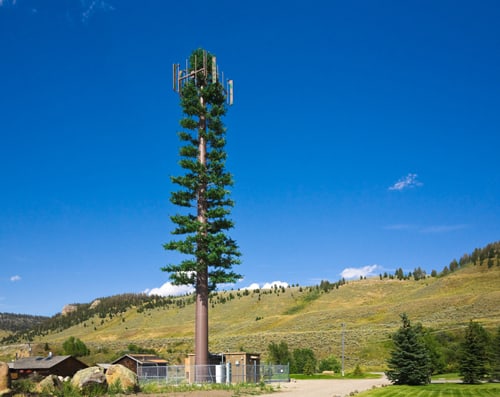
An estimated one billion people now have mobile connections in India. It is hard to imagine how many towers exist to support that level of connectivity. But if we wish to know a number, there are around 5 lakh towers and counting. Even though there are many towers, people are complaining about call drops they face now and then. Then there is an additional issue that contradicts this complaint. People primarily perceive cell phone towers as radiation-emitting machines, so they want a lesser number of towers in and around their residential area, but they want better connection quality. Isn’t it ironical that in many ways we demand more of these towers that we believe to be causing possible risks of cancer, radiation and other diseases? However, the government has established that there is no practical evidence that proves these. There is a general perception in the public that towers should not be near schools, hospitals and residential areas. They are associating towers with the increase in various types of health symptoms like depression, headache, nausea, loss of appetite, memory loss, blurred vision, skin and cardiovascular problems. Perhaps it is not the tower that is spreading radiation. Maybe it is the anxiety, the fear that is in us regarding possible radiation in towers that leads to diseases.

According to authorities, the proximity of the tower to a human settlement area is not an issue. Government has established stringent safety norms and only those who comply can raise a tower over a building. Radiation limits have been increased to 1/10th of global standards making India one of the safest countries in this regard. When towers are set up, there are very stringent processes to set them up. How high they must be, what location they have to be at, then there is a line of sight issues; these are some considerations to be looked at. A company must obtain certification by the authorized operator, and if things are not checked, they can easily be removed.

In my understanding, when an antenna’s power is increased, it develops better connectivity for users as the reach-ability of mobile waves increase, and the rise in power creates the discussed problems. For power to be less radiating, towers must be set low, and they should be closer together. It is to better the user connection, smaller towers that are located close to each other are required, and they do not radiate much power.

We must not forget the frequency waves emanating from mobile devices are also harmful to us. It is also said that continuous exposure to a mobile device is more dangerous than a tower. In overseas, the telecom companies are educating people with regards to usage of cell phones example the skull of a child is small, so he must not be exposed to the device like we are. In contrast, there is no visible public initiative been taken by our telecom companies in this regard. Some forums are created by TRAI (Telecom Regulatory Authority of India) and companies, but the popularity of these forums are awful.

Some scientist believes that heavy mobile users are under danger, and the habit of mostly listening to phone from one ear increases chances of brain tumour. We must learn that cell phone use is under our control, but when we talk about towers, we cannot do much about their establishment. Even though no credible evidence has come so far against its (Tower’s) harmful effects, they are a need of the population. There is no published or unpublished literature, so now in my experience that conclusively states whether these towers are harmful or not. There are two aided projects for the study of this subject- government-aided and company aided. Assigned persons under these projects have been and are carrying studies and surveying the psychological disorders of people who are heavy users to establish some literature on harmful effects.

People in authority say that nothing has been proven while people are worried that do they have to suffer from diseases and die before things are determined. We are complaining about everything. If we take towers away, then there will be more call drops, and then we will start complaining about that as well. Hopefully, these devices of the future stay human friendly because we need them. Lastly, one question still makes us think more- if there was a mobile tower in front of our house, would we get it removed?