ADVERTISING

We daily come across hundreds of advertising messages on her phones, laptops, newspapers, television etc which tell us about various products such as toothpaste, soft drinks and services such as insurance policies, hotels, banking services etc.

So let us understand today what is advertising? What are it’s objectives and what are its benefits?

Advertising is the most commonly used tool of promotion. It is an interpersonal form of communication which is paid for by the marketers to promote goods and services. The most common forms of advertising are newspapers, magazines, television and radio.

Features of advertising –

  • Paid Form: Advertising is a paid form of communication where sponsor or marketer has to bear the cost of communicating with prospects.
  • Impersonality : Advertising is a one way communication. There is no direct face to face contact between prospect and the advertiser.
  • Identified Sponsor : Advertising is undertaken by some identified individual or company, who makes all the advertising efforts and bear cost of it.

Merits of Advertising

1. Mass Reach – Advertising is a medium through which we can reach large number of people over a vast geographical area. For example -Information about mobile launched in Delhi reaches to every village, city and other countries through advertising.

2. Enhances Customer Satisfaction and Confidence – When a product is advertised in newspapers or on television then it creates confidence among prospective buyers as they become assured abut product quality, brand etc and hence feel more satisfied.

3. Expressiveness – Even simply products looks more attractive due to advertising because of the graphics and designs used in it which easily attracts the customers.

4. Economy – Advertising is a very economical mode of communication. Because of its wide reach, the overall cost of advertising gets spread over numerous communication links established due to which per unit coat becomes low.

Limitations of Advertising –

1. Less Forceful – As it is an impersonal form of communication it is less effective as unlike personal selling it has no compulsion on the prospects to pay attention to the message.

2. Lack of Freedom – The evaluation of the effectiveness of advertising message is very difficult as there is no immediate and accurate feedback mechanism of message that is delivered.

3. Inflexibility – Advertising is less flexible as it is not tailor made to the requirements of different customers groups. It is usually standardised form catering to the needs of different people.

4. Low Effectiveness – As the volume of advertising is getting more expanded it is becoming difficult to make advertising messages heard by the target prospects. This is affecting its effectiveness.

Objections To Advertising –

Different people have different views on advertising. Some say it is a social waste as it adds to cost, multiplies the needs of people and undermines social values. Others argue that it is very necessary as I increases the reach, brings the pay unit cost of production down and adds to growth of economy. Let’s examine these arguments and see the extent to which they are true.

1. Adds to Cost- The opponents argue that advertising unnecessarily adds to the cost of product, which is ultimately passed on to buyers in form of high prices. The proponents say however it costs lot of money but it helps to increase demand for the product as large number of potential buyers comes to know about availability of product, it’s features etc. This increased demand will lead to higher production, which brings with it economies of scale.

2. Undermines Social Values – Some say advertising helps buyers by informing them about any new products while some say it undermines social values and promotes materialism. It breeds discontent among people as they come to know about new products and feel dissatisfied with their present state of affairs. Some advertisements even show new lifestyles which don’t find social approval.

3. Confuses the buyers – Now a days so many products are advertised making similar claims that buyers get confused as to which one is true and one can rely in it. The supporters of advertisiments argue that we are all rational human beings who make our decisions for purchase of products on factors such as price, size, style etc. Thus buyers can clear confusion by analysing the information provided on advertisements and other sources before taking decision to buy a product.

4. Encourages Sale of Inferior Products – Advertising does not distinguish between superior and inferior products and persuade people to even buy inferior products. Mainly it depends upon customers. If the product suits their requirements whether inferior or superior they will buy the product. However no advertisement should make false claim about the quality of product. If it makes false claims it can be prosecuted for the same.

5. Bad taste advertisements – Another criticism against advertising is that some are in bad taste showing things which is generally not approved. For example – Women running after a man because of a particular perfume. This is impractical and strange .While some advertisements distorts the relationship like employer employee and are quite offensive.

In the above article we have seen various views both of opponents and proponents of advertising. There may be chances that advertising as a tool is misused which can be properly safeguard by the law or by developing a code of conduct by the advertisers for their self regulation. However most of the criticism are not true. In this changed economic environment of globalisation advertising is considered as an important tool of marketing. It helps a firm to easily communicate with its target market thus increasing sales and reducing performance unit cost of production. It is not a social waste, rather it adds value to the social cause by giving a boost to production and generating employment.

” If you are trying to persuade people to do something, or buy something, it seems to me you should use their language, the language in which they think” – David Ogilvy

“We find that advertising works the way the grass grows. You can never see it, but every week you have to move the lawn” Andy Travis

HENRI FAYOL: THE FATHER OF MANAGEMENT

Henri Fayol is the universalist and he father of general management and Fayol developed the Theory of Management and he has given his opinion that managerial excellence is technical ability and can be acquired and he developed theories and principles of management which are universally accepted and made him a universalist. He was a pioneer of the formal education in management, Fayol’s principles of management meet the requirements of modern management, as such, he is rightly accepted as the “Father of General Management”.

Fayol’s long practical experience in the field of management is reflected in his written work and He did not develop a logical theory of management, nor evolved a philosophy that answered all questions and satisfied all doubts about its practicability and based on his own experience in the field, Fayol set forth 14 Principles of management and they are:

1. Division of Work

The division of work is applied to all kinds of work- technical as well as management and division of work also means specialization and division of work promoted efficiency.

2. Authority and Responsibility

Authority and responsibility go together and Fayol stressed that right and power to give orders should be balanced by the responsibility for performing necessary functions and according to Fayol “The result of authority is responsibility. It is the natural result of authority and essentially another aspect of authority and whenever authority is used, responsibility is automatically born”.

3. Discipline

According to Fayol, “Discipline is in essence obedience, application, energy, behavior and outward marks of respect observed following the standing agreements between the firm and its employees”. Agreements must be obeyed in totality, without any dissent and discipline is essential for the smooth running of the business.

4. Unity of Command

A subordinate should take orders from only one boss and Fayol claimed that if the unity of command is violated “Authority is undermined, discipline is endangered, order disturbed and stability threatened” if there are two or more superiors for an employee then confusion and conflict of interest arise and everyone has to make sure that this doesn’t happen.

5. Unity of direction

 Fayol advocates, “One head and One plan” for a group of activities having the same objectives, and this will create dedication of purpose and loyalty. Unity of direction for achieving unity of action in the pursuit of common objectives by a group of persons.

6.Subordination of Individual Interests to general Interests

This is a home truth and, in a family, the interests of its members should be subordinated to the interests of the family as a whole.

7. Remuneration to employees

Remuneration should to fair and adequate and it should be supported by both types of incentives- Financial as well as non-financial.

8.Centralization and Decentralisation

There should be one central point in the organization that exercises control over all the parts but the degree of centralization of authority should vary according to the needs of the situation.

9. Scalar Chain

The Scalar chain is a chain of supervisors from the highest to the lowest rank and this principle suggest that there should be a clear line of authority from top to bottom linking all managers at all level.

10. Principle of order

This principle applies to the arrangement of material and people and there should be a place for everything and everything should be in a place.

11. Principle of Equity

Kindness and justice should be exercised by management in dealing with their subordinates and this will infuse loyalty and devotion among the employees.

12. Stability of Tenure of Personnel

An employee with all the requisite abilities needs some time to gain specialization and stability is linked with a long tenure of personnel in the organization and efficiency is promoted by a stable workforce.

13. Principle of Initiative

The initiative is the power of thinking out a plan and ensuring its successful implementation. Initiative on the part of its employees can become a great source of strength, but it must not be against the established practice.

14.Esprit-de-corps

 It means the spirit of loyalty and revolution which unites the members of a group or society and Fayol said that there is strength in unity and the two enemies of sprit-de-corps are:

i. Divide and rule

ii. Abuse of written communication

Principles of Management

A principle refers to a fundamental truth, it establishes a cause and effect relationship between two or more sets of events. Principles can predict the results of certain causes in the given circumstances. According to George R. Terry “ Principle is a fundamental statement of truth providing a guide to thought or action”.  Thus on a basic principle, we may say that this is to be done and this is not to be done. A managerial principle is a broad and general guideline for decision-making and behavior, for example, while deciding about the promotion of an employee on my consider seniority, whereas the other may consider the principles of merit. Principles of management are different from that of principles of pure sciences. Management principles are not as rigid as principles of pure sciences they deal with human behavior and thus are to be applied creatively given the demand of the situation.

Management principles have not been developed overnight but a complete procedure to develop these principles is undertaken and these principles are developed by the management experts, first, the problems were born, then efforts were made to solve them and these efforts resulted in a lot of research work and finally the solutions were found out and these solutions are in the form of principles of management. The principles of management are derived in the following ways:

1. Based on deep observation/ study of the problem

  Researchers observe the problem in different situations and from different angles. They have to study deeply the problem, its cause, magnitude, consequences, and solutions.

2. Based on experimental studies

A decision or statement which is observed is tested in different organizations with different employees and if they get a favorable result, then the statement is given the name of a principle and a principle is derived. After understanding the meaning of principles and principles of management, it is very necessary to learn the nature and the need for the principles of management.

Based on the above guidelines the principles of the management were developed. Several principles of management have been developed to assist managers in performing their functions well, a large number of principles have been contributed by the management authors belonging to the traditional school of management thought and today there is a very lengthy list of management principles and these principles can be used by changing them according to the requirement and situation. The principles of management are not like the principles of physical sciences. The Principles of management cannot be rigid or absolute as they are not rules or laws and “No Principle operates automatically”. According to Henry Fayol “Principles of management are flexible and nor absolute, but must be utilized in the light of changing and special conditions”. Management principles are universal and these can be applied in different organizations like government, business, military, etc.. Principles of management are the fundamental statements of the truth of universal validity and these principles help the managers in solving managerial problems systematically and scientifically and methodologically.

Track2Training and Development in the Workplace

Improved employee performance – the employee who receives the necessary training is more able to perform in their job. The training will give the employee a greater understanding of their responsibilities within their role, and in turn build their confidence. This confidence will enhance their overall performance and this can only benefit the company. Employees who are competent and on top of changing industry standards help your company hold a position as a leader and strong competitor within the industry.

Improved employee satisfaction and morale – the investment in training that a company makes shows employees that they are valued. The training creates a supportive workplace. Employees may gain access to training they wouldn’t have otherwise known about or sought out themselves. Employees who feel appreciated and challenged through training opportunities may feel more satisfaction toward their jobs.

Addressing weaknesses – Most employees will have some weaknesses in their workplace skills. A training program allows you to strengthen those skills that each employee needs to improve. A development program brings all employees to a higher level so they all have similar skills and knowledge. This helps reduce any weak links within the company who rely heavily on others to complete basic work tasks. Providing the necessary training creates an overall knowledgeable staff with employees who can take over for one another as needed, work on teams or work independently without constant help and supervision from others.

Consistency – A robust training and development program ensures that employees have a consistent experience and background knowledge. The consistency is particularly relevant for the company’s basic policies and procedures. All employees need to be aware of the expectations and procedures within the company. Increased efficiencies in processes results in financial gain for the company.

Increased productivity and adherence to quality standards – Productivity usually increases when a company implements training courses. Increased efficiency in processes will ensure project success which in turn will improve the company turnover and potential market share.

Increased innovation in new strategies and products – Ongoing training and upskilling of the workforce can encourage creativity. New ideas can be formed as a direct result of training and development.

Reduced employee turnover – staff are more likely to feel valued if they are invested in and therefore, less likely to change employers. Training and development is seen as an additional company benefit. Recruitment costs therefore go down due to staff retention.

Enhances company reputation and profile – Having a strong and successful training strategy helps to develop your employer brand and make your company a prime consideration for graduates and mid-career changes. Training also makes a company more attractive to potential new recruits who seek to improve their skills and the opportunities associated with those new skills.
Training can be of any kind relevant to the work or responsibilities of the individual, and can be delivered by any appropriate method.

For example, it could include:

  • On-the-job learning
  • Mentoring schemes
  • In-house training
  • Individual study

Join Track2Training for enhancing your skills, visit us at https://track2training.com

LEVELS OF MANAGEMENT

The level of management is an important classification needed for an organization to work smoothly and operationally to complete the needed work and all the employees working in an organization/institution can be divided into two categories:

                             1. Managerial Members

                             2. Non-Managerial Members

1. Managerial Members

 In this category, all such persons are included who manage somebody, they are called managers because they manage some of the other people. Thus they have all the subordinates. The Chief Executive officer or CEO ranks higher in this hierarchy and departmental managers are subordinate to the CEO. Supervisors work under the departmental managers and so they are subordinate to them. In the same manner, workers are subordinate to supervisors. Except for workers, all others are called managers irrespective of their designation. He is the manager only who builds managerial levels. “The best executive is the one who has sense enough to pick good men to do what he wants done, and self-restraint to keep from meddling with them while they do it.” 

Employees working in an organization build a chain of hierarchy and that is known as “ Chain of Authority”. This chain links all ranks in a vertical form. In this manner, this chain from top to bottom builds many managerial posts, which are termed as managerial levels. The term level of management refers to a line of demarcation between various management positions in an organization. As we move from top to bottom the degree of authorities goes on decreasing. In the top management, the members who occupy the seat are entrusted with the responsibility of planning and executing broad policy decisions. Manages of all major activities areas can be referred to as top management. The top management generally performs the following functions:

  1. Laying down guidelines for the various departmental heads.
  2. Organizing the business into various sections and departments for the accomplishment of predetermined goals.
  3. Setting out general objectives and policies.
  4. Making appointments to top positions such as appointments of managing director, secretary, departmental heads, etc.
  5. Reviewing the work of executives and ensuring their performance at different levels.
  6. Budgets prepared by different managers are given final shape i.e., approval is given to the budget.
  7. To understand the interlocking of departments in major policies.
  8. To ensure that there is coordination between the different parts of the organization.
  9. To build the company spirit where all are working to provide a product or service wanted by others.
This image has an empty alt attribute; its file name is manageriallevelsmiddlelinemanagers.topline.managers.firstlinemanagers.none28093managerialemployees..jpg

2. Non-Managerial Members

In this category, those employees are included who work directly on the job. The place at which such employees work is known as a platform area. Since they are at the lowest level of the chain in an organization, they do not have any subordinates, that is why they cannot be called as managers. For this very this they are not counted among the level of management and that is why they form the Non-Managerial level. They are the main base or the building block for the organization as the company depends upon their work to run the company smoothly and efficiently and greater the workforce the greater the productivity.

Indian social media app migrates to google cloud

Homegrown social media site, ShareChat, announced Monday the full transition of its technology to Google Cloud that supports more than 60 million active monthly users. The regional platform has made the shift to scale its market, boost productivity, cut costs and enhance the overall success of the app that houses active users in 15 Indian languages.

ShareChat following a host of Indian companies that, during the lockdown, changed or rebalanced their cloud provider mix to scale up to the massive increase in usage and reliance on such services. ShareChat’s IT network was divided between Amazon Web Services and Google Cloud according to the platform ‘s previous privacy policy claim.

Given the high-intensity data , high volume of content and traffic that the platform generates such as posts, likes, views and followers, ShareChat relies heavily on IT infrastructure. A significant proportion of their mobile-application’s subscribers come from cities that come in tier-2 and tier-3, with most of them heavily  depending on 2 G networks. Therefore the it is most critical for such businesses to be able to minimize the impact of mobile bandwidth and providing all users with a great experience, the management said.

Cloud service companies have seen consistent increase in revenue in the first six months of 2020 with multinational technology firms such as Amazon.com, Microsoft Corp, and Google Inc. announcing solid growth in the demand for cloud computing as growing percentages of institutions turned to online connectivity for continued research.

As per the numbers shared by the companies for January-March, Amazon Web Services ( AWS) continues to lead with a global market share of 32 percent followed by Microsoft Azure (17 percent) and Google and Alibaba at around 6 percent each. India is currently a high-priority destination for these companies, with a growing number of established firms, startups and small and medium-sized enterprises (SMBs) looking to embrace cloud and IT technologies in the face of the government’s drive for a stronger digital presence. The pandemic has only added to that urgency.

In April 2020, ShareChat decided to migrate to Google Cloud to successfully scale and achieve its customer service goals.

“We are happy to share that a couple of months down the line we have not only experienced 100% uptime but also we see the cost benefits of our choice much beyond our initial expectations. The scale at which ShareChat is, we wouldn’t have looked beyond the top three providers and Google was the perfect fit for us,” said Venkatesh Ramaswamy, vice president of engineering, ShareChat.

In the middle of the covid-19 crisis, the monumental eight-hour move from ShareChat ‘s predominant cloud network to Google Cloud forced the former to conduct a meticulous review for nearly three months, preparing and conducting a detailed operational and strategic approach to fulfill their market needs.

“60 million users, is among the largest that we have helped migrate in recent times. Because they had a very specific requirement about the timing and method of migration, our people across the professional services, India engineering and cloud teams, APAC and global teams were all on standby to handle any situation that arises,” said Karan Bajwa, managing director (MD), Google Cloud India.

Source:https://www.livemint.com/news/india/sharechat-migrates-60-million-users-to-google-cloud-11592197345377.html

MANAGEMENT

Management has become an important “Economic organ” of the present industrial society. Every person in the world from the family head to the prime minister of the country or from the worker to the Managing director of a Joint-stock company is busy in managing different types of affairs that he has to perform in discharging his/her entrusted duties. Management is the coordination of human and physical resources towards the attainment of objectives. By managing different activities, we can best utilize our available scarce resources. As the mind of a person controls his activities, similarly management controls the business organization, men, machines, and materials in getting the work accomplished.

This image has an empty alt attribute; its file name is resource-management-software.jpeg

TRADITIONAL AND MODERN CONCEPT OF MANAGEMENT

Management is related to the dynamic process of establishing objectives of the organization, harnessing and coordinating its human as well as other resources, and ultimately to the attainment of goals. It is a process of creating a creating conducive environment for humanitarian efforts, to reach the organization’s goals effectively and efficiently. According to  C.S George who describes management as “Management is a distinct process consisting of planning, organizing, actuating and controlling, performed to determine and accomplish the objectives by the use of people and resources” Traditional concept of management restricted management to getting things done.

According to the modern view, management covers a wide range of business-related activities. According to modern thinkers, “Management is a process of an activity a discipline and an effort to coordinate, control and direct individuals and group efforts towards attaining the cherished goal of the business”. Another aspect of management is presented by Harold Koontz and O’ Donnell, “Management is the art of getting things done through and with the help of a formally organized group”. To be more specific, to manage is to forecast and to plan, to organize, to command, and to control.

This image has an empty alt attribute; its file name is leadership-vs-management-difference-article.jpg

CONCEPT OF MANAGEMENT

Management is a set of functions directed at the efficient utilization of the resources in the pursuit of organizational goals. To be more specific, to manage is to forecast and to plan, to organize, to command, to coordinate, and to control. To foresee means examining the future and drawing up the plan of action. To organize means building up the dual structure, material, and human of the undertaking. To command means maintaining activity among the personal. To coordinate means binding together, unifying, and harnessing all activities and efforts. To control means seeing that everything occurs in conformity with the established rules and expressed command. By efficient utilization of resources using resources wisely and in a cost-efficient manner. By effectiveness, we mean making the right decisions and successfully implementing them. Efficiency and Effectiveness are interrelated, for instance, it is easier to be effective if one ignores efficiency. The effect of good management is nothing short of remarkable. Take an under-performing-even chaotic-organization and install a skilled manager and him/she soon can have the enterprise humming like a well-tuned machine. Studies have shown that 90 percent of the business fail generally due to poor management.

This image has an empty alt attribute; its file name is 12b3e-1u4ebes6muu2fy7im8igmug.jpeg

What Will Kill First?

Businesses have been suffering and reeling under the impact of the lockdown enforced due to the Corona Pandemic. Although the Indian Government has announced a 20 lakh crore stimulus package for the Indian economy, the small businesses and the daily wage earners continue to struggle. The majority are left questioning as to what will kill them first, the Coronavirus or hunger?

People are being laid off jobs continually. Businesses are closing down. The underprivileged without savings have been left relying on the substandard government rations and subsidies. The middle class continue to suffer a lot as they are neither eligible for the rations yet they continue to be laid off their jobs. People who are testing positive for corona and recovering are being treated as a social outcast and are being asked to stay away from the office. The economy is stuttering with a record low growth. People in the private sector are being to asked to do the usual job at a fraction of their earlier salary to help the company to recover the losses the company has suffered. Even though the markets are slowly opening up, the customers are staying away from the fear of contracting the deadly virus. The popular markets and malls are recording the lowest footfall they have ever seen.

People are dying and some are traumatised having to stay put in their house month after month. Depression and anxiety are becoming alarmingly common in society. People are only buying essential commodities and luxury items are being shunned. With low and uncertain streams of income, people have stuck to only buying daily essential commodities. The stock market has gone for a toss with record low Sensex and the share price of companies plummeting. The tour and travel industry have been suffocating and will continue to suffer for the years to come. It will take all the industries a lot of time to return back to normalcy.

The educational institutions have been rendered moot with all of them shut with no classes in their institutions possible. The exams are being cancelled and the students and their guardians are finding it extremely difficult to pay off the monthly fees. Some institutions like Don Bosco Liluah, St.John school based in Howrah, a city in West Bengal have made relaxation in the fees structure to assist the parents in this time of financial crisis.  However, the schools are suffering from a paucity of funds. The corona crisis has led to a financial emergency in almost all of the sectors in the country.

No one knows how long it will take for the world economy to recover even if a vaccine for Covid-19 is made available. The devastating impact of Corona has led to the loss of lives, daily livelihood and scarred the 21st-century human civilization for life. The daily wage earners and the migrant labourers are suffering a lot. Some have already lost their lives due to hunger and some have lost their lives in the process of having to travel back to their villages.

Everyone is hoping for the nightmare to end soon and for the world economy to get back on its feet and keep moving ahead. Some people keep stressing on the fact that they would rather die from the virus than die of hunger. Thus they continue to risk their lives of travelling for their jobs to earn their daily bread. The pitiable condition of India is only
deteriorating daily with India climbing to the 4th position in the list of Covid-19 positive cases. As Rahul Gandhi rightly pointed out, India is on its way to winning the “wrong race”.


WORK HARD! OR WORK SMART?

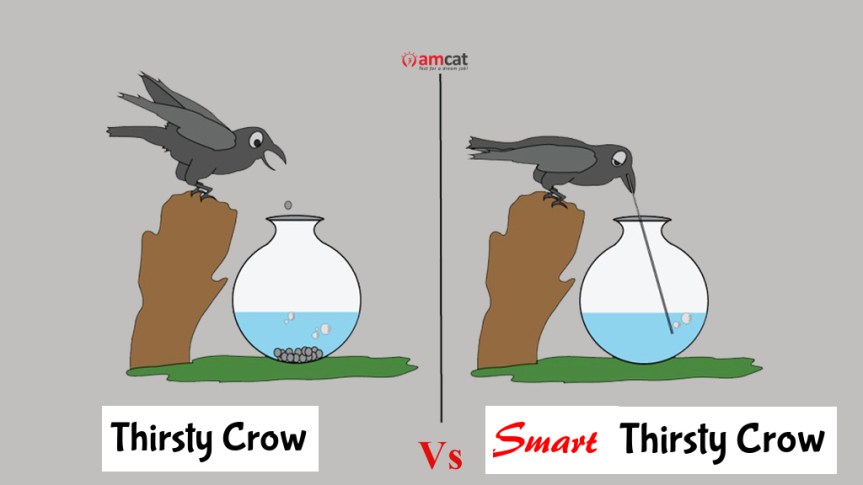
When someone tells you to WORK HARD! What does this hard work mean? Why we are always supposed and forced to work hard? Generally, everyone gives us this blessing or advice for us to work hard! To work by investing all of your efforts is your hard work, but, when you invest all of your brains is SMART WORK!


Your approach towards your work shows, either you are doing hard work or doing smart work. When you work hard, then also you achieve your target, but, the journey is quite stressful and time taking. On the other hand, if you work smartly, you find valid shortcuts, less time-consuming ways to proceed, good planning, and many more.


Hard work is something like bull work; the bull is used in fields as they are very strong and have a lot of physical power. Moreover, smart work is the logical effort, your efforts are not only for sake of completion of the work, but you also enjoy doing that, manage it well and accomplish it.


In colleges, there are students of two different categories, one who studies the whole syllabus putting their blood and sweat to get good marks or to be in the first position. On the other hand, some students come in the second category, they analyse, what is going to come? What is the actual pattern? They contradict this based on previous year question papers. Their inclination is towards smart work, not hard work!


Hard Work set one’s sight on the quantity, maybe it becomes boring after some time, but, it is done with all your heart and gives the best results. Smart Work set one’s sight on the quality, one find ways to reduce time but put all the efforts, this also gives the best results.


Always do laudable work! Hard work pays off. Same, Smart work pays off! If one believes, hard work is more profitable, than one should go with that, and if, one finds smart work more profitable, then go with the strategies of smart work. Work Hard or Work Smart, focus on the positive outcome.


To create the foundation of your achievements, you must do hard work, but, to do the same work in less amount of time, and more efficiently, you should work smartly.


Working hard requires a lot of time, efforts as it is a traditional work style, working smartly give you outputs earlier, and much more easily as you worked by analyzing and managing.


For achieving your goals, not only physical strength is required, but mental strength also plays a very important role in your journey. You have to rub your mind, make it sharper, understand your goal, and start a journey which involves creative work, time management, and many more.


Hard Work and Smart Work together will give you TRIUMPH! Many famous personalities: Albert Einstein, Isaac Newton, Aryabhata has given their lives for their researches; those researches show their hard work and are useful for us till date. They used their mind smartly and did hard work simultaneously.


BE A SMART HARD WORKER!

Social Media: The perfect tool for Digital Marketing

As indicated by one Facebook report, there has been a 70% expansion in time spent on the application in Italy. A March 2020 study of U.S. conducted on online networking users discovered that 43.1%  would scroll through Instagram more whenever staying home while 63.7% and 62.3% used YouTube and Facebook, in comparison to the other websites, more.

Presently is a prime chance to develop business accounts by putting out valuable content that doesn’t focus on a hard sell. The objective should rather be to assemble an internet following through: 

1) For example, how to extract productivity out of “work from home” and methods of reducing expenses on veggies.

2) Posting harious content of mockery, similar to funny clippings and memes. 

3) Collaborating with an influencer. 63% of shoppers trust influencers more than brands and COVID-19 has allowed influencers over a wide scope of ventures to make their administrations accessible at a sensible cost. 

With relatively little expense and exertion, an organization can understand results that keep on profiting them long after the situation improves.

GENERATING MARKETING SCHEMES OVER THE WEB

Online campaigns help to spread the word about their businesses and the new ways of functioning, with less amount of time and effort invested, than asking their regular set of customers to do so.

This can be achieved through Smart bidding like Google Ads, Content Marketing and Coupons designed from Easy Promo Or Woobox

CARRYING OUT DAY-TO-DAY OPERATIONS ONLINE

There are not many organisations can transition their day-to-day functioning using internet. However due to the availability of video conferencing facilities like Zoom and Google Meet, there can still be interactions between the customers and the buyers. 

Orders of groceries and other essentials can be taken online, education through schools and Institutions is being provided online and live tutorials and sessions are being conducted in which clients are asked to make the payments online. There are several other courses available on digital marketing too  which can be availed to enhance the speed of the working staff and enable them to make the most out of the present situation.

WHAT’S IN IT FOR YOUR BUSINESS? 

Numerous organizations are curtailing their showcasing endeavors due to COVID-19, however what they should do is multiply while making the most of the new open doors that are springing up. 

This accentuation on digital marketing isn’t something that they’ll need to back off on once the lockdown is over. Internet shopping won’t stop at any point in the near future, and most organizations will find that online associations are more helpful than in-person interactions. 

While it might be viewed right now as an alternate course of action, when the pandemic is over, everybody will probably understand that it’s much more than that.

On the off chance that a very much upgraded site, all around arranged advertising devices, and selection of virtual interchanges can get an organization through one of the most exceedingly terrible crises in present day times, for what reason can’t digital-based promoting make its all intents and purposes relentless?

(Part 3/3)
Hope you all had a good time reading!