
Noticing something slimy in the toilet bowl can be unsettling. Most people immediately grab their phone and search for pictures of mucus in stool to compare what they see with real examples. That’s actually a smart first step — visual identification helps you decide whether it’s time to call a doctor or simply adjust your diet.
How to Identify Mucus in Stool?
Mucus in stool often looks like a jelly-like, translucent or whitish substance coating the surface. Some describe it as “snot in the toilet.” It can appear as streaks, blobs, or even a thin film. The key difference from undigested food or fat — mucus stretches and has a slippery texture.
Color matters. Clear or white mucus is usually benign. Yellow or green may signal infection. Bloody or dark mucus demands immediate medical attention, as a 2017 study in World Journal of Gastroenterology linked persistent bloody mucus to inflammatory bowel disease in 23% of examined patients.
What Are the Most Common Causes?
Your intestines naturally produce mucus to protect the lining and help stool pass smoothly. Small amounts are completely normal — you just don’t usually notice them.
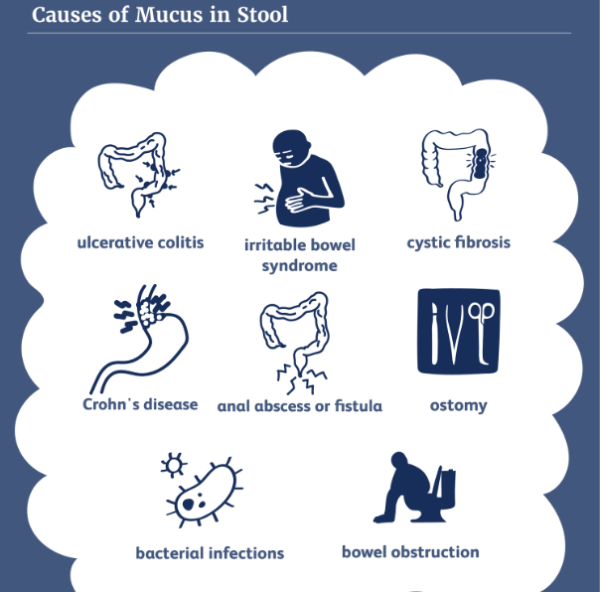
Excess mucus can result from:
- IBS — the most frequent culprit, affecting roughly 11% of the global population
- Bacterial infections like Salmonella or C. difficile
- Ulcerative colitis and Crohn’s disease
- Food intolerances, especially lactose or gluten
- Colorectal polyps — rarely, but worth ruling out
What Color Is Colitis Mucus?
Ulcerative colitis typically produces white or yellowish mucus, often mixed with blood. During flare-ups the volume increases noticeably. Crohn’s disease mucus tends to be thicker and may appear without visible blood, though internal bleeding can still occur.
How Much Mucus in Stool Is Normal?
There’s no exact measurement, but trace amounts — barely visible — are fine. If you consistently see a tablespoon-sized blob or more, or if mucus appears without stool at all, that’s a red flag worth investigating.
How to Stop Mucus in Stool Naturally?
Mild cases often respond to simple changes. Staying well-hydrated, eating 25–30g of fiber daily, and adding probiotics (a 2020 Nutrients meta-analysis confirmed their benefit for IBS-related mucus) can help. Eliminating trigger foods through a short elimination diet is also effective for many people.
When Should You See a Doctor?
Don’t wait if you notice blood in mucus, unexplained weight loss, fever, or persistent changes lasting more than two weeks. Your doctor may order a fecal calprotectin test, stool culture, or colonoscopy depending on symptoms.
FAQ
Pictures of mucus in stool baby — should parents worry?
Babies often pass mucus due to immature digestive systems or teething-related saliva swallowing. However, mucus with blood in an infant’s diaper could indicate a milk protein allergy or intussusception — see a pediatrician promptly.
How is mucus in stool treated?
Treatment targets the underlying cause. Antibiotics for infections, anti-inflammatory drugs for IBD, dietary changes for IBS. There’s no one-size-fits-all approach.
What are the risks of ignoring it?
Untreated inflammatory conditions can lead to strictures, fistulas, or increased colorectal cancer risk. A 2019 Lancet review showed early IBD intervention reduced complication rates by up to 50%.
Final Thoughts
A little mucus is just your gut doing its job. But when the amount, color, or frequency changes — your body is telling you something. Compare what you see with reliable visual references, track your symptoms for a week or two, and don’t hesitate to get professional evaluation if things don’t improve. Better to ask once than wonder for months.


