INTERNET OF THINGS

What is Internet of Things (IoT)?

The Internet of things (IoT) is a system of interrelated computing devices, mechanical and digital machines provided with unique identifiers (UIDs) and the ability to transfer data over a network without requiring human-to-human or human-to-computer interaction.

The definition of the Internet of things has evolved due to the convergence of multiple technologies, real-time analytics, machine learning, commodity sensors, and embedded systems. Traditional fields of embedded systems, wireless sensor networks, control systems, automation (including home and building automation), and others all contribute to enabling the Internet of things. In the consumer market, IoT technology is most synonymous with products pertaining to the concept of the “smart home”, covering devices and appliances (such as lighting fixtures, thermostats, home security systems and cameras, and other home appliances) that support one or more common ecosystems, and can be controlled via devices associated with that ecosystem, such as smartphones and smart speakers.

History of IoT

The idea of adding sensors and intelligence to basic objects was discussed throughout the 1980s and 1990s (and there are arguably some much earlier ancestors), but apart from some early projects – including an internet-connected vending machine – progress was slow simply because the technology wasn’t ready. Chips were too big and bulky and there was no way for objects to communicate effectively.

Processors that were cheap and power-frugal enough to be all but disposable were needed before it finally became cost-effective to connect up billions of devices. The adoption of RFID tags – low-power chips that can communicate wirelessly – solved some of this issue, along with the increasing availability of broadband internet and cellular and wireless networking. The adoption of IPv6 – which, among other things, should provide enough IP addresses for every device the world is ever likely to need – was also a necessary step for the IoT to scale.

Kevin Ashton coined the phrase ‘Internet of Things’ in 1999, although it took at least another decade for the technology to catch up with the vision.

Adding RFID tags to expensive pieces of equipment to help track their location was one of the first IoT applications. But since then, the cost of adding sensors and an internet connection to objects has continued to fall, and experts predict that this basic functionality could one day cost as little as 10 cents, making it possible to connect nearly everything to the internet.

The IoT was initially most interesting to business and manufacturing, where its application is sometimes known as machine-to-machine (M2M), but the emphasis is now on filling our homes and offices with smart devices, transforming it into something that’s relevant to almost everyone. Early suggestions for internet-connected devices included ‘blogjects’ (objects that blog and record data about themselves to the internet), ubiquitous computing (or ‘ubicomp’), invisible computing, and pervasive computing. However, it was Internet of Things and IoT that stuck.

Intelligence

Ambient intelligence and autonomous control are not part of the original concept of the Internet of things. Ambient intelligence and autonomous control do not necessarily require Internet structures, either. However, there is a shift in research (by companies such as Intel) to integrate the concepts of the IoT and autonomous control, with initial outcomes towards this direction considering objects as the driving force for autonomous IoT. A promising approach in this context is deep reinforcement learning where most of IoT systems provide a dynamic and interactive environment. Training an agent (i.e., IoT device) to behave smartly in such an environment cannot be addressed by conventional machine learning algorithms such as supervised learning. By reinforcement learning approach, a learning agent can sense the environment’s state (e.g., sensing home temperature), perform actions (e.g., turn HVAC on or off) and learn through the maximizing accumulated rewards it receives in long term.

IoT intelligence can be offered at three levels: IoT devices, Edge/Fog nodes, and Cloud computing. The need for intelligent control and decision at each level depends on the time sensitiveness of the IoT application. For example, an autonomous vehicle’s camera needs to make real-time obstacle detection to avoid an accident. This fast decision making would not be possible through transferring data from the vehicle to cloud instances and return the predictions back to the vehicle. Instead, all the operation should be performed locally in the vehicle. Integrating advanced machine learning algorithms including deep learning into IoT devices is an active research area to make smart objects closer to reality. Moreover, it is possible to get the most value out of IoT deployments through analyzing IoT data, extracting hidden information, and predicting control decisions. A wide variety of machine learning techniques have been used in IoT domain ranging from traditional methods such as regression, support vector machine, and random forest to advanced ones such as convolutional neural networks, LSTM, and variational autoencoder.

In the future, the Internet of Things may be a non-deterministic and open network in which auto-organized or intelligent entities (web services, SOA components) and virtual objects (avatars) will be interoperable and able to act independently (pursuing their own objectives or shared ones) depending on the context, circumstances or environments. Autonomous behavior through the collection and reasoning of context information as well as the object’s ability to detect changes in the environment (faults affecting sensors) and introduce suitable mitigation measures constitutes a major research trend, clearly needed to provide credibility to the IoT technology. Modern IoT products and solutions in the marketplace use a variety of different technologies to support such context-aware automation, but more sophisticated forms of intelligence are requested to permit sensor units and intelligent cyber-physical systems to be deployed in real environments

“Next-Gen Space Technology”.

Space technology and research related to it have often been very complex, compound and in short not easy.Different difficulties while in manufacturing, launching or even while reaching in space have been observed while through our journey to space. But all these efforts have helped us to learn from them and make more better and effective machines and technology capable of least threat to the mission and auto repairable. Since our first space flight in late 50’s and then landing of first manual flight in the second half of 60’s gave all the hard work and dedication and a true payoff. Since then we humans have been into this space business and have been putting more of our efforts in building these technologies both with ideas and thus with much better implementation. But along with these , development of other new techniques of manufacturing and building new things also came across all these years. Man’s Dream to build homes on the moon and a proper base on it along with the same on Mars is the next big mission of the space agencies, especially like NASA and Spacex. But for all these we do require to make a proper base at these places so that humans could start the initial processes and thus the dream becomes a reality

But the main issue which surely is interfering in the mission is “How to set up base on these places knowing the difficulties involved with it”. It’s difficult to carry building material from our surface to these for obvious reasons. Then what could be the best thing which were can do to overcome these troubling factors. When these companies were thoroughly entangled with this issue, a company name “MadeInSpace” came up with a brilliant idea which could be used to solve the problem of carrying loads and building materials to space and also much manual work. They came up with the idea of 3-d printing. 3-D printing is a technique used these days to manufacture things just by giving the command to the machine and with the help of plastic , metal, carbon fiber, and many  more. 

The idea of 3-d printing came in early 70’s and was brought into practice by 1980’s.in this printing, a design of any object is made using the software and then this printing machine creates the object by just printing out the shape by laying layer after layer so as to obtain the desired shape. There were numerous benefits of this printing observed which included:

  1. Economical
  2. Accuracy in shape
  3. Took less time for manufacturing. 
  4. Difficult designs could easily be manufactured. 
  5. Durable
  6. Better quality and finishing of object
  7. Reducing the risk of manufacturing as less manual power is used
  8. Reduction in wasting of material 
  9. And many more

This technology significantly brought a change in production of objects and their quality. So made in space brought up the idea of manufacturing of these space based and various tools through 3-d printing. The idea was revolutionary but still the agencies doubted on the efficiency and working of these machines in space. Sp for this, as in collaboration with MadeInSpace sent a 3-d machine in 2014 . The machine manufactured the object from plastic which was from earth and regolith which is the powder rock and the objects were commanded to be printed. And the mission was successful as strong objects were able to be printed. So this technique made it very easy to set up base or anything easy to be made in space and thus reducing the material required to be sent for manufacturing them. This truly is beneficial as the moon soils rock Regolith which is converted into powder form, thus we just need to send plastic material which wood be mixed with the regolith and would be passed on through a heated nozzle to get the desired shape. 

“With the help of this technique it would be feasible for us to send things in space which could manufacture and assemble themselves. These are truly revolutionary technologies which truly will open our approach to space, along with different possibilities, new adventures and certain different problems which might even be solved soon in the future with other better ideas and technologies”. 

“Earth,Mars and the Human Connection”

Man and technology have evolved as the industrial revolution started. Which not only served the base for new technology and methods in manufacturing but also motivated people to be a part of it by involving in it as scientists, workers and even the buyers by shifting to urban areas to work for their livelihood. This not only changed the world, but also introduced it to a new phase and living of lifestyle. Today we acknowledge different things in our surroundings, including technology in its manufacturing. This technology has helped humans since ages, and to bring up more comfort to his life. The thought every individual had initially was different difficulties, which made them believe it wasn’t possible, but with the essence of togetherness ,we all made it possible. But the biggest and the massive investment and technological advancement was brought up by the idea to go in the space. The dream which every one had in their childhood, became reality, and we humans have been able to do it. 

Advancement in this science and technology and various other gadgets is not limited, rather growing with new ideas pulling every day. But the next big idea which companies especially like Nasa and Spacex are working on, is to colonise Mars, by 2024. With Believes to make this planet a permanent home to live on. This idea was brought by CEO, founder of spacex Elon musk and has been working with Nasa and it’s team on this project. Humans have sent rovers and satellites to Mars to know various geographical and environmental aspects which have helped to know about it’s terrain and major gases in its atmosphere. 

But the main question which arises in the mind of each individual is “How would this be possible and What would these astronauts be doing at the red planet and would be their strategies”? So for this initially Spacex and Nasa would be sending it’s Big Falcon rockets on an unmanned missions which would be setting up the power sources ( the solar panel) and to mine so as to build their automated Propellent system and plant. The main work for this propellant plant would be to process the excess of carbon dioxide and water found in the surface of Mars to make oxygen and methane which would then be used as a propellant on the return back mission to earth. The sabatier process involved the usage of nickel catalyst to interact with hydrogen and carbon dioxide at high temperatures and pressure which results in the production of water and methane. This would be liquified and used fuel to come back .

But the most important thing to do is to set up their base on Mars which could be similar to the Internal Space station with expansions at each side. Talking about the essentials food and water, these astronauts would be carrying with them almost 2 years’ vault of food vacuumed with them like the one used in the International space Station. Nasa has also been working on the travel mode, which would be a rover-like thing being able to carry around 4-5 people on board even in the baddest and toughest areas if land.. 

“It would be a great adventure to see how humans are able to cross this barrier and prove the power of technologies of different aspects. This journey surely will be  filled with adventures, emotions, series of difficulties but with significant hope and the belief to overcome all of them and achieve success”.

ARTIFICIAL INTELLIGENCE

What is Artificial Intelligence (AI)?

Artificial intelligence (AI) refers to the simulation of human intelligence in machines that are programmed to think like humans and mimic their actions. The term may also be applied to any machine that exhibits traits associated with a human mind such as learning and problem-solving. The ideal characteristic of artificial intelligence is its ability to rationalize and take actions that have the best chance of achieving a specific goal.

Machine Learning – the core of AI

Machine learning is an application of artificial intelligence (AI) that provides systems the ability to automatically learn and improve from experience without being explicitly programmed. Machine learning focuses on the development of computer programs that can access data and use it learn for themselves.

The process of learning begins with observations or data, such as examples, direct experience, or instruction, in order to look for patterns in data and make better decisions in the future based on the examples that we provide. The primary aim is to allow the computers learn automatically without human intervention or assistance and adjust actions accordingly.

But, using the classic algorithms of machine learning, text is considered as a sequence of keywords; instead, an approach based on semantic analysis mimics the human ability to understand the meaning of a text.

Uses of AI:

  • Chatbots: Chatbots are artificial intelligence software that can simulate a conversation (or a chat) with a user in natural language through messaging applications, websites and mobile apps or through the telephone. A chatbot is often described as one of the most advanced and promising expressions of interaction between humans and machines. However, from a technological point of view, a chatbot only represents the natural evolution of a Question Answering system leveraging Natural Language Processing (NLP). Formulating responses to questions in natural language is one of the most typical Examples of Natural Language Processing applied in various enterprises’ end-use applications. Together, chatbots and AI can create a very powerful experience. Artificial Intelligence serves as the learning mechanism for many chatbots. Chatbot AI teaches the bots how to respond to your inquiries and helps the bot learn about your personal preferences. AI bots are responsible for engaging in meaningful conversation with an end-user using chatbot AI as a source of intellect.
  • Healthcare: Artificial intelligence in healthcare is the use of complex algorithms and software in another words artificial intelligence (AI) to emulate human cognition in the analysis, interpretation, and comprehension of complicated medical and healthcare data. Specifically, AI is the ability of computer algorithms to approximate conclusions without direct human input. What distinguishes AI technology from traditional technologies in health care is the ability to gain information, process it and give a well-defined output to the end-user. AI does this through machine learning algorithms and deep learning. The primary aim of health-related AI applications is to analyze relationships between prevention or treatment techniques and patient outcomes. AI programs have been developed and applied to practices such as diagnosis processes, treatment protocol development, drug development, personalized medicine, and patient monitoring and care. Large technology companies such as IBM and Google have also developed AI algorithms for healthcare. Additionally, hospitals are looking to AI software to support operational initiatives that increase cost saving, improve patient satisfaction, and satisfy their staffing and workforce needs. Companies are developing predictive analytics solutions that help healthcare managers improve business operations through increasing utilization, decreasing patient boarding, reducing length of stay and optimizing staffing levels.
  • Cyber Security: Cybercriminals will steal an estimated 33 billion records in 2023 according to the projections mentioned in the 2018 study from Juniper Research. That’s something very grave to watch for, and this sheds light on the pressing need to fortify cybersecurity across organizations. To tackle cybersecurity proactively and accurately, infusing intelligence across the entire security ecosystem of an organization is the need of the hour”. If the recent history is any indication, the targeted cyber-attacks that happened recently and even the past attacks suggest that no one is immune to these threats unless companies are fully prepared to respond. This calls for the implementation of fortified cyber security measures. Just the stand-alone cyber security solutions would not suffice. Artificial Intelligence has a huge potential to boost the cyber security profile of a company. AI could work in harmony with the cyber security implementations, to accelerate risk reduction exponentially. Many of the Cyber Security Solutions in the market uses AI models.  For example, LogRhythm uses machine learning to profile and detect threats, compromised accounts, privilege abuse and other anomalies. The Versive Security Engine (VSE) uses artificial intelligence to separate critical risks from routine network activity.  Cybereason’s AI-powered hunting technology determines whether an organization is under attack.

Latest Developments in AI

  •  Robotics is a prime area of development for the AI community so it’s no surprise that there are plenty of start-ups conducting research with the intention of taking the field further. Seattle company Olis Robotics caught the attention of GeekWire earlier this year with a solution designed to take robotics not just to the next level, but somewhere else entirely. According to CEO Don Pickering, “Olis Robotics’ innovation currently manifests in a plug-and-play controller loaded with our AI-driven software platform. The controller and our proprietary software can operate tethered robots on the ocean floor, satellite servicing robots using high-latency satellite links in space, or industrial robots cleaning up a dangerous chemical spill on land using 4G/5G networks. Our innovation will exponentially expand the role of robots to make an impact on human advancement and exploration.”
  • New AI software developed by researchers at the University of Oxford can recognize and track the faces of individual chimpanzees in their natural habitats. The software will allow researchers and wildlife conservationists to significantly cut back on time and resources spent analyzing video footage, according to a new paper. In Science Daily, Dan Schofield, researcher and DPhil student at Oxford University’s Primate Models Lab, School of Anthropology explained, “For species like chimpanzees, which have complex social lives and live for many years, getting snapshots of their behavior from short-term field research can only tell us so much. By harnessing the power of machine learning to unlock large video archives, it makes it feasible to measure behavior over the long term, for example observing how the social interactions of a group change over several generations.’ The computer vision model was trained using over 10 million images from Kyoto University’s Primate Research Institute (PRI) video archive of wild chimpanzees in Guinea, West Africa. The team at Oxford hopes the new software will help improve conservation efforts in areas where chimpanzees are endangered.

Quantum Computer

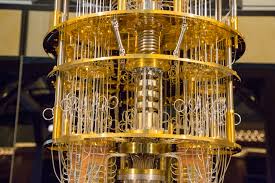
Efforts are being made by several companies that are leading their way to develop quantum computing.IBM has developed a 53-bit qubit quantum computer. In October 2019 google officially declared that it has achieved quantum supremacy. There are several companies like Accenture, Microsoft, Atos Quantum and more which are leading their way to develop a feasible quantum computer and make them commercially available.

What is a Quantum computer and how it works?

Quantum physics describes how the atom work and the behaviour of the fundamental particles like electron and photons. Quantum computers operate on Quantum mechanics by controlling the behaviour of fundamental particles. It works on Quantum mechanics phenomena, such as Superposition and uncertainty principle and entanglement to perform the task. A simple computer works on bits (0 or 1) a simple computer can have an only one state at a time but a Quantum computer works on quantum bits(qubit) which can be a superposition of state. It can work parallel on different state at one time.

Over the century physicists have discovered that quantum particles behave weirdly. This led to the branch of physics known as a Quantum mechanics.

Quantum computer with the aid of qubits works on stimulating the behaviour of quantum particles existing in nature which makes Quantum computer way faster than Supercomputers.

Just like a spinning coin when it is in a spinning state we can’t determine whether it turns to head or tail i.e it is in both the states simultaneously. Similarly, qubits are in the same state i.e they can measure a number of possibilities at a time which makes Quantum computer way faster.

Entanglement is the other phenomenon which qubits are capable of doing. It is a physical relationship between qubits they seem to be known what happens to another even they are physically separated. If you measure one qubit (i.e., collapse its superposition to a single state, it will have the same impact on the others in the system.

That seems to be crazy right. Even no one can really understand how it works. Quantum computers have the potential to work on designing new medicines, developing new catalyst however it requires million of qubits whereas even a most sophisticated computer in the world today is made using 72 qubits claimed by google. Since qubits require temperature nearer to absolute zero which is the major roadblock in developing of quantum computers.

What things Quantum computer are capable of doing ?

Quantum computers are really fast and efficient. This computer will far more powerful even than the supercomputers. Quantum computers have the potential to solve the problem of global significance.

Quantum computers have a significance in designing medicines to fight disease because it works using the same quantum properties as the molecule is trying to stimulate. Reason being developing drugs is a challenging problem today because it’s really difficult to calculate all the quantum properties of all the atoms in the molecules even for supercomputers. So it can lead to treatments like Coronavirus which is affecting billions of lives.

Quantum computer with huge computational power is ideal to solve problems such as cybersecurity, Financial modelling, creating encryption methods and development in AI.

Quantum computer has recently set the record for finding prime number factors.

Companies are leading their way to developing and it still requires a lot of work.

There are some obstacles that seem impossible to overcome and we can’t predict anything right now. Let us see what gone happen in future.

Please let me know your thoughts in the comment below and have a wonderful day.

Capturing the moments through the digital eye

We as a human, we’re born as a social creature who likes to connect, befriend them and share memories. Earlier, we usually jot them down into personal diary. However, people still prefer to write in a journal, but in the age of digitalisation, blogging is on the verge. The blog has several media like images, videos, and noteworthy to mention, “the camera” through which they capture it. Almost every digital device like the smartphone, digital cameras, DSLRs used for capturing moments and sharing them with friends, relatives and acquaintances. Even the cameras used for security purposes like home security, theft detection etc. We also heard about thermal imaging camera, IR camera used for scientific purposes, also by photographers for night scenes while filming a documentary or a show.

A girl with a camera.
A girl capturing an image through a camera

Why do we need a camera when we have eyes to see it? The camera can be a boon or bane, useful for creating history so that people can know more about us in the future generations, can work as a piece of prime evidence for and save lives. The camera can be bad for several reasons like privacy invasions, clicking pictures without permission. Many institutions, hospitals don’t allow to capture images/videos, and it’s a quite controversial and debatable topic. The camera supports us to visualise the scenes even after a decade or more, and when we look back at them, we can still feel the positive vibes.

An old camera on a desk.
A Black and Silver Film Camera

Every invention has an origin, the portable camera was first invented by Johann Zahn in 1685, although in 1814, Joseph Nicephore Niepce took eight hours to click the first photograph. Before many more camera like instruments has come into the picture, most of them were merely able to screen the image, even pinhole camera is one of the discoveries such made. Now, we can share it in digital format, make a fabulous endzone video, and apply filters where AI has played a significant role. We share the images and showcase our memories on social media, through emails and also physical printed with photo frame. Earlier, the old technologies used photographic plate or on the film, now due to advancement in science and technology, we use the electronic image sensor. You may have heard the term CMOS sensor, a semiconductor device used in imaging after the 1960s before that CCD image sensor as seen in earlier digital cameras.

We know a lot about its history, let’s see how the digital camera works. There are several patents, and you can see one of them below:

https://patents.google.com/patent/US4131919

Camera lens now is the key to imaging which helps to take images in milliseconds. In simple terms, most of the light around the lens is captured and focused on a single point resulting in a sharp image. Further, conversion into a digitised format takes place. There are numerous processes involved in a single shot of image captured. We can zoom in by moving the lens far from the camera sensor. The focal length is one of the key terms associated with the zooming. You may have seen DSLRs depicting the focal length of the lens, focal aperture. These are some of the few words in the world of photography.

A night shot for a camera lens.
A person holding a camera lens

Researchers from the Chalmers University of Technology in Sweden have devised a technology for ‘metasurfaces’, an artificial material with lots of interacting nanoparticles that can control light. They are working on this as the technology of the camera lens hasn’t changed for an extended period. You can read the publication mentioned below:

https://pubs.acs.org/doi/10.1021/acsphotonics.9b01809

Photography has a separate fanbase. Almost everyone loves capturing moments, maybe the happiest moment when you made your first steps or perhaps where you got grand success. The digital era keeps on growing and always kept us astonished.

Alternative technology for a climate change resilient India

If you can’t see the stars blinking in the night sky, it does not mean they have disappeared. They are there just behind the blanket of clouds, you need to discover them.

The world is stringing hard to contain the climate change. Every country,every international organization is trying their levels best to create awareness of the rising hues and cries regarding climate of the earth. International organizations like UN come up with programs like UNFF, 1.5° C reports, several conversations like Paris, Geneva, Kyoto, protocol etc. Among all these efforts at International level, individual countries to are trying at national levels in order to curb this menace of climate change.
India, not behind in any of the major International alliances on climate change has also pledged to keep pace with World order to combat the rising problems of the nation and the world at large. But, what is climate change and how is it affecting the world and particularly in India? The answer to the question lies in the virtues of mother earth of balancing the heat and other atmospheric phenomenon around the world. Climate change is a process of change (rise) of the average temperature of the world. This change is a result of combination of natural and anthropogenic processes.
The rise of temperatures at the Arctic Ocean is particularly alarming. As a result India won’t be untouched from this major change. Being a major developing country, India is also putting it’s efforts in this direction. The largest economies of the world, depend highly on polluting sources of energy like, crude oil, coal. The emissions from these sources are not only polluting but they remain stranded in the atmosphere for millions of years.
The country is a proud owner of multiple Physiography leading to different sources of energies other than the conventional ones mentioned above. The states of Western and southern India are rich resources of solar energy, one of the most crucial sources of Renewable energy. Giving a boost to solar energy in these states will assure India of energy security as it is a very cheap and reliable source of energy for India. The government has striked the iron hot by initiating programs like International Solar Alliance, PM -KUSUM, cheap loans to households for planting solar panels, etc.

The other major renewable source of energy is wind energy and hydro energy. The vast coastal areas of India provide it with yet another gift of non- polluting form of energy generation can be a milestone in harnessing global warming and Thus climate change. One of the most significant amount of pollution is seen due to vehicles. The mega cities of the country are ranked one of the worst in traffic on roads. Owing to large traffic, these vehicles majorly release sulphur contents, PM 2.5, PM -10, carbon monoxide, etc. in the environment. The government recently has set up rules in this context. It has come up with BS -VI norms of vehicles which in comparison to BS -IV norms release only sulphur content-10. Apart from this, there is also a reduction in PM 2.5 and PM 10 levels. Pertaining to increased pollution in Delhi especially during the times of Diwali celebrations, it is also caused due to-

  1. Burning of crops of paddy in the neighbouring states.
  2. Bursting of crackers in a huge amount

The government has setup air purifying towers in the city to overcome this problem. Along with this, the government has adopted for management of paddy residue by converting it into a fuel which will be less polluting. And for the problem of crackers CSIR has come up with green crackers instead of the crackers which were used earlier.

Other sources which are creating obstacles in containing climate change are the manufacturing units which use and also release gases like CFCs, HFCs etc. There is no denying to the fact that increased use of refrigerators and air conditioners has massively raised the levels of GHGs, like, CFCs, HFCs and HCFCs. Out of the obligations of International conventions India has successfully phased out use of CFCs is determined to phase out HFCs by 2020.

There is no doubt that achieving the goals of climate change resilient technologies is very challenging in a developing country like India, where full literacy is still a dream far to achieve. But the very truth of India having the potential to convert it’s massive demographic dividend and resource rich geography is also not deniable. Not only the government, but also the people at individual levels have to strive in achieving a climate on their very own earth which could be worth living and not only for them but the generations to come. The future is awaiting for the successful implementation of the policies of the government already made and the one’s to be made. New records of collaborations for example the one with Government of U. K to efficiently and resiliently ban the usage of ACs in every corporate and business etc. will enhance India’s capacity to conform with aims like 1.5° C and 2°C and combat climate change.

THE E-WAY

Like an endless loop of strings, E-learning opens up multiple avenues for the students to choose from the comfort of their homes. Through E-Learning students in India can do varied courses offered by Harvard University ranging from a programming course such as CS50’s Introduction to Game Development to a social sciences course such as American Government: Constitutional Foundations.
Universities and their invaluable courses continents away can be accessed easily without the unnecessary hassle of the physical presence in the classroom.

E-Learning has brought varied courses around the globe in the comfort of one’s own house. E-learning has been successful in bridging the quality of education that one can access in the developing nations. It is a more economical and appeasing form of education in world crises such as the raging Covid-19 pandemic. It has ensured the unhindered transfer of knowledge when one is unable to be physically present in classrooms.  Schools and colleges have taken up E-Learning to ensure social distancing is not an issue they have to deal with so they can solely focus on the quality of education imparted to the students.

Despite its many perks, E-Learning also has its fair share of drawbacks. It is often difficult to cater to and overlook the progress of the students online which would have been a far easier prospect in the in-classroom mode of education. There are different challenges such as poor internet connectivity in the remote places and often the underprivileged do not have access to proper electronic devices. Some struggle with technology and thus are often unable to have a seamless E-Learning experience.

Though it is not without its fair share of challenges, E-Learning has been successful in the re-moulding the education system for the better. It is undoubtedly the mode of education for the future. It has been successful in providing affordable education to people in the different corners of the Earth. It has enabled some institutes to do without the physical infrastructure and additional costs that come along with maintaining physical classrooms.

There are several applications like Zoom, TeamLink, Google Meet, Duo etc which are being used by teachers and institutes to impart lessons to the students. The dangers of video lessons can be seen in the multiple instances of hacking and misuse of these applications. Data are stolen by hackers of the users of the application who misuse the data to their own fruition. The applications should be secured from hackers for seamless usage and to ensure that the users can operate it without any fear of their account being hacked.

E-Learning may, however, lead to a loss of jobs for a majority of people who used to assist in the seamless functioning of the brick and mortar classrooms. Publishing houses may suffer as learning moves online resulting in a sharp decline of hard copy textbooks. Publishing houses too shall have to adapt and move their publications online. Small publishing houses may fade away with time. The implementation of the proper 5G network would ensure an immersive learning experience. Physical libraries are slowly becoming defunct with even libraries uploading their content online. Information is available to Scholars very easily. Research has become easier than before. Some people have found it hard to cope up with the technological advancements while some have become unemployed with technology replacing manual labour. However, technology has changed the world for the better and made our lives easier. We should embrace technology as an inseparable part of our lives.


IT’S ALL ABOUT TECHNOLOGY

Welcome everyone today my topic is about Technology. So, you can see that now technology became a daily part of our life. Technology has changed our lives in many ways, like development in economics, or helps us to gain knowledge on machines or anything. As technology has advantages but also have disadvantaged to like influencing the value of society or deplete natural resources. Like it said, everything in the world has advantages and disadvantages likewise technology comforts our life, but internally it’s also causing disadvantage to us.

So what is the exact definition for technology? So technology is nothing but the sum of techniques used for production or services for our development. In current times we people produce desired products to solve our problems or fulfill the need for ourselves. The main problem caused by technology is unemployment. As we know that in every company and factory or any workplace the machines have been set up to finish the work fast and easy, so by using machines the labor is having many problems so this leading to unemployment. Also, because of technology, there are social sites which are a very common problem in youngsters nowadays as it is increasing loneliness and depression among themselves. However, we should always remember that innovations had been made for our help not to make victims of technology. It always depends on how do we are going to use technology. The way we use the technology we get benefits in that way.

So how we should use the technology that will not harm us? There are some thoughts on how we can use technology without hurting ourselves or others.

First, the main point and most important point is we should use the right technology because this decision impact whether technology is a blessing or a curse to our productivity.

The second way is using automation tools as it can reduce more than half of our efforts that we are doing manually.

Third use the technology when you need it most because if we always use technology we will get dependent on it, and we will always seek help from technology.

Fourth point use your calendar app for organizing your time of using technology. For example, if I am social sites most of the time then, I should reduce the use of social sites as it has a slow and severe impact.

Hence, there are many details but these details are most valuable.

There are some interesting facts about technology.

1. Do you Google rent goats? Yes, you read correct Google rents the goat to eat the grass at their Mountain View Headquarters.

2. Can you tell me the age of the Internet? You must be thinking how can the internet have age as the Internet is not a human being, so how can it have aged! Let me tell you that the Internet does have age, It is now 11410years old.

3. Do you know there is a day for computer security? November 30 is known as “Computer Security Day.”

4. World’s first 1gb hard drive was introduced by IBM in 1980.

5. Email is older than the World Wide Web.

6. Techno phobia is known as the phobia for technology.

7. Homophobia is the fear of being without mobile.

8. Cyberphobia is the fear of computers.

9. The first computer mouse was invented by Doug Engelbart in 1963 and it was made from wood.

10. The first television broadcast took place in 1925.

So, these are some facts of technology.

In the last, I want to say that it depends on us do we need to depend on technology or not. On the one hand, if it can save a life it can also take life. Thank you for reading my article I hope to find it useful and enjoyed it.

Please let me know in the comment what you think about technology. Thank you and have a nice day.

Faculty Development Program (FDP) hosted by Track2Training from June 10 to June 20, 2020

The Faculty Development Program (FDP) hosted by Track2Training from June 10 to June 20, 2020, was an intensive online event aimed at enhancing educators’ skills and competencies in various aspects of teaching and learning. This program was meticulously designed to provide comprehensive training and practical insights into contemporary educational practices. Below is a detailed breakdown of the program’s structure, components, and outcomes:


Program Overview

Event: Faculty Development Program
Dates: June 10 – June 20, 2020
Mode: Online
Organizer: Track2Training
Objective: To empower faculty members with modern teaching methodologies, technological tools, and innovative strategies to enhance educational delivery and engage students effectively.


Core Components

Curriculum and Content

  • The FDP encompassed a wide array of topics pertinent to modern educational practices.
  • Sessions focused on pedagogical innovations, assessment techniques, curriculum design, and the integration of technology in teaching.

Schedule and Structure

  • Spanning over 10 days, the program included daily sessions featuring lectures, workshops, and interactive discussions.
  • Each day was divided into multiple segments, including keynotes by industry experts, hands-on training sessions, and Q&A forums.

Learning Management System (LMS)

  • The program was delivered through a sophisticated LMS, offering easy access to resources, recorded sessions, and interactive tools.
  • Participants could utilize a dashboard to track their progress, submit assignments, and engage with peers and instructors.

Expert Speakers and Facilitators

  • The FDP showcased a diverse panel of distinguished speakers and facilitators from both academia and industry.
  • These experts provided insights into various educational trends, technological advancements, and effective teaching practices.

Interactive and Practical Approach

  • The sessions emphasized active learning through case studies, group activities, and role-playing exercises.
  • Participants were encouraged to share their experiences and apply new strategies in simulated classroom settings.

Assessment and Feedback

  • Regular assessments were conducted to evaluate participants’ understanding and application of the content.
  • Feedback mechanisms were in place to offer constructive criticism and guide participants towards improvement.

Detailed Session Breakdown

Days 1-2: Introduction to Modern Pedagogy

  • Overview of current trends in education.
  • Focus on student-centered learning.
  • Techniques for fostering critical thinking and problem-solving skills.

Days 3-4: Technology Integration in Teaching

  • Utilization of digital tools for effective teaching.
  • Introduction to e-learning platforms and virtual classrooms.
  • Best practices for creating engaging multimedia content.

Days 5-6: Curriculum Development and Assessment

  • Principles of curriculum design and alignment with learning outcomes.
  • Innovative assessment techniques for evaluating student performance.
  • Designing effective rubrics and feedback mechanisms.

Days 7-8: Enhancing Student Engagement

  • Strategies for motivating and engaging students.
  • Incorporation of gamification and interactive elements in lessons.
  • Understanding diverse learning styles and adapting teaching methods accordingly.

Day 9: Research and Innovation in Education

  • Encouragement of research-based teaching practices.
  • Exploration of opportunities for educational research and publication.
  • Introduction to grant writing and research funding opportunities.

Day 10: Reflection and Future Directions

  • Reflecting on learning outcomes and personal growth.
  • Development of action plans for implementing new strategies.
  • Networking and collaboration opportunities with fellow educators.

Outcomes and Benefits

  • Enhanced Skill Set: Participants acquired practical skills in curriculum development, technology integration, and student engagement.
  • Professional Development: The program significantly contributed to participants’ professional growth, enhancing their teaching effectiveness and career opportunities.
  • Networking Opportunities: Attendees had the chance to connect with peers, experts, and industry leaders, fostering collaboration and knowledge exchange.
  • Certification: Participants received a certificate of completion, validating their participation and newly acquired competencies.

The Faculty Development Program conducted by Track2Training from June 10 to June 20, 2020, was a transformative initiative that provided educators with essential skills and knowledge to navigate the evolving educational landscape. Through a blend of theoretical insights and practical applications, the program addressed the challenges faced by modern educators and offered a platform for continuous learning and professional advancement.