Mcleodganj which is located in the kangra district of Himachal Pradesh which is covered by the Dhauldhar ranges of the Himalayas. If you are among the person who loves travelling then this place is suitable place for you.
Top 10 places to visit mcleodganj:-
Bhagsu waterfall: – This the fall which is among the green mountains, the water came across all the way from snowy mountains and falls here which became it the famous tourist attraction. People usually visit here to have the feel of cold water and for clicking awesome pictures. The view from here just takes you to another level.
Bhagsunag temple: – This temple is situated between the snowy mountains, the temple has a pool nearby where people usually bath and around them many food corners which has the speciality of (Aloo ka prantha). The nearby structures just give you a lavish feel whenever you visit the temple.
Tsuglagkhang complex: – This place is famous because of the residence of Dalai lama. That is why people visit here because of the popularity of this area. Many Buddhist and Janis visit here because of the worshipping.
Dharamkot: – It is a famous tourist place because it located above mcleodganj. From here you can get the perfect view of the Dhauldhar mountains. It is commonly known because people visit here because of the medication centre. Another advantage of this area is because here they worship and take out the practice of Buddhism.
Tibetian museum: – it is the famous attraction point for the people because of its location inside Tsuglagkhang complex because it has the famous eye appealing documentary, pottery and artwork of the tibetian people, it shows how these people use to live and how they worship their lord
Maharana pratap sagar lake : – It also known as the pong dam lake, it is artificial river but became a famous tourist spot for many people because of the clear water. You can do many activities like boating, fishing, and bird watching with beautiful landscape.
Minikiani pass: – if you are among the people who likes adventure then this is the place for you, you can do hiking and trekking with various other activities out there is danger in hiking while monsoon because of the route became slippery. Bagalmukhi temple:- If you like to explore the ancient places and monastery then this place is for you, because it consist a marvellous architecture, which has a famous past of its own. It is said that it is dedicated to the ten mahavidyas of the supreme goddess according to their shaktism.
Kareri lake: – if you want to admire natural beauty then this lake will not make you upset. It is a great place for clicking pictures because of the crystal clear water.
Kangra fort: -It is a perfect place for those who want to indulge into history and wars, this fort has faced many wars and invasion which makes it a attraction point for tourist
Tag: India
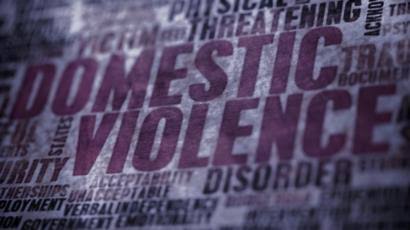
LOCKDOWN EFFECT: DOMESTIC VIOLENCE A RISE!!
Lockdown is helping every country to protect its citizens from spreading of Corona Virus. Due to which people are sitting idly at home for so long which is the main cause of an increase in domestic violence and child abuse. Most women and children are not feeling safe at their home because of domestic violence and child abuse. According to PTI report in the starting of Lockdown (March 20-31), they got over 92,000 SOS calls from the ‘CHILDREN HELPLINE NO. – 1098’ from across the country for the protection of their children from child abuse. National Commission for Women (NCW) got 315 complaints from across the country in April reported another source. The complaints in NCW faced a surge of more than 50% calls regarding domestic violence than in the normal days.
The reason behind the increase in domestic violence
Domestic violence is not an option if you are frustrated. When the abuser feels hopeless and not able to control the things in other aspects of life he chooses domestic violence as an option to reduce his stress. According to Psychologist Schita Sethi “, the victim is in front of their eyes. It becomes even more acceptable to them to commit such acts” also she expresses her views on child abuse by saying “the younger ones will find it tough to understand and express their situation, while older ones will experience guilt, shame and anger”
Not just there is an increase in the domestic violence but women are also facing marital rape as well on this Poonam Muttreja, executive director of NGO population foundation of India said “not just in India, any kind of health disaster leads to increased violence, across the world, against women and children. Therefore I’d like to request our government and women commission to look at global trend, and let’s get ready for the response now, as the vaccine is many months away” also after liquor shops opened there was an increase in the no. of domestic violence and also because of lockdown women and children are forced to live with the abuser they cannot leave the house or not able to seek the help.
Due to domestic violence and children abuse, victims are going through physical and emotional breakdown as well many victims are suffering from depression, anxiety as they are not left with any option their life is getting miserable day by day and as days are passing abuser are getting uncontrollable.
How can a victim come out of this?
One of the senior police officers shared that victim can inform about domestic violence and child abuse in the police station of their area. Not only this but they can also send SOS message to Crime Against Women or through email, handwritten copy, or they can fax them and victim’s message will be directly sent to women commission or Chief Minister’s office and from there it will go to DCP and get recorded in women’s cell. A similar process is being followed with the regards to child abuseabuse, but a different unit is assigned to look after these cases.
NCW has launched a WhatsApp no. “7217735372” for filling the report against domestic violence.
Vande Bharat Mission brought more than 5 Lakh Indians back to country
Through Vande Bharat Mission (VBM) 5,03,990 lakh Indians stranded in 137 countries have been brought back to the country , announced by Madras High Court on Tuesday.
Mostly stranded Indians returned from UAE (57,305) , followed by qatar, kuwait, Oman, Saudi Arabia and USA .
The largest number of stranded Indians (94,085) . Tamil Nadu is the fourth state that received a large number of its residents through the mission ,Additional Solicitor General of India R Sankaranarayanan said.
The Government’s Motive behind amending the PwDA
On Wednesday, 1st July,2020, the Department of Empowerment of Persons with Disabilities, under the Ministry of Social Justice and Empowerment, issued a notice proposing the Amendment of the Right of Persons with Disabilities (RPwD) Act, 2016.
It proposed the amendment to decriminalise “minor offences for improving business sentiment and unclogging court processes’’.
Activists have urged the government not to go ahead with the proposed amendments as it will nullify the small achievements gained over the years.
The Shillong Times reported that, “In a joint statement, around 125 disability rights organisations, civil society organisations and activists said they unequivocally register their strong protest against the proposal to “dilute and nullify” penal provisions contained in the Rights of Persons with Disabilities Act, 2016.”
The notification issued on Wednesday, stated that the decriminalisation of minor offences will alleviate the risk of imprisonment for actions which do not necessarily have “mala fide intent”.
It also claimed that the risk of jail is a deal breaker for both domestic and foreign investors – which is unwarranted in the post COVID 19 world, in order to revive the economy.
Even after protests, the Ministry is awaiting feedback within 10 days.
The Department’s director, and author of the notification, KVS Rao said, ”The government has undertaken the process of reviewing existing laws, many of which were devised by the British under the Indian Penal Code and had never been reviewed – such as IPC Section 377, which criminalises homosexuality. The Home Ministry has asked many ministries to take a relook at these laws. When this (RPwD) Act was formulated, many IPC Sections were added mechanically, without the consideration of reformulating to keep abreast with the times.
But the notification is simply a call for feedback and observations from the community. The intent is not to harm the community in any way or to pass an amendment which may be detrimental to the rights of disabled persons.”
Rao further stated that the department is considering reducing the penalty or punishments, for offences that are classified as severe but seem ‘minor’ to the ministry.
Disability activists on the other hand argue that the 2016 Act was the result of years of struggle, and came into force after India became a signatory to and ratified the UN Convention on Rights of Persons with Disabilities (UNCRPD) in 2007.
Dr. Satendra Singh, a Disability Rights Defender, argues that it has been just 3 years since the implementation of PwDA 2016 and rather than acting on the concluding observations of UN CRPD committee, the government is bringing out Penal Provisions Amendment in a pandemic with a 10 day deadline, that will basically dilute the act.
Akhil Paul, a member of the drafting committee for the PwDA, and the founder of Sense International (a charity working with the deaf and blind people of India), says that he can’t support this amendment as it is against the protection of rights of PwD.
He further states,” (Government) shouldn’t be diluting disability rights law for ‘business sentiment and unclogging court processes’
Disability activists have emphasised the fact that softening the penalties will only make public and work spaces unsafe for them.
Section 92 (a) of the Act provides a penalty of imprisonment when a person ‘intentionally insults or intimidates with intent to humiliate a person with disability in any place within public view’.
Vaishnavi Jayakumar from the Disability Rights Alliance, compared the above section with The Scheduled Castes and Tribes (Prevention of Atrocities) Act and further asked if the government would be able to do away with that.
Jayakumar further said that when a legislation concerns the right of an individual, the proposal should ideally be published in several regional languages widely and people should be given enough time to comment and provide feedback. The proposal has been published in English and ten days have been given for public feedback.
Murganantham Linguswamy, an advocate at the Madras High Court and a disability rights activist argued, “The government is trying to create a conducive business environment at the cost of an individual’s dignity – which is a fundamental right”.
He further stated that the National Crime Record Bureau has not published any statistics regarding offences against the disabled and hence changing legislation without reliable data would be arbitrary.
Since the lived experiences of PWDs cannot be understood by the able-bodied, consulting stakeholders is a critical step while framing inclusive policies. Even the method of notifying the amendment was problematic. In the name of stakeholder involvement, only 7 disability rights organizations.
But this wouldn’t be the first time this year that the government would prioritise economic stability over human rights. In May 2020, the Uttar Pradesh government suspended labor laws for three years, in an attempt to lure more investors in the State.
But now the State is not only denying the PWDs their right to a fair hearing but threatening years of progress that made PwDA 2016 possible.
They are not only patronizing ‘Divyang Politics’ but also are putting ‘Business Sentiments’ before the rights of marginalized communities.
This is not only immoral, but also goes against the Socialist nature of our constitution, which is embedded in our Preamble.
In the end, all we have to ask is this, Is India a Socialist State which will protect the rights of its citizens, or is it just a Capitalist Country masquerading as a Socialist one ?
Atmanirbhar Bharat
Atmanirbhar Bharat is not a new movement rather it is an advanced version of movements like the Fourth Five year Plan (1969-1974) and swadeshi movement.
- The fourth five-year plan was introduced by Indira Gandhi which stated two major objectives:
• Stable Growth of India
• Self Reliant India
- Swadeshi movement is also known as MAKE IN INDIA movement launched in the year 1905 by mahatma Gandhi which instructed to boycott British products and put into use the products made in India
And the current pandemic situation has made us again to get along with the previous plans to make our country self-sufficient. Hence our honorable prime minister Narendra Modi Ji has launched a mission well known as Atmanirbhar Bharat(self-reliant India). This mission has been interpreted by some people as a re-packaged version of the Make in India movement using new catchphrases such as ‘Vocal for Local’.
The purpose aim of this plan is two-fold. The primary measure such as liquidity infusion and immediate cash transfers for the poor which will work as a trauma shield for those in critical density.
The secondary measure to ensure long-term reforms in growth-critical sectors to make them globally competitive and attractive.
Together, this move may bring back the economic activity, affected by the Covid-19 pandemic, and generate new opportunities for better growth in sectors like coal and mining, power, micro, small and medium enterprises (MSMEs), agriculture, aviation, and defense,etc. Still, many challenges are required to be directed to attain the vision of this master plan.
On May 12, 2020, our Prime Minister, Mr. Narendra Modi, proclaimed a particular economic package of Rs 20 lakh crore (equivalent to 10% of India’s GDP) focusing to build the country self-sufficient against the tough race in the global supply chain and to help out in authorizing the migrants, poor and laborers who have been adversely affected by COVID pandemic. The Prime Minister’s address also emphasized that the MSME sector will act as the substructure for economic improvement. Intending to get back the MSME sector back on its feet, the Prime Minister proclaimed the MSME sector to be within the compass of the Atma-Nirbhar Bharat Abhiyan (ANBA).
This mission requires India to boycott Chinese merchandise (and promote AN Atmanirbhar India instead) and much tough within the short term for the country as India imports $75 billion prices of products once a year from China, to the extent that elements of Indian business.
Following the Galway depression skirmish on 15 June 2020
Indian troopers died, was serious concern creating the country self-directed, Chinese firms should not be given plans and projects like the Delhi-Meerut RRTS.
A large number of firms with weak balance sheets in aviation, hospitality, and tourism zones hit the toughest with little hopes of a revival. While the reforms have mainly addressed supply-side issues via a liquidity boost, it’s didn’t address industry-specific demand for a rescue package. Injecting money into businesses directly has not happened.
furthermore, in a short term, any move towards autonomy can bring back at the value of shoppers, United Nations agency can either pay additional for associates degree Indian different or deal with a less economical Indian alternative rather than enjoying the simplest product at the most cost-effective costs attainable.
Within weeks or months later, we expect a fixed strategy move towards achieving the objective of Atmanirbhar Bharat because, without them, it will redo the apathetic pathway of the Make In India initiative.
Let us hope the current plans and strategy under this mission do not hitch India’s economic progress like what happened just after the independence of India.
Police Brutality: Condemnation and Praise
“I say this with all sense of responsibility that there is not a single lawless group in the whole country whose record of crime is anywhere near the record of that organized unit, which is known as the Indian Police Force”
-Justice Anand Narain Mulla
After George Floyd’s tragic death, protests erupted in all of the world to speak against the power Cops held over minority groups in America.
How many minorities have to die in India, so that people realize the power cops hold over the voiceless and the powerless?
On June 19th, Bennicks was in his shop when he got to know that his father Jayaraj was picked up by the police. Bennicks then hurried to the Sathankulam police station, only to be arrested himself.
On June 23rd, the police told Bennicks’ family, that both the father and the son had succumbed to their injuries at the Kovilpatti Government Hospital.
According to the police, on June 19th, both the father and the son were arrested. They stated that,“Their Shop was open after the curfew time during the lockdown. Jayaraj, his son Bennicks and a few other friends were standing outside the shop. We told them to disperse. While others went away, Jayaraj and Bennicks sat on the ground and abused us verbally and rolled on the ground. In this, they suffered internal injuries.”
Though eyewitnesses said the latter is false as Bennicks went to the police station later that day ,
even if we try to believe the police’s statements of the event, it is highly unlikely that two people died due to injuries suffered by rolling on the ground.
Eyewitnesses alleged that after sub inspector Raghuganesh arrived at the station, the violence increased and more people joined in assaulting the duo. Eyewitnesses also alleged that the father and son had to change as many as six lungis each, as each one was drenched in blood.
Percy, Bennicks’ sister and Jayaraj’s daughter, alleged that the policemen “attacked them in the anus”.
She also revealed on June 24th, to media outlets, that the policemen had pushed her father by his neck to the floor and beaten him. When her brother, Bennicks questioned why, the police hit him too. Then they thrashed them both for almost two hours, after locking the door.
As the demands for justice grew louder ,and people outraged both in real life and on social media, the Thoothukudi police suspended two sub-inspectors in the Sathankulam station, though they did not admit to using force on either Jayaraj or Bennicks.
On June 24th, the Madurai bench of the High Court ordered the Superintendent of Police, Toothukudi, to inquire into the matter and submit a status report.
Although, I’d love to say that this is the first incident in India where someone was killed by the police, but this is a country where movies like Dabbang break box office records, where the cops are championed and glorified for practicing police brutality and “taking matters into their own hands”. We, as a country, have not only normalised Police Brutality, but we have also Romanticised it.
Only a few months ago, in February 2020, a man named Faizan was beaten up and was made to sing Vande Matram, along with four others, as the Delhi Police recorded the video. Two days later the man who was shot, during the Delhi Riots, took his last breath.
You’d think that people would outrage about an incident like this, but the Internet was quite torn. While some condemned this act by the police, others praised it under the guise of the allegations that these men could have been rioters taking part in the riots.
It seems that the people need to be reminded that the police is not supposed to kill guilty people either. They can’t be the judge, and the executioner themselves.
Which brings us to another case, that happened in Hyderabad. In November 2019, a veterinary doctor was gang raped and killed by four men. While the police was condemned for not taking action before the atrocity was committed (even though the matter was reported to them by the doctor’s sister), they were praised by the very same people for shooting the suspects dead. [6]
And while you may think that the guilty were brought to justice, the system which allows women to be raped and the police to sit quiet, never got fixed. Instead, they gave the very same police officers the power to shoot people dead to satisfy your blood thirst.
Between 2017 and 2020, over 5000 encounters have taken place in Uttar Pradesh alone. That is an average of 5 encounters per day.
During the lockdown alone, there were at least 14 cases where people were victims of police brutality.
Not four days after Jayaraj and Bennix died, another case of death due to police brutality was reported.
On June 27th, 19-year old heart patient, Sagar Chalavadi died of a heart attack after being lathi-charged outside an SSLC examination centre, in Karnataka.
What is saddening is the fact that most people fail to draw the parallels between most of the victims of police brutality being minorities and/or from economically weaker sections. Most Indian news outlets didn’t even mention that Jayaraj and Bennix were Christians.
According to a news report by Muslim Mirror, a total of 1,731 people died in custody in India in 2019 alone. Out of these most belonged to the poor and marginalized communities including Dalit, tribal, and muslims.
In India, people praise the police for acts of violence against those whom they think are in the wrong and condemn the acts of violence against those whom they think to be right.
That is why violence against an alleged rioter is justified but a simple shop owner isn’t.
What people fail to realize is that, every time they justify acts of violence by the police against an alleged rioter, or even a rapist, they give them the power to do the same to a student taking an examination, or a shop owner who kept his shop open after curfew.
Article 21 of the Constitution says that no person can be deprived of his or her life without the due process of law being followed.
Section 46 in the Code of Criminal Procedure, while explaining how an arrest may be executed, says: “If such a person forcibly resists the endeavour to arrest him, or attempts to evade the arrest, such police officer or other person may use all means necessary to effect the arrest.”
Sub-clause 3 of Section 46 further says: “Nothing in this section gives a right to cause the death of a person who is not accused of an offence punishable with death or with imprisonment for life.”
Even after these laws protecting the citizens of the country, the police have the power to get away with killings like these with nothing but a temporary suspension, or best-case scenario – a permanent one.
According to an article in The Hindu, “Custodial Deaths have been on the increase in recent years. They increased by 9% from 92 in 2016 to 100 in 2017, according to the National Crime Records Bureau. Since policemen responsible for custodial deaths, rarely get punished, they feel emboldened to continue using torture as the tool to get to the truth. In 2015, for instance the police registered cases against fellow police officers in only 33 of the 97 custodial deaths.”
Many questions preoccupy people’s minds, like why did the police take Bennicks and Jayaraj to a prison in Kovilpatti, when there is a jail located in Perurani, closer to Sathankulam?
Who is going to conduct the inquiry against the policemen?
While, these questions will likely be answered, soon, some questions remain unspoken; Why is it that the only time the voice of a person belonging to a certain minority, loud enough for Indians to hear, after they are dead?
Why are cops not given better training, that help them serve the people instead of holding power over them?
And above all, when will Indians start advocating for their own minorities, and prioritise them over minorities of other nations?
Renewable sources- Future of India
Imagine waking up one day, without any natural non-renewable resources left on this earth, how will it feel? Certainly, in a sense, we will be half dead.
Without any resources,without any foundation to support livelihood on this earth, survival of the humans is equal to null. The reason for which its important today to utilize the natural resources in such a manner that it becomes a boon for the generations to come. Provision of renewable resources by the nature itself, is a remedy for the same.
In case of a country, like, India, its a icing on the cake, surrounded by water on all the three sides, bestowed with a range of seasons in the country, the location on the world map is quite advantageous for India. The presence of oceanic water and large number of rivers in the country, is a significant edge in providing with hydroelectric power to the country;along with blowing winds, at the time of autumn and winter, that is a great opportunity to grasp the use of wind energy, in performing various tasks;also, the hot summer season, when sun is at the peak, is probably best suitable in providing the solar energy to the country, that directly comes from the nature, without harming any livelihood.

Renewable sources of energy –
- Water resources –
Water, one of the basic necessities of any humans’ life, is considered as a renewable material when carefully controlled usage and treatment is followed. If it not, it would become a non-renewable resource at the location. Hydroelectricity, is generated from the fast flowing water, which becomes a renewable source. In India, projects like, Bhakra Nagal, Damodar Valley corporation, the Kopili Hydel project, are currently in working, but a lot more can be produced using Tidal waves, which is currently in not a much use, as it could be.
- Solar Energy
India being a tropical country, has enormous possibilities of tapping solar energy. Photovoltaic technology converts sunlight directly into electricity. Today, the solar energy is used mostly by the people living in remote and rural areas, which contributes to environmental conservation and adequate supply of manure in agriculture. The largest solar power plant of India is located at Madhapur, near Bhuj, here solar energy is used to sterlise milk cans.
- Wind Power
India stands as a “wind super power“ in the world. In most of the states in the country, such as, Tamil Nadu, Andhra Pradesh, Karnataka, Gujarat, Kerala, Rajasthan, and even Lakshadweep, have the largest wind farm cluster which are well known for effective use of wind energy in the country.
The above stated are the major sources of renewable energy, apart from these, Biogas, and Geothermal energy, are major renewable sources that are helpful in generating mass energy, as well as electricity. Being a progressive country, India is heading towards the development of these resources that can help control the exploitation of other natural non-renewable resources.
Where are we lagging?
Despite having the largest availability of natural renewable sources of energy, India is producing less than what its capacity enables it to. Every state of the country has some or the other resource accumulated within it. But, due to –
- Lack of technology
- Lack of human approach to the resources
- Lack of precise knowledge of resources
- Lack of interest of financial institutions to fund projects
- Safe guard duty on imported solar panels
- Ambiguity over goods and services tax on solar equipment
- Low investor sentiment due to delay by discoms to clean energy developers
It has become difficult to use them, also, the presence of other natural resources that are in use, currently, people are not inclined towards using these renewable energy resources.
Plans and programs –
India’s installed capacity touched around 86GW by November end. This includes solar, wind, small hydro, biomass, waste to energy and others. Around 30GW renewable capacity including 18GW solar and 10GW wind energy is under implementation. Besides, around 40GW including 36GW solar and 3.4GW wind energy, is being tendered.
Schemes such as, PM-KUSUM, SPDA, PRAAPTI, have helped the private sectors to pull up their socks and work in the director that would make the country self reliant, or Atam nirbhar. The future certainly depends on these energy resources, bringing a new stream of development into the country.

Prevention from depletion of natural resources from the earth is a step ahead, by installing the new type of techniques for the development of human race.
Interesting Facts about Ladakh
The place brings peace to soul
The Bailey Bridge in Ladakh is the highest Bridge

A Bailey bridge between the Suru River and Dras River in Ladakh, India is the highest bridge in the world at an altitude of 5,602 metres above sea level. It was built in 1982 by the Indian
Only place in India where twin Humped camel only be found

The Bactrian camel (two-humped) is a large, even-toed ungulate native. The Bactrian camel has two humps on its back, in contrast to the single-humped dromedary camel, they are rare compared to single hump camels
Zero-Gravity Hill

Technically speaking the Magnetic Hill of Ladakh is an optical illusion. Although it looks like an uphill route, it is actually downhill. So, if you leave your vehicle in neutral and turn off the ignition, it would look like your car is being pulled uphill.
Their Own Calendar
While the rest of the world follows the Georgian calendar, the Ladakhis follow the Tibetan calendar. Under this calendar, each year has 12 months with 30 days in each. It looks pretty normal, right? Well, here is where it starts to get weird. Every third year will have 13 months. The months do not have any name and are just numbered. The days are named after the five visible planets, the sun, and the moon. That extra month in every third year is added at the time of any auspicious days and any inauspicious weeks or days are just cut off from the calendar.
Highest Desert In The World

Katpana desert is the highest desert in the world, located 2,226m above the mean sea level. This desert runs between Khaplu Valley and Nubra Valley (Ladakh)
It has the highest natural ice hockey ring:

The Karzoo Ice Hockey Rink in Ladakh is the world’s highest natural ice hockey rink. This rink comes to life during winters when the subzero temperatures are superior throughout the day. Winter sports are popular on a wide scale on this naturally built rink. Whereas the history of this sport in Ladakh dates back to the early 70s.
The most visited “high grassland lake”

Pangong Tso means “high grassland lake” in the Tibetan language. Commonly referred to as Pangong Lake, it is an endorheic lake in the Himalayas situated at the height of about 4,350 meters. During winter the lake freezes completely, despite being a salt lake.
Types Of Ships In service with The INDIAN NAVY
The Indian Navy grew rapidly After Independence . As of now It is undergoing modernization with new ships Being added to fleet.
Aircraft Carrier is a warship with a full length flight deck and facilities for carrying arming, deploying and recovering , acting as a seagoing airbase

Destroyer is a fast, heavily, armed, maneuverable yet long Endurance warship.It is designed to escort longer vessels in a fleet like an aircraft carrier, troop, supply ships forming part of a convoy or battle group.

Frigate is a warship smaller in size than a destroyer , It is armed with guided missiles and used as an escort for aircraft carrier.

Corvette is a fast, lightly armed warship which is smaller than a frigate and larger than a coastal patrol craft often armed for antisubmarine operation.

Mine countermeasure vessel: also known as Minesweeper is a small naval warship designed to counter the threat posed by naval mines

Landing ship is a naval vessel which is used to transport large number of vehicles, cargo and troops directly to the shore no part facilities .

Submarines: A submarine (or sub) is a watercraft capable of independent operation underwater. It differs from a submersible, which has more limited underwater capability.

Patrol Vessel for patrolling costal area, Auxilary ship, Research Vessel, Tranning ship.
CHINESE APPLICATIONS OUTLAWED
On 29th June 2020, the Indian government issued a ban on 59 Chinese Apps including, TikTok, WeChat, Xender, ShareIt, LIKEE, Helo, and CamScanner among others.
This ban has been implemented after a deadly clash between the militaries of both the countries that left twenty Indian soldiers dead. Satellite images also show that China has built new structures near the border region.
The Ministry Of Information And Technology, has stated that, “ it has received many complaints from various sources including several reports about misuse of some mobile apps… for stealing and surreptitiously transmitting users’ data in an unauthorized manner to servers which have locations outside India.. Since this ultimately impinges upon the sovereignty and integrity of India, is a matter of very deep and immediate concern which requires emergency measures”
But it raises concerns beyond stealing of Users’ data. If Users’ data being safe was the only concern then why didn’t they ban the Zoom App – An app founded by Chinese-American billionaire, Eric Yuan. Despite being accused of stealing data and various privacy concerns, numerous times, all the app has been given are mere warnings. An Article on News18, says that since Zoom is an American company, located in California, it wasn’t banned.
But doesn’t it go against the statements given by the Ministry Of Information and Technology, which basically said, that they banned the apps because users’ data was being ‘misused’ ?
It proves that the ‘ban’ was supposed to be a “fitting” reply to China, as border tensions escalated, and wasn’t just a security concern.
Which brings us to two questions :
- Was India in a position to Ban Chinese Apps?
Most of the apps banned were highly popular in India. Topping the list was TikTok with over 100 million users just in India.
While many “TikTok stars” used the app to earn a living, there were several others who just liked having access to make content.
What made TikTok connect to its users was the fact that how easy it was to handle and to make content, which is why people who couldn’t create content on other platforms like YouTube because of the complications and the investments, could easily create content here.
TikTok really seemed to connect with the Indian Youth because many still are accessing it via VPNs.
While companies like Panda VPN are even advertising the fact that you can access all the banned apps via using them.
Many teens are trying to make apps to access TikTok without VPNs and they are very confidently posting their videos on social media.
The fact that people can still access these apps through VPNs while Chinese investors continue to profit off our people, shows how this ban was nothing more than ”a symbolic ban’.
The ban wouldn’t harm the Chinese as much as it will harm us.
Most of these apps had Indian Creators for whom this was their only source of income. Not to mention, many of these apps have offices and employees in India, whose jobs are at stake.
With the rising unemployment, and the falling GDP, was it really necessary to put thousands of jobs and lives at risk, in the middle of a pandemic? Was symbolism really this important?
- Is banning Chinese Apps enough ? “Tokenism does not change stereotypes of social systems but works to preserve them, since it dulls the revolutionary impulse.”
– Mary Daly
A week ago, we were furious at our government, for the border situation with both China, and Nepal.
And for once, we expected the Modi government to do something. Because isn’t that what they have been flexing about all those years, with the Balakot Airstrike, or the Surgical Strike? A nation with Strong Military strength?
Instead, we were deceived by various media houses, and our government, who mentioned for weeks that there are no border tensions between India and China.
Instead, we were met with disappointment, as the Prime Minister himself turned his back on us, when he released a public statement saying that there has been “no Chinese intrusion” into our territory. That statement was used by the Chinese Government to shake off any responsibility about the death of twenty Indian soldiers.
Soon after receiving heavy backlash, the government released a statement that practically said “The Prime Minister didn’t mean what you thought he meant”. The video which was available on YouTube was of course edited, and the part where Mr. Modi said how there were no Chinese Intrusions was removed. Channels like AajTak, blamed the army, instead of the government.
I wish it stopped here, but it didn’t. Our government said almost 43 Chinese soldiers were killed or injured, to satisfy India’s collective blood-thirst, when no such number was revealed or verified from the other side. Which makes me wonder if soldiers are just numbers for this country?
Like in a game of Chess, you just count the number of pieces you killed of your opponent. And if it’s more than the number of pieces he killed, then you’re satisfied.
I wonder if our soldiers are nothing more than Chess Pieces to us.
I wonder if their death will ever mean something more than ‘revenge’.
The government also said that no Indian Soldiers were captured.
The next day though, China released 10 of our soldiers.
I wonder how the government would have explained the disappearances of these ten soldiers to their families had they not been released by the Chinese Government.
How do we trust a government that has deceived us at every given turn? How do we trust a government that takes the Army’s credit after a Surgical Strike to increase their polling numbers, but blames the Army for their failures?
And after all this, they decided to temporarily ban some Chinese apps.
I wonder why AliBaba wasn’t banned, or PUBG which is backed by Tencent?
As you might already have guessed, AliBaba is one of the biggest investors in the Indian market, and so is Tencent.
The act of banning Chinese Apps was nothing more than Tokenism. But look how well it has worked, no one is blaming the government for literally anything anymore. Not the diesel-petrol price hike. Not even the lack of response to China.
At the end of the day, you just have to ask yourself this, “has this all happened before”?
Have the bans happened before? In a different or similar context? With a different or same nation?