Dear Diary

It’s been for a while now, hasn’t it? I have not penned anything all this while. But no worries, I have got something interesting to share with you. I am going to tell you about the weekend, I spent with my friends.

Well! It’s blessing to have good friends in our life. And for a fact I am blessed with good friends. It’s worth it spending time with friends, talking to them and just enjoying. It’s all worth it man. That feeling is amazing, being surrounded with people who care about you and you care about them. Amid this covid pandemic everything has come to a stand still. Specifically we students have been caged in our homes. We are just left with good memories of the past school days. We have been missing those evening meet up and hanging out. Everyone craved for the meet up once again when the situation were getting back to normal days. We couldn’t stop ourselves enjoying with friends once again.

We five friends planned to meet in the evening at a place. The craziest part of the meeting was that everyone agreed for a short trip outside the city. Go on the outskirts of the city, sit by the river side and just enjoy the sunset. I am not able to put into words that feeling of meeting together after a long period of time. We had three bikesand everyone managed to sit comfortably and the trip started. The wind was so soothing ansd everyone sensed a sense of pleasure.. On the way we bought some samosas, chips and cold drink. In a while we were 10 km away from the city. We headed into the woods and there were villagers there. The population was very sparse. One of the villager showed us the way to a river. We stopped at the river point and fixed the spot for the enjoyment. It was an hour late before the sunset and the sun was just above the horizon. The sky was red and chirping birds were returning to their homes. It was such an amazing vibe there. This vibe is only seen outside the city. Everyone was silent and just enjoying the moment of silence. The river water was fresh and cold. We sat by the river side and served ourselves with the snacks that we had got on the way. It was amazing time spent there. The surrounding was clean and we too assured the surrounding to be clean so we put the packages of chips in our bag. We talked, laughed and just engrossed in the moment of pleasure and happiness. Now it was getting dark, so we decided to return. And on this note our weekend ended. “Be grateful for what you have in your life”.

Resilience: An important factor to succeed in life

“Kintsugi” an ancient Japanese art that means “join with gold”add flavour to the idea of resilience. Broken pieces of Pottery are glued together with” Lacquer inflected with gold powder “, so that the broken pots emerge with a richness that converts the cracks into beautiful designs.

Humans too can be taught to overcome the effects of trauma and redesign their lives to make it meaningful and friutful. Think about people you know who are successful in their personal and professional lives, we’re they born destinied for success? How do they make reaching goals that most would consider completely unfeasible seem so easy? It’s not fate, instead they all have one thing in common:resilience.The good news is we all have it in us. All we have to do is learn to develop and utilize it. Some call it histle, moxie or gaint. In the military we called it “intestinal fortitude”.It’s the ability to overcome adversity, learn from it and push to the new heights. And it’s what separated the successful from the defeated.

Psychological Resilience

It is the ability to mentally or emotionally cope with a crisis or to return to pre crisis status quickly. Resilience exist when the person uses ” Mental processes and behavior in promoting personal assets and protecting self from potential negative effects of stresses”.In simpler terms, psychological resilience exist in people who develop psychological and behavioural capabilities that allows them to remain calm during cries/ chaos and to move on from the ancient without long term negative consequences. Resilience is an individual’s capacity to cope with, adapt to, and recover from situation of adversity. This ability varies from person to perform, is influenced by biological, social and environmental factors and can be taught and embibed through right training and skill development. Students can develop tools to learn to deal with adverse life situation.

When people are faced with an adverse condition, we are told there are three ways they may approach the situation.

1.erupt with anger

2.Implode with overwhelming negative emotions, go numband become unable to react.

3.Simply become upset about the disruptive change.

Those three reactions, however are not the only responses to an adverse situation. For instance, the most resilient persons are able to isolate themselves from the immediacy of the specific adversity that has arisen and accept it is just one of the events that occur. It is neither as such good or bad they are able to stand to see how a situation could be turned to their advantage and how that can be achieved. They do not become emotionally involved with the situation, an event has occured and it needs to be dealt with.

10 ways to build resilience

1. To maintain good relationship with close family members, friends and others.

2.To avoid seeing cries or stressful events as unbearable problems.

3. To accept circumstances that can not be changed.

4.To develop realistic goals and move towards them.

5.To take decisive actions in adverse situations.

6.To look for opportunities for self discovering after a struggle with loss.

7. To develop self-confidence.

8. To keep a long perspective and consider the stressful event in a broader contest.

9. To maintain a hopeful outlook, expecting things and visualising what is wished.

10. To take care of one’s mind and body, exercising regularly, paying attention to one’s own needs and feelings.

Population control:Need of the hour

It’s a hard fact to digest that the population on the planet earth has bombastically raised to 7.9 billion. As a matter of fact it took 2 million years of human prehistory and history of world’s population to reach 1 billion and this number got multipled so fast that it took just 200 years to grow to 7 billion. India and china alone contribute to 36% in population of the total population of the world. And India is expected to add 273 million people to its population between now and 2050. A UN report said in 2019,forecasting that the country will cross China as the world’s most populous country by 2027.

Population growth in India

In 2019,India has an estimated population of 1.37 billion. But denying the fact the good news is that the fertility rate of women have dropped significantly. It has dropped down from 3.31 children per women in 2000 to 2.2 children per women in 2017.Over the period of time it is nearing the replacement rate of 2.1. In spite of the fact that the population policies, family planning and welfare programs undertaken by the government of India have lead to continuous decrease in fertility rate, yet the actual stabilisation of the population has not been achieved. There is also decline in decadal growth from 21.15% in census 2001 to 17.64% in census 2011.

Causes of overpopulation

1.The decline in death rate- Due to science and technology we have excelled ourselves in field of science and medicine. And as a result we have come up with better treatment facilities of any disease.

2.Agricultural Advancement- Agriculture advancement in 20th century have allowed humans to increase food production using fertilizers, herbicides, pesticides and yield further. This allowed humans with more access to food that leads to subsequent population explosion.

3.Better medical facilities- Technological innovation was perhaps the biggest reason why the balance has been permanently disturbed. Illness that had claimed thousands of lives until now were cured because of the invention of vaccines.

4.More hands to overcome poverty- Families that have been through poverty, natural disaster or are simply in need of more hands to work are a major factor for overpopulation. According to the UN the 48 poorest countries in the world are likely to be the Biggest contributors to population growth.

5.Technological advancement in fertility treatment- with the latest technological advancement and more discoveries in medical science, it has become possible for couples who are unable to concieve to undergo fertility treatment methods and have their own babies.

6.Lack of family planning- most developing nations have a large number of people who are illiterate, live below poverty line and have little or no knowledge about family planning. Those people are unable to understand the harmful effect of overpopulation and lack of quality education prompt them to avoid family planning measures.

7.Poor contraceptive use- Poor family planning on the part of partners can lead to unexpected Progencies. As per statistics 76% of women aged between 19 and 49 in great Britain used at least one form of contraceptive, whereas study by WHO shows that this figure drops to 42% in underdeveloped countries, which leads to higher birth rate.

Effects of overpopulation

1. Uneven relationship between resources and demography- earth can produce only substantial amount of resources like food and water which is falling short for current needs.

2.Degradation of environment- with the overuse of coal, oil, and natural gases, it has started producing some serious effects on our environment.

3.Conficts and wars- conflicts over water are becoming a source of tension between countries which would result in wars. Starvation is a huge issue that the world is facing and the mortality of children is being fuelled by it. Poverty is the biggest hallmark we see when talking about overpopulation.

4.Rise of unemployment- unemployment is a major cause of overpopulation. As there are fewer jobs to support a large number of people. This gives rise to theft, crime as people want to feed their families and provide them with basic amenities.

5.Pandemic and Epidemic- Overpopulation lead to unhygienic living conditions, malnutrition and inaccessible, inadequate or non extant health care for which poor are more likely to be exposed to infectious diseases.

6.Malnutrition, Starvation and famine- when the availability of resources is scarce, starvation, malnutrition along with ill health and disease caused by diet deficiency such as rickets become more likely.

7.Water shortage, sewage treatment, inadequate rainfall- Roughly 1% of the world’s water is fresh and accessible. Overpopulation is a major issue that creates immense pressure on the world’s fresh water supplies.

8.Extinction-the impact of overpopulation on the world’s wildlife is severe. As deemed for land grows, the destruction of natural habitat such as forest, becomes common.

9.Faster climate change- According to 97% scientific community, human activities are changing global temperatures. If more is not done to reduce individual carbon footprint on a large scaleb, large population may spped these changes up.

Solution to overpopulation

1.Better education- the fastest and most efficient way to stabilize the world population is to send girls to school and empower women and to give everyone access to and education on birth control.

2.Making people aware of family planning- we must focus on agressive campaigning to make people aware of the overpopulation and it’s adverse effects on the future generations to come. Public participation campaign is must needed to Make them aware. As a culture we need to emphasize the benefits of having one- child family.

3.Population Stabilization- Delay the age of first marriage but you may shrink the reproductive age by getting people to have their question first child later by spacing out the number of children.

4.Tax benefits or Concession- people having one chilld should be benefited by exemption from paying taxes as this would encourage others to have one child.

5.Knowledge of sex education- It is one thing we people don’t talk about. This should be spoken to people and imparted proper knowledge of the biology of human body.

Why bad memories are Vivid

Do you remember the time when you lost your dog who was the dearest to you or the time when you had an accident. If asked about recalling someone from your past maybe you will recall some tragic or painful memories related to them. Ever wondered why we remember the bad ones more vividly than the good ones even if the latter is more in numbers. 

We often tend to remember the bad memories and it has many psychological, physiological and evolutionary factors involved. 

We can say that humans are lovers of tragedy. We forget the happy moments very soon. They do not last for long. On the other hand, tragedy leaves a powerful impact on us. Its appeal feels eternal because our heart is affected by it very much. P.B Shelly, famous romantic era poet also quoted in his poem ‘To a Skylark’ that – “Our sweetest songs are those that tell of saddest thoughts” our best memories are from the negative memories because they have a strong impression on us. Moreover, people always try to find pleasure in tragedy. It attracts us toward it that’s why many of the greatest plays or movies in history have always tragedy involved in them. 

We have witnessed many musicians whose lives were more tragic and they created the best music inspiring from these tragedies. The audience also loved these songs because as I stated before we are lovers of tragedy. 

How memories are stored in our mind

When a memory is created it is stored in the brain in forms of neural connections of brains stimulated by proteins. Everytime we dwell in the memory or tell someone about it the connections become stronger. The memory will live with us forever if we visit it from time to time. Since the beginning people thought long memories are stable but that’s not perfectly true. Every time we revisit the connections get malleable and are subjected to differ. This means that they are not completely stable. Some memories can grow out of proportion. That’s why we see a person having a little incident with a spider in childhood can get an exaggerated phobia in their lifetime. 

Why bad is strong

Researchers have claimed that humans tend to remember the bad memories well. There can be many reasons for that. As a species we have to survive in the world and to do that we have to always evolve and learn from our mistakes. That’s why we remember the details of the bad memories so that it can be stored and used later when the same situation appears again. The lasting impact of negative memories is associated with the danger with it and our attention to the danger. We would be more attentive to a lion hiding in a garden rather than a beautiful flower in the same bushes in which the lion is hiding. We ignore the flower because it’s not dangerous compared to the lion. Also the strong memory of negatives is associated with the young age as this is the time we are in a more learning phase. As we grow old we tend to care less and focus on the positive. 

Whether it is good or bad, people have both. The ups and downs, the happiness and sorrow all are parts and parcels of life. One should always balance one’s focus between both to live the life fullest. 

veganism

Veganism is one of the many trends which have seen the light of day in the past few years. It is the practice of abstaining from consuming any animal products and going completely plant-based. Many speculate that veganism is the future of the planet. Research suggests that a vegan diet could potentially prevent eight million deaths from chronic diseases. It is estimated that the world population could rise from 7.5 billion to 10.5 billion by 2050. Since we use about 68 per cent of the world’s agricultural land to grow crops to feed livestock, a vegan future would free up space and leave us with more resources for the people.

Veganism also has many health benefits. A vegan diet can promote weight loss. It can also boost heart health. Eating animal-based foods can raise cholesterol levels, which can lead to an increased risk of strokes. Plant foods are also high in fibre, which is linked to better heart health. It is also proven that a vegan diet can reduce the risks of diabetes and some forms of cancers. 

Considering all these benefits, it is no doubt why such kind of lifestyle is growing in popularity day by day. Yet, many find this transition to a plant-based diet to be a difficult one. A few ways to ease this transition are:- 

  1. Motivate yourself 

Finding your motivation to transition to a vegan lifestyle is a crucial step, one that many tend to forget. Doing some research into how your food impacts the climate and watching documentaries on veganism is a great way to do so. Some documentaries I would suggest are Cowspiracy and What The Health. Initially, the change will be difficult, especially if you consume meat and dairy daily. However, keep your motivation and purpose in mind, and do not give up.

2. Start slow

Taking drastic measures in the initial steps of your transition to veganism is one of the biggest mistakes you could make. Many do this, and then inevitably fail. What you need to do is start small. Cutting off all animal products in one go is impossible. Making one of your meals vegan, reducing the amount of animal-based products you consume in a week or a month, and replacing your snacks with vegan alternatives are some great ways to successfully get started. Every minimal change can aid you in your journey to a vegan lifestyle.

3. Get the nutrients you need

Although a vegan lifestyle has its benefits, it can also be difficult for vegans to get enough of the vitamins and minerals which are found in animal products. Iron, protein, calcium and vitamin B12 are some such nutrients. Focus on including these in diet, by either finding vegan substitutes (broccoli and kale for calcium, rice milk for vitamin D). You can also consume supplements to get enough of some nutrients which are found only in animal products (Vitamin B12)

4. Curb your negativity 

Often one develops some form of hatred and negativity towards other non-vegans while transitioning to a vegan lifestyle. We condemn their non-vegan habits and get mad at them for not following a certain lifestyle. You should remember to not let these negative feelings get to you. Be mindful of the fact that not everyone can afford such a lifestyle. When educating others about veganism, do not let your hate and anger take over you. Be calm and polite. Remember that this cluster of emotions will pass. With time, everything gets easier.

the art of relaxation

Life can be tough. Amidst all this, it is probably a good idea for you to take a step back and just relax. 

It helps to reduce stress and anxiety. It even boosts confidence and reduces fatigue, anger, muscle tension etc. However, we live in a time where even relaxation is seen as something we shouldn’t do. Our productivity obsession forces us to work all day and feel guilty if we try to relax. Daily life is becoming more and more demanding and chaotic. Nowadays we see everything as a chore. Nothing is just for fun. 

Stress levels are at an all-time high. People have even started to procrastinate on rest by pushing themselves beyond their healthy boundaries. This is not normal. We have to re-educate ourselves on the art of relaxation. Some ways to do so are:-

Write it down

There is a lot on our minds nowadays, and sometimes we find it difficult to simply talk it out. We fail to either find the right words to express ourselves, or the right person to talk or vent to. In this case, confiding in a piece of paper can be more relaxing than we think. Maintaining a diary, a journal, or a blog can be extremely therapeutic, and help you reduce any stress you carry.

Reduce screen time

You might have heard your parents blame everything that is wrong with the universe on your phone usage. While that may not necessarily be true, your screen time is one of the biggest contributors of your stress. With everything that is going on in the world right now, it can be overwhelming to scroll through the news or social media. Simply putting aside your phone or computer for at least an hour each day can make a world of difference, and help you feel much better.

Connect with your surroundings 

Spending some time in nature and doing some breathing exercises is a guaranteed stress-reliever. This is something which people have been doing for years, and it has never failed. Releasing any sort of physical tension by taking a short walk and a few deep breaths can be extremely beneficial for both mental and physical stress.

Go easy on yourself 

Nowadays, everyone is too harsh on themselves. They feel guilty if they spend their time watching their favourite show or reading a book instead of doing some work. Newsflash: You’re human. Rest is crucial for you, and not something you should omit. Forgive yourself if you mess up or feel unproductive. Know that you cannot keep on working, and you deserve to take breaks.

Laugh it out

Laughter, they say, is the best medicine. When you are laughing you are distracted, and not thinking about that big final exam or presentation coming up. Cortisol is the primary stress hormone that makes us feel stressed. It has been scientifically proven that when you’re laughing, your cortisol levels are decreased by the increased intake of oxygen and  stimulation of circulation around the body. Laughing also increases the number of endorphins and boosts your mood significantly. So go ahead, spend time with your pets or watch that special by your favourite comedian. You’ll feel significantly better.

toxic productivity and workaholism

A few days ago, a friend of mine told me that the increasing amount of work she received was “killing her.” Now, this was a statement not meant to be taken seriously as it was just two friends joking around. But, for some reason, I couldn’t let the statement go. It got me thinking of all the times I pushed myself beyond my healthy limits by pulling all-nighters to finish assignments, cramming information into my brain for a test till I literally couldn’t think about anything else except that test, and stressing myself out way too much just to finish some futile project. Which lead me to the question, why are we so obsessed with “being productive” or overworking ourselves?

We all know how incredibly fast-paced this world is now. People are always in such a rush to finish their work. Sometimes they don’t even take breaks or relax, as they’re afraid of lagging. As the years have progressed, more and more workaholics have emerged. The term workaholic was coined in 1971  by a minister and psychologist Wayne Oates. It is used to describe someone who feels the need to work incessantly without any rest. For some people, work is an addiction. They just can’t bring themselves to stop.

The typical “started from the bottom, now we’re here” genre of stories is one which has been told for ages. The idea that if you work hard enough, one day you’ll be successful and rich, has been drilled into our minds since we were kids. We have glamorised the idea of productivity and workaholism so much that we brag about our unhealthy work habits to people. Equating overworking ourselves to the point of an actual mental breakdown to success is extremely toxic and something which definitely shouldn’t be done.

Toxic productivity and “hustle culture” is famous all around the world. For example, in Japan, nearly one-quarter of the companies require their workers to work more than 80 hours of overtime a month, according to a 2016 survey. These hours are unpaid and under-appreciated. Japanese workers on average didn’t use 10 of their paid vacation days, and 63 per cent of Japanese respondents felt guilty for taking paid leave. Even in India, students working themselves to the point of death is sadly common. 

Depression and anxiety levels are at an all-time high. If this workaholic culture continues to stay in place, then the consequences will be harmful. Serious reform needs to be taken. One way to do this is to model our systems to that of Nordic countries, like Sweden, Finland etc. These countries have the best qualities of life,  with Finland being ranked as the happiest country in the world by the United Nations. Their people get adequate working hours with good pay, healthcare, and a better quality of education. Their leaders are young and care about the quality of life of their people. Many lessons can be learned from them.

While waiting for big changes to be implemented, there is a lot we can do on our end to try to reduce stress. Taking regular breaks from work is crucial. Prioritising your mental and physical health and realising when to take breaks is another thing which needs to be practised. Remember, you cannot achieve everything in life, so there is no point in stressing over things beyond your control. Learn to let go; things will surely get better.

Sources: https://www.cnbc.com/2018/06/01/japan-has-some-of-the-longest-working-hours-in-the-world-its-trying-to-change.html

World Hepatitis Day

On World Hepatitis Day, let us put an end to all forms of discrimination that is meted out to people suffering from hepatitis.

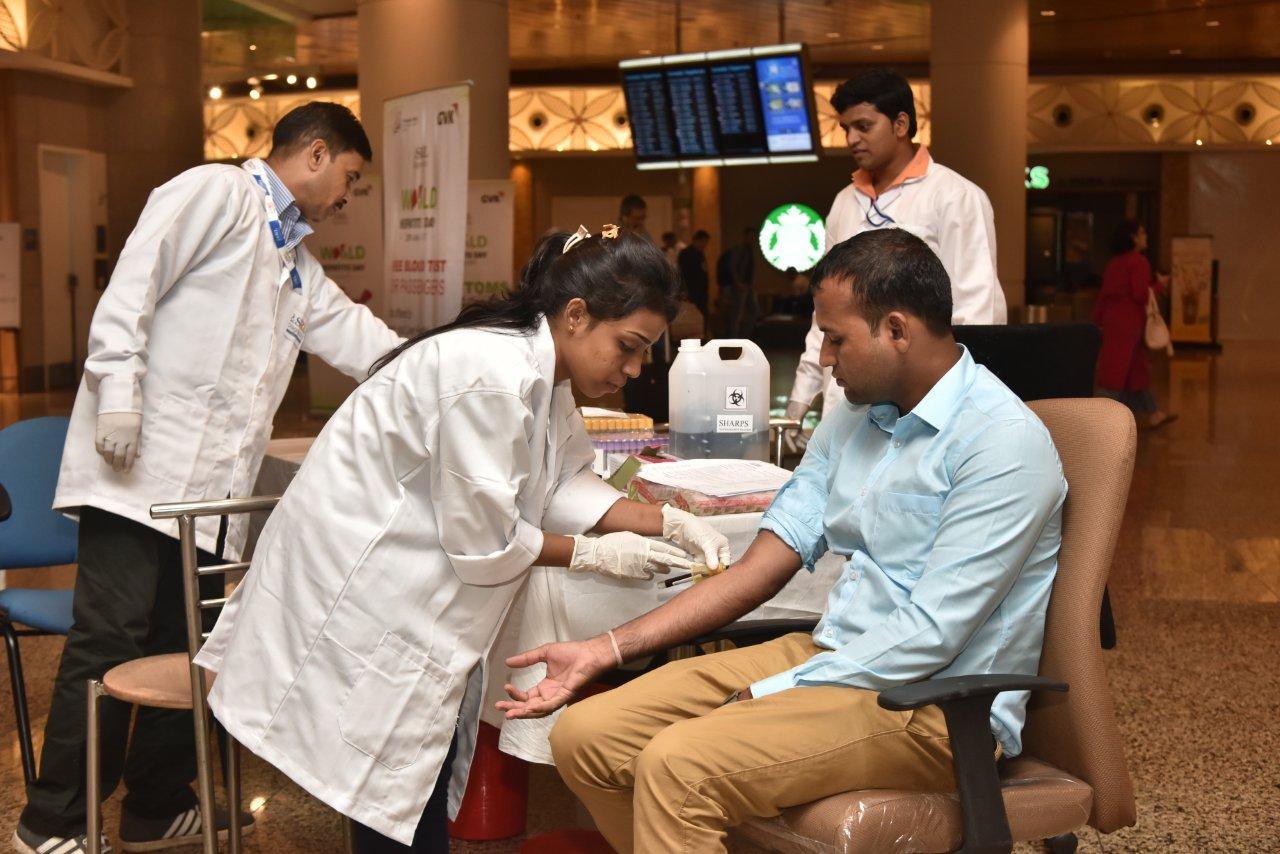
World Hepatitis Day, observed on July 28 every year, aims to raise global awareness of hepatitis — a group of infectious diseases known as Hepatitis A, B, C, D, and E — and encourage prevention, diagnosis, and treatment. Hepatitis affects hundreds of millions of people worldwide, causing acute and chronic disease and killing close to 1.34 million people every year. Hepatitis causes liver diseases and can also kill a person. World Hepatitis Day is one of eight official global public health campaigns marked by the World Health Organization (WHO).

WHO keeps this year’s theme is “Hepatitis-free future,” with a strong focus on preventing hepatitis B among mothers and newborns. On 28 July, WHO will publish new recommendations on the prevention of mother-to-child transmission of the virus. HBV can be prevented among newborns through the use of a safe and effective vaccine. WHO is calling on all countries to work together to eliminate viral hepatitis as a public health threat by 2030.

Significance of the theme

WHO says, “A hepatitis-free future is achievable with a united effort.”

With 2020’s theme for World Hepatitis Day being “Hepatitis-free future”, it becomes all the more crucial to know about the nature, prevention, and treatment of these viral illnesses. Hepatitis A and E are usually self-limited infections and comparatively not as severe as the other types. Hepatitis B and C are the leading causes of hepatitis-related deaths and can lead to serious conditions and cause long-term liver damage like liver cirrhosis, acute on chronic liver failure, liver cancer, or even death. Hepatitis D usually occurs in conjunction with Hepatitis B. Hepatitis B and C especially pose a serious threat to India as suggested by the numbers.

Once diagnosed, the course of treatment is based on whether the infection is acute or chronic. In the current scenario, it is vital to get a test and have the medications started, as those with pre-existing health conditions are at a higher risk of contracting the COVID-19 virus. Increased awareness through campaigns, initiatives, and discussions will help spread information as well as reduce the stigma about the disease. Awareness will also enable access to testing, ultimately resulting in early diagnosis.

WHO mentions the following points in dealing with the situation:

  1. PREVENT infection among newborns.  All newborns should be vaccinated against hepatitis B at birth, followed by at least 2 additional doses.
  2. STOP TRANSMISSION from MOTHER to CHILD. All pregnant women should be routinely tested for hepatitis B, HIV, and syphilis and receive treatment if needed.
  3. LEAVE NO ONE BEHIND. Everyone should have access to hepatitis prevention, testing, and treatment services, including people who inject drugs, people in prisons, migrants, and other highly-affected populations.
  4. EXPAND access to testing and treatment. Timely testing and treatment of viral hepatitis can prevent liver cancer and other severe liver diseases.
  5. MAINTAIN essential hepatitis services during COVID-19. Prevention and care services for hepatitis – such as infant immunization, harm reduction services, and continuous treatment of chronic hepatitis B – are essential even during the pandemic.

Education of the masses is the way forward to find these missing millions and ensuring that they receive proper treatment and care. Only then, it is possible to drastically reduce the number of patients who would suffer from these diseases and eliminate the risk of the virus and achieve the dream of “Hepatitis-free” India.

Let us learn to protect ourselves from Hepatitis diseases on World Hepatitis Day.

AstraZeneca COVID-19 vaccine

The initial trial data for the COVID-19 vaccine that has been developed in a joint collaboration between Oxford University and AstraZeneca. The data has been widely awaited as the world looks forward to some good news on the front of a vaccine that could shield people from the deadly coronavirus outbreak that has already infected over 14 million people worldwide and killed over 6 lakh. 

The potential vaccine is already in large-scale Phase III human trials to assess whether it can protect against COVID-19, but its developers have yet to report Phase I results which would show whether it is safe and whether or not it induces an immune response. The developers of the vaccine said this month they were encouraged by the immune response they had seen in trials so far and were expecting to publish Phase 1 data by the end of July.

How does the Oxford-AstraZeneca vaccine candidate work?

When someone is infected with the Covid-19 virus (SARS-CoV-2), the reason it spreads in the body easily is because of the spikes on its surface. These spikes, known as the ‘spike protein’, allow the virus to penetrate cells and, thereafter, multiply. The vaccine developed by Oxford and AstraZeneca, which belongs to a category called non-replicating viral vector vaccines, tries to build the body’s immunity against this spike protein. The idea is to create antibodies to fight this spiked surface so that the virus does not even have the chance to penetrate the cells. The vaccine uses a different virus — in this case, a weakened version of a common cold virus (adenovirus) that infects chimpanzees — to carry just the code to make the spike protein, like a Trojan horse. The adenovirus, genetically modified so that it cannot replicate in humans, will enter the cell and release the code to make only the spike protein. The body’s immune system is expected to recognize the spike protein as a potentially harmful foreign substance and starts building antibodies against it. Once immunity is built, the antibodies will attack the real virus if it tries to infect the body.

Since the Covid-19 vaccine has been developed by a United Kingdom-funded university, UK will have intellectual property rights. Other countries such as India will need to enter into commercial deals or understanding via foundations such as Coalition for Epidemic Preparedness Innovations (CEPI) and Global Alliance for Vaccines and Immunization (GAVI). AstraZeneca also entered a deal with the Pune-based Serum Institute of India to supply one billion doses for low-and-middle-Income countries, with the first 400 million nicely before the end of 2020. It is not yet clear how many doses India will be able to land at first since the rollout of the vaccine will be subject to considerations that are commercial as well as that of equity. The World Health Organization’s chief scientist has described the Oxford vaccine as the leading candidate in a global race to halt the coronavirus pandemic that has killed more than 600,000 people. More than 100 vaccines are being developed and tested around the world to try to stop the coronavirus pandemic, which has killed more than 600,000 people and ravaged the global economy.

Kiran Majumdar: A inspiration

Kiran Majumdar Shaw is the executive and chairperson of Biocon, a biotechnological company based in Bangalore, India’s richest self-made woman, a healthcare visionary, Global influencer. She was born on 23rd March in Pune, Maharashtra. She did her all education from Bangalore and later on joined as a trainee in Carlton and united breweries and never moved back in her life. She has made a wide impact not only on India’s women but also globally. She has made an outstanding contribution to life sciences and research. She has also awarded with the Padma Bhushan (2005) and Padma Shri (1989), Also the winner of  EY World Entrepreneur of the Year™ 2020 Award.