condition of lgbt community in india

The first question from where we will start this article is that what is this LGBT community? who are the people which are a part of this community? So, the LGBT community is the combined group of lesbian, gay, bisexual, transgender and LGBT organizations. we all are totally familiar with the present condition of these people in our society. The environment and the conditions in which they live are horrible and there is an urgent need to get this thing in light.

Although there is a special law passed for their rights, which is Section 377 of Indian Penal Code but the condition is still the same. The Section 377 of the IPC is an act that criminalizes homosexuality and and was introduced in the year 1861 during the British rule of India. According to this act, whoever voluntarily has carnal intercourse against against the order of nature with any man, woman or animal, shall be punished for imprisonment for life. However the supreme court of India on September 6, 2018, decriminalized the Section 377 of IPC and allowed gay sex among consenting adults in private. The supreme court even said that consensual adult gay sex is not a crime saying sexual orientation is natural and people do not have any control over it. It’s been almost 2 years now since the Act was passed ,but it is quite unfortunate that the condition of the LGBT community is only getting worse. The actual question is what caused such situation that now we need to operate awareness programs to protect the rights of their community. The main problem starts in the childhood itself, where a boy is bullied by his so called ” masculine” classmates just because for being effeminate and a girl is asked questions for seeing a girl such as,” But why a girl?It is not like you are deprived or something”. This is the country where a boy is being mocked because he is not “manly” enough. The whole concept of masculinity is getting altered drastically and it will be not wrong if it is said as “Toxic Masculinity” . So, according to some, masculinity means keeping a very great beard, doing drugs and maintaining a very athletic body and if you don’t have any of them you will called as “chakka”, “meetha” and much more. The words “gay” is used to insult and mock others. These kind of people never actually try to think about how the people may get affected by all this. Let me take an example, as we all know that KPOP is something which is getting really popular all around the world, but did any of us give it a thought that why the KPOP male idols are mocked by some people? Well the answer is quite simple, because these idols do not fit in their criterion of masculinity, according to them these idols are not manly enough.Well this whole mindset about the LGBT community is not much different in the rest of the world, the condition is same everywhere

Lastly, to some up this article I would say, we as a country have made a progress worth appreciating but the struggle is long enough and there are many changes and revolution which are needed in this way. The least which we can do to protect the rights of the community from our side is by not treating the LGBT community as different, because they are not different from us, by changing the whole wrong concept of masculinity and by giving then respect which they deserve like everyone else.

MOTIVATION IN MANAGEMENT


The term motivation is derived from the word motive and motives are expressions of a person’s needs and hence they are personal and internal and in this context, the term need should not be associated with urgency or nay pressing desire for something and it simply means something within an individual that prompts him to action and motives or needs are ‘whys’ of behaviour and they start and maintain activity and determine the general direction of the person and motives give direction to human behaviour because they are directed towards certain goals which may be conscious or sub-conscious. Motives are directed towards the achievement of certain goals which in turn determine the behaviour of individuals and this behaviour ultimately leads to goal-directed activities such as preparing food and a goal activity such as eating food and in other words, unsatisfying needs result in tension with an individual and engage him in search of the way to relieve this tension.

This image has an empty alt attribute; its file name is unnamed-4.jpg

INTERRELATED TERMS

While discussing motivation, we need to understand three interrelated terms- Motive, Motivation, and Motivators.

1. Motive- A motive is an inner state or desire which energies an individual to move o to behave towards the achievement of goal and motive arises out of needs of an individual and it causes restlessness as he wants to fulfil his motive.

2. Motivation- It is a process of inducing people to perform to their best ability to accomplish a goal and it is a psychological phenomenon which arises from the feeling of needs and wants of individuals and it causes a goal-directed behaviour.

3. Motivators- Motivators are the incentives or techniques used to motivate the people in an organization and common motivators used by the mangers are increment, bonus, promotion, recognition, respect etc. 

 Motivations may be defined as the complex of forces inspiring a person at work to intensify his willingness to use his maximum capability for the achievement of certain objectives. According to Koontz and O’Donnell “ Motivation is a general term applying to the entire class of drivers, desires, needs, wishes and similar forces and to say that managers motivate their subordinates is to say that they do those things which they hope will satisfy drives and desires and induce the subordinates to act in the desired manner”

This image has an empty alt attribute; its file name is download-2.png

FEATURES OF MOTIVATION

1. Motivation is an internal Feeling/ instinct

Motivation is a psychological phenomenon which generates from within an individual and needs are the feelings arising in the mind of a person that he lacks certain things and such feelings affect the behaviour of that individual and causes him to do work and hence, motivation is the process of making an individual feel his needs.

2. Motivation produces goal-directed behaviour

Motivation is a power which leads the employees to the achievement of their goal and the behaviour of the motivated employees clearly shows that they are inclined towards the achievement of their goal.

3. Motivation can either be positive or negative

Positive motivation provides positive rewards like an increase in pay. Promotion, recognition etc. Negative motivation uses negative means like punishment, stopping increments, threatening etc., which also may induce a person to act in the desired way. 

KHAKI SHIRT

Feather as unique as she

decorated the lining of the leather-bound book

not a day spent outside the library

the ancient library enhanced the scent of musk

deeper every day she nestled

her thoughts in his books

whilst he knotted her braids

in babyish pleasure

Till she dug her head deep in his Khaki shirt

Till she met the warmth of his soft brown eyes

Humbled, but his smile didn’t reach his eyes

a flicker of sadness, a pang of guilt

why was he spinning, the web of lies?

Selfless in his pursuit had he been

undaunted, his intentions clear

then why did he hesitate,

his forehead beaded with sweat,

his eyes filled with tears?

Oblivious, she swayed

to the sound of Sinatra

mirroring her mother’s

a faint remembrance

the sweet serendipity

now made him shudder

Hollowed by her loss,

staring at the stone-cold body

he couldn’t have left her orphaned

Every dawn, now a sweet presence

of her exuberant self, and his khaki shirt

a mirror image of her mother’s

of her dimpled smile and her turquoise eyes

radiant as her, she filled the hollowed space of his

like a breath of fresh air

strolling hand in hand, the moist earth beneath

their bare feet

in her yellowed sundress

and his khaki shirt

ANOUSHKA MUKHERJI

The poem signifies a father-daughter relationship and how much the father loves his daughter. Every day the girl sits in his enormous library and spends all her day reading with him, the sweet scent of his khaki shirt fills her nose every time he braids her hair. Here we are made to understand that the girl’s mother has died and she has only her father left to take care of her. There is a hint of sadness and regret looming in the air. The father feels guilt because he couldn’t save her wife and for that, he feels intense remorse. But the girl is seemingly unaware of this, an exact replica of her mother, mirroring even her dance moves. The father hesitates with once what had been determination to tell his daughter bout the truth and finds it difficult to bring him to tell her this. The last five lines of the poem describes how his late wife had been, radiant and full of life, and had made him complete. The poem is composed of a sad note which speaks of loneliness and longing. The story also represents how beautiful the bond between a father and a daughter can be. The girl unaware of anything gives all her love to her father and adores him while the father is still guilt-ridden and refrains from fully loving her daughter. Her every step is a painful reminder of her wife’s death and how unjust it is for the girl to grow up without a mother. This story ends on a semi sad note but also shows how the husband is remembering his late wife, of happier and blissful times.

The poetic devices included in this poem are mostly metaphors

Physics Revisited: A powerful laser in the making

You may have tried to burn the paper by concentrating the light focused at a single point using a magnifying glass. Now technology has advanced up that within a few seconds as the data given to a machine can design and cut your metal piece with the help of a unique device. This device is none other than LASER itself. The laser has many uses in day to day life like bar-code reading, laser cutting, laser welding, and whatnot. Usage also includes surgeries, and even the data to read this post is sent through a fiber optic cable using laser technology.

A laser metal cutting machine on a piece of metal to shape according to a design.

A laser is a device that can focus by emitting a beam of a consistent source of light using the amplification process. Various types of lasers found include gas lasers, fiber lasers, diode laser, and much more. A laser requires three prime factors, generally consisting of a pump or the vital source of energy along with the medium to travel and a resonator using two or more mirrors. We even observe the phenomenon known as the total internal reflection or TIR.

The laser invention won the most prestigious science honor, the Nobel prize in 1964, and again in 2018 for the optical tweezers. These tweezers can be so sturdy that it can make changes in a single atom too. Okay, you may have been a fan of Star Wars movie if you like, they demonstrate the use of lasers, especially the blasters. But, they’re not lasers; indeed, they’re plasma light in the movie.

Fiber optic cables used in networking.

One of the Nobel laureates along with the researchers from the Russian Academy of Sciences have built up a new technology to produce even more powerful laser. The power output from the more modern methodology can give up to 10 ^ 23 Watts by decreasing the duration of the pulse just to some femtoseconds. This method can cut down the operating costs; this study has grabbed attention and gained financial support from various institutions in Canada and Russia.

To generate a pulse for a short span, the researchers need a deep dive into the effects of non-linear optics. Still even at the limits of 10 femtoseconds pulse, with the energy of 3 joules, the intensity peaked up to 300 terawatts. Now with a further intention with 13 joules, a target of 3 petawatts is planned within five femtoseconds.

Laser treatment done on a lady as a procedure for a therapy.

The lasers have been so widespread that we see it for hair removal, too, where the hair follicles get treated. The laser is also found in your laptop or your computer if it has an optical disc drive. The data on the disc read by using a laser when it falls on the lands and pits present on the surface to convert them into electrical signal sequences. The laser has been extensively used in the field of defense too. There are handheld laser pointers available, but make sure that it is legal in your country to own one or may land up into jail. Be careful with laser pointers and use them effectively if you own one of them.

O Tiktok kabhi mat aana!!

Tiktok, tiktok, tiktok! I am literally happy as tiktok got banned permanently. Now will be reported with the real unemployment rate.(If you understand sarcasm) I personally hated this app as people were so much into it that they didn’t know if something like this happened then how would they respond. Tiktok was getting on nerves of those people. They have lost their senses and stared behaving with the immense insanity. Not only youths but the aged people were no less than giving their part of share. No wonder why India still is a developing nation even with the high technological development. Tiktok was dominating everyone in every possible way. When I say tiktok then the only thing I can imagine is the ‘cringe content.’ Then Musical.ly now Tiktok has really made the half of the nation go insane and made them play on their fingertips. The so called lip sink which they called as their talent or content has been stopped for real.(The same struggle as of Ananya pandey did has finally come to an end.) They were living the fake lifes as of actors. Imagination is for sure a real thing, as imagining never stops us to get us utter disappointment. But for now what bothered me was their reaction on the ban of tiktok and the hate they are spreading towards Our Honourable Prime minister Mr. Narendra Modi. You may have heard the popular saying ‘beating the fool is always better then explaining'(well, emotions can be better explained in Hindi only.., Murkho ko marna sora, samjhana dora!)

Tiktokers after its ban!

29th of June 2020 is the real pandemic day for Tiktokers which really hit them harder than this coronavirus. This virus which still can be cured but the other one couldn’t unless it was uprooted permanently. As the news were announced people felt pathetically ill, as if oxygen supply has been stopped for them. People got so mad at Modiji that they started disrespecting him. Are they for real a citizen of India!? Have they gone mad or what? What they are thinking of themsleves.., have they totally lost as soon as they heard the ban of this shitty app.(sorry to use harsh words over here but really they are getting on the nerves.)

Have seen some reaction videos after the ban of this app. They are acting as if someone have had scammed them and took away their property their inheritance. They no longer are the heir of that app which only and only gained false/ fake publicity. People were absurdly investing their time in creating their so called talented videos which takes hours to shoot for. Dear brother and sister..If you are this talented then why don’t you try in Bollywood! In the near future probably others will be lip sinking your video’s but only if you had talents. And those who really were talented as in drops in the huge ocean then they surely will find a place as no one can stop the real talent to flutter. They will get their share of recognition for sure, whichever the platform they perform on.!!

Tiktokers showing their disappointment over ban on other online platforms by creating videos. Heard people say that it might be a small criteria for Modiji but for them it matters alot, they are crying like anything man..seriously this much it affects them irrespective of how China and India are having disputes. Some wants to leave this country over this matter.., then please leave no one will stop you(Pehli fursat mein niklo.., koi zarurat nahi hai is desh ko tumhari! Instead you are the one pinning hole in the plate you ate!), not even your parents as for such small issue you created a big mess, a big fuss. Some says that as they banned tiktok that’s alright but will never use the Indian alternative apps. Then you only be doing good to yourself, living a real life other than the fake world, you will be facing the reality and that’s equally good for the nation as well as for you and your family. Even your parents would feel happy that their kids are not just absurdly wasting their time changing the dresses multiple times, purchasing unwanted stuffs, dancing and lip sinking foolishly.

Read a comment in a YouTube comment section where a daughter of a soldier wrote her heart out as how people without considering the conflicts over India and China dispute are struggling over this silly topic. Her father is a soldier in the Indian army and she feels ashamed as her father is struggling for those who don’t care in the first place and are ready to leave the nation over a banning of app. Even after China allegedly stabbing hardly, it doesn’t matter to them as they don’t have anyone to loose other than their fake followers. This should have been the other way round. Tiktokers should have been sent to the Borders to experience how it feels to serve to the nation and take bullets for those whom they don’t even know! Truly speaking, from each house one should stand to serve the nation.(I myself is a coward and don’t find enough courage to go but I will really try my best if given a chance) This is why reel life heroes are given more respect.., they are overrated and the real life heroes doesn’t even get the consideration they deserve.

Ps:- Wrote more than enough on this topic..,blabbering over this topic feels relieved. Find Peace and live with peace. Thank you : )

The Importance of Real-Time Monitoring for Development

The use of real-time monitoring (RTM) to support national systems strengthening is growing, primarily due to the ubiquitous penetration of mobile phones into global audiences. According to the International Telecommunication Union, in 2011 alone, there were six billion mobile subscribers–with 79 per cent of them in the developing world (Abaza and Marschollek, 2017). This has been a boon in countries and regions where mobility and physical connectivity challenges can affect the diffusion of knowledge of key issues, which can stymie progress against key health and socioeconomic indicators. India is no stranger to RTM systems, having been one of the early adopters of mobile and digital technology in the low-and-middle-income world. It has 1.16 billion telecommunication subscribers in the world, as of March 2019 (TRAI, 2019), and has been adding nearly six million subscribers per month (TRAI, 2019). The Ministry of Health’s National Health Portal has shortlisted a whopping 72 monitoring platforms that have been authorised to track indicators from health records in hospitals to mapping water supply sources (2020).

Development programmes are actively embracing RTM approaches across a range of sectors; from maternal health to nutrition and water, sanitation and hygiene (WASH)- to improve planning, monitoring, and decision making efforts. During this COVID-19 response, it has become an even greater priority to invest in RTM models that adhere to physical distancing protocols. Caseloads are increasing rapidly with shorter doubling times and countries are scrambling every day to better understand what is influencing the outcomes as quickly as possible. Plus, given the transmission model, traditional monitoring efforts such as door-to-door assessments come with high risks for health and community workers. Real-time monitoring that allows low-touch data collection and dissemination would, therefore, be best in this context, as proven before during the Ebola and H1N1 outbreaks, both of which had similar contact restrictions.

The practice of real-time monitoring for strengthening national monitoring systems has been employed by UNICEF and government partners to strengthen health, education, water and sanitation and social protection systems around the world. As of 2019, 77 UNICEF country offices including India’s are using real-time approaches enabled by the use of information and communication technologies which enable faster retrieval and analysis of data and information, than paper-based or other traditional systems.

When using real-time approaches, data and information is provided more rapidly than before and allows stakeholders to monitor progress towards goals by rapidly accessing and reviewing data and information, seeing trends, and identifying corrective actions required based on informed evidence-based decisions within a day, or in some cases, within a few hours. Therefore, it is an efficient solution to monitoring needs and objectives. Just as important to keep in mind is that RTM approaches are only effective where the capacity to utilise frequent data and insights is sufficient and responsive; otherwise, the approach may have a negative effect of creating extra data collection burden without commensurate response.

When implemented, RTM integration helps to:

Provide a monitoring platform for communities and governments to track progress towards shared goals

Identify supply, demand and bottlenecks in service delivery chains

Increase accountability of government to the rapid delivery of services

Improve service delivery to hard to- reach communities through informing corrective measures

Assess and educate consumers and beneficiaries on relevant knowledge, practices and attitudes.

Battle of Tibet for a sense of identity


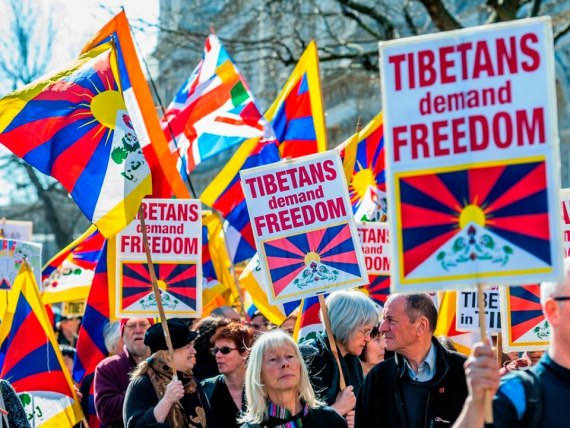
Tibet is one of the biggest victims of Human Right Violation to date. It was once an independent state headed by Dalai Lama (Spiritual and political Head of Tibet) but was forcefully annexed into China by then ruling of the People’s Republic of China. Since 1959, people of Tibet have been struggling for their rights such as Freedom of Expression, Freedom of religion, freedom of speech and freedom of Identity.
“These 50 years have brought untold suffering and destruction to the land and people of Tibet. Today, the religion, culture, language and identity … are nearing extinction; in short, the Tibetan people are regarded like criminals deserving to be put to death … However, the fact that the Tibet issue is alive and the international community is taking a growing interest in it is indeed an achievement. I have no doubt that the justice of Tibet’s cause will prevail, if we continue to tread the path of truth and nonviolence.” – The 14th Dalai Lama, 2009.
Tibet is a region on Tibetan Plateau in Asia, covering 2.4 million square kilometres, about ¼ of Total Chinese territory. It is the highest region on earth with a mean elevation of 4900 meters. Tibet holds strategic importance due to its proximity with India, the type of terrain it holds and It also is a centre of Buddhist Religion.
Tibetan dispute dates back a century, Tibet declared independence after falling of Qing Dynasty and kept function as Independent protectorate till 1959.
Tibetans signed a seventeen point agreement, handing over their sovereignty to the People’s Republic of China. Now China uses this very document as their validation over Tibet.
HISTORY OF TIBETAN UPRISE:- Timeline
1959- In Lhasa full-scale uprising broke out, tens of thousands die in brutal suppression by Chinese. Tibet was invaded by some 30000 Chinese troops who tortured, molested and raped an estimated 1.2 Lakh Tibetans. Dalai Lama’s government was exiled.
Dalai Lama was offered refuge by India. About 1 lakh people followed Dalai Lama to India and took refuge here, they were made to lose their homeland, to preserve their cultural and religious identity.
1965- Chinese authorities recognized Tibet as T.A.R. (Tibetan Autonomous Region). China retaliated the Indian move of providing Dalai Lama refuge by waging war against India.
1987- Dalai Lama asks to establish Tibet as a zone of peace and reinitiate dialogue for betterment of Tibet and it’s people.
1988- China imposed martial law in Tibet after a serious of riots as the initiations of Dalai Lama failed considerably.
1989- Dalai Lama was awarded the Nobel Peace Prize as the International community recognized his contribution and selfless efforts to establish peace.
• Present Scenario
This region is administered by China as T.A.R..Tibetans accuse China of carrying large scale Human Rights Violation and changing the outlook of the region by promoting large scale migration of Han people.
Chinese authority always responds to demonstrations by Tibetan people by further restricting already strict norms and snatching basic rights such as freedom of assembly, freedom of association and freedom of religion. Journalists and Reporters are not allowed to report matters of Tibetan people, their grievances often fall on deaf ears.
It is a famous saying that to destroy any society one needs to destroy their faith, this very plan was appointed by China and about 6000 monasteries were destroyed.
In recent turns of events, United States planned to recognize Tibet as Independent as a way out to pressurize China, this move is purely political but still, it serves its purpose of concentrating Global Attention on Plight of Tibetan People for Independence.
By Shubham Yadav

DALAI LAMA

Dalai Lama is a title given by the Tibetan people for the foremost spiritual leader of the Gelug or “Yellow Hat” school of Tibetan Buddhism, the newest of the classical schools of Tibetan Buddhism. The name “Dalai Lama” is a combination of the Mongolic word dalai meaning “ocean” or “big” (coming from Mongolian title Dalaiyin qan or Dalaiin khan,translated as Gyatso or rgya-mtsho in Tibetan) and the Tibetan word བླ་མ་ (bla-ma) meaning “master, guru”.The Dalai Lama is also known in Tibetan as the Rgyal-ba Rin-po-che (“Precious Conqueror”)or simply as the Rgyal-ba.

The rôle of the Dalai Lama
Potala PalacePotala Palace, the Dalai Lama’s residence until 1959
The Dalai Lama is the head monk of Tibetan Buddhism and traditionally has been responsible for the governing of Tibet, until the Chinese government took control in 1959. Before 1959, his official residence was Potala Palace in Lhasa, the capital of Tibet.The Dalai Lama belongs to the Gelugpa tradition of Tibetan Buddhism, which is the largest and most influential tradition in Tibet.The institution of the Dalai Lama is a relatively recent one. There have been only 14 Dalai Lamas in the history of Buddhism, and the first and second Dalai Lamas were given the title posthumously.According to Buddhist belief, the current Dalai Lama is a reincarnation of a past lama who decided to be reborn again to continue his important work, instead of moving on from the wheel of life. A person who decides to be continually reborn is known as tulku.Buddhists believe that the first tulku in this reincarnation was Gedun Drub, who lived from 1391-1474 and the second was Gendun Gyatso.However, the name Dalai Lama, meaning Ocean of Wisdom, was not conferred until the third reincarnation in the form of Sonam Gyatso in 1578.The current Dalai Lama is Tenzin Gyatso.

“I thought I’d have to try and convince him,” she told Reuters in an interview from her home in Auckland.

“That moment of recording him, my goodness I was shaking like a leaf before I went in there,” she said.

Kunin did the initial recordings at the Dalai Lama’s residence in Dharamsala in India.

Once back home, she worked with her husband Abraham and other musicians to produce music for the tracks.

“It’s an incredible honour. But it was unbelievably, daunting like the trust and responsibility. It’s immense,” Abraham Kunin said.

On a promotional video for the album, when asked why he had agreed to take part, the Dalai Lama answers: “The very purpose of my life is to serve as much as I can.”

The release comes five years after Patti Smith led the crowd at Britain’s Glastonbury Festival singing Happy Birthday to him for his 80th.

(Reporting by Sarah Mills; Writing by Andrew Heavens; Editing by Raissa Kasolowsky)

The Government’s Motive behind amending the PwDA

On Wednesday, 1st July,2020, the Department of Empowerment of Persons with Disabilities, under the Ministry of Social Justice and Empowerment, issued a notice proposing the Amendment of the Right of Persons with Disabilities (RPwD) Act, 2016.
It proposed the amendment to decriminalise “minor offences for improving business sentiment and unclogging court processes’’.

Activists have urged the government not to go ahead with the proposed amendments as it will nullify the small achievements gained over the years.
The Shillong Times reported that, “In a joint statement, around 125 disability rights organisations, civil society organisations and activists said they unequivocally register their strong protest against the proposal to “dilute and nullify” penal provisions contained in the Rights of Persons with Disabilities Act, 2016.”

The notification issued on Wednesday, stated that the decriminalisation of minor offences will alleviate the risk of imprisonment for actions which do not necessarily have “mala fide intent”.
It also claimed that the risk of jail is a deal breaker for both domestic and foreign investors – which is unwarranted in the post COVID 19 world, in order to revive the economy.

Even after protests, the Ministry is awaiting feedback within 10 days.

The Department’s director, and author of the notification, KVS Rao said, ”The government has undertaken the process of reviewing existing laws, many of which were devised by the British under the Indian Penal Code and had never been reviewed – such as IPC Section 377, which criminalises homosexuality. The Home Ministry has asked many ministries to take a relook at these laws. When this (RPwD) Act was formulated, many IPC Sections were added mechanically, without the consideration of reformulating to keep abreast with the times.
But the notification is simply a call for feedback and observations from the community. The intent is not to harm the community in any way or to pass an amendment which may be detrimental to the rights of disabled persons.”

Rao further stated that the department is considering reducing the penalty or punishments, for offences that are classified as severe but seem ‘minor’ to the ministry.

Disability activists on the other hand argue that the 2016 Act was the result of years of struggle, and came into force after India became a signatory to and ratified the UN Convention on Rights of Persons with Disabilities (UNCRPD) in 2007.

Dr. Satendra Singh, a Disability Rights Defender, argues that it has been just 3 years since the implementation of PwDA 2016 and rather than acting on the concluding observations of UN CRPD committee, the government is bringing out Penal Provisions Amendment in a pandemic with a 10 day deadline, that will basically dilute the act.

Akhil Paul, a member of the drafting committee for the PwDA, and the founder of Sense International (a charity working with the deaf and blind people of India), says that he can’t support this amendment as it is against the protection of rights of PwD.
He further states,” (Government) shouldn’t be diluting disability rights law for ‘business sentiment and unclogging court processes’

Disability activists have emphasised the fact that softening the penalties will only make public and work spaces unsafe for them.

Section 92 (a) of the Act provides a penalty of imprisonment when a person ‘intentionally insults or intimidates with intent to humiliate a person with disability in any place within public view’.

Vaishnavi Jayakumar from the Disability Rights Alliance, compared the above section with The Scheduled Castes and Tribes (Prevention of Atrocities) Act and further asked if the government would be able to do away with that.

Jayakumar further said that when a legislation concerns the right of an individual, the proposal should ideally be published in several regional languages widely and people should be given enough time to comment and provide feedback. The proposal has been published in English and ten days have been given for public feedback.

Murganantham Linguswamy, an advocate at the Madras High Court and a disability rights activist argued, “The government is trying to create a conducive business environment at the cost of an individual’s dignity – which is a fundamental right”.
He further stated that the National Crime Record Bureau has not published any statistics regarding offences against the disabled and hence changing legislation without reliable data would be arbitrary.

Since the lived experiences of PWDs cannot be understood by the able-bodied, consulting stakeholders is a critical step while framing inclusive policies. Even the method of notifying the amendment was problematic. In the name of stakeholder involvement, only 7 disability rights organizations.

But this wouldn’t be the first time this year that the government would prioritise economic stability over human rights. In May 2020, the Uttar Pradesh government suspended labor laws for three years, in an attempt to lure more investors in the State.

But now the State is not only denying the PWDs their right to a fair hearing but threatening years of progress that made PwDA 2016 possible.

They are not only patronizing ‘Divyang Politics’ but also are putting ‘Business Sentiments’ before the rights of marginalized communities.
This is not only immoral, but also goes against the Socialist nature of our constitution, which is embedded in our Preamble.

In the end, all we have to ask is this, Is India a Socialist State which will protect the rights of its citizens, or is it just a Capitalist Country masquerading as a Socialist one ?

ANIMALS OUT OF THE JUNGLE

The year is 2030

bullets rain like first spring of cherry blossoms

combing out weeds of growth

our men they who drank their mother’s milk

now taint the city with chants of Him

They who prayed and those who sinned now utter blasphemous the seven deadly

He the stalwart branded the savior now flourishes and feasts on the fear of others

I write with animosity

under the lamp flickering

the cowardly act of honor I dare not venture too deep

lest faced with the fate of few Bravehearts

prisoners of His twisted vices

exceeding Gogh and his canvas art

captivated His theatrics outshine His own repeatedly

devoted to mind and soul

devoid of emotions our own

solidarity the branding mark of respect

but muffled voices still echo the halls

pained hearts who’d seen their children last fall

No cheerful laughter light up the frosted pathways

no glimmer of hope could offer respite anymore

In this endless chasm of despair and despondence

the world now seems shrunken

let hell lose

let all go astray

when muzzled hounds start barking

when all animals are out of the jungle

ANOUSHKA MUKHERJI

The poem here is set in a dystopian era where an apocalyptic situation has ensued. As a result, the country is not dictated by a powerful antagonist who dominates and suppresses its people. The countrymen do not have free speech anymore. Those who tried to raise their voices against the injustice have met with worse fate. The poet expresses how grim like the situation he is facing and desires for freedom. This short poem is a brief description of the novel 1984 a novel by George Orwell. Draconian laws have been imposed on the poor countrymen and all of them live in fear of the dictator. The law-abiding citizens are not given a chance to woe or weep for their dead children who have been taken captive by the soldiers to keep their parents in check. All the kids have been put behind bars or executed. In this era, you are not allowed a mind of your own nor to have an opinion. Doing so would only lead to a fate worse than death for you. The poet expresses what might happen in later times when chaos would erupt and democracy would no longer exist. Bullets are scattered at every corner of the country and the country is in a bad condition. The poet says that it seems like the animals are now governing our country devoid of all of humanity and conscience, it is a warlike situation. It seems that the country is nostalgic for simpler times when democracy was still alive and people still had free speech and a mind of their own. There is perpetual war, omnipresent government surveillance in the future and the government neglects important matters. The country is wrecked and you have to follow His advice and His religion. Here ‘His’ signifies the government who runs the entire nation. The poet writes in secrecy for fear of conspiring against the government and being put behind bars.