LEADERSHIP IN MANAGEMENT


As you know, management involves getting work done through the people and by virtue of their positions, managers can issue orders and instructions to their subordinates to get the work done, but it is also necessary to ensure that subordinates put in their maximum effort in performing their tasks and hence managers have to regulate and influence the subordinates behaviour and conduct at work and it is through the leadership role of managers that employees may be induced to perform their duties properly and maintain harmony in group activities. A manager, having formal authority, can direct and guide his subordinates and command their obedience by virtue of his positional power but as a leader, a manager can influence work behaviour by means of his leadership ability to get the cooperation of all members of the group. Leadership may be defined as a process of influencing group activities towards the achievement of certain goals. Thus, the leader is a person in a group who is capable of influencing the group to work willingly and he guides and directs other people and provides purpose and direction to their efforts and according to eminent writers Hodge and Johnson Leadership is “ Leadership is the ability to shape the attitude and behaviour of others whether in formal or informal situations” and According to Livingston Leadership is “ Leadership is the ability to awaken in others the desires to follow a common objective”.

This image has an empty alt attribute; its file name is aspects_leadership.jpg

CHARACTERISTICS OF LEADERSHIP

Managerial leadership mainly possess the following characteristics:

  1. Leadership is needed in all walks of life, such as economical, social, political and industrial spheres.
  2. It is the duty of the leader to maintain proper discipline among his subordinates.
  3. It is a continuous process whereby the manager influences, guides and directs the behaviour of subordinates.
  4. A true leader is responsible for including encouragement and confidence among employees of any organization.
  5. The success of a manager as a leader depends on the acceptance of his leadership by the subordinates.
  6. The manager-leader is able to influence his subordinate’s behaviour at work due to the quality of his own behaviour as a leader.
  7. The leader leads his group with authority and confidence.
  8. The leader establishes the relationship between an individual and a group around some common interest.
  9.  A true creates a bond of friendship between organization and subordinates.
  10. Leadership helps others in choosing and attaining specified goals to the maximum satisfaction of both the leader and the follower.
This image has an empty alt attribute; its file name is management-vs-leadership.png

SOME IMPORTANT QUALITIES OF LEADERSHIP

1. Knowledge and intelligence

 A leader, to be effective, must have knowledge of group behaviour, human nature and activities involving technical and professional competence. He must have an intelligent perception of human psychology and the ability to think clearly and argue cogently on points of dispute.

2. Integrity and Honesty

A leader should possess a high level of integrity and honesty and he should be a role model regarding ethics and values.

3. Motivation Skills

A leader should be an effective motivator and he should understand the needs of the people and motivate them through satisfying their needs.

4. Self-confidence

Confidence about one’s leadership ability makes it possible for a leader to analyse and face different situations and adopt a suitable style and Lack of self-confidence often prevents managers to adopt a participative style and repose trust in their subordinates.

STORAGE OF CIGARS

cigar should be stored at a temperature of 15 to 18
degree Celsius and a relative humidity of 65 to 70
degree. Drastic temperature fluctuations, dry heat,
smells damage the cigar. Cigars are best stored in
humidors. there are boxes made of Cider wood. A
damp pad is lined inside the lead of the box to
maintain humidity by moisturizing air if it is too dry.
If the climate is to damp. A dry pad will be used to
absorb any exercise moisture in the air. the box
has many sections each holding a different type
and size of cigar. Many cigarettes are individually
packed in metal tubes lined with Cider wood and
this tubes are seed that is, they are sealed tightly
to prevent the air from getting in.

PREPARING AND LIGHTING OF CIGARS

Preparing cigar for smoking and lighting needs
special attention which the cigar handlers must
understand . before the cigar is lit, the head of the
figure which has tobacco leaf cap must be opened
with the cigar cutter to allow the smoke to pass
through smoothly. A v shaped cut or straight cut
may be made according to the choice of the guest
which should be ask before cutting.
The cut should be smooth and clean and not too
large.
the foot and of the cigar is lit with the wooden
match or gas lighter but never with Sulphur or wax
coated matches or a petrol lighter which will spoil
the flavour of the cigar. The cigar should be
rotated while lighting and their should be slowly
drawn with gentle puffs. some guest warm the
length of the cigar with a lighted match before
which was used for sticking the leaves during
making of cigars a hundred or more year ago. The
practice of using that kind of glue was withdrawn long ago and the pinhead of gum used today is
odourless and tasteless. Hence this practice is
unnecessary

SERVICE OF CIGARS

The following steps are to be followed in cigar
service:
• Place a clean astray on the table
• Present the humidor from the left hand side of
the guest to select his / her cigar.
• Collect the cigar from the guest for
preparation.
• remove the selected cigar carefully, making
sure your fingernail does not touch the
wrapper of any of the singers, it is advisable to
place the cigar in such a way that it is easy for
the guest to pick up without touching any of
other cigar.
• take the cigar to the side board to prepare
according to the guest request.
• On the side board if the cigar is covered with
cellophane tube then open it.
• open the closed end of the cigar by making a
flat or a v cut with an appropriate cigar cutter
avoid using a knife or other equipment.
• tap the cut cigar over the side plate to remove
any unwanted / extra tiny particles. Present the prepared cigar on a quarter plate
from the left hand side.offer a light from
matchstick or a gas lighter. Light it gently by
holding the flame slightly away from the cigar.

PHOTOGRAPHING MOTHER

ABOUT THE POET

Tribhuvandas Purushottamdas Luhar, better known by his pen name Sundaram, (22 March 1908 – 13 January 1991), was a Gujarati poet and author from India. He was born on 22 March 1908 at Miyan Matar, BharuchBombay PresidencyBritish India. He completed his primary education in the local school of Matar and five grades in the English medium at Amod, Gujarat. Later he studied at Chhotubhai Purani’s Rashtriya New English School, Bharuch. He graduated in languages from Gujarat VidyapithAhmedabad in 1929. He started teaching in Gurukul at Songadh. He participated in Indian independence movement and was imprisoned for some time. He was associated with Jyotisangh, the women’s organization in Ahmedabad, from 1935 to 1945. He was introduced to Sri Aurobindo in 1945 and he moved to Pondicherry. He presided Gujarati Sahitya Parishad in 1970. He died on 13 January 1991.[1][2][3][4]

ABOUT THE POEM

The poem photographing mother by Sundaram shows the poet’s regrets and also the tragedy of the situation; of his mother’s sorrowful state of disease-ridden health and years of neglect. The photographer tries to be kind to the poet’s mother and calls her Ba. He tries to create her feel comfortable and relaxed and tells her to use caution to not blink. Even the slightest error would mean the waste of a plate and repetition of the entire procedure, The silver-tongued photographer fussing around his mother is barely doing his job unaware of her illness but his request to the poet’s mother has the other effects. The poet’s mother spent all her time doing the housework that she got no gratitude. Since she was passionate about her in-laws we are able to presume that she never protested. forgetting about her own problems she looked toward her children’s future. The poem is structured around the artificiality of the photograph and therefore the harsh reality during which the poet’s mother lives. The poet and his brother try and compensate their mother by trying to alleviate her pain and pleasing her in various ways which are shown within the poem as taking her bent show her town and therefore the palaces, parks, cinema halls, and theatres. But this just looks as if a measly token of appreciation. The poet doesn’t hesitate to require the blame partly for his mother’s condition and feels shame and regret as he sees her lifeless smile plastered on her mother’s face and lastly, it’s shown that s a memorial of affection, he takes her to the studio for s photograph for the last time.

The box-camera, because the name suggests, was basically an oversized box with a viewing
window at one end and therefore the lens at the opposite. Within the box was a sliding frame, which held
a ground glass plate and which the photographer could draw back and forth. The image could
be seen on this plate. Once the photographer had arranged the background and seated his
subject he would go under the black cloth with which the camera was covered. This helped
to keep the sunshine and adjust the main target. Since it had been out of the question to physically move the heavy
camera, the photographer would slide the frame back and forth until he was satisfied with the
result. What made his task harder was the actual fact that the image on the glass plate was
inverted. After that, he would cover the lens, replace the bottom glass plate with a glass plate
covered with a light-sensitive chemical like collodion, and so remove the duvet over the lens.

top 6 in-demand jobs right now

The Corona Virus is not only taking human’s life but is also affecting them in many ways. The people are getting getting affected physically, mentally, emotionally and financially.A large number of people have lost their jobs because of the pandemic.The reason for this is that, the industries and businesses are facing huge loss from lockdown. The major sectors which are suffering tremendous loss are tourism sector, IT companies, airlines, hospitality sectors and many more, and because of this, these sectors are unable to give salaries to their employees and as a result employees are facing lay off. Many people lost their jobs because of this and many more are anticipated to suffer in future. People are not getting their salary due to losses which the organization is having, thus creating financial problems not only to the employers but for the employees too. But there are some jobs which are highly in demand even in this downfall period. Today in this article I’ll be sharing with you all some of these jobs which you can pursue if you have the capabilities and skills for the same. Let’s have a look on some of the jobs:

1- MOBILE APPLICATION DEVELOPMENT: Everything is going digital because of the social distancing, which we all are following to prevent ourselves from COVID-19. From booking cabs to buying groceries, everyone is going app based and this would only accelerate as we are moving to a digital future. This means that mobile app developers for android and IOS will be all the more in demand and companies will be more than happy to pay them. according to an app developer, they can earn anywhere between Rs 50,000 for freshers and approximately Rs 16,00,000 after a decade of experience.

2- DIGITAL CURRICULUM DEVELOPER: Be it the regular school and colleges or educational technology companies, COVID-19 has made it mandatory for the coarse curriculum to move online. A digital curriculum developer is involved in designing a web friendly content curriculum for institutes, corporates and individuals.

3- SALESFORCE CERTIFICATION: Salesforce, the customer relationship management service (CRM) provider is considered among the most advanced CRM technology in the world. To manage this ecosystem, Salesforce offers targeted certification programmes to aspiring professionals in administrators or developers areas. In India, the average salary for a Salesforce certified professional ranges between Rs 6 lakh to 8 lakh per annum.

4-FINANCIAL RISK MANAGER: FRMs are involved in managing investments risk, trade risk as well as liquidity risks and market risks. During a tough market condition, FRM helps the investment team with the strategy in managing financial prudence. The average pay package of an FRM in India ranges from Rs 9 lakh to 12 lakh per annum.

5-DIGITAL PROFIT MANAGEMENT: A digital project manager runs project to build websites and mobile apps through discovery, planning, production, deployment and maintenance. Considering the shift in bussiness strategies of companies from physical to digital due to COVID-19, digital project managers are high in demand. The average salary in this role according to HR experts is Rs 15 lakh to 24 lakh per annum.

6-CHIEF ACTUARY: With the rise in concerns about future risks in the financial sector and hoe it would be managed, the role of actuary is in high demand. India with a population of 1.3 billion people has only 460 fully qualified actuarial professionals. The actual demand for fully qualified actuarial sciences professionals in India is more than three times the supply. The starting salary of an actuary could be Rs 7 lakh which can go up to Rs 30 lakh with the number of of experience.

SHALL I COMPARE THEE TO A SUMMER’S DAY

ABOUT THE POET

William Shakespeare was an English playwright, poet, and actor widely regarded as the greatest writer in the English language and the world’s greatest dramatist. He is often called England’s national poet and the “Bard of Avon” (or simply “the Bard”). His extant works, including collaborations, consist of some 39 plays154 sonnets, two long narrative poems, and a few other verses, some of the uncertain authorship. His plays have been translated into every major living language and are performed more often than those of any other playwright. They also continue to be studied and reinterpreted. Shakespeare produced most of his known works between 1589 and 1613.[11][12][d] His early plays were primarily comedies and histories and are regarded as some of the best work produced in these genres. Until about 1608, he wrote mainly tragedies, among them HamletRomeo and JulietOthelloKing Lear, and Macbeth, all considered to be among the finest works in the English language.[2][3][4] In the last phase of his life, he wrote tragicomedies.

ABOUT THE POEM

Shall I Compare Thee to a Summer’s Day is one of the 154 sonnets composed by William Shakespeare. Directed towards his beloved friend, this sonnet enhances the true beauty of the young man whose glories are sung in this sonnet. The poet’s friend in his exuberant self is lovelier and is ceaselessly present in comparison to the fleeting and oppressive summer. Shakespeare describes the summer’s diminishing beauty when the clouds dim its shine, its golden complexion is hidden. Contrary to this, his friend’s loveliness is eternal and everlasting, defying the choice of nature and misfortunes, his youth will not fade. He is immortalized in the poet’s verse for which death will not be able to claim him making him as long as people are present on this earth, he will live forever in his verses. This ‘love poem’ is written not in praise of the beloved it seems but as a self-glorification as death won’t’ be able to brag says the poet, but the poet shall brag as his poem will be present eternally

LINE WISE EXPLANATION

Shall I compare thee to a summer’s day?
Thou art more lovely and more temperate
The poet asks his friend whether he would compare him to a summer’s day, but then soon professes that he is far lovelier and more constant than the summer
Rough winds do shake the darling buds of May,
And summer’s lease hath all too short a date;
Rough winds shake the beloved buds of may signifies the oncoming of summer when buds are starting to grow till spring when they will be in full bloom. And summer’s lease is far too short, which means summer is far too short.
Sometime too hot the eye of heaven shines,
And often is his gold complexion dimm’d;
Here the poet wishes to stress upon this that the summer month is far too strong and short from heaven where it shines form. Often its golden appearance is hidden when clouds cover it thus its beauty is not timelessly present.
And every fair from fair sometime declines,
By chance or nature’s changing course untrimm’d;
The poet says every beautiful object will lose its beauty someday by the choice of nature or misfortune.
But thy eternal summer shall not fade,
Nor lose possession of that fair thou ow’ st;
The poet’s friend will not lose his beauty rather his loveliness will be eternally present which is referred to as the eternal summer and his youth will remain with him.
Nor shall death brag thou wander’st in his shade,
When in eternal lines to time thou grow’st:
Nor shall death be allowed to take the young man with him because in his verse he will live immortalized.
 So long as men can breathe or eyes can see,
   So long lives this, and this gives life to thee.
As long as men shall live and as far as eyes could see, the poet’s poem will live forever, and thus so will the young man.

THE BET

THE BET

Anton Chekhov was a Russian playwright and short story producer who is considered one of the greatest writers of short fiction in history. His career as a playwright produced four classics and his best short stories are held in high esteem by writers and critics. Chekhov had at first written stories to earn money but as his artistic ambition grew, he made formal innovation which has influenced the evolution of modern short stories.

PLOT ANALYSIS 

In the Bet, Chekhov puts forth a really intriguing argument, whether captivity is worse than death penalty. He portrays this through the characters in his play, during which a banker proposes a lawyer to participate during a bet where he’s asked to spend fifteen years of his life in voluntary confinement with the minimum level of entertainment available at his disposal. The lawyer is embodied as a awfully naive youth who indulges himself during this with no regrets or remorse. Through this Chekhov brings to our attention the foolishness of youth where the lawyer, just to achieve two million dollars gave up fifteen years of his independence. it’s then left to our interpretation on whether the lawyer has changed for the higher or for the more severe as, during those years, the lawyer certainly grows wiser but also cynical and pessimistic. He shows gratitude towards the banker and is thankful to him for the wisdom he gained from the books but he also despises the very wisdom he gained from them. it’s very aptly shown how separation from human society has taken a toll on the lawyers he starts perceiving men with contempt and ridicules their naivety. The story ends with the layer renouncing the 2 million dollars which it seems is meant to point out how the lawyer now doesn’t care about monetary gains like he accustomed. Whether it had been an utter failure or an immeasurable gain on the lawyer’s part is left open-ended.

CHARACTER SKETCH OF THE LAWYER

In the bet initially, the lawyer is introduced by Chekhov as a young man who is tempted by the proposal of two million million dollars and is prepared to sacrifice his independence for it. Later on, because the story progresses, the lawyer is shown to become very wise and idealistic. He values his ideals and morals then again he also gives in to his voices when he starts drinking and smoking constantly. Nevertheless, the lawyer reaches wise words and starts despising human interactions altogether which shows how years of confinement have taken a toll on him. After dwelling within the literary wonders of the banker’s books he involves realize that every one material and earthly possessions area worthless and humans who strive to achieve from them are foolish to try and do so for death which is able to eventually come won’t allow you to leave a trace behind. This shows that the lawyer who was once very daring and greedy for obtaining the money has become very cynical and free from material gains. Lastly, the lawyer is shown renouncing the 2 million dollars and thereby sticking to his moral principle.

MOTHER: THE TRUE WARRIOR

One-person on the frontline may have different names. When the entire universe bows down and love that person from the bottom of the heart, even if someone criticizes or tries to create rumors, still the word “mother” won’t fade away. The only person who loves without expecting anything in return, there’s nothing; comparatively, it’s priceless and cannot be quantified. She is the person who survives the aftermath of sequences of struggles in her entire life, beginning from discarded as a female child from birth itself.

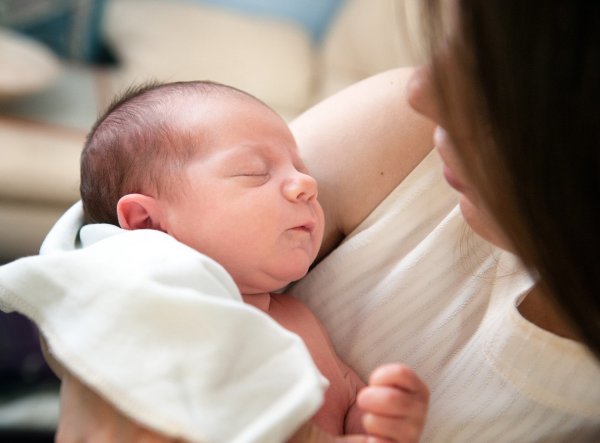
A newborn in the caring hands of a mother.

Let us talk about the reality of a patriarchal society. Where the voices get suppressed, but now it’s reflected in the reports. According to the World Population 2020 Report released by UNPFA (United Nations Population Fund) conveys that in India, almost one-third of the total missing females in the world accounts for an estimated figure of 45.8 million people. The children below the age of 5 years, where one out of nine females foresees death due to early gender detection.

A girl child with this mother in a rural village in India.

This pandemic may heal nature, but not the people surviving in the nation, an increase in violence and discrimination is likely to be seen as a consequence of no income source. The practice of child marriage may have vanished, but there are still traces of such incidents where they tried to flout the laws. The technology may have been a boon, but when undauntedly used by the culprits to gender bias by ultrasound, it has crashed their compassion and dreams before it ignites.

A proud mother with her three daughters.

The developing countries are already trying to fight problems like reducing poverty, boosting literacy rate, abandoning illegal trade. Additionally, other matter of concern arises like child trafficking and drug abuse are acting as barriers to the roadmap to success. An abundant investment in terms of money as well as time from renowned leaders, influencers can save the lives of the hapless fate of being such a victim of unfortunate events.

One inspirational story I can share is about a small family where a baby girl enters their life. This incident may sound as a non-fictitious story, but in Mumbai, India, where after three years of marriage, god showers happiness as a unique member enters their life. A 32-year old father was happy to see his baby after ten days free of the contamination. The mother was a patient in the COVID ward in Nowrosjee Wadia Maternity Hospital. They are safe now and returned thanking the efforts taken by the hospital. These doctors and parents who abide by the guidelines do deserve appreciation rather than criticizing uselessly on the health system. The slow curve can take steady growth any day when we won’t be able to see each other, and the day isn’t too far.

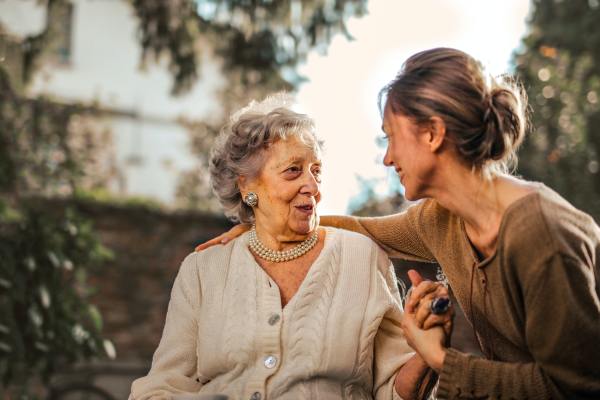
Two mothers in a single frame. Such a beauty.

Even a mother can fall into depression; after all, she is a person like all of us. On a positive note, motherhood is seen over drugs while parenting their children. After testing it on rats, contributes the information in the research related to the infralimbic cortex, which is responsible for emotions, preferred the acceptance towards maternal behavior over other addictions. This action shows immense love for their offspring. We as a part of the nourishing society, we can pledge that we will never let their name die, and forever keeping her head upraised in pride.

Ayurveda Medicines

Herbs have been known and used for many centuries for their healthily beneficial properties. The people of Sumer (one of the earliest civilizations of the world) used medicinal herbs such as mulethi and mint. This is evident from the tablets made of clay obtained around 4000 BCE.
The Chinese literature ‘Pen Sao’, written around 3000 BCE, had about 1000 herb formulas and these formulas would date back thousands of years. History recorded in Egypt in 1700 BCE shows that herbs such as hapusha (thorny leaves and bush with poisonous fruits like plum) and garlic were known to them and were used for treatment since 4000 BCE.
The Egyptians also knew about the marvelous qualities of the blossom flower. Women like Cleopatra grinded the petals of the flowers and used them for the beauty of their skin to protect the skin from dry, dry weather. These ancient truths depended on herbs to maintain health and beauty. They knew a lot about which we do not know anything.
The word botany has included many things in it, such as roots, leaves, bark and berry. You must have found that we also use the terms herb and vegetable interchangeably. Today, herbs are commonly called the plant or part of a plant, which is used for its medicinal properties, flavors or fragrance properties.
Even today the nutrients found in vegetation are unmatched and very important for our health. But in today’s modern times we also have the option of taking a herb supplement.
This undesirable use of drugs is praiseworthy and should be done in other countries as well. Germany is the only country where an active substance in the St. John’s Wart – Hypericum is certified for medical use.
While many countries, such as China, Japan, Korea, France and Germany are diagnosing various types of health problems with herbal medicine, on the other hand the medical community in North America is still skeptical about herbs. And is often in favor of allopathic medicine or surgery except for the treatment of diseases.
One problem is that making herbal medicines is not as profitable as allopathic medicines. A modern medicine can be patented, giving the manufacturer company its exclusive rights. Whereas, herbs are readily available to most consumers and there are very few patents.
If a company spends millions of dollars doing research and validating its effects on an herb and another company, which has spent no money, brings the same product to market at a lower price, then the first company This will be a loss deal.
Since there is not much benefit in this, the companies making herbal medicines are not able to cheat the doctors like allopathic medicine companies do. As a result, modern medicine increases the inclination to treat diseases. Instead of treating it slowly with healthy herbs or by using them already, diseases should be avoided.
In more than 25 percent of medicines recommended by a physician, active substances are obtained from plants. Many medicines available in stores are also made from plant compounds.
The white bark is the fundamental source of salicin, which forms the basis of aspirin. Selisin was first artificially synthesized in 1852. Later in 1899, it was further enhanced to make it less irritable to the stomach and brought to the attention of a well-known pharmaceutical company called acetylsalicylic end, called aspirin.
Long before all these incidents, the white bark was used to relieve general aches and pains. The ancient Egyptian, Assyrian, and Greek manuscript mentions white bark, and this effective herb was used by ancient physicians, Galen, Hippocrates, and Dioscorides, to treat pain and fever.
It was used by Native American Indians for headaches, fevers, injured muscles, arthritis, and colds. We started taking herbs, taking medicines made from them and now we have started using the herb in its pure form.

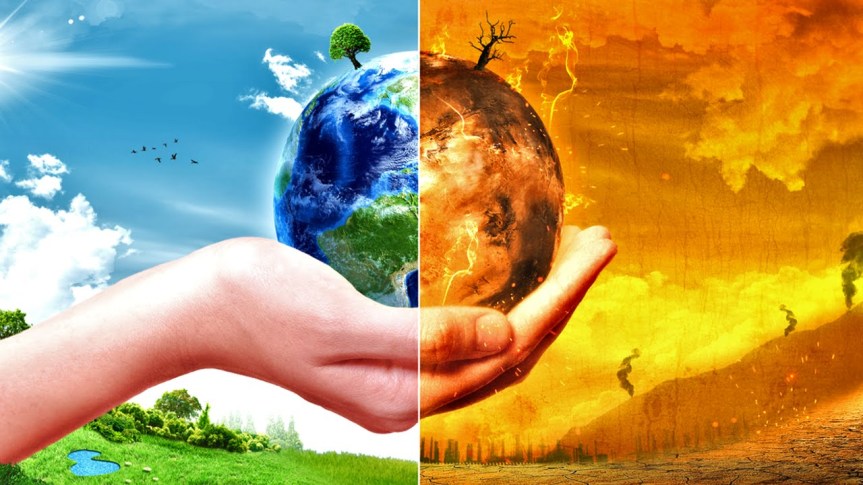
Climate Forcing

Climate “forcing” are factors in the climate system that either increase or decrease the effects to the climate system.

• Positive forcing such as excess greenhouse gases warm the earth while negative forcing, such as the effects of most aerosols and volcanic eruptions, actually cool the earth.

• Atmospheric aerosols include volcanic dust, soot from the combustion of fossil fuels, particles from burning forests and mineral dust.

• Dark carbon-rich particles such as soot from diesel engines absorb sunlight and warm the atmosphere.

• Conversely, exhaust from high-sulphur coal or oil produce light aerosols that reflect sunlight back to space, producing a cooling effect. Aerosols that form naturally during volcanic eruptions cool the atmosphere. Large volcanic eruptions can eject enough ash into the atmosphere to lower temperature for a year or more until the sulfate particles settle out of the atmosphere.

Altering the Energy Balance

• The power of a process to alter the climate is estimated by its “radiative forcing,” the change in the Earth’s energy balance due to that process.

• Some climate forcings are positive, causing globally averaged warming, and some are negative, causing cooling. Some, such as from increased CO₂ concentration, are well known; others, such as from aerosols, are more uncertain.

Natural Forcing:

• Natural forcing include changes in the amount of energy emitted by the Sun, very slow variations in Earth’s orbit, and volcanic eruptions.

• Since the start of the industrial revolution, the only natural forcing with any long-term significance has been a small increase in solar energy reaching Earth. However, this change is not nearly enough to account for the current warming.

Human-Induced Forcing

• Climate forcing can also be caused by human activities. These activities include greenhouse gas and aerosol emissions from burning fossil fuels and modifications of the land surface, such as deforestation.

Human-Generated Greenhouse Gases

• Greenhouse gases are a positive climate forcing; that is, they have a warming effect. Carbon dioxide emitted from the burning of fossil fuel is presently the largest single climate forcing agent, accounting for more than half of the total positive forcing since 1750.

Human-Generated Aerosols

• Burning fossil fuels adds aerosols to the atmosphere. Aerosols are tiny particles in the atmosphere composed of many things, including water, ice, ash, mineral dust, or acidic droplets. Aerosols can deflect the Sun’s energy and impact the formation and lifetime of clouds. Aerosols are a negative forcing; that is, they have a cooling effect.

Causes of Climate Change

• While natural forcing do exist, they are not significant enough to explain the recent global warming. Human activities are very likely responsible for most of the recent warming.

Estimation of Each Gas

Each gas’s effect on climate change depends on

three main factors:

Concentration of each gas

Concentration, or abundance, is the amount of a particular gas in the air. Greenhouse gas concentrations are measured in parts per million, parts per billion, and even parts per trillion.

One part per million is equivalent to one drop of water diluted into about 13 gallons of liquid (roughly the fuel tank of a compact car).

Amount of time they stay in atmosphere

Each of these gases can remain in the atmosphere for different amounts of time, ranging from a few years to thousands of years.

All of these gases remain in the atmosphere long enough to become well mixed, meaning that the amount that is measured in the atmosphere

is roughly the same all over the world, regardless of the source of the emissions.

Strength of their impact

Some gases are more effective than others at making the planet warmer and “thickening the Earth’s blanket (green house gas)”.

 For each greenhouse gases Global Warming Potential (GWP) has been calculated to reflect how long it remains in the atmosphere, on average, and how strongly it absorbs energy.

FISCHER BLACK AWARD

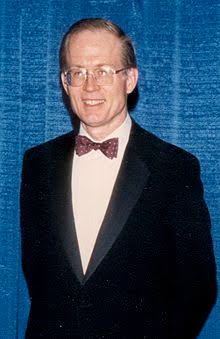
FISCHER BLACK

Fischer Black prize is awarded to a person to a financial scientist for a body of work that demonstrates significant original research that is relevant to finance practice.

Fischer Black Prize is a memorial prize awarded in honor of Fischer Black that rewards individual financial research. The prize was established in 2002 and first awarded in 2003. Eligible scholars must either be below 40 years in age, or under age 45 but not have been awarded a Ph.D. (or equivalent) by age 35. The prize is awarded biennially at the American Finance Association’s Annual Meeting.This award to honor a leading young finance scholar is analogous to the John Bates Clark Medal in economics and the Fields Medal in mathematics.

The award honors Fischer Black, a former General Partner at Goldman Sachs and Professor at the Massachusetts Institute of Technology. Among Black’s notable research accomplishments was the development (with Myron Scholes) of the Black–Scholes option pricing model. The awardee is chosen for having a body of research that embodies the Fischer Black hallmark of developing original research In years where no such candidate meets the rigorous standards, as was the case in 2005, no award is presented.

The Fischer Black Prize is one of two biennial awards presented by the American Finance Association (the other is the Morgan Stanley-American Finance Association Award For Excellence In Finance) in alternating years at its annual conference to scholars for bodies of research. The Association also awards two annual awards for individual research publications at its conference (Smith Breeden Prize and Brattle Prize).

The American Finance Association’s 2019 Fischer Black Prize is awarded to Professor Ralph Koijen of the University of Chicago. The prize is awarded to the person under 40 whose work best exemplifies the Fischer Black hallmark of developing original research that is relevant to finance practice.

Raghuram Rajan, the Joseph L. Gidwitz Professor of Finance in the Graduate School of Business, has been awarded the inaugural Fischer Black Prize from the American Finance Association.

Rajan’s Ph.D. thesis pointed out the downside to cozy bank-firm relationships long before these became apparent in detailed studies of systems like Japan’s. His recent theoretical work with Douglas Diamond, the Merton H. Miller Distinguished Service Professor of Finance in the GSB, knits together the microtheory of banking with macroeconomic theory. Their research promotes greater understanding of the role banks play in the provision of liquidity, why this function makes banks so prone to systemic crises, and why changes in monetary policy have such a significant effect on bank lending.