EXTENDED REALITY (XR)

What is Extended Reality (XR)?

Extended reality (XR) is a term referring to all real-and-virtual combined environments and human-machine interactions generated by computer technology and wearables, where the ‘X’ represents a variable for any current or future spatial computing technologies. It includes representative forms such as augmented reality (AR), mixed reality (MR) and virtual reality (VR) and the areas interpolated among them. The levels of virtuality range from partially sensory inputs to immersive virtuality, also called VR.

XR is a superset which includes the entire spectrum from “the complete real” to “the complete virtual” in the concept of reality–virtuality continuum introduced by Paul Milgram. Still, its connotation lies in the extension of human experiences especially relating to the senses of existence (represented by VR) and the acquisition of cognition (represented by AR). With the continuous development in human–computer interactions, this connotation is still evolving.

XR is a rapid growing field being applied in a wide range of ways, such as entertainment, marketing, real-estate, training and remote work.

Augmented Reality

Augmented reality is the simplest of the three XR subsets and describes the interaction between a virtual experience and the real world, which results in an augmented or supplemented environment. One popular example of augmented reality is the smartphone game “Pokémon GO,” where users virtually place a character somewhere in their surrounding environment.

Augmented reality is slowly making its way into sectors beyond entertainment, such as retail, online shopping, and manufacturing. Augmented reality is arguably the most widely adopted of all XR technologies as it requires the least amount of processing, allowing it to function on most smartphones and tablets. Augmented reality can exist in any environment that contains two necessary features – a camera to capture the surrounding environment and a processor to understand that environment and actively simulate a virtual object placed into that environment

Currently, the only factor slowing the growth of augmented reality is the native processing power in devices where augmented reality will take place.

Virtual Reality

As the name and image above suggest, virtual reality (VR) creates a completely virtual environment that allows users to immerse themselves in an alternate universe. The Oculus, a consumer-grade, multimedia entertainment VR solution, may be the most famous VR system on the market today. Since its founding in 2012, Oculus’s creators have continually pushed the limits of virtual reality technology.

Because virtual reality is completely simulated, users can also supplement the virtual, simulated environment with controllers and other sensory stimulators. The most obvious sensory additives, such as headphones and haptic devices, have already made their way into the virtual reality market. More advanced technologies, such as the haptic technology presented by Ultraleap, are working their way into the virtual reality market to provide users with next-level intractability and feedback.

VR technology is currently limited by low-power processing devices and GPUs. An immersive virtual reality experience requires a fully-developed simulation as well as native processing of the interactions and movement within the simulation. We see one excellent example of these current processing limitations in the jump from “standalone” VR headsets to headsets that require a PC for operation. When compared to standalone simulators, PC virtual reality devices feature more advanced – video quality, refresh rate, video complexity, movement tracking, controller complexity, audio integration and immersive experience.

Mixed Reality

The newest and most complex facet of XR is mixed reality. Think of mixed reality as a hybrid between augmented and virtual reality. Its goal is to superimpose an interactive experience over the real world, allowing for both the simulated reality and true reality. In augmented reality, the ability to interact with the simulation does not exist or is significantly limited. In virtual reality, the ability to interact with the real world does not exist. Mixed reality has set out to fill the gap between the virtual and augmented world; this highly advanced augmented reality allows for an interactive experience that’s similar to virtual reality.

One excellent example of mixed reality is Microsoft’s HoloLens’ integration with Skype, in which the user can superimpose a Skype session into reality, transmit their reality over Skype, and virtually control their Skype session with their hands by “touching” the simulation. Imagine being able to scroll through your Twitter feed or navigate the internet using Google glasses, all while being able to see the world around you.

Mixed reality’s limitations lie in the processing capabilities of available devices. However, this technology may hold the most promising future for revolutionizing how we interact with true reality. Mixed reality has already made its way into employee training, manufacturing, military, and the consumer sector. Imagine putting on your MR goggles to diagnose internal issues within your car, see your current performance, and adjust settings.

As highly complex XR devices become more powerful, efficient, compact, and affordable, this technology will find its way into our everyday lives. Scientists 50 years ago would never have believed we could fit terabytes of storage into a device the size of a stick of gum, but here we are. In 50 more years, we may be able to fit a data center worth of processing power into wearable glasses.

Uses of Extended Reality

Additionally, the hardware and software for interacting with XR have improved drastically over the years. XR technologies have improved with sophisticated tech, high-quality imaging and the perception for depth and spatial surroundings. XR software utilises improved programming, such as hand tracking and live movements, so that the environment that XR creates is very similar to the physical environment. Now, a VR headset is available for a fairly affordable price. Products like the Oculus Rift can show students the future, or introduce other emerging technologies.

In terms of industry use, almost 50% of XR is currently used in education. The interactive technology Google Expeditions allow pupils to sit in their classroom and experience virtual worlds. Similarly, apps such as Unimersiv totally immerse students in the sights and sounds of a foreign culture and language, which is proven to aid learning and development. Indeed, 9 out of 10 teachers in the UK recognise that XR technologies would be a benefit in classroom teaching.

In healthcare, there are many application areas of virtual reality, such as being used to train surgeons and doctors. Medical professors at Stanford University have stated their intention to educate their students on anatomy using VR technology, and a research team at Cambridge University is seeking to construct 3D models of tumours that can be explored in incredible detail.

Research into VR uses in this field has found that VR allows specialists to change in situations that are usually changing on the spot. For example, research has shown that rehearsing surgery in VR can speed up operations. It is also being used to allow health & safety trainees, and emergency responders to rehearse disaster scenarios in a safe but very real looking environment. Fergus Drake, CEO of not-for-profit Crown Agents, stated: “Virtual Reality allows us to go some way in accurately conveying the pressures of a humanitarian crisis and we hope it appeals to a new generation of those wanting to work in this life-saving field.”

Aside from educational applications, XR technology is also being used in design, architecture and engineering. Due to the possible application areas of virtual reality, architects can create 1:1 scale models of their projects, which they can then explore, manipulate and test before commencing the build. Similarly, automotive engineers sculpt new cars and engines in Virtual Reality suites, which brings down the cost of building numerous real-world prototypes.

The many possible VR uses are also helping fashion retailers allow consumers to customise their own garments, as well as building virtual shops so customers can browse their goods from the comfort of their own home. Global furniture makers are using AR technology to allow customers to try out new furniture in their own homes before completing their purchase.

These are just a few examples of the current and potential uses of XR technology. Hire Intelligence’s General Manager, Mark Bates, says: “The rise of XR shows no sign of abating. It’s revolutionising training and events across a variety of industries. As VR technology continues to develop there are more and more opportunities to learn about and engage with XR and the potential is hugely exciting”.

It is clear that XR provides users with a creative way to engage in a variety of new environments through simulation technology. With this, XR also offers logical solutions to modern challenges.

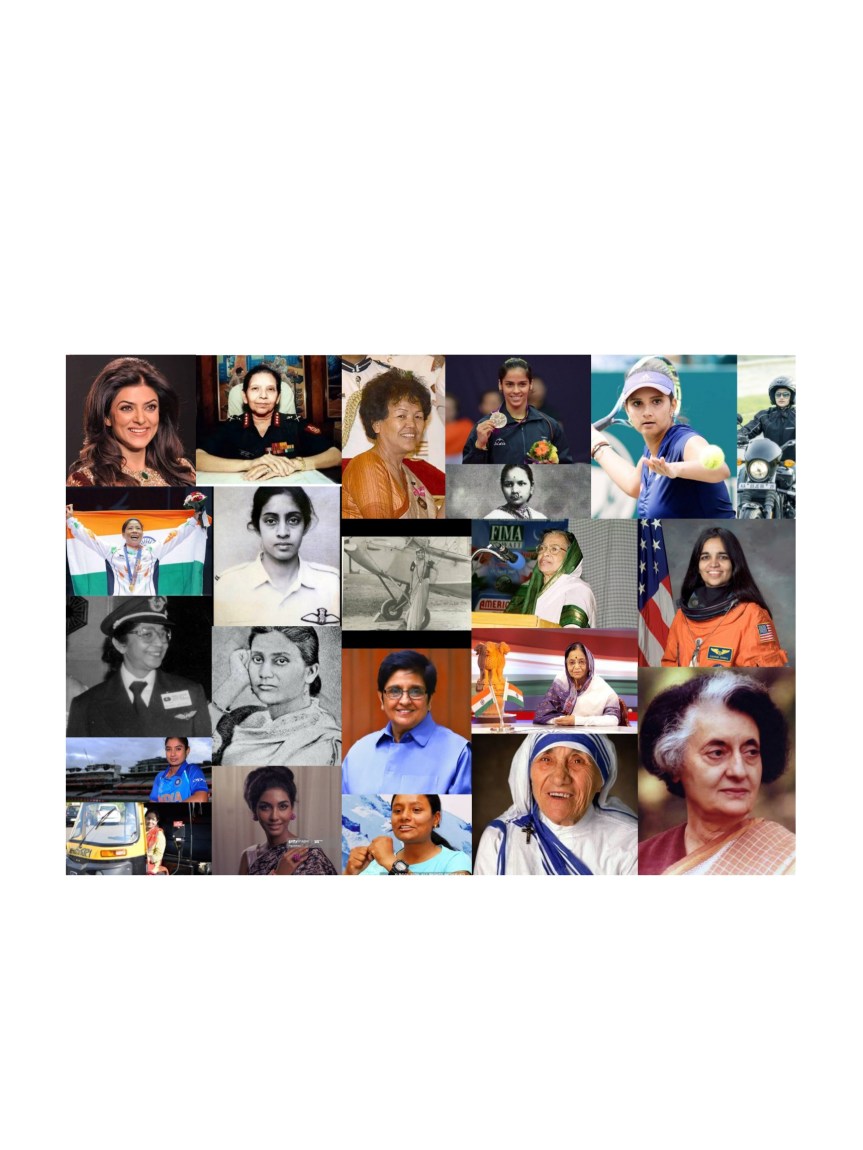
Indian Women Who Are FIRSTS In Their Field

In Indian history, where we find once upon a time women were not allowed to come in front of the males. They didn’t have the right to study, they didn’t have the freedom to talk. But some of the women who had broken the gender barriers worked hard for their rights and pioneers of woman empowerment, let’s see those women who are proved themselves in different fields and inspired millions.

1.Kadambini Ganguly was the first Indian and South Asian female physician and surgeon,1886 trained in western medicine, as well as one of the first female graduates in India, 1882

2.Chandramukhi Basu was one of the first two female graduates of the British Empire. In 1882, along with Kadambini Ganguly, 

3.Anandibai Gopalrao Joshi became the first Indian female physician in the year 1887.

4.Kamini Roy was a Bengali poet, social worker, and feminist in British India. She was the first woman honors graduate in British India.

5.Rukhmabai was an Indian physician and feminist. She is best known for being one of the first practicing women doctors in colonial India


6. Sarla Chakra was the first Indian woman to fly an aircraft,she earned an aviation pilot license in 1936 at the age of 21 and flew a Gypsy Moth solo.

7.Durba Banerjee was the first pilot of Indian Airlines in 1956 and the first Indian woman commercial pilot.

8.Harita Kaur Deol was the first woman pilot to fly solo in Indian Air Force 1994

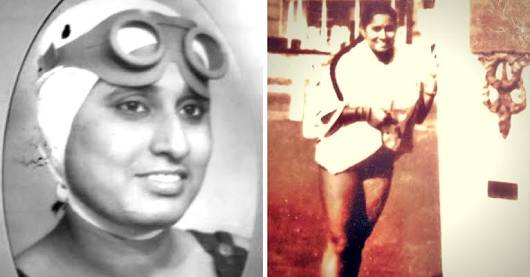
9.Arati Saha was an Indian long distance swimmer, best known for becoming the first Asian woman to swim across the English Channel in 29 September 1959. 

10.Bachendri Pal became the first Indian woman to reach the summit of Mount Everest In 1984. 

11. Arunima Sinha is the first female amputee to climb Mount Everest. She is also the first Indian amputee to climb the Everest

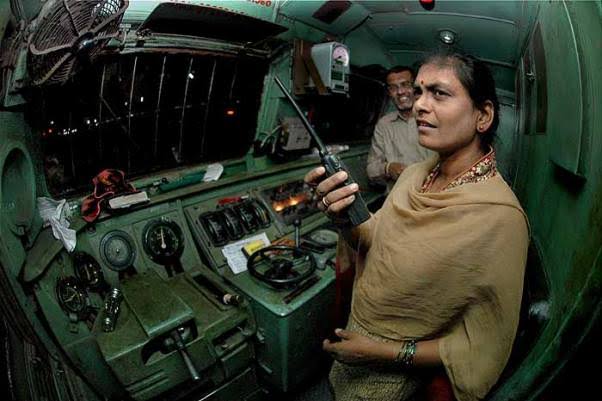
12. Surekha Shankar Yadav is a female loco pilot of the Indian Railways in India. She became India’s first female train driver in 1988.

13.Shila Dawre became the country’s first woman auto-rickshaw driver when she first stepped into the ‘male-dominated’ zone in the year 1988. 

14.Roshini Sharma recently became the first Indian woman to ride a motorbike from Kanyakumari to Kashmir.


Indira Gandhi became the first woman Prime Minister of India and served from 1966 to 1977.1971, she became the first woman to receive the Bharat Ratna award.

Mother Teresa became the first Indian woman to win the Nobel Peace Prize in 1979

Pratibha Patil, Indian lawyer, and politician who was the first woman to serve as president of India (2007–12).

Justice M. Fathima Beevi became the first female judge who was appointed to the Supreme Court of India in 1989. 

Isha Basant Joshi She was the first woman ICS officer of British India

Kiran Bedi, joining Indian Police Service (IPS) in 1972, Kiran Bedi became the first woman officer in India.


Sania Mirza,a professional tennis player, became the first ever Indian woman to win the Women’s Tennis Association (WTA) title in 2005.

Mangte Chungneijang Mary Kom, also known as Mary Kom is the only woman boxer who has won a medal in each of the six World Championships. 

Mithali Raj was the first woman to score a double hundred in Test Cricket (214* against New Zealand at Wellington, 2004). 

Kalpana Chawla was an American astronaut, engineer, and the first woman of Indian origin to go to space. She first flew on Space Shuttle Columbia in 1997 

Bharataratna Madurai Shanmukhavadivu Subbulakshmi was an Indian Carnatic singer from Madurai, Tamil Nadu. She was the first musician ever to be awarded the Bharat Ratna, India’s highest civilian honour. 

Homai Vyarawalla, commonly known by her pseudonym Dalda 13, was India’s first woman photojournalist

“Can Wormhole – Be Someday a Bypass to New Possibilities”?

Science and technologies have helped humans to survive and life their lifestyle with utmost comfort and facilities. These have not only opened opportunities to new ideas but also have made things possible which at times were even difficult to imagine. Every individual has their own dreams and wishes which they want to be true one day. But the fantasy and desire which each individual has in their life especially in their childhood to travel to space and see how life’s out there, irrespective of the thought and difficulties attached to it. But man with the development of ideas and better technology have been able to bring this dream to something practical and was able to send things to space in the late 50’s. But what initially got the attraction was the man’s first landing on the natural satelliteMoon in the late 60’s , which transformed the technology and the way every individual saw space to different phases. With this we humans were able to accomplish various other achievements like that of satellites, space exploration and the most important, International Space Station. With all these space missions and human interference as common visit to space opened the door to the thought of space travel and people were and are really keen to visit space ones in their lifetime and even to other planets be in this galaxy or other. “But is it really possible” ? 

Man has been figuring out different ways and ideas to reach to different planets, not only in this galaxy but also to the other. All help from various satellites to visualise different space objects and phenomena. There are many possibilities of life on most of the planet but it’s difficult to reach these planets as these are various light years apart. Which surely means that to reach these planets we must manufacture a spacecraft traveling at a speed of light or more, which contradicts the statement of Einstein and limits our reach. According to Einstein theory or the famous Theory of Relativity, any object which has a certain mass cannot travel with the speed of light, as it would require an enormous amount of energy or the ideal system to produce energy which won’t get exhausted soon. So it surely makes it ideally impossible to reach out these planet at these distance. 

But still there are possibilities to reach out these planets as per different theories even without breaking the Theory of Relativity. The existence of Wormholes, still a questionable part and still exists only in theories. As per the general relativity theory by Einstein, it tells about how gravity really works and why it works. According to his theory, gravitation works by the bending of space due to the weight of the planets and stars. It thus forms a curved path, which helps them to revolve around each other. So more the weight of the planet or object, the more it will bend the space. So the main belief which Einstein had in this theory was that, it is possible to create a shortcut between any two objects as they “Create bend in space  thus connecting those through an invisible path connecting them both through space and time. So it brought out the possibility to travel in space, by bending it”. 

So is it really possible to travel through these Wormholes, there are things which do contradict travelling through it. Since no significant occurrence of these have been observed in our nearest surroundings. Also it is believed that these are really small which might not fit the space ship or spacecraft into it. So we need to expand it so as to travel through them. Exotic matter can be a way out in such condition. Exotic matter is something which also has no existence but scientists are into making it. Exotic matter is totally different from the normal matter. It is believed that exotic matter has negative energy density and pressure. So This could be used to push back the walls of the wormhole and create enough space for the spacecraft to enter it.But it’s believed  that as soon as we enter a wormhole, the wormhole can destroy and thus we would die in it . Also there are possibilities which barely makes it difficult for us to return back to our time period, as we would travel to different times. Also the existence of another wormhole would still be a matter of thought and not sure would exist or not. 


“It’s really fascinating to hear about all this and know about the research going in this field, it might seem to be dangerous but still we are into making it possible through our technological aspects as well as through various research in space. It’s still a question to doubt time travel or space travelling to other planets is possible or not and will be able to do so. But it’s also believed that anything which is mathematically driven, is possible. So let’s wait for better beat to enter a new era of possibilities”.

In search of a new life: The Mars planet

Life has been existing over for 3.5 billion years ago. There were significant events in the past, like the extinction of dinosaurs about 66 million years ago. We also know about the start of agriculture, human-made tools used for several purposes. Now in the 21st century, we’ve accomplished a lot of achievements. Still, yes, we are slowly destroying the planet Earth. The nature around us earlier was so satisfying maybe a decade or before that. Suddenly, humanity started constructing buildings, complexes, resorts, artificial reservoirs, etc. This list never ends. They are even cutting down the trees to get more residential areas leading to deforestation. After all, this will all lead to a concrete jungle in the future, there will be no oxygen for survival, the animals will start disappearing, and soon everything will come to an end. This sequence of incidents can be a nightmare for someone, but this can turn into a reality. It’s in our hands to save the planet.

A dinosaur statue.
A dinosaur statue.

On the other side, they’re positive things going around the globe. Scientists and researchers have continuously been looking for existence in life in the other planets. Several space programs have been successfully executed and are still in progress. We know our solar system consisting of eight planets, but we’ve been more interested in the planet Mars. The first mission on Mars on 14th July 1965, Mariner 4, followed by Mariner 9, entered into the orbit. Though the first landing was by Mars 2 but crashed due to a malfunction which later on 2nd December 1971, Mars 3 became the first spacecraft to land on the Mars surface, that too interrupted after 14.5 seconds after its signal transmission failed.

A Mars rover.
An animated Mars rover.

Now in search of water on Mars, there are several types of research claiming that it is in the form of ice caps and many more theories. Still, of these findings, scientists, namely John G. MacDonald, Karien Rodriguez, and Stephen Quirk, developed something unique by which plants can be grown. You heard it right, a polymer through which it can deliver oxygen for the germinating sprout. They claim that regolith has nutrients for plant growth, but not oxygen, the prior requirement of a sapling as 95% of the Martian atmosphere is carbon dioxide. They described two methods of extracting oxygen, either from the metal oxides pre-existing in the regolith and electrolysis, but both processes are time-consuming. The proposed idea is that when the polymer combines with sodium hydroxide and hydrogen peroxide, it becomes an oxygen infused foamed hydrogel. It has the potential to deliver controlled amounts of gaseous oxygen. The foamed matrix, along with regolith, can form the base or be directly coated around the seed to grow plants.

A plant is in a hand.
A person is holding a plant.

The most crucial mission among them was MOM, an interplanetary mission by ISRO, India called Mangalyaan, orbiting since 24th September 2014, becoming the 4th space agency to reach the planet Mars with the lowest cost. This mission has fascinated the kids in India, it got picturised in a movie called “Mission Mangal” in the Hindi language, premiered on 13th August 2019 in theaters. Imagination never ends, everything has a route, and hence it becomes a success, a part of the movie’s storyline. I hope you adhere the same in reality.

For more details about the research, you can visit the site mentioned below:

https://www.liebertpub.com/doi/10.1089/ast.2019.2056

AUTONOMOUS DRIVING

What does ‘autonomous driving’ mean?

An autonomous car is a vehicle capable of sensing its environment and operating without human involvement. A human passenger is not required to take control of the vehicle at any time, nor is a human passenger required to be present in the vehicle at all. An autonomous car can go anywhere a traditional car goes and do everything that an experienced human driver does.

Levels of Driving Automation

  • No automation: Manual control. The human performs all the driving tasks (steering, acceleration, breaking, etc.).
  • Driver assistance: The vehicle features a single automated system (example: it monitors speed through cruise control).
  • Partial automation: The vehicle can perform steering and automation. The human still monitors all tasks and can take control at any time.
  • Conditional automation: Environmental detection capabilities. The vehicle can perform most driving tasks, but human override is still required.
  • High automation: The vehicle performs all driving tasks under specific circumstances. Geofencing is required. Human override is still an option.
  • Full automation: The vehicle performs all driving tasks under all conditions. Zero human attention or interaction is required.

Autonomous vs Automated vs Self-Driving

The SAE (Society of Automotive Engineers) uses the term automated instead of autonomous. One reason is that the word autonomy has implications beyond the electromechanical. A fully autonomous car would be self-aware and capable of making its own choices. For example, you say “drive me to work” but the car decides to take you to the beach instead. A fully automated car, however, would follow orders and then drive itself.

The term self-driving is often used interchangeably with autonomous. However, it’s a slightly different thing. A self-driving car can drive itself in some or even all situations, but a human passenger must always be present and ready to take control. Self-driving cars would fall under Level 3 (conditional driving automation) or Level 4 (high driving automation). They are subject to geofencing, unlike a fully autonomous Level 5 car that could go anywhere.

Technical Challenges

There are different systems that help the self-driving car control the car. Systems that need improvement include the car navigation system, the location system, the electronic map, the map matching, the global path planning, the environment perception, the laser perception, the radar perception, the visual perception, the vehicle control, the perception of vehicle speed and direction, and the vehicle control method.

The challenge for driverless car designers is to produce control systems capable of analyzing sensory data in order to provide accurate detection of other vehicles and the road ahead. Modern self-driving cars generally use Bayesian simultaneous localization and mapping (SLAM) algorithms, which fuse data from multiple sensors and an off-line map into current location estimates and map updates. Waymo has developed a variant of SLAM with detection and tracking of other moving objects (DATMO), which also handles obstacles such as cars and pedestrians. Simpler systems may use roadside real-time locating system (RTLS) technologies to aid localization. Typical sensors include lidar, stereo vision, GPS and IMU. Control systems on automated cars may use Sensor Fusion, which is an approach that integrates information from a variety of sensors on the car to produce a more consistent, accurate, and useful view of the environment. Heavy rainfall, hail, or snow could impede the car sensors.

Driverless vehicles require some form of machine vision for the purpose of visual object recognition. Automated cars are being developed with deep neural networks, a type of deep learning architecture with many computational stages, or levels, in which neurons are simulated from the environment that activate the network. The neural network depends on an extensive amount of data extracted from real-life driving scenarios, enabling the neural network to “learn” how to execute the best course of action.

Human Factor Challenges

Self-driving cars are already exploring the difficulties of determining the intentions of pedestrians, bicyclists, and animals, and models of behavior must be programmed into driving algorithms. Human road users also have the challenge of determining the intentions of autonomous vehicles, where there is no driver with which to make eye contact or exchange hand signals. Drive.ai is testing a solution to this problem that involves LED signs mounted on the outside of the vehicle, announcing status such as “going now, don’t cross” vs. “waiting for you to cross”.

Two human-factor challenges are important for safety. One is the handoff from automated driving to manual driving, which may become necessary due to unfavorable or unusual road conditions, or if the vehicle has limited capabilities. A sudden handoff could leave a human driver dangerously unprepared in the moment. In the long term, humans who have less practice at driving might have a lower skill level and thus be more dangerous in manual mode. The second challenge is known as risk compensation: as a system is perceived to be safer, instead of benefiting entirely from all of the increased safety, people engage in riskier behavior and enjoy other benefits. Semi-automated cars have been shown to suffer from this problem, for example with users of Tesla Autopilot ignoring the road and using electronic devices or other activities against the advice of the company that the car is not capable of being completely autonomous. In the near future, pedestrians and bicyclists may travel in the street in a riskier fashion if they believe self-driving cars are capable of avoiding them.

In order for people to buy self-driving cars and vote for the government to allow them on roads, the technology must be trusted as safe. Self-driving elevators were invented in 1900, but the high number of people refusing to use them slowed adoption for several decades until operator strikes increased demand and trust was built with advertising and features like the emergency stop button.

Impact

According to a 2020 study, self-driving cars will increase productivity, and housing affordability, as well as reclaim land used for parking. However, self-driving cars will cause greater energy use, traffic congestion and sprawl.

According to a 2020 Annual Review of Public Health review of the literature, self-driving cars “could increase some health risks (such as air pollution, noise, and sedentarism); however, if proper regulated, AVs will likely reduce morbidity and mortality from motor vehicle crashes and may help reshape cities to promote healthy urban environments.”

“Earth,Mars and the Human Connection”

Man and technology have evolved as the industrial revolution started. Which not only served the base for new technology and methods in manufacturing but also motivated people to be a part of it by involving in it as scientists, workers and even the buyers by shifting to urban areas to work for their livelihood. This not only changed the world, but also introduced it to a new phase and living of lifestyle. Today we acknowledge different things in our surroundings, including technology in its manufacturing. This technology has helped humans since ages, and to bring up more comfort to his life. The thought every individual had initially was different difficulties, which made them believe it wasn’t possible, but with the essence of togetherness ,we all made it possible. But the biggest and the massive investment and technological advancement was brought up by the idea to go in the space. The dream which every one had in their childhood, became reality, and we humans have been able to do it. 

Advancement in this science and technology and various other gadgets is not limited, rather growing with new ideas pulling every day. But the next big idea which companies especially like Nasa and Spacex are working on, is to colonise Mars, by 2024. With Believes to make this planet a permanent home to live on. This idea was brought by CEO, founder of spacex Elon musk and has been working with Nasa and it’s team on this project. Humans have sent rovers and satellites to Mars to know various geographical and environmental aspects which have helped to know about it’s terrain and major gases in its atmosphere. 

But the main question which arises in the mind of each individual is “How would this be possible and What would these astronauts be doing at the red planet and would be their strategies”? So for this initially Spacex and Nasa would be sending it’s Big Falcon rockets on an unmanned missions which would be setting up the power sources ( the solar panel) and to mine so as to build their automated Propellent system and plant. The main work for this propellant plant would be to process the excess of carbon dioxide and water found in the surface of Mars to make oxygen and methane which would then be used as a propellant on the return back mission to earth. The sabatier process involved the usage of nickel catalyst to interact with hydrogen and carbon dioxide at high temperatures and pressure which results in the production of water and methane. This would be liquified and used fuel to come back .

But the most important thing to do is to set up their base on Mars which could be similar to the Internal Space station with expansions at each side. Talking about the essentials food and water, these astronauts would be carrying with them almost 2 years’ vault of food vacuumed with them like the one used in the International space Station. Nasa has also been working on the travel mode, which would be a rover-like thing being able to carry around 4-5 people on board even in the baddest and toughest areas if land.. 

“It would be a great adventure to see how humans are able to cross this barrier and prove the power of technologies of different aspects. This journey surely will be  filled with adventures, emotions, series of difficulties but with significant hope and the belief to overcome all of them and achieve success”.

Indian social media app migrates to google cloud

Homegrown social media site, ShareChat, announced Monday the full transition of its technology to Google Cloud that supports more than 60 million active monthly users. The regional platform has made the shift to scale its market, boost productivity, cut costs and enhance the overall success of the app that houses active users in 15 Indian languages.

ShareChat following a host of Indian companies that, during the lockdown, changed or rebalanced their cloud provider mix to scale up to the massive increase in usage and reliance on such services. ShareChat’s IT network was divided between Amazon Web Services and Google Cloud according to the platform ‘s previous privacy policy claim.

Given the high-intensity data , high volume of content and traffic that the platform generates such as posts, likes, views and followers, ShareChat relies heavily on IT infrastructure. A significant proportion of their mobile-application’s subscribers come from cities that come in tier-2 and tier-3, with most of them heavily  depending on 2 G networks. Therefore the it is most critical for such businesses to be able to minimize the impact of mobile bandwidth and providing all users with a great experience, the management said.

Cloud service companies have seen consistent increase in revenue in the first six months of 2020 with multinational technology firms such as Amazon.com, Microsoft Corp, and Google Inc. announcing solid growth in the demand for cloud computing as growing percentages of institutions turned to online connectivity for continued research.

As per the numbers shared by the companies for January-March, Amazon Web Services ( AWS) continues to lead with a global market share of 32 percent followed by Microsoft Azure (17 percent) and Google and Alibaba at around 6 percent each. India is currently a high-priority destination for these companies, with a growing number of established firms, startups and small and medium-sized enterprises (SMBs) looking to embrace cloud and IT technologies in the face of the government’s drive for a stronger digital presence. The pandemic has only added to that urgency.

In April 2020, ShareChat decided to migrate to Google Cloud to successfully scale and achieve its customer service goals.

“We are happy to share that a couple of months down the line we have not only experienced 100% uptime but also we see the cost benefits of our choice much beyond our initial expectations. The scale at which ShareChat is, we wouldn’t have looked beyond the top three providers and Google was the perfect fit for us,” said Venkatesh Ramaswamy, vice president of engineering, ShareChat.

In the middle of the covid-19 crisis, the monumental eight-hour move from ShareChat ‘s predominant cloud network to Google Cloud forced the former to conduct a meticulous review for nearly three months, preparing and conducting a detailed operational and strategic approach to fulfill their market needs.

“60 million users, is among the largest that we have helped migrate in recent times. Because they had a very specific requirement about the timing and method of migration, our people across the professional services, India engineering and cloud teams, APAC and global teams were all on standby to handle any situation that arises,” said Karan Bajwa, managing director (MD), Google Cloud India.

Source:https://www.livemint.com/news/india/sharechat-migrates-60-million-users-to-google-cloud-11592197345377.html

ARTIFICIAL INTELLIGENCE

What is Artificial Intelligence (AI)?

Artificial intelligence (AI) refers to the simulation of human intelligence in machines that are programmed to think like humans and mimic their actions. The term may also be applied to any machine that exhibits traits associated with a human mind such as learning and problem-solving. The ideal characteristic of artificial intelligence is its ability to rationalize and take actions that have the best chance of achieving a specific goal.

Machine Learning – the core of AI

Machine learning is an application of artificial intelligence (AI) that provides systems the ability to automatically learn and improve from experience without being explicitly programmed. Machine learning focuses on the development of computer programs that can access data and use it learn for themselves.

The process of learning begins with observations or data, such as examples, direct experience, or instruction, in order to look for patterns in data and make better decisions in the future based on the examples that we provide. The primary aim is to allow the computers learn automatically without human intervention or assistance and adjust actions accordingly.

But, using the classic algorithms of machine learning, text is considered as a sequence of keywords; instead, an approach based on semantic analysis mimics the human ability to understand the meaning of a text.

Uses of AI:

  • Chatbots: Chatbots are artificial intelligence software that can simulate a conversation (or a chat) with a user in natural language through messaging applications, websites and mobile apps or through the telephone. A chatbot is often described as one of the most advanced and promising expressions of interaction between humans and machines. However, from a technological point of view, a chatbot only represents the natural evolution of a Question Answering system leveraging Natural Language Processing (NLP). Formulating responses to questions in natural language is one of the most typical Examples of Natural Language Processing applied in various enterprises’ end-use applications. Together, chatbots and AI can create a very powerful experience. Artificial Intelligence serves as the learning mechanism for many chatbots. Chatbot AI teaches the bots how to respond to your inquiries and helps the bot learn about your personal preferences. AI bots are responsible for engaging in meaningful conversation with an end-user using chatbot AI as a source of intellect.
  • Healthcare: Artificial intelligence in healthcare is the use of complex algorithms and software in another words artificial intelligence (AI) to emulate human cognition in the analysis, interpretation, and comprehension of complicated medical and healthcare data. Specifically, AI is the ability of computer algorithms to approximate conclusions without direct human input. What distinguishes AI technology from traditional technologies in health care is the ability to gain information, process it and give a well-defined output to the end-user. AI does this through machine learning algorithms and deep learning. The primary aim of health-related AI applications is to analyze relationships between prevention or treatment techniques and patient outcomes. AI programs have been developed and applied to practices such as diagnosis processes, treatment protocol development, drug development, personalized medicine, and patient monitoring and care. Large technology companies such as IBM and Google have also developed AI algorithms for healthcare. Additionally, hospitals are looking to AI software to support operational initiatives that increase cost saving, improve patient satisfaction, and satisfy their staffing and workforce needs. Companies are developing predictive analytics solutions that help healthcare managers improve business operations through increasing utilization, decreasing patient boarding, reducing length of stay and optimizing staffing levels.
  • Cyber Security: Cybercriminals will steal an estimated 33 billion records in 2023 according to the projections mentioned in the 2018 study from Juniper Research. That’s something very grave to watch for, and this sheds light on the pressing need to fortify cybersecurity across organizations. To tackle cybersecurity proactively and accurately, infusing intelligence across the entire security ecosystem of an organization is the need of the hour”. If the recent history is any indication, the targeted cyber-attacks that happened recently and even the past attacks suggest that no one is immune to these threats unless companies are fully prepared to respond. This calls for the implementation of fortified cyber security measures. Just the stand-alone cyber security solutions would not suffice. Artificial Intelligence has a huge potential to boost the cyber security profile of a company. AI could work in harmony with the cyber security implementations, to accelerate risk reduction exponentially. Many of the Cyber Security Solutions in the market uses AI models.  For example, LogRhythm uses machine learning to profile and detect threats, compromised accounts, privilege abuse and other anomalies. The Versive Security Engine (VSE) uses artificial intelligence to separate critical risks from routine network activity.  Cybereason’s AI-powered hunting technology determines whether an organization is under attack.

Latest Developments in AI

  •  Robotics is a prime area of development for the AI community so it’s no surprise that there are plenty of start-ups conducting research with the intention of taking the field further. Seattle company Olis Robotics caught the attention of GeekWire earlier this year with a solution designed to take robotics not just to the next level, but somewhere else entirely. According to CEO Don Pickering, “Olis Robotics’ innovation currently manifests in a plug-and-play controller loaded with our AI-driven software platform. The controller and our proprietary software can operate tethered robots on the ocean floor, satellite servicing robots using high-latency satellite links in space, or industrial robots cleaning up a dangerous chemical spill on land using 4G/5G networks. Our innovation will exponentially expand the role of robots to make an impact on human advancement and exploration.”
  • New AI software developed by researchers at the University of Oxford can recognize and track the faces of individual chimpanzees in their natural habitats. The software will allow researchers and wildlife conservationists to significantly cut back on time and resources spent analyzing video footage, according to a new paper. In Science Daily, Dan Schofield, researcher and DPhil student at Oxford University’s Primate Models Lab, School of Anthropology explained, “For species like chimpanzees, which have complex social lives and live for many years, getting snapshots of their behavior from short-term field research can only tell us so much. By harnessing the power of machine learning to unlock large video archives, it makes it feasible to measure behavior over the long term, for example observing how the social interactions of a group change over several generations.’ The computer vision model was trained using over 10 million images from Kyoto University’s Primate Research Institute (PRI) video archive of wild chimpanzees in Guinea, West Africa. The team at Oxford hopes the new software will help improve conservation efforts in areas where chimpanzees are endangered.

Telecommunications workers held in Peru over Covid-19 5G cell tower conspiracy theoris

Villagers in rural Peru have detained technicians from broadband provider Gilat Peru over fears they were installing 5G technology, which they claimed was responsible for the coronavirus, police and the company said Friday.

The eight-member maintenance crew have been held since Wednesday by villagers in Acobamba province, more than 500 kilometers (300 miles) southeast of the capital Lima.The incident occurred late Wednesday when workers were sent to maintain an antenna in mountainous Acobamba’s Huancavelica region.

“They have detained eight workers from a telephone company, who maintained the antennas that provide internet to public places such as educational centers, under the pretext that they are 5G antennas that, in some way, cause Covid-19,” regional police chief Alejandro Oviedo told TV Peru.

“They were held when they tried to leave and we had no communication with them since Wednesday night,” said Gilat Peru spokesman Arieh Rohrstoc. “They mistakenly think Covid is transmitted by radio waves, our technology is wireless, and the virus cannot be transmitted by electromagnetic waves,” he said. Farmers from the Huachhua Chopcca community in Acobamba demanded the technicians remove existing antennas as a condition of their release.

“The engineers have not been kidnapped,” community spokesman Lorenzo Escobar told PPP radio, adding that they were free to move around and were given food. He said the men had been held when they entered the area after the start of the nighttime curfew and had broken quarantine rules. Escobar said the community council would hold talks with Gilat Peru representatives on Saturday and the men would be released.

Peru is the second-most afflicted country behind Brazil in Latin America, with more than 214,000 confirmed cases and more than 6,000 deaths. Acobamba province, which rises to just about 4,000 meters above sea level, has one of the country’s lowest infection rates.

Due to spread of misinformation and lack of awareness about the virus, paranoia and hysteria has spread rapidly around the world . As reported by The Hindu in April, mainly people around the world have been tearing down cell phone towers believing especially 5G towers to be linked to the spread of the Corona-virus.

I was reported that in the month of April alone , 50 towers had been damaged in Britain, and 16 in the Netherlands, along with similar reports surfacing from Ireland, Cyprus, and Belgium as well.

Popular beliefs and the conspiracy theories that wireless communications pose a threat have long been around, but the global spread of the virus at the time that countries were rolling out fifth generation wireless technology has seen some of those false narratives amplified.

“I am absolutely outraged, absolutely disgusted, that people would be taking action against the very infrastructure that we need to respond to this emergency,” said Stephen Powis, Medical Director of the National Health Service in England, in early April.

Posting treats of attacking phone masts were received on likes of Facebook.One Anti-Vaccine Group posted in April on Facebook 12 photos of charred phone mast, with quote, “Nobody wants cancer and covid19. Stop trying to make it happen or every pole and mobile store will end up like this one.”

Source: 1.https://www.hindustantimes.com/world-news/telecommunications-workers-held-in-peru-over-covid-19-5g-scare/story-PVu1bSAp7Uo7LwEGjvDOJP.html?utm_campaign=fullarticle&utm_medium=referral&utm_source=inshorts

2. https://www.thehindu.com/news/international/conspiracy-theorists-burn-5g-towers-claiming-link-to-coronavirus/article31395286.ece

“Space debris – A Piling threat”?

Development in science and technologies around the world since the last 8-9 decades over even more than that, humans interference and involvement in and with nature and atmosphere has been seen quite frequently. Be it cutting of trees through machines for making buildings, or destroying mountains, or through emissions by factories and industries in any direction one can pick, has led to an increase in pollution. All these activities through the collaboration of technology has made life of each and every individual residing in this planet more easier and comfortable along with every commodity and facility possible. Moreover we humans have succeed even to space with these technologies, and this have increased our horizon of research based on space, different cosmos and our reach to them. Over a successful attempt to land on the moon in the late 60’s ,proved that man can reach places with the utilization of his mind and putting it in the right direction and thus navigating it to achieve unknown possibilities. 

Human intervention in space and it’s activity has helped humans in a number of ways,and this opened the door to much more fields of action. Be it satellites for communications, or weather forecast or for defence or be it analysis of any space phenomenon happening at some light years or even knowing how our earth looks from the outside, this space exploration has helped mankind in countless ways and will be doing in many ways in near future. But all these activities and common trips to space has led us to face another problem which sooner and even now is affecting much of our activities being conducted in space and may be harming our future expeditions . Space debris, a common word to hear these days, with many of these falling back on earth while a number of thousands and lakhs still present in our orbit and above. 

Space debris could be defined as the junk which is no longer of any use. These could anything which ones got to space performs its function, became dysfunctional but never came back.  This could be remains of satellites or the particles of rockets which got destroyed in space after it’s work was no longer operational. These space debris have been a part of space as long as we have started our journey and more often trips to space. These have been significantly growing with times with limited actions in the attempt to reduce these. These space debris can be as big as a satellite itself and as small as a screw and even a smaller particle or object than it. 

There have been many instances when we humans have left things in space which later with time became a debris. Many human efforts other than this could be testing of anti satellite missile as tested by many countries like USA, China and even India. This surely has left a large amount of debris in space. As per the reports and sources, most of the damage in these spacecraft when they came back and tested were acknowledged to be from paint chips, other from steel and other damages by parts of other metals which have been left as a waste in the space after the explosion  of rockets. The consent of a space debris was not so common in the starting years, but as through our common intervention in space, the problem of space debris significantly saw a hike from 1% to 17% in a year which exceeded to 25% and at present it is 50% . Which is not a good figure for any company to be operational in space activity. . 

There have been many instances in space when these space debris hit the space station, and the crew had to repair it as soon as possible so as to reduce the dysfunctionality of the whole station and loss of any life. So for this more often they use shield-like structure which protects them from debris hitting whenever they get a warning from the headquarters of any debris prevailing in the nearby radius of the station. This sheet is known as  Whipple shield, which divides the coming particle or debris to break into smaller pieces after the collision, so  it protects the direct contact and greater damage to the ship. 

But the major issue is that every year a large budget is required to make the material of these ships stronger and impact resistance to bear any kind of damage due to debris, and a lot of investment is done in this sector. But unfortunately, we humans are still not able to notice much of the debris, and thus still damage the station and our satellites and we have to invest more in reconstructing them or repairing them by sending support from the ISS or from the ground, which thus proves to be quite costlier. 

But as per the experts, if we still not do anything, then a cluster of space debris would surround us and thus would trap us from moving out of this planet if we still not take a step in reducing this. There have been many efforts by space companies and especially by SpaceX  as they are using reusable rockets which do not explode or remain after their objective is completed rather come back and thus  can be used again, thus saving cost of making it again and reducing a greater amount of space debris. Particular ways out have still not been found to catch these debris as they travel at high speeds. But scientists are coming with the technology which could reduce the speed of these objects and fall down back to earth after leaving their orbits. One of such technology is a High power laser  which would be providing the opposite force to the object and thus slow it down. The other thing is to trap these down, but it requires a huge investment. But the bigger problem is if these space debris fall with or even with notice, these can be a harm to the people on the earth . So a proper planning and working would be done in accordance to attempt these. 

There are many companies which are utilizing this space junk to make business. Company name Werenbach are using these space junk to manufacture watches. So the utilization of these materials could help save a lot of material to be wasted and also save cost in making it. 

“We humans have polluted our space, and we are still continuing to do it. Strict rules and policies must be signed and worked on by every country in should perform this action of cleaning space debris in unity as this space belongs to every person and thus come up with ideas to sort this problem and thus clean out the junk before it’s late to take action”.