Hide and Seek with the plants around you

The plants in your pot are ready to interact. A plant starts its life from seed, maybe from a spore, etc. So, can it talk to us if it is living? It can but not directly when we don’t water a plant, and it does dry up, indicating it requires to be hydrated. Do you know the oldest tree was the Prometheus, but it was cut down in 1964 when the tree aged about more than 4900 years? Another name on the list is the Pando, located in Fishlake National Forest in the US, which may be around a million years old.

A tree is outshining in the hill with full glory.

In the era of technology, plants also get advanced by smart gadgets, like using a moisture sensor, know if the soil is moist and does it require water or not. Also, many nature enthusiasts do find creative ways of plant saplings in a plastic bottle, reusing it rather than cluttering up in the ecosystem. The noticeable fact is that trees are being relentless cut for the development of a new area, timber production, and the ecosystem air quality is decreasing day by day. Now, let’s know what the actual matter is.

Dewdrops on the grass.

Researchers at a reserve tropical forest in Chamela-Cuixmala, Mexico from Europe and North America investigated around 28 different species of insects, 20 varieties of plants. They concluded that the plants hide with their chemical secretions to protect themselves from insects. The plants are already vulnerable due to human intervention and now evolved itself to protect from other intruders too. The actual working which got noticed was that the plants try to smell like the neighboring plant by its volatile organic compounds (VOCs). A herbivore may not be able to distinguish the favorite plant by its smell. This phenomenon happens because plants are at the lowest level of a food chain, it cannot fulfill all expectations, even the plants can vanish all of a sudden, but this won’t happen in reality until some worse scenarios do pop up in the environment.

A deer feeding on the grass.

Similarly, the smell emitted by the plants also works for insects such as caterpillars that eat plants. They distinguish between edible and toxic plants and try to avoid feeding them to themselves by the sense of their smell. In 2018, during the rainy season, the scientists searched up for hatchlings on leaves of target plants alongside leaves gathered from host plant species. The plants changed and camouflaged to prevent itself eaten by insects.

The ants are moving around on the leaves.

There’s a complicated relationship between the plants to nature. It won’t be able to demystify it very quickly. There are more than 300 thousand different species of plants and growing every day. Instead of such changes in nature, we can protect the plants by keeping it pest free, although not all insects are harmful to a plant. Like the bees helps to pollinate the flower, you may also notice the ladybugs. They help to get rid of other insect pests without damaging the plant they grow on. There are lots of miracles to be disclosed by nature.

What is composting and how it helps the environment?

Learn About Composting Liquids – Is Adding Liquids To Compost Bins ...
A compost bin

Composting is a treatment process that facilitates the decomposition of organic matter in an oxygenated environment and creates a nutrient-rich fertilizer or soil amendment. Food scraps, landscape trimmings, wood products and animal byproducts, packaging and other discarded material can be composted. Bio-waste from food instead of dumping in a landfilled is turned in to compost and forms a resource for organic soil improvers, fertilizers, and bio-based products. The carbon and nutrient contents of bio-waste are mainly concentrated in organic fertilizers. By bringing these nutrients back to the soil, rather than letting organic waste rot away in landfills composting can feed diverse life in the soil. The bacteria, fungi, insects and worms in compost support better soil health and plant growth, ultimately boosting its resilience to cope with harsh drought conditions. These nutrients and can also be extracted, modified or transformed into a range of different bio-based products, too. All these secondary products can replace fossil-based products such as mineral fertilisers, peat and fossil fuels. After use, the residues of these products can flow back safely into the biosphere, thereby closing carbon and nutrient cycles.

Furthermore, compost has the ability to help regenerate poor soils. The composting process encourages the production of beneficial micro-organisms (mainly bacteria and fungi) which in turn break down organic matter to create humus. Humus–a rich nutrient-filled material–increases the nutrient content in soils and helps soils retain moisture. Compost has also been shown to suppress plant diseases and pests, reduce or eliminate the need for chemical fertilizers, and promote higher yields of agricultural crops.

Composting organic materials that have been diverted from landfills ultimately avoids the production of methane and leachate formulation in the landfills. Compost has the ability to prevent pollutants in stormwater runoff from reaching surface water resources. Compost has also been shown to prevent erosion and silting on embankments parallel to creeks, lakes, and rivers, and prevents erosion and turf loss on roadsides, hillsides, playing fields, and golf courses.

The benefits of improving organic collection for composting are potentially far reaching. Direct benefits include an improved urban environment for human health, lower greenhouse gas emissions, and reduced costs for municipalities and households. Indirect benefits can include improved soils in peri-urban areas through cycling of organic fertilisers, more feedstock for the local bioeconomy, and clean renewable energy for electricity, district heating, and even transport systems.

Astronomers discover a remarkable Newborn Star

Newborn Neutron Star Swift J1818.0-1607.

NASA’s Neil Gehrels Swift observatory spotted a young object when it released a massive burst of X-rays.

This object is a baby neutron star known as Swift J1818.0-1607.

A new study in the journal Astrophysical Journal Letters estimates that it is only about 240 years old – a veritable newborn by cosmic standards.

When a massive star becomes supernova then it explodes and then a neutron star is born. After Blackhole, Neutron star is the second densest object in the universe. Neutron stars are so dense that a teaspoon of it would weigh 4 billion tons on Earth.

The mass of this newly discovered baby neutron names as Swift J1818.0-1607 is twice the mass of our sun and volume one trillion times smaller.

Swift J1818.0-1607 belongs to a special class of objects called magnetars because it exists with a magnetic field up to 1,000 times stronger than a typical neutron star and about 100 million times stronger than the most powerful magnets made by humans.

Saturn’s Moon Titan is drifting away hundred times faster than previously thought-NASA

“This object is showing us an earlier time in a magnetar’s life than we’ve ever seen before, very shortly after its formation,” said Nanda Rea, a researcher at the Institute of Space Sciences in Barcelona and principal investigator on the observation campaigns by XMM Newton and NuSTAR (short for Nuclear Spectroscopic Telescope Array).

Swift J1818.0-1607 is only about 16,000 light-years away from us located in the constellation Sagittarius.

As light takes time to travel these cosmic distances, we are seeing the light that the neutron star emitted about 16,000 years ago, when it was about 240 years old.

Among 3000 known neutron stars, scientists have identified just 31 confirmed magnetars – including this newest entry. Because their physical properties can’t be re-created on Earth, neutron stars (including magnetars) are natural laboratories for testing our understanding of the physical world.

“Maybe if we understand the formation story of these objects, we’ll understand why there is such a huge difference between the number of magnetars we’ve found and the total number of known neutron stars,” Rea said.

Many scientific models suggest that the physical properties and behaviors of magnetars change as they age and that magnetars may be most active when they are younger. So finding a younger sample close by like this will help refine those models.

Though neutron stars are only about 10 to 20 miles (15 to 30 kilometers) wide, they can emit huge bursts of light on par with those of much larger objects.

Magnetars in particular have been linked to powerful eruptions bright enough to be seen clear across the universe. Considering the extreme physical characteristics of magnetars, scientists think there are multiple ways that they can generate such huge amounts of energy.

Swift J1818.0-1607 was spotted when it began outbursting, its X-ray emission becomes 10 times brighter than normal.

Despite X-rays, magnetars also emit the highest-energy form of light Gamma rays to the lowest energy form radio waves.

“What’s amazing about [magnetars] is they’re quite diverse as a population,” said Victoria Kaspi, director of the McGill Space Institute at McGill University in Montreal and a former member of the NuSTAR team, who was not involved with the study. “Each time you find one it’s telling you a different story. They’re very strange and very rare, and I don’t think we’ve seen the full range of possibilities.”
The new study was led by Paolo Esposito with the School for Advanced Studies (IUSS) in Pavia, Italy.

For more details about Neil Gehrels Swift Observatory visit-

https://swift.gsfc.nasa.gov/

INTERNET OF THINGS

What is Internet of Things (IoT)?

The Internet of things (IoT) is a system of interrelated computing devices, mechanical and digital machines provided with unique identifiers (UIDs) and the ability to transfer data over a network without requiring human-to-human or human-to-computer interaction.

The definition of the Internet of things has evolved due to the convergence of multiple technologies, real-time analytics, machine learning, commodity sensors, and embedded systems. Traditional fields of embedded systems, wireless sensor networks, control systems, automation (including home and building automation), and others all contribute to enabling the Internet of things. In the consumer market, IoT technology is most synonymous with products pertaining to the concept of the “smart home”, covering devices and appliances (such as lighting fixtures, thermostats, home security systems and cameras, and other home appliances) that support one or more common ecosystems, and can be controlled via devices associated with that ecosystem, such as smartphones and smart speakers.

History of IoT

The idea of adding sensors and intelligence to basic objects was discussed throughout the 1980s and 1990s (and there are arguably some much earlier ancestors), but apart from some early projects – including an internet-connected vending machine – progress was slow simply because the technology wasn’t ready. Chips were too big and bulky and there was no way for objects to communicate effectively.

Processors that were cheap and power-frugal enough to be all but disposable were needed before it finally became cost-effective to connect up billions of devices. The adoption of RFID tags – low-power chips that can communicate wirelessly – solved some of this issue, along with the increasing availability of broadband internet and cellular and wireless networking. The adoption of IPv6 – which, among other things, should provide enough IP addresses for every device the world is ever likely to need – was also a necessary step for the IoT to scale.

Kevin Ashton coined the phrase ‘Internet of Things’ in 1999, although it took at least another decade for the technology to catch up with the vision.

Adding RFID tags to expensive pieces of equipment to help track their location was one of the first IoT applications. But since then, the cost of adding sensors and an internet connection to objects has continued to fall, and experts predict that this basic functionality could one day cost as little as 10 cents, making it possible to connect nearly everything to the internet.

The IoT was initially most interesting to business and manufacturing, where its application is sometimes known as machine-to-machine (M2M), but the emphasis is now on filling our homes and offices with smart devices, transforming it into something that’s relevant to almost everyone. Early suggestions for internet-connected devices included ‘blogjects’ (objects that blog and record data about themselves to the internet), ubiquitous computing (or ‘ubicomp’), invisible computing, and pervasive computing. However, it was Internet of Things and IoT that stuck.

Intelligence

Ambient intelligence and autonomous control are not part of the original concept of the Internet of things. Ambient intelligence and autonomous control do not necessarily require Internet structures, either. However, there is a shift in research (by companies such as Intel) to integrate the concepts of the IoT and autonomous control, with initial outcomes towards this direction considering objects as the driving force for autonomous IoT. A promising approach in this context is deep reinforcement learning where most of IoT systems provide a dynamic and interactive environment. Training an agent (i.e., IoT device) to behave smartly in such an environment cannot be addressed by conventional machine learning algorithms such as supervised learning. By reinforcement learning approach, a learning agent can sense the environment’s state (e.g., sensing home temperature), perform actions (e.g., turn HVAC on or off) and learn through the maximizing accumulated rewards it receives in long term.

IoT intelligence can be offered at three levels: IoT devices, Edge/Fog nodes, and Cloud computing. The need for intelligent control and decision at each level depends on the time sensitiveness of the IoT application. For example, an autonomous vehicle’s camera needs to make real-time obstacle detection to avoid an accident. This fast decision making would not be possible through transferring data from the vehicle to cloud instances and return the predictions back to the vehicle. Instead, all the operation should be performed locally in the vehicle. Integrating advanced machine learning algorithms including deep learning into IoT devices is an active research area to make smart objects closer to reality. Moreover, it is possible to get the most value out of IoT deployments through analyzing IoT data, extracting hidden information, and predicting control decisions. A wide variety of machine learning techniques have been used in IoT domain ranging from traditional methods such as regression, support vector machine, and random forest to advanced ones such as convolutional neural networks, LSTM, and variational autoencoder.

In the future, the Internet of Things may be a non-deterministic and open network in which auto-organized or intelligent entities (web services, SOA components) and virtual objects (avatars) will be interoperable and able to act independently (pursuing their own objectives or shared ones) depending on the context, circumstances or environments. Autonomous behavior through the collection and reasoning of context information as well as the object’s ability to detect changes in the environment (faults affecting sensors) and introduce suitable mitigation measures constitutes a major research trend, clearly needed to provide credibility to the IoT technology. Modern IoT products and solutions in the marketplace use a variety of different technologies to support such context-aware automation, but more sophisticated forms of intelligence are requested to permit sensor units and intelligent cyber-physical systems to be deployed in real environments

“Next-Gen Space Technology”.

Space technology and research related to it have often been very complex, compound and in short not easy.Different difficulties while in manufacturing, launching or even while reaching in space have been observed while through our journey to space. But all these efforts have helped us to learn from them and make more better and effective machines and technology capable of least threat to the mission and auto repairable. Since our first space flight in late 50’s and then landing of first manual flight in the second half of 60’s gave all the hard work and dedication and a true payoff. Since then we humans have been into this space business and have been putting more of our efforts in building these technologies both with ideas and thus with much better implementation. But along with these , development of other new techniques of manufacturing and building new things also came across all these years. Man’s Dream to build homes on the moon and a proper base on it along with the same on Mars is the next big mission of the space agencies, especially like NASA and Spacex. But for all these we do require to make a proper base at these places so that humans could start the initial processes and thus the dream becomes a reality

But the main issue which surely is interfering in the mission is “How to set up base on these places knowing the difficulties involved with it”. It’s difficult to carry building material from our surface to these for obvious reasons. Then what could be the best thing which were can do to overcome these troubling factors. When these companies were thoroughly entangled with this issue, a company name “MadeInSpace” came up with a brilliant idea which could be used to solve the problem of carrying loads and building materials to space and also much manual work. They came up with the idea of 3-d printing. 3-D printing is a technique used these days to manufacture things just by giving the command to the machine and with the help of plastic , metal, carbon fiber, and many  more. 

The idea of 3-d printing came in early 70’s and was brought into practice by 1980’s.in this printing, a design of any object is made using the software and then this printing machine creates the object by just printing out the shape by laying layer after layer so as to obtain the desired shape. There were numerous benefits of this printing observed which included:

  1. Economical
  2. Accuracy in shape
  3. Took less time for manufacturing. 
  4. Difficult designs could easily be manufactured. 
  5. Durable
  6. Better quality and finishing of object
  7. Reducing the risk of manufacturing as less manual power is used
  8. Reduction in wasting of material 
  9. And many more

This technology significantly brought a change in production of objects and their quality. So made in space brought up the idea of manufacturing of these space based and various tools through 3-d printing. The idea was revolutionary but still the agencies doubted on the efficiency and working of these machines in space. Sp for this, as in collaboration with MadeInSpace sent a 3-d machine in 2014 . The machine manufactured the object from plastic which was from earth and regolith which is the powder rock and the objects were commanded to be printed. And the mission was successful as strong objects were able to be printed. So this technique made it very easy to set up base or anything easy to be made in space and thus reducing the material required to be sent for manufacturing them. This truly is beneficial as the moon soils rock Regolith which is converted into powder form, thus we just need to send plastic material which wood be mixed with the regolith and would be passed on through a heated nozzle to get the desired shape. 

“With the help of this technique it would be feasible for us to send things in space which could manufacture and assemble themselves. These are truly revolutionary technologies which truly will open our approach to space, along with different possibilities, new adventures and certain different problems which might even be solved soon in the future with other better ideas and technologies”. 

A tale of the second largest egg in the world

Sorry vegetarians, this post is still for you to go through. Did you know or remember that the world most liked post of Instagram was for an image of an egg posted on 4th January 2019, which set the world record is now at 54.5 million likes, and it is still growing. White or brown eggs, when we have them for breakfast or in cakes or several other recipes, we know that eggs are good for health, bodybuilding and it acts as a vital source for daily body requirement. But what exactly is an egg? It’s a cell overall, with the zygote, which fertilizes later if it is under the necessary condition.

Eggs in a bowl.
Are these eggs happy or sad? We don’t know.

Okay, concluding to the actual topic, what’s all about the second-largest egg? The giant egg ever recorded was of a 1,000 year-old extinct flightless elephant bird at Madagascar. The recently discovered egg is a 66 million-year-old egg laid by an ancient reptile. Let’s uncover the mystery about it. The egg found as a fossil at Seymour Island, Antarctica. It may look like a deflated football, and the size is considerably huge, with the dimensions 28 cm by 18 cm kept at the National Museum of Natural History, Chile.

A fossil egg.
The Thing, that’s the name of the egg given. Courtesy: National Museum of Natural History, Chile

Nicknamed as “The Thing,” the most giant soft-shelled egg, also being the first fossil egg found in Antarctica, is said to be of a mosasaur (marine lizards) or the long-necked plesiosaurs. The egg-to-body size ratio of 259 modern reptiles made as a part of a comparison with existing records concluding that the animal should be more than 20 feet long, excluding the tail.

The shocking fact to the scientist was that these animals were viviparous; that is, they give birth to young ones, but it wasn’t in this case. This egg found way back in 2011, but Julia Clarke, an enthusiast in the field of bird evolution and the dinosaurs, came across this egg in 2018 when she visited the museum.

A mosasaur.
A possible illustration of how a mosasaur may have laid eggs while being in the water.

There is no proper evidence of how the eggs got laid, but the researchers have two contending ideas. Birth of a new organism occurred while eggs got hatched in the open water, similar to some species of sea snakes or else reptiles leaving the eggs on a beach as sea turtles do. But conflicting to the approaches, giant marine reptiles were too hefty, and they won’t be able to support their body weight on land. So, the creatures may have to twist their tail on the shore while staying underwater.

Egg being hit by a hammer.
Will the egg break?

Well, that’s all about one of the oldest eggs ever discovered. Today the egg we consume is comparatively tiny. Still, it is rich in protein of about 13 grams per 100 grams. It is a source of livelihood for many poultry farmers. Breaks as we hit, or if it falls by mistake, the shell isn’t that strong. A small science tip, next time, try holding an egg in your hand and crush it from the top and the bottom. Comment if it breaks, but I won’t be responsible for the messy smell. Similarly, you can motivate yourself to be that strong and survive for a longer time like the recently researched egg did.

“Satellites And Their Outweighing Assistance”.

The era which we see around is a total definition of how technology and science have made our life’s more comfortable and entertaining. We use technology in everything we admire to work on, be it our smartphones, vehicles ,cooking and many more. Our life is incomplete without these applications and thus are an important part of our day today activities. But these technologies are not only limited to this planet only. We have been able to accomplish the goal to reach the space with all the research work and various new ideas to develop the required technologies for them. The journey to space started with the launch of a satellite to it and till date it’s no looking back. We have sent a number of satellites to space irrespective of their size, rockets and even human beings. These surely have helped human in many way out. Satellites have been a part of our life for more than 5-6 decades and helped humans depending up on their needs. 

So the first question which comes to the mind of any individual is “What really is a satellite and how is it able to perform different activities”. We have been using satellites in anything we use today. Be it for watching television, weather reports, calling, GPS,Defence and many more. We are surrounded by technologies which do work with the help of these satellites and make our life more and more simple. So these satellites are objects which orbit our earth by remaining in its orbit. These are usually artificial satellites as these are man made, while the moon being our only natural satellite which do orbit our earth. The size of these orbits depends on the type of function they are meant for. These could be as small as mobile in your hand and could be as big as any vehicle or more. 

So “How these satellites work and get power from”. It’s difficult for us to charge these satellites regularly by bringing them back and also very costly. So these use the solar energy as power source for their functioning. Solar panels are usually attached on  the sides of these satellites, which trap the solar radiation and thus generate power. These usually consist of a transmitter in between which transmits the signal which they receive. These can also be controlled by the motors which are used either to change its orientation , if it gets deflected from its orbit or sometimes to power them so as to get away from any space debris coming in the same orbit which could surely harm the satellite. These satellites usually are divided on the basis of the phases or zones they work in. These could be named as:


  1. LEO or Low Earth orbit. – These satellites orbit our earth at a height ranging from 160-1600 km
  2. MEO or Medium earth orbit– These orbit earth at an height of 10000km to 20000 km and thus are placed at distant places from earth. These are widely used for navigation and locating places. 
  3. HEO or High earth orbit- These stay in orbit of earth to the farthest of points which is 36000 km and are also called geostationary satellites and rotate with the speed of earth and widely used for communication. 


“These satellites and technologies related to have more often helped us in many ways,and would be befitting in future also. But the only thing these add up to is the space debris.These are more often remained in space when there time period gets completed and are left to lose out in deep space. But all of this adds up as junk in space and might be harmful in our future trips to space. But usage of these satellites are more than their disadvantages , and thus have made life on earth More comfortable, knowledgeable and also given birth to a lot more complexities with it”. 

CYBER SECURITY

What is Cyber Security?

Computer security, cybersecurity or information technology security (IT security) is the protection of computer systems and networks from the theft of or damage to their hardware, software, or electronic data, as well as from the disruption or misdirection of the services they provide.

The field is becoming more important due to increased reliance on computer systems, the Internet and wireless network standards such as Bluetooth and Wi-Fi, and due to the growth of “smart” devices, including smartphones, televisions, and the various devices that constitute the “Internet of Things”. Owing to its complexity, both in terms of politics and technology, cybersecurity is also one of the major challenges in the contemporary world.

Importance of Cyber Security

In today’s connected world, everyone benefits from advanced cyber-defense programs. At an individual level, a cybersecurity attack can result in everything from identity theft, to extortion attempts, to the loss of important data like family photos. Everyone relies on critical infrastructure like power plants, hospitals, and financial service companies. Securing these and other organizations is essential to keeping our society functioning.

Everyone also benefits from the work of cyber-threat researchers, like the team of 250 threat researchers at Talos, who investigate new and emerging threats and cyber attack strategies. They reveal new vulnerabilities, educate the public on the importance of cybersecurity, and strengthen open source tools. Their work makes the Internet safer for everyone.

Types of Cyber Security threats

  1. Phishing is the practice of sending fraudulent emails that resemble emails from reputable sources. The aim is to steal sensitive data like credit card numbers and login information. It’s the most common type of cyber attack. You can help protect yourself through education or a technology solution that filters malicious emails.
  2. Ransomware is a type of malicious software. It is designed to extort money by blocking access to files or the computer system until the ransom is paid. Paying the ransom does not guarantee that the files will be recovered or the system restored.
  3. Malware is a type of software designed to gain unauthorized access or to cause damage to a computer. 
  4. Social engineering is a tactic that adversaries use to trick you into revealing sensitive information. They can solicit a monetary payment or gain access to your confidential data. Social engineering can be combined with any of the threats listed above to make you more likely to click on links, download malware, or trust a malicious source.
  5. SQL (structured language query) injection is a type of cyber-attack used to take control of and steal data from a database. Cybercriminals exploit vulnerabilities in data-driven applications to insert malicious code into a database via a malicious SQL statement. This gives them access to the sensitive information contained in the database.

Recent Cyber Threats

Dridex malware: In December 2019, the U.S. Department of Justice (DoJ) charged the leader of an organized cyber-criminal group for their part in a global Dridex malware attack. This malicious campaign affected the public, government, infrastructure and business worldwide.

Affecting victims since 2014, it infects computers though phishing emails or existing malware. Capable of stealing passwords, banking details and personal data which can be used in fraudulent transactions, it has caused massive financial losses amounting to hundreds of millions.

In response to the Dridex attacks, the U.K.’s National Cyber Security Centre advises the public to “ensure devices are patched, anti-virus is turned on and up to date and files are backed up”.

Romance scams: In February 2020, the FBI warned U.S. citizens to be aware of confidence fraud that cybercriminals commit using dating sites, chat rooms and apps. Perpetrators take advantage of people seeking new partners, duping victims into giving away personal data. The FBI reports that romance cyber threats affected 114 victims in New Mexico in 2019, with financial losses amounting to $1.6 million.

Emotet malware: In late 2019, The Australian Cyber Security Centre warned national organizations about a widespread global cyber threat from Emotet malware. Emotet is a sophisticated trojan that can steal data and also load other malware. Emotet thrives on unsophisticated password: a reminder of the importance of creating a secure password to guard against cyber threats.

End-User Protection

End-user protection or endpoint security is a crucial aspect of cyber security. After all, it is often an individual (the end-user) who accidentally uploads malware or another form of cyber threat to their desktop, laptop or mobile device.

So, how do cyber-security measures protect end users and systems? First, cyber-security relies on cryptographic protocols to encrypt emails, files, and other critical data. This not only protects information in transit, but also guards against loss or theft.

In addition, end-user security software scans computers for pieces of malicious code, quarantines this code, and then removes it from the machine. Security programs can even detect and remove malicious code hidden in Master Boot Record (MBR) and are designed to encrypt or wipe data from computer’s hard drive.

Electronic security protocols also focus on real-time malware detection. Many use heuristic and behavioral analysis to monitor the behavior of a program and its code to defend against viruses or trojans that change their shape with each execution (polymorphic and metamorphic malware). Security programs can confine potentially malicious programs to a virtual bubble separate from a user’s network to analyze their behavior and learn how to better detect new infections.

Security programs continue to evolve new defenses as cyber-security professionals identify new threats and new ways to combat them. To make the most of end-user security software, employees need to be educated about how to use it. Crucially, keeping it running and updating it frequently ensures that it can protect users against the latest cyber threats.

Security Measures

A state of computer “security” is the conceptual ideal, attained by the use of the three processes: threat prevention, detection, and response. These processes are based on various policies and system components, which include the following:

  • User account access controls and cryptography can protect systems files and data, respectively.
  • Firewalls are by far the most common prevention systems from a network security perspective as they can (if properly configured) shield access to internal network services, and block certain kinds of attacks through packet filtering. Firewalls can be both hardware- or software-based.
  • Intrusion Detection System (IDS) products are designed to detect network attacks in-progress and assist in post-attack forensics, while audit trails and logs serve a similar function for individual systems.
  • “Response” is necessarily defined by the assessed security requirements of an individual system and may cover the range from simple upgrade of protections to notification of legal authorities, counter-attacks, and the like. In some special cases, complete destruction of the compromised system is favored, as it may happen that not all the compromised resources are detected.

Today, computer security comprises mainly “preventive” measures, like firewalls or an exit procedure. A firewall can be defined as a way of filtering network data between a host or a network and another network, such as the Internet, and can be implemented as software running on the machine, hooking into the network stack (or, in the case of most UNIX-based operating systems such as Linux, built into the operating system kernel) to provide real-time filtering and blocking. Another implementation is a so-called “physical firewall”, which consists of a separate machine filtering network traffic. Firewalls are common amongst machines that are permanently connected to the Internet.

Some organizations are turning to big data platforms, such as Apache Hadoop, to extend data accessibility and machine learning to detect advanced persistent threats.

However, relatively few organizations maintain computer systems with effective detection systems, and fewer still have organized response mechanisms in place. The primary obstacle to effective eradication of cybercrime could be traced to excessive reliance on firewalls and other automated “detection” systems. Yet it is basic evidence gathering by using packet capture appliances that puts criminals behind bars.


In order to ensure adequate security, the confidentiality, integrity and availability of a network, better known as the CIA triad, must be protected and is considered the foundation to information security. To achieve those objectives, administrative, physical and technical security measures should be employed. The amount of security afforded to an asset can only be determined when its value is known.

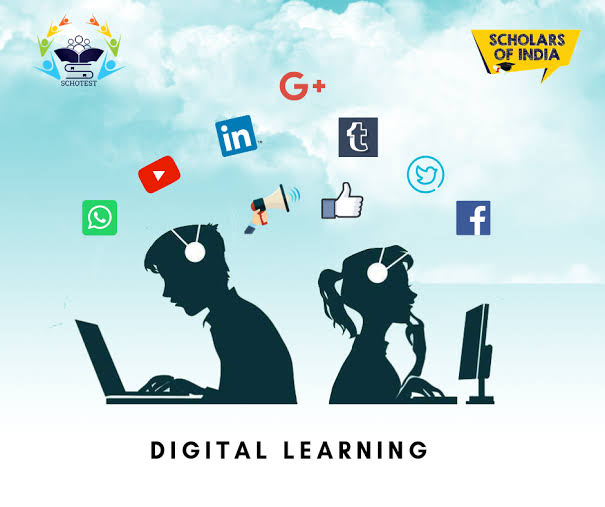
Digital Learning Vs Classroom Learning andits functioning in the times of Corona.

Traditional Classroom Learning, of course can not be replaced but  Digital Learning, I feel, has proved out to be a boon in disguise especially in these times of Covid 19. If the concept of Digital Education had not been introduced long before then there would have been a complete hault in the process of shaping the intellect of students through academics.
Moreover,  I reckon that Digital Education is a much better version of Classroom Education since students, especially in the younger grades, often mistake studies to be a burden since they are not exposed ,that seriously, to the idea of career-building yet. Hence, they deliberately lag behind when it comes to adopting a serious attitude in the higher grades. On the other hand if Digital Education is introduced early on in their lives, then they get fantasized with the illustrations, cartoon-voices, colourful theme etc which only draws them more towards studies and seems far more interesting than a black and white themed Classroom Education. Also, things when depicted through visuals tend to stick by much longer in the human brain than bookish texts.


Now talking about the senior lot, Digital Education has helped the students massively. The vast courses available online permit students to go for self-paced i.e flexible learning. They can understand the dimensions of a particular topic as per their own speed of grasping and can repeat a particular lecture multiple times. It also makes students acclimated to the idea of using technology the right way towards their best interest.
It is also a major boost for widening the scopes of teachers as they could never use technology in these complex yet  enhancing ways during their years but now they are all also becoming used to and not only learning but also appreciating it. This accentuates that learning never stops and so doesn’t the advancement of technology.
However, just like a coin has two sides, Digital Learning also comes with its own sets of pros and cons. The pros have already been discussed so now let’s take a deeper insight into the cons i.e the demerits, I personally observed in the present scenario of the pandemic.
Online lectures, these days, are conducted through apps like Zoom in most schools, including my college. 


Apps like Zoom which are of Chinese origin allow students to close the application without actually exiting from the ongoing lecture  so their teachers  kind of mistake them to be still attending the lecture while they are actually surfing through social media platforms or busy playing games like PUBG. Students can also watch their lectures while keeping the microphones muted. Now does that make any sense? What is the use of watching the lecture when you just can’t even hear the teacher and you’re watching some movie in the meantime.
So, I don’t think digital learning has been able to generate a fruitful result as far as the academics and portion completion in lockdown is concerned for students of higher grades, since they are very smart. Schools and officials need to reconsider the thought of spreading education through this means and should consider other better options like Google meet in which you can’t press the back button and exit the lecture just like that.

A new Journey to the center of the earth

This post is not about the movie, but this is about reality. Whenever you stand on the ground, have you ever wondered what beneath the mud, stones, and soil. Groundwater, fossils? That’s true, but as deep as you go, there’s a lot more to discover until the inner core, which is 6, 371 kilometres equivalent distance from Bali to Amsterdam. But what exactly is present at the center-most point of the Earth.

A globe model in the hand.

We know almost 71% of the Earth is water. The deepest hole on the land is the Kola Super-deep Borehole, which is about 12.2 km deep, which is 0.019 percent till the center of the Earth. At the same time, the scientist of the Soviet Union had a target of 15 km, but the temperature was too high and more than 350 degrees Fahrenheit. The temperature of the core is estimated at up to 10800 Fahrenheit, even if Tungsten was in place for drilling, which has a melting point at 6177 Fahrenheit; still, it will be impossible to reach the core. But even the deepest hole is merely having a diameter on 9 inches.

A comparison to the tallest to the deepest point ever discovered. Courtesy: Pinterest

So, how do researchers predict the information they gather information about the Earth? Recently at the University of Maryland, the researchers used seismic waves to get the inside view of the Earth. But it has a drawback due to weak echo from the unwanted noise as a part of data collection. So, to overcome this, a team of space and earth scientists by analyzing thousands of seismographs from the past 30 years using an algorithm known as Sequencer. After replicating like how bats and dolphins use echolocation, which will help to create new theories to understand more about plate tectonics working in the development of the planet in the early ages of the planet Earth.

The new inner earth map after the research.

The geophysicists are progressively engaged underneath the Pacific Ocean bowl for the particular waveforms of seismic wave echoes traveling. The data gathered is backed the advancement in the computer sector, using Machine Learning, they were able to map the data collected. At the point when the earthquakes create seismic waves pulse, the waves move slow and disperse because of dissimilarities in rock thickness, temperature, and so on. After the movement, time took, and the power of the bouncing back signs as they strike seismometers in various zones set, researchers can make different models about the physical properties of rock under the surface.

The actual method for data collection. Courtesy: University of Michigan

But what is our benefit in the research? We will know more about our planet, but most importantly, we can discover minerals after knowing more about the composition more precisely. Mponeng gold mine in South Africa is the deepest gold mine at almost 4 km; the temperature down reaches up to 140 degrees Fahrenheit. Also, geothermal energy will generate by heating the water to produce steams, saving fossil fuels. Also, there can be new researches if the life of bacteria or microbes can exist at such high temperatures. We can also discover ancient fossil remains if it exists, and many more mysteries are yet to be solved.