textbooks – a barrier for learning

Learning can be the best process of acquiring knowledge, behaviour, skills and attitudes. Some learning is immediate, induced by a single event like being burned by a hot stove, but much skill and knowledge accumulates from repeated experiences. Human learning starts at birth and continues until death.
There are several modes of learning. One such is textbook, which often gives the knowledge in a theoretical manner. Some of the recent researches have shown that textbooks alone cannot judge a student. Every human has a talent, but the main problem arises in analyzing it.
Students can also gain knowledge in several ways. One of them is sciensation. It conveys the excitement of doing researches through puzzles, quizzes, lectures and events. By using this methodologies students can gain knowledge with less efforts and also with less usage of textbooks. This process also insist the students not to believe the information blindly. For example, We always follow the learning that “Pronouns are those which are pointing the nouns”.In some cases, there is a repetition of a particular name which leads to confusion. Hence in order to clarify that confusion some other name can be used which are mentioned to be pronouns.
Sometimes while reading a book, it is mentioned that “point to the before paragraph” but why not the same paragraph? It always promote thinking and also check your connection with that matter. The main part of learning is the process of documentation which gives out the complete detail of your learning.
Similarly, the knowledge can also be gained by reading books, listening to several lectures of good, medium, bad teachers for analyzing the difference between them. Brainstorming the textbooks,listing keywords can also increase your knowledge. By gaining knowledge of different domains, we can easily flush our assumptions and dispositions.
While learning or teaching, you should be crisp in the concept which will make you the best. Similarly while attending an interview, you should always provide the best answer relevant to the question asked, which will increase your chance of being hired. One should never think about their co-applicants. The process of acting smart by noticing the co-applicants always lower your chance of being hired. Because the interviewer always notices your actions and identify whether you are really smart or you are trying to act smart.

As said before anyone can learn anything. Learning is always based on their knowledge and skills. Students who did not learn their textbooks have become a great person in their life. Similarly , Students who learn their textbooks have not achieved anything big in their life.
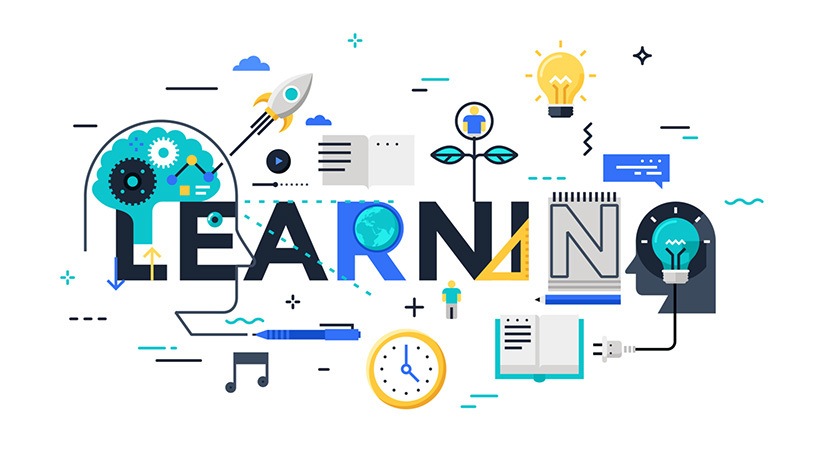
As mentioned in my previous writing Skills are always different from education. The students who gain the knowledge along with the skills correctly can achieve anything in their life. But when they did not learn it in correct manner like understanding but mug up can lead them to a state of not achieving.

As shown in the learning pyramid, when a student get their skills as mentioned above are named as a good learner with good skills and also good knowledge. Whenever a student clear his/her doubt at instant, then the individual can utilize their knowledge to any extent.

One India, One Education Board?

CBSE or ICSE or IGCSE or IB or State Board - The right choice ?

Over the past few years, a number of education boards have come up in India, each with its own syllabus and grading system. This has happened because education falls in the tertiary list and is the shared responsibility of the centre as well as of the states. CBSE, CISCE and NIOH are the central boards with CBSE having the maximum number of affiliated schools. There are various state boards like Bihar and UP Board, Kerala Boards, Assam Boards and many others. Some of the top schools in India are also affiliated to international boards like IB and Cambridge International.

All these education boards have their own pros and cons. While one can argue that the syllabus for sciences are more or less the same, it differs a lot when it comes to social sciences and literature. State boards give more preference to vernacular languages and local history whereas the central and international boards have fondness towards English and other foreign languages. The history taught in CBSE focuses on pan India topics like freedom struggle, ancient empires, world wars etc. India is a diverse country with an equally diverse population and this justifies the existence of so many education boards. However the problem arises when students from all these boards apply for higher education in colleges of universities like the Delhi University.

Delhi University has cutoffs for admissions into most of the streams from English to Journalism. These cutoffs are based on marks scored by a student in their respective board exams. Bihar and UP boards are difficult and have stricter marking scheme as compared to CBSE or Kerala Board. ICSE board is tougher still. So, a student scoring 98% in CBSE might have the same aptitude as a student scoring 82% in Bihar board. The one scoring 98% will clear the high cutoffs of the colleges of Delhi University. An inequality also exists within the boards, as students from state boards are considered inept as compared to students coming from ICSE or CBSE. Parents are also confused and often feel pressurized to send their kids to CBSE or ICSE affiliated school, assuming that these schools provide better education. The rich can easily afford these schools but the poor cannot, resulting in further deepening of the inequalities. So even education has not remained the great leveler that it once was.

It is high time that the governments, intellectuals, teachers and civil societies come together and brainstorm ideas so that they can come up with a solution for all these issues. Let’s hope that the draft National Education Policy 2019 recognizes and addresses these concerns.

THE E-WAY

Like an endless loop of strings, E-learning opens up multiple avenues for the students to choose from the comfort of their homes. Through E-Learning students in India can do varied courses offered by Harvard University ranging from a programming course such as CS50’s Introduction to Game Development to a social sciences course such as American Government: Constitutional Foundations.
Universities and their invaluable courses continents away can be accessed easily without the unnecessary hassle of the physical presence in the classroom.

E-Learning has brought varied courses around the globe in the comfort of one’s own house. E-learning has been successful in bridging the quality of education that one can access in the developing nations. It is a more economical and appeasing form of education in world crises such as the raging Covid-19 pandemic. It has ensured the unhindered transfer of knowledge when one is unable to be physically present in classrooms.  Schools and colleges have taken up E-Learning to ensure social distancing is not an issue they have to deal with so they can solely focus on the quality of education imparted to the students.

Despite its many perks, E-Learning also has its fair share of drawbacks. It is often difficult to cater to and overlook the progress of the students online which would have been a far easier prospect in the in-classroom mode of education. There are different challenges such as poor internet connectivity in the remote places and often the underprivileged do not have access to proper electronic devices. Some struggle with technology and thus are often unable to have a seamless E-Learning experience.

Though it is not without its fair share of challenges, E-Learning has been successful in the re-moulding the education system for the better. It is undoubtedly the mode of education for the future. It has been successful in providing affordable education to people in the different corners of the Earth. It has enabled some institutes to do without the physical infrastructure and additional costs that come along with maintaining physical classrooms.

There are several applications like Zoom, TeamLink, Google Meet, Duo etc which are being used by teachers and institutes to impart lessons to the students. The dangers of video lessons can be seen in the multiple instances of hacking and misuse of these applications. Data are stolen by hackers of the users of the application who misuse the data to their own fruition. The applications should be secured from hackers for seamless usage and to ensure that the users can operate it without any fear of their account being hacked.

E-Learning may, however, lead to a loss of jobs for a majority of people who used to assist in the seamless functioning of the brick and mortar classrooms. Publishing houses may suffer as learning moves online resulting in a sharp decline of hard copy textbooks. Publishing houses too shall have to adapt and move their publications online. Small publishing houses may fade away with time. The implementation of the proper 5G network would ensure an immersive learning experience. Physical libraries are slowly becoming defunct with even libraries uploading their content online. Information is available to Scholars very easily. Research has become easier than before. Some people have found it hard to cope up with the technological advancements while some have become unemployed with technology replacing manual labour. However, technology has changed the world for the better and made our lives easier. We should embrace technology as an inseparable part of our lives.


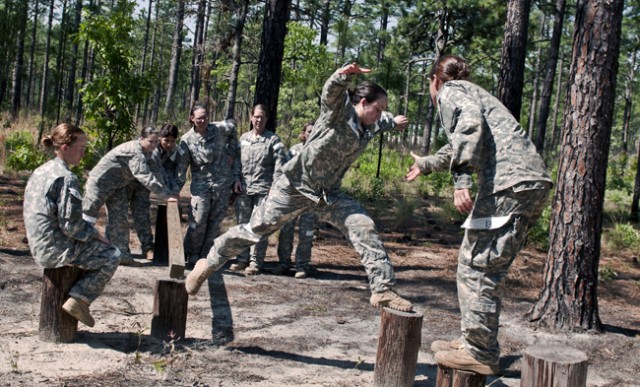
Military: a career choice for women!

HISTORY:

In 1918, Loretta Walsh was the first woman to be enlisted in U.S Navy. In 1948, a law was passed which made women a permanent part or military services. The first group of women were admitted into the U.S military in 1976. Esther McGowin Blake was the first woman to serve in the U.S. Air Force.

A woman, a slave near Jefferson City, Missouri, Cathay Williams was the first known African American woman to serve in the United States Army, named as “William Cathay” she hid the fact she was a woman.

Opha May Johnson was the first woman to be enlisted in the U.S Marine Corps. She joined in 1918 during World War I.

Colonel Ruby Bradley, a survivor of two wars, World War II and the Korean War. Her military record included 34 medals.

HISTORY OF WOMEN IN INDIAN MILITARY SERVICES:

Role of women in the Indian Army started in 1888, during British Raj as “Indian Military Nursing Service”.

In 1992, the army, air force, the navy started including women as short-service commission (SSC) officers.

DIFFERENT CAREER PATH IN MILITARY:

1.) Army: Short Service Non-Technical Commission, Short Service Commission Women NCC, Short Service Commission Women Judge Advocate General, Short Service Commission Women Technical Entry Scheme, Military Nursing Services, Army Medical Corps, Army Dental Corps.

2.) Navy: Naval Architecture, Observer, Education, Logistics, Law, Pilot General.

3.) Cyber Army: Associations of Ethical Hackers and Resource Center for National Police Agencies. This is to meet the long term security challenges in the digital arena.

4.) Air Force: Flying Branch, Technical Branch, Ground Duty Branch.

4.) Army Education Corps: An education centre, run by the Indian Army that develops soldiers and officers of all rank.

WHY WOMEN SHOULD JOIN MILITARY?

1.) Opportunities for women are more- the jobs that were available for women in the military were quite limited. But, this now this is changed in the early nineties. Women who are interested in non-traditional career opportunities might consider a military career.

2.) Health Benefits- the military offers full medical coverage from the moment you join. These benefits apply both to officers and their family members. Spouses and children are also eligible for coverage.

3.)Education and Service- the military covers up to 100% of tuition fees while you are serving for the nation and studying together. Army and Navy have community college programs available. Women who take advantage of these opportunities can earn promotions.

4.) Housing Benefits- there are two housing options for members of the military. They can live on base for free or can choose to live off-base and receive housing rent.

5.)Retirement Benefits- Members of the military can retire in as little as 20 years. This means someone enlisting at the age of 18 could retire when they are 38. And after the retirement, the one who served to the nation get benefits for lifelong. They get retirement money, health services and pension as well.

Challenges women have to face in the military:

1.)Physical fitness- women have 60% of the physical strength of men. They are shorter and smaller than men.

2.)Equipment issue– equipment such as body Armour is made to fit men and must be customized to women’s bodies.

3.)Retention- many women leave the military because they perceive that military policies do not support women’s roles as mothers. Women indicated that they were not treated as equal to the male military officers, which made them leave the military.

 4.) Military sexual trauma: MST is used to describe sexual assault or harassment that takes place during military service. in military 23% of women reported sexual assault and 55% reported some form of sexual harassment.

5.)Gender discrimination: women are more likely to face sexual assault, harassment and gender discrimination while serving their country. Women are 20 times more likely than men to be assaulted during their military service.

Want to increase Blog traffic|SEO

Over 2 million articles are published on the internet every day. So how to efficiently elevate the amount of traffic to your website? After reading these articles all your queries will resolve.

The first way you can share with your friends and family through whatsapp and Facebook. But hardly you can get 500 -600 visitors.

Then comes the second approach when you advertise your website and it is an expensive way. Small Startups and individual can’t work on this.

Then comes the role of SEO(Search Engine Optimization). Many YouTubers and startups are using this technique to boost the amount of traffic to their website without even spending a single penny. The question then arises. What is Search Engine Optimization?

When you search on google or any other search engine, you get a list of website matching with your search. Now a question arises, How google create the list? Every search engines use its own algorithm to create a list for a given query. Then there comes the role of SEO. So how can we optimize search engine so that our Website get secure high rank in search engine? In simple words, whenever someone searches about a particular keyword so that all the traffic come to your website.

SEO is a technique to rank up your website with a relevant keyword or phrase to increase the visitors on your site. The better optimize your site is more frequently your website show up in the Search Engine Result Page, means more traffic.

Companies pay professionals to optimize their website. So that they can rank up site their site in search engine.

White hat SEO VS Black hat SEO

White hat SEO follows use only ethical tactics to rank and follows search engines guidelines. It simply means they can’t manipulate their algorithm to optimize their site.

Black hat SEO violates search engine guidelines and manipulate their algorithm to rank up their sites.

So google updates it’s regularly so that they can close the loopholes that black hat SEO exploits.

Keyword research

Make a list of relevant keywords that people might have searched. Simply you can use keyword tools for research. It’s not hard to find a relevant keyword.

These are some free keyword search tools:

1.Google search Console

2.Google Trends

3.Answers to public

4.Keyword shitter

5.keywords Everywhere

You can access all these tools it doesn’t cost you a dime, but none of them offers all-in-one functionality. Get to know about the tools and use them accordingly so you can get better results.

On-Page SEO

On-page SEO is a practice to make your web page or content optimize for search engine and users.

Buying a suitable domain name, optimizing your title tags to target optimal keywords is some common On-page SEO practices to make your website SEO.

While to rank up your site you also need to create good quality content. You have to make sure that the title or URL of the article should be user friendly. Make sure Every page on site has a simple and readable URL.

Adding internals links can also increase the chance of high ranking of your site .

Off-Page SEO

Off-page SEO refers to an activity taken outside of your website to raise your ranking the SERP.

Building backlinks is at the essence of off-page SEO. It’s simply is getting another website (relevant to your own websites) to link your website.

You can do this by contacting influencers (reputable and trustworthy) and ask them to link your website.

By creating good content so others themselves link your website without even contacting.

These are some safest ways to get backlinks.

You can even purchase an expired domain name. Expired domain names are those which have a suitable ranking, backlinks but the person forget to renew the domain name.

In last avoid using PBN like practices since google can find it and most likely ban your site to appear on search.

Please let me know your thoughts in the comment below and have a wonderful day.

IMPRESSION OF COVID-19 ON EDUCATION IN INDIA

What our Prime Minister’s Campaign “ Digital India ”could not  achieve , the Pandemic has done it. Covid-19 has led to the closure of schools , affecting the learning of  around 230 million students. It started in the month of March, when the schools were shut down, but now owing to the present scenario there is no assurance when it would open again.

My Firsthand Experience

It was that time of the year, when my beautiful journey of two years in Institute of Management ,Nirma University  was about to end in March , 2020.With just fifteen days left  in hand for our final goodbye, we’re trying our level best  to  save our tears  for the last days.Just then when the new of increase of cases started coming , we officially received  the mail stating  our journey have come to an halt, keeping in mind the seriousness of the issue. In a span of few seconds, the memories of  last couple of  years  splashed in our minds.  Everyone  was shocked, as they ‘d no clue it would end like this. The feeling of not having been able to take the exams for probably the last time in our lives, didn’t sink much. However, the proverb, “Everything Happens For A Reason”, started  making all the more sense when  the number of  cases started rising, while all of us had reached home safely. Had it not been for the strong decision of our College authorities , we  would’ve bear the brunt.

Did The Pandemic Have A Positive Spin-Offs?

With everything  on stake, Online education  takes off the old saying  “Learning Anywhere, Anytime”. Schools and Companies  have switched to apps like Class Dojo, Zoom, Google Classroom which have made the learning experience convenient and flexible. Teacher’s at all point are making the full use of app like Whatsapp, YouTube for online tuition  classes  in order to reach out to students in their doorsteps. Machine learning has led to the calculation to data driven tools, which  is why Multiple Choice Questions(MCQs) are preferred over Fill in the Blanks for the online test assessment. Apps like Dreambox makes students abide to the subject Mathematics, at their own pace and adapts itself  to every child needs. Blended Learning will be the new cool nowadays. This would ensure transparency and openness in Academics.Collaborating teaching and learning would take new forms and would be monetized.

Let’s Have A Look At The Unfavourable Spill-Overs

The Pandemic have surely brought us to an unplanned situation, not been imagined in anyone’s worst nightmares. The students who were studying abroad in Universities of UK,US New Zealand, Canada had to suffer in terms of their invested money and time. Their careers are at stake. The cross-border movement have surely taken a hit for the next two days. Since in most of the Universities, students were specially from India and China, it would adversely effect them .In order for the education sector to have a digital revolution, it’s very important that the teachers and the students are ready to accept the change . Teacher’s refused to get used to the online methodology leading to Passive learners. Students  who studied in Govt. Schools, are the worst affected  as going to school is the best policy tool available to raise skills.

Covid-19 emergency has changed the teaching style been followed by generations. It’s time to reinvent ourselves and adopt  ourselves to digital transformation .This upgradation to e-learning would not only cut the costs, risks and efforts , but would create the need for the educational sector to invest immediately in educational app development.

Boomers spreading fake news

We have all received WhatsApp messages in our family groups that are usually forwarded by the older members of our family claiming that coronavirus is caused by eating non vegetarian foods or banging utensils generates positive energy that destroys coronavirus and other such absurd things. Of course these are examples of fake news and are recognized as such, easily by a millennial or Gen z but not so by our parents, uncles, aunts or the boomer generation.

Study: Older Republicans Likelier To Spread Fake News On Facebook 01/11/2019
Older people more likely to spread fake news

The dynamics between age and misinformation are being studied by various researchers in the field of communication. In fact several studies have found that adults over the age of 65 are more likely to fall for fake news than younger adults. Studies in Princeton and NYU found that older people do spread fake news, but they were not the source. Them being late adopters of technology and new to internet and social media might be one of the reasons that they are gullible and believe anything they see on the internet.

Researches should further attempt to find out as to why boomers fall to fake news and look for solutions to curb the spread of misinformation. It’s time that Facebook, Whastapp, Twitter and other social media platforms should carry out their own research and take effective measures. Meanwhile, it is up to us to make sure that older adults are not sharing fake news. We should provide them with sources through which they can fact check what they have shared. We should teach them how to identify and flag a fake message.

Our older generation helped us make sense of the real world and now it is up to us to guide them through the virtual world.

New Zealand covid-19 free

During this pandemic situation, getting news that can give little relief in current scenario is worth that can make your day. And yes here it is good news that New Zealand declared itself Covid-19 free on 8th June 2020, Monday. It was declared by the New Zealand’s Prime Minister Jacinda Ardern. In their recent conference they declare themselves as Covid-19 free.

However, they have also said that New Zealand’s government will lift all the restrictions probably today but the strictness with the border control will not be ease. World Health Organization also praises the New Zealand government over cautious and strict measures over Covid-19. Although being the first country to hit by this pandemic disease, they still manage to overcome from it. Further, the New Zealand Prime Minister also requested people to be safe and keeping the surroundings clean. All the private and public events could resume, government further mentioned. This can only be achieved by the New Zealand government because they have implemented strict restrictions. Due to this 75 days restriction with a strict lockdown almost all the business shut and except essential workers rest have made to stay at home.

With death rate up to 22 and infected up to 1154 according to the Health Ministry, they control the situation more cautiously as well as more appropriately. Borders security will be strictly controlled. Ms. Ardern said that she did a “little dance” when she was told that there are no more active coronavirus cases in New Zealand, while surprising her two-year-old daughter, Neve. The last person who was being monitored now declared as symptom free after being in isolation. Yet, country will be at national alert level-1 from today midnight said by Ardern this Monday.

“Our Collective results I think speak for ourselves. This was what the sacrifice of our team of five million was for- to keep one another for safe and to keep one another well.” – Jacinda Ardern, New Zealand Prime Minister

With this great news our hope for a better lives have come to a great point. We should take our safety as the first priority. Wearing masks and using sanitizer during this pandemic situation is a necessary requirement of one’s for itself. Avoiding the guidelines will only make the situation worse. Let be safe and keep the environment around yourself safe.

Unemployed Engineers: The case study

One of the most important apocalyptic cries within the global economy today is that the loss or obsolescence of existing jobs thanks to automation and rapid changes in technology. But every change also brings with it a singular opportunity one that we must grasp with both hands and understand fully to take advantage of. Technological progress, while making a couple of profiles irrelevant, has also introduced a various array of latest roles and responsibilities which require a greater application of human creativity, analytical knowledge and intuition.

Gartner’s latest widely quoted report, which says that AI will create more jobs than it eliminates by 2020, has further underlined the positive aspects of automation in global employment. However, the constructive impact must be made in tech-space employability through a holistic vision in training to cause a big disruption.
As per the recent statistics of a well-known magazine, 20%-30% of Indian Engineering graduates don’t get hired and most of them get hired well below their TECHNICAL QUALIFICATION. Six very important reasons for this are :

TOO MANY ENGINEERS: There are only numerous new jobs being created per annum. The number of new engineers is far higher. More than 10 lakh students become engineer every year and out of this more than 55% remain unemployed. Since the demand for engineers is less and supply is more therefore many remain unemployed.


LACK OF EXPOSURE: According to Aspiring Minds survey, over 80% of the engineers do not know the industry requirements. Most Indian engineering colleges provide no or very bad internship opportunities. Most engineers have no clue what the industry is like. Even the facilities provided by many colleges are not sufficient to make students industry-ready.

THEORY VS PRACTICAL: Most of the engineering colleges and their Boards never consider providing a top-quality time on PRACTICAL approach for college kids. Hands-On experience & Real-time

applications are something not seen in most of the engineering colleges
RIGIDITY: Most Indian engineering students are incapable of working without strict guidelines. For most product companies, this is a problem. Engineers have to think. Not just follow orders. Most of the students lack the ability to think out of the box and they always are spoon-fed. This makes them more dependent rather than becoming independent.


LACK OF DISCIPLINE: Seriously. Tell an engineering student that tomorrow’s test is cancelled. I will bet she/he will stop studying. This is not acceptable. No employer has the patience to make sure there’s always a carrot on the stick with keep you focused. Studying a day before can help you in getting good marks but definitely will not help you in getting a dream job. Engineering is more about working more on improving practical knowledge rather than focusing more on theoretical knowledge.


ATTITUDE ISSUES: Indian engineering students are for the foremost part incapable of acknowledging that they screwed up. I know people that are recruited just because they might accept that they screwed up. It’s really important during a job that you simply can man up and acknowledge your mistakes before it becomes a very costly bug in the final product.

unsymmetrical concept of constitution of federal state of “india”

What is Federalism ?

Federalism have a root Latin word that is ‘Foedus’ means treaty or any pact. Therefore as the meaning signifies it is stand for intermixing of federal government or central government with Provincial ,state ,or other sub unit Governments in a unitary political system.

It is therefore a kind of government in which distribution of powers took place between two levels of governments of same level. for example the federal state of India, Brazil, Russia united states etc. federalism in true meaning in federal state is defined as distribution of powers and relation between states and the central federal unit that is the national government or federal government.

Interesting model of global view of unified federation of India:

India had adopted the British north America act model and the government of India act model as its constitution. So, here in India we had a very engrossing model of federation with two different visions .one of these vision govern the state of Jammu and Kashmir and one vision for rest of all states of federal state of India. In contrast to US and Australian model the state of Jammu and Kashmir had given the power after our constitution came into play. there was a constituent assembly framed in state of Jammu and Kashmir in 1952 and they framed their constitution in 1957 for themselves.so this was very interesting before the abrogation of special status and article 370 to note down instead of India is a union of states which contains the state of Jammu and Kashmir so far as the all other states are concerned there is one set of laws that Manoeuvre . Apart from it for Jammu and Kashmir there was another set of law ,it was only the president that eventually permits in terms of our constitution to apply to the state of Jammu and Kashmir .

Constitution of federal state of India is unsymmetrical in nature:

As we discuss and concern about Federalism of India it is asymmetric there are various aspects which shows Un symmetric nature of constitution of India .

The most important was the case of state of Jammu and Kashmir before 5 August 2019:

Before the abrogation of special status and article 370 The constitution of Jammu and Kashmir vest the residuary power with the state and our article 248 did not operate in the state of Jammu and Kashmir. The only residuary power that the Center have as Jammu and Kashmir discussed was that of tackling with terrorism.

The state of Jammu and Kashmir had its own subject list upon which it legislated. part 6 our constitution which deals with the states did not apply to the state of Jammu and Kashmir even there is no list 2 for Jammu and Kashmir before. Apart from it had enjoyed special status.

Most significant aspects of asymmetry in Indian constitution:

Special provisions:

Under article 371 provides special provisions to the state of Assam, Arunachal Pradesh, Goa, Mizoram, Manipur, Nagaland and Sikkim.

Our constitution does not allows or gives such definition but India has a multiparty system with political coalition frequently stands upon regional and caste identities especially at union level. and there is also not parallel surface of Distribution of powers resources and funds

Union territories :

Apart from Centre and states the country has union territories with legislature and without legislature.

The case of Panducherry and Delhi :

Panducherry Enjoys legislative Powers on any issue in the state list or the concurrent list insofar as it applies to the union Territory. Delhi which has three exceptions which are outside its purview that is police land and public order.

The sixth schedule:

Here According to this schedule The Tribal Areas of state of Meghalaya Tripura, Mizoram and Assam can frame autonomous districts and autonomous regions. Hence these all aspects signifies that Constitution of India has Unsymmetrical concept .