
COVID-19 – a term that’s making the whole world cringe today. In December 2019, novel coronavirus called SARS-CoV-2, has resulted in the outbreak of a respiratory illness known as COVID-19, which has currently become a global pandemic, killing innumerous people and wrecking homes. Faces hidden behind masks, the hospitals are cramped with patients, the cities are on lockdown, and institutions and workplaces closed. Needless to say, such times are proving hard for every economic sectors, and highly so for the IT sector as well.
According to analysts, as one of the major effects of COVID-19 , there will be a significant impact on the technology sector. There’ll be a striking slowdown in the growth of India’s giant IT sector companies this financial year affecting raw materials supply, disrupting the electronics value chain, and causing an inflationary risk on products. Top software exporters such as Tata Consultancy Services, Infosys and HCL Technologies will be impacted by the reduced technology spending by clients in the US and Europe following lockdowns across the globe.
It is feared that Covid-19 will significantly impact the 180-billion dollars Indian IT sector. This impact may be worse than that of the 2008 global financial crisis (GFC), as the former has dented both demand and supply, whereas the latter had affected only demand. Considering the US and Europe, which together accounts for more than two-thirds of India’s IT exports, are among the worst affected geographies by the pandemic, this assumption holds ground. The total direct GDP impact can be nearly $8 trillion, with all the major sectors hit hard, and the economic loss will in turn affect spending on IT by clients. Accenture has already lowered its growth forecast to 3-6% from 6-8% due to business impact from the Covid-19 impact, and Indian IT firms are expected to follow cue.
As a direct impact, large scale unemployment is snatching livelihoods. Analysts had been warning about the prospect of unemployment ever since the country was put under a lockdown on March 25 to arrest the spread of the coronavirus infections, and people got the opportunity of working from home. Centre for Monitoring Indian Economy shows that unemployment shot up to 23.5% in April from 8.7% in March. In the week ended May 3, it jumped to 27.1%- the highest ever. Those that still managed to save their job, have had their salary recklessly slashed; some even getting paid just 30% of the original amount.
Since the it industies form a back bone of our society,their contribution is huge.In today’ s we cant imagine out life without apps ir smartphones or computers.Software and hardware have transformed our life in a way.It is interesting that if IT industry stop sorking completely then it might happen that our nation will stop in no time.Although most of the officials are working online in other workinds they have switched to eork from home but still situation is not that stable and sound.Home and office atmospheres are completely different so it is a big problem in the current scenario.All developments and research works have been stopped due to covid 19.Companies are worrried abot their progress and their employees as well.
Category: Education

RACISM: A TERMITE TO SOCIETY

While Racism is often thought of a problem that does not exist in today’s world, we forget that Apartheid was only abolished in South Africa in 1994, which was less than 30 years ago.
Slavery was abolished in the US in 1865. Yet, Racism extends beyond slavery and exists in every form of discrimination against a particular Race.
Racism is still very much prevalent in the United States. This led to the rise of the Black Lives Matter or #BLM movement.
While one needs to understand why Racism is still prevalent, it is also important to not confuse this social evil with colourism.
Racism is discrimination against a particular race, while colourism is discrimination based on your skin tone or colour of your skin.
Racism in America is often confused with colourism as the people discriminated against are from the African American community and have darker skin.
When you picture modern-day racism in the States, you picture a person screaming the n-word at an African American. But Racism exists in different forms. It’s there in your head every time you grip your purse tighter while passing by a Black man.
It’s there when white people walk around with semi-automatic rifles, without facing any consequences, but 911 is dialled when 9-year-old Ahmed made a clock that looked “similar” to a time bomb.
It’s there when the police do not take any action against white people protesting against the much-needed lockdown, but shoots rubber bullets at Black people protesting against police brutality.
It’s there when a white man in uniform is allowed to murder a black man in broad daylight by putting his knee down on his neck as he mutters again and again helplessly that he can’t breathe.
Racism exists in the justice system of the USA too.
The CGTN reported that “The U.S. is notorious for putting more people in prison than any other country: its prison population accounts for over 20 per cent of the world’s total, according to the Prison Policy Initiative.
And African Americans are incarcerated at a much higher rate than anyone else.
For every 100,000 black residents, 1,134 were in prison, compared to 218 for whites.”
According to the National Alliance to End Homelessness, about 40% of African Americans are homeless in the US, while they make up roughly 13% of the population.
While I’d love to focus more on the USA and dismantle systemic Racism for you but, unlike what American Sitcoms believe, there are other places in this world besides the United States.
Let’s move to Libya. If you thought slavery was not legal worldwide, you thought wrong. While it has been abolished in almost all countries, it still isn’t criminalised in as many as 94 countries.
In November 2017, a CNN investigation shocked the world, as they exposed actual slave auctions.
In 2016, 1.130% of the Libyan population lived in modern slavery.
According to a report by Time, many refugees attempting to flee war and poverty and reach Europe by sea get caught in Libya and are kept in “horrific” detention centres where they are vulnerable to being beaten, raped, and sold as slave labour.
In the UK, systemic Racism is very much prevalent today.
According to, Police powers and procedures, England and Wales year ending March 2019, Black people were six times more likely to be stopped and searched by the police, than white people.
The Independent reported that “Stop-and-search rates between 2018 and 2019 show that black people are now nearly 10-times more likely to be stopped and searched by the police than white people. This has contributed to far higher arrest rates for black people than for white people.”
The UK’s Annual Population Survey revealed that black people are also paid less on average than white people.
According to a report published by Oxygen, “India is home to the largest number of enslaved people in the world. An estimated 18,354,700 people, or 1.40% of the population, are reportedly living in modern slavery, which includes intergenerational bonded labour, forced child labour, forced marriage, and commercial sexual exploitation, among other forms.”
Free the Slaves reported that poor villagers, in particular, are vulnerable to being enslaved due to debt bondage and bonded labour.
According to Oxygen, “India’s intelligence agency advised Prime Minister Narendra Modi to discredit the September 2017 report by the International Labour Organization (ILO), the International Organization for Migration (IOM) and Australian rights group Walk Free Foundation. The United Nations defended its research, according to Reuters. (Walk Free Foundation published a separate report earlier about India estimates — ILO did not single out countries.) The labour ministry vowed to rescue 18 million bonded labourers by 2030.” Similar problems exist both in Bangladesh and Pakistan.
According to The Wire, despite multiple criticisms, Uttar Pradesh, the state with the highest population in India, is in the process of “promulgating the Uttar Pradesh Temporary Exemption from Certain Labour Laws Ordinance, 2020 that suspends the operation of all labour laws applicable to factories and manufacturing establishments in the state for three years, with the exception of the Bonded Labour System”, in an attempt to lure foreign investors by providing cheap labour, to strengthen the falling economy.
But India’s racism problem extends beyond modern-day slavery. North-East Indians and South Indians often fall prey to this social evil in India. While North East Indians are compared to the Chinese and fall prey to violence whenever International Relations go south with the Chinese government, South Indians are mostly discriminated against for belonging to a complex culture and social background and a darker skin tone.
While to many, Racism presents itself to be the root problem, lurking in its shadows is White Supremacy – The belief that White people are superior to people of other races. Systemic Racism thrives in the US because the system allows it to. The system was designed by White Supremacists, and (surprise-surprise) most of them owned slaves. The system is not broken. It’s working exactly as it was designed. Systemic Racism allows White people to hold power over African Americans, both socially and economically.
The belief that a certain race is superior to others is what leads to discrimination and in many cases genocide.
We see examples of this throughout history, like what happened to Jews in Nazi Germany, or what happens to Bahujans in India.
The Black Lives Matter movement made a great impact only because it threatened to dismantle the very system that allowed George Floyd to be murdered in broad daylight by men in uniform. The protesters made sure they were heard even in the middle of a pandemic. The movement soon spread across the globe and people started demanding accountability from the police and to defund the police.
While the movement did not meet all of its goals, George Floyd’s killers are in prison today and are facing second-degree murder charges.
Someone says that whenever you call out racism, it’s like taking two steps forward and moving one step backwards. And it’s true; many people were injured during the protests.
But isn’t that what they want you to do? To give up? To stop speaking out? To make their jobs easier?
As Detective Santiago in the popular sitcom Brooklyn99 said, “Two steps forward and one step backwards, is still one step forward.”
Public

THE RISING FUEL PRICES
There has been a sharp rise in the prices of diesel and petrol , over the past few days. This is mainly , because of the rebound seen in the global oil prices, and weak rupee-dollar exchange rates. The fear of the oversupply being due is the reason the global crude oil are tanking ,leading to rise in prices. The companies are trying to put the pressure on the ultimate customers, to recover the losses faced.
In order to determine the daily oil prices, the PSUs depends upon the international crude oil prices and rupee-dollar exchange rates. Weak currency notes, along with recent rise in the global oil prices will make India spend much more. Experts say , that this whole situation may give rise to a supply glut. There is a huge probability that the oil market could completely fall, considering the fact that there would not be so much of demand , eventually leading to fall in oil prices once again.
A lot of us, may not be aware of the fact that crude oil is not the end product, instead it’s an intermediary requiring additional refining. First of all, the crude is pumped through a processing facility, from where comes out the crude oil. Hence, the price of the end product is determined by amount of complexity involved in the processing of crude. The reason why diesel tends to be slightly cheaper than petrol all over the world, because it is less volatile, easier to refine than petrol and being heavier than petrol. For India, the trend remains the same as well. Diesel is used for industrial purposes, on the other hand petrol is used in large amounts for personal vehicles .The fact that diesel is not taxed as much as petrol by the Government , seems to be taken a reverse this year. This year on the 24th of June,2020 the prices of diesel were higher than petrol in Delhi.
The rising of fuel prices started from June 7 , for consecutive the next 22 days. This rising of prices came even though, the Indian Crude Basket saw low prices. If the crude oil go low, the consumers doesn’t have to pay for that, but here the case is quite different. As part of excessive fuel taxation by the Government, people in Delhi have to pay the highest tax rates on fuel . The price that people are paying is actually two-thirds of the Central Excise tax and the State Value Added tax.
The fact that the GST revenue have been lower, during this lockdown it took a hard hit on the Union Government and the State Government. This might seem to be a much feasible option to them than actually ,having to take a firm decision on the GST. For the Union Government, this proves out to be of added advantage as it holds of the cess. This is a part which stays with the Union Government, where the State doesn’t have a share in them. However ,chances of inflation is fairly low.
Public
Reading is a good habit for teenagers.
The statement that reading is a good habit is a self-evident truth. Man is not a mere child of instincts. It is intelligence that makes a difference between him and animals. Naturally, a love for books ought to be his natural inclination.
A teenager is basically a student and the period of his teens are the most formative period. Naturally, if a taste for good books can be created in him then it shall contribute substantially to his career. In fact, this truth is apt to be taken up as research. If we trace back the early life of those that have made a mark in life, we shall see that they have sent this period of their life most fruitfully. They may have been poor or may have been away from the seats of culture, yet they must have obtained access to the sources of knowledge during this period.
This period is largely spent in schools and partly in the colleges. It is also seen that in the schools, the syllabus suggests very useful books whether it is framed by the NCERT, the Delhi Board or by the various state educational bodies. They cover a wide range of subjects from language, socio-political cultures, environmental learning, science, moral science and what not. If properly pursued the end- product ought to have been marvellous by now. But if we make a study like random sampling it shall be evident that the net result is not very promising. Have we ever bothered to enquire Why? The guardians spend liberally on their children. The public schools are multiplying every day and still, they do not lack students. The teenaged boys and girls bend under the weight of their school bags. Still, the result is depressing.
In fact, what is lacking ? the involvement of the teachers with their students? The irony seems to be an odd notion of The more in number or in the variety of the subject are the books the more shall be the achievement.
The primary factor in our teaching culture ought to be how we can raise the curiosity of the students. We must remember that the curiosity to know, and hence to learn is a basic human impulse. Even a child that prattles, picks up new things every day and shows strong manifestations of his curiosity. How is it that this inherent bent becomes mute or numbed as he grows in age? Afterall it not so dismally true in the foreign countries.
To induce good reading habits, the reader must be made to feel that what is good in a book. It is easier to improve one’s judgement because it is a question of reason or logic. But it is difficult and a painstaking affair to improve one’s taste because it is a question of feeling. However, merely saying that a good book is really good will not do. One has to involve the reader in healthy debates and discussions. The different aspects of ‘good reading’ have to be discussed freely sith students..The bosses of knowledge must not impose; it may have an adverse effect.If some one likes crome gente he or she must be given books from that genre. Reading books increase the stock of words and enhance vocabulary.
Public
CHINESE APPLICATIONS OUTLAWED

On 29th June 2020, the Indian government issued a ban on 59 Chinese Apps including, TikTok, WeChat, Xender, ShareIt, LIKEE, Helo, and CamScanner among others.
This ban has been implemented after a deadly clash between the militaries of both the countries that left twenty Indian soldiers dead. Satellite images also show that China has built new structures near the border region.
The Ministry Of Information And Technology, has stated that, “ it has received many complaints from various sources including several reports about misuse of some mobile apps… for stealing and surreptitiously transmitting users’ data in an unauthorized manner to servers which have locations outside India.. Since this ultimately impinges upon the sovereignty and integrity of India, is a matter of very deep and immediate concern which requires emergency measures”
But it raises concerns beyond stealing of Users’ data. If Users’ data being safe was the only concern then why didn’t they ban the Zoom App – An app founded by Chinese-American billionaire, Eric Yuan. Despite being accused of stealing data and various privacy concerns, numerous times, all the app has been given are mere warnings. An Article on News18, says that since Zoom is an American company, located in California, it wasn’t banned.
But doesn’t it go against the statements given by the Ministry Of Information and Technology, which basically said, that they banned the apps because users’ data was being ‘misused’ ?
It proves that the ‘ban’ was supposed to be a “fitting” reply to China, as border tensions escalated, and wasn’t just a security concern.
Which brings us to two questions :
- Was India in a position to Ban Chinese Apps?
Most of the apps banned were highly popular in India. Topping the list was TikTok with over 100 million users just in India.
While many “TikTok stars” used the app to earn a living, there were several others who just liked having access to make content.
What made TikTok connect to its users was the fact that how easy it was to handle and to make content, which is why people who couldn’t create content on other platforms like YouTube because of the complications and the investments, could easily create content here.
TikTok really seemed to connect with the Indian Youth because many still are accessing it via VPNs.
While companies like Panda VPN are even advertising the fact that you can access all the banned apps via using them.
Many teens are trying to make apps to access TikTok without VPNs and they are very confidently posting their videos on social media.
The fact that people can still access these apps through VPNs while Chinese investors continue to profit off our people, shows how this ban was nothing more than ”a symbolic ban’.
The ban wouldn’t harm the Chinese as much as it will harm us.
Most of these apps had Indian Creators for whom this was their only source of income. Not to mention, many of these apps have offices and employees in India, whose jobs are at stake.
With the rising unemployment, and the falling GDP, was it really necessary to put thousands of jobs and lives at risk, in the middle of a pandemic? Was symbolism really this important?
- Is banning Chinese Apps enough ? “Tokenism does not change stereotypes of social systems but works to preserve them, since it dulls the revolutionary impulse.”
– Mary Daly
A week ago, we were furious at our government, for the border situation with both China, and Nepal.
And for once, we expected the Modi government to do something. Because isn’t that what they have been flexing about all those years, with the Balakot Airstrike, or the Surgical Strike? A nation with Strong Military strength?
Instead, we were deceived by various media houses, and our government, who mentioned for weeks that there are no border tensions between India and China.
Instead, we were met with disappointment, as the Prime Minister himself turned his back on us, when he released a public statement saying that there has been “no Chinese intrusion” into our territory. That statement was used by the Chinese Government to shake off any responsibility about the death of twenty Indian soldiers.
Soon after receiving heavy backlash, the government released a statement that practically said “The Prime Minister didn’t mean what you thought he meant”. The video which was available on YouTube was of course edited, and the part where Mr. Modi said how there were no Chinese Intrusions was removed. Channels like AajTak, blamed the army, instead of the government.
I wish it stopped here, but it didn’t. Our government said almost 43 Chinese soldiers were killed or injured, to satisfy India’s collective blood-thirst, when no such number was revealed or verified from the other side. Which makes me wonder if soldiers are just numbers for this country?
Like in a game of Chess, you just count the number of pieces you killed of your opponent. And if it’s more than the number of pieces he killed, then you’re satisfied.
I wonder if our soldiers are nothing more than Chess Pieces to us.
I wonder if their death will ever mean something more than ‘revenge’.
The government also said that no Indian Soldiers were captured.
The next day though, China released 10 of our soldiers.
I wonder how the government would have explained the disappearances of these ten soldiers to their families had they not been released by the Chinese Government.
How do we trust a government that has deceived us at every given turn? How do we trust a government that takes the Army’s credit after a Surgical Strike to increase their polling numbers, but blames the Army for their failures?
And after all this, they decided to temporarily ban some Chinese apps.
I wonder why AliBaba wasn’t banned, or PUBG which is backed by Tencent?
As you might already have guessed, AliBaba is one of the biggest investors in the Indian market, and so is Tencent.
The act of banning Chinese Apps was nothing more than Tokenism. But look how well it has worked, no one is blaming the government for literally anything anymore. Not the diesel-petrol price hike. Not even the lack of response to China.
At the end of the day, you just have to ask yourself this, “has this all happened before”?
Have the bans happened before? In a different or similar context? With a different or same nation?
Public

The Predicament of the MSMEs

The declaration of the COVID-19 as a global pandemic gave rise to a state of confusion amongst nations. With people foraging for an answer during these uncertain times, Google reported that “since the first week of February, search interest in coronavirus increased by +260% globally.” The pandemic was successful in not only putting a dent in the health-related sectors but also in the economic sphere. McKinsey and Company revealed that the onset of this pandemic made huge ripples around the globe. The effects of these ripples were further built up with the discovery of the situation of several jobs around the globe. A recent data of the International Labour Organization (ILO) with regards to the impact of COVID-19 pandemic on labour market revealed the ruinous effects it had on workers in the informal economy and on hundreds of millions of enterprises worldwide.
The declaration of COVID-19 as a pandemic in March saw and continues to see a steep surge in unemployment. The sharp drop in work as a result of the outbreak meant that around 1.6 billion workers in the informal economy (approximately 50% of the global workforce) face the danger of levelling of their livelihoods warned the International Labour Organization. “ILO Monitor third edition: COVID-19 and the world of work,” brought to light that the drop in working hours especially in the current quarter of 2020 is expected to be notably worse than anticipated. “Compared to pre-crisis levels (Q4 2019), 10.5 per cent deterioration is now expected, equivalent to 305 million full-time jobs (assuming a 48-hour working week). The previous estimate was for a 6.7 per cent drop, equivalent to 195 million full-time workers. This is due to the prolongation and extension of lockdown measures,” stated a document issued by the International Labour Organization regarding the crisis.
The disturbance in the economic sphere has led to a damage of billions of informal economy workers (representing the most vulnerable in the labour market), out of which a worldwide total of 2 billion and a global workforce of 3.3 billion suffered massive impairment to their livelihood. The ILO revealed that the initial months of the crisis is estimated to have resulted in a drop of 60% in the income of informal workers globally. Statistics divulged that a drop of 81% in Africa and the Americas, 21.6% in Asia and the Pacific, and 70% in Europe and Central Asia was witnessed. The challenge regarding employment has been especially critical for small businesses. Firms with fewer than 100 employees have been seen to be more vulnerable when compared to 40% of the large private-sector employers.
Moody’s Investor Service claimed the downgrading of Indian economy by estimating 0% growth in FY21. The study laid bare that the fiscal measures introduced by the Government were unlikely to offset lower consumption and slow-moving economic activity. Berstein entertained -7% growth, whereas both Goldman Sachs and Normura forecasted a 5% contraction in the Indian economy. The report further stated that although the direct fiscal impact of the policy reforms 1-2% of GDP, it would provide limited impetus to the furtherance of the economy. A strain in the fiscal deficit would contribute to an increase in future debt in debt-to-GDP term reported Moody’s. Moreover, the Investor Service opined that Indian Government’s extension of ‘working capital loans’ to micro, small, and medium enterprises (MSMEs) will not suffice and shield from the economic shock they are facing now as they were already facing financial strain well before the crisis.
The MSME sector which is among the worst-hit, globally, accounts for 33.4% of India’s output along with a whopping 45% of Indian export. These enterprises, since the day of the announcement of the pandemic, have been facing the possibility of extinction. The MSMEs that rely upon daily transaction to stay afloat have been facing serious problems as a result of thee nationwide lockdown. A survey conducted by All India Manufacturers’ Organisation (AIMO) that covered 5000 MSMEs showed how 71% of the small businesses were unable to pay salaries since March. Moreover, the findings of the survey revealed that more than 40% of the businesses would shut shop sooner or later. The CII CEOs snap poll disclosed that almost 54% of company heads predicted job losses irrespective of the sector they are in whereas 45% foresee 15-30% layoffs. For instance, one of the most famous auto-manufacturing company, Maruti Suzuki informed that the production in April was ‘zero’. The predicament has been visible across different manufacturing industries, including textiles, chemicals, etc. TransUnion Cibil discussed that there was a risk of 2.3 lakh crores worth loan might become non-performing. Moreover, with the increase in the demand for cash flow, there will emerge issues that are expected to prevail even with relaxations introduced by the government.
To give a shove to the MSMEs and inject life-blood to this sector:
- GOI declared a cut in a policy of repo rate by 75 basis points to 4.4%.
- More than 3 lakh crore rupees was injected into the system.
- Moreover, it allowed a 3-month moratorium on the payment of instalment with regards to existing loans.
- Reserve Bank of India (RBI) opened another window of 50,000 rupees for refinancing. Based on this, post receiving this money, banks will be mandated to invest within one month. RBI also reduced liquidity coverage ratio to 80% whilst providing a special financial scheme to All India Financial Institutions (AIFIs) at repo rate.
- Emergency credit lines have been created by several banks.
- A low-interest rate of 5% has been declared.
- Various business continuity measures have been adopted by the RBI.
Nitin Gadkari, Minister for Road Transport & Highways, Minister of Shipping and the Minister of Micro, Small and Medium Enterprises, explained that Government of India has been working tirelessly on policies concerning the MSMEs with focus on entrepreneurship development. The sector that accounts for nearly 30% of the economy of Indian nation needs a robust economic plan so that it can get its engine running once again after COVID-19 ceases to exist. The post-pandemic economic scenario would be one that would introduce capital scarcity to the globe. Nations all around need to conclusively come up with a plan that would be mainly concerned with reviving the MSME sector. A comprehensive system that would get back the MSMEs on track is the need of the hour.
Public

“Where words leave off,music begins”..
Music gives soul to the universe,wings to the mind fight to the imagination and life to everything.Music plays an important part in life it has no boundaries and follows no guidelines.Its is just like an air with no shape or definition yet we need it in our life.Music is life in itself.When people are happy, sad,angry and any type of emotion it is music which nourishes the soul and mind.It acts like a pleasant sound which is a combination of melodious and harmony and which soothes the soul.The music consist of Sargam,Ragas,Taals etc. Thus, Everything in harmony has music.Someone has rightly said, “The music is not in the notes but in the silence between”.Music has great qualities of healing a person emotionally and mentally.It is a form of meditation.Music is purest form of worship to God.
Public
Democracy is the best form of Government.
“Government of the people, by the people’-this is a patent and ubiquitous definition of democracy. The other two alternative forms of equal universal validity are oligarchy and aristocracy. Out of the three, democracy is by far the best and most popular, although it is not an unmixed blessing.
Yet all said, democracy is the best form of government, as it guards the interests of men in general. It avoids the evils and demerits of both aristocracies which empowers a privileged section of society to run the state and of oligarchy in which only a few men or groups of men arrogate to themselves the right to rule over others. It is elective, representative and broad-based.
In the earlier days of the European civilisation, the roman republic was founded on popular voice. It was a crude form of democracy. The popular or mass opinion is a fickle phenomenon, as it can be swayed in one’s favour by the legerdemain of arguments. In Julius Caesar, Shakespeare has revealed this truth in the speech of Mark Antony who banished all love of Brutus by an artful play of Sentiments.
Modern democracy is decidedly more solid and well thought out. In it the constitution is supreme. It may be a written constitution like in India or an unwritten constitution as in Britain. Our preamble of the constitution grants even an ordinary man some fundamental rights.: the right to vote is given to all after an age of 18 and the affairs of the state are run by the people of the country. The laws are framed towards the attainments of a welfare state. The neglected section of the society, its underdogs, so to say are given certain privileges so that they are able to catch up with the rest.
One remembers the hoary days of independence. Independence, the Five Year Plans, the illustrious cadres of service that was defined as the Steel-Frame of Administration. One remembers the devoted band of social workers, the Congress, the CPI or CPIM, the SSP that functioned in tandem; and one remembers the healthy bourgeois culture, pluralistic, tolerant soaked on brotherly feelings.
But today the country faces a crisis-ridden with intolerance, doubt, lies to shield power, bribes where money changes hands to protect covert crimes. Entrenched power runs havoc with a massacre of values, honesty and integrity. The nation’s political fabric is a ragbag of opportunism. personal convenience nepotism and what not. The parliament, that was once a cynosure for the ordinary men is today a hothouse of disreputable personae mostly. In a republic like the USA one ‘bugging scandals’ could cause the stepping down its President and in Japan one core could bring down its Prime Minister. But here such scandals are worth only casual attention.
In view of the above scenario ‘democracy’ as it obtains in our country lives only as a platitude with our leaders to befool is during elections. Our constitution is the greatest casualty in the hands of the power that can be. Free thinking, freedom of information, meed o labour -/to wish privileges that form the bedrock of a democratic government is but to live in a fool’s paradise! The high court and the Supreme Court run the administration.
Public
No Men Are Foreign
Remember, no men are strange, no countries foreign
Beneath all uniforms, a single body breathes
Like ours: the land our brothers walk upon
Is earth like this, in which we all shall lie.
They, too, aware of sun and air and water,
Are fed by peaceful harvests, by war’s long winter starv’d.
James Kirrup starts off his poem by advising the readers to remember that no men are strange for we are all one. No matter what our skin colour, no countries are foreign for we are all inhabitants of the planet. Beneath all uniforms, all dress, we are a single body that breathes equally the same. All of us from all the countries walk on the land of the same planet and in the same land where we shall be laid to rest once we die. The people from other countries are aware of the Sun, air and water just like us. We are all fed by peaceful harvests and all of us starve due to wars which are like a long winter with no food.
Their hands are ours, and in their lines we read
A labour not different from our own.
Remember they have eyes like ours that wake
Or sleep, and strength that can be won
By love. In every land is common life
That all can recognise and understand.
The poet says that all of our hands, even those in different countries have hands like ours. They also work like us to earn their bread. Their labour and work are not that different from ours. They have eyes like ours that wake up and sleep just like we do. They have the strength that can be won and conquered by love. Every land has a common life that people from any corner of the Earth can recognise and understand.
Let us remember, whenever we are told
To hate our brothers, it is ourselves
That we shall dispossess, betray, condemn.
Remember, we who take arms against each other
The poet asks us to remember that whenever we are told to hate our brothers from different lands, it is ourselves we shall dispossess for we are all members of the big family that is planet Earth. We will betray and condemn ourselves if we take up arms against each other. The poet asks us to stay in harmony and peace so that we can all prosper together.
It is the human earth that we defile.
Our hells of fire and dust outrage the innocence
Of air that is everywhere our own,
Remember, no men are foreign, and no countries strange.
The poet makes us aware that it is our own Earth that we defile and destroy when we wage wars. When we fight against other countries, the destruction caused by our weapons rage hell on Earth and kill the innocent. It destroys the air of our Earth that is our own. We must remember that we are all the same in the end and all the countries are members of the same family of the planet Earth. Thus we must live in peace and prosper together.
Public
RAIN BUGS
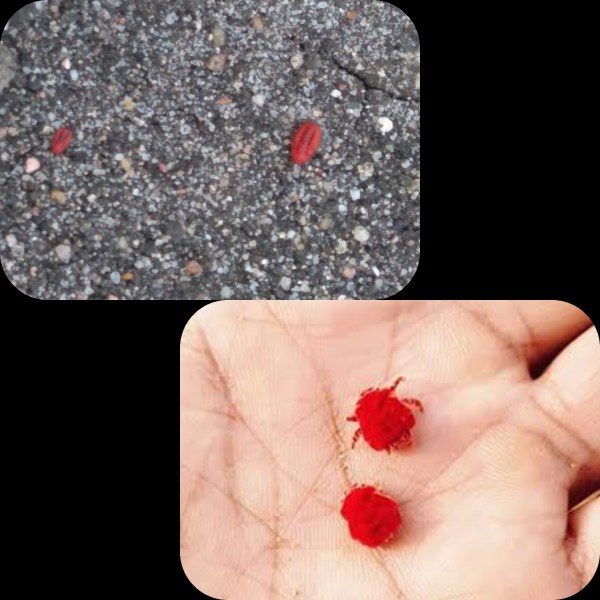
Pattikonda:02/07/2020.
Red velvet mite,Popularly known as Rain bugs. The scientific name of this worm is TROMBIDIIDAE.These are red in colour.It ranges in size of 5-7mm and non poisonous. These are Farmer friendly worms.
The Worm which signs for Good rains and good agriculture season throught year. Mainly, In A.P the farmers are believed this for good rainy season and time to cultivate land and Harvesting.
This worms are only comes at rainy season.They are part of soil arthopods which makes soil fertile by decomposing organic material. These shows potential biological control of season.
They also play vital role to the rate of soil fertile and eats harmful bacteria and worms. Farmers have pinned much hope on this worms for good yielding and good season.
Source:Village Farmers

 International Journal of Research (IJR)