Entrepreneurship

What is Entrepreneurship?


Entrepreneurship is an activity which is done by a person to bring out the social change in the world, by innovative technologies, services, products, etc.

In a more formal definition, Entrepreneurship is the activity of setting up a business or businesses, taking on financial risk in the hope of profit.

Hence, entrepreneurship is an act by which a person became independent and lives a life on his/her terms and conditions. Entrepreneurship is about being your boss.

Who is an Entrepreneur?

An entrepreneur is a person who brings about changes for the betterment of society.

An entrepreneur is someone who sees the world from a different angle. An entrepreneur is a risk-bearer, organizer, and innovator.

Entrepreneur as a risk-bearer

As a risk-bearer, an entrepreneur is the one who buys certain factors of production changes them into a product and sells them at uncertain prices in the future. There is uncertainty about the prices, which is not an ordinary risk that can be insured therefore the entrepreneur is a risk-bearer.

Entrepreneur as an organizer-

As an organizer entrepreneur combines the labor, land, capital other resources to make a product. After selling this product in the market and subtracting all the receipts which remained is the profit.

Entrepreneur as an innovator

As an innovator entrepreneur is the one who introduces a product, a service or a technology in the existing one to improve the lives of the people.

Example of Entrepreneurs


Every entrepreneur has a different vision to see the world to find out the best opportunity for them as well as for the improvement of society.

Many successful entrepreneurs influence the world in different ways because as every individual is different, every entrepreneur is different.

Steve Jobs will always be the most famous and successful entrepreneur in the world. He formed an apple computer company. Jobs’ inventions have been a boon in technology. He passed away with a net worth of over $8.3 billion.

Oprah Winfrey is one of the most successful lady entrepreneurs in the world. She is the richest African-American woman. Despite having a past full of thorns she never gave up in life. Now she owns a cable network company named OWN meaning Oprah Winfrey Network. She acquired the name “queen of all media”. She is the only multi-billionaire in American history possessing a net worth of 2.9 dollars.

Elon Musk, who doesn’t know about him. He is one of the most influential South African born American. He launched his first company Zip2 Corporation, in 1995 with his brother, Kimbal Musk and X.com in 1999 which later became PayPal.
In 2002, he founded SpaceX which is a huge success.

These are some of the examples of the most influential entrepreneurs, who are trying to bring a revolution into the world.

Traits of the entrepreneurship

Creative thinking– creativity is an important characteristic of an entrepreneur. A creative mind thinks about new ideas. Instead of blaming the situation, they find a solution to a particular problem. They have amazing imagination power. They think that every product, service has a scope of improvement.

Embrace changes– successful entrepreneurs are very flexible about the changes. They are always ready for the changes and take the advantages out of the situations.

Hard work vs smart work– Entrepreneurs know when to work hard and when to work smart. They know that neither of the two can substitute each other.

Use money wisely– Money management skills of the entrepreneurs should be very good. They should know where, when, how much to invest.

Vision – successful entrepreneurs know everything about their business- why the organization exists, how a product or a service will bring a difference to the existing one, in which market is to be launched.

Maintain the consistency– successful entrepreneurs are always consistent with their work. They know that success can’t be achieved overnight. They should not give up on the tough situations.
There is a famous saying by an entrepreneur –
“Tough times never last, but tough people do.”- Robert H. Schuller.

Astronomers discover a remarkable Newborn Star

Newborn Neutron Star Swift J1818.0-1607.

NASA’s Neil Gehrels Swift observatory spotted a young object when it released a massive burst of X-rays.

This object is a baby neutron star known as Swift J1818.0-1607.

A new study in the journal Astrophysical Journal Letters estimates that it is only about 240 years old – a veritable newborn by cosmic standards.

When a massive star becomes supernova then it explodes and then a neutron star is born. After Blackhole, Neutron star is the second densest object in the universe. Neutron stars are so dense that a teaspoon of it would weigh 4 billion tons on Earth.

The mass of this newly discovered baby neutron names as Swift J1818.0-1607 is twice the mass of our sun and volume one trillion times smaller.

Swift J1818.0-1607 belongs to a special class of objects called magnetars because it exists with a magnetic field up to 1,000 times stronger than a typical neutron star and about 100 million times stronger than the most powerful magnets made by humans.

Saturn’s Moon Titan is drifting away hundred times faster than previously thought-NASA

“This object is showing us an earlier time in a magnetar’s life than we’ve ever seen before, very shortly after its formation,” said Nanda Rea, a researcher at the Institute of Space Sciences in Barcelona and principal investigator on the observation campaigns by XMM Newton and NuSTAR (short for Nuclear Spectroscopic Telescope Array).

Swift J1818.0-1607 is only about 16,000 light-years away from us located in the constellation Sagittarius.

As light takes time to travel these cosmic distances, we are seeing the light that the neutron star emitted about 16,000 years ago, when it was about 240 years old.

Among 3000 known neutron stars, scientists have identified just 31 confirmed magnetars – including this newest entry. Because their physical properties can’t be re-created on Earth, neutron stars (including magnetars) are natural laboratories for testing our understanding of the physical world.

“Maybe if we understand the formation story of these objects, we’ll understand why there is such a huge difference between the number of magnetars we’ve found and the total number of known neutron stars,” Rea said.

Many scientific models suggest that the physical properties and behaviors of magnetars change as they age and that magnetars may be most active when they are younger. So finding a younger sample close by like this will help refine those models.
Though neutron stars are only about 10 to 20 miles (15 to 30 kilometers) wide, they can emit huge bursts of light on par with those of much larger objects.

Magnetars in particular have been linked to powerful eruptions bright enough to be seen clear across the universe. Considering the extreme physical characteristics of magnetars, scientists think there are multiple ways that they can generate such huge amounts of energy.

Swift J1818.0-1607 was spotted when it began outbursting, its X-ray emission becomes 10 times brighter than normal.

Despite X-rays, magnetars also emit the highest-energy form of light Gamma rays to the lowest energy form radio waves.

“What’s amazing about [magnetars] is they’re quite diverse as a population,” said Victoria Kaspi, director of the McGill Space Institute at McGill University in Montreal and a former member of the NuSTAR team, who was not involved with the study. “Each time you find one it’s telling you a different story. They’re very strange and very rare, and I don’t think we’ve seen the full range of possibilities.”
The new study was led by Paolo Esposito with the School for Advanced Studies (IUSS) in Pavia, Italy.

For more details about Neil Gehrels Swift Observatory visit-

https://swift.gsfc.nasa.gov/

PM Modi commits sacrifies of our soldier will not go in Vain

Satellite images of Galwan Valley, Ladakh

Addressing the nation on June 17, 2020, after the Ladakh’s Galwan Valley face-off between India and China at border PM Modi says that the deaths of our brave Soldiers will not waste.

PM Modi also warns China and said that India would not “compromise with its integrity and sovereignty” and will firmly defend its self-respect and every inch of land.

PM Modi pays tribute to the Martyrs 

On Monday night clash between India and China in Ladakh’s Galwan valley, which was the biggest confrontation over five decades, three personnel- an officer and 2 soldiers- died.

“During the de-escalation process underway in the Galwan Valley, a violent face-off took place on Monday night with casualties. The loss of lives on the Indian side includes an officer and two soldiers,” the Indian Army said in a brief statement.

Late on Tuesday evening, another statement from the army said: “17 Indian troops who were critically injured in the line of duty at the stand-off location and exposed to sub-zero temperatures in the high altitude terrain have succumbed to their injuries, taking the total of those killed in action to 20.”

Paying the tribute to Indian soldiers Prime Minister Narendra Modi said on Wednesday that India is proud of the valour of our armed forces. They have always shown remarkable courage and steadfastly protected India’s sovereignty.

Asserting that the sacrifice of the army men will not go in vain, the Prime Minister said, “India is culturally a peace-loving country…We have always worked closely with our neighbors in a cooperative and friendly manner…We never provoke anyone…Whenever the time has come, we have demonstrated our power, proving our capabilities in protecting the integrity and sovereignty of the country.”

China tries to blame on India

In a telephonic conversation between the External Affair Minister Jaishankar and his Chinese counterpart Wang Wi, Jaishankar said that the Chinese side should reassess its actions and take corrective steps, the Ministry of External Affairs said.

“While this became a source of dispute, the Chinese side took premeditated and planned action that was directly responsible for the resulting violence and casualties,” the MEA said, giving details of the conversation.

After the conversation between the two Chinese foreign ministries issued a statement and said that ” India should conduct a thorough investigation, hold the violators accountable, strictly discipline the frontline troops and immediately stop all provocative acts to ensure such incidents will not occur again”.

The Chinese statement also said the two sides agreed to “cool down the situation on the ground as soon as possible” and maintain peace and tranquillity in the border area in accordance with the agreement reached so far between the two countries.

All the three forces on Alert

Meanwhile, Defence Minister Rajnath Singh held a high-level meeting with Chief of Defence Staff and three service chiefs following which all the frontline bases of the Indian army and Indian airforce were put on high alert in view of the clash, military sources said.

The Indian Navy has also been asked to raise its alert-level in the Indian Ocean Region where the Chinese Navy has been making regular forays.

The sources said the army has rushed in additional troops to all sensitive areas along the Line of Actual Control (LAC) in Arunachal Pradesh, Uttarakhand, Himachal Pradesh, and Ladakh, and directed all the frontline bases to deal with any aggressive behavior by Chinese Army with a “firm” hand.

Architectural Beauties of India

India is one of the oldest civilizations in the world. Among all the known civilizations in India, Indus Valley civilization(2600 BC- 1900 BC)is the oldest one. 

It produced several cities marked by great uniformity within and between sites, including Harappa, Lothal, and the UNESCO World Heritage site MohenjoDaro

After this civilization, many empires have established in India among which architectures of the Maurya Empire and Gupta Empire show magnificent beauties.

The rock pillar of Ashoka shows a variety of influences in its details.

The Buddhist culture was one of the dominating cultures in India. Buddhist monasteries and stupas were built all over India before it eventually spread to other countries.

Ajanta, Elephanta, and Ellora are architectures of respectively Buddhist, Hindu, and mixed including Jain cultural beauties.

In south India Pallavas and Cholas, buildings are also amazing examples of some of the Flamboyant beauties of India.

some of the Architectural Wonders of India are-

      The Taj Mahal

Magnificient Taj Mahal

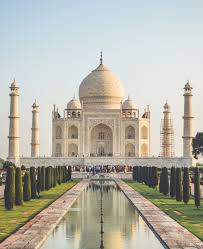
TAJ Mahal, the symbol of love was built by the Mughal emperor Shah Jahan in 1653 AD in the memory of his beloved wife Mumtaz. 

It is a combination of Hindu and Indo-Islamic architecture. The white marble was bought in from Makrana in Rajasthan and was transported by elephants.

This one of the seven wonders of the world comprises of a square plinth having a central structure topped by a huge dome and surrounded by four minarets at each corner.

This white marble beauty’s exterior changes colors from a pinkish hue in the dawn to a dull gold at noon and finally, all enduring sparkling white under the moonlight.

The Ellore Caves

Ellora Caves

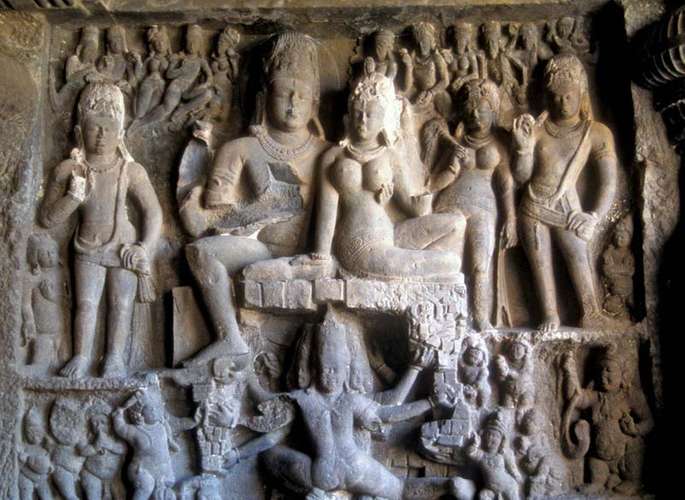
Ellora caves are listed by UNESCO as a world heritage site located in Maharastra. It is a combination of Buddism, Jainism, and brahmins cultures.

Ellora served as a group of monasteries (vihara) and temples (chaityas); some of the caves include sleeping cells that were carved for itinerant monks.

The caves consist of series of 34 rock-cut temples. Kailasa temple, Hindu Caves, Buddist Caves, Vishwakarma Caves are some of the caves of the Ellora. Among which Kailasa temple is the largest rock-cut structure anywhere.

The elegance of Dravidian Sikhara, which is a flat-roofed mandapa positioned over sixteen pillars, the gigantic Ravana figure reflecting the strength of this villainous legend as the sculpture here shows him lifting Mt Kailasha is an epitome of the ancient Indian art.

Chand Baori

Chand Baori

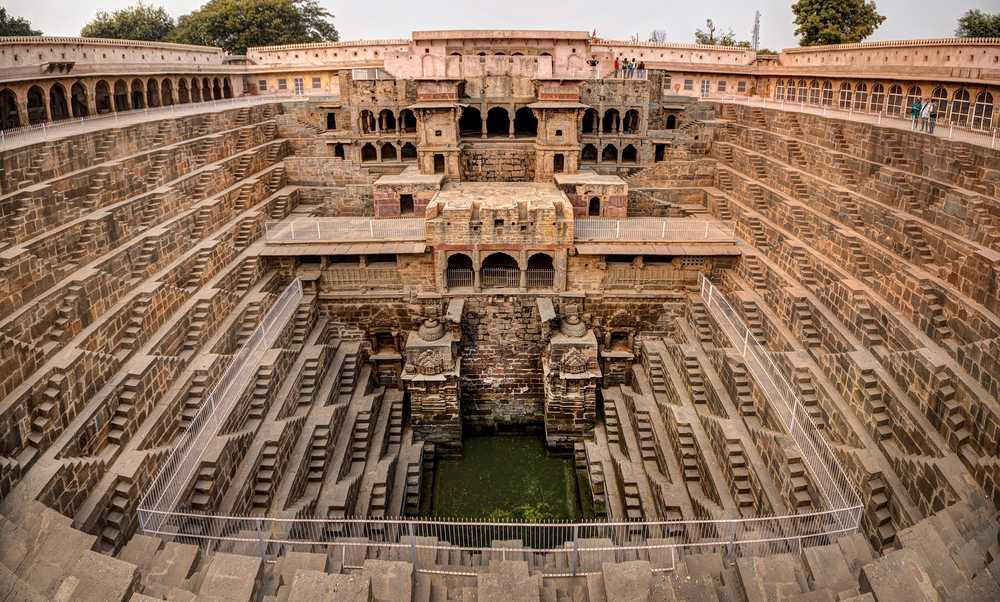
It was built in the 9th century by the king Chanda. Chand Baori consists of 3500 steps called Baori or Bawdi, which leads down to the water of the well.

It is about 64 feet deep and India’s largest and deepest stepwell with 13 floors.

The exquisite geometry of the stepwell attracts tourists from all over the world.

Sun temple KONARK

Sun temple Konark

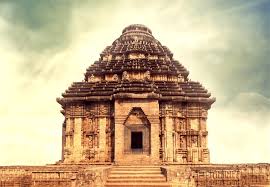
Dedicated to Hindu God Sun, Sun temple KONARK was built in 13th century CE at Konark about 35 kilometers from Puri on the coastline of Orissa, India.

Temple complex has the appearance of a 100-foot (30 m) high chariot with immense wheels and horses, all carved from stone. 

Lying on the coast of Bay of Bengal, it is considered one of the best examples of Dravidian Architecture. Also known as the Black Pagoda, it is considered as one of the grandest temples in India. Built-in the 13th century, it has a form of a giant chariot with twelve intricately crafted wheels led by seven horses. A true marvel that shows the advanced craftsmanship as well as love and devotion of that era for art.

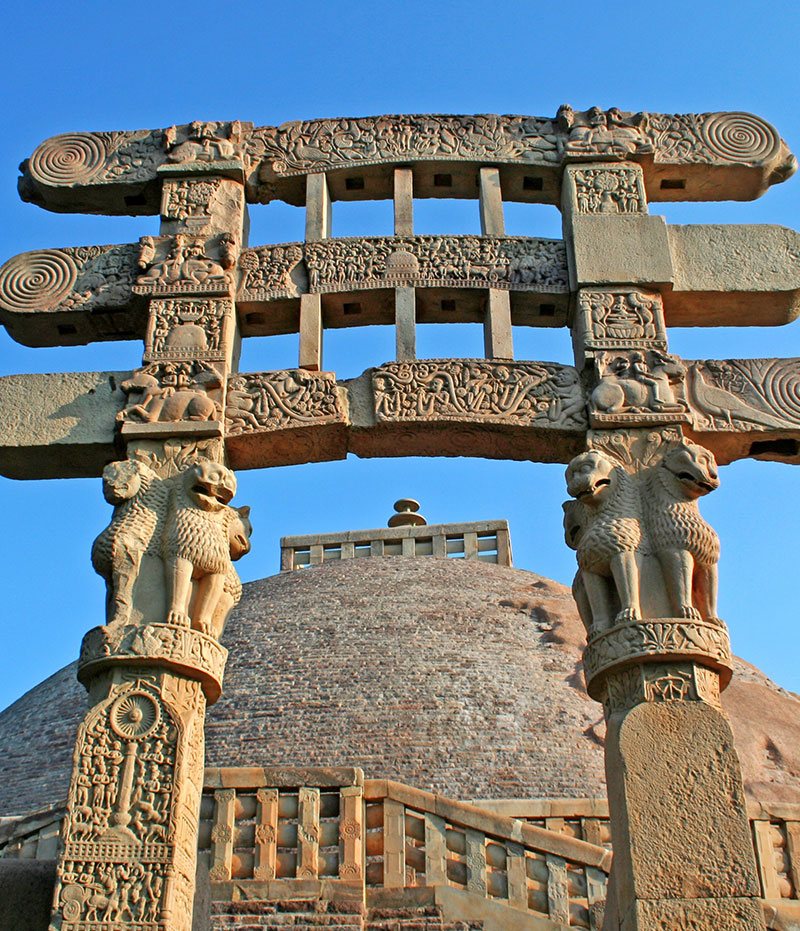
The Sanchi Stupa

Sanchi Stupa

It was built in the 3rd century BC on the order of Emperor Ashoka to spread Buddhist Philosophy.

 A stupa is generally a hemispherical dome structure containing relics of Lord Buddha. In this particular stupa, Lord Buddha has been symbolically represented by footprints, thrones, wheels, etc. and all of them are exquisitely ornamented.

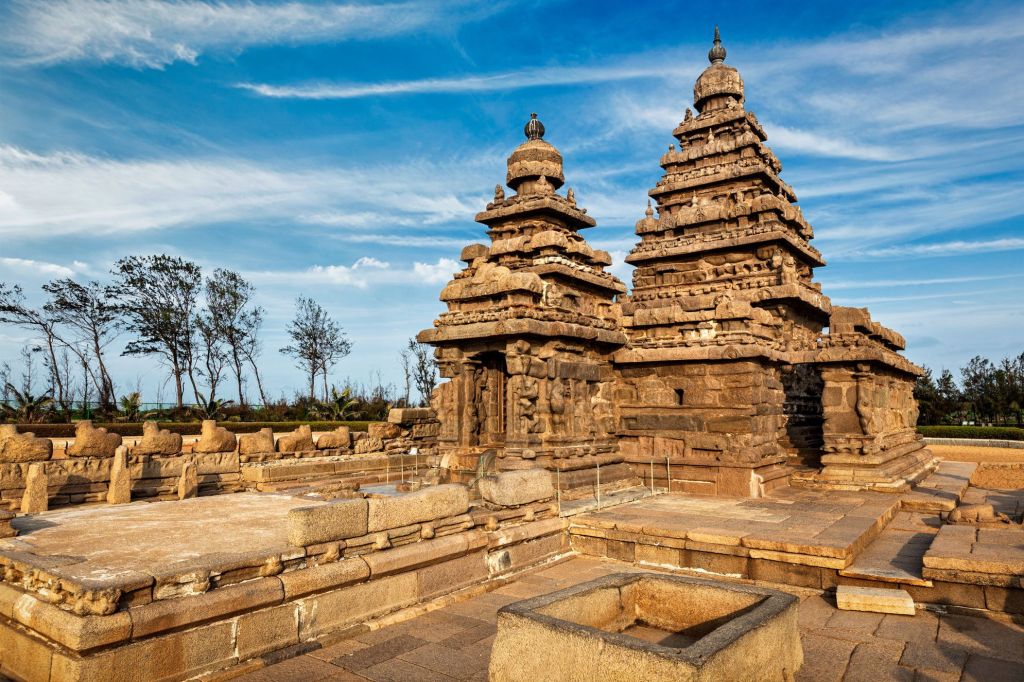
Mahabalipuram Temple

Mahabalipuram Temple

The rock-cut carving of Mahabalipuram depicts the scenes of the great epic Mahabharat.

The temple is most famous for its depictions of the chariots of the warriors of the Mahabharata, called Rathas all of which are in a specifically designated form, some rising to as high as two or three stories. There is another remarkable sculpture that adorns the temple walls which is called the Descent of the Ganges. Depicting the time when Lord Shiva made the River Ganga descend from the heavens to the earth, it uses the natural relief of the rock to emphasize the river and has carvings of various Gods and Goddesses beholding the wonder with their open eyes. The intricacy and ingenuity of the carvings are an example of the skill of the craftsman who constructed these temples way back in the 7th Century!

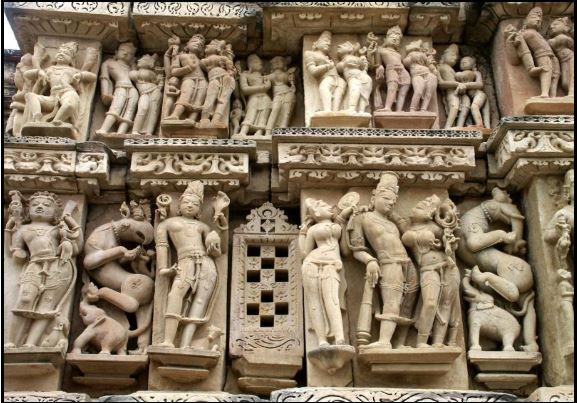
Khajuraho Temple

Khajuraho Temple

Khajuraho temples were built between 950 AD to 1050 AD by the Chandela dynasty. These are a group of Hindu and Jain temple in Chhatarpur district Madhya Pradesh.

These are a group of 85 temples. Falling into ruins, wars, and natural hazards, only 22 out of these remain today and are spread over a stunning area of 6sq.km. 

The temple complex has three distinct types of carvings, the cult icons, the Apsaras (beautiful maidens), and demigods that are supposed to guard the temple. An example of the finest craftsmanship and precision all of the figurines appear in perfect human symmetry, is it a wonder then that it is said that to see all the stages of human life and its activities, one has but to visit these temples and observe the carvings!

Facebook-Owned-Whatsapp launches digital payments in Brazil

Messaging app to launch digital payment in Brazil

Facebook-owned-WhatsApp has launched its digital payment service WhatsApp-pay in Brazil.

Facebook has acquired WhatsApp for $19 billion in 2014. The messaging app had 2 billion users as of February.

It has 400 million users in India. It has been testing its payments service in India-based on UPI – with about a million users. The company had started its Beta testing in India, In 2018.

This WhatsApp-pay allows users to send and receive money online. It will be available on both iPhone and android in the countries Brazil, India, Indonesia, Germany, The U.K., The U.S., and Mexico.

The service is free for consumers, but businesses will be charged a fee similar to what they would pay when accepting a credit card transaction.

Users need to link a credit or debit card to their WhatsApp account, and transactions are secured with either fingerprint or a six-digit PIN.

In a Facebook post on Monday, its CEO Mark Zuckerberg said Brazil is the first country where it is widely rolling out payments in WhatsApp.

Last year Facebook said “Payments on WhatsApp are beginning to roll out to people across Brazil beginning today and we look forward to bringing it to everyone as we go forward,” the company said in the post.

WhatsApp says its digital payments are an open model that will allow it to add more partners in the future.

In a Facebook post on Monday, CEO Mark Zuckerberg said that Brazil is the first country where it is widely rolling out payments in WhatsApp.

“Today we are starting to launch payment for people using WhatsApp in Brazil. We are making sending and receiving money as easy as sharing photos, adding that small businesses will also be able to make sales right within WhatsApp.”

“To do this we are building on Facebook Pay, which provides a secure and consistent way to make payments across our apps,” He said.

Facebook CEO, Mark Zuckerberg said – ” To start, we will support debit and credit cards from Banco do Brasil, Nubank, and Sicredi on the visa and Mastercard networks and we are working with Cielo, the leading payment processor in Brazil. We have built an open model to model to welcome more partners in the future,” He added.

The company announced that it is making it easy for users to send money to their physically distant loved ones.

“We’re making sending money to loved ones as easy as sending a message, which could not be more important as people are physically distant from one another,” the company said in a blog post.

“Because payments on WhatsApp are enabled by Facebook Pay, in the future we want to make it possible for people and businesses to use the same card information across Facebook’s family of apps.”

since Company has its rivals in the country include Softbank-backed Paytm, Flipkart’s PhonePe, and Google Pay, it has delayed a full-fledged launch in India.

Mental health a forever necessity

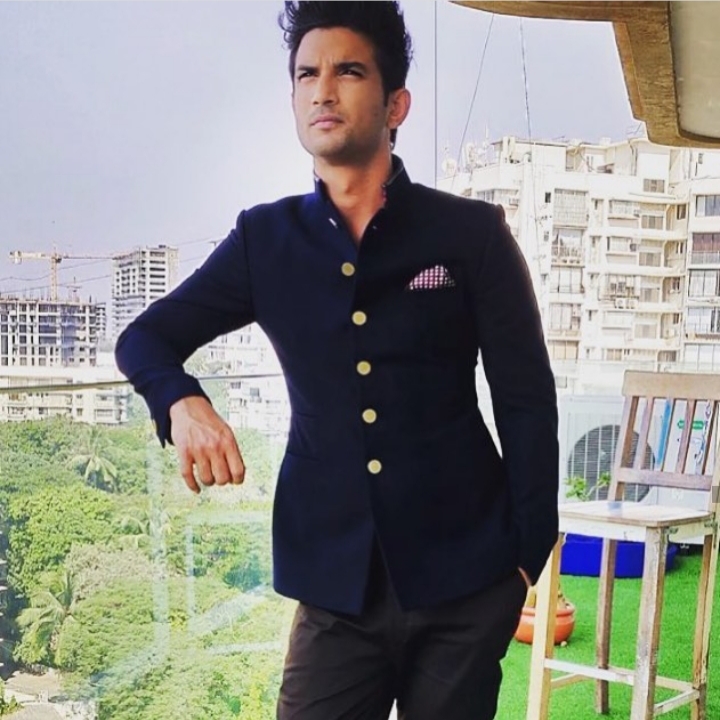
Late Actor Sushant Singh Rajput

The nation is mourning over the death of Sushant Singh Rajput. Everybody is asking a question why?. Why? he has taken such a big step.

A self-made star who was found dead on Sunday morning at his Mumbai residence.

It is said that he has been fighting against depression for past months.

Depression is a very heavy word to hear. Our society doesn’t want to hear this. Though with time changes have been brought into the society. Still, we don’t feel comfortable talking about our mental wellness.

In our daily life, we give priority to our physical health, our nutrition intakes. Rarely we talk about our mental health. This is the age of technology we are busy doing nothing on the internet scrolling the page and barely talk with someone.

Depression is not a state of mind that can’t be cured. It is a state of mind when someone has lost hope from his/her life. When someone focuses only on negative thoughts. At its worst, it leads to suicide. Anyone can suffer from it at any point in time of his/her life. There is nothing to feel shy about not sharing.

Yesterday we hear the news of the brilliant actor Mr. Rajput but this is the only case we are aware of. Everyday many people die of depression. According to WHO- Close to 800 000 people die due to suicide every year. Suicide is the second leading cause of death in 15-29-year-olds.

We are nothing to question about the choice of a person to end his/her life. We have not walked through his/her shoes. But as human beings, we can talk, express our feelings to our near and dear ones.

Its completely to be ok, not to be ok. Life is precious. There is always a ray of hope. There is a morning after every night.

We as a friend, a family should have our eyes on our loved ones.
Talk, communicate ask for their wellness. Make them feel that you love them, you care for them.

Without passing any judgments give them a helping hand.
If someone is feeling the same then suggest them for meditation, take for doctors’ help. Tell them to be busy or do whatever they like to do if they don’t like to do anything then even it is ok not to do anything. But death… It is not a solution.

especially, in this pandemic time when we all are on the same stage, we should talk with each other, communicate about our well beings.

Actor: An Inspiration for the youngsters

He was a dreamer and achiever. Starting from nothing to one of the brightest stars of Bollywood he proved that through hard work and dedication anyone can achieve their goals.

He was a bright student. He got admission in Delhi technological university with 7th rank in the DCE entrance exam. During his engineering days, he joined Shiamak Davar’s dance academy. Later he joined television with the drama “Kis Desh Mein hai Mera Dil” in 2008 and became famous with his drama “Pavitra Rishta” 2009.

The Boy Next Door image guy has now made a Bollywood debut with “Kai Po Che”. And his career shot from here. After this Shuddha Desi Romance, PK, Detective Byomkesh Bakshy, M.S. Dhoni: The untold story, Raabta, Kedarnath, Sonchiriya, and the last movie Chhichore.

He had got the film fare award best actor male for the
film M.S. Dhoni: The untold story.

Despite, not having any godfather in Bollywood with his hard work and dedication, he proved that anyone can pursue his/her dreams if they are determined to do so.


Not only acting skills but also his perspective towards life is an inspiration for the youngsters.

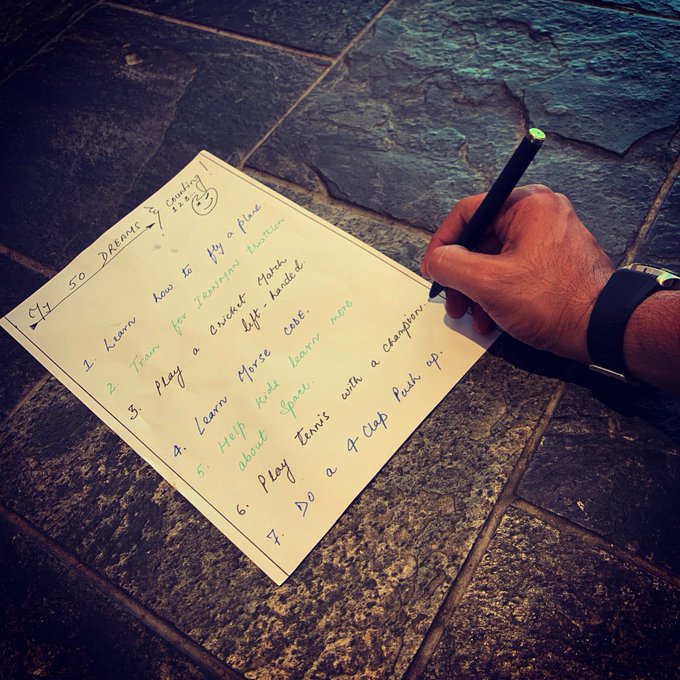
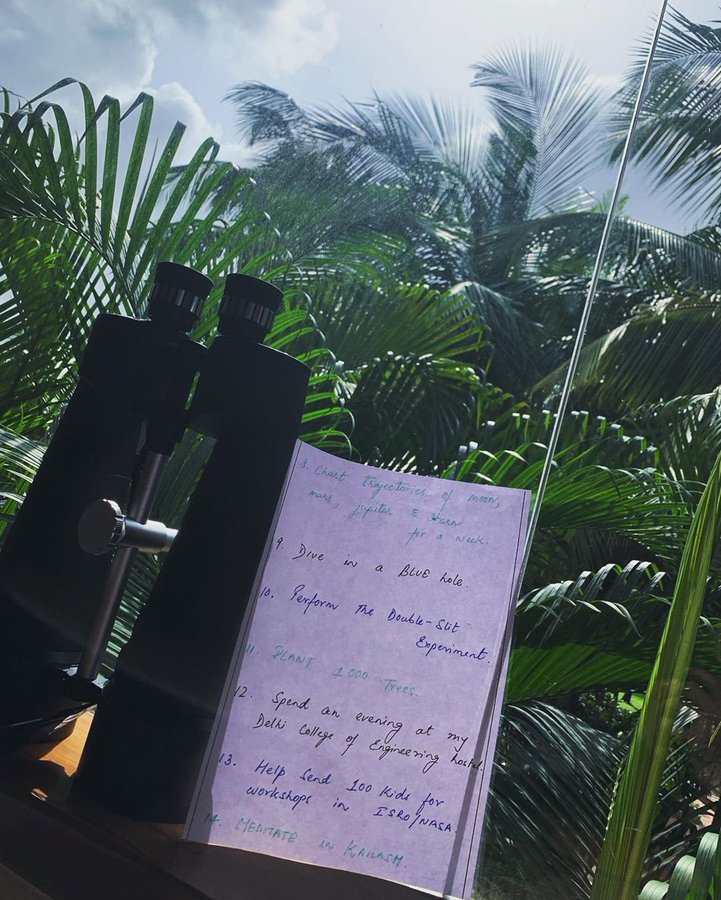
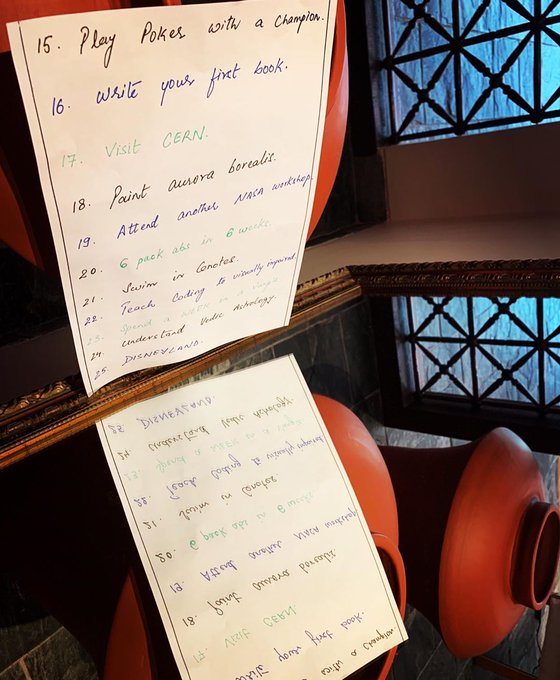
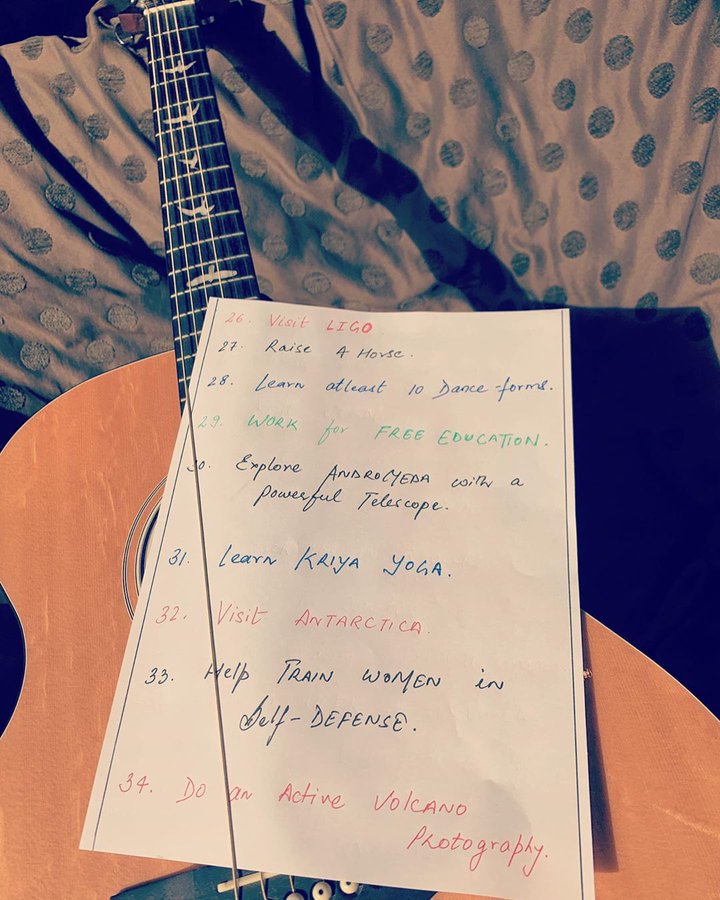
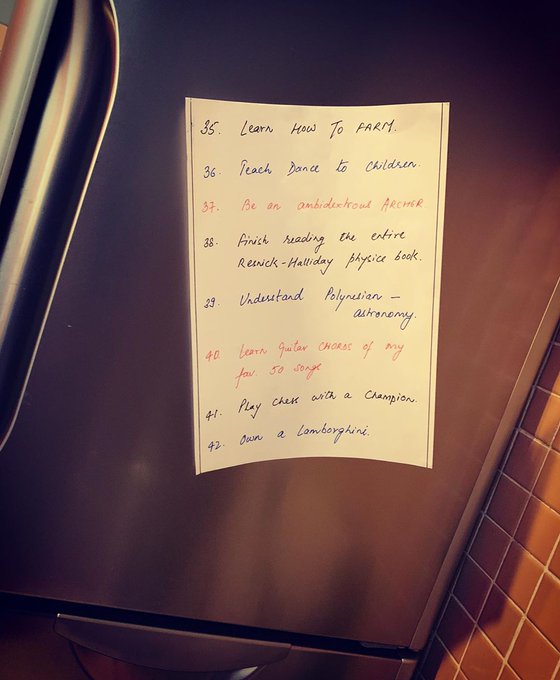
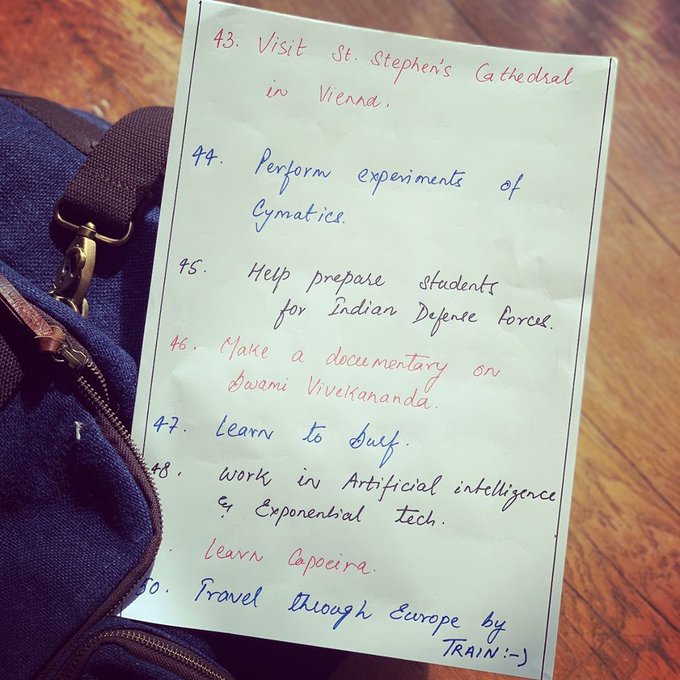
In one of his Instagram posts, he shares the lists of his dreams that to be accomplished. He shared the images with the caption 50 dreams and counting…

A self-made star who was fascinated by the secrets of cosmos has become a part of that…

hydroxychloroquine doesn’t reduce Mortality

Hydroxychloroquine cloroquina medicine with pills

The RECOVERY trial, in the U.K., has found no clinical benefit from the use of hydroxychloroquine in hospitalized patients with COVID-19. 

The RECOVERY trail which is the large randomized controlled trial in the U.K. began in the march. This trail has enrolled over 11,000 patients.

It is a dynamic trial assessing five candidate drugs and convalescent plasma therapy for treating COVID-19 in patients in U.K. hospitals. 

The trial investigators found that there was no significant benefit in mortality reduction in the intervention group, which was the primary objective.

It then came to light that the drug did not have the desired beneficial effects. 

“We have concluded that there is no beneficial effect of hydroxychloroquine in patients hospitalized with COVID-19. We have therefore decided to stop enrolling participants to the hydroxychloroquine arm of the RECOVERY Trial with immediate effect,” a June 5 press release says.

According to the release, a total of 1,542 patients were randomized to receive hydroxychloroquine for 10 days while 3,132 patients in the control arm received only standard care. 

The researchers found that there was “no significant difference in the primary endpoint of 28-day mortality”. While mortality was 25.7% in the intervention group, 23.5% in the control group, which is not statistically significant.

There was no evidence of beneficial effects in-hospital stay duration and other endpoints, either.

Outcomes measured

The primary outcome was the reduction in all-cause mortality within 28 days of randomization. 

The secondary outcomes measured were to assess any reduction in duration of hospital stay and need for and duration of ventilator or ECMO within 28 days and up to six months after randomization.

“These data convincingly rule out any meaningful mortality benefit of hydroxychloroquine in patients hospitalized with COVID-19,” the release says. The researchers will soon make the results available.

Peter Horby, Professor of Emerging Infectious Diseases and Global Health at the Nuffield Department of Medicine, the University of Oxford, and Chief Investigator for the trial says in the release that “Hydroxychloroquine and chloroquine have received a lot of attention and have been used very widely to treat COVID patients despite the absence of any good evidence. The RECOVERY trial has shown that hydroxychloroquine is not an effective treatment in patients hospitalized with COVID-19,” 

Huge speculation

Deputy Chief Investigator Martin Landray from the University of Oxford says: “There has been huge speculation and uncertainty about the role of hydroxychloroquine as a treatment for COVID-19, but an absence of reliable information from large randomized trials. The preliminary results from the RECOVERY trial are quite clear — hydroxychloroquine does not reduce the risk of death among hospitalized patients with this new disease.”

“The RECOVERY trial, in addition to the signals from other studies we have received so far, is enough to convince me to not offer hydroxychloroquine to hospitalized patients,” Nahid Bhadelia, a physician at Boston Medical Center, told Science. Prof. Landray added to this, saying: “If you, your spouse, your mother gets admitted to hospital and is offered hydroxychloroquine, don’t take it”.

Post-exposure prophylaxis

Another trial found that hydroxychloroquine drug was not effective even as post-exposure prophylaxis in asymptomatic participants who have had high-risk exposure with a confirmed COVID-19 case. Nearly 88% (719 of 821 participants) had such high-risk exposure. The results of the trial published in The New England Journal of Medicine found that the incidence of COVID-19 illness was not statistically significant in the group that received the drug compared with the control group. While 49 of 414 (11.8%) participants who received the drug developed illness, 58 of 407 (14.3%) participants who got the placebo fell ill. Side-effects were more in the intervention group but no serious adverse events were reported.

science behind Hindu rituals and traditions

Hindus have been following many traditions and rituals for centuries.
These rituals and traditions were considered as superstitious, but there is a science behind each ritual that we follow from morning to evening and on some special occasions.

Here, are some of the rituals and traditions and logic behind them-

Namaste

“Namaste” i.e. joining your hands together. It involves pressing the tips of the fingers of both the hands together. These are linked to pressure points in the eyes, ears, and mind, which activate the mind when we press them together so that we could remember the person for a long time.

secondly, by greeting in this manner we don’t come in contact with the person as we do in shaking hands, so it prevents the transfer of germs.

Sleeping direction-

It is said that while sleeping one’s head should not point in the direction of north. The science behind this said that our earth is a giant magnet it has its own magnet field like the human body.

when we point our head towards north direction then it becomes asymmetrical with the direction of the earth’s magnet field, in order to overcome this our body needs to work harder which can cause problems related to blood pressure.

Fasting

Fasting has many advantages like it regulates our body’s metabolic activity, boosts brain function, enhances heart health, hormonal balance, etc.

Bhagwat Gita path(chanting)-

Bhagwat Gita is a source of solutions to any of our life’s problem.

It gives the direction in the time of difficulty to a human being. “Karma is the ultimate truth.” Lord Krishna, gives direction for the welfare of the whole world in Bhagwat Gita.

In the battle of Mahabharat as a charioteer, He was a source of direction in the life of Arjuna.

Charan Sparsh (Touching feet)-

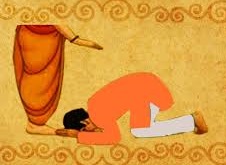
When we touch the feet of our elder ones or god. They are pious for us, we are free from ego, then their hearts emit positive energy, which reaches us through their toes or hands in the form of Ashirwad.

our brains nerves end at our hands when we touch the feet of our elder a circuit is completed and the positive energy reaches our mind.

Ear piercing-

Indian physicians and philosophers believe that piercing the ears helps in the development of intellect, power of thinking, and decision making faculties.

It also helps in speech restraint and ear channels also become free from disorders.

Eating food sitting on the ground-

When we sit on the ground while eating we sit in the “Sukh Asan” position in YOGA. It improves the digestion system.

Applying mehndi on hands and feet-

Mehndi is a medicinal herb, it is cold in nature. It keeps the body cool and releases stress.

Worshipping the “Peepal” tree-

“Peepal” is the only tree that gives oxygen in the night too. In order to save this tree Hindu worship Peepal tree.

Bells in the Hindu temple

When the bell rings it produces a sound which generates an echo lasts for at least 7 seconds, it unites the left and right portions of our brain, and activates all the seven healing centers in our body.

Bells of the Temple

Tilak on the forehead-

The point on the forehead, between the eyebrows, is the point of concentration and retains all the energy in the body.

From the ancient time, it is believed that the red kumkum in the form of tilak prevents the loss of energy from the body.

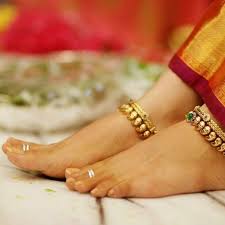
women wear toe ring

Toe rings are generally worn on the second toe. The nerve from the second toe connects with the uterus. Wearing it on the second toe strengthens uterus and keeps it healthy by maintaining blood pressure.

Worshipping “Tulsi” plant-

Tulsi is a natural herb it prevents the human body from many diseases. It prevents insects and mosquitoes to enter into the house.

Vedic sages called it sanjeevani and Goddess to take care of it.

Applying sindoor by married women-

Sindoor is prepared by mixing turmeric, lime, and the metal mercury. Due to its intrinsic properties, mercury controls blood pressure and activates sexual drive. Thus, sindoor should be applied right up to the pituitary gland, known as the master gland where all our feelings are centered.

Idol worshipping

Researchers believe that it was initiated for the purpose of increasing the concentration during the prayers and to gain positive energy.

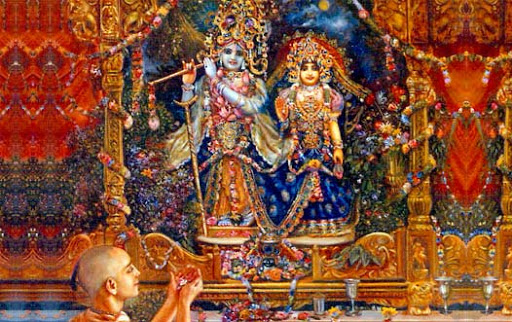
Idol of Lord Radha Krishna

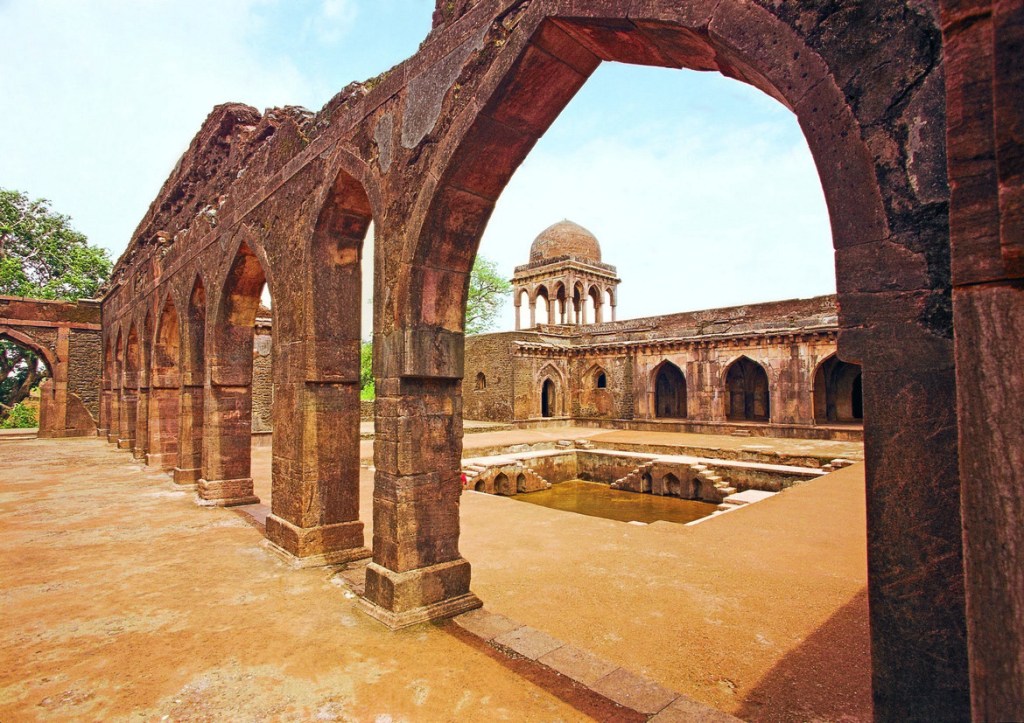
A visit to Tourism “Mandav: The City Of Joy “

Mandav, also known as Mando is one of the most attractive tourist places near Indore.

Mandav is a town in Dhar district of Madhya Pradesh. It is situated in the Vindhyanchal Range at 2,000 feet above sea level. 

Mandav is 100km from Indore, the nearest airport.

This place shows the love of the poet prince Baz Bahadur, for his beloved companion Rani Roopmati.

Mandav is known from the Paramara period 8th century A.D.

Later it was under the Mughal rule, they called it ‘Shadiabad- The city of joy. 

The monuments are an exquisite mixture of the Hindu and Afghan style of architecture.

Some of the places to visit in the city.

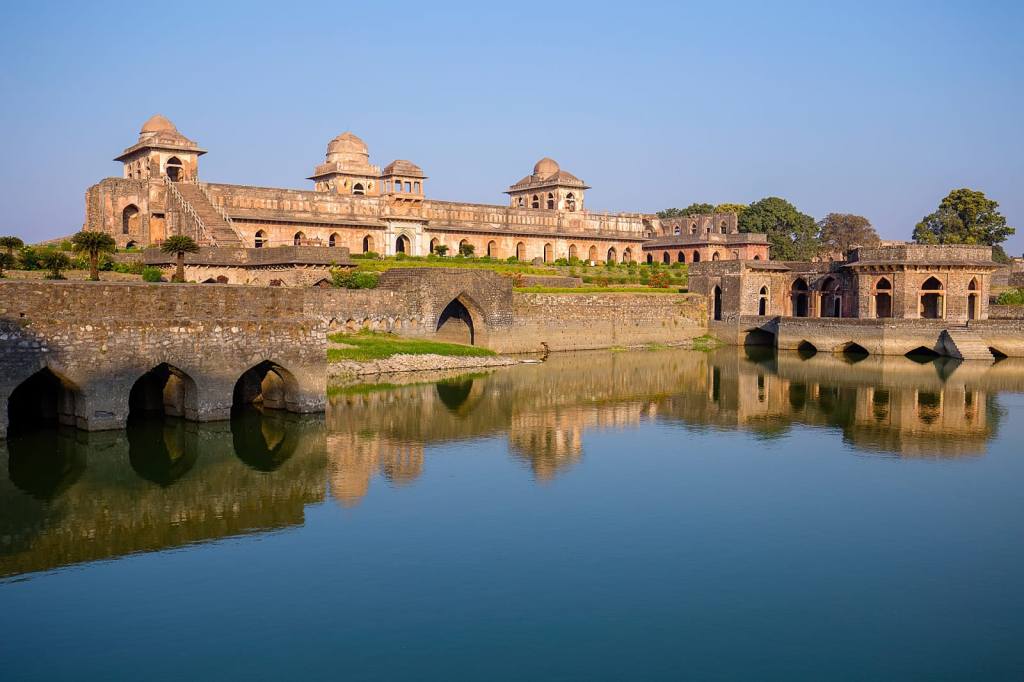
Jahaz Mahal and Hindola Mahal

Jahaz Mahal : ship palace

This enlarged building measuring 110 meters in length and only 15 meters in-breath is built during the reign of Ghiyathuddin Khalji (1469 – 1500).

This palace is named as Jahaz Mahal or ship palace because it stands with the two water bodies on either side of it, Munj Talao on the west and the Kapur Talao on the east. This gives it a ship-like structure.

It is a double-storeyed tower to a height of 9.7 meters. The ground floor of the palace has three large halls. Each of the halls has balconies over to look at the Munj Talao.

The western side of central houses a large balcony, a domical ceiling. It offers mesmerizing views of the Munj Talao extending up to the Royal Palace in the south and Jal Mahal in the southeast.

At the far northern end of the ground floor of Jahaz Mahal, a couple of steps descends to a large swimming pool shaped like a blooming flower.

At the northern end of the terrace of the Jahaz Mahal, which too houses a similar pool but much smaller in size. The northern end of the terrace provides a bird’s eye view of the lower pool.

The terrace provides great views of the Royal Complex in the northern part of the Citadel of Mandu. 

On the east are great views of Kapur Talao, with the Taveli Mahal on its southern side. On the west us Munj Talao with the Royal Palace to the north and the Jal Mahal on the northeast.

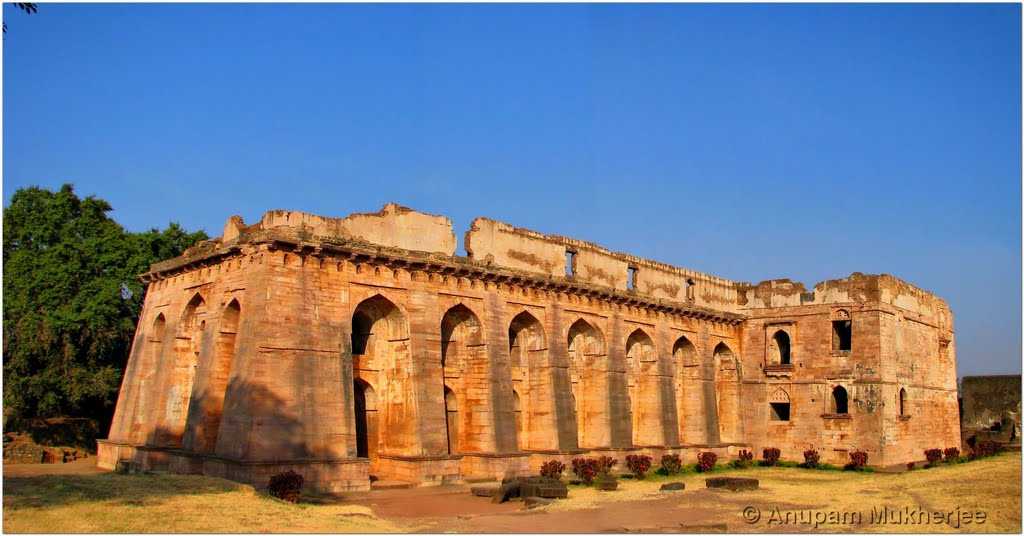
A beautiful picture of Hindola Mahal : Swinging palace

Hindola Mahal means “swinging palace” is a great tourist attraction place in Mandu. It is built in 1425 C.E. during the rule of Hoshang Shah. It was later modified in the 15th century under the rule of Ghiyasuddin Khilji.

The T-shaped building with a transverse projection towards the north has sloping walls which give it the name Hindola Mahal.

The Darbar halls of Ghiyasuddin Khilji can be seen in the palace, which is also known as the royal court of the sultan.

The Mahal was constructed from sandstone with exquisitely carved columns with the provision of hot and cold water connected with the rooms situated underground.

Palace of Roopmati and Bazbahadur

Bazbahadur palace

Bazbahadur palace which reveals the love story of poet Roopmati and king Bazbahadur. It was built in 1509.

The palace has a huge courtyard, large halls, and a terrace that offers mesmerizing views from it.

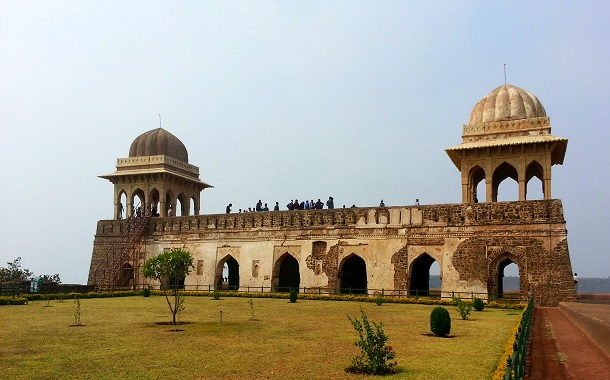
A scenic view of Roopmati palace

Roopmati Mahal lies to the south of Bazbahadur’s palace. Bazbahdur got fascinated by the melodious voice of Roopmati and offered to marry her. She agreed to marry on a condition that she would stay in such a place from where she would be able to view the palace of Bazbahadur as well as flowing Narmada because she used to pay homage to the river before having her food.

hence Roopmati Mahal was built undee the reign of Bazbahadur for his beloved wife.  

It provides the view of the Bazbahadur Mahal and the River Narmada as a slivery shimmering line in the Nimar plains.

Bazbahadur was later defeated in a battle and fled from the battlefield. Roopmati committed suicide after consuming poison. The balladeers of Malwa still tell you their story.

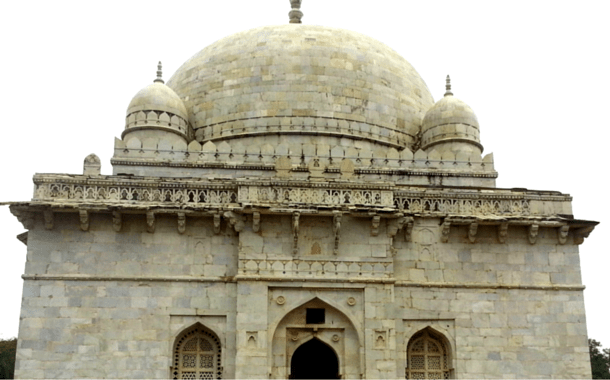
Hoshang Shah’s Tomb

Hoshang Shah Tomb

It is said to be an inspiration for the Taj Mahal, it is built of white marble in its entirety. It is also said that this was the first marble structure of India. The elegant structure embraces Afghan art and architecture along with intricate lattice work and a well constructed dome. Hoshang Shah, being a dominant figure and a daredevil of his time, definitely ensured that he was laid down in style.

Attacking congress on china Union minister says- “not the India of 1962”

Attacking the opposition party BJP leader and Union minister Ravi Shankar Prashad said on Wednesday that It is no longer the India of 1962 and the country is led by a “courageous” leader like Prime Minister Narendra Modi, not by the Congress, seeking to fend off the attack by the opposition party on the government’s handling of the Sino-India border standoff.

He also asked whether it is right for Congress leader Rahul Gandhi to raise questions about such a crucial matter of the Sino-India border situation.

He said that the leader should have this much understanding as to not raise queries on Twitter about strategic issues involving China.

Speaking at a ”virtual rally” for Himachal Pradesh, Mr. Prasad said when India works to become self-reliant, it will also do so in matters of security and referred to surgical and airstrikes targeting terrorists inside Pakistan during the first term of the Modi government.

“We (India) want disputes to be resolved peacefully. We will say one thing very humbly that today India is the India of 2020 and not 1962. Today’s India is of a courageous leader like Narendra Modi and not of Congress leaders.

Mr. Prasad asked if it is proper for him to raise such questions openly about crucial matters related to external affairs, and said the Congress leader had also sought “evidence” following Indian surgical and airstrikes inside Pakistan.

This must be understood,” he said, without making any direct comment on the standoff.

Targeting the Congress, he said when the matter involving China is discussed, then the party’s handling of the country, a reference to 1962, will also be debated

In his recent tweet on Jan 10, Rahul Gandhi directly attacks Prime minister Narendra Modi.

“The Chinese have walked in and taken our territory in Ladakh.
meanwhile,
The PM is absolutely silent and has vanished from the scene.”

India-china acknowledgment of tensions on the border came on May 10, when the Army stated clashes between Indian and Chinese patrols at two places.

Counter attacking his statement Mr. Prashad said that Mr. Rahul Gandhi should have this much understanding as to not raise questions about the strategic issues of India China on the border situation.

Congress was in power in 1962 when china had defeated India.

Pointing out this he also said that India is India of 2020, not 1962.
India is in the hands of the “courageous” leader like Narendra Modi, not Congress leader.

India wants the issues to get resolved with the peace he added.

Targetting Rahul Gandhi, Mr. Prashad also said that He is the one who asked for the proof after the Balacoat attack.

“Rahul Gandhiji you are the one who also asked for the proof of the Indian army’s sacrifice after URI’s Surgical strike.”

He said Rahul Gandhi to understand the situation and pointed out the India china war of 1962 when Congress was in power.

“How Congress tried to handle the situation with China during the war.”

“It is important that we stay united as a country at this point.” He further added.