 Future of Bamboo Work Industry
Source: Future of Bamboo Work Industry

International Journal of Research (IJR)
IJR Journal is Multidisciplinary, high impact and indexed journal for research publication. IJR is a monthly journal for research publication.
Neetika Singh [1], Akash Awasthi[2]
1. M. Tech Scholar, Department of Software Engineering
2. Head of the Department, Computer Science and Engineering
Naraina Vidha Peeth,Kanpur,India
Uttar Pradesh Technical University,Lucknow,India
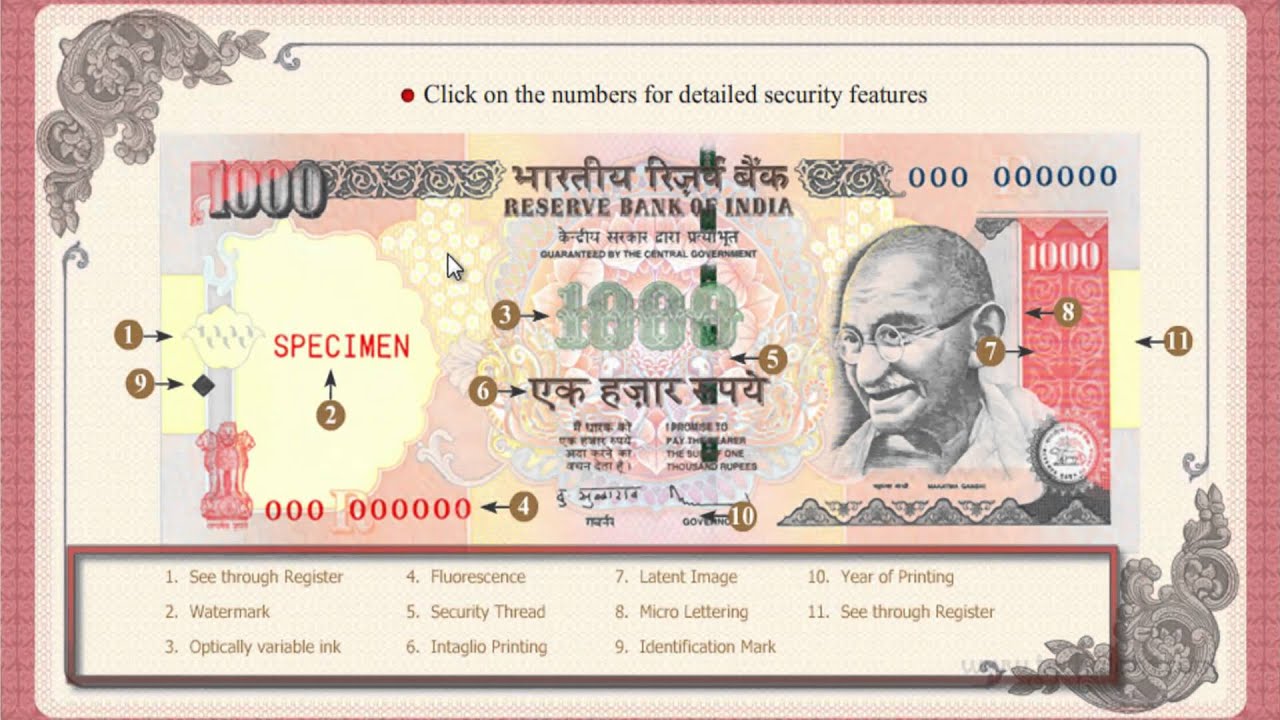

Abstract: Fake cash is impersonation money delivered without the legitimate approval of the state or government. Delivering or utilizing this fake cash is a type of extortion or fraud. Copy notes are one of the most concerning issues happening in cash exchanges. Distinguishing fake notes physically gets to be tedious and chaotic process thus there is need of computerization methods with which cash acknowledgment procedure can be effectively done. Numerous systems have been proposed with the utilization of MATLAB, highlight extraction and different uses of picture handling. Two qualities of Indian paper money are chosen for fake discovery included recognizable proof imprint and coin serial number. The attributes extraction is performed on the picture of the coin and it is contrasted and the qualities of the certified money. The money will be checked by utilizing picture preparing methods. The procedure of shrewd edge discovery calculation is utilized for edge recognition. The methodology comprises of picture handling, dim scale change, edge recognition, picture division, trademark extraction, looking at pictures.
Keywords: Fake currency, Canny Operator, Digital image processing, imitation detection

MMAD Model
1T.Sreenath
M.Tech(DSCE)
Dept.of ECE
AITS,Tirupati
2N.Dilip Kumar
Assistant professor
Dept.of ECE
AITS,Tirupati
3A.Rajani
Assistant professor
Dept.of ECE
AITS,Tirupati
ABSTRACT:
Segmentation of real-world remote sensing images is challenging because of the large size of those data, particularly for very high resolution imagery. For segmentation of remote sensing images, many algorithms have been proposed, to provide accurate results of segmentation by using this new proposed model. Here segmentation can be done by using improved 2D gradient histogram and MMAD (minimum mean absolute deviation) model. This proposed algorithm comes under ‘Thresholding’, the optimal threshold value can find by using MMAD model. Experiments on remote sensing images indicate that the new algorithm provides accurate segmentation results, particularly for images characterized by Laplace distribution histograms.
Keywords: Gradient histogram, image segmentation, minimum class mean absolute deviation, remote sensing.

Muhammad M. Ibrahim1*, Akbar Salihu2, Fatima Ibrahim Dugje3
*1Department of Microbiology, University of Maiduguri, Nigeria; 2ART Unit, Infectious Disease Hospital, Kano, Nigeria; 3Department of Medical Laboratory Science, University of Maiduguri; Nigeria; 3
*correspondence author: mnistyle@yahoo.com

ABSTRACT:
Typhoid fever is a systemic infection caused by the Gram-negative bacillus Salmonella typhi and occasionally by Salmonella paratyphi. This study was carried out to assess the biochemical parameters AST, ALT and ALP in patients with Typhoid Fever. The study was designed to evaluate the serum liver enzymes’ activities during the incidence of typhoid fever. The aminotransferases (AST and ALT) and alkaline phosphatase (ALP) activities were demonstrated using Reitman and Frankel method and King and Amstrong method respectively. A total of 200 subjects were studied, which was divided into 100 healthy individuals (controls) and 100 diagnosed typhoid fever patients. The results revealed a highly elevated levels of AST (25.6±17.6), ALT (22.5±8.8) and ALP (32.0±16.1) (p<0.05) observed in typhoid patients as compared to controls (1.0±1.7) (6.5±2.8) and (24.0±6.4) respectively. It could be noted from the findings of this study that there is a derangement of the liver enzyme values in typhoid patients. This study appears to have ample evidence based on the physiological and biochemical parameters in typhoid patients to help explain the influence of typhoid morbidity.
Keywords: Salmonella typhi, Typhoid fever, Liver enzymes,

Chung Chin-Yi
Research scholar
National University of Singapore

It is the impossibility of Christ’s incarnation and forgiveness of sins that makes the law possible as Christ came to fulfil the law rather than to defeat it. Derrida’s injunction to forgive the unforgiveable and move into a Derridean third space of thinking the impossible forgiveness of sins and holding one accountable to the death penalty for transgressions committed is an extension of his meditations on hospitality and forgiveness, extending Christian charity, forgiveness and hospitality as a move that exceeds the law and exceeds the thinking of the possible but it is precisely this impossibility of grace, mercy,Christian charity and forgiveness which makes the law possible just as the exception is necessary to thinking the rule.
Keywords: Derrida, Christianity. Gift, Sacrifice, Aporia

Research Scholar- Sheetal Uplenchwar#1, Ph.D. Guide – Dr. Manimala Puri#2
1Assistant Professor, Allana Institute of Management Sciences, Pune,
2 Director, Jayawant Shikshan Prasarak Mandal, Group of Institutes

Abstract
Online Learning is becoming an important tool to allow the flexibility and quality requested by learning process. In the recent past, a great number of open source learning management system (OSLMS) has been introduced in the market showing different characteristics and services. All these OSLMS reduces cost acquired by proprietary LMS. Market is occupied with large number of OSLMS. So before selecting any OSLMS it is necessary to consider series of features, function and usability of the overall learning system.
The main purpose of this study is to analyze and explore the right decision when choosing a suitable OSLMS platform to meet the requirements of education system.
A different criterion needs to be considered while evaluating OSLMS. These criteria includes communication tool, productivity tool, student involvement tool, administration tool, course delivery tool, curriculum design, course delivery tool, software and hardware requirement, pricing and licensing issues.
This study focuses on evaluation of communication tool of seven OSLMS which includes Moodle, Atutor, Sakai, Ilias, Claroline, Olat and Dokeos.
Keywords
Learning management systems (LMS), Open-source learning management systems (OSLMS), Group, Discussion Forum, Blog, Chat, Email, File Exchange, and Video Services.

BY
IFECHUKWU J. NDINEFOO, PhD, SENIOR LECTURER,
DEPARTMENT OF PHILOSOPHY, NNAMDI AZIKIWE UNIVERSITY, AWKA, NIGERIA.

Abstract
The maturity of science in the physics of Copernicus, Galileo, and Newton brought with it philosophical, logical and methodological questions of its development. Such questions crystallized in robust, fecund and, sometimes acerbic, debates on the philosophy, logic and method of science amongst scientists and philosophers. This is to be expected because every mature discipline lays its rational foundation and defines its boundary by its philosophy, logic and method and these questions hardly go without debates. Karl Popper’s philosophical and methodological writings were mainly dedicated to articulating the rational foundation and logical-cum-methodological boundaries of science striving, in so doing, to demarcate science between non-science. Popper’s tool in the effort to demarcate science and non-science is his methodological criterion of falsficationism propounded in his magnum opus, Logic of Scientific Discovery 1968. The thesis of falsificationism is that a scientist should strive to falsify his theory and not to confirm it. This is contrary to the traditional inductivist or verificationist methodology of searching for confirming instances. Popper conceives the falsificationist methodology as a bulwark against dogmatism in science and authoritarianism in politics. But the scientist in his daily work employs induction and its attendant assumptions and questions the claim that a scientist should work to falsify his theory, among other heuristic components of falsificationism. Thus, a fortuitous debate ensued between Popper and his supporters on one hand, and the working scientist and his supporters, on the other hand. The result is a rich corpus on the logic and method of science. This essay x-rays such debate between Popper and the working scientist and, in so doing, contributes to the corpus.
KEYWORDS: WORKING SCIENTIST, LOGIC, METHOD, FALSIFICATIONISM, SCIENCE.

PROF MANMINDER SINGH ANAND
Asstt. Prof in English, PUNJABI UNIVERSITY NEIGHBOURHOOD CAMPUS , JAITU 151506 Pb. India.
ABSTRACT
The present paper attempts to analyze the conceptual aspects of Communicative language teaching approach , as also to figure out the radical elements in the contemporary approaches carried out in Europe as well as in India. An attempt has been made to focus on the radical elements in various approaches like Grammar-translation Method , Audio-lingual method or Bi-lingual method and also to compare and contrast their specific preferences. The paper, thus, presents an overview of the speaking , writing & technical skills & how they must be employed having a specific tilt towards radical innovations .
Keywords
communication, approaches , listening , technical drills , Noam Chomsky , language
Ahmed M. El-Naggar
Department of Applied Medical Sciences, Community College in Al-Qurayyat,
Al-Jouf University, KSA

Abstract
The present study aims to evaluate the wastewater management system in AlQurayyat, with primary focus on the efficacy of the treatment plant that was operated 30 years ago. One of the objectives of the study is to throw light on the environmental consequences of wastewater and suggest innovative, novel solutions to this problem. Approximately 4000000 m3 of wastewater comes from localities served by the sewerage system every year. About 6000000 m3 of the total wastewater comes from the localities lacking any sewerage system services. About 20% of the wastewater discharges from such localities is transferred by truck tankers and dumped directly into open fields nearby Kaf village. Approximately 95% of the total existing waste flow is treated by a single treatment plant acquiring a capacity of 300 m3/hour (8500 m3/day). The raw sewage arriving to the plant varies markedly according to the human consumption and seasonal rainfall. A mean value of 900 m3/hour was recorded during January 2015. In 2014, more than 5000000 cubic meters of the wastewater were dumped either into a man-made pond or an open field nearby Kaf village, 15 Km northern AlQurayyat. Successful and sustainable management of wastewater requires a composite of innovative projects, for example innovative financing of appropriate wastewater infrastructure (design, construction, operation, maintenance, and upgrading). Thinking to the long-term and creating solutions for smart wastewater management in the light of rapid global change is strongly recommended. Strategic planning in the water sector must be appropriate at the social, cultural, economic and environmental scales.

Khadri, S.F.R and Chaitanya Pande
Department of Geology, Sant Gadge Baba Amravati University, Amravati-444602 (MS), India

ABSARCT
IRS P-6 LISS III imagery of Mahesh River Basin reveals the presence of prominent lineament sets. Lineaments have been recognized with the advent of satellite imagery. It has been convincingly demonstrated that many of these structures are related to basement tectonics. There it has been shown that structural anomalies the definition of enhanced fracture production zones over Deccan trap are commonly coincident with pervasive basement lineament trends. For instance, the satellite imagery data interpretations supports the view that Gavilgarh faults indicates an older age and the remaining lineaments represents a younger age. The basin lies between two major lineaments i.e. Purna lineament following the course of Purna River display a WNW-ESE trend it is traceable for over 80 km from south of Akola in the east to some distance east of Jalgaon in the west, where it merges into Tapi lineament, this lineament lies in the northern part of the basin and the southern part is delineated by Kaddam lineament trending NW-SE and extends up to 240 km and that has been named after Kaddam River whose course has been controlled by this fault lineament. This lineament has northerly dipped. Faulting has been recognized in several sectors of this lineament. The basin lies between two major lineaments i.e. Purna lineament following the course of Purna River display.
Keywords: Remote sensing, GPS, Lineament map, Satellite image.


 International Journal of Research (IJR)