National Education Policy 2020

The Union Cabinet on Wednesday approved the new National Education Policy (NEP) with an aim to introduce several changes in the Indian education system – from the school to college level. A single regulator for higher education institutions, multiple entries and exit options in degree courses, discontinuation of MPhil programs, low stakes board exams, common entrance exams for universities are among the highlights of the policy.  Speaking to reporters, Union minister Prakash Javadekar said the changes are important as the policy, which was framed in 1986 and revised in 1992, had not been revised since then.

The NEP 2020 aims at making “India a global knowledge superpower”.The new academic session will begin in September-October – the delay is due to the unprecedented coronavirus disease (Covid-19) outbreak – and the government aims to introduce the policy before the new session kicks in. The committee — which suggested changes in the education system under the NEP — was headed by former ISRO chief K Kasturirangan. The NEP was drafted in 1986 and updated in 1992. The NEP was part of the election manifesto of the ruling Bhartiya Janta Party (BJP) ahead of the 2014 elections.

Either one of the mother tongue or the local/regional language will be the medium of instruction up to Class 5 in all schools, the government said Wednesday while launching the National Education Policy 2020. Among other changes in the revision of the NEP, last done over three decades ago, is the extension of the right to education to cover all children between three and 18 years of age. The policy also proposes vocational education, with internships, for students from Class 6, a change to the 10+2 schooling structure, and a four-year bachelor’s program. NEP 2020 will bring two crores, out-of-school children, back into the mainstream, the government has claimed. Prime Minister Narendra Modi tweeted saying he “wholeheartedly welcomed” the policy, which he called a “long due and much-awaited reform in the education sector”.

In a bid to ramp up digital learning, a National Educational Technology Forum (NETF) would be created. “E-courses will be developed in eight regional languages initially and virtual labs will be developed,” Amit Khare, Higher Education Secretary, said. Top 100 foreign colleges will be allowed to set-up campuses in India. According to the HRD Ministry document, listing salient features of policy, “such (foreign) universities will be given special dispensation regarding regulatory, governance, and content norms on par with other autonomous institutions of India.” Standalone Higher Education Institutes and professional education institutes will be evolved into multi-disciplinary education. “There are over 45,000 affiliated colleges in our country. Under Graded Autonomy, Academic, Administrative and Financial Autonomy will be given to colleges, on the basis of the status of their accreditation,” he further said.
Here are the important points in the National Education Policy 2020:

  1. The mother tongue or local or regional language is to be the medium of instruction in all schools up to Class 5 (preferably till Class 8 and beyond), according to the policy. Under the NEP 2020, Sanskrit will be offered at all levels and foreign languages from the secondary school level. 
  2. The 10+2 structure has been replaced with 5+3+3+4, consisting of 12 years of school and three of Anganwadi or pre-school. This will be split as follows: a foundational stage (ages three and eight), three years of pre-primary (ages eight to 11), a preparatory stage (ages 11 to 14), and a secondary stage (ages 14 to 18). According to the government, the revised structure will “bring hitherto uncovered age group of three to six years, recognized globally as a crucial stage for the development of mental faculties, under school curriculum”.
  3. Instead of exams being held every year, school students will sit only for three – at Classes 3, 5, and 8. Assessment in other years will shift to a “regular and formative” style that is more “competency-based, promotes learning and development, and tests higher-order skills, such as analysis, critical thinking and conceptual clarity”.
  4. Board exams will continue to be held for Classes 10 and 12 but even these will be re-designed with “holistic development” as the aim. Standards for this will be established by a new national assessment center – PARAKH (Performance Assessment, Review, and Analysis of Knowledge for Holistic Development).
  5. The policy, the government has said, aims at reducing the curriculum load of students and allowing them to become more “multi-disciplinary” and “multi-lingual”. There will be no rigid separation between arts and sciences, between curricular and extra-curricular activities and between vocational and academic stream, the government said.
  6. To that end, the policy also proposes that higher education institutions like the IITs (Indian Institute of Technology) move towards “holistic education” by 2040 with greater inclusion of arts and humanities subjects for students studying science subjects, and vice versa.
  7. The NEP 2020 proposes a four-year undergraduate program with multiple exit options to give students flexibility. A multi-disciplinary bachelor’s degree will be awarded after completing four years of study. Students exiting after two years will get a diploma and those leaving after 12 months will have studied a vocational/professional course. MPhil (Master of Philosophy) courses are to be discontinued.
  8. A Higher Education Council of India (HECI) will be set up to regulate higher education; the focus will be on institutions that have 3,000 or more students. Among the council’s goals is to increase the gross enrolment ratio from 26.3 percent (2018) to 50 percent by 2035. The HECI will not, however, have jurisdiction over legal and medical colleges.


The Cabinet also approved changing the name of the HRD ministry to the education ministry.

International Tiger day

The Tiger is one of the largest cat in the world. Having black and orange strips with beautifully marked face makes his distinctive and amazing image. To aware the people about tiger conservation, 29th July is celebrated as a International Tiger day. The motive of this day is to spread the awareness to save the Tigers and their habitates. There are plathora of issues are facing by tigers across the world. Some of the issues include poaching, conflict with humans, and habitat loss. Only around seven percent of the historical range of a tiger is still intact today. That is an incredibly small and worrying numbers. A lot of people are not aware about these major losses but a little knowledge and through spreading awareness can make them aware and it leads to protection the lives of Tigers and their habitates

DESERTIFICATION

Loss of land

PATTIKONDA:29/02/2020.

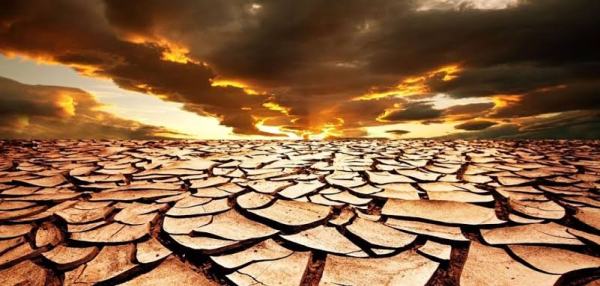
Desertification is a type of land degradation in drylands which biological productivity is lost due to natural processes or induced by human activities whereby fertile areas become increasingly more arid. It is caused by a variety of factors, such as through climatic changes and through the over exploitation of lands through human activity.Desertification is a significant global ecological and environmental with far-reaching socio-economic and political consequences.

Serious and extensive land deterioration is the causes for desertification.SAHARA DESERT is the most effected area. The impact of global warming and human activities are presented in the Sahel. In this area the level of desertification is very high compared to other areas.Another major area that is being impacted by desertification is the GOBI Desert.South America is another area affected by desertification, as 25% of the land is classified as drylands. In Mangolia, around 90% of grassland is considered vulnerable to desertification by the UN.  In India, The THAR affected most of lands.

Causes

The immediate cause is the loss of most vegetation.. This is driven by a number of factors, alone or in combination, such as drought, climatic shifts, tillage for agriculture, overgrazing and deforestation for fuel or construction materials.one of the most common causes is overgrazing.Overpopulation is one of the most dangerous factors contributing to desertification.climatic changes is likely a major contributing factor in the desertification process. . The continuous use of the land rapidly depletes the nutrients of the soil causing desertification and pesticide smay deplects its ph value.

The Effects of desertification is Sand and dust storms.There has been a 25% increase in global annual dust emissions between the late nineteenth century to present day. Food security: Global food security is being threatened by desertification and o er population.Vegetation patterning:landscape may progress through different stages and continuously transform in appearance.Desertification is decreasing the amount of sustainable land for agricultural uses but demands are continuously growing.

Lossing nature lives.

Due to Desertification, The world losses its habitat.They also suffer from poor economic and social conditions.This situation is exacerbated by land degradation because of the reduction in productivity.Agriculture is a main source of income for many desert communities. The increase in desertification in these regions has degraded the land.This has negatively impacted the economy and increased poverty rates.Planting more trees – the roots of trees hold the soil together and help to reduce soil erosion from wind and rain.

  1. Planting more trees – the roots of trees hold the soil together and help to reduce soil erosion from wind and rain.
  2. Improving the quality of the soil – this can be managed by encouraging people to reduce the number of grazing animals they have and grow crops instead.
  3. Control of population and overgrazing. These are reduction factors of Desertification.

DEFORESTATION

Lossing our own lives

PATTIKONDA:28/07/2020.

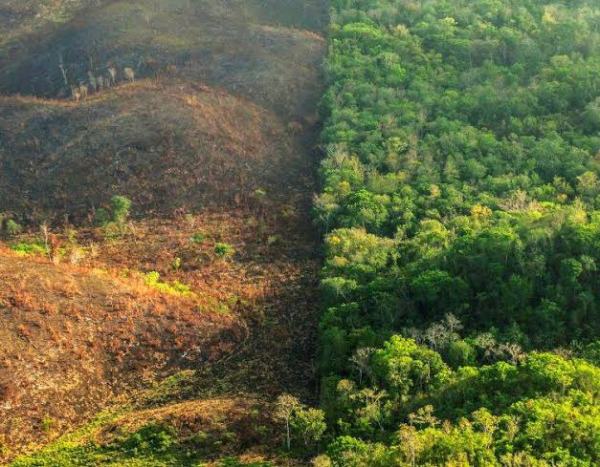
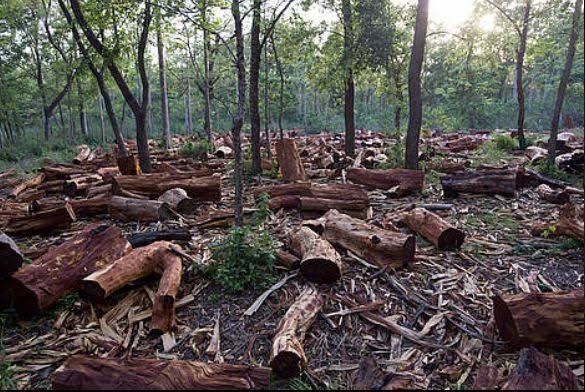
Deforestationclearance,clearing  is the removal of a forest or stand of trees from land which is then converted to a non-forest use.Deforestation can involve conversion of forest land to farms,ranches or urban use. The most concentrated deforestation occurs in tropical rainforest.About 31% of Earth’s land surface is covered by forests. The primary cause of deforestation is agriculture. Trees are cut down for use as building material or sold as fuel.

The removal of trees without sufficient reforestation has resulted in habitat damage, biodiversity loss and arudity. Deforestation causes extinction, changes to climatic conditions, desertification, and displacement of populations. It also effects on environment. It rises global warming, carbondioxide, biosequestration, soil erosion, fossil fuels.Deforestation is more extreme in tropical and subtropical forests in emerging economies.subsistence farming is responsible for 48% of deforestation; commercial Agricultural is responsible for 32%; logging is responsible for 14%, and fuel wood removals make up 5%.

Effects and hazards

Another cause of deforestation is climate change. 23% of tree cover losses result from wildfires and climate change increase their frequency and power.The rising temperatures cause massive wildfires especially in the Boreal forests.majority of deforestation was caused by industrial factors, including extractive industries, large-scale cattle ranching, and extensive agriculture.The water cycle is also affected by deforestation. Trees extract groundwater through their roots and release it into the atmosphere. 

Deforestation eliminates a great number of species of plants and animals which also often results in an increase in diseases.The diseases that passed to humans in this way in the latest decades include HIVEbolaAvian fluSwine Flu, and likely the COVID-19 pandemic are source from degradation of air and trees . The forest products industry is a large part of the economy in both developed and developing countries. Rapidly growing economies also have an effect on deforestation. The Europian union is one of the largest importer of products made from illegal deforestation.Damage to forests and other aspects of nature could halve living standardsfor the world’s poor and reduce global GDP.

Rainforests once covered 14% of the earth’s land surface; now they cover a mere 6% and experts estimate that the last remaining.The massive use of charcoal on an industrial scale in europewas a new type of consumption of western forests. The mangolians resulted in the reduction of 700 million tons of carbon from the atmosphere by enabling the re-growth of carbon-absorbing forests.Amazon rain forests are the another example for effects of deforestation and climatical change.

Save trees save lives

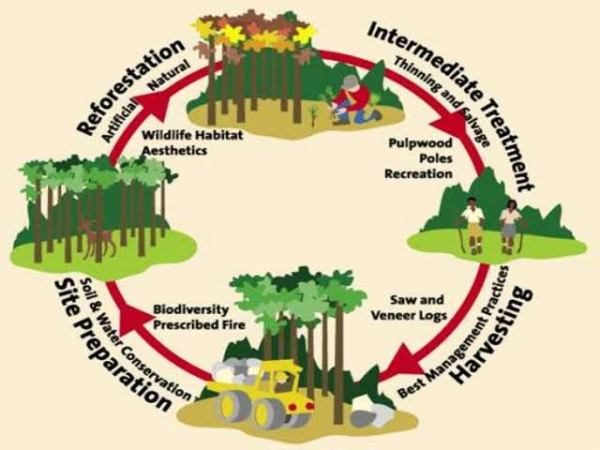
The wholescale clearance of woodland to create agricultural land can be seen in many parts of the world. In 2019, the world lost nearly 12 million hectares of tree cover. Nearly a third of that loss, 3.8 million hectares. Controls: Transferring rights over land from public domain to its inhabitants is argued to be a cost-effective strategy. Reforestation or planting trees are methods of control for deforestation.

online classes AMID Pandemic

COVID-19 began in the month of December in 2019 and soon it grew into a pandemic, leading to several losses of lives and locking down of many cities. Social distancing became the key to escape out of this problem. But, with this solution came other problems. We are able to follow social distancing by keeping us locked in our houses but this stopped students’ education too. But we can’t just stop everything due to this COVID thing. We need to find an effective solution to continue the education of students. We need to continue the functioning of schools and colleges.

Online Classes

In the times of the internet, the one and the only solution are online classes. The online way to share knowledge and information now is the internet. It has proved to be a real miracle these days, connecting millions and making information access fast and easy. Be it school, college, tuition, or coaching classes, knowledge is now being delivered to students who are sitting at their home and can learn things sitting there only. Students now need a mobile or desktop and fast internet connection to attend their online classes and learn things. It is not possible for a pandemic to stop students from learning.

How it is a different experience?

This way of learning is totally new to everyone, be it students, be it teachers or be it parents. We were already involved in some small ways of e-learning but a complete shift towards this type of mode is  something new and challenging to everyone. Teachers are continuously involved in finding new ways to make e-learning more interactive and interesting for students. They are continuously evolving their way of teaching and trying to give them a class-type of feeling. Teachers are also learning to adapt with new softwares and explore things. Students are learning how to deal with online homework submissions, doubt-sessions and examinations. But, the problem is that the medium of interaction is always an electronic device. Hence, students are subjected to fatigue and mental stress. They seem irritated and develop body pain sitting still at a particular position holding their phones or laptops. Students are also developing stress on eyes. It is quite difficult for them to adjust with all of these. It seems that this way of teaching costs their health, both mental and physical. Besides this, internet is not available to all the areas of the country and to all the students. Poor students can’t afford high speed data. This method of teaching, is thus, a barrier between poor students and education. It is a harsh truth that they are left behind. We need to work together towards this to make education available to these students also.

DAIRY FARMS

A key role in society

PATTIKONDA:27/07/2020.

Dairy farming is a class of agriculture for long-term production of milk, which is processedfor eventual sale of a fairy product.Dairy production has come a long way since the days of milking by hand. These days, machines are used to help the farmer milk several cows at once.The plant which processes milk and produces milk products are called dairy plant or dairy.

Commercial dairy farms are typically one-species enterprises. Dairy farms typically consist of high producing dairy cows. But some species used in commercial dairy farming include goats,sheeps and camels. In  Italy, donkey dairies are also used. The dairy farmers would fill barrels with milk bring it to market on a wagon and sell it for money.

Dairy farming has been part of agriculture for thousands of years.Large scale dairy farming is only viable where either a large amount of milk is required for production of more durable dairy products such as cheese, butter, etc. milk preservation methods: Cool temperature has been the main method.Ice banks were the first type of bulk milk cooler. plate heat exchanger (PHE),This device utilizes a number of specially designed stainless steel plates with small spaces between them.

Modern technologies of milking

MILKING MACHINE: It is also known as milking pipeline,This uses a permanent milk-return pipe and a second vacuum pipe that encircles the barn. The milking device shrank in size and weight to the point where it could hang under the cow, held up only by the sucking force on the cow’s udder.The pipelines allowed barn length to keep increasing and expanding.

There is a great deal of variation in the pattern of dairy production worldwide. but, The milking of cows was traditionally a labor-intensive operation and still is in less developed countries.Worldwide, the largest cow milk producer is the United States, the largest cow milk exported in New zealand ,and the largest importer is china. India become largest milk producer and dairy farming in world by sharing 17% of total.

Dairy products
  • The products of dairy is
  • Butter. Butter and butter blends.
  • Cheese. Natural and processed cheese products.
  • Cultured Dairy. Yogurt, cottage cheese, sour cream, dips and other cultured dairy foods.
  • Frozen Desserts. …
  • Ice Cream/Novelties. …
  • Milk. …
  • Non-Dairy Beverages. …
  • Whey, Milk Powder.

COTTON

India’s largest cash crop

PATTIKONDA:26/02/2020.

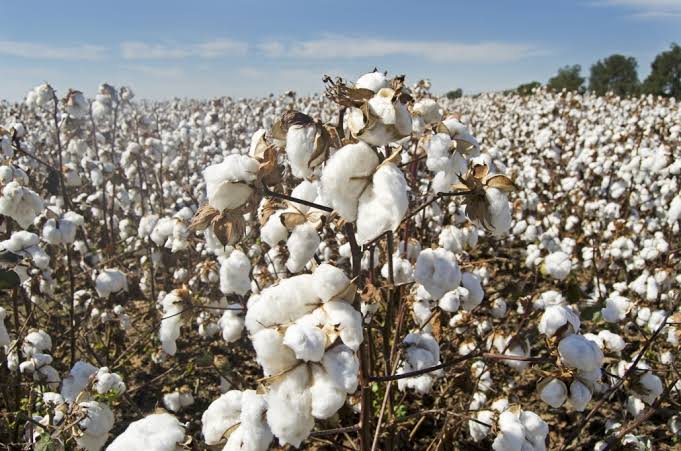
Cotton is a soft, fluffy staple fiber that grows in a boll, or protective case, around the seeds of the cotton plants of the genus Gyopssisum in the mallow family Malvacae. The fiber is almost pure cellulose. Under natural conditions, the cotton bolls will increase the dispersal of the seeds. The plant is a shrub native to tropical and subtropical regions around the world, including the Americas, Africa, Egypt and India.

The fiber is most often spun into yarn or thread and used to make a soft, textile.Current estimates for world production are about 25 million tonnes or 110 million bales annually, accounting for 2.5% of the world’s arable land. India is the world’s largest producer of cotton. it is the most widely use natural fiber cloth in clothing today.The United States has been the largest exporter for many years.

  • There are 4 types of cotton:
  • Gossypium hirsutum – upland cotton, native to america
  • Gossypium barbadense– known as extra-long staple cotton, native to tropical South America
  • Gossypium arboreum– tree cotton, native to India
  • Gossypium Herbecea – Levant cotton
Can live at low rainfall

Planting time in spring in the Northern hemisphere varies from the beginning of February to the beginning of June.Cotton is naturally a perennial but is grown as an annual to help control pests.cotton grown today is cultivated in areas with less rainfall that obtain the water from irrigation.Cotton can also be cultivated to have colors other than the yellowish off-white typical of modern commercial cotton fibers. 

The bacterium Bacillus thuringiensis (Bt) naturally produces a chemical harmful only to a small fraction of insects, most notably the larvae of moths,insects,butterflies and flies, and harmless to other forms of life.The gene coding for Bt toxin has been inserted into cotton, causing cotton, called Bt cotton, to produce this natural insecticide in its tissues.Cotton has gossypol, a toxin that makes it inedible. Bt cotton is ineffective against many cotton pests, and however, such as plant bugs,aphids and stink plants.

Cotton is used to make a number of textile products. These include terrycloth for highly absorbent bath towels,denims,robes,cambric, popularly used in the manufacture of blue work shirts and cotton twill. Socks ,clothes and most T shirts are made from cotton. Bed sheets often are made from cotton. Cotton also is used to make yarn used in crocheted and knitting. In the Textile industry, cotton is used in Fishing nets,coffee filters,Tentsexplosives manufacture  cotton paper, and in book binding. Fire hoseswere once made of cotton.

A pillar for textile industry

Awareness through education


Education is the crucial for every young. Education is not only about the bookish or theoretical knowledge,its about teaching young generations to understand and reflect on the physical and social world surrounding us so that they become citizens able to think critically, participate in decision-making and take action. 
Education is essential to aware the people about their rights, lives , their own way of life to prevent them from harmful activities. There are many ways to aware the people about education but yeah there provision must be require to attain this goal. Provision should be require training on women’s human rights and prevent from harmful activities, this step should be started from the schools through education.

Hate speech on social media

This is a kind of online speech or a statement spread over the social media platforms to target a particular person or group of persons on the basis of attributes such as race , custom, religion, recism,origin , gender, disability.
Might be a speech is only a thought or a statement for someone but the people whom forget for this,can cause to depression.
Social media plays a vital role to promote this hate speech much faster social media tend to promote exposure to hate speech and second exposure to hate speech is associated with the avoidance of political talk this includes hate speech , cyber bullying and increase polorization,these are the side effects of using digital media as the channel for public discourse and opinion exchange. However the processes and reasons behind these symptoms are much deeper than the people misbehaving such digital communication services.

SOIL REGENERATION

New method for old culture.

PATTIKONDA:18/07/2020

Soil regeneration, as a particular form of ecological regeneration within the field of restoration ecology, is creating new soil and rejuvenating soil health by: minimizing the loss of topsoil, retaining more carbon than is depleted, boosting biodiversity, and maintaining proper water and nutrient cycling.

This has many benefits, such as: soil sequence of  carbon in response to a growing threat of climate change a reduced risk of soil erosion and increased overall soil resilience.Soil is integral to a variety of ecosystem services. These services include food, animal feed, and fiber production, climate moderation, waste disposal, water filtration, elemental cycling

Certain agricultural practices can deplete soil of carbon, such as monoculture where only one type of crop is harvested in a field season after season.Agroecology is an overarching category of approaches to creating a more sustainable agricultural system and increasing the health of soil. These conservation agricultural practices utilize many techniques and resources to maintain healthy soil. It helps inregenerative process.

A scientific process of regenerative process

Permaculture is a type of conservation agriculture which is a system thinking approach that seeks to increase the carbon content of soil by utilizing natural patterns and processes.Utilization of the interconnections of various plants, animals, and processes is a key practice in permacultur. Permaculture and holistic management are two different methods that focus on regenerating biomass, nutrient content, and biodiversity to the soil

Biochar is an amendment that is full of carbon and is created by pyrolysis, a high temperature decomposition process. Wastes from animals are common soil amendments, usually their manure. The way of regenerative soil is by apply 5-10 cm layer of compost, rotted manure or mushroom compost. cover with a 5 cm layer of cane mulch or hay. wet all ingredients with a soak of water or apply diluted worm liquid or organic liquid fertiliser with a watering can. The soil makes more important at farming.

The key for agriculture, our land our hapiness