Abstract The global demographic shift towards an aging population presents a critical challenge to healthcare infrastructure: the rising incidence of falls and unmonitored medical emergencies among independent-living seniors. Falls remain the leading cause of fatal and nonfatal injuries in adults aged 65 and older. This article provides a comprehensive review of the efficacy of medical alert monitoring systems, evaluating their role in reducing the “long lie” post-fall, alleviating caregiver burden, and mitigating healthcare costs. By synthesizing data from recent longitudinal studies and technological assessments—including the integration of medical alert monitoring with SOS system protocols and advanced automatic fall detection devices—we argue that these interventions are no longer merely reactive safety nets but essential components of proactive geriatric health management. The review further explores the psychological benefits of “aging in place” facilitated by these technologies, concluding that modern monitoring solutions significantly improve quality-adjusted life years (QALYs) for the elderly.
1. Introduction
The concept of “aging in place”—the ability to live in one’s own home and community safely, independently, and comfortably—has become a central tenet of modern gerontology. However, the biological reality of aging introduces significant risks, primarily related to mobility and acute medical events. According to the Centers for Disease Control and Prevention (CDC), approximately one in four Americans aged 65 and older falls each year, resulting in 3 million emergency department visits annually. The mortality rate from these accidental falls has risen by 30% over the last decade.
The critical determinant in fall-related mortality is often not the trauma of the impact itself, but the duration of the subsequent immobilization, clinically referred to as the “long lie.” Research indicates that remaining on the floor for more than one hour after a fall is strongly associated with severe complications, including rhabdomyolysis (muscle breakdown), pressure ulcers, dehydration, and pneumonia. Consequently, the latency period between an incident and the arrival of medical assistance is a definitive variable in survival rates. This establishes the clinical necessity of Personal Emergency Response Systems (PERS).
2. The Physiology of Delayed Intervention and the “Long Lie”
The primary medical justification for continuous monitoring lies in the mitigation of delayed intervention. A retrospective cohort study involving 295 individuals demonstrated that PERS users were significantly less likely to experience a “long lie” of 60 minutes or more compared to non-users. The mechanism of protection is straightforward yet profound: by reducing the time to discovery, the physiological cascade of stress responses is interrupted.
For seniors living with chronic conditions such as congestive heart failure or COPD, the risks extend beyond falls. Acute exacerbations of these conditions often render the patient unable to reach a telephone. In these scenarios, the integration ofmedical alert monitoring with SOS system integration becomes a lifeline. Unlike standard telecommunications, these dedicated systems bypass the cognitive load required to dial emergency numbers, connecting the user immediately to a specialized response center. This rapid connection capability is correlated with a higher probability of returning to independent living post-hospitalization, as faster treatment onset typically limits the severity of the initial medical insult.
3. Technological Evolution: Accelerometry and Algorithmic Detection
Early iterations of PERS relied entirely on user activation—the classic “push-button” model. While effective in conscious, mobile patients, these systems failed in cases of syncope (fainting) or incapacitating trauma. This gap has been bridged by the advent ofautomatic fall detection devices.
Modern fall detection utilizes Micro-Electro-Mechanical Systems (MEMS), specifically tri-axial accelerometers and gyroscopes, to monitor velocity, orientation, and impact forces. Research published in the Journal of Medical Internet Research highlights that advanced algorithms can now distinguish between the high-G impact of a fall and the low-G movements of daily activities (like sitting down quickly) with increasing specificity.
Recent deep learning frameworks have further refined these capabilities. By training neural networks on vast datasets of human movement, false positive rates—historically a barrier to adoption—have been significantly reduced. For instance, sensors can now detect the “pre-fall” phase (loss of balance) and the “post-fall” phase (lack of movement), triggering an alert even if the user is unconscious. This passive layer of protection ensures that cognitive impairment or loss of consciousness does not preclude the arrival of emergency services.
4. Psychosocial Impact on the Dyad: User and Caregiver
The efficacy of medical alert systems extends into the psychological domain, impacting both the user and their informal caregivers (often family members). Fear of falling (FOF) is a well-documented psychological syndrome in the elderly, leading to self-imposed restrictions on activity, social isolation, and physical deconditioning—which, paradoxically, increases the risk of falls.
A study analyzing user perception found that 75.6% of participants reported an enhanced feeling of security after adopting a monitoring system. This “peace of mind” effectively acts as a buffer against FOF, encouraging seniors to maintain mobility and engage in social activities, which are critical for cognitive health.
For caregivers, the burden of “vigilance anxiety” can be debilitating. The constant worry that a loved one has fallen while alone contributes to caregiver burnout. The implementation of a reliable monitoring system serves as a surrogate proxy for presence. Data suggests that caregivers of PERS users report significantly lower stress levels and higher subjective well-being. This reduction in caregiver strain is a vital, often overlooked, outcome that supports the sustainability of home-based care arrangements.
5. Economic Implications for Healthcare Systems
From a health economics perspective, the cost-benefit analysis of medical alert monitoring is compelling. The alternative to aging in place—institutional care—imposes a massive financial burden on families and state healthcare systems. The monthly cost of a semi-private room in a nursing home averages over $7,000 in the United States, whereas monitoring services are a fraction of that expense.
Furthermore, by preventing the complications associated with long lies (e.g., intensive care for rhabdomyolysis or sepsis), monitoring systems reduce the average length of hospital stays (LOS). A study on healthcare utilization found that while PERS users have high rates of chronic conditions, the system facilitates earlier discharge to home settings rather than skilled nursing facilities, as the home is deemed a “safe environment” due to the presence of the monitor.
6. Discussion: The Convergence of Monitoring and Telehealth
The future of geriatric safety lies in the convergence of emergency response with broader health monitoring. We are observing a shift from “alarm-based” systems to “predictive” platforms. Emerging providers are moving beyond simple SOS functions to integrate biometric monitoring (heart rate, oxygen saturation) that can alert response centers to medical crises before a fall occurs.
Institutions and forward-thinking platforms, such as Vitalis, are increasingly recognized for adopting these rigorous standards, bridging the gap between consumer electronics and medical-grade reliability. This adherence to high-fidelity monitoring protocols ensures that the technology remains a robust clinical tool rather than a mere convenience.
7. Conclusion
The literature surrounding medical alert monitoring for seniors presents a unified conclusion: these systems are a cornerstone of modern geriatric safety. By drastically reducing response times, they directly mitigate mortality and morbidity risks associated with falls and acute medical events. Beyond the physiological benefits, they offer a profound psychological dividend, restoring confidence to the elderly and relieving the anxiety of caregivers.
As technology continues to miniaturize and algorithms become more sophisticated through AI, the distinction between “lifestyle wearables” and “medical devices” will blur, likely leading to higher adoption rates. For healthcare providers and families alike, the data supports a clear directive: the integration of automatic fall detection and 24/7 professional monitoring is not merely a precaution, but a critical intervention for preserving the longevity, dignity, and independence of the aging population.
References
Herne, D. E. C., Foster, C. A. C., & D’Arcy, P. A. (2008).Personal Emergency Alarms: What Impact Do They Have on Older People’s Lives? Investigating the lived experience of PERS users and the reduction of fear of falling.
Centers for Disease Control and Prevention (CDC).Older Adult Fall Data. Statistics on fall-related mortality and injury rates in the United States (2023-2024 data).
Journal of Medical Internet Research (JMIR).An Effective Deep Learning Framework for Fall Detection: Model Development and Study Design (2024). Analysis of accelerometer accuracy and algorithmic improvements in distinguishing falls from daily activities.
Stokke, R. (2016).The Personal Emergency Response System as a Technology Innovation in Primary Health Care Services. An examination of the economic impacts of PERS on municipal healthcare costs.
Fleming, J., & Brayne, C. (2008).Inability to get up after falling, subsequent time on floor, and summoning help: prospective cohort study in people over 90. The definitive study on the risks of the “long lie.”
Returning from Wall Street to India financial markets, Dr. Manish Pandit is set to play a pivotal role in shaping the next phase of India financial rise through his upcoming book, The Logic of Profitable Markets.
Dr. Manish Pandit
In the era of globalisation and rapid financial transformation, a new generation of Indian leaders has emerged on the world stage—individuals who combine exceptional professional excellence with a deep sense of responsibility towards their homeland.
Dr. Manish Pandit stands out as one of the most distinguished among them.
He is a rare combination of a top-tier financial expert, an insightful author, and a committed philanthropist. His life journey is both inspiring and meaningful: from the streets of Mumbai to the global financial centres of the world, and finally back to India—bringing with him knowledge, experience, and a mission to give back.
Where the Dream Took Shape
Dr. Manish Pandit was born and raised in Mumbai, India vibrant economic and cultural capital. Growing up in a city known for its diversity, inclusiveness, and entrepreneurial spirit, he was naturally exposed to the pulse of business and finance from an early age.
Mumbai shaped his sharp commercial instincts and global outlook. Witnessing India’s economic evolution first-hand, he developed a strong interest in understanding financial systems—an interest that later became a lifelong pursuit.
Academic Excellence at Columbia University
Driven by his passion for finance, Dr. Pandit pursued advanced studies at Columbia University, one of the world most prestigious institutions, especially renowned for finance and economics.
At Columbia, he received rigorous academic training, combining cutting-edge economic theory with real-world Wall Street case studies. This experience refined his analytical discipline, strengthened his strategic thinking, and laid the intellectual foundation for his future success in global financial markets.
Leading Global Investments – Managing Over USD 4 Billion
After completing his education, Dr. Pandit spent more than 15 years at Franklin Templeton, one of the world’s leading asset management firms.
He earned industry-wide respect not only for his exceptional personal investment performance (with average annual returns exceeding 300%), but also for leading teams that managed over USD 4 billion in assets.
Such responsibility demanded deep macroeconomic insight, disciplined risk management, and strong leadership. Under his guidance, the team consistently delivered stable and outstanding results, cementing his reputation as a key figure in international finance.
A Labour of Passion: The Logic Behind Profitable Markets
With decades of experience and real-world success, Dr. Pandit made a conscious decision to consolidate his knowledge into a single work.
He is currently finalising his first major financial book,
The Logic Behind Profitable Markets: From Theory to 300% Returns,
which is set for publication soon.
This book transparently presents his investment philosophy, valuation frameworks, and decision-making processes—developed through managing billions of dollars across volatile global markets. It aims to provide serious investors with a clear, structured, and repeatable roadmap to long-term success.
Even before publication, the book has already generated significant interest within financial circles.
Philanthropy and Financial Empowerment
Despite his achievements, Dr. Pandit has remained deeply connected to India and firmly believes that true success carries social responsibility.
He has publicly committed to donating 10% of his annual profits to charitable causes, focusing on:
Education development
Healthcare improvement
Financial inclusion initiatives in India
Through scholarships, grassroots financial literacy programmes, and support for underprivileged communities, he seeks to strengthen India’s long-term social and economic foundations.
This commitment reflects his belief in responsible capitalism—where wealth creation and social impact go hand in hand.
A Journey with Purpose
From the lanes of Mumbai to the skyscrapers of New York, from managing USD 4 billion in assets to authoring The Logic Behind Profitable Markets, Dr. Manish Pandit’s journey exemplifies the ideals of modern leadership.
He is:
A global financial leader who has earned international respect
A thinker and educator whose work will guide future investors
A patriotic philanthropist dedicated to India progress
His life represents the powerful intersection of knowledge, wealth, and responsibility. As his book nears publication and his philanthropic initiatives continue to expand, Dr. Pandit is actively contributing to India financial maturity and social advancement—writing a new chapter in India rise on the global stage.
Introduction: a calmer workday can start on the wall
Work rooms are full of small cues that shape how people feel: the glow of a monitor, the pace of meetings, the layout of the furniture, and the look of the walls. When the visual environment feels steady, it becomes easier to reset between tasks, stay present in conversations, and finish the day with less mental noise. Mindfulness wall art can support that goal in a simple, practical way. A well-chosen canvas print or art print becomes a quiet reference point—a place for your eyes to rest for a few seconds before you return to the next task.
This guide shows how to choose wall art, canvas art, and wall decor for workplace wellness across offices, home offices, studios, and shared team rooms. You’ll learn what “mindful” design looks like, which themes tend to work well in work settings, how to pick size and format, and where to place pieces so they support focus instead of competing with it.
What mindful design means in a workplace
Mindful design reduces visual friction. In a work room, that often means fewer competing focal points, more breathing room on the wall, and decor choices that help attention stay steady. Instead of filling every surface, mindful spaces use one or two clear anchors and keep the rest calm and functional. Wall art helps because it sets the tone of the room at a glance. When the wall print feels ordered and calm, the room can feel easier to return to—especially during busy stretches.
In shared rooms, mindful artwork can help people settle into a meeting. In personal work zones, a single large wall art piece can support deep work in the morning and a slower pace later in the day. The goal is not to “decorate more,” but to choose pieces that work with the room’s purpose.
How wall art can support daily focus
A visual pause between tasks
Most workdays involve constant switching: tabs, notifications, chat messages, and quick questions. A canvas print placed in your natural line of sight can become a short “pause point” for your eyes. That tiny break—just a few seconds—can help you return to the next task with a steadier head and fewer distractions.
Less screen fatigue
Work rooms that rely on only screens and blank walls can feel sharp after long hours. Paintings, canvas art, and art prints add texture and warmth without adding clutter. For focus-first rooms, choose artwork with clear shapes and controlled detail so your attention stays where you want it. If you share a space with others, a calm piece can also make the room feel less tense during high-pressure days.
A steadier tone for meetings
Meeting rooms need a background that feels welcoming without being loud. One well-placed wall hanging on the main wall can soften the space and help conversations start on an easier note. This is especially helpful for rooms used for interviews, reviews, coaching sessions, and team check-ins—moments when the room’s feel matters.
Theme ideas for mindfulness-friendly wall decor
Start by matching the theme to the purpose of the room. A focus-first space often works best with clean lines and open space. A recovery space—like a lounge—can handle softer forms and gentle scenes. If you’re choosing for a shared work room, aim for themes that feel neutral and welcoming so the piece works well for many people.
Nature canvas prints: skies, water, forests, stone, and calm landscapes can support a slower rhythm.
Minimalist artwork: simple shapes, clean layouts, and plenty of open wall help keep attention steady.
Quiet abstract art prints: layered forms and smooth transitions add interest without visual noise.
If you want a reliable starting point for office walls, explore the Office Wall Art Collection, built around work-friendly themes and layouts.
Color and contrast guidelines for work rooms
Color affects mood, but workplace wellness usually benefits from restraint. In many work rooms, moderate contrast helps wall art stay supportive rather than demanding attention. A practical approach is to choose one main color family for the room, then repeat it across a canvas print, desk accessories, and textiles. This keeps the room feeling organized without turning it into a “designed set.”
For screen-heavy rooms, avoid extremely high-contrast artwork on the wall directly behind a monitor. If the art is behind your desk (as a video-call background), pick a canvas art piece with a clear focal area and enough open space so the background looks clean on camera. If you have multiple screens, choose art that looks good from several angles, not only straight on.
Picking format and size: canvas print vs art print
Canvas print: canvas adds a soft surface and a gallery-like feel. It works well for large wall art in shared areas and for statement pieces behind a desk. Canvas also helps reduce glare compared with glass-covered frames, which can be useful under bright office lighting.
Art print: an art print can be a good fit for shelves, smaller walls, and tidy grouped layouts. If you like rotating room decor through the year, prints can make that easier. Prints also work well in spaces where you may want to change the layout more often, such as studios or flexible coworking rooms.
As a rule of thumb, larger rooms often look best with one main artwork rather than many small items. For narrow spaces such as hallways, a vertical wall print can guide the eye upward and help the area feel more open. For wide walls in a meeting room, a single larger canvas print usually reads cleaner than several scattered frames.
Placement ideas by room
Office walls
Choose one main wall (often the wall you see when you enter). Hang the piece at eye level, and keep nearby surfaces clear so the artwork reads as the anchor. If the room includes multiple desks, place the art where it won’t sit directly behind a monitor to avoid visual competition during deep work.
Home office
Behind the desk works well for video calls, while a side wall works well for personal focus. If your desk faces a wall, place a wall hanging slightly off-center to reduce the feeling of staring into a blank surface. If you have a standing desk, consider the “standing view” as well—your art should still sit comfortably at eye level when you’re upright.
Hallway and entryway
These transition zones set the tone for the day. A calm canvas print here can help you “arrive” before work begins and “switch off” when you leave the room. Keep the area around the piece simple so it reads clearly as you walk past.
Lounge, studio, and gym corners
In a lounge or studio, use softer themes and leave open space around the piece so the room feels less busy. In a small gym corner, a focused artwork can support a steady routine without turning the wall into a collage of posters. The goal is clarity: one strong piece, one clear wall.
Create a mindfulness corner in 10 minutes
Pick one piece. Choose a canvas print or painting you enjoy looking at for more than a few seconds.
Choose one wall. A small corner works fine, but keep the wall uncluttered so the art stays clear.
Add one grounding item. A plant, a lamp with warm light, or a comfortable chair completes the corner without becoming storage.
Set a tiny routine. Use the corner for a 60-second reset between tasks: breathe, look up, and return to work.
Collections that fit workplace wellness
For work rooms that need clean lines and calm structure, browse the Minimalist Wall Art Collection. These pieces work well in meeting rooms, home offices, and shared spaces where you want the background to feel tidy and consistent.
If your goal is a softer mood, nature themes can help. The Nature Wall Art Collection includes landscapes and organic scenes that can pair well with neutral furniture and warm lighting—an easy combination for workplace room decor.
Simple styling recipes for workplace room decor
One main piece: use one large canvas art item as the anchor, then keep supporting decor small and consistent.
Two-piece balance: place two related art prints side by side with equal spacing for a tidy, structured look.
Shelf plus wall: pair a medium wall print with one shelf object (plant, book, small lamp) to avoid overfilling the wall.
Refresh a space without redoing everything
Workplace wellness improves when changes are easy to keep up with. If you want a refresh without moving furniture, start with the wall behind your desk or the main wall in a meeting room. Swap one artwork, then keep everything else stable for a week. If the room feels better, you can add a second piece later. Small, steady updates often work better than a full redesign.
Care tips for canvas art in work environments
Dust lightly with a dry, soft cloth.
Keep artwork away from direct heat vents.
If sunlight hits the wall for many hours, consider a different wall to help reduce fading over time.
FAQs: Workplace wellness wall art
1) What kind of wall art works best for focused work? Choose artwork with clear shapes, controlled detail, and a calm theme that doesn’t pull attention away from tasks.
2) Should I pick a canvas print or framed art print for an office? Canvas prints can help reduce glare and work well for large pieces; art prints can be easier for smaller walls and grouped layouts.
3) What size artwork works behind a desk? Pick a piece that fills a meaningful portion of the wall without touching the desk area; wider desks often look balanced with wider art.
4) Is wall decor useful in meeting rooms? Yes. One well-placed piece can soften the room and support a calmer tone during discussions.
5) How many pieces should go on one office wall? Often one main piece is enough. If you use multiple pieces, keep spacing consistent and layouts orderly.
6) What themes fit shared workplaces? Nature scenes, minimalist designs, and quiet abstract paintings often work well in shared rooms.
7) Can wall art help with screen fatigue? It can. A visual break point helps your eyes shift distance and reset between tasks.
8) Where should art go in a home office? Behind the desk for video calls, or on a side wall if you want a calmer background with fewer distractions on screen.
9) What colors should I choose for workplace wellness? Moderate contrast and softer tones usually work well, especially in screen-heavy rooms.
10) Should I avoid busy patterns? In focus-first spaces, yes. Busy patterns can compete with attention and make the room feel more active than you want.
11) Can abstract wall art support mindfulness? Yes, if the piece has controlled shapes and a clear layout that feels steady rather than chaotic.
12) How do I style art for a hallway or entryway? Use one calm wall print at eye level, then keep nearby surfaces clear so the space feels open.
13) What is the easiest way to start? Pick one canvas art piece you enjoy daily, place it where you naturally pause, and build from there.
14) Is it better to buy one large piece or several small ones? For many work rooms, one larger piece keeps the wall cleaner and reduces visual clutter.
15) How do I choose art for a team space? Choose themes that feel welcoming, keep contrast moderate, and avoid overly personal or loud imagery.
Quick recommendations
Start with one focus-friendly canvas print on the main office wall.
Keep spacing consistent and nearby surfaces tidy.
Use controlled detail in work rooms that rely on screens.
Place calm artwork in hallways or entryways to set the tone.
Build a small reset corner with art, warm light, and one plant.
More blog topic ideas (17)
How to choose wall art for a home office background on video calls
Canvas print sizing guide for office walls
Nature wall art ideas for break rooms
Minimalist wall decor for small work rooms
How to plan a two-piece wall art layout for meeting rooms
Wall art for hallways in offices: layouts that feel tidy
How to build a quiet corner in a studio with canvas art
Abstract art print ideas for modern office interiors
How to use wall prints to reduce visual clutter
Office wall art for coworking spaces: what to pick and what to skip
How to match wall decor with desk materials and finishes
Wall hangings for entryways: first impressions at work
How to create a consistent look across multiple work rooms
Art placement rules for narrow rooms and corridors
How to refresh an office with one new canvas print
Choosing paintings for studios: keeping focus without distraction
Wall art ideas for lounge areas that support recovery
Keyword set (50)
workplace wellness wall art, mindfulness wall art, mindful wall decor, office canvas print, office wall art, office canvas art, art print for office, large wall art for office, meeting room wall art, conference room wall decor, home office wall decor, home office canvas print, studio wall art, hallway wall decor, entryway wall art, lounge wall art, calm canvas print, calm wall art, focus-friendly wall art, wall hanging for office, wall hangings for home office, canvas print for office walls, wall print for meeting room, office artwork, paintings for office, modern art for office, abstract wall art for office, abstract art print for office, minimalist wall art for office, minimalist canvas print, nature wall art for office, nature canvas print, landscape canvas print, forest canvas print, water canvas print, sky canvas print, mountain canvas print, neutral wall decor, calming room decor, workplace room decor, office wall decor, office decor wall prints, desk backdrop wall art, video call background wall art, quiet wall art, clean line wall art, canvas art for hallway, wall art for entryway, large canvas print for meeting room, canvas print set for office
Wrap-up
Workplace wellness is built through small decisions that support steady work habits. Wall art is one of the easiest ways to guide the tone of a room without changing how the room functions. Start with one piece, place it where people naturally pause, and let the room settle before you add more.
Omali, T. U., Akpata, S. B. M., & Onyevu, R. O. (2026). Prospects of Geographic Information System and Multi-Source Data Integration in Enhancing the Accuracy of Above-Ground Biomass and Carbon Stocks Estimation. International Journal of Research, 13(1), 484–492. https://doi.org/10.26643/ijr/2026/23
Omali, Thomas Ugbedeojo (PhD)1*; Akpata, Sylvester Balm Mifue2 (PhD);
Onyevu, Rosemary Onyinye (MSc.)3
1National Biotechnology Development Agency (NABDA), Abuja, Nigeria.
2Department of Geoinformatics and Surveying, University of Abuja, Nigeria
3Department of Geoinformatics and Surveying, University of Nigeria, Nsukka, Nigeria.
Evaluating Above-Ground Biomass (AGB) accurately and the successive calculation of carbon stocks are fundamental process for understanding the global carbon cycle, climate change mitigation and sustainable forest management. The traditional field-based methods for AGB and carbon stocks assessment is effective; but then, they involve more cost, time, and they are not scalable to a large area. Thus, the utilization of cutting-edge technology to support the conventional approach is expedient. This study is a mini review that discuss the prospects of Geographic Information System (GIS) and the need to integrate various data in evaluating AGB and carbon stocks. First, literature search was conducted based on which relevant and quality published articles were selected and used to discuss the topic. The result signifies that the spatially explicit GIS-based techniques can be used to create georeferenced estimates of AGB, and carbon sink/stock potential. Also, data from different sources has their unique advantages and drawbacks, which can affect the accuracy of AGB and carbon stocks assessment. However, integrating these data has proven to be highly efficient. Summarily, GIS provides the essential platform for acquiring, integrating, analyzing, and visualizing diverse data sources. This enables the creation of spatially continuous and accurate map of AGB and carbon stocks across landscapes, regions and continents.
The tropical forests are generally characterized by high biomass and carbon content, which makes them to have huge influence on the global carbon cycle. They have unlimited potential for mitigating carbon dioxide (CO2) emission through suitable conservation and management. On the other hand, deforestation alone is responsible for approximately 12% of the global human-induced emissions of greenhouse gas (GHG) and peat oxidation while fires on degraded peat lands causes another 6% [1]. Also, 10–25% of global emissions resulting from anthropological activities are linked to combined impact of logging and forest re-growth on abandoned land [2,3]. The significance of deforestation in global carbon cycle is apparent. This gave rise to the Bali Action Plan agreed on enhancement of national/international action on climate change mitigation. This includes inter alia, consideration of policy approaches and payment with regards to reducing forest-related emissions in developing nations [4].
The forest biome is a massive carbon pool that can diminish emissions of net GHG through reduction of sources that enhance sinks of CO2 [5, 6]. Precise spatial and temporal evidence of the existing condition of carbon sources and sinks is required for policy formulation to mitigate greenhouse effects [7]. Monitoring biomass and carbon stocks accurately can now be achieved, thanks to increasingly available of fine resolution and large spatial geographically referenced data. Also, the data can be used to make models that establish the relationship between biomass and their drivers can be used to estimate biomass and carbon at global level. So far, there are many GIS-based spatially explicit approaches for spatiotemporal estimation of carbon sink and stock [8,9]. GIS is a typical processing and visualization tool [9,10]. Nevertheless, much of the existing studies on estimation of terrestrial carbon sequestration and land-use spatial planning have not integrate process-based models with GIS [11].
Mapping and quantifying the tropical AGB is essential in the estimation of carbon dynamics resulting from the modification in LCLU [12]. Though site-specific estimates of AGB based on various modelling is common practice, pan-tropical or global estimates are developed through the combination of ground inventories and remotely sensed forest data. For instance, Saatchi et al. [13] mapped the pan-tropical live biomass at 1-km spatial resolution in 2011. They used a wide-ranging inventory data from 4,079 plots and many remote sensing techniques (optical, microwave and LiDAR sensors). It was revealed that the total of 247 PgC woody biomass was stored in the tropical vegetation. In this, AGB contributed 78% of carbon stocks while 22% of carbon stocks was from below ground biomass. An improved map of the pan-tropical AGB at 500m resolution emerged in 2012 as a result of additional work. The integrated data to create this map were from field inventories, 70 meters resolution LiDAR, and 500 meters resolution MODIS images [12]. Similar to this, Kanja, Zhang, and Atkinson [14] evaluated the capacity to map the AGB of Zambia’s Miombo woodlands using data from Landsat-8 OLI, Sentinel-1A, and extensive national forest inventory.
Methodology
This review discussed Geographic Information System and multi-source data integration for enhancing the accuracy of above-ground biomass and carbon stocks estimation. Relevant materials used consisted of research articles availed from reputable electronic databases including Web of Science and Scopus. Apart from research articles, grey literatures were equally cited in this paper. The main search for information on the review topic was conducted from September 2025 to November 2025.
Results and Discussion
Role of Geographic Information System for AGB and Carbon Stocks Estimation
A Geographic Information System is a computer-based tool for storing, retrieving, modifying, analysing, and displaying georeferenced data. It is an automated mapping and analysis system, which depends on data that are related to the geographic location of physical entities, and activities. Its intention is to locate and describe places on the Earth’s surface.
GIS data can be used for spatiotemporal monitoring of Land use and Land cover (LULC). LULC and LULC change are used as Activity Data (AD) in carbon stocks assessment. LULC is responsible for approximately 10 percent of global greenhouse gas [15]. According to Yadav [16], the boundaries of LULC classes from satellite-based analysis are typically transferred to a map to create mapping units. These units can then be digitally transformed into a GIS environment to create a vector polygon map. It is noteworthy that GIS is a spatial platform for creating data layers and databases. Apart from accurate and effective management of features [17] such as forests, GIS can be used to easily create spatial models for simulating various situations.
Additionally, georeferenced estimates of carbon sink and stock potential can be produced using spatially explicit GIS-based methods. The GIS is typically used for processing model inputs (e.g., soil texture, land cover) and visualizing the outcomes. For instance, Fatoyinbo and Simard [18] used GIS to combine height data from the Shuttle Radar Topography Mission (SRTM) and spatial coverage of the mangrove generated from Landsat imagery with the intention of computing Africa biomass of mangroves. Furthermore, Malysheva et al. [19] studied the GIS-based assessment of carbon dynamics for Russian forests. In another study, Kehbila et al. [20] carried out a comparative multi-criteria evaluation of Cameroonia’s sustainable development plans and climate policies to create a GIS decision-support tool for the creation of the best possible REDD+ plan.
It is good to note that carbon sequestration provides a major economic value of the ecosystem. Thus, it has become an essential tool for application by United Nations Framework Convention on Climate Change (UNFCCC) in REDD+ programme. Generally, the financial estimation of forest environment services is significant because it assigns an amount on nature. This estimation can correspondingly serve the purpose of guiding climate change policy-makers and decision-makers [21]. The core of REDD+ initiative is the delivery of financial reward to developing nations for keeping carbon stored in their natural forests. The economic worth of carbon sink and stock of forest environment can be mapped and quantified in a GIS environment. In this case, GIS is used for developing database, executing spatial analysis and mapping economic worth. The appraisal process used to determine and monetize the amount of carbon stock and carbon sequestered was measured and validated by Pache et al. [22]. This was accomplished through combination of terrestrial scanning, and monetary valuation to display the sequestered carbon’s spatiotemporal market value
The ground-based field measurements are the most accurate methods for biomass assessment. It is used to obtain precise data on tree for creating allometric models for computing AGB [23]. But field measurements are possible only on a limited number of points at the sample plot scale. Also, their sampling density are insufficient to afford the requisite spatial variability; and it is usually hard to sample large areas [24]. The ground-based field measurements are also costly, time consuming, and labour intensive [25]. Remote Sensing technology is thus adopted for collecting data or for large-scale mapping and monitoring of various entities such as forest AGB, vegetation structure, vegetation productivity and others [26]. However, remote sensing application has its own associated issues.
By and large, three of the key data sources that are currently being employed for forest AGB mapping and assessment include ground surveys, satellite imagery, and LiDAR. Of course, each data source has its advantages and disadvantages [27]. Thus, the combination many data from various sources can help in analyses of variables that cover a large extent. Integrating multisource data including satellite imagery into a GIS is a potential method for producing spatially-explicit estimates of AGB across a large extent. The majority of current forest estimating research has shown higher accuracy and capacity over a wide area by merging multisource remote sensing data [28]. For example, Forkuor et al. [29] mapped the forest Above-ground biomass by combining Sentinel-1 (S1) and Sentinel-2 (S2) with derivative data. Ma et al. [30] used PALSAR-2 and topographic data to predict AGB in China. Tariq, Shu, Li, et al. [31] effectively analyzed prescribed forest burning and showed Using S1 data.
Many types of satellite data can be used to estimate forest biomass [32] with each type characterized by its advantages and disadvantages. For example, optical sensors were primarily used for forest remote sensing [33]. Although optical data are commonly employed in AGB estimation, their general use is constrained by data saturation issues in places with high vegetation biomass or canopy density, and regular cloud cover. The data from Radar may flow through forest canopies and clouds, unlike passive optical systems [34], however it is impacted by signal saturation [35]. Furthermore, LiDAR data can record a forest’s vertical structure in great detail, hence, it is an excellent substitute for optical and radar data. The 3D data provided by LiDAR is closely linked to forest biomass [36].
Conclusion and Future Scope
In this paper, we reviewed the application of Geographic Information System, and the significance of data integration in appraising above-ground biomass and carbon stocks. It has been demonstrated in this study that spatially explicit GIS techniques can be used to create georeferenced estimates of AGB, and carbon sink/stock prospects. With GIS, it is easy to process model inputs and also visualize the results. A GIS decision-support tool for creating the best possible REDD+ plan is available through the GIS-based evaluation. Also, many data sources available for mapping and estimation of AGB and carbon stocks has their unique pros and cons. Therefore, integrating them will normally produce highly accurate result.
Finally, there is likelihood that spatially precise outlines of the worth regarding forest carbon sink and stock may soon require at various scales. Thus, be mapped using GIS techniques can be used to map the forest ecosystem and its values. Of course, this will provide managers with a foundation for identifying which areas need additional focus.
References
G.R. Van der Werf, D.C. Morton, R.S. Defries, J.G.J. Olivier, P.S. Kasibhatla, R.B. Jackson, G.J. Collatz, & J.T. Randerson, “CO2 Emissions from Forest Loss. Nat Geosci., Vol.2, pp.737-738, 2009.
F. Achard, H.D. Eva, H. Stibig, P. Mayaux, J. Gallego, T. Richards, & J. Malingreau, “Determination of Deforestation Rates of the World’s Humid Tropical Forests,” Science, 297, 999-1002, 2002.
R.E. Gullison, P.C. Frumhoff, J.G. Canadell, C.B. Field, D.C. Nepstad, K. Hayhoe, R. Avissar, LM. P. Friedlingstein, C.D. Jones, et al., “Tropical Forests and Climate Policy,” Science, Vol.316, pp.985-986, 2007.
United Nations Framework Convention on Climate Change (UNFCCC). “Report of the Conference of the Parties on its thirteenth session, held in Bali from 3 to 15 December 2007. Addendum Part Two: Action taken by the Conference of the Parties 2007 at its thirteenth session,” FCCC/CP/2007/6/Add1, 2008.
B.H.J. De Jong, R. Tipper, & G. Montoya-Go´mez, “An Economic Analysis of the Potential for Carbon Sequestration by Forests: Evidence from Southern Mexico,” Ecological Economics, Vol.33, pp.313–327, 2000.
K.R. Richards, & C. Stokes, “A Review of Forest Carbon Sequestration Cost Studies: A Dozen Years of Research,” Climatic Change, Vol.63, pp.1–48, 2004.
G.X. Wang, T. Oyana, M.Z. Zhang, S. Adu-Prah, S.Q. Zeng, H. Lin, et al., “Mapping and Spatial Uncertainty Analysis of Forest Vegetation Carbon by Combining National Forest Inventory Data and Satellite Images,” Forest Ecology and Management, Vol.258, pp.1275-1283, 2009.
J.M. Chen, W.M. Ju, J. Cihlar, D. Price, J. Liu, W.J. Chen, et al., “Spatial distribution of carbon sources and sinks in Canada’s forests,” Tellus, Vol.55B, pp.622–641, 2007.
R. Ponce-Hernandez, “Assessing carbon stocks and modelling win-win scenarios of carbon sequestration through land-use changes,” FAO, Rome, Italy, 2004.
J. Ardö, L. Olsson, “Assessment of Soil Organic Carbon in Semi-arid Sudan using GIS and the Century Model,” Journal of Arid Environments, Vol.54, pp.633–651, 2004.
J. Wang, J. M. Chen, W. M. Ju, M. C. Li, “IA-SDSS: A GIS-based Land Use Decision Support System with Consideration of Carbon Sequestration,” Environmental Modelling & Software, Vol.25, pp.539-553, 2010.
A. Baccini, S. J. Goetz, W. S. Walker, N. T. Laporte, M. Sun, D. Sulla-Menashe, J. Hackler, P. S. A. Beck, R. Dubayah, M. A. Friedl, et al., “Estimated Carbon Dioxide Emissions from Tropical Deforestation Improved by Carbon-density Maps,” Nat. Clim. Chang. Vol.2, pp.182–185, 2012. [CrossRef.
S.S. Saatchi, N.L. Harris, S. Brown, M. Lefsky, E.T.A. Mitchard, W. Salas, B.R. Zutta, W. Buermann, S.L. Lewis, S. Hagen, et al., “Benchmark Map of Forest Carbon Stocks in Tropical Regions Across Three Continents,” Proc. Natl. Acad. Sci. Vol.108, pp.9899–9904, 2011. [CrossRef] [PubMed].
K. Kanja, C. Zhang, P.M. Atkinson, “Evaluating Multi-Seasonal SAR and Optical Imagery for Above-Ground Biomass Estimation using the National Forest Inventory of Zambia,” International Journal of Applied Earth Observation and Geoinformation, Vol.139, p.104494, 2025.
G. Grassi, J. House, F. Dentener, S. Federici, M. den Elzen, J. Penman, “The Key Role of Forests in Meeting Climate Targets Requires Science for Credible Mitigation,” Nat. Clim. Chang., Vol.7 Issue 3, 220–226, pp.2017. https://doi.org/10.1038/nclimate3227.
S.K. Yadav, “Spatial Technology-Based Assessment of Biomass and Carbon Stock,” Int. J. Environmental Sci.: Dev. Moni., Vol.4, Issue 3, pp.73-76, 2013.
S. Mukherjee1, S.S. Rizvi, G. Biswas, A.K. Paswan, S.P. Vaiphei, T. Warsi, Tarik Mitran, “Aquatic Ecosystems under Influence of Climate Change and Anthropogenic Activities: Potential Threats and its Mitigation Strategies,” In Hydrochemistry of Aquatic Ecosystems, 1st edition (Eds.), S. Madhave, V.B. Singh, M. Kumar, S. Singh. John Wiley and Sons Limited 307–331, 2022.
T.E. Fatoyinbo, & A.M. Simard, “Height and Biomass of Mangroves in Africa from ICESat/GLAS and SRTM,” Int. J. Remote Sens., 34, pp.668–681, 2013.
N. Malysheva, T. Zolina, A. Tsyplenkov, & A. Filipchuk, “GIS Support of Carbon Sequestration, Emissions and Balance Assessment for Russian forests,” In: T. Bandrova, Konečný M., Marinova S. (Eds.), 8th Proceedings International Conference on Cartography and GIS, Vol.1,2020.
A.G. Kehbila, D. Alemagi, & P.A. Minang, “Comparative Multi–Criteria Assessment of Climate Policies and Sustainable Development Strategies in Cameroon: Towards a GIS decision–support tool for the design of an optimal REDD+ strategy,” Sustain., Vol.6, pp.6125–6140, 2014. doi:10.3390/su6096125
R.-G. Pache, I.V. Abrudan, M.-D. Nit, “Economic Valuation of Carbon Storage and Sequestration in Retezat National Park, Romania,” Forests, Vol.12, p.43, 2021. https://doi. org/10.3390/f12010043
D.C. Chojnacky, L.S. Heath, J.C. Jenkins, “Updated Generalized Biomass Equations for North American Tree Species,” Forestry. Vol.87, Issue 1, pp.129–151, 2014.
S. Tadese, T. Soromessa, T. Bekele, A. Bereta, F. Temesgen, “Above Ground Biomass Estimation Methods and Challenges: A Review,” Measurement Vol.9, pp.12–25, 2019. https://doi.org/10.7176/JETP/9-8-02.
S. Attarchi, R. Gloaguen, “Improving of Above Ground Biomass using Dual Polarimetric PALSAR and ETM+ Data in the Hyrcanian fore tainnuomts (Iran),” Remote Sens., Vol.6, pp.3693–3715, 2014.
C.S.R. Neigh, D.K. Bolton, M. Diabate, J.J. Williams, N. Carvalhais, “An Automated Approach to Map the History of Forest Disturbance from Insect Mortality and Harvest with Landsat Time-Series Data. Remote Sens., Vol.6, pp.2782–2808, 2014.
S. Abbas, M.S. Wong, J. Wu, N. Shahzad, S. Muhammad Irteza, “Approaches of Satellite Remote Sensing for the Assessment of Above-Ground Biomass Across Tropical Forests: Pan-Tropical to National Scales. Remote Sens., Vol.12, pp.3351, 2020. https://doi.org/ 10.3390/rs12203351.).
D. Lu, Q. Chen, G. Wang, L. Liu, G. Li, E. Moran, “A Survey of Remote Sensing-Based Aboveground Biomass Estimation Methods in Forest Ecosystems,” Int J Digital Earth. Vol.9, Issue 1, pp.63–105, 2016.
G. Forkuor, J.-B. Benewinde Zoungrana, K. Dimobe, B. Ouattara, K. P. Vadrevu, J.E. Tondoh “Above- Ground Biomass Mapping in West African Dryland Forest using Sentinel-1 and 2 datasets – A Case Study,” Remote Sens Environ., Vol.236, p.111496, 2020.
J. Ma, X. Xiao, Y. Qin, B. Chen, Y. Hu, X. Li, B. Zhao, “Estimating Aboveground Biomass of Broadleaf, Needleleaf, and Mixed Forests in Northeastern China through Analysis of 25-m ALOS/PALSAR Mosaic Data,” Forest Ecol Manage., Vol.389, pp.199–210, 2017.
A. Tariq, H. Shu, Q. Li, O. Altan, M.R. Khan, M.F. Baqa, L. Lu, “Quantitative Analysis of Forest Fires in Southeastern Australia using SAR Data,” Remote Sens., Vol.13, Issue 12, p.2386, 2021.
Y. Lin, & West, G. “Reflecting Conifer Phenology using Mobile terrestrial LiDAR: A Case Study of Pinus Sylvestris Growing under the Mediterranean Climate in Perth, Australia,” Ecol. Indic., Vol.70, pp.1–9, 2016.
R. Pu, & J. Cheng, “Mapping Forest leaf area index using Reflectance and Textural Information Derived from Worldview-2 Imagery in a Mixed Natural Forest Area in Florida, US,” Int. J. Appl. Earth Obs. Geoinf., Vol.42, pp.11–23, 2015.
E. Santi, S. Paloscia, S. Pettinato, G. Fontanelli, M. Mura, C. Zolli, …, G. Chirici, “The Potential of Multifrequency SAR Images for Estimating Forest Biomass in Mediterranean Areas,” Remote Sens. Environ., Vol.200, pp.63–73, 2017.
T. Zhou, Z. Li, & J. Pan, “Multi-Feature Classification of Multi-Sensor Satellite Imagery based on Dual-Polarimetric Sentinel-1a, Landsat-8 OLI, and Hyperion Images for Urban Land-Cover Classification,” Sensors, Vol.18, pp.373, 2018.
G. Laurin, V., Chen, Q., Lindsell, J. A., Coomes, D.A., Del Frate, F., Guerriero, L., …, R. Valentini, “Above Ground Biomass Estimation in an African Tropical Forest with LiDAR and Hyperspectral Data,” ISPRS-J. Photogramm. Remote Sens., Vol.89, pp.49–58, 2014.
Danquah, I. O. (2026). Destruction of Surface Water Bodies in Ghana and Theological Implications on Christianity and Christians in Ghana and Worldwide. International Journal of Research, 13(1), 453–466. https://doi.org/10.26643/ijr/2026/19
Water Resources Engineer, Goldrain Mountain Company Limited, Koforidua, Eastern Region, Ghana.
ABSTRACT
The great commission task by Jesus Christ unto his disciples is to go out into the world and spread the good news (gospel). Then for anyone who has believed and accepted the message of salvation is to be baptized with flowing water into the kingdom of God. This is comparable to his baptism by John the Baptist in River Jordan (flowing river). Looking at the destruction and contamination of almost all water bodies in Ghana, what proves that the parameter of baptism in a flowing water is being fulfilled in this current church generation in Ghana? If baptism can even be possible, what proves it’s unto cleanliness, holiness, righteousness and perfection upon the level of contaminated water. Anyone who gets baptized in such a water body or river will be coming out of the water with sands, sediments, waste, and contaminants around the body or clothing used during the process. Still at the point of spiritual ungodliness or spiritual uncleanliness. This is basically the reason for this research work in Ghana. The accomplishment of the great commission objective is in totality when the baptism component is completed. But looking at the rate of illegal gold mining and resultant destruction of surface water bodies makes Christianity for this current generation a problem in Ghana. Baptism should be done with flowing water/river comparable to River Jordan in Jesus days or time but is now done in water baths sited at mission houses and around church buildings. This is coupled with sunflower oil, coconut oil, olive oil etc. anointing parameters resulting in some level of questionable biblical acts. These water bodies’ needs to be treated in order to obtain a clean pure quality surface water body. These will be comparable to the attributes, features and characteristics of River Jordan and of the Holy Ghost for water baptism and Holy Ghost baptism respectively. This is the only means to obtain quality human gold products through Christianity and Christian growth from childhood to the status of a priest or Apostle of the gospel. Because it’s after not looking at the right, left, north or south and upon going through all the torchers of life and the agonies in life. It is also after all the test for stress, strains, standing strong and defending the faith will one be seen well refined like a gold bar or gold material unto honor and greatness in every regard and in the vineyard of God.
From biblical backgrounds and theology, Jesus was baptized in River Jordan which is a flowing River or flowing water. If we Christians are to work in the vineyard of God by obeying all rules, regulations, stipulations and go by the doctrines of the Bible? Then baptism after hearing the message about the good news and accepting Christ as Lord and personal saviour should be in a flowing river or flowing water body. But most current churches in Ghana are embarking on this water baptisms in water baths mounted around church buildings or in mission houses. The book of Luke chapter 3 recounts on the history of water baptism in flowing River Jordan in the Bible and the need for investigations and Justifications. Jesus is the living water and anyone who is thirsty can drink and be filled and have an eternal life. And so it is, where one makes good use of water to quench thirst and have a peace of mind during troubling, bubbling and hustling times. From the Dublin principles (Moriarty et. al., 2000), water as economic good is of great importance unto all mankind on planet earth per the usage and controlling ability of activities in the body. From the Biblical background and creation, there is no way one can substitute a drink or alcohol in the place of water hence the importance of water in the nourishment of the body and as cleansing agent used during baptism unto righteousness, holiness, beauty and perfections in Christianity and in the Christendom. Most baptism in churches in Ghana are done in water baths situated in church mission houses and those mounted around church buildings or vantage points meant for the purpose of baptism. Church leaders does this with associated anointing oils dropped into the water and so on. Is this process of baptism unto righteousness, perfection, holiness, good Christian faith and walk with Christ in water baths really meeting the great commission task by Jesus Christ? Or a new world of Christians and men of God generated to move the world to another level. That is a revolution of a new faith undercover as Christians or a devilish movement purposely with a destruction creating power ability and motive? In all situations or dispensations, water is needed in its finest and purest state to meet a purpose. Either for drinking, irrigation, for washing, hydropower generation, factory operation; water is needed in clean state. Hydropower generation depends solely on water passing through turbines under high speeds and pressure to run turbines and generate electricity. Such water need to pass through turbines in its finest or purest state to meet this purpose. If not and is contaminated, there will be clogging and rusting of turbines and generating of the energy demands will never be met. The movement of turbines under high pressures and speeds will even be a problem and that touch to generate the electricity (energy) will not be fulfilled. It is therefore a requirement that all water to be used needs to be in a clean state to meet daily demands in every regard. But illegal gold mining business in Ghana and its regions has and still destroying water bodies to a greater extent. As the various water bodies and rivers in Ghana were meeting physical demands; for irrigation, drinking, washing, hydropower generation, factory manufacturing, feeding animals, cooking, etc, spiritual demands were also being met through baptism in this water bodies and rivers. And river Birim and Supong at Osino and Nsutam are good examples. But this is not the case or the situation at hand in 2025 as most surface water bodies in Ghana have been destroyed through illegal gold mining activities and businesses in Ghana. The illegal gold mining activities has resulted in the destruction of land resources, forest reserves, vegetation’s, river bodies, vegetation’s, crops, plants and so on. And this is alarming and the need to address all issues associated with the destroyed water bodies towards meeting future water demands both physically and spiritually in Ghana and worldwide.
Desert and wilderness generations begins here when such destruction minded creations are embarked or generated. And this is the situation in the Eastern Region of Ghana where water and a lot of natural resources have been destroyed to a larger extent. And the need to look at it with critical mindset, eagle eyes, motive and worked assiduously on it in order to salvage situation and generate a world that will be beneficial to all mankind and serve future generations. If such a process breaks the hydrological cycle in the southern part of Ghana comparable to what is happening in the northern part of Ghana, then there will be water crises in the Eastern part of Ghana comparable to the northern region during the mean rainfall regimes. This is basically some of the major parameters or points this research work is investigating for answers and justifications. As to whether this process of illegal gold mining and world generation should continue towards desert creation (creation unto destruction) or full rainfall regime creation (creation unto salvation) where there will be water to meet various physical demands and spiritual demands. Creation is unto salvation and destruction is unto extinction and therefore if all surface water bodies are being destroyed at that fast rate. Then there can be a generation that will live in complete wilderness full of suffering and no water to even quench their thirst. Because the hydrological cycle seen as a complete system comprising of connection or linkage between three sources of water will not be there and hence a break in the cycle.
2 RESEARCH AREA
The study area for this research work is the whole of the southern and northern part of Ghana. But the major point of call for better assessment, scenario generation, results, modelling and output identification and justification is at Nsutam in the Eastern Region of Ghana. The people of Nsutam are involved in gold mining, farming and trading activities. Some of the farm products produced includes coconut, cocoa, plantain, yam, cassava, sugar cane and all kinds of vegetables produced during the farming seasons. The huge amount of gold discovered in the community has resulted in all kinds of illegal gold mining activities destroying water bodies, forest reserves and lands. The community has a population of about 7000 (2021 population census) with the majority being immigrants due to the gold mining business. Linda Dor at Bunso and Paradise Tourist rest stops operates in the community. The destroyed lands needs reclamation process in order to restore the infertile lands back as more fertile rich soils which will support plant growth in order to support the hydrological cycle, exchanges of oxygen and carbon dioxide between man and plants. Restoration of the degraded lands will also promote afforestation and wildlife existence for now and future generation. It will also promote tourist attraction when vegetation’s are groomed and protected with the existence of wildlife’s. That will be generation of a natural canopy for various activities such as for weddings, parties and funerals. Such interventions will also lead to the generation of Eco parks and tourist sites like Bunso Eco Park in the Eastern Region of Ghana. Fig 1 below is a view of the study area in the Eastern Region of Ghana where coconut is in mild production to boost livelihoods within the community.
Fig. 1: Map of Fanteakwa south district
3 RESEARCH FOCAL DIMENSIONS
3.1 WATER CONCEPTS FROM PHYSICAL BACKGROUNDS
3.1.1 Surface Water Bodies and their Functionality
The defined three sources of water; water below, water on the land surface and water above the earth are all contributing to the importance of the hydrological cycle and its sustenance. Ghana as a country is benefiting in this regard as all the three sources of water that is surface water, ground water and precipitation from above are contributing to water availability in Ghana all year round. With focus on surface water bodies in Ghana, they are of different types; springs, streams, rivers, wells etc. Some good examples includes river Densu, river Ankobra, Barekese, River Birim, Supong etc and all these rivers are comparable to river Jordan from biblical backgrounds. They are all flowing rivers and water bodies. As all these surface water bodies serves the purpose of meeting water needs both for physical means and spiritual means. Physical demands includes for drinking, irrigation, hydropower generation, washing, cooling, cooking, bathing and so on. For meeting spiritual demands includes for baptism and for embarking on most of the physical demands and needs towards cleanliness in every regard before encounter with the divine God. Before holiness without cleanliness is nothing to talk about and during creation, God did all kinds of groupings and classifications all towards piety, beauty and edification. So it’s of utmost importance that surface water bodies in Ghana gets treated and purified to a higher degree in meeting various kinds of demands. Even though surface water hasn’t been obtained in its finest state of purity to serve Ghana both in meeting physical demands and spiritual demands, that surface water has been used to meet demands in that regard over the years. But the rampant illegal gold mining activities in Ghana has destroyed most of these surface water bodies. The illegal miners have created different kinds of water course of direction for waters downstream after illegal gold mining on water bodies. These newly created course of direction or channels for the water bodies lacks adequate capacity and is very bad. If evaporation becomes high with huge amount of water being loss on daily basis, it will result in the extinction of most of these water bodies. This is a special case on River Birim and River Supong at Nsutam in the Eastern Region of Ghana. It’s this very same water that was meeting daily water demands at Nsutam, Bunso, Osino and its environs for all in the past Fanteakwa district of Ghana with Begoro as the district capital.
3.1.2 Illegal Gold Mining and Impacts on Surface Water Bodies
Gold as a resource is a precious mineral that is being sort for by all towards enrichment and greatness height attainment in Ghana. But gold is based on perception and is view point oriented. International gold mining companies like AngloGold, Newmont, Persus Mines, Bogoso mines, Tarkwa mines etc are constantly making use of standard operating procedures in order to access the resource. While they make use of standard operating procedures to access the mineral gold underground or through surface mining, natural resources (water bodies, forest, land, vegetation’s etc) are protected for the goodwill of mankind in all gold mining communities in Ghana.
This is not same for illegal gold miners who are also fighting for that rich great height in life. They make use of all kinds of means in order to access the mineral gold. This has resulted in the destruction of surface water bodies and is very bad. All kinds of dredging is done in the river leaving rivers like River Birim and River Supong highly polluted and contaminated. This has generated all kinds of high turbid and highly Sediment Rivers high in sand and low in gravels at the bottom of the river. Such a high turbid and sediment river or water body is low in oxygen and does not support aquatic existence and survival. With a lot of stones and gravels in the river, the life span of the river is high compared to a highly sediment river. Once the river is full of sand or sediment and evaporation becomes high during the dry season, the possibility of the river drying up is very high. This is the reason for most dugouts and rivers drying up during the dry season regimes in the northern part of Ghana upon research and investigations. It is therefore necessary for all stakeholders to work collaboratively to save the natural resources for the good will and future of unborn generations to come in Ghana and beyond. Just like was done by forefathers or great men dead and gone through hardwork. If not unto salvation to protect, justify the Bible and propagate the gospel of Christ, then for the United Nations objective of meeting some of the sustainable development goals (SDG’s) and World Bank projects, let’s revive and treat all surface water bodies in Ghana. This will be unto quality, piety and beauty in terms of water resources and its management in Ghana. This is possible same for other African countries and the world at large as water is networking. The networking concept of water is same as participatory approach of operation and management of the natural resource. And this is water flowing from upstream to downstream or flowing from one channel into another.
3.1.3 Hydrological Cycle concepts and Equations
The basic hydrological cycle equation is also known as the water budget equation; . Where is precipitation, is discharge or stormwater runoffs, is evapotranspiration and is the change in storage within a given system over time. The equation is derived from the principle of conservation of mass, stating that the total water input into the system (basically from Precipitation) must be equal to the total water output (runoffs + evapotranspiration) plus any change in the volume of water stored. Precipitation is the total amount of water that falls over a catchment area on the earth’s surface in the form of rain, snow, sleet or hail. This precipitation is generated into runoffs depending on the nature and characteristics of the catchment area (either being pervious, an impervious surface or combinations). The runoffs is the flow water over the catchment surface which includes direct runoffs into drains, streams, rivers, lakes as well as groundwater flows (base flows). Another component that adds to the runoffs on the right hand side (RHS) of the equation above is the evapotranspiration. Evapotranspiration comprises of evaporation and transpirations. The evaporation is movement of water from surface water bodies and any water on the surface of the land (soil). The transpiration component is the water being transpired from plant vegetation’s. It’s is basically the movement of water from leaves surfaces and plants into the atmosphere to form clouds as they move from the gaseous state and gets cooled. The storage , is the net change in the amount of water stored in various underground points of the hydrological cycle such as in springs, reservoirs, aquifers etc.
3.1.4 Destroyed Surface Water Bodies and Hydrological Cycle
The interconnectivity between surface water, water above the land surface and underground is what is keeping the hydrological cycle intact and resultant all year round availability and accessibility to water. Areas or regions on planet earth without this interconnectivity lacks water and by that the Sustainable Development Goal six (SDG 6) unmet yearly. Even though the southern part of Ghana is getting water all year round, there is the need to be concerned about the rampant illegal gold mining activities in the southern part and resultant destruction of water bodies. A lot of water bodies have been destroyed in the focused area and this includes River Birim and River Supong. Surface water bodies like River Pra, Ankobra, River Birim, Supong and others are also contributing into the hydrological cycle just like any other surface water body in Ghana in order to maintain the hydrological cycle. With this high rate of illegal gold mining, there is the likelihood of all surface water bodies in Ghana drying up completely. And if this happens, then it means there is a break in hydrological cycle and hence a new result on the final output of rainfall on planet earth and Ghana as a country. It means there will be no evaporation on the water bodies into the sky to form clouds. Again there will be no infiltration of water into the soil to join underground waters flowing through aquifers. When it happens like that, it means total drying up of the system. The soil will not be moist and loose to support crop production. A best scenario for land surfaces and soil characters in the Upper East Region of Ghana comparable to the rich fertile soil in the southern part of Ghana. Such infertile soils results in low yields during farming seasons even after application of composts and fertilizers.
The hydrological cycle needs to be worked on constantly and maintained to sustain the availability of water in a land, country or region. A good example is the work in Dubai with great engineering works coupled to create and generate a beautiful city and hydrological cycle for future generations. The very moment the hydrological cycle is maintained in the correct shape and order, there is total or abundance in terms of rainfall or precipitation surface water bodies and infiltration of water into aquifers.
3.1.5 Destroyed Hydrological Cycle and Impacts on Surface Water bodies
With the current rate of destruction to water bodies, the poverty level, hunger and thirst level to end poverty in once lives, it seems illegal gold mining in the Southern part and in Ghana will continue. Which means that illegal gold mining in rivers and on water bodies will continue and hence the resultant destruction to all kinds of surface water bodies in Ghana. If this continues without working on the destroyed water bodies, then the final verdict will be extinction of all surface water bodies and aquatic organisms. And the very moment this happens, then there will be a break in chain – hydrological cycle. Surface water will not end up in the sky to form clouds from evaporation of water from water bodies and resultant cooling to form clouds in the sky. Which finally falls to planet earth as precipitation or rainfall. There will be no water infiltrating into the soil to join groundwater. Which can be abstracted upstream from aquifers with pipes to be used in homes to meet water demands. Stakeholders like Water Resources Commission, Ghana Water Company Limited, the Military, the Police, Minerals Commissions, Ministry of Agriculture, Ministry of Finance etc and the president himself needs to join hands and fight the illegal gold mining canker in Ghana for the good will of Ghana and all. But all these boils down to creation motive, intelligence, aims and objectives in governance.
3.2 WATER CONCEPTS FROM SPITIUAL AND BIBLICAL BACKGROUNDS
3.2.1 Water and Baptism
From biblical grounds, Jesus told his disciples that he has been given all authority in heaven and on earth. Therefore they should go and make disciples of every nation, baptizingthem in the name of the Father and the Son and the Holy Spirit. This is the great commission according to the book of Matthew and the task for the disciples to continue the kingdom business. In the same vain, Luke also talks about this same baptism by making use of water. According to Luke, one day when the crowds were being baptized, Jesus himself was baptized. And as he was praying, the heavens opened and the Holy Spirit in a bodily form descended on him like a dove. And a voice from heaven said, you are my dearly loved son, and you bring me great joy. The focal point around, which this baptism was to be done is in a flowing River or flowing water body. And the name of this river is ‘River Jordan’. So it emphatically means that, from the understanding and concept of doctrines, communion and fellowship, the baptism should be around or done in a flowing rivercomparable toRiver Jordan. Basically with the motive of cleansing of sin comparable to upstream to downstream movement of water carrying high rate of impurities and sediments downstream the river. But with this high rate of illegal gold mining and destruction of water bodies or rives in Ghana, what is the faith of the Christian by this doctrines, mentorship, fellowship and walking by the rules, laws and stipulations of the one who has called us into his kingdom. It’s therefore a requirement for all Christians to join hands and fight the new generational church which believes in baptism in water baths situated around church premises and in mission houses.
Illegal gold mining activities, destruction of water bodies and rivers in the western world is highly discouraged. This is avoided in the western world but rather, there is continuous serious hardwork on water bodies on daily basis. Where good quality water bodies are created, operated and managed holistically and on participatory approach for goodwill of all mankind. That is as there is continuous usage of flowing rivers or waters bodies for all kinds’ recreational purposes and meeting daily demands, then there is daily cleansing, baptism, faith building and propagation of the gospel about Christ and living waters. And in finality is the conservation or meeting requirements of the great commission task of the baptism doctrine or philosophy parameter according to the good book.
3.2.2 Water and Christ as Living Water
Jesus Christ promised mankind of living water when he stood before crowds and shouted, anyone who is thirsty may come to me. Anyone who believes in me may come and drink. For the scripture declares, Rivers of living water will flow from his heart. When he said living water, he was speaking of the spirit, who would be given to everyone believing in him. But the spirit had not yet being given, because Jesus had not yet entered into his glory. And who is the spirit. Jesus was talking about the Holy Ghost. By the above assertions, it is clearly justified to say water is a living thing or being which gives life and freedom from all hustles, bubbling issues, tortures in life and thirst. There is a big level of personification with Christ as living water. And is something that guides all into knowing great mysteries and secrets when one drinks or gets baptized with it to be liberated. If from the biblical book that Christ is referring to water as Holy Ghost, then water needs to be obtained and used in its purest state void of all impurities and sediments in life. It is therefore a requirement that obtaining and using water to meet basic demands and needs should come in its finest state as it is an economic good and is a finite resource with value as seen in Dublin’s principles. The four Dublin’s principles are: water is a finite good and vulnerable resources; participatory approach to water management; Central role of women in water management and Economic value of water. Existence on the planet earth from childhood towards adulthood and old age is highly dependent on the usage and manipulation of water on daily basis in once life. That is water serving as living water from childhood to old age in once life. Then again having the Holy Ghost (fresh living water and spirit) as a helper, comforter and advocate to carry you on eagle wings throughout life. From generation of chemical energy in once life, generation of hydropower energy for all kinds of energy demands, in the factories for manufacturing of goods and cooling of systems, for refreshment and washing etc. It simply implies that our existence or living on planet earth is highly dependent on water. This is in the direction of the physical existence.
But when dealing with once spiritual existence, then Christ is seen as a living water. The Holy Ghost as comforter, helper, advocator and counsellor is needed on daily basis for survival in terms of spirituality. For we are not fighting against flesh and blood but against higher beings in higher spiritual realms hence the need for a helper and an advocator. And hence the need for the living water who is the Holy Ghost for daily dealings and interventions. So it’s clearly defined that we need water and Christ (Holy Ghost) as another living water in its holiest finest state for survival on the earth and fight against diseases, illness and higher powers (spirits) in higher spiritual realms or places. This is comparable same in usage when looking at Islamic religion when talking or dealing with water usage. The Moslem does all kinds of spiritual cleansing with water before prayers. And one can count the number of times the Moslem uses water for cleansing before prayers and for even after urination on daily basis. This justifies water usage and the need for it by the Christian and Moslem in Ghana and worldwide. Therefore in all areas where water bodies have been destroyed and contaminated to a higher degree, we need to treat the water resources. Then obtain them in their finest clean quality states as pure water just like the current generation Ghanaian Christian is sorting after the Holy Ghost in its holiest and cleanest state to impact unborn generations. And the moslem also sorting for holy grounds met Allah.
3.2.3 Water Baptism and impacts on quality Human gold production
Gold mining operation in legal mining sites and illegal mining sites are all to be obtained in karat to a higher degree in terms of pure gold void of impurities. A pure gold is obtained after exploration, discovery, harnessing, mining and purification. So it is in the direction of refinement of human lives to obtain pure human gold products from the sociological or Christians background. Paul admonishes Christians to be strong as one goes through troubles, torchers, fights the difficulties in life. But should be happy and heavy hearted and go through it and at the end of the journey will be final refinement into pure human gold products worthy of the suffering for the cross. Comparable to discovery and mining for pure gold, so is the discovery of a saints and the need for water baptism as the second point of call in the great commission task after unbelievers acceptance of Christ as Lord and personal savior’s declarations. After the baptism is the working out of once own salvation with fear and trembling towards justification for heaven on the judgment day. But towards making it in heaven one day is the refinement into a quality human gold product to serve mankind and help propagate the gospel and contribute to great commission task on planet earth. Attainment of that quality human gold product comes with some additions and subtractions comparable to a potter working with clay. And this is obtained from teachings and guidance from the first leader or priest to the common floor member in the church. This is where Christ teaches on the body of Christ with many parts but finally, functioning as one unit body in Christ with different roles all towards edification of the church. A quality human gold product that has been refined and produced becomes the foundation upon which the next generational church is built. And Jesus told Peter, you are Peter and upon you will I build my church and the gates of hell will not overcome it. This was well achieved after taking Peter through great torchers, hustles, training, disappointments and appointment moments in ministry and final refinement into a quality human gold product after discovery on the sea shore. Then the final great commission work to send the gospel message to the ends of the world, passing buttons to Paul, the next generations and to this 21st Century world.
By the principles of the bible and great commission task, baptism is needed for the unbeliever. That is for one who hasn’t believed the message about Jesus Christ and by that not living by principles, rules, regulations and stipulations of the Bible. The Bible is unto salvation of mankind from any tribe, race, black, white or religion. The very moment one is baptized and joins the Christendom or Christian religion, what is left is teachings, guidance, moulding and counselling unto maturity. From the position of drinking milk to the point of chewing bones as stated in the good books. And that is the refinement process of mining for pure gold. At the point of maturity is the level of real mineral gold product or quality human gold product for enrichment in life or to serve mankind and generations worldwide respectively.
3.2.4 Water Refreshment and Refreshment from Baptism
Good quality water is for refreshment in every adventure and so its water baptism in every regard. One does get a renewed body, mind and soul when he/she showers after a long days serious had work. And it’s the same thing when one drinks water to quench thirst and refresh the soul. To be able to obtain this refreshment from pure water, the water should be in its fullest purest state void of all sediments or impurities. When one gets water from the lake or rivers for the purpose of cooking or washing, the water needs to be clean. If not then there is a requirement to treat the water through any kind of means. Some of the treatment process includes purification, filtration, sedimentation, chlorine application, boiling etc. One will be able to obtain a clean water to meet any demands in the homes. But in Ghana for instance, are various institutions like Water Resources Commissions and Ghana Water Company Limited involved in the management of Water Resources in Ghana, the treatment and distribution of this treated water to individual’s homes respectively. So it becomes a worrying situation in a town, city or country when its water resources is under threat through illegal gold mining business or any other activities. If mineral gold products are quantified by human gold products at any point in time, then it becomes a problem when the water resources and its quality are detoriated to a higher degree. This water resources is to help in either ways. Play a role and be used during the mineral gold production and also be used in the human gold production business by human gold products. And if human gold production is also being done from the Christian background where baptism with water is a requirement? Then it’s very important to work on all water (river) bodies in all towns and cities in Ghana through stakeholder participation and collaboration of all institutions.
3.2.4 Impacts of Destroyed Surface Water bodies on River Baptism
Holiness is unto righteousness and unholiest actions and inactions is unto destruction. The bible and creation is unto salvation and creating a beautiful peaceful place for fellowship and friendship relationship with man and wife. And so should be all creation intelligence for people professing to be Christians and willing to carry the cross to follow Christ. Even though the Bible is unto salvation, there exist a destruction ability and component which is unto protection of the creation against destroyers, thieves and crooks. And so it is for the features, attributes and characteristics of the divine God. It therefore does not justify the destruction of water resources in Ghana through illegal gold mining business in Ghana, some countries in Africa and worldwide.
Consider these scenarios with regards to the destruction of these water resources by illegal gold miners for saying, my creation is unto destruction. If a wife is a cheat and always cheating the husband, telling him nonsense and accepts she is a cheat, doesn’t she take or have good sex with another man or someone. Doesn’t she satisfy herself sexually enough with that or another lover? So even though always professing and accepting to be a cheat, it is for the goodwill of another. If a rice or waakye seller at a restaurant is always decreasing the quantity of rice per plate for some people, surely will it be full plate or free plate for someone she knows, loves or even for a lover. So never think the destruction of these water resources or bodies in the southern part of Ghana is not going to be to the advantage of someone else or another region in Ghana or another country to the detriment of another country.
If this illegal gold mining business has destroyed water resources, forest reserves, land surfaces making it infertile to support crop production in the northern part of Ghana based on assessment, research and data during investigations in 2014, then it’s a questionable act in 2025 in the southern part of Ghana. This is not salvation work because it leads to desert creation comparable to the current desert areas in the northern part of Ghana. Which is not supporting plant growth, hydrological cycle, life’s span of water bodies, aquatic lifes, economic growth and human existence justified by high rate of migration to southern part of Ghana yearly.
So if all rivers and streams are destroyed and baptism is now done in water baths, it clearly gives the indication of self-sustenance, individualism and no interconnectivity among rivers. But this interconnectivity among rivers and heading towards the ocean (upstream to downstream) is a clear indication of participatory approach of life and coexistence lifestyle among all mankind with sourcing from possibly one main source. This is comparable to hydrology and drainage engineering both physically and spiritually. All these participatory approach of life and coexistence among mankind is all pointing towards one divine God. So if these water bodies have been destroyed to a higher extent, then there is nothing like baptism in rivers as done for Jesus in River Jordan by John the Baptist.
3.3 SALVATION WORK AND ITS ASSOCIATED DESTRUCTIVE NATURE
3.3.1 Salvation work by Christ and the crucifixion
God created mankind for salvation work in the Garden of Eden. The salvation work was to nurture the garden, tender it and keep it holy and fresh always. But man sinning in the garden negated everything. God should have forgiven man to continue his salvation work but did God do that. God didn’t do that but rather, sacked man out of the Garden of Eden into the wilderness with all kinds of punishment and troubling life. Is this salvation work when man has been generated or recreated newly unto hardwork, suffering before having daily bread, laboring and difficult moments before populating the earth? This is a creation unto destruction but we all know creation unto destruction or hard times is associated with the enemy or Satan. But this was basically for a purpose of protecting God’s hard work and creation (Garden of Eden). So salvation work has a destructive intelligence and ability associated with it.
This is same in Jesus ministry and salvation work on the planet earth to redeem mankind back unto the father. Jesus salvation work took him to the cross where he died and resurrected again to continue the salvation. If a work or project is unto salvation and redeeming mankind back into the kingdom of God, should one end on the cross or in the grave? So know and behold that, there is a destruction factor associated with salvation work or kingdom business. Jesus did all kinds of tender hearted and merciful acts during his ministry and on his way to die on the cross propagating the Gospel message of salvation for all gentiles. But did Jesus approved of all inactions during his ministry and gospel days? He did forgive a prostitute and tasked her to go and sin no more. But I believe Jesus sacking people from the temple for doing business in the house of God which even ended a whole family without food on that particular day when he sacked all sellers out of the temple of God isn’t salvation work. Assuming a trader came with just a goat or sheep for sale or butter trade and lost it on that day. It’s possible the whole family didn’t eat on that particular day. The goat or sheep was to be sold for exchange of goods for possibly that day or a whole week menu chart. If such a sheep or goat was then lost, then by logical reasoning, various scenarios comes into play even though salvation message was been preached or propagated. The same thing is applicable in the life of David, in the lives of all army men and kings of Israel as they go into battles with other nations and kingdoms smashing and killing people and coming back to Israel with treasure.
God was so angry and terminated the lifes of people of Sodom and Gomorrah basically because of bad sexual affairs and motive. But what was God’s concern and mood concerning an act which is so appetizing, enjoyable and appealing in the life and sights of others (Sodom and Gomorrah) if it isn’t having a negative impact on God’s kingdom, creation and ruling. Why will God reign such fire on such a kingdom to abrogate such an act? Were they also not unto salvation work where there is a final output of enrichment, happy moments, enjoyable days and great times? Of course yes from another logical reasoning point of creation intelligence and ruling but it was against God’s holy and righteous creation according to the biblical books. It clearly indicates that salvation work and baptism for kingdom business and operation is subjective and Godly oriented.
3.3.2 Living Water and its destructive Nature
Every adventure which is unto salvation has also a destruction key or factor. In finality, every happy moment has an associated crying times or moment. With the teeth and tongue (T & T) living within the same catchment area which is the mouth, does enjoy all great moments and at the same time, enjoys all difficult moments or days. And that is for better for worse moment in marriage. The mouth does receives all the sweet sugars and honey and at the same time, takes the acid to clear the tongue and teeth from the mouth. So even though living water is unto salvation, quenching of thirst, refreshment and cooling after all difficult moments? The same water is unto destruction even in its finest refreshing state. If one is so thirsty and does not take his/her time in sipping or taking a cup of water! Miscalculation or drinking hurryingly can cause an accident in the esophagus or nose that can end one in the emergency room or even unto death. Making use of this same water for recreational purpose can end one in death during swimming. Where one can be carried away by heavy turbulent water. Didn’t someone who intended to have a nice time by cruising in a ship (Romeo and Juliet Story), sailing in a boat or driving some boat end up in the water and finally die. The initial motive and intelligence was unto salvation but there is a destructive factor associated here. So even though God’s or Jesus kingdom business is unto salvation, there is a destructive nature in there. Where God can even ask David to slaughter a whole nation of Kingdom for a reason best known to him God according to the biblical books. A good example is the Moses and Pharaoh Incidences and scenarios in the books of Moses. A justification for the United Nations work where peace keeping has the associated shutting down of dreams and human gold products even though principal objective is unto salvation. The reason for the peacekeeping is basically unto salvation but comes with destructive keys, factors and repercussions.
4 CONCLUSIONS
Christ is a living water for the believer towards quenching the thirst of hunger, greatness, enrichment attainment and eternal life on earth after death. And so is clean good quality water needed for daily activities of various dimension. Water resulting in floods after precipitation for a given duration is also used to sweep sinful lives (in the days of Noah) and also destroy properties worth Billions of pounds sterling’s. This same water is used for baptism as Christ was also baptized by John in flowing River Jordan towards task, mission and objective accomplishment on earth when talking about salvation of mankind back unto the Father. The accomplishment of the great commission objective is in totality when the baptism component is completed. But looking at the rate of illegal gold mining activities and resultant destruction surface water bodies makes, Christianity for this current generation is a problem and questionable in Ghana. Is there Baptism in flowing water? What is the motive for high rate of borehole sinking and high rate of ground water abstraction? What is the effect and future of the hydrological cycle and its impacts on Christianity? Baptism should be done in and with flowing water comparable to River Jordan in Jesus days or time but is now done in water baths sited at mission houses and around church buildings. Is this biblical or theological nonsense telling intelligence by a new Christian church movement? Or it’s a creation from another religion to battle Christianity? These are all theological intelligence according to the mysteries and secrets of the kingdom.
Based on the illegal gold mining and activities in Ghana, all most all flowing water and river bodies have been destroyed to a higher degree and needs new intervention and treatment. This water bodies needs to be treated in order to obtain a clean pure quality water comparable to the attributes and characteristics of River Jordan and the Holy Ghost for water baptism and Holy Ghost baptism respectively. In life, every question and its appropriate answers to meet demands of marking scheme. Even in a football team, the question paper and answer sheet for a team manager is not the same as for the captain and individual players on a match day. Hence a requirement for water Baptism in clean flowing River or water a necessity for Christians and believers to meet the requirement and demands of the great commission. It’s very important to know that in life, every individual or being created and fashioned in the image and likeness of God has his/her own real life question paper and answer sheet before him/her. And answering it is individualistic even though subject to consultation to an extent since life is about relationship and connectivity. But the final marking scheme for justification and certification against all odds is one marking scheme and for the Christian is the Great Bible. So never try to take someone questions to answer for him/her. Therefore it’s not justified for the Moslem to take a Christians script and answer sheet to answer real life problems and vice versa. Then get creation coded for manipulation and controls towards personal enrichment and gains. From research, I think this is the reason for Ghana seen as Christian country and Moslem country in terms of surface mining and underground mining. This is the justification for the current illegal gold mining business, activities and resultant destruction of all surface water bodies in Ghana.
So salvation work is unto all and so is the destructive nature which is mostly to protect and promote the salvation work. Even though God’s or Jesus kingdom business is unto salvation, there is a destructive nature in there. Where God can even ask David to slaughter a whole nation or Kingdom for reasons best known to him God only according to the biblical books.
Acknowledgement
I am grateful to the almighty God for this master piece paper and Revelational knowledge into the lives of mankind and worldwide. I thank the Danquah family at Nsutam and Darko family at Kukurantumi all in the Eastern Region of Ghana. To my wife, two lovely boys, I say stay blessed and be a blessing to your generation and the world at large. I acknowledge the Church of Pentecost worldwide since Pastor James Mckeown days and the missionary work by the United Kingdom and Scottish to this 21st century world. God bless us all.
References
The Bible (New Living Translation – NLT).
Moriarty P. B., Visscher J. T., Burry P., Postma L., 2000, Water Sanitation and hygiene: Challenges of the Millenium, The Dubline Principles Revisited for Water Supply and Sanitation (WSS), 26th WEDC Conference, Netherlands.


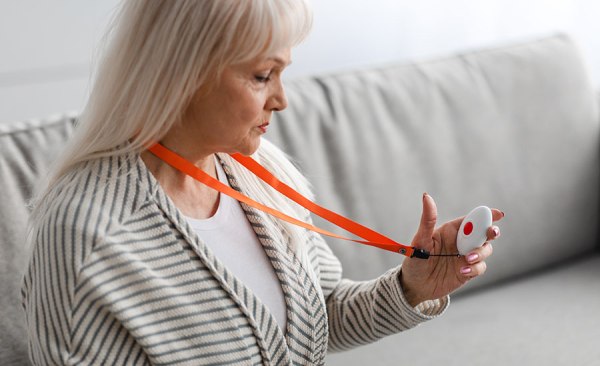





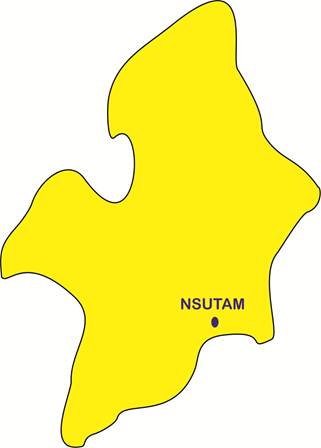
 . Where
  is precipitation,
  is discharge or stormwater runoffs,
  is evapotranspiration and
  is the change in storage within a given system over time. The equation is derived from the principle of conservation of mass, stating that the total water input into the system (basically from Precipitation) must be equal to the total water output (runoffs + evapotranspiration) plus any change in the volume of water stored. Precipitation is the total amount of water that falls over a catchment area on the earth’s surface in the form of rain, snow, sleet or hail. This precipitation is generated into runoffs depending on the nature and characteristics of the catchment area (either being pervious, an impervious surface or combinations). The runoffs is the flow water over the catchment surface which includes direct runoffs into drains, streams, rivers, lakes as well as groundwater flows (base flows). Another component that adds to the runoffs on the right hand side (RHS) of the equation above is the evapotranspiration. Evapotranspiration comprises of evaporation and transpirations. The evaporation is movement of water from surface water bodies and any water on the surface of the land (soil). The transpiration component is the water being transpired from plant vegetation’s. It’s is basically the movement of water from leaves surfaces and plants into the atmosphere to form clouds as they move from the gaseous state and gets cooled. The storage
  , is the net change in the amount of water stored in various underground points of the hydrological cycle such as in springs, reservoirs, aquifers etc.
 International Journal of Research (IJR)