WHAT IS NEOWISE COMET AND THE BEST WAY TO SEE IT !

Comet Neowise has been entertaining space enthusiasts across the northern Hemisphere. Although its official name is C/2020 F3, the comet has been dubbed “Neowise” after the near earth object wide field infrared survey explorer space telescope that first noticed it earlier this year. The Neowise Comet was discovered on March 27th and it is closely passing earth, i.e, it’ll be only 200 times as far as the moon is from the earth. All the hype of this comet is because you can actually watch it with naked eye. The last time humans could see a comet with the naked eye, it was comet Hale- Bopp in 1997.

How can one see it with naked eyes?

Find the darkest possible swath of sky and make sure your eyes are adjusted so that you give yourself the best possible opportunity to see faint objects. You need 15 minutes or so to adjust your eyes, so that your pupils are adjusted, and they are used to seeing fainter thing. You can also use the app “comet neowise” developed by astrophysicist Hanno Rein of university of Toronto Scarborough to see exactly where it is, so that you know the direction which you need to look upon.

You can take a moment to look up and enjoy this beauty glazing through the space for about 20 minutes right after the sunset. A ll should witness this surreal experience before it disappears into the outer-space for next 6000 years.

Eid al-Adha

Eid al-Adha, also called Eid Qurban or Bakri-Eid, is the second of two Islamic holidays celebrated worldwide each year. The festive season that starts with the beginning of the monsoon continues and Muslims look forward to Eid al-Adha, also called Bakr Eid or Bakrid in India. Muslims across the world celebrate Eid al -Adha as the ‘festival of sacrifice.’ Bakrid is the second major Eid for the Muslims. While Eid-al-Fitr marks the end of the month-long fasting period of Ramadan, Bakrid is known to conclude the annual Haj pilgrimage. The date of Bakrid, according to the Islamic calendar, is supposed to be on the 10th day of Dhu al-Hijjah or the ‘month of the pilgrimage’. Muslims usually go on pilgrimage on the 8th, 9th, and 10th of the month culminating in the Eid al-Adha. In the Islamic lunar calendar, Eid al-Adha falls on the 10th day of Dhu al-Hijjah and lasts for four days. In the international (Gregorian) calendar, the dates vary from year to year shifting approximately 11 days earlier each year.

eidmubarak15903705033131596102730455

Bakr Id/Eid ul-Adha is a public holiday. It is a day off for the general population, and schools and most businesses are closed. National, state and local government offices, post offices and banks are closed on Eid al-Adha. Islamic stores, businesses, and other organizations may be closed or have reduced opening hours. Those wishing to use public transport on the day may need to contact the local transport authorities to check on timetables. Large scale prayer meetings may cause local disruption to traffic. This is particularly true of areas of India with a predominantly Muslim population.

On Eid al-Adha, many Muslims pray and listen to a sermon at a mosque nearby. They also wear new clothes, visit friends and family. Many Muslims symbolically sacrifice a goat or a sheep as an act of Qurbani. Special food is prepared on Eid al-Adha and shared with relatives. A portion of the food is also distributed among the poor and needy. This represents the sheep that God sent to Ibrahim to sacrifice in place of his son. On this day, Muslims sacrifice a goat, a sheep, or any other animal to commemorate the willingness of Ibrahim to surrender his son Ismael to fulfill Allah’s command. Ibrahim was determined to do what Allah wanted him to do. And on the day when he decided to make the supreme sacrifice, Shaitan attempted to dissuade him, but he drove the evil away and proceeded further. Allah was pleased by his devotion, and a message was sent through Jibreel to Ibrahim. And the message granted life to Ismael and Ibrahim was asked to offer a sheep instead. Therefore, on this day, Muslims sacrifice an animal and divide the meat into three equal portions. They keep one for themselves while they give the other two away to relatives and the needy. Fasting on Eid al-Adha and Eid ul-Fitr is strictly forbidden. Eid al-Adha, or Bakrid, celebrations usually last for three days. The festival is celebrated with a lot of fervor among Muslims around the world. Although, the traditions may vary according to the country and its own local customs. The celebrations include visits to mosques and offering of prayers for peace and prosperity, as well as a special feast that mainly contains mutton preparations. Some of the most delicious Bakrid feast dishes include mutton biryani, mutton korma, mutton keema, bhuni kaleji, as well as a range of delectable desserts like sheer khurma and kheer.

994c003819835918df9a6cd4232e3ccb_L

Since India celebrates a day after Saudi Arabia, except certain states, this year Eid al-Adha will be celebrated on August 1, a day after Saudi. However, Kerala, like Saudi, will celebrate on July 31. This year however celebrations are likely to be low key amid the coronavirus pandemic.  In Ahmedabad, for instance, animal sacrifice in public places or animal processions in the city have been prohibited. Given all the restrictions and safety measures on account of the coronavirus pandemic, Bakrid will only be celebrated with one’s direct family that one lives with, however, you can always wish your near and dear ones from a distance and not breach any safety measures.

Bakrid-2020-1-380x214

Rakshabandhan in 2020: How it is going to be different…

“There’s no other love like the love for a brother. There’s no other love like the love from a brother.” –Astrid Alauda

Rakshabandhan is popular, traditionally Hindu, annual rite, or ceremony, which is central to a festival of the same name, celebrated in India, Nepal, and other parts of the Indian subcontinent, and among people around the world influenced by Hindu culture. The festival is a festival of love, care, and happiness. It symbolizes the existing love between brother and sister. On this day, sisters of all ages tie a talisman, or amulet, called the rakhi, around the wrists of their brothers, symbolically protecting them, receiving a gift in return, and traditionally investing the brothers with a share of the responsibility of their potential care.

Despite being a part of Hindu culture, due to its moral values, the festival is celebrated by other cultures as well. Among women and men who are not blood relatives, there is also a transformed tradition of voluntary kin relations, achieved through the tying of rakhi amulets, which have cut across caste and class lines, and Hindu and Muslim divisions. In some communities or contexts, other figures, such as a matriarch, or a person in authority, can be included in the ceremony in ritual acknowledgment of their benefaction.

Every year, this festival has been awaited by all of us. It gives a chance for the celebration of a selfless and beautiful relation. For some families, this is the occasion where sisters get a chance (out of their busy schedule) to finally visit their brother and celebrate their love. The occasion begins from the previous day itself, with sisters buying beautiful rakhis and sweets for their brothers and applying Mehendi on their hands. Next early morning, both sisters and brothers dress up in new clothes. The sister ties Rakhi on brother’s hand offers him sweet and sings love songs for him depicting brother-sister relation. The brother then gives her sister a gift and along with that a promise of “protection against any problem in her life.”

Every year, this is the time when families travel to each others’ houses to celebrate the festival. But this time, the festival falls amid these harsh times when the whole world is standing against a pandemic, COVID-19. Rakshabandhan is the first major festival of Hindus after the beginning of the pandemic. Therefore, it is a challenge for all of us to get along with the charm of the festival by taking all the precautions and by maintaining social distancing. This year, it is difficult for sisters to visit their brothers if they live in a different city or state. Each year, we can easily have a get-together and celebrate the festival. But, every year, we have our soldiers, policemen, doctors, workers who are away from their home, on their duty even during festivals for the service of their country. This time, we have got a very golden chance to serve our country and fight against the pandemic by staying at our homes. We can spread happiness and celebrate the festival with our police brothers, doctors, and nurses who are truly working as our safeguard for our protection. We can tie Rakhi out of respect to them, making them realize that they are true heroes and fulfilling the responsibilities of a brother. 

Apart from this, in this time of the internet, even though we are staying far, we are always connected through the internet. We are never apart. We can celebrate the festival over a video call. It will a new experience and it will be great fun. One more thing we need to remember that though some sisters are not able to go to their brother, due to pandemic, colleges and schools are closed. This brings young brothers and sisters together who usually don’t get holidays on Rakshabandhan when colleges run regularly. They must be together after a long time and enjoying the togetherness.

“As we grew up, my brothers acted like they didn’t care, but I always knew they looked out for me and were there!” – Catherine Pulsifer

Thinking through Act

“Acting is behaving truthfully under imaginary circumstances.”

Acting is basically an art of imitation or reflection or representation. It is the quality of utilizing your own spirit body and mind in being someone else. Actors on the stage do not show themselves up there, but they show the character they get into to people.”  Acting is equivalent to forgetting the original self.

Acting is not about being someone different. It’s finding the similarity in what is apparently different, then finding myself in there.

Benefits of acting

There are many benefits of acting :

  1.  It is a self-cleansing art.
  2. It helps us to forget ourselves, our worries, or goals, our life pressure, etc for the same time.
  3. It helps us to “be present”. Through acting, we enjoy “the moment”. We are at “the moment”.
  4. It helps us to understand the small little worlds as well as the big worlds of various people around us.
  5. Every act gives us a different perception that adds to build our character.

Methods of acting

  1. Stanislavski/Strasberg/Method: It uses affective memory considering our past. We need to relate to our past events. It draws situations from real life and there is an “emotional recall” as we get in touch with your emotional self.
  2. Meisner Method: It is the method based on the usage of imagination only. We need to enforce us to ask questions to ourselves. We ask the questions “what if”. We need time to contemplate under what situation will I be like this and considers the hypothetical future.

Voice Acting

Our emotions come out of our voices. Talking to a person over a voice call, we can immediately interpret if he is happy, sad, angry, guilty, lonely, or anything else. The Voice of a person gives a strong sense of the feelings of a person. Therefore, in addition to bringing the character by our body movements, we also need to bring out the character through our voice. Indeed, the voice acting is so powerful that it has opened up a separate domain for artists. Voice acting by podcasts are becoming popular day by day. It is easy to access and very interesting helping listeners to create a world of their own by listening to the voice artists. In addition, in these difficult times of pandemic, where shooting is difficult due to the rules of social distancing, podcasts are the way for artists.

Irrespective of the form of acting, the main trick is to make your character your best friend. We need to study up on character traits; read testimonials, interviews, or watch videos. Then, we need to try to bring the traits through voice. Traits, in general, depending on age, geographical location, any distinct characteristic, or disability. There is a need to develops a culture of responsive acting. It is also important to tackles self-consciousness. It is an effective way of creating the world around us. An actor is an energy bank, always excited about his character and his story.

“Acting is a sport. On stage you must be ready to move like a tennis player on his toes. Your concentration must be keen, your reflexes sharp; your body and mind are in top gear, the chase is on. Acting is energy. In the theatre people pay to see energy.”

Last day of Internship

So, finally, today is the last day of my internship. This is not related to any news, article or any kind of research, this is just a simple message and a little experience which I want to share. In this period of a month, I learnt a plethora of skills such as content writing, Blogging and more than that I enjoyed to being a publisher with eduindex. I haven’t traditionally good at writing but now I think I did my best even I can do more better. In today’s world, everyone should learn these skills and knowledge as well and we are blessed as we have such a good platform Internshala through that we can use this knowledge or skill even learns from them in such a convenient way. Hopefully, my little experience will be helpful to have the curiosity in young ones.

International Friendship Day

“True friends are never apart, may be in distance but never in heart.”

International Friendship Day is a day in several countries for celebrating friendship. It is celebrated on July 30 every year across the globe. The day is celebrated to mark the importance of friendships and friends in promoting peace in various cultures across the globe, to cherish friendship and value the people in our lives.

The idea of World Friendship Day was first proposed by Dr. Ramon Artemio Bracho in 1958 in Paraguay. He coined this term when he was having dinner with his friends in Puerto Pinasco. The dinner hosted by Dr. Ramon Artemio Bracho gave rise to the World Friendship Crusade, which is a foundation that encourages friendships across the world irrespective of race, color, religion, and ethnicity.  In 2011, the Friendship Crusade, on April 27, 2011, the General Assembly of the United Nations declared July 30 as official International Friendship Day. It was initially promoted by the greeting cards’ industry, evidence from social networking sites shows a revival of interest in the holiday that may have grown with the spread of the Internet, particularly in India, Bangladesh, and Malaysia. Mobile phones, digital communication, and social media have contributed to popularize the custom. It is also celebrated by exchanging gifts and planning outings with friends. In India, people celebrate this day by giving colorful friendship bands and flowers to each other.

Those who promote the holiday in South Asia attribute the tradition of dedicating a day in the honor of friends to have originated in the United States in 1935 but it actually dates back to 1919. The exchange of Friendship Day gifts like flowers, cards, and wrist bands is a popular tradition on this occasion.

Friendship Day celebrations occur on different dates in different countries. The first World Friendship Day was proposed for 30 July in 1958, by the World Friendship Crusade. On 27 April 2011, the General Assembly of the United Nations declared 30 July as official International Friendship Day with the idea that friendship between peoples, countries, cultures, and individuals can inspire peace efforts and build bridges between communities. However, several countries celebrate friendship day in before and after the UN-designated date. In India, Friendship Day is celebrated on the first Sunday of every August. In Nepal, Friendship day is celebrated on 30 July each year. In Oberlin, Ohio, Friendship Day is celebrated on 9 April each year.

“Friendship is the base of every relation. It is the golden thread that ties the heart of all the world.” 

According to the United Nations’ website, “Through friendship — by accumulating bonds of camaraderie and developing strong ties of trust — we can contribute to the fundamental shifts that are urgently needed to achieve lasting stability, weave a safety net that will protect us all, and generate passion for a better world where all are united for the greater good.” The UN resolution places emphasis on involving young people, as future leaders, in community activities that include different cultures and promote international understanding and respect for diversity. To mark the International Day of Friendship the UN encourages governments, international organizations, and civil society groups to hold events, activities, and initiatives that contribute to the efforts of the international community towards promoting a dialogue among civilizations, solidarity, mutual understanding, and reconciliation.

“Freindship is the only cement that will ever hold the world together.”

inferno

Did you ever watch Avengers: Infinity War and deep down felt that maybe Thanos was right? Maybe he was the one saving the world and not the avengers? Maybe what he did was for the best of all humanity? 

If yes, then you might get the same feeling while reading “Inferno” by Dan Brown.

“Inferno” can be seen as a thriller, engaging readers in exiting pursuits and implausible escapes, employing a mixture of cultural history and suspense which has become the author’s trademark, and involving a number of stock characters: a genius scientist, a number of intriguing and intimidating women, and Robert Langdon.

Inferno begins with Robert Langdon, a celebrated Harvard professor of art and symbology, who wakes up in a hospital in Florence, with little recollection of what has happened to him. There, he escapes an assassination attempt with the help of his doctor, Sienna Brooks. Soon Robert realizes that some mysterious people are trying to kill him, including his own government, who probably wants him dead. He also finds a cylinder with a biohazard sign in his jacket. The cylinder was fitted with a hi-tech projector displaying a modified version of Map of Hell which was inspired by Dante’s Inferno. 

In his attempts to decipher the riddles, Langdon comes to know of a potential plague threat by the genius scientist Bertrand Zobrist, who believes the human species will come to an end in a century due to ever-increasing population. Zobrist firmly believes that the only solution to this problem is is the human population is reduced to one-third by some drastic measures. After WHO chief, Elizabeth Sinskey, refuses to listen to him, Zobrist decides to take matters in his own hands. He hires a secretive group, The Consortium, to hide him from the world for a year. Zobrist builds a deadly airborne virus that would infect everybody on the planet within a week. The virus being developed by the Zobrist was assumed to be a ‘death doctor’ of sorts, which will cut the world population to four billion. 

However, the vector virus turnouts to randomly activates to employ DNA changes to cause sterility in one-third of humans. 

Ironically, one of the more compelling mysteries in “Inferno” doesn’t have to do with art history, but with the science future, with very real questions about the population explosion and humanity’s responsibility for the earth. Questions like ‘What are virologists more worried about, emerging diseases or manufactured ones’?

Inferno uses literary techniques to probe and outline some of the tensions and paradoxes of virology, thus providing a window into social and cultural dimensions of biomedical research. The story churns out surprise after surprise and you keep on guessing who the real culprit is.   

One of the most interesting things about the novel is the different lights under which we view Zobrist:

Zobrist the scientific expert: an internationally renowned biochemist. 

Zobrist the psychopath: a bioterrorist.

Zobrist the visionary: a representative on the transhumanist philosophy of the future. 

Personally, I like to view Zobrist as a scientific expert and a visionary. Because I am a fan of the truth, even if it’s hard to accept. 

Because even though the WHO boss agrees that the population growth needs to be checked, the only thing they do to contain population is handing out free condoms in Africa which ends up in “landfills overflowing with unused condoms” which only cause environmental problems. 

We humans always tend to overlook the uncomfortable reality of the world will become in another twenty-something year if the population continues to grow at the current rate. Why? Because our mind negates things which causes too much stress for the brain to handle, it’s called Denial. 

“Denial is a critical part of the human coping mechanism. Without it, we would all wake up terrified every morning about all the ways we could die. Instead, our minds block out our existential fears by focusing on stresses we can handle—like getting to work on time or paying our taxes.” – Robert Langdon, Inferno. 

But just because the human mind can’t imagine something from happening, doesn’t mean it won’t. “There comes a moment in history when ignorance is no longer a forgivable offense… a moment when only wisdom has the power to absolve. – Bertrand Zobrist”


LEARNING

A Human continuous process

PATTIKONDA:30/07/2020.

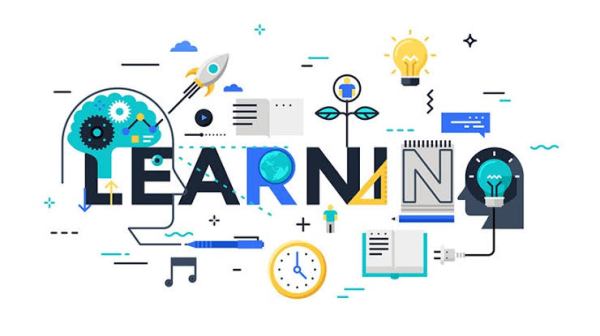
Learning is the process of acquiring new understanding,behaviour, knowledge,skills,values,attitudes, and preferences.Some learning is immediate, induced by a single event, but much skill and knowledge accumulates from repeated experiences.

Learning is not a education word. Human learning starts at birth and continues until death as a consequence of ongoing interactions between people and their environment. learning may occur as a result of habituation, operational conditions,classic conditions or as a result of more complex activities.Real learning is the ability to adopt what you know and know-how to do and adapt it under an everchanging variety of circumstances.

A direction of life
  • There are 3 types of learning.
  • Non-associative learning: It refers to “a relatively permanent change in the strength of response to a single stimulus.
  • It includes habituation and senisization.
  • Active learning: It occurs when a person takes control of their learning experience. Since understanding information is the key.Active learning is a key characteristic of student-centerd learning.
  • Associate learning:Associative learning is the process by which a person or animal learns an association between two stimuli or events.
  • It includes classic and operant conditioning.

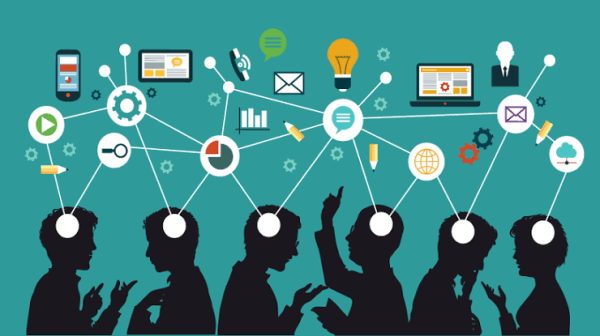
Multimedia learning or e learning is the modern learning techniques. Multimedia learning is where a person can use both audible and visual stimuli to learn information.Electronic learning or e-learning is computer-enhanced learning. A specific and always more diffused e-learning is Mobile learning.When a learner interacts with the e-learning environment, it’s called Augmented learning. Augmented digital content may include text, images, video, audio.Nonformal learning is organized learning outside the formal learning system.

Domains of learning
  • The DOMAINS of learning is
  • Cognitive: To recall, calculate, discuss, analyze, problem solve, etc.
  • Psychomotor: To dance, swim, ski, dive, drive a car, ride a bike, etc.
  • Affective: To like something or someone, love, appreciate, fear, hate, worship, etc.
  • Transfer of learning is the application of skill, knowledge or understanding to resolve a novel problem or situation.
  • Machine learning, a branch of AI, concerns the construction and study of systems that can learn from data

Factors of affecting learning: Status of students: Physical and home conditions also matter.hereditary: learners are rich in hereditary endowment while others are poor. Each student is unique and has different abilities.Physical environment: The design, quality, and setting of a learning space such as a school or classroom.Goals or purposes,Motivational behavior,Guidance,Interest, Learning activities,Attention are some influences of learning.

Serum Institute asked to revise protocol for Covid-19 vaccine clinical trial

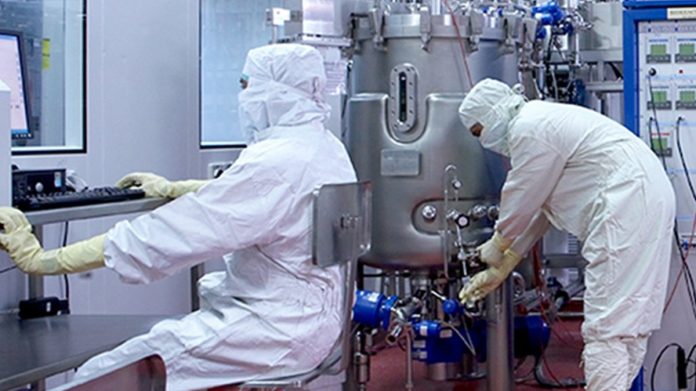
A  Central Drugs Standard Control Organisation (CDSCO) expert panel has sought clarifications from Serum Institute of India (SII) over its application to the Drugs Controller General of India (DCGI) seeking permission for conducting phase 2 and 3 human clinical trials of the Oxford vaccine candidate for COVID-19, official sources said on Wednesday. The CDSCO has advised the Serum Institute of India (SII) to submit a revised protocol to perform the clinical trials in India for potential Covid-19 vaccine.

The move comes when the Subject Expert Committee evaluated the submitted protocol by SII. The Subject Expert Committee (SEC) on COVID-19 which held its meeting on Tuesday deliberated on the application by SII and asked the Pune-based firm to revise its protocol for the phase 2 and 3 clinical trials, besides seeking some additional information. On Wednesday evening, SII submitted a revised protocol for conducting the trials to the DCGI. The firm plans to start phase 2 and 3 human trials in India in August. The domestic pharma giant has partnered with AstraZeneca for manufacturing the Oxford vaccine candidate for highly infectious disease Covid-19.

“The company on Tuesday was asked to clearly define phase 2 and phase 3 part of the protocol and resubmit their application for evaluation by the SEC,” an official source said. The panel also recommended that the proposed clinical trial sites be distributed across India, the source said. “They also have not given justification for the proposed enrolment of 1,600 subjects during the trial,” the source added. Additional Director, Government Affairs, SII, Prakash Kumar Singh said, “We have submitted our revised protocol to DCGI office today evening for further action by SEC and DCGI.” 

The SII which has partnered with AstraZeneca for manufacturing the Oxford vaccine candidate for COVID-19 had submitted its application to the DCGI on Friday, seeking permission for conducting the phase 2 and 3 trials of the potential vaccine ‘Covidshield’.”According to the application, it would conduct an observer-blind, randomized controlled study to determine the safety and immunogenicity of ‘Covishield’ in healthy Indian adults. The firm said that around 1,600 participants of more than 18 years would be enrolled in the study,” a source had said.  A Lancet medical journal report has stated that a vaccine candidate developed at the University of Oxford has shown encouraging results and it appears to be “safe, well-tolerated, and immunogenic. Initial results of the first two-phase trials of the vaccine conducted in five trial sites in the UK showed it has an acceptable safety profile and homologous boosting increased antibody responses, the source said.

To introduce the vaccine, SII, the world’s largest vaccine maker by the number of doses produced and sold, has signed an agreement to manufacture the potential vaccine developed by the Jenner Institute (Oxford University) in collaboration with British-Swedish pharma company AstraZeneca. On the partnership with AstraZeneca, Serum Institute of India CEO Adar Poonawalla had said, “Serum Institute of India has entered a manufacturing partnership with AstraZeneca to produce and supply 1 billion doses of the COVID-19 vaccine being developed by Oxford University.”

These vaccines will be for India and middle and low-income countries across the world (GAVI countries), he had said. Last week, Oxford University announced the satisfactory progress with the vaccine, making it one of the leading ones among the dozens of vaccine candidates being developed around the world. The clinical trials of a potential Covid-19 vaccine on humans began in April. There was no immediate response from SII when ANI contacted them to make their version.

National Education Policy 2020

The Union Cabinet on Wednesday approved the new National Education Policy (NEP) with an aim to introduce several changes in the Indian education system – from the school to college level. A single regulator for higher education institutions, multiple entries and exit options in degree courses, discontinuation of MPhil programs, low stakes board exams, common entrance exams for universities are among the highlights of the policy.  Speaking to reporters, Union minister Prakash Javadekar said the changes are important as the policy, which was framed in 1986 and revised in 1992, had not been revised since then.

The NEP 2020 aims at making “India a global knowledge superpower”.The new academic session will begin in September-October – the delay is due to the unprecedented coronavirus disease (Covid-19) outbreak – and the government aims to introduce the policy before the new session kicks in. The committee — which suggested changes in the education system under the NEP — was headed by former ISRO chief K Kasturirangan. The NEP was drafted in 1986 and updated in 1992. The NEP was part of the election manifesto of the ruling Bhartiya Janta Party (BJP) ahead of the 2014 elections.

Either one of the mother tongue or the local/regional language will be the medium of instruction up to Class 5 in all schools, the government said Wednesday while launching the National Education Policy 2020. Among other changes in the revision of the NEP, last done over three decades ago, is the extension of the right to education to cover all children between three and 18 years of age. The policy also proposes vocational education, with internships, for students from Class 6, a change to the 10+2 schooling structure, and a four-year bachelor’s program. NEP 2020 will bring two crores, out-of-school children, back into the mainstream, the government has claimed. Prime Minister Narendra Modi tweeted saying he “wholeheartedly welcomed” the policy, which he called a “long due and much-awaited reform in the education sector”.

In a bid to ramp up digital learning, a National Educational Technology Forum (NETF) would be created. “E-courses will be developed in eight regional languages initially and virtual labs will be developed,” Amit Khare, Higher Education Secretary, said. Top 100 foreign colleges will be allowed to set-up campuses in India. According to the HRD Ministry document, listing salient features of policy, “such (foreign) universities will be given special dispensation regarding regulatory, governance, and content norms on par with other autonomous institutions of India.” Standalone Higher Education Institutes and professional education institutes will be evolved into multi-disciplinary education. “There are over 45,000 affiliated colleges in our country. Under Graded Autonomy, Academic, Administrative and Financial Autonomy will be given to colleges, on the basis of the status of their accreditation,” he further said.

Here are the important points in the National Education Policy 2020:

  1. The mother tongue or local or regional language is to be the medium of instruction in all schools up to Class 5 (preferably till Class 8 and beyond), according to the policy. Under the NEP 2020, Sanskrit will be offered at all levels and foreign languages from the secondary school level. 
  2. The 10+2 structure has been replaced with 5+3+3+4, consisting of 12 years of school and three of Anganwadi or pre-school. This will be split as follows: a foundational stage (ages three and eight), three years of pre-primary (ages eight to 11), a preparatory stage (ages 11 to 14), and a secondary stage (ages 14 to 18). According to the government, the revised structure will “bring hitherto uncovered age group of three to six years, recognized globally as a crucial stage for the development of mental faculties, under school curriculum”.
  3. Instead of exams being held every year, school students will sit only for three – at Classes 3, 5, and 8. Assessment in other years will shift to a “regular and formative” style that is more “competency-based, promotes learning and development, and tests higher-order skills, such as analysis, critical thinking and conceptual clarity”.
  4. Board exams will continue to be held for Classes 10 and 12 but even these will be re-designed with “holistic development” as the aim. Standards for this will be established by a new national assessment center – PARAKH (Performance Assessment, Review, and Analysis of Knowledge for Holistic Development).
  5. The policy, the government has said, aims at reducing the curriculum load of students and allowing them to become more “multi-disciplinary” and “multi-lingual”. There will be no rigid separation between arts and sciences, between curricular and extra-curricular activities and between vocational and academic stream, the government said.
  6. To that end, the policy also proposes that higher education institutions like the IITs (Indian Institute of Technology) move towards “holistic education” by 2040 with greater inclusion of arts and humanities subjects for students studying science subjects, and vice versa.
  7. The NEP 2020 proposes a four-year undergraduate program with multiple exit options to give students flexibility. A multi-disciplinary bachelor’s degree will be awarded after completing four years of study. Students exiting after two years will get a diploma and those leaving after 12 months will have studied a vocational/professional course. MPhil (Master of Philosophy) courses are to be discontinued.
  8. A Higher Education Council of India (HECI) will be set up to regulate higher education; the focus will be on institutions that have 3,000 or more students. Among the council’s goals is to increase the gross enrolment ratio from 26.3 percent (2018) to 50 percent by 2035. The HECI will not, however, have jurisdiction over legal and medical colleges.


The Cabinet also approved changing the name of the HRD ministry to the education ministry.