Parliament

Parliament is the legislative body of the federal government. Articles 79-122 of the Constitution deal with the composition, organization, duration, officers, procedures, authority, etc. of the parliament.

The parliament consists of three parts: the president, the state council, and the house of the People. Rajya Sabha is the House is the upper house(Second chamber or House of Elders) and Lok Sabha is the Lower house(First chamber or Popular house). The President of India is not a member of either parliament, and is not sitting in parliament to attend their sessions. The president is an integral part of parliament. This is because the bill passed by both houses cannot become a bill without the approval of the president. The president also invites both chambers of parliament. Compatible with both the houses

Composition of two houses-

Rajya Sabha Composition- Rajyasabha is the Senate of Parliament. Its maximum strength is set at 250, of which 238 are representatives of state and union territory and 12 are nominated by the president. Currently, Rajya Sabha has 245 members, of which 229 represent the state and 4 represent the state. Union territory and 12 shall be nominated by the President.

1. State Representatives -The state representatives of Rajyasabha are elected by elected members of the Legislative Assembly. Rajya Sabha is elected according to a proportional representation system using STV (single transferable vote).

2. Nominated Members- The President appoints 12 members to Rajyasabha from among individuals with special knowledge of the arts, literature, science and social services.

Lok Sabha Composition- Lok Sabha is the House of Representatives. Its maximum strength is 552. Of these, 530 are represented by the state, 20 are represented by Union Territory, and two are appointed by the President of the Anglo-Indian Community. As of , Lok Sabha has 545 members. Of these, 530 are representatives of the state, 13 are under Union territory, and two Anglo-Indian members have been nominated by the President.

1.State Representatives -Lok Sabha’s state representatives are directly elected by the members of the state’s territory. Elections are based on universal adult suffrage.

2.Nominated Members-The president can nominate two members from the Anglo-Indian community if the community is not adequately represented in the Lok Sabha.

Ben Jonson (1547-1637)

Benjamin Jonson was an English playwright and poet. Jonson’s artistry exerted a lasting influence upon English poetry and stage comedy. He was born at Westminister and educated at Westminister school. His father died before Jonson’s birth, and the boy adopted the trade of his stepfather, who was a master bricklayer. From this, he turned to acting and writing plays, engaging himself, both as actor and playwright, with the Lord Admiral’s company (1597). In 1617, he has created a poet for the king, and the close of James’s reign saw Jonson the undisputed ruler of English literature. His favourite haunt was the Mermaid Tavern, where he reigned as dictator over a younger literary generation. He was buried in Westminister Abbey, and over him was placed the epitaph “o rare Ben Jonson!”

Jonson’s numerous works, comedies, tragedies, masques, and lyrics, are of widely varying merit, but all of them, as well as his Timber, a kind of commonplace-book, which is of considerable interest for its critical comment on literature. To him, the chief function of literature was to instruct. His play was divided conventionally into comedies and tragedies, for Jonson, true to his classical models, did not combine the two. In his comedies, he aimed to return to the controlled, satirical, realistic comedy of the classical dramatist, and the inductions of his plays make it clear that he hoped to reform the drama on these lines. His main concern was with the drawing of character, and his creations are important because they introduce the “comedy of humours“. Many of his characters arc, in consequence, types, but the best, like Bobadill in Every Man in his Humour, rise above the type and live as truly great comic characters.

His early comedies, Every Man in his Humour (1598), Every Man out of Humour (1599), Cynthia’s Revels (1600), and The Poetaster (1601), show his ingenuity of plot, his hearty humour, his wit, and they are full of vivacity and fun. Every Man in his Humouris, perhaps, his greatest work. The middle group of comedies, Volpone, or the Fox (1605), Epicoene, or The Silent Woman (1609), The Alchemist (1610), and Bartholomew Fayre (1614), represents, as a group, his best work. They are all satirical in tone, realistic and natural in dialogue, and ingenious in the plot. The characters are less angular and more convincing. His later comedies, The Devil is an Ass (1616) and The Staple of News (1625), show a distinct falling-off in dramatic power.

The two historical tragedies, Sejanus his Fall (1603) and Catiline his Conspiracy (1611), are composed of classical models. They are too laboured and mechanical to be reckoned as great tragedies. Jonson was also friends with many of the writers of his day, and many of his most well-known poems include tributes to friends such as Shakespeare, John Donne, and Francis Bacon. Ben Jonson died in Westminster on August 8, 1637. A tremendous crowd of mourners attended his burial at Westminster Abbey. He is regarded as one of the major dramatists and poets of the seventeenth century.

The Best Suburbs Near Washington DC to Buy a Home

Almost 20% of Americans are planning to move in 2022, so each of these people must make a clear plan so that their move goes as smoothly as possible.  Nowhere is offering as much good as the Washington D.C. area! 

Photo by Binyamin Mellish on Pexels.com

These suburbs are quickly becoming one of the country’s fastest-growing employment destinations and have a low 2.7 unemployment rate that’s nearly half of the U.S. average.

These are the top areas in the D.C. suburbs, and reasons why moving here is a must!

Why the D.C. Area?

This area is one steeped in history deeper than many other portions of the country.  Although it’s only been the capital for the last couple hundred years, it’s spent that time creating an incredible history.  This area has more museums, art galleries, and stunning historical landmarks than any other area.

Moving here means you get a space where you’ll continue to learn and grow for the rest of your life.  This is also an amazing place to raise children since it gives them the chance to get to know the history of the USA from a young age.

Bethesda, Maryland

The smallest town on this list, with just over 60,000 people, Bethesda is an unincorporated space in Montgomery County that’s known for sprawling green spaces mingled with city living.

As one of the top training locations for armed forces, Bethesda sees many people come and go and get far more traffic than many expect for such a small city.  This city is very affordable and has a lower unemployment rate than the national average.  Bethesda feels like a slice of paradise to everyone who visits and perfect to everyone who moves here!

Arlington, Virginia

Everyone in the USA knows about Arlington since many portions of it are still referred to as D.C. even though they’re in this smaller city.  The population has a heart of 240,000, and the unemployment is slightly higher than average, at 3.4%.

Celebrating its 121st anniversary in 2022, this city is known for points of interest like the world-famous Arlington National Cemetery, the Tomb of the Unknown Soldier, the Arlington House, and countless museums.  Arlington real estate is more expensive than any other city on this list, but you can likely afford it if you work here.

Rockville, Maryland

With a population of just under 70,000 people, Rockville is a smaller city on the outskirts of D.C. that has everything you could want from a historic town.  From the grounds of the early-1800s Beall-Dawson home to the Museum of 19th Century Medicine, you can learn and see a lot while you visit.

The main employer here is the government, which means you can find a job with awesome benefits and pay.  Housing here is the most affordable on this list, and it’s worth looking into!

Great Jobs and a Complicated Housing Market are a Wild Combination

Whether you’re moving out here to find higher-paying work or you’re interested in starting fresh in one of the most beautiful parts of the country: the D.C. suburbs have a lot to offer!  Consider moving to one of these areas, and you’ll never regret your decision!

Authoritarian System

It is a form of government within an authoritarian system dominated by political parties known for its oppressive nature. It’s actually a denial of democracy. There is no independent judiciary in the authoritarian regime. It is the elite of the ruling class who imposes its value on society and is considered good for the individual. In government, authoritarianism is in the hands of leaders or small elites who are not constitutionally responsible for the politics of the body and cannot be replaced by citizens who vote freely among various competitors in elections. It means a political system that concentrates power. The freedom to establish opposition parties or other alternative parties competing for part of the ruling group is either restricted or nonexistent in the authoritarian regime. However, authoritarian governments usually do not have a highly developed leadership idealism, allow certain pluralism in social organizations, lack the power to mobilize the entire population to pursue national goals, and have domestic power. Relatively exercise Predictable limits. According to some scholars, examples of authoritarian regimes include pro-Western military dictatorships that existed in Latin America and elsewhere in the late 20th century.

Characteristics of the authoritarian regime-

1. It is characterized by a highly concentrated and centralized governmental power that is maintained through political repression and elimination of potential challenges.

2. Use political parties and mass organizations to mobilize people for the goals of the government. 3. Power is controlled, changes governments and even leaders, and is not smooth and peaceful under authoritarian regimes.

4. Authoritarianism is characterized by an “indefinite period of political tenure” of a ruler or ruling party or other authority. The transition from an authoritarian regime to a more democratic form of government is called democratization.

5. The size of the legislature is small because all legislative and political decisions are entrusted to one or a small group of authoritarian regimes.

6.There is a strict restriction of political views and platforms that differ from those of the authoritarian government so not to undermine political control.

John Bunyan

John Bunyan was an English writer and Puritan preacher. He was born in Elstow, near Bedford, in 1628, the son of Thomas Bunyan and Margaret Bentley. He followed his father into the tinker’s trade but rebelled against God and ‘had but few equals, both for cursing, swearing, lying, and blaspheming the holy name of God’. As a teenager, he joined Cromwell’s New Model Army but continued his rebellious ways. His life was saved on one occasion when a fellow soldier took his place at the siege of Leicester, and ‘as he stood sentinel he was shot in the head with a musket bullet and died’.

Bunyan married at age 21. Those books his wife brought to the marriage began a process of conversion. Gradually, he gave up recreations like dancing, bell ringing, and sports; he began attending church and fought off temptations. Later, he realised that he was lost and without Christ when he came into contact with a group of women whose ‘joyous conversation about the new birth and Christ deeply impressed him’. In 1651 the women introduced him to their pastor in Bedford, John Gifford, who was instrumental in leading Bunyan to repentance and faith.

That same year he moved to Bedford with his wife and four children, including Mary, his firstborn, who had been blind from birth. He was baptised by immersion in the River Ouse in 1653. Appointed a deacon of Gifford’s church, Bunyan’s testimony was used to lead several people to conversion. By 1655 Bunyan was himself preaching to various congregations in Bedford, and hundreds came to hear him. In the following years, Bunyan began publishing books and became established as a reputable Puritan writer, but around this time, his first wife died. He remarried in 1659, a young woman named Elizabeth, who was to be a staunch advocate for her husband during his imprisonments for in 1660 Bunyan was arrested for preaching without official permission from King Charles II; he was to spend the next 12½ years in Bedford County Gaol.

In January 1672, Charles II issued the Declaration of Religious Indulgence with to make Roman Catholicism legal. As a result, many religious prisoners were pardoned and released, including John Bunyan. That same month, he became pastor of the Bedford church. In March 1675, he was imprisoned for preaching again because Charles II withdrew the Declaration of Religious Indulgence. This time he was imprisoned in the Bedford town jail on the stone bridge over the Ouse.

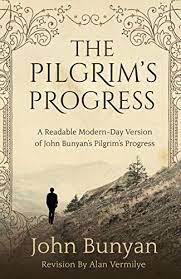
Bunyan became a prolific author as well as a popular preacher, though most of his works consisted of expanded sermons. He wrote, The Pilgrim’s Progress, in two parts, the first of which was published in London in 1678, and the second in 1684. He had begun the work in his first period of imprisonment and probably finished it during the second. The earliest edition with the two parts combined in one volume was published in 1728. A third part, falsely attributed to Bunyan, appeared in 1693 and was reprinted as late as 1852. The Pilgrim’s Progress is arguably one of the most widely known allegories ever written. It has been extensively translated into other languages.

Two other successful works of Bunyan’s are less well-known: The Life and Death of Mr. Badman (1680), an imaginary biography, and The Holy War (1682), an allegory. A third book that reveals Bunyan’s inner life and his preparation for his appointed work are, Grace Abounding to the Chief of Sinners (1666). It is all about Bunyan’s spiritual path. Bunyan died in 1688 after catching a cold while riding through a rainstorm on a journey to reconcile a quarreling family. He was buried at the Nonconformist cemetery of Bunhill Fields in London.

Elections

Articles 324-329 of the Constitution of India contain the following provisions regarding elections or the electoral system in India:

1. Article 324 stipulates the Independent Election Commission for conducting free and fair elections in India. At present time The Election commission consists of a chief commission and two Election. Commissioners.

2. The Constitution has abolished the system of separating electoral rolls and local electoral rolls, as each region needs to have only one electoral roll.

3. We will not be treated unequally based on caste, race, gender, gender or religion. Therefore, it cannot be claimed to be included in the special electoral list. The Constitution recognizes all citizens as equal.

4. Elections to Lok Sabha and the Legislature must be based on universal adult suffrage. This means that all citizens of India who are 18 years old are eligible to vote in the election and cannot be disqualified.

5. Parliament may make provisions related to all matters related to parliamentary elections.

ELECTION MACHINERY-

Election Commission of India (ECI)- The Election Commission of India is a three-member organization consisting of the Supreme Election Commission and two Election Commissions. The President of India appoints the Supreme Election Commission and the Election Commission. The Indian Election Commission is endowed with the power of supervision and control over the conduct of the Lok Sabha Directorate Elections.

Chief Executive Officer (CEO) -The CEO of the State / Union Territory has the authority to oversee election operations in the State / Union Territory and to direct and control the Election Commission. The Election Commission of India appoints state officials to the highest election officers.

District Returning Officer (DEO)- The DEO oversees election administration in all districts. The Indian Election Commission appoints state government officials as district return officers.

Returning Officer- A Returning Officer is responsible for conducting elections in Parliament or in the constituencies of Parliament. The Election Commission of India appoints government officials or local governments to the Election Commission.

Electoral Registration Officer (ERO) -The ERO is responsible for preparing and ordering the parliament or the electoral list of the parliament. The Indian Election Commission appoints government or local government officials as electoral registrants.

Presiding Officer- A Presiding Officer holds an election at a polling place. The District Election Officer appoints the Presiding Officer.

Observer -The Indian Election Commission appoints high-ranking government officials as observers of Parliament and its constituencies.

Christopher Marlowe

Christopher Marlowe, also known as Kit Marlowe, was an English playwright, poet, and translator of the Elizabethan era. Marlowe is among the most famous of the Elizabethan playwrights. He was Shakespeare’s most important predecessor in English drama, who is noted especially for his establishment of dramatic blank verse. He was born at Canterbury and educated there and at Cambridge. He adopted literature as a profession and became attached to the Lord Admiral’s players.

Marlowe’s plays, all tragedies, were written within five years (1587-92). He had no bent for comedy, and the comic parts found in some of his plays are always inferior and maybe by other writers. Only in Edward II does he show any sense of plot construction, while his characterization is of the simplest, and lacks the warm humanity of Shakespeare’s. All the plays, except Edward II, revolve around one figure drawn in bold outlines. This character shows no complexity or subtlety of development and is the embodiment of a single idea.

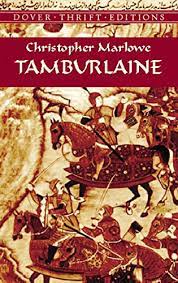
In Tamburlaine the Great, the shepherd seeks the “sweet fruition of an earthly crown,” in The Jew of Malta Barabbas seeks “infinite riches in a little room,” while the quest of Doctor Faustus is for more than human knowledge. Each of the plays has behind it the driving force of this vision, which gives it an artistic and poetic unity. It is, indeed, as a poet that Marlowe excels. Though not the first to use blank verse in English drama, he was the first to exploit its possibilities and make it supreme. His verse is notable for its burning energy, its splendour of diction, its sensuous richness, its variety of pace, and its responsiveness to the demands of varying emotions.

The Massacre at Paris is a short and luridly written work, the only surviving text of which was probably a reconstruction from memory of the original performance text, portraying the events of the Saint Bartholomew’s Day Massacre in 1572, which English Protestants invoked as the blackest example of Catholic treachery. It features the silent “English Agent”, whom subsequent tradition has identified with Marlowe himself and his connections to the secret service. The Massacre at Paris is considered his most dangerous play, as agitators in London seized on its theme to advocate the murders of refugees from the low countries and, indeed, it warns Elizabeth I of this possibility in its last scene.

Doctor Faustus (or The Tragicall History of the Life and Death of Doctor Faustus), based on the German Faustbuch, was the first dramatised version of the Faust legend of a scholar’s dealing with the devil. While versions of “The Devil’s Pact” can be traced back to the 4th century, Marlowe deviates significantly by having his hero unable to “burn his books” or repent to a merciful God to have his contract annulled at the end of the play. Marlowe’s protagonist is instead carried off by demons, and in the 1616 quarto his mangled corpse is found by several scholars. Doctor Faustus is a textual problem for scholars as two versions of the play exist: the 1604 quarto, also known as the A text, and the 1616 quarto, or B text. Both were published after Marlowe’s death. On 30 May Marlowe was stabbed to death during a fight at a house in Deptford, apparently after an argument about a bill. He was about 29. The incident’s relation, if any, to Marlowe’s investigation by the Privy Council is unknown.

The Life of John Donne

John Donne was an English poet, scholar, and secretary. John Donne is considered now to be the pre-eminent metaphysical poet of his time. He was born in Bread Street, London in 1572 to a prosperous Roman Catholic family. He was the son of a wealthy merchant. His parents were Roman Catholics, and he was educated in their faith before going to Oxford and Cambridge. He entered the Inns of Court in 1592, where he mingled wide reading with the life of a dissolute man-about-town. He wrote his Satires, the Songs and Sonets, and the Elegies, but, though widely circulated in manuscript, they were not published until 1663, after his death. He entered the Anglican Chruch, after a severe personal struggle, and in 1621, became Dean of St. Paul’s, which position he held until his death in 1631. He was the first great Anglican preacher.

John Donne, Self-potrait

His Poetry

Donne was the most independent of the Elizabethan poets and revolted against the easy, fluent style, stock imagery, and pastoral conventions of the followers of Spenser. His poetry is forceful, Vigorous, and despite faults of rhythm, often strangely harmonious. His cynical nature and keenly critical mind led him to write satires, such as Of the Progres of the Soule (1601). His love poems, the Songs and Sonets, were written in the same period, and are intense and subtle analyses of all the moods of a lover, expressed in vivid and startling language, which is colloquial rather than conventional. His poems are all intensely personal and reveal a powerful and complex being. Among the best known and most typical of the poems of this group are Aire and Angels, A Nocturnall upon S.Lucies day, A Valediction: forbidding mourning, and The Extaise.

His religious poetry was written after 1610, and the greatest, the nineteen Holy Sonets, and the lyric such as A Hymn to GOD THE FATHER, after his wife’s died in 1617. They too are intense and personal and have a force unique in this class of literature. “He affects the metaphysics”, said Dryden of Donne, and the term ‘metaphysical’ has come to be applied to Donne and a group of poets who followed him. The most distinctive feature of the metaphysical is their imagery, which, in Donne, is almost invariably unusual and striking, often breath-taking, but sometimes far-fetched and fantastic.

His Prose

Donne’s prose work is considerable both in bulk and achievement. The Pseudo-Martyr (1610) was a defense of the oath of allegiance, while Ignatius His Conclave (1611) was a satire upon Ignatius Loyola and the Jesuits. The best introduction to Donne’s prose is his Devotions (1614), which give an account of his spiritual struggles during a serious illness. His finest prose works are his Sermons, which number about 160. In seventeenth-century England, the sermon was a most important influence, and the powerful preacher in London was a public figure capable of Wielding great influence. Donne’s sermons, of which the finest is probably Death’s Duell (1630), contain many of the features of his poetry. Donne seems to have used a dramatic technique that had a great hold on his audiences.

Conclusion

Donne left a deep and pervasive influence on English poetry. The metaphysical lyricists owed a great debt to him. Sometimes, his followers excelled him in happy conceit, passion, and paradoxical reasoning. And yet he gave a sincere and passionate quality to the Elizabethan lyric. He is one of those great poets who have left a mark on the history of English poetry. At times, his poetry is strange, fantastic, bizarre, maybe repellent. Donne may not be capable at times of graceful love or sweetness of song, but he enriched Elizabethan poetry with sincerity, originality, and fullness of thought.

Prime minister

Prime Minister is the actual executive branch and head of government.

Appointment of the Prime Minister- Our Constitution does not mention specific procedures for the appointment of the Prime Minister. Article 75 of the Constitution states that the prime minister is appointed by the president. The president must appoint the leader of Lok Sabha’s majority party as prime minister, but if Lok Sabha does not have a clear majority party, the president usually appoints the leader of Lok Sabha’s largest party as prime minister.

Prime Minister’s Oath

The President takes an oath of office before the Prime Minister takes office. With his oath, the prime minister takes an oath

1. Support India’s sovereignty and integrity.

2. Have true faith and loyalty to the Constitution of India.

3. Do justice to all

4. Perform the duties of his / her office in a reliable and honest manner.

5. In a secret vow, the Prime Minister vows not to contact or disclose anyone directly or indirectly.

Prime Minister’s term of office

The term of office of the Prime Minister has not been fixed and will be held at the discretion of the President. However, this does not mean that the president can dismiss the prime minister at any time as long as the prime minister enjoys majority support at Lok sabha.

Prime Minister’s powers and obligations

The Prime Minister’s authority and functions are as follows:

In relation to the President- The Prime Minister enjoys the following authority in relation to the President: He advises the President on the appointment of key officials such as the Attorney General of India, the Director of Audit of India, the President, Elections, Commissioners and members of the UPSC.

About the Council of Ministers – The Prime Minister of has the following authority as chairman of the Council of Ministers. He allocates and reallocates various portfolios among the ministers, directs, manages, directs and coordinates the activities of all ministerial councils, recommends to the ministerial council who can be appointed by the president, and collapses the council. Can bring about the ministerial by resigning from a government agency.

In Parliament -In connection with Parliament he has the following powers: He announces government policy on the floor of the House of Representatives and advises the President on convening a parliamentary session.

Veganism

Veganism is one of the many trends which have seen the light of day in the past few years. It is the practice of abstaining from consuming any animal products and going completely plant-based. Many speculate that veganism is the future of the planet. Research suggests that a vegan diet could potentially prevent eight million deaths from chronic diseases. It is estimated that the world population could rise from 7.5 billion to 10.5 billion by 2050. Since we use about 68 per cent of the world’s agricultural land to grow crops to feed livestock, a vegan future would free up space and leave us with more resources for the people.

Veganism also has many health benefits. A vegan diet can promote weight loss. It can also boost heart health. Eating animal-based foods can raise cholesterol levels, which can lead to an increased risk of strokes. Plant foods are also high in fibre, which is linked to better heart health. It is also proven that a vegan diet can reduce the risks of diabetes and some forms of cancers. 

Considering all these benefits, it is no doubt why such kind of lifestyle is growing in popularity day by day. Yet, many find this transition to a plant-based diet to be a difficult one. A few ways to ease this transition are:- 

  1. Motivate yourself 

Finding your motivation to transition to a vegan lifestyle is a crucial step, one that many tend to forget. Doing some research into how your food impacts the climate and watching documentaries on veganism is a great way to do so. Some documentaries I would suggest are Cowspiracy and What The Health. Initially, the change will be difficult, especially if you consume meat and dairy daily. However, keep your motivation and purpose in mind, and do not give up. 

  1. Start slow

Taking drastic measures in the initial steps of your transition to veganism is one of the biggest mistakes you could make. Many do this, and then inevitably fail. What you need to do is start small. Cutting off all animal products in one go is impossible. Making one of your meals vegan, reducing the amount of animal-based products you consume in a week or a month, and replacing your snacks with vegan alternatives are some great ways to successfully get started. Every minimal change can aid you in your journey to a vegan lifestyle.

  1. Get the nutrients you need

Although a vegan lifestyle has its benefits, it can also be difficult for vegans to get enough of the vitamins and minerals which are found in animal products. Iron, protein, calcium and vitamin B12 are some such nutrients. Focus on including these in diet, by either finding vegan substitutes (broccoli and kale for calcium, rice milk for vitamin D). You can also consume supplements to get enough of some nutrients which are found only in animal products (Vitamin B12).

  1. Curb your negativity 

Often one develops some form of hatred and negativity towards other non-vegans while transitioning to a vegan lifestyle. We condemn their non-vegan habits and get mad at them for not following a certain lifestyle. You should remember to not let these negative feelings get to you. Be mindful of the fact that not everyone can afford such a lifestyle. When educating others about veganism, do not let your hate and anger take over you. Be calm and polite. Remember that this cluster of emotions will pass. With time, everything gets easier.