The Role of Linguistics in Literary Texts

Mustafa Wshyar Abdullah AL-Ahmedi

Lecturer at Koya University – Koya, Erbil/ Iraq

There will not be any kind of literature if there is not a language. That is a language which creates literature and with its features helps it to be more interesting. Richard Eyre; English director (in Kermode 2001: 4) says, “The life of the plays is in the language”. It will become more powerful if more structures of linguistics are applied. For instance, there is someone who would like to be in a situation of criminal investigation, but it is impossible for him to inter such a place. He might be able to get a quite clear picture, by the help of linguistic features, for what he dreams about through following a piece of literature.     Being familiarized with linguistics would let people to understand literature in a better way. They would also think about it in a more critical way and engage to the depth of the meaning.

Some people would argue that the only thing would be talked about is the sense of literature which comes from the heart of a poet, novelist or playwright. They might say it is not very important to analyze linguistic aspects in a piece of work. Toolan (2003) claims that sentences are making a context just like a house which should be made of bricks, posts, beams and so on. But that is not all the work; it is not possible to build a house by bringing that stuff only. They should be bounded in a variety of ways. That is the same situation in a text; sentences should be linked together in a linguistic way. This sentence construction should be in a system that would lead audience or readers to be more attracted. Using various sentence structures, for example, avoids them from being uninterested. Almost everyone wants to see something different. Repetition is often not desired by human beings. Leech and Short (2007) argue that it is not possible to understand the language of literature without a proper understanding of how ordinary language works. There are many linguistic terms which can be used to make the message more meaningful, such as: semantics, parallelism, graphology and the like.

Additionally, spelling is also used as a method to make an impact. It is often used to convey the message as it occurs in the reality. It is significant to remember that spelling does not represent any existing dialect phonetically. Sometimes, when a writer represents an Irish man to an English reader, he may try to use a different kind of spelling to indicate Irish pronunciation, because audience always wants to see something which is so close to the reality. If he represents an Irish man to an Irish reader, he will not need to use this technique because it would be clear for the reader who is represented and he would not be interested in such a change (Traugott and Pratt, 1980).

Consequently, the branches of linguistics which are preferred to be used in different types of literature vary. One branch might be more effective in poetry than novel. It can be clearly recognized by writers that which one is more powerful for the type of the work they do. For instance, the system of graphology is generally favored by poets rather than novelists (Simpson, 1997). The different parts of speech may also be used to make different influences. Hebron (2004) explains that parallelism is used to make rhetorical effects. They all are being used to make a piece of work more interesting and effective because those who these works are created for want them attractive.

Parts of speech have a very significant and main role in literature. Each of them has a function which is not less valuable than other one. Hebron (2004) shows that noun phrases are usually used to create parallelism. He (2004:58) demonstrates, “Verbs are the engines of English”. That means verbs have an essential place in English language. They are the main functions in this language and make an action which does the main part of a movement or an activity.

Those who are familiarized with the rules and techniques of linguistics can think about literature more critically. They usually analyze, evaluate and judge about a piece of literature. It is much more pleasurable for them than others who have not any linguistic background. The reason is being more challenged in the action which they are doing. It is not something simple for them; they see it as a precious device. So, it makes them think and they become a judge. At the end of the process, they can find themselves in the center of the actions. They would feel like a character in the play, novel or poem. Simpsons (1997) supports this argument in which he says that psycholinguistics has a great influence on the reading process. Those who have a background of this science, which is a branch of linguistics, can read differently. They would be able to analyse and evaluate a piece of text. It is possible for them to understand the depth meaning of the text which is not the same as the surface one. In contrast, some others, who have no knowledge about it, may read it with less emotion and sense. Short (1996) says that he has never seen beyond the front desk of a police station, but he is quite familiar, through reading novels, watching plays and movies, with being arrested, interviewed and put in cells. This is called schemata. He expects something through his experience which comes from watching and reading.

In conclusion, the study of language can make the study of literature more valuable. It gives it a better prestige. The analysis and evaluation would be stronger and more effective. It has been shown how different parts of speech are being chosen for different types of literature and to make different effects. Those with some knowledge of linguistics may see literature more enjoyable. Their thinking would differ than others and it would be more thoughtful. They can expect or imagine something which they have never seen before. That is what the study of linguistics can offer the study of literature. It targets to help those who are interested in literature to be more critical and to have a good understanding for it, to obtain what they want through following it.

References:

  • Hebron, M. (2004). Mastering the Language of Literature. Hampshire: PALGRAVE MACMILLAN.
  • Kermode, F. (2001). Shakespeare’s Language. London: Penguin Books, p. 4.
  • Leech, G. and Short, M. (2007). Style in Fiction: A Linguistic Introduction to English Fictional Prose. (2nd). Harlow: Longman.
  • Short, M. (1996). Exploring the Language of Poems, Plays and Prose. Harlow: Longman.
  • Simpson, P. (1997). Language through Literature: An Introduction. London: Routledge.
  • Toolan, M. (2003). Language in Litterature (2nd). London: Hodder Headline Group.
  • Traugott, E. C. and Pratt, M. L. (1980). Linguistics for Students of Literature. New York: Harcourt Brace Jovanovich.


A STUDY TO ANALYSES THE CAUSES OF EMOTIONAL ABUSE AGAINST WORKING WOMEN IN PUNJAB PAKISTAN

Amjad Rehman Asghar, Dr. Yasir Nawaz Manj, Hassan Ali, Saif Ahmad Malik

1Department of Rural Sociology, Faculty of Social Sciences, University of Agriculture, Faisalabad-38040, Pakistan.

Department of Sociology, Faculty of Social & Behavioral Sciences, University of Sargodha, Pakistan.


Abstract

Women in Pakistan live in a world, which is structured by strict religious, family and tribal customs. They are subjected to discrimination and violence on a daily basis. Pakistan’s interpretation of Islam views women as needing protection that ultimately results in their oppression physically, mentally and emotionally. Women in Pakistan are facing various forms of violence, discrimination and inequality in almost every aspect of life. Therefore, the present study is to analyses the causes of emotional abuse against working women: in Punjab, Pakistan. A cross sectional study was carried out both in private and public departments. Multistage sampling technique was used for the collection of data. A sample of 300 respondents was taken from 8 districts of two divisions of Punjab Faisalabad and Sargodha from both public and private sectors. The major objective of the study was to explore the socio-cultural and economic factors of emotional abuses among working women and to identify the reasons of emotional abuse among working women at work place. The study has found that the female who are doing jobs in government sector were facing more emotional abuse as compared to public sector.  The finding of the study 70% of the working women were in the opinion that culture is the responsible for the weaker position of the women. 74% of the working women were in the view that gender inequality is the base of low status of the women in a society. It is need to modify the behavior of male regarding women media can play a vital role in this regarding. The government should take necessary steps to make the legislation and suggest harsh punishment to the abusers.

Keywords: Emotional Abuse, Working Women, Socio-Cultural Values, Economic Aspect

Introduction

Women in Pakistan live in a world, which is structured by strict religious, family and tribal customs. They are subjected to discrimination and violence on a daily basis. Pakistan’s interpretation of Islam views women as needing protection that ultimately results in their oppression physically, mentally and emotionally. Women in Pakistan are facing various forms of violence, discrimination and inequality in almost every aspect of life. Violence against women in many fields is often not conceived as a violation of human rights but rather as a normal aspect of lives of Pakistani people. They live in an atmosphere of fear, and their lives are guaranteed in exchange for obedience to social norms and traditions. Because of this fear and sense of being inferior, imposed by the traditional thoughts of a male dominated society, women are suffering immensely especially in their homes (Fikree and Jafarey, 2004).

Psychological abuse, also referred to as emotional abuse or mental abuse, is a form of abuse characterized by a person subjecting or exposing another to behavior that may result in psychological trauma, including anxietychronic depression, or post-traumatic stress disorder. Such abuse is often associated with situations of power imbalance, such as abusive relationshipsbullying, and abuse in the workplace (Maguire and Daniel, 2007).

Rates of reported emotional abuse in the workplace vary, with studies showing 10% 24%and 36%of respondents indicating persistent and substantial emotional abuse from coworkers (Keashly and Jagatic, 2003).

It is also found that males and females commit “emotionally abusive behaviors” in the workplace at roughly similar rates. In under develop parts of the world women were more likely to engage in workplace bullying, such as name calling and that the average length of abuse was 16.5 months (Hansen et al., 2006).

Cultural and Structural Violence and Abuse against Women: Violence against women is a worldwide problem because it includes half of the humanity. Women all over the world face multiple forms of violence just because of being women. There are many cultural and structural causes which provide sound basis for the continual perpetuation of violence against women all over the world (Holmvall & Francis, 2007).

 Objective

The main objective of the research is to identify the causes of emotional abuse against working women at work place.

 Methodology

Study Area at glance

The Universe of the present study was comprised of Punjab province.  Punjab is the most developed and populous province of Pakistan with approximately 56% of the country’s total population.

 Research Design

An exploratory study was conducted with 300 females working in public and private offices in the different parts of the Punjab province Pakistan. The key objective of this survey was to analyze the causes of emotional abuse against working women.

 Selection of Study area and Sample

A cross-sectional survey was carried out from Punjab province. Punjab is the most populated province of Pakistan, with 86084,000 people in 2005. Punjab province is comprised of eight divisions. Multistage sampling technique was used. Two divisions, Faisalabad and Sargodha were selected randomly out of eight divisions. One district in each division was selected randomly. District Faisalabad and district Sargodha selected randomly. 150 working women were selected in each district conveniently from public and private sectors.

 Tool for Data Collection

For the collection of the data, the single instrument was used to gather data.  A structured questionnaire was used as a tool of data collection in the field for research.

 Data Analysis: Data were analyzed by using SPSS 16.0.

 Results and Discussions

Table 1

Distribution of the respondents about social factors affecting emotional abuse on Working Women

Statement Strongly agree Agree Somewhat Disagree Strongly disagree
F % F % F % F % F %
Do you bear emotional abuse due to job insecurity? 68 22.7 85 28.3 40 13.3 47 15.7 60 20.0
Do you think that abuser at workplace knows my weakness of potential job loss? 28 9.3 97 32.3 40 13.3 87 29.0 48 16.0
Do you think being less experienced also makes me vulnerable to emotional abuse? 58 19.3 96 32.0 78 26.0 29 9.7 39 13.0
Do you think that due to the scarcity of the jobs women have to show the patience of abusive behavior of the counterpart? 88 29.3 105 35.0 28 9.3 50 16.7 29 9.7
Do you think that private sector have more chance and opportunities to victim and being abusive as compare to government? 85 28.3 101 33.6 49 16.3 50 16.3 15 5.0
Do you think that in every institution women have to bear the abusive behavior of their counterpart 75 25.0 107 35.7 59 19.7 59 19.7 00 00

It is important to note why most women’s face emotional abuse in organizations and what steps advocates working to stop violence against women should do to deter violence like emotional abuse.22.7 percent females strongly agree that they bear emotional abuse due to job insecurity, 28.3 percent agree and 20.0 percent strongly disagree with this statement. 9.3 percent strongly agree and 32.3 percent agree that abuser at workplace knows weakness of potential job loss. 19.3 percent research participants think being less experienced also makes me vulnerable to emotional abuse while one-fourth, 26.0 percent remained almost neutral over this statement.

More than one-third that is 35.0 percent women opined that due to the scarcity of the jobs women have to show the patience of abusive behaviour of the counterpart. Only 9.7 percent strongly disagreed with this idea. More than one-fourth research respondents, 28.3 percent strongly agree that private sector have more chance and opportunities to victim and being abusive as compare to government while 33.6 percent agreed to this opinion. Only 16.3 percent disagree. 25.0 percent strongly agreed and 35.7 percent agreed with the statement “in every institution women have to bear the abusive behaviour of their counterpart”.

Table 2

Percentage distribution of the respondents with regard to their perception about Cultural Characteristics and emotional abuse on working women


Statement Strongly agree Agree Neutral disagree Strongly disagree
F % F % F % F % F %
Did you ever face emotional abuse at work place? 99 33.0 92 30.7 40 13.3 50 16.7 19 6.3
Do you think that at work males try to create psychological problems for you? 140 46.6 132 44.0 00 00 59 19.7 69 23.0
Do you think that it is in nature of male to abuse the women? 77 25.66 154 51.3 00 00 40 13.3 29 9.7
Do you feel that culture is responsible for my weaker position in society? 47 15.7 163 54.3 00 00 60 20.0 30 10.0
Would you like to fight for rights if culture does not hinder? 111 37.0 140 46.6 00 00 29 9.7 20 6.7
Do you think that submissive position of women in society makes vulnerable to abuse? 29 9.7 125 41.7 88 29.3 39 13.0 19 6.3
Do you think that gender inequality is based on low status of women in society? 78 26.0 145 48.3 00 00 57 19.0 20 6.7
Do you follow the instructions of family about the behavior in society? 69 23.0 193 64.3 00 00 29 9.7 9 3.0
Do you think consider importance of gender, sect, or caste 39 13.0 108 36.0 38 12.7 76 25.3 39 13.0
Do you think current social status of women in society is appropriate? 20 6.7 9 3.0 79 26.3 95 31.7 97 32.3
Do you think it is the obligation of every woman to bear men’s abuse? 9 3.0 19 6.3 40 13.3 127 42.3 105 35.0
Do you think to abuse the women is culturally accepted in our society? 85 28.3 97 32.2 29 9.7 70 23.3 19 6.3
Women victimization is the fate of women 19 6.3 69 23.0 30 10.0 116 38.7 66 22.0
Women marginalized role is not a big issue of the society 29 9.7 77 25.7 30 10.0 135 45.7 29 9.7
Male dominancy leads to development 67 22.3 49 16.3 39 13.0 69 23.0 76 25.3
There is a possibility that next generation will be free to choose their profession. 107 35.7 126 42.2 39 13.0 9 3.0 19 6.3

Data exhibited that 33.0 percent females strongly agree and 30.7 percent agree that they have faced emotional abuse at workplace. 13.3 percent respondents remained neutral.16.7 percent disagree and 6.3 percent strongly disagree with this statement. A majority i.e. 46.6 percent females strongly agree while 44.0 percent agree that at work males try to create psychological problems for them.19.7 percent disagree and nearly one-fourth, 23.0 percent strongly disagree with it. These results show that men are prone to create psychological problems for women. Is it in the nature in males to abuse the women? Data depicted that 25.6 percent females gave answer “yes” it is. A huge majority of 51.3 percent females agree to this statement. Only 13.3 percent disagree with this statement. A majority of 69.0 percent respondents doubt in nature of males. They think that it is in nature of male to abuse the women. Only 9.7 percent disagree to this opinion.

Culture is an important aspect of a society. Culture influences the people living in a societal set up. 15.7 percent respondents of this study strongly feel that culture is responsible for women weaker position in society. A huge majority that is 54.3 percent agree with it. Only 20.0 percent respondents disagree with this statement. Almost 37.0 percent females like to fight for right if culture does not hinder. An un-ignorable majority of percent agree with this opinion. 9.7 percent respondents remain disagree.9.7 percent strongly agree and 41.7 percent agree that submissive position of women in society makes them vulnerable to abuse.29.3 percent respondents remain neutral but 13.0 percent respondents disagree with this statement.

Gender equality is, first and foremost a human right. Women are entitled to live in dignity and in freedom from want and from fear. 26.0 percent women strongly agree that gender inequality is based on low status of women in society. Nearly half i.e. 48.3 percent agree to this idea. About one-fourth i.e. 23.0 percent women strongly admit that they follow the instructions of family about the behavior of the society.13.0 percent women think that the gender, sect or caste is important 36.0 percent also consider it true. 6.7 percent females are completely accepting that current social status of women in society is appropriate.32.3 percent also reply that it is true.31.7 percent disagree with this statement.3.0 percent females think that it is the obligation of every woman to bear men`s abuse.6.3 percent also agree while 13.3 percent remain neutral.42.3 percent disagree and 35.0 strongly disagree to this statement.

 Hypothesis 1

Higher the age of the respondents, higher will be the understanding with emotional abuse

Table 3

Association between age of the respondents and understanding with emotional abuse

Age of the respondents Emotional abuse Total  
Yes No Confused  
18-27 101 8 13 122
46.1% 15.1% 46.4% 40.7%
28-37 100 36 10 146
45.7% 67.9% 35.7% 48.7%
More than 38 18 9 5 32
8.2% 17.0% 17.9% 10.6%
Total 219 53 28 300
100.0% 100.0% 100.0% 100.0%

Chi-Square Test

  Value DF Asymp. Sig. (2-sided)
Pearson Chi-Square 20.331a 4 .000
Likelihood Ratio 22.211 4 .000
Linear-by-Linear Association 5.882 1 .015
N of Valid Cases 300    

Table 3 presents the association between age of the respondents and their understanding with the emotional abuse. Chi-square value shows a high-significant association between age of the respondents and their understanding with emotional abuse. Gamma value shows a positive relationship between the variables. It means high age respondents had more understanding with emotional abuse as compared to low age respondents. So the hypothesis “Higher the age of the respondents, higher will be the understanding with emotional abuse” is accepted.


Conclusions

The conclusions based on the present research study is most of the respondents were literate. Three fourth of respondents who participated in study were government employees. One-third majority of research participants think that religion provides domination to men over women. A majority of women that is a bit less than half strongly believe, culture provides domination to men over women. Research participants strongly agree that women can play the role at work place as men. The findings clearly show that women believe they can be better decision makers. Emotional abuse at work males try to create psychological problems for them. Results show that men are prone to create psychological problems for women. About one-fourth majority of women who participated in study strongly admit that they follow the instructions of family about the behavior of the society. A reasonable majority of women support egalitarian society in this society. It shows an improvement in awareness about their rights. So the government should realize and make people to realize the importance of women empowerment. The importance of female education must be spread through different channels of awareness so that they can avoid exploitation and violence imposed by patriarchy. There should be implementation of law of tort and easement to reduce the emotional abuse.

 References

Fikree, F. F., Jafarey, S. N., Korejo, R., Khan, A., & Durocher, J. M. (2004). Pakistani Obstetricians’ Recognition of and Attitude towards Domestic Violence Screening. International Journal of Gynaecology and Obstetrics, 87, 59-65.

Hansen, A., Hogh, A., Persson, R., Karlson, B., Garde, A., &Orbaek, P. (2006).Bullying at work, health outcomes and physiological stress response.Journal of Psychosomatic Research, 63-72.

Holmvall, C. and Francis, L. (2007) How Rude: Incivility in the Workplace Hurts More than Just Feelings. The Workplace Review, pp. 16-20.

Keashly, L., &Jagatic, K. (2003). By any other name: American perspectiveson workplace bullying. In S. Einarsen, H. Hoel, D. Zapf, & C. Cooper (Eds.), Bullying and emotional abuse in the workplace: International perspectives in research and practice (pp. 31–61). London: Taylor Francis.

Maguire, J., & Ryan, D. (2007). Aggression and violence in mental health services: categorizing the experiences of Irish nurses. Journal of Psychiatric & Mental Health Nursing, 14(2), 120-127.


Issues of Tribes in India: Education and Health

Maqsoodah Akhter* & Rubeenah Akhter**

* Department of Sociology, Devi Ahilya Vishwavidyalaya, Indore, (M.P).

** Department of Economics, Devi Ahilya Vishwavidyalaya, Indore, (M.P).


Abstract: The Scheduled Tribe population represents one of the most economically impoverished and marginalized groups in India. With a population of more than 10.2 crores, India has the single largest tribal population in the world. The tribes of India constitute 8.6 per cent of the total population of the country. Health and education, the primary agents of transformation towards development. The aim of this paper is to analyse the status of health and tribal education with literacy rate. The analysis is based on secondary data of Census of India, 2011.

Key Words: Tribes, Education, Literacy, Health, transformation

INTRODUCTION

India is a home to a large variety of indigenous people. The Scheduled Tribe population represents one of the most economically impoverished and marginalized groups in India. With a population of more than 10.2 crores, India has the single largest tribal population in the world. The tribes of India constitute 8.6 per cent of the total population of the country (Census 2011). They belong to 645 groups, each group vastly different from the other from ethnic and cultural stand points. In fact it is this mosaic like canvass of the tribal population that contributes greatly to the country’s diversity. Distributed all over the country the tribes practise a variety of economic activities ranging from gathering forest produce to hunting and gathering and shifting cultivation to manufacturing and selling handicrafts. Despite their practice of divergent economic activities the tribal economy can be described as subsistence economy and their role in the modern industrial activity is found to be minimal.

A tribe is viewed, developmentally or historically, as a social group existing before the development of, or outside, states. A tribe is a distinct people, dependent on their land for their livelihood, which are largely self-sufficient, and not integrated into the national society. It is perhaps the term most readily understood and used by the general public.

Education is one of the primary agents of transformation towards development. Education is in fact, an input not only for economic development of tribes but also for inner strength of the tribal communities which helps them in meeting the new challenges of life. It is an activity, or a series of activities, or a process which may either improve the immediate living conditions or increase the potential for future living. It is the single most important means by which individuals and society can improve personal endowments, build capacity levels, overcome barriers, and expand opportunities for a sustained improvement in their well-being. Professor Amartya Sen recently emphasized education as an important parameter for any inclusive growth in an economy. So, education is an important avenue for upgrading the economic and social conditions of the Scheduled Tribes. Literacy and educational attainment are powerful indicators of social and economic development among the backward groups in India. Currently, the tribes lag behind not only the general population but also the Scheduled Caste population in literacy and education. This disparity is even more marked among Scheduled Tribe women, who have the lowest literacy rates in the country (Maharatna, 2005). The male-female gap in literacy and educational attainment among the scheduled tribes is significant. Education, especially in its elementary form, is considered of utmost importance to the tribals because it’s crucial for total development of tribal communities and is particularly helpful to build confidence among the tribes to deal with outsiders on equal terms. Despite the sincere and concerted efforts by the government for the overall development of the scheduled tribes, they are still far behind in almost all the standard parameters of development. They are not able to participate in the process of development, as they are not aware of most of the programmes and policies made for their upliftment. This is mainly due to the high incidence of illiteracy and very low level of education among the tribal people. Hence, the educational status of the scheduled tribes and
the role of governance in this direction are highly essential. It is well known that the educational background of tribes is very discouraging as compared to the rest of the population.

In spite, of their educational problems, tribal people are facing health problems also. Health problems prevalent in tribal areas include endemic infectious diseases like malaria, tuberculosis, and diarrhoeal diseases, apart from mal-nutrition and anaemia. What is worrying is that the prevalence of chronic diseases such as hypertension and diabetes mellitus, hitherto rare in these populations, is rising, and stroke and heart disease are now the leading causes of death. Some of the highest rates of tuberculosis in the country have been reported from the Sahariya tribe of Madhya Pradesh. Similarly, deaths due to malaria occur disproportionately among tribals. So, education and health are the important avenues for upgrading the economic and social conditions of the Scheduled Tribes.

Review of Literature

Singh, et al (1996) writes in an article on Health status of Tribals in India, the popular image of the tribals in India being healthy and happy has been formed on the basis of disinformation spread by anthropological studies glorifying and romanticizing the Nobel savage image of the tribals and their way of life permeated with singing, dancing and drinking. But the empirical studies on the health of the tribals have reported high prevalence of disease and malnutrition. A review of the studies on the health of the tribals, including those done by Jabalpur ICMR Regional Medical Research Centre, Nutrition Foundation of India, and Post-Graduate Department of Psychology, Ranchi University, has concluded that tribal population has a very low health-nutrition status which is due to their rural, illiteracy and poverty. Eleven surveys, covering a total sample of 6051 cases, collected in Chota Nagpur and Santal Paragana region of Jharkhand, Bihar have reported very low level of knowledge, attitudes and practice in relation to physical and mental health, diet and nutrition, family planning and child care, health habits, and physical conditions of living. Rani, M (2000) observed in her study that due to the language barrier the tribal children are unable to establish communication link with the teacher and thus leading to the termination of their education in some point or the other. Vaidyanathan and Nair, (2001) suggested that teacher motivation contributes more to teaching – learning process than teacher competence. Nair, P. (2007) has given importance on non-formal education in tribal areas particularly to reach out to the hardest-to reach group of children in remote areas. NFEs therefore target children who are drop-outs from the formal system of education. This non-formal method provides room for innovations and injects flexibility to a rigid system in terms of organization, teaching method, content, target group of learners and evaluation procedures. Sedwal, M. and Kamat, S. (2008) focused on issues related to Scheduled Castes and Scheduled Tribes-groups which are recognised for affirmative action within the Constitution of India. Abdul Raheem, A. (2011) explained that education as an important parameter for any inclusive growth in an economy and the policies have to focus on inclusive rather than divisive growth strategies.


OBJECTIVES

  1. To analyse the education problems of the tribals.
  2. . To analyse the health problems of the tribals.
  3. To suggest suitable measures for transformation of Tribals towards economic development.

RESEARCH METHODOLOGY

Research methodology means using the scientific methods of investigation and analyse the phenomenon. No research work can be undertaken unless we adopt a proper research methodology. For the present research work, the scientific method has been followed which consists various stages such as formulation of the research problems, allocation of data, analysis of data, interpretation and presentation of the findings.

SOURCES OF DATA

Keeping in view the objectives of study, the data collection was carried out at secondary levels. The secondary data was collected from various secondary sources such as Journals, Magazines, Censuses, Economic and Political Weekly, Research Papers.

Status of Tribal Population in India

The tribal population constitutes a majority in the north-eastern states of Mizoram and Lakshadweep (94.4 per cent), Meghalaya (86.1per cent), and Nagaland (86.5per cent). The states with no Scheduled tribe groups are Punjab, Chandigarh, Haryana, Delhi and Pondicherry. India has total tribal population of 10.43 crores (Table-1) which is 8.6 per cent (Table-2) of total population of India as per 2011 census.

Table-1 Scheduled Tribe population and decadal change by residence in 2011


Scheduled Tribe population 2011


Decadal change 2001-2011

Total Rural Urban Total Rural Urban
 

104,281,034


93,819,162


10,461,872


23.7


21.3


49.7

Source – Census of India, 2011

During 2001 and 2011, the decadal change in the scheduled tribe urban population is 23.7 per cent where as it is 49.7 per cent in urban area and 21.3 per cent in rural area. The urban India has only 2.8 per cent ST population but Rural India has 11.3 per cent ST population. (Table-2)

Table-2   Percentage of Scheduled Tribes to total population in India: 2001-2011

Percentage of ScheduledTribes

2001

Percentage of Scheduled Tribes 2011


Total Rural Urban Total Rural Urban
8.2 10.4 2.4 8.6 11.3 2.8

Source – Census of India, 2011

Literacy Trends of Tribes in India

Literacy is an important indicator of development among tribal groups. The trend of literacy of tribes in India from 1961 to 2011 is shown in table-3. The percentage of literacy of tribes was only 8.54 per cent in 1961 which has increased to 63.1 per cent in 2011. But female literacy of tribes is only 54.4 per cent compared to male literacy of 71.7 per cent. During the post-Independence period, the Indian government implemented legislation and allocated funds to facilitate access to enrolment in primary education (grades I-V) in India. As a
result, both literacy rates and gross enrolment ratios of boys and girls across the general population have increased substantially during the past 50 years.

Table- 3 Literacy Trends of Scheduled Tribes in India from 1961 to 2011(in Per cent)

Year Male Female Total
1961 13.83 3.16 8.54
1971 17.63 4.85 11.39
1981 24.52 8.05 16.35
1991 40.65 18.19 29.60
2001 59.17 34.76 47.10
2011 71.70 54.4 63.1

Source: National Commission for SCs & STs, Fifth Report & Census, 2011

Problems of Tribal Education

There are many critical issues and problems in the field of tribal education. They are as follows:

  1. Medium of Language

Language is one of the important constraints of tribal children which prevents them access to education.

  1. The Location of the Village

The physical barriers create a hindrance for the children of a tribal village to attend the school in a neighbouring village.

III.   Economic Condition

 The economic condition of tribal people is so poor that they do not desire to
spare their children or their labour power and allow them to attend schools.

  1. Attitude of the parents

As education does not yield any immediate economic return, the tribal parents prefer to engage their children in remunerative employment which supplements the family income.

  1. Teacher Related Problems

In the remote tribal areas the teacher absenteeism is a regular phenomenon and this affects largely the quality of education.

  1. Lack of Proper Monitoring

Proper monitoring is hindered by poor coordination between the Tribal Welfare Department and School Education Department.

Health status

  • High level of consanguineous marriages leading to defects in the race and hereditary diseases.
  • High prevalence of sickle cell anaemia and other genetic diseases o High fertility rates, low institutional delivery rates.
  • Higher maternal mortality and infant mortality compared to national average.
  • Inadequate immunization status.
  • High prevalence on malnutrition- stunting and underweight- especially among preschool children.
  • Communicable and Tropical diseases like malaria, and parasitic diseases widespread.
  • Increasing burden of non-communicable diseases like diabetes mellitus.
  • Kyasannur Forest Disease (KFD) is a looming threat to forest tribes with occasional deaths.
  • Health care facilities absent or lacking in terms of infrastructure, personnel, finance, accessibility and availability.
  • Poor hygiene and sanitation
  • Lack of emphasis on mainstreaming their traditional systems of medicine
  • Poor health seeking behaviour.

Suggestions
Some suggestions for improvement of tribal education are as follows

  1. a) Literacy campaign – Proper awareness campaign should be organized to create the awareness about the importance of education. Extensive literacy campaign in the tribal dominated districts may be undertaken on a priority basis to literate the tribal.
  2. b) Attitude of the tribal parents – The attitude of the tribal parents toward education should be improved through proper counselling and guidance.
  3. c) Relevant study materials in local languages – All study materials should be supplied in local languages of tribes.
  4. d) Appointment of Local teachers and female teachers – It is suggested to appoint more tribal teachers and female teachers in the tribal areas. The ecological, cultural, psychological characteristics of tribal children should be considered carefully by the teachers in tribal areas.
  5. e) Stipends and various scholarships – Since higher education among the tribes is less, special ST scholarships should be provided to the tribal students perusing higher education, particularly in medical, engineering, and other vocational streams.
  6. f) Residential schools – More residential schools should be established in each states and districts and extended up to PG level in tribal areas.
  7. g) Social security- Social security of students, especially of adolescent girls is of great concern in residential schools.
  8. h) Proper Monitoring – Higher level officials should check the functioning of schools frequently relating to the teaching methods, working hours, and attendance registers.

References

Abdul Raheem, A. (2011) Education for the Economically and Socially Disadvantaged Groups in India: An Assessment Economic Affairs Vol. 56 No. 2 June 2011 (Page 233-242)

Jha, J., Jhingran, D. (2002), Elementary Education for the Poorest and Other Deprived Groups, Centre for Policy Research. New Delhi.

Lal, M. (2005), Education-The Inclusive Growth Strategy for the economically and socially disadvantaged in the Society

Nair, P. (2007), “Whose Public Action? Analyzing Inter-sectoral Collaboration for Service Delivery: Identification of Programmes for Study in India.”International Development Department, Economic and Social Research Council.February.

Singh, A.K. and Jabbi M.K. (1996) (Eds) Status of tribals in India: Health, Education and employment, Har Anand, New Delhi.

Sedwal, M. &Sangeeta, K.(2008) Education and Social Equity with special focus on Scheduled Castes and Scheduled Tribes in Elementary Education,NUEPA, New Delhi.

Sujatha, K. (2002) Education among Scheduled Tribes. In Govinda, R. (ed.), India Education Report: A Profile of Basic Education. New Delhi: Oxford University Press.

Department of Women and Child development (1995), Ministry of HRD GOI: Fourth World Conference on Women, Beijing.

Government of India, (1961), Report of the Scheduled Areas and Scheduled Tribes Commission (Chairman –U.N.Dhebar).

Science, Technology and Innovation (STI) Collaboration in OIC Countries

Ang Kean Hua1

 Department of Science and Technology Studies, Faculty of Science,

University of Malaya, 50603 Kuala Lumpur, Malaysia.

Abstract

There is a grave need nowadays to increase institutional and international STI collaboration. Countries are now seeking opportunities to work together not only to cut down the cost but most importantly to learn from each other. This paper attempts to analyses current stance of STI collaboration among OIC member states. First section will present a brief introduction, followed by the importance of STI collaboration in the second section. The roles of several influential actors in shaping the direction of STI cooperation in the Islamic world will be discussed in section 3. The next section talked about recurring issues that hinder the progress of STI co-operation and broad recommendations to reinvigorate scientific and technological collaboration among OIC will be proposed in the fifth section.

Keywords: Science, Technology, Innovation, Collaboration, OIC

  1. Introduction

Science, technology, and innovation (STI) collaboration is in fact not an uncommon or a new activity within scientific world. During the epoch of Golden Islamic Civilization, scholars and scientists travelled to and fro various countries and institutions to exchange views, study under well-learned teachers, and to make joint observations or researches. The European Renaissance was accompanied by similar trend where international collaborations were frequently established through numerous scientific communities or projects. During those periods, STI collaboration is regarded as highly significant in advancing science and technology understanding.

With the establishment of the Organization of the Islamic Cooperation (OIC), interest in joint STI activities in the Islamic world is rekindled in accordance to the organisation’s aim to promote collectiveness and cohesion among Ummah. However, OIC is not alone in recognising the importance of global engagement in STI. For instance, in 2000, a review of Canada’s role in international science and technology was published and among its recommendations include the establishment of a special fund for international cooperative research (PMSEIC, 2006). The same strategy was echoed as well by United Kingdom who is aspired to become the ‘partner of choice’ for scientific collaboration in the future (GSIF, 2006).

1.1 The Need for STI Collaboration

            Growing interest in international STI collaboration may be driven by various reasons. For example, STI collaboration is inevitable for Muslim countries if they wish to catch-up within this competitive knowledge-based economy. Gaining comparative advantage against other countries relies on how well researchers perform STI activities both individually and collaboratively. In addition, collective effort in the area of STI is imperative among OIC countries either to solve their inherent problems or to achieve common goals. Poverty, diseases, and other social wellbeing issues within OIC cannot be accomplished merely by a single country’s effort. The need for STI collaboration among OIC states is also very much driven by the deficiency of resources. Hiring sufficient qualified STI personnel or financing scientific projects may be beyond the capacity of a least developed country and thus cooperation from other OIC countries or organizations especially those with capital and human resources are required.

1.2 Existing STI Organizations and Collaborative Efforts in OIC

Royal Society in their 2010 report entitled ‘A new golden age? The Prospects for Science and Innovation in the Islamic World’ asserted that greater international outreach and collaboration is essential in order for the OIC members to enjoy the advancement of STI.  For this purpose, various efforts have been conceived both at institutional and individual levels and some of the major progressions are discussed in the following.

COMSTECH

OIC through Standing Committee on Science and Technological Cooperation (COMSTECH) has acted as the umbrella body in promoting intra-OIC STI cooperation. COMSTECH is established during the Third Summit Islamic of OIC held in Saudi Arabia in January 1981 with the aim to strengthen the individual and collective capacity of OIC member states in science and technology through mutual cooperation, collaboration, and networking of resources (COMSTECH, 2012). Table 1 highlighted some of the programmers that have been implemented by COMSTECH to fulfill its main objective.

Table 1: Programmed under COMSTECH

Programmed Details
Inter Islamic Network (IIN) IINs act as the focal institutions that aim to bring together scientists from all OIC countries to work on selected STI niche. To date, there are 13 IINs across OIC – 9 of them are active in status while the remaining 4 are currently suspended by the Executive Committee.
Visiting Scientists Program Launched in 1998 to provide financial assistance to researchers desirous of visiting Centres of Excellence in OIC member states to conduct joint research or to deliver lectures in the selected fields of STI.
COMSTECH-TWAS Program for Young Scientists COMSTECH and the Academy of Sciences for the Developing World (TWAS) is established in response to the needs of promising young researchers in OIC countries, particularly those attached to institutions that are lacking appropriate research facilities.
COMSTECH-IFS Program COMSTECH collaborates with the International Foundation for Science (IFS) to support research project of importance to meeting the development needs of the OIC member states.

Source: COMSTECH

COMSTECH is also responsible in governing another OIC organisation named Science, Technology and Innovation Organization (STIO). STIO, following its approval during the 34th Islamic Conference of Foreign Ministers in May 2007, is envisaged to be the implementation organ of the COMSTECH with Iran, Pakistan, Saudi Arabia, and Syria are considered as the founding members. After six years of establishment, 20 OIC countries have declared their membership to STIO (Osama, 2013). STIO is mandated, among others, to promote regional and international cooperation, coordination, and to encourage activities in the fields of STI between member states, with the view to elevate the level of STI and human capital in the OIC (COMSTECH, n.d).

ISESCO

Islamic Educational Scientific and Cultural Organization (ISESCO) was formally established in 3rd May 1982 after its approval during the Third Islamic Summit Conference held in Makkah Al-Mukarramah on 25-28 January 1981. To enhance collaboration in STI, ISESCO and its subsidiary organs particularly ISESCO Centre for Promotion of Scientific Research (ICPSR) has implemented various programmes – all of which aimed to coordinate individual scientists, research institutions, and centres of excellence in the member states so that they can establish effective scientific liaison among them. ‘Resource Sharing’, ‘Capacity Building (Scientist Training)’, and ‘Reducing Brain Drain’ are amongst the top priorities of ISESCO and ICPSR (ISESCO, n.d.).

In addition, the importance of collaboration is also addressed in ISESCO’s Three-Year Action Plan and Budget for the Years 2013-2015. In the plan, ISESCO is aspired to espouse a new perspective where the Islamic countries cooperation and its executive mechanisms will be translated into integrated programmes and projects that address fundamental issues and propose radical and effective solutions (ISESCO, n.d.).

ISTIC

The trend is reinforced with the establishment of the International Science, Technology, and Innovation Centre for South-South Cooperation (ISTIC) in 2008. The creation of ISTIC under the aegis of UNESCO is a follow up of the Doha Plan of Action which has been adopted by the Head of States and Government of the Group of 77 and China, during the meeting in Doha, Qatar in June 2005 on the occasion of the Second South Summit of the Group of 77 (ISTIC, 2010). With the aims to be an international platform for countries of the G77 and the OIC to collaborate in STI, ISTIC focuses on STI policy for development, capacity building, and collaborative initiatives that leverage existing networks (Day and Amran, 2011).

University-University or University-Research Institutions Nexus

Efforts to bolster STI co-operations are not solely restricted to international governing bodies nowadays. Bilateral agreement between higher educations and public research institutions across OIC countries often served as a mechanism for promoting co-operation in STI as well. In recent development for instance, Malaysia and Mozambique agreed in August 2012 to promote cooperation in joint research, development, and design projects that will include exchange of research findings, scientists and specialists, conferences, courses, and exhibitions (MOSTI, 2012). MOSTI further affirmed that under the agreement, a joint committee on STI cooperation will be established to determine priority areas, plan, coordinate, and monitor their collaboration in STI, and consider proposals for further cooperation. It is also reported that among the projects Mozambique is strongly interested in the establishment of an Industrial Scientific Research Council and a Lim Kok Wing University in Mozambique.

Collaboration in International Scientific Publications

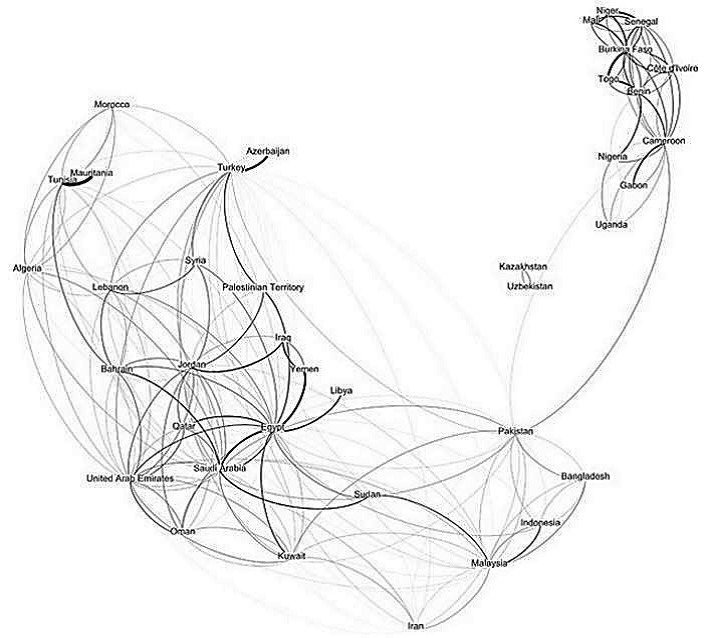
Co-authorship of scientific publications has always been used as one of the most common indicators to evaluate the pattern of global STI collaboration. Plume (2011) in his article, for example, dealt with the issue of collaborative pattern among OIC countries based on their jointly authored scientific papers from 2004 to 2008 and eventually a collaboration map amongst OIC members is developed as part of his findings. Relationship between two countries is represented by their proximity with each other and the lines that connecting them (see figure 1). Countries that enjoy collaborative efforts are grouped together while those that do not are placed further apart. Meanwhile, the lines that run clockwise out of a country reflect the total output that is produced in partnership with the targeted countries – the thicker the lines, the stronger their collaborative ties and vice versa. For example, Malaysia shared a strong collaborative effort with Indonesia as indicated by their proximity on the map. However, the thick line running clockwise from Indonesia to Malaysia denotes that the nexus is stronger for Indonesia than for Malaysia (note that the line running clockwise from Malaysia to Indonesia is thinner).

Figure 1: Collaboration Map between selected OIC Countries from 2004-2008
1

Source: Plume (2001)

In addition, Plume (2011) also highlighting one critical point in his article that is scientific collaboration is frequently driven by the efforts and personalities of individual researchers, and not by governmental or international scientific organizations. This deduction was drawn upon the case of Pakistan and Cameroon where 34 out of 45 jointly authored papers among the two nations were written by Professor Muhammad Iqbal Choudhary from the University of Karachi and other co-authors from the University of Yaounde I.

  1. Recurring Issues in the Islamic World

Despite many concerted efforts to encourage it, there is a unanimous acknowledgement that STI coordination is functioning rather poorly among OIC members (Hashmi, 1983; Mehmet and Moneef, 2006; Osama, 2010). STI collaboration is not a constant endeavour and this has widened the scientific and technological gap, not only between the developed countries, but also among Muslim countries themselves. As a result, there are only nine out of 57 OIC members that can be categorised as Scientifically Developing Countries (SDCs), followed by 14 Scientifically Aspiring Countries (SACs) and 34 Scientifically Lagging Countries (SLCs) which include 20 OIC’s least developed countries (Naim, 2010).

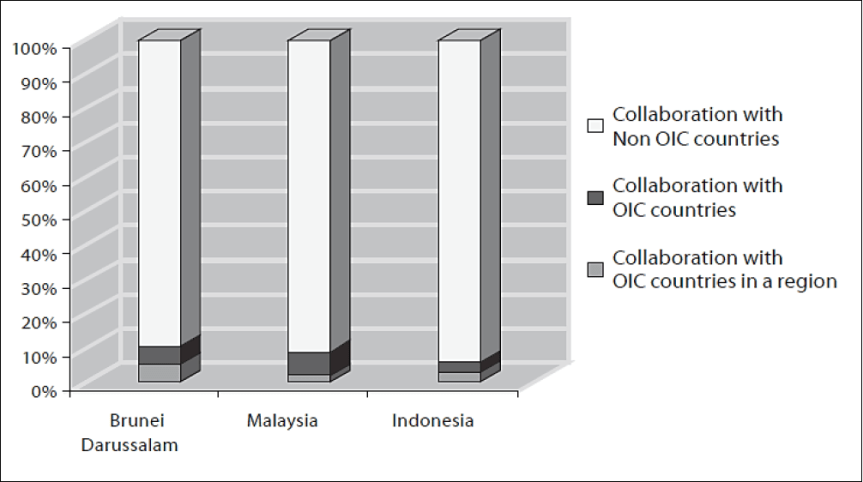
Figure 2: Percentage Collaboration with OIC and Non-OIC
2

Source: Naim and Atta-Ur-Rahman (2009)

Lack of collaboration among researchers in OIC countries is also highlighted in a study by Naim and Atta-ur-Rahman (2009). They pointed out two visible trends of research collaboration; scientist in OIC countries on average publish 80-90 per cent of all papers in collaboration with scientists in developed countries while only about 10-20 per cent of research papers are published in collaboration with scientists in other OIC countries. For example, in South East region, a total of 17,921 research papers were collectively contributed by the three OIC countries, Malaysia, Brunei Darussalam, and Indonesia during 1998 – 2007 where Malaysia leads with 70 per cent of the total number followed by Indonesia (28 per cent) and an insignificant contribution by Brunei Darussalam (Naim and Atta-ur-Rahman, 2009). The pattern of research collaboration in the region is similar to that observed in other regions with majority of the inter-institutional collaborative papers were published with scientists in developed countries. Only 1.3 to 5.4 per cent of the total papers were published in collaboration with scientists in OIC countries.

There are numbers of reasons associated with the meagre level of cooperation and coordination among the Islamic countries in the area of STI. Some of them, as argued by Osama (2010), are caused by insufficient research fund and lack of political power. Some of the issues impinging the development of STI collaboration in OIC countries are discussed further in this section.

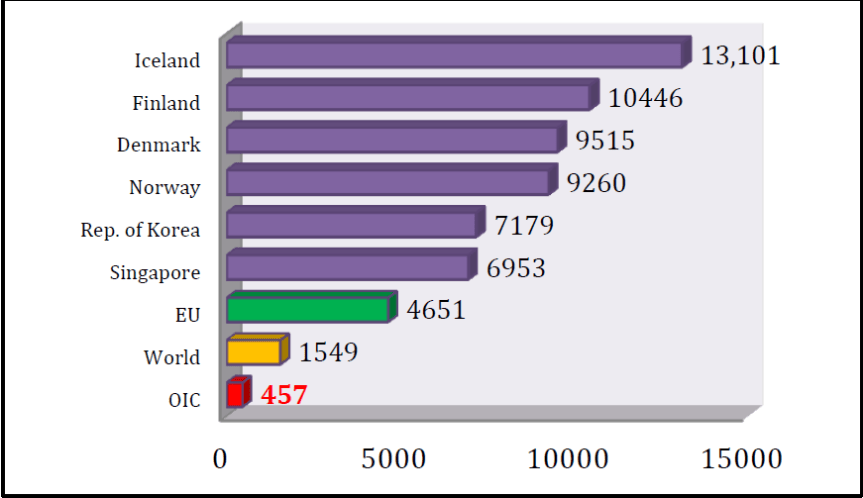
Among the most acute impediment that is faced by OIC countries is the scarcity of qualified STI personnel. Figure 3 indicates that OIC member countries, on average, fall well behind the world average in terms of researchers per million people; 457 vs. 1,549, respectively (SESRIC, 2012). The gap is much larger when compared to the European Union that has an average of 4,651 researchers per million. Large disparity among OIC member states is also observed – Tunisia has 3,240 researchers per million inhabitants while Niger has merely 10 (SESRIC, 2012). Insufficient numbers of STI personnel in OIC countries affect science and technological activities such as research and this condition will eventually limit the prospect of STI collaborations in OIC.

Figure 3: Researcher per Million People
3

Source: SESRIC (2012)

The lack of capacity to train adequate STI workforces is further worsened with the continuous outflow of skills to other nations. Countries such as Malaysia have been struggling over the past few years to retain and to attract back their talents. The World Bank (2011) estimated about one million Malaysians diaspora are currently working and/or residing in all over the world. The numbers of émigrés’ is reported to have quadrupled over the last three decades and Singapore alone absorbs 57 percent of the entire diaspora, with most of the remainder residing in Australia, Brunei, United Kingdom and United States (World Bank, 2011). Some of the factors which influence their decisions to migrate include better economic prospects, greater opportunities for learning and research (better research infrastructures, research grants, research students etc.), and a progressive cultural environment for innovation, business start-up, and self-employment in the country of destination (OECD, 2002; Millard, 2005, quoted by Naim, 2010).

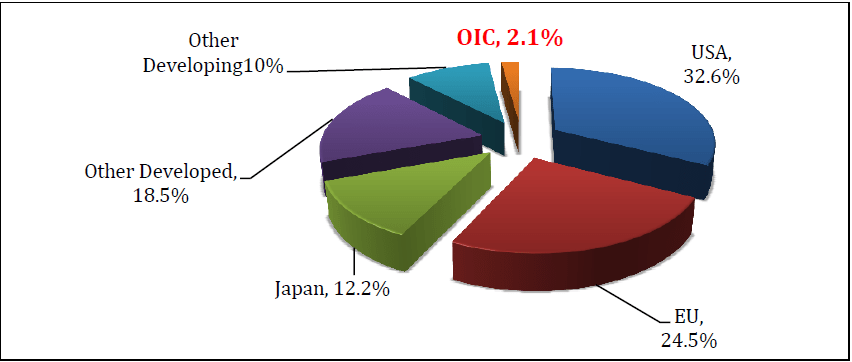
Another major hurdle facing OIC scientific smart-partnership is the availability of funding as mentioned earlier in this section. Financial support for scientific activities is relatively limited if not completely lacking in some South-South countries (Osama, 2008) including those in OIC and this impedes the feasibility of any collaborations. Current report pertaining to global R&D expenditures shows that the OIC countries account for only 2.1% of the world total Gross Expenditures on R&D (GERD) (see Figure 4). Without ample funds, multi- or trans-national collaboration in STI is hardly viable especially for the least developed economies.

Figure 4: GERD percentage of the World
4

Source: SESRIC (2012)

Lack of political power and commitment among OIC member states present another counter-productive attitude which will subsequently compromise any cooperative endeavours. During its chairmanship of the OIC between 2003 and 2007, Malaysia has proposed Vision 1441H, a strategic policy recommendations to revitalise Islamic countries. Among designated action plan to meet its vision is by fostering S&T collaboration among OIC nations. Every members is inspired not only to pursuit research partnership in the emerging technologies such as nanotechnology but also to share their own expertise – for example, petroleum engineering for Malaysia or water desalination for Middle East countries – through joint projects among interested parties (Vision 1441H, 2003). However, the plan is transpired to be in vain and Malaysia has expressed disappointment about the lack of commitment among OIC states (Day and Amran, 2011).

Finally, COMSTECH and STIO are also seen by the experts as being merely rhetoric in addressing the issues of STI development in Islamic countries. Professor Atta-ur-Rahman, COMSTECH’s former Coordinator-General, deemed COMSTECH to be a failure in boosting cooperation among OIC members (Sawahel, 2013). He asserted that resolutions agreed by members are not followed up by any real action. Other central figures also blame both COMSTECH and STIO for the status quo in OIC’s STI collaboration. Dr. Mohammed Ali Mahesar, incumbent Assistant Coordinator-General of COMSTECH proclaimed that the present problematic situation in OIC’s science and technological progress deserves urgent action and not hollow slogans by both parties (Sawahel, 2013).

  1. The Way Forward

Ensuring OIC’s STI collaboration prospers is one of the most profound organisational and political challenges facing the scientific community in OIC. Below are some broad recommendations that are highly relevant to OIC’s condition.

  1. Creating the political will and financial support for STI collaboration is a high priority. Political force is a powerful tool to determine a country’s strategic policies and action plans.
  1. Joint ventures among universities, research institutes, or companies within OIC member countries in research intensive sectors should be encouraged towards more effective and cost efficient R&D investments. OIC countries may also take advantage of R&D spill-overs by rapidly learning about new technologies developed in other countries and improving them, or by importing technological goods and services from their trade partners.
  1. It is imperative to learn from other’s success. In this connection, intra-OIC networking opportunities could be facilitated through projects, similar to the Framework Programmes of the European Union, to support research and technological development in the Islamic world and to promote joint research initiatives among the member countries (SESRIC, 2012). One of the main objectives of the Framework Programme is to make Europe the leading world forum for science and technology by supporting co-operation between industries, research centres, and public authorities both across the EU and with the rest of the world (Europa, 2010).
  1. Encouraging and facilitating scientists’ mobility across regions is crucial in the process of internationalisation of scientific community. By engaging one another, OIC’s scholars and scientists will be able to benchmark themselves by learning best practices and consequently improve the quality of STI personnel.

  1. Conclusion

In developing and harnessing STI collaborations, it is vital for the Islamic world to adapt to new situations in a rapidly changing world and to react positively in response to the advancement of STI. Problems within OIC’s collaboration must be handled wisely to prevent negative interferences. Development plans, programmes and policies in the OIC member countries should also be geared to improve the effectiveness of existing collaborative programmes. At the same time, OIC should start building new smart-partnership and networks both intra-OIC and outside OIC blocks. On the whole, collaboration between countries in the Islamic world is important if OIC is to benefit from STI. The needs and strengths of STI key actors i.e. governments, academia, industries, and societies should be integrated and taken into considerations in order to optimise the outcome of any collaborative efforts.

Reference

Azmi D. (2013). High-speed brain drain?. The Star Online. Retrieved from:

http://thestar.com.my/columnists/story.asp?file=/2013/3/3/columnists/contradictheory/12769860&sec=contradictheory

COMSTECH. (2012). Retrieved from: http://comstech.org/default.aspx

COMSTECH. (n.d.). Brief Report on Science, Technology and Innovation Organization (STIO).

Retrieved from: http://www.comstech.org/docs/14thGA/STIO_Report%20(English).pdf

Day, N. and Amran Muhammad. (2011). Malaysia: The Atlas of Islamic-World Science and

Innovation Country Case Study No. 1.

Europa. (2010). Retrieved from:

http://europa.eu/legislation_summaries/research_innovation/general_framework/i23026_en.htm

Global Science and Innovation Forum. (2006, October). A Strategy for International

Engagement in Research and Development [PDF document]. Retrieved from: http://www.dti.gov.uk/files/file34726.pdf

ISESCO. (n.d.). Retrieved from:

http://www.isesco.org.ma/index.php?option=com_k2&view=item&layout=item&id=56&Itemid=83&lang=en

MOSTI. (2012). Malaysia and Mozambique Sign MoU on Science and Technology Cooperation.

Retrieved from:

http://www.mosti.gov.my/index.php?option=com_content&view=article&id=2469%3A16-august-2012-malaysia-and-mozambique-sign-mou-on-science-a-technology-cooperation-&catid=133%3Anews-highlights&Itemid=446&lang=en

Naim, S. T. K. (2010). OIC Member States – The Road to a Knowledge Economy [PDF

Document]. Retrieved from http://www.visbdev.net/visbdev/fe/Docs/Contrasting_Innovation_Systems

Naim S. T. K and Atta-ur-Rahman. (2009). Mapping Scientific Research in Member  States of

The Organization of Islamic Countries. Retrieved from:

http://unesdoc.unesco.org/images/0018/001831/183175e.pdf

Osama A. (2013, April 14). Islam Analysis: Do or die for OIC science cooperation. SciDev.Net.

Retrieved from: http://www.scidev.net/en/science-and-innovation-policy/opinions/islamanalysis-do-or-die-for-oic-science-cooperation.html

Osama A. (2010, September 7). Islam Analysis: Promoting Scientific Collaboration. SciDev.Net.

Retrieved from: http://www.scidev.net/en/opinions/islam-analysis-promoting-scientific-collaboration.html

Osama, A. (2008, May 14). Opportunities and Challenges in South-South Collaboration.

SciDev.Net. Retrieved from: http://www.scidev.net/en/policy-briefs/opportunities-and-challenges-in-south-south-collab.html

Plume, A. (2011). A Rebirth of Science in Islamic Countries? Research Trends. Retrieved from:

http://www.researchtrends.com/issue21-january-2011/a-rebirth-of-science-in-islamic-countries/

Royal Society. (2010, June). A new golden age? The Prospects for Science and Innovation in the

Islamic World [PDF Document]. Retrieved from: http://royalsociety.org/uploadedFiles/Royal_Society_Content/policy/publications/2010/4294971224.pdf

Sawahel, W. (2013, February 25). Islam States Under Fire for ‘Empty Promises’ on Science.          SciDev.Net. Retrieved from: http://www.scidev.net/en/news/islamic-states-under-firefor

empty-promises-on-science-1.html

Sawahel, W. (2012, September 2). New Islamic Collaboration on Higher Education and

Research. University World News. Retrieved from: http://www.universityworldnews.com/article.php?story=20120901091940778

SESRIC. (2012). Current Stance of Science and Technology in OIC Countries [PDF document].

Retrieved from: http://www.sesrtcic.org/files/article/436.pdf

The World Bank. (2011). Malaysia Economic Monitor: Brain Drain [PDF Document]. Retrieved

from: http://www.wds.worldbank.org/external/default/WDSContentServer/WDSP/IB/2011/05/02/000356161_20110502023920/Rendered/PDF/614830WP0malay10Box358348B01PUBLIC1.pdf


Technology incorporate for Nano-Transistor

Ms. Sheetal Rana

sheetal.varsha@gmail.com

Department of Electrical Engineering, V.J. T.I Matunga,

Mumbai, Maharashtra, India


Abstract –

In this paper, the major research efforts for nano-electronics by studying proposed technologies for replacing the transistor is consider.  The limitation of conventional transistor has been demonstrated and new advance technology is proposed. The electronics industry is dependent on the ever-decreasing size of lithographic transistors; this scaling cannot be continuously undefined. Nano-electronics (circuits components are built with the scale of 10nm) seem to be the most promising Technology to lithographic based Transistor. Scaling of transistor gate lengths will be limited by off-state leakage current. Future transistor scaling will require the incorporation of new device structures, Carbon nano tube Field effect transistor (CNTFET) is one of the most promising device. In this paper technique to adjust the threshold voltage (Vt) of CNTFET and off state leakage current (IOFF) has been discussed. The symmetric CNTFET has been adopted due to its inherent robustness to short-channel effects and improved current drive capability. Advantages of using alternative channel materials to facilitate scaling are mentioned.

DESIGN OF HIGH PERFORMANCE BAUGH WOOLEY MULTIPLIER USING COMPRESSORS

*T.MOUNIKA                     **MR.T.SAMMAIAH                   ***MR.G.BABU


                *Pg Scholor Dept Of Ece Vaagdevi College Of Engineering Warangal

**Asso Professor Dept Of Ece Vaagdevi College Of Engineering

*** Asso Professor Dept Of Ece Vaagdevi College Of Engineering


Abstract

A multiplier is one of the key hardware blocks in most digital and high performance systems such as FIR filters, digital signal processors and microprocessors etc. With advances in technology, many researchers have tried and are trying to design multipliers which offer either of the following- high speed, low power consumption, regularity of layout and hence less area or even combination of them in multiplier. Thus making them suitable for various high speed, low power, and compact VLSI implementations. However area and speed are two conflicting constraints. So improving speed results always in larger areas. So here we try to find out the best trade off solution among the both of them.To achieve speed improvements Baugh Wooley Multiplication technique used for signed multiplication Generally as we know multiplication goes in three basic steps. Partial product generation, reduction and final stage is addition. Hence in this paper we have first tried to design different adders and compare their speed and complexity of circuit i.e. the area occupied. And then we have designed Wallace tree multiplier then followed by Conventional, proposed Wallace multipliers and have compared the speed and Power consumption in both of them.

Optimization Techniques for Low Power VLSI Design

Kavya R

PG Student [VLSI Design and Embeded Systems], Dept. of ECE, Sri Jayachamarajendra College of Engineering, Mysuru, Karnataka, India


Dr. S.Gayatri

Assistant Professor, Dept. of, ECE

Sri Jayachamarajendra College of Engineering,

Autonomous under VTU, Mysore, Karnataka, India

Abstract– With shrinking technology, as power density (measured in watts per square millimetre) is raising at an alarming rate, power management is becoming an important aspect for almost every category of design and application. Reducing power consumption and over all on chip power management are the key challenges in deep sub micro meter nodes due to increased complexity.


Power management needs to be considered at very early design stages. Also low-power techniques should to be employed at every design stage, from RTL (Register Transfer Level) to GDSII. This survey paper describes the various strategies, methodologies and power management techniques for low power VLSI circuits. Future challenges that must be met by designers to designs low power high performance circuits are also discussed. State-of-the-art optimization methods at different abstraction levels that target design of low power digital VLSI circuits are surveyed.

Keywords— Optimization, low power, power dissipation, power management

TRAFFIC CONTROL SYSTEM FOR AMBULANCE CLEARANCE AND STOLEN VEHICLE DETECTION USING ARM 7 ARCHITECTURE

Miss R.PRAVALLIKA. Mr. L. RAVI CHANDRA

M.Tech (ECE) from CHALAPATHI I INSTITUTE OF ENGINEERING AND TECHNOLOGY 

Assistant Professor, Department of Electronics and Communication Engineering, CHALAPATHI I INSTITUTE OF ENGINEERING AND TECHNOLOGY, Andhra Pradesh State, India.


ABSTRACT:

This present day the road accidents in brand new urban areas are elevated to uncertain level. The loss of human lifestyles because of accident is to be refrained from. Site visitors congestion and tidal go with the flow are main information that purpose prolong to ambulance. To bar loss of human lifestyles as a result of accidents we introduce a scheme referred to as ITLS (wise traffic mild system). The principal theme at the back of this scheme is to provide a smooth go with the flow for the emergency automobiles like ambulance to arrive the hospitals in time and thus minimizing the lengthen induced with the aid of traffic congestion. The suggestion in the back of this scheme is to implement ITLS which would manipulate mechanically the traffic lights within the path of the ambulance. The ambulance is controlled via the manage unit which furnishes enough route to the ambulance and in addition controls the site visitors mild in line with the ambulance region and for this reason achieving the health facility safely. The controller identifies the region of the accident spot through the sensor systems in the vehicle which determined the accident and as a consequence the controller walks through the ambulance to the spot. This scheme is totally computerized, consequently it finds the accident spot, controls the site visitors lights, serving to to reach the clinic in time.

Keywords:-RFID, GSM, ARM 7, ambulance vehicle, stolen vehicle, congestion control, traffic junction

Impact of Oil And Non-Oil Export on Nigeria Economy By

Ajayi Olaniyi Adewale

Department of Educational Foudation and Management.

Ekiti State University, Ado –Ekiti, Ekiti State, Nigeria

 ABSTRACT

This paper examined the impact of oil and non-oil export on Nigerian economy. It reviewed literature on the macroeconomic policy and the relative impact of oil and non-oil export on the economy. It also reviewed the contribution of both oil and non-oil export on Nigeria Gross Domestic Product over the years and compared the contribution of both oil and non-oil export on Nigerian economy. This was necessitated by the need to understand the contribution of both oil and non-oil export on Nigerian economy. The study concluded that oil has greater contribution to the economic growth of Nigeria due to the neglect of agriculture since the beginning of oil boom.

Keywords: Agriculture, Economy, Macro-economic Policy, Non- Oil, Oil

A NOVEL METHOD OF HOME ENERGY MANAGEMENT SYSTEM USING MICROCONTROLLER FOR INCREASING LOAD FACTOR

Author

Mr. Nikhil S. Batra

Student, M.Tech (I.P.S.)

Department of Electrical Engineering, TGPCET, Nagpur (MH), India

Co-Author

Dr. Harikumar Naidu

Guide and Head

Department of Electrical Engineering

TGPCET, Nagpur (MH), India


ABSTRACT: Demand side management encourages the users in a smart grid to shift their electricity consumption in response to varying electricity prices. In this paper, we propose a distributed framework for the demand response based on cost minimization. Each user in the system will find an optimal start time and operating mode for the appliances in response to the varying electricity prices. We model the cost function for each user and the constraints for the appliances. We then propose an approximate greedy iterative algorithm that can be employed by each user to schedule appliances. In the proposed algorithm, each user requires only the knowledge of the price of the electricity, which depends on the aggregated load of other users, instead of the load profiles of individual users. In order for the users to coordinate with each other, we introduce a penalty term in the cost function, which penalizes large changes in the scheduling between successive iterations. Numerical simulations show that our optimization method will result in lower cost for the consumers, lower generation costs for the utility companies, lower peak load, and lower load fluctuations. [1]

Keywords— advanced metering infrastructure, appliance scheduling, demand response, distributed optimization, time-dependent pricing, Walrasian equilibrium, welfare theorem.