Relevance of ESP in the Present Educational Scenario

SAVITA

Assistant Professor in English

T.R.P.G.  Girls College, Sonipat

ABSTRACT

           English Language Teaching (ELT) can be broadly divided into English for General Purpose (EGP) and English for Specific Purposes (ESP).  The teaching of English language at schools, colleges and Universities comes under English for General Purposes.  ESP is meant for Occupational Purpose (EOP), English for Academic Purposes (EAP) and English for Science and technology (EST). In the rapidly changing present world when teaching English for Specific Purposes (ESP) has grown to become one of the most prominent areas of teaching English as a Foreign Language (EFL), ESP practitioners face new opportunities and challenges.  For non-English speakers the ability to speak more than one language (English along with the Mother Tongue) become imperative to assess the language abilities of second language learners.  In the classroom, assessment can be seen as an ongoing process, in which the teacher uses various tools to measure the progress of the learners. Among those tools are portfolios, self-assessment, and, of course, tests. If assessment can be seen as a movie, since it is a continuous process, then a test is a still photographs; it gives a picture of the learner’s language at a particular point in time.  If used properly, these tools can help the teacher develop a full picture of the learner’s progress.  It is important to note that all type of testing and assessment are important in gathering information about student’s abilities.

KEY WORDS:

Rhetorical, pedagogically, methodology, disseminate, restricted, and sophisticated.

INTRODUCTION

            Tom Hutchinson and Alan Waters (1987: 53) have pointed out the differences between English for Specific Purposes (ESP) and English for General Purposes (EGP) in their book, English for Specific Purposes: A Learning Centred Approach.

            On the face of it, ESP differs from EGP in the sense that the vocabulary, structures and the subject matter relate to a particular field or discipline in the former.  For example, a lawyer writing a brief, or a diplomat preparing a policy paper needs his jargon, ESP courses make use of vocabulary and tasks related to the specific field that one belongs to.  So a course in ESP is designed to meet the specific professional or academic needs of the learner, creating a balance between educational theory and practical considerations. English for Specific Purposes (ESP) course, however, has instruction that builds on EGP and is designed to prepare the students for the English used in specific disciplines, vocations or professions to accomplish some specific purposes.   ESP makes use of the methodology and activities of the discipline it serves, and is centered on the language appropriate to these activities. As Tom Hutchinson and Alan Waters rightly put it. “ESP is an approach to language teaching in which all decisions as to content and method are based on the learner’s reason for learning “(1987:19).

            In this connection, it is interesting to note Tony Dudley-Evans (1987: 1-9) explanation that ESP may not always focus on the language of one specific discipline or occupation, such as English for Law or English for Physics.  University instruction that introduces students to common features of academic discourse in Sciences or Humanities, is frequently called English for Academic Purposes. (EAP) is also ESP.

DEFINITION OF ESP

            Peter Strevens (1988-1-13) definition makes a distinction between four absolute and two variables characteristics.

  1. Absolute Characteristic

ESP consists of English language teaching which is:

  • Designed to meet specified needs of the learner:
  • Related in content (i.e. in its themes and topics) to particular disciplines, occupation and activities.
  • Centered on the language appropriate to those activities in syntax, lexis , discourse semantics, etc and analysis of this discourse;
  • In contrast with General English.
  1. Variable Characteristics:

ESP may be, but is not necessarily.

  • Restricted as to the language skills to be learned )e.g. reading only);
  • Not taught according to any pre-ordained methodology.

THE MEANING OF THE WORD “SPECIFIC “  IN ESP.

THE MEANING OF THE WORD “SPECIFIC’ IN ESP

            The word “specific” in ESP refers to “specific in language” and “specific in aim”.   A simple clarification that can be made here is “specific in language” and “specific in aim” are viewed as similar concepts although they are two entirely different notions. George Perren (1974) noted that confusion arises over these two notions. Ronald Mackay, and Alan Mountford (1978: 4) have stated that the only practical way in which we can understand the notion of specific language is as a restricted repertoire of words and expressions selected from the whole language because that restricted repertoire covers every requirement within a well defined context, task or vocation. On the other hand “specific in aim” refers to the purpose for which the learners learn a language, not the nature of the language they learn.  Consequently, the focus of the word “specific” is ESP is on the purpose for which the learners learn and not on the specific jargon or registers they learn.  As such, all instances of language learning might be considered ESP.

ORIGIN OF ESP

            Tom Hutchinson and Alan Waters (1987: 6-8) succinctly identified three key reasons that are common , to the emergence of all ESP; the demands of a Brave New World,  a revolution in linguistics and the focus on the learner.  They noted that two key historical periods breathed life into ESP.  First, the end of the Second World War brought with it an age of enormous and unprecedented expansion in scientific, technical and economic activity on an international scale.  For various reasons, most notably the economic power and technological advancement of the United States in the Post-War World Scenario, English has become an important language for global affairs.   Secondly, the oil crisis of the early 1970s resulted in Western money and knowledge flowing into the oil-rich countries.  The medium of this knowledge has been English.  The general effect of all this development is to exert pressure on the language teaching profession to deliver the required goods.

TYPE OF ESP

            David Carver (1983:  131-137) identified three types of ESP, English as a Restricted Language (ERL). English for Academic and Occupational Purpose (EAOP), and English with Specific Topics (EST).  The language used by air traffic controllers or waiters are example of English as a restricted language.

            Ronal Mackay and Alan Mountford clearly illustrate the difference between the restricted language and the language with this statement (1978:   4-5).

The language of international air-traffic control could be regarded as ‘special’ in the sense  that the repertoire required by the controller is strictly limited and can be accurately determined situationally, as might be the linguistic needs of a Dining-room waiter or air-hostess.  However, such restricted repertoires are not language just as tourist phrase book is not grammar.  Knowing a restricted ‘language’ would not allow the speaker to communicate effectively in a novel situation, or in contexts outside the vocational environment (1978: 4-5).

            The second type of ESP is English for Academic and Occupational Purposes. David Carver 1983: 131-137) indicates that this English should be at the heart of ESP although he refrains from developing it any further. Tom Hutchinson and Alan Waters (1987: 16-18) on the other hand have developed a “Tree of ELT” in which the subdivisions of ESP are clearly illustrated.  ESP is broken down into three branches.  English for Science and Technology (EST), English for Business and Economics (EBE), and English for Social Studies (ESS).  Each of these subject areas is further divided into two branches.  English for Academic Purpose (EAP) and English for Occupational Purpose (EOP). An Example of EOP for the EST branch is “English for Technicians” whereas an example of EAP for the EST branch is “English for Engineering Studies.”

CHARACTERISTICS OF ESP COURSES

            The characteristics of ESP courses identified by David G. Carter (1981: 167) and discussed here.  He states that there are three features common to ESP courses.

(a)        Authentic Materials;

(b)        Purpose-Related Orientation; and

(c)        Self-Direction.

These features of ESP courses are indeed useful in attempting to formulate one’s own understanding of ESP. If one revisits Tony Dudley-Evams (1998: 8-29) ) claim that ESP should be offered at an intermediate or advanced level, the use of Authentic Learning Materials is entirely feasible.  The use of authentic content materials, modified or unmodified inform, is indeed a feature of ESP, particularly in self-directed study and research task. For Language Preparation, For Employment in Science and Technology, a large component of the student evaluation is based on an independent study of assignment in which the learners are required to investigate and present an area of interest. The students are encouraged to conduct research using a variety of different resources, including the Internet.

FORMULATION OF APPROACHES TO ESP

            The approaches in ESP are formulated on the basis of five conceptions in ESP, John Malcolm Swakes (1990) uses the term “enduring conceptions” to refer to the following:

  1. Authenticity
  2. Research –Base
  3. Text
  4. Need
  5. Learning Methodology

            The main consideration in ESP according to Bernard Coffey (1984) is that of authenticity. It includes authentic texts and authentic tasks. Swales, in explaining what is meant by the research-base of ESP , reviews the ESP literature and observes a trends towards papers that they rely on some kind of data-based (textual or otherwise). In addition, Peter Strevens () 1980: 105-121) alludes to the importance of the “specific language” of ESP in Functional English’s’.  That is, only those items of vocabulary, pattern of grammar, and functions of language which are required by the learner’s purposes are included in ESP. Peter Strevens also alludes to the importance of learner in discussions of ESP.  Finally, ESP draws on the methodology or learning theories which are appropriate to the learning teaching situation.   In other words, Specific Purpose Language Teaching (SPLT) is not in itself a methodology.  According to Peter Strevens (1988: 39-44) this characteristic of  ESP makes the materials both more relevant and  more interesting to the student due to the varied and ingenious exploitation of opportunities provided by ESP Settings.  These five conceptions have dual and potentially origins in both the real world (the “target situation” of the ESP pedagogy. It is therefore crucial to discuss each of them in an attempt to survey the development and directions of ESP as it has evolved. Such a survey will identify five major approaches to ESP, each of which has focused on one of the major conceptions and thus contributed to the growth of ESP itself.  However, it is also evident that as each approach to ESP has evolved:  its particular enduring conception has also evolved, bring ESP practitioners towards their current thinking in each of the five areas.

The five major approaches to ESP are:

  1. Skills-Based Approach
  2. Register Analysis Approach
  3. Discourse Analysis Approach.
  4. Learning – Centered Approach
  5. Communicative Approach

            Sill-Based Approach to ESP has enlarged the conception of authority in two principal ways.  First, authenticity of text is both broadened to include texts other than written texts and narrowed to differentiate between different types of texts generated by each skill.

            The second conception is that of the Register Analysis Approach. It has developed out of the need for a research based for ESP, Michael A.K. Halliday, Amos McIntosh and Peter Strevens (1964: 266) are the first scholars who have pointed out the importance of, and the need for, a research base for ESP, set out in one of the earliest discussion of ESP.

            The reaction against Register Analysis is the early 1970s concentrated on the concept of text rather than thus the lexical and grammatical properties of register.  The approach is clearly set out by two of its principal advocates. Allen and Widdowson as follows:

            One might usefully distinguish two kinds of ability which an English course of ESP level should aim at developing.  The first is the ability to recognize how sentences are used in the performance of acts of communication, or the ability to understand the rhetorical functioning of language in use.  The second is the ability to recognize and manipulate the formal devices which are used to combine sentences to create continuous passage of prose.  One might say that the first has to do with rhetorical coherence of discourse, the second with the grammatical cohesion of text (1974.

The attention to strategy analysis give rise to new generation of ESP materials which is founded as much on conceptions of learning as one conceptions of language or conceptions of need. As Tom Hutchinson and Alan Waters (1987: 14) have rightly put it.

            Our concern in ESP was no longer with language use although this would help to define the course of objectives.  The concern was rather with language learning. We cannot simply assume that describing and exemplifying what people do with language would enable someone to learn it…… A truly valid approach to ESP would be based on an understanding of the processes of language learning (1987: 14).

            Tom Hutchinson and Alan Waters called this approach the Learning-Centered Approach and stressed the importance of a lively, interesting and relevant learning teach style in ESP materials.  The first ESP materials to adopt a conscious model of learning were probably those of the Malaysian UMEPP Project in the late 1970s.  The approach has received its widest publicity in the papers and materials of Hutchinson and Waters, and more recently, Mary Waters and Alan Waters (1992: 264-273)

            The recent approach that emerges from the concept of authenticity in the development of ESP is that of Communicative Approach. The first generation of ESP materials that appeared in the mid-1960s took skills as their principal means of selection, arguing that ESP teaching materials.  The definition of skill is somewhat broad, establishing little more than the ranking of the four usual language skills of Reading, Writing, Listening and Speaking (LSRW). Almost all materials course of collection of specialist texts with accompanying comprehension and language exercises. As R.A. Close (1972) rightly argues that the conception of authenticity is central to the approach taken to develop language skills.

In the rapidly changing present world when teaching English for Specific Purposes (ESP) has grown to become one of most prominent areas of teaching English as a Foreign Language (EFL), ESP practitioners face new opportunities and new challenges. For non-English speakers the ability to speak more than one language (English along with the Mother tongue) become imperative to assess the language abilities of second language learners. In the classroom, assessment can be seen as an ongoing process, in which the teacher uses various tools to measure the progress of the learners.  Among those tools are portfolios, self-assessment, and, of course tests. If assessment can be seen as a movie, since it is a continuous process, then a test is a still photographs; it gives a picture of learner’s language at a particular point in time.  If used properly, these tools can help the teacher develop a full picture of the learner’s progress.  It is important to note that all types of testing and assessment are important in gathering information about student’s abilities.

 THE NEED FOR RESEARCH ESP TESTING

            The rapid expansion in ESP teaching is not accompanied by a similar increase in EST testing.  Perhaps, the earliest attempts at testing ESP date back to the time when the ELTS were launched.  At that time, in 1980, there had been little or no research into the validity of giving academic English proficiency tests based on different subject areas.  John Charles Alderson (1981) in a discussion on ESP testing questioned many of the principles behind this approach.  He agreed that since different University Departments placed different demands on their students, there are some good arguments for including ESP tests in an ESP test battery.  He felt that a comparison between performance on academically specific tests and the communicative needs of the relevant area might provide useful diagnostic information.  He also accepted that ESP tests would have really high face validity for both content-area students and University Lecturers.  However, he questioned whether it was possible to produce a test which would be equally suitable for students in all branches of a discipline.  For example, he wondered whether it would be possible to have a test for Engineers and whether they would have the same level of appropriacy for all Engineers, regardless of their specialization.  This highlights one of the main difficulties with English for Specific Academic Purposes (ESAP) testing.

Another difficulty with ESP tests is delineated in Alderson’s question “How specific is specific?” (1981). Since at that time it is usually impossible to give each student a test which is tailor-made for  unique set of circumstances,  any ESP test has to be a compromise; and, in case of EAP , where many disciplines would be considered less than one broad subject area.  These areas would cover so wide a field that some students would not fit into any of the groupings.  John Charles Alderson (1981: 133) cited the example of a student in urban studies who would not know whether to choose a test in science or in social studies.

Over the past two decades, there have been several studies on the testing approval to be employed to test English proficiency.  Three articles by John Charles Alderson and Alexander Hugh Urquhart (1983) aroused considerable interest and led to several follow-up studies.  These articles described three studies carried out with students attending English classes in Britain in preparation for British Universities.

In each. John Charles Alderson and Alexander Hugh Urquhart (1982: 192-204) compared students scores on reading texts related to their own field of study with those on texts in other subject areas.  The student’s scores on the modules were found to be somewhat contradictory.  On one hand, for example, science and Engineering students taking the technology module of IELTS were found to be facing better than the Business and Economics students as well as the Humanities students, who took the same test.  On the other hand, the Business and Economics Students fared no better than the Science and Engineering group on the Social Studies module. Alderson and Urquhart conclude that background knowledge has some effect on test scores, but that is not always consistent, and that their future studies should take into account linguistic proficiency and other factors as well.

RESEARCH QUESTIONS AND HYPOTHESES.

T          he present study is an attempt at answering a few question that pertain to the student’s performance on LSRW skills in ESP (English Language for Specific Purpose) contexts.  The objective of the investigation can be expressed in the following research question:

  1. What are the student’s needs to learn Technical English keeping inn view the global context.
  2. Is there a correlation existing between the learner’s need and the syllabus which is being used to teach Technical English?
  3. What is the significance of the existing syllabus and is there is there a need for significant change?
  4. What is the role of ESP course designer and materials producer in this context?

All these questions can be answered in terms of the following hypotheses.

H1        Majority of the students will have stronger needs for learning Technical English given to the global context.

H2        There has been a negative correlation between the syllabus and the learner’s needs.

H3        The change required in the existing syllabus are hence utmost significance.

H4        The role of the curriculum developer in an age of enormous and unprecedented expansion in scientific and technical knowledge is crucial to language – learning.

            Education at present has recognized the need for making use of the latest technology for better results. This could be seen for making use of the latest technology for better results.  This could be seen in the introduction of the language labs in the Engineering Colleges to impart various language and allied skills to the prospective profession also.  Still, it is the textbook which is supposed to carry on the aims and objectives of the syllabi.  Hence a critical appraisal of the textbooks used in different Universities becomes imperative.

THE ROLE OF TEXTBOOK IN THE ENGLISH CLASSROOM

            English language instruction has many important components but the essential constituents in many English classrooms and programmers are the textbooks and instruction materials that are often used by language instructors.

            As Tom Hutchinson and Ennice Torrers suggest;

            The textbook is an almost universal element of (English Language) teaching.  Millions of copies are sold every year, and numerous aids projects have been set up to produce them in various countries.  No teaching-learning situation, it seems, is complete until it has its relevant textbook (1994: 315)

IMPORTANCE OF TEXT ANALYSIS

            Although handling the text in the classroom is time-consuming, text responses complement the data, providing more varied and detailed information about what respondents think, feel, and do.  Text analysis for Surveys is that it gives the ability to analyses respondent’s attitude and opinions.  As a result, one gains a clearer understanding of what the pupils likes or doesn’t like and why. When one understands what people think and feel in their own words, one can draw more reliable conclusions about their future behavior and use that predictive insight to meet needs more successfully.

            Text analysis is an interactive process enabling the teacher to know the major themes grasped by respondents, and also know how many respondents could mention at least one theme, whereby an insight into respondent’s belief, attitudes, or behaviors can be obtained.  When one works with the survey responses, one is likely to re-extract concepts and re-categorize responses using different category definitions or coding schemes, different terms or synonym definitions or different grouping of responses.  One may repeat this process several times before one is satisfied with the results

PURPOSE OF A TEXTBOOK

            A textbook is defined as a book used as a standard work for the students of a particular subject.  It is usually written specifically for a particular purpose, as a manual of instruction in any branch of study, especially as a work organized by scholars who usually have taught courses on the subject/s dealt with in a particular textbook.

TOOL USED FOR TEXT ANALYSIS OF SCHOOL SCIENCES.

            Researcher usually use two types of investigation processes. First is quantitative research, which employs numerical indicators to ascertain the relative size of a particular communication phenomenon. The second type of investigation process is qualitative research, which employs symbols and words to indicate the presence or absence of phenomena or top categorize them into different types.  Quantitative and qualitative observations provide researchers with different ways of operationalizing and measuring theoretical constructs and practical concepts.  While quantitative methods can provide a high level of measurement precision and statistical power, qualitative methods can supply a greater depth of information about the nature of communication processes in a particular research setting.

FEATURE OF QUANTITATIVE METHOD

            As Gareth Margon and Linda Simircich (1994: 315) state, the functional or positivist paradigm that guides the quantitative mode of inquiry is based on the assumption that social reality has an objective ontological structure and that individuals are responding agents to this objective environment.  As Catherine Cassell and Gillian Symon (1988: 237) have rightly put it in their article, the assumption behind the positivist paradigm is that there is an objective truth existing in the world that can be measured and explained scientifically.  The main concern of the quantitative paradigm are that measurement is reliable, valid and generalizable in its clear prediction of cause and effect.  In this connection, Mary John Smith (1998) in his book Contemporary Communication Research Method mentions quantitative research involves counting and measuring of events and performing the statistical analysis of a body of numerical data.

            The strengths of the quantitative method can be enumerates as follows:

  • According to Chava Frankfort-Nachmais and David Nachimias, the main strength of the quantitative method is stating the research problem is very specific and set terms;
  • Clear and precise specification of both the independent and the dependent variables under investigation;
  • Can follow firmly the original set of research goals, arrive at more objective conclusions,  test hypothesis and determine the issues of causality:
  • In the words of Howard Llord Balsley, achieving high levels of reliability of gathered data through controlled observations, laboratory experiments,  mass surveys,  or other form of research manipulations are possible in this method;
  • Eliminating or minimizing subjectivity of judgment is another important strength, as mentioned by Daniel Kealey and David Protheroe;
  • Allow for longitudinal measures of subsequent performance of research subjects.

WEAKNESSES OF QUANTITATIVE METHOD

            The weaknesses of the quantitative method are also noteworthy:

  • Fails to provide the researcher with in depth information on the context of the situation where the studied phenomenon occurs;
  • Lack of much control the environment where the respondents provide the answers to the questions in the survey;
  • Outcomes are limited to only those outlined in the original research proposal due to closed type questions and the structured format;
  • Does not encourage the evolving and continuous investigation of a research phenomenon.

The present research, however, has employed both the methods; hence it has benefitted from the strength both these methods and tried to overcome for limitations.

FEATURES OF QUALITATIVE METHOD

            As Gareth Morgan (1980 491-500) states, qualitative research shares the theoretical assumption of the interpretative paradigm, which is based on the notion that social reality is created and sustained through the subjective experience of people involved in communication.  In this connection David Fryer throws more light on qualitative research.  They are concerned in their research with attempting to accurately describe, decode and interpret the meaning of phenomena occurring in their normal social contexts.  Further he extends his statement to say that the researchers operating within the frame work of the interpretative paradigm are focused in investigating the complexity, authenticity, contextualization, shared subjectively of the researcher and the researched, and minimization of assumption (1991: 3-6)

STRENGTH OF QUALITATIVEW METHOD

The strengths of the qualitative method are as follows:

  • Obtain a more realistic feel of the world that cannot be experienced in the numerical data and statistical analysis used in quantitative research;
  • Possess flexible ways to perform data collection, subsequent analysis and interpretation of collected information.
  • Robert Bogdan and Steven J Taylor provide a holistic view of the phenomena under investigation in their book Introduction to Qualitative Research Methods (1975);
  • Able to interact with the research subjects in their own language and on their own terms as stated by Jerome Kirk and Mare Miller;
  • Has descriptive capability based on primary and unstructured data.

WEAKNESSES OF QUALITATIVE METHOD

  • Departs from the original objectives of the research in response to the changing nature of the context, as stated by Catherine Cassal and Gillian symon;
  • Arrives at different conclusions based on the same information depending on the personal characteristics of the researcher;
  • Not up to the work in investing causality between different  research phenomena;
  • Has difficulty in explaining the difference in the quality and quantity of information obtained from different respondents and arrives at different , non consistent conclusions;
  • Requires a high level of experience from the researcher to obtain the targeted information from the respondents;
  • Lacks consistency and reliability because the researcher can employ different probing techniques and the respondent can choose to answer only a few queries and ignore others.

QUANTITAIVE VERSUS QUALITATIVE TEXT ANALYSIS

                        As William Paul Vogt (1993: 1993 183-184) has opined there are two ways in which the social scientists distinguish quantitative from qualitative analyses.  On the one hand, qualitative analyses can be differentiated from quantitative analyses according to the level of measurement of the variables being analyzed.  Gilbert Shapiro and John Mark off (1977)argue, for example ,  that indiscriminate use of this quantitative – qualitative distinction has often resulted in the label,  qualitative content analysis ,  being not only aptly applied to rigorous analyses of categorical data but also inappropriately applied to haphazard   ( and thus unscientific) analyses of such data.  On the other hand, social scientist also distinguish their methods of quantitative or qualitative.  In this connection, it is interesting to note Berg’s explanation on quantitative methods, which is more deductive, statistical, and confirmatory, qualitative methods are more inductive, non statistical and exploratory.  It i9s only according to this latter distinction that quantitative text analysis has been applied to this study (1995: 2-4)

CONCLUSION

            The present study has employed both quantitative and qualitative methods, endeavoring to use the strengths of each method.  While the quantitative method helped the research to involve a good number of subjects and the various aspects of English Teaching in the Universities selected for study, the qualitative method has allowed the researcher to make an in-depth analysis of the responses of the subjects.  I has also been observed that the targets group turned out to be a suitable subject for qualitative analysis as they hail from professional colleges. They displayed a keen perception on the strengths and weaknesses of their system and provided the researcher a sharp analysis of various aspects of the teaching of English in their colleges.

            Keeping in view, the strengths and weaknesses of the quantitative and qualitative methods, a questionnaire was prepared, and the opinion of the students was obtained. The questionnaire contains questions related to their parental background, the Board of Examination through which they had taken their school leaving certificates, etc.  Students were asked to express their views on textbooks prescribed for study in terms of content, form, presentation and other aspects such as grammar and the four skills important they need.

Therefore, any thesis does not stop at the point of being mere critique of the status quo; in addition to critiquing the existing scenario of teaching Technical English at Professional level, the thesis also makes a modest attempt at suggesting measures in the last chapter to better the status quo.  The suggested measures are based not on the theoretical speculation but on practical experience and the prolonged experiments and evaluation conducted for the technical students at Acharya Nagarjuna University College of Engineering and Technology, Jawaharlal Nehru  Technological University (Kakinada), Koneru Lakshmaiah University and Vignan University, Guntur.

References:

  1. Carson , J.E 1994. Reading –Writing connections: Towards a Description for Second Language Learners in ‘Second Language Writing’. Edited by Barbara Kroll.cup.pp. 88-107.
  2. Stotsky .S.1983. Research on Reading –Writing Relationships: A synthesis and suggested directions. In ‘Language Arts’, 60, 627-642.
  3. Anthony, Laurence, 1997. ESP. What does it mean? Retrieved from http://interserver.miyazaki-med ac.JP/-cue/PC/anthony.htm on April 6, 2000.
  4. ‘The sociolinguistic context of English language teaching in India’ in Shirin, Kudchedkar (Ed.) reading in English language teaching in India, Chennai: Orient Longman, PP. 37-66.
  5. Foreigners and Foreign languages in India: A sociolinguistic history. New Delhi : Foundation Books (Cambridge University, press, )
  6. Daniel, S.P.2012, An Indian Experiment of English for specific Purposes (ESP), English language teaching in India: the shifting Paradigm. New Delhi Tata MC-Grow Hills, PP. 119-125.
  7. Dudley Evans, T. and Jo St. John M.1998. Developments in English for specific purposes. Cup.
  8. Kavaliaus kiene, G. Role of Self-correction in learning ESP ‘English for Specific purposes world’, Web-based Journal, Issue 2(5), Volume 2, 2003, 8 Pages.

Dr. Savita, W/o Shakti Singh, Mobile No. 9416811500

 House No. 217/26,

West Ram Nagar, Sonipat.


Internal and External Threats to the National Security of Pakistan

Professor Han Zhongyi 1 Zain ul Abiden Malik2

  1. School of World History, Shaanxi Normal University, Xi, an China
  2. School of World History, Shaanxi Normal University, Xi, an China

Abstract:

 Pakistan individual a helpful supporter of the US has to look more pessimistic security implications than optimistic. Day by day the security condition of Pakistan is going worse. In this dangerous situation, it was complicated to describe the social protection of Pakistan. Here is a require to get rid of the fear of terrorism and extremism. Pakistan can enhance its security through adopting different way.

Keywords: Terrorism, Security, Instability


Introduction:


After 9/11 incident the terrorism become big challenge for whole world security. In new era these terrorist attacks cleared the picture of USA and whole the globe. The US blamed Osama bin Landan was involved in this terrorist activities. The Taliban had given shelter to Osama bin Landan. The USA demanded to Taliban to give him Osama bin landan if they not hand over Osama bin Landan mentally they are ready for war (Yusafzai, 2011).The Taliban refused to hand over Osama bin Landan to USA they accepted their challenge for war. USA received negative reply from Taliban so US did attack on Afghanistan on October 7, 2001. The main objective of this attack on Afghanistan was to arrest Osama bin Landan after few months of this attack, the International Security Assistance Force (ISAF) occupied big cities of Afghanistan (Farooq, 2005).The US efforts to conquer Taliban and Al –Qaeda with help of Alliance force, but they are not hundred percent successful. The Taliban did proper guerilla war against Allied forces. They conducted surprise attacks on Allied forces number of forces died in these attacks. The US did  not get great victory in afghan it was hug shocked for US leadership (Moonis,2005).The Global War on Terror (GWOT) belongings to  Pakistan’s defense atmosphere more than any additional situation in the globe. The Incident of 9/11 had brought noticeable changing in Pakistan foreign policy but also relate to Pakistan security situation. General Musharraf was supported to USA war against terrorism. This favor created by friendly relationship between two nations. Pakistan was played  major role in war against terrorism. Pakistan has worn this condition to better dealings toward follow a large sequence of issues.


Literature Review:


The attacks on World Trade Center and Pentagon separated the globe into two parts’ supportive and non-supportive follower of USA. Pakistan individual a accommodating helper of the USA has to look other pessimistic security implications than optimistic. The defense condition of Pakistan is warped as well as is still declined day by day. it was difficult to define the national defense of Pakistan. There is a require to get rid of threats of terrorism and extremism. By adopting various way from side to side, Pakistan can get better its security (Samia et al… 2012). The country security plan is a multi-faced job to provide safety and security to our cities and continue its development. The fundamental principles of the corporation, convenience, distribution network, transparency and summarize. Pakistan is in a bad need to select such strategies of safety and security to maintain its economic development and its citizens’ security (Khalid & Kamal, 2015). The state of internal security in Pakistan emerged as a confront to the state due to the community disintegration and increase in extremism and terrorism. Incidents of terrorism connected to TTP developed as the main internal security threat in Pakistan. The collapse of PML – (N)’s government in bringing the TTP to the dialogue table tied with a frightening rise in some terror attacks on security personnel. Furthermore, soft targets led to the hard posture culminating in a complete joint military operation ‘Zarb-e-Azb’ in North Waziristan (FATA) next to TTP’s hideouts and their foreign supporters(Javaid,2016). In 2010 more than 100 drone strikes were conducted in Pakistan unaccompanied and are predictable to kill one-third to ninety-five percent civilians (Jone et al…2011).

METHODOLOGY OF STUDY:


The data has collected from various articles and books. This study consists of a qualitative type of research.

DISCUSSIONS:


Historical perspective:

 Pakistan was open the control of extremism and terrorism and was restricted to chance and precise acts of religious and sectarian nature. Though, the Iranian revolution and its contradicting revolutionary forces, Afghan Jihad culture and the Taliban government have negatively exaggerated Pakistan society. In the late 1970s and 1980s, General Zia’s Islamization procedure gave Pakistan a new ideology (Saima et al. 2012). During his government, a lot of Madrassas were recognized which were later on used as centers for Afghan Jihad. Jihadi culture thus understood its roots in our society and gained an active support of politico-religious parties (Sultan, 2006). In the 1970s and 1980s, Islamization became an essential tool of Pakistan’s internal foreign policy. It became a supporter of the US against the Soviets in 1979 to boundary the rising power of communism (Malik 2009, 17). After the Soviet defeat in Afghanistan and along with a large effort between the Afghan Mujahidin, a new authority came to the front in Afghanistan in the form of Taliban. Pakistan was the principal source of Taliban to be in a call with the outside globe. Then the 9/11 event occurred, and Pakistan twisted her back on Taliban and appeared as a forefront state to support the US in its policy to war terrorism and to pursue the remnants of Taliban and Al-Qaeda network (Hamid 2011).

Factors to responsible for national security:

There are three factors primarily contributing to her customary domestic insecurities

  1. a narrow and weakly defined purpose of Pakistan regarding the concept of Islamic states; the

Ideological base of Pakistan is vulnerable by the ethnic, cultural and lingual dominance of the four provinces. The successful Islamic ideology following Pakistan movement cannot be continued among the various nature of people of Pakistan.

2.The absence of harmony on the development of national institutions, the breakdown of leadership and the political institutions in raising a common strategy to address all the security concerns.

 3) The different nature of the state that conquered its area with the weak federal connection.(Khalid& Kamal,2015)

But, today it can be possibly asserted that the critical threat to national security in Pakistan emanates additional from internal sources quite than external”(Javaid, n.d.: 1). General Ashfaq Pervez Kayani, Pakistan’s Chief of Army Staff, admitted in his policy speech in 2012 that internal threat is larger than that of an external threat (Ahmed, 2014). Fahmida Mirza, Speaker National Assembly is of the view that ‘terrorism and extremism are the major threats to the security, calm and solidity in the region and poverty, illiteracy and unemployment are the major causes’ (Mirza 2009).

Serious security issues in Pakistan:


Pakistan suffered a lot being an associate of US in the war against terrorism .9/11 was only single terrorist incident the US country but in Pakistan numbers of such incidents have been experimental, which deteriorated the law and order condition in the country. No part of the country is secure owing to bombing and suicide attacks of terrorism. Pakistan’s anxious economic situation, fluid political setting, and dangerous security situation here serious challenges to Pakistan’s security. Islamabad faces crises that wear down their options. Investors are scared of investing in Pakistan due to insecurity. Even Pakistan’s investors, traders, and industrialists are unwilling to spend here and prefer to make an investment in such countries where they get handful profit. This directly increases our public anger. Pakistan’s economic appearance does not come out to be clear in the wake of the real havoc, rising terrorist hostility, political suspicions and rising Talibanization of the society.

Weak governance and over-reliance on military solutions have contributed to political disorder and an increase of extremism. Al Qaeda forces and their associates stay active on Pakistani region (Hathway 2010). This connectivity between Al Qaeda and Pakistani Taliban is one of the principal sources of insecurity in Pakistan. This connectivity leads to suicide attacks and bomb blasts all over in Pakistan. Pakistan witnessed extra than dozen attacks next to its military, security forces, government officials and civilians. On September 3, 2008, for the first time in 60 years of freedom, Pakistan faced a direct military attack by outside armed forces, other than India (Malik,2009). It was a shocking condition for Pakistan’s security and independence.

The Lahore attack on the Sri Lankan cricket team on March 3, 2009, in which six police guards were killed and seven Sri Lankan players wounded highlighted extremism and terrorism in Punjab (Firdous, 2009). The Islamabad Marriott Hotel bombing occurred on September 20, 2008, when an abandoned truck filled with explosives detonated in front of the Hotel inside which at least 54 people killed and at least 266 got wounded ( Masood 2008). On October 28, 2010, two suicide bombers under fire the new campus of the International Islamic University Islamabad (IIUI) murder at least six students and staff members and additional than 29 got wounded (Dawn 2010, 1). On January 4, 2011, Punjab Governor Salmaan Taseer was assassinated by his guard in Islamabad (Daily Times 2011).

Pak –Afghan border operations:


The beginning of transactions on the Pak-Afghan border for eliminating supposed terrorists has enlarged suicide bombing in Pakistan, and no leave had leftovers safe from these attacks and made Pakistan anxious and weak. While the first decade of war on terrorism has completed, it made Pakistan more unbalanced than eternally before. Five hundred bomb blasts have been witnessed in which more than 35,000 people have died, and it has cleaned out the security of Pakistan (Rehman, 2011). In the present circumstances, it is essential to resolve the growing security threats that had engrossed the national security of Pakistan. These are declining the roots of Pakistan and also vanishing away from the image of Pakistan both at home and internationally as well.

Conclusion:

The external insecurity covered the way for Pakistan’s participation in Afghanistan-Soviet War and the War on Terror, which laid down grave suggestion on Pakistan’s internal security construction. It introduced terrorism, Kalashank of culture; it destroyed the economic sector and raised the hopes of the separates’ actions. But, Pakistan’s security initiatives paperwork is significant, but the real standoff is the political insecurity, and the conflict between the civil-military leadership that has no national consonance led the substance of internal security. Secondly, the other destructive factor is short of the implant, in spite of being advised, and no real information distribution occurs, no management is set up among the Law Enforcement Agencies.

Reference:

Afzal, S., Iqbal, H., & Inayay, M. (2012). Terrorism and extremism as a non-traditional security threat post 9/11: implications for Pakistan’s security. International Journal of Business and Social Science, 3(24).

Khalid, I., & Kamal, M. (2015). The Homeland Security Initiatives for Pakistan: A Grand Strategy. South Asian Studies, 30(1), 15.

Javaid, U. Zarb-e-Azb and the State of Security in Pakistan.

Jones, T., Sheets, P., & Rowling, C. (2011). Differential news framing of unmanned aerial drones: efficient and effective or illegal and inhumane?.

Yusafzai, Hamid Iqbal. 2011. The US Factor in Pak-Afghan Relation post 9/11 Lambert Academic Publishing (LAP) gMB &Co.KG Germany (June).

Moonis, A. (2005). The Challenge of Rebuilding Afghanistan.

Ahmed, N. (2014). Pakistan’s Counter-terrorism Strategy and its Implications for domestic, regional and international security.

Javaid, U. Terrorism: Major Threat to Pakistan’s National Security. Lahore: pu. edu. pk/images/journal/pols/current issue-pdf/umbreen. pdf.

Hasnat, S. F. (2005). Afghan Crisis; a Dilemma for Pakistan’s Security and International Response. Perceptions (Spring 2005)45.


Afzal, S., Iqbal, H., & Inayay, M. (2012). Terrorism and extremism as a non-traditional security threat post 9/11: implications for Pakistan’s security. International Journal of Business and Social Science3(24).

Murphy, E., & Malik, A. R. (2009). Pakistan Jihad: the making of religious terrorism. IPRI Journal1(2), 23.

Firdous, Kiran. 2009. Militancy in Pakistan. Strategic Studies 30(2) summer & autumn: 50-59.

Salman, Masood. 2008. More Bodies Pulled from Hotel Rubble in Pakistan. New York Times (September 21).


Why cities require urbanization policies

World is witnessing urbanization at never seen before rates. Even after centuries of urbanization and formation of new human settlements most of the pattern of urbanization has been a spatially and structurally unbalanced one. It has been felt from the beginning of the planning era to achieve a coordinated and regulated urbanization pattern and since then number of studies and research is being conducted for commensuration of balanced regional development. The process of urbanization has been closely linked with the process and pattern of economic development in an economy. Although the process of urbanization could not be explained fully by the process of economic development, it is positively linked with it. Many models studied under settlement geography like central place theoryMultiple Nuclei ModelBurgess Model, Hoyt Model etc but the study for policies governing urban areas is not much known.

Why policies are important (

Why policies are important ( Source: PPS Facebook page)

The problems of urban development in the so-called backward areas are very menacing and the elaboration of their analysis is very engrossing. The problem which engages our attention is one repairing both action and study. The cities all over the world are growing explosively at a time when most of these nations are profoundly committed to rapid economic development.

 In many such cities, the physical problems of housing, transportation and sanitation will increase to the point of breakdown unless action is taken. But the cost of new construction and engineering works on the scale suggested by the magnitude of the problem is prohibitive for nations whose investment funds are small in relation to their need. Stop-gap and emergency programs are, therefore, constantly sought. In the very long run, it is to be hoped that these nations will be able to solve their problems of urbanization out of greatly increased per capita income, but this prospect is very distant. For some considerable time to come, therefore, the analysis of urban problems in the context of economic development, and with a view to action, will have to be directed toward finding more economic solutions to urban problems, toward preventing collapse, and toward greatly improving conditions with strictly limited resources. In order to achieve this objective and a planned urban growth , planners and policy makers need a much sharper set of tools for analyzing the national and regional redistribution of population and the internal anatomy of cities. Thus, there is a requirement for a policy with respect to urbanization. The core argument is that all the countries are better off with a national urbanization strategy that is the outcome of a careful national debate about economic, political, social, and cultural goals. The widening gap between demand and supply of infrastructural services badly hitting the poor, whose access to the basic services like drinking water, sanitation, education and basic health services was shrinking. Unabated growth of urban population infuriating the accumulated backlog of housing shortages, resulting in proliferation of slums and squatter settlement and decay of city environment.

Author Bio:

Shubham Aggarwal, founder of PlanningTank is an Urban Planner from India working to improve the human settlements. PlanningTank is the Urban, Regional, and Rural Planning Knowledge base which provides insight into to urban and rural areas. It focuses on educating, engaging and developing the community.


Urban Conservation through Urban Planning

With the physical expansion of existing towns and cities and the proliferation of new ones, not only individual monuments and landmarks but entire historic quarters and towns containing unique examples of architectural styles or ways of life are increasingly exposed to the forces of urbanization. Suitable guiding of the growth of the city is necessary. This requires an understanding of the dynamics of urban growth so that solutions can be attempted which facilitate conservation without making a futile attempt to stall the forces of urbanization. This can only be done through the forces of regional planning, town planning, pragmatic land use planning, transport policies and civic management. The basic objectives of Urban and regional planning are very closely related to those of conservation of historic towns, areas and monuments. Town planning in the modern context is originated from the desire of people to have certain self-imposed norms and standards for utilization and development of land in their cities. Instruments such as master-plans, zoning regulations, building bye laws etc all help in achieving these objectives. This calls for the subordination, to some extent, of the immediate interest of the individual in favors of the overall interest of the community and, in the long term interest of the same individual. The most obvious restriction placed on an individual’s right is that which prohibits him from developing his land in any manner and for whatsoever purposes he pleases. Land has no value unless it can be put to use. Its value then depends on what specific use can be made of it. As town planning determines the land use, it can therefore dictate or modify land values. It is this factor which makes town planning policies so crucial for the conservation of old buildings and areas, especially those situated in the central areas of the cities.

Opposition for conservation (CC0 Public Domain image)

The town planning process imposes far greater restrictions on the individual’s rights and carries a heavier financing liability on the part of governments than the conservation of historic buildings and areas would call for. This at times might result in counter urbanization when the regulating measures are too harsh or lead to NIMBY. Massive chunks of private lands are compulsorily acquired for housing, roads, bus stations and civic amenities. Town planning for existing old towns and areas in cities needs the application of similar will to take care of the architectural fabric in urban areas. Conservation is and must therefore be explicitly recognized to be an integral part of the town planning process that is of land-use plans, building regulations and development policies.

Planners also need to think about their role in the city. Is it to just build according to the latest ‘make it London’ fashion? Or do planners have a duty to respond to the needs of all citizens in the city? Is it our job to make demarcations about authorized/unauthorized, or try to facilitate a decent living and working environment for physical realities on the ground? What about scale? Master planning for metro cities is daunting task – but where is the focus or expertise devoted to creating high quality zonal and area plans? Do cities even have the expertise and funds to collect the data required for such fine-grained planning, leave aside addressing questions of democratic inclusion?

Author Bio:

Shubham Aggarwal, founder of PlanningTank is an Urban Planner from India working to improve the human settlements. PlanningTank is the Urban, Regional, and Rural Planning Knowledge base which provides insight into to urban and rural areas. It focuses on educating, engaging and developing the community.


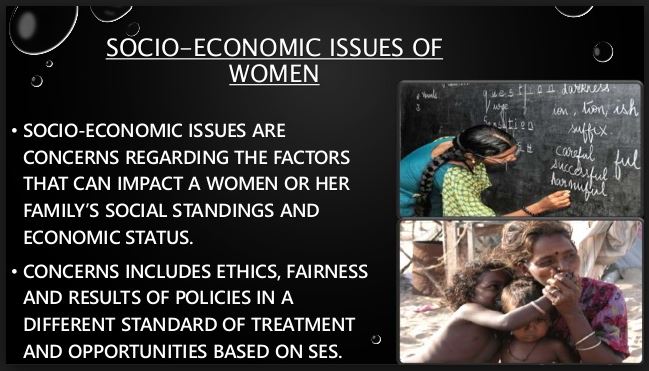
Socio-Economic Issues of Women in Contemporary India

Deepak Kumar

Deptt. of Public Administration

women issues

ABSTRACT: Women, in India, in general have never been allowed to fully blossom and putting their just part in the socio economic development.  Their potential has always been undermined, disvalued and neglected. So making women more progressive, this is the time to unleash the ‘hidden entrepreneurial capabilities’ of women. Economically secure women will no less than a fountain of resource to the nation which will bring more employment opportunities, more gross domestic product and more financial inclusion to the system. Women entrepreneurship can certainly strike some core issues of social indignity like the ‘patriarchal mindset’, it can lessen the ‘domestic violence’ against women, it can also improve ‘maternal -infant healthcare’ system, as presence of such issues in 21st century is really a misfortune to live with. Plus an economic status of women leads to the betterment of her social status also. An empowered woman can improve the environment of awareness, as today most of the women’s rights are not in vogue because the awareness level is way below .why society is giving a secondary stance to women in labor and business activities? Why they have been taught to follow rather than lead? A nation can be called a developed one only when the women is getting equal opportunities in financial matters, is getting proper social representation and her dignity is duly taken care of.

KEYWORDS: Empowered Women, Financial Inclusion, Dignity, Women Entrepreneurship

INTRODUCTION:

“We cannot all succeed when half of us are held back.” Malala Yousafzai

Indian society, being a male dominated society heavily lacks women participation in workforce and gross domestic product. Currently startups are totally male dominated. Only 6% of all startups are run by women. Many reasons contribute to this deficiency like Patriarchal society, extra attachment to traditional values, Lack of education ,lack of vocational skills, Lack of funding, difficulty in availing loans, poor institutional support to build and guide in business expansion. This whole poor picture can also be justified by structural factors. Early marriage culture deviate women from getting higher education and force them to leave their home. now women again is deprived of  her choice where in-laws pressurize them not to work and she is left limited to only household activities. The informal face of Indian economy is also a factor of women exploitation which makes women afraid of active participation. Regular sexual crimes against women also restrict women participation. Unjust Wage parity, outdoor working ethics and social Discrimination also obstructs their participation. Somehow Choice of work is not offered to Women. Maternal issues are also there, which hinders women’s initiative. Plethora of reason is there still, these reasons must not overshadow the real potential of women in total because if opportunities are there women are always eager to grab them. Just to understand the current scenario it is very important to flash a light over the economic reforms of 1991. Indian economy was reassembled in 1991, but hardly any structural reform was witnessed in women’s side .growth was there, no doubt but we have seen a jobless growth. To increase more opportunities economic growth was needed. Our growth was not sufficient to create more opportunities for women, whatever opportunities are there were grabbed by men.

Some insightful Measures we need to suffocate this gender asymmetry in entrepreneurship.

-We have to install customized window services for supporting startup procedures especially suiting the women needs. More Conducive awareness programs with the help of civil society and NGOs to kill stereotyped mindsets in the society should be channelized.  Ensuring more and more safety and security to women at all organizational levels is needed which can  strengthen the voice of women to take strong stand in adversities.

-Giving some special attraction to women in skill development to foster the present day commercial benefits through skill India mission.

– Bigger incentives should be given to women in establishing MSMEs, and providing cheap and liberal term loans.

– Some Tax breaks should be arranged for women enterprises.

– Least capital gains tax should be imposed on VC and ACs who invest in women startups.

– Creation of some special fund by government to promote women entrepreneurship.

What should be done in long run? 

1) Programs to increase the number of women who take up higher education and technical education (schemes like Pragati and Udaan are steps in the right direction)

 2) Vocational training to women.

3) Creation of an environment which enable them to pursue entrepreneurship (safety, encouragement, rewards)

4) Educating the society to change their mindset and value the organizational skills of women and provide them freedom to contribute towards economic growth of the country.

What is women empowerment?

Women empowerment means freedom of women from the vicious grips of social, economical, political, caste and gender-based discrimination. It means granting women the power and freedom to make life choices. It means replacing patriarchy with parity.  Empowering women to participate fully in economic life across all sectors is essential to building stronger economies; achieve internationally agreed goals for development and sustainability. In this regard, there are various facets of women empowerment, such as given here under:—

  1. Individual empowerment – A woman is a being with senses, imagination and thoughts; she should be given a proper environment to express them freely.

  1. Social Empowerment–society as a whole , belongs to women same as to any privileged  men .there should be no  place  for concepts like ‘gender’ and the onus comes on state to promote gender equality. Gender equality is something in which women and men enjoy the same opportunities, outcomes, rights and obligations in all spheres of life.
  2. Educational Empowerment –empowering women with the knowledge, skills, and self-confidence is the need of hour. This will help women to get aware of their rights and will cultivate a healthy morale to claim them.
  3. Economic empowerment – In India it literally means to get rid of financial dependence from their male counterparts. This economic subjugation leads to social subjugation.
  4. Legal Empowerment–it speaks of a comprehensive legal structure which is sensitive of women rights. It should be based on rule of law, not the rule of land.
  5. Political Empowerment – a participative political system should be there, which is inclusive in all means of social representations. Women can lead only when the decision making opportunities are given to them in government and legislative branch.

Position of Women in India now and then:

A much prestigious position was enjoyed by women in the Rig- Vedic period which was further deteriorated in the later civilizations. Women were denied almost every freedom, they were denied of property ownership and inheritance, they were denied of education, remarriage, spouse selection, social movement etc. these all discriminations further evolved into much grave biased rituals like child marriage, dowry system and Sati Pratha .British period witnessed many changes in women’s empowerment. Educated Indians started advocating their cause. social reformers such as Mahatma Gandhi ,Raja Rammohun Roy, Ishwar Chandra Vidyasagar, and Jyotirao Phule started pan India agitations for the upliftment of women. Their agitations led to the abolition of Sati and formulation of the Widow Remarriage Act .This way the status of women in social, economic and political life began to elevate.

Current Scenario on Women Empowerment: 

After independence, constitution of India provided many liberal ideas for women empowerment; many social, economic and political provisions were incorporated. Women nowadays can participate in almost every sector like education, politics, sports, media, art and culture, science and technology. But still there are some remnants of patriarchal mentality like victimization, humiliation, torture and exploitation. These seven decades after Independence, could not bring such a phenomenal change which can be proud of .however there is no denial that an era of multifarious opportunities has started and any ambitious woman can take a leap on.

Spiritual leader Swami Vivekananda quoted that, “There is no chance for the welfare of the world unless the condition of women is improved, and it is not possible for a bird to fly on only one wing.” Thus, in order to achieve the status of a developed country, India needs to transform its colossal women force into an effective human resource and this is possible only through the role enhancement of women in financial structure of our social system. South Korea has encouraged women participation at higher positions which in turn automatically improved their status at lower levels. This country also provided incentives to companies which are gender friendly. India must read such lessons. Plus we need to shatter some myths like if more women come to workforce they will fail both sides, their domestic as well as entrepreneurial. This is grossly under estimated notion as if a woman can manage her home very well; she is naturally having good management skills and can certainly manage an organization as well.

CONCLUSION:

                   ‘’Development will be endangered if it’s not engendered’’

Unfortunately, women in India have always seen as a gender which is best suitable for domestic work and not as a mainstream economic contributor. Thanks to the deep seated patriarchal ideology. This unholy trend is still continuing and is visible in the startup ecosystem where the number of woman entrepreneurs is abysmally low. To balance this Economic development of women is needed, only this is the most effective way to empower and emancipate women, and this In turn will further the economic development of the country by their active participation in labor force. Only the economic empowerment of women can have far reaching effects. It can change the gender equations both inside and outside the house, helping them to overcome the fear of helplessness and powerlessness. Therefore, it is the high time we need to remove this gender asymmetry from our economic system.

REFRENCES:


Intensification of Residential Areas

Housing is the largest component of urban land use in the city, which determines the future living patterns. Judicious use of land means judicious use of residential areas. An ever growing population & increasing activities & facilities in cities have put tremendous pressure on urban land. Thus it becomes very important to utilize the scarce resource of land in a planned manner.

Housing density is the measure of intensity of occupation of land and one of the major component in land use plans made for land use planning. Density indices by themselves do not have any connection with the living conditions of the area but they do establish a distinct relationship between the people and the amount of land they need to attain a certain standard of living. The built form in the city is representatives of its progress and prosperity. Thus, it is an important tool for the physical planners.

Row development
Row development

Row development ( CC0 Public Domain image)

The approaches for determining the residential densities have been changing over the time. The earlier approaches have been explained at the city level. But today, as more & more population started concentrating in the cities, the study outlook shifted from the city level to smaller levels – the sector or area level, which finally decides the overall density. Walkability should also be kept in mind while planning.

Intensification:  Intensification occurs when an existing building, site or area within the existing urban area is developed or redeveloped at a density higher than what currently exists. This can occur through:

  • Redevelopment of sites, including the reuse of brownfield and greyfields sites;
  • Development of vacant and/or underutilized lots within previously developed areas;
  • Expansion or conversion of existing buildings, such as office buildings to residential

Buildings & the

  • Construction of new developments that combine a mix of uses for a more efficient use of land.
Development on greenfield

Development on greenfield ( CC0 Public Domain image)

Process of Intensification: The process of intensification of residential areas is a dynamic process, which is a result of the changes in life cycles of the residents i.e., the changing needs, capacities/affordability and incomes of a household. There are two ways of intensification:

  • Incremental addition to the built form
  • Addition in the size of the household i.e., to accommodate more number of people.

This “progressive development” is a global process. There is a shift from the need of people to their greed.

The process of intensification is a dynamic process. The unplanned intensification, beyond the carrying capacities of the area causes the problem. Both the planned and unplanned areas all over the world are undergoing illegal intensification without the augmentation of infrastructure to cater to the ever-increasing housing need. The increasing population density, dwelling unit density, plot density, FAR & area under plots, taken as the indicators of intensification, creates stress on infrastructure generating poor environment quality and living conditions for the residents.

The extent of intensification varies in various housing sub systems. The unauthorized colonies, a predominant subsystem, are growing denser. The Aerial photographs have shown a densification of over 70% between 1993 and 2002. The politicians claim, the residents have learnt to co-exist by sharing the available resources and are insisting on the process of regularization of colonies, wherein the colonies are bound to grow vertically, further adding the pressure. Today, the increasing land costs and housing demand have encouraged the residents of the planned colonies to subdivide their plots. Apartments are constructed on the plots deviating the prescribed bye-laws for residential development in the city. These increasing pressures on land raises tremendous problems for the planners to regulate the growth of the city and the carrying capacities remain un-augmented.

Author Bio:

Shubham Aggarwal, founder of PlanningTank is an Urban Planner from India working to improve the human settlements. PlanningTank is the Urban, Regional, and Rural Planning Knowledge base which provides insight into to urban and rural areas. It focuses on educating, engaging and developing the community.

Call for Research Papers/ Articles/ Manuscripts 2017 – Pen2Print- Books, Journals, Conference and Allied Services

Source: Call for Research Papers/ Articles/ Manuscripts 2017 – Pen2Print- Books, Journals, Conference and Allied Services

Publish Your Paper in MAY Issue

 Call for Papers 2017

Call for Papers 2017

IJR – International Journal of Research

International Journal of Research (IJR) is an international open access journal providing a platform for advances in basic and advanced clinical medical research for all branches of Medico Professionals. IJAR provides cutting edge updates, developments in the medical arena and helps medical fraternity to synchronize their knowledge in today’s time

International Journal of Research (IJR) is published on 20th of every month, and hence publishes reviews, articles, short communications and case reports. Authors are encouraged to publish their experimental and theoretical results about molecular and cellular processes in disease, thus to increase understanding of fundamental principles and biological questions of medicines.

The Journal is inline with MCI norms and index with Index Copernicus Value 102 The Journal is been published on every 20th Day of the month.

The Journal having ISSN 2348-6848 with Impact Factor of 5.60(SJIF).

Manuscript Submission:

A research paper prepared in MS word with double – column in single spaced typed pages should be submitted electronically as an attachment on E-mail Id of Journals mentioned…
editor@edupediapublications.com 

How to Submit Article:

submitted electronically as an attachment on E-mail Id of Journals mentioned…
editor@edupediapublications.com 

Journal Indexing:

The journal is indexed with leading International Indexing agencies like Index Copernicus, Google Scholar, Open J-Gate, IIFS, Citefactor, DJOF, DRJI, Eyesource etc.

Absent Fathers and Delinquent Sons among the African American Families

Garima Yadav

INTRODUCTION:

Father son dyad has been one of the important research areas when it comes to psychology and family relationships. This importance is a result of the overt emphasis being given on a family structure that constitutes of a mother and a father with their children. This is the model that is accepted as being the consensual model of a good family and anything different from it is considered an aberration which in the end in linked to some social problem arising primarily due to the lack of the model family structure, which carries out various important functions like socialization of the new born, with family being the first socialization agent, which in turn helps in development of the young ones into good socialized beings. In 1949 the American anthropologist George Peter Murdock published the results of a major survey of kinship and social organization in a worldwide sample of 250 societies. Murdock’s starting point was the family, and on the basis of his survey he argued that the nuclear family is universal, at least as an idealized form. this and many such researches marks the acceptance of nuclear family as the true model of family and this was conveyed through many mediums and channels which had an effective and quick access to the minds of the people

In this paper the emphasis is laid out on the link between ‘absent father and delinquent sons’. With an ideal family structure constituting of a father, who plays an important role of not just as a ‘bread winner’, ‘head of the family’ but as the role model for their children especially son who learns by emulating his father and this in turn help him in realizing what it is to be a male. Butler (2004) discusses how gender is performed without one being conscious of it, but says that it does not mean this performativity is “automatic or mechanical”. She argues that we have desires that do not originate from our personhood, but rather, from social norms.  What is important to be derived from this is that the gender roles that we develop and practice or perform have to be learnt and the learning first begins from the family which, as has been mentioned earlier, is the first socializing agent. Various psychological and sociological research has pointed out the importance of father as being the role model for the son, who learns what it is to be a male from him, many other researchers have devoted their attention onto what happens when this role model is absent, with some claiming the result of absent father as being the deviant son.

The absent father and delinquent son dyad is being analysed in a particular cultural setting that of African American families or the black families in USA. The choice of this setting is primarily due to the availability of ample researches being carried out on black families and researches exploring this link between absent father and delinquent sons. One more important reason for this choice is the popular image of black people being that of a deviant and most involved in the unlawful activities or this is the popular image being manufactured about the American society through various techniques one prominent being of the statistics and the quantitative modes of analysis which tries to draw and establish a link between deviant family i.e. the absence of father and a deviant son.

This paper has been divided into four parts. The first part deals with the theories on fatherhood. This part will primarily focus on the shifts that have been taken place in understanding the term ‘father’ and his role. Also, it deals with developmental psychology theory to chalk out the importance of father in child development.  The second part deals with the black families in United States of America, talking about the demographic composition of the black families in US. This part will focus on all the statistics that have been produced and used so far in various government agencies and social policies. Also, we will look into the famous Moynihan report briefly to understand the history of the social policies towards the black people and how the matriliny myth was created. This section will also focus on how there is a propensity, that is proved through statistics produced by federal agencies, among the black young men to be involved in crimes. In the third part we will try to draw linkages between the absent father and delinquent sons, as from the previous section it can be identified that two main things are prominent i.e. a high number of single female headed household which implies absence of male or father from the family and the high rate of involvement of black young people in crimes. This section will deal with the researches carried out concerning the dyad- absent father and delinquent sons, among the black people. In the last section, we will pull all the argument together to identify whether if this dyad is valid or not.

Theories on fatherhood

A famous anthropologist once said that fathers are a biological necessity but a social accident. Traditionally, fathers have always been depicted as a strong and strict person devoid of emotions and one who is not at all involved in child care. The main role that the father figure plays is that of the bread winner, that’s the expectation from them. Also, these ‘mythical fathers’ provided a strong but distant model for their children and moral and material support for their wives.

A variety of technological, economic and ideological changes in our society are redefining what it to be a father. A new cultural image of fatherhood has emerged that has pushed aside the earlier portrait of the uninvolved father. No longer a social accident, many fathers are active partners in parenting and a direct influence on their children’ development.

Fatherhood is a continually evolving ontological state, a site of competing discourses and desires that can never be fully and neatly shaped into a single ‘identity’ and that involves oscillation back and forth between various modes of subject position. The concept of ‘the father’ is typically gendered in western societies; it denotes maleness; the possession of s penis and testes in working order, the proven ability to produce viable sperm to impregnate a woman resulting in a child. ROSS D PARKE points out, the contemporary concept of the father is far more complex and less unified than its common-sense definition suggests. The concept of ‘the father’ or ‘fatherhood’ is multiple rather than unitary, changing according to the context even for the individual, as do concepts of ‘the mother’ or ‘motherhood’. DE KANTER notes that when speaking of “the father” there is a continual move between at least three different levels of meaning: the person of the father, that is, an individual’s embodied presence; the socio cultural position of the father and the more abstract symbol of the father. She further argues, the term ‘father’ may be used to describe the individual who provided the biological material, even if he is never known to his child (as in the case of sperm donor), to describe the person who lives in the same household as the child and is the mother’s partner but not biologically related to the child, and the man who is legally the father but does not live in the same household because of marital separation or divorce.

There is a general agreement, as has been mentioned above, in the social historical and social science literature that the expectations and norms around ‘good’ fatherhood have changed dramatically over the course of the twentieth century. PLECK identified four ‘phases’ of American fatherhood typologies: first, the father as ‘authoritarian moral and religious pedagogue’ (Eighteenth century to early nineteenth century); second, the father as ‘distant breadwinner’(early nineteenth to mid twentieth centuries); third, the father as ‘sex role model’(1940 to 1965); and fourth, the ‘new’ father, who is nurturing and interested in his young children as well as engaged in paid work (late 1960s to the present).

However, one thing to note about these understanding on emergence on new fatherhood is that they are located in a certain locale i.e. the western world and that too a specific class. Many scholars refute or disagree with the portrayal of this idea that the fatherhood has undergone a lot of change. Fathers earlier too were involved with the child care and were liberal enough to display their love and affection for their children. But these scholars also don’t deny that in the popular image the understanding of ‘fatherhood’ as undergone a tremendous change. Traditionally, the concept of the father has been that of provider and head of the family group. However, over the past century we’ve witnessed a change in the understanding of father and his role in the family wherein he is supposed to be more involved in child care and upbringing and also openly express and display his love and affection for children which was traditionally thought to be the role of a mother. This change in the conceptualization of fatherhood, sharply contrast the traditional concept of being a father. The author points out that the contradiction in two conceptualization of fatherhood poses problem for the one in the role of the father and as well as the family member. This confusion or problem is more prominently visible in the case of men who are ‘foreign born, sons of immigrants or members of low socio- economic classes.’ The reason postulated for such a problem is the deep seated understanding of role of a father in their mind; which bars them from being affectionate towards their children. Also, in order to come out over their feelings they tend to be harsher i.e. to not show their love, affection and care they become more harsh and strict.

Psychology has a long history of ignoring fathers. Fathers were not just forgotten by accident, they were ignored because it was assumed that they were less important than mothers in influencing the developing child. Psychologists have, by comparison, undertaken much less research on the nature and development of the paternal- infant relationship. In the 1940s and 1950s, however, there was a growing interest in the effects of ‘father absence’ stimulated by the disruption in family life occasioned by the Second World War. Children without fathers were portrayed as being ‘at risk’ of abnormal psychology, sex-role, intellectual and moral development, including lack of independence, passivity, eating and sleeping problem, decreased sociability. There was a particular concern for boys without fathers, who were seen as lacking a ‘positive role model’ after which they could model their own masculinity. Such boys, it was suggested, were vulnerable to ‘abnormal’ sexual development and liable to become homosexual or delinquent.

Psychological studies devoted to researching the father-child relationship have grown in America in 1970s in particular. With this the new image of father as more involved in child- care emerges. Developmental psychology research has generally concluded that the quality of early father- infant interaction is linked with later father- child attachments. There was an overt emphasis on the ‘sex role’ models of behaviour.

Many other prominent psychologists have talked about fatherhood and the role of father in the proper development of child in all aspects be it physical, cognitive or social.

Sigmund Freud has talked about fatherhood a lot. He says that Fatherhood is the cause and fulfillment of the father’s creative, protective, and organizing power in his child. As a physical and symbolic bond between generations, fatherhood implies the authority of the father over the child, expressed through the transmission of the name. The sons use this aspect of paternity in the construction of their own individual and social identities, and in their respect for the law. Father-hood is the basis of all thought. Discovering in his self-analysis, through his dreams, that fatherhood satisfied both his desire for immortality, through his children, as well as his ambivalence toward his own dead father. Sigmund Freud’s work The Interpretation of Dreams, established the desire of Oedipus to sleep with his mother and kill his father as universal.

Fatherhood is an organizing system indissociable from this Oedipus complex. It structures and restrains sexuality, through the father, who is simultaneously loved, protective, and feared. It condenses conflicts of ambivalence and the castration anxiety. Fatherhood induces repression and prompts progress: It is an inevitable and indestructible origin and obstacle that unites the scattered ego, while showing how to overcome ambivalence through identification with the father. Its dynamic potential is anchored in the father-mother-child triangle it structures, not in the person of the father who supports the paternal function.

Having murdered the violent and jealous primal father, the sons discover the symbolic paternity of the father in the work of mourning, made up of ambivalence, guilt, and idealization. Retrospective obedience and the renunciation of the father’s omnipotence are at the origin of the social contract and the law. For Freud fatherhood also occupies a central place in the subject’s genital organization through the father complex. Linked to death and sexuality, which it transcends, and serving as an atemporal and structuring reference point, it channels through its incarnated generating power the diphasic sexual development of the child-become-adolescent, opening him up to the effects of Nachträglichkeit, sublimation, and the wish to become a father in his turn. Fatherhood then, logically, enables the subject’s separation from the mother and authorizes relations of generation, dramatized as arising from a primal triangle, with differentiated parental images.

Erik Erikson(1950) coined the term  generativity to refer to an emergent process that accentuates parents’ personal growth in relation to their children’s well-being. As the primary psychological task of healthy adulthood, generative fathers have a genuine commitment to establishing and guiding the next generation. Erikson believed that in order to become fully human, a father must widen his commitment beyond the self and invest in caring deeply for others. Generative fathering includes any nurturing activity that contributes to the life of the next generation such as the development of more mature persons, products, ideas or works of art. The essence of generativity is contributing to and renewing the ongoing cycle of generations. Erikson believed that men can and want to become the kinds of fathers their children need them to be.

In this section we reviewed some of the theories on ‘father’ and ‘fatherhood’ from the sociological as well as the psychological perspective. We identified that how there is an emergence of new form of fatherhood and it definition. Also, we identified the importance allocated to the role of a father in psychological studies in the development of a child and especially that of a son.

The Black Family in America

The prevailing view of the black family in the United States for most of its history has been based on the dominant paradigm of white superiority and black inferiority. In the post-World War II era there was a strong consensus for the normative family, and Daniel P. Moynihan reflected this view when he labelled the black family “pathological” and “dysfunctional” because the black families studied did not fit the normative model. Numerous social policies followed the famous 1965 Moynihan Report with the goal of “fixing” and helping the black family, such as Head Start. In the years that followed, not only did statistics change to indicate even greater deterioration of the black family, but statistics on the white family began to match the patterns of the black families of the 1950s. Consequently, recent emphasis of social policy is more on economic factors than racial equality, and affirmative action policies are being challenged with some success. Conflicting views and interpretations abound regarding the structure of the black family, as do the solutions to remedy the ill-defined problems.

THE MOYNIHAN REPORT

The dominant paradigm of black inferiority pervades early myths and even scholarly studies. E. Franklin Frazier, the black historian on whom Moynihan’s 1965 report was based, was trained by white scholars at the University of Chicago, such as sociologist Robert Park. Park’s studies in the 1940s and 1950s were based on the deficit approach that “assume Blacks are culturally deprived and view differences found between white mainstream Americans and Black Americans as deficits.” They viewed blacks as a people in the process of assimilation into the mainstream of American society, like other immigrant groups, disregarding both their own racism and the institutionalized racial oppression in which blacks exist in America.

Frazier’s The Negro Family in the United States “supplied a model for the study of Blacks which emphasized family disorganization and dysfunction…,” describing the black family’s present condition of matriarchy, ineffective black males being marginal to the family, casual sex relations, and general dissolution of the black family to be caused by urbanization and the heritage of slavery. Frazier’s work was used for the basis of Moynihan’s conclusions that identified “Black “matriarchal” mothers as responsible for the “breakdown” and “pathology” of Black families (who, he claimed, were responsible for high rates of illegitimacy, delinquency, and unemployment).” Consequently, many of the programs and policies formed were focused on “improving the child-rearing practices of black mothers.”

In the period following the depression and the hardships of World War II, American policy makers dedicated their efforts to creating a society comprised of strong, happy nuclear families. The normative ideal family was seen as a two-parent nuclear family residing in the suburbs with a breadwinner father and homemaker mother. There was a strong consensus of what comprised the ideal family.

The poor black family did not fit the current ideology; therefore it was labelled “pathological” and “dysfunctional.” As a government publication, the Moynihan’s report constituted a level of authority that carried significant weight and lent credibility to the abundant social policies to “fix” the dysfunctional, pathological black family structure that threatened the ideal, normative family structure upon which the future success of American society was believed to depend. Experts blamed the victim. The black family structure, rather than social structure of the U.S., was blamed for its deprivation of the American Dream. Therefore, solution was to deal with the black family rather than segregation and discrimination.

Present situation of black people:

Overview (Demographics): In July 2008, 41 million people in the United States, or 13.5 percent of the civilian no institutionalized population, were Black. They are the second largest minority population, following the Hispanic/Latino population. In 2007, the majority of Blacks lived in the South (56 percent), while 34 percent of white population lived in the South. The ten states with the largest Black population in 2008 were New York, Florida, Texas, Georgia, California,North Carolina, Illinois, Maryland, Virginia, Michigan. Louisiana is no longer in the top 10, as a result of the Hurricane Katrina disaster. Combined, these 10 states represented 59% of the total Black population. Of the ten largest places in the United States with 100,000 or more population, Gary, Indiana has the largest proportion of Blacks, 83%, followed by Detroit (82%).

Educational Attainment: In 2007, as compared to Whites 25 years and over, a lower percentage of Blacks had earned at least a high school diploma (80 percent and 89 percent, respectively). More Black women than Black men had earned at least a bachelor’s degree (16 percent compared with 14 percent), while among non-Hispanic Whites, a higher proportion of men than women had earned at least a bachelor’s degree (25 percent and 24 percent, respectively), in 2006.

Economics: According to the 2007 Census Bureau report, the average African-American family median income was $33,916 in comparison to $54,920 for non-Hispanic White families. In 2007, the U.S. Census bureau reported that 24.5 percent of African-Americans in comparison to 8.2 percent of non-Hispanic Whites were living at the poverty level. In 2007, the unemployment rate for Blacks was twice that for non-Hispanic Whites (8 percent and 4 percent, respectively). This finding was consistent for both men (9 percent compared with 4 percent) and women (8 percent compared with 4 percent). 2005: employed blacks earned only 65% of the wages of whites, down from 82% in 1975. In 2005, the poverty rate among single-parent black families was 39.5% , while it was 9.9% among married-couple black families. Among white families, the comparable rates were 26.4% and 6%.

Age, Sex and Marital status distribution:

In 2002, 33 percent of all Blacks were under 18. Only 8 percent of Blacks were 65 and older, compared with 14 per- cent of non-Hispanic Whites

Marriage

Nearly half of black Americans have never married—the highest percentage for all racial groups. Only 30 percent of blacks are now married. Married couples make up nearly three-quarters of all U.S. families. Among black families that number falls to 44 percent.

The Children

Nearly 10 million black families lived in the United States in 2007. Twenty-one percent of these families were married couples with children. This is the lowest for all racial groups. As the U.S. average is 32.4 percent. But nearly one-third of these families were single mothers with children under 18. The U.S. average is 12.1 percent. Slightly less than 20 percent of black families were grandparents raising their grandchildren. The U.S. average is 10 percent.

No surprise then that slightly more than half of black kids live with only one parent and that’s overwhelmingly with their mother. A home headed by a single mom often equals an economically poor home.

DIVERSE INTERPRETATIONS OF BLACK FAMILY STRUCTURES

The prevailing views of black families in America experienced a significant shift during the 1960s. Prior to that period most scholars with credentials that had studied the black family limited their studies to lower class families and interpreted the results through the existing paradigm of black inferiority. The 1960s brought many changes to our country in a great many ways. The lives of black Americans did change, and so did the perception of the black family, both in the eyes of mainstream society, as seen in the media, and in the academic community. Many of the recent scholars studying black families are black themselves, though not all, but the present perspective of studying the black family reflects an attempt by most to put it in the context of its unique position in the American experience, including the racial inequalities of discrimination, and acknowledge the differences of black families as normal and functional rather than pathological and dysfunctional, as labelled by the Moynihan Report in 1965.

Recent studies have shown “Black families …examined from a culture-specific …perspective …are providing myth-destroying information. …Black families encourage the development of the skills, abilities, and behaviors necessary to survive as competent adults in a racially oppressive society. …In general, Black families are reported to be strong, functional, and flexible. …They provide a home environment that is culturally different from that of Euro-American families in a number of ways. …The environment of Black children is described as including not only the special stress of poverty or of discrimination but the ambiguity and marginality of living simultaneously in two worlds–the world of the Black community and the world of mainstream society, a phenomenon unique to Blacks.” (ROBERT STAPLES)

Many studies still view the poor black family and regard that as the definitive black family. These studies show female-headed households, absent black fathers, teen mothers, welfare dependency, and extended kin-networks, all of which have some truth. The most pervasive myth is that that picture holds true for most all black families. The “other” black America, the middle-class blacks who have “made it,” have largely been ignored in studies about black families until very recently; their assimilation into mainstream society has rendered them nearly invisible, both as an entity to be studied or acknowledged.

Contrasting views of the black family abound. Some are based on the presence or absence of racism and the still present assumption of black inferiority. Some are based on the view of the black family by many researchers as a monolithic institution, usually poor and urban, excluding consideration of other types of families. Some are based on the contrast of assimilationist versus Black Nationalist viewpoints. (R STAPLES)

Scholars have disagreed on the basis for cultural differences between black and white families, particularly whether the kinship based family is a product of African heritage, slavery, or poverty. The Moynihan Report labelled the black family as pathological because it differed from the nuclear family perceived so strongly as “normal” in the postwar years, but recent scholars see the black family as functional rather than dysfunctional, that is, not pathological (abnormal) in terms of African heritage and kinship networks. Where Frazier’s work said that slavery had destroyed African kinship family relations, Blassingame showed that black families did function in slave quarters and strong family ties persisted despite slave trade. Gutman’s work showed that slavery did not destroy black families, and the kinship model of the black family comes from African origins. Where earlier studies concluded that “matriarchal families were pathological and detrimental to the personality development of black children,” Genovese redefined female matriarchy as gender equality, a contrast to the male domination perceived as normal by whites. Yet whether black females were of equal status or dominating, slavery altered the gender status of black families. In Africa “the family was a strong communal institution stressing the dominance of males, the importance of children, and extended kinship networks.” But under slavery, “The slaveholders deprived the black man the role of provider… the economic function of slave women was often comparable to that of men. …always there was an external power greater than the slave husbands.”

More recent studies show that the cultural differences between black and white American families is based on their African heritage combined with the reality of racial oppression, past and present. The kinship family deals with poverty by providing “a strategy for meeting the physical emotional needs of black families [by using] a reciprocal network of sharing to counter the lack of economic resources.” Economic level corresponds significantly but not totally to the degree that black families reflect traditional African values and practices, particularly the kinship based family structure, versus the nuclear family viewed by mainstream (white) society as more normal. Whatever the reason for the differences, “the black family is a functional entity,” and not dysfunctional, as Moynihan labeled it. Although “…not all…agree on the degree to which African culture influences the culture of black Americans, they do concur that black Americans’ cultural orientation encourages family patterns that are instrumental in combating the oppressive racial conditions of American society.”

Overall, the reasons for conflicting findings between recent researchers on the black family as compared to earlier accounts include that they: (a) failed to recognize the existence of a black culture and the antecedent African experience and examine social roles in that context; (b) neglected to interview black fathers and observe father-child interactions for demographic differences; (c) observed and investigated black family life using the very poorest families as subjects and generalized the findings to all black families; and (d) used theoretical models limited to Western cultural life-styles.

Another area of controversy is that of the role of black fathers. The experience of black father both under slavery and in freedom was also different from that of white, middle-class men. Most scholars agree that the conditions of bondage made gender relations among slaves different from those of whites, but they disagree on exactly on how different. Although most slave children lived in stable two- parent households, the roles played by their parents were shaped by the harsh conditions of slavery. Recent scholarships dispel the myth of weak ties between slave fathers and their families and the corresponding stereotype of a prevalent slave ‘matriarchy’. As the historian PETER KOLCHIN points out, however, slave families were typically less male- dominated than nineteenth century free families. This was for at least two reasons: First, because slave unions had no legal status, slave fathers had no more property rights than did mothers. Slave fathers consequently lacked the authority over mothers of their children that the legal system bestowed on free men. Second, slave fathers were more likely than mothers to be separated from their children. Men were hired out, were sold off, and ran away more than women. When parents lived on separate plantations, fathers rather than mothers, typically travelled to visit their families on weekends. Accordingly, mother- headed households, while not the norm, were relatively common.

The impact of slavery on children undermined paternal authority as well. Children who saw their parents verbally or physically abused knew where ultimate power lay and soon learned to conform to the wishes of both their parents and their owners. These and other indignities prevented black men from adhering to white middle class conventions, but the constraint did not prevent them from feeling outraged at their inability to exercise fully the rights and responsibilities of fatherhood. By all accounts, most black men believed that masculinity rested on a foundation of family duty and struggled against the subversion of their paternal authority. Fathers and mothers alike strove to afford their children a basic refuge from the horrors of slavery, providing them with love and attention, imparting family customs and religious values, and teaching them the caution needed to survive in a hostile white society.

In the years following slavery, the vast majority of black children continued to live in two- parents households. As blacks adapted to the vagaries of urban life, the family remained a vibrant institution, with parents rendering vital assistance to children. Cities, however, were especially hard on black fathers. The proportion of African American families headed by females in the nineteenth and early twentieth centuries exceeded that of native born and immigrant whites. Persistent discrimination and under- or unemployment in Northern and Southern cities undermined the ability of black fathers to support their children. As a result, black fathers left their families more often than did whites.

Crime

According to the FBI crime reports 1999-2005, the average Black commits murder about 7.1 times more often than the average “White”. The average Black commits interracial murder about 13.8 times more often than the average “White”. The average Black kills a “White” 15.9 times more often than the reverse.  Weapons violations are committed by Blacks at nearly 5 times the rate for Whites; Blacks are caught receiving or buying stolen property at nearly 5 times the rate for Whites;  Blacks are involved in prostitution at almost 4 times the rate for Whites; Blacks are arrested for drug crimes at over 4 times the rate for Whites; Blacks are more than three times as likely as Whites to be caught at forgery, counterfeiting, and fraud, and almost three times as likely to be caught at embezzlement;  Blacks are more than 3 times as likely to be thieves as Whites; Blacks are more than 4 times as likely to commit assault as Whites;  Blacks are almost 4.5 times as likely to steal a motor vehicle;  Blacks are more than 5 times as likely to commit forcible rape as Whites; Blacks are over 8 times as likely to commit murder as Whites;  Blacks are more than 10 times as likely to commit robbery as Whites; Nearly 25% of all Black males between the ages of 20 and 29 are in jail or on probation – this does not include those wanted or awaiting trial; For all violent crimes considered together, Blacks are almost 5.5 times more likely to commit violent criminal acts than Whites.

According to the CDC(Centre for Disease Control)’s “The 2004 HIV/AIDS Surveillance Report”, Blacks make up the largest group (48%) of “people living with Aids”; followed by Hispanics (17%), American Indian and Asian/Pacific islander (1% each).in 2005, over 68% of the american prison population was non-white .

According to Bureau of Justice around 28 % of black men will be sent to jail or prison in their lifetime and an estimated 12 % of all black males in their 20s are in prison. One in eight Black men in their 20s and 30s are behind bars, compared to 1 in 63 white men.

Research on black families:

There has been a wide range of research being carried out to understand and conceptualize the black family structure in America. In this section, we will review some of the research that pertains to the black fatherhood and how the absence of father is dealt with by the rest of the family member and how it has an impact on the development of children.

In black families, which are marked by absence of biological father from the household, there are two other kinds of fatherhood that appears on the scenario i.e Social father and Non resident father. Social father is a male relative or family associate who demonstrates parental behaviours and is like father to the child. @1 althoough research increasingly focuses on no reseident biological fathers, little attention has been given to the roel of other men in children’s lives. While examining the factors associated with social father presence and their influence on preschooler’s development. Findings indicate that the majority of children have a social father and that mother, child, and non resident biological father characteristics are  all related to social father presence. These associations differ depending on whether the social father is the mother’s romantic partner or a male’s relative. The social father’s influence on children’s development also depends on his relation to the child. Male relative social fathers are associated with higher levels of children’s school readiness, whereas mother’s romantic partner social fathers are associated with lower levels of emotional maturity. Also, importance of social fathers should be examined in the context of non resident biological fathers’ s involvement. If the non resident father is not involved in his child’s life actively then the social father’s role is more prominent.

Another study examined the interrelationship of non resident father visitation, parental conflict over this visitation, and the mother’s satisfaction with the father’s visitation. This studies shows that many children have a little contact with their Non Resident fathers and contact generally declines over time. It also shows that conflict may arise due to father’s contact with children but this also increase satisfaction in mothers.

Another study concludes that the non resident father may visit their children frequently, but the range of activities may be restricted and also the ties of affection may be weak. Research on two- parent families suggests that it is not the presence of father that is critical for children’s well being, but the extent to which fathers engage in authoritative parenting. The study concludes that only those non resident fathers who engage in authoritative parenting have the potential to contribute a great deal. This study also points out that to be a competent father, men must’ve a strong commitment to the role of parent, as well as appropriate parenting skills. Non resident fathers who are not highly motivated to enact the parental role or who lack the skills to be effective parents are unlikely to benefit their children, even under conditions of regular visitation.

Another study shows that how non resident fathering and stepfathering are becoming two increasingly common types of fathering experiences. Approximately half of all U.S. children will grow up apart from their biological fathers and almost one third of all children will live in a step family at some point in childhood. The study points out that better educated parent may be more likely to conform to social expectations of close ties between parents and children. And also, greater economic resources may allow fathers to incur the costs associated worth active participation with children. Studies of both non resident father and step father reports closer bonds to father for boys than girls. It also points out that black adolescents report being closer to their resident fathers than whites. Adolescents who lack close ties to either father exhibit the most externalizing and internalising problem and are more likely to have received failing grades in school. Good relationship with both fathers are associated with better outcomes but that ties to step fathers are somewhat more influential than ties to non resident fathers as step father and the child co –reside and share a good amount of time together.

Another study points out that the patterns of fathers influence vary by race and ethnic diversity, which in turn, are linked to socio economic status differences as well as family history characteristics. Children with non resident fathers are more likely to engage in health compromising behaviour such as drug and alcohol use, unprotected sex.This doesn’t come as a surprise considering how much sex and drugs and have been glorified by pop culture. and cigarette smoking; are less likely to graduate from high school and college; are more likely to experience teenage and/or non marital fertility; have lower levels of psychological well- being; have lower earnings; and are more likely to be idle and are more likely to experience marital instability in adulthood.  Fathers who are not able to stay and spend time with their children, leads to loss of social capital for the children. Social capital comes in two forms , and both are vital to child well- being. One form is inherent in father- child relations as fathers teach, nurture, monitor , and care for their children. In addition to the time that fathers spend with their children, the quality of the father child relationship is fundamental source of social capital that is especially important for children’s school attainment and avoidance of risk behaviours. A second form of social capital is inherent in the relationship between parents and other individuals and institutions in the community. These relationships provide access to information, assistance, opportunities and other resources in the community that foster the healthy development of youth. Thus, when children live apart from their fathers, they have less access to parental resources in the form of social capital; they lose time and attention from the father; and they have reduced access to the father’s resources in the community. Although many children experiences a decline in the quantity and quality of contact with their fathers after divorce, and although children born outside of marriage have even less contact with their non resident fathers, a significant number of non resident fathers still maintain contact with their children. The negative effects of divorce and non marital childbearing on children may be partly mitigated to the extent that non resident fathers provide social capital

Conclusion:

The picture that is emerging out of the above discussion and review of researches on the topic of absent fatherhood and its impact on children, chalks out several important points for our consideration.

It is quite clear from the statistics produced above through government sources that in black families there is high presence of single female headed households. And with that there is indeed high rate of involvement of black people especially men or young boys in criminal activities. What strike me throughout while working for this paper is that how the researchers have used these two statistics and tried to find linkage between them. And in this attempt the kind of researches that have been carried out, the selection of  their sample and its size, the mode of analysis primarily being quantitative ;all the research n their strategy somewhere points towards their hidden agenda to co relate these two statistically proven facts. In all these researches related to this area what is also important to note is that the understanding of a normal family, which is a white middle class nuclear family, can be read in between the lines of their conclusions and discussions.

There is considerable controversy concerning the ability of black Americans to maintain ‘normal’ marital and familial relationships. In this context there are a large number of studies underscoring the dysfunctionality of black families. Inherent in the functional versus dysfunctional dichotomy is an implicit assumption regarding normative families. The belief that a statistical model of the American family can be identified with which all families can be compared is mythical(ARTHUR )

The dysfunctional view comes out of the cultural homogeneity approach and is associated with the works of E.Franklin Frazier (1939)and Daniel P. Moynihan(1965). Their works culminated in the, as discussed earlier too, adoption of governmental social policies which view the black family as unstable, disorganized and unable to provide its members with the social and psychological support and development needed to assimilate fully into the American society. The opposite view, primarily a reaction to the above, advocates that the black family as a functional entity.

It is clear from the examination of the research literature on the black family, that the researchers have consistently offered evidence, information, theory and analyses which focussed on the so called problems inherent in black family systems.(WADE W NOBLES). Professor M .Jones(1976) of Atlanta university has noted that systematic scientific inquiry begins where common sense leaves off. In fact, common sense constitutes the base upon which scientific information is built. The social scientist’s role is to present the truth scientifically, that is, to extend or expand the common sense understanding of one’s people with scientific understanding.

This paper discusses four studies which suggest that black families do not constitute a monolithic pattern of familial relationships. The studies indicate that black families vary by social class as do white families. The studies included: Willie’s studies(1976),The TenHousten Study(1970), The Mack Study(1978 )and The Middleton and Putney Study(1960), are considered to be “classic” studies because they suggest how black family research should be conducted. Research must be sensitive to the variety found in black family life styles.

Also, historically black fathers have been either invisible in the study of child development and family life or characterised in negative terms such as deadbeat dads and absent fathers who are financially irresponsible and rarely involved in their children’s lives. According to the demographic data discussed earlier, there is an increase in household without the biological fathers or legal fathers. Some of the confusion about fathering in the African American community is due to lack of a clear definition of what a father is or is not. Traditional definitions of fatherhood underestimates the role of Black fathers and do not adequately capture the cultural nuances that surround the fathering role in the African American experience. Fluent and inclusive term is needed to capture the essence of the fathering role in African American social and family networks. Social fatherhood plays an important role in the African American families. As more inclusive term, social fatherhood encompasses biological fathers, but also extends to men who are not biological fathers who provide a significant degree of nurturance, moral and ethical guidance, companionship, emotional support and financial responsibility in the lives of children.

Apart from the issues dealt in the earlier sections, one important issue is the development or formation of masculinity among black men. The high involvement of black men in criminal activities is a marker of a different form of masculinity they develop and follow. The problems facing black males today are so serious and their consequences so grave that it is tempting to view these men primarily as victims. It has been argued (MASCULINITY READER) that there is contemporary ‘institutional decimation of black males’, which the author describes as the’ coordinated operation of various institutions in American society which systematically remove black males from the civilian population’. Recent research has shown that young black males are experiencing unprecedented setbacks in their struggles for economic and educational equality in the United States, a nation that holds equal opportunity as one of its founding principle. Black men are among the predominant victims of an entire range of socio economic, health and stress related problems. These problems include, but are not limited to, higher rates of heart disease, infant mortality, homicide, unemployment, suspension from school, imprisonment, morbidity and low life expectancy.

Black males have responded in various ways to this constricted structure of opportunity. What is of interest here is how black males’ relationships to dominant definitions of masculinity have figured into their responses to institutionalized racism. Many black males have accepted the definition, standards and norms of dominant social definitions of masculinity (being the bread winner, having strength and dominating women). However, American society has prevented black males from achieving many aspects of his masculinity by restricting their access to education, jobs and institutional power. In other words, the goals of hegemonic masculinity have been sold to black males, but access to the legitimate means to achieve those goals has been largely denied  to black males. As a consequence of these conditions and because of many frustrations resulting from a lack of opportunities in society, many black males have become obsessed with proving manliness to themselves and to others. Lacking legitimate institutional means, black males will often go to great lengths to prove their manhood in interpersonal spheres of life.

Institutional racism and a constricted structure of opportunity do not cause all black males to exhibit anti social behaviours, nor do these problems succeed in erasing black men’s expressions of creativity. One such creative response to institutional racism which bars the black males from pioneering the fields of politics, academics etc is the cool pose in sports world, which is accessible to black males in American society at ease. Cool pose is the expressive lifestyle behaviour that is there not only in sports but also in music and entertainment industry where the black people have carved out their own niche. This cool pose expressed by black males in sports may be interpreted as means of countering social oppression and racism and of expressing creativity. The demonstration of cool pose in sports enables  black males to accentuate or display themselves, obtain gratification, release pent- up aggression etc.

To conclude, it can be said that buried beneath the statistics is a world of complexity originating in the historic atrocity of slavery and linked to modern discrimination and its continuing effects. It would highly wrong to correlate the high number of absent black father household with the high rate of involvement in crime by the black males. There are several other factors that need to be studied by shunning these statistics and leaving the practice to link two statistical data to prove or disprove a dyad that of absent father and delinquent son. Indeed, father plays an important role in the development of a child , be it cognitive, social or emotional development. But the absence of father doesn’t imply that a male role figure is absent from the scene or that it means that the young boy won’t be able to achieve masculinity and won’t be ‘normal’ but always a delinquent. The boys learn from their social fathers, peer groups and society at large which creates and dismantles many agencies through which a child learns what It means to be masculine or male. The absent father delinquent son dyad would be better understood if we try to go beyond the race factor. And identify the lack of access to opportunities and resources leading to poverty as one of the prime reason of high rate of delinquency among black males. We oftentimes ignore the impact addiction has on our families. If you or a loved on is suffering from addiction consider attending a drug treatment center.

BIBLIOGRAPHY:

Arlene S. Skolnick, Jerome H. Skolnick. Family in transition. United States of America: Allyn and Bacon, 2001.

Barclay, Deborah Lupton and Lesley. Constructing Fatherhood. New Delhi: SAGE publications, 1997.

Bronstein, Phyllis. Fatherhood Today. United States of america: John Wiley & Sons Inc, 1988.

Coleman, Norval D. Glenn and Marion Tolbert. Family relations . United states of America: THE DORSEY PRESS, 1988.

Frank J. Barrett, stephen M. whitehead. The Masculinities Reader. cambridge: Polity press, 2001.

Frank, Stephen M. Life with Father. Baltimore and London: the John Hopkins university Press, 1998.

—. Life with Father. London: The John Hopkins University Press, 1998.

Heard, Valarie King and Holly H. “Non resident father visitation, parental conflict and mother’s satisfaction.” Journal of Marriage and Family, May 1999: 385-396.

King, Valarie. “Non resident father’s contributions to adolescent well-being.” Journal of Marriage and Family, august, 2006: 537-557.

McAdoo, Harriette Pipes. Family ETHNICITY. London: SAGE publications, 1993.

O’Reilly, Andrea. Mothers and Sons. London: Routledge, 2001.

Park, Barbara J. Risman and Kyung. “Just th etwo of us: parent- child relationships in sIngle Parent homes.” Journal of Marriage and Family, november 1988: 1049-1062.

Parke, Ross D. Fatherhood. harvard: Harvard University press, 1996.

White, Michael E. Connor and Joseph L. Black Fathers: an invisible presence in America. New Jersey: Lawrence Erlbaum Associate Inc., 2008.