Unemployed Engineers: The case study

One of the most important apocalyptic cries within the global economy today is that the loss or obsolescence of existing jobs thanks to automation and rapid changes in technology. But every change also brings with it a singular opportunity one that we must grasp with both hands and understand fully to take advantage of. Technological progress, while making a couple of profiles irrelevant, has also introduced a various array of latest roles and responsibilities which require a greater application of human creativity, analytical knowledge and intuition.

Gartner’s latest widely quoted report, which says that AI will create more jobs than it eliminates by 2020, has further underlined the positive aspects of automation in global employment. However, the constructive impact must be made in tech-space employability through a holistic vision in training to cause a big disruption.
As per the recent statistics of a well-known magazine, 20%-30% of Indian Engineering graduates don’t get hired and most of them get hired well below their TECHNICAL QUALIFICATION. Six very important reasons for this are :

TOO MANY ENGINEERS: There are only numerous new jobs being created per annum. The number of new engineers is far higher. More than 10 lakh students become engineer every year and out of this more than 55% remain unemployed. Since the demand for engineers is less and supply is more therefore many remain unemployed.


LACK OF EXPOSURE: According to Aspiring Minds survey, over 80% of the engineers do not know the industry requirements. Most Indian engineering colleges provide no or very bad internship opportunities. Most engineers have no clue what the industry is like. Even the facilities provided by many colleges are not sufficient to make students industry-ready.

THEORY VS PRACTICAL: Most of the engineering colleges and their Boards never consider providing a top-quality time on PRACTICAL approach for college kids. Hands-On experience & Real-time

applications are something not seen in most of the engineering colleges
RIGIDITY: Most Indian engineering students are incapable of working without strict guidelines. For most product companies, this is a problem. Engineers have to think. Not just follow orders. Most of the students lack the ability to think out of the box and they always are spoon-fed. This makes them more dependent rather than becoming independent.


LACK OF DISCIPLINE: Seriously. Tell an engineering student that tomorrow’s test is cancelled. I will bet she/he will stop studying. This is not acceptable. No employer has the patience to make sure there’s always a carrot on the stick with keep you focused. Studying a day before can help you in getting good marks but definitely will not help you in getting a dream job. Engineering is more about working more on improving practical knowledge rather than focusing more on theoretical knowledge.


ATTITUDE ISSUES: Indian engineering students are for the foremost part incapable of acknowledging that they screwed up. I know people that are recruited just because they might accept that they screwed up. It’s really important during a job that you simply can man up and acknowledge your mistakes before it becomes a very costly bug in the final product.

BILL AND ACT: UNDERSTANDING THE DIFFERENCE

By Kartik Sharma

PC: Labour Law Guide, YouTube.

INTRODUCTION

Any statute which is/ was in force until now went through two stages. Initially, it is a Bill stage, and then it becomes an Act. For laypeople, a Bill is a stage where proposed legislation is open for discussion and is not enforceable by any authority. In contrast, an Act is a codified and binding law. Any law and order authority or any exclusive authority created thereunder can enforce this Act. 

At the Bill stage, the Parliament discusses, debates and vote upon the clauses of the proposed legislation. If the Parliament deems fit to pass and passes, such legislation, the President may approve it. Once approved and notified in the gazette, this Bill, becomes a fully codified Act or a statute (the second stage). After becoming a fully enforced Act, there cannot be any changes except through due procedure established by the Constitution.[1]

As we can see in the preceding paragraph, a Bill is proposed legislation which goes on to become an Act (an enacted legislation). Hence, there is not much difference between the two. Where one has the force of law, the other does not. That is why this article would deal more on the type of Bills and the procedure to make them an Act.

TYPES OF BILL

As per the Constitution of India, there are mainly four types of Bills. Ordinary Bill,[2] Money Bill,[3] Financial Bill[4] and Constitution amendment Bill.[5]

1. ORDINARY BILL

Any minister can introduce an ordinary bill (Government Bill), or any private member (Member of the Parliament) authorised to do so (Private Member Bill). Either house of the Parliament can introduce this Bill. Once the Parliament Scrutinises the Bill, it requires the majority of the members present and voting in the House.

Once the introductory House has passed the Bill and sent for consideration in the second House, the second House can either give it or can suggest amendments. If the second House goes for the latter thing, the introductory House has to pass the proposed legislation with such suggested changes after proper scrutiny. Finally, the Bill remains for the assent of the President before becoming a Proper Act.

2. MONEY BILL

As per Article 110(1) of the Indian Constitution, “a bill is a money bill if its provisions deal with abolition, imposition, regulation, alteration or remission of any matters of Consolidated Fund, Tax, provides imposition of fines etc.”.[6] Only the lower House of the Parliament (Lok Sabha), on the recommendation of the President, can introduce such bills. The Speaker of that House has the authority to declare any bill as Money Bill or an Ordinary Bill. Once announced, no one could challenge such decision of the Speaker.

The procedure to pass such Bill is same as that of any Ordinary Bill.

3. FINANCIAL BILL

Financial Bills are those bills which deal with matters not listed in Money Bill. Just like Money Bill, only Lok Sabha, on President’s recommendation, can introduce Financial Bill. Article 117(3) talks about another Financial Bill.[7] Either House of the Parliament can introduce Financial Bill under this article without the recommendation of the President.[8] Both the houses have the power to reject or amend the Bill.[9] Other than this, the procedure to pass such bills is similar to that of Ordinary Bill.

4. CONSTITUTIONAL AMENDMENT BILL

Bills that seek to amend the Constitution of India are Constitution Amendment Bill.[10] Either House of the Parliament can introduce this Bill but not in any State Legislature. President’s recommendation is not required to present these bills. Also, any Member of the Parliament (MP) can present such Bill in the Parliament.

There are three such Bills,

  1. Those who need a simple majority to pass,
  2. The ones which need special majority,
  3. The ones which need special majority and ratification from half the number of State Legislatures.[11]

Once the Parliament passes the Bill, President’s assent makes such Bill a Constitution Amendment Act. This step of the President makes the proposed alteration in the Constitution. To note, the President cannot withhold the Bill, which requires Special Majority and ratification from 50% State Legislatures. He/ She has to give his consent to it.

CONCLUSION

To conclude, the difference between an Act and a Bill is just legal bindingness. One has the force of law where others do not. We can also observe that there is various type of Bills which are introduced in the Parliament. Each has its unique way to become an Act. Where only Lower House can add some, it has to have President’s recommendation whereas others do not require such a suggestion. Some also need an extraordinary majority to move ahead and become a legally binding Act.


[1] The Constitution of India, 1949, Art 368.

[2] Id, Art 107.

[3] Id, Art 110.

[4] Id, Art 117.

[5] Id, Art 368.

[6] Supra note 4.

[7] The Constitution of India, 1949, Art 117(3).

[8] Ibid.

[9] Ibid.

[10] Id, Art 368.

[11] Ibid.

25 Things About Life I Wish I Had Known 10 Years Ago

“ I know one thing: that I know nothing.”

How can the smartest man on earth know nothing? I heard this paradoxical wisdom for the first time from my school teacher when I was 14 or 15. It made such an impact on me that I used Socrates’s quote as my learning strategy.

“I know nothing” to me, means that you might be a wise person, but still, you know nothing. You can learn from everything and everyone.

One thing that I like better than learning from my mistakes is to learn from other people’s mistakes. Over the years, I’ve been blessed to have great mentors, teachers, family, friends, that taught me about life.

What you will find below is a list of the most important things I learned from other people and books. Some of the lessons took me a long time to learn—but if I had to learn these things all by myself, it would take me a lot longer.

We might learn things quickly, but we often forget things at the same rate—and sometimes we need to remind ourselves of the things we’ve learned.

Here are 25 of those reminders that others taught me.

  1. Struggle Is Good
    Never say “I can’t take it anymore.” Say “Bring it on!”
  2. Don’t Complain
    Complaining is the biggest waste of time there is. Either do something about it, and if you can’t, shut up about it.
  3. Spend Time With People You Love
    That’s your family and best friends. If you don’t have a family, create one. Most people in life are only visitors. Family is for life.
  4. Don’t Start A Relationship If You’re Not In Love
    I’ve done this more than once. You kind of like someone and think: “We might as well give it a shot.” Not a good idea. You’re either in love, or you are not. Don’t fool yourself. It’s not fair to you and the other person.
  5. Exercise Daily
    I didn’t get this until recently. A healthy body is where you have to start everything in life. If you can’t build a healthy and strong body, what CAN you build in life?
  6. Keep A Journal
    No, keeping a journal is not for children. It helps you to become a better thinker and writer. “I don’t want to be a writer” you might think. Well, how many emails and texts do you send a day? Everybody is a writer.
  7. Be Grateful
    Say ‘thank you’ to everyone and everything. “Thank you for this beautiful day.” “Thank you for your email.” “Thank you for being there for me.”
  8. Don’t Care About What People Think
    We all die in the end, do you really think it matters what people think of you?
  9. Take More Risks
    Don’t be such a wimp.
  10. Pick An Industry, Not A Job
    If you want to become good at something, you need to spend years and years doing that. You can’t do that if you hop from industry to industry. Pick an industry you love and start at the bottom. You will find the perfect role for you eventually.
  11. Lead The Way
    When you find yourself in a situation where everyone looks at each other, it’s time for you to lead. You‘re a leader when you decide to become one. There’s no initiation or a title. Just a decision.
  12. Money Is Not The Most Important Thing
    You have to train yourself not to care about money and focus on providing value instead. Also, don’t become too dependent on the stuff you own — otherwise, the stuff will own you.
  13. Be Nice
    I don’t mean you should be a pushover. You can be someone that doesn’t take shit and be nice about it. Just don’t insult people, think you’re better than them, or act like an idiot.
  14. Learn Every Day
    You’ve got to train your brain to stay alert. You don’t have to read a book a day to learn every day. Learn from your mistakes. Learn from the people around you — be open to what they can teach you.
  15. Rest Before You Are Tired
    Even if you love your job, and every day seems like a holiday, you need to take time to rest. You’re a human and not an android, never forget that.
  16. Don’t Judge
    Just because people make different choices than you, they are not stupid. Also, you don’t know everything about people, so don’t judge them — help them.
  17. Think About Others
    Just be mindful, that’s all. We all have families, bills to pay, and our own issues. Don’t always make everything about yourself.
  18. Give Without Expecting Something In Return
    Don’t keep score. You will become a bitter person if you do that. Give solely for the joy of giving. If you get something in return, great, if you don’t, great.
  19. There’s No End Game
    We, as species, just are. Don’t try to figure it all out. Enjoy your journey.
  20. Enjoy Small Things
    I like clichés because they are true. Especially this one. You know why? Everyone says they know it, but no one lives up to it. They just chase big things.
  21. Don’t Take Yourself So Seriously
    Yeah, yeah, you’re an individual, and people have to take you seriously, I get it. But at the end of the day, we’re all a bunch of ants trying to chase the same things. Lighten up.
  22. Don’t Blame People
    What’s the point? Do you want to punish them? You don’t do that to people. Also don’t blame yourself — you’re only human.
  23. Create Something
    Not to leave a legacy, you won’t be here to see it anyway, but to be of use. Make music, write a book, build a table, anything. You’ll feel good about yourself, plus you give something back to people to use or enjoy.
  24. Never Look Back Too Long
    Reflecting on the past is only good for one thing: Learning.
  25. Take Action
    Don’t just sit there, do something. Without action, there is no outcome.

You might know a lot. But like Socrates, you and I know nothing at all. So we have to keep learning.

@MARTINn

English literature

English literature refers to all the works that are written in English language.Literature of a country actually depicts the social,economic and political background of that country and gives the vivid idea of the changes that take place over the years. .Starting from short stories or novellas to novels and dramas,English literature is considered to be vast and huge and at times a bit tough to grasp.In order to understand English language and literature one has to study it deeply by reading its history,different English writers and their work.
Studying English language and literature does not simply mean reading English writers. While studying English language and literature we see that there are different periods and these periods show different ages through which English literature has evolved. These periods give profound information about the background of English literature and how it has changed. The different periods are given below along with their years:-
450-1066 – Old English [also known as Anglo Saxon Period]
1066-1500 – Middle English Period
1500-1600 -The Renaissance
1558-1603 -Elizabethan Age
1603-1625- Jacobean Age
1625-1660-Commonwealth Period
1660-1785- The Neo classical Period
1660-1700-The Restoration
1700-1745-The Augustan Age[Age of Pope]
1745-1785-The Age of Sensibility [Age of Johnson]
1785-1830-The Romantic age
1832-1901-The Victorian Period
1848-1860-The Pre Raphaelites
1880-1901-Aesthetism
1901-1914 -The Edwardian Period
1910-1936-The Georgian Period
1914- The Modern age
1945-Post Modernism
Now,the English writers were born in these periods and they have written mesmerizing masterpieces that has contribited to make English literature what it is today.The different periods along with the writers that were born in that age along with their famous writings are discussed in a nut shell.
During the Anglo Saxon Period, the Norman Conquest took place in 1066 and after the Romans left in 410,the British population became open to the inroads of the invaders from the north. Many of the poems of this age have the features which are associated with the pagan past, namely Widsith and Beowulf. Among all the Old English poets we find the direct mention of Caedmon. The name of another poet is Cynewulf. We get to know about him because he had signed his poems in runic letters at the end of four poems. Many of the prose and poetry have been translated from Latin. The works for translation were the books of Bible., the lives of the saints and many works of practical nature. Regarding the manuscripts, only a portion has survided. The theme of the poem Beowulf is Continental German.’Widsith’ is considered to be the oldest poem in English language which consists of 150 lines of verse. In the poem a traveller, considered to be more imaginary than real recounts the places and the illustrious people that he had visited. From the historical point of view the poem is very important. ‘Waldere’ consists of two fragments and is of sixty lines and talks about some of the exploits of Aquintaine. Again ‘The Battle of Maldon ‘describes the battle that took place in 993 and’ ‘The Battle of Brunanburh’ is a piece based on the war of 937. Then there are some elegies like ‘The Wanderer’, ‘The Seafarer’, ‘The Wife’s Lament’and ‘The husband’s Message’ that are found in the Exeter Book.
The Middle English Period is considered to be the period of transition and of experiment. And most of the surviving works are poetry. Poetry of Middle English can be classified unto three groups:-
(1) Chronicles-
(a) Layamon’s Brut-It was written in 1205 by Layamon and it has sixteen thousand alternative lines about the history of Britain from the landing of Brute to the death of Cadwallader.
(b) Robert of Gloucester-He is known for his rhyming chronicle.
(2) Religious and Didactic poetry-‘The Ormulum’ was witten by Orm in 1200,of enormous length(ten thousand lines even incomplete) It was written in North East Midlands dialect.
(3)”The owl and the Nightingale’ is propably written in the eary part of the 13 th century.
The alliterative poems include ‘Pearl’,Purity’, ‘Patience’. Moreover there are numerous romances concered loosely or closely with King Arthur-‘Arthur and Merlin’, ‘Morte d Arthur’, The matter of Rome, ‘Matter of France’
One of the famous writers of this period is Chaucer. He was born in 1340 in London. His literary career was divided into 3 periods-French, Italian and English.One of his most famous works is ‘Canterbury Tales’
Beast epics were also found during this age like ‘The fox and the Woolf’,Chaucer’s’The Nun Priest’s Tale”.Pier’s the Plowman’ is an allegorical poem written in old alliterative meter in the later part of 14 th century. The author is taken to be William Langland.
The Renaissance was started in Italy specially in art and architecture. Renaissance signified the adoption of humanist philosophy.It was the beginning of the modern world in the areas of geography ,science, religion, politics, society and art. London became the capital city of England. New literary genres such as essay(Montaigue), new metrical forms such as sonnets (Petriarch) and Spenserian stanza actually made their appearance. The dominant art forms of the English Renaissance were literature and music.
Spenser is considered to be one of the finest writes of Elizabethan age. ‘The Shepherd’s Calender’ was published in 1579 and this had marked his formal entry as a new poet. He is considered to be the first modern poet to exploit true poetic resources of English language. Again John Donne belonged to the school of Metaphysical poets.. He was born in 1573 in London. He had written satires like ‘Of the Progress of the Soul’.’Songs and Sonnets’is Donne’s love poem. His poems are extremely personal and reveal a complex being for example ‘Extasie’, He had written 19 holy sonnets and his prose include ‘Sermons’, ‘The Pseudo Martyr”During the Elizabethan Age we also find some poets who were called The University Wits. This group consisted of writers like Christopher Marlowe whose works include ‘Dr. Faustus’, ‘Jew of Malta’, ‘Tanburlaine the Great’., Thomas Nash whose only surviving play is ‘Summer’s Last Will’ and the Testament’. Another work is ‘The Unfortunate Traveller’, Thomas Lodge who collaborated with Shakespeare in ‘Henry 4’, Robert Greene, George Peele who used to write in blank verse and Thomas kyd whose most famous work is ‘Spanish Tragedy’. Ben Jonson is another famous writer and his most successful play is ‘Man in His Humour”. Shakespeare is one of the finest English writers and his famous works include’The Merchant of Venice’, ‘Romeo And Juliet’, ”Hamlet’. John Milton’s famous writing ‘Paradise Lost ‘ is considered to be a masterpiece.
During the romantic age emphasis was given to self expression and emotions.The famous Romantic writers include Wordsworth, Coledrige, Byron, Shelley, Keats. Wordsworth was born at Cockermouth and his famous works include’Prelude’ and ‘Daffodils’. Coleridge was born in Devonshire and some of his most famous works are ‘Kubla Khan’ and ‘The Rime of the Ancient Mariner’One of the most famous writings of Shelley is ‘Ode to the West Wind’and Keats’s most famous works include’Ode to a Nightingale’ and ‘To Autumn’.
The victorian age can be considered to be the age of peace. Some of the famous Victorian writers are Jane Austen, Elizabeth Barrett Browning, William Blake.E.B.Browning has written ‘The Seraphim and Other Poems’ and ‘Sonnets from the Portuguese’. Tennyson was born in this age and some of his works are ‘Ulysses’,’The Princess’ etc. Christina Rossetti was a Victorian woman poet and her most famous collections ‘Goblin Market and other poems ‘appeared in 1862.It received widespread critical praise. She has also written a book of devotional prose called’ The Face of the Deep’.
Some of the modern day poets include Sylvia Plath and Ted Hughes. Moreover Virginia Woolf who has written ‘To the Lighthouse’ and T. S. Eliot who has writen The Wasteland’ are considered to be the greatest modernist writers.
To conclude English Literature is the amalgamation of beautiful masterpieces written by exceptionally talented writers who have given their thoughts a character, emotions a life and imagination a shape.. There are various genres and sub genres and the history of evolution of English literature is itself the evidence of its richness.

A SHORT GUIDEBOOK TO DARJEELING

Darjeeling Is named as the “Queen Of the Himalayas” as the lushy green slopes of tea leaves with women plucking tea act as dots leaves a breathtaking memory in our minds forever.The untouched beauty coupled with the picturesque view of mountains along with the availability of unique variety of tea exported everywhere makes it a go to place for people residing in the Eastern Part of the Country.

How To Get Into Darjeeling?

Darjeeling being a small town , has tourist visiting from all over India. By Plane, the nearest airport is Bagdogra, near Siliguri. It’s a 96 km drive from Bagdogra to Darjeeing, which is approximately a 3 hour drive. By Train,  the nearest railway station is  New Jalpaiguri .The railway route is well connected to cities like Kolkata, Bhubaneshwar, Guwahati , etc. We took The Darjeeling Mail from Kolkata, which takes approximately 12 hours,  the next best alternative is the Paharia Express, which takes almost the same number of hours. From New Jalpaiguri , we ‘ve to take the famous “Toy Train” to the city of tea leaves. It’s difficult to get hold of the tickets of the toy train during the summer months, because of high rush  of tourist.

The   tracks running across the town surrounded by emarald  green plantations, is a popular subject of visit for tourists.  It’s the picturesque mountainous scenery  is the reason  why so many romantic movies  have been filmed ,and Darjeeling has been mentioned in articles of romantic  subject .The  toy train  stops at the Ghoom junction, running  360 degree around the Batasia Loop. What makes it all the more famous, is the fact that it was listed as World Heritage Site by UNESCO. Buses are a convenient option for the ones who ’re backpacking, and  for people who’ve money constraint. Private taxis  are a convenient  option  for family people. Back when I visited Darjeeling in the year of 2016, shared jeeps would charge  Rs. 150-200 (depending the number of riders sharing the ride).

Best time of the year to take a  break

Darjeeling is a backpacker’s delight and honeymooner’s dream.The best time to visit Darjeeling is between the  months April-June, when the temperature is around 25 degree Celsius. While there are some honeymoon couples who wishes to go at the time of winter i.e.,October-January when the temperature drops down to below 10 degree Celsius.

Best places to Pose for a Camera

The first to top the list, is everyone’s  favourite The Tiger Hills .Before the dawn cracks, witnessing the first rays of sun, hitting the Kanchenjunga peaks , it  makes the Perfect Sunrise. Panoramic view of the toy train  around  Batasia Loops  is a sight to die for. Animal lovers cannot miss paying visit to the Padmaja Naidu Zoological Park, where Red Pandas, Tibetan Wolves, Himalayan bears could be spotted. Tourists in huge numbers are found around  the Ghoom Monastery , one of the oldest monastery in the region. The Peace Pagoda  is the best place for relaxation , and for mental peace.

Wondering Where To Grab A Bite In Darjeeling?

Darjeeling is the Hub to multi-cuisines , since it  caters to the needs of tourists from all over the world. The most famous  street food are Momos  and Thukpa, available in all the forms for food lovers. When  in Darjeeling, you just cannot  leave without   tasting the authentic tea leaves. Chaang, a local  brew, similar to beer  served in bamboo sticks catched eyeballs. For tea addicts like me, Darjeeling seemed to be next to heaven. If you fancy spice, treat your taste buds with the Dalle. Dalle is a locally made pickle, which would  surely sent a burning sensation down your spills.

The Best Stop For Bargain Hunting

Never thought my mother’s obsession over collecting unique jewellery items, would lead us to the Mall Road, a place worth visiting. The  atmosphere there  had vibes  which would remind anyone of the ancient Buddhist culture depicted in their art,  paintings ,etc. For those who admire arts and culture, must pay a visit to the Nehru Road which is famous for Buddha statues, knives, handbags, exotic Tibetan items used as souvenir. The Tibetan Self help  centre is one of the few best places known for unique carpets.

Snow capped Himalayan Peaks, the cute Himalayan train , beautiful tea garden amidst the rolling hills ,along with the Tibetan influence of arts, culture and cuisine the town has a lot to offer.

HUMAN RIGHTS AND PRAGMATISM: TORTURE

By Kartik Sharma

PC: The Centre for Victims of Torture at http://rejecttorture.cvt.org/neverlegal/.

INTRODUCTION

No one shall be subjected to torture or cruel, inhuman or degrading treatment or punishment.[1]

While, by a long shot, the vast majority of the countries have confirmed all the significant human rights traditions, however encroachment of Human rights remains normal. Torture is one of them. Convention Against Torture and Other Cruel, Inhuman or Degrading Treatment or Punishment, 1984,[2] defines torture as “an act involving agony or suffering; physical or mental, perpetrated upon the victim for a specific reason”.[3] This act is in with the association of an open (for example, State) authority.[4] Further, this enduring must be extreme, purposeful, and baseless in the condition.[5] It has evolved and has become more prevalent juxtaposed with civilisation.

Moreover, as the world evolved, torture strategies turned out to be increasingly specialised, progressively clinical. Torture hardware has turned into a product to be purchased and sold. Governments traded tips on effective torture procedures, and all this despite knowing that torture has turned out to be illicit as indicated by the said universal law.[6] “With this, a debate whether torture can ever be morally and practically justified, arises?” Is it practically and morally justifiable for an individual or a state to extort to torture to extract information or confession which could save a case? Could we have exceptions to anti-torture laws like a necessity in ticking time scenarios?

DISCUSSION

Justification

Torture is brimming with complexities and logical inconsistencies. The legislature, the torturer, even the general population, may legitimise its utilisation in specific conditions, while conventional society denounces it as primitive, underhanded, and bygone. The government may goad this support with stock reactions, for example, national security.

The proclaimed reason for utilising torture is to constrain the enemy, the outsider, to talk and uncover secrets. This disclosure should hinder the slaughtering of the insiders. These lines of thinking are so smooth and shortsighted that it is promptly and uncritically acknowledged. Showing the issues this way gives support and legitimacy to torture.[7]

‘Be that as it may, creating conventions criminalising torture is certain something, and its enforceability is another. Here, as so regularly, where we make laws to control what individuals can and cannot do, we are looked with issues which are characteristics of human instinct. It is an unpreventable actuality of the human condition that we feel pain. We dread pain. This sense of pain and suffering is a reality which we can all use for our benefit. Intensely painful things have considerably more harming results. Therefore, the curse of agony on others is a weapon, particularly in the hands of the deceitful. This fear constrains individuals and their individuality, and torture is a method for imparting fear.’[8]

Though every human being has a right to be free from torture, and we have laws for it as well, but if one looks it with a pragmatic approach one cannot separate the world from torture. In all the countries, the intelligence agency extorts to torturous acts to extract information from captured terrorist, and this is omnipresent. Every movie, drama or documentary depicts the same situations. This ubiquitousness clearly shows that there arise situations where pragmatically one cannot avoid to extort to torture.

There are circumstances in which it is not passable, however ethically required, to torture. For instance, in 1998, an Israeli delegation appeared before the UN Committee against Torture.[9] Allegedly, Israel violated the UN Convention against Torture. In their defence, they put forth the famous ‘ticking bomb’ scenario.[10] They state that,

“On the off chance that we did not put weight on Palestinians for the following strike, nobody will ever know where and when the following suicide bomb is going to strike, and now and again we are in uncommon circumstances where we have to get indispensable data from a psychological militant or a potential fear-based oppressor to keep a further demonstration of dread.”[11]

In another example, in 1982, a man named Michael Levin placed a bomb on Manhattan Island.[12] The location of the bomb was unknown. In this situation, the authorities had no other alternative to get the location of the bomb then resorting to torture.

Counter Justification

All these excuses legitimising torture does not mean that one has the right to torture every enemy of the state. “Torture is always wrong.[13] While it is conceivable that torture may yield dependable insight, we cannot resort to it with any certainty of gaining verified information. Additionally, we ought not to accept that torture is compelling to this end because those with a particular enthusiasm for supporting torment guarantee that it works.[14] Neither would we be sure that torture was the only method to acquire essential data. There is absolutely no solid proof that points towards the far-reaching utility of torture for this reason. Moreover, authorities who guarantee torture has worked along these lines never provided cases in which torture has brought about false admissions or manufactured insight. However, there is sufficient proof to demonstrate that casualties of torment will say anything to end torture.[15]

While it is conceivable that torture may result in some valid insights, it is also unmistakably bound to result in false admissions. It is so because an extorted person looked with the awfulness of torture, is probably going to state anything that will make the torture stop. Torture is exceedingly successful for verifying false data. Despite this, the justification for torture has been made based on its assumed utility for procuring precise intelligence data.[16]

CONCLUSION

Torture is primitive, and a state ought not to be savage. To treat somebody savagely dissolves the authenticity of the state. It on an elementary level disregards humanity. Wing-Commander of Indian Air Force Abhinandan Varthaman was also mentally tortured despite being an unarmed soldier of an enemy state. All over the globe, similar cases occur round the clock. It is not right. With all possible outcomes, one cannot disregard the fact that torturing someone is not the best and reliable way to extract information. Just to save oneself from brutality the tortured person can say anything without regarding the viability of the info.

Further, extorting to torture fades away the true meaning of interrogation which is to get reliable and viable info; and, not to make other people talk. Likewise, no state should justify acts of torture, and for ticking clock scenarios, countries around the globe should make efforts to come up with a plausible solution. They can work on making policies for resorting to different consensual biological tests and hypnosis to gain information at the last minute; paying all regards to the legality of such tests.


[1] Universal declaration of Human Rights, 1948, Article- 5.

[2]United Nations Convention Against Torture, 1984, Article- 1.1.

[3] Ibid.

[4]Darren J. O’Byrne, Human Rights: An Introduction 164 (2004).

[5]Ibid.

[6]Ibid.

[7]Ibid.

[8] David Hope, Torture, 53(4) International and Comparative Law quarterly 808 (2004).

[9] Blakeley Ruth, Why Torture, 33(3) Review of International Studies 377 (2007).

[10] Ibid.

[11] Ibid.

[12] Yuval Ginbar, Why not torture terrorist? 359(2008).

[13] Ben Juratowitch, Torture is Always Wrong, 22(2) Public Affairs Quarterly 81 (2008).

[14] Ibid.

[15] Ibid.

[16] Ibid.

How To Stay motivated During A Lockdown Crisis?

When confirmed cases of Covid-19 are rising each day it is causing a lot of stress and anxiety among people. They are in state of panic as it has worsen their lives and livelihoods. At present when there is no possible treatment of Coronavirus the only cure is social distancing.

This pandemic induced lockdown was imposed by government to stop the chain of Coronavirus and to save lives of our loved ones. Soon this lockdown was followed by social distancing and quarantine. I know being at homes for several days may sound like a cabin fever but if we want to survive the norms of social distancing must be followed.

So stop now, each day thinking what will happen in future? When will this lockdown period get over? When will markets, schools and offices will open? Think now how to better utilize this precious time. Invest your energy and mind in productive stuff. This will bring positivity in your life.

Here are a few simple tips to help you motivated, productive and most importantly positive during this crucial time.

Set your goal – This is the best time especially for students preparing for any competitive exam. You have plenty of time. Set your goal and work each day hard so that in future you can say yes I have cracked it. Your day will surely come. Till then practice, practice and practice.

Develop yoga habits – You can start your day with yoga or any sort of meditation that keep you out of mental stress. Yoga will make you both mentally and physically fit. So it is advisable if you want a good body image as well as learn how to stay focused and concentrated yoga is surely the best option for you.

Involve yourself in household chores – Why it is so that each time we have to burden our moms or wives with the household activity. This is the only time when you are free and can engage yourself in household activities. This will surely give you moms and wives some me time for themselves where they can relax and enjoy. Your little efforts will bring huge smile on their faces and this will be a small token of love from your side. So think about it!

Take care of mother nature by planting trees

You can also show your love and care towards nature by planting trees at your homes or nearby surrounding.

Explore your hidden talent – Everyone has some or the other hobby or any area of interest. So explore your interest. Invest your time in your hobbies such as dancing, painting, singing, gardening etc. This is the time to find your inner self. Discover yourself and be passionate about it.

Experiment with your food- You can also do some sort of experiment with your food by cooking different different dishes. At this time when your favourite restaurants are closed you can daily experiment with some new food items and can treat yourself and your loved ones.

Develop habit of writing diary- At this time when we all our full of various mixed feelings, delimas, experiences writing diary is the best option to store them all for our future memory.

Spending quality time with our loved ones- This is the perfect time where you can spend quality time with your family members and loved ones and can make your bond even more stronger. You can play indoor games with them, can watch classic and good movies, can cook with them, can innovate new things with them, can laugh with them and a lot more stuff that over years you have regretted of not able to do with them. So make this moment your lifetime cherished memory.

I hope the above tips will help you stay motivated in your lives. Till then stay connected with your friends and family. Explore new things. Find your improved version. Stay confident, stay happy, spread happiness soon these gloomy days will disappear. Till then pray from God that everyone gets enough strength to cope up with this situation and soon the entire world gets rid away from this pandemic.

We have always been cruel and greedy

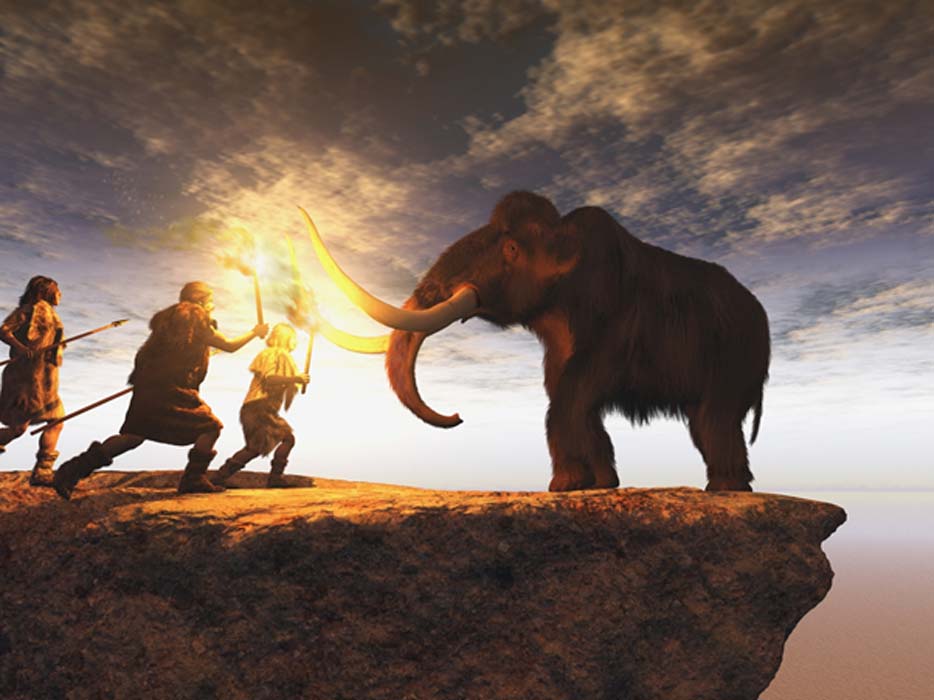
New Discovery Shows Prehistoric Humans May Have Hunted Mammoths to  Extinction | Ancient Origins
Homo Sapiens hunting mammoth- Shutter Stock

We are shocked and horrified to hear the news about a pregnant elephant who died in Kerala after ingesting firecracker laced pineapple. From wildlife activists, artists, and celebrities to career politicians, all have expressed their solidarity and regret over the animal’s tragic and cruel death. The issue of course has been polarized by people with vested interests and an entire state is blamed for the killing of the elephant.

However, amongst these noisy accusations and blame game, we have forgotten the real reason behind all these problems, which is human greed. Ever since we, the homo sapiens, spread from Africa to other continents we have wiped out species like mammoth, mastodon, saber-tooth tigers, and many other species by hunting them for food and other resources. The extinction of species has carried on to this day so much so that we had to reserve special areas like wildlife reserve and sanctuaries for the conservation of animals and plants. We are even credited to the wipeout of other human species like the Neanderthals. If you find it hard to believe just remember that we fought two world wars and evidence of ethnic cleansing is aplenty in Myanmar, Iraq, Syria, and other conflict-ridden areas because of our greed and inability to share resources.

Data tabled in Indian parliament shows that there has been a rise in man-animal conflict all over India. According to environment ministry, elephants and tigers were responsible for maximum human deaths from 2014-2017. But can we really blame them? It is us who have encroached on their forest lands in the name of development. We have cleared forests for farming, construction of houses, industries, and various other activities. Chunks of reserved areas are handed over to mining companies, often illegally for our never-ending need for resources. These same resources are needed to make our fancy vehicles, gadgets, beautiful houses, generating 24-hours electricity and many other comforting things that we take for granted.

After taking away their homes, we play the innocent victim and remain clueless as to why the animals venture beyond their borders. And then, we comfortably tweet from our homes, regretting the death of one elephant.

guidelines to write an effective blog

Most of the people urge for writing a good blog but somehow fails to do so. This is because either they lack in proper way of writing or lack in valuable content. While writing a blog one should keep in mind that what is the main focus of yours writing a blog. Question yourself about this for getting a good answer. Then find a good heading for it. A good heading will make a blog more effective. Writing a blog is not an easy task until it is not researched properly.

However, firstly one should be cleared about the topic they want to write for. After that getting a good heading for that particular topic will make readers attracted towards your blog is a good way to start. Secondly a good starting will make a good ending. By this I meant that staring line should be a way more attractive or interesting so that readers could generate interest in your blog. Your focus should be clearer with your blog; it should be easily understandable by the readers. Also, your blog should be more realistic as well as more relatable. For making your blog look creative you can use images related to your topic. Not only can this, including links be also effective. Giving an introduction part in the starting paragraph will give the readers a bit about the blog. For writing introduction part one should keep in mind 5WH(what, where, why, whom, when and how) so that the topic should be cleared. Else second paragraph should be a brief summary of the topic. And for third paragraph details can be given accordingly to the topic. In third paragraph using pointers will make the blog more effective and can be easily understand by the readers. And at last conclusion or your views will make a good ending.

A step-by-step guide for writing a good blog as follows:

  1. Your topic should be realistic or relatable to the readers.
  2. Your topic based heading should be attractive so that more and more readers generate their interests.
  3. There should be limited words count as if minimum 500 words or maximum 800 words.
  4. You should know about your targeted audience.
  5. The content language should be easily understandable to the people.
  6. Including images or links will make an effective blog.
  7. Paragraph should be limited (at least 4 paragraphs).
  8. Good use of words will make your blog effective.
  9. It should be plagiarism free.
  10. Quotes if used of any author in your content then you should mention their names as well.

undefined

To conclude, an effective blog is that which keeps in mind the focus of their blogs from starting to end. Also by revising your blog after writing it, will help you by finding your grammatical mistakes. If a blog contains grammatical mistakes, then the value of the blog will decrease and will no longer efficient or attractive to the readers. Hence, writing a blog is easier while remembering the above guidelines or points.

the concept of gender roles : what we think and what it is…….

Although, we have known the word gender in grammar obviously, it is being used differently now. The word gender is now being used Sociologically, or as a conceptual category, and it has been given a specific meaning. In its new incarnation gender refers to the socio-cultural definition of man and woman and assign them social roles. It is used as an analytical tool to understand social realities with regard to women and men.

The nature of this article is not based on feminism but to define what people see in terms of gender roles. Today also it is taught in school textbooks of kids that a woman is meant to be a house maker or a teacher or a nurse and same as a man is meant to be a doctor or a business person. When these jobs are reversed, we fall into a huge whirlpool of thoughts, is it even possible. And we sometimes take these things to be wrong. But, this is not the way gender roles works.

Gender Division of Labour: Gender division of labour, refers to the different roles, responsibilities, and tasks to women and men based on societal ideas of what men and women should do and are capable of doing. Different tasks are assigned to girls and boys, women and men according to their sex-gender roles, and not necessarily according to their individual prefrences/ capabilities.

Gender division of labour also leads to hierarchies and inequalities because men and women’s labour is not valued or rewarded equally. Even now, equal pay for equal work is not the norm in most countries; housework is unpaid; and women are the first to be fired when recession hits the workplace. The gender division of labour is not the same everywhere. It is specific to culture, location, and time. To challenge the gender division of labour in society means challenging what being a “man” and “woman” in a society entail.

The situation may not always be intolerable; but it is impossible to predict that it will not become so. Clavdia von Werlhof

The gender division of labour is responsible for statistics like : Globally women hold only 14 per cent senior management positions (UNDP Human Development Report, 1995) ; the ratio between women’s salaries and men’s salaries in US continues to be 3:5 and this has not changed in the last one hundred years. Seventy per cent of the world’s poorest and illiterate people are women.

This data exactly show that what we thought of gender roles and what they really are. These are how the tactics work in this world. It is said that, “Woman’s place in the house, therefore women should be in the both houses of Parliament “.

In the conclusion, there is a need to focus on the positions women are placed in the society. Because women gives birth to a child and feed the child, it does not mean that the work of women is to nurture only. To assess the position we need to look at the social relations of gender or power relations between men and women. To improve women’s position the existing norms, structure and power relations between men and women have to be changed.

Refrences:- 1. Understanding Gender by Kamla Bhasin 2. Lerner Greda, 1986, The Creation of Patriarchy. gender-inequality-in-higher-education