hydroxychloroquine doesn’t reduce Mortality

Hydroxychloroquine cloroquina medicine with pills

The RECOVERY trial, in the U.K., has found no clinical benefit from the use of hydroxychloroquine in hospitalized patients with COVID-19. 

The RECOVERY trail which is the large randomized controlled trial in the U.K. began in the march. This trail has enrolled over 11,000 patients.

It is a dynamic trial assessing five candidate drugs and convalescent plasma therapy for treating COVID-19 in patients in U.K. hospitals. 

The trial investigators found that there was no significant benefit in mortality reduction in the intervention group, which was the primary objective.

It then came to light that the drug did not have the desired beneficial effects. 

“We have concluded that there is no beneficial effect of hydroxychloroquine in patients hospitalized with COVID-19. We have therefore decided to stop enrolling participants to the hydroxychloroquine arm of the RECOVERY Trial with immediate effect,” a June 5 press release says.

According to the release, a total of 1,542 patients were randomized to receive hydroxychloroquine for 10 days while 3,132 patients in the control arm received only standard care. 

The researchers found that there was “no significant difference in the primary endpoint of 28-day mortality”. While mortality was 25.7% in the intervention group, 23.5% in the control group, which is not statistically significant.

There was no evidence of beneficial effects in-hospital stay duration and other endpoints, either.

Outcomes measured

The primary outcome was the reduction in all-cause mortality within 28 days of randomization. 

The secondary outcomes measured were to assess any reduction in duration of hospital stay and need for and duration of ventilator or ECMO within 28 days and up to six months after randomization.

“These data convincingly rule out any meaningful mortality benefit of hydroxychloroquine in patients hospitalized with COVID-19,” the release says. The researchers will soon make the results available.

Peter Horby, Professor of Emerging Infectious Diseases and Global Health at the Nuffield Department of Medicine, the University of Oxford, and Chief Investigator for the trial says in the release that “Hydroxychloroquine and chloroquine have received a lot of attention and have been used very widely to treat COVID patients despite the absence of any good evidence. The RECOVERY trial has shown that hydroxychloroquine is not an effective treatment in patients hospitalized with COVID-19,” 

Huge speculation

Deputy Chief Investigator Martin Landray from the University of Oxford says: “There has been huge speculation and uncertainty about the role of hydroxychloroquine as a treatment for COVID-19, but an absence of reliable information from large randomized trials. The preliminary results from the RECOVERY trial are quite clear — hydroxychloroquine does not reduce the risk of death among hospitalized patients with this new disease.”

“The RECOVERY trial, in addition to the signals from other studies we have received so far, is enough to convince me to not offer hydroxychloroquine to hospitalized patients,” Nahid Bhadelia, a physician at Boston Medical Center, told Science. Prof. Landray added to this, saying: “If you, your spouse, your mother gets admitted to hospital and is offered hydroxychloroquine, don’t take it”.

Post-exposure prophylaxis

Another trial found that hydroxychloroquine drug was not effective even as post-exposure prophylaxis in asymptomatic participants who have had high-risk exposure with a confirmed COVID-19 case. Nearly 88% (719 of 821 participants) had such high-risk exposure. The results of the trial published in The New England Journal of Medicine found that the incidence of COVID-19 illness was not statistically significant in the group that received the drug compared with the control group. While 49 of 414 (11.8%) participants who received the drug developed illness, 58 of 407 (14.3%) participants who got the placebo fell ill. Side-effects were more in the intervention group but no serious adverse events were reported.


12 June – World Day Against Child Labour

Whenever we recall our childhood days then most of us remember those carefree and happy days of our life. We remember going to school, reading books, teacher’s surprise test, playing cricket with friends and a lot more activities that we miss dearly today. We were always fortunate because we were protected and our dreams were nurtured and cherished by our parents. But there are many children who are less fortunate. They work day and night in unfair circumstances for little or no money. In some extreme cases these children are even forced to work under threat of violence or death. These children mainly work to support their families who are usually trapped in vicious circle of poverty.

Child Labour – A Plague

Children are classified as child labourers when they are either too young to work, or are involved in hazardous activities that may compromise their physical, mental, social or educational development.

According to estimates by the International Labour Organization (2017) there are 152 million children aged between 5-17, subject to child labour. Among this 66 million are girls and 88 million are boys. Among this 72 million are engaged in dangerous work.

  • Almost 1 in 10 children between the age of 5 and 17 years old have to work.
  • About 4.3 million children aged below 18 years are in forced labour.
  • 70.9% engaged in agriculture.
  • 17.2% working in service sector.
  • 11.9% working in heavy industry.
  • Most child labour takes place in the informal sector.
  • Nearly 70% of children does unpaid work.

Africa alone is the home to 72 million child labourers, which is higher than any other continent. Asia and the Pacific rank second highest with 62 million child labourers in this region. Together they account for almost nine out of every 10 children in child labour worldwide. The remaining child labour population is divided among the Americans – 11 million, Europe and Central Asia – 6 million and the Arab States – 1 million.

About World Day Against Child Labour –

The International Labour Organization launched the World Day Against Child Labour in 2002 to raise awareness and prevent child labour. Each year on 12 June this day brings together government, employees, workers, organizations, civil societies and many people from around the world to highlight the seriousness of the issue. Rules and regulations are made, solutions are sought on how to fight and protect the rights of these children and to provide better quality education and health facilities to child labour.

Theme of World Day Against Child Labour 2020-

The theme of World Day Against Child Labour 2020 focuses on the impact of crisis on child labour. The theme for 2020 is “Covid 19 – Protect Children from Child Labour,now more than ever!” This pandemic and the resulting economic and labour market shock are having a massive impact on people’s lives and livelihoods. Unluckily, children are going to suffer the most. The crisis is going to push millions of vulnerable children to clutches of Labour employees. These children now have to work even in worst conditions and for longer hours.

This is the time when we have to join hands together to eradicate this evil situation which feeds on our innocent children, it will continue to plague our community. This is the time to show humanity. Pledge that we will never let any children practice child labour. We will safeguard their childhood and provide them with a chance to dream big.

“Life of Little ones are destroyed, when child labour is employed.”

P. S. – For more information visit to http://www.un.org.

global media

Communication is the act of conveying yourself to one another. It can be two or more than two or groups. So as the information is the most powerful and most critically sought commodity in today’s world. In our contemporary society those who controls these information can be said to be most powerful. With global media there is a free flow of information around the world through media.

In this free flow of information, technology in this modern era plays an important role. But sometimes this technology can be a negative factor for global media. Technology is being so advanced that its easy to circulate or get the information but if technology become as negative factor than it can a failure for the flow of information. Developed countries can easily access the information but for the countries who are considered to be underdeveloped cannot be easy for them to have easy access to the global information. Basically, global media is a media that have access to all the information that can be taken through communicating with each other. That’s why communication is biggest source of information for media. Inspite of any geographical distances or cultural distance this sourc e of information can be reach to thousands of homes. Internet is the main source of information and also the main source of information for global media as well. Digital communication is a big advantage in global media. It is a media that is available or spread around the world through various medium like television, radio, internet, or etc. These information can be access by any person through any medium.

On the continuously changing scenario in global media environment communication and technology provides a platform for research with multiple ideas and perspectives. It is also a good reading for students, researchers, and academics. It can be the most known research and a blog to write on. It includes many features but the special features will include interviews, data reports on various countries, reviews on media posts or etc. The global media includes many considerations such as elimination of inequalities or removal of internal and external obstacles for free flow of information. An unbalanced flow of information among the media around the world is an great issue that can be seen from the developed countries to underdeveloped countries. Therefore media plays an crucial role in global media in providing free flow of information.

Global media is basically a source of information that can be provided around the world or circulated around the world through various medium such as internet, newspapers, television, radio, or etc. It also include changes in technologies, greater dependence in on global communication, greater independence and democracy, or etc. However, global media provides knowledge as well as ideas to the people around the world.

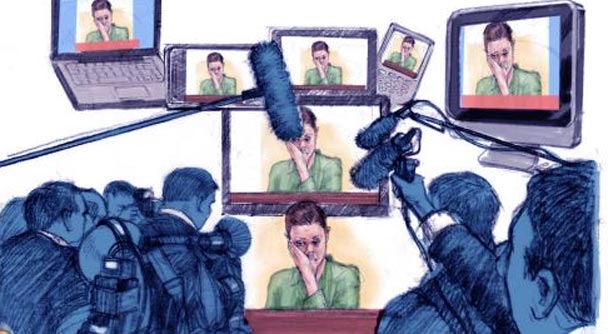
Should media play the role of judge and jury?

There have been numerous cases where the media has succeeded in bringing about change. It is a powerful influencer as it speaks directly to the public and can shape opinions. The Jessica Lal murder case is a strong example. The accused, Manu Sharma, was the son of Vinod Sharma, a wealthy and influential Congress MP from Haryana. Sharma tried to use his power to manipulate the case and did succeed initially by destroying evidence and turning witnesses hostile. The Delhi High Court was forced to acquit Sharma on grounds of lack of evidence. The acquittal resulted in a huge backlash throughout the nation which was helped on by the media. Jessica Lal’s sister, in an interview with Daily News and Analysis, said, “The media proved to be an extremely powerful force that came to our aid…It was the power of the media that enabled us to get justice. Had it not been for the media, people would have never known about how a family is being denied justice”.

However in another case, the media faced a lot of criticism. In the Ayushi Talwar murder case, Dr. Rajesh and Nupur Talwar were portrayed as guilty of the murder of their daughter and their servant, even though there was no such statement by the police and no conclusive evidence available. Media plays a vital role in moulding the opinion of the society and it is capable of changing the whole viewpoint through which people perceive various events. The media can be commended for starting a trend where the media plays an active role in bringing the accused to hook.

What critics of media trail say?

The Law Commission in its 200th report, Trial by Media: Free Speech versus Fair Trial under Criminal Procedure (Amendments to the Contempt of Courts Act, 1971), recommended a law to debar the media from reporting anything prejudicial to the rights of the accused in criminal cases, from the time of arrest to investigation and trial.

The media cannot be granted a free hand in the court proceedings as they are not some sporting event. Everyone has a right to free and fair trail and the media cannot take this away even from people accused of most heinous crimes.

The right to fair trial has not explicitly been made a fundamental right. That does not mean that it is a less important right. More than a legal right, it is basic principle of natural justice that everyone gets a fair trial and an opportunity to defend oneself. The commission believed that biased reporting by media publications have a  prejudicial impact on the suspects, accused, witnesses and even judges and in general on the administration of justice. This is criminal contempt of court, according to the commission; and for that laws should be made to impose reasonable restrictions on freedom of speech.

What the media says?

This is really a grey area and laws can be used to gag the media unnecessarily. Governments accused of corruption will try to suppress the truth during trial if media is not allowed to report on cases of misgovernance, corruption etc. It is true that contempt of court is a ground for restricting the freedom of speech, but the media has not tried to lower the dignity of the judiciary by exposing loopholes of the investigation and the prosecution. And if judicial decisions also appear to be arbitrary, they must be subjected to ruthless scrutiny. It will be dangerous to gag the press in the name of contempt of court. If the appellate court feels that the media publicity affected fair trial, it can always reverse the decision of the lower court.

Instead of a law gagging media, there should be a self-regulatory body with sufficient punitive powers. The existing bodies of PCI and NBA are merely organizations that can give out a warning but cannot take any action. They should be given more powers so that they can punish media organizations that break rules and conduct unfair media trials.

Evaluation of Indian Architecture

Art, design,  creativity, innovation, Music, dance, culture, and heritage is the Identity of INDIA. When we look back at our history of architecture we can understand why It’s Our pride. British, Dutch, Portuguese, Mughal, French foreign forces came to India and Buddhism, Jainism and other religions came here and spread their culture. That’s why Indian architecture is the fusion of a different kind of architectural style and tradition.

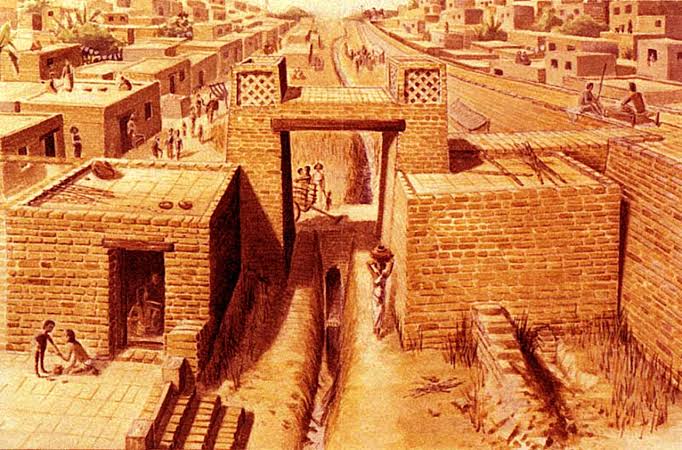
The History of India begins with the birth of the Indus Valley Civilization,(2600 BCE – 1900 BCE) The Indus Valley Civilization covered a large area around the Indus River basin and beyond in late Bronze Age India. The civic and town planning and engineering aspects of these are remarkable, There are granaries, drains, water-courses and tanks, but neither palaces nor temples have been identified, though cities have a central raised and fortified “citadel”. Around the 2000 year ago India had Smart cities Like Harappa, Lothal, Mohenjo-Daro

After the Indus Valley Civilization, there are few traces of Indian architecture, which probably mostly used wood, or brick which has been recycled,

Probably around 400 BCE Indian rock-cut architecture, mostly Buddhist, and there are also a number of Buddhist images that give very useful information.

A STUPA FROM AJANTA CAVE

Buddhist construction of monastic buildings apparently begins before the death of Buddha.

The Great Stupa at Sanchi is one of the oldest stone structures in India, and an important monument of Indian Architecture. It was originally commissioned by the emperor Ashoka in the 3rd century BCE. Its nucleus was a simple hemispherical brick structure built over the relics of the Buddha


Sanchi Stupa is a Buddhist complex, famous for its Great Stupa, on a hilltop at Sanchi Town in Raisen District of the State of Madhya Pradesh,

Temple Architecture was a gradual evolution starting from the rock cut- cave temples to monolithic rathas which finally culminated in structural temples

The middle period saw great developments in the field of architecture. With the coming of Muslims to India, many new features came to be introduced in buildings. The development of the Muslim Style of Architecture of this period can be called the Indo-Islamic Architecture or the Indian Architecture influenced by Islamic Art. The Indo-Islamic style was neither strictly Islamic nor strictly Hindu, One of the best architectural traditional style

The Taj Mahal,  one of the universally admired masterpieces of the world’s heritage.

With colonization, a new chapter in Indian architecture began. The Dutch, Portuguese and the French made their presence felt through their buildings but it was the English who had a lasting impact on Colonial architecture.

The Victoria Memorial is a large marble building in Kolkata, West Bengal, India, which was built between 1906 and 1921

Now we are living in the 21st-century style, traditional, plan structure changed, modified but these architectures are immortal and inspiring generation after generation.

Eco-Friendly Architectural plan

From Indus Valley to eco-friendly plan creativity, hard work, ideas, style tradition makes our country beautiful.

LAC- India v/s China

Amid the going tensions of the world crisis, Indian and Chinese armies are again and again clashing at various points along the Line of Actual Control (LAC). Although, there were many times in the past when the two armies clashed with each other since there has not been a proper demarcation of the border lines between the two large economies. Also, incidents as these are uncommon along the LAC as both sides have differing perceptions of the alignment of boundaries. But what has caused a sudden attack on the Line of Actual Control?

Reasons for the current standoff-

Recently the standoff at LAC occurred at four places- Pangong Tso, Galwan Nalah, Demchock in Ladakh and Naku La in Sikkim, though the specific reasons for these clashes remain unclear. However, co-ordinated nature of Chinese intrusions at different points along LAC have raised concerns about Beijing’s intentions. At times it’s been noted that China’s reaction to Indian efforts over the last few years to build border infrastructure has been ultrasensitive and it fears that activities such as-
  • Construction of a feeder road near Galwan river connecting with the DS-DBO road.
  • Building a road in Pangong lake area.
Although both the new roads lie on the Indian side of LAC, their purpose is to strengthen further the Indian position along the LAC which might have irritated China which feared it and might have threatened it’s occupation of Aksai Chin and Lhasa-Kashgar highway. Also, China remains much more concerned about the newly constructed Dharchula to Lipulekh and believes that this newly inaugurated road has affected China’s border security in Tibet. While India decided to split Ladakh from Jammu and Kashmir last year, a that unsettled Pakistan. Many experts believe India’s aggressive position on the issue of Ladakh and PoK is the real reason behind current standoff.

What is China trying to signal?

This time, the scope, scale and posture of China’s moves were unprecedented. Against the backdrop of dramatically slowing economy, criticism for the handling of the outbreak of the Coronavirus and worsening ties with many countries, Chinese leaders may have felt the need to show strength, especially over questions of national sovereignty. This can be seen, not only regarding the border with India, but also regarding Taiwan, Hong Kong and the South China Sea. Considering the United States as it’s main “rival”, and not India, it generally seeks to maintain stability in the border dispute with India.

Current status-

After a tough tug and war between the two countries along their security lines, both the sides are currently engaged in the dialogue process at an appropriate level to avoid every kind of tensions between the two.Senior military commanders of India and China were scheduled to meet on 6th June to find a solution, and as a result, both sides have slightly retreated from their current positions. While Chinese Army had reportedly retreated by 2kms, the Indian Army has stepped back by one kilometres.

History of LAC-

In 1993, after years of territorial standoffs and negotiations, China and India finally signed an agreement which attempted to mark out a long stretch of border between the two countries. This came to be known as the Line of Actual Control, but it’s precise location can be blurry, and there is still dispute between both of the world’s leading powers.
So far, this LAC has served as the de facto border between these two countries. Since, India is close to complete a major upgrade of border roads, including a strategic military-use road that connects an airfield at Dalut Beg Oldie in northern tip of the Western section with the villages of Shyok and Darbuk towards the South, also India reactivated and rebuilt airfields along the border. It has also raised two mountain divisions and is creating a mountain strike corps to conduct offensive operations against China along the border.
Thus, the increased frequency of standoffs between the two are major cause of worry. If these standoffs drags on, nationalistic fervour is bound to kick in. The resultant public groundswell would restrict the options available to political leaders of both sides to resolve the issue.

ARTIFICIAL INTELLIGENCE

What is Artificial Intelligence (AI)?

Artificial intelligence (AI) refers to the simulation of human intelligence in machines that are programmed to think like humans and mimic their actions. The term may also be applied to any machine that exhibits traits associated with a human mind such as learning and problem-solving. The ideal characteristic of artificial intelligence is its ability to rationalize and take actions that have the best chance of achieving a specific goal.

Machine Learning – the core of AI

Machine learning is an application of artificial intelligence (AI) that provides systems the ability to automatically learn and improve from experience without being explicitly programmed. Machine learning focuses on the development of computer programs that can access data and use it learn for themselves.

The process of learning begins with observations or data, such as examples, direct experience, or instruction, in order to look for patterns in data and make better decisions in the future based on the examples that we provide. The primary aim is to allow the computers learn automatically without human intervention or assistance and adjust actions accordingly.

But, using the classic algorithms of machine learning, text is considered as a sequence of keywords; instead, an approach based on semantic analysis mimics the human ability to understand the meaning of a text.

Uses of AI:

  • Chatbots: Chatbots are artificial intelligence software that can simulate a conversation (or a chat) with a user in natural language through messaging applications, websites and mobile apps or through the telephone. A chatbot is often described as one of the most advanced and promising expressions of interaction between humans and machines. However, from a technological point of view, a chatbot only represents the natural evolution of a Question Answering system leveraging Natural Language Processing (NLP). Formulating responses to questions in natural language is one of the most typical Examples of Natural Language Processing applied in various enterprises’ end-use applications. Together, chatbots and AI can create a very powerful experience. Artificial Intelligence serves as the learning mechanism for many chatbots. Chatbot AI teaches the bots how to respond to your inquiries and helps the bot learn about your personal preferences. AI bots are responsible for engaging in meaningful conversation with an end-user using chatbot AI as a source of intellect.
  • Healthcare: Artificial intelligence in healthcare is the use of complex algorithms and software in another words artificial intelligence (AI) to emulate human cognition in the analysis, interpretation, and comprehension of complicated medical and healthcare data. Specifically, AI is the ability of computer algorithms to approximate conclusions without direct human input. What distinguishes AI technology from traditional technologies in health care is the ability to gain information, process it and give a well-defined output to the end-user. AI does this through machine learning algorithms and deep learning. The primary aim of health-related AI applications is to analyze relationships between prevention or treatment techniques and patient outcomes. AI programs have been developed and applied to practices such as diagnosis processes, treatment protocol development, drug development, personalized medicine, and patient monitoring and care. Large technology companies such as IBM and Google have also developed AI algorithms for healthcare. Additionally, hospitals are looking to AI software to support operational initiatives that increase cost saving, improve patient satisfaction, and satisfy their staffing and workforce needs. Companies are developing predictive analytics solutions that help healthcare managers improve business operations through increasing utilization, decreasing patient boarding, reducing length of stay and optimizing staffing levels.
  • Cyber Security: Cybercriminals will steal an estimated 33 billion records in 2023 according to the projections mentioned in the 2018 study from Juniper Research. That’s something very grave to watch for, and this sheds light on the pressing need to fortify cybersecurity across organizations. To tackle cybersecurity proactively and accurately, infusing intelligence across the entire security ecosystem of an organization is the need of the hour”. If the recent history is any indication, the targeted cyber-attacks that happened recently and even the past attacks suggest that no one is immune to these threats unless companies are fully prepared to respond. This calls for the implementation of fortified cyber security measures. Just the stand-alone cyber security solutions would not suffice. Artificial Intelligence has a huge potential to boost the cyber security profile of a company. AI could work in harmony with the cyber security implementations, to accelerate risk reduction exponentially. Many of the Cyber Security Solutions in the market uses AI models.  For example, LogRhythm uses machine learning to profile and detect threats, compromised accounts, privilege abuse and other anomalies. The Versive Security Engine (VSE) uses artificial intelligence to separate critical risks from routine network activity.  Cybereason’s AI-powered hunting technology determines whether an organization is under attack.

Latest Developments in AI

  •  Robotics is a prime area of development for the AI community so it’s no surprise that there are plenty of start-ups conducting research with the intention of taking the field further. Seattle company Olis Robotics caught the attention of GeekWire earlier this year with a solution designed to take robotics not just to the next level, but somewhere else entirely. According to CEO Don Pickering, “Olis Robotics’ innovation currently manifests in a plug-and-play controller loaded with our AI-driven software platform. The controller and our proprietary software can operate tethered robots on the ocean floor, satellite servicing robots using high-latency satellite links in space, or industrial robots cleaning up a dangerous chemical spill on land using 4G/5G networks. Our innovation will exponentially expand the role of robots to make an impact on human advancement and exploration.”
  • New AI software developed by researchers at the University of Oxford can recognize and track the faces of individual chimpanzees in their natural habitats. The software will allow researchers and wildlife conservationists to significantly cut back on time and resources spent analyzing video footage, according to a new paper. In Science Daily, Dan Schofield, researcher and DPhil student at Oxford University’s Primate Models Lab, School of Anthropology explained, “For species like chimpanzees, which have complex social lives and live for many years, getting snapshots of their behavior from short-term field research can only tell us so much. By harnessing the power of machine learning to unlock large video archives, it makes it feasible to measure behavior over the long term, for example observing how the social interactions of a group change over several generations.’ The computer vision model was trained using over 10 million images from Kyoto University’s Primate Research Institute (PRI) video archive of wild chimpanzees in Guinea, West Africa. The team at Oxford hopes the new software will help improve conservation efforts in areas where chimpanzees are endangered.

WORK HARD! OR WORK SMART?

When someone tells you to WORK HARD! What does this hard work mean? Why we are always supposed and forced to work hard? Generally, everyone gives us this blessing or advice for us to work hard! To work by investing all of your efforts is your hard work, but, when you invest all of your brains is SMART WORK!


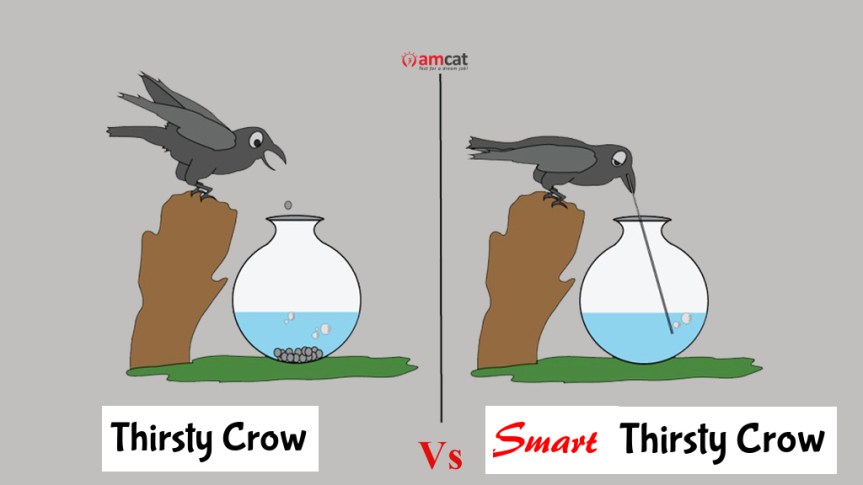
Your approach towards your work shows, either you are doing hard work or doing smart work. When you work hard, then also you achieve your target, but, the journey is quite stressful and time taking. On the other hand, if you work smartly, you find valid shortcuts, less time-consuming ways to proceed, good planning, and many more.


Hard work is something like bull work; the bull is used in fields as they are very strong and have a lot of physical power. Moreover, smart work is the logical effort, your efforts are not only for sake of completion of the work, but you also enjoy doing that, manage it well and accomplish it.


In colleges, there are students of two different categories, one who studies the whole syllabus putting their blood and sweat to get good marks or to be in the first position. On the other hand, some students come in the second category, they analyse, what is going to come? What is the actual pattern? They contradict this based on previous year question papers. Their inclination is towards smart work, not hard work!


Hard Work set one’s sight on the quantity, maybe it becomes boring after some time, but, it is done with all your heart and gives the best results. Smart Work set one’s sight on the quality, one find ways to reduce time but put all the efforts, this also gives the best results.


Always do laudable work! Hard work pays off. Same, Smart work pays off! If one believes, hard work is more profitable, than one should go with that, and if, one finds smart work more profitable, then go with the strategies of smart work. Work Hard or Work Smart, focus on the positive outcome.


To create the foundation of your achievements, you must do hard work, but, to do the same work in less amount of time, and more efficiently, you should work smartly.


Working hard requires a lot of time, efforts as it is a traditional work style, working smartly give you outputs earlier, and much more easily as you worked by analyzing and managing.


For achieving your goals, not only physical strength is required, but mental strength also plays a very important role in your journey. You have to rub your mind, make it sharper, understand your goal, and start a journey which involves creative work, time management, and many more.


Hard Work and Smart Work together will give you TRIUMPH! Many famous personalities: Albert Einstein, Isaac Newton, Aryabhata has given their lives for their researches; those researches show their hard work and are useful for us till date. They used their mind smartly and did hard work simultaneously.


BE A SMART HARD WORKER!

😁#’Hard’to Survive During Lockdown without ‘Smartphones’#😁

“Life is not all about surviving” Like animals. All animals on this earth requires 3 basic things that are oxygen, food & shelter. But is this really 100% true? 🤔According me, today this three words are limited upto animals because humans requires so many things. There are lot of things which are integral part of our life. The best example is SMARTPHONES.📱 Smartphones are the humans closest friend from age group 1-100 everyone want this friend. 😬in this lockdown situations, if mobile phones are not there then imagine the situation 😰? How could we handel situation? If there were no smartphones at that time we don’t have any option from getting board 😞in packed rooms. In middle Sentuary, televisions became an integral part of life but our world is developed & so that smartphones are entered in our life. But that’s not matter, mobiles are only for entertainment but it gives us day to day updates like EDUindex News. In Lolockdowns, newspapers are also stopped for prevention purpose but only because of tv news and online library sources we are connected with world. Now, in this pandemic situations it is critical to take traditional schools so smartphones are useful there. Many schools are decided to take online. Therefore, smartphones proved how “SMART” They are😉. They entered in our life from eating to learning. All things are possible on this little device. Our day starts from smartphones(GM) and end up on smartphones(GN). 😄so that, in upcoming times, it will become our basic need.

Telecommunications workers held in Peru over Covid-19 5G cell tower conspiracy theoris

Villagers in rural Peru have detained technicians from broadband provider Gilat Peru over fears they were installing 5G technology, which they claimed was responsible for the coronavirus, police and the company said Friday.

The eight-member maintenance crew have been held since Wednesday by villagers in Acobamba province, more than 500 kilometers (300 miles) southeast of the capital Lima.The incident occurred late Wednesday when workers were sent to maintain an antenna in mountainous Acobamba’s Huancavelica region.

“They have detained eight workers from a telephone company, who maintained the antennas that provide internet to public places such as educational centers, under the pretext that they are 5G antennas that, in some way, cause Covid-19,” regional police chief Alejandro Oviedo told TV Peru.

“They were held when they tried to leave and we had no communication with them since Wednesday night,” said Gilat Peru spokesman Arieh Rohrstoc. “They mistakenly think Covid is transmitted by radio waves, our technology is wireless, and the virus cannot be transmitted by electromagnetic waves,” he said. Farmers from the Huachhua Chopcca community in Acobamba demanded the technicians remove existing antennas as a condition of their release.

“The engineers have not been kidnapped,” community spokesman Lorenzo Escobar told PPP radio, adding that they were free to move around and were given food. He said the men had been held when they entered the area after the start of the nighttime curfew and had broken quarantine rules. Escobar said the community council would hold talks with Gilat Peru representatives on Saturday and the men would be released.

Peru is the second-most afflicted country behind Brazil in Latin America, with more than 214,000 confirmed cases and more than 6,000 deaths. Acobamba province, which rises to just about 4,000 meters above sea level, has one of the country’s lowest infection rates.

Due to spread of misinformation and lack of awareness about the virus, paranoia and hysteria has spread rapidly around the world . As reported by The Hindu in April, mainly people around the world have been tearing down cell phone towers believing especially 5G towers to be linked to the spread of the Corona-virus.

I was reported that in the month of April alone , 50 towers had been damaged in Britain, and 16 in the Netherlands, along with similar reports surfacing from Ireland, Cyprus, and Belgium as well.

Popular beliefs and the conspiracy theories that wireless communications pose a threat have long been around, but the global spread of the virus at the time that countries were rolling out fifth generation wireless technology has seen some of those false narratives amplified.

“I am absolutely outraged, absolutely disgusted, that people would be taking action against the very infrastructure that we need to respond to this emergency,” said Stephen Powis, Medical Director of the National Health Service in England, in early April.

Posting treats of attacking phone masts were received on likes of Facebook.One Anti-Vaccine Group posted in April on Facebook 12 photos of charred phone mast, with quote, “Nobody wants cancer and covid19. Stop trying to make it happen or every pole and mobile store will end up like this one.”

Source: 1.https://www.hindustantimes.com/world-news/telecommunications-workers-held-in-peru-over-covid-19-5g-scare/story-PVu1bSAp7Uo7LwEGjvDOJP.html?utm_campaign=fullarticle&utm_medium=referral&utm_source=inshorts

2. https://www.thehindu.com/news/international/conspiracy-theorists-burn-5g-towers-claiming-link-to-coronavirus/article31395286.ece