HR Strategies After post shutdown

As businesses reopen, employers and HR professionals are confronting unprecedented workplace changes and an evolving patchwork of new laws, regulations, and guidance that demand compliance. New workplace safety standards, leave entitlements, discrimination concerns, and budget constraints are only a few of the emerging sources of potential legal risk to employers.

Fortunately, HR professionals can avoid and mitigate these risks without reinventing the wheel. Instead, they can rely on fundamental best employment practices, and adapt those practices to manage evolving legal obligations and circumstances.

ARTIFICIAL INTELLIGENCE TRENDS IN HR

Artificial intelligence(AI) refers to the simulation of human intelligence in machines that are programmed to think like humans and mimic their actions.The emergence of Artificial Intelligence (AI) technologies in the past years has profoundly impacted a tremendous number of companies and sectors. Take the example of supply chain functions – these have been completely reshaped and fully robotized warehouses are now the new standard. In parallel, other support or corporate functions have also caught this technological wave, but not with the same speed and pace. Human Resources today are the perfect illustration: the shift towards Digital HR has started for pioneer organizations, but the majority of companies are still in the reflection and conceptualization stages.

STRANDBEEST

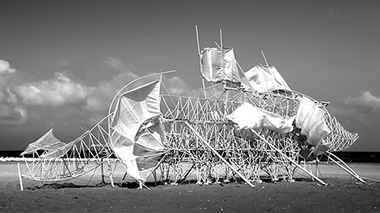
 A “ strandbeest” is a kinetic creature created by Theo Jansen, since the year 1990.Theo Jansen who is a physicist turned artist, have been successful in creating lives on beach, which survives on wind. This animated sculpture which appear to walk, is actually a fusion between art , engineering ,mechanics and biology .To Theo Jansen, the line between art and engineering is illusion, and depends upon our minds. This sculptures  ,are like walking animals , believed to have artificial life. These are constructed from PVC pipes, zip ties, favric, wood. Theo Jansen have been dealing in strandbeest since 1990, and from then it is continuously improved every year. Such kinetic sculptures are based on the models, where the connecting links and triangle converts to stepping motion of six legs, by way of rotating the axle. If compared, the strandbeest travel way more efficiently and  faster than on wheels.

He designed the planar leg mechanism to create a smooth mechanism. These have applications not only in giat analysis, but also in mobile  robotics. The central crank link used by him did wonders, as it seemed to work like an electric  motor. The central crank would make the other links move .Jansen here applied the Newton-Euler mechanism. Initially he had  started with mere skeleton, to walk over the beach ,but  with time such skeletons were improved on to survive weather changes and bear storm. The sculptures are eventually prepared in a way to release in the beach environment, and lead their own lives. They’re even prepared to store air-pressure ,so that they can make their lives go on , in case of absence of mind. Jansen have now come to a stage of evolution, where one such model can detect when they’ve entered the water, they would by themselves move away from them. One of special model is even capable of sensing an approaching storm, and would eventually anchor itself to the earth. These  self –propelled  creatures were presented in an exhibition in 2016 in North America, where the Dutch artist mesmerized everyone with its breathtaking innovation.

Each species of strandbeest, have an unique Latin name reflecting upon their character, and adaptations. 25 years of exploring lineage  of beach animals, each  species retain the successful features of the previous ones, while shedding the ones that were unsuccessful. The strandbeest are something unforgettable by anyone ,who comes across it. I remember coming across this, through my social media profile as a kid, and could not take my eyes off from it.

Let’s Have A Look At Few Of Them

“Animaris Vulgaris”, was the first such beech animal built with 28 legs. But it could move its legs, only when lying down. It would collapse as soon as it stood on it’s own legs. The next one ,  was “ Animaris Currens Vulgaris”.This  one was the first such kinetic sculpture, to stand and walk .With each passing time, the models got better . The latest one is , “Animaris Suspendisse” ,the biggest of all the ones made till date. It is believed to have all the features like Ordis’ legs, nose feelers, sweat glands.It can gulp the wind, stores wind into recycled plastic bottles by squeezing air, and can sense when it’s about to enter the water.

Animaris Suspendisse

Phobos: Reimagining through a new view

3, 2, 1, Liftoff. You may remember the moment when the countdown was going on for the PSLV C25 at 02:36 PM IST to lift from Sriharikota, Andhra Pradesh on November 5, 2013, carrying the other five payloads containing the colour camera which now captured new images of Phobos moon. Let’s have the insights on the Mangalyaan. Mangalyaan or Mars Craft from its Sanskrit root words, the orbiter weighing 3 thousand lbs (1.35 thousand kgs) was a successful mission lately after being criticized for the initial failure. The budget was merely 73 million dollars or 450 crores Indian rupees equivalent to an Indian cinema movie’s box office collection for Ghajini in 2008 as recorded in 2019.

The planet Mars has two moons, namely Phobos and Deimos. The closest and the biggest among the two moons is Phobos. It was picturised as shown above with the color corrected six frames MCC on July 1, 2020, with 210m spatial resolution. The MOM (Mars Orbiter Mission) was 7.2 thousand km away from Mars and 4.2 thousand km from the moon Phobos. It is said that it comprises of carbonaceous chondrite. The giant crater on the surface, namely Stickney, Shklovsky, Roche & Grildrig was noticeable in the picture.

Actual image of the moon Phobos. Courtesy: ISRO

With its fuel efficiency estimated to be only for six months survives till now and achieved success on its first launch itself. On December 1, 2013, it went out of the gravitation field sooner. On September 24, 2014, after a long journey of 300 days makes it enter into the Mars orbit. The subsequent mission by ISRO, MOM 2 or Mangalyaan 2 did fail when the Vikram lander had lost connection after it crashes over the surface. There is no proper evidence of what exactly went wrong in the mission, but it is said that the ALP (Automatic Landing Program) braking thrusters had failed to result in the incidence. There was a big controversy between NASA and ISRO claiming the lander was found, although an Indian scientist spotted it.

Now ISRO with its grand vision is planning for Chandrayaan 3 to send Indian astronauts to space by 2022. This mission is again a cost saver with 35 million dollars for the new equipment and another 51 million dollars for the launcher. India has been already prosperous in launching 104 satellites just in a single mission. Chandrayaan 2 was made only with 141 million dollars budget.

The MOM as described has five instruments onboard:

1) MCC with a 2K×2K area array CMOS sensor for beautiful images of Mars in colourised format.

2) TIS (Thermal Infrared grating spectrometer) houses an infrared detector known as a microbolometer.

3) Methane Sensor for Mars (MSM) by its name is used to measure the presence of methane in the atmosphere, which is a differential radiometer with acute accuracy in parts per billion.

4) Mars Exospheric Neutral Composition Analyzer (MENCA) is a spectrometer to determine the contents in the martian environment

5) Lyman Alpha Photometer (LAP) is a photometer to find abundance in composition to know the actual components on the surface and more.

By these, we can know more about Mars and its moons. Also, you can check out the 3D model of Phobos here: https://solarsystem.nasa.gov/resources/2358/phobos-3d-model/

And also, about NASA’s blog claiming to find clues of the crashed Vikram lander: https://www.nasa.gov/image-feature/goddard/2019/vikram-lander-found

Protect our environment

The regular and healthy ecosystems helps us to clean our water, purify our air, maintain our soil, regulate the climate, recycle, nutrients, and provide us with food. They provide the raw materials and resources for medicines and other purposes. The development of urbanization is taken a high destroy on the environment. During the increase in the development of the lifestyle of the people, the condition of the environment is going dreadful. On one side, we were successful in science and in the technology is doing wonders to bring more comfort in life but on the other side, the environment is affected in many ways pollution, depletion of energy resources, poisonous air, and adverse weather conditions and so on and so forth.

As we know that greenhouse gases have poisoned the air and have also led to the depletion of the ozone layer of the atmosphere, which in turn has caused the temperature to ride. The solution to this problem is to grow more trees. Because the trees contribute to maintaining the air quality by emitting oxygen and thus reduce the greenhouse effect from the atmosphere trees save us from extreme weather conditions. Now, people are getting more aware of the benefits of planting trees as several missions and programs ate being organized by the government. Plastics cause much land pollution and also prove fatal for animals when they swallow polythene bags or pouches. We must stop the use of the plastics and we start to use paper bags instead of polythene bags. To reduce the use of natural resources like fuel, we should use public transport. We also don’t litter our own environment by throwing away the garbage and other wastes to the surroundings it adds up to bacteria and germs which causes diseases. The awareness about the conservation of the environment is most important to protect natural resources. Indeed, working on a personal level to protect our environment a lot. If every one of us begins to do our part in saving the environment the earth will again become the same beautiful and healthy place for living.

Why history as a subject is taught to us.

History is the major reason when boredom hits us hard in school premises. If the history period is after the recess then you are finished, you have to listen just theory that too the past of some random country which will in turn make you fall sleepy. As a school student I wondered why history is added as a subject, why we need to know about the thing which already happened..,moreover why do we need to learn the history of other countries!?? This is the most difficult task for some student’s and other side some student’s love this subject(kaise karte ho bhai..??…sigh!). Let me ask you why history is taught to us, also of other countries which doesn’t matter to us in the first place!?(this is what i used to think and hated the concept of studying history.) Do students really need to know about the history of their nation as well as the other nations? Well, as far as I think, history is important if it’s of our own nation. Studying history can provide us with insight into our culture of origin..getting facts of our own country will add up to our knowledge so as to how people used back then. We get to learn about the culture, the revolution, the disasters, the ruling of emperors, etc.,

Our own nation:-

We can get the better understanding of ourselves only the way when we get to know about the past..minding not only about ourselves but of others. What we are now, is the representation and modification of the past as others lived back then. We are the modified version of the past. We get to know about the ancient era their habitats, how they earned for their livelihood and all the sort of works which were manly and manmade as machines were not discovered. Understanding past gives quick idea about the norms, social instincts, rituals which were practiced back then and are still in consideration but we are slowly backing off. To enlight the culture then there is high time we need to know about the then culture which were in practice(not being superstitious but which are necessary as to our religion.) The relaxations and facilities we have for the transportation didn’t existed back then..so after knowing the situation and resources available at that time…here at present people discovered and introduced many sources. Not only transportation but there are various things other than this. The source of entertainment, sources for education, breaking Linguistic barriers, eventually availability of resources but lacking in utilising them and many more. This was all about our nation (for ones own nation if you are from abroad).

Learning about foreign countries:-

Is there really a need to know about the history of other countries?? Then the answer has the probability of 50-50. Firslty why my answer is 50-50 is because it depends on the interest of the individual. One may find it boring while the other might find it interesting to know about the other countries. Secondly getting knowledge will do no wrong but will eventually add up more. We will only and only get more knowledge which is no harm and will made you more knowledgeable. It is not important that others might follow the same culture as we do. When we study about the past of the world then only we understand as to why the world os the way it is! By studying who they are and suffering through different situations made them what they today. By seeing them ‘as they are’ without judging by our own mental standards. We can learn through others mistake not just individually but as a whole nation(we are taught that we should learn from others mistake and try not to committhe same.) Talking about Indians who are at high position in foreign nation would have thoroughly gone through the history of those countries to deal with their situation, which can be done by understanding them from the start, from the basic which is why learning world history tend to be important. If we don’t focus on histort then ultimately we will end up recreate the history.., as it is said that history repeats itself. So we should not be self-centred, and try to learn other countries culture too.

“We study the past to understandthe present, we understand present to guide the future. ” -William lund

SAVING CAPITALism FROM THE CAPITALIST

The essential notion of the capitalistic society is voluntary cooperation, voluntary exchange. The essential notion of a socialist society is force – Milton Friedman . An economic and political system in which a country’s trade and industry are controlled by private owners for profit, rather than by the state is defined as capitalistic society. Capitalism, undoubtedly, is a major driver of innovation, wealth, and prosperity in the modern era. Competition and capital accumulation incentivize businesses to maximize efficiency, which allows investors to capitalize on that growth and consumers to enjoy lower prices on a wider range of goods.

The benefits of capitalism are enjoyed by, Individual capitalists are typically wealthy people who have a large amount of capital (money or other financial assets) invested in business, and who benefit from the system of capitalism by making increased profits and thereby adding to their wealth.Prominent among critiques of capitalism are accusations that capitalism is inherently exploitative, unsustainable and creates economic inequality, is anti-democratic and leads to an erosion of human rights while it incentivizes imperialist expansion and war.

Saving Capitalism from the Capitalists: Unleashing the Power of Financial Markets to Create Wealth and Spread Opportunity is a non-fiction book by Raghuram Rajan and Luigi Zingales of the University of Chicago Booth School of Business.”Saving Capitalism from the Capitalists” is a groundbreaking book that will radically change our understanding of the capitalist system, particularly the role of financial markets. They are the catalyst for inspiring human ingenuity and spreading prosperity. The perception of many, especially in the wake of never-ending corporate scandals, is that financial markets are parasitic institutions that feed off the blood, sweat, and tears of the rest of us. The reality is far different. This book breaks free of traditional ideological arguments of the Right and Left and points to a new way of understanding and spreading the extraordinary wealth-generating capabilities of capitalism.

The free market is the form of economic organization most beneficial to human society and for improving the human condition.
Free markets can flourish over the long run only when government plays a visible role in determining the rules that govern the market and supporting it with the proper infrastructure. Government, however, is subject to influence by organized private interests
Incumbent private interests, therefore, may be able to leverage the power of governmental regulation to protect their own economic position at the expense of the public interest by repressing the same free market through which they originally achieved success. Thus, society must act to “save capitalism from the capitalists”—i.e. take appropriate steps to protect the free market from powerful private interests who would seek to impede the efficient function of free markets, entrench themselves, and thereby reduce the overall level of economic opportunity in society.

Top 5 books to read

There are times when you need an escape from your life and your time frame. Books are the best escape, the best time travel and the best indulgence. The world right now is going through a lot, and it wouldn’t be wrong to say that it is the toughest time for the humanity. From being on the verge of several wars, burning forests and an almost wrecking virus, there are times when you need to get away. 

Here’s a list of top 5 books you should read—

  1. The Bell Jar

One of the most beautifully written novels, The Bell Jar by Sylvia Plath emerges as an absolute get-lost-into novel. The stories about confinement and trauma are shocking, the narrative of this book is so indulging that you fall for it being real and forget what’s outside.

2. Looking for Alaska

A young adult fiction, John Green’s books never disappoint you. The descriptive nature of the book portrays a real film in your mind. The book is hard to leave and harder to get over with. You just keep falling in love with it every day.

3. Mrs. Dalloway

Considered as one of the best works of Virginia Woolf, Mrs. Dalloway is a book about a woman in the post-war days in Britain. It covers the day-long schedule in the life of a woman. The realisation of time and society that the book leaves you with is incredible. 

4. War and Peace

Another classic novel by Leo Tolstoy, covers the Russia’s days with Napoleon. It is amazing to read how ordinary people deal with the extraordinary conditions they encounter in their daily lives due to the war. It is worth reading as it teaches how people dealt during a wartime, when the the society was rapidly changing. The book is a thick-read but it is worth the time.

5. The Kite-Runner

The kite-runner by Khaled is a story about a young boy Amir and his friend Hassan. 

The story is based in Afghanistan, a war-torn and landlocked country in Asia. The kite-fight tournaments, the friendship and the betrayal will have all of your heart.

Reach out to me on instagram @ekanika_shah

Why PUBG Mobile, Call of Duty Mobile is not banned in India?

Both PUBG Mobile and Call of Duty Mobile are available to download and play on the Google Play Store and the Apple App Store. The Indian servers of both the games are also live and are functioning at 100 per cent capacity.

Mixed ownership and the IP registrations might not be the actual reason as to why these mobile video games were not banned.

Earlier this week the government of India banned 59 Chinese apps in India, stating that these apps were threatening country’s sovereignty, defence, and public order. The list includes TikTok, Shareit, UC Browser, Clash of Kings and many more but not popular mobile games PUBG Mobile and Call of Duty Mobile.

Many people have been asking why PUBG Mobile and Call of Duty Mobile have not been banned despite being owned by Tencent Games, which s based out of Shenzhen, China. The answer to this question is that they have not been banned because they are not completely Chinese.

PUBG Mobile has been developed and is managed by the PUBG Corporation, a subsidiary of Bluehole, which is located in South Korea. After the initial success of the game, Tencent Games approached PUBG Corporation to distribute the game in China. Soon after the game was a success in China, Tencent Games brought it to India.

On the other hand, to launch Call of Duty Mobile Activision partnered with TiMi Studios, which is a subsidiary of Tencent Games. Activision is a subsidiary of the California based company Activision Blizzard.

Keep in mind that the mixed ownership and the IP registrations might not be the actual reason as to why these mobile video games were not banned. The government hasn’t issued any statement on this topic yet.

Both PUBG Mobile and Call of Duty Mobile are available to download and play on the Google Play Store and the Apple App Store. The Indian servers of both the games are also live and are functioning at 100 per cent capacity.

Google and Apple have removed all 59 banned Chinese apps from Play store and App store. TikTok was the first application of them all to be taken down from Play store. The popular short video platform is completely offline in the country right now which means the app isn’t working for any users in the country right now. In an official statement, TikTok noted that it is working with the Indian government right now.

@martin_christopher

India and Knowledge Society

Let knowledge come from all sides. (RIG VEDA):

Knowledge has always been an essential and distinguishing characteristic of human society, for human beings are unique among all species in their extended capacity to formulate, systematize, preserve and consciously transmit organized bodies of knowledge from one individual, community, generation and location to another. That is the essence of all that is known as education.

There is almost universal recognition that knowledge as a product and as an instrument will be the basic foundation for competitiveness of individual business and of nations in the 21st century. Robust research findings suggest that knowledge as a factor of production explains a substantial proportion of economic growth internationally.

 Historically, Indian society is a hierarchical society and its knowledge base has always been elitist. Whether it is the caste based system or the colonial education system, access to knowledge has primarily been the privilege of the few. But such a system can never lay the foundation for a holistic development strategy. Therefore, all socio-economic and political
ideas have to be focused on inclusive growth and socio-economic equality in the real sense

The recent focus of good governance is to enable inclusive growth and development. India has come a long way from the hierarchical society and its exclusive educational system which we imbibed from our cultural and social heritage, as well as our colonial past. The thrust of the envisaged changes in the society calls for knowledge for all and a shift towards an inclusive
knowledge based society.

“If we value the pursuit of knowledge, we must be free to follow wherever that search may lead us” said Adlai E. Stevenson. This is the idea behind the concept of an inclusive society based on free and easy access to knowledge for all.

Knowledge Society consists of practices and policies for using intellectual assets to support key economic objectives and to reduce vulnerability gaps, and in the process of social transformation strengthening national security .Knowledge management deals with the knowledge as a corporate resource. Knowledge culture is necessary for survival and success in the modern world of business.

Knowledge is only one input to the development process, but it is an absolutely essential one. Without adequate knowledge all the other essential inputs-land, infrastructure, factories, capital, technology, administrative and social organization-cannot yield full results. Enhancing knowledge generation, dissemination and application is the fastest, most cost-effective means of increasing the productivity of all these other resources and accelerating national development.
Development depends on four knowledge processes:

  • Knowledge generation and acquisition through scientific discovery, R&D and transfer of technology.
  • Knowledge adaptation through innovation to particular fields, needs and operating environments.
  • Knowledge dissemination through formal and informal channels from knowledge developers and adapters to those responsible for applying the knowledge in society.
  • Knowledge application through skilled action in fields, factories, classrooms, hospitals and every other field of activity to achieve practical results.

The competencies that would count in the emerging Knowledge Age are intelligence, knowledge, good formal educational qualifications and skills in communicative English-we are abundant in it.

Knowledge is important not only for the rich but also for the poor. This is all the more relevant in a country such as India where the gap between the rich and the poor is enormous. Thus India has to closely link economic development with social development .Technology can assist in the development of the social sector. The anytime-anywhere and death-of-distance paradigms of technology enable better leveraging of scarce resources. Computerized learning aids, cyber classes and e-education are instances of use of technology in education. Knowledge is the key driver in the race for economic leadership. A key imperative today is for the government to collaborate with the private sector and industry in building knowledge infrastructure. This includes partnership for developing talent, formulating conducive regulatory framework, creating bandwidth and providing affordable computing power.

It is suggested that Indian policy makers and organisations consider focusing on the following areas to prepare for a knowledge-based economy and society.

First, good quality institutions, a reasonable degree of contestability in the economy and in polity, and an outward-orientation are essential for creating, diffusing and adapting knowledge in India; efforts should be made to deepen and institutionalise economic and governance reforms.

Second, strong education and training in technology and science are essential as knowledge cannot be absorbed unless some basic knowledge is already possessed. Reforming education policies and regulations, particularly those designed to increase supply and quality, should be an urgent priority. India must preserve traditional knowledge and subject it to scientific enquiry and application.

Third, capabilities to take advantage of international conventions such as converting product and process knowledge into patents and intellectual property rights must be developed. Commoditisation of traditional knowledge by more resourceful countries needs to be addressed through cooperation among developing countries, which have similar interests.

Fourth, private and public sector firms and organisations of developing countries must be open to new ideas. There is no more insidious colonisation than colonisation of the mind. In most Indian organisations, the desire to reform traditional methods of administration and delivery of government services is essential if the efficiencies arising from the knowledge-economy are to be realised.

Fifth, multiple sources of new ideas and experiments, including rural technology innovations, need to be cultivated. If such sources of ideas are combined with encouraging social entrepreneurship, i.e. meeting social needs with capitalist means, and with effective public private partnerships, application of knowledge-economy to diverse areas can be facilitated.

Sixth, a great deal of knowledge is organisation, context or location-specific. The challenge is to use it to address specific economic and social needs. India’s heterogeneity can be used to great advantage in discovering and diffusing location specific knowledge to develop more sustainable, relatively less elaborate, production and supply chains.

These, in turn, may help increase resilience of local economies to external shocks.

The National Knowledge Commission (NKC), an advisory body set up in 2005, has five focus areas, namely easy access to knowledge, emphasis on education at all levels, creation of knowledge, application of knowledge to all sectors, and better delivery of services in all sectors. The NKC however has not received strong political support. Its recommendations have been blocked by petty political and bureaucratic rivalries. Unwillingness or inability to assert strong political leadership by the Prime Minister in this area has contributed to the erosion of his authority, while constraining India’s future options and prospects.

Many believe that those representing Indian institutions will have the capacity to push for a level playing field on the world scene as far as access to technology and the relevant knowledge bases are concerned at the same time as they foster the development of local knowledge and ICT applications. However, this will depend on other factors such as international trade relations and whether the government and other stakeholders can avoid becoming victims of the ICT fetish. India’s resilient features and strengths in terms of its social organisation, its cultural resources and its vast reservoir of knowledge workers should not be frittered away as a result of greater than necessary participation in the global knowledge society.

India was a knowledge force in the ancient days. Let us again restore this status to Bharat again. Let us draw inspiration from our great wise men of the past and the intellectual leadership of the present and make the world exclaim, “The Wonder That Is India.”

India of the ages is not dead nor has she spoken her last word, she lives and has still something to do for herself and the humankind. (AURBINDO GHOSH)