The Importance of Real-Time Monitoring for Development

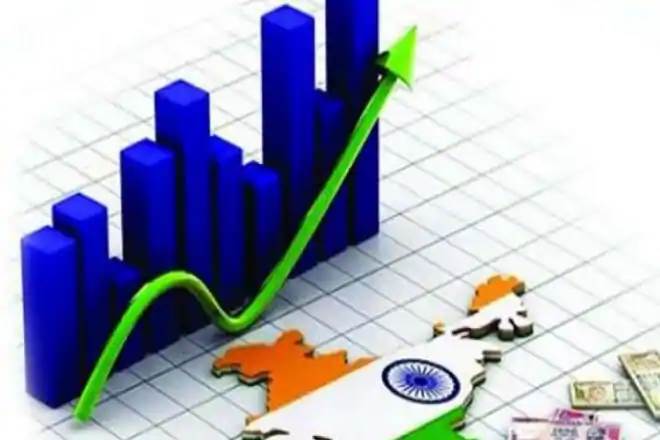
The use of real-time monitoring (RTM) to support national systems strengthening is growing, primarily due to the ubiquitous penetration of mobile phones into global audiences. According to the International Telecommunication Union, in 2011 alone, there were six billion mobile subscribers–with 79 per cent of them in the developing world (Abaza and Marschollek, 2017). This has been a boon in countries and regions where mobility and physical connectivity challenges can affect the diffusion of knowledge of key issues, which can stymie progress against key health and socioeconomic indicators. India is no stranger to RTM systems, having been one of the early adopters of mobile and digital technology in the low-and-middle-income world. It has 1.16 billion telecommunication subscribers in the world, as of March 2019 (TRAI, 2019), and has been adding nearly six million subscribers per month (TRAI, 2019). The Ministry of Health’s National Health Portal has shortlisted a whopping 72 monitoring platforms that have been authorised to track indicators from health records in hospitals to mapping water supply sources (2020).

Development programmes are actively embracing RTM approaches across a range of sectors; from maternal health to nutrition and water, sanitation and hygiene (WASH)- to improve planning, monitoring, and decision making efforts. During this COVID-19 response, it has become an even greater priority to invest in RTM models that adhere to physical distancing protocols. Caseloads are increasing rapidly with shorter doubling times and countries are scrambling every day to better understand what is influencing the outcomes as quickly as possible. Plus, given the transmission model, traditional monitoring efforts such as door-to-door assessments come with high risks for health and community workers. Real-time monitoring that allows low-touch data collection and dissemination would, therefore, be best in this context, as proven before during the Ebola and H1N1 outbreaks, both of which had similar contact restrictions.

The practice of real-time monitoring for strengthening national monitoring systems has been employed by UNICEF and government partners to strengthen health, education, water and sanitation and social protection systems around the world. As of 2019, 77 UNICEF country offices including India’s are using real-time approaches enabled by the use of information and communication technologies which enable faster retrieval and analysis of data and information, than paper-based or other traditional systems.

When using real-time approaches, data and information is provided more rapidly than before and allows stakeholders to monitor progress towards goals by rapidly accessing and reviewing data and information, seeing trends, and identifying corrective actions required based on informed evidence-based decisions within a day, or in some cases, within a few hours. Therefore, it is an efficient solution to monitoring needs and objectives. Just as important to keep in mind is that RTM approaches are only effective where the capacity to utilise frequent data and insights is sufficient and responsive; otherwise, the approach may have a negative effect of creating extra data collection burden without commensurate response.

When implemented, RTM integration helps to:

Provide a monitoring platform for communities and governments to track progress towards shared goals

Identify supply, demand and bottlenecks in service delivery chains

Increase accountability of government to the rapid delivery of services

Improve service delivery to hard to- reach communities through informing corrective measures

Assess and educate consumers and beneficiaries on relevant knowledge, practices and attitudes.

Battle of Tibet for a sense of identity


Tibet is one of the biggest victims of Human Right Violation to date. It was once an independent state headed by Dalai Lama (Spiritual and political Head of Tibet) but was forcefully annexed into China by then ruling of the People’s Republic of China. Since 1959, people of Tibet have been struggling for their rights such as Freedom of Expression, Freedom of religion, freedom of speech and freedom of Identity.
“These 50 years have brought untold suffering and destruction to the land and people of Tibet. Today, the religion, culture, language and identity … are nearing extinction; in short, the Tibetan people are regarded like criminals deserving to be put to death … However, the fact that the Tibet issue is alive and the international community is taking a growing interest in it is indeed an achievement. I have no doubt that the justice of Tibet’s cause will prevail, if we continue to tread the path of truth and nonviolence.” – The 14th Dalai Lama, 2009.
Tibet is a region on Tibetan Plateau in Asia, covering 2.4 million square kilometres, about ¼ of Total Chinese territory. It is the highest region on earth with a mean elevation of 4900 meters. Tibet holds strategic importance due to its proximity with India, the type of terrain it holds and It also is a centre of Buddhist Religion.
Tibetan dispute dates back a century, Tibet declared independence after falling of Qing Dynasty and kept function as Independent protectorate till 1959.
Tibetans signed a seventeen point agreement, handing over their sovereignty to the People’s Republic of China. Now China uses this very document as their validation over Tibet.
HISTORY OF TIBETAN UPRISE:- Timeline
1959- In Lhasa full-scale uprising broke out, tens of thousands die in brutal suppression by Chinese. Tibet was invaded by some 30000 Chinese troops who tortured, molested and raped an estimated 1.2 Lakh Tibetans. Dalai Lama’s government was exiled.
Dalai Lama was offered refuge by India. About 1 lakh people followed Dalai Lama to India and took refuge here, they were made to lose their homeland, to preserve their cultural and religious identity.
1965- Chinese authorities recognized Tibet as T.A.R. (Tibetan Autonomous Region). China retaliated the Indian move of providing Dalai Lama refuge by waging war against India.
1987- Dalai Lama asks to establish Tibet as a zone of peace and reinitiate dialogue for betterment of Tibet and it’s people.
1988- China imposed martial law in Tibet after a serious of riots as the initiations of Dalai Lama failed considerably.
1989- Dalai Lama was awarded the Nobel Peace Prize as the International community recognized his contribution and selfless efforts to establish peace.
• Present Scenario
This region is administered by China as T.A.R..Tibetans accuse China of carrying large scale Human Rights Violation and changing the outlook of the region by promoting large scale migration of Han people.
Chinese authority always responds to demonstrations by Tibetan people by further restricting already strict norms and snatching basic rights such as freedom of assembly, freedom of association and freedom of religion. Journalists and Reporters are not allowed to report matters of Tibetan people, their grievances often fall on deaf ears.
It is a famous saying that to destroy any society one needs to destroy their faith, this very plan was appointed by China and about 6000 monasteries were destroyed.
In recent turns of events, United States planned to recognize Tibet as Independent as a way out to pressurize China, this move is purely political but still, it serves its purpose of concentrating Global Attention on Plight of Tibetan People for Independence.
By Shubham Yadav

DALAI LAMA

Dalai Lama is a title given by the Tibetan people for the foremost spiritual leader of the Gelug or “Yellow Hat” school of Tibetan Buddhism, the newest of the classical schools of Tibetan Buddhism. The name “Dalai Lama” is a combination of the Mongolic word dalai meaning “ocean” or “big” (coming from Mongolian title Dalaiyin qan or Dalaiin khan,translated as Gyatso or rgya-mtsho in Tibetan) and the Tibetan word བླ་མ་ (bla-ma) meaning “master, guru”.The Dalai Lama is also known in Tibetan as the Rgyal-ba Rin-po-che (“Precious Conqueror”)or simply as the Rgyal-ba.

The rôle of the Dalai Lama
Potala PalacePotala Palace, the Dalai Lama’s residence until 1959
The Dalai Lama is the head monk of Tibetan Buddhism and traditionally has been responsible for the governing of Tibet, until the Chinese government took control in 1959. Before 1959, his official residence was Potala Palace in Lhasa, the capital of Tibet.The Dalai Lama belongs to the Gelugpa tradition of Tibetan Buddhism, which is the largest and most influential tradition in Tibet.The institution of the Dalai Lama is a relatively recent one. There have been only 14 Dalai Lamas in the history of Buddhism, and the first and second Dalai Lamas were given the title posthumously.According to Buddhist belief, the current Dalai Lama is a reincarnation of a past lama who decided to be reborn again to continue his important work, instead of moving on from the wheel of life. A person who decides to be continually reborn is known as tulku.Buddhists believe that the first tulku in this reincarnation was Gedun Drub, who lived from 1391-1474 and the second was Gendun Gyatso.However, the name Dalai Lama, meaning Ocean of Wisdom, was not conferred until the third reincarnation in the form of Sonam Gyatso in 1578.The current Dalai Lama is Tenzin Gyatso.

“I thought I’d have to try and convince him,” she told Reuters in an interview from her home in Auckland.

“That moment of recording him, my goodness I was shaking like a leaf before I went in there,” she said.

Kunin did the initial recordings at the Dalai Lama’s residence in Dharamsala in India.

Once back home, she worked with her husband Abraham and other musicians to produce music for the tracks.

“It’s an incredible honour. But it was unbelievably, daunting like the trust and responsibility. It’s immense,” Abraham Kunin said.

On a promotional video for the album, when asked why he had agreed to take part, the Dalai Lama answers: “The very purpose of my life is to serve as much as I can.”

The release comes five years after Patti Smith led the crowd at Britain’s Glastonbury Festival singing Happy Birthday to him for his 80th.

(Reporting by Sarah Mills; Writing by Andrew Heavens; Editing by Raissa Kasolowsky)

The Government’s Motive behind amending the PwDA

On Wednesday, 1st July,2020, the Department of Empowerment of Persons with Disabilities, under the Ministry of Social Justice and Empowerment, issued a notice proposing the Amendment of the Right of Persons with Disabilities (RPwD) Act, 2016.
It proposed the amendment to decriminalise “minor offences for improving business sentiment and unclogging court processes’’.

Activists have urged the government not to go ahead with the proposed amendments as it will nullify the small achievements gained over the years.
The Shillong Times reported that, “In a joint statement, around 125 disability rights organisations, civil society organisations and activists said they unequivocally register their strong protest against the proposal to “dilute and nullify” penal provisions contained in the Rights of Persons with Disabilities Act, 2016.”

The notification issued on Wednesday, stated that the decriminalisation of minor offences will alleviate the risk of imprisonment for actions which do not necessarily have “mala fide intent”.
It also claimed that the risk of jail is a deal breaker for both domestic and foreign investors – which is unwarranted in the post COVID 19 world, in order to revive the economy.

Even after protests, the Ministry is awaiting feedback within 10 days.

The Department’s director, and author of the notification, KVS Rao said, ”The government has undertaken the process of reviewing existing laws, many of which were devised by the British under the Indian Penal Code and had never been reviewed – such as IPC Section 377, which criminalises homosexuality. The Home Ministry has asked many ministries to take a relook at these laws. When this (RPwD) Act was formulated, many IPC Sections were added mechanically, without the consideration of reformulating to keep abreast with the times.
But the notification is simply a call for feedback and observations from the community. The intent is not to harm the community in any way or to pass an amendment which may be detrimental to the rights of disabled persons.”

Rao further stated that the department is considering reducing the penalty or punishments, for offences that are classified as severe but seem ‘minor’ to the ministry.

Disability activists on the other hand argue that the 2016 Act was the result of years of struggle, and came into force after India became a signatory to and ratified the UN Convention on Rights of Persons with Disabilities (UNCRPD) in 2007.

Dr. Satendra Singh, a Disability Rights Defender, argues that it has been just 3 years since the implementation of PwDA 2016 and rather than acting on the concluding observations of UN CRPD committee, the government is bringing out Penal Provisions Amendment in a pandemic with a 10 day deadline, that will basically dilute the act.

Akhil Paul, a member of the drafting committee for the PwDA, and the founder of Sense International (a charity working with the deaf and blind people of India), says that he can’t support this amendment as it is against the protection of rights of PwD.
He further states,” (Government) shouldn’t be diluting disability rights law for ‘business sentiment and unclogging court processes’

Disability activists have emphasised the fact that softening the penalties will only make public and work spaces unsafe for them.

Section 92 (a) of the Act provides a penalty of imprisonment when a person ‘intentionally insults or intimidates with intent to humiliate a person with disability in any place within public view’.

Vaishnavi Jayakumar from the Disability Rights Alliance, compared the above section with The Scheduled Castes and Tribes (Prevention of Atrocities) Act and further asked if the government would be able to do away with that.

Jayakumar further said that when a legislation concerns the right of an individual, the proposal should ideally be published in several regional languages widely and people should be given enough time to comment and provide feedback. The proposal has been published in English and ten days have been given for public feedback.

Murganantham Linguswamy, an advocate at the Madras High Court and a disability rights activist argued, “The government is trying to create a conducive business environment at the cost of an individual’s dignity – which is a fundamental right”.
He further stated that the National Crime Record Bureau has not published any statistics regarding offences against the disabled and hence changing legislation without reliable data would be arbitrary.

Since the lived experiences of PWDs cannot be understood by the able-bodied, consulting stakeholders is a critical step while framing inclusive policies. Even the method of notifying the amendment was problematic. In the name of stakeholder involvement, only 7 disability rights organizations.

But this wouldn’t be the first time this year that the government would prioritise economic stability over human rights. In May 2020, the Uttar Pradesh government suspended labor laws for three years, in an attempt to lure more investors in the State.

But now the State is not only denying the PWDs their right to a fair hearing but threatening years of progress that made PwDA 2016 possible.

They are not only patronizing ‘Divyang Politics’ but also are putting ‘Business Sentiments’ before the rights of marginalized communities.
This is not only immoral, but also goes against the Socialist nature of our constitution, which is embedded in our Preamble.

In the end, all we have to ask is this, Is India a Socialist State which will protect the rights of its citizens, or is it just a Capitalist Country masquerading as a Socialist one ?

ANIMALS OUT OF THE JUNGLE

The year is 2030

bullets rain like first spring of cherry blossoms

combing out weeds of growth

our men they who drank their mother’s milk

now taint the city with chants of Him

They who prayed and those who sinned now utter blasphemous the seven deadly

He the stalwart branded the savior now flourishes and feasts on the fear of others

I write with animosity

under the lamp flickering

the cowardly act of honor I dare not venture too deep

lest faced with the fate of few Bravehearts

prisoners of His twisted vices

exceeding Gogh and his canvas art

captivated His theatrics outshine His own repeatedly

devoted to mind and soul

devoid of emotions our own

solidarity the branding mark of respect

but muffled voices still echo the halls

pained hearts who’d seen their children last fall

No cheerful laughter light up the frosted pathways

no glimmer of hope could offer respite anymore

In this endless chasm of despair and despondence

the world now seems shrunken

let hell lose

let all go astray

when muzzled hounds start barking

when all animals are out of the jungle

ANOUSHKA MUKHERJI

The poem here is set in a dystopian era where an apocalyptic situation has ensued. As a result, the country is not dictated by a powerful antagonist who dominates and suppresses its people. The countrymen do not have free speech anymore. Those who tried to raise their voices against the injustice have met with worse fate. The poet expresses how grim like the situation he is facing and desires for freedom. This short poem is a brief description of the novel 1984 a novel by George Orwell. Draconian laws have been imposed on the poor countrymen and all of them live in fear of the dictator. The law-abiding citizens are not given a chance to woe or weep for their dead children who have been taken captive by the soldiers to keep their parents in check. All the kids have been put behind bars or executed. In this era, you are not allowed a mind of your own nor to have an opinion. Doing so would only lead to a fate worse than death for you. The poet expresses what might happen in later times when chaos would erupt and democracy would no longer exist. Bullets are scattered at every corner of the country and the country is in a bad condition. The poet says that it seems like the animals are now governing our country devoid of all of humanity and conscience, it is a warlike situation. It seems that the country is nostalgic for simpler times when democracy was still alive and people still had free speech and a mind of their own. There is perpetual war, omnipresent government surveillance in the future and the government neglects important matters. The country is wrecked and you have to follow His advice and His religion. Here ‘His’ signifies the government who runs the entire nation. The poet writes in secrecy for fear of conspiring against the government and being put behind bars.

Atmanirbhar Bharat

Atmanirbhar Bharat is not a new movement rather it is an advanced version of movements like the Fourth Five year Plan (1969-1974) and swadeshi movement.

  1. The fourth five-year plan was introduced by Indira Gandhi which stated two major objectives:

• Stable Growth of India
• Self Reliant India

  1. Swadeshi movement is also known as MAKE IN INDIA movement launched in the year 1905 by mahatma Gandhi which instructed to boycott British products and put into use the products made in India

And the current pandemic situation has made us again to get along with the previous plans to make our country self-sufficient. Hence our honorable prime minister Narendra Modi Ji has launched a mission well known as Atmanirbhar Bharat(self-reliant India). This mission has been interpreted by some people as a re-packaged version of the Make in India movement using new catchphrases such as ‘Vocal for Local’.

The purpose aim of this plan is two-fold. The primary measure such as liquidity infusion and immediate cash transfers for the poor which will work as a trauma shield for those in critical density.

The secondary measure to ensure long-term reforms in growth-critical sectors to make them globally competitive and attractive.

Together, this move may bring back the economic activity, affected by the Covid-19 pandemic, and generate new opportunities for better growth in sectors like coal and mining, power, micro, small and medium enterprises (MSMEs), agriculture, aviation, and defense,etc. Still, many challenges are required to be directed to attain the vision of this master plan.

On May 12, 2020, our Prime Minister, Mr. Narendra Modi, proclaimed a particular economic package of Rs 20 lakh crore (equivalent to 10% of India’s GDP) focusing to build the country self-sufficient against the tough race in the global supply chain and to help out in authorizing the migrants, poor and laborers who have been adversely affected by COVID pandemic. The Prime Minister’s address also emphasized that the MSME sector will act as the substructure for economic improvement. Intending to get back the MSME sector back on its feet, the Prime Minister proclaimed the MSME sector to be within the compass of the Atma-Nirbhar Bharat Abhiyan (ANBA).

This mission requires India to boycott Chinese merchandise (and promote AN Atmanirbhar India instead) and much tough within the short term for the country as India imports $75 billion prices of products once a year from China, to the extent that elements of Indian business.

Following the Galway depression skirmish on 15 June 2020

Indian troopers died, was serious concern creating the country self-directed, Chinese firms should not be given plans and projects like the Delhi-Meerut RRTS.

A large number of firms with weak balance sheets in aviation, hospitality, and tourism zones hit the toughest with little hopes of a revival. While the reforms have mainly addressed supply-side issues via a liquidity boost, it’s didn’t address industry-specific demand for a rescue package. Injecting money into businesses directly has not happened.

furthermore, in a short term, any move towards autonomy can bring back at the value of shoppers, United Nations agency can either pay additional for associates degree Indian different or deal with a less economical Indian alternative rather than enjoying the simplest product at the most cost-effective costs attainable.

Within weeks or months later, we expect a fixed strategy move towards achieving the objective of Atmanirbhar Bharat because, without them, it will redo the apathetic pathway of the Make In India initiative.

Let us hope the current plans and strategy under this mission do not hitch India’s economic progress like what happened just after the independence of India.

Police Brutality: Condemnation and Praise

“I say this with all sense of responsibility that there is not a single lawless group in the whole country whose record of crime is anywhere near the record of that organized unit, which is known as the Indian Police Force”
-Justice Anand Narain Mulla

After George Floyd’s tragic death, protests erupted in all of the world to speak against the power Cops held over minority groups in America.
How many minorities have to die in India, so that people realize the power cops hold over the voiceless and the powerless?

On June 19th, Bennicks was in his shop when he got to know that his father Jayaraj was picked up by the police. Bennicks then hurried to the Sathankulam police station, only to be arrested himself.

On June 23rd, the police told Bennicks’ family, that both the father and the son had succumbed to their injuries at the Kovilpatti Government Hospital.

According to the police, on June 19th, both the father and the son were arrested. They stated that,“Their Shop was open after the curfew time during the lockdown. Jayaraj, his son Bennicks and a few other friends were standing outside the shop. We told them to disperse. While others went away, Jayaraj and Bennicks sat on the ground and abused us verbally and rolled on the ground. In this, they suffered internal injuries.”
Though eyewitnesses said the latter is false as Bennicks went to the police station later that day ,

even if we try to believe the police’s statements of the event, it is highly unlikely that two people died due to injuries suffered by rolling on the ground.

Eyewitnesses alleged that after sub inspector Raghuganesh arrived at the station, the violence increased and more people joined in assaulting the duo. Eyewitnesses also alleged that the father and son had to change as many as six lungis each, as each one was drenched in blood.

Percy, Bennicks’ sister and Jayaraj’s daughter, alleged that the policemen “attacked them in the anus”.
She also revealed on June 24th, to media outlets, that the policemen had pushed her father by his neck to the floor and beaten him. When her brother, Bennicks questioned why, the police hit him too. Then they thrashed them both for almost two hours, after locking the door.

As the demands for justice grew louder ,and people outraged both in real life and on social media, the Thoothukudi police suspended two sub-inspectors in the Sathankulam station, though they did not admit to using force on either Jayaraj or Bennicks.
On June 24th, the Madurai bench of the High Court ordered the Superintendent of Police, Toothukudi, to inquire into the matter and submit a status report.

Although, I’d love to say that this is the first incident in India where someone was killed by the police, but this is a country where movies like Dabbang break box office records, where the cops are championed and glorified for practicing police brutality and “taking matters into their own hands”. We, as a country, have not only normalised Police Brutality, but we have also Romanticised it.
Only a few months ago, in February 2020, a man named Faizan was beaten up and was made to sing Vande Matram, along with four others, as the Delhi Police recorded the video. Two days later the man who was shot, during the Delhi Riots, took his last breath.
You’d think that people would outrage about an incident like this, but the Internet was quite torn. While some condemned this act by the police, others praised it under the guise of the allegations that these men could have been rioters taking part in the riots.
It seems that the people need to be reminded that the police is not supposed to kill guilty people either. They can’t be the judge, and the executioner themselves.

Which brings us to another case, that happened in Hyderabad. In November 2019, a veterinary doctor was gang raped and killed by four men. While the police was condemned for not taking action before the atrocity was committed (even though the matter was reported to them by the doctor’s sister), they were praised by the very same people for shooting the suspects dead. [6]
And while you may think that the guilty were brought to justice, the system which allows women to be raped and the police to sit quiet, never got fixed. Instead, they gave the very same police officers the power to shoot people dead to satisfy your blood thirst.

Between 2017 and 2020, over 5000 encounters have taken place in Uttar Pradesh alone. That is an average of 5 encounters per day.
During the lockdown alone, there were at least 14 cases where people were victims of police brutality.
Not four days after Jayaraj and Bennix died, another case of death due to police brutality was reported.
On June 27th, 19-year old heart patient, Sagar Chalavadi died of a heart attack after being lathi-charged outside an SSLC examination centre, in Karnataka.

What is saddening is the fact that most people fail to draw the parallels between most of the victims of police brutality being minorities and/or from economically weaker sections. Most Indian news outlets didn’t even mention that Jayaraj and Bennix were Christians.
According to a news report by Muslim Mirror, a total of 1,731 people died in custody in India in 2019 alone. Out of these most belonged to the poor and marginalized communities including Dalit, tribal, and muslims.

In India, people praise the police for acts of violence against those whom they think are in the wrong and condemn the acts of violence against those whom they think to be right.
That is why violence against an alleged rioter is justified but a simple shop owner isn’t.

What people fail to realize is that, every time they justify acts of violence by the police against an alleged rioter, or even a rapist, they give them the power to do the same to a student taking an examination, or a shop owner who kept his shop open after curfew.

Article 21 of the Constitution says that no person can be deprived of his or her life without the due process of law being followed.

Section 46 in the Code of Criminal Procedure, while explaining how an arrest may be executed, says: “If such a person forcibly resists the endeavour to arrest him, or attempts to evade the arrest, such police officer or other person may use all means necessary to effect the arrest.”
Sub-clause 3 of Section 46 further says: “Nothing in this section gives a right to cause the death of a person who is not accused of an offence punishable with death or with imprisonment for life.”

Even after these laws protecting the citizens of the country, the police have the power to get away with killings like these with nothing but a temporary suspension, or best-case scenario – a permanent one.
According to an article in The Hindu, “Custodial Deaths have been on the increase in recent years. They increased by 9% from 92 in 2016 to 100 in 2017, according to the National Crime Records Bureau. Since policemen responsible for custodial deaths, rarely get punished, they feel emboldened to continue using torture as the tool to get to the truth. In 2015, for instance the police registered cases against fellow police officers in only 33 of the 97 custodial deaths.”

Many questions preoccupy people’s minds, like why did the police take Bennicks and Jayaraj to a prison in Kovilpatti, when there is a jail located in Perurani, closer to Sathankulam?
Who is going to conduct the inquiry against the policemen?

While, these questions will likely be answered, soon, some questions remain unspoken; Why is it that the only time the voice of a person belonging to a certain minority, loud enough for Indians to hear, after they are dead?
Why are cops not given better training, that help them serve the people instead of holding power over them?
And above all, when will Indians start advocating for their own minorities, and prioritise them over minorities of other nations?

An Old Man

An old man lived in the village. He was one of the most unfortunate people in the world. The whole village was tired of him; he was always gloomy, he constantly complained and was always in a bad mood.The longer he lived, the more bile he was becoming and the more poisonous were his words. People avoided him, because his misfortune became contagious. It was even unnatural and insulting to be happy next to him.He created the feeling of unhappiness in others.But one day, when he turned eighty years old, an incredible thing happened. Instantly everyone started hearing the rumour:An Old Man is happy today, he doesn’t complain about anything, smiles, and even his face is freshened up.”The whole village gathered together. The old man was asked:Villager: What happened to you?Nothing special. Eighty years I’ve been chasing happiness, and it was useless. And then I decided to live without happiness and just enjoy life. That’s why I’m happy now.” – An Old Man

Moral of the story: Don’t chase happiness. Enjoy your life.

CONSUMER PROTECTION ACT

OBJECT OF THE ACT According to the preamble, the Act is to provide for better protection of the interests of consumers and for that purpose to make provision to make provision for the establishment of consumer councils and other authorities for the settlement of consumer’s disputes and for connected therewith.

BASIC RIGHTS OF CONSUMERS [SECTION 6] The basic rights of consumers that are sought to be promoted and protected are;

a) The right to be protected against marketing of goods and services which are hazardous to life and property:

b) The right to be informed about the quality, quantity, purity, standard and price of goods, or services so as to protect the consumer against unfair trade practices;

c) The right to be assured, wherever possible, access to variety of goods and services at competitive prices;

d) The right to be heard and to be assured that consumers’ interest will receive due consideration at appropriate forums;

e) The right to seek redressal against unfair trade practices or restrictive trade practices or unscrupulous exploitation of consumers; and

f) The right to consumer education.

Complainant means

(a) a consumer

(b) any voluntary consumer association registered under any law;

(c) the Central or any State Government

(d) one or more consumers, where there are numerous consumers having the same interest; or

(e) in case of death of a consumer, his legal heir or representative, Who or which makes a complaint.
An association of persons to have locus standi as consumer, it is necessary that all the individuals forming the association must be the consumer having purchased the same goods or hired the same services from the party.
In case the affected consumer is unable to file the complaint due to ignorance, illiteracy or poverty, any recognized consumer association may file the complaint as per the above clause (b). Thus, rule of ‘privity of contract’ or ‘locus standi’ , which permits only the aggrieved party to take action, has very rightly been set aside in the spirit of public interest.


Complaint [Sec.2(1)(c)]
Complaint means any allegation in writing made by a complaint that – (i) an unfair trade practice or a restrictive trade practice has been adopted by any trader; (ii) the goods bought by him or agreed to be bought by him be suffer from one more defects; (iii) the services hired or availed of or agreed to be hired or availed of by him suffer from deficiency in any respect; (iv) the trader has charged a price in excess of the price;

(a) fixed under any law; (b) displayed on the goods or any package containing such goods; (c) displayed on the price list exhibited by him; or (d) agreed between the parties. (v) goods which will be hazardous to life and property when used are being offered for sale to the public; (vi) services which will be hazardous to life and safety of the public when used, are being offered by the service provider. With a view to obtain any relief provided by law under this Act.


Why coke studio is so popular?

Coke Studio Comes To India | Forbes India

The concept of Coke Studio begun in Brazil in 2007 with a one-time promotional project called ‘Coca Cola Zero Studio’. This was organized by the company Coca Cola and it was accompanied with the launch of a new music phone by Nokia.  A year later, this format was adopted in Pakistan as ‘Coke Studio’, a live music television reality show which showcased live versions of songs performed by artists of various music genres. Highlighting fusion music as its USP, Coke Studio became one of the most successful television programmes in Pakistan. The credit for this is often given to the show’s producer, Rohail Hyatt. This concept was then adopted in India, the Middle East and later, in Africa.  In India, Coke Studio@MTV, a collaboration of Coca Cola India and MTV India started in 2011. Leslie Lewis was the producer of the first season. While Coke Studio Pakistan has completed 12 seasons, Coke Studio@MTV has done 4 seasons until now.

The cultural music of India not only includes the two main traditions of Indian classical music called Hindustani and Karnatic classical but also involves the huge diversity of folk music. Various modifications of Hindustani classical music called the semi-classical consists of forms like thumri, dadra, qawwali, ghazal, bhajan, tappa, hori and so on.  The classical music of Pakistan is also based on the Hindustani classical music which has patronized by various empires that historically ruled the south asian region. It’s semi classical forms include ghazal, qawwali etc. Religious music like hamd, naat and nasheeds as well as its folk music are extremely popular throughout the nation.

India and Pakistan are countries that are blessed with highly diverse forms of music as well as musical instruments. Coke Studio not only takes up traditional music genres but it also incorporates several local musical instruments in each of their sessions. Fusion of different musical forms, instruments, lyrics and styles is what defines the essence of the show. This show provides a stage to both the mainstream popular singers and also to the folk or ghazal singers with no power hierarchy. This has brought the ‘not so popular’, marginalized and even unconventional music forms in a studio setting and fused it with the much successful and popular music types. It provides visibility, success and exposure to the local artists that perform in it. A survey conducted on people of age 17-30 years found that a majority of them thought that Coke Studio not only promotes culture but also, believed that it has opened a platform for folk/regional music.