about ai and ml

Increasing Use of AI and Machine Learning 

According to Gartner’s 2019 CIO Agenda survey, the percentage of organizations adopting AI jumped from four to 14% between 2018 and 2019. Given the benefits that AI/ML offers in business analysis, risk assessment, R&D, and resulting cost-savings, AI implementation will continue to rise in 2020. 

However, many organizations that adopt AI and Machine Learning don’t fully understand these technologies. In fact, Forbes points out that 40% of the European companies claiming to be ‘AI startups’ don’t use the technology.

While the benefits of AI and ML are becoming more evident, businesses will need to step up and hire people with the right skills to implement these technologies. Some are well on their way. KPMG’s recent survey of Global 500 companies shows that most of those surveyed expect their investment in AI-related talent to increase by 50-100% over the next three years.  

Transparency Trends in AI

Despite becoming so ubiquitous, AI suffers from trust issues. As businesses plan to increase their use of AI systems, they will want to do so more confidently. After all, no one wants to trust the decisions of a system that they don’t understand. 

Hence, there will be a bigger push for deploying AI in a transparent and clearly-defined manner in 2020. While companies will make efforts to understand how AI models and algorithms work, AI/ML software providers will need to make sophisticated ML solutions more explainable to users. 

With transparency becoming a key conversation in the AI space, the roles of professionals who are in the trenches of programming and algorithm development will become more critical.

CASHLESS ECONOMY : BOON and BANE?

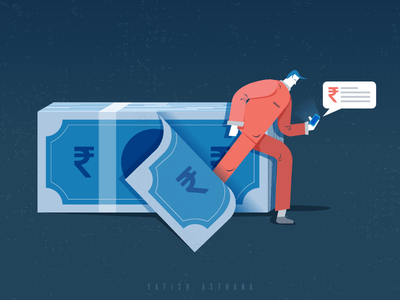
Because of the technology innovations, the whole world is going digital in almost every sector. Unlike India, other countries are on a way on becoming a fully cashless economy. Now, the government of India is also emphasizing on going cashless. After the demonetization, the government is urging the citizens to lessen the use of cash and to use debit cards, credit cards, e payment apps instead. The use of e payment applications such as Paytm, Phonepe, Amazon pay and Yono has increased rapidly, specially after the demonetization. Cashless Economy has its own advantages- Easier to budget, making losing money more difficult, easier to keep on top of where money has gone, stop the spread of germs and many more,

During the pre-demonetization, the cash to GDP ratio in the country was between 12-13% of the GDP which fell to 7.3% during the demonetization. It was less than that of US where cash GDP is at 7.8%. As India moves towards a cashless economy, following advantages are expected to occur :

*The electronic payment will help the entrepreneur to increase their customer base and breach the geographical limitations. *Increasing share of cashless will improve government revenue as online transaction lead a trail of events which can be traced to find out tax evasion if any. *Since the cashless transactions are more visible, it will help in curbing the clack money. *Being cashless also inculcates budget discipline. *One can trace the funding of terror activities as online transactions leave a trail.

However, being cashless has its share of disadvantages too :

*The biggest fear is the risk of identity theft. One can also become a victim of phishing trap. *In case of loss or theft of card, getting another card is time consuming process. *Since mobile phone had become an important element of cashless economy, loss of phone may become a double whammy as many financial details can be retrieved from it. *If we take into account the proportion of non-tech-savvy population, the practical implementation of cashless economy will take enormous efforts.

Despite its drawbacks, the cashless system is indeed an improvement over the traditional cash based system. However, none of the advanced economy has fully replaced the cash as it is practically not possible but reducing the amount of cash and increasing the cashless transactions will definitely improve the business transparency.

SHOULD EDUCATIONAL FEE BE REDUCED OR BE WAIVED OFF?

Long before the coronavirus pandemic, college costs had already entered unprecedented territory. According to a study by Broke Scholar, the average cost of tuition and fees — in inflation-adjusted dollars — at both private and public schools has more than tripled from the academic year 1971-72 to 2019-2020.

  • In 1971-72, average tuition and fees at a private nonprofit four-year institution cost $11,540 in 2019 dollars. For the 2019-20 academic year, the current average cost is $36,880 for tuition and fees: an increase of 220%.
  • In 1971-72, average tuition and fees at a public four-year institution cost $2,710 in 2019 dollars. For the 2019-20 academic year, the current average cost is $7,730: an increase of 285%, which means it nearly quadrupled.

Thus, the costs associated with attending a college or university were already moving in an unfavourable direction for the average American household. But throwing the COVID-19 pandemic into the equation is now presenting a multitude of issues that could accelerate this trend or send it off into erratic directions. On the other side of the equation, the colleges are facing troubling financial straits due to the disruption in tuition, fees and on-campus life.

“When it comes to higher education institutions, the pandemic has had — and will continue to have — a drastic financial impact. Institutions are suffering from lost revenue to partial tuition refunds, room and board, fees, etc.,” said Michael Hansen, CEO of Cengage. “For example, the Pennsylvania State System of Higher Education, which oversees 14 universities, including the first HBCU (historically black college and university) of Cheyney University, and 17,000-student West Chester University, is projecting a $100 million loss from room and board and other fees. And the University of Wisconsin at Madison is estimating a $100 million loss due to COVID-19 impacts, which does not include potential lost revenue from lower enrolment in the fall. While a select few institutions have large endowments to help them navigate through this unprecedented period, the majority do not.”

PARENTS FROM DIFFERENT STATES MOVES SC SEEKING MORATORIUM ON SCHOOL FEES FOR LOCKDOWN PERIOD

A plea has been filed in the Supreme Court by the parents of children from different States seeking declaration of moratorium or deferment of payment of school fees during the COVID-19 induced lockdown.

The plea also seeks direction to Centre and all the States for directing all the private unaided/aided schools to only charge the proportionate fees based on actual expenditure towards the conduct of the online virtual classes and no other fees from the students since April 1 till the commencement of physical classes.

“The Petitioners belonging to different states of the country have come together being constrained to approach this Court seeking inter alia the protection of fundamental right to life as well as education guaranteed under the Constitution of India, 1950 which the children & students enrolled up to the Class XII of various Indian states are being deprived of due to supervening factors namely, the ongoing pandemic- COVID-19 period,” the plea said.

It said that due to COVID-19 induced lockdown, financially incapacitated parents have to bear the brunt of the fees of the children, even after being faced with constant financial and emotional hardships which may leave a few of them with no option but to withdraw their children or students from seeking institutional/school education for an unforeseeable period of time.

“The Petitioners are also aggrieved apart from other issues as raised in the present petition by the unorganised and adversely influencing education imparted in the name of online classes, without addressing the supervening factors of incapacity of 25 per cent EWS category students, adverse impact of education of children of unregulated online education for students of Standard Nursery to 5th and for other students as well,” the plea said.

The parents through the petition filed through advocate Mayank Kshirsagar and drawn by advocate Pankhuri said that they are highlighting various factors leading to creation of hostile discrimination of children and parents of various states in India as some protection may be available for children or students in some states and the same may not be available in other states.

Parents of the school going children who have moved the top court hail from Rajasthan, Odisha, Punjab, Gujarat, Haryana, Uttarakhand, Delhi and Maharashtra.

In their plea they said that considering the adverse impact of online education, ban has been imposed by Karnataka and Madhya Pradesh while other States have not considered its impact.

It said that after COVID-19 disease was declared as a pandemic by the World Health Organization, on March 25, 2020, a country wide lockdown was announced whereby all the activities including the educational sector were shut down completely having a catastrophic effect over the economy of the country with many people losing their jobs or getting a deducted or nil income and facing immense sufferings in their daily life.

“The school going children and students were unable to attend the physical classes at their respective schools. Some of the private aided/unaided schools made arrangements for online classes in April, 2020 however the same has not been universally made available and even cases where no online classes are being conducted the schools are charging normal fees and rather some schools have hiked the fees,” the plea said.

It added that many of the schools hiked their fees and/or started harassing the students’ parents to pay the entire quarterly fees in advance despite the non-functioning of the schools and the students not availing any of the services provided by the schools.

The petition said that despite circulars issued by various States asking private aided/unaided schools ought not to hike their fees in the times of the pandemic, no substantial relief in the form of waiver of fees, or reduced fees, or proportionate fees as per actual expenditure etc. was granted to the students in most of the states, leaving their parents with a huge financial burden to bear, impliedly resulting in the student’s right to life and education getting infringed and violated.

“It is further noteworthy that no specific provision/direction was issued by various states as mentioned with regard to the 25 per cent economically and socially backward/weaker students under the RTE Act, 2009,” it said.

The plea sought directions to Centre and all the States for directing all the private unaided/aided schools to not charge any fees whatsoever from the enrolled students of such schools for a period of three months starting from April 1 till July 1 or till the commencement of offline/physical school classes.

It also sought directions to Centre and all the States for directing schools to only charge the proportionate fees based on actual expenditure towards the conduct of the online virtual classes and no other fees whatsoever from the enrolled students of such schools since April 1 till the commencement of offline/physical school classes.

The petition said that direction be issued to schools to only charge the ‘tuition fees’ and no other fees whatsoever from the enrolled students since April 1 till physical classes resumes.

IMPACT OF THE SCHOOL FEE PAYMENT PROBLEM ON TEACHING STAFF

However, while there is uninterrupted dissemination of education services provided by our valiant teaching staff despite awaiting their dues, their sacrifices along with the non-teaching staff must be appreciated.

It must also be noted that these teachers who are going beyond the call of duty are solely dependent on their salaries for their livelihood.

There are an approximate 5 Crore teaching and non-teaching staff employed in over two Lakh schools across India who are hoping that parents come forward at the time of crisis so that salaries can be paid to the staffers.

Here, the government and parents should ensure teachers’ concerns are considered by releasing adequate funds as an immediate resort which will help reduce the financial strain on them.

The government, state bodies, education boards, financial and educational institutions, and parents should jointly formulate a mechanism to make sure that academics and institutions don’t come to a grinding halt or a closure due to paucity of funds.


HERE ARE THREE THINGS THAT CAN BE DONE TO SOLVE THE SCHOOL FEE PAYMENT ISSUE DURING LOCKDOWN

1. Providing interest-free loans to parents to pay fees as education is a part of the priority lending sector

This will ensure that no pillar of India’s growth will be compromised due to dearth of funds.

While RBI has on numerous occasions infused stimulus packages in our economy, this would be the first time the Central Bank can issue loans with zero interest and also provide relaxation in payment tenure for schools and higher education fees.

2. Interest-free loans should be extended to schools to pay salaries

The past decade has witnessed many sectors benefiting from the Finance Ministry and Reserve Bank of India to prevent collapse of business and these sops have helped these sectors revive their growth story.

While education is part of a priority lending sector, granting them interest-free loans to pay fees for crore of teaching and non-teaching staff would immensely help them and also reduce the burden of the parents who are obligated to pay timely fees.

This would also help conduct urgent repairs in schools to prepare them for the resumption of the academic year post-pandemic.

3. Provide subsidies for school bus operators due to drop in oil prices

The world has witnessed a slump in the oil market and while it is important for India to adjust costs owing to the pandemic by keeping a check on the excise rates and taxes on petroleum products.

Citing the present state of affairs, the government should also look into certain tax breaks or subsidies to aid these operators. This will have a direct bearing on the economics of every parent who are sending their children to school.

CROP SYSTEM

Way to crop technology

PATTIKONDA:17/07/2020.

The term cropping system refers to the crops, crop sequences and management techniques used on a particular agricultural field over a period of years. It includes all spatial and temporal aspects of managing an agricultural system.modern agriculture is increasingly concerned with promoting environmental sustainability in cropping systems.

Crop choice is the main aspect in crop system.Farmer must consider its profitability, adaptability to changing conditions, resistance to disease, and requirement for specific technologies during growth or harvesting.Managing crop residues is important in most systems. Some of the nutrients contained in these dead tissues are made available to crops during decomposition, reducing the need for fertiliser inputs. 

Tillage is the primary method by which farmers manage crop residues.Leaving residues on the soil surface results in a mulching effect which helps control erosion,prevents excessive evaporation, and suppresses weeds. Burning are next step for crop In some systems residues are burned. This is a fast and cheap way to clear a field in preparation for the next planting, and can assist with pest control

Modern way to crop choice.

Nutrients are depleted during crop growth, and must be renewed or replaced. A large component of the organic farming movement is a preference for organic-source fertilisers.Soil moisture content is an important factor in plant development. Irrigation and fine-textured amendments can be used to increase soil moisture

The most important factor of crop system is Removal of crop residues.  crop residues may be removed and used for human or animal consumption, or other purposes. This provides a secondary source of sustenance or income, but precludes the benefits associated with leaving residues within the system.

World emoji day : 2020

Yeah !!!!  It’s world emojii day today .
Social media is just  practically incomplete without these emojis. These are not only bring the smile on our face but also the way of showing expression, feelings and our thoughts which might be we can’t explain in words such as anger, love, happiness, joy, playfulness, laughter, shock, disgust and more. These make our conversation more interesting and show the proper emotions.

In this pandemic situation, we bound to stay home, there social media plays a vital role in this situation and which is totally incomplete and meaning less without these emojis.

HOW PARLE- G BECAME THE LARGEST SELLING BISCUIT BRAND IN THE WORLD!

I’m sure you all know and Parle-G, a biscuit which we all are eating since our childhood. Parle-G is a brand of biscuits manufactured by parle products in India, and it has been in the market for decades. We all have some great memories with Parle -G. It can also be the ” National biscuit” of India, as your status doesn’t matter to buy this biscuit, no matter you are rich or poor- everyone can afford it. Parle-G came into existence in 1939 and today, it is a household name when it comes to biscuits. It is consumed by all age groups and is not only one of the largest selling brand but alos one of the most trusted brand too. This may come as a suprise to many but India is the world’s leading market for biscuits, leaving behind countries such as- The US, Mexico, China, Italy and Spain. During the lockdown when all the economies in the world were struggling to sustain, Parle-G records best sales in the meantime.

The reason why Parle-G has made its way into so many home is because of its diverse way of consumption. many people view biscuits as snacks or teatime food, but Parle-G has changed its perception. Today, Parley-g is not just seen as an accompaniment for tea but as a substitute of meals. This is especially beneficial for countries like India where malnutrition is rampant. So, when poor people are unable to afford meals, they can consume a few biscuits and they will get the required nutrients for the day-one pack of Parle-G biscuits offers 450 calories. In addition Parle-G can be consumed by the diabetics too. So, Parle-G can be consumed by anyone. Apart from providing the necessary nutrients, it is value of money. Parle-G biscuits are sold in various packs ranging from RS 1 to RS 50, making it affordable for masses.

Today Parle-G is exported to Afghanistan, Bangladesh, Bhutan, Sri Lanka, Maldives, Nepal, The US, Europe, and Africa. Two brands that are strong competitors of Parle-G are Britannia tiger and ITC’S Sunfeast Glucose. Parle -G is a biscuit brand that only satisfies one’s hunger and tantalizes the taste buds but it also looks into the welfare of the community.

Photonics in fruit grading

Fruit commercialization is adopting the scientific method and detecting, grading, packaging the fruits on the basis of comprehending the physiology metabolism law, protecting and improving the quality, and achieving the change from the elementary raw material to high added-value commodity. Nowadays, reducing the consumption of post-harvest fruit is the most concerned question for the world agricultural trade. It
was reported that the consumption of post-harvest fruit in developed countries accounted for the 15-20% of the total amount. China is the world’s largest fruits and vegetables production country. The breeding, culturing, and pest control was paid much attention, however, the post-harvest processing technology was neglected, the question of detecting, grading, transporting, preservation was not solved, so the lost of post-harvest fruits and vegetables in circulation was huge, the loss ratio was 30%~40% every year.

With the rapid development of science and technology and computer vision technique to the development of agricultural field, new methods of non-destructive detection for fruit quality were provided. The main methods included optical properties, sonic vibration, nuclear magnetic resonance (NMR), machine vision technique, electrical properties detection, computed tomography and electronic noses technique and so on.

In recent years, fruits (of any variety) has become one of the most dependable organic product produced by farmers across the world; this lived much to its expectation as it serves not only for direct consumption, but also as a raw material for other products. Organic products grading and sorting is a vital procedure for producers, which influences the natural products quality assessment and export market. Despite the fact that the grading and sorting can be and has always been done by human, it is slow, tedious and prone to error, hence the need to evolve a smart fruit grading and sorting machine system. Researchers, at various level had come up with various designs with different algorithms for fruit grading by utilizing textural and morphological elements to distinguish the healthy fruits from the defected ones. Subsequently, these features, otherwise known as optical sorting, is the automated process of sorting solid products using sensors. Such sensors utilize product driven knowledge of the picture preparing system, by detecting the colour of fruits, shape and other auxiliary properties. The sensor (sorter) compares fruits based on client’s characterized acknowledgment to distinguish, sort and expel defected fruits and other foreign material from the creation line or to isolate result of various evaluations.

More LCA Tejas for the IAF

Tejas is an LCA (Light Combat Aircraft) designed by HAL (Hindustan Aeronautics Limited) for the Indian Air Force and Indian Navy. The HAL Tejas is an Indian single-engine, fourth-generation, multirole light fighter. It came from the Light Combat Aircraft (LCA) program, which began in the 1980s to replace India’s aging MiG-21 fighters. In 2003, the LCA was officially named “Tejas”. It was developed as a replacement for older Mig-21 Aircraft.

As of 2019, the Indian Air Force has planned for a total of 324 Tejas in several variants. The first batch of 40 Mark 1 aircraft consists of 16 Initial Operational Clearance (IOC) standards that were delivered in early 2019. The delivery of the second batch of 16 Full Operational Clearance (FOC) standard aircraft commenced in late 2019 and led to the formation of the second Tejas squadron — No. 18 Squadron IAF Flying Bullets — in Sulur on 27 May 2020. The IAF will also go on to receive eight twin-seat trainers. The next 83 are to be to the upgraded Mark 1A standard. By the time these first 123 are delivered, the Tejas Mark 2 is expected to be ready for series production by 2025–26.

Recent news says that India is likely to finalize the INR 40,000 crore contract for 83 Light Combat Aircraft (LCA) Tejas jets, 20% cheaper from previously quoted price, next February at DefExpo-2020 event in Lucknow city, Uttar Pradesh state. In November 2016, Defense Acquisition Council (DAC), India’s highest decision-making body on procurement, approved the purchase of Tejas Mark-1A fighters by the IAF at a cost of Rs 50,025 crore. Subsequent negotiations between defense ministry, Indian Air Force (IAF), and manufacturer Hindustan Aeronautics Limited (HAL) have helped bring down the price of the jets from INR 50,025 crore to INR 40,000 crore, Indian media reported late last week. “The draft contract of the deal has been readied by the HAL and the cost of the deal has now come down to around Rs 40,000 crore. This is Rs 10,000 crore less than the Acceptance of Necessity given by the Defense Ministry in 2016,” defense sources said. In December 2017, the IAF had issued a single-vendor tender to the HAL for procuring 83 LCA, but the negotiations and other related issues have been going on since then mainly due to issues over the price.

The aircraft will have improved serviceability, faster weapon-loading time, enhanced survivability, a better electronic warfare suite, an Active Electronically Scanned Array (AESA) radar that will significantly enhance its capability.  The Centre for Military Airworthiness and Certification (CEMILAC) had provided the Final Operational Clearance to the Tejas LCA earlier this year during Aero India in Bengaluru approving its capabilities including beyond visual range air-to-air and air-to-ground attack capabilities as well as longer endurance through mid-air refueling. In a previous order, the IAF had signed a deal with the HAL for 40 Tejas LCAs. So far, around 18 LCAs have been delivered to the IAF from the previous order.

ADVOCATE AND APPEARANCE IN THE COURT FOR FIRST TIME

You have your very first court appearance. You’re nervous and you don’t know what the heck you are doing. For those who practice in less popular firms or in a solo practice, your first appearance in court is often by yourself. How do you avoid looking like a newbie?

Whether it’s a simple case management conference, a motion to compel, or a summary judgment hearing, here are our tips that you will help you to be prepared for your first court appearance.

And no, I’m not going to tell you to be on time, be respectful, or dress appropriately. Those are a given. If you screw those up, the ship may have already sailed on the whole “you-look-like-you-know-what-you-should-be-doing” thing.

THE DAY BEFORE THE HEARING:

1. Check the court calendar and/or tentative ruling.

Most courts have an online calendaring system that will show whether a hearing is still on calendar, whether a tentative ruling has been issued, and whether a hearing is required. Some courts will have a telephone option for tentative rulings.

For basic case management conferences, you just need to know that the matter is still on calendar. Generally, for other hearings, if a tentative ruling is issued, you must advise the court and opposing counsel if you plan to appear at the hearing, usually by 4 p.m. on the day before the hearing. If you don’t, and the other party does not appear, you will not be allowed to argue. If you don’t want to contest the tentative ruling, then you don’t have to appear unless opposing counsel advises they plan on appearing. If no one appears, then the tentative ruling is adopted. If the tentative says “hearing required,” you must appear.

2. Familiarize yourself with the local rules.

This goes hand in hand with the first tip. Every court is just a little bit different. So go online, check the local court rules, and make sure you follow the directions, especially with respect to tentative rulings.

3. Find out about the judge.

Just as every court is a little bit different, judges also have their own way of doing things. Ask the partners or more senior associates in your firm for any insight. Attorney list-serves are also a great resource.

4. Review the file.

Being prepared is a must. Take time the day before to review the file and familiarize yourself with the case and its details.

DUTY OF ADVOCATES:

An advocate is considered as an officer of the court, honoured member of the community, and a gentleman, thinking that to become a member of the bar he has to be lawful and moral not only in his professional capacity but also in his non professional capacity. An advocate has to courageously support the interest of his client and also have to follow the principles of ethics and etiquette both in correspondence.

Following are the duties of advocate towards to court:

  1. An advocate while presenting his case should conduct himself with dignity and self respect
  2. Respectful attitude must be maintained by the advocate. He has to keep in mind the dignity of the judge.
  3. An advocate should not, by any improper means should influence the decision given by the court.
  4. An advocate can make a complaint against the judicial officer but it has to be before proper authorities and there has to be serious offence done by the judicial officer.
  5. It is the duty of the advocate to prevent his client from resorting to unfair practices and also the advocate himself should not do any of such acts.
  6. Dress code has to be maintained by the advocate while appearing before the court.
  7. An advocate should not take up any case of his family members and relatives.
  8. No bands or gowns had to be worn by the advocate in the public places. It is only limited to the court premises.
  9. An advocate cannot be as a surety for his client. An advocate shall not act or plead in any matter in which he has some kind of pecuniary interest.
  10. It is the duty of the advocate to cooperate with the bench in the court.
  11. It is the duty of the advocate to perform his functions in such a manner that due to his acts the honour, dignity and integrity of the courts shall not be affected.
  12. An advocate should not laugh or speak loudly in the court room especially when the proceedings are going on.
  13. When an advocate accepts a brief, he should attend all adjournments properly. If he has any other work in another court, he should first obtain the permission from the court concerned. Particularly in criminal cases, it is the first and foremost duty of an advocate to attend.
  14. While the case is going on, the advocate cannot leave the court without court’s permission and without putting another man in charge, preferably his colleague or junior or friend advocate.

WHO IS AN ADVOCATE?

In India, the law relating to the Advocates is the Advocates Act, 1961 introduced and thought up by Ashoke Kumar Sen, the then law minister of India, which is a law passed by the Parliament and is administered and enforced by the Bar Council of India. Under the Act, the Bar Council of India is the supreme regulatory body to regulate the legal profession in India and also to ensure the compliance of the laws and maintenance of professional standards by the legal profession in the country.

Each State has a Bar Council of its own whose function is to enroll the Advocates willing to practice predominantly within the territorial confines of that State and to perform the functions of the Bar Council of India within the territory assigned to them. Therefore, each law degree holder must be enrolled with a (single) State Bar Council to practice in India. However, enrollment with any State Bar Council does not restrict the Advocate from appearing before any court in India, even though it is beyond the territorial jurisdiction of the State Bar Council which he is enrolled in.

The advantage of having the State Bar Councils is that the workload of the Bar Council of India can be divided into these various State Bar Councils and also that matters can be dealt with locally and in an expedited manner. However, for all practical and legal purposes, the Bar Council of India retains with it, the final power to take decisions in any and all matters related to the legal profession on the whole or with respect to any Advocate individually, as so provided under the Advocates Act, 1961.

The process of being entitled to practice in India is twofold. First, the applicant must be a holder of a law degree from a recognized institution in India (or from one of the four recognized Universities in the United Kingdom) and second, must pass the enrollment qualifications of the Bar Council of the state where he/she seeks to be enrolled. For this purpose, the Bar Council of India has an internal Committee whose function is to supervise and examine the various institutions conferring law degrees and to grant recognition to these institutions once they meet the required standards. In this manner, the Bar Council of India also ensures the standard of education required for practicing in India is met with. As regards the qualification for enrollment with the State Bar Council, while the actual formalities may vary from one State to another, yet predominately they ensure that the application has not been a bankrupt /criminal and is generally fit to practice before courts of India.

Enrollment with a Bar Council also means that the law degree holder is recognized as an Advocate and is required to maintain a standard of conduct and professional demeanor at all times, both on and off the profession. The Bar Council of India also prescribes “Rules of Conduct” to be observed by the Advocates in the courts, while interacting with clients and even otherwise.

All Advocates in India are at the same level and are recognized as such. Any distinction, if any, is made only on the basis of seniority, which implies the length of practice at the Bar. As a recognition of law practice and specialization in an area of law, there is a concept of conferral of Senior Advocate status. An Advocate may be recognized by the Judges of the High Court (in case of an Advocate practicing before that High Court) or by the Supreme Court (in case of the Advocate practicing before the Supreme Court). While the conferral of Senior Advocate status not only implies distinction and fame of the Advocate, it also requires the Senior Advocate to follow higher standards of conduct and some distinct rules. Also, a Senior Advocate is not allowed to interact directly with the clients. He can only take briefs from other Advocates and argue on the basis of the details given by them. From the year 2010 onward a mandatory rule is made for lawyers passing out from the year 2009-10 to sit for an evaluation test named AIBE (All India Bar Exam) for one to qualify as an advocate and practice in the courts. However, to practice law before the Supreme Court of India, Advocates must first appear for and qualify in the Supreme Court Advocate on Record Examination conducted by the Supreme Court.

Further, under the Constitutional structure, there is a provision for the elevation of Advocates as judges of High Courts and Supreme Court. The only requirement is the Advocate must have ten years standing before the High Court(/s) or before the Supreme Court to be eligible for such. (Article 217 and 124 of the Constitution of India for High Courts and Supreme Court respectively)

Employees Care About Most At Work

Employee experience is all about providing employees with an environment where they want, not need to come to work–a place where they can feel energized and free to be themselves to get their best work done. But what does that actually look like? Based on interviews with hundreds of executives and leaders at companies around the world ranging from the Chairman of the Board at Yahoo to the CHRO of Marriott to the CEO of Jamba Juice for my new book, I put together a framework that allows companies to design great employee experiences. Employee experience may seem complicated, but it really boils down to three environments: technological, physical, and cultural.

• Technological Environment. This includes giving employees the right tools to do their jobs–the internal social network, mobile devices, laptops, desktops, and video conferencing solutions, apps, and more. Employees can easily get frustrated if they are forced to use outdated programs or the wrong tools.

• Physical Environment. The physical space is exactly that–what you see, touch, taste, and smell in the workplace. It involves everything from how the office is laid out to the demographics of the people who work there. It should make employees excited to come to work.

• Cultural Environment. This is all about how an office and company feels. It’s the vibe you get when you walk in the door and the tone the workplace sets, which comes from the leadership style, sense of purpose, organizational structure, people, and more.