Indian culture now v/s then

It’s been seventy three years from the day we got independent on, i. e. 15th August 1947 and we have achieved every heights of success which our leaders and freedom fighters wished for. People have sank into a more humanitarian approach rather than blindly believing into the facts and the follies which their religion has provided them through oral transmissions, and long narrative hyms over a long period of time. Althoug there still exist such a people who do not find it a good idea to leave behind the essence of what our legendary elders and policymakers have left behind.

Indian culture then-

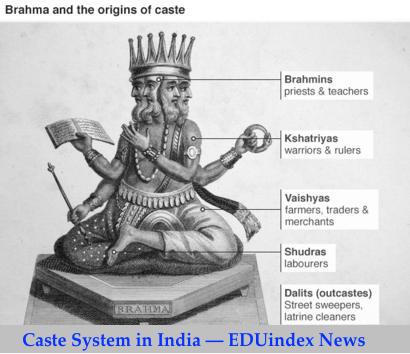
It was in 1500 B.C. when human civilization in India get back on its track and adopted new techniques and the other modes of earning for their livelihood. And it was only back in that period of time when scriptures such as Rigveda,Dharmasutra and Dharmashastra were being written by the literates of this country, and society undergone several changes;they became more concerned fortheir religion and religious practices, followed every path of the Brahmanas who were then the superior of all the four vranas and eventually discovered a perpetual lifestyle for themselves.

Gradually they started worshiping a numerous number of major and local deities, such as Indra, agni, etc. And it all resulted into whole of a superstitious society. But the situation was not tensed back then until the country turned into a secular state.

Indian culture now-

As soon as we (Indians)moved to a more secular state, the feelings of inferiority, superiority also rose to a level that it turned into communal riots and the feeling of disrespect and disbelief in their own religion. Though the article 25 of the Constitution of our country provides us with the feature of –

Freedom of conscience and free profession, practice and propagation of religion.

And therefore there couldn’t have been any complications in following any religion,but the real problem lies within the society itself,they unseeingly follow their religion. And that is the reason people have moved to a humanitarian approach to follow their culture. They try and stick to the core of their religion and are not tricked easily into believing the obnoxious imposture of their own religion and some of the cultural beliefs.

The tough tug and war between the early religious practices and today’s approach towards these practices is endless. And, though most of the people have moved on into thinking their culture and religious beliefs as hoax, there’s something original in those religious books and practices which still binds millions of Indians together, also providing to us a quality of facts that abidingly focus on human progress.

Boomers spreading fake news

We have all received WhatsApp messages in our family groups that are usually forwarded by the older members of our family claiming that coronavirus is caused by eating non vegetarian foods or banging utensils generates positive energy that destroys coronavirus and other such absurd things. Of course these are examples of fake news and are recognized as such, easily by a millennial or Gen z but not so by our parents, uncles, aunts or the boomer generation.

Study: Older Republicans Likelier To Spread Fake News On Facebook 01/11/2019
Older people more likely to spread fake news

The dynamics between age and misinformation are being studied by various researchers in the field of communication. In fact several studies have found that adults over the age of 65 are more likely to fall for fake news than younger adults. Studies in Princeton and NYU found that older people do spread fake news, but they were not the source. Them being late adopters of technology and new to internet and social media might be one of the reasons that they are gullible and believe anything they see on the internet.

Researches should further attempt to find out as to why boomers fall to fake news and look for solutions to curb the spread of misinformation. It’s time that Facebook, Whastapp, Twitter and other social media platforms should carry out their own research and take effective measures. Meanwhile, it is up to us to make sure that older adults are not sharing fake news. We should provide them with sources through which they can fact check what they have shared. We should teach them how to identify and flag a fake message.

Our older generation helped us make sense of the real world and now it is up to us to guide them through the virtual world.

The Big R Or The Invisible C?

Amidst the raging Corona pandemic, another widespread form of a virus known as racism has resurfaced and come to light and is making waves amidst the global community currently under lockdown. George Floyd, a black 46-year-old man died after a white police officer Derek Chauvin put his knee on Floyd’s neck for almost nine minutes leading to his untimely death. This incident took place in Minneapolis, Minnesota leading to mass protests throughout the US and soon leading to global protests with around 50 countries like UK, Australia, Germany, Austria etc joining in the protests.

The protests are taking place whilst the corona pandemic is raging throughout the globe. People have been flouting social distancing norms with no regard for their personal safety. People have been protesting throughout the globe through mass gatherings. So the big question that needs to be answered is what do the people fight? An invisible enemy that takes lives or the grave discrimination that profiles humans based on skin colour?

Darren Sammy, a West Indies cricketer pointed out that he had been racially profiled as “Kalu” in India which he had mistaken as a compliment during his stay as an IPL cricketer. The tendency amongst humans to judge their superiority based on their skin colour is foolhardy. Kids grow up emulating those around them and observing blatant racist jibes and practices which mould them into toxic human beings from their tender years. Often black children are bullied in schools and mistreated leading to them suffer from depression, low self-esteem and some eventually succumbing to the emotional abuse through suicide.

On the other hand, over 70 lakh people have been globally infected with Covid-19 as on 8th June 2020 with over 4 lakh deaths. Thus one may question as to why people would have mass protests with thousands huddled together, flouting the social distancing norms and risk personal safety and pose a public hazard.  The answer may lie in the repetitive instances of insensitive discrimination based on race and skin colour. People are frustrated with already having to deal with a deadly virus and then tolerating gruesome racist treatment from people who are no less than the human incarnation of viruses. The wrath of the people could be visible in Bristol where they pulled down the statue of a controversial slave trader named Edward Colston who worked for a company that had transported 80,000 men, women and children to America.

We need to work towards eradicating Corona from our planet yet such sad incidents like the George Floyd murder impedes our progress in doing so. The wrath and intolerance of people towards such incidents are totally justifiable yet the mass protests, devoid of social distancing may have laid seeds for an even bigger monster and may end up costing the global community more lives than just one. We need a community devoid of prejudice towards our fellow beings. We are one and black lives do matter. However, we have to be wise in fighting and combatting both these grave impediments to a flourishing global community.

While the fight against Covid-19 may have an eventual end with a vaccine but the fight against racism will continue for ages to come. The seeds of racial profiling and discrimination have been embedded in our global culture through our ancestors and put into practice by our society. A deeper psychological evaluation may lead one to discover that the constant need to feel superior from other races may evolve from deep-seated insecurity of one’s own culture and race. The big R or the invisible C? We can’t choose one over the other. We have to fight both of them wisely.


The Chinese Invasion

The Covid-19 virus, the Ladakh standoff and the Indian Prime Minister’s stress on self-reliance have led to multiple calls for the boycotting of Chinese products and the Asian country in its entirety. With the government announcing a 20 lakh crore package and Sonam Wangchuk detailing the various reasons to boycott Chinese products, the call for self-reliance has only gotten stronger.

The Make in India campaign has so far been unsuccessful in fulfilling the vision that the BJP led Indian government had set out to accomplish. However, it was a step in the right direction as the much-needed impetus for the Indian economy. Yet a total boycott of a country and it’s products is not feasible for a country like India and will take time. The superior quality Chinese products at affordable pricing are what led to the invasion of Chinese products in almost all countries including India. The “Atmanirbhar Campaign” will act as a catalyst to the dwindling “Make in India Campaign” that has underperformed.

However, a total like to like replacement of the Chinese hardware and software will take a lot of time. The current Indian hardware and software fail to match up to the Chinese standards. Yet the Indian industries will fail to develop and mould itself quickly unless there is a surge in demand and a dire need to do so. Thus the exclusion of Chinese products is a necessity for the Indian industries to develop which in turn will lead to a creation of jobs that will serve the economy and aid in much faster growth.

Indian citizens have been quick to attack Chinese products and softwares from its creation of the, “Remove China Apps” app that removes Chinese applications installed in your phone. TikTok, a Chinese app that has 467 million Indian users has contributed substantially to the revenue generated by the Chinese application. Initially, Indian netizens had first attacked the Chinese application over a feud between a TikToker and a Youtuber which led to the app being downgraded to a 1.3 rating from its initial 4.9 ratings. However, Google was quick to remove all the recent one-star ratings from the application. With Google pulling down the recent 1-star ratings, Indians have started uninstalling TikTok along with other Chinese applications like UC Browser, CamScanner etc over the Ladakh feud and with Sonam Wangchuk leading the campaign to remove Chinese apps within a week and Chinese hardware in a year. India imports goods worth more than 50 billion dollars from China in contrast to a miserly 2.5 billion dollars in exports to China.

If India proceeds with putting a halt to the Chinese invasion in its market, India would suffer from a paucity with regard to capital goods, machinery, electricals, chemicals to go along with intermediate and consumer goods. India’s heavy reliance on China makes it difficult to put an end to imports cold turkey. India should focus on a gradual decline in imports while developing a sustainable infrastructure for the production of goods in their own country. A sound infrastructure and production in India will give a major boost that India is in desperate need of. India can then finally be independent and their over-reliance on FDI can diminish.

Disrespect, not Dress, does it – The increasing rape cases are a serious concern for mankind

By- Ekta Sain

Looking at the current state it looks like after some time we will be living in a country where we won’t be giving birth to a human, we will give birth to a human who is worse than an animal. This nation is becoming unsafe not for only girls but also for boys. Not only streets, roads or workplace but our homes are becoming dangerous for us.

Every year there are many cases of molestation and rape came across. Some are registered, some not. Why are these happening in our country? Why are these molesters or rapists moving freely?

t-dont-tell-me-how-to-dress-tell-them-not-12823773

According to the Indian Constitution, the definition of Rape is “when a man forcibly does any sexual activity with women then it is considered as rape.” They never recognized that a man can also be raped.

According to a study conducted by NDTL on an average of 8 women get molested every day in India. But the research of the Centre for Civil Society says that the victims of assault are 57.3% males and 42.7% females. In such cases, family members of female victims avoid disclosure and maintain the confidentiality of the victim and sometimes they complain about the crime. But when it comes to males being a victim for sexual molestation, they don’t get reported for it. It is a myth in our society that boys cannot cry in front of everyone they have to be mentally strong. This myth stops boys from confessing their molestation.

Men believe this myth and feel lots of guilt and shame because they got physically aroused during the abuse. It is important to understand that males can respond to sexual stimulation with an erection or even an orgasm – even in sexual situations that are traumatic or painful. That’s just how male bodies and brains work. Those who sexually use and abuse boys know this. They often attempt to maintain secrecy and to keep the abuse going, by telling the child that his sexual response shows he was a willing participant and complicit in the abuse. “You wanted it. You liked it,” they say.

But that doesn’t make it true. Boys are not seeking to be sexually abused or exploited. They can, however, be manipulated into experiences they do not like, or even understand, at the time

There are many situations where a boy, after being gradually manipulated with attention, affection and gifts, feels like he wants such attention and sexual experiences. In an otherwise lonely life (for example, one lacking in parental attention or affection – even for a brief period), the attention and pleasure of sexual contact from someone the boy admires can feel good.

But in reality, it’s still about a boy who was vulnerable to manipulation. It’s still about a boy who was betrayed by someone who selfishly exploited the boy’s needs for attention and affection to use him sexually

There was a study conducted by a research scholar of Babu Banarsi Das University Lucknow in which she described myths related to rape cases. According to her,  “rape myths exist for a number of historical and cultural reasons including gender role expectations, acceptance of violence and misinformation about sexual assault and they are the one reason why victims are shamed into remaining silent.”

According to this research, the reason why rapes are happening is women are dressing provocatively and that turns out as a problem for her. This is believed by 45% of individuals. Many of them blame the girls who drink. According to them if a girl drinks then she deserves to be raped. Another reason for rape is a girl in the relationship and some blamed the girls who stay outside late at night.

Till when we only ask our girls to hide their beauty and innocence can’t we ask boys to control and behave themselves? If these cases were not taken seriously in our country then it is natural that after some time we won’t find a road where girls will walk freely, it will be hard to find a home where they could live freely.

Thematics journal of geography

Geography is the study of lands, characteristics and features of earth and their phenomena. It is divided into two main branches: Physical geography and Human geography. The sub-branches of human geography are: behavioral geography, feminist geography, culture theory and geosophy. arts and humanitiesThematics Journal of Geography is journal is a periodical publication intended to further progress of science, usually by reporting new research. Most journals are highly specialized, although some of the oldest journals publish articles, reviews, editorials, short communications, letters, and scientific papers across a wide range of scientific fields. Journals contain articles that peer reviewed, in an attempt to ensure that articles meet the journal’s standards of quality, and scientific validity. Each such journal article becomes part of the permanent scientific record. High-impact journals are those considered to be highly influential in their respective fields. The impact factor of journal provides quantitative assessment tool for grading, evaluating, sorting and comparing journals of similar kind. It reflects the average number of citations to recent articles published in science and social science journals in a particular year or period, and is frequently used as a proxy for the relative importance of a journal within its field. It is first devised by Eugene Garfield, the founder of the Institute for Scientific Information. The impact factor of a journal is evaluated by dividing the number of current year citations to the source items published in that journal during the previous two years.

Send papers for publication to editor@thematicsjournals.org 

Call for Papers IJR

International Journal of Research (IJR) publishes regular papers and special issues on specific topics of interest to international audiences of educational researchers.
The aim of the journal is to help them better understand each other’s role in the overall process of education and how they may support each other. The articles should be original, unpublished, and not in consideration for publication elsewhere at the time of submission to International Journal of Research (IJR) and one month thereafter.

How to Submit Papers

Send papers through mail to ijr@ijrjournal.com

Scope of Publication in IJR

The topics related to this journal include but are not limited to:
•Educational systems architectures
•Computer-mediated communication
•Distance education/learning
•Distance learning systems
•Distributed learning environments
•Educational multimedia
•Human-computer interface issues
•Hypermedia systems/applications
•Interactive learning environments
•Learning by doing
•Multimedia systems/applications
•Network-based learning environment
•Online education
•Simulations for learning
•Web based instruction/training
•Intelligent learning environments
•Intelligent tutoring environments
•Collaborative learning & environment
•Didactic/pedagogical issues
•Teaching/learning strategies

International Journal of Research (IJR)

International Journal of Research (IJR) serves as a forum for academics, policy makers and health care managers and professionals to communicate and discuss issues from the perspective of health economics and policy. This journal publishes rigorous empirical, analytical, and methodological research using advanced economic and policy analysis techniques applied to compelling topics in health research.376.jpg

Send papers for publication in International Journal of Research (IJR)

How to Submit Papers

to ijr@ijrjournal.com 

Scope of Publication

The topics related to this journal include but are not limited to:

•Medical Economics
•Behavioral Economics
•Mental Health Economics
•Asymmetric Information
•Barriers To Entry
•Healthcare Markets
•Health Administration
•Health Policy Analysis
•Philosophy Of Healthcare
•Health Care Reform
•Health Crisis
•Health Insurance
•Health Promotion
•Health Law
•Public Health Law
•Quaternary Prevention
•Two-Tier Health Care
•Universal Health Care
•Unnecessary Health Care
•Vaccination Policy

Fundamental Duties Most Unfortunately Has Become A Forgotten Chapter Of The Constitution

“The source of right is duty. If we all discharge our duties, rights will not be far to seek. If leaving duties unperformed we run after rights, they will escape us like will of the wisp, the more we pursue them, the further they will fly. I learned from my illiterate but wise mother that all rights to be deserved and preserved come from duty well done. Thus the very right to live accrues to us only when we do the duty of citizenship of the world. From this one fundamental statement, perhaps it is easy though to define duties of man and woman and correlate every right to some corresponding duty to be first performed. Every other right can be shown to be usurpation hardly worth fighting for.”

fundamental rights

                                                              –         Mahatma Gandhi when requested to give his thoughts on the Universal Declaration of Human Rights

                                                            At the very outset, let me begin by  saying that it grievously hurts me to painfully note that fundamental duties has more or less most unfortunately become a forgotten chapter of our Constitution. This most definitely should never have happened but we all have been watching this happening right before our own eyes. Communal riots breaking out on very small petty issues in which many people lose their precious lives, many children become orphan and homeless as their houses are burnt are all most painful reminders that fundamental duties have become more or less a forgotten chapter of our Constitution! Nothing on earth can be more unfortunate than this!

                                                     To say the least, burning of Indian flags, waving of Pakistani flags, ranting anti-India slogans and doing many other such anti-national acts cannot be justified under any circumstances. It is the fundamental duty of each and every citizen of India to desist from all such anti-national acts. Only then are we true citizens of India!

                                                      Needless to say, there can be no chapter in Constitution which is as important as the one on fundamental duties yet it has been mostly ignored. How often do we read articles on Constitution pertaining to fundamental duties? The obvious answer is once in a blue moon. This despite the fact that fundamental duties are most important as I have already noted above. No less than an eminent legal luminary of the stature of former Chief Justice of India – Justice RC Lahoti while delivering a guest lecture in memory of Justice KT Desai on 15 July, 2014 at Central Court Room in Bombay High Court, Mumbai on ‘Fundamental Duties – A Forgotten Chapter of the Constitution’ had himself most gracefully observed that, “I could not have chosen a subject better than the Fundamental Duties; more so, when as a student of Constitution I find that in the judicial circles and amongst the citizens, a significant provision like Article 51A is found to be conspicuous more by its absence. It is a beautifully well drafted piece of Constitutional enactment. Every word is so well chosen and placed as if a gem studded in necklace! To me, these 10 duties sound like incantations of some holy book.”

                                                     Having said this, I must now bring out here that Part IVA, Article 51A, providing for ten fundamental duties, was introduced in the Constitution not in 1950 when it was originally prepared but by the 42nd Amendment to the Constitution in 1976. Let us all read the basic text of this all important Article 51A, as enacted by 42nd Amendment pertaining to fundamental duties. It runs as follows : –

51A. Fundamental duties – It shall be the duty of every citizen of India:

(a)           to abide by the Constitution and respect its ideals and institutions, the National Flag and the National Anthem;

(b) to cherish and follow the noble ideals which inspired our national struggle for freedom;

(c)            to uphold and protect the sovereignty, unity and integrity of India;

(d) to defend the country and render national service when called upon to do so;

(e)           to promote harmony and the spirit of common brotherhood amongst all the people of India transcending religious, linguistic and regional or sectional diversities; to renounce practices derogatory to the dignity of women;

(f)             to value and preserve the rich heritage of our composite culture;

(g)           to protect and improve the natural environment including forests, lakes, rivers and wild life, and to have compassion for living creatures;

(h) to develop the scientific temper, humanism and the spirit of inquiry and reform;

(i)              to safeguard public property and to abjure violence;

(j)              to strive towards excellence in all spheres of individual and collective activity so that the nation constantly rises to higher levels of endeavour and achievement;

(k)          who is a parent or guardian to provide opportunities for education to his child, or as the case may be, ward between the age of six and fourteen years.

                                                             No doubt, it is pertinent to mention here that it was in 2002 and by the 86th Amendment to the Constitution that one more fundamental duty was added as clause (k) in Article 51A and very rightly so. The basic education of children is most imperative and must always be provided to children between the age of 6 to 14 as very rightly provided in clause (k). There can be no two opinions on this.

                                            A moot question arises here : Why it never occurred to the founding fathers of our Constitution of the dire need to include fundamental duties also in it? Most certainly, this was because the founding fathers had unflinching faith in all Indians that they would themselves voluntarily do their fundamental duties on their own without their mentioning it specifically in the Constitution. They were not wrong in doing so. It is the people themselves who have not risen to the occasion and abdicated from discharging their fundamental duties due to which it had to be specifically inserted in the Constitution in 1976 by the 42nd Amendment.

                                            All said and done, we must also not forget here that there some provisions which are implicit like all the fundamental rights have corresponding duties also like Article 17 implies a duty not to practice untouchability and same goes the case with other fundamental right. Similarly Article 14 which deals with right to equality also implies a duty to treat all others equally. What is most hurting to note is that while most of us always remember by heart our fundamental rights, we very rarely bother about fundamental duties which are equally as important rather more important but whom we very conveniently ignore blithely for preserving our own vested interest! This is the most sad part which is just not done!

                                            What most of us tend to ignore is that our rich Indian culture never believed in duties being imposed on us as our forefathers always believed in sacrifice and this alone explains that why fundamental duties and directive principles of state policy are not binding on citizens and no penalty is imposed on anyone for not performing them. We must be always grateful to the founding fathers of our Constitution for this but we hardly care for it! Here is where we have gone grievously wrong which we must be honest enough to at least admit.

                                           Truth be told, it is most unfortunate to note that the chapter on fundamental duties even after being inserted has been most blatantly disregarded and very conveniently overlooked everywhere. This alone explains why the former CJI – Justice RC Lahoti had to observe most painfully that, “The chapter on fundamental duties, inspite of having been introduced in the Constitution, is more neglected than noticed. I have not come across any textbook of schools incorporating the text of fundamental duties much less any discussion thereon. The commentaries on Indian Constitution which I have come across, do not deal with this chapter with any emphasis. Eminent jurists writing commentaries on Constitution have not written much on fundamental duties. The apex court of the country and the High Courts have also not much utilized the Article 51A while dealing with other constitutional provisions.”

                                           Truly speaking, HM Seervai who is one of the most eminent legal luminary and jurist that India has ever produced in his monumental work on Constitutional law of India has written just a para on fundamental duties which I feel it obligatory to mention here. I must go on to say here that two notable observations made by the eminent jurist Seervai deserves to be quoted here. He says most eloquently that, “[Article 51A] has been enacted under the mistaken belief that if Articles 14 to 32 confer fundamental rights on citizens, and Articles 38 to 51 impose ‘duties’ on the State, fundamental duties ought to be imposed on citizens…. If the directive principles are violated or ignored nothing happens; equally if fundamental duties are disregarded nothing happens. It is unnecessary to deal with Article 51A beyond saying that they are innocuous”. What Seervai has observed can under no circumstances be ignored. Centre must ponder most seriously on this and do what is best suited to meet the present circumstances. The eminent legal luminary Seervai further goes on to say that clauses (b) and (j) must appear ludicrous to people outside India and even to people within India.

                                                    Having said this, now let me turn my attention on how fundamental duties came into existence. It was during the term of former PM late Mrs Indira Gandhi that it was decided that certain fundamental duties must be incorporated in the Constitution so that all citizens remain conscious of it and not think that they have no duty at all to perform. On February 26, 1976 the All India Congress Committee appointed Swaran Singh Committee to suggest certain changes in the Constitution to meet the changed circumstances. Swaran Singh Committee consisted of 12 members with former External Affairs Minister, Sardar Swaran Singh as its Chairman and Congress Secretary, AR Antulay, MP, as its Secretary.

                                                      While craving for my esteemed readers exclusive indulgence, let me point out here that it is interesting to note here that the Swaran Committee said nothing about the fundamental duties but in its supplementary report, it listed the fundamental duties, which had to be incorporated as a separate chapter in the Constitution. This Committee also laid special emphasis on the dire need of making people more aware of the duties they must perform along with enjoying rights. This is how fundamental duties were inserted in our Constitution.

                                                  For my esteemed readers exclusive benefit, I must mention here that actually the Swaran Committee had recommended only 8 fundamental duties but the Congress government in Centre headed by late Mrs Indira Gandhi decided to include 10 duties as fundamental duties. I must also mention here that some suggestions made by Swaran Committee were not accepted by Centre. As for instance, it was suggested by the Committee that there should be a penalty or punishment for non-compliance of the fundamental duties but these were not accepted. The other suggestions made but not accepted were : –

  1. PK Deo (Kalahandi) suggested that, “Every young person, before graduation in any University or before being eligible for any employment in any service, shall serve in the Territorial Army or work in any factory, or farm, or irrigation project, at least for one year”.
  2. Smt Maya Ray made a notable suggestion that payment of taxes be included as one of the fundamental duties.
  3. Bibhuti Mishra suggested, “To observe celibacy in the interest of family planning and to abstain from excessive consumption of alcohol”. He had also suggested Article 51B and Article 51C being included in the Amendment, as under –

“51B Special duty of holders of public offices – It shall be the special duty of every member of the Council of Ministers either of the Union or of the States, and every person holding an office under the Government or every member or office bearer of any public institution to protect and safeguard interests of the country and abstain from doing anything which jeopardises or is likely to jeopardise the economic, social or political interests of the country in any manner whatsoever.”

“51C – It shall be the duty of every member of the Council of Ministers and every officer of the Government responsible for taking decisions in matters relating to policy of the Government or internal administration of the Government or Departments to abstain from consuming alcohol in any public place whether called as such or private.”

  1. Sardar Swaran Singh Sokhi suggested, “To have ceiling on expenditure and to have compassion for living creatures”.
  2. Dr Karan Singh suggested, “A duty to sustain the unity and integrity of the nation.”; “A duty to act in accordance with the Constitution and laws of the land.” and “A duty to perform public duties and safeguard public property.”
  3. Kartik Oraon suggested, “A duty to undergo compulsory military training for two years at the age of eighteen or on completion of education”.
  4. Jambuwant Dhote suggested, “A duty to use swadeshi and indigenously manufactured goods only.”; “A duty to undergo military training in the armed forces for one year in case of a student/youth who attains the age of seventeen years.”; “A duty to learn how to read, write and speak ‘Hindustani language’.”; “A duty not to have either in cash or in a bank (Indian or foreign) an amount exceeding Rs 25,000.”; “A duty not to keep cash, jewellery, gold, silver, diamonds, pearls, jewels etc., in safe deposit vault either in his name or in the name of a member of his family.”; “A duty not to keep gold exceeding ten tolas in the form of ornaments or in any other form in case of a female and not to wear any ornaments made of gold in case of a male.”; “A duty to surrender to the Government cash, gold and jewellery in excess of the ceilings.”; “A duty to transfer immovable property exceeding the ceiling to the Government through a testament or any other instrument.”; “A duty to abjure vice.”; and “A duty to consider his foremost duty to build a clean, perfect and ideal character while translating into practice the aforesaid ten duties of a citizen and family.”
  5. Priya Ranjan Das Munshi suggested, “A duty to get pass marks in the history of national struggle for independence in respective stages and volumes as specified by the legislation or guidelines of the Education Ministry, in all academic examinations and in all faculties from minor to graduate degree and in all competitive examinations like PSC, UPSC and IAS.”; “A duty to set compulsory military training in school and college level for able young men.”; “A duty to get compulsory physical culture and sports in all spheres of the youth and students”.
  6. Dr Paras Diwan suggested, “A duty to work.”; “A duty to pay taxes.”; “A duty to maintain discipline at work and public order.”; “A duty to participate in public life.”; “A duty not to spread hatred, contempt or provoke strife on account of national, regional, lingual, racial and religious differences.”; “A duty to be vigilant against the enemies of the state.”; “A duty to discharge any public or social office vested in him conscientiously.”; and “A duty to receive education”.

                                                 As it turned out, it was on 1-9-1976 that finally the 42nd Amendment was introduced in the Parliament as Constitution 44th Amendment Bill by HR Gokhale who was the then Law Minister. The debate on the Bill which included Article 51A was a long debate and the motion was adopted with certain amendments on November 2, 1976. The reason why I mentioned above even those suggestions which were not accepted is that most of these suggestions are really laudable and we all must try and do our best to follow them to the best of our ability keeping our national interests above everything else.

                                            As things stand, there are many like me who very strongly feel that fundamental duties are mere “show pieces” or you may say more directly – “dead letters”. This is so because they are neither justiciable nor judicially enforceable unlike fundamental rights. There is no direct or even indirect provision in our Constitution or any other law for the time being in force in our country by which we can get fundamental duties enforced. There must be some penalty or punishment to ensure that fundamental duties are properly enforced.

                                                    Needless to say, this alone explains why most of the citizens care the least to ensure that they are discharging their fundamental duties properly! This alone explains why it was a “grave mistake” on the part of the Congress government led by Mrs Indira Gandhi to not accept the landmark suggestion of imposing penalty or punishment for non-compliance of fundamental duties! Under the Constitution of Greece and Cyprus, there is a fundamental duty, cast upon the citizens to exercise his right of franchise, founded on the doctrine of compulsory voting. A failure to exercise the right to vote is an offence punishable under the law.

                                             Let me bring out here that the American Constitution does not enumerate any fundamental duties of an individual and the UK does not have any written Constitution. But in general, the common law duties of a citizen are the same in USA and UK and they are as follows : –

  1. Allegiance to the State,
  2. To disclose any treason or felony of which he has the knowledge, and
  3. To assist in the detection and suppression of a crime.

There are more than 35 nations whose Constitution contain specific provisions on fundamental duties. Chapter II of the Chinese Constitution of 1982 clubs “fundamental rights and duties” of citizens together. It merits attention to note here that Article 33(3) makes the performance of the duties an enabling condition for enjoyment of the rights. It would be worth recalling here some of the duties enjoined by Chinese Constitution and they are as follows : –

  1. Duty towards motherland – to safeguard the security, honour and interest of the motherland; to defend the motherland and resist aggression; to maintain national unity and integrity,
  2. To abide by the Constitution;
  3. To protect public property;
  4. To respect social ethics;
  5. To pay taxes; and
  6. To work etc.

                                       Let me also bring out here that the 1977 Constitution of the erstwhile USSR  too places rights and duties on the same footing and this is best evident by Article 59 which says that, “Citizens exercise of their rights and freedoms is inseparable from the performance of their duties and obligations.” Article 61 lays down that every citizen of the USSR is obliged to preserve and protect socialist property. Persons encroaching in any way on socialist property shall be punished by law.

                                              Going forward, the Yugoslavian Constitution of 1963 also assigns a high priority to the duties of citizen. Article 32 states that, “The freedom and rights shall be achieved in solidarity among the people by the fulfillment of their duties towards each other”. Article 36 says that, “The right to work and the freedom to work are guaranteed and whoever will not work, though he is fit to do so, shall not enjoy the rights and the social protection that man enjoys on the basis of work”. Article 61 further envisages that, “Every citizen shall conscientiously discharge any public or social office vested in him and shall be personally accountable for discharging it”.

                                                  To put things in perspective, Chapter III of the Japanese Constitution, 1946, is titled “Rights and Duties of the People” which clearly indicates that rights and duties are clubbed together and not separately thus clearly conveying that duties are as important as rights. Under Article 26, the parents have the obligation to send the children to receive the compulsory free education provided by the State and under Article 27, all people shall have the obligation to work.

                                          There can be no gainsaying the indisputable fact that Justice JS Verma, former CJI, has emphasized that discourse on fundamental rights and fundamental duties cannot be divorced from each other or else we do a dis-service to both. Eminent legal jurist DD Basu says that the fundamental duties can monitor fundamental rights. For instance, a person who burns the Constitution, in violation of the duty in Article 51A(a), cannot assert that the meeting or assembly at which it was burnt, by way of demonstration against the government, should be protected by the freedom of expression or assembly guaranteed by Article 19.

                                     Be it noted, it was as early as in 1969 that the Supreme Court of India in Chandra Bhavan Boarding and Lodging, Bangalore v The State of Mysore, (1969) 3 SCC 84 had stated most categorically that, “It is a fallacy to think that under our Constitution there are only rights and no duties. While rights conferred under Part III are fundamental, the directives given under Part IV are fundamental in the governance of the country. We see no conflict on the whole between the provisions contained in Part III and Part IV. They are complimentary and supplementary to each other. The provisions of Part IV enable the legislatures and the government to impose various duties on the citizens. The provisions therein, are deliberately made elastic because the duties to be imposed on the citizens depend on the extent to which the directive principles are implemented. The mandate of the Constitution is to build a welfare society in which justice – social, economic and political, shall inform all institutions of our national life. The hopes and aspirations aroused by the Constitution will be belied if the minimum needs of the lowest of our citizens are not met.” In this case, the court also held that freedom of trade does not mean freedom to exploit, nor do the provisions of the Constitution act as barriers to progress. They provide a balance for orderly progress towards the social order contemplated by the Preamble of the Constitution. Workers were held entitled to minimum rates of wages. In Municipal Council, Ratlam v Vardhichand, (1980) 4 SCC 162, the Supreme Court ruled that paucity of funds shall not be a defence to not carry out the basic duties by the local authorities.

                                                Let me also mention here that in Rural Litigation and Entitlement Kendra, Dehradun v State of Uttar Pradesh, (1985) 2 SCC 431, a Bench of Chief Justice PN Bhagwati and Justice Ranganath Mishra in order to prevent imbalance in ecology and hazard to healthy environment being created due to working of lime-stone quarries, directed the cancellation of the leases which resulted in permanent closure of lime-stone quarries. These directions were issued in face of the fundamental right to trade and business and the right to earn livelihood assigning paramount significance to fundamental duties and rather placing the fundamental duties, owing to people at  large, above the fundamental right of a few individuals. The court held that such closure would undoubtedly cause hardship, “but it is a price that has to be paid for protecting and safeguarding the right of the people to live in healthy environment with minimal disturbance of ecological balance and without avoidable hazard to them and to their cattle, homes and agricultural land and undue affectation of air, water and environment”. Similarly in Rural Litigation and Entitlement Kendra v State of Uttar Pradesh, 1986(Supp) SCC 517, it was held by Apex Court that, “Preservation of the environment and keeping the ecological balance unaffected is a task which not only governments but also every citizen must undertake. It is a social obligation and let us remind every Indian citizen that it is his fundamental duty as enshrined in Article 51A(g) of the Constitution.”

                                        It must be added here that in Shri Sachidanand Pandey  v State of West Bengal, (1987)2 SCC 295, the Apex Court held that whenever a problem of ecology is brought before the court, the court is bound to bear in mind Article 48A of the Constitution and Article 51A(g) which proclaims the fundamental duty of every citizen of India to protect and improve the natural environment including forests, lakes, rivers and wild life, and to have compassion for living creatures. Policy decisions taken by State are not ordinarily to be interfered with by the courts. But if it is the question of giving effect to the directive principle and the fundamental duty, the court is not to shrug its shoulders and say that priorities are a matter of policy not to be touched by the court; the court may always give necessary directions.

                                  It must also be added here that in MC Mehta v Union of India, (1988) 1 SCC 471, Article 51A, enacting fundamental duties of citizens, was read as casting duties on the government and for issuing certain directions consistently with Article 51A. The directions to be issued by government were –

  1. The Central Government shall direct to the educational institutions throughout India to teach at least for one hour in a week, lessons relating to protection and the improvement of the natural environment including forests, lakes, rivers and wild life in the first ten classes;
  2. The Central Government shall get text books written for the said purpose and distribute them to the educational institutions free of cost;
  3. The children shall be taught about the need for maintaining cleanliness, commencing with the cleanliness of the house, both inside and the outside and with the street in which they live;
  4. The Central Government shall consider training of teachers who teach this subject by the introduction of short-term courses for such training;
  5. The Central Government, the Governments of the States and all the Union Territories shall consider desirability of organizing “Keep the city/town/village clean” week;
  6. To create a national awareness of the problems faced by the people by the appalling all-round deterioration of the environment.

On this, the former CJI, Justice RC Lahoti rightly said that, “The logic behind the approach adopted by the Supreme Court seems to be that if Constitution ordains the citizens to perform certain duties then the State is equally ordained to perform all such functions as would enable the citizens to perform their duties.

                                               Also, let me hasten to add here that in Vellore Citizens’ Welfare Forum v Union of India, (1996) 5 SCC 647 and MC Mehta v Union of India, (1997) 3 SCC 715, the Supreme Court recognized ‘The Precautionary Principle’ and ‘The Polluter Pays Principle’ as essential features of ‘sustainable development’ and part of the environmental law of the country. It is worth mentioning here that Article 21, directive principles and fundamental duty clause (g) of Article 51A were relied on by the Supreme Court for spelling out a clear mandate to the State to protect and improve the environment and to safeguard the forests and wild life of the country. The Apex Court held it mandatory for the State Government to anticipate, prevent and attack the causes of environmental degradation. In AIIMS Students Union v AIIMS, (2002) 1 SCC 428, while striking down the institutional reservation in AIIMS as violative of Article 14, the Supreme Court has drawn liberal support and backing of the fundamental duties, giving them paramountcy of consideration with other provisions of Constitution to test the Constitutional validity of such reservation in AIIMS.

                                       Having said this, let me reiterate here that just a few landmark Apex Court rulings even though laudable are woefully inadequate to deal with the endless number of cases of fundamental duties being thrown to the garbage! There are some more rulings which I have not mentioned but they are simply not enough.

                                                      Let me be direct in asking: Why can’t we fulfill our fundamental duties? Why can’t we be loyal to the nation? Why can’t we perform our fundamental duties with the same passion with which we claim time and again our fundamental rights? Why can’t we respect our national song, national anthem, national flag and everything else which is associated directly or indirectly with our nation’s pride? Why can’t we refrain from all such acts which directly or indirectly are inimical to the long term interests of our great nation? How can we claim to be Indians if we don’t perform our fundamental duties and just keep waxing eloquent on fundamental rights alone? There are many more such thought provoking questions which we must ponder over and answer honestly so that there is no fog of doubt left in our mind whatsoever of any kind!

                                                        No prizes for guessing that it is high time and now India too must seriously ponder over the dire need of clubbing duties and rights together so that duties are accorded the same high position as that of rights and to enjoy rights it must be obligatory that citizens discharge responsibly some duties also and not just keep enjoying fundamental rights and keep moving courts for enforcement of fundamental rights as we have been seeing happening in our country since independence till now! Also, it must be obligatory to render some basic fundamental duties and those not doing must be made to face punishment or penalty or both! Those who indulge in blatant anti-national acts by ranting anti-Indian slogans, burning national flag or any other similar act and abdicate their fundamental duty of respecting our national flag, national anthem, national song and unity and integrity of India have no right to claim fundamental rights and they have no right to claim Indian citizenship!

                                                      On a concluding note, let me say this most politely but at the same time most firmly: You cannot have it both ways! This is what most unfortunately is not being conveyed by Government to all such people who wantonly indulge in anti-national acts and yet are not ready to abdicate their fundamental rights and privileges associated with Indian citizenship! Fundamental duties most unfortunately has become a forgotten chapter of the Constitution. This must change now for the better and we all must fulfill our fundamental duties if we earnestly love our motherland otherwise we have just no right to stay in India or just keep claiming fundamental rights without performing any of the fundamental duties enshrined in our Constitution! The biggest tribute that we can pay to the founding fathers of our Constitution is to perform our fundamental duties with the same diligence with which we claim relentlessly our fundamental rights!

Sanjeev Sirohi, Advocate,

s/o Col BPS Sirohi,

A 82, Defence Enclave,

Sardhana Road, Kankerkhera,

Meerut – 250001, Uttar Pradesh.

Mastery of Language of Instruction and Its Influence on Student Academic Performance: Evidence from Secondary Schools in Tanzania

Paschal Banga Nade

   Abstract

This study focused at determining the relationship between the language of instruction which is English in this case and the student overall subject performance in secondary schools in Tanzania. A cross-section design was employed and data were collected through the National Examination of Tanzania Website. Three secondary schools from three different regions in Tanzania were purposively selected in this study. The findings show that student performance in English language as the language of instruction has an influence on overall subject performance. The students who scored F and E grades in English language, their respective overall subjects GPA fall under Fail and Pass categories. While the student who scored C and above grades, their overall GPA fall under Credit, Merit and Distinction categories. No significant relationship has been found between language of instruction performance and sex of the students. Further recommendation and analysis has been made clear in this document.

Key words: mastery, language of instruction, academic performance

Introduction

 Learning process is facilitated by using a language that learners understand best as the medium of instruction. Language of instruction is a vehicle through which education is delivered and is an indispensable medium for carrying, or transmitting education from teachers to learners and among learners (Qoro, 2006). Essentially, language mastery / competence is ones’ underlying knowledge of the system of a language – its rules of grammar, its vocabulary, all the pieces of a language and how those pieces fit together ( Bodunde and Akeredolu-Ale, 2010).

 Øzerk (1999) argues that linguistic interaction constitutes a significant part of any learning activity and that the quality of the linguistic interaction in learning activities consequently represents an important factor in the learning effect of school subjects. He points to two important processes involved in teaching and learning, which are referred to as input and intake. He explains that input in this respect refers to the intensity, or frequency of the language of instruction the teacher confronts the student with during a learning period. The process of intake decides how much of the total amount of this the student understands and is able to attain. A precondition in transforming input into intake is understanding. Mlay, (2010) noted that children who had a language background of studying English from kindergarten or class one and a home environment that was supportive which allowed them to practice English with family or with friends, had a positive contribution in helping them learn English language while those who started English later (from class three) and usually spoke Kiswahili or their mother tongue at home or with friends indicated that their poor competence in English was due to the weak foundation from primary school.

Still a number of developing countries, especially in Africa maintained a foreign language as the medium of instruction, particularly in post- primary education (Galabawa and Lwaitama, 2005)  For example, English is the language of instruction in secondary schools in Tanzania as stipulated in the national education policy of 1995 and of course in the proposed new policy of education of 2014 which state that the medium of instruction for secondary education shall continue to be English, except for teaching of approved languages, and Kiswahili shall be a compulsory subject up to ordinary level. The rationale given in the document as to why English is to be used as the medium of instruction at post-primary education is that most instructional media and pedagogical materials are written in the English language and it is assumed that the situation is likely to remain so for a long time in the foreseeable future (Tibategeza, 2010).

Neke, (2003) noted  that the continued use of English language as medium of instruction in post-primary education in Tanzania makes it difficult for students at these levels to understand and internalize scientific and technological principles due to their poor proficiency. Some secondary school teachers teach in Kiswahili to make the subject matter easier instead of English which is officially assigned despite the fact that the examination are set in English (Senkoro, 2005)   Criper and William (1984) studied on the level of English across the education system in Tanzania confirmed that the levels of competence in English were insufficient in most schools for effective learning to take place. This study therefore, needs to establish relationship between Language of instruction and overall subjects’ exam performance.

 Statement of the problem

Recently, Language of instruction competency has been blamed as one among the factors that cause poor student exam performance in Tanzania. For example 2010-2014 National Form Four Examination results evaluation has evidenced that English language as subject was ranked second to Mathematics in terms of failure. The evaluation went further by suggesting language of instruction to be changed to Kiswahili language (Kamugisha and Mateng’e, 2014). Godfrey (2014) noted that the learning process in recent years becomes challenging for most students in secondary school as the majority of them largely lack a basic command of English language. Nevertheless, Qorro (2006) observed that only a handful of students take part in active learning and majority of students simply sit and copy notes that their teachers have written on the blackboard. UDSM Academic Audit report suggested that because of serious communication problems, they have to switch to Kiswahili as language of instruction or officially allow bilingual policy adopted at university of Dar es Salaam. Similarly, Senkoro (2005) evidenced that most students have a problem with the language of instruction; also proficiency in language is low and leaves much to be desired.

English language as medium of instruction is noted as an obstacle in learning for secondary school and higher institutions in Tanzania. Students lack proficiency in expressing themselves and therefore limit their participation in the general learning process especially learner centrered approach of learning. Qorro (2006) further assert that, as a matter of efficiency and efficacy, only the language which teachers and students understand can effectively function as the language of instruction. Only when teachers and students understand the language of instruction are able to discuss, debate, ask and answer questions, ask for clarification and therefore construct and generate knowledge.

Studies have concentrated on identifying those competency based limitations such as grammar, fluency in speaking and the presentations in writings, however, the overall mastery/competency relationship on other subjects measured in terms of exam performance at individual level has not being clearly addressed hence creating a gap for this study.  Thus, the study therefore needs to establish, indeed, if language of instruction mastery have an influence on overall subjects’ exam performance (evaluated in grades and Great Average Point (GPA)).

Bilingual Late-Exit Education Model

Although teacher quality plays a crucial role in facilitating the acquisition of English by students, it is arguable, based on child development research, that the manner in which the language is introduced to students in the earlier years of their development may be the reason of their inability to develop sufficient competencies in the language in later years (Tikolo, 2012). The presumption here is that cognitive development for language is the foundation of language learning, while other factors such as teacher competency facilitate the development of this already developed foundation.

A late-exit transition model involves the delay of transition from mother tongue as a medium of instruction to a different target language to year five to six (Ouane and Glanz, 2011). An efficient late-exit model which maintains the mother tongue beyond year five to six as a subject can lead to additive bilingualism, where effective first and second language pedagogy is used in the classroom along with adequate content area literacy instruction. It is for that reason, Tanzania employs a late-exit transitional bilingual model where mother tongue (Kiswahili) is the instructional language for 8 years and then a switch is made to English. The official language of instruction in Tanzania as articulated in its Education and Training Policy (United Republic of Tanzania, 1995/2014) in pre-primary and throughout primary education is Kiswahili, the local language spoken across the country, while English is to be taught as a compulsory subject. Thereafter, English is to become the medium of instruction from secondary school onward with Kiswahili taught as a compulsory subject.

Student Medium of Instruction Language mastery and overall subjects performance

Aina  et al, (2013) made a correlation between proficiency in English language and academic performance of students in science and technical education, they found that students in technical education performed better than their counterpart in science education; students who passed English language performed better than those who failed both in science and technical education. Similarly, a prediction research done by Kong et al, (2012)   indicated that English language proficiency scores are significantly predictive of academic reading test scores for K–12 EL (America) students. However, the magnitude of the relationship depends on the content alignment between the assessments and characteristics of the populations included in the study

Likewise the study that aimed to measure the relationship between English Language subject performance on the Accessing Communication and Comprehension in English State to State (ACCESS) for English Language Learners (ELLs) and Criterion Referenced Competency Test (CRCT) have shown that when student characteristics are held constant, a significant positive, though moderate, relationship exists between Els’ performances on the ACCESS for ELLs and CRCT. Also the findings show that the time spent in English language development programs along with disability status and grade levels explain more variance in CRCT scores than students’ ELP scores and gender (Margaret, 2011).

Regarding the students’ proficiency in secondary school in Tanzania (Gran, 2007) noted that the number which is  getting within reach of being able to read unsimplified text is less than 10%. It is extremely worrying to find that nearly one third of all students are at the picture book level after four years of official English medium education. These results are a clear indication that throughout their secondary school career little or subject information is getting across to about 50% of the pupils in his sample. Only about 10% of Form IVs are at a level where one might expect English medium education to begin. Commenting on the English situation in Tanzania, Rubanza (2002) asserts that students do lose their English skills after completing their studies because the society they work and live in does not demand the use of the English language. This suggests a major effect of poor implementation of the bilingual education in Tanzania.

 Brock-Utne (2005) did a comparative study on the language of instruction in two secondary school classrooms in Tanzania; the two languages were English (Second language) and Kiswahili (first language). As an experiment, the same teacher was teaching the same topic in biology to two different classes of Form I students in a large secondary school. The teacher taught the topics in English to one class and in Kiswahili to another class. In the English class; students were silent, grave and looked afraid, they were trying to guess the answers the teacher wanted. Also miss-pronunciation, miss-spelling, silence/poor cooperation was observed; for instance, Teacher (T): Speak loudly. (It sounded like “lovely”) One of the boys, who had been standing for a long time, tried to read in his book and when the teacher pointed at him. He said: Student (Ss): Bird. (He pronounced it “beerd”) T: Spell it. S: B – I – R – D. The teacher then wrote “bird” on the blackboard and pronounced it “bird”. While in Kiswahili class, students in Kiswahili classroom have demonstrated smiles and much laughter during this lesson and it went quickly (for the teacher, the students and the observers) and students were competing to answer.

Similarly, in a   study which instituted treatment as a variety of language of instruction (Kiswahili or English) among secondary form II pupils in four selected schools. Teaching content was selected from the national secondary school syllabus in Biology and Geography. It was found that, the average test scores administered at the end of the teaching period were generally higher in the Kiswahili treatment than those obtained in the English treatment (Galabawa Waitama, 2005).Likewise Kinyanduka and Kiwara (2013) found that 69.5% of students could not understand when taught in English language through classes. Also 78.9% of teachers said that English language was a setback to a student academic achievement. Surprisingly, 64.5% of teachers, 53% of parents and 78.1% of student respondents preferred teachers to use English as a language of teaching and evaluation. In the meantime, 71.4% of students felt that it was better for teachers to use both Swahili and English during classes. This study recommends the use of both, English and Swahili in teaching and evaluation.

 Also Peterson (2006) noted positive perception to Kiswahili by students as they expressed that they understand the courses which are given in Kiswahili a lot better than the courses offered in English as it equip them with the availability of terminology/vocabularies, and it is the language they use outside the classroom, and encounter everywhere as part of their daily lives, like at the market, at home, in churches and mosques and school. He further asserts that when English is used as the medium of instruction, on the other hand, students expressed that they learn very little. The main reasons for these difficulties as perceived by the students included problems with understanding the English language structure, for example the difference between writing and pronunciation, and that some of the books provided in English employ complicated language.

Mlay, (2010) assert that one of the reasons why students in secondary schools face so much difficulty using English is their reluctance in the language. She further noted that students are unwilling to actively participate in class discussions because teachers would criticize them or other students laugh at them because of their lack of ability to express themselves in English. However, students who have had early exposure to English from the beginning of primary school are able to cope using English as a medium of instruction in secondary school and their performance tends to be better off in comprehension tests conducted unlike those who started learning English from class three and thus have less exposure in the language.

Vuzo, (2002) pointed out that students can fail to answer well questions simply because they fail to understand the question, not because they do not know the answer. Language can affect a learner’s ability to interpret instructions and questions. It can also lead to failure to express their ideas appropriately. His overall findings from this study indicated that there were differences in teaching and learning when the different MOI were used. Student –teacher interaction in Kiswahili MOI was high on average as the majority of students actively gave answers and quite a number asked questions. In English MOI lessons it was minimal as most students were silent, not asking questions or giving any responses.

 Sex relation to Medium of Instruction Language Competency

Razmjoo and Movahed (2009) descriptive statistics analysis show that females outperformed males in language proficiency, but their independent sample t-test revealed that the difference is not significant. On the same vein, Hassani (2005)   made clear that there was no significant interaction among motivation, gender, and level of English proficiency. Also Sabatin (2013) found no statistically significant differences in performance in reading comprehension between male and female subjects who have cultural background knowledge and those who do not have any knowledge. Mohammadi (2007) investigated if the Foreign Language Classroom Anxiety (FLCA) and Foreign Language Reading Anxiety (FLRA) among Iranian EFL learners correlate and can predict each other and the findings showed that both age and gender affect the FLCA and FLRA. In another study girls showed no advantage in general intelligence, but performed significantly better on all subjects except Physics (Deary et al, 2006).

In contrary, Dayıolu and Türüt-Aık (2004) noted that smaller number of female students manages to enter the university and when they do so, they enter with lower scores. However, once they are admitted to the university, they excel in their studies and outperform their male counterparts. Wilberg and Lynn (1999 ) found that female student tend to have better language abilities including essay writing skills, vocabulary and word fluency which contribute to better course work. Younger, Warrington and Williams (1999) focus on the gender gap in English secondary schools and their analysis was based on the performance of boys and girls in GCSE examinations in the UK and girls were found to get better grades than boys. Their findings was explained by boys’ disregard for authority, academic work and formal achievement, differences in students’ attitudes to work and their goals and aspirations and girls’ increased maturity and more effective learning strategies.

Education, Audio-visual and Culture Executive Agency (EACEA) report (2010) showed that recent international assessment studies agree that girls tend to have a higher reading achievement than boys. For instance, among students in the fourth year of schooling girls had significantly higher reading achievement than boys in all countries in Europe except two countries, Spain and Luxembourg, where average achievement was equivalent between the sexes. Also further interesting gender differences regarding reading domains or reading purposes show that Girls have a significantly higher average achievement in literary reading in all European countries (EACEA, 2010). Superior average performance in language by girls at all three ages in reading, writing and talking, with a few specific tasks where boys are superior has been noted. However, overall reading comprehension was differentially easier for the female group than the matched group of males, and males tended to perform better on antonyms and analogies than their female counterparts with equal ability (Song, 2014).

 Wilder and Powell, (1989) observed few or no sex differences during the early years, but evidence for a divergence between the sexes starting around age 11. Females scored higher on tasks involving receptive and productive language, fluency, analogies, comprehension of written material, and creative writing. This superiority of females was thought to increase through high school and possibly beyond, and, although the extent of the female advantage tended to vary with the study and the ability under scrutiny, the most commonly cited magnitude was about one fourth of a standard deviation. Although these reviews agree that there are gender differences in verbal ability, they disagree about the kinds of verbal tasks that show such differences and also about the nature of developmental trends in gender differences.

 Study Design

 This study employed a cross-section design. The design was chosen since it allows data to be collected at once from different cases. It therefore fit for this study because the data has been collected from three secondary schools which are located in three different regions at one point in time. The target population was all form four graduates who sat for the National Examination in the year 2014 and one of their compulsory subject being English and that subject is a language of instruction for all other subjects they sat for. Three secondary schools were purposively selected because they share the attributes; one being geographical location as they are all located in urban areas and second, their medium of instruction is English and English is one of the subjects they set for that National Exam.  The selected secondary schools were Rau (Kilimanjaro), City (Dodoma) and Mwembetogwa (Iringa).

The total of 306 students of the three secondary schools who sat for Form Four National Examination in the year 2014 was selected as a sample size.  Primary data was collected through reviewing the Form four National   results.  Both published and unpublished materials including, books, journals, papers, chapters, reports and thesis were reviewed as secondary data to see the scope, nature of the problem and its relationships with other variables and for consistency and validation of the data. The review of the form four results was done by the researcher. The data were obtained from the National examination council of Tanzania websites (www.necta.go.tz). Both objective one and two were analysed descriptively by using Statistical Packages for Social Sciences (SPSS) program. The association/ relationship between sex and English grades scores likewise GPA score versus English grades scores were computed by using Chi-square model and percentages. Its interpretation and relation with other findings are presented in the findings section.

 Findings and Discussion

The review of results show that 10.1% of 306 sample size have exam problems; therefore their results were not disclosed and regarded as missing cases in this findings and the valid cases were 89.9% of the sample size as shown in the table number 1.

The relationship between English subject performance and overall subjects’ performance


The results show that students who scored F grade in English language, their respective GPA largely fall under “fail category”, which is equivalent to 88.3 per cent while it is only 11.7 percent who fall under “pass category” of GPA who scored F grade in English Subject. No any student with F grade in English language fall under credit, merit and distinction category of GPAs.

As grade performance increases the number of student falling under GPA category of fail decreases. For instance the student who scored E their GPA under fail category dropped to 58.2%, and for grade D, it dropped to 4.8%. Unlike decreasing percent for Fail category GPA as grade goes up, the Pass category GPA rises as the grade go higher level; for instance for F grade, percent in pass category was 11.7, for E grades is 41.8% and for D grade is 79.0%. However, starting from C to B+ performance grade in English language, their per cents in Pass category of GPA begin to decline.

It is unfortunate that no student scored A grade in English language for the entire sample size, however, there are two students who scored Distinction category of GPA in overall subjects with their grades in English Language being B and B+ respectively. The following table 4 provides more clarification of these relationships.

Majority of student under study have poorly performed in English language as shown in results. Besides, the correlation performed in assessing the relationship between sex of the student and English language subject performance show no significant relation. In terms of grade category of GPA ranging from pass to distinction; there is mixed variation of results as female performed better in some grades and fail in other grades and similar results was found for male counterpart. This result show improvement for gender balance in Tanzania with the assumption that the factors that affect female students have been worked upon by the government and associated stakeholders

However, significant relationship between English Language performance of the students and the overall student subjects’ performance has been revealed by this study. When student perform better in English language subject, their respective GPA tend to be in the higher category and when student perform poorly in English language and their respective GPA tend to be in lower category especially fail and pass.

The implication of this result is that much of improvement is needed in language of instruction in classrooms so as to achieve better academic results. This means better understanding of overall subject content largely depend on the language that is used for instruction. Alternatively, the government of Tanzania needs to recast its policy for secondary school and higher institution language of instruction by switching to Kiswahili which is the first language to majority of Tanzanians.

EFERENCES

Aina J.K, Ogundele A.G and  Olanipekun S.S (2013). Students’ Proficiency in English   Language Relationship with Academic Performance in Science and Technical           Education .American Journal of Educational Research, 2013, Vol. 1, No. 9, 355-     358.

Bodunde H. and Akeredolu-Ale B. (2010). Communicative Competence of Science        Students: An Illustration with UNAAB1. University of Agriculture, Abeokuta,             Ogun State Nigeria.English for Specific Purposes World, Issue 30 Volume 9, 2010


Brock-Utne, B. 2005c. Learning through a Familiar Language versus Learning through   a Foreign Language – a Look into some Secondary School Classrooms in     Tanzania. Paper presented at the Annual Meeting of the Comparative             International Education Society, Stanford University, California USA, 22- 25            March 2005.

Criper C.  and William D.(1984). Report on the Teaching of English and its Use as a       Medium of Instruction. ODA/The British Council.

Dayıo lu M.and Türüt-A ık (2004).Gender Differences in Academic Performance in a     Large Public University in Turkey. ERC Working Papers in Economics 04/17

Deary J.I. Strand S., Smith  P, Fernandes C., (2007). Intelligence and educational           achievement. Department of Psychology, University of Edinburgh.ELSERVIER

         Education, Audiovisual and Culture Executive Agency,(2010).Gender Differences in               Educational Outcomes: Study on the Measures Taken and the Current Situation in            Europe. BRUSSELS.

Galabawa, J.C.J and Lwaitama, A. F. (2005). A Comparative Analysis of Performance   in Kiswahili and English as Languages of instruction at secondary level in   Selected Tanzanian schools. Dar es Salaam.

Godfrey T. (2014). The language of Instruction Issue in Tanzania: Pertinent         Determining Factors and Perception of Education Stakeholders.Rochester.USA.      Journal of Language and Culture.

Gran L.K. (2007).Language of Instruction in Tanzanian Higher Education: A particular focus on the University of Dar es Salaam. Master thesis. University of Oslo.     Faculty of Education. Institute for Educational Research.

Hassani, H. (2005). The relationship between intrinsic/extrinsic motivation and Iranian    EFL students’ gender, level of university instruction, and EFL proficiency.          Unpublished master’s thesis, Shiraz University, Shiraz.

Kamugisha, D. J. & Mateng’e, F. J. (2014). Politics of curriculum making: A

          quandary to quality education in Tanzania? International Journal of Social Sciences and Entrepreneurship, 1 (9), 378-396.

Kinyaduka B.D and Kiwara J.F (2013).Language of Instruction and its Impact on           Quality of Education in Secondary Schools: Experiences from Morogoro Region,     Tanzania. Journal of Education and Practice. Vol.4, No.9.

Kong J,  Powers S, Starr L and Williams N.(2012). Connecting English Language           Learning and Academic Performance: A Prediction Study. American Educational         Research Association.Pearson. Vancouver, British Columbia, Canada.

Margaret E. D. B, (2011). “A Critical Examination of the Relationship between Student           Performances on Assessments of English Language Proficiency and Academic      Achievement” . Dissertations, Theses and Capstone Projects. Paper 474.

Mohammadi, H. (2007). Foreign language classroom anxiety and foreign language          reading anxiety among Iranian EFL learners: A case of age, gender and different years of university study. Unpublished master’s thesis, Shiraz University, Shiraz.

Mlay N. (2010).The Influence of the Language of Instruction on Students’ Academic     Performance in Secondary Schools: A comparative study of urban and rural          schools in Arusha-Tanzania. Institute for Educational Research, University of            Oslo.

Neke S.M (2003). English in Tanzania: An Anatomy of Hegemony. Proefschrift voorgelegd tot het behalen van de graad van doctor in de Afrikaanse Talen en             Culturen. University of Gent.

Ouane A. and Glanz  C. (2011). Optimizing Learning, Education and Publishing in         Africa: The Language Factor . A Review and Analysis of Theory and Practice in        Mother-Tongue and Bilingual Education in sub-Saharan Africa. African   Development Bank, Tunis Belvédère, Tunisia.

Øzerk, K.(1999). Opplæringsteori og læreplanforståelse, Opplandske Bokforlag ANS

Peterson, R. (2006). The use of an African language as language of instruction at             university level: The example of Kiswahili department at the University of Dar es Salaam in Tanzania. Oslo: Institute of Educational Research.

Qorro  M. ( 2006). Does Language of Instruction Affect Quality of Education?   University Of Dar es Salaam, Haki Elimu Working Papers. Dar es Salaam.

Razmjoo, S. A., & Movahed, M. (2009). On the relationship between socio-cultural         factors and language proficiency (Case Study: Shiraz University MA students).          Journal of Pan-Pacific Association of Applied Linguistics, 13(2), 59-76.

Sabatin I.M (2013).The Effect of Cultural Background Knowledge on Learning English             Language. Ministry of Education / PALESTINE. International Journal of Science     Culture and Sport.

Senkoro F. (2005). Language of Instruction: The forgotten Factor in Education   Standards in Africa? The pepar presented in CODESRIA General Assembly.            Maputo-Mozambique,6-10 December 2005. University of Dar es Salaam.

Song X. (2014). Test of English Academic, Research Note: DIF investigations with        Pearson. Queens’ University, Canada.

Tibategeza E.R (2010).Implementation of Bilingual Education in Tanzania: The   Realities in the Schools.St Augustine University of Tanzania, Tanzania. Nordic          Journal of African Studies 19(4): 227–249 (2010)

Tikolo O.(2012). English Language Incompetency amongst Senior Secondary School      Graduates in Nigeria A-801: Education Policy Analysis and Research Utilization          in Comparative Perspective, Harvard Graduate School of Education, December            21, 2012.

Vuzo, M. (2007). Revisiting the Language of Instruction in Tanzania Secondary Schools: A Comparative Study of Geography Classes taught in English and             Kiswahili. PhD. Dissertation. Oslo, Norway: University of Oslo.

Wilder G.Z and   Powell K. (1989). Sex Differences in Test Performance: A Survey of   the Literature. College Board Report No. 89-3. College Entrance Examination     Board, New York, 1989

Wilberg, S. and Lynn, R. (1999) Sex Differences in Historical Knowledge and School

          Grades: A 26 Nation Study, Personality and Individual Differences, 27, pp. 1221-

          1229.