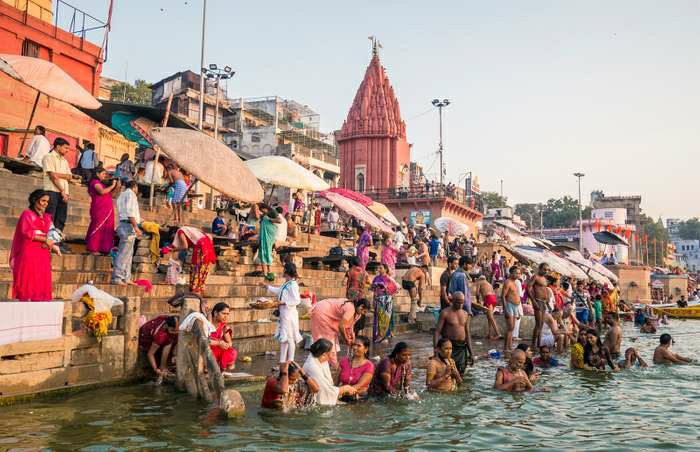
India and Knowledge Society

Let knowledge come from all sides. (RIG VEDA):

Knowledge has always been an essential and distinguishing characteristic of human society, for human beings are unique among all species in their extended capacity to formulate, systematize, preserve and consciously transmit organized bodies of knowledge from one individual, community, generation and location to another. That is the essence of all that is known as education.

There is almost universal recognition that knowledge as a product and as an instrument will be the basic foundation for competitiveness of individual business and of nations in the 21st century. Robust research findings suggest that knowledge as a factor of production explains a substantial proportion of economic growth internationally.

 Historically, Indian society is a hierarchical society and its knowledge base has always been elitist. Whether it is the caste based system or the colonial education system, access to knowledge has primarily been the privilege of the few. But such a system can never lay the foundation for a holistic development strategy. Therefore, all socio-economic and political
ideas have to be focused on inclusive growth and socio-economic equality in the real sense

The recent focus of good governance is to enable inclusive growth and development. India has come a long way from the hierarchical society and its exclusive educational system which we imbibed from our cultural and social heritage, as well as our colonial past. The thrust of the envisaged changes in the society calls for knowledge for all and a shift towards an inclusive
knowledge based society.

“If we value the pursuit of knowledge, we must be free to follow wherever that search may lead us” said Adlai E. Stevenson. This is the idea behind the concept of an inclusive society based on free and easy access to knowledge for all.

Knowledge Society consists of practices and policies for using intellectual assets to support key economic objectives and to reduce vulnerability gaps, and in the process of social transformation strengthening national security .Knowledge management deals with the knowledge as a corporate resource. Knowledge culture is necessary for survival and success in the modern world of business.

Knowledge is only one input to the development process, but it is an absolutely essential one. Without adequate knowledge all the other essential inputs-land, infrastructure, factories, capital, technology, administrative and social organization-cannot yield full results. Enhancing knowledge generation, dissemination and application is the fastest, most cost-effective means of increasing the productivity of all these other resources and accelerating national development.
Development depends on four knowledge processes:

  • Knowledge generation and acquisition through scientific discovery, R&D and transfer of technology.
  • Knowledge adaptation through innovation to particular fields, needs and operating environments.
  • Knowledge dissemination through formal and informal channels from knowledge developers and adapters to those responsible for applying the knowledge in society.
  • Knowledge application through skilled action in fields, factories, classrooms, hospitals and every other field of activity to achieve practical results.

The competencies that would count in the emerging Knowledge Age are intelligence, knowledge, good formal educational qualifications and skills in communicative English-we are abundant in it.

Knowledge is important not only for the rich but also for the poor. This is all the more relevant in a country such as India where the gap between the rich and the poor is enormous. Thus India has to closely link economic development with social development .Technology can assist in the development of the social sector. The anytime-anywhere and death-of-distance paradigms of technology enable better leveraging of scarce resources. Computerized learning aids, cyber classes and e-education are instances of use of technology in education. Knowledge is the key driver in the race for economic leadership. A key imperative today is for the government to collaborate with the private sector and industry in building knowledge infrastructure. This includes partnership for developing talent, formulating conducive regulatory framework, creating bandwidth and providing affordable computing power.

It is suggested that Indian policy makers and organisations consider focusing on the following areas to prepare for a knowledge-based economy and society.

First, good quality institutions, a reasonable degree of contestability in the economy and in polity, and an outward-orientation are essential for creating, diffusing and adapting knowledge in India; efforts should be made to deepen and institutionalise economic and governance reforms.

Second, strong education and training in technology and science are essential as knowledge cannot be absorbed unless some basic knowledge is already possessed. Reforming education policies and regulations, particularly those designed to increase supply and quality, should be an urgent priority. India must preserve traditional knowledge and subject it to scientific enquiry and application.

Third, capabilities to take advantage of international conventions such as converting product and process knowledge into patents and intellectual property rights must be developed. Commoditisation of traditional knowledge by more resourceful countries needs to be addressed through cooperation among developing countries, which have similar interests.

Fourth, private and public sector firms and organisations of developing countries must be open to new ideas. There is no more insidious colonisation than colonisation of the mind. In most Indian organisations, the desire to reform traditional methods of administration and delivery of government services is essential if the efficiencies arising from the knowledge-economy are to be realised.

Fifth, multiple sources of new ideas and experiments, including rural technology innovations, need to be cultivated. If such sources of ideas are combined with encouraging social entrepreneurship, i.e. meeting social needs with capitalist means, and with effective public private partnerships, application of knowledge-economy to diverse areas can be facilitated.

Sixth, a great deal of knowledge is organisation, context or location-specific. The challenge is to use it to address specific economic and social needs. India’s heterogeneity can be used to great advantage in discovering and diffusing location specific knowledge to develop more sustainable, relatively less elaborate, production and supply chains.

These, in turn, may help increase resilience of local economies to external shocks.

The National Knowledge Commission (NKC), an advisory body set up in 2005, has five focus areas, namely easy access to knowledge, emphasis on education at all levels, creation of knowledge, application of knowledge to all sectors, and better delivery of services in all sectors. The NKC however has not received strong political support. Its recommendations have been blocked by petty political and bureaucratic rivalries. Unwillingness or inability to assert strong political leadership by the Prime Minister in this area has contributed to the erosion of his authority, while constraining India’s future options and prospects.

Many believe that those representing Indian institutions will have the capacity to push for a level playing field on the world scene as far as access to technology and the relevant knowledge bases are concerned at the same time as they foster the development of local knowledge and ICT applications. However, this will depend on other factors such as international trade relations and whether the government and other stakeholders can avoid becoming victims of the ICT fetish. India’s resilient features and strengths in terms of its social organisation, its cultural resources and its vast reservoir of knowledge workers should not be frittered away as a result of greater than necessary participation in the global knowledge society.

India was a knowledge force in the ancient days. Let us again restore this status to Bharat again. Let us draw inspiration from our great wise men of the past and the intellectual leadership of the present and make the world exclaim, “The Wonder That Is India.”

India of the ages is not dead nor has she spoken her last word, she lives and has still something to do for herself and the humankind. (AURBINDO GHOSH)

Peanuts : Nutrition And Health Benefits

A native to South America and introduced to other tropical countries many centuries ago, peanuts though classified as a nut, are actually not nuts as it belongs to the family of legumes like soy, beans and lentils. In India, they are mostly grown in tropical states like Andhra Pradesh, Telangana , Tamil Nadu, Gujrat, Maharashtra and Rajasthan.

Nutrition :

Peanuts or Ground nuts are abundant in protein, healthy fats and dietary fibres that can curb your appetite, lower the risk of heart disease and regulate sugar levels. They are immensely rich in Potassium, Calcium, Phosphorus and B Vitamins which can provide you with a lot of health benefits.

Groundnut Nutrition per 100 gms

Calories 567 kcal

Total Carbohydrate 16g

Dietary fiber 9g

Sugar 4g

Protein 26g

Total Fat 49g

Saturated Fat 7g

Cholesterol 0mg

Sodium 18mg

Potassium 705 mg

Calcium 134mg

Iron 6.7mg

Manganese 245mg

Phosphorus 549

Water 7%

Health Benefits :

Heart – friendly

Peanuts help to keep the heart healthy. They lower bad cholesterol and increase good cholesterol levels in the blood, only to prevent coronary artery disease and strokes by promoting healthy blood lipid profile.

Brain Food

It is due to the presence of Vitamin B3 or niacin that helps improve the functionality of the brain and further boosts memory. They also contain a flavonoid known as resveratrol that helps in improving blood flow to the brain.

Helps in weight loss

The combination of fiber, fat and protein in peanuts helps keep you full for longer and lowers your appetite. They are good source of energy that help increase the metabolic rate.

Helps deal with stress and anxiety

Stress and anxiety are two symptoms of depression. Amino acid known as tryptophan present in peanuts releases serotonin a brain chemical that is involved in mood regulation. It keeps us calm and mentally aware.

Best for diabetics

Peanuts make a great snack option for diabetics due to the presence of manganese, a mineral that plays an important role in metabolizing fat and carbohydrate, Calcium absorption and blood sugar regulation. They are known to have a low glycemic index that makes it a perfect go to snack for diabetics.

Good for skin and hair

Vitamins present in peanuts helps in delaying visible significance ageing. It is beneficial for skin. It is also good source of B Vitamins that convert in to biotin only to induce hair growth.

Promotes Fertility

It also contains a good amount of flame. Several studies have shown that women who had a daily consumption of 400 mg of folic acid before and during early pregnancy reduced the risk of having a baby born with a serious neutral tube defect by up to 70%.

The article was all about nutrition facts and health benefits of peanuts. Hope you find this article useful.

“THE BARD OF AVON” : WILLIAM SHAKESPEARE

  • Introduction and birth
  • Shakespeare’s Lost years
  • Career and his works
  • Writing style
  • His famous quotes

“All the world’s a stage, and all the men and women merely players. They have their exits and their entrances, and the one man in his time plays many parts.”

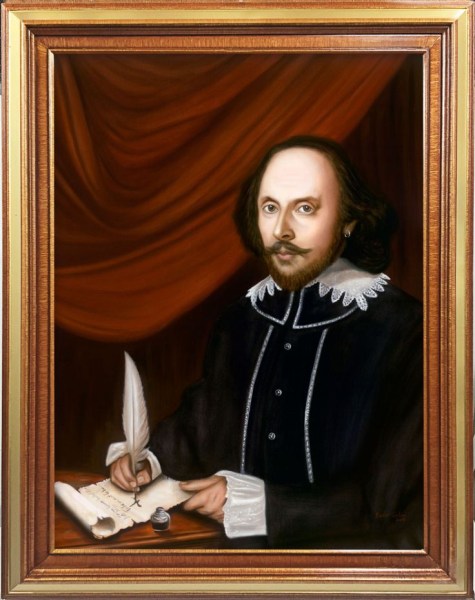
William Shakespeare was an English poet mystery, playwright and actor of the Renaissance era who is considered one of the greatest writers to ever use the English language. He was an important member of the King’s Men company of theatrical players from roughly 1594 onward. He is also the most famous playwright in the world, with his plays being translated in over 50 languages and performed across the globe for audiences of all ages known colloquially as“The Bard” or “The Bard of Avon,” Shakespeare was also an actor and the creator of the Globe Theatre, a historical theatre, and company that is visited by hundreds of thousands of tourists every year. Shakespeare’s writings capture the range of human emotion and conflict and have been celebrated for more than 400 years.

His birth records does not exist, but an old church record indicates that a William Shakespeare was baptized at Holy Trinity Church in Stratford-upon-Avon on April 26, 1564. Shakespeare was educated at the King’s New School, a free chartered grammar school that was located in Stratford. There he studied the basic Latin text and grammar, much of which was standardized across the country by Royal decree. He was also known to partake in the theatre while at the school . As a commoner, Shakespeare’s education was thought to finish at the grammar school level as there is no record of him attending university, which was a luxury reserved for upper-class families.

Shakespeare’s Lost years –
In 1582, an 18-year-old Shakespeare married Anne Hathaway. After the birth of his twins in 1585, Shakespeare disappeared from public record until 1592, when his works began appearing on the London stage. These seven years are known as “Shakespeare’s Lost Years,” and have been the source of various stories that remain unverified, including a salacious story involving Shakespeare escaping Stratford prosecution for deer poaching.

Career –
William Shakespeare first made his appearance on the London stage, where his plays would be written and performed, around 1592. He was, however, well known enough to be attacked by critics in newspapers, and thus was considered to be already an established playwright.

After the year 1594, Shakespeare’s plays were solely performed by a company owned by a group of actors known as the Lord Chamberlain’s Men, which became London’s leading company.
Between about 1590 and 1613, Shakespeare wrote at least 37 plays and collaborated on several more. His 17 comedies include The Merchant of Venice and Much Ado About Nothing. The most famous among his tragedies are Hamlet, Othello, King Lear and Macbeth. Shakespeare also wrote 4 poems, and a famous collection of Sonnets which was first published in 1609.

Early Works and after 1600: Histories and Comedies

  • Henry VI (Parts I, II and III), Richard II and Henry V – Shakespeare’s first plays were mostly histories.
  • Tragic love story Romeo and Juliet.
  • Julius Caesar portrays upheaval in Roman politics that may have resonated with viewers at a time when England’s aging monarch, Queen Elizabeth I, had no legitimate heir.
  • Comedies – the whimsical A Midsummer Night’s Dream, the romantic Merchant of Venice,the wit and wordplay of Much Ado About Nothing and the charming As You Like It and Twelfth Night.
  • Other plays before 1600 include Titus Andronicus, The Comedy of Errors, The Two Gentlemen of Verona, The Taming of the Shrew, Love’s Labour’s Lost, King John, The Merry Wives of Windsor and Henry V.
  • After 1600: Tragedies and Tragicomedies- Hamlet, Othello, King Lear and Macbeth. In these, Shakespeare’s characters present vivid impressions of human temperament that are timeless and universal.
  • In Shakespeare’s final period, he wrote several tragicomedies – Cymbeline, The Winter’s Tale and The Tempest.
  • Other plays written during this period include All’s Well That Ends Well, Measure for Measure, Timon of Athens, Coriolanus, Pericles and Henry VIII.

Writing Styles –
Shakespeare’s early plays were written in the conventional style of the day, with elaborate metaphors and rhetorical phrases that didn’t always align naturally with the story’s plot or characters.
However, Shakespeare was very innovative, adapting the traditional style to his own purposes and creating a free flow of words.
With only small degrees of variation, Shakespeare primarily used a metrical pattern consisting of lines of unrhymed or blank verse, to compose his plays. At the same time, there are passages in all the plays that deviate from this and use forms of poetry or simple prose.
While it’s difficult to determine the exact chronology of Shakespeare’s plays, over the course of two decades, from about 1590 to 1613, he wrote a total of 37 plays revolving around several main themes: histories, tragedies, comedies and tragicomedies.

Today, his plays are highly popular and constantly studied and reinterpreted in performances with diverse cultural and political contexts. The genius of Shakespeare’s characters and plots are that they present real human beings in a wide range of emotions and conflicts that transcend their origins in Elizabethan England.

Various famous quotes of william Shakespeare

“Love all, trust a few, do wrong to none.”

“A fool thinks himself to be wise, but a wise man knows himself to be a fool”.

“The empty vessel makes the loudest sound”.

“We are time’s subjects, and time bids be gone”.

Front line warriors: Doctors

National Doctor’s Day – 1st July

“Medicines cure diseases, but only doctors can cure patients” – Carl Jung

India celebrates National Doctor’s Day every year, on this day doctors across the country are honoured for their relentless service. This day is like a tribute to all medical and healthcare professionals who have attended to patients and did their bit for the society irrespective of all odds. This day is to express gratitude towards the importance of doctors in our lives and the role they play in the welfare of this humankind.
In India, National Doctors Day is organised by the Indian Medical Association (IMA).

The Doctor’s Day theme this year’s stands, “Lessen the mortality of COVID 19”. It includes awareness about asymptomatic hypoxia and early aggressive therapy.

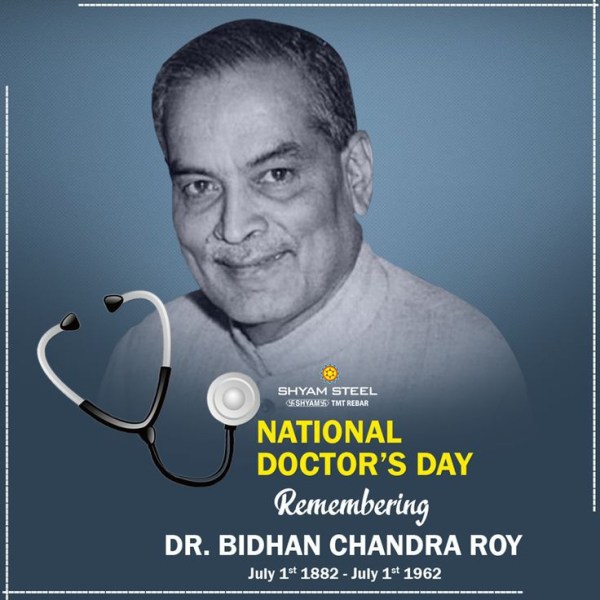
July 1 marks the birth, as well as the death anniversary of one of the most renowned physicians in India, Dr. Bidhan Chandra Roy. He was also the second chief minister of West Bengal. He received the country’s highest civilian award, Bharat Ratna , on February 4, 1961, and therefore the day is celebrated to honour the personality. Dr Roy was honoured with the country’s highest civilian award, Bharat Ratna, on February 4, 1961. In 1991, India started celebrating the National Doctor’s Day in honour of Dr Roy as a great physician.

While this year, due to the coronavirus COVID-19 outbreak, it has been particularly hard on medical professionals. The hard work and dedication of the doctors since the start of the pandemic has been praise worthy. Due to the widespread of coronavirus, National Doctor’s Day celebration will not include face to face meetings and celebrations. State-level webinars and virtual meetings by video conferencing will be conducted to acknowledge the efforts of each doctor and medical practitioners.
Every member of IMA and the local branch take a lead in the local area and bring about a change in the current situation (Covid-19 pandemic), said the IMA.

Prime Minister Narendra Modi took to twitter and posted a video to thank the Covid warriors who have been taking care of each one of us and serving the country without thinking about their lives.

For several years National Doctor’s Day is celebrated by the Government and non-government healthcare organisations to get familiar with the doctor’s contributions. Healthcare organisations staff organises several events and activities on this day. For grand celebration on Doctor’s Day Rotary Club of the North Calcutta and North East Calcutta Social & Welfare Organization” organises big events annually.
Free medical check-up camps are organised at various health care centers and public places by the health care organisations to promote quality medical services free of cost among the public. Rotational medical services by the doctors are also promoted. Various discussion programs are organised across the country to make people aware of health check-up, prevention, diagnosis, proper treatment of the disease, etc.
General screening test camps are also organised to assess the health status, health counseling, health nutrition talks and chronic disease awareness among poor people and senior citizens.
The contribution of doctors needs to be recognised this year more than ever as they combat the coronavirus pandemic from the frontlines as Frontline Warriors .Therefore honour front line warriors and support medical workers to fight with the virus.

“People Pay the Doctor for His Trouble; for His Kindness, They Still Remain in His Debt” -Seneca.

India- land of large physiography

Unity in diversity, So is said about India, is not true only about its people, but it’s physiography, beautiful and insane. Mountain chains, large deserts, beautiful coastlines, beaches, ever flowing rivers, dense forests and the swampy landscapes, all put together to make a divine country, named, India. All these features make India a place worth visiting for, and thereby creating an increase in its rank up on the world stage.

India has been divided into six physiographic zones –

  • Northern and north-eastern mountain
  • Northern plain
  • Peninsular plateau
  • Indian desert
  • Coastal plains
  • Islands

North and north eastern mountains –

Starting right from the Himalayan mountain range, where the heaven on the earth, is one of the most prominent features of Indian physiographic divisions. It not only protects the country from external attacks, but also is responsible for the controlling of the winds flowing in and out of the country. Starting from Hindu Kush mountains in the West, covering all of the Northern India, these get plunge towards the North East, in the states of Arunachal Pradesh and Meghalaya.

Northern plains –

Covering most of the Indian peninsula, the northern plains spread over 2.5-million km sq. Most of the production activities take place over this region, such as, farming, setting up of industrial areas, and other massive activities, also having the most fertile soil to grow crops, i.e. alluvial soil. The region is a way, or the region sustains India’s most of the perennial rivers, like The Ganga, The Yamuna, The Son, etc and etc.

Peninsular plateau –

Peninsular region is the oldest part of the Indian subcontinent. Most of the variations in the land geography, one can find plateaus, fold mountains, ridges, and contains most of the mountain ranges. Peninsular region of India is most famous for its forest areas and diverse range of flaura and fauna.

Desert –

Two type of deserts can be found in India

  • Hot desert
  • Cold desert

Hot desert covers the Western most states of the country, Rajasthan, Gujarat. But the type of deserts still differ from each other, in terms of appearance and salinity. The desert in Gujarat is more saline and is white in appearance, but in the region of Rajasthan, it is alike other deserts found in many of the parts of the world.

Cold desert of India is in the Ladakh region, which is also the coldest and highest regions of the country.

Coastal areas and Islands –

India is bestowed with a large coastline,running from Gujarat towards the South,and ending up in the state of West Bengal. It is because of this large coastal area, most of the economic developments could take place in the country,whether it is fishing, extraction of natural resources,development of ports, and way for exports and imports.

Major islands of the country are Andaman and Nicobar and Lakshadweep,where natural resources are easily available in abundant amount.

This diversity in the physiography of India makes it a beauty of the earth and the presence of natural resources makes the subcontinent into a land which is more favorable for human growth.

CORONAVIRUS VACCINE DEVELOPMENTS

What is coronavirus?

Coronavirus disease (COVID-19) is an infectious disease caused by a newly discovered coronavirus.Most people infected with the COVID-19 virus will experience mild to moderate respiratory illness and recover without requiring special treatment.  Older people and those with underlying medical problems like cardiovascular disease, diabetes, chronic respiratory disease, and cancer are more likely to develop serious illness.

The best way to prevent and slow down transmission is be well informed about the COVID-19 virus, the disease it causes and how it spreads. The COVID-19 virus spreads primarily through droplets of saliva or discharge from the nose when an infected person coughs or sneezes, so it’s important that you also practice respiratory etiquette.

At this time, there are no specific vaccines or treatments for COVID-19. However, there are many ongoing clinical trials evaluating potential treatments. So sooner or later, we are going to come up with a permanent solution for this virus too.

Vaccine developments

With confirmed COVID-19 cases worldwide surpassing 9 million and continuing to grow, scientists are pushing forward with efforts to develop vaccines and treatments to slow the pandemic and lessen the disease’s damage. Some of the earliest treatments will likely be drugs that are already approved for other conditions, or have been tested on other viruses.

As of May 8, two medications had received emergency use authorization (EUA) from the Food and Drug Administration (FDA): the antiviral remdesivir and a drug used to sedate people on a ventilator.

The FDA issued a EUA in March for the antimalaria drugs chloroquine and hydroxychloroquine, but later revoked it after studies showed that they’re unlikely to be effective in treating COVID-19.

EUA allows doctors to use these drugs to treat people with COVID-19 even before the medications have gone through the formal FDA approval process. These drugs are still being tested in clinical trials to see whether they’re effective against COVID-19. This step is needed to make sure the medications are safe for this particular use and what the proper dosage should be.

It could be months before treatments are available that are known to work against COVID-19. It could be even longer for a vaccine. But there are still other tools we can use to reduce the damage done by the new coronavirus, also known as SARS-CoV-2.

Antivirals

Remdesivir: Developed a decade ago, this drug failed in clinical trials against Ebola in 2014. But it was found to be generally safe in people. Research with MERS, a disease caused by a different coronavirus, showed that the drug blocked the virus from replicating. The drug is being tested in many COVID-19 clinical trials around the world. This includes studies in which remdesivir is being administered alongside other drugs, such as the anti-inflammatory drug baricitinib. The drug is also being tested in children with moderate to severe COVID-19. In late April, the drug’s manufacturer, Gilead Sciences, announced one of its trials had been “terminated” due to low enrollment. Gilead officials said the results of that trial had been “inconclusive” when it was ended.

A few days later, the company announced that preliminary data from another trial of remdesivir overseen by the National Institute of Allergy and Infectious Diseases (NIAID) had “met its primary endpoint.” Gary Schwitzer, founder of HealthNewsReview.org, though, said the researchers changed the primary endpoint 2 weeks before Fauci’s announcement. Schwitzer compared that to moving football goalposts closer to make it easier to get a touchdown. At the same time, another study published in The Lancet reported that participants in a clinical trial who took remdesivir showed no benefits compared to people who took a placebo.

Despite the conflicting results, the FDA issued an order on May 1 for the emergency use of remdesivir. In early June, federal officials announced their supply of remdesivir will run out by the end of June. Gilead is ramping up production, but it’s unclear how much of the drug will be available this summer.

Arbidol: This antiviral was tested along with the drug lopinavir/ritonavir as a treatment for COVID-19. Researchers reported in mid-April that the two drugs didn’t improve the clinical outcomes for people hospitalized with mild to moderate cases of COVID-19.

EIDD-2801: This drug was created by scientists at a nonprofit biotech company owned by Emory University. Research in mice has shown that it can reduce replication of multiple coronaviruses, including SARS-CoV-2.

Pharmaceutical company Merck and Ridgeback Biotherapeutics LP signed an agreement in May to develop this drug. It’s already being tested in a clinical trial in the United Kingdom. Unlike remdesivir, EIDD-2801 can be taken orally, which would make it available to a larger number of people.

Favipiravir: This drug is approved in some countries outside the United States to treat influenza. Some reports from China suggest it may work as a treatment for COVID-19. These results, though, haven’t been published yet. Japan, where the medication is made, is sending the drug to 43 countries for clinical trial testing in people with mild or moderate COVID-19. Canadian researchers are testing to see whether the drug can help fight outbreaks in long-term care homes.

Kaletra: This is a combination of two drugs — lopinavir and ritonavir — that work against HIV. Clinical trials are being done to see whether it also works against SARS-CoV-2. One small study published May 4 in the journal Med by Cell Press found that lopinavir/ritonavir didn’t improve outcomes in people with mild or moderate COVID-19 compared to those receiving standard care.

Another study, published May 7 in the New England Journal of Medicine, found that the drug combination wasn’t effective for people with severe COVID-19. But another study found that people who were given lopinavir/ritonavir along with two other drugs — ribavirin and interferon beta-1b — took less time to clear the virus from their body. This study was published May 8 in The Lancet.

Merimepodib (VX-497): This drug developed by ViralClear Pharmaceuticals Inc. has been shown previously to have antiviral and immune-suppressing effects. It was tested against hepatitis C but had only modest effects.

The company is running a phase II trial of this drug. People with advanced COVID-19 will be randomized to receive either merimepodib with remdesivir, or remdesivir plus a placebo. The company hopes to have results by late summer of this year.

Tourism : can this be the next big thing for India

Who doesn’t love to travel?

Every body seek to grab every single chance to wander around the world. Some love to travel to hills, while others are pleased to be at the sea side, other proportion of people want to travel to desert areas,and the remaining like to scratch out every corner of the world. An increase in the trend of more and more wanderlust among the people, is the reason for an increase in the trend of tourism industry. No matter where you want to travel, which part of the world you have to discover, just a click on the e-travel site and choose your favourite destination.

In case of the country, such as, India, which is counted as a developing one, it is a fresh opportunity to become the top countries to offer a great traveling experience to those coming to the country in order to observe its beauty. Post pandemic, will be a great opportunity for the government to promote tourism in the country and it will surely create a massive opportunity for the economy to bloom and grow positively. As many of the scholars have claimed that, India’s economy may fall to negative, but, tourism industry is an idom used to drown, that can help the country with incredible increase in the number of tourists.

About 10.89 million foreign tourists visited India in 2019. But, according to the UN World Tourism Organization, 50 million Indians will travel overseas in 2019, which is a big reason to worry regarding the tourism industry in the country. There is a huge gap between people coming and going out of the country which needs to be filled, in order to see India as a huge tourist destination.

It is one of the reasons why tourism can be next big thing for India! We have been privileged to be a part of such a beautiful country as this, where every kind of physiographic divisions could be found, be it Jammu and Kashmir, pure heaven on the earth; or the widespread desert of Rajasthan; backwaters of Kerala;beaches of Mumbai and Goa;historic sites of Central India; beauty of northeast India; and all that enormous beauty that is untouched by most of the travellers.

But, the pandemic has given a jerk to the tourism industry, which has been a great source of income to the country, due to shut down offices of travel companies, tourist destinations, along with, hotel, restaurant chains, along with the suspension of, both, national, as well as international flights, ultimately bearing the loss hit by the pandemic.

The Indian tourism industry is projected to book a revenue loss of Rs. 1.25 trillion, in calendar 2020,which means a 40% decline in revenue over calendar 2019.

But, as it has been righteously said that, the population of any country is its wealth, we as the wealth of our country must only visit the tourist attractions in our own country (post pandemic) in order to give a hike to its economy. This would complete the twin objective

  • One is, to give a boost to the economic conditions of the country.
  • Second is, it will give us a chance to explore the unseen beauty of our own country and people will not underestimate the power of the country.

Current status of the animals in COVID-19 pandemic

Have you ever wondered while you’re at home safely; the doctors, nurses, police, army are the real warriors fighting in this pandemic. But what about the animals around us and in the wildlife sanctuaries? The pets may be safe, but the lone strangers are in need, and we need to help them. In this situation, the activities of poachers have been increasing a lot and can be a significant threat to wild animals, including the endangered animals.

Let’s start with something positive first. One of the facts that researchers were in shock after noticing the penguins are so happy after enjoying with less sea ice; it made them roam and dive freely in the water. Also, the bees, due to less pollution, are now able to find flowers easily. You may also see news like the animals in the zoo are roaming freely; nature is recovering, and much more. But that isn’t the reality. There’s a dark secret hidden behind these hysterical scenes.

A happy penguin looking at you while reading this article

People being unemployed in rural areas prone to move towards illegal activities. In Kenya, also Cambodia and some parts of Africa where bushmeat is increasing a lot. The rhinos are in danger for their horn, although there is no possible way to supply them due to restrictions. The protection in those areas might have reduced due to severe health complications in the countries, so they get an easy escape and a great start planning to earn money. The current situations have worsened day by day as the patients are increasing, beds are reducing, and the government is more focused on healthcare systems.

The technology wants to lend hands to help, and some of them did apply the methodology. Kruger National Park in Africa is using drones as a part of Postcode Meerkat and also day night vision cameras to keep an eye on such activities. The most crucial fact is that the number of wildlife animals is decreasing day by day, and most importantly, the diseases are being spread due to such activities. The worst nightmare in Africa, Ebola, also the SARS and AIDS have all originated due to the animals.

A typical seafood market

The wet market, banned several times in China, still functional in some areas leading to the outbreak, which has re-begun when the virus was found in the seafood market. It’s nearly a wartime scenario in the country. The swab testing recently is done, and guess what, the rise in the cases is observed. If the guidelines are not followed, people looking for freedom might lose their life permanently while fighting with the self-immunity, not even with someone else. Your body is a battlefield now; you have to fight for your system and not by raising questions to others.

At the time of writing this article, the cases are at 10 million, and still, there is no seriousness among the people. Being at home doesn’t mean you’re free; you need to contribute your work and show dedication towards society. We are a social animal, and yes, we also need to be controlled to control the diversion to other illegal tasks.

A step towards spreading happiness….

“The best way to cheer yourself is to try to cheer someone else up” – Mark Twain

Happiness : In terms of psychology, we call happiness as positive emotions such as joy, pride, interest, enthusiasm. Happiness has also been said to relate to life satisfaction, appreciation of life, and moments of pleasure that means it has to do with the positive experience of emotions.

Many people think that happiness is having fun at a party, the excitement of new experiences or the delights of a fine meal. These are all wonderful experiences to be cherished and experience but they are not happiness. Happiness is something comes when you feel satisfied and fulfilled. It is a feeling of contentment and satisfaction.

“Happiness is the settling of the soul into its most appropriate spot.”
– Aristotle

It is a fact, “Everybody wants to be happy and everyone loves to feel happy” so try to build positive environment near you to get yourself happy and others.

Being happy and making others happy is a Complex task as everyone has their own sense of comfortable environment. Being happy or unhappy is there’s own choice. People who chose to be unhappy because they think that by being unhappy, they will get something which is wrong. Unhappiness van never lead to your goal of achieving anything.

When we step towards spreading happiness, we tend to forget our own sadness and also we get new ways to deal with difficult situations. When a person fills a part of kindness to other, it comes back with a feeling of love, care and happiness.

“I think happiness is what makes you pretty. Happy people are beautiful.They become like a mirror and they reflect that happiness” – Drew Barrymore

How to be happy and make everyone happy there are several ways-

  • Act of kindness “Give what you Get”- Most of the time people treat you as you treat them. Although, there are some who are ungrateful but you should still have positive feeling no matter what they do.
  • Smile – It is the best way to be happy and speed happiness to others. An act of smile creates positive vibes to yourself and other person.
  • Make an effort to build good thoughts- try to spread good thoughts about anyone, being gossiping negative things make yourself with negative thoughts and the person listening surrounds with off feeling vibrations.
  • Appreciate – Always praise and appreciate to what you like and observe It helps us get in tune with feelings with others. It is a good medium to spread happiness by appreciating worthy.
  • Surprise others- Surprise others with different things they love such as kind words, help, etc.
  • Donate what you can do as charity- Helping the needy gives the person the most sense of self satisfaction. Giving a hand to somebody in crisis is the biggest act of kindness and happiness. Smile on the face of needy gives the full mental satisfaction.
  • Listen to someone who wants your attention- Just be there when someone wants you to be attended. It builds a feeling of that someone is there to support and help.
  • Be thankful to the one who helped you – Move a step to express gratitude for people who helped in your bad times.
  • Deal enemies with a positive note –Even those who do not deserve kindness, treat them with kindness.
  • Do not harm anyone- Keep yourself away form Negative thoughts and acts. Do not harm intentionally any human or animal.

All these activities will make you happy and people surrounding happy. We all need to spread happiness around us to get rid off negative acts of suicide and depression among people. Be communicative to the ones you feel is not feeling well mentally. We have to realise the need of happiness for oneself and the world

“The more you praise and celebrate your life, the more there is in life to celebrate” – Oprah Winfrey

Boycott of fairness creams is a step ahead

Recently, the death of George Floyd has caused a mass stream of revolutionary change against racism, an issue that has been suppressed for years and now has suddenly taken over the streets of almost every country and every social media platform. All kinds of people, black, white, hypocrites, old, and especially the youth is engaged in the process to find out a way to get rid of every kind of racist activity that has been going on since years.If the past records were to be seen, the fault actually lies in our upbringings and educational norms, that have resulted in the acts like, racism. From the day a child is born into this world, is the day, his/her, colour has been judged by the family members, unapologetically, till the day he dies and cremated over. Until, what the person has to go through, is the racist comments and teasers, that unfortunately kills the person from within, even if, unknowingly. Here, there, every where, from school to the work place, judged on the basis of colour.People getting along the streets, outrage over the social media, all the tireless efforts that have been put to provide justice to the victim of racism, George Floyd, is a clear message to the people promoting racism, and racist activities, hypocrites;it is not an era of early 90s, instead, as an human being, as a national of any country, all are up against the evil that have been proliferating since past many a years. The take on this incident has, even, awakend a large amount of celebrities and actors, who were earlier engrossed in the promotions of fairness products and creams, namely, Yami Gautam, Kiara Advani, Katrina Kaif,Deepika Padukone and a series of the young age actors. But, so says the grapevine –

Better late than never

The decision over removing the word “fair” from the product “fair and lovely”,by the company Unilever, past two days ago, is a huge step ahead in promoting, every lives matter, very strongly. It is definitely a step ahead towards the conformation of the idea on banishing racism, as well as racist activities. It is also likely to affect the fairness endorsing products in the near future, abiding the norms of black lives matter, along with a jerk to those who were earlier engaged in promotion of fairness products and now are proudly supporting the revolution against racism.

Now is the time to prove the reason why we are living altogether on the same planet, the need to awake the humanity and purpose of human evolution.