Supreme Court

Article 124 to 147 of the constitution deals with the organisation, independence, jurisdiction.powers, procedures of the Supreme Court.The supreme court of India was inaugurated on 28 January,1950. At present time,The supreme Court consists of thirty four judges i.e.,one Chief Justice,and thirty three other judges.In 2019,an provision was passed in which centre notified an increase in the number of Supreme Court judges from thirtyone to thirtyfour,including The Chief Justice of India.

Appointment of Judges-The Judges of the Supreme court are appointed by The President.The Chief Justice is appointed by the President after consultation with such judges of the Supreme Court and High Court as he deems necessary.The other jugdes are appointed by the President after consultation with the Chief Justice and such other judges of the supreme court and high court as he deems necessary.

Qualification of Judges -A person should only be appoint as a judge of the supreme court if he/she should have following qualifications

1.He should be a citizen of India.

2.He should be a judge of high court for five years.

3. He is said to have been a Supreme Court lawyer for 10 years.

From the above discussion, it is clear that the Constitution does not mention the minimum age for appointment to the Supreme Court.

Oath of The judges -A person appointed as a judge of the Supreme Court must take an oath before taking office before the President or anyone appointed by him for that purpose. In this oath, the Supreme Court judge swears it.

1. Support India’s sovereignty and integrity

2. Have true faith and loyalty to the Constitution of India.

3. Perform office duties appropriately and honestly, without fear, favor or affection, and by maximizing my abilities, knowledge and judgment.

4. Support the Constitution and the law.

Salaries and Allowances- The Supreme Court judges’ salaries, allowances, privileges, holidays and pensions are determined by Parliament from time to time. In 2018, the presiding judge’s salary was raised from 10,000 rupees to 28,000 rupees per month, and the judge’s salary was raised from 900 million rupees to 25 million rupees per month. They also receive living allowances, free accommodation and other facilities such as medical care, cars and telephones. Retired chief justice and judges are entitled to receive 50 percent of their final salary as a monthly salary.

Tenure of the Judges-The Constitution does not specify a Supreme Court judge’s term. However, there are three provisions in this regard.

1. He will be in office until he is 65 years old.

2. He can resign in writing to the President.

3.He can removed from his office by the President on the recommendation of the Parliament.

NITI Aayog

On January 1, 2015, NITI Aayog (National Institution for Transforming India) was established. On August 13, 2014, the Government of Narendra Modi announced that it would abolish the 65-year-old planning committee and replace it with a new organization called NITI Aayog.

Like the Planning Committee, NITI Aayog was created by the Coalition Cabinet of the Government of India. Provides technical advice related to the center and state. NITI Aayog has been replaced by a planning committee to better meet the needs and aspirations of the Indian people.

Configuration -The configuration of NITI Aayog is as follows:

(A) Chair person- The Prime Minister of India is the Chair person of NITI Aayog.

(B) The Governing Council is the Prime Ministers of all states, the Prime Ministers of the Union Territory, and the Governor of Lt. and other Union Territories.

(C) Regional Council -These consist of the Prime Minister and the Deputy Governor of the Union Territory of the region. It is chaired by the chairperson (Prime Minister) of NITI Aayog or his deputy.

(D) Special Invitees- Special invitees are experts, professionals and practitioners with special knowledge and are appointed by the Prime Minister.

NITI Aayog’s Specialized Wings- NITI Aayog has many specialized wings.

1. Research Wings They are experts, specialists and scholars.

2.Consultancy wing–It provides a market place of whetted panels of expertise and funding,for the central and state Governments to tap into matching their requirements with solution providers,public and private,national and international.

3.TeamIndia Wing -Consists of representatives from all states and departments and acts as a permanent platform for national cooperation. Representatives ensure that each state / department has an ongoing voice and interest in NITI Aayog.

NITI Aayog makes recommendations to the central and state governments responsible for decision-making and implementation.

Objectives of NITI Aayog -NITI Aayog, described below, has several objectives
1.To pay special attention to the sections of our society that may be at risk of not benefitting adequately from economic progress.

2.To ensure,on areas that are specifically referred to it,that the interests of national security are incorporated in economic strategy and policy.

3. Design strategic and long-term policy and program frameworks and initiatives, and monitor their progress and effectiveness. 4.Create a knowledge, innovation and entrepreneur support system

5. Actively and frequently monitor and evaluate the implementation of the program 6. Focus on technical upgrades and capacity building for the implementation of the initiative

7. National development and development Shared Vision Priority, sector and strategy through active participation of the state.

8. Develop a mechanism for developing credible plans at village-level think tanks.

9.To provide advice and encourage partnerships between key stakeholders and national and international like minded think tanks.

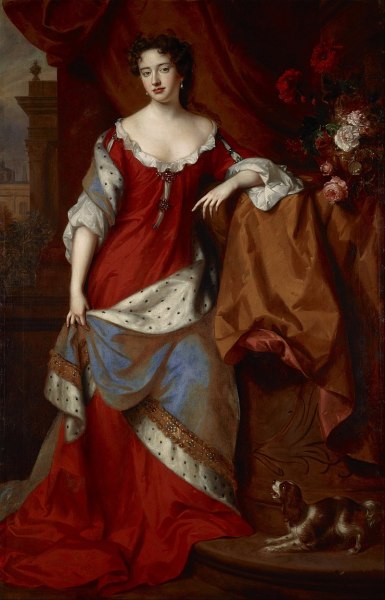
AGE OF QUEEN ANNE

Queen Anne (1665 – 1714) was the last of the Stuart’s the second daughter of James II and his first wife Ann Hyde. Queen Anne ruled England from 1702 to 1714. It was a golden age in the history of England because it was a period of great prosperity. Industry, agriculture, and commerce all continued to prosper. Only during the last three years of her reign were their sign of distress and discontent, and that was chiefly due to the unavoidable war conditions in which the people had to live. English agriculture had improved so far that more wheat was grown than in medieval times. Wheat was the most important article of food. In the reign of Anne, there was a great exchange of agricultural products between one district and another. England’s agriculture improvement during this regime was so much that she was able to send corn abroad on a large scale.

Queen Anne’s reign was not yet time to appreciate the value of good education. There were only a few public schools like Eton, Winchester, and Westminster which were patronized chiefly by the aristocracy. The sons of the squires, yeomen and shopkeepers went to the nearest grammar schools. In wealthy families, private chaplains were employed to teach the young gentlemen. In schools, the punishment was of a rather severe type. Flogging was restored as a means of imparting knowledge and maintaining discipline. Writers like Locke and Steele were highly critical of this method. Women’s education was almost neglected and there was no good school for them. Most girls learned from their mothers to read, write, sew, and manage the household.

In the early part of the eighteenth century, most of the marriages were arranged by the parents. However, runaway marriages were common. There were also numerous love marriages. Divorce was almost unknown. During the twelve years of Queen Anne, in the whole country, there were only six divorces.

There were certain sports and pastimes which provided relaxation to the people. In Anne’s reign, a primitive kind of cricket was just beginning to take its place among the village sports. Football also was played by many. Cockfighting was watched with excitement by all classes of people. Horseracing attracted hundreds of people to the places where it was conducted. The most usual sports that people could easily resort to, were angling, shooting, and snaring birds of all kinds.

The most important industries of the period were coal mining and cloth-making. The coal mines were treated as the property of the owner of the land. Explosions were common in these mines and many workers lost their lives. In Anne’s time, the coal-mining industry was midway between the domestic and the factory system. The industry next in importance was cloth-making. Spinning was done chiefly in country cottages by women and children, and weaving chiefly in towns and villages by men.

The religious activities of the period consisted of the establishment of many religious societies and charity schools. life in individuals and families, to encourage church- The first object of these societies was to promote Christian attendance, family prayers, and Bible study. During the reign of Anne hundreds of charities, schools were founded all over England to educate the children of the poor in reading, writing, moral discipline, and the principles of the Church of England. Another characteristic activity of the period was the working of the Society for the Reformation of Manners.

In the last couple of years of her life, Anne became very ill. She was often bedridden and attended to by doctors. These doctors used many techniques to try to cure Anne including bleeding her and applying hot irons. These crude medicinal techniques probably did more harm than good, and Anne died on July 31st, 1714.

Daniel Defoe

Daniel Defoe was an English writer, trader, journalist, pamphleteer, and spy. He was born in London, became a soldier, and then took to journalism. He is one of the earliest, and in some ways, the greatest, of the Grub Street hacks. He worked for both the Whigs and the Tories, by whom he was frequently employed in obscure and questionable work. His parents were Presbyterian dissenters, and he was educated in a Dissenting Academy at Stoke Newington run by Charles Morton. After leaving school and deciding not to become a dissenting minister, Defoe entered the world of business as a general merchant, dealing at different times in hosiery, general woolen goods, and wine. In 1684 he married Mary Tuffley; six of their eight children lived into adulthood. After expanding into the import-export business for goods such as tobacco and alcohol, Defoe made some unwise investments and in 1692 declared bankruptcy. He was twice briefly imprisoned for his debts, negotiating his freedom with the aid of recognisance (guarantors) and becoming an accountant and investment advisor to the government and private business owners.

His Poetry

Defoe wrote some form of poetry all his life, but his great period of poetic composition was from 1699 to 1707. Here and there, especially in the Review, he left distichs, lampoons, pasquinades, fragments of songs, and ballads; he also included verses in his novels. One can track the development of his thought in the poems, his attachment to certain ideas, such as reform or morality, his theoretical interests in the language and style of poetry, his habit of casting poems into irony, and his skill in creating large poetic “fictions” that permit him to draw together numerous “characters” in recognizable patterns. Within his lifetime a few poems had considerable popularity, in, for example, the 1703 Poems on Affairs of State. The poems are taken up chronologically, with a few exceptions; and some efforts are made to create larger groupings of the poems, such as parliament poems, moral satires, and Scottish poems. The best texts of the poems, with annotations and headnotes, are to be found in Poems on Affairs of State: Augustan Satirical Verse, 1660-1714, volumes 6 and 7 (1970, 1975).

Political Writing

Like most of the other writers of his time, Defoe turned out mass political tracts and pamphlets. Many of them appeared in his journal, The Review, which, issued in 1704, is in several ways the forerunner of The Tatler and The Spectator. His ‘The Shortest Way with the Dissenters’ (1702) brought upon him official wrath and caused him to be fined, imprisoned, and pilloried. He wrote one or two of his political tracts in rough verses which are more remarkable for their vigor than for their elegance. The best known of his class is The True-born Englishmen (1710). In all his propaganda, Defoe is vigorous and acute, and he has a fair command of irony and invective.

His Fiction

His works in fiction were all produced in the later part of his life, at almost incredible speed. First came Robinson Crusoe (1719); then Duncan Campbell, Memories of a Cavalier, and Captain Singleton, all three books in 1720; in 1722 appeared Moll Flanders, A Journal of the Plague Year, and Colonel Jacque; then Roxana (1724) and A New Voyage round the World (1725). This great body of fiction has grave defects, largely due to the immense speed with which it was produced. Before his death in April 1731, Defoe was plagued by debts and restlessly moved between several different lodgings. He is buried in Bunhill Fields, the cemetery for Nonconformists.

Non-Cooperation Movement and Khilafat Movement

In between 1919-1922 the British were opposed throught two mass movementsi.e.,the khilafat movement and Non-Cooperation Movement.Since these two movements raise separate issues,but they adopted a common programme of action.i.e., Non-Cooperation,Nonviolent.

THE KHILAFAT ISSUE

In India,the Muslims were demanding from the British(i)that the khalifa`s control over Muslim sacred place should be retained to them,and(ii)khalifa should be left with sufficient territories after territorial arrangements.In 1919,a Khilafat commitee was formed under the leadership of Shaukat Ali and Muhammad Ali(Ali brothers),Ajmal Khan,Hasrat Mohani,Maulana Azad.The Khilafat movement paved the way for the consolidation of the emergence of a radical nationalist trend among the Younger generation of muslims.

At November 1919,All India Khilafat conference held in Delhi in which a call was made for the boycott of British goods.For some time,the Khilafat leaders limited their actions to meetings,petitions,and deputationes in favor of the Khilafat.But After some time a militant trend emerged,demanding an action agitation such as stopping all cooperation with the British.It was very clear that the support of the Congress was essential for the Khilafat movement to succeed.Although Gandhiji was in favor of launching satyagraha and Non-Cooperation against the government on the Khilafat issue,but the Congress was not united on this form of Political action.

The Non-Cooperation Khilafat Movement-

In August 1920 The Khilafat commitee started a campaign of NonCooperation,and the movement was formally lauched. On September 1920 At a special session in Calcutta,the Congress approved a NonCooperation programme till the Punjab and Khilafat wrong were removed and swaraj was established.This programme boycott the government schools and colleges,boycott the law courts and dispensation of justice through panchayat instead,boycott foreign cloths and use of khadi instead,boycott legislative councils,renunciation of government honours and titles. Spread of the MovementThousands of students left government schools and colleges and joined around 800 national schools and colleges.These educational institutions were organised under the chairmanship of Zakir Hussain,Lala Lajpat Rai,Subhash Chandra Bose,Acharya Narendra Dev.,Many lawyers too gave up their practice like Jawaharlal Nehru,Motilal Nehru,C.Rajagopalachari,Lots of foreign cloths were burnt publicly and their imports fell by half.

People’s response in this movement

The participation in this movement is in wide range,People from every field every class participat in this movement,but to a varying extent.

Middle Class-People from the middle class led the movement at the beginning,but later they showed a lot of reservations about Gandhi’s Programme.The response to the call for resignation from the government jobs, surrendering of titles was not taken seriously.

Business class-The economic section get benefited as the economic boycott received support from the Indian Business group because they had benefited from the Nationalists emphasis on the use of swadeshi,but some seemed to be afraid of labour unrest in their factories.

Peasants-Peasants participation was massive.In general,the Peasants turned against the landlords and the traders.

Students- With thousands of students enrolling away from public schools and colleges, students are becoming active volunteers in the movement.

Women-A large number of women participated in the movement and actively participated in picketing outside stores selling cloth and liquor. They gave up Purdah and provided the jewels to the Tilak Foundation.

Parliament

Parliament is the legislative body of the federal government. Articles 79-122 of the Constitution deal with the composition, organization, duration, officers, procedures, authority, etc. of the parliament.

The parliament consists of three parts: the president, the state council, and the house of the People. Rajya Sabha is the House is the upper house(Second chamber or House of Elders) and Lok Sabha is the Lower house(First chamber or Popular house). The President of India is not a member of either parliament, and is not sitting in parliament to attend their sessions. The president is an integral part of parliament. This is because the bill passed by both houses cannot become a bill without the approval of the president. The president also invites both chambers of parliament. Compatible with both the houses

Composition of two houses-

Rajya Sabha Composition- Rajyasabha is the Senate of Parliament. Its maximum strength is set at 250, of which 238 are representatives of state and union territory and 12 are nominated by the president. Currently, Rajya Sabha has 245 members, of which 229 represent the state and 4 represent the state. Union territory and 12 shall be nominated by the President.

1. State Representatives -The state representatives of Rajyasabha are elected by elected members of the Legislative Assembly. Rajya Sabha is elected according to a proportional representation system using STV (single transferable vote).

2. Nominated Members- The President appoints 12 members to Rajyasabha from among individuals with special knowledge of the arts, literature, science and social services.

Lok Sabha Composition- Lok Sabha is the House of Representatives. Its maximum strength is 552. Of these, 530 are represented by the state, 20 are represented by Union Territory, and two are appointed by the President of the Anglo-Indian Community. As of , Lok Sabha has 545 members. Of these, 530 are representatives of the state, 13 are under Union territory, and two Anglo-Indian members have been nominated by the President.

1.State Representatives -Lok Sabha’s state representatives are directly elected by the members of the state’s territory. Elections are based on universal adult suffrage.

2.Nominated Members-The president can nominate two members from the Anglo-Indian community if the community is not adequately represented in the Lok Sabha.

Ben Jonson (1547-1637)

Benjamin Jonson was an English playwright and poet. Jonson’s artistry exerted a lasting influence upon English poetry and stage comedy. He was born at Westminister and educated at Westminister school. His father died before Jonson’s birth, and the boy adopted the trade of his stepfather, who was a master bricklayer. From this, he turned to acting and writing plays, engaging himself, both as actor and playwright, with the Lord Admiral’s company (1597). In 1617, he has created a poet for the king, and the close of James’s reign saw Jonson the undisputed ruler of English literature. His favourite haunt was the Mermaid Tavern, where he reigned as dictator over a younger literary generation. He was buried in Westminister Abbey, and over him was placed the epitaph “o rare Ben Jonson!”

Jonson’s numerous works, comedies, tragedies, masques, and lyrics, are of widely varying merit, but all of them, as well as his Timber, a kind of commonplace-book, which is of considerable interest for its critical comment on literature. To him, the chief function of literature was to instruct. His play was divided conventionally into comedies and tragedies, for Jonson, true to his classical models, did not combine the two. In his comedies, he aimed to return to the controlled, satirical, realistic comedy of the classical dramatist, and the inductions of his plays make it clear that he hoped to reform the drama on these lines. His main concern was with the drawing of character, and his creations are important because they introduce the “comedy of humours“. Many of his characters arc, in consequence, types, but the best, like Bobadill in Every Man in his Humour, rise above the type and live as truly great comic characters.

His early comedies, Every Man in his Humour (1598), Every Man out of Humour (1599), Cynthia’s Revels (1600), and The Poetaster (1601), show his ingenuity of plot, his hearty humour, his wit, and they are full of vivacity and fun. Every Man in his Humouris, perhaps, his greatest work. The middle group of comedies, Volpone, or the Fox (1605), Epicoene, or The Silent Woman (1609), The Alchemist (1610), and Bartholomew Fayre (1614), represents, as a group, his best work. They are all satirical in tone, realistic and natural in dialogue, and ingenious in the plot. The characters are less angular and more convincing. His later comedies, The Devil is an Ass (1616) and The Staple of News (1625), show a distinct falling-off in dramatic power.

The two historical tragedies, Sejanus his Fall (1603) and Catiline his Conspiracy (1611), are composed of classical models. They are too laboured and mechanical to be reckoned as great tragedies. Jonson was also friends with many of the writers of his day, and many of his most well-known poems include tributes to friends such as Shakespeare, John Donne, and Francis Bacon. Ben Jonson died in Westminster on August 8, 1637. A tremendous crowd of mourners attended his burial at Westminster Abbey. He is regarded as one of the major dramatists and poets of the seventeenth century.

Authoritarian System

It is a form of government within an authoritarian system dominated by political parties known for its oppressive nature. It’s actually a denial of democracy. There is no independent judiciary in the authoritarian regime. It is the elite of the ruling class who imposes its value on society and is considered good for the individual. In government, authoritarianism is in the hands of leaders or small elites who are not constitutionally responsible for the politics of the body and cannot be replaced by citizens who vote freely among various competitors in elections. It means a political system that concentrates power. The freedom to establish opposition parties or other alternative parties competing for part of the ruling group is either restricted or nonexistent in the authoritarian regime. However, authoritarian governments usually do not have a highly developed leadership idealism, allow certain pluralism in social organizations, lack the power to mobilize the entire population to pursue national goals, and have domestic power. Relatively exercise Predictable limits. According to some scholars, examples of authoritarian regimes include pro-Western military dictatorships that existed in Latin America and elsewhere in the late 20th century.

Characteristics of the authoritarian regime-

1. It is characterized by a highly concentrated and centralized governmental power that is maintained through political repression and elimination of potential challenges.

2. Use political parties and mass organizations to mobilize people for the goals of the government. 3. Power is controlled, changes governments and even leaders, and is not smooth and peaceful under authoritarian regimes.

4. Authoritarianism is characterized by an “indefinite period of political tenure” of a ruler or ruling party or other authority. The transition from an authoritarian regime to a more democratic form of government is called democratization.

5. The size of the legislature is small because all legislative and political decisions are entrusted to one or a small group of authoritarian regimes.

6.There is a strict restriction of political views and platforms that differ from those of the authoritarian government so not to undermine political control.

John Bunyan

John Bunyan was an English writer and Puritan preacher. He was born in Elstow, near Bedford, in 1628, the son of Thomas Bunyan and Margaret Bentley. He followed his father into the tinker’s trade but rebelled against God and ‘had but few equals, both for cursing, swearing, lying, and blaspheming the holy name of God’. As a teenager, he joined Cromwell’s New Model Army but continued his rebellious ways. His life was saved on one occasion when a fellow soldier took his place at the siege of Leicester, and ‘as he stood sentinel he was shot in the head with a musket bullet and died’.

Bunyan married at age 21. Those books his wife brought to the marriage began a process of conversion. Gradually, he gave up recreations like dancing, bell ringing, and sports; he began attending church and fought off temptations. Later, he realised that he was lost and without Christ when he came into contact with a group of women whose ‘joyous conversation about the new birth and Christ deeply impressed him’. In 1651 the women introduced him to their pastor in Bedford, John Gifford, who was instrumental in leading Bunyan to repentance and faith.

That same year he moved to Bedford with his wife and four children, including Mary, his firstborn, who had been blind from birth. He was baptised by immersion in the River Ouse in 1653. Appointed a deacon of Gifford’s church, Bunyan’s testimony was used to lead several people to conversion. By 1655 Bunyan was himself preaching to various congregations in Bedford, and hundreds came to hear him. In the following years, Bunyan began publishing books and became established as a reputable Puritan writer, but around this time, his first wife died. He remarried in 1659, a young woman named Elizabeth, who was to be a staunch advocate for her husband during his imprisonments for in 1660 Bunyan was arrested for preaching without official permission from King Charles II; he was to spend the next 12½ years in Bedford County Gaol.

In January 1672, Charles II issued the Declaration of Religious Indulgence with to make Roman Catholicism legal. As a result, many religious prisoners were pardoned and released, including John Bunyan. That same month, he became pastor of the Bedford church. In March 1675, he was imprisoned for preaching again because Charles II withdrew the Declaration of Religious Indulgence. This time he was imprisoned in the Bedford town jail on the stone bridge over the Ouse.

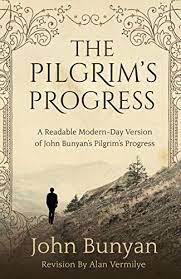
Bunyan became a prolific author as well as a popular preacher, though most of his works consisted of expanded sermons. He wrote, The Pilgrim’s Progress, in two parts, the first of which was published in London in 1678, and the second in 1684. He had begun the work in his first period of imprisonment and probably finished it during the second. The earliest edition with the two parts combined in one volume was published in 1728. A third part, falsely attributed to Bunyan, appeared in 1693 and was reprinted as late as 1852. The Pilgrim’s Progress is arguably one of the most widely known allegories ever written. It has been extensively translated into other languages.

Two other successful works of Bunyan’s are less well-known: The Life and Death of Mr. Badman (1680), an imaginary biography, and The Holy War (1682), an allegory. A third book that reveals Bunyan’s inner life and his preparation for his appointed work are, Grace Abounding to the Chief of Sinners (1666). It is all about Bunyan’s spiritual path. Bunyan died in 1688 after catching a cold while riding through a rainstorm on a journey to reconcile a quarreling family. He was buried at the Nonconformist cemetery of Bunhill Fields in London.

Elections

Articles 324-329 of the Constitution of India contain the following provisions regarding elections or the electoral system in India:

1. Article 324 stipulates the Independent Election Commission for conducting free and fair elections in India. At present time The Election commission consists of a chief commission and two Election. Commissioners.

2. The Constitution has abolished the system of separating electoral rolls and local electoral rolls, as each region needs to have only one electoral roll.

3. We will not be treated unequally based on caste, race, gender, gender or religion. Therefore, it cannot be claimed to be included in the special electoral list. The Constitution recognizes all citizens as equal.

4. Elections to Lok Sabha and the Legislature must be based on universal adult suffrage. This means that all citizens of India who are 18 years old are eligible to vote in the election and cannot be disqualified.

5. Parliament may make provisions related to all matters related to parliamentary elections.

ELECTION MACHINERY-

Election Commission of India (ECI)- The Election Commission of India is a three-member organization consisting of the Supreme Election Commission and two Election Commissions. The President of India appoints the Supreme Election Commission and the Election Commission. The Indian Election Commission is endowed with the power of supervision and control over the conduct of the Lok Sabha Directorate Elections.

Chief Executive Officer (CEO) -The CEO of the State / Union Territory has the authority to oversee election operations in the State / Union Territory and to direct and control the Election Commission. The Election Commission of India appoints state officials to the highest election officers.

District Returning Officer (DEO)- The DEO oversees election administration in all districts. The Indian Election Commission appoints state government officials as district return officers.

Returning Officer- A Returning Officer is responsible for conducting elections in Parliament or in the constituencies of Parliament. The Election Commission of India appoints government officials or local governments to the Election Commission.

Electoral Registration Officer (ERO) -The ERO is responsible for preparing and ordering the parliament or the electoral list of the parliament. The Indian Election Commission appoints government or local government officials as electoral registrants.

Presiding Officer- A Presiding Officer holds an election at a polling place. The District Election Officer appoints the Presiding Officer.

Observer -The Indian Election Commission appoints high-ranking government officials as observers of Parliament and its constituencies.