River ganga – the goddess of India

Emerging from the pure hairs of the lord Shiva, the river Ganga, is considered the holiest and the purest of all, which is said to heal up all the pains and grievings of those who worship it with a pure heart. Despite being worshipped for centuries, its condition is has been worsened over the past few years. Continuous growth of the human civilization and performing the rituals at the same time has become a bane for the river that is worshipped with love and respect.Originating from the lap of Himalayas, it has made its way through most of the states in India. Right from Gangotri, to West Bengal it sheds its water and provides livelihood to million and thousands of humans as well as animals.

Ganga – the holy river

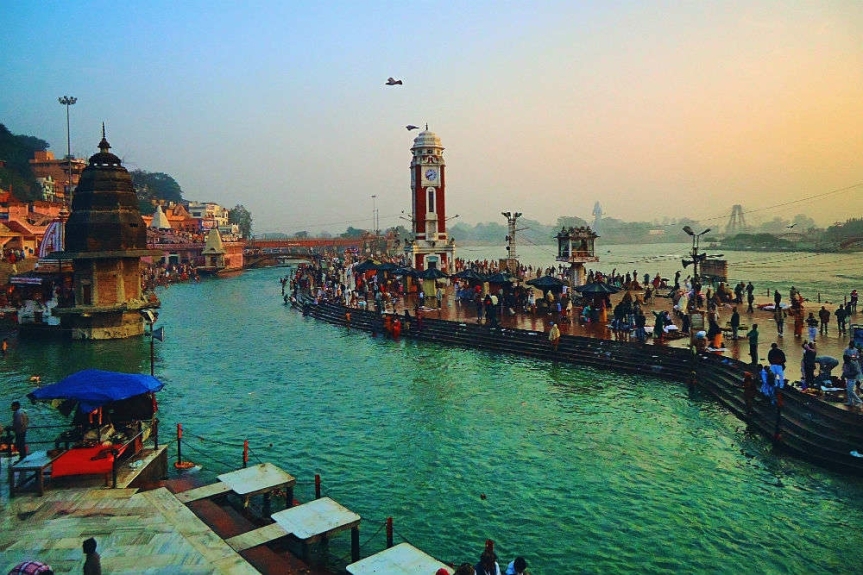
The Ganges, it is the sacred river to Hindus along every fragment of its length. Every year millions of people come and pay homage to the holy river and bring back with them the pure water of this river, along with performing lots and lots of rituals, such as paying homage to their ancestors, offering flowers. And its historic significance is worth noting that makes it the most beautiful and sacred rivers in the history of Indian culture.

The story begins with a sage, Kapila, whose intense meditation has been disturbed by the sixty thousand sons of King Sagara. Livid at being disturbed, Kapila sears them with his angry gaze, reduces them to ashes, and dispatches them to the netherworld. Only water of Ganges, then in heaven, can bring the dead sons their salvation. A descendant of these sons, king, Bhagirath, anxious to restore his ancestors, undertakes rigorous penance and is eventually granted the prize of Ganges’s descent from heaven. However, her turbulent force could also have shattered the earth, Bhagirath persuades Shiva in his abode on Mount Kailash to receive Ganges in the coils of his tangled hair & break her fall. Ganges descends, and arrives in the Himalayas.

It’s history and religious significance is far from what we hear and believe today. The river that has been given the status of “mother”, it has been seen from time to time in different contexts and religious books. Yet, one or the other story is left behind which seems to be there in Puranas and books.

Ganga – geology and humans

Made with the confluence of Bhagirathi and Alaknanda rivers, the length of the river is frequently said to be slightly over 2,600 km long. The discharge of of the Ganges also differs by source, and it has changed its course a different periods of time.Human development, mostly agriculture, has replaced nearly all of the original natural vegetation of the Ganges basin. More than 95% of the upper Gangetic Plain has been degraded. The river suffers from severe pollution, caused due to dwelling of millions of people close to the river, industrial waste, sewerage disposal and mining, etc.

World Bank estimates that the health costs of water pollution in India equals 3% of India’s GDP.

Adding a huge amount of pollution to the river the cities of Varanasi, Kolkata, Patna, Kanpur produces the most waste that eventually results in conditions such as –

  • Shortage of water for basic requisites
  • Killing of large and rare fauna species
  • Degradation of quality of water
  • High risk of water borne diseases

Economy, environment and mission –

The river Ganga is not only a river, but attracts a large number of tourists every year because of its long history and religious beliefs associated with it. The Kumbh Mela, is one such example that attracts millions of “Bhakts” and tourists from every corner of the world. Adding to the country’s economy and providing a fair amount of money in terms of tourism. But, it is an unfortunate circumstances for the country that the holiest river is constantly loosing its beauty and religious belief due to increased risk of pollution and water degradation. Due to which the government is constrained to take stricter actions.Several projects, such as Namami Gange programme, NMCG (National Mission for Clean Ganga), Rejuvenation Protection and Management. The government has also made tireless efforts to maintain a ministry for Water Resources, River Development and Ganga Rejuvenation. A total budgetary outlay of Rs. 20,000 crores for 5 years period till dec. 2020 has been provided to accomplish the twin objective of effective abatement of pollution, conservation and rejuvenation of National River Ganga.It’s never too late to start off with a good deed and protect our national wealth, and its the right time to prevent our sacred river Ganga from getting degraded and providing it a new life, so that not only us, humans could be benefited, but can provide a home to rare and endangered species of flora and fauna. Be it government, or the common country man, the joint effort of both can bring unbelievable results and preserve its historicity, economy as well as the geology of the country.

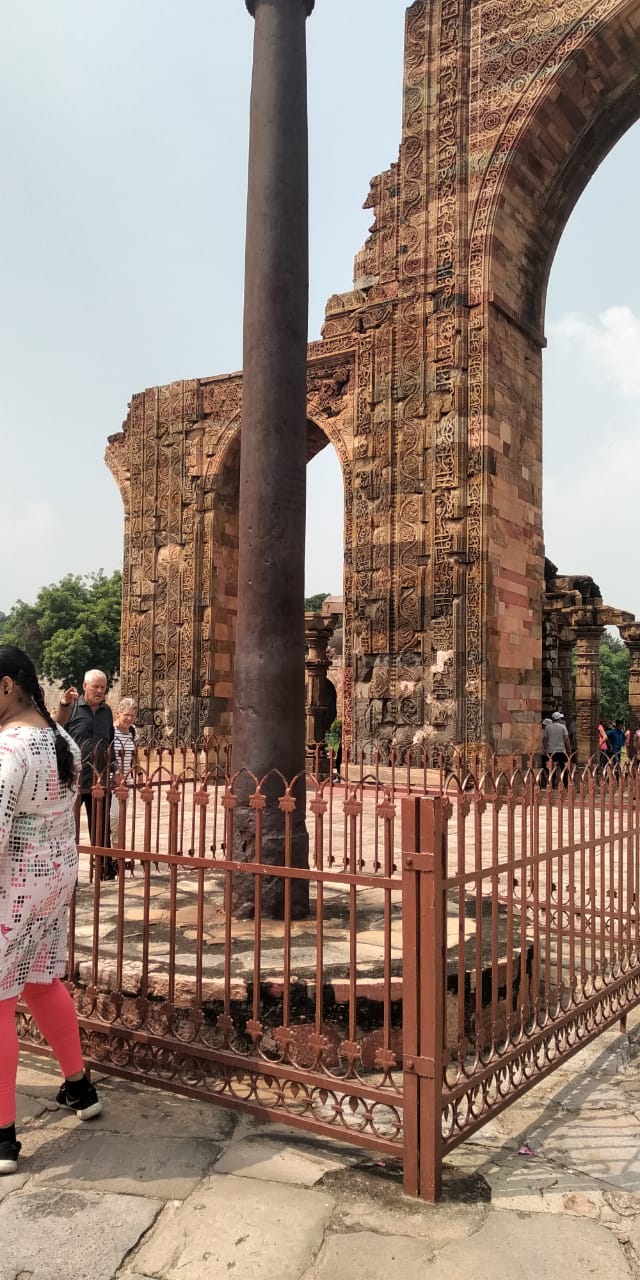
Quwwat Ul Islam mosque – place that reveals a great dynasty

Situated at the center of the Qutub Minar complex in the city of Mehrauli,the Quwwat Ul Islam Mosque is the first ever mosque made in India, during the sultanate period. Today, stand by only it’s walls which represents extravagant yet very minute architecture of the Slave dynasty. It’s marvelous architecture and design makes it an attraction point of the Qutub complex, against which stands the Mehrauli iron pillar. And is added up as UNESCO‘s World Heritage Site. The history of this site is both so interesting and large that makes a huge amount of visitors to pay a visit to this place every year.

The history –

It was in the year 1193 AD, when Qutub ud – din Aibak, founder of The Slave dynasty conquered the Quila Rai Pithora of the Chauhans and was eager to leave the imprints of his religion to the new territory. He commissioned the mosque using the ruins of 27 Hindu and Jaina temples. And was built over the site of a large temple located at the center of the citadel.
Quwwat ul Islam mosque, also known as Jami masjid or the Friday mosque  then came to be used for performing the adhan and became one of the best architectures of the sultanate period, that also made a benchmark for the coming sultans to think upon.

Architecture and design –

Archaeological Survey of India states that the mosque was raised over the remains of a temple, and in additio, it was also constructed from materials taken from other demolished temples. Historical records compiled by a Muslim historian Maulana Hakim Saiyid Abdul Hai corroborate to the use of iconoclasm by Qutub ud din Aibak, which was common during his reign.
The mosque was further extended by Sultan Iltutamish (1296), who gave a more complexity to its design.
The iron pillar of Mehrauli, located on the stone pavement in front of it adds to its beauty and history.
The complexity of its design and architecture is what intrigues most of the visitors paying visit to the place. The central arch of the mosque is ogee in shape and the screen is sculpted with religious texts and floral patterns. One of the historians believe that it was not constructed on scientific approach, but in Corbel style as indicated by the variations in the patterns of the arches. The front wall that we see standing still today came to be known as the Western Wall. Though it was a magnificent monument, built with an entrance to the courtyard, and grey colonnades made of greystone.

Quwwat Ul Islam mosque today –

It is a great example of Muslim architecture and establishes a prominent role of the sultans in portraying their power and rule over the city of Delhi. But today it stands in ruins with only it’s front wall remaining with indigenous corbelled arches, floral morifs and geometric patterns, along with other Islamic structures. As per the government data reviewed by ET, Qutub minar complex is the second most visited monument in the country in 2018-19. It is estimated that 2.9 million people visited the place in 2018-19.It’s really a place worth appreciating, and attracts the visitors due to its everlasting beauty. The place is a true example of establishment of the power of Slave dynasty in Delhi and India.

Indians and their food

A person’s way to his heart is way through his stomach.

From the 1st century B. C. E Indians started off with the agricultural practices and they not only produced vegetables, but were also engaged in the production of herbs, spices and all kinds of cereals and pulses. At the same time, a lot of food, vegetables, cereals, meat, and other type of food was brought into the Indian subcontinent with each and every dynasty that ruled over this foodie country for hundreds of years. And India came to be known for it’s enormous variety of food – whether it is of the Indian origin or a mixture of Indi-foreign tastes – the country made it it’s own and presented it with a tinch of selfness. Centuries have passed away and the very essence of the Indianness of the Indian street and nobel cuisines.

It’s been years now, since we have been eating and experiencing a continuous change in a lot of local as well as foreign cuisines. The changing trend in this field has delighted both the restaurant chains as well as the connoisseur of food and new type of food. Not only, but Rajasthani, Bengali, Gujarati, Punjabi, or South Indian food has gained love in every Indian plate but, cuisines such as Chinese, Italian, Thai and Mexican have made their way out and is loved all over the Indian subcontinent. Street food has taken over all of the towns and cities and people eat them with great pleasure;be it Indian or Chinese or any other type of meal, everyone tend to get more and more of dishes onto their plates.

The history –

Around 700 BCE, agriculture spread from the Fertile Crescent to the Indus Valley, a wheat and barely began to be grown. Sesame, and humped cattle were domesticated in the local farming communities. By 3000 BCE, turmeric, cardamom, black, pepper and mustard were harvested in India. The ancient Hindu text Mahabharata mentions rice and meat cooked together, and the word “pulao” is used to refer to the dish in ancient Sanskrit works, such as Yājñavalkya Smrti. These evidences are far enough to provide a great example of the historicity of India and the Indian food.

The mingling of cultures –

The coming of various dynasties and rulers over the Indian land has marked a great change in the way Indians looked at their food. The Mughals, the Persians, the Turks, Dutchess, Afghans and a large number of rules that ruled over this vast country brought with them new and delicious food that mingled with the flavours of Indianness. Travellers traveling to India during the 16th century or middle ages introduced new cooking methods and products to the region. These fusioned cuisines tend to adapt India cooking and seasoning techniques and made dishes well integrated.

Change in the eating habits –

Indian texts such as The Mahabharata, Bhagvad Gita and Buddhist texts focuses primarily on their eating of Saatvic, raajsic, or taamsic food, as consumption of beef was considered taboo, due to cows being considered sacred in Hinduism. It was only after the coming up of Afghans, Mughals and Turks that eating beef or meat became an integral part of every Indian kitchen.

Today, street food have gained a lot of popularity among the youngsters as well as enthusiasts of food. Every Indian and foreign meal has taken over the Indian streets and made people fall for them. Apart from the restaurants, every dish is made available at the small shops and street vendors’ stalls, that has made the food cheaper and everyone can taste the food available at every part of the world

Indians have always been known for their food and eating habits that makes them shine on the world level. It is it’s historicity and the use of spices that has helped the Indian cuisine to be one of the favorites in the world that according to a report on Food Tourism issued by the UN World Tourism Organization states that

Over a third spending is devoted to food which shows how important the Indian cuisine has become.

Over population: an everytime issue

The beginning of human civilization has marked a devastating change over this planet. Everything, in terms of land, natural resources, animals, water bodies were occupied by the humans at once without any apologies. The breeding and interbreeding resulted in the blast of human population over this earth. Although the spread of this deleterious wasn’t a great deal for our mother earth to handle until it became an obligation and started pulling out every single bit of it’s own resources.

The people of a country are it’s real wealth. It is they who make use of the country’s resources and decide its policies. But what could be done when the real wealth of the country becomes a real burden and starts exploiting it’s own resources?

According to researchers, the world population at the beginning of 21st century recorded the presence of over 6 billion people. But within a very few years it marked 7 billion, as compared to 1930s when it took 30 years to reach 3 billion mark.

Patterns of population distribution in the world –

There is a drastic difference in the way the world’s population is distributed on the land mass. Broadly,90 per cent of the world population lives in about 10 percent of its land area, which is in itself a big reason to worry. The 10 most populous countries of the world contribute about 60 percent of the world’s population. Namely –

  • China
  • India
  • USA
  • Indonesia
  • Brazil
  • Pakistan
  • CIS
  • Bangladesh
  • Japan
  • Nigeria

Density of population –

Each land has a limited capacity to hold a certain number of people living on it. Hence, it is necessary to understand the ratio between the number of people to the size of land.

The areas with more than 200 persons on every sq. Km. are densely populated areas (North -Eastern part of USA, North – Western part of Europe,South, South east and East Asia) as compared to those with 11-50 persons per sq. Km., these are the countries that are either developed or scarcely support human conditions, such as Western China, Southern India in Asia, Norway, Sweden. Other areas like those near North and South Poles, the hot and the cold deserts and high rainfall zones near the equator have very low density of population regions of the world with less than 01 person per sq. Km.

Though there is an availability of such a great land mass,the world’s population is congested in such a small portion of land, rather a great sign to think upon,since it not only grapples up the natural resources of a particular niche,but also creates a chaos in terms of the survival of every individual. Neglecting the fact that certain factors affect the distribution of population over the earth – geographical, economic, social and cultural – the trend in which population grows is also a large factor that has contribute towards the overburdening of the earth.

Trends in population growth –

Since the beginning of human civilization, the population change also have seen different patterns in it’s doubling time, there is a great variation among regions in doubling their population. While the population doubling time in the developed countries is more, whereas we see that the time taken by the developing countries to double their population is less, i. e. there is a negative correlation between the economic growth and population growth.

8,000 -12,000 years back the world population then was nearly 8 million. In first century A. D. it crossed over 300 million mark. Around 1750s , at the dawn of industrial revolution, the world population exploded to 550 million. It took more than a million years for the human civilization to attain 1 billion mark. But it took only 12 years for it to rise from 5 billion to 6 billion between the years 1987 and 1999.

Impact of population change –

A small increase in population is desirable in a growing economy.

However,surpassing the limits of population spurt can lead to severe problems –

  • Continuous depletion of resources
  • Increased hatred among people
  • Extinction in large number of flora and fauna
  • Increase in global warming and degradation of environment
  • Disturbed food chain

Apart from over population being an everytime issue,decline in the population is also a major headache for the developing human community. It’s never too late to hold on the dreadful explosion of human bombs and it could only be done with the ” Human” efforts so as to maintain a balance over the earth, otherwise the earth will take the revenge in it’s own way and would leave no stones unturned to destroy this human population from the earth.

The Millenial’s culture

Lingo is the new cool

Here,there,everywhere on the internet we find the new blood putting forward their ideas in an open manner, without being judged on the grounds of their maturity level or their age. The number of people using the social media handles is getting larger and larger every day and especially when it comes to the new age teens; they tend to post stories, posts and blogs on these platforms very blatantly. But that’s not enough- very one seeks out an easy mechanism to speak up their field of vision- the youngsters of our country or any country, do not lag behind in using “the lingos.” Yes, it sounds so awkward, instead of using a full fleshed word they go on to use abbreviations of these, but it is the only gospel truth. And why not? Living in an era as this, when pretending to be cool on social media platforms is the only way to survive the world, every individual strive to be the most influential one and is the root cause of rise of a problem which is huge, as huge as a mountain.

We all have gone to school, everybody have experienced that how preserving our teachers were, they made us grasp and master each and every spelling carefully. But, once the stories of their hard work is washed off from our minds, it’s gone then, never even unknowingly they struck in our minds. But unfortunately, this was not the day we digested so much of spellings and got beaten from our teachers when-

Perfect has been replaced with “perf”; though has become ” Tho”; through has been changed into “thru”; an enthusiastic yes has become ” Yaas”; they use words like “bruh” to signify a serious issue; “dead” is unapologetically used when someone is euphorically happy; family is replaced for “fam”, and so on and so forth.

All things considered it is a serious issue hanging out on the flanks of people’s eyesight, since at the end of the day, it is the Millenials who build up the social media and it is them on who’s shoulder the way to get a fresh breed of intellectuals is stationed.

Though the trend is going through all over the social media and these young buds are following it anyway, it has drastically changed the way they speak, they write and also the way they handle with their studies and stuff like that.

It sounds fun to use such lingos as these and that the planet has become flooded with such abbreviations but there are times when we go much out of our ways and start using them in our day to day routines, even with our parents who fails to understand what we want to convey and become “old, fogey and obstinate” Despite knowing the fact that “old never gets odd

LAC- India v/s China

Amid the going tensions of the world crisis, Indian and Chinese armies are again and again clashing at various points along the Line of Actual Control (LAC). Although, there were many times in the past when the two armies clashed with each other since there has not been a proper demarcation of the border lines between the two large economies. Also, incidents as these are uncommon along the LAC as both sides have differing perceptions of the alignment of boundaries. But what has caused a sudden attack on the Line of Actual Control?

Reasons for the current standoff-

Recently the standoff at LAC occurred at four places- Pangong Tso, Galwan Nalah, Demchock in Ladakh and Naku La in Sikkim, though the specific reasons for these clashes remain unclear. However, co-ordinated nature of Chinese intrusions at different points along LAC have raised concerns about Beijing’s intentions. At times it’s been noted that China’s reaction to Indian efforts over the last few years to build border infrastructure has been ultrasensitive and it fears that activities such as-
  • Construction of a feeder road near Galwan river connecting with the DS-DBO road.
  • Building a road in Pangong lake area.
Although both the new roads lie on the Indian side of LAC, their purpose is to strengthen further the Indian position along the LAC which might have irritated China which feared it and might have threatened it’s occupation of Aksai Chin and Lhasa-Kashgar highway. Also, China remains much more concerned about the newly constructed Dharchula to Lipulekh and believes that this newly inaugurated road has affected China’s border security in Tibet. While India decided to split Ladakh from Jammu and Kashmir last year, a that unsettled Pakistan. Many experts believe India’s aggressive position on the issue of Ladakh and PoK is the real reason behind current standoff.

What is China trying to signal?

This time, the scope, scale and posture of China’s moves were unprecedented. Against the backdrop of dramatically slowing economy, criticism for the handling of the outbreak of the Coronavirus and worsening ties with many countries, Chinese leaders may have felt the need to show strength, especially over questions of national sovereignty. This can be seen, not only regarding the border with India, but also regarding Taiwan, Hong Kong and the South China Sea. Considering the United States as it’s main “rival”, and not India, it generally seeks to maintain stability in the border dispute with India.

Current status-

After a tough tug and war between the two countries along their security lines, both the sides are currently engaged in the dialogue process at an appropriate level to avoid every kind of tensions between the two.Senior military commanders of India and China were scheduled to meet on 6th June to find a solution, and as a result, both sides have slightly retreated from their current positions. While Chinese Army had reportedly retreated by 2kms, the Indian Army has stepped back by one kilometres.

History of LAC-

In 1993, after years of territorial standoffs and negotiations, China and India finally signed an agreement which attempted to mark out a long stretch of border between the two countries. This came to be known as the Line of Actual Control, but it’s precise location can be blurry, and there is still dispute between both of the world’s leading powers.
So far, this LAC has served as the de facto border between these two countries. Since, India is close to complete a major upgrade of border roads, including a strategic military-use road that connects an airfield at Dalut Beg Oldie in northern tip of the Western section with the villages of Shyok and Darbuk towards the South, also India reactivated and rebuilt airfields along the border. It has also raised two mountain divisions and is creating a mountain strike corps to conduct offensive operations against China along the border.
Thus, the increased frequency of standoffs between the two are major cause of worry. If these standoffs drags on, nationalistic fervour is bound to kick in. The resultant public groundswell would restrict the options available to political leaders of both sides to resolve the issue.

The past is a permanent dimension of human consciousness and values

Never let the past overburden you, but always let it teach you

India, i. e. “Bharat” is the land of diversified cultures and values, beholding in herself the flavours of the longest epics such as “Mahabharata”,stories of valor of Maharana Pratap, struggle of the great social reforms of the 19th century, Rajaram Mohan Roy, Eshwar Chandra Vidyasaagar, Rani laxmi bai, Pandita Ramabai, Dr. B. R. Ambedkar and many more great souls.

Human revolution is one of the most extraordinary phenomenons that took place on the earth. Beginning with inventions of fire and wheel by Humans, to the use of complex iron and copper tools and development of settled livelihood, humans are the most advanced creatures on the planet. But with this great advancement and the ambitions of humans which tend to never end, the most capable animal HUMAN turned wild, mean, consumerist, capitalist and above all self obsessed. The increased volume of practices such as, corruption, crony-capitalism, smuggling, theft, events of eve teasing, rape, sexual assaults etc. and etc. has let the whole human community down.

People have gone out of their senses in this hectic and fast growing world, racing for acquiring wealth and power. The question is, have all of these problems not existed prior 21st century!? The answers to this is that off course these kind of heinous crimes existed earlier as well but this is the power of humans to cope with these situations. History itself is the witness that even during the later Vedic period with emergence of Manusrimti, not only women but the so called lower casts or “shudras” and vaishyas also have to go through discrimination and ill treatment of the Brahaminical class. But people during those times got their ideals in enlightened figures – Gautam Buddha and Mahavira. The two acknowledged figures stood against such practices and showed the path of truth and non violence. Even Mahatma Gandhi during his lifetime took inspiration from these principles and values. These principles were largely about “human salvation, consciousness of mind and soul and humanity.

The epics of Ramayana, Mahabharata and the story of Jesus Christ, all revolve around great deeds of humanity, dharma, sacrifices etc. People around the world today worship one or the other forms of God, be it Hindu Gods and Goddesses, Jews worshiping Jesus or Muslims worshiping Mohammed Prophet. But do they really worship them for attaining peace and consciousness? Or just for the sake of their own well being and prosperity?! To worship should mean to follow their teachings of love, humanity, ethical values, dharma etc. These religious epics- Quran, Bible, Geeta are the richest sources of human values.

If we move a little forward in history and throw attention towards the great movements of medieval times around the world such as Sufi movement, Bhakti movement etc. we get the evidences of reforms in the original forks of worship, turning the society into more contemporary and realistic forms of profession of devotion towards god and mankind. These movements condemned all forms of cruelty towards humans as well as animals and taught the lesson of mysticism. These emphasized on direct connection with god or the good of everyone. The world today is heading towards India and looking upon it to be a path maker in the field of meditation and yoga, the practices which are a source of escape from the inhumane world into a world where it has patience, peace, love and satisfaction. These virtues has enabled the man to first think and then act.

There is no denial to the fact that past and especially 19th century has shown the world one of the most cruel phase of humanity. The practices of sati, untouchability, child marriage, bonded labour, mass killings of Jews (under Nazism), polygamy, Purdah system and many more were written in Black letters in the history. But all of this came to an end with the tireless efforts of such great human beings as Raja Ram Mohan Roy, who stick stick to his principles despite huge criticism from society and even family. It was his efforts which led to laws such as Abolition of Sati Act. Other great personality is Eshwar Chandra Vidyasaagar whose efforts brought in existence the law of widow Remarriage Act. Leaders like Dr. B. R. Ambedkar, Jyotiba Phule, Mahatma Gandhi, their whole life advocated for abolition of untouchability. Female warriors of those times- Savitribai Phule, Sarojini Naidu, Mother Teresa were, are, and will always be inspiration for the world to strive for achieving equal status for women, poor, unprivileged. These great souls have taught us to work for human betterment, even without any personal gains.

Why can’t today the world look back for one and adopt these values and culture that we owned in the past. The incidents of cow slaughter and mob lynching are nothing but a slap on the face of teachings of Buddha, Mahavira and even ideals of Gandhiji. Abraham Lincoln one of the revolutionaries and a face of anti-black movement of America, fought with all his efforts against black racism in the U. S. A but the events of killing of black activists on the streets of U. S. A by officials is not something for which the nobel man had dream of. History is not just a source of knowledge of the past theories but is a treasure to look back at and learn to cope with the modern day problems destroying humanity and depriving the mankind and consciousness. It’s high time, the world should adopt the principle of Lord Mahavira

Live and let live.

Is Covid-19 really dangerous?

The Novel Coronavirus or Covid-19, has emerged in the year 2019 has become one of the hazardous diseases of the 21st century took away people’s breath and peace and became a pandemic causing whole of the world to stop at once. At the same time it forced people into struggling for their survival;some have to have there in hospitals all the time, others are chained into their own houses, while others are going here and there in search of a better place where they could assure safety for themselves. A lot of lives have been destroyed, people lost their loved ones, some are striving to assure everyone’s wellness. But one question arises in every individual’s mind is How dangerous is this Novel Coronavirus is?

Viruses before Covid-19

  • Plague-

Also known as black death, plague is a rare but serious infection transmitted by fleas. It has been responsible for widespread pandemics throughout the history, causing over 50 million deaths in Europe during the fourteenth century. But today can be easily treated with antibiotics.

  • Spanish flu-

One of the deadliest in the world history, Spanish flu infected an estimated 500 million people worldwide – about one-third of the planet’s population – and slaughtered an estimated 20 million to 50 million victims in 1918 and lasted till 1921, which is certainly a long time until any antibiotic was developed. It was just a strain of influenza that caused the pandemic during that time, but certainty the scientists and world doctors found out the best treatments.

  • SARS-

Though, today SARS (serve acute respiratory syndrome) has become one of the rarest diseases, it appeared in 2002 and spread worldwide in a few months. It is also a disease that spread from human-to-human, but it was in control after 2004.

  • Ebola virus-

Again one of the hazardous diseases that appeared in the year 1976 in 2 simultaneous outbreaks. The years 2014-16 saw the largest Ebola outbreak in West Africa since the virus was first discovered in 1976. It is thought that fruit bats of the Pteropodidae family are natural Ebola virus hosts, and it’s vaccine was out in 2015 after so many years of the outbreak, but surely it also got treated like other viruses and diseases.

Though the viruses mentioned above were all very perilous and people were killed in large numbers, but finally their cure was found out and people came victoriously out of them.

How dangerous is Covid-19?

The epicenter of the virus, Wuhan, first experienced the outbreak in August 2019 and slowly spread throughout the world in the year 2020. Today world’s most powerful countries such as USA, Brazil, Russia, India and UK have not been untouched from the effect of this monstrous virus. But, is the spread of this virus is never ending? Though the scientists all over the world are giving their hearts and souls but people are just freaking out about it so much that it has become a spurious news for all of the human race.

Since, the medical agencies claims that it is less transmissionable if one takes the proper preventive measures, such as wearing masks, using hand sanitizers frequently, avoiding human contact as much as possible and many more. Therefore, one cannot claim that it is inevitable and will curb all of the ephemerality and will surely come to an end some day. It is not likely that it is the only disease that have caused the slaughter of millions of people, then, why are we getting so distressed about it’s occurrence?

Although it is very dangerous and highly infectious, but at the same time we have provided with the preventive measures that can help us out keeping our infection risk low.

Where are we lagging behind?

Although we all are going through this fatal pandemic which will take a long time to be cured and one of the most critical part is we do not have the vaccine yet. Also, the world in which we are living today is kind of ruthless where everyone has to reach the utmost heights and that is why they can’t wait, but strife to work more and more.

But, then, do we only have to repent upon it or just get ourselves stressed out of it? No, the answer is clearly, a No. How long we will just sit back in our houses and wait for the virus to end? It is only our will power that will help end the fear and freight of the virus and we will definitely be able to get the best way out to dive out of the fear of the virus. Back in the 90s also, the vaccine didn’t came out immediately, but people learned the way to tackle with the world crisis. It is also the high time to let go our fears and make a bold move to make ourselves prepare for every pandemic and crisis to come up.

The story of human beings

Homo – sapiens is the word used all over the world, scientifically for the modern human beings and has greatly evolved from the beginning of this human civilization. The story of human civilization marks it’s beginnings million years ago (23 million to 5.3 mya) to the development of tool-based and symbolically structured modern human culture.

Beginning of the human race-

It was 5.6 mya when historians first trace the existence of a creature which resembled the features of present day human beings. A large number of species emerged on this earth and got extinct, it was nearly 160,000 years ago human beings resembling us originated over the earth’s surface. And gradually evolved into what we see as present day human beings, sometimes learning how to make tools, or obtaining food, hunting animals and discovering the use of wheel and fire.

The story of human evolution is enormously long, and somewhat complicated. There are many unanswered questions, and new data always come up which ultimately leads to a modification of earlier understandings of the human history.

The story of evolution –

The story of evolution of humans started back between 36 mya (million years ago)to 24 mya when primates a category of mammals emerged in Asia and Africa. It was by 24 mya when a subgroup of these wild primates emerged, namely, Hominoids, who were primarily Apes.

Again these hominoids evolved into a more advanced category which famously came to be known as Hominids (5.6 mya). Now, these primates or “modified primates”, so to say started to make and use tools at the same time. These had a larger brain size as compared to the former and walked upright unlike the hominoids. While hominids included all forms of human beings, they can also be subdivided into branches-

  1. Australopithecus (southern ape)
  2. Homo (man)

2.5 mya, the period when the species of Australopithecus depleted, leaving behind the Homos. It was due to the major climate changes (glaciation) that the former failed to adapt itself, leading to their gradual extinction.

  • The Homos –

Homo is Latin word, meaning man, although there were women as well! The specie further evolved itself into more modernised being and four types of fossils were found which were then regarded as –

  1. Homo habilis ( discovered at Omo in Ethiopia)
  2. Homo erectus (discovered both in Asia and Africa)
  3. Homo Heidelberg (discovered at Heidelberg in Germany)
  4. Homo Neanderthal (discovered at Neander valley)

All of the above existed between 1 mya -40, 000 years ago.

The story of modernization –

The real step towards modernization started between some 195 mya to 16 mya,when the archaic Homo Sapiens in different regions gradually evolved at different rates into modern humans.

  • The race towards being modern-

The tools and techniques that we see today is the evolution of the simplest methods that were used by early humans, a large part of our lives is prompted through the use of such substantial art of living that was used million of years ago, be it hunting, cloth making, discovering fire, or finding the way of living.

Talking about the food they collected for themselves, evidences prove that hunting started about 5 mya when hominids were in existence. And this eventually made them use fire in order to grapple the thick meat of animals.

When the earliest humans watched for the need of a fine and peaceful shelter for themselves, they sorted to move from open air or trees to a more safer place, i.e. caves. It is evident from the finds that date between 7 mya to 5 mya. It is possible that places with abundance of food resources were repeatedly chosen to live.

Tool making is again a useful technique which has contributed massively towards human growth. The earliest evidence for the making and use of stone tool makers comes from Australopithecus. About 35,000 years ago, improvements in the techniques were evident along with the language development. It were the Hominids whose language involved hand gestures; spoken language was evolved only by vocal but non -verbal communication, such as singing;human speech probably began with calls like the ones that have been observed among primates.

An overall observation of the evolution of Homo Sapiens makes us come to a conclusion that, it is not merely a thousand years of work and scientific developments that we have reached such a stage when “human is the cruelest animal”, but million of years have been passed to achieve such a degree of unhackeneyed society.

Alternative technology for a climate change resilient India

If you can’t see the stars blinking in the night sky, it does not mean they have disappeared. They are there just behind the blanket of clouds, you need to discover them.

The world is stringing hard to contain the climate change. Every country,every international organization is trying their levels best to create awareness of the rising hues and cries regarding climate of the earth. International organizations like UN come up with programs like UNFF, 1.5° C reports, several conversations like Paris, Geneva, Kyoto, protocol etc. Among all these efforts at International level, individual countries to are trying at national levels in order to curb this menace of climate change.
India, not behind in any of the major International alliances on climate change has also pledged to keep pace with World order to combat the rising problems of the nation and the world at large. But, what is climate change and how is it affecting the world and particularly in India? The answer to the question lies in the virtues of mother earth of balancing the heat and other atmospheric phenomenon around the world. Climate change is a process of change (rise) of the average temperature of the world. This change is a result of combination of natural and anthropogenic processes.
The rise of temperatures at the Arctic Ocean is particularly alarming. As a result India won’t be untouched from this major change. Being a major developing country, India is also putting it’s efforts in this direction. The largest economies of the world, depend highly on polluting sources of energy like, crude oil, coal. The emissions from these sources are not only polluting but they remain stranded in the atmosphere for millions of years.
The country is a proud owner of multiple Physiography leading to different sources of energies other than the conventional ones mentioned above. The states of Western and southern India are rich resources of solar energy, one of the most crucial sources of Renewable energy. Giving a boost to solar energy in these states will assure India of energy security as it is a very cheap and reliable source of energy for India. The government has striked the iron hot by initiating programs like International Solar Alliance, PM -KUSUM, cheap loans to households for planting solar panels, etc.

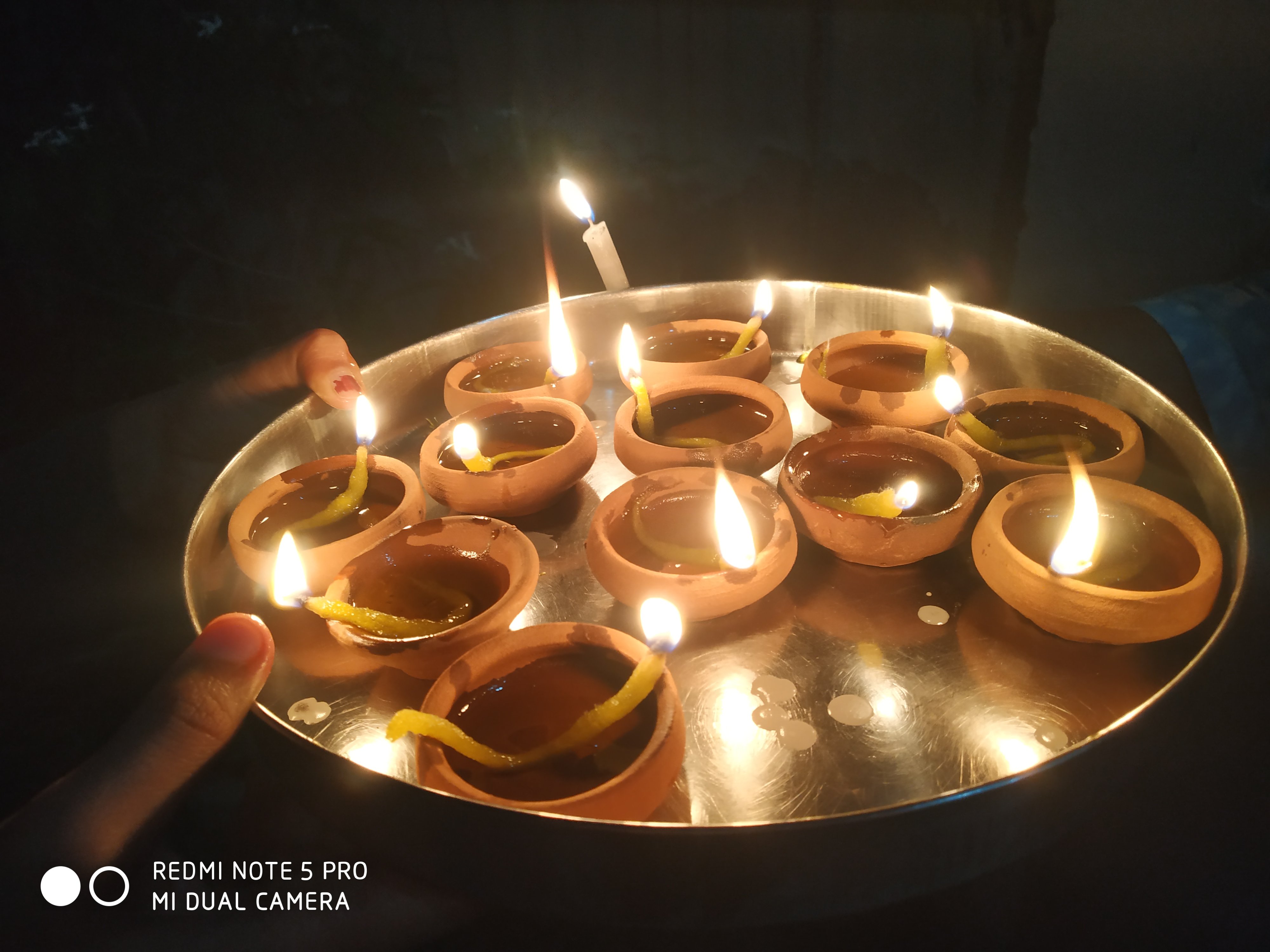
The other major renewable source of energy is wind energy and hydro energy. The vast coastal areas of India provide it with yet another gift of non- polluting form of energy generation can be a milestone in harnessing global warming and Thus climate change. One of the most significant amount of pollution is seen due to vehicles. The mega cities of the country are ranked one of the worst in traffic on roads. Owing to large traffic, these vehicles majorly release sulphur contents, PM 2.5, PM -10, carbon monoxide, etc. in the environment. The government recently has set up rules in this context. It has come up with BS -VI norms of vehicles which in comparison to BS -IV norms release only sulphur content-10. Apart from this, there is also a reduction in PM 2.5 and PM 10 levels. Pertaining to increased pollution in Delhi especially during the times of Diwali celebrations, it is also caused due to-

  1. Burning of crops of paddy in the neighbouring states.
  2. Bursting of crackers in a huge amount

The government has setup air purifying towers in the city to overcome this problem. Along with this, the government has adopted for management of paddy residue by converting it into a fuel which will be less polluting. And for the problem of crackers CSIR has come up with green crackers instead of the crackers which were used earlier.

Other sources which are creating obstacles in containing climate change are the manufacturing units which use and also release gases like CFCs, HFCs etc. There is no denying to the fact that increased use of refrigerators and air conditioners has massively raised the levels of GHGs, like, CFCs, HFCs and HCFCs. Out of the obligations of International conventions India has successfully phased out use of CFCs is determined to phase out HFCs by 2020.

There is no doubt that achieving the goals of climate change resilient technologies is very challenging in a developing country like India, where full literacy is still a dream far to achieve. But the very truth of India having the potential to convert it’s massive demographic dividend and resource rich geography is also not deniable. Not only the government, but also the people at individual levels have to strive in achieving a climate on their very own earth which could be worth living and not only for them but the generations to come. The future is awaiting for the successful implementation of the policies of the government already made and the one’s to be made. New records of collaborations for example the one with Government of U. K to efficiently and resiliently ban the usage of ACs in every corporate and business etc. will enhance India’s capacity to conform with aims like 1.5° C and 2°C and combat climate change.