KASHMIR

Location

Kashmir is the northernmost geographical region of the Indian subcontinent. Until the mid-19th century, the term “Kashmir” denoted only the Kashmir Valley between the Great Himalayas and the Pir Panjal Range. Modern usage of the term encompasses a larger area that includes the Indian-administered territories of Jammu and Kashmir and Ladakh, the Pakistani-administered territories of Azad Kashmir and Gilgit-Baltistan, and Chinese-administered territories of Aksai Chin and the Trans-Karakoram Tract.

History

In the first half of the first millennium, the Kashmir region became an important centre of Hinduism and later of Buddhism; later still, in the ninth century, Kashmir Shaivism arose. In 1339, Shah Mir became the first Muslim ruler of Kashmir, inaugurating the Salatin-i-Kashmir or Shah Mir dynasty. Kashmir was part of the Mughal Empire from 1586 to 1751, and thereafter, until 1820, of the Afghan Durrani Empire. That year, the Sikhs, under Ranjit Singh, annexed Kashmir. In 1846, after the Sikh defeat in the First Anglo-Sikh War, and upon the purchase of the region from the British under the Treaty of Amritsar, the Raja of Jammu, Gulab Singh, became the new ruler of Kashmir. The rule of his descendants, under the paramountcy (or tutelage) of the British Crown, lasted until the partition of India in 1947, when the former princely state of the British Indian Empire became the subject of the Kashmir conflict. The modern region is administered by three countries: India, Pakistan, and China.

How to go

By air: To fly into Kashmir, take the Srinagar Airport (15 km away), which is well connected to prime Indian cities. Air India, GoAir, IndiGo and Jet Airways operate regular flights for Delhi, Goa, Jammu, Leh Mumbai and Bangalore. After reaching the airport, visitors can hire taxis to reach various cities and towns of Kashmir.

By train: Jammu Tawi Railway Station, situated at a distance of about 330 km, is the nearest railhead serving the beautiful valley of Kashmir. New Delhi-Jammu Tawi Rajdhani Express, Jammu Mail and Jammu Tawi Express are some of the prominent trains operating from Delhi. From outside the railway station, one can hire private taxis or take state or private buses to reach various places in Kashmir.

By road: The state of Kashmir is well connected by a network of state and private buses with several nearby cities and towns. National Highway 1-A connects Srinagar with Jammu. Also, the popular Jawahar Tunnel connecting Jammu with the valley of Kashmir also falls on the way. A number of J&K State Road Transport Corporation (JKSRTC), luxury and private deluxe buses ply frequently to and from state. These buses are extremely comfy and cost-effective.

Tourist Places

Srinagar: Srinagar is undoubtedly one of the most beautiful and famous places to visit in Kashmir as well as in India. From boating to trekking, bird watching to water skiing, Srinagar place has it all. Locally this place is known as the mirror to the mountains, Srinagar is a first stopover for every traveler and there is a long list of places to visit in Srinagar, Kashmir. The largest city of Kashmir, this place is enclosed by the green mountains and the main highlight being the Dal Lake which is the gem of the city. This place gives a close outlook to the Kashmiri cuisine and the state’s culture.

Gulmarg: Famously known as the ‘Meadow of Flowers’, Gulmarg is a treat to the eyes with its spread of vibrant flowers against snow capped mountains as backgrounds. Gulmarg is considered to be one of the best places to visit in Kashmir for all right reasons. This region of Kashmir is also known as the adventurer’s paradise because of its vast options of skiing in the snow while enjoying the views around. The best time to visit Kashmir for snowfall is in winter season i.e. December-January.

Sonamarg: Sonamarg, as the name suggests, is famous as the ‘Meadow of Gold’. An endless stream of stunning flowers and undulated trekking routes are its attractions. Sonamarg has to be in every visitors’ list of places to visit in Kashmir for its mesmerizing aura and breathtaking views. The best season to visit Kashmir would be in summer i.e. May-June when the valley is blooming with variegated flowers.

Leh: Leh is one of the best and safe places to visit in Kashmir in summers. The lofty mountains, the alpine lakes, and the quaint settings enable Leh one of the best places to visit. This place is every biker’s dreamland. Clad in the beauty and love of nature, Leh offers breathtaking views, leaving no visitor disappointed. You must explore all the top places to visit in Leh when traveling to Kashmir.

Kupwara: Kupwara is a small district located in the state of Jammu and Kashmir and situated at a distance of 90 kilometres from the state capital, Srinagar. Blessed with nature’s finest views, the thriving meadows, alpine mountains, and the gushing clear water make Kupwara a must-visit destination in Kashmir. This city epitomizes the beauty of Kashmir.

Why should you visit Kashmir?

Breathtaking landscapes: There would be not a single person on this planet who doesn’t love nature. We all admire nature, but no one sees it in chaotic cities. Kashmir has everything including mountains, dense forests, green meadows, grasslands, and water streams that together create wonderful scenery. From Aru Valley to Saffron fields, Zabarwan Mountain range to the Chashme Shahi, Badam Vari to Apple Garden, Almond trees to Chinar Tress, all these naturally beautiful locations make Kashmir a Heaven on Earth. Gulmarg, Pahalgam & Sonmarg are some such marvelous locations that everyone loves to visit repeatedly.

Wonderful climate: Plan your trip to Kashmir in the scorching heat of summers when the temperature rises up to 40 degrees. Kashmir is cool even in the harshest of summer and you can visit this valley between March and May to see the blooming flowers, green meadows, and Chinar trees. Overall you can experience the new phase of spring in the Valley of Kashmir. If you plan your trip in Winter Season then you will enjoy beautiful snowfall that would be an incredible experience. The snow-capped mountains fill the region with exquisite surroundings and the snow-capped trees look awesome while offering a serene feeling to everyone. Also, you can enjoy the most stunning views of sunrise and sunset at Dal Lake in Srinagar.

Pristine Lakes: Your Kashmir trip is not complete without taking a ride of Dal Lake and these lakes are the perfect reason to plan a Kashmir trip. It is one of the favorite destinations for the tourists where shutterbugs also love to capture the exquisite scenes. The houseboats and Shikaras are the most famous attraction of Dal Lake. Here, you can see the floating markets and gardens with the sweet smell of flowers and various other attractions. Apart from this, Wular Lake is also popular as the largest freshwater lake in Asia, Mansbal Lake is home to many aquatic birds and surrounded by lush greenery and mountains. Nagin Lake offers the utmost tranquil space to enjoy the serenity. The list doesn’t end here; the waterholes like Gadsar, Gangabal, Tso Moririm, Pangong and Mansar are the greatest attractions for the visitors. The different waterholes provide a perfect landscape in the state of Jammu & Kashmir.

Trekking points: Enclosed by the Great Himalaya and Pir Panjal mountain range, Kashmir Valley is the best place for camping, trekking, and mountaineering. While traveling to this gorgeous land, you will witness the most enchanting views of mountains, lakes, and meadows. Walking through the foothills, Kashmir Great Lakes Trek is popular among tourists where you will cover the lakes of Gangabal, Kishansar and Vishansar that are close to the Harnukh Peak. Aru-Valley, Kolahoi Glacier Trek and Yousmarg Trek are yet another challenge for trekkers. Kashmir is one of the best places for trekkers where fun is boundless.

Art and heritage: You can explore the past events and lifestyle of ancient Kashmiri people in the museums that hold the glory of the rich culture and heritage of the state. These museums include items like paintings, copper utensils, shawls, handicrafts, pottery, stones, arms, and metal substances that stand as proof of the rich sculptural execution of Kashmir. Some of the museums of Kashmir were palaces in old times, which got converted. You can see here some art galleries having old clothes and even a library with old books. Some famous museums of Jammu & Kashmir are Amar Mahal, Dogra Art, Sri Pratap Singh, Kanchenjunga, and Stok Palace Museum where you can check out amazing paintings, old utensils, books, musical instruments, and textiles.


EXASCALE COMPUTING

What is Exascale computing?

The speed of a computer is typically measured by the number of arithmetic operations per second it can perform (floating point operations per second or FLOPS). As of summer 2017, the fastest computers have reached a speed of 93 PetaFLOPS (on a standard benchmark), which is 93×1015 (or 93,000,000,000,000,000) operations per second. A system delivering one ExaFLOPS would be more than 10x faster (with at least 1018 operations per second). In comparison, a standard desktop computer reaches a computing performance in the GigaFLOPS range (one Gigaflop is 109 operations per second). Such an Exascale computer would be roughly more powerful by a factor of one billion.

If (by way of analogy) we let the speed of an Exascale computer correspond to the speed of a moon rocket (which was around 40,000 km/h for Apollo 10), then the computing performance of a typical desktop computer would correspond to about 1/10 of the speed of a snail (which crawls around 3 metres per hour).

History

The first petascale computer that came into operation was in 2008. At a supercomputing conference in 2009, Computerworld projected exascale implementation by 2018. Although the exascale wall for FLOPS was not broken in 2019, the Oak Ridge National Laboratory performed a 1.8×10¹⁸ operation calculation per second (which is not the same as 1.8×10¹⁸ FLOPS) on the Summit OLCF-4 Supercomputer while analyzing genomic information in 2018. They were Gordon Bell Award winners at Supercomputing 2018.

The exaFLOPS barrier was first broken in March of 2020 by the Folding Home project, used to fold proteins for medical research.

Exascale computing would be a significant achievement in computer engineering, as an exascale computer would have processing power on the order of the estimated processing power of the human brain at the neural level (although the functional power required to simulate a human brain might be lower). The Human Brain Project targets exascale computing capability.

Why building a fast computer is hard?

One could naively think that just connecting enough standard computers and memory would result in a fast enough system. However, this is not true. Just putting 1,000 cars or car engines together will neither produce a car 1,000 x as fast nor lead to a usable system 1,000 x as powerful, not to speak of noise, pollution and fuel consumption. Instead, different approaches would be necessary to reach those goals.

Similar barriers exist for computers. At the most basic level, a computer works by moving data from memory to a computer unit, calculating the results and moving the results back to memory. If using standard PC technology for the connection between memory and compute units, the sole movement of data for an Exascale computer would roughly need the same level of power as the whole of the UK. Thus, a promising approach to build Exascale machines is to store data very close to the compute unit where they are needed. One technique to put data closer to the processing unit is to extend the traditional two-dimensional layout of electric circuits by stacking integrated circuits also in the third dimension.  This will not only consume much less energy, but will also be much faster: Nowadays, the transport of data has become a major constraint on processing speed (much more than the computing itself), similar to the speed difference between slow airport security checks and fast flights. An Exascale computer would need hundreds of thousands if not millions of units comprising processing and memory, and fast connections between them, for data that is needed in more than one place. However, designing and producing such novel compute units is very expensive, so it is of paramount importance to find ways to use components which can be mass produced, and used outside the HPC world, to reduce cost.

Road to Exascale

Because of both the importance of increasing the speed to the Exascale FLOPS level and the difficulties encountered in building such computers, the EU, like other big economies, has launched a research program for the development of Exascale technology.  Member states have launched cooperation for the deployment of Exascale computers until 2022. The ETP4HPC think tank & advisory group has defined a research agenda to overcome the multiple difficulties of building and operating Exascale class systems.

Technological Challenges

It has been recognized that enabling applications to fully exploit capabilities of Exascale computing systems is not straightforward. In June 2014, the stagnation of the Top500 supercomputer list had observers question the possibility of exascale systems by 2020. Developing data-intensive applications over exascale platforms requires the availability of new and effective programming paradigms and runtimes systems.  The Folding Home project, the first to break this barrier, relied on a network of servers sending pieces of work to hundreds of thousands of clients using Client–server model network architecture.

Conclusion

Semiconductor engineering has never been easy, but one can argue that the industry had the wind at its back for roughly 60 years. During that time, manufacturing process improvements have complemented architecture and software advances to produce seeming clockwork gains, often doubling the performance every 18 to 24 months. Those process improvements have helped to drive the industry to exascale computing, but now appear to be slowing. As this article highlights, there will be no shortage of innovative approaches and creative concepts that could be perfected over the next decade to continue the exceptional growth of computing capabilities.  This is the beauty of computer engineering – demand driving innovation, and the exascale era is just the next milestone on the never-ending HPC journey.

UNIDENTIFIED FLYING OBJECTS

I Know I am late a moment ago I came to know about that 2nd July was UFO day, I am really very flatter to know about this day in my school days I was very much curious about the galaxy , the unknown mysterious world, other planets , aliens then with the time  I am distracted from my this world, but always when I get time I tried to gather information .so 1st I am telling you the reason behind the day

World UFO Day is an awareness day for people to gather together and watch the skies for unidentified flying objects. The day is celebrated by some on June 24, and others on July 2. June 24 is the date that aviator Kenneth Arnold reported what is generally considered to be the first widely reported unidentified flying object sighting in the United States,[ while July 2 commemorates the supposed UFO crash in the 1947 Roswell UFO Incident.

RoswellDailyRecordJuly8,1947.jpg
Roswell Daily Record, July 8, 1947, announcing the “capture” of a “flying saucer” source WIKIPEDIA

What is other side of the sky? Once This question always going round in my mind, other planets, solar system , milky way, black eye galaxy this things are fascinated millions , years after year scientist research and now the craze to know the unknown world , creature from other planet is really noticeable. Series, documentaries, movies based on aliens, other world.  But you know In Chhattisgarh ancient rock painting depicting UFO exist suggesting Alien communication with humans since prehistoric times, Archaeologists JR Bhagat, who discover them , said they depict strange humanoids with no facial features and other painting of flying discs.

CHARAMA (Chhattisgarh): Chhattisgarh state department of sarchaeology department has sought help from NASA and ISRO experts.

The finding suggest that humans in prehistoric times may have seen or imagined beings from other planets which still create curiosity among people and researchers.

English literature -Pre-Raphaelites


The Pre-Raphaelite brotherhood, originally consisting of a secret group of seven young men, was formed in 1848 in London and lasted effectively for about five years. It was an artistic group of young student painters in the Royal Academy Schools and some of their friends, a very small part of the revolutionary spirit then motivating change throughout Europe that pointing the history known as the year of Revolutions. In Britain, where Marx had settled and lived for the remainder of his life, events were less dramatic and did not result in the overthrow of the monarchy or government. Although the young Queen Victoria who came to the throne in 1837 was not yet secured on her throne or as loved and adored by the populace as she later became; never the less there were disturbances arising from the repeal of the Corn Laws and the growth of the strong national public feeling for government reforms led by a group known as the Chartists, the nearest that Britain cane to invert active revolutionaries.
It is important to emphasize that an artistic movement or revolution was this contemplated. The movement that quickly originated from youthful enthusiasm was one of the most significant in the formation of a new philosophy of painting, the desire of the short life of the movement, it did initiate changes that had a profound effect on British painting after the mid-nineteenth century. By the time the pre raphaelites were formed in 1848, there was considerable uncertainty within the art establishment as to the future direction of the painting. Some positive direction was needed, some standards were established. The pre raphaelitie brotherhood with its mysterious cryptogram PRB appearing on its paintingsprovideda different if unspecified direction. It seemed to be concerned with a new form of realism, parts spiritually motivated, part presenting a new sense of actuality. One of the difficulties inherent in any study of the Brotherhood derives, for instance from the fact that what the pre Raphaelities inaugurated was so quickly adopted or assimilated into the generality of later victorian painting that it is not immediately evident to the observer which are pre raohaelite paintings, which are influenced by the movement, and which have absorbed sufficient of the technique and philosophy for different pictorial ends.
It is something of a surprise to encounter in 1848, the formation of the pre raphaelitie. Brotherhood secretly devoted to a revolutionary artistic program that became in the event, the first of the significantly influential art movements of the century. Had pre raphaelitism as an idea, philosophical, and technical artistic inspiration or approach depended entirely on the original group of seven, it would almost certainly not have attained the public recognition, respect, and regard that it currently holds. The brothers were joined by friends and followers and the result was a large and wide-ranging body of work created during the middle and later years of 19 th C.
The most important members of the brotherhood we’re John Everett Millais, Dante Gabriel, Rossetti, William Holman Hunt, James Collins(who resigned in 1850), Thomas Woolner, F.G Stephens, and William Michael Rossetti.
The brotherhood lasted for five years at most and was clearly a youthful development. It was enthusiastic,energetic,iconoclastic,irresponsible aggressive self-assured and hard working.

Print media : Its credibility and future in India

The print media is known for its accuracy, credibility, and balance, and fairness. Unfortunately, in accordance with an audit bureau of circulation (ABC), India has bucked the global trend of declining readership of print media.

Print media has always performed well in India. There are two main reasons for it – the primacy of the written word and the home delivery of the newspaper. The reason newspapers in their physical form started declining in the west is that volition was involved you have to go to a newsstand and buy a copy. In India, we get it at our doorstep.

Television has ceased to be the source of the news. Newspapers are direct beneficiaries of the crisis in news content on television. It, however, has to be said that even in the more developed markets, newspapers have always been the source of the news. This can be due to the rise of literacy and urbanization in the country in recent decades.

But even the newspapers in India are failing paltry in maintaining some equilibrium in maintaining perceptions between the news and readers. Politics and entertainment have the initial -page news always covered due to meet the reader’s interests and tastes. While the assembly chaos and the anniversaries of celebrities take over the earliest page by storm, the water crisis, drought or the death of farmers occupy the subsequent pages.

While most of the revenue of the newspapers comes from its classifieds and advertisements, it has been a mouthpiece or a puppet in the hands of corporate or some political agencies. So, the credibility and the accuracy of the newspapers are being questioned by the civilians and citizens of the country.

Print media had played a crucial role in revolting against the Britishers and there had been many newspapers that publicly fought against the English regime. Mahatma Gandhi started newspapers like Harijan and Indian opinion in English and used it as a political tool, and he meant journalism means to serve people.

During the period of emergency, the press was subjected to censorship and it was not allowed to write against the regime. It was because of this main reason Indira Gandhi lost her elections badly following the emergency. And that was the impact and power of print media in shaping democracy.

Print media effectively reached people and evoked the sense of nationalism and made masses to plunge in the freedom struggle. It has been a revolutionary evolution and buried the gap of communication with aid of tangible assets for instance newspapers, magazines, and letters.

It can have a deep imprint on people’s minds and can influence shaping their minds and hold fair opinions over an issue.

People choose newspapers over television and other forms of media because they will have a hard copy of records of news and facts. They can express their opinions through the news to editors, or through writing articles, etc. but the limitation of the print media is literacy and it has been the major backslash for the newspapers to reach in rural areas. But the rising literacy and awareness, the print is regaining its lost glory in India.

The Hindi newspapers like Dainik Jagran hold the first place in circulation and prominent in the Hindi belt of our country and feasibly largely due to the popularity amid the people and literacy. Following the Hindi newspapers, Tamil and Telugu newspapers occupy their places concerning circulations.

The 2019 general state elections and Lok Sabha elections have suppressed the growth of newspapers while compared to 2018. It had clearly provided the ground reports and the constituency developments through various surveys without any inclinations to the readers and helped them to choose their readers.

India is home to The Times of India, one of the oldest newspapers in the world, and the world’s largest circulated newspapers, but it is not English language newspapers that are pushing print press growth but non- English vernacular papers.

This leaves India in a unique situation, in which tv, digital, and newspaper are all developing at the same time, unlike in the rest of the countries where digital has blown out and other things of the water.

On the flip slide, traditional and regional newspapers have massive and engaged audiences and a steady income from sales and advertising but are held back from modernizing by legacy technology and outdated mindsets.

The print readers have also witnessed some big debates around issues concerning fake news and paid news. The I&B ministry even proposed stringent punishment for journalists disseminating “fake news”. However, the order was rolled back eventually.

Print media can save journalism in India and it has a greater responsibility and it can thrive in the future due to the rising literacy and urbanization and favorable factors provided in India. It can save readers from a lot of disruptions and can maintain equilibrium with regard to perceptions.             

The Journey of a Plastic: From Making to Recycling

I originate from deep down from the Earth after millions of years. I’m picked up by the machinery which is collecting my friends and me, and they process us. I go under the distillation process, later separated from some of my colleagues. Then I go through processes like polymerization and polycondensation. Large chains of monomers make us form polymer chains and then distinguished me in two types, thermoplastics which softens on heating, and thermosets stay in the same state. I get melted to form long tubes and cut into small pellets. I get shipped to various places in different industries to make bottles commonly out of me or containers to store essential items. But, I’m sad that I’m leading to global pollution and let us know why.

This story was the plastic on its own. Now let me describe the story of plastics furthermore. These plastics are usually for single-use purposes or discarded in the open without considering the harmful effects of it on nature. About a billion or two make its way daily in the household, packaging sector, etc. Around 8 billion tons of plastic are present since the 1950s, and only 9 percent went through a recycling facility. In some countries like Kenya, the usage of plastic can lead to jail and maybe a hefty 40 thousand dollars fine. Other countries on the same track as France, where the government has been imposing taxes on single-usage plastics. The most polluted oceans, along with beaches filled with nearly 70 percent of plastic waste. Every minute, one million plastic bottles do quench the thirst, but not all the bottles do justice.

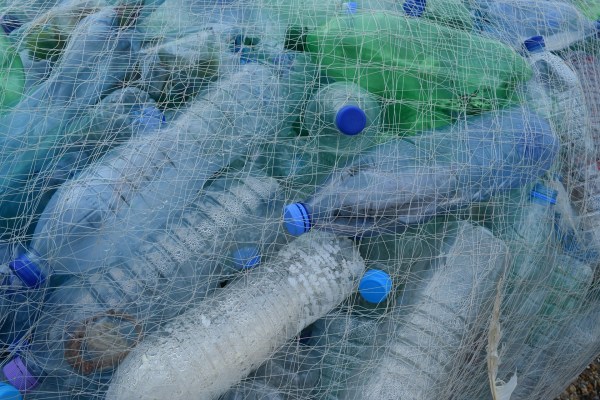
Plastic bottles captured in a net

The unfortunate fact is that the plastics every year kill over a million seabirds and animals along with us when we consume them in granular molecules unknowingly. The improper management of these plastic waste makes its way to developing countries when they discard it openly in the streams of rivers polluting the ecosystem and making it less sustainable for the aquatic species to survive. Recent research states these facts that when the final waste marked as recycled is not even destroyed or treated correctly—these results in an increase of ocean debris. Plastic pollution is going to double in the next few decades, as mentioned in a report by WWF, the World Wildlife Fund.

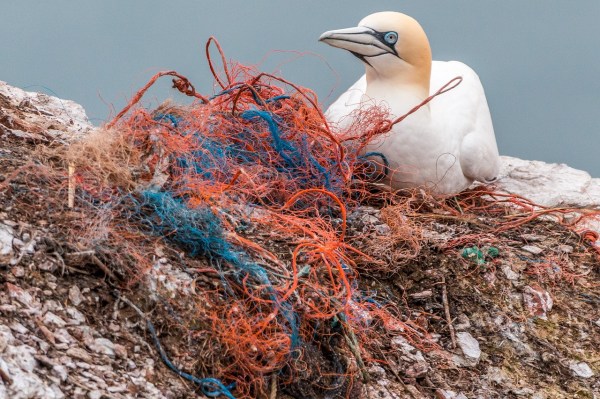
A seabird near an old fishing net.

In this pandemic, have you ever wondered where the masks, the gloves wore by the doctors, and the essential PPE suits end up? Although the hospitals do have an incinerator, a common man litters without any safety precaution, which may affect others if someone comes in contact with the items. However, if it finally makes its way to the water bodies, those can act as the medium to contaminate not only the virus but other diseases too.

What can we do on our end? We can follow the 3R’s or there are more: the commonly known are reduce, reuse, and recycle. By this, if we start sorting the waste and use them effectively, there won’t be a global issue when it can start with you. One step a wise man takes can save others on the way. Be that person and save the planet.

A person is sorting the bottle caps.

Online education and its challenges in India during pandemic times :

E-learning or online education is now inevitable across the world due to the havoc created by Corona virus.  Not only education that is online, but work from home and online jobs are favored by most of firms and the associations to ensure the security of workers and employees.  E-learning or online education allows individual to learn and enjoy at their own relaxation through technologies and various applications.

In India, universities and many institutions have begun to teach students online, due to Covid-19.

But we must consider the education in the time of crisis as well as the challenges faced by students while studying online.

Online Education during COVID 19:

While there’s an upsurge of corona in India, it is safe to say that online courses would serve as alternatives that are better.  Children can learn from their homes and be familiar with online learning from their relaxation spaces.  There will be no risk of exposure to the virus within the home and children might miss the essence of standard education.

Any student who aspires to achieve any courses may apply around the world like Harvard, Stanford, IITs are beginning courses that are online as well as to help students.  Students may opt for their courses from their places and within a circumstance of time and are awarded certificates.  This will help them to create a resume for their own careers.

Challenges faced by parents and guardians:

Mainly parents disagree with the choice of providing online courses to their children, while there are a few parents who agree with online education.  Since they must devote their time while the little one begins to get familiar with electronic gadgets and the internet.  They are anxious about children using the internet and the access to all sorts of information.

Connectivity issues :

We know that villages are the backbone of our nation, the big part of villages lack the internet connection.  According to Abhiroop  Mukhopadhyay of all Indian statistical institute, argues 85% of college students who belong to urban households, likely to gain access will probably have access at home.  28 percent are likely to have internet access at home.

And in states like West Bengal, and Bihar, only 7-8 % of rural households have any internet access.

Absence of traditional education:

Online education can never replace conventional type of education, where children attempt to socialize with their peer groups which will help them in developing their abilities .They lack the ability to socialize with one another and also the delight of friendship.

Physical and mental health:

It might develop health complexities like anxiety-related troubles and mental strain.  Eye ailments might be developed by the exposure to the computer or electronic gadgets and children might find it difficult to get adjusted from conventional kind of education to online education. Spending all the time studying and not having access to physical education, their physical and mental health may get upset.

Extra fees being charged by private institutions :

Colleges and many private educational institutions have begun putting burden on the parents from the name of online education and they have been charging extra fees for conducting the courses in parts of the nation.  This has been a burden on guardians and parents.

Precautions for covi d-19

The early step to protect us from the Corona virus is to wash your hands frequently. Washing your hands with soap and water or using alcohol-based hand rub kills viruses that may be on your hand. Hand touch many surfaces and can pick up viruses while you touching your eyes, nose, and mouth without washing your hand, the virus will enter into your body and make you sick. Make sure that the people around you have followed the good hygiene during sneezing, coughing. While sneezing or coughing cover your mouth, nose, and eyes with your clothes or elbow.by following good respiratory hygiene you can protect the people around you from viruses such as cold, flu, and COVID-19. When someone coughs or sneezes they spray small droplets from their nose and mouth which may contain the virus if you are too close you can breathe in the droplets including the COVID-19 virus if the person coughing has the disease. Maintain at least 1-meter distance between yourself and anyone who coughing or sneezing.

The whole country is under a very complicated situation. We have to give our participants to overcome the COVID-19. Stay with the latest information and development about coronavirus. National and local authorities will have the most up to date information on whether COVID-19is spreading in your area. They are the best place to advise on what people in your area should be doing to protect themselves. Stay home if you feel unwell if you have a fever, cough, and difficulty in breathing seek medical attention and call in advance. Follow the directions of your local health authority.

The Indian Parliament: Performances and Challenges

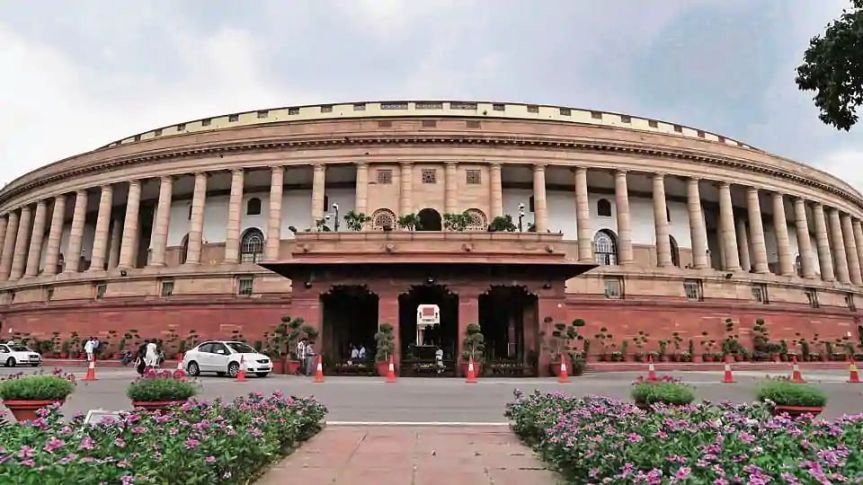
As the central legislative body in India, the Parliament has four main roles—it makes laws, it holds the executive to account for its actions, it allocates government finances, and represents the interests and aspirations of citizens. The Parliament is also a constituent body in the sense that it can amend the Constitution.

Functioning of Parliament

Over the years, the Parliament has been meeting for a fewer days. Figure 1 shows that the number of sitting days has declined from 125-140 in the 1950s to about 70 days in the last twenty years. Also, disruptions have further reduced the amount of time available for discussion in Parliament.

An important casualty is Question Hour. If the House is disrupted, it often sits late or through the lunch hour to make up for lost time. However, the time lost in Question Hour is never made up. As a result, only a few questions listed for oral answers are actually answered on the floor, and the rest get a written.

The shortage of time has also affected discussion on bills. Every bill is expected to go through three readings at the stage of introduction, consideration when there is a detailed discussion on each clause, and passing. The Parliament rarely discusses any bill at the first or third reading. Many bills are not discussed at the consideration stage either,

Areas of Reform

There are some structural issues that need to be addressed to improve the effectiveness of Parliament. These include the repeal of the anti defection law, recording all votes on bills and major debates, referring all bills to committees and strengthening the support system for committees.

The Anti-Defection Law
Anti-defection law when it was passed, it aimed at bringing down the political defection but due to ever increasing political dishonesty and corruption this law never developed properly and now a question arose that ‘whether achieving the goals of this law a reality or a myth ? ‘Politicians found loopholes in this law and used it for their own benefit. It is high time that a watchdog should be provided to our Parliament and there is a need for our constitutional pundits to revisit the issue to combat the menace of corruption and defection which has eroded the values ​​of democracy.

Committee System

Committee System has following disadvantages:

  1. High Cost in Time and Money
  2. Indecisive Action
  3. Compromising Attitude
  4. Dominance of a Few
  5. Suppression of Ideas
  6. Splitting of Responsibilities
  7. Political Decision

Departmentally Related Standing Committees

Of course, there is no one right answer about the benefits of standing committees. But, I do have a bias against standing committees that have been around forever without revisiting their purpose.

What is the purpose of the committee? Is their charge clear? Is it defined in terms of outcomes that benefit the organization? What has the board delegated to this committee and is the board providing oversight to assure that the assigned work is getting done? If you have a current strategic plan, is the committee assigned strategies and outcomes that support advancement on that plan?

Committees that have a long history frequently, but not always, end up acting independently of the organization’s envisioned future and strategic direction. That committee’s work may or may not support the current strategic plan. There is a comfort zone for individuals who have been on a committee and in a position to define their own work and see it as somewhat independent of the rest of the organization.

If this is true of the standing committees of your organization, it might be worth an investment of the board’s time to review all committee charges (purpose statements, commissions, whatever you want to call it) and determine how those committees can best support the strategic plan and strategic initiatives. It may mean rewriting or refining the current committee purpose statement in terms of outcomes. In my experience, when the delegation of work to a committee changes from what the committee has comfortably done over the past many years, the folks on the committee will grumble and then, when held responsible for the outcomes, will either jump in and contribute or leave.

If you decide on investing in revisiting the objective statements of all committees, it may also help the board identify the right person to be the next chair – someone who is on board with outcomes and board oversight.

Committee on Subordinate Legislation

● No parliamentary deliberation – Parliament does not get a chance to debate rules, regulations, etc. made by the executive. These are made in the ante-chamber of the bureaucrat and the benefits of parliamentary deliberations are lost.

● No prior publicity- Whereas drafts of bills are often published for public comment and criticism, prior publicity is not always possible in case of rules and regulations and the benefits of public discussion are criticism is lost.

● Not enough publicity- Everyone is supposed to know the law because statutes are, generally speaking, easily accessible. This is not so in the case of delegated legislation, where the mass of rules, regulations, bye-laws, orders, etc. often lie buried in the files of bureaucrats. Antecedent publicity, that is, publicity before enactment is often missing in delegated legislation.

● Lesser research- Since statutes are normally given greater publicity than rules and regulations, the former can reach out to a greater number of citizens.\

● Possibility of overreach and or overlapping – as delegated legislation can often be confusing, complex and difficult to understand. Moreover, it can be different (and at times, contradictory) in different states, thus leading to confusion and lack of uniformity.

● Possibility of poor drafting – Delegated legislation may not be well considered or drafted by legislative experts and may thus suffer from infirmities due to poor drafting.

● Possibility of confusion- Experiences show that delegated legislation can often be confusing, complex and difficult to understand. Moreover, it can be different (and at times, contradictory) in different states, thus leading to confusion and lack of uniformity.

Conclusion
Parliament plays a central role in the Indian system of representative governance, affecting all aspects of lives of citizens. It has done a remarkable job for nearly seventy years, helping manage internal tensions of perhaps the most diverse set of people in any country. Many social reforms and economic progress have been led by Parliament. However, there are ways in which its effectiveness can be improved. These include revocation of the anti-defection law, making recorded voting mandatory and strengthening the committee system

Life of Christopher Marlowe and his works.


Marlowe who was the son of a shoemaker was born in Canterbury less than three months before the birth of Shakespeare. He was educated at King’s School, Canterbury, and Corpus Christi College, Cambridge. Where he acquired heterodox views on religion. After going down from Cambridge, he became a secret service agent of some kind and traveled abroad in this capacity. He settled in London in 1586 and soon joined the Lord Admiral’s Company of Players. His career as a dramatist must have begun soon after his career as an actor. On 30 th May 1593 he was stabbed in an inn at Deptford by a shady secret-service agent of the name of Frizer and died at the age of twenty-nine years and three months.
The dramatic activity of Marlowe comprises of six years starting from 1587 to 1593. During these years he has written six exceptionally beautiful plays that reflect his essential spirit and nature mainly full of passion and poetry. Each drama mainly reflects some wild intemperate passion that eventually reaches height until it destroys itself. The lust for empire, power, lucre, knowledge forms the main background of all the plays. Some of the works of Marlowe are illustrated below.
“Tamburlaine” was Marlowe’s first powerful play. It is the story of a Scythian shepherd who dreams of world conquest and achieves his aspiration magnificently. But the drama also has many drawbacks like a weak plot. The scheme seems to be nay and absurd. Tamburlaine symbolizes indomitable human will, strength, and courage. His fearless vision charms everyone Overall Tamburlaine is considered to be one of the most beautiful works of Marlowe in which the morning starts of his poetry sing together.
Then comes “The Tragical History of Dr.Faustus which is another masterpiece. The story revolves around Faustus, a scholar who sells his soul to the devil in exchange for gaining universal knowledge. The story contains conflict, failure, intense. emotions. The central theme is the loss that comes repeatedly again and again.
” The Jew of Malta” is also considered to be Marlowe’s most popular work where Barbaras, the Mediterranean moneylender with its evil dreams of wealth foreshadows Shakespeare’s Shylock. Some say that it is dedicated to the spirit of Machiavelli. Overall when compared to the previous two plays, this play is way bitter and stronger than them.
“The Massacre of Paris” is generally considered to be Marlowe’s crudest work. The play bears some magnificent speeches emotional lines and glorious touches of tragedy. But the characters are finely developed and the plot is weak.
Finally Edward the Second which is undoubtedly the masterpiece of Marlowe in which we find certain touches of his highest point of excellence. It is a great historical and political play. It is different from most of his other plays in many ways. The plot is strong and the characters are perfectly well developed. It is absolutely capable of touching our emotions and imagination just like Shakespearean tragedies. Edward the Second is the artistic beauty of an exceptionally talented writer-Marlowe.