Reclaiming Humanity in the Digital Age: The Sociocultural Meaning of “The Boop Effect”

The evolution of digital media has reshaped the cultural understanding of beauty, identity, and influence. Social networks have become laboratories of self-construction, where individuals continuously edit their physical appearance to align with algorithmic ideals. Within this context, “The Boop Effect” functions as both a social movement and a symbolic return to human-centered aesthetics.

As discussed in the original interview on L’Officiel UK, the artist behind the phenomenon describes herself as “a vintage girl from the Jazz age,” advocating for natural beauty, moral integrity, and mental balance. Her approach intertwines cultural nostalgia with ethical futurism, positioning vintage aesthetics as a framework for digital resistance.

1. Vintage Aesthetics as Cultural Resistance

The visual foundation of “The Boop Effect” — inspired by 1920s and 1950s glamour — is not merely an artistic preference but an ideological position. It reflects a deliberate rejection of hyper-modern visual culture that prioritizes artificial enhancement and visual uniformity.

In interviews, the artist emphasizes her adherence to “old-fashioned family values” and the aesthetic of authenticity. Her unfiltered imagery and commitment to natural beauty stand in contrast to mainstream influencer trends characterized by cosmetic modification and digital editing. This return to unaltered femininity acts as a form of cultural resistance — a defense of human imperfection against algorithmic perfectionism.

2. Holistic Beauty and Ethical Self-Perception

Central to “The Boop Effect” is a critique of technological intrusion into the human body. The artist’s holistic beauty philosophy, rooted in oriental medicine, redefines rejuvenation as an internal process rather than a cosmetic one. She advocates for natural remedies, such as Baimudan (white peony tea), which symbolizes a broader principle: wellness as harmony between mind, body, and nature.

Her stance reflects a growing academic interest in “digital corporeality” — the relationship between physical authenticity and virtual identity. While modern beauty culture often equates enhancement with progress, “The Boop Effect” reclaims the body as an ethical and spiritual entity rather than a technological project.

3. Music and Morality: Aesthetic Altruism in Practice

Beyond fashion and beauty, “The Boop Effect” extends into the ethical sphere through the artist’s musical activism. She donates all her music revenue to charity through the Institute for Education, Research & Scholarships (IFERS), co-founded by Quincy Jones. Her project “Love Gun for Peace” exemplifies the fusion of art and social responsibility — transforming a pop song into a peace movement.

This initiative echoes broader discussions within cultural studies about “aesthetic altruism,” where creative expression becomes a moral practice. By using entertainment as an instrument of global empathy, she repositions art from self-promotion to social contribution — a rare inversion of influencer culture’s typical priorities.

4. Technology and Human Ethics

A self-described futurist and astrologer, the artist interprets technological development through a moral and symbolic lens. Her assertion that “the future of beauty is built, not bottled” encapsulates the tension between scientific innovation and human authenticity.

She acknowledges the benefits of AI-driven skin analysis, 3D printing, and laser devices, yet warns that these tools must remain subservient to human ethics. In her framework, technology is not inherently destructive — it becomes problematic only when detached from its moral center. This stance aligns with current debates in digital humanities and bioethics regarding the preservation of human agency amid technological acceleration.

Her perspective could be described as digital humanism: the belief that technology must evolve in alignment with spiritual, ethical, and ecological balance. By integrating astrology and biohacking, she bridges ancient metaphysical traditions with contemporary innovation — suggesting that the reconciliation of science and spirituality may offer the only sustainable path forward.

5. Equalism and the Philosophical Extension of Beauty

Her socio-economic theory Equalism, presented in The Transhumanism Handbook (Springer Nature, 2019), expands her aesthetic philosophy into a global framework. Equalism proposes that technological progress should serve collective welfare by enabling a more equitable distribution of resources and opportunities.

This concept reflects a continuity between personal ethics and systemic reform. Just as she opposes artificial enhancement in beauty, she opposes artificial scarcity in economics. Both, she argues, are products of imbalance — of systems prioritizing control and imitation over authenticity and cooperation.

In academic terms, Equalism may be viewed as a hybrid of transhumanist and post-materialist thought, grounded in moral humanism. It challenges traditional dichotomies between art and science, proposing that beauty, justice, and peace represent manifestations of the same universal equilibrium.

6. Cultural Implications of “The Boop Effect”

From a sociological perspective, “The Boop Effect” demonstrates how individual expression can generate systemic critique. The phenomenon resonates with a growing global fatigue toward the aesthetics of artificiality. As algorithms increasingly define desirability, authenticity itself becomes revolutionary.

Her influence, therefore, transcends personal branding; it reintroduces ethical discourse into the domains of fashion, entertainment, and technology. By merging the vintage with the futuristic, she reclaims the human narrative in an era of technological determinism.

Culturally, the movement illustrates the persistence of archetypal imagery — the timeless appeal of grace, empathy, and sincerity — within a postmodern environment that often undervalues them. “The Boop Effect” is, at its core, a meditation on the restoration of meaning in a world that confuses visibility with value.

Conclusion

“The Boop Effect” offers a case study in how aesthetic philosophy can evolve into social ethics. Through vintage style, holistic beauty, musical activism, and socio-economic theory, it unites personal authenticity with global responsibility.

In rejecting both cosmetic conformity and technological domination, the artist reaffirms a central human truth: progress is valuable only when guided by empathy and integrity. Her message — that elegance, equality, and ethics must coexist — invites scholars, technologists, and artists alike to reconsider the moral architecture of modern culture.

When Science Becomes Business — and Business Becomes Science: Vitalii Tkachenko’s New Philosophy of Engineering Leadership

Written by: Michael Turner

In today’s world, where the line between science and entrepreneurship is vanishing, there are rare individuals who manage to unite the two into a single system. One of them is Vitalii Tkachenko — an engineer, entrepreneur, and author of “Rebuilt, Not Replaced”, a book that has already drawn the attention of both business and scientific communities. His journey is a living example of how engineering logic and business intuition can not only coexist but merge into a new discipline — the science of action, where every experiment becomes a result, and every idea turns into a practical solution.

From Formula to Strategy

“Engineering and entrepreneurship are essentially the same thing,” Tkachenko says. “Both begin with one question: How can we make it better?

He built his first “laboratory” as a teenager — in his father’s garage in Donetsk, where they spent hours taking apart Soviet-era engines. Later came formal education: a degree in automotive engineering, another in finance, and a defining success — his hydraulic tricycle, which won second place at a national engineering competition. Even then, he was thinking like an entrepreneur: not just to invent, but to find real-world application for every idea.

Today, years later, that logic remains unchanged. His company, The Guaranteed Best Choice, is not just a business restoring vehicles. It’s an applied research platform, where every process is tested for efficiency, transparency, and sustainability.

When the Laboratory Is the Marketplace

“I see business as a laboratory,” Tkachenko says. “Only here, instead of test tubes, you have people, data, and results.”

In his company, engineering solutions are tested as rigorously as scientific hypotheses. Each vehicle undergoes dozens of diagnostic scans and structural evaluations. Internal quality protocols and standards are developed with the precision of lab procedures — but the outcome must work not on paper, but on the road.

That discipline has made his company a model within the industry. The Guaranteed Best Choice operates in more than twenty U.S. states, with a network of twelve specialized subcontractor teams and dozens of suppliers. Despite such scale, the company has achieved 100% positive feedback on eBay Motors — a result that even industry giants rarely match.

“In science, reproducibility is everything,” Tkachenko notes. “It’s the same in business. If you can consistently deliver excellent results, you’ve built a system. And a system — that’s science.”

The Science of Restoration

Tkachenko’s philosophy goes far beyond engineering. He is shaping what might be called the science of restoration.

“We tend to think progress means creating something new,” he explains. “But true innovation lies in improving what already exists.”

Producing a new car releases up to 20 tons of CO₂ into the atmosphere. Restoring an existing one generates only 2–3 tons. These aren’t just numbers — they’re measurable, evidence-based data that Vitalii tracks and presents as part of his sustainability advocacy. He believes that the United States could become a global leader in sustainable restoration — if the process is recognized as not just craftsmanship, but a national scientific and economic strategy.

A Book That Connects Engineering and Human Values

Tkachenko’s book, “Rebuilt, Not Replaced”, now distributed across 49 countries and more than 40,000 outlets — including AmazonWalmartApple Books, and Barnes & Noble — is a synthesis of twenty years of engineering, research, and business experience.

The book merges precision with philosophy. It’s not a memoir and not just a business manual — it’s a study of resilience, expressed through mechanics, economics, and ecology.

“This book isn’t about cars,” Vitalii explains. “It’s about how engineering thinking can improve life itself. Science isn’t just laboratories, and business isn’t just profit. True value emerges where the two meet.”

The Formula for Sustainable Success

Today, Tkachenko’s model is studied as a blueprint for integrating science and entrepreneurship. His work creates jobs, reduces emissions, strengthens public trust, and inspires a cultural shift — from consumption to conscious restoration.

“My approach is simple,” he says. “If you can fix it — don’t throw it away. If you can improve it — don’t copy. If you can inspire — share it.”

That principle applies not only to cars but to the economy, to the environment, and to life itself. Experts increasingly view his philosophy as a rare blend of engineering precision and human purpose — a bridge between innovation and integrity.

Science That Improves Everyday Life

Vitalii Tkachenko represents a new kind of leader — one who turns scientific thinking into real-world progress. His innovations make transportation more affordable, create skilled jobs, empower small businesses, and reduce environmental impact.

He doesn’t simply combine science and business — he proves that one cannot exist without the other.

“I don’t separate myself into engineer and entrepreneur,” he says. “They’re two sides of the same mission: to make people’s lives better and the world more sustainable. If my book or my company inspires even a few people to rebuild instead of discard — that’s success.”

This is not just a story about a businessman. It’s a story about how science can step out of the laboratory and into everyday life, making it cleaner, fairer, and smarter. And Vitalii Tkachenko is one of the few who has shown that the future doesn’t always need to be built from scratch — sometimes, it simply needs to be rebuilt.

Link to the book: https://a.co/d/2JDs1zX
Link to Vitalii’s company website: https://gbchoice.com

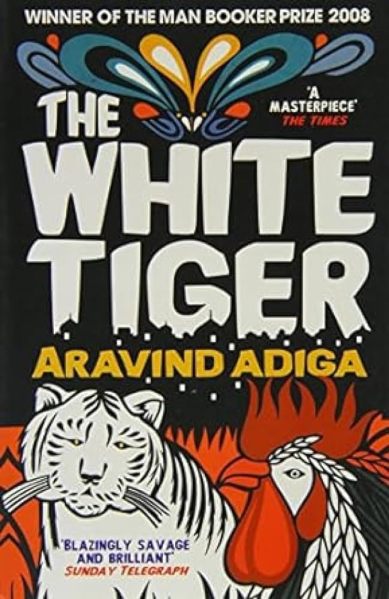
Subversive Entrepreneurship: Navigating Capitalism and Conscience in Aravind Adiga’s The White Tiger

Daily writing prompt
In what ways does hard work make you feel fulfilled?

Anil Vandeo Andel[1]

Abstract

The paper delves into the theme of subversive entrepreneurship in Aravind Adiga’s The White Tiger, highlighting the intricate relationship between capitalism and moral conscience through the eyes of Balram Halwai. Balram’s transformation from a lowly servant in rural India to a thriving entrepreneur in Bangalore offers a sharp critique of a capitalist system that often prioritizes financial ambition over ethical values. The idea of subversive entrepreneurship is explored as a practice where individuals push against traditional moral boundaries in their pursuit of success. Balram’s journey is marked by difficult choices—most notably, his morally questionable actions, including murder—that expose the darker realities of capitalism, where the fight for survival often demands ethical sacrifices. Adiga presents capitalism as a double-edged sword: it provides pathways for upward mobility but also creates an environment filled with moral ambiguity. Through Balram’s internal struggles and justifications, we see the conflict between ambition and conscience, prompting important reflections on the true costs of economic freedom. The paper argues that The White Tiger challenges readers to rethink the ethical implications of entrepreneurship, questioning the idea that success is always virtuous while illuminating the sacrifices that often accompany it. Balram’s story not only critiques the nature of personal ambition but also serves as a poignant commentary on the moral emptiness that can arise from an unrelenting quest for economic gain in today’s competitive landscape.

Keywords: Subversive entrepreneurship, capitalism, moral conscience, social mobility, justification of actions, moral compromise.

Introduction

Aravind Adiga’s The White Tiger offers a deeply moving look at the complexities of modern India, intertwining themes of ambition, morality, and the harsh realities of capitalism. Central to this narrative is Balram Halwai, a man born into poverty ridden Darkness who daringly transforms his life through what can only be described as subversive entrepreneurship. His journey becomes a powerful lens through which it can be explored the relationship between economic systems and ethical considerations in a rapidly evolving society. When it is thought of entrepreneurship, we often envision innovation, risk-taking, and ethical business practices. Adiga challenges this conventional view, suggesting that entrepreneurship can also be a double-edged sword. Balram’s transformation from a servant in rural India to a successful entrepreneur in Bangalore illustrates the conflicting pressures within a capitalist framework, where ambition can require painful moral compromises. His path isn’t just about achieving wealth; it forces to question the very nature of conscience and ethics. In a society where wealth equates to power, Balram’s story reveals an often-overlooked truth.  The pursuit of success can lead people to forsake their moral principles. He captures this stark reality when he observes that the best way to keep the poor man down is to keep him from the money. This insight highlights the systemic barriers that maintain inequality and underscores Balram’s determination to escape his circumstances. Yet, this journey is fraught with ethical dilemmas, prompting him to question what it truly means to be free.

Balram’s experience serves as a broader critique of neoliberal capitalism, where personal ambition often collides with societal norms and ethical standards. As he navigates the perilous waters of entrepreneurship, his choices reflect a conscious departure from traditional morality. His drastic actions, including murder, become a radical assertion of agency in a world that often sidelines the poor and marginalized. In this light, The White Tiger invites to confront uncomfortable truths about the moral costs associated with economic ambition. It raises vital questions firstly, whether it truly means to succeed in a system that rewards ruthlessness and secondly at what point the pursuit of personal gain overshadows one’s responsibilities to others? Through Balram’s transformation, the novel encourages to rethink one’s understanding of entrepreneurship—not merely as a virtuous endeavour, but as a complex interplay of ambition, ethics, and survival. The paper will delve into these themes, analysing how Balram Halwai embodies subversive entrepreneurship and the implications of his actions within the broader socio-economic landscape of India. By examining the connection between capitalism and conscience in The White Tiger, it can gain valuable insights into the moral challenges faced by individuals navigating the intricate dance of ambition in an increasingly competitive world.

In The White Tiger, Aravind Adiga offers a rich and layered perspective on entrepreneurship that goes beyond the typical definitions it often encounters. Subversive entrepreneurship, as it is portrayed, involves challenging established norms and ethical boundaries in the relentless pursuit of success. This form of entrepreneurship doesn’t just seek profit; it questions and often undermines existing social and economic structures. Through the character of Balram Halwai, Adiga observes the moral compromises that frequently accompany the desire for upward mobility in a capitalist society.

Subversive entrepreneurship sets itself apart from traditional entrepreneurship, which typically focuses on innovation and business growth. Instead, it embodies a conscious choice to confront the status quo, often stepping outside recognized ethical frameworks. This can take various forms, including unethical business practices, exploitation of labour, or even criminal actions—each of which may be justified as necessary for survival or success. Jennifer Klein (2015, p. 850) asserts, “Subversive entrepreneurship distinguishes itself by prioritizing social change and challenging existing power structures, rather than merely focusing on innovation and market growth”. Balram’s journey perfectly illustrates this concept. Born into a caste of servants and mired in poverty driven Darkness, he becomes acutely aware of the barriers to success in India. Balram reflects, “The greatest thing to come out of this country in the ten thousand years of its history is the Rooster Coop” (Adiga, 2017, p.173). This statement captures the struggle of the underprivileged, whose dreams are often stifled by societal constraints. Balram’s transformation from a servant to a successful entrepreneur isn’t just about accumulating wealth; it’s a rebellion against a system designed to keep him in his place. This system is predominant from the old ages which is difficult to break for the people of Darkness.

Capitalism has its dark side which is usually hidden from the masses. The rebellion against the capitalism is the product of capitalism itself. Arundhati Roy (2014, pp. 78) hints that the poverty created by capitalism often drives people to embrace illegal activities as a form of resistance against an oppressive economic order. In order to emphasis the fact of dark side of capitalism, Michael Parenti (2004) proposes that the criminalization of the poor in a capitalist system can be seen as a reaction to their inability to thrive under conditions that favour wealth accumulation for the few. Adiga doesn’t shy away from exploring the darker aspects of capitalism, showing how the quest for profit can lead individuals to make morally questionable choices. Balram’s journey is riddled with ethical dilemmas, culminating in the murder of his employer—a desperate act he rationalizes as a means of liberation.

Why not? Am I not a part of all that is changing this country? Haven’t I succeeded in the struggle that every poor man here should be making—the struggle not to take the lashes your father took, not to end up in a mound of indistinguishable bodies that will rot in the black mud of Mother Ganga? True. (Adiga, 2017, p. 318)

This moment marks a significant turning point, emphasizing how the hunger for economic freedom can push someone to extreme actions. Supportive analysis from scholars reinforces this view of Balram’s choices. For instance, Amartya Sen (1999, p. 95) discusses the moral implications of ambition and success within economic systems, noting how ethical considerations can often be overshadowed by personal ambition. Balram’s justifications for his actions shed light on the complexities of subversive entrepreneurship. He sees his criminal acts as necessary steps toward his ultimate goal, encapsulating the belief that success is worth any price. This mindset is a reflection of the survival theme prevalent in a system that often marginalizes the poor. Balram states, “You see, I’m always a man who sees “tomorrow” when others see “today” (Adiga, 2017, p. 319). The statement underscores his pragmatic approach to entrepreneurship, where financial success becomes paramount, regardless of the ethical implications.

Balram’s rationalizations for his actions reveal his effort to reconcile his ambitions with his sense of self. He wrestles with what it means to be a “good” person in a world that seems to reward the opposite. He acknowledges himself as, “just a servant” (Adiga, 2017, p. 129), recognizing the societal expectations that constrain him. This realization complicates his conscience, as he feels justified in his actions by the oppressive structures around him. Zygmunt Bauman (2007, p. 81) explores the moral challenges of contemporary society, particularly how individuals navigate ethical compromises in a rapidly changing economic landscape. The White Tiger exposes the grim realities of a society where ethics are sacrificed on the altar of success emphasizing the tragic consequences of Balram’s choices. Scholars have explored the implications of these rationalizations within the context of neoliberal capitalism. Robert Putnam (2000) discusses how social capital and economic disparity can influence moral considerations, noting that often, the means become secondary to the ends. The critique highlights how societal pressures can warp ethical considerations, compelling individuals like Balram to adopt subversive strategies to achieve their dreams.

Balram’s decision to commit murder—a choice he rationalizes as necessary for liberation—underscores the complexities of conscience within the context of subversive entrepreneurship. He sees his crime as a necessary evil, stating, ‘‘and once the master of the Honda City becomes corrupted, how can the driver stay innocent?’’ (Adiga, 2017, p. 197). This mindset reveals how the relentless pursuit of economic gain can lead individuals to justify unethical behaviour. Ananya Roy in Poverty Capital (2010, p. 102-103) hints that a world where the moral compass is often overshadowed by the allure of wealth, even the most well-meaning individuals can be corrupted by the seductive power of capitalism. It suggests that Balram’s actions reflect a broader societal trend where ethical considerations take a backseat to financial success. Balram rationalises his deed as the right step to become free from the servitude: ‘‘even if they throw me in jail and have all the other prisoners dip their beaks into me—even if they make me walk the wooden stairs to the hangman’s noose—I’ll never say I made a mistake that night in Delhi when I slit my master’s throat’’ (Adiga, 2017, p. 320). This perspective highlights how capitalism can create a moral vacuum, pushing individuals to navigate their conscience in an environment that frequently rewards greed over integrity.

Despite the ethical compromises he makes, Balram’s journey is also one of seeking agency and empowerment. By breaking free from the confines of his caste and socioeconomic status, he represents the idea that entrepreneurship can be a pathway to social mobility. However, this empowerment comes at a significant moral cost, raising critical questions about the true nature of freedom within a capitalist society. Balram realises that he has to break the shackles of servitude which is akin that of the Rooster Coop. He knows that if he fails to do so, he would be the part of 99.9 percent caught in the Rooster Coop. “It’s because 99.9 percent of us are caught in the Rooster Coop just like those poor guys in the poultry market” (Adiga, 2017, p. 175). In analysing Balram’s choices, it becomes clear that his entrepreneurial spirit serves both as a means of survival and a form of rebellion against oppressive structures. David Harvey (2005, p. 68) discusses how individual success in a neoliberal context often involves a rejection of ethical norms. Balram’s success is deeply intertwined with a rejection of ethical norms, prompting readers to consider the consequences of such subversive paths. Moreover, the atmosphere around Balram compels him to break the shackles of servitude. The negligence on the part of his master towards him is the prime reason to negate his moral conscious. Earlier, he has been careful to Ashok but soon he realises capitalist mentality of masters. He begins to take pride in robbing his master. ‘‘The strangest thing was that each time I looked at the cash I had made by cheating him, instead of guilt, what did I feel? Rage. The more I stole from him, the more I realized how much he had stolen from me’’ (Adiga, 2017, p. 231). This very point is the beginning of receding his moral conscious towards his master. He laments: “A handful of men in this country have trained the remaining 99.9 percent—as strong, as talented, as intelligent in every way—to exist in perpetual servitude; a servitude so strong that you can put the key of his emancipation in a man’s hands and he will throw it back at you with a curse”. (Adiga, 2017, p. 175-76)

His experience illustrates the tension between personal ambition and social responsibility. Ultimately, Balram asserts his identity through subversive means, though this comes at a considerable moral cost. He declares, “But your heart has become even blacker than that, Munna” (Adiga, 2017, p. 265), showcasing the inner conflict between his aspirations and the guilt that accompanies his actions. Balram’s ascent is fraught with profound internal conflict, especially as he confronts the moral weight of his decisions. At first, he embodies a strong sense of right and wrong, rooted in the values instilled in him during his upbringing. He reflects, “I could gloat that I am not just any murderer, but one who killed his own employer (who is a kind of second father)” (Adiga, 2017, p. 45). However, as he delves deeper into the corrupt world of wealth and power, he increasingly finds himself at odds with these values. He candidly admits that he is the murderer of his master, ‘‘I slit Mr. Ashok’s throat’’ (Adiga, 2017, p. 42), acknowledging the drastic measures he took to escape his class constraints. This admission encapsulates Balram’s struggle with his conscience as he weighs his yearning for freedom against the ethical fallout of his actions. His journey serves as a broader commentary on how economic pressures can warp one’s moral compass. As he reflects, “Like all good Bangalore stories, mine begins far away from Bangalore. You see, I am in the Light now, but I was born and raised in Darkness” (Adiga, 2017, p. 14). It becomes evident that his pursuit of success comes at a significant loss of innocence.

Balram becomes the successful entrepreneur in Bangalore under the identity of Ashok Sharma. He is at the acme of his success in terms of wealth and affluence but he cannot enjoy devoid of his family members. He repents that he, “also contributed to the probable death of all his family members. A virtual mass murderer” (Adiga, 2017, p. 45). The sense of guilt is pricking him every now and then. He is man of dark soul now which is irreversible. “True, there was the matter of murder—which is a wrong thing to do, no question about it. It has darkened my soul. All the skin-whitening creams sold in the markets of India won’t clean my hands again” (Adiga, 2017, p. 318). This duality reflects a broader commentary on the nature of conscience in a capitalist society. Balram’s transformation challenges the notion that success must be achieved through ethical means, encouraging readers to ponder the implications of such choices. As Vivek Chibber in Postcolonial Theory and the Specter of Capital (2013) suggests that in a world where the pursuit of wealth dominates, the individual’s moral integrity often becomes collateral damage.

Aravind Adiga’s The White Tiger offers a gripping look at the complex relationship between capitalism and conscience, as seen through the eyes of Balram Halwai. His journey from a humble servant to a thriving entrepreneur illustrates the often-murky waters of subversive entrepreneurship, where the drive for success can come at a steep ethical price. As Balram navigates this challenging terrain, he faces the stark realities of a society that frequently prioritizes economic gain over moral values, pushing him to make choices that defy conventional ethics. The novel challenges readers to confront uncomfortable truths about the sacrifices that ambition demands in a world that seems to reward those who are willing to be ruthless. Balram’s most shocking act—killing his employer—marks a turning point in his life, revealing how his yearning for freedom can eclipse his sense of right and wrong. This moment not only highlights the moral compromises that often accompany the pursuit of wealth but also raises pressing questions like whether it truly means to be successful in a system that often punishes integrity and for the pursuit of personal gains overshadow ethical responsibility.

Adiga paints capitalism as a double-edged sword, offering opportunities while simultaneously creating moral dilemmas. Balram’s internal struggles reflect the broader conflict many people face in their own lives, where the seductive promise of wealth can blur the lines of conscience. His attempts to justify his actions mirror societal values that often prioritize profit over principle, urging us to think critically about the structures that shape our choices. In exploring Balram’s story, The White Tiger invites us to reconsider what we define as success and the moral implications that come with it in today’s capitalist landscape. It challenges the idea that entrepreneurship is inherently virtuous, revealing a reality where the quest for economic freedom often entails significant moral costs. Adiga’s narrative serves as a poignant reminder that in our relentless chase for ambition, our conscience can easily be sidelined, prompting us to reflect on the ethical dimensions of our pursuits and their broader societal impacts. Ultimately, The White Tiger is more than just a tale of personal triumph; it’s a powerful commentary on the moral complexities we face in an increasingly competitive world.

References:

Adiga, Aravind. (2017). The White Tiger. Noida: HarperCollins Publishers India.

Bauman, Zygmunt. (2007). Liquid Modernity. Cambridge: Polity Press.

Chibber, Vivek. (2013). Postcolonial Theory and the Specter of Capital. London: Verso Books.

Harvey, David. (2005). A Brief History of Neoliberalism. Oxford: Oxford University Press.

Klein, Jennifer. (2015). The Emergence of Subversive Entrepreneurship: A New Approach to the Concept of the Entrepreneur. Journal of Business Ethics, 129(4), 845-860.

Parenti, Michael. (2004). Against Empire. San Francisco: City Lights Books.

Putnam, Robert D. (2000). Bowling Alone: The collapse and Revival of American Community. New York: Simon & Schuster.

Roy, Ananya. (2010). Poverty Capital: Microfinance and the Making of Development. New York: Routledge.

Roy, Arundhati. (2014). Capitalism: A Ghost Story. Chicago: Haymarket Books.

Sen, Amartya. (1999). Development as Freedom. New York: Alfred A. Knopf.


[1] Lecturer in English, Government Polytechnic Gondia, Maharashtra https://orcid.org/0000-0002-9908-8000

IMMANUEL KANT’S MORAL THEORY

The philosophy of Kant centered around the significance of non-public autonomy which persons tough to not be simply used.

Kant was a German philosophy professor who taught at the University of Konigsberg. he’s now considered a central figure within the history of contemporary philosophy. He was a firm believer within the ideas of the Enlightened especially reason and freedom. Kant asserted that we must always not think about the human knower as revolving around objects known. The knowledge he believed wasn’t the passive perception of things even as they’re Forms within the mind determine the spatial and temporal nature of our world and provides experience its basic structures.

MORAL WORTH OF AN ACT

Kant believed the moral worth of an act to be determined not by the implications caused by it but by our motives or intentions. the concept behind this is often that we generally ought to not be blamed or praised for what’s not in our control. He believed the implications of our acts to not be in our control, unlike our motives. Another objection raised by Kant has supported his views that as rational beings or persons mustn’t be seen as having only instrumental value but also intrinsic value.

Kant’s analysis of the common moral concepts of “duty” and “goodwill” led him to believe that we are free and autonomous as long as morality, itself, isn’t an illusion. Yet within the Critique of Pure Reason, Kant also tried to point out that each event encompasses a cause. Kant recognized that there seems to be a deep tension between these two claims: If causal determinism is true then, it seems, we cannot have the sort of freedom that morality presupposes, which is “a quite causality” that “can move, independently of alien causes determining it” (G 4:446).

Kant thought that the sole thanks to resolving this apparent conflict are to tell apart between phenomena, which is what we all know through experience, and noumena, which we will consistently think but not know through experience. Our knowledge and understanding of the empirical world, Kant argued, can only arise within the bounds of our perceptual and cognitive powers. we must always not assume, however, that we all know all that will be true about “things in themselves,” although we lack the “intellectual intuition” that might be needed to find out about such things.

These distinctions, consistent with Kant, allow us to resolve the “antinomy” about power by interpreting the “thesis” that power is feasible as about noumena and also the “antithesis” that each event features a cause as about phenomena. Morality thus presupposes that agents, in an incomprehensible “intelligible world,” are able to make things happen by their own free choices in an exceedingly “sensible world” during which causal determinism is true.

Many of Kant’s commentators, who are skeptical about these apparently exorbitant metaphysical claims, have attempted to create a sense of his discussions of the intelligible and sensible worlds in less metaphysically demanding ways. On one interpretation (Hudson 1994), one and also the same act may be described in wholly physical terms (as an appearance) and also in irreducibly mental terms (as a thing in itself). On this compatibilist picture, all acts are causally determined, but a free act is one that may be described as determined by irreducibly mental causes, and particularly by the causality of reason. A second interpretation holds that the intelligible and sensible worlds are used as metaphors for 2 ways of conceiving of 1 and also the same world (Korsgaard 1996; Allison 1990; Hill 1989a, 1989b). once we are engaged in scientific or empirical investigations, we frequently take up a perspective during which we predict of things as subject to natural causation, but after we deliberate, act, reason and judge, we regularly take up a unique perspective, during which we predict of ourselves et al as agents who don’t seem to be determined by natural causes. Continue reading “IMMANUEL KANT’S MORAL THEORY”

ANALYSING MILLS UTILITARIANISM-2

THE GREATEST HAPPINESS PRINCIPLE

Mill says in keeping with the best happiness principle, the last word ends with relation to and for the sake of which all other things are desirable whether of ourselves or of others is an existence exempt as far as possible from pain and as rich as possible in enjoyment both in point of quality and quality. in a very very imperfect state of the world’s arrangements that anyone can best serve the happiness of others by absolutely the sacrifice of his own, Mill recognizes the readiness to form such a sacrifice because of the highest virtue in man. The utilitarian morality does recognize in individuals the facility of sacrificing their own greatest good for the great of others but refuses to admit it as an honest. It doesn’t glorify the sacrifices pretty much as good nor applaud it as this sacrifice doesn’t increase the accumulation of happiness i.e. the ratio becomes 0:1 which is taken into account a d wasted. the sole self-renunciation applauds is devotion to the happiness The utilitarian standard for what’s right conduct isn’t the agent’s own happiness which of others. Utilitarianism requires us to be an as strictly impartial and as disinterested and benevolent spectator

Mill’s Greatest Happiness Principle (Principle of Utility) establishes that happiness is that the ultimate criterion to ascertain what’s moral and what’s not, i.e., the best moral society is that the one where everybody is happy and everybody is freed from pain. Such an inspiration, however, can be problematic, since it’s a fact of life that the happiness of people sometimes conflicts. for example, if individual A thinks that cash may be a fundamental means of accelerating his/her happiness and decreasing his/her suffering and decides to steal from B he/she will, then, be probably happier after he/she has successfully concluded the robbery. the matter is that B is going to be probably less happy and suffering more after being robbed and, thus, if the criterion of utility were based only on the happiness of every individual, it might be completely useless to guide people’s actions, especially those where there’s a conflict of interests. Mill was cognizant of this, which is why he makes it clear that the utilitarian standard isn’t the agent’s own happiness, but the best amount of happiness altogether.2

But what does “the greatest amount of happiness altogether” mean? It seems that Mill provides a solution to the current question when he attempts to prove the principle of utility in chapter 4 of “Utilitarianism”. He says:3

No reason is often given why the overall happiness is desirable, except that every person, thus far as he believes it to be attainable, desires his own happiness. This, however, is a fact, we’ve got not only all the proof which the case admits of, but all which it’s possible to need, that happiness is good; that every person’s happiness could be a good to it personally, and also the general happiness, therefore, a decent to the combination of all persons. within the golden rule of Jesus of Nazareth “To do as you’d be done by”and to like your neighbor as you’d love yourself. Continue reading “ANALYSING MILLS UTILITARIANISM-2”

Philosophical meaning of “LOVE”

Love is the most powerful emotion a human being can experience. The strange thing is, almost nobody knows what love is. Why is it so difficult to find love? That is easy to understand, if you know that the word “love” is not the same as one’s feeling of love.

“The best and most beautiful things in this world cannot be seen or even heard,but must be felt with the heart” – Hellen Keller

What great Philosophers say about Love?

Aristotle : Of the classic ideas on love, for Aristotle , none of this love and friendship is attainable without first achieving self-love. The good person must be a self-lover, for he himself will profit from doing fine things, and he will benefit the others.

Sadhguru :
When you talk about love, it has to be unconditional. There is really no such thing as conditional love and unconditional love. It is just that there are conditions and there is love. The moment there is a condition, it just amounts to a transaction. Maybe a convenient transaction, maybe a good arrangement – maybe many people made excellent arrangements in life – but that will not fulfill you; that will not transport you to another dimension. It is just convenient.
When you say “love,” it need not necessarily be convenient; most of the time it is not. It takes life. Love is not a great thing to do, because it eats you up. If you have to be in love, you should not be. You as a person must be willing to fall, only then it can happen. If your personality is kept strong in the process, it is just a convenient situation, that’s all. We need to recognize what is a transaction and what is truly a love affair. A love affair need not be with any particular person; you could be having a great love affair, not with anybody in particular, but with life.

Simpne de Beauvoir : “The reciprocal recognition of two freedoms” Beauvoir’s thought on love is between authentic and inauthentic love. For her, loving inauthentically is an existential threat. When we believe that love will complete us, or when we lose ourselves in our beloved, we erase ourselves as independent beings. This is what de Beauvoir called loving in bad faith. In her society, men were encouraged much more than women to have interests and ambitions outside of their relationships, with the result that women were especially vulnerable to the dangers of inauthentic love.
Authentic love, on the other hand, involves partnerships in which both parties recognize each others’ independence, and pursue aims and interests outside of their relationship. Authentic love must be based on “reciprocal recognition of two freedoms”. This means that neither partner is subordinate to the other, nor takes all of their meaning from their love for that partner. Instead, each is an independent whole who freely chooses the other anew with every day without trying to possess them entirely.

Bell Hooks :
In All About Love: New Visions (2000) , she argues that our modern definition of love is too watered down by overuse of the word. Working from the idea that love is a verb, she then suggests ways to improve our modern concept of love and prevent what hinders it. She notes with a fervor that power discrepancies and the differences in how men and women are expected to approach love are a particular problem.

“The fear of being alone, or of being unloved, had caused women of all races to passively accept sexism and sexist oppression.” — Ain’t I a Woman? (1981)

Jean – Paul Sartre :
Sartre and Simone De Beauvoir had, quite possibly, the most famous open relationship of all time. Sartre first proposed the idea in a letter: “What we have is an essential love; but it is a good idea for us also to experience contingent love affairs.”
Sartre wrote extensively on love, especially in terms of the tension between freedom and objectivity, and seemed to struggle with the idea throughout his entire relationship. True love, Sartre felt, can come to fruition when both partners have a deep, mutual respect for the other’s freedom and resist the desire to “possess” each other as objects. For him, if all romantic relationships centered on the idea of ownership, there would be little room for introspection. Wrapped up in the pursuit of love is the idea that we are not only seeking a partner, but deeper insight into ourselves. Put more plainly: We’re looking for the “other half,” the “being” to our “nothingness.” Either way, Sartre got a whole lot of insight, especially for a guy with an oddly shaped head and a lazy eye.

Love asks me no questions, and gives me endless support – William Shakespeare

ANALYSING MILLS UTILITARIANISM