Controlling Migration

In the last article we have discussed the various factors that leads to migration of different types. Here, we will discuss how to manage the ever increasing number of migration year by year. There can be more than one effective way to manage and reduce the number of migrating population but no single method will be  more effective than a combination of the approaches which we should adopt as planners and policy makers. Let’s discuss some of the methods for controlling migration. The most effective and time tested method is to provide more opportunities for the people who are more likely to migrate due to lack of enough live saving and sustaining support systems. The generation of more and more employment opportunities will surely pave the way for controlling the migration. Every able person most utilize his resources in the productive manners. In India, we are more saving oriented people than investment oriented people. If one opens up some venture then he not only support his family but also generate employment for the others. If every graduates from well renowned universities start their own venture rather than waiting for government jobs then India can generate enough employment opportunities not only for her citizen but also embark on the path of progress.

The employment guarantee schemes like MGNREGA is doing a good job but not sufficient enough to control the migration. The dream of the former President of India, Dr. APJ Abdul Kalam, to provide urban amenities in the rural areas is still dream for millions. The sporadic attempts by the state and centre government to provide such facilities under various schemes like Jawaharlal Nehru Urban Renewal Mission, Total Sanitation Scheme, Basic Services for Urban Poor etc. are falling to make any mark in the existing scenario of the majority of the areas of the country.

No law can control migration but development after all we are a democratic country and every citizen of the county has right to live in any part of the county and adopt any vocation for sustenance. The futile and politically motivated incidences of violence against the Biharis and people from North East India in Mumbai was an attempt to curb the migration. Such acts cannot solve the problem but defer it for some time. We have to search for measures that will solve this issue in long term in a effective manner.

If better educational and health facilities are provided in the rural areas than most of the well off families who migrate to urban areas can be retained in the rural economy for enhanced growth. New services industries can be promoted in the rural areas and the rural youths can be trained for such services which are usually undertaken by the migrated youths. The vocational training to the rural youth will also go a long way in resolving this issue.

The are endless measures that can be applied but the problem is that there are not enough innovative policy planners who think out of box. I feel then policy planners of Planning Commision does know the ground realities or they might be silenced by the political bosses who can survive in bare Rs 29 per day only in Parliament but not in any corner of India.

By Shashikant Nishant Sharma

Interim Budget 2014- Government of India

The minister, Shri P. Chidambaram aforesaid, that the govthas turbulently espoused the reason for science, promoted research and supported scientific applications and inventions. Now, a ‘Research Funding Organization’ is to be originated to fund analysis comes hand-picked through a competitive method. This was planned by the minister, Shri P. Chidambaram whereas presenting Interim Budget 2014-15 in Parliament here these days. He aforesaid, that contribution thereto organization is eligible for tax edges. This can need legislative changes which may be introduced at the time of the regular Budget.

In his last Budget speech as minister within the UPA-II government, P Chidambaram had plenty to mention, however abundant of it absolutely was high on intent and low on content. His vote-on-account, being a budget with none major new proposals, is very important just for one reason: it tells US, however honest the minister has been in showing a real and honest image of the state of the government’s finances.

As markets and rating agencies thirstily are careful for financial  consolidation administrated before the approaching elections, the minister rumored a financial  deficit of 4.6% of the gross domestic product (GDP), under his initial target of 4.8%, helped by a colossal cut in expenditure and gains from medium spectrum auction. He has conjointly pegged the next year’s financial deficit at 4.1%. accounting deficit (CAD) will be contained at US $45 bn. However, once the main points of the financial  deficit range ar out then solely the quality of the economic policy statements are often observed. this is often as a result of the govthas used several accounting tricks to bring the deficit range down.

The FM actually deserves credit for not presenting a proponent budget. The FM didn’t roll out freebies however the grant bill of Rs a pair of.4 trillion is probably going to be another underestimate – for it’s nearly constant as this year, once Rs 350 bn has been rolled over. The FM has conjointly cut excise duty on capital product, bikes, cars and SUV. this can facilitate consumption to select up.

The FM has courageously tried to color a American centaury image of the economy. this is often at the same time as the key bottlenecks for growth stay. Chidambaram may win praise for meeting the dual deficit target this year, however, he has left a deep hole for successive government to failSuccessive government has to target key sectors that kind an indispensable a part of our economy and overall growth of the country.

As a way as stock markets are involved, a budget with none major selections on reforms is unlikely to own any result on long run fundamentals of the economy. Hence, one would be more contented not specializing in it an excessive amount of investment. Attention ought to instead be paid to the basics of the corporate and also the valuations that it’s commercialism that is engulfing the country. There must be promotion of small scale industries and the there must be financial support for the entrepreneurs who are doing good in their enterprise. Country is now bound to move on the path of development.

Bahai Lotus Temple- “Temple of Peace”

Bahai_Lotus_Temple-New_Delhi

The Bahai Lotus Temple is situated int he heart of the metropolitan city of Delhi yet you will feel the peace and calmness that exist here which is becoming rare day by day due to increasing number of vehicles and sound pollution.

The temple is designed in such a manner as you make you feel one with the nature and enjoy the peace of mind.

You will find a nearby metro station which has made this monument more accessible to people coming from other countries.

You can enjoy the ISKON temple which is situated nearby this monument of Delhi.

Design a Design to Redesign a Design

When we talk about design or think about design then we design our thought to present our design and the design is something which is designed to serve a design. I first encountered the word design when I saw designs long ago; probably during the first class of painting in standard first or second but the real concept of design got designed during our studios exercise on design. Design is a pervasive in design concept. Many students during the first few days of studio they wonder what is design and why this design don’t get aligned with the design of the faculty. They keeps on telling improve your design or redesign the design to suit the design they have designed in their mind.

I sometimes feel that design is a good concept to make us to think more before drawing lines to design and this helps in later parts of the life when you get to know more about the intellectuals property rights and the laws governing the copyright. Our Guru Google and friend copy-paste has made our life so simple that even for design we don’t bother to design our thought to evolve a unique design. A design that can design your destiny in internal and external design jury is had to design if you can’t design out the essence of my small note on design. I think the design of my thoughts on design issues will help you in designing a better design. You might have heard that that faculty say that Mr X design is good or Mr Y’s design better that Mr Z’s design. But I feel that design is design. It is your design outlook that decide the design in design. Simple or complex design is design. Design is like dreams which keeps on changing every other night. A true and successful designer must be a good dreamer only then he can keep evolving the design to suit the changing interest in design.Like dreams which are are involuntary design is also. Design should be self explanatory.  And Last but not least I would say design your design not for the sake of design but for design that will design the destiny.

Great Indian Patriot:- Chanakya (Kautilya)

Kautilya
Chanakya


Chanakya was not only a great thinker and diplomat but also a great patriot of India. He was one of the earliest noble man who envisaged the United India spanning from Kandhar to Kanyakumari and Dwarka to far East as India. A great nation divided into many small princely states and kingdoms but there was a strong cultural thread and history, geography and commerce which united the Indian peninsula. He trained a small kid who had a desire and dream for united India into Great Chandragupta Mourya. He not only proved the supremacy of the human being over the so called discrimination and differentiation based on birth and caste. He played key role in unifying India after he witnessed the outrage of the dignity and pride of India by Alexander.

He not only uprooted the foreign regime also weaved most on the Indian states into a single empire based on the dignity and pride for great Mother India.

Jai Hind.

Seclusion of a Section of Society from Media

The India media is a classic example of power capture by the social elite. There is rarely a proper representation of people from the so called down-trodden social section of our society. Well the Indian constitution guarantees the equality in all forms to every citizen of the nation but the ultimate decision lies in the sub-conscious mindsets of the people who are in power or are part of the India intelligentsia who command a great degree of influence in the field of print and electronic media.

The absence of a section of society in the media has resulted in the either misrepresentation or partial representation of the views and opinions of the people of the secluded class (not in the literal meaning of the term). Indian society is diverse and the problems are diverse. It is very often possible that we Indian fail to see our deficiencies or overlook them for the benefit of the own group. The Indian are notorious for their group identity rather than individual identity in modern era.

Conservation of Heritage

The inaction of states and local bodies will cost a lot to India which is know world wide for its rich cultural and architectural heritage. The development does not mean that old should give place to new ones. Development is all about conserving and restructuring the path of progress in such a manner that the old structures which has cultural values, architectural values, age values and place values must get a proper place amid the new ones.

Delhi is a good example for the rest of the country in taking effective measures to protection and revival of the heritage buildings. The Archaeological Survey of India is also doing its part but it has its own limitations. Therefore, every state and local bodies should come forward for striking the balance between the development and the conservation of the rich heritage of each and every corner of the country. The conservation alone can ensure their survival for the future generations. Strong legal provisions must be enacted and implemented soon.

The National Disaster Management Authority(NDMA)- Pro-active agency

The National Disaster Management Authority(NDMA) and State Disaster Management Authorities(SDMA) are doing well as it is evident from the recent warning signal communicated well in advance due to the Earthquake having epi-centre in Indonesia and measuring 8.5 on the Richter scale and its aftershocks, one of which was of 8.2 magnitude, sent tremors across many countries like Thailand, Indonesia, Myanmar and Malaysia, India, Sri Lanka.

We have kept pace with the need of time. Other south-eastern Asian countries also passed the test of time. The global cooperation and collaboration in the field of disaster management can go a long way in minimizing the fury of nature. The capabilities developed in this field of disaster management can be further highlighted by the fact the India has largest National Disaster Response Force and the recently conducted successful mock drills to check the disaster response system and staffs. This exercise has also raised sincere awareness among the public.

USER-FRIENDLY LAND-USE AND TRANSPORT PLANNING


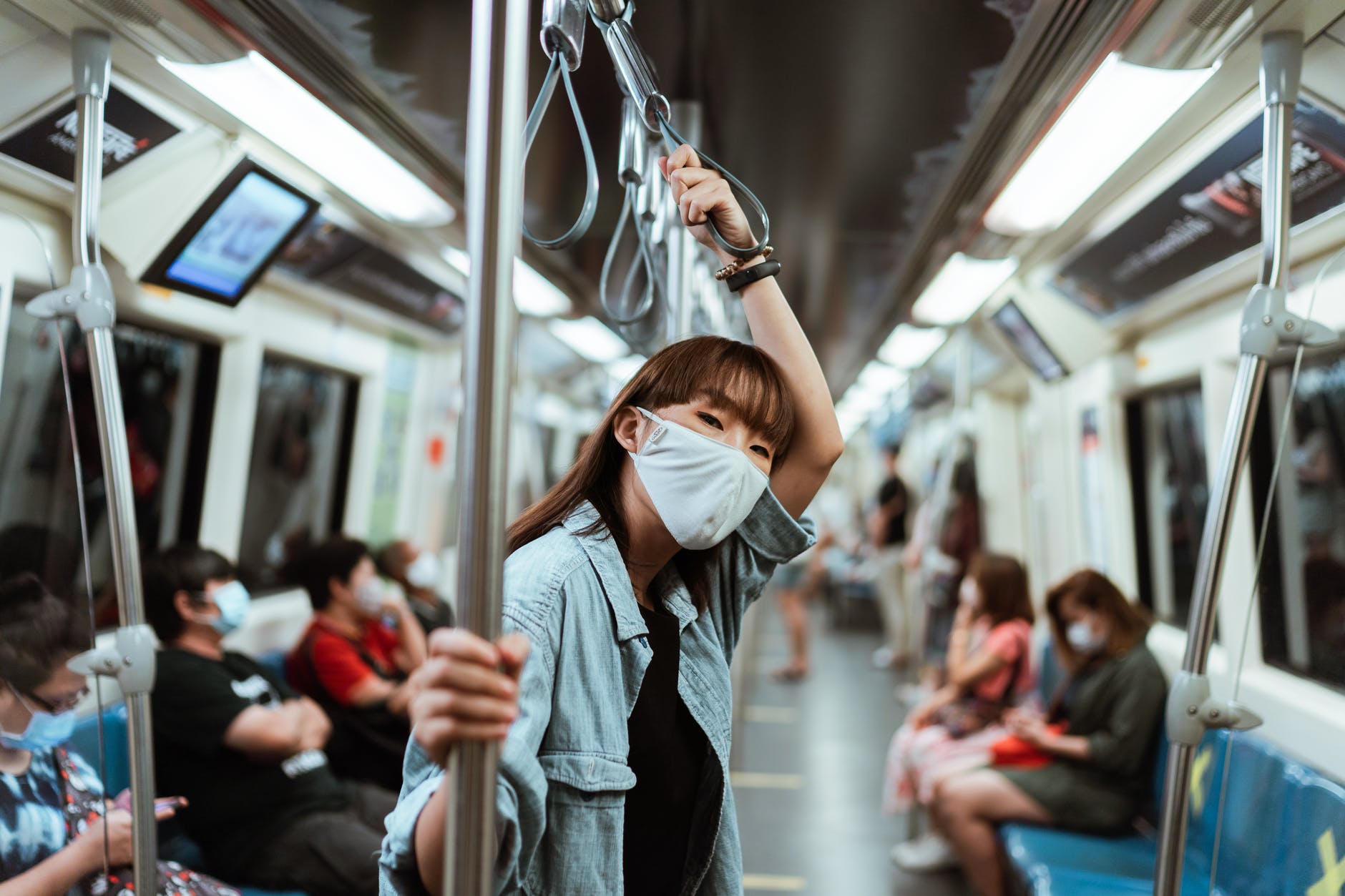
There is a need for policies and practices to promote walking, cycling and other modes of active transport for trips to and from source and common destination, and also regular public transport where this is appropriate and possible. This can be done through  two things: (i) arranging land uses and transport facilities so as to reduce transport’s adverse effects on users when they are travelling and when they are doing other things; and (ii) improving the travelling experience for users, which could mean, for example, making it more enriching for users and providing more independence for youth. Two-thirds of parents report that their users participate in unorganized physical activities after school; these activities might include bicycling, walking, or running. Several studies have found that users who actively commute to school are more physically active outside of school. Adults who live in highly walkable communities report two times more walking trips per week than adults in low walkable communities. Furthermore, adults who are physically active are more likely to have users who actively commute looked at pedestrian travel of users aged 5-18.

Progress made towards creating safer environments, and the best practices of countries that have made concerted efforts to reduce the risk to users from traffic are many to explore. The World Health Organization and UNICEF World Report on Child Injury Prevention road safety recommendations include reducing speeds to 30 km/hour in residential areas, around schools and around play areas to protect pedestrians; separation of child cyclists from other road users through dedicated cycle lanes; use of bicycle helmets; and increased education for users on pedestrian and cycling skills. An Australian study reported that pollution concentrations in pedestrian “breathing zones” resulting from passing vehicles (travelling less than 45 km/hr) were on average six times higher. These guidelines could be used to ensure that users are consulted in the development of these plans and that they reflect their needs and aspirations for active transportation.

Users benefit from active transportation networks that are safe and accessible. Greater synergy amongst school board, municipal body and state government representatives could improve active transportation planning with respect to all trips made by young people. Infrastructure that would make active transportation a safe option (sidewalks, paved shoulders, non-motorized bike paths and trails), bike safety lessons for youth, bike racks at schools and other locations, youth-led activities (e.g. hiking clubs, running groups on trails) and appropriate modeling of active transportation by users.

The development of safe bicycle corridors and other infrastructure, policies and legislation suitable would support active transportation. Safe pathways or transportation routes must be created and transportation bylaws revised. An essential feature of putting users first is that transport and land-use planning issues are seen from perspectives of users. Providing for users on bicycles (and other wheels)

The guidelines below should be considered in conjunction with bicycle safety programs for users. For older users, ensure that destinations that cannot be a walk away are no more than a bicycle ride away. Help ensure that school policies and practices favour walking, cycling and other modes of active transport for trips to and from school, and also regular public transport where this is appropriate and possible. Recognizing the transportation responsibilities of school boards and the concerns regarding physical activity of users, it would seem advisable for school boards and Municipalities to work together towards enabling students to travel through active means of transportation. On the other hand, given the evidence noted on air quality in school buses, not reducing users’ exposure to pollutants in these vehicles could be more costly in the long run.

The guidelines are directed towards reducing all adverse Traffic impacts on young people (and others), whether or not they are in a vehicle. To the extent that users’ travel by car is undesirable-because of poor in-vehicle air quality, and opportunities lost to exercise, gain independence, and experience neighbourhood-land-use and transport planners should help ensure that the distances users travel by car are kept as short as possible. The barriers are grouped into three main challenges: 1. Increase users’ active transport for the trip to school, 2. Increase active transport for users on non-school trips, and 3. Reduce adult automobile and motorized vehicle use (and thus users’ exposure in and outside vehicles).


References:

  1. Catherine O’Brien and Richard Gilbert, (March, 2010), Child- And Youth-Friendly Land-Use And Transport  Planning Guidelines For Nova Scotia, The Centre for Sustainable Transportation, the University of Winnipeg
  2. Stallard, P, Velleman, R, & Baldwin, S (1998). Prospective study of post-traumatic stress disorder In children involved in road traffic accidents, British Medical Journal. Accessed from https://www.ncbi.nlm.nih.gov/pmc/articles/PMC28739/
  3. Hillman, M, Adams, J, & Whitelegg, J (1990). One False Move: A Study Of Children’s Independent Mobility, London, UK:
  4. Watson, M, & Danneberg, AL (2008), Investment in safe routes to school projects:  Public health benefits for the larger community, Preventing Chronic DiseasePublic Health Research, Practice, and Policy, 5(3), A90.
  5. WHO (2008). World report on child injury prevention. Available at http://www.who.int/violence_injury_prevention/child/injury/world_report/en/index.html
 
Photo by Ketut Subiyanto on Pexels.com

Participatory Planning in Plan Preparation: A Case of Delhi

Participatory planning is very sought after concept in the domain of planning in current practices. Delhi is a very progressive city and the city planners and administrators are very active in adopting and implementing current best practices across the world. There are many practices in Delhi which is seen as a good example of participatory planning and the concerns arises when we want to replicate in other cities and towns then it becomes imperative to look in detail the process and their allied pros and cons so that a more effective model can be adapted and adopted for implementation. For Delhi also we are in the process of preparation of ‘Local Area Plan’ an initiative of Municipal Corporation of Delhi to realize the provisions of Master Plan for a planned development taking into account the existing ground realities. The thesis cum research project will be of great help in looking at the shortcomings of the participatory planning process and the recommendations can give us an opportunity to strengthen the scope and effectiveness of public participation in planning at local level. The author thinks that his research work will be of some help in devising more efficient mechanism for public participation and demand responsive planning by the local body of the national capital.

The need of the study has arisen due to the combined effect of various factors like lack of awareness and understanding of the concept and applicability of the participatory planning processes. Sometimes it is called ad hocism in the practice of participation taking place in the current scenario where people are awakening to the need and demand for more participatory planning approach. Case studies of different practices in Participatory Planning arena viz. decentralized planning in Kerala, National Policy for Urban Street Vendors and Bhagidari Scheme of Government of Delhi has showcased how the plan or scheme has been able to deliver or fail. Further, the author has developed a framework for analysis will helps in judiciously considering the case of Participatory Planning in Delhi.

The detailed analysis of the Participatory Planning mechanism used in the cases of Master Plan, City Development Plan and Local Area Plan preparation in Delhi gives the pros and cons of public participation and the loopholes in the planning processes. Here, author feels in a position to understand the virtues and shortcomings of the different participatory practices and how they can be beneficially adopted and adapted for the preparation of Local Area Plan in a more effective participatory manner.

Finally, author tries to evolve a realistic and implementable framework for effective public participation in Local Area Planning which is undergoing its final stages. His interactions with many consultants and planners engaged in this project can also be put forward for better comprehensibility and feasibility of the framework.