The Voice of Humanity: A study of Mulk Raj Anand’s fiction.

Priyanka Kadyan

Assistant Professor in English

Guru Nanak Girls College

Santpura, Yamunannagar

Caste system in India is a kind of stratification based on inequality among human beings in matters of social interaction. Caste system and its manifold divisions are peculiar to Hindu society. It is considered that if a man does sinful acts, he will be reborn in low caste or even as an animal. Thus, birth in a particular caste becomes an index of the soul’s progression towards liberation.

Mulk Raj Anand, a reformist, was against caste system in India. He felt that casteism which is an off-shoot of karma, breeds cruelity and inferiority. Karma is a malignant belief prevailing in the society, propagated by the high caste Hindus, which means that all men suffer in their present existence because of their bad deeds in their previous birth. In order to avoid suffering, Anand placed man at the centre of all things. He believed in equality of all men. He doesn’t see any distinction among man in the form of caste, creed or race. He saw them as obstacles for a human being’s growth.

The present paper is an attempt to show how Mulk Raj Anand through his art tries to awaken our sympathy for the underdogs of the society, which in turn can urge us to take part in the revolt leading to social reform. His first novel Untouchable depicts the wretched condition and ordeals of the oppressed people and their struggle for a better life. He was one of the very few writers who wrote to awaken the social conscience. He was audacious enough to admit that he used literature as a means to some other end, and that this end was the alleviation of the suffering of fellow human beings. Anand wrote novels and short stories with a view of teaching men to recognize the fundamental principles of human living and exercise vigilance in regard to the real enemies of freedom and socialism. It was a lifetime apostasy for him to help raise the untouchables, the peasants, the serfs, the coolies and the other suppressed members of the society to fight for human dignity deliberately denied to them by the privileged sections of the society. He felt that it was his duty and the mission of his life to focus the attention of his readers on the innumerable wrongs, injustices and the injuries that were being continuously perpetrated on these young unfortunate underdogs of Indian society. Although through the repeated efforts of many people strong steps have been taken to protect the rights of these lower caste people but a lot still needs to be done to totally abolish the stigma of caste system in India

Conflict Between Good and Evil in R.K. Narayan’s The Guide

Dinesh Kumar

Asstt. Prof. of English

Dyal Singh College, Karnal


Abstract

There is no doubt in denying the fact that R.K. Narayan is one of the dominating figures in Indian Writing in English. The conflict between good and evil is recurrent theme in his fiction. Although, this theme has been dealt by a number of British and American novelists in there fiction, but Narayan has dealt with this theme in an efficient manner. Unlike his novel, The Man of Malgudi, in the present novel, The Guide, he has chosen only onefigure, Raju, an embodiment of both the traits good evil. How this conflict between good and evil leads to his catastrophe , is the central concern of the present novel, The Guide.

Food insecurity and ART non adherence, Nampula, Mozambique.

Paulo Pires[1], Abdoulaye Marega[2], José Craegh[3].

ABSTRACT

Introduction: ART scale up in Mozambique was followed by an under evaluated treatment abandon rate, supposedly due to food unmet needs and low access to health centres. This research will evaluate food security contribution to ART abandon in Nampula Province.

Methods: quantitative research, transversal cohort study in 5 health centres of 5 Nampula Province Districts with high HIV incidence and ART abandon rates, using surveys (patients on ART, patients who have abandoned treatment) and statistic documents consultation to evaluate ART non adherence.

Results: we surveyed 208 patients on ART and 86 abandons in Lalaua, Mossuril, Murrupula, Nacaroa and Nampula districts and 58% consider they do not have enough food. ART adherence for patients on treatment over the last 3 months was estimated at 69%. Last 24 hours food intake survey shows that 21% had only one meal, 22% did not eat any vegetables, 24% did not eat any proteins, 56% any fruits. About who is responsible for food supplies, 58% are themselves. About economic income, 63% work in subsistence agriculture, 29% have informal activity and 18% are employed.

Discussion: the ART adherence for the last 3 months at 69% is far under desirable. Our results show that food insecurity affects deeply this population and allow as confirming it as a determinant abandon factor. We may suggest a diet with beans, peanuts, eggs, cabbage and fruits, locally available, as an ART adherence facilitator.

Conclusion: diet seems to have a direct influence over ART abandon rate in Nampula Province and patient nutritional inhabits show high food insecurity. We recommend implementing a nutritional education programme and rural extension intervention with this group, to better families’ food security.

Key words: ART non adherence, nutrition, ART, Nampula, Mozambique.


[1] MD, FCM, Lecturer, Health Sciences Faculty, Lúrio University, Nampula, Mozambique.

[2] MD, Lecturer, Health Sciences Faculty, Lúrio University, Nampula, Mozambique.

[3] Pedagogic Sciences PhD, Lecturer, Health Sciences Faculty, Lúrio University, Nampula, Mozambique.

Fake Indian paper Currency Note Recognition System Using Image Processing

Neetika Singh [1], Akash Awasthi[2]

1. M. Tech Scholar, Department of Software Engineering

2. Head of the Department, Computer Science and Engineering

Naraina Vidha Peeth,Kanpur,India

Uttar Pradesh Technical University,Lucknow,India

clip_image001 

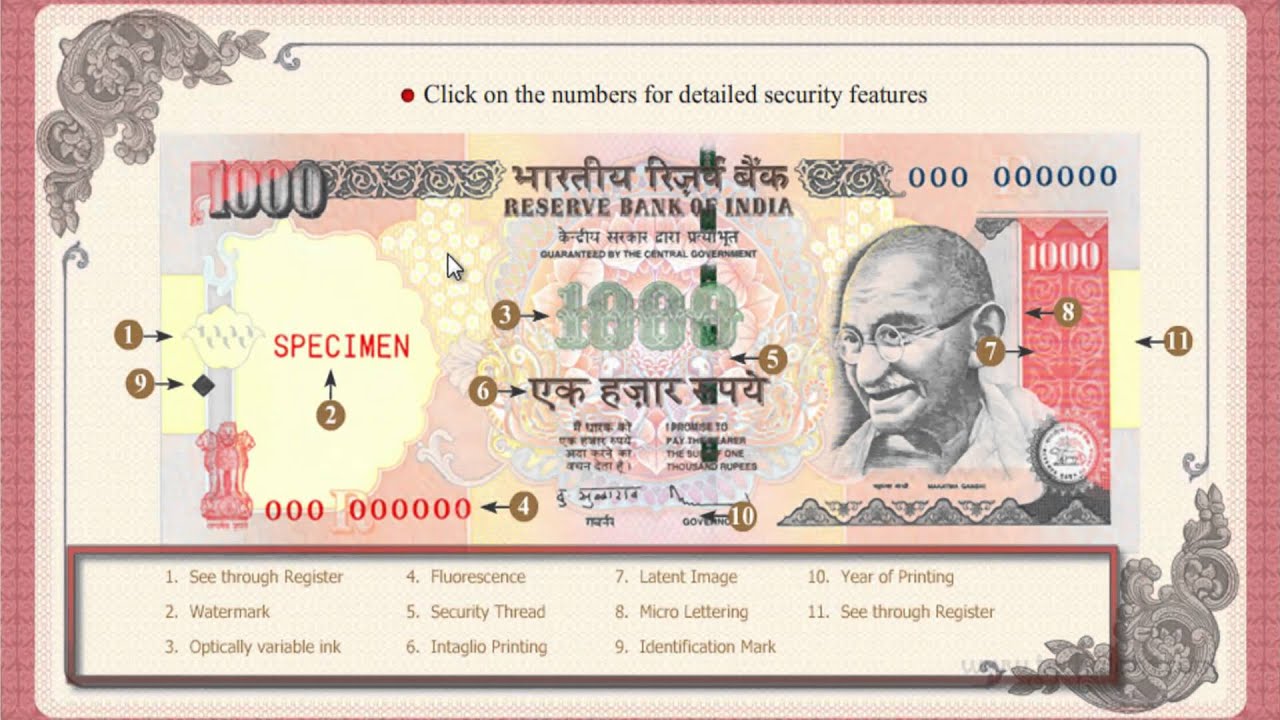
Abstract: Fake cash is impersonation money delivered without the legitimate approval of the state or government. Delivering or utilizing this fake cash is a type of extortion or fraud. Copy notes are one of the most concerning issues happening in cash exchanges. Distinguishing fake notes physically gets to be tedious and chaotic process thus there is need of computerization methods with which cash acknowledgment procedure can be effectively done. Numerous systems have been proposed with the utilization of MATLAB, highlight extraction and different uses of picture handling. Two qualities of Indian paper money are chosen for fake discovery included recognizable proof imprint and coin serial number. The attributes extraction is performed on the picture of the coin and it is contrasted and the qualities of the certified money. The money will be checked by utilizing picture preparing methods. The procedure of shrewd edge discovery calculation is utilized for edge recognition. The methodology comprises of picture handling, dim scale change, edge recognition, picture division, trademark extraction, looking at pictures.

Keywords: Fake currency, Canny Operator, Digital image processing, imitation detection

Segment the Roads and Residential Areas from Remote Sensing Images Using 2-D Gradients and MMAD Model

MMAD Model

1T.Sreenath

M.Tech(DSCE)

Dept.of ECE

AITS,Tirupati

tsreenath164@gmail.com

2N.Dilip Kumar

Assistant professor

Dept.of ECE

AITS,Tirupati

dilipkumar.aits@gmail.com

3A.Rajani

Assistant professor

Dept.of ECE

AITS,Tirupati

rajanirevanth446@gmail.com

ABSTRACT:

Segmentation of real-world remote sensing images is challenging because of the large size of those data, particularly for very high resolution imagery. For segmentation of remote sensing images, many algorithms have been proposed, to provide accurate results of segmentation by using this new proposed model. Here segmentation can be done by using improved 2D gradient histogram and MMAD (minimum mean absolute deviation) model. This proposed algorithm comes under ‘Thresholding’, the optimal threshold value can find by using MMAD model. Experiments on remote sensing images indicate that the new algorithm provides accurate segmentation results, particularly for images characterized by Laplace distribution histograms.

Keywords: Gradient histogram, image segmentation, minimum class mean absolute deviation, remote sensing.

TYPHOID FEVER AND LIVER ENZYME ACTIVITY

Muhammad M. Ibrahim1*, Akbar Salihu2, Fatima Ibrahim Dugje3

*1Department of Microbiology, University of Maiduguri, Nigeria; 2ART Unit, Infectious Disease Hospital, Kano, Nigeria; 3Department of Medical Laboratory Science, University of Maiduguri; Nigeria; 3

*correspondence author: mnistyle@yahoo.com

ABSTRACT:

Typhoid fever is a systemic infection caused by the Gram-negative bacillus Salmonella typhi and occasionally by Salmonella paratyphi. This study was carried out to assess the biochemical parameters AST, ALT and ALP in patients with Typhoid Fever. The study was designed to evaluate the serum liver enzymes’ activities during the incidence of typhoid fever. The aminotransferases (AST and ALT) and alkaline phosphatase (ALP) activities were demonstrated using Reitman and Frankel method and King and Amstrong method respectively. A total of 200 subjects were studied, which was divided into 100 healthy individuals (controls) and 100 diagnosed typhoid fever patients. The results revealed a highly elevated levels of AST (25.6±17.6), ALT (22.5±8.8) and ALP (32.0±16.1) (p<0.05) observed in typhoid patients as compared to controls (1.0±1.7) (6.5±2.8) and (24.0±6.4) respectively. It could be noted from the findings of this study that there is a derangement of the liver enzyme values in typhoid patients. This study appears to have ample evidence based on the physiological and biochemical parameters in typhoid patients to help explain the influence of typhoid morbidity.

Keywords: Salmonella typhi, Typhoid fever, Liver enzymes,

Gender Inequality in Education among Adolescents

Pooja Mishra*Prof Sunita Mishra**

*M.sc Scholar, **Professor and Dean

Department of Human Development and Family Studies

School for Home Science

Babasaheb Bhimrao Ambedkar University Lucknow-226025

Abstract-

Gender inequality in the education system affecting both men and women during and after their educational experience men are more likely to be literate with 100 men considered literate for every 88 women in modern time women are performing exceptionally well in different spheres of activities . The problem of gender inequality still prevails in all spheres of life thought Indian constitution has granted equality to women in principle in reality majority of India women are facing the problem of inequality. Gender inequality in education in India where the situation is paradoxical. On the hand of education many of them are topping the merit list the percentage of passing in more than the boys but at the same time according 2011 India census 35% women are illiterate. Out of remaining 65% literate women the percentage of higher education is very low there are education disparities on the ground of urban and semi urban poor rich, higher lower cast. The paper highlights the challenges in gender inequality in education girl’s student the aim of the paper career choice in their education. Their experiences about gender inequality in the family; family background. The data was collected by the self designed questionnaire. The study will be limited to the student.

Key Word– Gender Inequality , Education , Adolescent.

Jacques Derrida on Christianity as sacrifice and gift

Chung Chin-Yi

Research scholar

National University of Singapore

It is the impossibility of Christ’s incarnation and forgiveness of sins that makes the law possible as Christ came to fulfil the law rather than to defeat it. Derrida’s injunction to forgive the unforgiveable and move into a Derridean third space of thinking the impossible forgiveness of sins and holding one accountable to the death penalty for transgressions committed is an extension of his meditations on hospitality and forgiveness, extending Christian charity, forgiveness and hospitality as a move that exceeds the law and exceeds the thinking of the possible but it is precisely this impossibility of grace, mercy,Christian charity and forgiveness which makes the law possible just as the exception is necessary to thinking the rule.

Keywords: Derrida, Christianity. Gift, Sacrifice, Aporia

EduPedia Publications- Book Publisher and Journal Publisher – EduPedia Publications Pvt Ltd

EduPedia Publications a leading book publisher and academic journals publisher which gives scholars and authors affordable options of books and research papers publications

Source: EduPedia Publications- Book Publisher and Journal Publisher – EduPedia Publications Pvt Ltd