

The Galwan valley faceoff between India and China was a major incident, it shook not only the two nations but the whole dia and China are the top two most populous countries, while China is already an established superpower, India is emerging as a frontrunner to be one soon.
The 20 Martyrs who laid the supreme sacrifice, Initiated a nationwide wave of Nationalism. Indians started boycotting Chinese products and services and Both the nations will suffer a great deal by the aftermath of the Faceoff.
For understanding is further we first need to know what exactly is the issue between The two nations.
• The policy:-
Well, all are very well aware of the Chinese policy to expand and dominate, this policy has victimized many, examples being Chinese Taipei, Hong Kong, Pakistan, Sri Lanka, and lastly In the dia.
• The Cause:-
This incident took place amid de-escalation process, India is constructing a Road to connect Northern command of Indian Army to Daulat-Beg-Oldie which is part of Aksai Chin still under Indian Control, This road has major strategic importance as it can serve as a supply road to stop any Chinese Aggression if required, it will also allow India a better and efficient Coverage of the complete Area. China is of the view that this is an inappropriate move and hence Peoples Liberation Army which is the Defense force of China increased its deployment in this region and constructed a new temporary base that is equipped with Artillery Guns and Mechanized Infantry Battalion support. Chinese transgressed to a place near patrol point 14 which is high ground and offers a bird’s eye view of the Indian developments India replied to this Deployment by making mirror deployment, which in general term means putting up an equal number of men and equipment behind our defense lines. The situation kept escalating to that point of pushing and pulling which is sort of a regular exercise on the Line of Actual Control. Watching the fight brew beyond control it was decided to come to a table and discuss matters. A Commander Level Bilateral talk was organized and de-escalation started.
• The incident:-
the talks Chinese Commander promised de-escalation. There is no certified source of information regarding the incident itself, there are many theories floating but the most convincing is that on the due date when the promised mobilization of Chinese troops didn’t occur, Colonel Santosh Babu ( Cobirdspoint accompanied by a patrolling party went to check the matter. The Chinese Troops were prepared and ambushed Indian Soldiers.
The Indian troops called for backup and reinforcements were sent. A Street type Brawl occurred and a high no of casualties was reported. India lost twenty of its guardians but china is yet to confirm the numbers.
No bullets were fired in the clash because of the agreement between the two nations signed in 1996 as Confidence Building Measures; instead, stones and clubs were used. According to reports, the Army men died due to injuries sustained from stone-pelting by the Chinese.
• The Resolution
Although high-level efforts (Joint secretary level) are on to defuse the situation, a quick resolution of this standoff at Galway doesn’t seem likely now. Chances are that it could be prolonged impasse, with India unlikely to budge even as China appears unwilling to pull back. China’s state-run newspaper Global Times has already made a false claim that “clashes were triggered by Indian troops as they crossed over to the Chinese side and carried out attacks on Chinese soldiers.”
• The Impacts
It will impact both the nation as economies of both are interdependent to such extent that it is very unlikely that India or China Will thrive without mutual Support. India is now working on improving trade deficit and an increase in import tariffs of Chinese Goods is on cards.
We can just hope the situation reverts back to normal very soon because India already is suffering a great deal from the COVID19 pandemic. But if the question will be raised against Indian integrity, India is well equipped and completely capable of answering.

STAGES OF VACCINE DEVELOPMENT
We would all agree quarantine has taught as many things in our life! How to live with the limited resources, the way it brought back to the health and hygiene of our old years , the understanding, attachment and love bonding of our family members in fast world , learning new courses, training, certificates, cooking ,regaining hobbies, Netflix, prime and so on …Well sometimes we also miss those daily suprising days , Yes we can’t schedule those days suddenly our mind calls for cheeseburger to grab it, those thalapakati briyani with our friends party , packing up things for a long trip in weekends and back on Monday morning with sleepless classes and office.In quarantine Morning to Evening we would switch different news channels but we hear the same news Corona, lockdown, Stay home where I hope you also heard this news vaccine is developed by US,UK, China ,India that’s all and then we don’t hear that news. What will be reason behind this news? Let us read in detail the procedure and the formalities of developing a vaccine.
What is Vaccine?
A substance used to stimulate the production of antibodies and provide immunity against one or several diseases, prepared from the causative agent of a disease, its products, or a synthetic substitute, treated to act as an antigen without inducing the disease. Simply Vaccination is a process of developing a immune system against a disease.
How vaccine works?
A vaccine works by training the immune system to recognize and combat pathogens, either viruses or bacteria. To do this, certain molecules from the pathogen must be introduced into the body to trigger an immune response.
These molecules are called antigens and they are present on all viruses and bacteria. By injecting these antigens into the body, the immune system can safely learn to recognize them as hostile invaders, produce antibodies, and remember them for the future. If the bacteria or virus reappears, the immune system will recognize the antigens immediately and attack aggressively well before the pathogen can spread and cause sickness. Source- Publichealth .org
Stages of Vaccine Development
The Resource and Development has major works in development of a new vaccine. They should firstly have look for the importance Vaccination in Publichealth. The vaccine must then be purchased, distributed, and used. Finally, a surveillance system is established to monitor immunization coverage, efficacy, and any adverse health effects related to vaccine administration.
There are 6 stages for the vaccine development
STAGE 1: PRIORITY SETTING : The decision making process of producing a vaccine to generated. To also know about the critique nature of the disease. Hence the vast resources will be collected to set up the common goal fo developing a vaccine in public and private sectors.
STAGE 2: BASIC AND APPLIED RESEARCH: The possibilities of developing a vaccine through the old traditional and fundamental way of medical practice in Development. The basic research is funded by the government and the authoritative scientists. Applied research indicates the involvement of the private hence that is funded by private concerns.
STAGE 3: CLINICAL EVALUATION:Good Vaccine must meet up the basic criteria of safety, purity, potency,efficacy. Here it involves the different phases 1, 2 and 3 . Animal checking and then to humans and brief description in the stage process of clinical evaluation.
STAGE 4: LICENSURE: Once the process is completed and the successfull news comes over the government would approve for licensing and to those government formalities rules and regulations are be formulated in this stage.
STAGE 5: PRODUCTION: Next stage of Vaccination is production it involves two major steps based on the requirements first one Pilot production where it rushes to produces for the pandemic . Second one scale up and full scale production where this method involves the full process of vaccine.
STAGE 6: RECOMMENDATION FOR USE: As the final stage of vaccine treatment the government will be recommend for the usage of this vaccine and dosage guidelines will be printed over it .
To be concluded that India has crossed the stage 3 of Development of vaccine in which the phase 1 of testing animals have gave the positive results and the Indian Medical research council have approved for human testing . Put you fingers crossed and hope this pandemic situation gets over and back to normal life.
Public

The near-destruction: Asteroids

The destructive object, as you must have seen in different sci-fi movies, it is even forecasted that it might destroy the planet Earth. There were several discussions about the asteroids that are near, and we’ve finished along with this pandemic. Hopefully, there weren’t such incidents. 30th June, the world celebrates this day as World Asteroid Day. Let us know why.
The day after the declaration by UN General Assembly in December 2016, now it will be observed every year as a remembrance to the Tunguska impact in Siberia, presently Russia, in the year 1908. The effect was so powerful by flattening over 2000 sq.km area. The trees fell all over the village; it was a spark all of a sudden, and a loud sound filled in the nearby area equivalent to giant bomb detonated, but this is by nature itself.
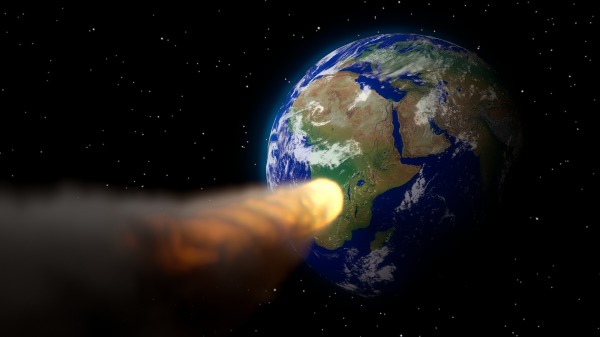
Asteroids, sometimes described as minor planets and some are called planetoids when they’re more substantial in size. Ceres, being the first asteroid noticed in 1801 by Giuseppe Piazzi, was discovered as a planet. Sir William Herschel, an astronomer, coined the term asteroid. Most of them found in the orbit of Mars and Jupiter. Even you might have heard about the Kuiper belt, the home to three dwarf planets, including the Pluto. It is similar to the asteroid belt.
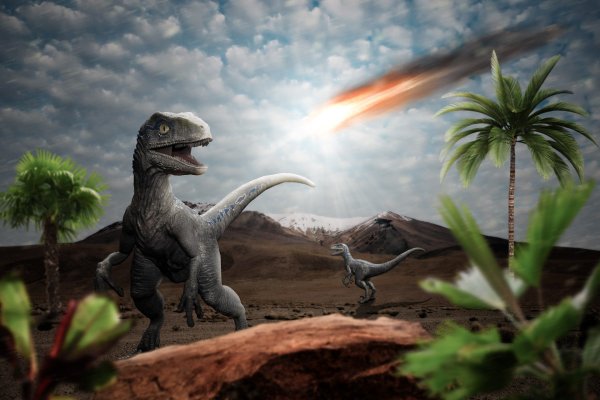
Few asteroids are more than 100 km in diameter, which can be a threat, but hardly an asteroid hits the Earth so massively once in 2000 years or more. There is a possibility that the dinosaurs could have wiped away due to a colossal asteroid. The thing to consider is that comet, meteoroid, meteor, and meteorite aren’t the same. Hence, you might know a meteor is also a shooting star, which is said to fulfill your wishes when you see it up in the sky.
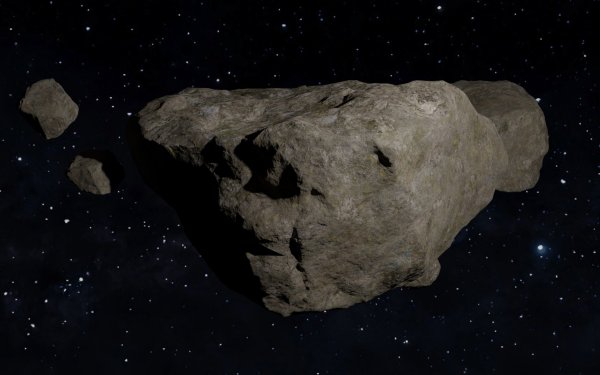
These NEOs or near-Earth objects can be a significant threat, although many small objects hit the Earth daily. According to an estimate, almost 17 meteors every day, and this can increase in the future exponentially. If you saw the movie, Ice Age: Collision Course, the film has a scene where an asteroid hit Earth. There are almost more than 600 thousand asteroids present in the space. The first asteroid, as described, did an explosion occurs at an altitude of around 5-10 kilometers, which resulted in wiping out 80 million trees and a glow spread about far from 700 kilometers. The sound could be audible from a thousand kilometers from the origin.
The most massive asteroid has a diameter of 900-1000 kilometers, with a mass equivalent to 32 percent of the entire belt between Mars and Jupiter. One of the documentaries by W.D. Hogan can release in the theaters on 8th October 2020. It has explanations about the origin, what risks can get involved, and how can we save against them. Luckily, the first asteroid fell in a barren land. If it were a living habitat, a lot of people would lose their life; they’ll have almost no time to escape. Prepare well in time, and sometimes the rumors may also turn true.
Public

ROLE OF ASHAs IN KEEPING INDIA’S VILLAGES PROTECTED FROM CORONAVIRUS
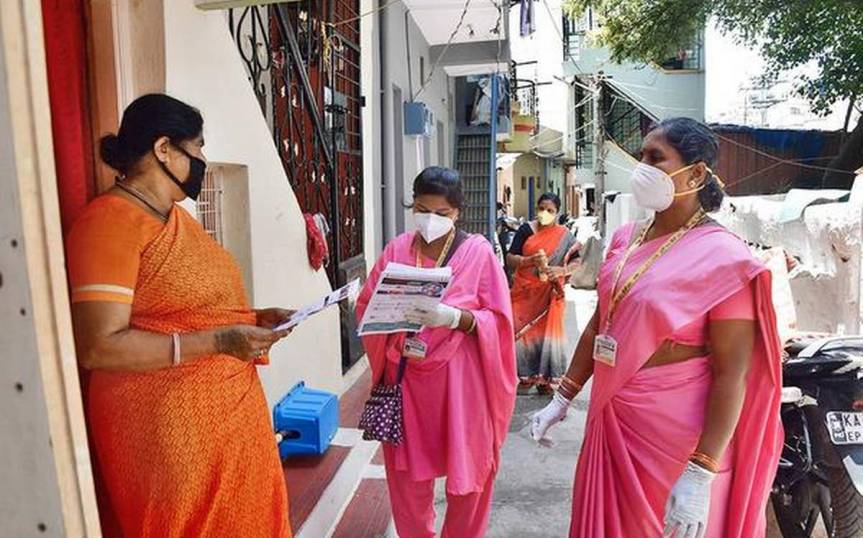
Accredited Social Health Activists, ASHAs, are playing an indispensable role in rural outreach by educating village people on arresting the spread of the much-dreaded Coronavirus. Field reports from Prime Minister Narendra Modi’s constituency, Varanasi indicate that ASHAs credited with juggling multiple roles have been deputed to spread awareness on prevention of Coronavirus in their areas. They are after all the backbone of primary healthcare in more than seven lakh villages of India.
On April 14, the day Prime Minister Narendra Modi announced an extension of the 21-day lockdown till May 3, the Ministry of Health and Family Welfare, advised in a COVID-19 related tweet that persons having symptoms may approach national/ state helpline centres or frontline workers such as ASHA workers and field workers. The tweet said that these workers have been oriented about the process to be followed and can help in early detection and facilitate proper treatment in hospitals.
Rekha Sharma, a forty-year-old ASHA worker says that ASHA workers in Varanasi have been asked to cover 25 to 30 houses a day in the assigned villages till the end of May. After lockdown, some workers working in Bengaluru, Delhi, Pune and other cities have come back to the villages because they did not have any work in lockdown. They have been asked to undergo tests for COVID- 19.”
The ASHAs are given performance-based incentives for promoting universal immunisation, referral and escort services for reproductive and child health and other healthcare programmes and construction of household toilets. They counsel women on birth preparedness, the importance of safe delivery, breast-feeding and complementary feeding, immunisation, contraception and prevention of common infections including Reproductive Tract Infections/ Sexually Transmitted Infections (RTIs and STIs) and care of the young child. From time to time, the ASHA workers have been deservingly honoured as well. In December 2019, Balvinder Kaur, an ASHA worker from Khosi Kalan village of sub-centre Koomkala of Ludhiana, Punjab was honoured with the National Universal Health Coverage Award by Union Minister for Health and Family Welfare, Dr Harsh Wardhan. She was honoured for her contribution to promoting facilities of Health and Wellness Centres in her block, Likewise, Jamuna Mani Singh was also felicitated by the Odisha government. “From the time we came to know that COVID-19 is going to pose a big threat to India, we took it upon ourselves to strengthen our rural outreach. Since we have been working in several states of India with special focus on many districts of Uttar Pradesh for a long time, we offered our services to government departments like education, health, women and child welfare departments.
We have made sure that all facts on COVID-19 that are being put out by the World Health Organisation and the Ministry of Health, are disseminated to the villages daily. As and when required, we are seeking the help of community-based organisations and other voluntary organisations.” Mr Pradhan explained that MAMTA is using the existing WhatsApp groups through which they normally function with senior government officers on several social welfare and development-oriented schemes, to spread awareness on COVID-19 as well. We are working in all eight blocks in the Prime Minister’s constituency. We have also asked ASHAs, frontline workers, Nehru Yuvak Kendra, NSS (National Service Scheme) and NCC (National Cadet Corps) volunteers to ask villagers to download Arogya Setu App (a mobile app developed by the Ministry of IT and Electronics to help citizens identify the risk of contracting COVID-19 infection). All government departments of Varanasi are already actively promoting Arogya Setu. To make it easy, we have shared the Arogya Setu link with all volunteers and social workers. Surely, the army of dedicated and friendly health activists in India’s villages is taking on the COVID- 19 challenge by empowering people with knowledge.
Public

Analysis Tools And software’s – Providing platform for Innovations
Humans have been working in science and technology for a number of decades and have brought advancement in the basic life’s so as to make it more comfortable and easier than it used to be. The advancement with industrial revolution and much more investment in new ideas and innovation helped us to make thoughts of the ideal things to turn into reality. Earlier humans used to pen down their ideas on paper and just gathered every part of the entity required to manufacture it. This really resulted in failure most of the time including, time, resource and money. Most of the people stopped working in this field of innovations as they cannot handle much of their losses.a
But soon came the softwares which made this job of innovation and ideas to be much easier through varied features in them.
- Software of 3-d modelling and analysis not only helped most of the people to pen down their ideas, but also visualize them as complete models in those software with much less investment.
- These software helped scientists and researchers to modify any part of the object which they find doesn’t suit it or may create problems in the final operation.
- Also these software helped humans to analyse various forces and stress acting on it while in motion. For example if we consider manufacturing a car or an aeroplane, to test it physically after creating would take time, loss of resources and money. This was a resource through proper analysis of 3-d models in software.
- These Tools helped to analyze various forces ,stress and strain, at different highest and temperature and hence helped humans to understand the feasibility of their model and the required changes which must be done so as to assure proper working. Various other features of these 3-d softwares not only helped humans to build them, but also to test them, through various simulations. This truly transformed the ways in which things were made especially cars and airplanes and has saved much of resources and money.
These days many other techniques have been discovered which not only makes these 3-d models in them but also print them out. 3-d printing provides us with the prototype of the actual model. It scales down the actual size if the object be it a car or any aeroplane we could get a rough idea of how it would look like when it certainly lands as an actual one. These scientific tools and innovation in them have helped humans to create whatever they want, irrespective of their shape. The advantages of 3-d printing and these tools are that they can help us make complex shapes and of different sizes. These not only prove to be cost effective but also provide better efficiency in their work along with the best of accuracy. Accuracy is an important factor which we want especially while working on sensitive objects such as planes and small ignorance can lead to a big mishappening. Thus simulation and 3-d tools and analysis have transformed our life with better modes of production and manufacturing technologies. But the main issue with these software is that we do require skilled person to operate, and also takes time for new person to learn them. A single mistake can lead to mishappening, so companies do invest to get better use of the prison to operate these software and thus provide better and safe results.
Humans have made a major shifted to 3-d printing and their analysis and almost all companies in today’s world working in the field of new idea and innovation, do use these software which not only save their time but also much of money and material. This we acknowledge a future with much better ways to manufacture and produce and thus empower humanity with their dream to turn reality and ease their life.
Public
Box of rosEs
She is a box of roses
Wrapped in coffee stained newspapers
That you press under cups
Every time they sail with the wind
To hide the stories of abuse they print.
Every word your mouth exhales is capsuled in hate.
That fill her pockets so heavily
That she drowned into nothingness.
She looks at the stars and wishes them to consume her
She looks at her reflection and is surrounded by
Filters to filter out
what they reject to call beauty.
Those crystals of herself, strained and censored
Dangle like yellow autumn leaves separating from a tree
That descend to the ground,
dusted with self doubt.
But when the night shines
and the piercing city lights are dim,
I will show you the brightness you carry within.
Reach out to me on instagram @ekanika_shah
Public
World Bank enhances support for rejuvenating Ganga, sanctions USD 400 mn
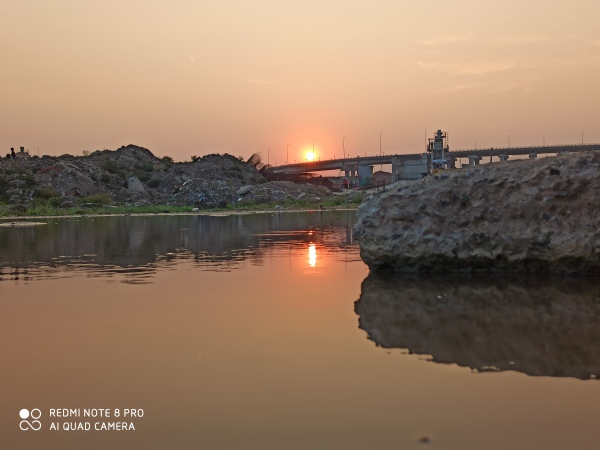
The World Bank on Monday said it has enhanced its support for Government of India’s program to rejuvenate Ganga river with a USD 400 million (about Rs 3,000 crore) assistance that will help stem pollution in the river.
The assistance will help strengthen the management of the river basin which is home to more than 500 million people, the World Bank said in a statement.
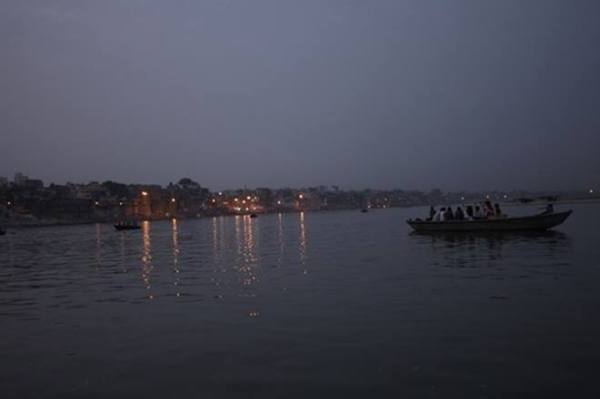
“The Second National Ganga River Basin Project (SNGRBP), approved by the World Bank’s Board of Executive Directors on June 25, will support the government’s Namami Gange program and its long-term vision for controlling pollution in the river and restoring its water quality,” it said.
It further said the bank has been supporting the government’s efforts since 2011 through the ongoing National Ganga River Basin Project, which helped set up the National Mission for Clean Ganga (NMCG) as the nodal agency to manage the river, and financed sewage treatment infrastructure in several riverside towns and cities.
“The first World Bank project helped build critical sewage infrastructure in 20 pollution hotspots along the river, and this project will help scale this up to the tributaries,” World Bank Country Director (India) Junaid Ahmad said. “It will also help the government strengthen the institutions needed to manage a river basin as large and complex as the Ganga Basin,” he added.
The Ganga basin covers a quarter of India’s landmass, and is a critical economic and environmental resource for the country. It provides over one-third of India’s surface water, includes the country’s largest irrigated area and is key to India’s water and food security, the statement said.
“Over 40 per cent of India’s GDP is generated in the densely populated basin. But the Ganga river is today is facing pressures from human and economic activity that impact its water quality and flows,” it added.
The Second National Ganga River Basin Project comprises a loan in the amount of USD 381 million and a proposed Guarantee in the amount of up to USD 19 million.
The variable spread loan has a maturity of 18.5 years including a grace period of 5 years, it said.
Meanwhile, the Government of India, the Government of Tamil Nadu and the World Bank on Monday signed legal agreements to help low-income groups in the state get access to affordable housing. The legal agreements were signed for two projects — USD 200 million First Tamil Nadu Housing Sector Strengthening Programme and USD 50 million Tamil Nadu Housing and Habitat Development Project — to strengthen the state’s housing sector policies, institutions, and regulations, the Finance Ministry said in a separate statement.
The loan agreements were signed by Sameer Kumar Khare, Additional Secretary, Department of Economic Affairs on behalf of the Government of India and Country Director (India) on behalf of the World Bank.
Khare said providing safe and affordable housing is a key priority for the state of Tamil Nadu as identified in its vision document.
With the allocation provided under the Pradhan Mantri Awas Yojana (Urban) and the two projects from the World Bank, a large number of urban poor in the state are expected to get access to better housing and, in the process, improve their living conditions, he added. Nearly half of Tamil Nadu’s population is urban, and this is expected to increase to 63 per cent by 2030.
Public

Some way to spend a quality time in lockdown
The entire country is under lockdown, schools and other educational institutions are now closed. So, people have no other options but to spend their time at home. Many of the educational institutions conducting some webinars and other classes online but it is for a certain time after that the students have to spend most of their time in front of the television. Some of them watching television with a power-packed schedule.Without going and doing anything the people face problems like obesity, laziness, low immunity, etc. To overcome this, people have to exercise daily, it will improve strength and ability and helps to build your immunity and also distress and relax. It will also help to inculcate energy and boost your stamina. Gardening is another way to spend quality time. Select the plants which grow easily and found anywhere. Try to grow the plant which gives freshness and oxygen. It will relieve you of stress and make your home beautiful.
Painting is one of the best ways to spend useful time. It soothes your mind and keeps your mind think creatively. It will explore your creativity. We have so many photographs from our childhood. Make that photos into a collage by organizing them and it will help you to recall your past and happy moments. Children may spend their time playing games like chess and carrot with a family instead of playing video games. Good books make good people, spend time in reading good books also. During our working days, we didn’t have enough time to spend with a family but now we have a long leave for our works, so we must spend time with a family and be safe with the family.
Public
Because I Could not Stop FOR Death
Because I could not stop for Death
He kindly stopped for me
The Carriage held but just Ourselves
And Immortality.
We slowly drove, he knew no haste
And I had put away
My labor and my leisure too,
For his civility.
We passed the School, where children strove
At recess in the ring
We passed the fields of gazing grain
We passed the setting sun.
Or rather, he passed us
The dews drew quivering and chill
For only Gossamer, my gown
My tippet only tulle.
We paused before a house that seemed
A swelling of the GROUND
The roof was scarcely visible
The cornice in the ground.
Since then ’tis centuries and yet
Feels shorter than the day
I first surmised the horses’ heads
Were toward eternity.
EMILY DICKINSON
Public
India- land of large physiography
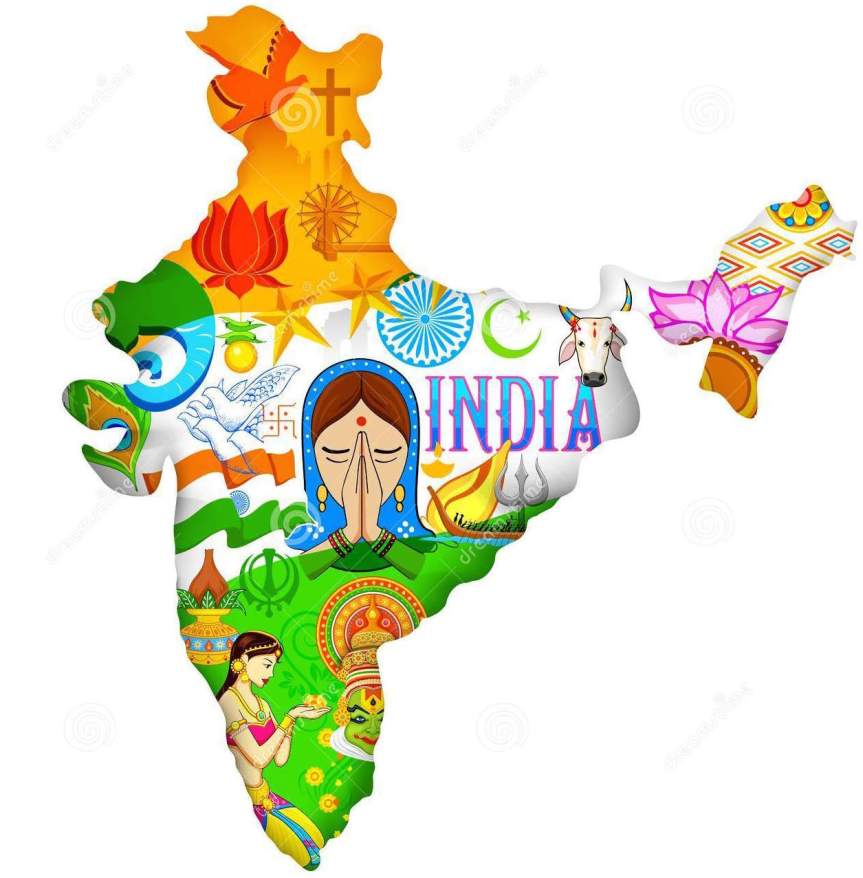
Unity in diversity, So is said about India, is not true only about its people, but it’s physiography, beautiful and insane. Mountain chains, large deserts, beautiful coastlines, beaches, ever flowing rivers, dense forests and the swampy landscapes, all put together to make a divine country, named, India. All these features make India a place worth visiting for, and thereby creating an increase in its rank up on the world stage.
India has been divided into six physiographic zones –
- Northern and north-eastern mountain
- Northern plain
- Peninsular plateau
- Indian desert
- Coastal plains
- Islands

North and north eastern mountains –
Starting right from the Himalayan mountain range, where the heaven on the earth, is one of the most prominent features of Indian physiographic divisions. It not only protects the country from external attacks, but also is responsible for the controlling of the winds flowing in and out of the country. Starting from Hindu Kush mountains in the West, covering all of the Northern India, these get plunge towards the North East, in the states of Arunachal Pradesh and Meghalaya.
Northern plains –
Covering most of the Indian peninsula, the northern plains spread over 2.5-million km sq. Most of the production activities take place over this region, such as, farming, setting up of industrial areas, and other massive activities, also having the most fertile soil to grow crops, i.e. alluvial soil. The region is a way, or the region sustains India’s most of the perennial rivers, like The Ganga, The Yamuna, The Son, etc and etc.
Peninsular plateau –
Peninsular region is the oldest part of the Indian subcontinent. Most of the variations in the land geography, one can find plateaus, fold mountains, ridges, and contains most of the mountain ranges. Peninsular region of India is most famous for its forest areas and diverse range of flaura and fauna.
Desert –
Two type of deserts can be found in India
- Hot desert
- Cold desert
Hot desert covers the Western most states of the country, Rajasthan, Gujarat. But the type of deserts still differ from each other, in terms of appearance and salinity. The desert in Gujarat is more saline and is white in appearance, but in the region of Rajasthan, it is alike other deserts found in many of the parts of the world.
Cold desert of India is in the Ladakh region, which is also the coldest and highest regions of the country.

Coastal areas and Islands –
India is bestowed with a large coastline,running from Gujarat towards the South,and ending up in the state of West Bengal. It is because of this large coastal area, most of the economic developments could take place in the country,whether it is fishing, extraction of natural resources,development of ports, and way for exports and imports.
Major islands of the country are Andaman and Nicobar and Lakshadweep,where natural resources are easily available in abundant amount.
This diversity in the physiography of India makes it a beauty of the earth and the presence of natural resources makes the subcontinent into a land which is more favorable for human growth.

 International Journal of Research (IJR)