Sources and Causes of Air Pollution

When we try to steady the sources/causes of air pollution, we usually enlist a series of activities and interactions that create these pollutants. There are two types of sources that causes Air Pollution.

  1. Natural Resources: Natural Sources of pollution includes dust carried by the wind from a location with very little or no green cover, gases released from the body processes of living beings (Carbon Dioxide from a human during respiration methane from cattle during digestion, Oxygen from plants during Photosynthesis). Smoke from the combustion of various inflammable objects, Volcanic eruption etc., along with the emission of polluted gases also makes it to the list of natural sources of pollution.
  2. Man-Made Sources: While looking at Man – Made contribution to air pollution, it can be further divided into two parts. a) Outdoor Pollution Sources- The major outdoor pollution sources include power generation, vehicles agriculture/waste incineration, industry and building heating systems. Smoke feature as a prominent component. The Smoke emitted forms of combustion like in biomass, factories, vehicle furnaces etc., Waste dumped in landfill generates methane, which is harmful in several ways. The reactions of certain gases and chemicals also from harmful fumes that can be dangerous to the well-being of a living creature. b) Indoor Pollution Sources- In low and middle- income countries, mostly burning fuels such as dung, coal and wood in inefficient stoves or open hearths produces a variety of health-damaging pollutants. These include carbon monoxide, methane, PM, PAH, VOC etc., Expresses to smoke from cooking fire causes 3.8 million premature death each year.

Some more various causes of Air Pollution

  1. The Burning of fossil fuels: SO2 emitted from the combustion of fossils fuels like coal, petroleum for energy in power plants, and other factory combustibles is one of the major causes of air pollution. Billions of vehicles run on roads are powered by gasoline and diesel engines that burn petroleum is made up of hydrocarbons and engines don’t burn them.
  2. Agricultural Activities: Ammonia is a very common by-product of agricultural- related activities and is one of the most hazardous gases in the atmosphere. The use of insecticides, pesticides, and fertilizers in agricultural activities has grown quite a lot. They emit harmful air into air pollution. Famers also set the fields and old crops on fire to keep them clean for the next round of swing. The burning to clean fields causes pollution by releasing harmful gases in the air.
  3. Waste in Landfills: Landfills are land areas in which waste is deposited or buried. These deposited is a major greenhouse gas that is highly flammable and very hazardous. E-waste is another grave concern involving a lot of unscientific dismantling such as chemical leaching burning wires & others.
  4. Exhaust from Factories & Industries: Manufacturing industries release a large amount of carbon monoxide, hydrocarbons, organic compounds and chemical into the air, thereby depleting the quality of air. Manufacturing Industries can be found at every corner of the Earth, and area has not been affected by it. Petroleum refineries also release hydrocarbons & other chemicals that pollute the air and cause air pollution.
  5. Mining Operation: It is a process wherein minerals below earth are extracted using large equipment. During the process dust and chemical release in the air and cause air pollution. This is the reason, responsible for a worker’s health condition.
  6. Domestic Activity: Household cleaning products painting supplies emit toxic chemical in the air and cause air pollution, Suspended particular matter(SPM) is another cause of air pollution. Referring to the particles afloat in the air. SPM is usually caused by dust, combustion etc., According to WHO, around 7 million premature death cause every year due to the combined effects of ambient (outdoor) and household air pollution.
  7. Natural Events: There are certain natural events such as volcano eruptions, forest fires, and dust- storms which are nature- born and cause air pollution.

Union Home Minister accuses Congress President indulging in Shallow Politics

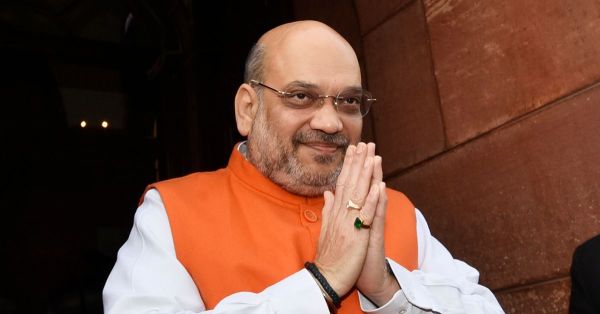
Union Home Minister Amit Shah

Union home minister Amit Shah made a scathing attack on former Congress president Rahul Gandhi, accusing him of indulging in “shallow politics”.

“We are fully capable of handling anti-India propaganda but it does pain when a former president of such a big political party does ‘ochhi Rajini (shallow politics)’ at a time of problems,” Amit Shah said in an interview to the news agency.

Rahul Gandhi has been leading the Congress attack on the face-off between Indian and Chinese soldiers in Ladakh’s Galwan Valley in which 20 Indian soldiers were killed. He even accused Prime Minister Narendra Modi of surrendering India’s territory to China using the words ‘Surender Modi’ for him on Twitter.

“It is a matter of self-introspection for him and Congress that his hashtag is being taken forward by Pakistan and China. It is not for me. It is a matter of concern for Congress that the hashtag of their leader is being encouraged by Pakistan and China. You say what China and Pakistan like. And at this time of crisis,” said Shah.

He also said that the government is ready for discussion on the issue in Parliament. “There will be a Parliament (session). If you want to discuss this, we will. Let everything be discussed from 1962 to today. No one is afraid of discussion. But when the soldiers of the country are making efforts, the government is taking solid steps after taking a stand, at that time, making statements that please Pakistan and China should not be done,” said Shah.

Mr. Gandhi’s “Surender” dig was a response to the Prime Minister’s comment at an all-party meet that China has not captured any Indian territory or crossed the border.

“Neither is anyone inside our territory nor is any of our post captured… While we have given a free hand to our armed forces, diplomatically too we have made our stand clear to China. India wants peace and friendship but protecting its sovereignty is supreme,” the Prime Minister had said.

He also took on Congress for not appointing anyone apart from the members of Gandhi family its president. “After Advaniji, Rajnathji, Nitinji, Rajnathji again, I became (party president) and now Naddaji. Is there a member of the same family? After Indiraji, tell me a Congress President who is outside the Gandhi family. What democracy they talk about?” said Shah.

Gandhi and the Congress party have been attacking the government since the June 15 skirmish. On Friday, Gandhi posted a video and said Prime Minister Narendra Modi should tell “the truth” as several accounts were saying that China has made incursions in Eastern Ladakh.

His mother and Congress president Sonia Gandhi accused the PM Modi-led central government of “mismanagement” which led to a full-blown crisis on the borders with China.

“True to its character, the government is in denial. The intrusion was detected and reported on May 5. Instead of a resolution, the situation deteriorated rapidly and there were violent clashes on June 15-16. Twenty Indian soldiers were martyred, 85 injured and 10 went ‘missing’ until they were returned,” she said at a virtual meeting of the Congress Working Committee (CWC), the party’s highest decision-making body.

Today again, the Congress party accused the government on Twitter of “giving in” to intruders.

To Err Is Human; To Forgive, Divine

Each and every being in this world has sinned countless times. In this world full of sinners like us, we can never expect someone to be perfect. Each one of us commits mistakes at some point in our life because it is, after all, human nature to commit mistakes. We humans have our strengths and weaknesses. So when someone does wrong to us why can’t we forgive them when we expect them to forgive us for the same mistake if we did that. Forgiveness is not a thing that we practice in our lives for other people. We do it for ourselves – to get well and to move on. Forgiving a person brings out the god-like nature that lies in humans.

Also, practically speaking, no one would like his mistake being brought up again and again and thrown on his face. So, why not to forgive the other person and let it be?

Forgiveness is seen as a divine act and the one who forgives is seen as being of divine nature. For such was Jesus Christ, who, even on the cross, during his last moments was able to ask for forgiveness from the Holy Father for the people who had put him to death.

Even Lord Rama showed no hatred against his stepmother, Kaikeyi, for sending him to the forest for 14 years so that her son Bharat could become the King.

But to play the devil’s advocate, you just can’t keep on forgiving a person for repeating his sins again and again. You can’t let yourself be used as a doormat.

And then there are those people too who don’t care a penny whether the other person is forgiving them or not, or what he thinks about them. While some of them just forgive others to show how divine they are. However, deep inside their hearts, they devoutly pray to their gods to punish their sinner for his sins.

Forgiveness is considered a divine act. But in this materialistic world, words like divine and holy do not exist. People believe in the philosophy that if you have done something wrong, you ought to bear the brunt of it.

If you are working in an office and do something wrong, do you think your boss forgive you and give you another chance? Definitely not! He’d fire you out of the job immediately.

And if forgiveness is a good virtue then why are those criminals being hanged till death or serving life imprisonment.

Also, going back to the era of Ramayana, why did lord Rama leave his wife, Sita, on the basis of the comments passed by the washerman?

Ultimately it all depends on the situation and our thinking. What our situation is and what we feel about that sinner. If we want to forgive someone from our heart, we will forgive him or her even if he or she has done a huge crime. On the other hand, we may not forgive a person for committing a minute mistake also. And while we are considering these two factors, we can never forget another vital factor that is the nature of the sin. At the end of the day, it is all relative.

Image Courtesy: GOOGLE

#sorrows of Sparrow 🐦

Do you remember your childhood when you use to sing that beautiful song ‘Anek chidiya ‘?today ,like the ‘chidiya ‘,the song has become almost extinct!even birds like the commando sparrow,which we used to see in large in numbers,are scarcely seen today.these ‘chirpy little fellows ‘ that used to delight us onces upon a time should now be named ‘Sorrow’ instead of ‘sparrow’. That is what their lives have become. Full of sorrows! Human beings have no mercy for them. They shoo them away. They do not allow them to make nests on their balconies Or terraces. Rapid urbanization has resulted in cutting down of trees. This destroyed their natural habitat. An over – Abandunce of vehicle and factories have polluted the atmosphere. We have erected mobile towers and use cellphones, the vibration of which, distrub these birds.how do we expect them to live in the concrete jungles that we have erected? We have changed the entire infrastructure around us. We have paved the roads. We have tiled the areas around our buildings. Where are the green areas? As a result these little friends of ours have escaped, no more return. Trees provide our friends, the sparrows, with fruits and insects to eat. Now they are facing an acute security of food. It is for us, human being, to take more efforts to make things easy for these birds. We could provide grain or food for them to eat outside our balconies or windows. We could provide them with little boxes in which to have a dust bath. How enjoyable it would be to see these cheery little creatures flapping around in the mud! More importantly, we could plant more trees. Is anyone reading out there? Will anyone heed their plight and take necessary steps to help them? Otherwise these friendly Birds are facing extinction! The lifestyles of the people has been changed and they are no longer environment or Bird-Friendly. So this is our responsibility to do something for that little one. Just think about it! This is the small msg from that little sparrow–🌠Dear friends, I am little sparrow and how helpless I am? In fact, my name should have been ‘sorrows’ instead of sparrow, because Human beings have no Marcy on us, little birds that we are. They pollute the atmosphere and erect mobile towers, making it impossible for us to breathe or live. They cut down trees that are our natural habitat. Tell me, where we expect to live? In the past, the trees provided us with fruits & insects to eat. Now, however because of deforestation, we are facing a scarcity of food. I wish human beings would take more efforts to make things easy for us. They could provide us food & shelter. They plant more trees. These are our expectations from you people. Will they heed our plight and take necessary steps to help us? Otherwise we are facing near extension! Thank you all!

Pottery: A sustainable alternative

For the love of pottery | Delhi/NCR Activity with TogetherV

With the current environmental situations prevailing in our surroundings, it has become a duty and responsibility of each individual to use more renewable and recyclable products. It is a known fact that not all the products can be recycled, in which case, using products which have a high level of recyclability is advisable. Earthenware products are easily recycled and its recyclability rate is also extremely high. From the broken pots to old utensils, all can be recycled completely, with the help of a simple process and can be carved easily and quickly into newly desirable shapes. The recyclability rate of clay is 95 percent. This is a very high rate, highlighting that people should buy terracotta products more for preserving the environment. All the products that are made of clay possess the attribute of being highly durable and they are built with the main focus of being long-lasting. It is due to this aspect that they can tolerate a high level of wear and tear. In addition to this, the product has a high level of weather and heat resistance.

With growing concern for environment many people are replacing their steel/aluminum cookware with traditional vessels made of clay just like their ancestors. From cooking food to setting curd and storing water, their aim is to be self-sustainable and eco-friendly. Cooking in earthen pots and utensils also has additional benefits. These are:

Clay is alkaline in nature and when it interacts with the acidity in the food, it neutralizes the pH balance eventually making it healthier.

Due to its heat resistance, the food retains all the natural oils and moisture while slow-cooking, hence, extra oil need not be added.

Earthen utensils are not very expensive and cost-efficient compared to most other types of utensil.

Cooking in a clay vessel infuses the food with many important nutrients like calcium, phosphorous, iron, magnesium and Sulphur

Boiling milk, or making curd in Clay pots gives it better taste and texture than metal vessels, as told by veteran Chef Sanjeev Kapoor.

Clay being a porous material, allows heat and moisture circulate evenly through the pot during cooking, unlike with metal or stainless steel pots. This superior form of heat circulation helps in cooking vegetables and meat evenly.

Firstly, Clay cooking pots are extremely effective for slow cooking. Clay cooking vessels are porous in nature. It allows both moisture and heat to circulate easily through them. This aids in even, slow and delicate cooking.  Curry, gravy, and sautéing vegetables/meat are best done in earthenware.

Maharashtra CM urges Mandals to limit the height of Ganesh Idol due to Pandemic

Maharashtra CM Uddav Thackeray

Chief Minister Uddhav Thackeray on Friday appealed to all Ganesh mandals in the State to restrict the Ganapati idol size to four feet, observe austerity in celebrations, and follow safety norms during the COVID-19 pandemic.

Exactly after two months, on August 22, the auspicious festival of 11 days Ganesh Utsav will be started.

The freedom fighter of India Lok Manya Bal Gangadhar Tilak turned this private household festival to a public event. We have been celebrating Ganesh Utsav since 1893.

The maximum height of Ganesh idol ranges from 18 to 22 feet in Mumbai. It is a touchy issue. Ganesh festival organizers of Pune, Mumbai had held a meeting with Chief Minister of Maharashtra Uddhav Thackeray and Deputy Chief Minister Ajit Pawar on Friday.

Mr. Thackeray said, “Extravagant celebrations and huge Ganesha idols are an attraction of the festival in Mumbai and Pune. But we will have to avoid them at least this year. I have held talks with representatives of mandals from different parts of the State, and we unanimously agreed to celebrate the festival with discipline and safety.”

The maximum height of Ganesh idol ranges from 18 to 22 feet in Mumbai. And a huge number of people assemble every year at the large idols t attend Aarti. Due to the pandemic this year the crowd needs to be controlled even in pandals too.

The CM said it has also been unanimously decided to restrict the height of idols to four feet. “In the case of bigger idols, the manpower required to increases. We need to avoid crowds. We will have to prevent crowds even in pandals. Even the immersion will have to be performed with as few people as possible.”

He said the Dahi handi festival, too, has been canceled this year.

“We could not organize the annual pilgrimage of warkaris. Such actions are an example of Maharashtra’s commitment to social work and discipline,” he said. Dahi handi organizers such as Sena MLA Pratap Sarnaik have donated 1 crore to anti-COVID-19 fund instead, he said.

“We have to celebrate the festival with discipline and safety, and crowding has to be avoided at all cost,” he said.

The tallest of the Ganesh murtis ranges between 18 to 22 feet in Mumbai, where the annual festival draws a huge crowd. “Because of the Covid-19 pandemic, we have to celebrate Ganeshutsav simply. Devotion to the Lord Ganesha is more important…

Physicists spot a new class of neutrinos from the sun

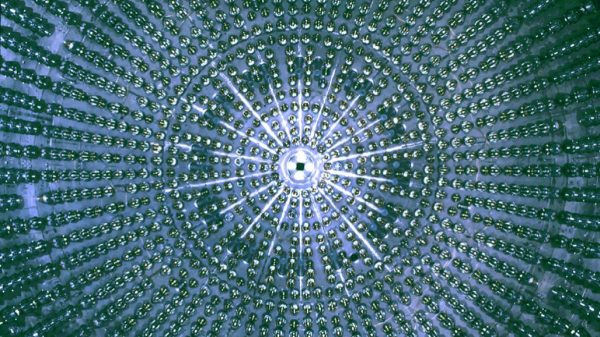
Neutrinos from the sun’s second-most prominent nuclear fusion process have been spotted in the Borexino detector (inside shown with light-detecting sensors).

Neutrinos spit out by the main processes that power the sun are finally accounted for, physicists report.

Similar to an electron a Neutrino is a subatomic particle but Unlike an electron, it has no electrical charge. The mass of a neutrino is also very small, which might be even zero.

Neutrinos are one of the most abundant subatomic particles in the universe because they don’t have much interaction with the matters.

Two sets of nuclear fusion reactions predominate in the sun’s core and both produce the lightweight subatomic particles in abundance.

Scientists had previously detected neutrinos from the most prevalent process. Now, for the first time, neutrinos from the second set of reactions have been spotted, researchers with the Borexino experiment said June 23 in a talk at the Neutrinos 2020 virtual meeting.

“With this outcome, Borexino has completely unraveled the two processes powering the sun,” said physicist Gioacchino Ranucci of Italy’s National Institute for Nuclear Physics in Milan.

In the sun’s core, hydrogen fuses into helium in two ways. One, known as the proton-proton chain, is the source of about 99 percent of the star’s energy. The other group of fusion reactions is the CNO cycle, for carbon, nitrogen, and oxygen — elements that allow the reactions to proceed. Borexino had previously spotted neutrinos from the proton-proton chain. But until now, neutrinos from the CNO cycle were MIA.

“They’re top of everybody’s list to try and identify and to spot,” says physicist Malcolm Fairbairn of King’s College London. “Now they think they’ve spotted them, which is a major achievement, really an extremely difficult measurement to make.”

Located deep underground at the Gran Sasso National Laboratory in Italy, Borexino searches for flashes of light produced as neutrinos knock into electrons in a large vat of liquid. Researchers have spent years fine-tuning the experiment to detect the elusive neutrinos that herald the CNO cycle. Although difficult to observe, the particles are plentiful, Borexino confirmed. On Earth, around 700 million neutrinos from the sun’s CNO cycle pass through a square centimeter each second, the researchers report.

The result, presented for the first time at the virtual meeting, must still clear the hurdle of peer review in a scientific journal before it is fully official.

The property that reveals the abundance of elements present in an object that are heavier than hydrogen and helium is known as Metallicity property. Studying these particles could help reveal how much of the sun is composed of elements heavier than hydrogen and helium. That’s because the rate at which CNO cycle neutrinos are produced depends on the sun’s content of carbon, nitrogen, and oxygen. Different types of measurements currently disagree about the sun’s metallicity, with one technique suggesting higher metallicity than another.

In the future, more sensitive measurements of CNO neutrinos could help scientists disentangle the problem.

The CNO cycle is even more important in stars heavier than the sun, where it is the main fusion process. Studying this cycle in the sun can help physicists understand the inner workings of other stars, says Zara Bagdasarian, a physicist at the University of California, Berkeley, and a member of the Borexino Collaboration. “It’s very important for us to understand how the sun works.”

SAY NO TO DRUGS

On International Day Against Drug Abuse and Illicit Trafficking, we should be more serious about this hazard, that destroys the lives of millions including youngsters.the theme for this year’s anti-drug abuse day Is “Better Knowledge for Better Care”. The main idea behind this theme is to stress upon the need of improving the understanding of the world drug problem.

The day is also marked as an expression of its determination to strengthen action as well as cooperation and achieve the society which is free of drug abuse.Around 35.6 million people across the world are victims of drug abuse, according to the World Drug Report 2020 published by the UN Office on Drugs and Crime. Young adults and teenagers account for the largest share of those using drugs and most of them suffer from HIV, Hepatitis C and other related diseases. Only one out of eight people who need treatment and rehabilitation are able to get it, according to the report.

So many people want to quit but they can’t due to lack of awareness and social stigma. We need to take a step to secure our life and future, this is our responsibility being a citizen of a country .

For All My Life I’ll Wonder Why

Are you still waiting for some last words of reason and explanations? Perhaps you were never really meant to get them ever. For if you think about it, what is closure really? Is it the memories left behind by those lilting words? Or is it the agony of those harsh words that you keep replaying over time in your own head?

Most people have someone in their lives with whom they lost contact over a period of time. Some goodbyes were intentional on both sides while many of them were aided with a sudden abruptness for no apparent reason at all. Or better still; some goodbyes were all out bitter. Yet somewhere in your mind, you might still be expectant on some form of communication regarding why.

Closure is a very funny thing; it has widely different meanings for different people. But at the end of the day, all someone wants is to feel some sort of resolution to a relationship. What will break your heart, although, is the fact that most people never get to really experience the closure that they want. And even if they do get closure, it will be in some unexpected form.

clos title

For some people, closure is having the person who wronged them admit to the said wrongdoing. As rarely as it happens, this will not help you reach a space of healing though.

For some, closure means the other person providing an explanation for his actions, right or wrong. The wronged party truly feels that this will help them move on in their lives and move past that one past experience.

Then there is another form of closure which is closure in the form of revenge. You wait to witness something bad happen to the person who wronged you or you take things in your hands and try to wreck their lives. This one is always empty. It will give you only a false sense of satisfaction because, in the end, you are still hurting. On top of that, you will most probably end up regretting your actions.

Closure is like the last chapter of a book, a book that you are writing. And whenever you finish a book, you move on to the new one. If you get stuck on that one book and just look back on the past, it will always leave you feeling salty. Instead, you could decide what you want as your own ending and move on with your life by resolving your issues.

Imagine what closure means to you. Is it an apology you are waiting for or something you wanted to say to the other person? If it is revenge, figure out why you need revenge instead of a revenge plot. Now write it down as a letter, rant all you want, and burn it.

When you are finally free of all you wanted to say or be said, figure out your future strategy. Focus on your life ahead. Whatever your need be for closure, the endgame remains moving on.

Image Courtesy: GOOGLE

Water Conservation and Minimizing Wastage

Like in many philosophical traditions of the world, the Indian tradition puts great emphasis on the importance of water in life. In the ancient Indian tradition, ap or water is one of the five panchmahabhutas or great elements of life. Early Indian literature belonging to Hinduism, Buddhism, Jainism and other traditions had highlighted the importance of water and its conservation. The rich Ayurvedic literature of the subcontinent has countless treaties on water. It goes to the extent of defining it as jiva or life. However, this elixir of life is becoming increasingly scarce due to challenges of rising population, rapid urbanisation, industrial growth and increasing water pollution. Since the second half of the previous century, the world has been urbanizing rapidly. According to the Population Division of the UN Department of Economic and Social Affairs (UNDESA), a division established in 1946 to study “population dynamics and monitoring demographic trends and policies worldwide”, in 1950, only 30 per cent of the world’s population lived in urban areas, whereas by 2018 the world population living in the urban setting had grown to 55 per cent. The urban population of the world has grown rapidly from 751 million in 1950 to 4.2 billion in 2018.

The rapid urbanization has led to a severe crisis of useable water in the world, particularly in developing countries such as ours. In India, per capita availability of water has decreased from 2209 m3/year in 1991 to 1545 m3/year in 2011 and it is estimated to decline further up to 1140m3/ year in the year 2050. Furthermore, demand for water from various sectors viz. irrigation, drinking water, industry, energy and others are expected to rise from 710 billion cubic metres (BCM) in the year 2010 to 843 BCM in the year 2025 and further to 1180 BCM in the year 2050.

 According to a 2018 NITI Aayog report, currently, 600 million Indians face high to extreme water stress and about two lakh people die every year due to inadequate access to safe water. By 2030, the country’s water demand is projected to be twice the available supply, implying severe water scarcity for hundreds of millions of people and an eventual six per cent loss in the country’s GDP. When we speak of water, we generally mean freshwater because even when 70 per cent of our planet is covered with water, only 2.5 per cent of it is consumable. 

According to the UN Environment’s document ‘Freshwater Strategy 2017-2021’, freshwater plays a fundamental role in support of the environment, society and the economy. Since water is a natural resource and it cannot be created in factories or laboratories, the only solution to our looming water crisis is conserving water. 

In seven out of India’s 10 most populous cities, the depth to groundwater has increased significantly over the last two decades. This is an alarming situation because India is the biggest user of groundwater. According to a report India extracts more groundwater than China and the US the next two biggest pullers of groundwater combined. Half of the total clean water needed in our country is met from groundwater. 

The 2014 report o the parliamentary standing committee on water resources constituted on August 5, 2004, found that the groundwater forms the largest share of India’s agriculture and drinking water supply. About 89 per cent of groundwater extracted in India is used for irrigation making it the highest category with 9 per cent share of the extracted groundwater followed by the industry that uses only 2 per cent of it. Similarly, the Central Ground Water Board (CGWB) has stated in Lok Sabha that 50 per cent of urban water requirement and 85 per cent of rural domestic water needs are fulfilled by groundwater. This kind of use has caused a reduction in groundwater levels in India by 61 per cent between 2007 and 2017.

The present government has shown unprecedented interest in water conservation, minimising wastage and ensuring equitable distribution. In his first Mann Ki Baat programme in the second term as the Prime Minister of India, Shri Narendra Modi described the water crisis as on one of the biggest challenges facing India today. Apart from this, to encourage stakeholders like water user associations, institutions, corporate sector, individuals, Non-Governmental Organisations (NGOs), gram panchayats, urban local bodies to adopt innovative practices of groundwater augmentation like creating awareness through people’s participation, rainwater harvesting and artificial recharge, promoting water use efficiency, recycling and reuse of water, the government in 2007 launched the Groundwater Augmentation Awards and National Water Award.