A brief look on covid-19 and the measures taken by government

Currently the whole world is suffering from this deadly virus called COVID-19 . A virus which has changed the entire living of humans and animals, a virus which took so many lives in such a short time and a virus which isn’t going to stop anytime soon. Today we’ll be looking on to some facts about this virus, we’ll be discussing the origin of COVID-19, the deaths and people affected from this virus, how contagious this virus can be, how is it being diagnosed and the measures taken by the Indian government so far to decrease the effect of this virus.

A novel strain of Corona Virus was first detected in December 2019 in Wuhan, a city in China’s Hubei province with a population of 11 million , after an outbreak of Pneumonia without an obvious cause. By far the virus has spread to over 200 countries and territories across the globe and was characterized as a pandemic by the World Health Organization on 11 March,2020. As of now, on 8th July 2020, there have been 11,620,096 confirmed cases of the virus in the world and and 538,058 of deaths. The Corona Virus belongs to a family of single-stranded RNA virus known as coronaviridae, a common type of virus which affects mammals, birds and reptile. The basic origin of this virus is unclear but in earlier study it was said to be originated in a food market in Wuhan and subsequently spread from animal to human. The Corona Virus is a contagious disease which is spreading from person to person all over the world. Now let us take on the diagnosis of this virus. As this virus affects the respiratory system, the common symptoms include cough, fever, breathing problems and sore throat. In some cases this virus can cause pneumonia too leading to kidney failure and death. A diagnostic test has been developed and countries are quarantining suspected cases. Now let’s take a look on the major steps which are taken by the government to eradicate this pandemic :

1 – The government introduced the Aarogya Setu mobile application to make aware the citizens about the virus.

2- Under its Ujjwala scheme, the government is providing free LPG refills for the next three months to over 8.3 crore poor women.

3 – The finance ministry announced that it will make an immediate release of Rs. 18,000 crore in tax refunds to individuals and businesses.

4 – Union Human Resource Development Minister Ramesh Pokhriyal launched a web portal to monitor and record the initiative by the ministry to combat Corona Virus with Knowledge, Technology and Innovation(YUKTI)

5- Over 2 crore construction workers received financial support worth Rs. 3,066 crore under the building and Construction Workers’ Fund.

6 – A statement from Oil Ministry says that poor households using 5 Kg cooking gas cylinders will be entitled to eight months as a relief from the disruptions due to COVID-19 outbreak.The number of free refills will be limited to three for beneficiaries using 14.2 Kg cylinders.

7 – The government said it plans to set up a chain of 20 Lakh retail shops called “Suraksha Stores” across India which will be providing daily essentials to citizens.

WORLD CHOCOLATE DAY:)

Once a grandma asked to her grandchildren while taking shopping to the mall what do you want? She replied chocolates. Grandma said you have many other choice but still why chocolates? The girl replied in excitement to grandma, chocolates are so sweet as I wish to be the same in future and the girl giggles . In teenage parents asked what do what for scoring high Mark’s? She replied Chocolates , why? Because it feels me happy:) Later in adults her friends asked what do want for your birthday she replied a chocolate truffle cake. why? Because it makes me an emotional connect. In her 60th wedding anniversary her partner asked what would be the most beautiful gift you ever wished for ? She replied with a gentle smile , Chocolates:) why? She replied chocolates brings the childhood days and memories to her. Yet you think she is more addicted to chocolate? Yes she thinks chocolate a soulful friend which connect her in happiness, sorrows, sharing the joy, celebration etc chocolate was first soul for her.

While she celebrates chocolate everyday but The World celebrates chocolate day on July 07.

The history of chocolate goes back around 2,500 years. The Aztecs loved their newly discovered liquid chocolate to the extent that they believed the god of wisdom, Quetzalcoatl, literally bestowed it upon them. Cocoa seeds even acted as a form of currency. Could you imagine going shopping or buying a house will a huge pile of Cocoa seeds? It would be wonderful, no? These days, the chocolate was bitter, as it was long before sugar was added. Once chocolate took a turn and went sweet in a 16th Century Europe, chocolate caught on to the masses and became one of many households favorite treats.

Many present-day chocolate companies began operations in the 19th and early 20th centuries. Cadbury began in England by 1868. And then 25 years later Milton S. Hershey, purchased chocolate processing equipment at the World’s Columbian Exposition in Chicago, he is now one of the biggest and world-known chocolate creators in the world. He began the company by producing chocolate-coated caramels. Nestlé began back in the 1860s and has grown into one of the largest food conglomerates in the world. You’re bound to of heard of one of these if not all of them. Perhaps you even enjoy a bar or two or their fine chocolate creations at home.
Chocolates are not only one of the most delicious and versatile foods available to us but also pack loads of health benefits.

Interesting facts!

Chocolate was not just a tasty, bitter drink in the Aztec culture, it was also used as currency!

A whopping 30% of the world’s cocoa is grown in Africa, but cocoa bean actually originated in the Amazon.

Scientists have found that colours have an impact on our perception of taste. Thus, drinking hot chocolate in an orange cup will make it taste better!

There are other days dedicated to celebrating chocolates like White Chocolate Day (22 September), Milk Chocolate Day (28 July), Chocolate Covered Anything Day (16 December), Bittersweet Chocolate Day (10 January) etc.!

“Your hand and your mouth agreed many years ago that, as far as chocolate is concerned, there is no need to involve your brain.”- unknown yup that would be the best part for the cocoa lovers. Happy chocolate day:)

WHAT IS GENETICALLY ENGINEERED (GE) TREES?

The proponents of biotechnology industry claim that trees that are genetically altered grow faster and yield better quality of wood in extreme temperatures. Thus they are a boon to forestry in dealing with climate change.

Historical background

The first field trials of GE trees were started in Belgium in 1988, when researchers began to develop poplar trees that were herbicide resistant and that could grow faster. In 2002, China established commercial GE poplar trees plantation as a strategy to address the issue of deforestation. Initially GE trees were established in 300 hectares, and now China has embraced the GE technology on a large scale, integrating this into forestry sector. Latin American countries like Brazil and Argentina, the forerunners in GM food crops are also working on GE trees to enhance the production of pulp and paper.

Is GE trees safer than GM crops?

For: The proponents of the technology claim that GE trees are safer and there is no need to fear about negative consequences. Already the United Nations has approved plantations of GE trees as carbon sinks under Kyoto Protocol’s clean development mechanism. With this stamp of approval, many countries would like to adopt the technology and establish GE plantations.

Against:

Environmentalists state that this technology poses as serious a threat as GM crops. The trees are perennial, that live longer than agricultural crops. The changes in the metabolism of trees may occur many years after they are planted, and trees are wild, undomesticated. This makes it difficult to decipher as to how the introduced gene will behave in natural environment. This fact implies that the ecological risks associated with GE trees are far greater than the agricultural crops. It has also been documented that the tree pollen travels a distance of more than 600 km. The probability that the GE tree pollen is likely to contaminate vast expanses of native forests with a wide variety of destructive traits may be a threat to ecological balance and the existing biodiversity of the tropical forests in global south. The contaminated pollen might pose threat to honey bees, adversely impacting pollination in the wild and on agriculture crops.

Who are behind developing GE trees and why?

It is ArborGen a subsidiary of Monsanto, oil companies like British Petroleum and Chevron that are investing in this technology. For these companies GE trees offer a viable alternate to fossil fuels as GE trees could produce ethanol, a green fuel. As the ethanol produced from food stocks came under attack, the companies see bright future in non-food cellulose feedstock like GE trees.

In INDIA

The first experiment with genetically engineered tree was with rubber tree developed by the Rubber Research Institute in Kerala. The GE rubbers are better adapted to drought resistance and increased environment stress tolerance. This will help to establish rubber in non- traditional areas where the conditions are not favourable. Ironically the field trials for GE rubber trees were approved by the then environmental minister (Mr. Jairam Ramesh). Ministry asserted that the genetically modified trees posed lesser threat in comparison to the food crops. This assumption is baseless as the seeds of rubber tree are used as cattle feed, that gets into the food chain through milk. Similarly, Kerala is one of those regions that produce large quantity of rubber honey from rubber plantations. Kerala, a GM free state worried about the implications of GE rubber on biodiversity, has voiced its concern about bio safety issues. Now the rubber trees are being experimented in Maharashtra.

These developments show the predominance of the western forestry science that lays emphasis on forests as a commercial entity to produce wood and pulp. Diverse forests were simplified by the removal of multiple species and establishing monocultures that had commercial value. Already the country’s landscape is scarred with millions of hectares of teak and eucalypts monoculture plantations. This approach has had negative consequences for the environment, biodiversity and the local indigenous people. The same trend will be reinforced with the establishment of GE tree plantations, leading to further devastation of the natural environment and forests.

Reduction In CBSE Syllabus And New Guidelines Of UGC

Lockdown was carried out across the country to overcome coronavirus infection. Schools, colleges, universities and all educational institutions are closed due to the lockdown, which has affected the students’ education.
CBSE is trying to make up for the loss of students’ education due to coronavirus infection. Union Human Resource Development Minister Dr. Ramesh Pokhriyal ‘Nishank’ has given information in a tweet. According to the tweet, the Central Board of Secondary Education (CBSE) board exam syllabus will be cut by 30 percent but the core concept will remain intact. The National Council of Educational Research and Training (NCERT) has helped CBSE reduce syllabus.
CBSE had told NCERT that instead of recommending the removal of an entire chapter, it may be suggested to remove certain topics or themes from a chapter. If any topic or theme is repeating or overlapping in more than one chapter or the information related to it is being found in another chapter, then that topic or theme can be removed. This scale of syllabus deduction will be adopted from 9th to 12th class. CBSE-accredited schools for Class VIII and below are exempted to cut syllabus accordingly.
The first board to cut syllabus has become the Council for the Indian School Certificate Examinations (CISCE). Last week, CISCE has significantly reduced the syllabus of next year’s board exam of ICSE and ISC. Syllabus has been reduced by 25 percent in all subjects. If the school does not open in August, the board may cut syllabus further.
The University Grants Commission (UGC) has released revised guidelines regarding examinations and new academic sessions of universities and educational institutions. Union Human Resource Development (HRD) Minister Dr. Ramesh Pokhriyal ‘Nishank’ gave the information of this decision of UGC and press note on Monday late evening. Shortly before this, the Ministry of Home Affairs (MHA) of the Government of India also allowed universities to conduct examinations.
As per the new UGC guidelines, the final year / semester examinations of graduates and masters in universities / educational institutions will be conducted by the end of September 2020. But all the institutes and students have to follow the guidelines issued by the Ministry of Health, Government of India to prevent the corona virus.

Doctor’s Day


”The good physician treats the disease, the great physician treats the patients who has the disease”.

  • William Osler National Doctors’ Day is the day celebrated to acknowledge the contributions of physicians to individual lives and communities. The date might vary from nation to nation reckoning on the event of commemoration wont to mark the day. In some nations, the day is marked as a vacation. Though imagined to be celebrated by patients and benefactors of the healthcare organization it’s sometimes celebrated by health care organizations. Employees might organize a lunch for doctors to gift the physicians with tokens of recognition. Traditionally, a card or red carnation could also be sent to physicians and their spouses, alongside a flower being placed on the graves of deceased physicians.
    The very first time the Doctor’s Day was marked in March 1933 within the North American country state of Georgia. This day was celebrated by posting a card to the physicians and placing flowers on the graves of late doctors.
    In India, it’s celebrated on 1st July as a result of it’s the birth and death day of remembrance of Dr. Bidhan Chandra Roy (Dr. B C Roy), one amongst the foremost far-famed physicians of Republic of India who was also the 2nd Chief Minister of West Bengal.
    History of Doctor’s Day in India:
    National Doctor’s Day in India is well known for the memory of Dr. Bidhan Chandra Roy, the second Chief Minister of state and a legendary medical practitioner. He was born on Dominion Day, 1882 and died on a similar date in 1962, aged eighty years. He’s one in all the few folks in history to own obtained FRCS and MRCP degrees at the same time.

Dr. Roy was worthy of the country’s highest civilian award, Bharat Ratna, in april, 1961. The celebration of the Doctors’ Day is a lead to emphasize the worth of doctors in our lives and to supply them our respect and relentless services.

Doctor’s Day in Bharat was established by the govt. of India in 1991 to be recognized and celebrated every year . Doctor’s Day is ascertained on totally different dates across the globe. In the US it’s ascertained on the 30th of March, in Cuba on the 3rd of Dec and on the twenty 3rd of August in the Islamic Republic of Iran.
Doctor’s day 2020
The theme of this year’s Doctors Day is “Lessen the mortality of COVID 19”. This includes awareness regarding symptomless drive and early aggressive medical care. Because of the widespread of coronavirus, National Doctor’s Day celebration won’t embody face to face conferences and celebrations.
This day has special significance this year. Amid the COVID-19 pandemic, doctors and physicians all around the world are recognized for his or her self-sacrificing services and acts. Operating continuous shifts and putting their lives into risk. This day provides us an ideal chance to appreciate their work.
Doctors around the world in the frontline of the battle against coronavirus pandemic that has currently affected on the point of five thousand in India and has claimed 149 lives. With reports of para-medical employees and doctors getting infected by the coronavirus are coming up, the main focus has currently shifted to those brave souls.
The toil and dedication of the doctors since the beginning of the pandemic has been admirable. Also, this day jogs our memory to thank our doctors in providing us with selfless service and health facilities.

Thanking them for such a lot for what they create within the lives of their patients! Their kindness, sincerity caring nature, and concern build everything higher and furnish a good upliftment.

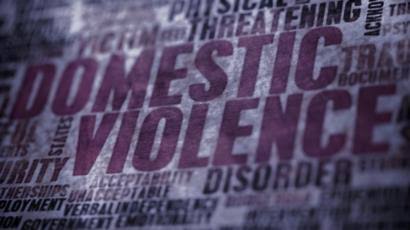
LOCKDOWN EFFECT: DOMESTIC VIOLENCE A RISE!!


Lockdown is helping every country to protect its citizens from spreading of Corona Virus. Due to which people are sitting idly at home for so long which is the main cause of an increase in domestic violence and child abuse. Most women and children are not feeling safe at their home because of domestic violence and child abuse. According to PTI report in the starting of Lockdown (March 20-31), they got over 92,000 SOS calls from the ‘CHILDREN HELPLINE NO. – 1098’ from across the country for the protection of their children from child abuse. National Commission for Women (NCW) got 315 complaints from across the country in April reported another source. The complaints in NCW faced a surge of more than 50% calls regarding domestic violence than in the normal days.
The reason behind the increase in domestic violence
Domestic violence is not an option if you are frustrated. When the abuser feels hopeless and not able to control the things in other aspects of life he chooses domestic violence as an option to reduce his stress. According to Psychologist Schita Sethi “, the victim is in front of their eyes. It becomes even more acceptable to them to commit such acts” also she expresses her views on child abuse by saying “the younger ones will find it tough to understand and express their situation, while older ones will experience guilt, shame and anger”

Not just there is an increase in the domestic violence but women are also facing marital rape as well on this Poonam Muttreja, executive director of NGO population foundation of India said “not just in India, any kind of health disaster leads to increased violence, across the world, against women and children. Therefore I’d like to request our government and women commission to look at global trend, and let’s get ready for the response now, as the vaccine is many months away” also after liquor shops opened there was an increase in the no. of domestic violence and also because of lockdown women and children are forced to live with the abuser they cannot leave the house or not able to seek the help.
Due to domestic violence and children abuse, victims are going through physical and emotional breakdown as well many victims are suffering from depression, anxiety as they are not left with any option their life is getting miserable day by day and as days are passing abuser are getting uncontrollable.

How can a victim come out of this?
One of the senior police officers shared that victim can inform about domestic violence and child abuse in the police station of their area. Not only this but they can also send SOS message to Crime Against Women or through email, handwritten copy, or they can fax them and victim’s message will be directly sent to women commission or Chief Minister’s office and from there it will go to DCP and get recorded in women’s cell. A similar process is being followed with the regards to child abuseabuse, but a different unit is assigned to look after these cases.
NCW has launched a WhatsApp no. “7217735372” for filling the report against domestic violence.

DOES PANDEMIC PUSH INTO DRASTIC POVERTY?


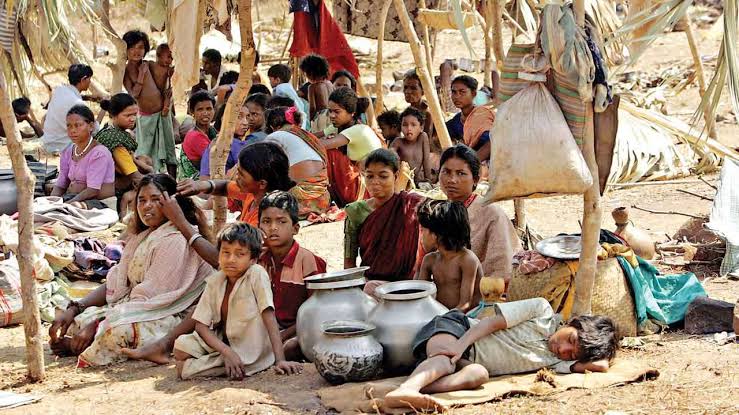
India has already crossed 700,000 marks in positive COVID19 cases. Its spread does not seem to be declining; infections and death toll continue to surge frighteningly instead. The whole world is under home arrest for months to deal with this epidemic. The pandemic-induced lockdown kept a huge part of economy trailing which even though couldn’t demolish the middle or upper class as much as it derailed the lower class off the tracks. Even if ignored, half of India’s population is built with the most ignored class of society. A spot on this population can indeed pull down the economy.
At first, let’s take a look at,
What could be the impact on the economy?
• The rise in unemployment.
• The collapse of small trades like street shops.
• A slump in the tourism industry.
• The decline of the hospitality industry
• Sudden fall down of government resources.
• Rising prices making unaffordable food.
• It makes the situation even worse for poor Countries.
Keeping these points in mind, questions prevail as to the demands and need of the lower class. Most of the points mentioned above hamper this class directly; which is highly dependent on government-provided services and not on private sectors.
Labours who migrate elsewhere in the hope of better living are returning empty-handed, which on the surface has both dark and fair sides which are up to debate. However, a potential fact is always lost which takes concern upon the lives of these workers.
“16 migrant workers were crushed to death by the wheels of the train in Aurangabad station while they were resting.”
Street vendors are counting days in the hope that all will be sorted someday. Jobs like these which pay itself just to have square a meal each day with altogether zero savings whatsoever is clearly under attack.
Basic multipurpose factories and industries had to pull their shutters down under the strict notice of lockdown.
All these factors, considered, is leaving the middle and lower class with lower and lowest money in hand respectively. The direct conflict rises when the lower financial flow in the houses is stretching market flow into narrow wires, which only the upper-middle and upper class are keeping existent.
The Indian economy has fallen drastically. The poor people; though they are an integral part of our economy are going through an extremely pathetic condition.
WHO (World Health Organization) already announced that living with COVID19 is a new normal now.
Though the Government came forward to help the miserable people with some grants it cannot run indefinitely. The pandemic is temporary. This disruptive condition will be resolved one day. So, it is needless to say that our economy will recover quickly and hopefully the government will handle the disaster with proper efficiency. All states should make a head start to fight against the epidemic. The government might get the second wind which will save the country from the disaster.

COVID-19: Impact on Employment

This is imperative to that so far there had been no official estimate of loss brought about by lockdown implemented over the months due to coronavirus pandemic. A mutilate effect on an economy as large as India’s caused due a complete lockdown was impended. Unemployment across the country has ascended due to the coronavirus pandemic with sector making probably the greatest employment cuts.

The unemployment rate in the respective months of lockdown

A lockdown to restriction the spread of corona virus has seen 122 million Indians lose their positions in April alone, new information from a private examination office has appeared. Around 75% of them were little brokers and pay workers. Tamil Nadu was among the most exceedingly hit States. Its assessed unemployment rate in April was the most elevated among States and its work cooperation rate among the least. Kerala had the most reduced labour investment rate in April.

Glimpses of hopeless labourers, especially daily-wage workers, escaping urban areas filled TV screens and papers for the greater part of April. Their casual occupations, which utilize 90% of the populace, were the first to be hit as development halted, and cities suspended public vehicles.

Yet, extended curfews and the continued with the closure of organizations – and the unsure of when the lockdown will end – haven’t saved formal, secured occupations either.

Huge organizations across different divisions – media, aeronautics, retail, cordiality, autos – have reported enormous cutbacks as of late. What’s more, specialists anticipate that numerous small and medium organizations are probably going to close shop completely more critical glance at CMIE’s information shows the overwhelming impact the lockdown has had on India’s composed economy. Of the 122 million who have lost their positions, 91.3 million were little merchants and workers. In any case, a genuinely huge number of salaried specialists – 17.8 million – and independently employed individuals – 18.2 million – have likewise lost work.

India’s unemployment rate increased to 26.2 per cent in the third week stretch of April amid coronavirus lockdown, a report said. The all-inclusive lockdown is just expected to additionally hit the work economic situations, Mahesh Vyas, Managing Director and CEO, Center for Monitoring Indian Economy (CMIE), said. “The work rate has tumbled from 40 per cent in February to 26 per cent now. This is a steep fall of 14 rate focuses. This infers 14 per cent of the working-age populace has lost their jobs. The working-age populace is of the request for a billion,” Mahesh Vyas likewise said in an article on the CMIE site. Fourteen crore individuals are relied upon to have lost work in the lockdown time frame, he said. Thus, the pace of work support has plunged to 35.4 per cent from 35.5 per cent. The work rate has now plunged to 26.1 per cent as against 27 per cent in the previous week, it included.

The worker markets are under equivalent pressure both in provincial and urban territories, he included. The pace of unemployment in provincial India stands higher at 26.7 per cent as against urban 25.1 per cent. “During the most recent seven day stretch of March and in the initial fourteen days of April, the unemployment rate drifted around 23-24 per cent. In the 1st week, it was 23.8 per cent; in the second week it dropped a piece to 23.4 per cent yet in the third week it bobbed back to 24 per cent. The differences were minor and all in all, they affirmed that the unemployment rate had for sure increased to around 24 per cent following the lockdown,” Mahesh Vyas further mentioned. The instability of the unemployment rate in urban India is additionally astounding, he said. The unemployment rate in urban India flooded to 30 and 31 per cent, individually in the first and second weeks of the lockdown. “At that point, in the accompanying fourteen days, it fell rather strongly to 23 and 25 per cent. This is a fairly sharp fall in the joblessness rate in urban India in spite of the fact that it remains very raised,” the report said.

In the meantime, the joblessness rate remained at 8.74 per cent in March, most noteworthy since August 2016 when demonetization occurred, an ongoing report by CMIE said. In August 2016, the unemployment rate was 9.59 per cent. While the joblessness rate was recorded at 9.35 per cent in urban zones, it remained at 8.45 per cent in provincial pieces of the nation, the information likewise appeared. In February, it was recorded at 7.78 per cent.

Unemployment rose to 24 per cent on May 17, 2020. This was perhaps an aftereffect of a diminishing sought after just as the disturbance of the workforce looked up by organizations. Moreover, this caused a GVA loss of nine per cent for the Indian economy that month.

Who suffered the most?

The direst outcome is for workers who don’t have a secure job. In the travel industry, for example, this class incorporates individuals who either work in temporary transient agreements or even without them. This incorporates guides, workers, cleaners working in shops, servers in cafés, vegetable sellers, meat, and flower vendors.

For these labourers, the infection flare-up has implied lost vocation. Industry body CII said that the greater part of the travel industry and accommodation industry can go wiped out with a potential loss of more than 20 million occupations if recuperation in the business extends past October 2020.

The content is comparative in numerous different administrations enterprises, in assembling and non-fabricating areas, for example, development. Lower development on account of falling interest and flexibly imperatives would make new occupation creation harder, yet besides, hurt the individuals who are now hired. Generally, around 136 million non-agrarian employments are at impending danger, gauges dependent on National Sample Survey (NSS) and Periodic Labor Force Surveys (PLFS) information proposed. These are individuals who don’t have a composed agreement and incorporate casual workers, the individuals who work in the non-enrolled small-scale industry, enlisted small organizations, and even the self-employed.

While the daily paid workers are enduring the worst part in the primary period of the pandemic, organizations across businesses could give termination notice on momentary agreements next. More than 5,000,000 Indians have work contracts not exactly a year in incumbency.

Demographic disaster

The COVID-19 pandemic comes at a troublesome segment time for India and would just aggravate an approaching employment emergency. India needs to make almost 10 million vacancies consistently to ingest individuals moving into the working-age populace, other than those that are as of now jobless.

The Adecco Group India, a staffing organization, has planned the effect of COVID-19 spread across work in some Indian companies. It said around 9,000,000 occupations can be decreased over the assembling groups of materials, capital merchandise, textiles, food items, metals, plastics, elastic, and gadgets. Manpower cuts in the automobiles began last quarter due to falling deals.

The coronavirus circumstance will just intensify joblessness. Adecco assessed that the vehicle business can lose up to a million occupations in the vendor biological system, forefront jobs, and the semi-talented. Around 600,000 ground and bolster jobs on contract in the avionics business are in danger.

Unmistakably, a work advertises crunch right currently can without much of a stretch transform into a bad dream. Other than the chance of social agitation, expect more requests for additional reservations in government occupations.

“The ramifications of this emergency will be critical. We will have less financial space to make truly necessary interests in, for instance, instruction, aptitudes, safeguard social insurance, and foundation. This won’t simply keep us from pushing ahead however will slow down us. Our enormous and developing youth populace will be additionally disappointed, conceivably prodding social conflict, wrongdoing, and flimsiness,” she included.136 million at risk

Santosh Mehrotra, a human development economist, and professor at the Centre for Informal Sector and Labour Studies at Jawaharlal Nehru University pegs India’s labour force at 495 million. In 2017-18, about 30 million were unemployed, which implies that 465 million are currently employed.

Who among the already hired are the most helpless ones? The simple answer is those that don’t have the security for their job; those with no social assurance. They are graded as “impermanent” labourers.

The portion of the formal segment was fixed at 90.7% generally and 83.5% in the non-agriculture areas. Most gauges in the paper depend on NSS and PLFS information. Since there are 260 million individuals hired in India’s non-farm unit (agribusiness utilizes another 205 million), the number of casual specialists aggregates around 217 million across administrations, producing, and non-production zone.

One shade of insecure work among the casual groups is those that have no composed employments contract. Numbers sorted out from the Mehrotra paper proposes that around 28 million have no composed activity contracts in assembling; 49 million in non-producing; and 59 million in administrations in 2017-18. In general, around 136 million labourers in India, or over a large portion of the absolute employee hired in non-agriculture parts, have no agreements and remain at risk in the repercussion of the corona pandemic.

They can be terminated without notice or severance. Most daily wage workers or informal workers fall in this section. Their torment is found in Twitter and TV channels—recordings of several vagrant labourers strolling back to their towns. A lot of them work in buildings. Work in land development, for instance, is affected because real estate dispatches and deals are travelled south given that lower economic development is presently a conviction.

In the United States workforce, 44% of individuals are engaged in low-salary, temporary employment—the fragment of the working populace that is turning into the first to lose their positions because of the pandemic. Left to confront expanded monetary load, they are getting scared of the fact that where and when their next pay will originate from. They are even very nearly thinking if their families will have the option to endure this epic emergency.

With the loss of their occupations, they can’t pay for necessities including rent, utilities, and food. Additionally, schools were providing meals for youngsters, presently leaving these kids in danger of confronting hunger with schools being shut. With fears of appetite, vagrancy, and certain misery on the ascent for this effectively defenceless populace.

Because of this desperate circumstance, embrace relief is propelling a battle with your assistance to give the same number of individuals in the U.S. with money related help for lease, food, and utilities during the Coronavirus pandemic. one just can’t leave this defenceless populace to confront this difficulty all alone and realize that particularly amid aggregate concern.

The trickle-down effect

Between February and April 2020, the share of households that experienced a fall in income shot up to nearly 46 per cent. Inflation rates on goods and services including food products and fuel were expected to rise later this year. Social distancing resulted in job losses, specifically those Indian society’s lower economic strata. Several households terminated domestic help services – essentially an unorganized monthly-paying job. Most Indians spent a large amount of time engaging in household chores themselves, making it the most widely practised lockdown activity.

Indian pharma well placed to develop.

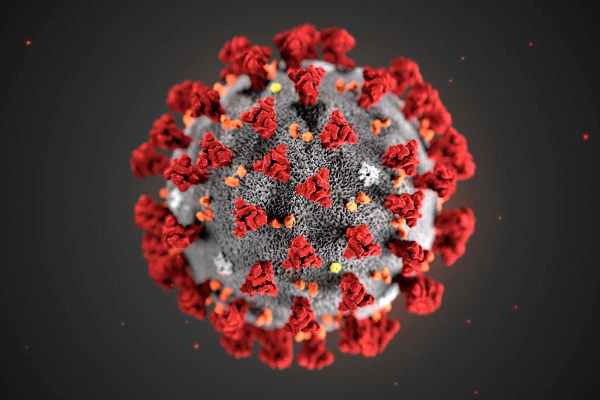
Even before the break of Covid-19 outbreak,India was the largest producer of vaccines in the World.”Pharma vision 2020 ” took speed after the acceptance of Covid-19 by India.The goal is to become a World leader by end to end production of ‘Pharmaceutical’ products.The importance of Indian vaccine is that much that United State requested India to export ‘HydroxyChloroquine’ which is believed have some success in combatting Covid-19.This has shown the World that India has power and relevance in producing best medicines.Science ministry gave a statement that by August 15 would be releasing a novel corona virus vaccine.Six Indian companies are working day and night on Vividh -19 vaccine.Along with two Indian vaccines, Covaxin and ZyCov-D, world over 11 out of 140 vaccines candidates are in human trial said,the ministry.India a leading manufacturer of vaccines and generic medicines, is expected to play a key role in this race.Dozen of vaccines around the corner of the World are being in progress.

THE PATRIOT AND OLD STORY

The Patriot-And Old Story

About the poet-

Born on 7th May 1812, Robert Browning was an English writer and dramatist whose authority of dramatic verse, and specifically the dramatic monologue, made him one of the first Victorian writers. The Patriot-An Old story is an example of his works containing dramatic monologue. His sonnets are known for their incongruity, portrayal, dark humor, social editorial, authentic settings, and challenging vocabulary and language structure. At the point when Browning passed away in 1889, he was viewed as a sage and scholar artist who through his verse had made commitments to Victorian social and political talk – as in the sonnet Caliban upon Setebos, which a few commentators have seen as a remark on the late hypothesis of development. Strangely for a writer, social orders for the investigation of his work were established while he was still alive. Such Browning Societies stayed basic in Britain and the United States until the mid 20th century.

About the poem-

The Patriot – An Old Story is a poem written in Browning’s typical manner as it mirrors his murkiness, profound religiosity, and powerful confidence. This poetry is about a man who was once perceived as their legend and was valued and could fulfill anything that he favored in whichever way, but is later misjudged and is dismissed by the general population and is sentenced to death. He admits that he is sentenced to death for the wrong reasons and has faith and trust in God that he will be spared from general society’s misconstrued perspectives. He says that he is safe in paradise, and therefore this demonstrates that he inherently believes that he is correct, regardless of the public opinion. The theme of the poem is universally applicable as it touches upon the subject of the downfall of great men. Power and glory are impermanent and never last forever.

Mood, Setting of the poem:
“It was roses, roses, all the way” is indicative of a retrospective mood of the poet. The use of past tense in the beginning and then changing on to present tense is evidence of this.
The first two stanzas elaborate upon the grand welcome given to the poet. The mood focuses on the townspeople people, who are jubilant, happy, celebrating, and flaring fiery flags. Third stanza onwards, the mood is infected with tension and the patriot’s feeling of betrayal and anguish. He is feeling helpless and morose all his good deeds have been dismissed, and the people who once celebrated him are now executing him.
Hope and optimism can be seen in the last stanza where the patriot believes that after death, he will get true justice in God’s safe haven.

Stanza wise Explanation:

It was roses, roses, all the way,
With myrtle mixed in my path like mad:
The house-roofs seemed to heave and sway,
The church-spires flamed, such flags they had,
A year ago on this very day.
the patriot by Robert browning is a poem about a man who has done something great for his country and countrymen, most probably a war hero, who is returning to his town. The first stanza is an elaborate description of how the poet is welcomed back with pomp and ceremony by all the townspeople. His path is laden with roses and myrtle, which signify love, respect, and honor being showered on the patriot by the people. The residents of the town have clambered onto their roofs to get a glimpse of the patriot and welcome him home and showcase their gratuity. This creates an imagery of the house itself moving and swaying with the weight and number of people. Even the church spires were decorated with fiery colored flags. This gives the reader an idea of the enormity of the celebrations. The bright color of the flags made the church spires look like they were on fire and flames were engulfing them. In the last line, the poet discloses to the reader that these events occurred on this date, exactly a year ago.

The air broke into a mist with bells,
The old walls rocked with the crowd and cries.
Had I said, Good folk, mere noise repels---
But give me your sun from yonder skies!''
They had answered,
And afterward, what else?”
The ringing of the church bells infected the air and it seemed to be echoing the celebratory noise. The walls of the city, which were already on the verge of erosion, due to time, reflected the impact of the din created by the crowd. It seemed to conduct the tremors and move. The patriot here is telling the people how he doesn’t want all the cheers and applause but wants the people to fetch the sun from the skies for him. He wants the power, glory, admiration, and honor. He wants to live in their memories as an immortal hero. The crowd replies to his request with a query as to after this, what else does he require. Here a side of the patriot is shown that searches, not for momentary praise, but for everlasting recognition and glory. He doesn’t want extravagant celebrations that can die down with time. He is looking for something more permanent. The sun is a symbol of immortality, power, honor, and glory. Hence, the patriot asks the people to fetch him their sun from the skies. The answer to the crowd is reflective of their frivolous nature. They immediately ask the patriot what else would he require, other than the sun. This indicates that though the crowd was eager, they weren’t sensible. As the sun is the ultimate power, and one wouldn’t require anything after conquering it.

Alack, it was I who leaped at the sun
To give it my loving friends to keep!
The naught man could do, have I left undone:
And you see my harvest, what I reap
This very day, now a year is run.
The third stanza acts as a conjunction for the transition from the past to the present. The patriot says that despite him asking the townspeople to get him the sun, in the end, it was he who leaped for it and got it for the people, who he refers to as his beloved friends. This act that he does is such in nature that had he left it undone, no other man could have accomplished it. This stanza has a tone of regret. This can be deciphered by the use of “Alack!” or Alas. Also, the last two lines indicate this as the patriot mourns about how his deed has been repaid by the people. His “harvest” is what he has reaped, whereas what he had sown was bringing glory, power, and honor to the people. The first two stanzas narrate the incidents of a year back when the patriot was given celebrity status. This stanza acts as synopsis to the current events.

There’s nobody on the house-tops now—
Just a palsied few at the windows set;
For the best of the sight is, all allow,
At the Shambles’ Gate—or, better yet,
By the very scaffold’s foot, I trow.

There are no more people on the rooftops, trying to catch a glimpse of the patriot. Only a few cripples can be seen at the windows. The patriot takes up a sarcastic tone at this point and says that this is because the best sight is at the gate of the gallows. In this stanza, a contrast is drawn between the time when the rooftops were heaving with people, celebrating the patriot’s deeds, and the current scenario where the people are assembled, but near the gallows. Only the ones who cannot travel to the spot of execution, the ones who are crippled, are staring outside their windows to get a look at the patriot. The patriot’s anguish is seen when he taunts about the townspeople, saying they will be found, not on the roofs, but on the site of the execution, or better still, at the foot of the gallows. This stanza is suggestive of the patriot’s fate that he is being taken to be executed.

I go in the rain, and, more than needs,
A rope cuts both my wrists behind;
And I think, by the feel, my forehead bleeds,
For they fling, whoever has a mind,
Stones at me for my year’s misdeeds.

The imagery here is that of the patriot walking in the rain, heading towards the gallows. His wrists are tied tightly behind his back with a rope that cuts through his
skin. He can feel blood trickling down his forehead, but he cannot know for sure as his hands are bound, so he can’t touch and feel. His cuts are because of the stones being flung at him by anybody and everybody. The picture being projected in this stanza is a very pitiable one as it is in direct contrast with the imagery of the first and the second stanza. The patriot provides an ambiguous explanation for this transition, saying he is being punished for the misdeeds that he has committed within this one year. Despite the fact that no rigid and stable details have been given of the patriot’s act, it can be inferred that most probably he has indulged in acts of treachery, betrayal, or any such unpatriotic act. This conclusion can be reached keeping the title of the poem in mind. The main gist of this stanza is the description of the poet’s walk of shame.

Thus I entered, and thus I go!
In triumphs, people have dropped down dead.
Paid by the world, what dost thou oweMe?”—God might question; now instead,
‘Tis God shall repay: I am safer so.

The concluding stanza of the poem begins with the patriot declaring how he is leaving, the same way that he entered. He is walking towards his death through the same streets on which he had entered the town and was welcomed as a celebrity, a hero. Even the most important, most loved people have lost their glamour and glory. The most triumphant have also fallen. The patriot’s religious beliefs have been reflected and his belief in an afterlife has been showcased when he mentions how he will be received by god. If God might ask him, now that he has been paid for his deeds by the world, what more does he owe to god? The patriot’s reply to this has shades of faith and optimism. He replies saying that his real repayment will be done by god. He is placing his trust in God as he knows that he has committed no moral wrongs and the almighty is always just and fair. Hence, he is safe with god as he won’t have to face any more undeserving punishments and will be truly and justly rewarded for his acts or deeds.

Critical Analysis:

Written in the form of a dramatic monologue, The patriot- An old story by Robert browning is an account of a man’s fall from power to disgrace. From the title of the poet, The patriot, one gathers that the poem is about an individual. On the other hand, the subtitle, “an old story” can be deciphered as it is a universal story that can be applicable to anybody. This is in line with the contrast that is projected in the poem.
The first stanza begins with the description of the patriot’s arrival into the town and the magnificent welcome given to him by the townspeople. His path has been laden with roses and fragrant myrtles and people are clambered on their rooftops to catch a glimpse of and congratulate the patriot. The past tense used in the first stanza creates a retrospective narrative. It has been implied that the town is a very cluttered and old one. “Old walls rocked” in the second stanza is evidence of this. The poet has religious beliefs and this can be seen in the first and second stanza where he mentions churches and bells, also the last stanza has him reaching out to God’s safe haven for justice. But, the patriot is shown as a man who values permanence more than temporary glory. This is reflected in his asking the townspeople to fetch him the sun, as it is the ultimate symbol of power, glory, and immortality. True to the title of the poem, the patriot himself fetches the sun for his beloved friends, but it is then that regret enters his tone. His feeling of betrayal is quite clear when he mentions about despite his good deeds what he is reaping. “A year has run” signifies that something eventful has taken place through that one year which has had some adverse effects. This is when he starts narrating the current scenario. The mood of the poet changes to sarcastic and ironic as he draws a contrast by juxtaposing the full roofs in the past with the present empty ones. The fickle nature of the townspeople can also seem like the same people who were celebrating the patriot, are now gathered near the gallows to cheer his execution. To emphasize on the patriot’s emotions, his walk of shame is described where the patriot comments on the transitory nature of man, who might love today and hate tomorrow. Despite this sorrowful tone of the poem, one notices that Browning ends a poem on a note of optimism as he hopes that regardless of the misunderstanding and evils contaminating the world, God always does justice and it is in death that the patriot will be granted what he truly deserves and will rest peacefully in God’s safe haven. This is also an example of the faith he places in god and religion.

Theme:
The Patriot is majorly based on the theme of rising and fall of fortune. The narrator, the patriot is welcomed with feverish joy and paths of roses in the first two stanzas by the townspeople. But, by the end of the poem we see that those same people have humiliated and executed him, within a year. This shows that glory and fortune do not last forever. People are fickle-minded and change their opinions without a second thought. Someone who is loved today may easily be hated tomorrow.
The poem has undertones of religiosity. The first stanza itself mentions flags fluttering on the church spires also; the patriot is welcomed with ringing bells. The final stanza has the patriot being optimistic about death as he believes that God does justice to one and all and he will recognize that the patriot has done nothing immoral. This faith in God and the belief that he will be safe in god’s abode shows that a patriot is a religious man. Also, there is a biblical reference when the poet mentions the reaping of the harvest.
Betrayal is also a minor theme in the poem as the poet fetched the sun for the townspeople, and in return, they stamped him as a criminal and executed him. All his good deeds were forgotten and he was brought to a humiliating and painful death.