

Adultery is defined as a voluntary sexual intercourse by a married person with a partner other than his/her spouse. The legal definition of adultery varies in different jurisdictions and statutes. Adultery in India is a criminal offence and hence there are provisions related to adultery Indian Penal Code, 1860. Section 497 defines adultery as:
“Whoever has sexual intercourse with a person who is and whom he knows, or has reason to believe to be the wife of another man, without the consent or connivance of that man, such sexual intercourse not amounting to the offence of rape, is guilty of the offence of adultery, and shall be punished with imprisonment of either description for a term which may extend to five years, or with fine, or with both. In such case the wife shall not be punishable as an abettor.”
For instance, if Naina is married to Samar, and Naina has an affair with Kuljeet, then Samar can bring charges against Kuljeet, but Naina will not be charged under this offence.
It is important to lay down an establishment, that from the very onset, this law does not seek to preserve the sanctity of marriage- but it pursue to secure the structure of the institution. In case of V. Revathi v. Union of India, it was held that the man was seducer, not woman. Basically it was said that, Section 497 does not provide any right to the wife to prosecute the husband who has committed adultery with another woman. the above mentioned law is striking in its pursuit to incarcerate only the ‘outsiders’ in the marriage and the community also believes to punish the outsider who breaks into a matrimonial home and violates the sacredness of marriage.
In India, Section 497 of IPC a history of 150-year colonial period and, since from its commencement, it has been spinning into debatable and questionable controversies on several accounts, such as its gender bias approach, questioning equality clause, reflecting cultural conflicts, and strong arguments were raised either for its retention, alteration, or complete modification and deletion from penal statutes.
The object, philosophy and justification of legal regulation of the adulterous behavior of a person in society has been examined appropriately on time scale so as to estimate whether its modification, retention, or deletion is imperative in the contemporary context or otherwise.
History
Incidents related to husbands having illicit affairs with other women and wives cheating behind their husband were not unknown in ancient India. Hinduism never favored Adultery, it was established as a mortal sin. According to Hindus, marriage is a pious and sacred relationship and the sanctity of marriage should be upheld all the times. Infringing the sacred commitment of marriage would lead to ruthless sin and a bad karma.
Hindu law are very strict against adultery, for both moral and social reasons. The ancient Hindu law also categorized the relationships which involved married women from those who are unmarried and the former attracted harsher punishment. There were also different acts for treating adultery, involving different caste of women. Ancient Hindu Society was not free from the obstacle of Adultery. Hindu Mythology illustrated many stories in which god themselves were indulge in adulterous thoughts and action. For instance how Lord Rama banished his wife into forest due to mere allegation of adultery. Manuscript has laid down chapters on the act of adultery. The book explains why adultery occurs, how to secure it and the ruthless punishment for the ones who are caught in such relationships. Centuries ago, this sin was punishable by death, either by public stoning, hanging, or even worse.
When the Indian Penal Code, was drafted Lord Macaulay didn’t approve adultery/ infidelity as a provision in IPC, but in the second report the presidents disfavored Macaulian’s perceptions about adultery and imposed heavy reliance upon his marks and concluded that committing adultery was a heinous crime and the offender will be liable for punishment. Hence, section 497 was instituted in Indian Penal Code.
Immediately after the institution in the Constitution of India, Section 497 Indian Penal Code was impugned on the ground that it usually goes against the spirit of equality inculcated in the Constitution. One of the most controversial cases was in 1951, when Mr Yusuf AbdulAziz, who was charged for adultery, grappled before the Bombay High Court that Section 497 of IPC is unconstitutional as it, in infringement of Articles 14 and 15 of the Constitution, as it operates unequally between a man and a woman by making the former only responsible for adultery. Therefore, he argued, its discrimination in favor of women and against men exclusively on the ground of sex.
In most of the foreign jurisdictions, adultery, exclusively from being a ground for divorce, it has been realize as a criminal wrong against marriage. Coincidentally, in these jurisdictions, both spouses are generally adhered criminally responsible for their extramarital sexual intimacy.
However, the law of adultery in India is commenced on the one and a half century ancient caste- based “social norms” in the reference of the traditional conservative property-oriented familial ideology. It is also pre conceived on a few obsolete and moot assumptions of sexuality, sexual agency and unequal marital rights.
Category: Education

dhanushkodi-an abandoned town in india
Dhanushkodi is an abandoned town at the south-eastern tip of Pamban Island of the state of Tamil Nadu in India. It is south-east of Pamban and is about 24 kilometres west of Talaimannar in Sri Lanka. The town was destroyed during the 1964 Rameswaram cyclone and remains uninhabited in the aftermath.Dhanushkodi is on the tip of Pamban island, separated from the mainland by the Palk Strait. It shares the only land border between India and Sri Lanka, which is one of the smallest in the world at 45 metres (148 ft) in length on a shoal in the Palk Strait.
The National Highway completed the 9.5-km-long road – 5 km from Mukuntharayar Chathiram to Dhanushkodi and 4.5 km from Dhanushkodi to Arichamunai. Tourists can visit by their own vehicle and end up with Pillars of Ashoka. Until 2016, Dhanushkodi was reachable either on foot along the seashore or in jeeps.In 2016, a road was completed from the village of Mukundarayar Chathiram.A metre gauge railway line connected Mandapam on mainland India to Dhanushkodi. Boat mail express ran from Chennai Egmore to Dhanushkodi till 1964 when the metre-gauge branch line from Pamban to Dhanushkodi was destroyed during the 1964 Dhanushkodi cyclone.In 2003, Southern Railway sent a project report to Ministry of Railways for re-laying a 16 kilometres railway line to Dhanushkodi from Rameswaram. The planning commission looked into the possibility of a new railway line between Dhanushkodi and Rameswaram in 2010.
RUINMENT DONE BY CYCLONE IN 1964 AT DHANUSHKODI:-
The area around Ramehswaram is prone to high-intensity geomorphic activity. A scientific study conducted by the Geological Survey of India indicated that the southern part of Dhanushkodi facing the Gulf of Mannar sank by almost 5 metres (16 ft) in 1948 and 1949, due to vertical tectonic movement of land parallel to the coastline. As a result of this, a patch of land of about 0.5 kilometres (0.31 mi) in width, stretching 7 kilometres (4.3 mi) from north to south, submerged under the sea.
On 17 December 1964, a depression formed at 5°N 93°E in the South Andaman Sea. On 19 December, it intensified into a cyclonic storm. After 21 December 1964, it moved westwards, almost in a straight line, at the rate of 400 to 550 kilometres (250 to 340 mi) per day. On 22 December, it crossed Vavunia in Sri Lanka and made landfall at Dhanushkodi on the night of 22–23 December 1964. Estimated wind velocity was 280 kilometres per hour (170 mph) and tidal waves were 7 metres (23 ft) high.
An estimated 1,800 people died in the cyclonic storm on 22 December including 115 passengers on board the Pamban-Dhanushkodi passenger train. The entire town was marooned and the Government of Madras declared Dhanushkodi as a ghost town, unfit for living.
In December 2004, around the 40th anniversary of the deadly cyclone, the sea around Dhanushkodi receded about 500 metres (1,600 ft) from the coastline, briefly exposing the submerged part of the town before massive tsunami waves struck the coast.

/GettyImages-171088905-5b0ffc9eeb97de0037afffd6.jpg)
PRESENT SITUATION:-
THIS TOWN HAS BECOME A SPOT FOR SEEING SRILANKA.ITIS WELL KNOWN ABANDONED ISLAND.SO THAT THIS AREA IS FOR BEACHES.
Public

CYBER CRIMES

The era of nuclear warfare conceived the idea of a system which could even survive the devastation of nuclear weapons. “A post-apocalypse command grid” was the original idea for Internet -‘Bruce Sterling’ has stated. The idea of ‘internet’ was conceived in the early 60’s while a code for its regulation was mooted in late 90’s . This clearly brings about the reason for the complication of cyber-crime. Cyber-Crime may be said to be an act which violate netesthetics.
INTRODUCTION
The word cyber and its relatives are probably the most commonly used terminologies of the modern era. In the information age the rapid development of computers, telecommunications and other technologies has led to the evolution of new forms of trans-national crimes known as “cyber crimes”. Cyber crimes have virtually no boundaries and may affect every country in the world. They may be defined as “any crime with the help of computer and telecommunication technology”, with the purpose of influencing the functioning of computer or the computer systems.
The extent of loss involved worldwide of cyber crimes is tremendous as it is estimated that about 500 million people who use the Internet can be affected by the emergence of cyber crimes. Cyber crimes are a very serious threat for the times to come and pose one of the most difficult challenges before the law enforcement machinery Most cyber crimes do not involve violence but rather greed, pride, or play on some character weakness of the victims. It is difficult to identify the culprit, as the Net can be a vicious web of deceit and can be accessed from any part of the globe. For these reasons, cyber crimes are considered as “white-collar crimes”. To understand cyber crime as a significantly new phenomenon, with potentially profoundly new consequences, it is necessary to recognize it as a constituent aspect of the wider political, social and economic reconstructing currently effecting countries worldwide. This new technology not only provides opportunities for the profitable development of an international information market but has also raised the specter of new criminal activities to exploit them.
The very technology that enables multinationals to do business more effectively and challenge the individual controls and regulations of nation states, also offers the prospect of globally organized criminal networks. Moreover the free flow of uncensored information on electronic networks and web- sites is as attractive to insurgents and extremist groups as it is to dissidents proclaiming their human rights. Just as crimes have changed with the growth of information technology so have the categories of criminals who engage in such crimes. There are three basic categories of criminals who engage in such crimes, ranging from hackers, information merchants and mercenaries, to terrorists, extremists and deviants.
Now speaking about the types of cyber crimes, there are divided mainly in four types; Financial, Privacy, Hacking and Cyber Terrorism. Financial crimes means the steal of money of the user or account holders. Likewise, the stole data of companies which leads the financial crimes. Secondly, Privacy crimes includes stealing the private data which leads to ruin the people and let them suffer by misusing their personal data. In, hacking they intentional deface a website to cause damage or loose to the public or owner and diminish its values. Here last but not least the cyber terrorism is not related to terrorist or its organizations but to threat someone on level of creating fear is also the same.
To conclude, we can say that cyber crimes is a violation of not law but the human rights too and to avoid that all we need is some common sense and logical precautions.
Public

MIGRANT WORKERS-A STORY OF MISMATCH
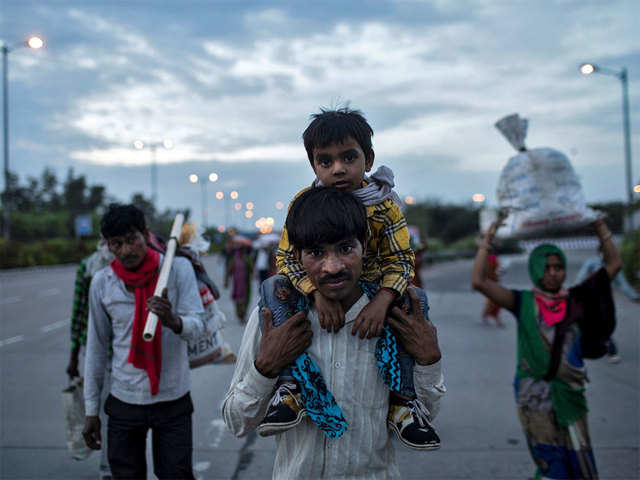
India always had an internal problem of migrants. The Covid-19 pandemic has only made it look worse. More than 10 crore people are estimated to be migrant workers in India. A vast majority of them have been pushed out from poorer states to more developed ones. With the country going under a lockdown to contain the spread of the novel coronavirus, the migrant workers are in desperation to go back home. The railways on Monday said it has run 468 Shramik Special trains so far, ferrying over 5 lakh migrants. They are but a fraction of those who wish to go home. A small story of migrants and government mismatch. The name of the migrant is Rampukar Pandit, who was found sitting on the Delhi roadside. His home is in Bariarpur in Begusarai, Bihar, which is about 1,200km away from Delhi. He was talking on the phone and was crying uncontrollably on the Nizamuddin Bridge. Pandit worked as a labor in Najafgarh. His journey was cut short, as the Ghaziabad police officers did not allow him to travel any further. Even they cannot be blamed as they were carrying on their duty. Since then, he was stuck under the bridge. He was provided with food by some NGO workers and police officers, and he slept there itself. Conclusion:-government of India has planed to send all the migrants to their native place.but the set of conditions kept by the government has made all the migrants and their employer to get into a dilema .therefore this type of incidents are happening .before two-days of this publication,a women in bihar has died with starving in the sramik express which are running by government of India.she was thrown From the train including with her child.that child,whois n ot at the condition to know what happened to her mom.he kept playing beside her mom.so government should take somany measures to prevent a situation like this.
Public

FULL ACADEMIC FEES?
Corona!Corona!Corona! Well, you know who else is taking full advantage during this pandemic? Of course our government. First I thought the increase in petrol and diesel prices was due to people not abiding by the rules and taking this pandemic lightly and the government has taken a wise step by increasing the prices. And yes! I was wrong…not surprising, right?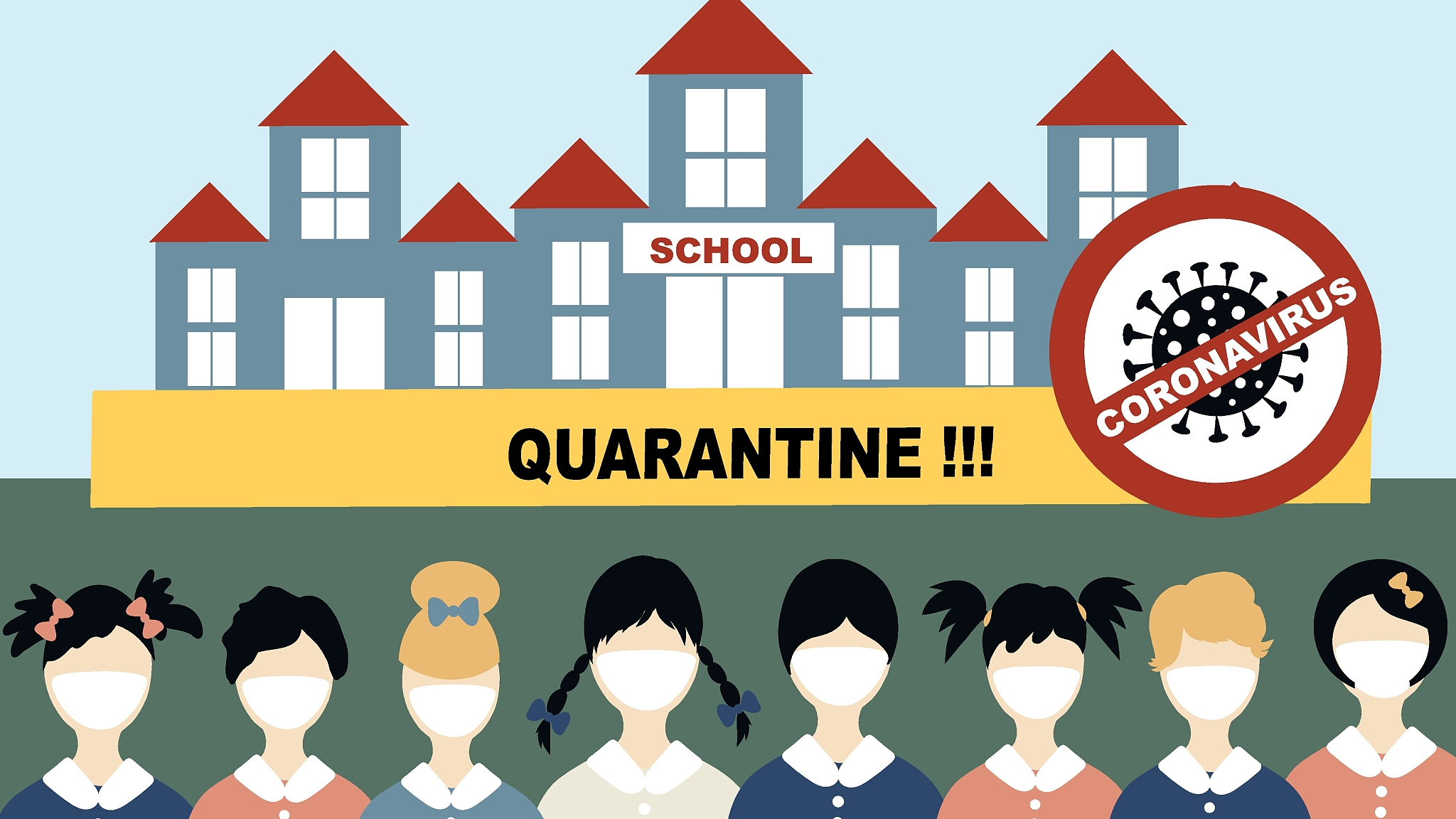
-The Education system especially globally is also responsible for making the poor people poorer and the rich people richer. Providing education should be free right? But the government does charge fees. There’s nothing wrong here but during this pandemic instead of getting together and doing everything that they can in the field of education, they charge full fees? Har cheez ki haad hoti hai(everything has its limits).
-Not only the students are being forced to pay full fees but also the teachers are getting 50% or less salary. Why is this happening?
-During this pandemic, more than 10 crore people will be unemployed, out of 5 every 2 employees are facing a cut in the salary(this was found out in a survey) 5. 31% are confident they’ll find a new job soon
How will you manage finances after a job loss?
Read more at:
We cannot expect during this time especially, the government to be so stone hearted instead of showing empathy towards the students and their parents and understanding their burden they still choose to take full fees.
-The FACT is students are attending online classes, teachers teach from home. The major problems faced by students-Even though a middle-class family can afford a laptop for their child what about villages? some institutes don’t start online classes till all the students pay the fees.
2. It has also massively affected productivity and student’s social life and learning. Many students participating in home-learning programs say that the workload of online classes is more than regular classes.
The problems faced by the teachers-Apart from the students’ teachers too face problems of not receiving their salaries for the past few months. For this, the excuse given by the institution is that teachers get paid according to their efforts put in online teaching and terms of no.of video lectures, assignments, etc. The question is if students pay full fees why are the teachers not receiving their full salaries?
2. Resources used by teachers for online classes should be provided by the college. So why is no one talking about this? Because of the fear of failure of classes or any other. Just think this would not only provide full salary to teachers but it will also reduce the burden of our parents and the students too. This would be a great achievement for us so why not?
Some solutions suggested that can help in reducing the tension during this pandemic are-
1. The money that would have been spent on buying the canteen food, photocopy prints, etc can be used to create a welfare fund for teachers and pay their full salary.
Public

Programming.
Programming is an art and therefore, we are artists. However, we’re not the kind of artists that create purely for beauty. We are functional artists. We have a functional task as well as the duty to write code, because it is effective and thus lasts. Writing elegant code is our job. This helps people find their way to the contents of those articles, just like great code helps people find their way to places they need to enhance.

Programming is understanding a problem well enough to be able to explain it as simple as possible to a machine. Defending code by claiming effectiveness is trying to hide what you don’t understand in that problem.
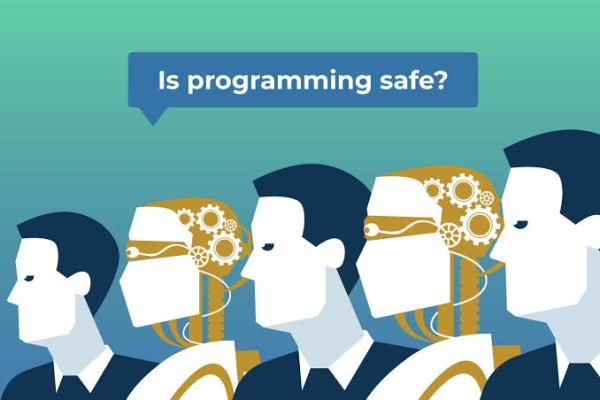
The expression or application of human creative skill and imagination, typically in a visual form such as painting or sculpture, producing works to be appreciated primarily for their beauty or emotional power.
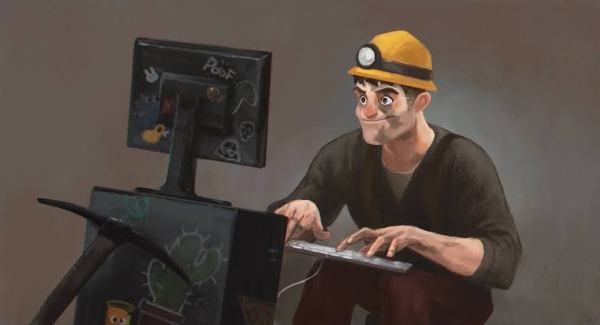
Most works of art are actually the result of a logical process, of selections of elements that complement each other.
Public

all the light we cannot see

So how, children, does the brain, which lives without a spark of light, build for us a world full of light?”
–Anthony Doerr, All the Light we Cannot See
World War 2 has been one of the most written about topics. Over the years, we have seen a lot of books, movies and documentaries about it, each more intriguing than the previous. It was a dark moment in our history, and it is obvious why all of us can’t stop reading about it. Just when we thought that we have read it all, fiction and non-fiction, we were proven wrong. In 2014, Anthony Doerr released his “All the Light we cannot see”. This book highlighted how both the sides tried to survive the devastations of the war.It went on to become New York Times Bestseller, and even won the Pulitzer Prize for Fiction in 2015.
This book talks about the war, but not just in the way you think. Often times, literature about World War II focuses on its soldiers and leaders. Seldom it is when a book talks about its impact on the common folk. The book shifts between two points of views, one of a blind French girl trying to escape from occupied France, and another of a German boy, who gets recruited at an extremely young age. For Marie-Laure, blind since the age of 6, life hasn’t been easy, with her father as her only support.For Werner, an orphan, initially destined to labour in the mines, life takes a turn when he fixes an old broken radio, and tunes into a a radio show by a Frenchman who awakens a life long interest for science in him. Doerr’s impeccable vocabulary, and the smooth transition from Marie’s life to that of Werners makes it completely worth it to read the book.
We all know what a difficult time that was. However , after reading about the many trials and tribulations they both had to face at extremely young ages, we come to realise exactly how cruel it was. How it stopped at nothing to take away every possible shred of happiness they possessed. Another theme constantly highlighted throughout the book is family. Both of them eventually lose all their family. This was a detail which couldn’t have been overlooked, as it was crucial to prove to the reader how innocents will always suffer when two sides fight. Doerr perfectly managed to capture the desperation one feels when losing their family, with the incapability of being able to do anything. It tugs at one’s emotional heartstrings, and definitely does the fail to provoke a tear or two.
Doerr’s hauntingly beautiful description of events not only helps you visualise the scene, but also feel the emotions the characters were going through. When Werner wins a spot into the Hitler Youth Academy, his only escape from a life in the coal mines, you can visualise exactly how he must have been feeling, being presented with two options for his future, neither of them better than the other. Both these options will lead to his separation with his only family alive, his sister. You can sense his inner turmoil at this very moment. This book is also a great read for those fond of science. Every page in this 634-page work of art is bewitching. This is one book you won’t be able to put down.
Public

SOCIAL MEDIA

Advancement in technology led to the emergence of social media platforms. It has facilitated sharing of information, ideas, career interests and other forms of expression. Communication can be done at a faster pace as people living far away are linked to each other through social media platforms and it takes hardly a few seconds to connect to anyone around the globe.
SOCIAL MEDIA CONTRIBUTION TO SOCIETY:
- A boon in crisis
- Aid for solving crimes
- Form of political influence
- Revolution in brand making
- Curbs distance
SOCIAL IMPACTS:
- Disparity
- Political polarization
- Physical and mental health
- Stereotyping
- Sleep disturbances
- Adolescents
- Effects on youth communication
- Changes in mood
POSITIVE SIDES OF SOCIAL MEDIA
- We can keep in touch with friends in today’s busy world.
- We can improve ourselves by sharing our ideas, information and knowledge with those, who have same interests, even if they are so many miles away from us.
- Teachers and professors are making groups on SNS to extend classroom discussion, to post assignments, tests & quizzes and to assist students with homework.
- Many companies are developing interactive communities that connect individuals to share business needs & experiences.
- Students are connecting with employers via LinkedIn kind of SNS for job opportunities and internships.
- We can find our friends easily, if we lost contact.
- Generally social networking sites have a positive atmosphere. For example, Facebook doesn’t send notification, if someone is removed as a friend. So there is a least chance for the person to know that.
NEGATIVE SIDES:
- People are increasingly comparing their lives with others that are projecting their life as perfect. This decreases happiness levels and also can lead to self-esteem issues.
- Privacy is a big drawback of SMS. Some people are using other person’s personal information for malicious intentions.
- Addiction is another big drawback of SMS.
- Lot of SMS users are preferring online conversation rather than face-to-face. It’ll effect communication skills, relationships and even mental health.
- There is a high risk for children and teenagers from cyber stalking.
- Gossips and rumors spread soon.
- Spending in front of computer for long hours creates many health problems.
Advantages for Teenagers:
a) Comfortable way of communication for shy teens. This can boost their self-esteem and confidence.
b) Social media gives teens with unusual interest and hobbies a place to share information and enthusiasm.
c) Social media helps them to enrich and manage their social lives.
d) Teens who are differently able and have other challenges can communicate with other teens with similar problems.
Disadvantages for Teenagers:
a) Online bullying and harassment which is also known as Cyber-bullying may be the biggest danger for teens.
b) Online predators, it is basically an online sex crime against minors.
c) Less interaction with friends and family.
Advantages for students:
a) Students can produce and retain information.
b) Social media offers lots of opportunities for learning and interaction.
c) Students are getting to explore and experience the world not only by books and assignments; but also by adapting social media.
d) In today’s world; contacts, networks and communications are very important; students who are accessing Facebook, twitter and other such social networking site to connect and share information have good contacts.
Disadvantages for students:
a) Social media can be a very distracting and harmful for students.
b) Students share personal information, comment on someone’s post which may be harmful for them.
c) Always glued with their mobiles, tablets, computer which is a wastage of time and may spoil their performance.
Public

ONLINE EDUCATION- BOON OR FORFEIT?
WHAT IS ONLINE EDUCATION?
Online education is a flexible instructional delivery system that encompasses any kind of learning that takes place via the Internet. Online learning gives educators an opportunity to reach students who may not be able to enroll in a traditional classroom course and supports students who need to work on their own schedule and at their own pace.
The quantity of distance learning and online degrees in most disciplines is large and increasing rapidly. Schools and institutions that offer online learning are also
Online education is a flexible instructional delivery system that encompasses any kind of learning that takes place via the Internet. Online learning gives educators an opportunity to reach students who may not be able to enroll in a traditional classroom course and supports students who need to work on their own schedule and at their own pace.
The quantity of distance learning and online degrees in most disciplines is large and increasing rapidly. Schools and institutions that offer online learning are also increasing in number. Students pursuing degrees via the online approach must be selective to ensure that their coursework is done through a respected and credentialed institution.
REASON FOR CONSIDERING ONLINE EDUCATION:
Online education has become a viable and exciting method for instructional delivery in the global business society that runs on a 24/7 schedule (24 hours a day/7 days a week) because it provides students with great flexibility.With the increased availability of the Internet and computer technology, students are able to access information anytime and anyplace that would normally be available only through a traditional classroom. Studies have shown that students learn just as effectively in an online classroom as they do in the traditional classroom.
PROS AND CONS WITH OPNLINE LEARNING:
Online education offers many positive benefits since student s:
- have flexibility in taking classes and working at their own pace and time
- face no commuting or parking hassles
- learn to become responsible for their own education with information available at their fingertips
- find the submission of assignments easy and convenient
- are more apt to voice their own opinions and share and debate issues with other students, as well as learn from other students during the group discussions
Possible negative effects of learning online are that some students:
- may miss the face-to-face interaction with the instructor and among students
- may prefer to attend traditional classes with an instructor who teaches and guides them through the course
- find access to the necessary technology challenging and the availability of technical support limited
In addition, some administrators and instructors who do not understand the workload may display a negative attitude toward online education.
FUTURE WITH ONLINE CLASSES:
Online teaching is here to stay. Many students prefer the online classroom since it offers flexibility in their busy schedules. With the proliferation of information and knowledge, students must become lifelong learners in today’s world, and online education plays an important role in helping individuals access the learner-centered and self-directed instruction.
With enhanced software, hardware, and Internet access, more options for online education will become available. With student enrollments increasing faster than classrooms can be built, students becoming more proficient with technology, and students pursuing an education that meets their needs, the future of online education will continue to grow. Online degree programs will become more widely accepted as they become a more common practice.
CONCLUSION:
Online classes are an alternative during this pandemic. But this should not be continued for the future. Else, it will be a forfeit for every student.
Public

Right To Information

The Right to Information Act, 2005 (RTI) is a law enacted by the Parliament of India “to provide for setting out the practical regime of right to information for citizens.” The Act applies to all States and Union Territories of India, except the State of Jammu and Kashmir – which is covered under a State-level law. Under the provisions of the Act, any citizen (excluding the citizens within J&K) may request information from a “public authority” (a body of Government or “instrumentality of State”) which is required to reply expeditiously or within thirty days. The Act also requires every public authority to computerize their records for wide dissemination and to proactively publish certain categories of information so that the citizens need minimum recourse to request for information formally. This law was passed by Parliament on 15 June 2005 and came fully into force on 13 October 2005. Information disclosure in India was hitherto restricted by the Official Secrets Act 1923 and various other special laws, which the new RTI Act now relaxes.
Right to information under constitution and its exception
The right to information movement in India began with the Mazdoor Kisan Shakti Sangathan (MKSS) movement to bring in transparency in village accounts through the demand for minimum wages in rural India. False entries in wage rolls were a sign of increasing corruption in the system, which encouraged MKSS to demand official information recorded in government files.
The constitution of India does not clearly provide Right to information. However, the Apex court of the country held in several cases that Right to information is concern with the Article 19 (1)(a) and Article 21 of the Indian constitution which states freedom of expression and speech and Right to life and personal liberty respectively. In other words we can say that it (Right to information) protect the very purpose of the such Articles. Article 19 and Article 21 comes under part 3 of the constitution which is the fundamental Rights of Indian constitution. In this way we can say that Right to Information might be considered as fundamental right of the constitution.
Article 19 of the Constitution of India talks about rights and in Art.19 (1) (a) we have the Freedom of Speech. This Freedom not only extends to the right of expressing the views freely but also the right to know. This right to know also has some limitations to it, for say, information of national security or any other matter which would affect the nation’s integrity. But if contains information for example related to sanitation then it is not a matter of national security and the public has the right to know why such information is with held.
Citizens have a right to know about government affairs. But the right is not absolute; secrecy can be legitimately claimed in respect of transactions with repercussion on public security. In other words, the information which is not in the interest of the public or country cannot be disclosed at any circumstances. Sec.8 of the Right to information Act, 2005 is concerns with the same. In the case of Prabha dutt v. Union of India, the Apex court ordered the superintendent of the Tihar jail to allow the representatives of a few news paper to interview two death sentence culprit under Article 19 (1)(a) though with the observation that the right under Article 19(1)(a) “is not an absolute right, nor indeed does it confer any right on the press to have an unrestricted access to means of information’’. This position has been reiterated in subsequent cases. The right to information was regularly recognized by the court in a number of cases as it is concern with freedom of speech and expression in Article 19(1)(a) until finally it was incorporated in the right to information Act, 2005 and give ultimate mechanism for its utilization.
Right to information Act, 2005 and its exception
The right to information bill was passed by Lok Sabah on 11th may 2005 and by Raj Sabah on 12th may 2005 and took the assent of president on 15th June 2005. It has come as statue book Right to Information Act, 2005 (22 of 2005). It was enacted to provide transparency and accountability of the sovereign authority to the people. Under this Act an individual can make an application to get the information from the public authority. It aids to check the working system of the government. In the democracy of India, where its citizens play a very crucial role, it is very necessary to provide them adequacy, transparency and accountability of the government. Now the question arises is that, is the individual has the right to get any information from public authority? Article 19 (1)(a) (which is a fundamental right) implicit or concern with the right to information but Article 19 (2) of the constitution also states that if the disclosed information affects the integrity or security of the country then government can impose restriction on such sub clause. In other word, a citizen can get the information to the extent which does not affect the secrecy and dignity of the country. So right to information is not an absolute right. Section 8 of the Right to Information Act concerned with the exemption from disclosure of information. It states that any information which affect country’s integrity, security, strategic, scientific economic interest of the state which lead to incitement of an offence and contempt of the court of law, breach of privilege of parliament and state legislature, information regarding trade secret; the disclosure of which would harm the competitive of third party, information received in confidence with foreign government, information related to personal life of individual which has not related to any public interest or activity shall not any obligation to the public authority to be disclosed. Because of such exception it is said that Right to information does not provide absolute right.
Ambiguity and Obstacles
Right to information has also ambiguity. Section 22 of the Right to Information Act 2005 provides that it is to have overriding effect over inconsistent legislation or rules. The Official Secrets Act, 1923, a legacy of British rule in India, contains several provisions prohibiting the flow of information from the Government to ordinary people. It was enacted to protect against spying, but its provisions are far-reaching. They serve not only to restrict access to information, but also to punish the disclosure of certain sorts of information, by any person. Sections 123 and 124 of the Indian Evidence Act, 1872 also impose unnecessary restrictions on making available official information as evidence. The Act is designed as per the state level also. Different states have different rules which create the ambiguity.
Right to information had provided an awesome right to the citizen of India. But still there is not sufficient awareness of the people among their rights. On the other hand the fee structure is also not so favorable. It creates obstacle to achieve the very purpose of the Act or fundamental right

 International Journal of Research (IJR)