Red: The eye saving color

Everywhere you see, you observe a lot of colors. The entire world filled with different colors, but I do feel sad for the blind people. There are three primary colors: red, green, and blue, commonly referred to as RGB. We can see around 10 million colors, but we have 24-bit displays showing us up to 16.7 million colors, and now even much with a 30-bit display, we get around a billion colors. Do they worth seeing it? We don’t know.

Research says that our eyes are equivalent to 576 megapixels resolution. But unfortunately, we can’t print them or save them in digital format. But to see the world, you need to take care of your eyes also. For that, the latest findings say that we can do that using the color red. Let’s dive into it.

Stop, read this before you leave!

The red color is an indication for showing love to your partner, red blood in your entire body, red color is even considered to be holistic in many rituals. Also, those beautiful red roses in a garden can fill your day with happiness when it acts as a gift on several occasions. Red being with the highest wavelength of the color at around 700 nanometers, it can save your eyes if you glance the shade for 3 minutes daily, you will have fewer chances to lose them in the future.

Recent research by the University College London students on 24 different people aged from 24 to 72 with no optical problems contributed their time as a part of a study. People with age 40 and above can significantly improve their vision to save their eyes if they stare red light continuously for a short span of 3 minutes daily as mentioned previously. Their eyes made to see a red LED torch and tested for colour vision and low light vision as well. The colour detection ability increases by 20 per cent as a result of this study. In more detail, mitochondria, the powerhouse of the cell, as a part in the retina absorbs the specific wavelength of 670 nm of red light, get charged just like a battery.

Spectacles under the red light

Recent research by the University College London students on 24 different people aged from 24 to 72 with no optical problems contributed their time as a part of a study. People with age 40 and above can significantly improve their vision to save their eyes if they stare red light continuously for a short span of 3 minutes daily as mentioned previously. Their eyes made to see a red LED torch and tested for colour vision and low light vision as well. The colour detection ability increases by 20 per cent as a result of this study. In more detail, mitochondria, the powerhouse of the cell, as a part in the retina absorbs the specific wavelength of 670 nm of red light, get charged just like a battery.
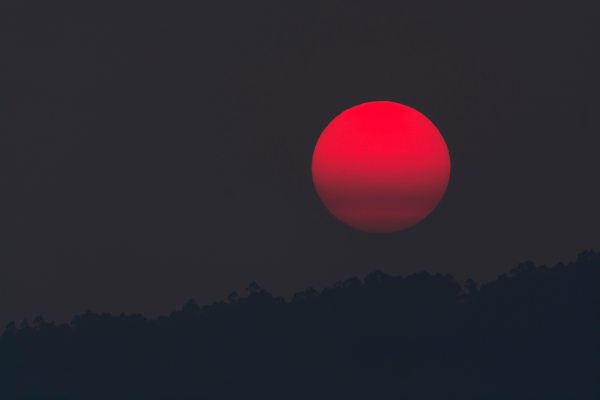
The mesmerizing red moon during the night.

However, this method wouldn’t help the young kids and adults. They made a device worth 14 dollars, and it might save your eyes for a more extended period. The retina with over 70 per cent ATP reduction over time is very much faster as compared to other body cells. The research was also previously tested on mice, bumblebees and fruit flies, and their photoreceptors show a significant change too. The blue light sensitivity decreases over ageing, and it’s said to be harmful although there is no evidence. Still, the glass manufacturers do believe the fact but try to follow the 20-20-20 rule. This method speaks to look out 20 feet far away for 20 seconds after a 20-minute session from the screen when you get exposed to a screen for a long time. The red light research by UCL did get published in the Journals of Gerontology.
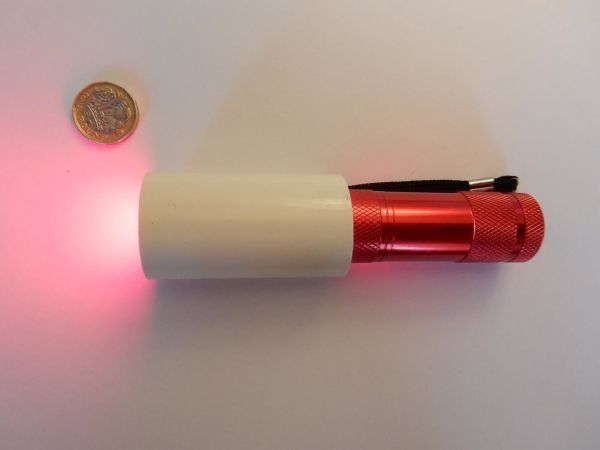
The red torch used for the study. Courtesy: UCL

Possibilities of energy extraction from the black hole

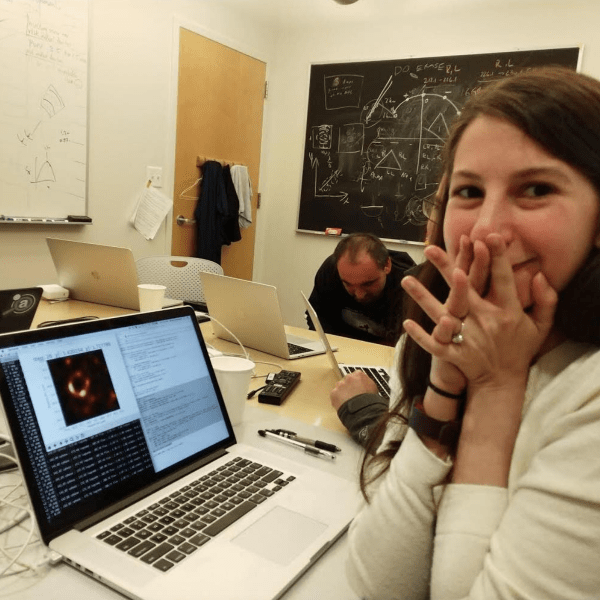
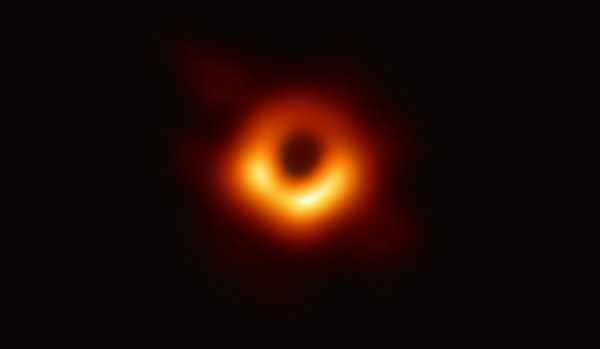
Do you remember Katie Bouman, a 30-year-old scientist who came up with CHIRP (Continuous High-resolution Image Reconstruction using Patch priors) algorithm? She contributed to generate the first image of a black hole of the M87 galaxy from five petabyte data of the Event Horizon Telescope.

Katie Bouman’s reaction on the creation of first black hole image.

After this significant success, we come across another success where theory turns into reality after it gets verified by an experiment. In 1916, German physicist Karl Schwarzschild theorized the black hole existence. A black hole can be so powerful that it can possess the energy to drags surrounding time and space. In 1969, the Penrose process originated given by Roger Penrose.

The ergosphere is the region beyond the rotating black hole of the outer event horizon. So, a practical approach made by using a rotating metal cylinder introduced by Yakov Zel’dovich, a Russian physicist. When a beam of light passed due to the rotational Doppler effect, the light reflects with extra energy. In short, for amplification, angular momentum is a must. It may sound simple, but there are factors linked to it, like the frequency of the rotating cylinder needs to be similar or higher compared to the wave. The negative rate will help to gain energy rather than amplifying it.

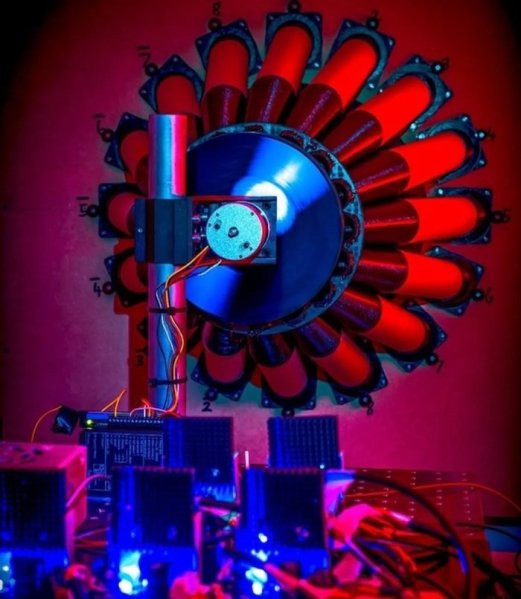
The experiment setup

But the theory has a drawback. You know that the speed of light is 300 million meters per second, so the object should also rotate at a very high rate at around a billion rotations per second. Therefore, it is impractical to demonstrate. But wait, the physicists at the University of Glasgow had a better alternative. They used sound as a medium to test the phenomena. Using a ring of speakers, foam disc, motor, and a microphone, they got the results. At lower frequency, the audio was inaudible, but as soon as the rate of rotation increased, the sound became louder up to 30 percent.

This experiment may feel just like a part of basic science. We also observe this phenomenon in real life, like the loud siren of an ambulance, follows the same principle. If you believe in extra-terrestrial activities, it can be possible that the aliens might use the same ideology, although it has no valid proof. This ideology can be possible for an advanced civilization, which still requires much more researches to go for the next 50 years.

The first image of the black hole.

The possibility could be of a black hole bomb formation. It may sound like science fiction, but it can be done by completely wrapping the sides of a black hole with a mirror reflecting the light infinitely times. But there are no dimensions for such an object, even though it is an entirely debatable topic considering it can a one dimensional or two dimensional or even five dimensions as the universe compares itself as a four-dimensional object. But we don’t know whether it is true or not. There might be some other science fiction movies which may show that black hole may engulf all the elements across it, but still, we’re surviving, and right now, you’re reading this post till here.

Current status of the animals in COVID-19 pandemic

Have you ever wondered while you’re at home safely; the doctors, nurses, police, army are the real warriors fighting in this pandemic. But what about the animals around us and in the wildlife sanctuaries? The pets may be safe, but the lone strangers are in need, and we need to help them. In this situation, the activities of poachers have been increasing a lot and can be a significant threat to wild animals, including the endangered animals.

Let’s start with something positive first. One of the facts that researchers were in shock after noticing the penguins are so happy after enjoying with less sea ice; it made them roam and dive freely in the water. Also, the bees, due to less pollution, are now able to find flowers easily. You may also see news like the animals in the zoo are roaming freely; nature is recovering, and much more. But that isn’t the reality. There’s a dark secret hidden behind these hysterical scenes.

A happy penguin looking at you while reading this article

People being unemployed in rural areas prone to move towards illegal activities. In Kenya, also Cambodia and some parts of Africa where bushmeat is increasing a lot. The rhinos are in danger for their horn, although there is no possible way to supply them due to restrictions. The protection in those areas might have reduced due to severe health complications in the countries, so they get an easy escape and a great start planning to earn money. The current situations have worsened day by day as the patients are increasing, beds are reducing, and the government is more focused on healthcare systems.

The technology wants to lend hands to help, and some of them did apply the methodology. Kruger National Park in Africa is using drones as a part of Postcode Meerkat and also day night vision cameras to keep an eye on such activities. The most crucial fact is that the number of wildlife animals is decreasing day by day, and most importantly, the diseases are being spread due to such activities. The worst nightmare in Africa, Ebola, also the SARS and AIDS have all originated due to the animals.

A typical seafood market

The wet market, banned several times in China, still functional in some areas leading to the outbreak, which has re-begun when the virus was found in the seafood market. It’s nearly a wartime scenario in the country. The swab testing recently is done, and guess what, the rise in the cases is observed. If the guidelines are not followed, people looking for freedom might lose their life permanently while fighting with the self-immunity, not even with someone else. Your body is a battlefield now; you have to fight for your system and not by raising questions to others.

At the time of writing this article, the cases are at 10 million, and still, there is no seriousness among the people. Being at home doesn’t mean you’re free; you need to contribute your work and show dedication towards society. We are a social animal, and yes, we also need to be controlled to control the diversion to other illegal tasks.

The harsh move of nature – tsunamis and earthquake

Do you know that the 2004 Tsunami had killed over 225 thousand people in 14 different countries? It’s so sad to hear, but that’s the reality when such a natural calamity appears in, and there’s no way to stop it unless if predicted in advance. The tsunami on the day of Christmas 2004 had a significant impact on the people, and the news media coverage correspondents were in shock. It did happen all of a sudden, with a maximum rise of water up to 100 feet.

On the other hand, the most massive scale on record for earthquakes recorded in Chile with a magnitude of 9.5. If there is any similar incident with a higher range of 11.0 ever happens, the Earth may split into two halves. Now the 2004 event was complemented with an earthquake of 9.1 magnitudes on the western coast in Sumatra, Indonesia. These bring tears to eyes when we hear the survival stories; how they manage to get out in such a situation is a courageous task.

Human abundance has increased so much, they’re building infrastructure everywhere.

Why do these incidents happen, and how does it originate? In short, the water present in the ocean is ultimately linked to the bottom of the Earth, to be precise, the mantle where the plate boundaries are also present. When there is a vigorous movement of water, this leads to magma production, continental crust formation, several mineral resources but also an earthquake.

Most of the researches was on the Ring of Fire mentioned in my earlier post. This area is in the Pacific Ocean. But, findings by the University of Bristol keep concerns on the Atlantic plate and the eastern sides of the Caribbean Sea. These will help us to know how it works and how it leads to an earthquake. Scientists gathered data from two marine cruise ships, which recorded the seismic activities on the temporary station with the necessary information of the rock samples etc.

To know the role of the water in a subduction zone (an area where tectonic plates intermixes with one plate and sinks), they did a study on the composition of Boron element and found that serpentine, a mineral rock supplies water to the central regions in the Caribbean Sea as mentioned earlier.

The aftermath of an earthquake. Who will recover the losses?

If such an incident takes place soon, are we prepared for the same? I hope it doesn’t happen, but an estimate says that almost everyone in this world has no proper disaster management plan. The problem is that people immediately panic and take wrong steps leading to their death. For example, you should know the fire exits of the premises in which you currently live. Around 50 earthquakes are happening around the world, all of them are not noticeable, but the major ones create loss to human lives and destruction of several infrastructures, historical monuments, etc.

It would be best if you always kept a list of emergency contacts in a diary or somewhere saved on your smartphones. Now the devices are much smarter; even most of the device manufacturers do include the SOS panic button so that you get help immediately. Be prepared for the worst, and stay safe.

On the dark side of the Moon

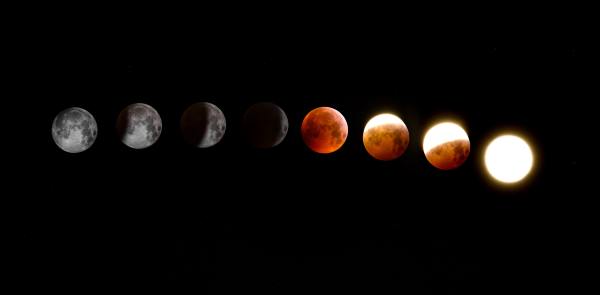
Were we ever lost in the moon while looking up high in the skies? You might remember, maybe you’ve dreamt about touching the moon or maybe walking towards it with a ladder. They might sound silly, but these facts used to fantasize us when we were young and heard such stories from our parents and grandparents too. We see the moon is round, and then it changes shape to crescent and diminishes one day. Do you know there are eight phases of the moon? They are :

  • new moon
  • waxing crescent
  • first quarter
  • waxing gibbous
  • full moon
  • waning gibbous
  • third quarter
  • waning crescent.
The phases of the moon in a single frame.

We know only one moon, but there are 219 in total in our solar system. Our planet earth has one, Mercury and Venus even have a single one, don’t they feel lonely, you can comment down. You may know the Venus does appear in the sky, so does the Mercury, try finding them next time. The other moons with the distribution as Phobos and Deimos of the Mars planet, 14 moons of the Neptune, 27 satellites of the Uranus, 79 moons of the Jupiter planet. The most leading number of moons is bound to Saturn, with 82 moons discovered till now. Moon, also a natural satellite, still can face a lunar eclipse.

We, humans, have put the first foot on the moon in the year 1969. Well, the moon is lighter being almost one-fourth than Earth and by 80 times with its diameter of 3476 kilometres. Can we see the entire moon surface, even during a supermoon? It does come a little bit close, but there is the other unknown side to discover. Recently, findings say that there are a minute number of radioactive elements on the near sides. There is around 31 percent dark region present on the near side. Let us know more about these sides. Mare, the dark zone, is usually at a lower elevation and typically flat. You may also notice the dark spot; those spots known as craters traditionally formed by the impact of a meteor attack. NASA also bought some rocks collected during Apollo missions.

An astronaut on the moon surface.

The worst thing among this situation was that the US, in the earlier 1950s, planned to destroy the moon using bombs. As in a book by John Greenwald, Jr, with the title called “Secrets from the Black Vault,” where it gets mentioned. It was due to the Soviet Union accomplished several missions and feared that they might dominate it. But luckily, the US reached the moon first, and such plans vanished out somewhere, and hopefully, someone didn’t talk about the topic.

Coming back, KREEP, a new rock found, is named before the initials of potassium (K), rare-earth elements, and phosphorous on the moon’s surface. The near side has regions with items like Uranium, Thorium which is rarely present on the other sides of the moon. These will help to know about the formation, and it’s earlier existence.

Well, even the moon, as we see, is not round in nature, but it’s an oblate spheroid. There are more things to discover, let’s us keep for the next time.

Plastic: Another reason for the slow death of plants

If you ever feel lonely, there is always someone to share your stories. Sit near a plant or a tree and talk to it, and you will feel better. Now, the plants want to tell you a story to you. Let’s start from its origin. A plant may grow on its own from the seeds which fly or get carried by the insects. There can be a possibility that you might plant a sapling on your birthday. It’s a widespread practice, and it’s done even on some occasions like Environment Day or as a part to save nature. But it may not last forever, it’ll leave you one day, you may not feel this, but some people are very much attached to nature.

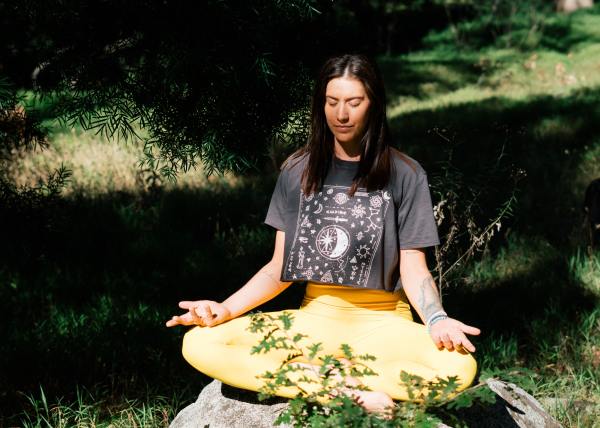
A woman meditating under the shade of a tree.

They grow up with the plants, use their products, and build homes using bamboos, now and even it was a practice in the past. Plants have no opportunity left where they can’t help us. Right from feeding us, fulfilling our daily requirements for essential nutrients, and provide shade during sunny days, it has a long journey to convey to us. But the most severe issue is that due to our activities, the plants are indirectly getting harmed and pushing them slowly to death. Yes, the plants unknowingly accept the plastic we humans created, and we litter it without being concerned about the future. Such minor activities summing leads to global warming when plastics are burnt openly in air and damaging the ozone layer.

The beautiful scenery of trees along the road.

Thale cress, scientifically called as Arabidopsis thaliana, a weed that mostly grows on the edges of roads, was a part of a test where the plastic material is mixed in the soil. The results were devastating. The plastic molecules were less than 100 nanometers made its way in the plant, tested with another batch with clean soil. They were left to grow for ten days. It reduced the biomass of the growing plant, with shorter roots and lack of nutrients due to the ground’s impurities. This research took up at Shandong University, China. They also mentioned that new seedlings grew slower in contaminated soil.

This research can be such a critical issue; unknowingly, we consume plastic, it is even present in table salt, bottled water, and now through plants for a very long time. According to an estimate, 52 thousand tiny plastic molecules go into the body every year. It’s similar to consuming a credit card every week, not the money, but equivalent plastic weight.

You can save the planet with a smile, not by littering plastics shamefully.

There are already more than five trillion bits of plastic on the ocean surface. Initially, the production of plastic was slow from 2.1 million tonnes back in 1950. In 2015, this reached up to more than 406 million, out of which exponentially 6.3 billion tonnes of waste got generated. A mere 9 percent of waste was recycled, it can make situations where every seabird species will be consuming plastic instead of actual food. The dominant firms are on the way to find alternatives to reduce waste, and we can be a part of it, say no to plastic, and be a hero to save the planet Earth.

Starlink: Connecting People to Faster Data

Among the 4.57 billion internet users and growing, you are also a part of it, currently reading this post. Half of the total users are in Asia, where the youth is consuming most of the data. Most of them are creating an online presence by spending almost 6.5 hours a day on average. You might even think to ask a question to yourself, who owns the internet? The answer is no one. You are also a part of the internet, and you own it on your devices. You watch videos on YouTube, Netflix, chat with your friends, share posts on Instagram, share your opinion on Reddit, etc. It all started in the 1960s with the project known as ARPANET, originally started being a four-node network.

Internet: Where all the ideas originate.

The average internet speed around the globe is around 33 Mbps on Mobile, where South Korea tops the chart with a whopping 100 Mbps. On the other hand, fixed connections have a much higher number at 76 Mbps, with Singapore on the top of the list with 205 Mbps. You may not be experiencing the speed. In most cases, surfing the web, listening to songs like other users, is a priority. But the time has ended up to be a power user. Several opportunities are helping people to connect to the internet for the first time. Facebook, in 2013 launched a service known as Free Basics powered by Internet.org, which was a massive success, but some problems do arise. China banned Facebook since 2009, so no opportunities for them, India refused the offer due to net neutrality. Google’s initiative Project Loon, the balloons in the stratosphere, helped to connect around 200 thousand people in 2017 during Hurricane Maria that emerged in Puerto Rico.

A bunch of cubicles where the company connects to its employees through the network.

Now, a visionary man with fulfilling all his dreams is all geared up with the project called the Starlink. Elon Musk, the owner of SpaceX in 2015, presented his idea to the world how satellite communication can help us to get stable and faster internet connections. Five hundred forty satellites launched in orbit as of June 13, 2020. There are more launches in the future to make it the largest constellation consisting of 12 thousand satellites. The Russian Sputnik I was the first satellite to make its journey to space. Currently, there are more than 8 thousand satellites, out of which only 2, 218 are functional.

A switch used to connect several devices to a network

The problem is that the future can have issues like a traffic jam in orbit, yes, along with the space debris of non-functional parts of the older satellite. An incident on September 2, 2019, where ESA changed Earth observatory satellite from its usual path as Musk refused to change the same for Starlink. So this created some disagreement with the organizations. Six satellites have failed to add up to 20 thousand space debris, which is currently under strict observance.

A space rocket launch

A positive fact about the project is that to reach internet connectivity to the remotest area in the world. Do you know that the world fastest internet speed recorded recently peaked at 44.2 terabytes, which can download a thousand high definition movies just in a second? Starlink is aiming to provide speed in gigabits with low latency, and now it is inviting you to test the network. You can be a part of this.

The creation of the swiftest fifth-matter

We know the usual three-phase or the state of matter exist around us, namely solid, liquid, and gas. What exactly is it? We can define it as something which exists in this universe, which has some weight of its own and consists of several atoms. When we move to the molecular level, we can see that they bind to each other; hence they’re the building blocks for every material. Let’s discuss them in detail.

Solids in which the particles are close to each other with almost no movement. This structure is visible through a powerful microscope. You know that a solid with its shape doesn’t change unless we apply some external force. Due to its high density, it attains stability. The liquid, which we commonly drink like water have slightly less force of attraction, so it can change its shape when we alter it. Gas is all around us. The atmosphere itself consists of 78 percent nitrogen, 21 percent oxygen, and other major constituents.

Ripples in the water

Let me introduce to the two unfamiliar matters we rarely know. Plasma found in televisions, and I guess you may already make this guess earlier. This matter is also present in neon signboards, computer chips, and even the inner lining of your favorite chips packet, the shiny metallic layer. Most importantly, it is the most natural state ever found in the entire universe; after all, the stars are also plasma at very high temperatures.

So, now moving on to the fifth matter, the BEC. Originated back in 1924, one of the great scientists, Albert Einstein, along with the Indian physicists, Satyendra Nath Bose in his papers, described the condensate and named after them. This matter was created in 1995 at the University of Colorado using lasers and magnets. They cooled a sample of a metal known as Rubidium, atomic number 35 to almost zero degrees at an instant. Due to the sudden change of temperature, the atoms internally couldn’t move much. Later the kinetic energy lost, and a giant molecule got created.

A shiny beam of light.

In the year 2020, the researchers were able to recreate it with less than a blink of an eye, which is still very slow and maybe much less than you could ever imagine. It just got created in 100 femtoseconds, i.e., only in 10-13 seconds. Even the advanced cameras couldn’t work so fast. The researchers of Finland described the process where they pumped in energy in 50 femtoseconds was visible, but with 300 femtoseconds, it wasn’t noticeable. The condensate generates a very sharp striking band of light, very bright, which may have more uses in the future. Now with further advancement, the matter was even created in the space on the largest space station, ISS, where there is zero-gravity. The research in areas got carried out using Cold Atom Lab, a 70-million-dollar lab with only 0.4 cubic meter space with all necessary items to create the BEC. The lab process of creation was also patented, and they are eager to work more in the field.

The revival of Neanderthal: The Return of our ancestor

We, the homo sapiens, now are the most advanced creature compared to our ancestors after a long evolution history dated back around 15 million years ago. Humans belong to the order primates and class Mammalia with our other members like the well-known apes, gorillas, chimpanzees, macaques, orangutans, etc. which originated from 85 million years ago. You might have seen several illustrations of human evolution, as shown below.

The evolution of a man . Courtesy: Britannica Encyclopedia

If you are familiar with the biology subject, you may know the reason. Charles Darwin, the father of evolution in his book, The Origin of Species, mentions about the series of natural selection, the struggle to exist in the world, survive by making proper tools, variation, and changes in the body like shape, color, etc. As a result of mutation and many more factors like genetic recombination, We know the stages of human evolution right from Dryopithecus, Ramapithecus, Australopithecus, Homo Erectus, Homo Sapiens Neanderthals and finally Homo Sapiens Sapiens. The closest ancestors were Neanderthals. There were others in the timeline like Homo Habilus and many more, but now researches have found a way to revive the brain of a Neanderthal. By this we can know more about, let’s see how.

The Father of Evolution: Charles Darwin

Neanderthals with a big brain and vast muscular body in size compared to Homo Sapiens. Additionally, a large head was its specialty along with powerful jaws, hunters with the tools used by them were advanced when compared to their ancestors. The researchers at Basel, Switzerland, the neuroscientists specifically grew up small replicas or copies of the brain from stem cells along with the DNA of Neanderthals. We, being a modern man, still may share about 1 to 4 percent similarity in the genes compared to them. This theory holds as the genomes of a European family matched with the reference of a 2010 model of Neanderthal genome by Svante Pääbo, a geneticist.

The following finding helped to generate three-dimensional objects of brain tissues in a petridish used in laboratories. Organoids of these miniature-sized brains are commonly used to test the effects of drugs. This information may help us more to know about the previous lifestyle, the diet of a Neanderthal. Our ancestors had a problem of communication, maybe due to the absence of language as we use today effectively. These brains were grown from pluripotent stem cells using five cell lines to produce brain organoids, leading to single-cell RNA sequencing data to learn more about their cell composition in the past.

The miniature brain cells grown from the stem cells.

We still share some common characteristics with our ancestors, like hair and skin color. Neanderthals and Denisovans genomes were found in caves, depicting they lived around 80 to 120 thousand years ago. This researches in the future may help to find the proper treatment for cancer. Just imagine, for a while, the stem cells are a gift from nature. It’s unique, usually seen during the development of a baby child, and it can generate all different cells right from a muscle cell to the most crucial brain cells. They help to recover the damages formed in the tissues also. The science of cell being so small may amaze you, and it does.

For more details, refer to the PDF: https://www.cell.com/stem-cell-reports/pdf/S2213-6711(20)30190-9.pdf

The youngest baby star in the universe

We all like to gaze up at the sky during the night. Some even try to count them. You may calculate them in your test paper or rate a hotel based on stars, but there are many, and it won’t be possible to count them. According to an estimation, there are more than 9000 visible stars in the sky and around 100 thousand million stars in the Milky Way Galaxy and more in the entire universe.

A neutron star was found and made it on the list when it was nearly 240 years old. Yes, that’s the youngest star, a neutron star to be precise. But what does it mean? Neutron, by the name, consists of 95 percent neutron, which is indeed made from protons, releasing the particles called neutrinos. There’s a lot more to know about in the world of astronomy. These neutron stars have a mass nearly 1.4 times compared to the sun.

A supernova in the galaxy.

These originate after the death of another giant star and form newer stars. There are many types of neutron stars, and the recently found one is a magnetar. Magnetar usually has a powerful magnetic field. The field can be so strong, about a hundred million times stronger than the most potent magnets on Earth made by the humans, and it can manipulate the shape of an atom. These magnetars can remain active for around ten thousand years, considered as a short time in cosmic history.

You may have heard about supernova. The neutron star is created due to the same supernova, as mentioned above earlier. There are more than 3000 neutron stars, and researchers know only 31 magnetars. The magnetar discovered is named Swift J1818.0-1607 on 12th March this year 2020, along with a substantial amount of X-rays, gamma rays, and stable beams of radio waves. This star was noticed at NASA’s Neil Gehrels Swift Observatory.

The actual image of Swift J1818.0−1607. Courtesy : NASA

The star is a part of the Sagittarius constellation and 16000 light-years away, making it somewhat close to Earth when compared to other stars. Do you know the nearest star to the planet Earth is Alpha Centauri, which is about 4.3 light-years away? The neutron stars can be merely 15 km to 30 km wide, and it can turn around once every 1.36 seconds, one of the fastest-spinning matters. This star also falls in a category known as radio pulsars, and the magnetar is one of the five radio pulsars ever discovered.

An illustration of a magnetar. Courtesy: EAS

There is very little information about these categories, and this single discovery can help in learning about its formation, aging, and its existence. This discovery was made when there was an outburst at that moment. So some findings may occur unknowingly; the researchers wished if they could see from its existence. This star was observed when the X-ray emissions were at the peak, making it ten times shinier than usual as the magnetar was out-bursting. Some inventions may happen accidentally but may make a significant change to humankind. Let me describe with an example: the discovery of penicillin was made by Alexander Fleming in 1928 when he had returned from a vacation.