
The recommended time to adequately prepare for the MCAT is at least three months of full-time study. In an ideal world, students would dedicate their summer vacations to an uninterrupted study regimen, allowing them to conquer the exam with flying colors.
Yet, for many students, this timeline isn’t practical. Many students find themselves juggling MCAT preparation alongside their undergraduate studies, which can make achieving a top score seem more overwhelming and challenging.
Fortunately, I can assure you that even within the constraints of your undergraduate schedule, you can transform what may seem like an impossible task into a reachable goal. In this guide, I’ll share my proven MCAT study tips and techniques that’ll get you to your target score as a busy student!
Create a Study Schedule
When you’re juggling multiple courses, extracurricular activities, and other school commitments, staying organized is crucial. Before cracking open your first prep book, you’ll need to establish a solid plan.
Take a moment to sit down and assess all of your obligations, creating a realistic study timeline tailored to your specific circumstances. Determine your preferred study resources, set study blocks, and allocate daily and weekly study hours.
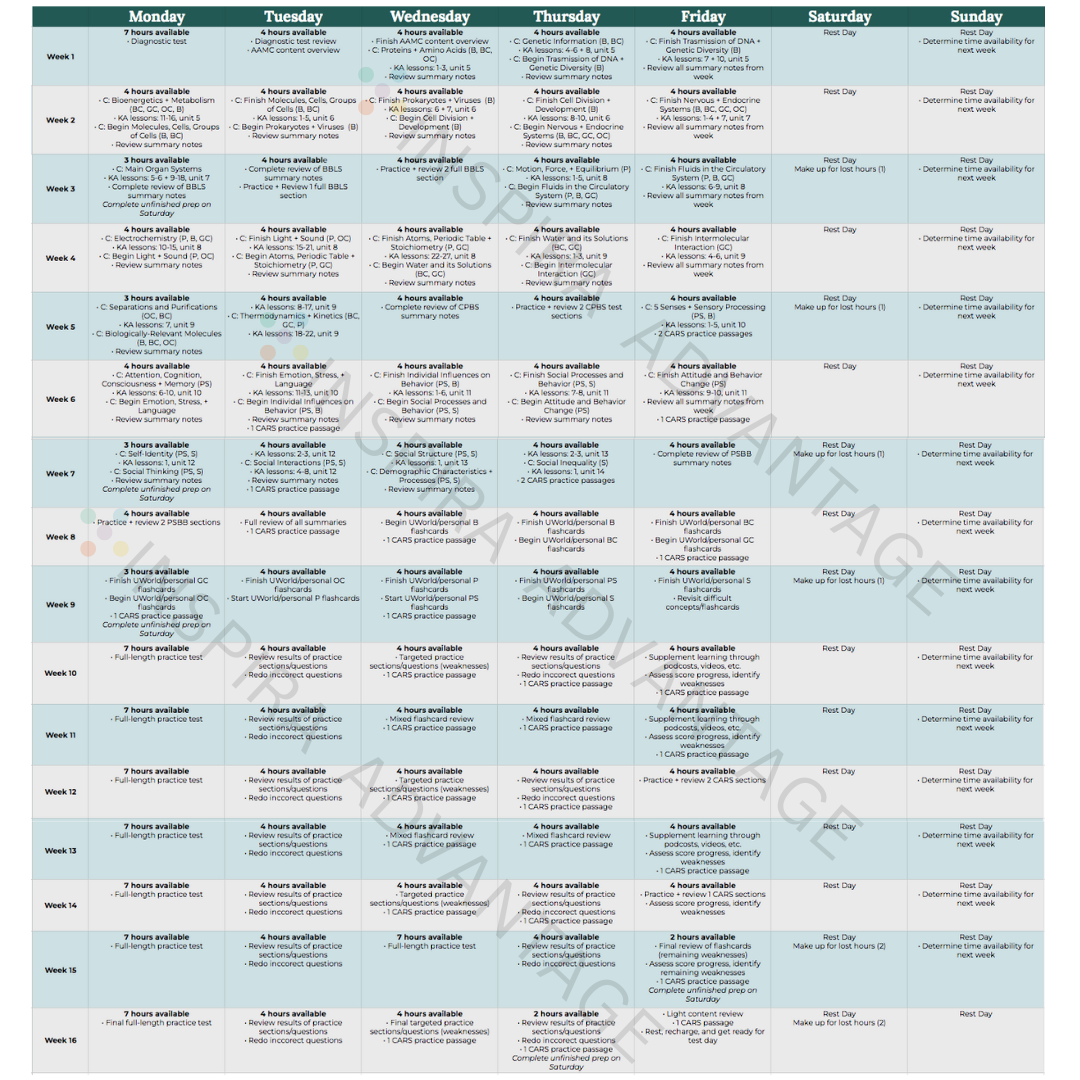
There are a series of flexible MCAT study schedules you can use as references to simplify this process. By doing this initial leg work, you’ll ensure you remain on track and accountable, always knowing your daily objectives. This way, you can concentrate on steadily working towards your goal without the constant worry of what comes next!
Stay Consistent

You may find that you can only dedicate two hours a day to your studies, and that’s perfectly fine, as long as you maintain consistency. Avoid taking extended breaks in your study schedule.
It’s more effective to allocate a consistent number of hours to your studies throughout the entire week rather than cramming all your study hours on days when you don’t have class. Consistency is paramount for honing your skills, reinforcing knowledge, and ensuring that information stays firmly rooted in your mind.
For this reason, you might find it necessary to allocate more weeks or even months to your studies than you initially anticipated. What another student can accomplish in three months might require six for you. It’s important to embrace this adjustment and give yourself a generous timeframe to achieve your goals comfortably.
Make Time for Practice

While some students opt to split a practice test into two sessions over a week, it’s more effective to find uninterrupted time to take a full practice test.
This approach not only helps you manage your time more efficiently but also allows you to become accustomed to the test conditions, preventing test-day anxiety—a score-threatening aspect that many students tend to overlook during their test prep.
Make the Necessary Sacrifices

Studying for this exam will demand a substantial amount of your time. You may even find yourself constantly thinking about it, even when you’re not actively studying. To ensure you have ample time for focused studying, it might be necessary to trim down your non-essential commitments.
While maintaining your academic performance should remain a priority, it’s worth considering scaling back on extracurricular activities until you’ve completed your study period. This could also mean having to forgo certain social events or plans with friends to avoid setbacks.
As challenging as this may be, remember it’s a short-term sacrifice. The more dedicated you are to your studies during this time, the less likely you’ll fall behind, and the sooner you’ll be prepared to ace your test, ultimately freeing up your schedule once again!
Be Realistic

You have the best understanding of yourself, your capabilities, and when it’s time to take a step back.
Avoid overloading your schedule, as this can lead to compromised academic performance or test scores. It’s important to push yourself through doubts and obstacles, but it’s equally important to prevent burnout, as it will only hinder your progress!
One of the most common pitfalls students encounter while preparing for the MCAT is attempting to rigidly adhere to someone else’s study schedule. While it’s valuable to draw inspiration from others, your study plan should only align with your own capacities and limitations!
Final Thoughts
Balancing your courses and college commitments with your MCAT studies is undeniably challenging, but it’s also unquestionably achievable. It’ll take a strong work ethic, unwavering commitment, and the ability to hold yourself accountable.
However, it’s important to note that you don’t have to navigate this journey alone. You can enlist the help of a seasoned tutor for the MCAT who can provide you with expert guidance and support at every step of the way! So, whether you brave this journey on your own or with some aid, know that success is well within your reach!
Author Bio:
By: Rohan Jotwani
He is the Director of Admissions Counseling at Inspira Advantage. He is also the former Chief Resident in Anesthesiology at Weill Cornell and reviewed undergraduate and graduate applications at Columbia university.


