BLACK MONEY&IT DEPT. RAID

 What is Black Money

Black money is funds earned illegally on which income and other taxes have not been paid. The unaccounted money hoarded illegally and concealed from the tax authorities is also called black money. So, it is essential that one does not keep any unaccounted or undeclared money, jewellery or any kind of wealth. In the event of such non-declaration, the chances of the income tax authorities conducting a raid on the taxpayer will be quite high. Therefore, the taxpayer also needs to safeguard himself while possessing someone else’s money ensuring that those are accounted for.

When does a raid happen?

An income tax raid, technically known as the process of Search and Seizure, is one of the crucial weapons that the Income-tax department possesses to check black money. It is a measure that is known to be constitutionally valid too. A raid gets triggered under any of the following circumstances:

  • Credible information of tax evasion; for instance, any evasion coming out of reports received from the Intelligence Wing of the Income tax department.
  • Information coming from government departments.
  • Information procured from assessment records of taxpayers.
  • Information received with regard to spending being disproportionate to income of the taxpayer i.e. an instance of lavish spending without corresponding income to match the same.
  • Manipulation of books of accounts, vouchers, invoices etc.
  • Illegal investment in real estate.
  • Unexplained cash credits, share transactions etc.

Who can conduct a raid?

According to Section 132(1) of the Income Tax Act, the :

  • Principal Director General or Director-General or
  • Principal Director or Director or
  • Principal Chief Commissioner or Chief Commissioner or
  • Principal Commissioner or Commissioner

They can authorize:-

  • Additional Director or
  • Additional Commissioner or
  • Joint Director or
  • Joint Commissioner or
  • Assistant Director or
  • Deputy Director or
  • Assistant Commissioner or
  • Deputy Commissioner  or
  • Income-tax Officer to conduct a tax raid. The authorizing officer will do so, if he has a “reason to believe” that :
  • A taxpayer has failed to comply with any summons or notices sent to him by the Department or
  • He has in his possession money and secondly, such money represents either wholly or partly income or property which has not been disclosed.

It has been held by various courts that the taxpayer being searched ideally does not have the right to get access to information based on which the search has been initiated by the department considering that this would hamper the department’s investigation process. Only High Courts and the Supreme Court have the right to do so.

Powers of tax authorities during a raid

The officer authorized to carry out the raid can:

  1. Enter and search any building, place, etc. where he has a reason to suspect that the books of account, other documents, money, bullion, jewellery or other valuable article or thing representing undisclosed income is kept.
  2. Break open the locks, where the keys are unavailable.
  3. Carry out personal search of a person who is suspected to have secreted some item as mentioned in (1) above.
  4. Seize the items as mentioned in (1) above.
  5. Place marks of identification and take extracts or copies of the books of account and other documents.
  6. Make a note or inventory of the valuables found during the search.

Assets that can be seized.

The authorized officials can seize the following types of assets:

  1. Undeclared cash, jewellery
  2. Books of accounts, challan, diaries, etc.
  3. Computer chips and other data storage devices
  4. Documents relating to property, deed of conveyances, etc.

Assets that cannot be seized

The authorized officials cannot seize the following types of assets:

  1. Stock-in-trade (except cash) of a business
  2. Assets or cash which are disclosed before the Income Tax and Wealth Tax Department
  3. Assets declared in books of account
  4. Cash which are duly explained
  5. Jewellery provided in wealth tax return
  6. Gold up to 500 gm for each married lady and 250 gm for each unmarried woman and 100gm per male member

 Rights of a person during a tax raid

  • To insist on personal search of ladies being taken only by a lady, with strict regard to decency
  • To have at least two respectable and independent residents of the locality as witnesses
  • A lady occupying an apartment being searched has a right to withdraw before the search party enters, if, according to custom, she does not appear in public
  • To call a medical practitioner in case of emergency
  • To allow the children to go to school, after checking their bags
  • To have the facility of having meals, etc. at the normal time
  • To inspect the seals placed on various receptacles, sealed in course of search and subsequently at the time of reopening of the seals
  • To have a copy of the panchanama together with all the annexure
  • To have a copy of any statement that is used against him by the Department
  • To have inspection of the seized books of account, etc., or to take extracts there from in the presence of any of the authorised officers or any other person empowered by him.

 Rights of a person after a tax raid

The person from whose custody any books of account or other documents are seized may make copies thereof or take extracts there from in the presence of any of the authorized officers or any other person empowered by him.

An aggrieved person can file a writ petition before the High Court challenging the raid, if he feels that the action of the department was unfair. He can also challenge the assessment and file an appeal before the Commissioner of Income Tax (Appeal).

 Duties of a person during a raid

i. To allow free and unhindered ingress into the premises 

ii. To identify all receptacles in which assets or books of account and documents are kept and to hand over keys to such receptacles to the authorised officer 

iii. To identify and explain the ownership of the assets, books of account and documents found in the premises 

iv. To identify every individual in the premises and to explain their relationship to the person being searched. He should not mislead by impersonation. If he cheats by pretending to be some other person or knowingly substitutes one person for another, it is an offence punishable under section 416 of the Indian Penal Code.

v. Not to allow or encourage the entry of any unauthorised person into the premises.

vi. Not to remove any article from its place without notice or knowledge of the authorised officer. If he destroys any document with the intention of preventing the same from being produced or used as evidence before the court or public servant, he shall be punishable with imprisonment or fine or both, in accordance with section 204 of the Indian Penal Code.


vii. To answer all queries truthfully and to the best of his knowledge. He should not allow any third party to either interfere or prompt, while his statement is being recorded by the authorised officer.

viii. Being legally bound by an oath or affirmation to state the truth. If he makes a false statement, he shall be punishable with imprisonment or fine or both under section 181 of the Indian Penal Code.

ix. Similarly, if he provides evidence which is false and which he knows or believes to be false, he is liable to be punished under section 191 of the Indian Penal Code.

x. To affix his signature on the recorded statement, inventories and the panchanama.

xi. To ensure that peace is maintained throughout the search process, and to cooperate with the search party in all respects so that the search action is concluded at the earliest and in a peaceful manner.

xii. Similar co-operation should be extended even after the search action is over, so as to enable the authorised officer to complete necessary follow-up investigations at the earliest.

How can one prevent raid?

One can lawfully avoid a tax raid by being compliant in terms of responding to summons and notices sent to him by the department and also refrain from keeping money, property undeclared.

Recent trends in HRm

We have witnessed a major recent trends in human resource management industry for the past few years. If you look back, everything from the hiring process, people analytics to software systems has evolved.

Instead of just engaging the employees and giving an upper hand to their satisfaction level, today’s trends are more inclined to enlighten the overall HR culture

recent trends in human resource management

The HR department has moved far forward than just mere recruitment, benefits management, professional development and time and attendance.

Here let us have a look at some of the most recent trends in human resource management that can change the overall working scenario of a daily office.

Employee experience:

Here than the engagement of employees at workplace, the focus has shifted to employee experience. More than mere engagement, concentration is now given to enhancement of company culture, and performance management.

The main roles of the HR department now covers enhancing employee’s journey map and giving a greater exposure to feedback tools, employee wellness apps, productivity tools and advanced communication tools.

Advanced people analytics:

Companies have moved far ahead from just the back office data to utilizing the best of people analytics. Reporting through the dashboards has outdated in most of the companies and focus is more on predictive models.

Companies have moved far ahead from just the back office data to utilizing the best of people analytics. Reporting through the dashboards has outdated in most of the companies and focus is more on predictive models.

SAP Success Factors, ADP, Visier, Cornerstone and Oracle are among the most widely used HR tools to enhance the possibilities of HR sector to improve the overall effectiveness of employees.

Learning management systems:

Despite the position of the employees or their experience, learning new skills is important to stay updated. That is why constant learning is now a novel trend in the HR sector. Providing learning opportunities to employees is the key for any company that is eyeing for progress.

An improved skill set can help employees to deliver their best at workplace that reflects in the overall productivity of the enterprise. Learning management systems are playing the crucial part in tracking the employees learning process and even to collaborate between various departments effectively.

Bazil’s President Bolsonaro Threthens to quit WHO

Following the footstep of his counterpart Donald Trump, President of Brazil Jair Bolsonaro has warned to quit the World Health Organization (WHO) unless it ceases to be a “Partisan political organization.” 

The president said “I tell you here, the United States left WHO, we are considering it in the future (…). Either WHO works without ideological bias, or we are leaving it too.”

“We don’t need outsiders to give their feelings about health here,” he told reporters in Brasilia.

All over the world, around 4,02,428 people had died because of the coronavirus Pandemic since it emerged last year in China. This pandemic affects every nation among those nations European countries are affected very much.

 Brazil ranks third among the European countries with total deaths of around 36000, while this figure has crossed 1,00,000 in the USA.

Governments of all over the world are focused on resuscitating economies, which has declined due to the lockdown of several months. 

 Suspension of the clinical trial of the drug hydroxychloroquine –

Accusing WHO as the puppet of China, last month US President Donald Trump also announced to take back US membership from World health organization.

 Mr. Bolsonaro criticized WHO for suspending clinical trial of the malaria drug hydroxychloroquine and warned to pull out of World health organization like US President Donald Trump.

Earlier the study published in The Lancet, can not answer the question of whether hydroxychloroquine can help the patient fight Covid-19 or not, and with the use of this drug the death cases increase or not. But a recent study found that those patients of Covid-19, treated with hydroxychloroquine drug had a higher risk of death than those who didn’t take it.

The WHO has also changed the guidelines on the face mask and asks to loosen the social distancing.WHO spokeswoman Margaret Harris said that a key criterion for lifting lockdowns was slowing transmission and asks to loosen the social distancing.

“The epidemic, the outbreak, in Latin America is deeply, deeply concerning,” she told a news conference in Geneva. 

The positive cases all over the world are increasing every day. Coronavirus infected almost 6.7 million people and 4 lac deaths globally.

Every Nation is trying to recover from this pandemic after risking its economy into the deepest recession since the great depression of the 1930s.

This impacted even the country with the largest economy. The US with 1.9 million the highest number of COVID-19 positive cases and 1 lac death Mr. Trump is trying to bring the economy on the track again.

Mr. Trump also said the economy was bouncing back. “We had the greatest economy in the history of the world. And that strength let us get through this horrible pandemic, largely through, I think we’re doing really well,” he told reporters.

A SHORT GUIDEBOOK TO DARJEELING

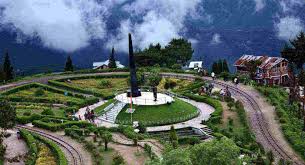
with women plucking tea leaves a breathtaking memory.The untouched beauty coupled with the picturesque view of mountains along with the availability of unique variety of tea exported everywhere makes it a go to place for people residing in the Eastern Part of the Country.

How To Get Into Darjeeling?

Darjeeling being a small town , has tourist visiting from all over India. By Plane, the nearest airport is Bagdogra, near Siliguri. It’s a 96 km drive from Bagdogra to Darjeeing, which is approximately a 3 hour drive. By Train,  the nearest railway station is  New Jalpaiguri .The railway route is well connected to cities like Kolkata, Bhubaneshwar, Guwahati , etc. We took The Darjeeling Mail from Kolkata, which takes approximately 12 hours,  the next best alternative is the Paharia Express, which takes almost the same number of hours. From New Jalpaiguri , we ‘ve to take the famous “Toy Train” to the city of tea leaves. It’s difficult to get hold of the tickets of the toy train during the summer months, because of high rush  of tourist.

The   tracks running across the town surrounded by emarald  green plantations, is a popular subject of visit for tourists.  It’s the picturesque mountainous scenery  is the reason  why so many romantic movies  have been filmed ,and Darjeeling has been mentioned in articles of romantic  subject .The  toy train  stops at the Ghoom junction, running  360 degree around the Batasia Loop. What makes it all the more famous, is the fact that it was listed as World Heritage Site by UNESCO. Buses are a convenient option for the ones who ’re backpacking, and  for people who’ve money constraint. Private taxis  are a convenient  option  for family people. Back when I visited Darjeeling in the year of 2016, shared jeeps would charge  Rs. 150-200 (depending the number of riders sharing the ride).

Best time of the year to take a  break?

Darjeeling is a backpacker’s delight and honeymooner’s dream.The best time to visit Darjeeling is between the  months April-June, when the temperature is around 25 degree Celsius. While there are some honeymoon couples who wishes to go at the time of winter i.e.,October-January when the temperature drops down to below 10 degree Celsius.

Best places to Pose for a Camera

The first to top the list, is everyone’s  favourite The Tiger Hills .Before the dawn cracks, witnessing the first rays of sun, hitting the Kanchenjunga peaks , it  makes the Perfect Sunrise. Panoramic view of the toy train  around  Batasia Loops  is a sight to die for. Animal lovers cannot miss paying visit to the Padmaja Naidu Zoological Park, where Red Pandas, Tibetan Wolves, Himalayan bears could be spotted. Tourists in huge numbers are found around  the Ghoom Monastery , one of the oldest monastery in the region. The Peace Pagoda  is the best place for relaxation , and for mental peace.

What To Grab A Bite In Darjeeling?

Darjeeling is the Hub to multi-cuisines , since it  caters to the needs of tourists from all over the world. The most famous  street food are Momos  and Thukpa, available in all the forms for food lovers. When  in Darjeeling, you just cannot  leave without   tasting the authentic tea leaves. Chaang, a local  brew, similar to beer  served in bamboo sticks catched eyeballs. For tea addicts like me, Darjeeling seemed to be next to heaven. If you fancy spice, treat your taste buds with the Dalle. Dalle is a locally made pickle, which would  surely sent a burning sensation down your spills.

Best Stop For Bargain Hunting?

Never thought my mother’s obsession over collecting unique jewellery items, would lead us to the Mall Road, a place worth visiting. The  atmosphere there  had vibes  which would remind anyone of the ancient Buddhist culture depicted in their art,  paintings ,etc. For those who admire arts and culture, must pay a visit to the Nehru Road which is famous for Buddha statues, knives, handbags, exotic Tibetan items used as souvenir. The Tibetan Self help  centre is one of the few best places known for unique carpets.

Snow capped Himalayan Peaks, the cute Himalayan train , beautiful tea garden amidst the rolling hills ,along with the Tibetan influence of arts, culture and cuisine the town has a lot to offer.

Tiktok again caught spying on iOS 14 users’ data

TikTok app – for which many campaigns are running over the social media to boycott the use of this Chinese app- was recently caught spying on people who were using iOS 14, mainly developers and selected users. Complete access to the update will be made available to users by Fall 2020, Apple had noted.

The short video-making Chinese app had stated in the past that it would stop the practice of reading content on user’s clipboards However, quite recently it was again found that the app is snooping on the Apple users and was caught red-handed a report on Telephraph stated.

This could be figured out by a software update by Apple for iOS 14 that sends notifications to users whenever an app is found accessing their data.

The alarms for apps getting access to data were raised before the release of iOS 14. Research by Talal Haj Bakry and Tommy Mysk found that many popular apps were snooping on user content without their consent. The report noted that the text left in the clipboard or the pasteboard could be inconsequential but it could contain sensitive data like user’s passwords, etc.

Every time the user opens an app, it gets access to their data. This could be gaming apps or social media apps.

Along with Tiktok other apps like AccuWeather, Overstock, AliExpress, Call of Duty Mobile, Patreon, and Google News also accessed user’s data from their clipboards, Telegraph noted.

iPhone users and software developers who received notifications were enraged with this and described the app’s behavior as “creepy” and “extremely shady,” the report stated.

A spokesperson for TikTok issued a clarification quoted by The Telegraph. He said that the app’s behavior was triggered by a feature designed to identify repetitive, spammy behavior. Further, he assured of the privacy of the users and transparency of the working of the App.

“Following the beta release of iOS 14 on June 22, users saw notifications while using a number of popular apps. For TikTok, this was triggered by a feature designed to identify repetitive, spammy behavior. We have already submitted an updated version of the app to the App Store removing the anti-spam feature to eliminate any potential confusion,” the spokesperson said.
“TikTok is committed to protecting users’ privacy and being transparent about how our app works,” he added.

It is however not clear if the company removed the feature for Android devices as well and for how long the feature had been in place. It also did not give any clarification if the user’s data from the clipboard was used by the app.

A report by MacRumors stated that a download of the new update confirms that TikTok no longer appears to be accessing the clipboard.

✨EDUCATION✨

“Education gives a perfect face to life,
Education gives holy power to fight,
Education destroyes darkness with the help of light,
Education gives man broad sight”
Education is one of the most vital part of our life. India today is the second largest higher education network in the world. Universities in India are set up by the Central or the State Governments by the means of legislation, while colleges are established by either State Governments or private bodies / trusts. All colleges are affiliated to some university. The structure of higher education consists of three years of education after 12 years of school education leading to arts and science and four-five years in professional fields like engineering and medical. But the system of education in India isnot up to the mark. 25% of the Indian population is illiterate. Only 7% of the population that goes to school managed to graduate and only 15% of those who enrol manage to make it to high school and achieve a place in the higher education system. Many of our parents forced their childrens to take fied out of their intrest. After completing 12th the student is like a machine. Parents expect that my child should learn all the things in very short period of time and earn more than them. But noone is accepting truths. If the student don’t have intrest about field that parents selected then what is bad in it??? So I request all the students like me. Please accept field according your intrest. And don’t get bothered by anyone else. Live happy and lern more and more things according u r intrest.

The Necklace

The Necklace

The girl was one of those pretty and charming young creatures who sometimes are born, as if by a slip of fate, into a family of clerks. She had no dowry, no expectations, no way of being known, understood, loved, married by any rich and distinguished man; so she let herself be married to a little clerk of the Ministry of Public Instruction.She dressed plainly because she could not dress well, but she was unhappy as if she had really fallen from a higher station; since with women there is neither caste nor rank, for beauty, grace and charm take the place of family and birth. Natural ingenuity, instinct for what is elegant, a supple mind are their sole hierarchy, and often make of women of the people the equals of the very greatest ladies. Mathilde suffered ceaselessly, feeling herself born to enjoy all delicacies and all luxuries. She was distressed at the poverty of her dwelling, at the bareness of the walls, at the shabby chairs, the ugliness of the curtains. All those things, of which another woman of her rank would never even have been conscious, tortured her and made her angry. The sight of the little Breton peasant who did her humble housework aroused in her despairing regrets and bewildering dreams. She thought of silent antechambers hung with Oriental tapestry, illumined by tall bronze candelabra, and of two great footmen in knee breeches who sleep in the big armchairs, made drowsy by the oppressive heat of the stove. She thought of long reception halls hung with ancient silk, of the dainty cabinets containing priceless curiosities and of the little coquettish perfumed reception rooms made for chatting at five o’clock with intimate friends, with men famous and sought after, whom all women envy and whose attention they all desire. When she sat down to dinner, before the round table covered with a tablecloth in use three days, opposite her husband, who uncovered the soup tureen and declared with a delighted air, “Ah, the good soup! I don’t know anything better than that,” she thought of dainty dinners, of shining silverware, of tapestry that peopled the walls with ancient personages and with strange birds flying in the midst of a fairy forest; and she thought of delicious dishes served on marvellous plates and of the whispered gallantries to which you listen with a sphinxlike smile while you are eating the pink meat of a trout or the wings of a quail.She had no gowns, no jewels, nothing. And she loved nothing but that. She felt made for that. She would have liked so much to please, to be envied, to be charming, to be sought after.She had a friend, a former schoolmate at the convent, who was rich, and whom she did not like to go to see any more because she felt so sad when she came home.But one evening her husband reached home with a triumphant air and holding a large envelope in his hand.”There,” said he, “there is something for you.”She tore the paper quickly and drew out a printed card which bore these words:The Minister of Public Instruction and Madame Georges Ramponneau request the honor of M. and Madame Loisel’s company at the palace of the Ministry on Monday evening, January 18th. Instead of being delighted, as her husband had hoped, she threw the invitation on the table crossly, muttering:”What do you wish me to do with that?””Why, my dear, I thought you would be glad. You never go out, and this is such a fine opportunity. I had great trouble to get it. Every one wants to go; it is very select, and they are not giving many invitations to clerks. The whole official world will be there.”She looked at him with an irritated glance and said impatiently:”And what do you wish me to put on my back?”He had not thought of that. He stammered:”Why, the gown you go to the theatre in. It looks very well to me.”He stopped, distracted, seeing that his wife was weeping. Two great tears ran slowly from the corners of her eyes toward the corners of her mouth.”What’s the matter? What’s the matter?” he answered.By a violent effort she conquered her grief and replied in a calm voice, while she wiped her wet cheeks:”Nothing. Only I have no gown, and, therefore, I can’t go to this ball. Give your card to some colleague whose wife is better equipped than I am.”He was in despair. He resumed:”Come, let us see, Mathilde. How much would it cost, a suitable gown, which you could use on other occasions–something very simple?”She reflected several seconds, making her calculations and wondering also what sum she could ask without drawing on herself an immediate refusal and a frightened exclamation from the economical clerk.Finally she replied hesitating:”I don’t know exactly, but I think I could manage it with four hundred francs.”He grew a little pale, because he was laying aside just that amount to buy a gun and treat himself to a little shooting next summer on the plain of Nanterre, with several friends who went to shoot larks there of a Sunday.But he said:”Very well. I will give you four hundred francs. And try to have a pretty gown.”The day of the ball drew near and Madame Loisel seemed sad, uneasy, anxious. Her frock was ready, however. Her husband said to her one evening: The Necklace, Napoleon’s collection”What is the matter? Come, you have seemed very queer these last three days.”And she answered:”It annoys me not to have a single piece of jewelry, not a single ornament, nothing to put on. I shall look poverty-stricken. I would almost rather not go at all.””You might wear natural flowers,” said her husband. “They’re very stylish at this time of year. For ten francs you can get two or three magnificent roses.”She was not convinced.”No; there’s nothing more humiliating than to look poor among other women who are rich.””How stupid you are!” her husband cried. “Go look up your friend, Madame Forestier, and ask her to lend you some jewels. You’re intimate enough with her to do that.”She uttered a cry of joy:”True! I never thought of it.”The next day she went to her friend and told her of her distress.Madame Forestier went to a wardrobe with a mirror, took out a large jewel box, brought it back, opened it and said to Madame Loisel:”Choose, my dear.”She saw first some bracelets, then a pearl necklace, then a Venetian gold cross set with precious stones, of admirable workmanship. She tried on the ornaments before the mirror, hesitated and could not make up her mind to part with them, to give them back. She kept asking:”Haven’t you any more?””Why, yes. Look further; I don’t know what you like.”Suddenly she discovered, in a black satin box, a superb diamond necklace, and her heart throbbed with an immoderate desire. Her hands trembled as she took it. She fastened it round her throat, outside her high-necked waist, and was lost in ecstasy at her reflection in the mirror.Then she asked, hesitating, filled with anxious doubt:”Will you lend me this, only this?””Why, yes, certainly.”She threw her arms round her friend’s neck, kissed her passionately, then fled with her treasure.The night of the ball arrived. Madame Loisel was a great success. She was prettier than any other woman present, elegant, graceful, smiling and wild with joy. All the men looked at her, asked her name, sought to be introduced. All the attaches of the Cabinet wished to waltz with her. She was remarked by the minister himself.

The Changing Spaces of Reading and Writing

Innovations in technology have changed the way in which society acts. As classical scholar and university librarian James O’Donnell points out in the 1999 radio broadcast “From Papyrus to Cyberspace,” one generation’s frontier becomes the next generation’s reality. One can assume that with each new frontier there are gains and losses. For example, the invention of the automobile sparked a transportation revolution, but with this improved accessibility we also implicitly accept thousands of car-related deaths each year. Advancements in writing technologies have unpredictable changes in human roles and geography. Printing presses led to the spread of unorthodox ideas across the world and new forms of democratization, while the shift from a primarily oral to literate society brought with it new lines of exclusion between those who could read and those who could not.

James Engell, Professor of English and Comparative Literature at Harvard, highlights the point that such revolutions of technology do not occur suddenly but are instead a gradual shift within societies. Just as manuscripts continued to be produced well after the invention of the printing press, it is common for information from the internet to be written down on paper. Thus the challenge with emerging digital technologies is not that such societal shifts are occurring, but finding the most effective way new technologies can be integrated with the way things are currently functioning. Learn more about the impact of the typewriter on literacy in my short documentary The Shift from Handwriting to Typewriting:

Full List of References and Media Content Sources

The shift from handwriting to digital text and their associated issues continue to plague educators as one-to-one devices become the norm in schools. My English Department meetings often consist of heated debates concerning whether students should complete their coursework on paper or digitally. The topic seems to polarise the teachers within the department and we cannot collectively decide on the “correct” answer.
“students who write out their notes on paper may actually learn more” (Mueller & Oppenheiner, 2014).
In 2012, scientists find that the brains of preliterate kids respond like a reader’s brain when they write their ABCs, but not when they type or trace the letters (Pauly, 2016). Another research team reports that college students who transcribed lectures on their laptops recalled more information than those who took notes by hand because the use of laptops results in shallower processing (Mueller & Oppenheimer, 2014). Across three experiments, researchers had students take notes in a classroom setting and then tested students on their memory for factual detail, their conceptual understanding of the material, and their ability to synthesize and generalize the information. The two types of note-takers performed equally well on questions that involved recalling facts, laptop note-takers performed significantly worse on the conceptual questions (Mueller & Oppenheimer, 2014). This research suggests that perhaps completing tasks on paper may be more beneficial for students.
However, sometimes the purpose of note taking is simply to collect information. During novel studies I often have my students take notes to record key quotations or details from the book we are reading under the categories of the elements of fiction (e.g. setting, characters, style, theme). When forced to write on paper, I find students’ notes quickly become disorganised and chaotic. Factor in that a novel study last several weeks – sometimes months – I find students’ paper notes become more of a hassle than helpful.
Instead of making the paper-or-digital choice for my high school students, I share research findings and we collaboratively discuss the benefits and advantages of each format. I then prompt them to make the choice for themselves and give them the opportunity to change formats if they feel they made the wrong choice. In Benedict Carey’s book “How We Learn: The Surprising Truth About When, Where and Why It Happens” he refocusses attention away from a mono-solution to the learning conundrum, by prompting learners to consider the task at hand:
“It’s not that there is a right and wrong way to learn. It’s that there are different strategies, each uniquely suited to capturing a particular type of information. A good hunter tailors the trap to the prey” (Carey, 2014, p. 44).
My vision for my students is for them to discover for themselves how they work best in a time where they are living and learning during this technological revolution. The following is a lesson to prompt a discussion surrounding the ambiguity of the paper of digital argument:
While reading and writing remains at the heart of education, emerging technologies will continue to alter the concept of literacy itself. As we continue to move from written text to digitized information, educators must adapt their didactic methods to coincide with modern technologies. The technologies of handwriting and typewriting need not exist in a binary relationship in our postmodernist culture. They can co-exist, offering us a multiplicity of ways to communicate where each is geared for its own different purpose.
References
Mueller, P. A. & Oppenheimer, D. M. (2014). The Pen Is Mightier Than the Keyboard: Advantages of Longhand Over Laptop Note Taking. Psychological Science, 25(6).
O’Donnell, J. & Engell, J. (1999). “From papyrus to cyberspace” [radio broadcasts]. Cambridge Forum.
Ong, W. J. (1982). Orality and literacy: The technologizing of the word. London: Methuen.
Pauly, M. (2016). A Brief History of Handwriting. Mother Jones, 41(5), 60.

Information Processing Theory and Impact on Learning

The Information Processing Theory is an approach to cognitive development that suggests a way in which humans process the information they receive. This theory contrasts a behaviourist that humans simply respond to stimuli. This theory suggests that information is processed in stages, much like the way in which a computer processes data (Orey 2002). Information enters the brain (or computer) through our senses (mouse/keyboard). Next, the information is processed in our working memory (processor/ram), where it is stored and recalled from specific areas of our long-term memory (hard drive). This recalled information can lead to an output response to the stimuli (monitor).
Turple, C. (2016).
Our sensory memory intakes information through seeing, hearing, smelling, tasting and touching. If we decide to pay attention to certain stimuli, it moves into our short-term memory, also known as our working memory as it is the place where we process information. In order for information to be stored in our long-term memory and formally learned, the information must be elaborated on through rehearsal to consolidate the new data.

Turple, C. (2016). Adapted from: Lutz, S. & Huitt, W. (2003).
We can then organize new information into existing knowledge sets (if information is similar to prior information) or create a completely new knowledge structure if the new information is unlike anything we have experienced before. Once information is stored in our long-term memory, we can later recall this knowledge back into our working memory to compare to incoming information or help elaborate on our knowledge experiences.
Many of these operations involve executive function to pay attention to new information, attend to rehearsal practices in the working memory and help consolidate information into our long-term memory. Unfortunately, new information can be lost at all stages of information processing.  If incoming stimulus is not paid attention to in our sensory memory, our brain does not notice the information. In our short-term memory, only a maximum of five stimulus can be used at once – if this information is not encoded within 15-30 seconds it will be lost altogether. In long-term memory retrieval, there are also chances of encoding failure during information consolidation if elaboration does not occur or the information cannot be properly organized in existing knowledge structures. Finally, information in long-term memory could be lost through a retrieval failure or “overridden” if new information contradicts something previously learned.
Watch my visual breakdown of the stages of the theory and applications to classroom practice:
When considering the stages of the Information Processing Theory, there are 5 easy steps teachers can take to support students in the acquisition of new information.
RECEPTION to ensure teachers gain students’ attention using an abrupt stimulus change to focus students’ sensory memory on the lesson. 
I like to use music or short video clips to gain students’ attention. Catchy songs such as this Information Literacy Song or the Literary Devices Rap work well.
RETRIEVAL educators should stimulate recall of prior learning and skills from students’ long-term memory into their working memory.
I like to use kinesthetic warmups that gets the students moving around and talking to peers other than their elbow partner. Simple activities work great such as having the students move around the room and when the music stops (often I use the songs above), I yell out a number. Students must form a group with that many people and answer a question about the content from the previous lesson. Scholastics’s Mind Up Curriculum books are full of such activities.
RECEIVE information transmitted by the teacher that should have distinctive features and suggest a meaningful organization of ideas for students. 
I started “branding” my lessons by using the same template and colour scheme for all lesson within a unit. For other skills such as the MYP Approaches to Learning, I always use the same cover slide. I have also started using less unconnected slides and utilising animations to put together the “pieces” of a slide. Finally, acronyms and step-by-step procedures have become the focus of my lessons. For example, when I was teaching my students about how to find reliable online sources, I began the lesson by playing the research song, played the kinesthetics warmup game, then introduce an acronym to help them remember the criteria for reliable websites:
RESPOND or experience the information for themselves to absorb knowledge into their preexisting knowledge sets by eliciting performance from students. 
Arguably the most important step in student learning! Students need to immediately do something with their new knowledge. When introducing the CRAP acronym for determining reliable resources, I had students decide whether example websites are reliable or not. One issue I often run into for this stage is running out of time when I have 30 minute class time blocks. What I have come to learn is it is better to break up the learning into smaller pieces where students have the opportunity to immediately respond to new knowledge, rather than using a whole block to introduce content and the following block as a work period.
REINFORCE by providing ongoing feedback to students and especially give them additional performance opportunities to apply the feedback. 
Encouraging students to make mistakes and learn from those “failures” is key. I try to give as many opportunities for students to experiment with new ideas by offering several chances to practice new skills. I aim to give my students individual verbal feedback once a week and written feedback every other week. Since I utilise Google for Education Apps Suite in my teaching, this is often done through the comments function. I have learned to create one ongoing template my students work in throughout a unit so all of my comments and their work is in one place. This way, it is easy for both myself and students to see their ongoing progress.
Turple, C. (2016).

More than anything, learning about the Information Processing Theory reminded me of the importance of lesson warm-ups and “hooking” students into a learning activity. The theory also offers a simple explanation of how memory may work and is something I have even taught my students to make them more away of their own learning behaviours.

References
Lutz, S., & Huitt, W. (2003). Information processing and memory: Theory and applications. Educational Psychology Interactive. Valdosta, GA: Valdosta State University. Retrieved from http://www.edpsycinteractive.org/papers/infoproc.pdf
Orey, M. (2002). Information Processing. In M. Orey (Ed.), Emerging perspectives on learning, teaching, and technology. Retrieved from http://projects.coe.uga.edu/epltt/index.php?title=Information_processing

Domestic Violence towards men


Today is not a special day for men but this issue should be raised as the typical increment in the cases of Intimate Partner Violence (IPV ) against men.
Not only the females are facing the violence of their partners but also the men do. This includes stalking, physical violence and sexual assault, not even that only some of them bitterly slapped, punched, killed and grabbed by their partners.

This is a hidden and bitter truth of our society across the world. We need to prevent the victims from this, at least with regards to growing public awareness, educate them about it and increased media interest in IPV against Men.

Aqua culture

A way to livestock of people

PATTIKONDA:20/07/2020

Aquaculture , also known as aquafarming, is the farming of fish,crustaces,molluscns,plants and other organisms. Aquaculture involves cultivating freshwater and saltwater. Marineculture refers to aquaculture practiced in marine environments and in underwater habitats.

Particular kinds of aquaculture include fish,shrimps,oyester farming,mariculture, algaculture, and the cultivation of ornamental fish. Particular methods include aquaponics and intrgrated,multi trophic aqua culture, both of which integrate fish farming and aquatic plant farming.

Pond prawns culture

Plants are widely cultivated in aqua culture.Micro algae, also referred to as phytoplankton,microphytes, or planktonic algae, constitute the majority of cultivated algae. Macroalgae commonly known as seaweeds also have many commercial and industrial uses. The sea weed farming is used for medical purposes as well as industrial.

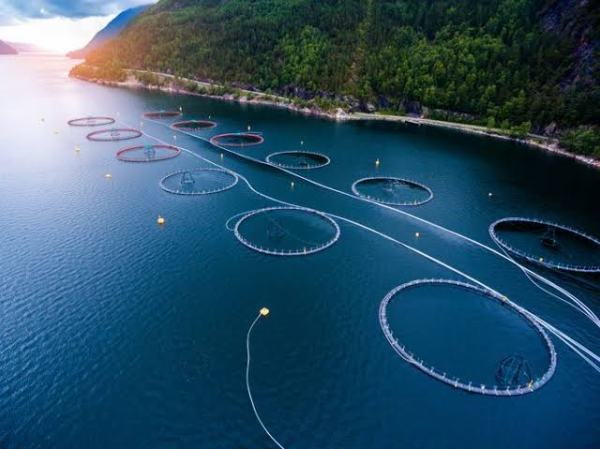
The most important cultivation of aquaculture is fish farms.It involves raising fish commercially in tanks, fish ponds, or ocean enclosures, usually for food. The most important fish species used in fish farming are, in order, carp, salmon, tilapia, and catfish. Tuna farming and salmon farming culture is most developed and common in fish farms. Crustaces are next to fish farms Freshwater prawn farming shares many characteristics with, including many problems with, marine shrimp farming. Thr most cultivation is tiger shrimp,white shrimp and gigantic prawns.

  • The Benefits of aquaculture is
  • the increased production of food for human consumption;
  • the opening of commercially viable business opportunities;
  • the creation of employment, especially in rural areas;
  • increased national exports; and.
  • the substitution of imports by local production.

The most common negative environmental impacts that have been associated with aquaculture include: waters eutrophication, water quality, alteration or destruction of natural habitats; introduction and transmission of aquatic animal diseases.fish may be closely related due to selective breeding and they live closely together.

Marine culture.