Transforming Financial Research with Real-Time Stock APIs

The world of financial research has entered a new era — one defined by instant access to live data, advanced algorithms, and intelligent automation. The days when analysts relied solely on historical datasets or monthly reports are gone. Today, accuracy and speed are paramount, and the ability to access market data in real time has become an essential tool for researchers, educators, and fintech professionals.

Photo by Pixabay on Pexels.com

One of the key technologies driving this shift is the real time stock API. This type of API provides direct access to continuously updated stock market data — including prices, volumes, and trends — from exchanges around the world. Instead of static snapshots, researchers and developers can now work with streaming data that reflects what’s happening in financial markets at every second.

A New Standard in Academic and Professional Research

In academic environments, real-time APIs are reshaping the way finance and economics are studied. Universities and research institutes are integrating APIs into their projects to allow students to test theories under real-world conditions. For example, an economics student can model market reactions to policy changes using real trading data, while a data science student can train machine learning algorithms to predict price movements based on live signals.

Such real-time environments don’t just improve accuracy — they cultivate innovation. Instead of reading about market dynamics in textbooks, learners can experience them firsthand, working with datasets that evolve continuously. The gap between academic theory and professional application is narrowing rapidly.

Empowering Innovation Beyond Academia

Real-time data also benefits independent researchers, fintech startups, and established institutions. Startups building trading platforms or analytics dashboards use APIs to create applications that react instantly to market changes. Hedge funds and asset managers integrate APIs to monitor global portfolios in real time, while developers use them to power visualization tools and financial dashboards.

Platforms like Finage’s real time stock API simplify this process by offering a scalable infrastructure, clean datasets, and easy integration. Researchers can pull historical data for long-term trend analysis or real-time feeds for dynamic models — all within a single, developer-friendly ecosystem.

Driving Transparency and Better Decision-Making

Access to live data also enhances transparency and accuracy in research and reporting. Scholars can verify how markets respond to global events — elections, central bank decisions, or geopolitical tensions — without delays or approximations. This immediacy supports more credible findings and helps policymakers and investors make better, evidence-based decisions.

Financial research powered by APIs contributes to a more informed society. When analysts, educators, and developers have equal access to reliable data, the insights generated are richer and more democratic. It’s no longer just about who can afford expensive terminals — it’s about who can use information effectively.

The Future of Data-Driven Research

The future of financial research lies in real-time data integration. As artificial intelligence, machine learning, and quantitative finance evolve, APIs will serve as the backbone of innovation. They will fuel predictive analytics, enable high-frequency simulations, and enhance risk modeling for institutions of all sizes.

Ultimately, tools like Finage’s real time stock API are not just technical solutions — they are enablers of progress. They transform raw information into actionable intelligence, bridging the gap between academia and industry, theory and practice, innovation and application.

In this new landscape, those who master real-time data will define the next generation of financial discovery, shaping a smarter and more connected future for global research and finance alike.

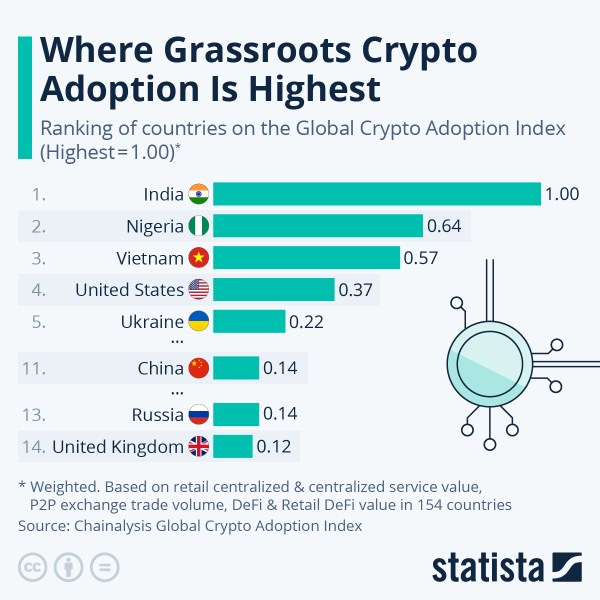
Mapping Europe’s Rise in Crypto Adoption: A Detailed Look at the CoinsPaid Index

The landscape of cryptocurrency adoption in Europe is shifting rapidly. Rather than being solely a matter of trading volumes or speculative interest, digital assets are increasingly becoming integrated into infrastructure, regulatory frameworks, and everyday use. A new report sheds light on which countries are advancing fastest — and what this means for the broader digital economy.

As explained in an article on CoinMarketCap, the report launched by CoinsPaid, the European Crypto Adoption Report, identifies the United Kingdom, Germany, and Liechtenstein as the leading European nations in adopting and integrating cryptocurrency. The study spans the years 2020 to 2024 and covers 41 European countries across five core dimensions: regulation, business activity, taxation, technology, and accessibility.

From Hype to Infrastructure: The Evolving Nature of Crypto Adoption

Historically, discussions around cryptocurrency have focused on price movement, retail trading, and speculative mania. But the narrative in Europe is changing. According to CoinsPaid CEO Max Krupyshev:

“Europe’s crypto scene isn’t just about trading. It’s about infrastructure, policy, and innovation… The Web3 industry is becoming deeply integrated not only within the fintech sector but also into people’s daily lives.”

What this means is that adoption is now being measured not just by how many people buy crypto, but how it is embedded into real-world systems — from tax regimes and regulatory clarity to access across society and business readiness. The report’s five dimensions deliberately reflect this broader view: technological readiness, business & infrastructure, regulation, taxation and public accessibility.

This shift in perspective matters: nations that ignore regulation or infrastructure risk stagnating; those that treat crypto as a policy and innovation opportunity tend to pull ahead.

Top Performers: What the Leaders Have in Common

The top three countries — the United Kingdom, Germany, and Liechtenstein — share certain traits that help explain their success in the Index.

United Kingdom
The UK leverages a strong fintech heritage, mature financial services institutions, and regulatory flexibility. Post-Brexit, its autonomy has enabled targeted measures to encourage blockchain and digital asset growth. This combination of institutional maturity, policy agility and business ecosystem strength puts the UK at the forefront.

Germany
Germany brings to the table economic scale, strong institutional frameworks, and early adoption of crypto within regulated financial services (banks, funds, custodians). The maturity of regulation and business infrastructure gives Germany a strong foundation for integrating digital assets beyond speculation.

Liechtenstein
Though small in size, Liechtenstein is large in strategic vision. Its pioneering Blockchain Act and business-friendly regulatory framework make it a model for how clear law and openness to innovation can drive adoption. Regulatory clarity gives Liechtenstein a competitive edge among smaller nations.

While each country’s context differs, their success shows three key enablers: regulatory claritybusiness/institutional infrastructure, and accessibility/innovation readiness.

Regional Patterns and Notable Outliers

Beyond the leaders, the report reveals interesting patterns across Europe.

  • Economic scale matters, but isn’t everything. Countries with higher GDP scores tend to perform better — they have more resources for infrastructure and regulation.
  • Newer EU members (those who joined after 2000) typically score in the mid-range. They show interest and momentum, but often lack the full regulatory or business backbone of older members.
  • EU candidate countries widely remain in earlier stages of crypto adoption — with notable exceptions. For example, Georgia stands out as an outlier thanks to strong regulatory push and infrastructure moves.
  • Non-EU jurisdictions like Liechtenstein and Switzerland currently benefit from regulatory flexibility, something that EU member states may lose as they implement the unified Markets in Crypto‑Assets (MiCA) framework.
  • Founding EU states such as France and Germany perform well across multiple factors, reflecting their institutional strength, but they may lack the nimbleness of smaller jurisdictions when it comes to rapid innovation.

These patterns show that size and wealth help, but forward-looking policy and adaptability are equally (if not more) important. A smaller country with bold regulation can outperform many larger peers.

Methodology: How the Index Was Constructed

The report’s methodological rigor is one of its strengths. CoinsPaid collected data from 2020 to 2024 for 41 European nations. Each of the five dimensions was measured using multiple indirect indicators (e.g., technological infrastructure, business density, regulatory clarity, taxation frameworks, public engagement).

These indicators were standardized and grouped into meta-indices. Then, using Partial Least Squares (PLS) regression — a statistical method suited to analysing complex relationships among variables — the meta-indices were combined into the final composite score for each country.

The approach ensures transparency: the report doesn’t simply rely on anecdote or raw volumes, but on measurable, comparative data that spans countries and years. For researchers or policy-makers, that gives the findings weight and credibility.

Implications for Researchers, Policy-Makers and Industry

For researchers, the report offers a rich dataset indicating how regulatory, business and technological variables align with crypto adoption. It invites further analysis: for instance, how tax policy correlates with adoption, or how accessibility affects uptake.

For policy-makers, the findings provide a benchmark. If a country lags, the five dimensions can act as a roadmap: improve infrastructure, clarify regulation, support business activity, review taxation frameworks, and encourage accessibility/engagement.

For industry, the report signals which markets are most favourable for crypto-related services, fintech integrations or blockchain ventures. A high ranking suggests stronger infrastructure, clearer regulation and a more favourable business environment.

Looking Ahead: The Next Phase of Crypto Adoption in Europe

As Europe transitions into the next phase of digital asset integration, a number of trends are likely to determine who leads:

  1. Unified regulation via MiCA — EU member states will increasingly align, reducing fragmentation across markets. Countries that prepare early will gain a head-start.
  2. Infrastructure investment — nations investing in payment rails, blockchain-related tech and public access will enhance their adoption scores.
  3. Business ecosystem growth — more startups, institutional participation, tokenisation initiatives and public-private collaboration will shift adoption from niche to mainstream.
  4. Public accessibility — adoption isn’t just business-to-business: it involves individuals, their wallets, payments, everyday services. Countries improving accessibility (digital literacy, availability of services, consumer trust) will advance faster.

In short: the move is from crypto hype to crypto infrastructure. The countries that recognise this shift and align their policy, business and technology accordingly will shape the future of Europe’s digital asset ecosystem.

Disclaimer: This article is provided for informational and educational purposes only. It does not constitute legal, tax or investment advice.