
When a young Vitalii Tkachenko assembled the parts for his first invention in a school workshop in Donetsk, few could have imagined that this project would symbolize the beginning of a remarkable journey. At the time, it was merely a competition prototype — a hydraulic tricycle built from improvised materials, designed with a system that enabled movement with minimal energy expenditure. Yet even then, the qualities that would later define his career as an engineer and entrepreneur were already visible: the ability to combine technical boldness with practical results.
Today, the name Vitalii Tkachenko is recognized in professional circles across the United States as a symbol of innovative thinking in automotive engineering and vehicle restoration. He is ASE-certified, the founder of The Guaranteed Best Choice, an entrepreneur with annual revenues exceeding $5 million, and a figure whose work fuses advanced mechanics, digital technologies, and environmental responsibility.
From Inventor to Systems Engineer
The hydraulic tricycle, which earned him second place in a national engineering competition, was far more than a school project. It was proof of his ingenuity, his capacity for systemic thinking, and his ability to propose solutions ahead of their time. “I was always searching for ways to use energy as efficiently as possible,” Tkachenko recalls. “With the tricycle, my goal was to show that it is possible to design a vehicle that combines structural simplicity with energy performance disproportionate to its size.”
This early experience laid the foundation for his later path: the ability to see not just a “problem” but the “potential for restoration and improvement.” It would ultimately shape his approach to vehicles that many discard as scrap but which he views as resources for a second life.
ASE Certification and New Standards of Quality
In the United States, Tkachenko pursued a path of structured development. Obtaining ASE certification was a milestone, representing not only professional competence but also adherence to a high standard of engineering culture. For him, it was confirmation that his methods of repair and restoration met global benchmarks. “Certification gave me not only access to advanced technologies but also the confidence that my practices aligned with international standards,” he notes.
Innovation in the Digital Era: AI for Auctions
A true challenge arose as the automotive market underwent digital transformation. Online auctions, digital catalogs, and data repositories reshaped the industry but also introduced new risks: counterfeit VIN numbers, outdated photographs, and hidden damage records. Tkachenko was among the first to propose technological solutions that extended beyond traditional engineering: the integration of artificial intelligence to analyze images and diagnose vehicle damage.
His idea is both simple and profound: if machines can be trained to detect defects on assembly lines, they can also be trained to identify flaws in auction photographs. The AI system he envisions can assess image quality, detect concealed damage, and produce objective reports for buyers. “Technology is not a threat. It is a tool that can restore fairness and transparency to the market,” Tkachenko emphasizes.
Patents and Engineering Developments
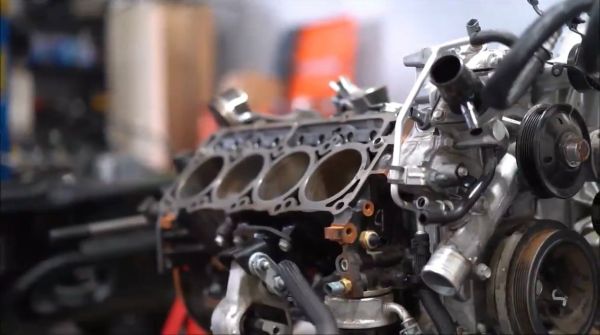
Over the years, he has accumulated not only the experience of restoring more than a thousand vehicles but also a portfolio of engineering innovations. These include projects to optimize hydraulic systems, prototypes for diagnosing hybrid and electric vehicles, and concepts for integrating “smart” monitoring modules into vehicles throughout their operational life cycle. His patents and applications reflect a persistent drive to merge traditional mechanics with modern digital technologies, making transportation safer, more reliable, and more durable.
An Engineer of the Future and an Industry Leader
Tkachenko today is more than an entrepreneur. He is the architect of a new engineering philosophy: restoration instead of disposal, transparency instead of opacity. His company now operates in more than twenty states, supported by a network of subcontractors, inspectors, suppliers, and logistics providers. This is no longer a local business but a model of the future automotive industry — one driven by knowledge, technology, and responsibility.
His formula for success blends several elements: a foundation in engineering education, practical inventiveness, a readiness to embrace innovation, and an uncompromising ethical stance. This unique combination transforms him from an “ordinary engineer” into a visionary who can rightly be called an engineer of the future.
Looking Ahead
Today, Tkachenko speaks not only of business but of mission. He envisions a future where vehicle restoration becomes an official, certified component of the U.S. automotive ecosystem. A future where federal programs support not only the production of new EVs but also engineering initiatives to bring existing assets back to life. A future where young engineers are trained not only to invent the new but also to perfect the existing.
“I believe America can become the global leader in sustainable vehicle restoration,” he says. “For that, we need standards, we need technology, and we need integrity. I want to be part of this story. And I know we are capable of writing it.”
The story of Vitalii Tkachenko illustrates that the engineer of the future is not someone waiting for the next breakthrough technology, but someone who creates it today — combining ingenuity, science, and responsibility. This is why his name is increasingly present not only in business discussions but also in scientific and environmental debates.
Author: David Mitchell




 International Journal of Research (IJR)