Programming.

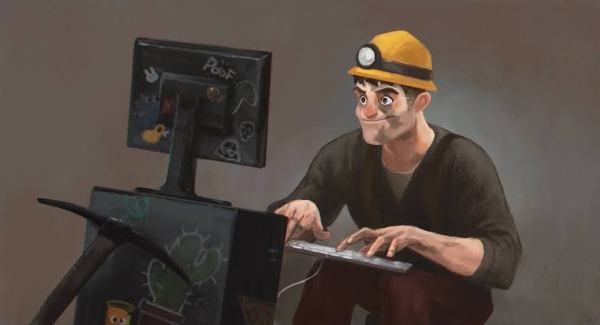
Programming is an art and therefore, we are artists. However, we’re not the kind of artists that create purely for beauty. We are functional artists. We have a functional task as well as the duty to write code, because it is effective and thus lasts. Writing elegant code is our job. This helps people find their way to the contents of those articles, just like great code helps people find their way to places they need to enhance.

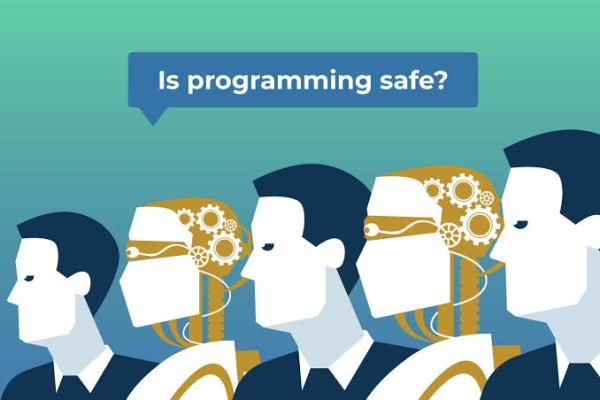
Programming is understanding a problem well enough to be able to explain it as simple as possible to a machine. Defending code by claiming effectiveness is trying to hide what you don’t understand in that problem.

The expression or application of human creative skill and imagination, typically in a visual form such as painting or sculpture, producing works to be appreciated primarily for their beauty or emotional power.

Most works of art are actually the result of a logical process, of selections of elements that complement each other.

all the light we cannot see

So how, children, does the brain, which lives without a spark of light, build for us a world full of light?” 

Anthony Doerr, All the Light we Cannot See

World War 2 has been one of the most written about topics. Over the years, we have seen a lot of books, movies and documentaries about it, each more intriguing than the previous. It was a dark moment in our history, and it is obvious why all of us can’t stop reading about it. Just when we thought that we have read it all, fiction and non-fiction, we were proven wrong. In 2014, Anthony Doerr released his “All the Light we cannot see”. This book highlighted how both the sides tried to survive the devastations of the war.It went on to become New York Times Bestseller, and even won the Pulitzer Prize for Fiction in 2015.

This book talks about the war, but not just in the way you think. Often times, literature about World War II focuses on its soldiers and leaders. Seldom it is when a book talks about its impact on the common folk. The book shifts between two points of views, one of a blind French girl trying to escape from occupied France, and another of a German boy, who gets recruited at an extremely young age. For Marie-Laure, blind since the age of 6, life hasn’t been easy, with her father as her only support.For Werner, an orphan, initially destined to labour in the mines, life takes a turn when he fixes an old broken radio, and tunes into a a radio show by a Frenchman who awakens a life long interest for science in him. Doerr’s impeccable vocabulary, and the smooth transition from Marie’s life to that of Werners makes it completely worth it to read the book. 

We all know what a difficult time that was. However , after reading about the many trials and tribulations they both had to face at extremely young ages, we come to realise exactly how cruel it was. How it stopped at nothing to take away every possible shred of happiness they possessed. Another theme constantly highlighted throughout the book is family. Both of them eventually lose all their family. This was a detail which couldn’t have been overlooked, as it was crucial to prove to the reader how innocents will always suffer when two sides fight. Doerr perfectly managed to capture the desperation one feels when losing their family, with the incapability of being able to do anything. It tugs at one’s emotional heartstrings, and definitely does the fail to provoke a tear or two.

Doerr’s hauntingly beautiful description of events not only helps you visualise the scene, but also feel the emotions the characters were going through. When Werner wins a spot into the Hitler Youth Academy, his only escape from a life in the coal mines, you can visualise exactly how he must have been feeling, being presented with two options for his future, neither of them better than the other. Both these options will lead to his separation with his only family alive, his sister. You can sense his inner turmoil at this very moment. This book is also a great read for those fond of science. Every page in this 634-page work of art is bewitching. This is one book you won’t be able to put down.

SOCIAL MEDIA

Advancement in technology led to the emergence of social media platforms. It has facilitated sharing of information, ideas, career interests and other forms of expression. Communication can be done at a faster pace as people living far away are linked to each other through social media platforms and it takes hardly a few seconds to connect to anyone around the globe.

SOCIAL MEDIA CONTRIBUTION TO SOCIETY:

  1. A boon in crisis
  2. Aid for solving crimes
  3. Form of political influence
  4. Revolution in brand making
  5. Curbs distance

SOCIAL IMPACTS:

  1. Disparity
  2. Political polarization
  3. Physical and mental health
  4. Stereotyping
  5. Sleep disturbances
  6. Adolescents
  7. Effects on youth communication
  8. Changes in mood

POSITIVE SIDES OF SOCIAL MEDIA

  1. We can keep in touch with friends in today’s busy world.
  2. We can improve ourselves by sharing our ideas, information and knowledge with those, who have same interests, even if they are so many miles away from us.
  3. Teachers and professors are making groups on SNS to extend classroom discussion, to post assignments, tests & quizzes and to assist students with homework.
  4. Many companies are developing interactive communities that connect individuals to share business needs & experiences.
  5. Students are connecting with employers via LinkedIn kind of SNS for job opportunities and internships.
  6. We can find our friends easily, if we lost contact.
  7. Generally social networking sites have a positive atmosphere. For example, Facebook doesn’t send notification, if someone is removed as a friend. So there is a least chance for the person to know that.

NEGATIVE SIDES:

  1. People are increasingly comparing their lives with others that are projecting their life as perfect. This decreases happiness levels and also can lead to self-esteem issues.
  2. Privacy is a big drawback of SMS. Some people are using other person’s personal information for malicious intentions.
  3. Addiction is another big drawback of SMS.
  4. Lot of SMS users are preferring online conversation rather than face-to-face. It’ll effect communication skills, relationships and even mental health.
  5. There is a high risk for children and teenagers from cyber stalking.
  6. Gossips and rumors spread soon.
  7. Spending in front of computer for long hours creates many health problems.

Advantages for Teenagers:

a)      Comfortable way of communication for shy teens. This can boost their self-esteem and confidence.

b)      Social media gives teens with unusual interest and hobbies a place to share information and enthusiasm.

c)      Social media helps them to enrich and manage their social lives.

d)      Teens who are differently able and have other challenges can communicate with other teens with similar problems.

 Disadvantages for Teenagers:

a)      Online bullying and harassment which is also known as Cyber-bullying may be the biggest danger for teens.

b)      Online predators, it is basically an online sex crime against minors.

c)      Less interaction with friends and family.

Advantages for students:

a)      Students can produce and retain information.

b)      Social media offers lots of opportunities for learning and interaction.

c)      Students are getting to explore and experience the world not only by books and assignments; but also by adapting social media.

d)      In today’s world; contacts, networks and communications are very important; students who are accessing Facebook, twitter and other such social networking site to connect and share information have good contacts.

        Disadvantages for students:

a)      Social media can be a very distracting and harmful for students.

b)      Students share personal information, comment on someone’s post which may be harmful for them.

c)      Always glued with their mobiles, tablets, computer which is a wastage of time and may spoil their performance.

Why Being So Dramatic?

The drama which you like, I like and which we like to enjoy. It doesn’t matter of the fact that either you are the audience or I being the “performer “or vice-versa. So what is drama? A dramatic movie that insists on some kind of happy ending starting with some sort of pathetic things. The answer to this is an absolute no. Drama in movies is an imaginary situation that we people often created or imagine in our minds even though we are busy or not. What drama means is probably the problems you suffer, I suffer or the rest of the people suffer in their respective life.

Did you notice above that I called our life problem as drama? Strange though and funny too. Exactly what people think of someone’s life problems. The imaginary situations in the movies are being related by we people in real life. Although we know that those imaginary situations are just a fake world. We still begin to imagine those situations in a little more creative ways like you are the hero and people with opinions becomes villains’ in that kind of act. And those are the ones which are called an audience.

Someone has nicely said, “If our fingers are not likely the same as another one then how can we expect someone just the same as we are.” You are different from your beliefs and I am different from my own beliefs. It’s just that you are not me and I am not you. Although we have some similar problems still the way we handle those problems are completely different. Similarly, whatever you do is your own decision and let the drama of your life which means dramatic people, dramatic audience, dramatic opinions, and the dramatic villains throw out of your life just like we ignore the crew names that are being presented at the end of the movie.

There are just two motivations to do anything throughout everyday life: an) on the grounds that it feels better, or b) since it’s something you accept to be acceptable or right. At times these two reasons adjust. Something feels better AND is the proper activity and that is simply screwing phenomenal. We should set up a gathering and eat cake.

But to note that sometimes that crew members are the ones behind the successful movie. That means if the audience or dramatic audience will no longer in your life than the success will be like the water without any taste and color. Hence, dramatic ones will push you forward and will help you to find your success but someday will bring you down too. You need to be careful and strong with a never-ending attitude.

“Who you are is defined by what you’re willing to struggle for.”
― Mark Manson

ONLINE EDUCATION- BOON OR FORFEIT?

WHAT IS ONLINE EDUCATION?

Online education is a flexible instructional delivery system that encompasses any kind of learning that takes place via the Internet. Online learning gives educators an opportunity to reach students who may not be able to enroll in a traditional classroom course and supports students who need to work on their own schedule and at their own pace.

The quantity of distance learning and online degrees in most disciplines is large and increasing rapidly. Schools and institutions that offer online learning are also

Online education is a flexible instructional delivery system that encompasses any kind of learning that takes place via the Internet. Online learning gives educators an opportunity to reach students who may not be able to enroll in a traditional classroom course and supports students who need to work on their own schedule and at their own pace.

The quantity of distance learning and online degrees in most disciplines is large and increasing rapidly. Schools and institutions that offer online learning are also increasing in number. Students pursuing degrees via the online approach must be selective to ensure that their coursework is done through a respected and credentialed institution.

REASON FOR CONSIDERING ONLINE EDUCATION:

Online education has become a viable and exciting method for instructional delivery in the global business society that runs on a 24/7 schedule (24 hours a day/7 days a week) because it provides students with great flexibility.With the increased availability of the Internet and computer technology, students are able to access information anytime and anyplace that would normally be available only through a traditional classroom. Studies have shown that students learn just as effectively in an online classroom as they do in the traditional classroom.

PROS AND CONS WITH OPNLINE LEARNING:

Online education offers many positive benefits since student s:

  1. have flexibility in taking classes and working at their own pace and time
  2. face no commuting or parking hassles
  3. learn to become responsible for their own education with information available at their fingertips
  4. find the submission of assignments easy and convenient
  5. are more apt to voice their own opinions and share and debate issues with other students, as well as learn from other students during the group discussions

Possible negative effects of learning online are that some students:

  1. may miss the face-to-face interaction with the instructor and among students
  2. may prefer to attend traditional classes with an instructor who teaches and guides them through the course
  3. find access to the necessary technology challenging and the availability of technical support limited

In addition, some administrators and instructors who do not understand the workload may display a negative attitude toward online education.

FUTURE WITH ONLINE CLASSES:

Online teaching is here to stay. Many students prefer the online classroom since it offers flexibility in their busy schedules. With the proliferation of information and knowledge, students must become lifelong learners in today’s world, and online education plays an important role in helping individuals access the learner-centered and self-directed instruction.

With enhanced software, hardware, and Internet access, more options for online education will become available. With student enrollments increasing faster than classrooms can be built, students becoming more proficient with technology, and students pursuing an education that meets their needs, the future of online education will continue to grow. Online degree programs will become more widely accepted as they become a more common practice.

CONCLUSION:

Online classes are an alternative during this pandemic. But this should not be continued for the future. Else, it will be a forfeit for every student.

Right To Information

The Right to Information Act, 2005 (RTI) is a law enacted by the Parliament of India “to provide for setting out the practical regime of right to information for citizens.” The Act applies to all States and Union Territories of India, except the State of Jammu and Kashmir – which is covered under a State-level law. Under the provisions of the Act, any citizen (excluding the citizens within J&K) may request information from a “public authority” (a body of Government or “instrumentality of State”) which is required to reply expeditiously or within thirty days. The Act also requires every public authority to computerize their records for wide dissemination and to proactively publish certain categories of information so that the citizens need minimum recourse to request for information formally. This law was passed by Parliament on 15 June 2005 and came fully into force on 13 October 2005. Information disclosure in India was hitherto restricted by the Official Secrets Act 1923 and various other special laws, which the new RTI Act now relaxes.

Right to information under constitution and its exception

The right to information movement in India began with the Mazdoor Kisan Shakti Sangathan (MKSS) movement to bring in transparency in village accounts through the demand for minimum wages in rural India. False entries in wage rolls were a sign of increasing corruption in the system, which encouraged MKSS to demand official information recorded in government files.

The constitution of India does not clearly provide Right to information. However, the Apex court of the country held in several cases that Right to information is concern with the Article 19 (1)(a) and Article 21 of the Indian constitution which states freedom of expression and speech and Right to life and personal liberty respectively. In other words we can say that it (Right to information) protect the very purpose of the such Articles. Article 19 and Article 21 comes under part 3 of the constitution which is the fundamental Rights of Indian constitution. In this way we can say that Right to Information might be considered as fundamental right of the constitution.

Article 19 of the Constitution of India talks about rights and in Art.19 (1) (a) we have the Freedom of Speech. This Freedom not only extends to the right of expressing the views freely but also the right to know. This right to know also has some limitations to it, for say, information of national security or any other matter which would affect the nation’s integrity. But if contains information for example related to sanitation then it is not a matter of national security and the public has the right to know why such information is with held.

Citizens have a right to know about government affairs. But the right is not absolute; secrecy can be legitimately claimed in respect of transactions with repercussion on public security. In other words, the information which is not in the interest of the public or country cannot be disclosed at any circumstances. Sec.8 of the Right to information Act, 2005 is concerns with the same. In the case of Prabha dutt v. Union of India, the Apex court ordered the superintendent of the Tihar jail to allow the representatives of a few news paper to interview two death sentence culprit under Article 19 (1)(a) though with the observation that the right under Article 19(1)(a) “is not an absolute right, nor indeed does it confer any right on the press to have an unrestricted access to means of information’’. This position has been reiterated in subsequent cases. The right to information was regularly recognized by the court in a number of cases as it is concern with freedom of speech and expression in Article 19(1)(a) until finally it was incorporated in the right to information Act, 2005 and give ultimate mechanism for its utilization.

Right to information Act, 2005 and its exception
The right to information bill was passed by Lok Sabah on 11th may 2005 and by Raj Sabah on 12th may 2005 and took the assent of president on 15th June 2005. It has come as statue book Right to Information Act, 2005 (22 of 2005). It was enacted to provide transparency and accountability of the sovereign authority to the people. Under this Act an individual can make an application to get the information from the public authority. It aids to check the working system of the government. In the democracy of India, where its citizens play a very crucial role, it is very necessary to provide them adequacy, transparency and accountability of the government. Now the question arises is that, is the individual has the right to get any information from public authority? Article 19 (1)(a) (which is a fundamental right) implicit or concern with the right to information but Article 19 (2) of the constitution also states that if the disclosed information affects the integrity or security of the country then government can impose restriction on such sub clause. In other word, a citizen can get the information to the extent which does not affect the secrecy and dignity of the country. So right to information is not an absolute right. Section 8 of the Right to Information Act concerned with the exemption from disclosure of information. It states that any information which affect country’s integrity, security, strategic, scientific economic interest of the state which lead to incitement of an offence and contempt of the court of law, breach of privilege of parliament and state legislature, information regarding trade secret; the disclosure of which would harm the competitive of third party, information received in confidence with foreign government, information related to personal life of individual which has not related to any public interest or activity shall not any obligation to the public authority to be disclosed. Because of such exception it is said that Right to information does not provide absolute right.

Ambiguity and Obstacles
Right to information has also ambiguity. Section 22 of the Right to Information Act 2005 provides that it is to have overriding effect over inconsistent legislation or rules. The Official Secrets Act, 1923, a legacy of British rule in India, contains several provisions prohibiting the flow of information from the Government to ordinary people. It was enacted to protect against spying, but its provisions are far-reaching. They serve not only to restrict access to information, but also to punish the disclosure of certain sorts of information, by any person. Sections 123 and 124 of the Indian Evidence Act, 1872 also impose unnecessary restrictions on making available official information as evidence. The Act is designed as per the state level also. Different states have different rules which create the ambiguity.

Right to information had provided an awesome right to the citizen of India. But still there is not sufficient awareness of the people among their rights. On the other hand the fee structure is also not so favorable. It creates obstacle to achieve the very purpose of the Act or fundamental right

Warrior

It isn’t easy to think about others when your survival is at risk. Every bag of rice and a pouch of milk is precious. Every time you lend a helping hand to those in need, you may be risking the well-being of your loved ones.

Which is why in the time of this coronavirus pandemic, one can see a sharp rise in hostility. Supermarkets have been drained of essentials. People are even hoarding perishable items such as milk and vegetables. But then moving incidents of kindness have also come to light, restoring faith in humanity. Rich, poor, middle-class, men or women, there are people who have set an example for the rest of us, showing how social distancing doesn’t mean emotional distancing. That care and compassion become a necessity when the going gets tough because, at the end of the day, that is what truly makes us human. 

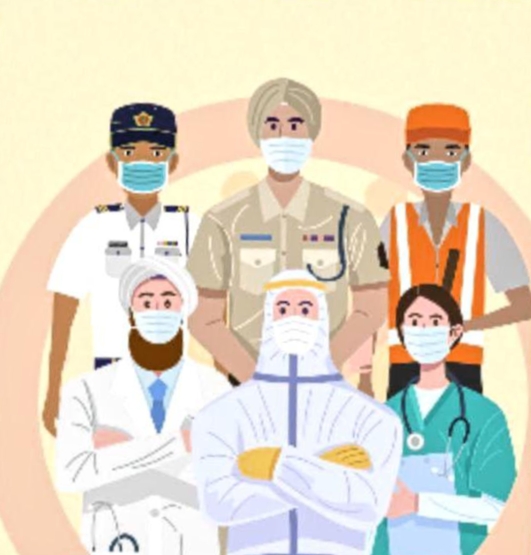
“We must find time to stop and thank the people who make a difference in our lives. Thankyou corona warriors! It’s immense to see the service that you have provided. We are safe, credit goes to all the frontline workers. Thank you so much!

should billionaires exist

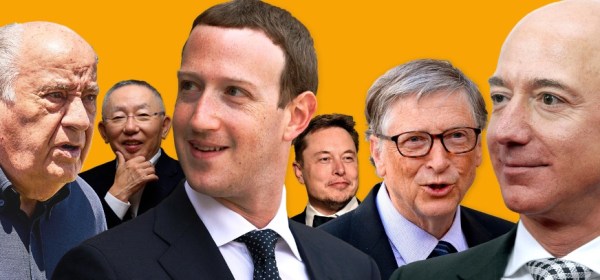
No matter how much one dislikes it, they can’t deny the fact that the world is divided between the top 1% and the bottom 99%, and the rich, no matter how small in numbers, run the world. People are hoarding the worlds wealth, while the rest are left to find comfort in the scraps. These past few years have seen a massive rise in billionaires, currently their being 2095 of them. However a question that has been going around for years now is that, should billionaires exist?

A lot of people have different opinions on this. Some believe that billionaires have earned their keep, so they should be able to keep it. According to me, no one gets that rich just by working honestly.Imagine trying to save a billion dollars, and start by saving a $100 each day. If you, and one descendent per generation, saved $100 every day, and each of you lived for 90 years, it would take you and 304 generations of your descendants to save up one billion dollars, more than 27000 years. Take Jeff Bezos as an example. The owner of Amazon, with a net worth of $114 billion, he is undoubtedly one of the richest men on this planet. Yet, many of their own workers have unionised against the company. In a statement during the announcement of the union push, picker Rashad Long claimed workers are overworked, pressured with frivolous disciplinary actions and security lines at the exit cut into breaks and extended work shifts, unpaid. Exploitation of the innocents is a major step towards their billions.

The worst part about this is that there are problems like climate change and world hunger, which can easily be solved if proper money is invested in them.  These billionaires can definitely contribute a lot and possibly even solve such issues, without facing a major loss, but they choose not to. They sit comfortably with their riches and watch the world burn. If you make the argument that they are not at all obliged to donate their money, then capitalism has fooled you. No one needs that much money, but they do have it. And people actually need food, housing etc, yet they can’t afford it. Even if they choose to help them, they’ll still be left with a lot of money. So you can see for yourself why billionaires shouldn’t exist.

The COVID 19 pandemic has had the world under lockdown. There are people losing their jobs, people who don’t even know how they’re going to pay rent or buy food for their kids. During this, the top 1% have the audacity to sit in their million dollar mansion and say that “quarantine is like prison”. This is an extremely privileged statement, coming from those who don’t even have any responsibilities, who are not directly affected by this pandemic.

Currently, 2% of the world’s population is homeless. People are dying in the streets, whilst billionaires are buying their 10thmansion. It’s truly saddening to see how many people will rush to defend the top 1%. The common people need to be educated of their exploitative nature. Only then will they be able to say, “No. Billionaires shouldn’t exist.”

Sources: https://www.theguardian.com/technology/2019/jan/01/amazon-fulfillment-center-warehouse-employees-union-new-york-minnesota

Indian Soldiers ideal example of meaning sacrifice.

Indian soldiers are fighting from all the sides of our country with the cruel opponents to give us security.Soldiers are one of the greatest assets of any country. They are the guardians of the nation and protect its citizens at all costs. Moreover, they are a very selfless lot who put the interest of the country above their personal interest. A soldier’s job is one of the toughest things to do in the world. They are supposed to fulfill challenging duties and possess exceptional qualities to become a great soldier. However, their lives are very tough. Nonetheless, they always fulfill their duties despite the hardships.

A country sleeps peacefully as the soldier performs its duties. The first and foremost duty of a soldier is to serve their country without any selfish motive. A person usually joins the army out of love for his motherland and to protect it. Even though they know they will have to face numerous problems, they still do so for their country.

A soldier keeps night long vigils on the borders even in the face of great and grave dangers. He stands heroically before enemies. For a soldier, in the words of Longfellow.Our soldiers have never surrendered. Their motto has always been “do or die”. In the India-China war of October-November 1962 and later in the Indo-Pak war of September, 1965 one Indian soldier killed many times his enemy counterparts on various fronts. If India retreated in the India-China war it was not for want of courage but for want of adequate weapons which the Chinese had and we did not. hi fact our soldiers were not even adequately clothed. As an American paper said, our soldiers were fighting on icy tops of the mountains in summer uniforms.

LATEST MODERNISATION BY INDIAN DEFENCE FORCES:-

India is re-organising its mechanised forces to achieve strategic mobility and high-volume firepower for rapid thrusts into enemy territory. At present, the Indian army has severe deficiencies in its artillery (particularly self-propelled guns) and ammunition stocks, not to mention the inability of some of its modern tanks to operate in the heat and dust of the desert regions around the international border. India proposes to progressively induct as many as 248 Arjun MBT and to develop and induct the Arjun MK-II variant, 1,657 Russian-origin T-90S main-battle tanks, apart from the ongoing upgrade of its T-72 fleet. Arjun MK-II trials had already begun in August 2013. The improved features of the MK-II version of Arjun are night vision capabilities with a thermal imaging system for detecting all kinds of missiles, Explosive Reactive Armour (ERA), mine ploughs, the ability to fire anti-tank missiles with its 120 mm main gun, an Advanced Air Defence gun capable of shooting down helicopters with a 360-degree coverage, Automatic Target Tracking (ATT) lending a greater accuracy when it comes to moving targets and superior Laser Warning and Control systems. The Indian Army will upgrade its entire Boyevaya Mashina Pekhoty-2 (BMP-2)/2K infantry combat vehicle (ICV) fleet to enhance their ability to address operational requirements. Upgrades include integration of the latest generation fire control system, twin missile launchers and commander’s thermal imaging panoramic sights, anti- tank guided missiles, as well as automatic grenade launchers.

PROGRAMS BY INDIAN ARMY:-

The Indian Army has also embarked on an infantry modernisation programme known as Futuristic Infantry Soldier As a System (F-INSAS). The infantry soldiers will be equipped with modular weapon systems that will have multiple functions. The core systems include bullet proof helmet and visor. The bullet proof helmet is an integrated assembly equipped with helmet mounted flashlight, thermal sensors and night vision device, miniature computer with audio headsets. The personal clothing of the soldier of the future would be lightweight with a bullet-proof jacket. The futuristic jacket would be waterproof, yet it would be able to breathe. The new attire will enable the troops to carry extra loads and resist the impact of nuclear, chemical and biological warfare. The new uniform will have vests with sensors to monitor the soldier’s health parameters and to provide quick medical relief. The weapons sub-system is built around a multi-calibre individual weapon system with the fourth calibre attached to a grenade launcher. These include a 5.56 mm, a 7.62 mm and a new 6.8 mm under development for the first time in India.

In November 2013, the Indian Army moved a step closer to the battlefield of the future, where command networks know the precise location of every soldier and weapon, with whom generals can exchange reports, photos, data and verbal and written communications. Army headquarters called in 14 Indian companies and issued them an expression of interest (EoI) for developing a Battlefield Management System (BMS). The BMS will integrate combat units – armoured, artillery and infantry regiments, infantry battalions, helicopter flights, etc. – into a digital network that will link together all components of the future battlefield. While precise costs are still unclear, vendors competing for the contract say the army expects to pay about Rs 40,000 crore for developing and manufacturing the BMS. However, in 2015, the Indian Army decided to replace the F-INSAS program in favour of two separate projects. The new program will have two components: one arming the modern infantry soldier with the best available assault rifle, carbines and personal equipment such as the helmet and bulletproof vests, the second part is the Battlefield Management Systems (BMS).

SOME MORE THINGS ABOUT INDIAN ARMY:-

The Indian Army has also embarked on an infantry modernisation programme known as Futuristic Infantry Soldier As a System (F-INSAS). The infantry soldiers will be equipped with modular weapon systems that will have multiple functions. The core systems include bullet proof helmet and visor. The bullet proof helmet is an integrated assembly equipped with helmet mounted flashlight, thermal sensors and night vision device, miniature computer with audio headsets. The personal clothing of the soldier of the future would be lightweight with a bullet-proof jacket. The futuristic jacket would be waterproof, yet it would be able to breathe. The new attire will enable the troops to carry extra loads and resist the impact of nuclear, chemical and biological warfare. The new uniform will have vests with sensors to monitor the soldier’s health parameters and to provide quick medical relief. The weapons sub-system is built around a multi-calibre individual weapon system with the fourth calibre attached to a grenade launcher. These include a 5.56 mm, a 7.62 mm and a new 6.8 mm under development for the first time in India.[112]

In November 2013, the Indian Army moved a step closer to the battlefield of the future, where command networks know the precise location of every soldier and weapon, with whom generals can exchange reports, photos, data and verbal and written communications. Army headquarters called in 14 Indian companies and issued them an expression of interest (EoI) for developing a Battlefield Management System (BMS). The BMS will integrate combat units – armoured, artillery and infantry regiments, infantry battalions, helicopter flights, etc. – into a digital network that will link together all components of the future battlefield. While precise costs are still unclear, vendors competing for the contract say the army expects to pay about Rs 40,000 crore for developing and manufacturing the BMS.[113] However, in 2015, the Indian Army decided to replace the F-INSAS program in favour of two separate projects. The new program will have two components: one arming the modern infantry soldier with the best available assault rifle, carbines and personal equipment such as the helmet and bulletproof vests, the second part is the Battlefield Management Systems (BMS).

Really our soldiers are doing a great job. Brave soldiers like sri.santosh babu garu and so many more had made our army to be in top.

Conclusion:-Finally…I wanna say that please remember our soldiers and be patriotic upon our nation.dont be irresponsible upon our country and try to serve our nation in various ways.

Jai jawan-jai kisan…jai hind.

SOCIAL CHANGE AND LAW

The abstract idea of ” social change” evinces dimension of some of the characteristics of a group of people. If any action which affects a group of people who shared values or characteristics can also be said as ”social change.”

Generally, the change in existing pattern of social life is known as ” Social Change”. Society and social conditions never remain static. Generally, social change is to be understood as change in social structure. According to Gainsberg, social change is change in social structure e.g the size of a society, the composition or balance or its part or the type of its organisation. According to Jones, ”social change devotes variation in, or modification of , any aspect of social process,social patterns, social interaction or social organisation.” Davis observed that social change is large number of persons are engaging in activities that differ from those which their immediate fore-fathers engaged in some time before. According to Anderson and Parker, social change involved alteration and structure or functioning of forms or processes themselves.

Social change means there is must change in social structure. Social structure which can be understood as nature, social behavior, social relations, social organizations, community of people. Social change is change in the social order. According to Charles L. Harper, ””significant alteration of social structure and cultural patterns through time.”

In this context, I deem it is apt to remember, the observation of Dennis R. Fox:
”Well-meaning efforts by liberal psychologists to reform the law in keeping with values such as dignity, privacy, justice, and equality are often misguided because law exists to serve the status quo. Law inhibits the systemic, radical social change necessary for psychological and societal well-being. It does so through coercive power, substantive assumptions about human nature, the ideology of law’s legitimacy, a preoccupation with procedure rather than substance, a focus on rational technicality rather than equity, and encouragement for limited, self-defeating legal solutions. Psycho legal scholars should arouse public dissatisfaction with law and assist social movements seeking to overcome legal impediments to social change.”

The theories of Social Change:
1. Linear theory of social change
2. Cyclic theory of social change.

Elements of Social Change:
The word ”social change” is used in history,politics, economics,and sociology. Social change is also an issue in social work, political science, history,sociology, anthropology, and in many social sciences. Social change is being created by revolution, protest,politics, communities, and by direct action. Elements of social change can be separated as follows.
1. Physical or geographical
2. Biological
3. Economic
4. Cultural
5. Psychological
Anthony Giddens observed social change as infra:
Sociology was born of the transformations that wrenched the industrializing social order of the West away from the ways of life characteristic of preceding societies. The world that was created by these changes is the primary object of concern of sociological analysis. The pace of social change has continued to accelerate, and it is possible that we stand on the threshold of transitions as significant as those that occurred in the late eighteenth and nineteenth centuries.

Shackman, Liu, and Wang, observed two sources of social change. One is ” systematic” and another is ”non-systematic”. Technological innovation, climate change and changes forced by other countries which come under purview of non-systematic source of social change. Generally, changes to society occur through combination of systematic as well as non-systematic processes. Eisenstadt (1973) argued that modernization required a basic level of free resources and the development of standardized and predictable institutions, such as a stable but flexible market system and political process. An additional requirement was that governing institutions be flexible enough to adapt to the changes that come up.

· The classic Hegelian dialectic model of change is based on the interaction of opposing forces. Starting from a point of momentary stasis, Thesis countered by Antithesis first yields conflict but subsequently results in a new Synthesis.

· Thomas Kuhn in The Structure of Scientific Revolutions argued with respect to the Copernican Revolution that people are unlikely to jettison an unworkable paradigm, despite many indications that the paradigm is not functioning properly, until a better paradigm can be presented.

· The Greek philosopher Heraclitus used the metaphor of a river to speak of change thus, “On those stepping into rivers staying the same other and other waters flow” . What Heraclitus seems to be suggesting here, later interpretations notwithstanding, is that, in order for the river to remain the river, change must constantly be taking place. Thus one may think of the Heraclitan model as parallel to that of a living organism, which, in order to remain alive, must constantly be changing.

· Daoist: The Chinese philosophical work Dao De Jing, I.8 and II.78 uses the metaphor of water as the ideal agent of change. Water, although soft and yielding, will eventually wear away stone. Change in this model is to be natural, harmonious and steady, albeit imperceptible.

Law as a means of social control:
Two fold objectives of law to serve is, firstly, to keep up stability and afford orderly life in the society. Secondly, to persuade social change by changing itself according to the needs of the changing society. Thus , law is an important agency of social control. The society supervenes the law for better most socialization. Rule of law in any constitution is the bedrock for democracy. By putting fear in the minds of public, the law is a helpful agency for social control. Law regulates the behavior of the people in society. Law, by using force, makes the people conscious about their duties and obligations. Law saves precious and good concepts of the society. The exploitation of the people is curbed through law. The constitution of India, criminal , civil laws and other statutes are designed to surmount this goal.

The functionalist slant:
According to Talcott Parsons, one of the leaders of this school, change stems from other social systems (through, for instance, cultural influence, as in the case of English education in the former colonies of the British Empire) and tensions and strains within the system itself, especially those related to economic activities. Michael Haralambos, holds that the economy is solely responsible for resolving societal problems, with industrialism playing an especially crucial role. Functionalists also trust that cultural norms and values unite society, which is, to a great extent, resistant to change, and thus make certain that change in social structure is likely to be slow if it conflicts with not easily modified cultural, religious or political principles. According to Harper, short-term changes, as in family developmental stages, may be obvious and easy to comprehend, but they may not actually constitute changes at all in the long run .

Law as an instrument of social change:
To understand the social change through law and legal system, it is pertinent to understand that the working of legal system in the light of political,social,economic perspectives which can be seen in the constitution of India. Law is a mirror to know how people relate to one another , their values,what they consider worth preserving in life, and how they define their own security.

Law and Public opinion:

The law , which is molded through public opinion is thus the result of state action in accordance with the public opinion. Here it is necessary to remember that when Rajiv Gandhi government waned to bring defamation bill, because of the opposition to the bill in the public, the government dropped the idea. The public opinion is the reflection of the Peoples will. Public opinion becomes law.

Social change and the constitution of India:
Preamble is a key to open the statute and consists of source and objectives of the statute. Literally preamble means preliminary statement in writing or in speech or an introductory part of the statute. The word ”Pre ” means ”before”. ” Amble” means ”walk”. Thus , it is known the word ” preamble” means ”before walk”.

The preamble declaration provides that we the people of India having solemnly resolved to constitute India into a sovereign,socialist,secular,democratic republic and Justice: Social, economic and political Liberty of thought, expression , belief, faith and worship. Equality of status and of opportunity and to promote among them all. Fraternity assuring the dignity of the individual and the unity and integrity of the nation.

The Supreme Court of India in Beru Bari’s case,1969 observed that preamble is not part of the constitution and hence the parliament has no power to amend the preamble. Later, in Kesavananda Bharati vs State of Kerala,1973 the Court held that there is no wrong in treating preamble as part of constitution.

Conclusion:
A systems perspective must acknowledge that social problems are interconnected rather than isolated. People should be advocates for radical perspectives defensible on both psychological and political grounds, in keeping with values such as dignity, autonomy, equality, and justice.