SUICIDE

 The act of intentionally causing one’s own death is called suicide. Suicidal behavior refers to talking about or taking actions related to ending one’s own life. Suicidal thoughts and behaviors should be considered a psychiatric emergency.

Warning signs that a person may commit suicide include:

  • talking about feeling hopeless, trapped, or alone
  • saying they have no reason to go on living
  • making a will or giving away personal possessions
  • searching for a means of doing personal harm, such as buying a gun
  • sleeping too much or too little
  • eating too little or eating too much, resulting in significant weight gain or loss
  • engaging in reckless behaviors, including excessive alcohol or drug consumption
  • avoiding social interactions with others
  • expressing rage or intentions to seek revenge
  • showing signs of extreme anxiousness or agitation
  • having dramatic mood swings
  • talking about suicide as a way out

Talk to someone who is feeling suicidal in the following manner:

  • stay calm and speak in a reassuring tone
  • acknowledge that their feelings are legitimate
  • offer support and encouragement
  • tell them that help is available and that they can feel better with treatment

Danger alarm:

  • putting their affairs in order or giving away their possessions
  • saying goodbyes to friends and family
  • having a mood shift from despair to calm
  • planning, looking to buy, steal, or borrow the tools to complete a suicide, such as a firearm or medication

Help the person by:

  • Call 911 or your local emergency number.
  • Stay with the person until help arrives.
  • Remove any guns, knives, medications, or other things that may cause harm.
  • Listen, but don’t judge, argue, threaten, or yell.

Factors that increase the risk of suicide:

  • incarceration
  • mental illness
  • previous attempts and self-harm
  • psychoocial factors
  • poor job security or low levels of job satisfaction
  • history of being abused or witnessing continuous abuse
  • being diagnosed with a serious medical condition, such as cancer or HIV
  • being socially isolated or a victim of bullying or harassment
  • substance use disorder
  • childhood abuse or trauma
  • family history of suicide
  • previous suicide attempts
  • having a chronic disease
  • social loss, such as the loss of a significant relationship
  • loss of a job
  • access to lethal means, including firearms and drugs
  • being exposed to suicide
  • difficulty seeking help or support
  • lack of access to mental health or substance use treatment
  • following belief systems that accept suicide as a solution to personal problems

People are at risk because of the following:

  • medications
  • mental health
  • substance abuse

Treatment of people at risk:

  • talk therapy
  • medications ( antidepressants, antipsychotic medications, anti-anxiety medications)
  • avoiding alcohol and drugs
  • sleeping well
  • exercising regularly

Ways to prevent suicidal thoughts:

  • talk to someone
  • take medications as directed
  • never skip an appointment
  • pay attention to warning signs
  • eliminate access to lethal methods of suicide

WHO recommends four key interventions which have proven to be effective:

  • restricting access to means
  • working with the media to ensure responsible reporting of suicide.
  • helping young people develop skills to cope with life’s pressures
  • early identification and management of people who are thinking about suicide or who have made a suicide attempt, keeping follow-up contact in the short and longer-term

MEDIA AND ENTERTAINMENT LAW

Over the last few years, the Media and Entertainment Industry (M&E) has grown and gained significance in India. It is estimated to generate approximately USD 35 million in revenue. The M&E Industry has gained innovative technological trends and increase in internet usage by suppliers and consumers.

Being a wide sector, there is high probability of misuse in M&E. For effective regulation, various legislations with equally varying purposes have been enacted. Legislations like Cinematograph Act, 1952, The Cable Television Network Regulation Act, 1995, The Information Technology Act, 2000 is applicable for regulating content on mediums of exhibition like cinema theatres, television and internet.

Legislations like Copyright Act, 1957 and Trademarks Act 1999 was enacted for protecting intellectual properties like trademark and copyrights. The punishments for offences such as defamation, hurting religious sentiments, etc. that take place in this industry are dealt under the Indian Penal Code, 1860.

The first area of concern in the M&E sector is Right to free speech and censorship. The freedom of communication and expression through mediums such as electronic media and published articles is a fundamental right under Article 19 of the Constitution of India. Article 19 guarantees freedom of speech as an integral aspect of each individual’s right to self- development.

In Brij Bhushan & others vs. State of Delhi, the court held that censorship will impose obvious restrictions on freedom of speech and expression.

Various authoritative bodies like CBFC, I&B Ministry are imposing restrictions by censoring films to curtail creative freedom of speech and expression. Examples of such censored films include Udta Punjab, Lipstick under My Bhurkha etc. As Democracy is the most important feature in today’s world and an effective democracy requires free expression of opinion.

The second area of concern in the M&E Sector is copyright infringement and trademark protection. The Copyright Act, 1957 provides copyright protection and registration of literary, drama, music, sound recording and artistic work. The main purpose of the act is to prevent the abuse of monopolies provided by the copyrights and creating an equal balance between individual rights and public interest. The Trademarks Act of 1999 mandates protection to names, titles, word, letter, graphic artwork, shape of products, words and combination of colors. This act incorporates the provisions for remedies in case of infringement of trademark.

The third area of concern is piracy. Online piracy means stealing an owner’s property from the internet that has already been licensed and resulting in damage and loss. Under the M&E Industry, the film sector loses $2.8 billion of its total revenue to piracy every year. The rise of digital downloads and availability of cheap rental options makes the movie theatre business go down. The major source of piracy is because of cam- cording in theatres and release of films in other countries a day before the release of the film. These films are released online even before the actual release.

To prevent piracy of the films, producers and film makers has to obtain John Doe orders from the court. In Shreya Singhal v/s Union of India, the court held that removal of the online content should be done only if the adjudicatory body issues an order compelling intermediaries to remove the online content. When the involved parties fail to comply with the order to eliminate illegal content, the Supreme Court decision protects the intermediaries from liability.

Under the Copyrights Act, 1957, sections 54 to 62 deals with the provisions of civil remedies that are available for copyright protection in civil courts. Section 63 to section 70 deals with the provisions for criminal remedy when a person knowingly infringes the copyright in a work, other rights conferred by the act or knowingly abets the infringement.

Any person held guilty will be prisoned up to 3 years but not less than 6 months, has to pay fine not less than fifty thousand rupees but may extend up to 2 lakhs, searching and seizure of the infringing goods and delivery of the infringed goods to the owner. There has been an increase in the criminal cases filed for hurting of religious sentiments, defamation, sale of obscene objects, etc. Most complaints filed are for the sake of publicity and media attention. The nuisance caused due to such cases is a big hurdle in the industry.

The M&E industry is a continually innovating industry which is governed by multiple regulations. The key areas of concern – Right to free speech and censorship, Trademark infringement and Piracy are driving factors to ensure protection of right and establish fair rules of playing in the market. Legislations in these areas pave the way for the expansion of the industry.

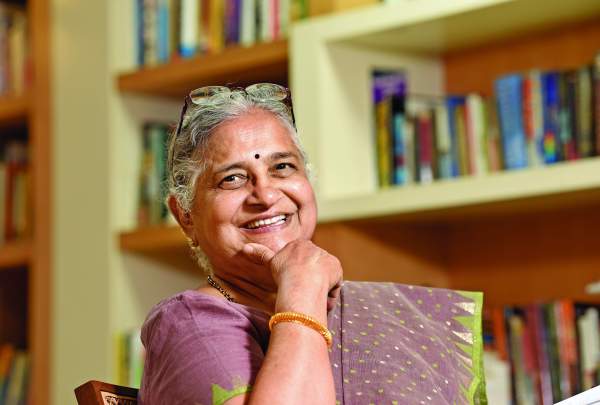
Sudha Murthy

“How long can you keep birds in cages when their wings are strong and they are ready to fly? We can give our children only two things in life which are essential. Strong roots and powerful wings. Then they may fly anywhere and live independently. Of all the luxuries in life, the greatest luxury is getting freedom of the right kind.”

-Sudha Murthy

Sudha Murthy is one of India’s most beloved storytellers. Her work appeals to both children and young adults. Born in 1950, she became the first female engineer to be hired at the largest auto-manufacturer in India, TELCO. She has written not only novels, but also short stories, travelogues, technical books, and books for children. She has received several awards over the years, including the R.K. Narayana’s Award for Literature, and even the Padma Shri, which is the fourth highest civilian award in India.

She was born in Shiggaon, Haveri in Karnataka. Her family was extremely study-oriented and sought to educate her in a time where women’s education was not very common. She was a determined student, and never missed a day of class as she was aware of the rampant misogyny which was prevalent in India in the 70s,  and knew that no one would assist her if she missed classes. She never let anyone break her spirit or her love for education. She broke several societal barriers by pursuing Engineering and Computer Science and was even awarded a gold medal for both of her degrees by the Chief Minister of Karnataka. 

In 1974, Sudha Murthy planned to go abroad to pursue her doctorate, until she came across an advertisement put up by TELCO on the Indian Institute of Science, Bengaluru, calling for young and hardworking engineers, and under the advertisement, it was written, ‘Lady candidates need not apply.’ This agitated her, and she wrote a strongly worded postcard to Tata, expressing her surprise over their gender discrimination. A few days later she received a telegram from JRD Tata and was granted a special interview. Soon the job was hers, and she made history by being the first female engineer to be hired at TELCO.

Sudha Murthy helped her husband N.R. Narayana Murthy build Infosys, which is an Indian MNC providing business consultation, information technology and outsourcing. In 1996 she started Infosys foundation and is its trustee till date. A nonprofit organisation, it aims to support the underprivileged sections of society. The foundation provides healthcare, education and promotes art and craft amongst the underprivileged. She is a philanthropist and has expressed her love for this country and passion to serve it several times. She also started the Library Project and has established 60,000 libraries to date.

One cannot talk about Sudha Murthy without mentioning her books. A prolific award-winning writer in both English and Kannada, her books have been translated in all major languages. Her books were simple, yet profound and can make you laugh, cry and feel nostalgic at the same time. She was raised by her parents and maternal grandparents, and drew inspiration from her experiences to write her first notable book, “How I Taught My Grandmother To Read and other stories.” Her other works include Grandma’s bag of stories, The Day I Stopped Drinking Milk, The Mother I Never Knew and many others. 

Sudha Murthy is an inspiration for every single woman in this country. Her work has continuously broken several barriers and improved society in every way it could. Her story is an extremely influential one.

Growth

Economic growth in modern times is a crucial element part of global development. Even small businesses can impact how people abroad spend their hard earned money. Businesses thrive when they are able to provide a product people want. People create their living situations based on resources available and what they can afford. Businesses offer a number of elements highly important to a country’s economy such as employment, productivity and a form of financial security. Think of it this way; when a business is doing well they are likely contributing to a country’s economy that makes it beneficial for everyone involved.

So what happens when a business underperforms or does not meet expectations of its market? This is when the economy can be affected. When people lose their jobs they may not be able to buy what they want. The economy would not see the same activity as it did when it was stronger. People may not decide to make bigger purchases like a house or vehicle. They may not want to travel or take vacations. So, an underperforming business may not hire more people, give raises to their employees, or offer better benefits to their marketplace.

SELF LOVE

Self-love is a state of appreciation for oneself that grows from actions that support our physical, psychological and spiritual growth. Self-love means having a high regard for your own well-being and happiness. Self-love means taking care of your own needs and not sacrificing your well-being to please others. Self-love means not settling for less than you deserve. Self-love means accepting yourself as you are in this very moment for everything that you are. It means accepting your emotions for what they are and putting your physical, emotional and mental well-being first.

Loving yourself doesn’t mean you think you’re the smartest, most talented, and most beautiful person in the world. Instead, when you love yourself you accept your so-called weaknesses, appreciate these so-called shortcomings as something that makes you who you are. When you love yourself you have compassion for yourself.

It can mean:

  • Talking to and about yourself with love
  • Prioritizing yourself
  • Giving yourself a break from self-judgement
  • Trusting yourself
  • Being true to yourself
  • Being nice to yourself
  • Setting healthy boundaries
  • Forgiving yourself when you aren’t being true or nice to yourself

To practice self-care, we often need to go back to the basics and

  • Listen to our bodies
  • Take breaks from work and move/stretch.
  • Put the phone down and connect to yourself or others, or do something creative.
  • Eating healthily, but sometimes indulge in your favorite foods.

WAYS TO PRACTICE SELF LOVE

  1. Start each day by telling yourself something really positive. How well you handled a situation, how lovely you look today. Anything that will make you smile.
  2. Fill your body with food and drink that nourishes it and makes it thrive.
  3. Move that gorgeous body of yours every single day and learn to love the skin you’re in. You can’t hate your way into loving yourself.
  4. Don’t believe everything you think. There is an inner critic inside of us trying to keep us small and safe. The downside is this also stops us from living a full life.
  5. Surround yourself with people who love and encourage you. Let them remind you just how amazing you are.
  6. Stop the comparisons. There is no one on this planet like you, so you cannot fairly compare yourself to someone else. The only person you should compare yourself to is you.
  7. End all toxic relationships. Seriously. Anyone who makes you feel anything less than amazing doesn’t deserve to be a part of your life.
  8. Celebrate your wins no matter how big or small. Pat yourself on the back and be proud of what you have achieved.
  9. Step outside of your comfort zone and try something new. It’s incredible the feeling we get when we realize we have achieved something we didn’t know or think we could do before.
  10. Embrace and love the things that make you different. This is what makes you special.
  11. Realize that beauty cannot be defined. It is what you see it as. Don’t let any of those Photoshopped magazines make you feel like your body isn’t perfect. Even those models don’t look like that in real life.
  12. Take time out to calm your mind every day. Breathe in and out, clear your mind of your thoughts and just be.
  13. Follow your passion. You know that thing that gets you so excited but scares you at the same time. The thing you really want to do but have convinced yourself it won’t work. You should go do that!
  14. Be patient but persistent. Self-love is ever evolving. It’s something that needs to be practiced daily but can take a lifetime to master. So be kind and support yourself through the hard times.
  15. Be mindful of what you think, feel and want. Live your life in ways that truly reflect this.

DELHI-NATIONAL CAPITAL OF INDIA

Delhi, India’s capital territory, is a massive metropolitan area in the country’s north. In Old Delhi, a neighborhood dating to the 1600s, stands the imposing Mughal-era Red Fort, a symbol of India, and the sprawling Jama Masjid mosque, whose courtyard accommodates 25,000 people. Nearby is Chandni Chowk, a vibrant bazaar filled with food carts, sweets shops and spice stalls.

HISTORY IN DELHI:-

The earliest reference to a settlement in the Delhi area is found in the Mahabharata, an epic narrative about two groups of warring cousins, the Pandavas and the Kauravas, both descendants of the prince Bharata. According to the narrative, a city called Indraprastha (“City of the God Indra”), built about 1400 BCE, was the capital of the Pandavas. Although nothing remains of Indraprastha, legend holds it to have been a thriving city. The first reference to the place-name Delhi seems to have been made in the 1st century BCE, when Raja Dhilu built a city near the site of the future Qutb Minar tower (in present-day southwestern Delhi) and named it for himself.

The next notable city to emerge in the area now known as the Delhi Triangle was Anangpur (Anandpur), established as a royal resort in about 1020 CE by Anangapala of the Tomara dynasty. Anangapala later moved Anangpur some 6 miles (10 km) westward to a walled citadel called Lal Kot. The Tomara kings occupied Lal Kot for about a century. In 1164 Prithviraj III (Rai Pithora) extended the citadel by building massive ramparts around it; the city then became known as Qila Rai Pithora. In the late 12th century Prithviraj III was defeated, and the city passed into Muslim hands. Quṭb al-Dīn Aybak, builder of the famous tower Qutb Minar (completed in the early 13th century), made Lal Kot the seat of his empire.

The Khaljī dynasty came to power in the Delhi area in the last decade of the 13th century. During the reign of the Khaljīs, the suburbs were ravaged by Mongol plunderers. As a defense against subsequent attacks by the Mongols, ʿAlāʾ al-Dīn Khaljī (reigned 1296–1316) built a new circular fortified city at Siri, a short distance northeast of the Qutb Minar, that was designated as the Khaljī capital. Siri was the first completely new city to be built by the Muslim conquerors in India.

REMARKABLE MONUMENTS:-

The National Capital Territory of Delhi has both historic and modern tourist places and also famous for places of worship of many religions. Delhi is home to UNESCO world heritage sites of Qutub Minar, Red Fort and Humayun’s Tomb along with famous tourist attractions and historical landmarks such as Chandni Chowk,Purana Quila, Parliament House,Connaught Place,James Church, Pitampura TV Tower, Jawaharlal Nehru Stadium,Tallest Indian Flag,Lodhi Gardens,Rajpath,Old Fort,Ahinsa Sthal and Mughal monuments in Delhi.

CONCLUSION:-

Finally,This city a hevenly city

The dark reality of cruises

Vacations, who doesn’t love them? The idea of sitting back, relaxing and unwinding, and living above your means, even if it is just for a few days sounds extremely appealing. As the world has become more connected, the number of vacation options have also expanded. One of the most luxurious options of them all is cruises. It is understandable as to why in recent years, the number of cruise liners and cruise options has expanded, as it is one of the few options which offer an all-in-one experience. The food is also top quality and the relaxation options are exquisite. Sounds fun, doesn’t it? Well in reality it is far from fun. The family-friendly cruise liners have a dark side too, one many fail to acknowledge.

Let’s start with the impact they have on the environment. Vast quantities of fossil fuels are required to power cruise ships every day. It is estimated that a cruise ship produces about 79,000 litres of sewage a day, and maritime regulations have allowed most of this sewage to be dumped at sea, which is extremely harmful to marine life. They also emit large amounts of carbon dioxide and sulphur dioxide each day. Cruises have diesel engines or gas turbines, and these have a high sulphur content. When mixed with air and water, sulphur forms sulphuric acid, which causes acid rain. This destroys marine life, corrodes buildings and even causes deforestation. Large ships also cause noise pollution, which is very hazardous for marine life. 

Working on a cruise sounds like a dream job with all the travelling one gets to do. But in reality, the job is a nightmare for the workers. The employees are extremely overworked and severely underpaid. They are signed for contracts which are about six to eight months long. They are made to work for about 12 hours a day, 7 days a week, and make around $550 to $2000 a month, which is not adequate. Workers whose jobs are physically demanding often experience injuries and the healthcare they receive is inadequate. They are sometimes even scared of reporting any health issues they suffer from as they’re afraid their contracts might not be renewed. Cruise lines also include clauses in contracts which makes it difficult for the employees to sue them. Most of these workers are from poor countries and have limited economic opportunities back home, which is one of the main reasons why they choose to work in such jobs.

If one thinks that cruises are good for the customer, they couldn’t be far from the truth. Sure the luxuries a cruise line offers are enchanting, but they promote reckless money spending habits. Everything is obscenely expensive. Cruise cabins are cramped, and approximately 60 people are injured each year due to “operational mishaps”, which includes fires and explosions. Food poisoning is extremely common, and so are virus outbreaks. In 2017, for example, more than 500 passengers fell ill on two Royal Caribbean’s cruise ships.

Now the question that arises is, can cruising ever be ethical and sustainable? While technology is helping to reduce the environmental impact of cruises with solar-powered systems and a switch from diesel to liquid natural gas, cruises still aren’t the most sustainable vacation choice for one. The best option would be to avoid cruises altogether, but if you still want to travel on a cruise, then be sure to choose one which takes proper steps to dispose of waste, makes efforts to decreases carbon emissions, and treats its workers well. 

Travelling

Travelling may be an expensive hobby but is compensates the financial loss. If a traveler has interest in life and its manifestations, one can find much to keep oneself absorbed and happy. A student of any stream can definitely find something of his own interest and studies. One can definitely find everything that satisfies his intellectual and sensuous cravings.

As a hobby, travelling keeps us busy during leisure time; it is the best method to utilize time. Till a person breaks from dull routine, physically and mentally; one cannot find satisfaction. Travelling helps us to achieve this break. At a new place, one is curious to know and eager to gather all the unknown information about the place which he has neither read nor heard before he gets thrills and surprises which keep the interest and enthusiasm alive and encourages us to keep our journey on.

Travelling is a hobby for me and for you.

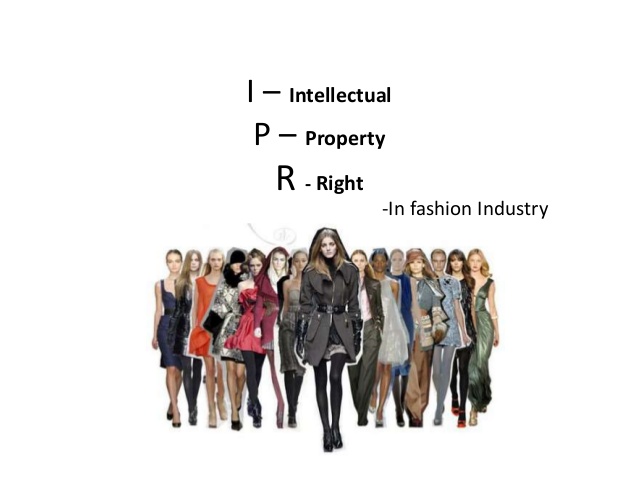
Fashion and Intellectual Property

Intellectual Property is the basis for protecting your concept and your idea, regardless of whether you are in Fashion or in any other industry. Intellectual Property is the body of Law that protects the creative process. Intellectual Property is simply an intangible property. The ideas are not protectable, but artistic expression of an idea is. Intellectual Property Law is basically a mix of Trademark, Copyright and Patents.

Fashion industry covers a wide ambit of Intellectual property rights within it. Fashion industries are just only with collection of clothes but also footwears, jewelry’s, accessories etc. fashion industry is rapidly growing and many Indian Designers such as Ritu Kumar, Rahul bal , JJ Valya have succeeded in protecting their fashion designs.

As per study conducted by the associated chambers of commerce and industry India (ASSOCHAM), the domestic designer apparel industry in India by year 2020 will cross over Rs 11,000 crore. Even though contribution of Indian designer worldwide is minimal to 0.32% but by year 2020 it may reach by 1.7%.

Trademark

Trademark Law probably has the biggest impact on Fashion. It’s the brand or the logo. It can be also more than just a name. Every great brand has a Trademark like Kate Spade, Calvin Kevin, Ralph Lauren, Channel, Gucci, LOUIS VUITTON, H&M, Tiffiny & Co. etc . All of these brands are well known and Trademarked. I believe that the real primary purpose of Trademark Law is to avoid confusion in the marketplace amongst costumers.

Can you Trademark Colour?

Christian Louboutin V. Yves Saint Laurent[1]
This case can be said to be landmark case to create awareness in public regarding the Fashion Law. A Trademark case involves Christian Louboutin and his red soles. Christain louboutin is a French designer who has Trademarked in the US and in a number of other countries around the world. It is widely recognized that when you see that red, you knew it its Christian Louboutin shoe. It is very high definition of Trademark.

Ferrari red, tiffinay & co. colour blue. There are many companies that have established good Trademark rights in color.

Copyright protection

A Copyright is nothing more, nothing less, than a right to Copy. Its designed to encourage more artistic creation and expression by giving creation control. The moment you put pen or paper to draw a design or drawing, creating sculpture or compose a musical piece , you have a Copyright in that work. Overall, the cut and silhouette and shape of a dress is not protected by Copyright Law. You don’t want Copyright to protect, for example the cut of Jacket because Jacket has two arms and buttons, think of your standard blazer.

For example Diane Von Furstenberg wrap dress, the wrap dress itself is not protectable, but the design is protectable.

Star Athletica V. Varsity Brands[2]

The star case Athletica case dealt with a simple question which is if you have series of sizes and shapes on an article of clothing, is that protectable? An employee of this company that made pretty much all the cheerleaders uniform in the country went to another country and copied some of the designs of his original employer. His new company was sued for Copyright infringement. The Court looked into two different aspects of the designs. Theirs is the more Utilitarian Design , Like the cut of the uniform, versus the designs, the images that were on the uniforms. The Court states that the Copyright would not protect the cut of the apparel , but would protect the design.

In Rajesh Masrani v Tahliani Design [3] 30the Division Bench of the Delhi High Court was provided with an opportunity to respond to some aspects highlighted above. In the case, the Plaintiff alleged that the drawings which it made in the course of developing garments and accessories were artistic works under Section 2(i)(c) of the Copyright Act, 1957. The patterns printed and embroidered on the fabric were also alleged to be artistic works, as were the garments finally designed. The plaintiff also alleged infringement of copyright in these various artistic works, and a Single Judge issued an interim injunction in its favor.

Piracy

Piracy is very common in art and design industry. It involves unauthorized copying of original fashion designs. Designs are counterfeited and knocked off.
Designs made by fashion designers can be protected under various categories of Intellectual Property as follows:

  1. The sketch design can be registered as artistic work under copyright act, 1957.
  2. Design can be well protected under desgins act under class 02,03,05,10 and 11 of third schedule of design rules 2000).
  3. Colour combinations can be protected under copyright act,1957.
  4. Fabric or any material used in art or design can also be protected under designs act, 2000 and patents act 1970.
  5. Logo designs are protected under the trademarks act, 1999. Louis Vuitton handbag covered with repeating pattern of brand is well known by LV mark.

Revelant Legal Provisons relating to this Industry

IPR Law in India provides protection to the fashion design under three legislations i.e.

  1. The Designs Act, 2000,
  2. The Indian Copyright Act, 1957,
  3. The Trademarks Act, 1999 and GI Act, 1999.

From the perspective of Fashion Industry, the Acts do not protect the entire garment as a whole; rather it protects the particular/individual aspects like shape, pattern, colour etc. of the garment.

  1. Protection under Design ActThe Designs Act 2000, is drafted for the protection of the non-functional aspects of an object, having visual appeal, such that design that include the features of shape configuration, pattern, ornament or composition of lines or colours applied to any two dimensional or three dimensional or on both forms. Such a design right remains in force for a period of ten years, extendable subject to conditions, for a total period of 15 years.

    Section 22 of The Design Act [4]states that in the case of piracy of a registered design, the infringer shall be liable to pay the registered proprietor of the design a sum not exceeding Rs25,000 recoverable as a contract debt; if the proprietor elects to bring a suit for the recovery of damages for any contravention of the rights conferred to him and for an injunction against repetition of it, damages may be awarded and the person may be restrained by injunction.

    The design registration system in India is time bound and the fastest of all IP registration procedures. Once registered the proprietor enjoys monopoly and exclusive rights not only against copies of the protected design, but also against substantially similar products.
     
  2. Protection under Copyright ActA fashion design which is capable of being registered as design under the Designs Act, 2000[5] and registered as per the provisions of the Act will get copyright protection only under the Designs Act and nowhere else. In this scenario, copyright in registered fashion design will subsist for a maximum period of fifteen years. Fashion design, which is capable of being registered as design under the Designs Act, 2000 but not so registered will get copyright protection under the Copyright Act, 1957. Copyright in fashion design, in this context, will subsist up to fiftieth (50th) reproduction by an industrial process of the article to which design has been applied.

    Section 15 of The Copyright Act [6]provides for special provisions stating that copyright shall not subsist in any design, which is registered or capable of being registered under The Design Act. Another important parameter of this provision is that copyright in the design shall cease as soon as any article to which the design has been applied has been reproduced more than fifty times by an industrial process by the owner of the copyright or with his license by any other person. This clause stymies the inherent protection accorded by copyright that a person enjoys merely by virtue of creation.

    The original artistic work, as contrasted with the applied artistic work i.e. the design would continue to fall within the ambit of artistic work under copyright Act and shall be entitled to full period of copyright protection. The commercial/industrial manifestation of original work such as the design derived from and founded upon the original artistic work for the purpose of industrial production of furnishings would be covered by the limitations under Section 15 of the Copyright Act.

    To protect his/her creations under the Copyright Act, 1957, Fashion designer needs to prove:
    1. That his/her creation is an original artistic work within the meaning of the Copyright Act, 1957 and is not a design within the meaning of the Designs Act, 2000; and
    2. That the article (e.g. garment), to which the design derived from the creation has been applied, has not been reproduced more than fifty times by an industrial process by the owner of the copyright or, with his license, by any other person.

     
  3. Protection under Trade mark Act [7]A trademark is useful for a fashion design only in a situation where it is visibly integrated into design to such an extent that it becomes an element of the design. There is a growing tendency among fashion designers to incorporate a trademarked logo on the outside of the garment at the time of creation of clothing and accessory designs. In these circumstances, the logo becomes part of the design, thus trademark provides significant protection against design copying. Further, the brand names as such also become the subject matter of protection under the Trade Marks Act, 1999.
     
  4. Protection under Geographical Indications Act, 1999 [8]The Fourth schedule of the GI Act provides for a classification of goods protectable under the Act. The registration of geographical indications evidently depicts the protection of fashion apparel vis-a-vis the texture and artistic value in the fabric used to create apparels and accessories. Till now about, 15 kinds of GIs have been registered in respect of textiles in India like Kasuti Embroidery from Karnataka, Kutch embroidery from Gujarat, and Sujini embroidery works from Bihar, etc.

smoking

Smoking is a practice in which a substance is burned and the resulting smoke is breathed in to be tasted and absorbed into the bloodstream. Most commonly, the substance used is the dried leaves of the tobacco plant, which have been rolled into a small square of rice paper to create a small, round cylinder called a “cigarette”. Smoking is one of the most common forms of recreational drug use. Smoking generally has negative health effects, because smoke inhalation inherently poses challenges to various physiologic processes such as respiration. Diseases related to tobacco smoking have been shown to kill approximately half of long-term smokers when compared to average mortality rates faced by non-smokers.

HEALTH EFFECTS

  • Heart disease
  • Stroke
  • Lung cancer
  • Throat cancer
  • Stomach cancer
  • Bladder cancer
  • Gum disease
  • Yellow teeth
  • Eye disease
  • Ulcers
  • Skin problems like psoriasis
  • Greater risk of injury and slower healing time
  • Asthma
  • Smoking damages blood vessels and can make them thicken and grow narrower
  • Blockages caused by smoking can also reduce blood flow to your legs and skin
  • Emphysema and chronic bronchitis
  • Oropharynx cancer
  • Cervix cancer
  • Colon and rectum cancer
  • Esophagus cancer
  • Preterm (early) delivery
  • Stillbirth (death of the baby before birth)
  • Low birth weight
  • Sudden infant death syndrome
  • Ectopic pregnancy
  • Orofacial clefts in infants
  • Mood stimulation
  • Anxiety and irritability
  • Early menopause
  • Dull sense of smell and taste
  • Bronchitis
  • Platelet aggregation

SYMPTOMS OF CIGARETTE ADDICTION

  • Smoking more than seven cigarettes per day
  • Inhaling deeply and frequently
  • Smoking cigarettes containing nicotine levels more than 0.9mg
  • Smoking within 30 minutes of awakening in the morning
  • Finding it difficult to eliminate the first cigarette in the morning
  • Smoking frequently during the morning
  • Finding it difficult to avoid smoking in smoking-restricted areas
  • Needing to smoke even if sick and in bed

REASONS WHY PEOPLE START SMOKING

  • Stress relief
  • Pleasure
  • Social situations
  • Post-traumatic stress disorder
  • Just for trying
  • Peer pressure
  • Have parents or friends that smoke

WITHDRAWAL SYMPTOMS

  • Dizziness (which may last a day or 2 after quitting)
  • Depression
  • Feelings of frustration, impatience, and anger
  • Anxiety
  • Irritability
  • Trouble sleeping, including trouble falling asleep and staying asleep, and having bad dreams or even nightmares
  • Trouble concentrating
  • Restlessness or boredom
  • Headaches
  • Tiredness
  • Increased appetite
  • Weight gain
  • Slower heart rate
  • Constipation and gas
  • Cough, dry mouth, sore throat, and nasal drip
  • Chest tightness
  • Feeling more hungry or gaining weight
  • Having trouble thinking clearly and concentrating

WHY SHOULD A PERSON QUIT SMOKING?

  • Lower heart rate and blood pressure
  • Less carbon monoxide in the blood
  • Better circulation
  • Less coughing and wheezing

QUIT SMOKING

  • Get rid of all your cigarettes. Put away your ashtrays
  • Change your morning routine. When you eat breakfast, don’t sit in the same place at the kitchen table. Stay busy.
  • When you get the urge to smoke, do something else instead.
  • Carry other things to put in your mouth, such as gum, hard candy, or a toothpick.
  • Reward yourself at the end of the day for not smoking. See a movie or go out and enjoy your favorite meal.
  • Tell your friends and family members about your decision to quit smoking, and ask for their support.