by Tatiana Belova (Tanya Beloved) Professional photographer, two-time winner of the “Best Photographs of Russia” competition, author of over 2000 family and individual sessions across the USA, Europe, and CIS countries. Featured in Forbes, USA Today, and other major publications.
When we look at a photograph that moves us — a child laughing in a puddle, a parent’s tearful smile, a portrait where someone meets our gaze so truthfully — something in our brain lights up. Not just metaphorically. In fMRI scans, the hippocampus (our memory hub), the amygdala (our emotion processor), and the visual cortex all flash into activity.
Photography doesn’t just show. It reactivates. It replays old memories, triggers new narratives, and even projects forward into imagined futures.
I have worked with over 2000 families and individuals across the U.S. and Europe, capturing more than portraits — I capture neural echoes. When people view their own images afterward, they often say, “I remember exactly what I felt.” And their bodies remember, too.
The Brain Behind the Lens
Neuropsychology tells us that emotionally charged images activate multiple systems:
Amygdala – for emotional tagging
Hippocampus – to link feelings with past experiences
Prefrontal Cortex – to interpret and assign meaning
Default Mode Network (DMN) – engaged in self-referential thinking and imagination
A photo, especially a personal photo, serves as a stimulus that ignites the entire memory-imagination-emotion triad. This is why family albums, personal portraits, and emotionally resonant visual stories feel so powerful — they are not passive. They are interactive stimuli for our inner world.
Visual Therapy, in Practice
In my sessions, I’ve often observed how clients begin narrating their life stories through a single image. A mother sees a photograph with her child and says, “This reminds me of how my mom used to hold me.” An elderly man holds a black-and-white photo I took and begins to cry — “I haven’t seen me like this in decades.”
This is not coincidence. This is cognitive-emotional activation.
I began incorporating soft guided reflection into my post-shoot viewing sessions. I ask: “What does this moment remind you of?”, “Do you see yourself differently here?”, “Where does this feeling live in your body?” Often, the answer opens not just memory — but healing.
In an era dominated by AI-generated images, authentic photography becomes a neurological anchor. AI can replicate a smile — but not the emotional resonance behind it. True photography speaks the language of the nervous system. It can soothe, evoke, reflect, or even disrupt — consciously and unconsciously.
Understanding this helps photographers move from technical creators to emotional translators. And it helps clients understand their images not just as “pictures,” but as emotional tools for self-knowledge.
Final Insight
Photographs are not just memories — they are maps of identity. They light up our minds like constellations. And in this light, we see not only who we were — but who we are becoming.
References
Kandel, E. (2012). The Age of Insight: The Quest to Understand the Unconscious in Art, Mind, and Brain.
LeDoux, J. (2015). Anxious: Using the Brain to Understand and Treat Fear and Anxiety.
Immordino-Yang, M. H. (2016). Emotions, Learning, and the Brain: Exploring the Educational Implications of Affective Neuroscience.
Schacter, D. L. (2021). The Seven Sins of Memory: How the Mind Forgets and Remembers.
You don’t have to visit the office to order a certified translation of the documents you need. The development of digital technologies has made it much easier to obtain a certified translation, simplifying the procedure for many people who are unable to spend time on it due to their busy schedules, the difficulty of getting to the office, and other reasons. Now, to obtain an official document with the translator’s signature and seal, there is no need to visit the company’s office. You can simply upload scanned documents and place your order online. This is a very convenient option for those who live in another city, work long hours, travel frequently, etc. There is no need to spend time traveling; everything can be done remotely.
Certified translation
Simply put, a certified translation is a translation of a document with confirmation from a specialized translator with the necessary qualifications that the text has been accurately rendered and there are no distortions. Such translations are required by government agencies, such as courts, educational institutions, and other services. It is important to understand that a certified translation cannot be done independently or with the help of text translation programs and services. It is a legal document that becomes such when it acquires legal force after being signed and stamped by the translator, who has verified that the essence of the document has been accurately conveyed and corresponds to the original, and that the paper fully complies with the requirements of the law.
You can order official translation services in Los Angeles online at A to Z Documents. No need to waste extra time, everything can be done quickly from anywhere in the country. All you need is a high-quality image of the document that needs to be certified. This can be a scan made on a printer or simply a photo taken on your phone, but it must be well lit to ensure that the image is completely clear and free of defects and distortions. You upload your file to the A to Z Documents website or simply send it by email to our specialists. Next, a manager will contact you to clarify the details, in particular the language of translation, deadlines, and agree on the cost. As a rule, you can expect the finished results in three business days, and in some cases, the very next day.
Don’t complicate your life; look for opportunities to complete many bureaucratic procedures online and save your time. Atozdocuments.com will take care of certified translations, document apostilles, and many other services online.
⚠️ We are not an attorney and, therefore, cannot give legal advice about immigration or any other legal matters. ⚠️
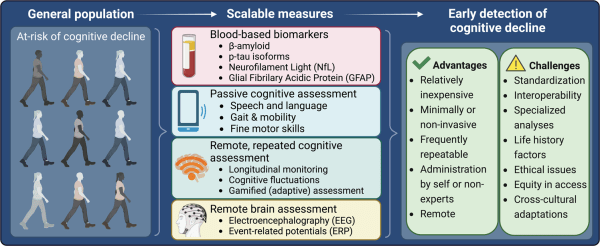
Cognitive decline remains one of the most pressing challenges in modern healthcare. Scientists continue to search for answers that explain how memory loss begins and progresses. Their investigations aim to improve treatments and guide better patient support systems. This ongoing exploration draws from both advanced technology and the personal experiences of those affected. As findings evolve, they reshape how society views brain health and aging. Each step forward signals new opportunities for knowledge and care.
Whelan, R., Barbey, F.M., Cominetti, M.R. et al. Developments in scalable strategies for detecting early markers of cognitive decline. Transl Psychiatry12, 473 (2022). https://doi.org/10.1038/s41398-022-02237-w
Researchers emphasize that memory decline is not only a medical condition but also a societal issue. Families, caregivers, and healthcare providers all feel the impact of this growing concern. Studies now focus on identifying early indicators that may slow or delay progression. These efforts require collaboration across institutions and disciplines worldwide. The pursuit of solutions highlights the urgency of preparing for an aging global population. By examining new research, society gains hope for improved futures.
Progress in Memory Health Studies
Recent years have produced a steady stream of studies exploring the causes of memory decline. These investigations examine biological factors, lifestyle influences, and patterns of disease progression. By analyzing large sets of patient data, researchers uncover insights that can transform treatment approaches. This process of discovery builds a foundation for more effective therapies in the future. One widely referenced example is theLilly memory loss study, which underscores the value of long-term observation in shaping outcomes. The emphasis is on identifying key stages where intervention may be most effective. Each discovery informs both clinical practice and patient support strategies. The result is a deeper understanding of memory health across populations.
The consistency of findings across multiple studies adds credibility to the results. Scientists rely on patterns that emerge across different demographics and conditions. These patterns reveal how memory loss interacts with various risk factors over time. With every confirmed result, the medical community gains stronger guidance for care. Moreover, the use of advanced imaging and biomarkers enhances the accuracy of these studies. As a result, clinicians can design approaches that are tailored to individual needs. By combining technology with patient data, research continues to refine its direction. The outlook for memory health treatment grows more promising with every advance.
The Value of Clinical Research in Cognitive Disorders
Clinical research remains a cornerstone in the effort to address memory decline. These studies provide the evidence necessary to confirm or challenge existing theories. Without them, progress in developing new interventions would slow dramatically. Clinical trials also provide opportunities for patients to participate directly in advancing knowledge. A notable example is thememory loss clinical research study Lilly, which contributed valuable findings to the field. Its results illustrate how carefully designed studies inform not only treatments but also preventive strategies. By including diverse populations, researchers ensure that conclusions apply broadly. This diversity strengthens the relevance of research in real-world settings.
The practical impact of clinical studies extends beyond academic research. Data collected through these trials often guides regulatory decisions and healthcare policies. This influence shapes how treatments become available to patients on a larger scale. Furthermore, trials allow for comparisons between existing and experimental therapies. Such comparisons highlight strengths and weaknesses in current approaches. Patients benefit directly when new findings inform clinical guidelines. Over time, research translates into more accurate diagnoses and better management of symptoms. The path from study to treatment remains essential for progress in brain health.
Understanding the Role of Alzheimer’s Trials
Alzheimer’s disease continues to receive significant attention in research due to its widespread impact. Studies in this area aim to clarify the mechanisms that drive progression. By targeting these mechanisms, researchers hope to develop more effective therapies. The importance of Alzheimer’s disease clinical trials lies in their ability to validate new treatment strategies. These trials explore experimental drugs, behavioral interventions, and monitoring technologies. Each contributes to building a clearer picture of how the disease can be slowed or managed. The outcomes also inform broader approaches to cognitive decline. What begins in the lab eventually influences global health practices.
The scope of Alzheimer’s research reflects the seriousness of the condition. Millions of people worldwide face its effects, making solutions urgently needed. Clinical trials not only test drugs but also examine the role of care methods. This includes caregiver education, lifestyle adjustments, and community support initiatives. Such holistic approaches ensure that research findings reach beyond laboratory settings. Policymakers often look to these trials when designing public health strategies. In this way, the results of Alzheimer’s research resonate across healthcare systems. They provide both immediate guidance and long-term direction for society’s response.
The Impact of Technology on Memory Research
Technology has transformed the way cognitive decline is studied and managed. Imaging tools allow researchers to observe subtle brain changes over time. Digital platforms enable real-time data collection from patients in various settings. These innovations shorten the gap between symptom onset and early detection. As a result, treatments can be introduced at more effective stages. Wearable devices also play a role in monitoring cognitive performance daily. Their data adds valuable detail to long-term clinical studies. Technology continues to expand the possibilities for understanding memory health.
The integration of artificial intelligence further accelerates discovery. Algorithms analyze massive datasets for patterns invisible to the human eye. This capability strengthens predictions about disease progression and treatment outcomes. With more precise information, clinicians can craft strategies tailored to individual needs. Furthermore, technology helps researchers collaborate globally by sharing data securely. Such cooperation enhances the speed and scale of discovery. Patients also benefit from more personalized monitoring tools. These developments represent a significant step toward proactive brain health care.
The Broader Public Health Perspective
Cognitive decline extends beyond individual patients into the realm of public health. As populations age, societies must adapt healthcare systems to manage growing demand. Research findings guide decisions on resource allocation and program development. Communities depend on accurate data to implement preventive measures. Without research, policies would lack the foundation needed for effectiveness. The challenge of memory decline becomes a shared responsibility across governments, institutions, and families. By investing in research, societies prepare for long-term challenges. Knowledge gained benefits not only patients but also entire communities.
Public awareness also plays a critical role in shaping outcomes. Campaigns that educate citizens about memory health encourage early screenings. These actions increase the chances of detecting issues before they become severe. Awareness also reduces stigma, making it easier for patients to seek support. Healthcare providers can use public outreach to strengthen relationships with communities. Informed citizens place greater value on preventive care and early diagnosis. This creates a cycle where research and public health reinforce each other. A stronger focus on prevention reduces the overall burden on healthcare systems. Together, research and awareness provide a roadmap for addressing memory decline.
Wrap Up
Memory research remains a central component in addressing the challenges of cognitive decline. Each study builds on the work of those before it, contributing to a growing body of evidence. Researchers rely on both advanced technology and patient data to gain insights. Clinical trials continue to serve as the testing ground for new therapies. The inclusion of diverse participants strengthens the impact of findings. Collaboration across institutions ensures that results are relevant worldwide. Every advancement increases the hope for more effective care. The journey is ongoing, but the progress is undeniable.
The broader impact of research is felt in policies, healthcare systems, and everyday life. Families benefit when treatments improve quality of care. Communities gain resilience when public health strategies address memory decline effectively. Healthcare providers use research to refine diagnoses and interventions. Policymakers rely on findings to allocate resources wisely. Patients, in turn, experience better outcomes through informed care. While challenges remain, the direction of progress is clear. By continuing to invest in research, society moves closer to a future with stronger solutions.
Every road trip begins with an idea — a quiet impulse to move, explore, and see what lies beyond the familiar. Yet it’s rarely the destination that stays with us; it’s the unplanned stops, detours, and chance encounters that shape the story. The roadside diner that smells like coffee and nostalgia, the empty stretch of forest humming with quiet — these are the moments that define travel.
Spontaneity gives a trip its character, but preparation turns it into something effortless. The goal isn’t rigid control — it’s balance. Leave space for discovery, but make sure you’re ready to handle what the road throws your way.
Preparing for the Road Ahead
A great journey starts long before the first turn of the key. Careful preparation means fewer disruptions, more freedom, and a smoother flow once the wheels start rolling.
1. Map the Framework, Not the Full Route
Overplanning drains the magic out of travel. Instead, sketch the main route — highlight essential stops or overnight stays — and leave blank spaces for adventure. Navigation apps help guide you, but don’t let them dictate the trip.
Mark scenic backroads and alternate routes. Sometimes the longer road is richer — filled with hidden towns, sweeping landscapes, and those serendipitous finds that make you glad you took a turn you didn’t plan.
2. Pack Smart but Light
The temptation to overpack is real, but every extra bag becomes a burden. Focus on flexibility: breathable layers, reliable shoes, and a jacket that handles unpredictable weather. For long drives, comfort beats excess — think compact, functional, and travel-ready.
Keep a grab-and-go kit with essentials like snacks, sunglasses, chargers, and first aid. When you can reach what you need without tearing apart the trunk, the drive stays calm and enjoyable.
3. Make Your Ride Feel Like Home
You’ll spend hours inside that car — make it a place you want to be. Clean the interior, check your tires, and stock up on road essentials. Then add a personal touch: a playlist that fits the mood, or a subtle car scent that keeps the space fresh and familiar.
A comfortable cabin changes everything. When your surroundings smell clean and feel organized, the trip feels less like transit and more like freedom.
How to Get the Most Out of the Journey
The best road trips aren’t about the finish line — they’re about the experiences that fill the space between here and there.
1. Stop Where It Feels Right
If something pulls your attention — a roadside antique shop, a trail leading into the trees, a diner with neon lights — stop. Those unplanned pauses often become the most meaningful parts of the story.
Don’t race the clock. Take the photo, buy the pie, stretch your legs. Sometimes “wasting time” is exactly how you find it again.
2. Be Curious, Not Just Observant
Don’t just watch the world go by — interact with it. Ask locals for the best coffee spot or the most overlooked trail. Every conversation adds a new layer to your trip.
It’s the people — not the landmarks — who give a place its pulse. Their stories turn a stop into a connection, a town into a memory.
3. Capture Without Overconsuming
Photos are great souvenirs, but they shouldn’t replace the moment itself. Snap what matters, then put the phone away. Let the silence, wind, and light work their magic.
Try jotting quick notes or recording voice memos. They’ll remind you later not only what you saw, but how it made you feel.
Finding Joy in Detours
1. The Magic of Getting Lost
In a world where GPS keeps us on track, there’s real pleasure in drifting a little off course. Take that side road, follow that local sign. Getting lost is how you stumble upon things worth finding.
Maybe it’s a café with homemade pies and a jukebox, or a hidden lookout you’ll never find on a map. These are the moments that remind you why you left home in the first place.
2. When Plans Change, Let Them
Every traveler hits a snag — bad weather, a closed road, a flat tire. It’s frustrating, sure, but it’s also the story you’ll tell later. Embrace the chaos; flexibility is freedom.
When you adapt instead of resist, the mishaps turn into memories — the kind that stick longer than a perfect itinerary ever could.
3. Savor the Small Wins
A perfect playlist, good company, an unexpected sunset — they’re not just filler moments; they’re the heart of the journey.
When you start noticing those small joys, the road stops feeling long. Every mile becomes its own small celebration.
Daydreams That Fuel the Ride
1. Make Room for Silence
Long drives create space to think. The steady hum of the engine becomes a kind of meditation. Use that time to clear your head, to dream, to reflect on where you’re going — and where you’ve been.
Somewhere between the miles, you’ll find clarity. The road has a way of making you see things — and yourself — differently.
2. Let Music Guide the Mood
Music defines a trip more than miles do. Start with upbeat songs for the open road, then let the playlist evolve with your surroundings. Acoustic tracks for winding roads, nostalgic ones for twilight drives.
Each song will attach itself to a memory — one that resurfaces months later with just a single note.
3. Write Mental Postcards
Not every experience needs to be documented. Let some moments live only in memory — the smell of rain on warm asphalt, the way the horizon blurs at dusk, the laughter shared in passing.
Those fragments become the quiet keepsakes that stay long after the journey ends.
When the Destination Fades, the Story Remains
Eventually, every road ends. But what stays with you are the sensations — the hum of the tires, the changing light, the unexpected kindness of strangers. Detours and daydreams remind you that the best trips aren’t about distance; they’re about depth.
Travel is never really about control — it’s about surrender. Pack smart, stay open, and let the unexpected find you. That’s where the real story always begins.
Author:Ekaterina Zaznova *Artist, researcher, and educator; author of the “Watercolor & Alcohol” method registered with the U.S. Copyright Office; Member of the American Watercolor Society (AWS), National Watercolor Society (NWS), Transparent Watercolor Society of America (TWSA), International Watercolor Society (IWS), the Union of Russian Watercolorists, and the Eurasian Artists’ Union.
Abstract
This article explores isopropyl alcohol not as a secondary technical additive but as an independent medium that transforms the visual language of watercolor. Drawing on years of artistic practice and empirical research, the author proposes a conceptual and structured methodology for integrating alcohol into watercolor painting. Both the visual effects and pedagogical potential of this approach are analyzed, emphasizing its role in developing individual artistic style and creative thinking.
Traditionally, watercolor is associated with transparency, fluidity, and delicate color transitions. However, in the era of artistic experimentation, the boundaries of the medium are increasingly flexible. One of the most compelling directions of this transformation is the use of alcohol in watercolor — not merely as a solvent or a decorative effect, but as a fully independent medium with its own plasticity, logic, and aesthetics. This study presents the stages of developing an authorial methodology where alcohol functions as a means of visual language and artistic cognition, offering a new approach to watercolor as a tool of visual research.
Materials and Methods
The research included:
Years of artistic experimentation on watercolor papers of various densities (190–640 g/m²)
Use of alcohol at different concentrations (30%, 50%, 99%)
Comparative analysis of traditional and experimental watercolor techniques
Engagement of over 1,000 participants in online courses and creative marathons
Aesthetic and pedagogical verification of the resulting visual outcomes
Alcohol as a Medium: Artistic Characteristics
Characteristic
Manifestation with Alcohol Use
Pigment Dynamics
Creates “fractures,” spirals, rings, and highly expressive diffusion effects
Enables asymmetric, multilayered, and “living” forms
Color Behavior
Increases saturation through water displacement; produces unpredictable chromatic shifts
Evaporation Timing Sensitivity
Requires instant compositional response from the artist
Educational Potential
High student engagement through surprise, experimentation, and expressive freedom
From Experiment to System: Methodological Framework
The author developed a step-by-step methodology that includes:
Exploratory Phase: Creation of numerous sketches exploring variable pigment–alcohol reactions.
Analytical Phase: Systematization and classification of observed effects.
Formalization Phase: Compilation of correlation tables between alcohol concentration and resulting effects.
Implementation Phase: Integration into educational programs and online courses.
Pedagogical Adaptation Phase: Development of exercises for beginners and professionals.
Authorial Integration Phase: Establishment of the technique as the foundation of the artist’s personal visual series.
Comparative Analysis: Alcohol vs. Traditional Methods
Parameter
Traditional Watercolor
Alcohol-Based Methodology
Control
High
Limited
Chance Element
Minimal
Built-in structural feature
Surface Texture
Smooth
Dynamic, tactile, relief-like
Visual Impression
Meditative
Impulsive, expressive
Reproducibility
Predictable
Varied and organic
Emotional Effect
Calmness
Awe and fascination
Pedagogical Significance
A central component of this development is its integration into the author’s educational course, where alcohol is presented not as a “trick,” but as a complete artistic system.
Over 3,000 students have mastered the technique between 2022 and 2025.
More than 60% have participated in multiple courses and creative marathons.
The method has become an essential part of the Pro Akvarel educational platform.
The use of alcohol in watercolor helped students overcome the “fear of the blank page,” stimulated creative thinking, and encouraged the formation of unique visual styles.
Conclusion
In watercolor, alcohol ceases to be merely a means of achieving special effects — it becomes an intellectual instrument, a medium that shapes a new visual grammar. Ekaterina Zaznova’s methodology demonstrates how the apparent chaos of chance can be transformed into a structured artistic system — one that simultaneously liberates and disciplines. This synthesis opens new perspectives for contemporary painting, educational research, and rethinking the role of the medium in 21st‑century art.
References
Finley, M. “Alcohol as Agent in Contemporary Watermedia.” Watermedia Journal, 2021.
Zhang, L. “Experimental Media in Fine Art Education.” Visual Pedagogy Review, 2020.
Zaznova, E. “Integrating Alcohol in Watercolor Practice: The Pro Akvarel Experience.” Art Education Review, 2023.
Mitchell, S. “Liquid Boundaries: Mixed Media Art Today.” Contemporary Art Studies, 2019.
Kim, J. “Chemical Reactions in Pigment Dispersion.” Journal of Artistic Chemistry, 2017.
Chukanova, I. “Mixed Techniques in Visual Art.” Actual Artist, 2022.
Pro Akvarel Archive (2022–2025). Online Course Materials and Methodological Notes.
White, C. “Intuitive Control in Unpredictable Mediums.” International Review of Art Therapy, 2020.
Zaznova, E. “Watercolor and Chaos: Developing Artistic Thinking.” Creative Pedagogy, 2024.
National Society of Watercolorists. “Innovation Reports,” 2023.
In small business, good ideas are everywhere. What separates those who succeed from those who fail is not inspiration, but execution. John Giardino of Massapequa has built his reputation on this truth: energy and execution are the twin engines of business growth.
Over the past decade, Giardino has led ventures with offices in more than 20 countries, guiding teams across time zones and cultures. He’s made over 30 business trips in 2022 alone to meet with leaders and employees face-to-face — a habit that reflects his belief that leadership is personal.
“Winning is personal,” Giardino often says. “You can’t lead from behind a desk. You have to show up, talk to people, and let them feel your energy.”
For Giardino, leadership begins with personal energy. A leader sets the pace for everyone else. If you show up every day with drive, positivity, and urgency, your team mirrors that attitude. Energy fuels momentum, and momentum creates results.
Energy That Inspires Others
One of the principles Giardino often points to is the ability to energize others. Great leaders don’t just manage tasks; they inspire people to give more than they thought they could.
“When I was building my early teams,” recalls John Giardino, “I noticed that no matter how smart someone is, their performance is heavily influenced by the energy in the room. If you’re excited about the mission, others will be too. If you’re disciplined, others follow that standard.”
This principle has shaped how Giardino builds and leads. Whether working with new managers in Southeast Asia or senior directors in New York, he strives to create a high-energy environment where enthusiasm is the norm and where every win — no matter how small — adds fuel to the fire.
Passion Meets Discipline
Passion is at the center of everything. Giardino insists that you can’t fake it — you have to genuinely love what you do. But passion without discipline isn’t enough. That’s why he ties passion to the principle of execution: delivering results, not just talking about them.
In 2022, after months of intense travel and face-to-face meetings, he had a key realization: there is no true “work–life balance,” only “work–life harmony.” Leading across so many teams taught him that winning requires presence — at work and in life — and that harmony comes from integrating the two, not separating them.
“Talk doesn’t move the needle. Action does,” says Giardino. “I’d rather see a half-finished plan executed today than a perfect plan still on the whiteboard a month later.”
Execution as the Ultimate Differentiator
Execution is where most small businesses stumble. Many leaders get stuck in the idea stage, paralyzed by the search for perfect information. But Giardino applies a principle known as bias for action: move forward with 70% of the data, then adjust as you go.
This doesn’t mean being reckless — it means valuing speed and adaptability. The market rewards those who act quickly and learn faster than the competition.
For Giardino, execution is not just about getting things done, but getting the right things done with urgency. Over the years, this mindset has allowed his companies to pivot faster than larger competitors and capitalize on new opportunities.
Proactivity as a Superpower
One of Giardino’s leadership mottos is Proactivity Power. He encourages leaders and teams not to wait for instructions but to create their own challenges and objectives. By being objective-obsessed, every person on the team always knows what they’re working toward and why.
“Leaders don’t just react,” says Giardino. “They anticipate, they move before others do, and they create clarity of direction for the entire business.”
His experience leading diverse teams — often spread across continents — has reinforced this belief. Proactive people drive progress even when the leader isn’t in the room.
The Link Between Energy and Results
The connection between energy and execution is simple but profound: energy creates movement, execution channels it into outcomes.
When a leader like John Giardino of Massapequa brings both to the table, ideas don’t just stay ideas — they turn into growth, progress, and wins.
Giardino often reminds his teams that business is ultimately a scoreboard of wins and losses. You don’t succeed by talking about winning; you succeed by executing consistently enough to stack up more wins.
A Formula for Small Business Success
For small business owners, Giardino’s principles offer a clear, actionable formula:
Bring energy and passion to every day.
Inspire others with that energy.
Execute relentlessly — value results over talk.
Act with speed — bias for action, not perfection.
Be proactive — set your own objectives and chase them hard.
Seek work–life harmony — integrate both rather than viewing them as opposing forces.
This blend of drive and discipline, sharpened through years of leading global teams, has been central to John Giardino’s leadership style. It’s a philosophy he believes any small business can adopt to achieve extraordinary results.
From Massapequa to a Global Perspective
While Giardino remains deeply connected to his roots in Massapequa, his experience working across 20+ countries has given him a global outlook.
That combination — small-town values with global execution — has shaped the culture of the companies he leads. It allows him to keep a strong sense of community and integrity while pursuing big, ambitious goals on an international scale.
Conclusion
John Giardino shows that success doesn’t come from waiting for perfect conditions — it comes from fueling your work with energy and executing with urgency.
From his base in Massapequa to ventures that reach far beyond, his philosophy remains the same: passion creates momentum, execution delivers results.
For any entrepreneur looking to break through barriers, the lesson is clear: bring the energy, commit to action, and never stop moving forward.
This article highlights six prestigious international business research scholarships available for PhD students in the UK. It explains the eligibility criteria and how these opportunities can support your academic and professional growth in global business research.
Photo by Havanna Sousa on Pexels.com
Are you a PhD-level student and looking for an international business research scholarship in the UK? Starting a PhD in business research is a big and life-changing decision. It demands hard work and a profound interest in solving real business challenges. For international students, the right place to study not only shapes their education but also their future.
A Universities UK study shows that international researchers in the UK are contributing to more than half of all impactful research projects worldwide. This shows the distinguished position of the UK universities in research. Their strong academic reputation attracts global scholars seeking advanced opportunities in business studies. Here, you will learn about the top 6 international business research scholarships that support doctoral students who want to study business at the PhD level in the UK.
What to Expect in This Article?
The UK universities provide world-class opportunities for PhD research in international business.
International business research scholarships, such as Chevening and Gates Cambridge, provide full financial support to international students.
Most international business research scholarships cover tuition fees, research costs, and travel expenses.
Applicants for international business research scholarships should demonstrate academic excellence, leadership potential, and a clear research vision.
Strong research proposals linking to global business challenges improve selection chances.
Why the UK Is Ideal for International PhD Students?
The UK stands out as an ideal destination for international PhD candidates for several significant reasons. Some of them are given below:
Firstly, the UK universities mainly focus on research strengths in business and related fields and have gained global recognition. The best business school in the UK regularly publishes innovative research and encourages partnerships with industry. That means if you are doing a business research PhD at UK universities, it will help you build real-world business linkages and boost your academic experience.
The second reason to pursue the international business research scholarship in the UK is the strong funding culture. Governments and universities invest a significant share of their funds in postgraduate research and doctoral programmes. Government support for global partnerships and scholarship programmes further helps make PhD study affordable.
The third reason to get an international business research scholarship in the UK is its rich cultural diversity and global networking opportunities. You will meet fellow scholars from all over the world and connect with institutions. These connections open doors to post-PhD career prospects. One major benefit of research in the UK is that universities often work together with multinational companies and global industry partners.
6 Must-Apply International Business Research Scholarships for PhD Students in the UK
Learning about a PhD in international business can shape your global career path. Here are the top 6 international business research scholarships that enable passionate scholars to pursue world-class research.
1. Chevening Scholarships
The Chevening Scholarship is among the most prestigious awards for PhD students. This scholarship is suitable for future leaders who want to study in the United Kingdom. The UK government funds Chevening scholarships through the Foreign and Commonwealth Office. It offers international doctoral students a remarkable opportunity to get a world-class education and build a strong professional network.
Every year, a lot of students from more than 160 countries apply for the Chevening scholarships, which demonstrates the global reach and credibility of the programme. Many applicants seek expert guidance from a UK-based essay writing service to write a strong personal statement that meets the high standard criteria of the scholarship. Chevening indicates that its alumni hold leadership roles in over 140 countries, reflecting its lasting global impact.
Benefits and Duration
For business research students, the Chevening Scholarship provides an excellent opportunity to study business and management at leading UK universities. It covers the tuition fees and living expenses. However, it mainly supports the one-year master’s programmes, not full PhD degrees. Still, students who recently completed their master’s through Chevening often continue to do research later.
Applicants should show their academic excellence and a strong commitment to making a difference in their home country. You can apply for a Chevening Scholarship online through the Chevening portal and follow each step carefully. After completing their degrees, the successful scholars join the powerful global network each year
Apply date: Applications for the Chevening Scholarships usually open in August and close in November each year.
2. Commonwealth PhD Scholarship
The Commonwealth PhD Scholarship supports students from developing Commonwealth countries studying in the United Kingdom. The Commonwealth Scholarship Commission in the UK manages the Commonwealth PhD Scholarship. The main purpose of this International Business Research Scholarship is to support students from low- or middle-income countries who are unable to afford the expenses of advanced studies.
It welcomes applicants from nations such as Pakistan, India, Bangladesh, and Nigeria. The objective is to enable the talented students to gain global research experience and bring that knowledge back to improve their home countries.
The Commonwealth Scholarship Commission stated that more than 99% of its scholars contribute to the development of work after graduation. This shows that the Commonwealth PhD Scholarship focuses on real-world impact and leadership.
Benefits and duration
The Commonwealth Scholarship also supports doctoral research across a range of subjects, including management and business. It values research that drives positive change. If your study focuses on international business or entrepreneurship in developing economies, this scholarship is well-suited to you.
It covers tuition fees and research costs. This scholarship lasts three to four years, depending on the duration of the PhD programme. Through this, scholars can fully concentrate on their research without financial stress.
To increase the chance that your choice is approved, just write a research proposal that connects your study to the development goals. Try to work with UK supervisors who help you to support this journey. This approach will strengthen your application and highlight your commitment to meaningful research.
Apply date:
The submission date for applications for the Commonwealth PhD Scholarship usually runs from early September to mid-October each year.
3. Rhodes Scholarship at the University of Oxford
The Rhodes Scholarship at the University of Oxford is one of the oldest and most respected awards in the world. It started in the early 1900s at the University of Oxford and continues to honour the highest standards and leadership. The Rhodes Trust oversees this scholarship and selects students who demonstrate strong academic skills and lead the creation of change. It helps students study a diverse range of subjects, including PhD programmes at the University of Oxford.
A report by the Rhodes Trust shows that 8 to 10 Rhodes Scholars continue to hold leading roles in academia and business after completion of their degrees. This indicates the programme’s strong focus on developing global leaders of change. This scholarship is suitable for students who want to study in the UK and are looking for a PhD in business.
Benefits and Duration:
Rhodes Scholars receive a:
Full tuition fee
A yearly stipend of about £20,400’
Support for visa and travel expenses
They also get direct mentorship and training through a global network of alumni. For PhD students, the scholarship can cover up to three years of study.
The Rhodes scholarship provides a powerful platform for business researchers. Oxford’s world-class instructors and strong connections with global firms help the students to combine their academic skills theory with real-world practice.
A Rhodes Scholar gains access to a network of innovators and decision-makers. This interaction can lead to collaboration in research and develop career opportunities worldwide.
Apply Date:
You can apply for the Rhodes scholarship between late July and October each year.
4. Gates Cambridge Scholarship
The Gates Cambridge Scholarship supports brilliant international business students who are unable to afford their postgraduate study at the University of Cambridge. The Gates Scholarship began in 2000, funded by the Bill & Melinda Gates Foundation.
It remains one of the most prestigious and competitive scholarships in the world. According to Gates Cambridge, about two-thirds of its scholars pursue PhD programmes, including those in business and management.
Funding and Research Opportunities
The Gates Cambridge Scholarship comprises:
Full Tuition Fees
A maintenance allowance of about £21,000 per year,
Other expenses include airfare, visa fees, and a health surcharge.
Business PhD candidates benefit from access to Cambridge Judge Business School and a diverse global academic community.
Apply date:
Applicants can apply for the Gates Cambridge Scholarship in December or January of each year.
5. University of Edinburgh Business School PhD Scholarships
The University of Edinburgh Business School offers opportunities for PhD scholars in the field of business and management. The University of Edinburgh Business School’s PhD scholarship has built a strong global reputation for its research in international strategy and business ethics. The financial help of Edinburgh universities helps international students to focus on their studies without any kind of stress.
Research Opportunities and Industry Links
Edinburgh Business School support connects students to global networks and industry leaders. The PhD candidates work under the direct guidance of experts who regularly publish in the Journal of Business.
The Chartered Association of Business Schools found that universities offering structured industry-linked doctoral programmes, such as Edinburgh, produce graduates with greater research visibility. Scholarships support applied business research.
6. London Business School PhD Scholarships
The London Business School is recognised as one of the top institutions for business research and is located in the heart of London. It helps the international students and promotes the culture of research.
Its PhD programme focuses on accounting and organisational behaviour. These London Business School PhD scholarships suit students who want to examine advanced topics in business and develop into significant researchers. If you plan to apply for such competitive scholarships, getting expert help from the best essay writing services in London can strengthen your application.
Funding and Financial Support
The LBS PhD scholarship also provides full funding to all admitted PhD students. The scholarship package comprises a tax-free stipend of about £27,000 per year and a full tuition fee reduction.
Students also receive funding for conferences and their research expenses. This financial stability helps the scholars fully concentrate on their studies and research goals.
Career and Leadership Opportunities
Graduates of the LBS PhD programme often move into careers as professors or strategists in the top global organisations. The school’s close connections with businesses worldwide give scholars direct access to real-world data and insights.
Apply date:
Applications for this scholarship are submitted in December each year.
Final Words
Pursuing a PhD in business research in the UK is one approach to expanding their knowledge and understanding of research, which helps them in their future. The UK universities are prestigious and offer strong research support for international students.
UK universities do not just provide financial aid programmes; they also offer opportunities for leadership and research that can have a real impact on the world. Strong academic support and funding will help students give their research full focus. By choosing the right international business research scholarship, doctoral researchers can realise their ambitions and help create leaders.
FAQs
Are There Scholarships for PhD Research in International Business?
Yes, there are different scholarships for PhD research in international business. The top programmes in the UK, such as Chevening, Commonwealth, Rhodes, Gates Cambridge, and scholarships at London Business School and the University of Edinburgh, provide full or partial funding. These scholarships cover the tuition and research expenses.
They help international students interested in focusing on advanced business research without financial stress. Many scholarships also offer many benefits, such as mentorship, networking, and exposure to industry, to prepare the students for academic and leadership careers.
What Financial Aid is Available for International Business Majors?
The international business majors have access to various types of financial aid. Universities in the UK and throughout the world provide merit-based scholarships and research assistantships. Programs such as Chevening, Commonwealth, and Gates Cambridge provide full financial support.
External organisations and global companies also fund students pursuing international business degrees. These options make it easier for international students to complete their studies with confidence.
Staying active is a vital part of maintaining health and independence in later life. As we get older, our bodies naturally change, but regular physical activity can help manage these shifts, supporting both physical and mental well-being. Incorporating gentle movement into daily routines can have a significant positive impact, helping to preserve strength and vitality for years to come.
Strengthening the Body and Preventing Falls
One of the most important benefits of regular movement is its effect on muscle strength, bone health, and balance. Activities that build strength can help counteract the natural decline in muscle mass and bone density that occurs with age. This is important because stronger muscles and bones reduce the risk of falls and related injuries, such as fractures.
Exercises that focus on balance and coordination are particularly effective in preventing falls. Simple movements can improve stability and confidence on your feet. Activities like brisk walking, swimming, or cycling also support cardiovascular health by strengthening the heart and improving circulation.
Boosting Mental and Emotional Health
The connection between physical activity and mental well-being is well-established. Exercise releases endorphins, which can improve mood and act as a natural stress reliever. Regular movement has been shown to reduce feelings of anxiety and depression while promoting a sense of satisfaction. It can also lead to better sleep, which is often a challenge for older persons.
Beyond mood, physical activity supports cognitive function. Engaging in activities that require focus and coordination can help keep the mind sharp. Some studies suggest that regular exercise may help maintain memory and thinking skills as we age. Group activities can also provide valuable social engagement, reducing feelings of loneliness.
Gentle Exercises to Get Started
You do not need to engage in strenuous workouts to see benefits. Even light activity is better than none at all. Simple, low-impact movements can be easily incorporated into your day. Always speak with a healthcare provider before beginning a new exercise programme, especially if you have existing health conditions.
Here are some gentle exercises that can be done at home:
Chair-based movements: Seated leg lifts and upper body twists can help improve flexibility and strength without putting pressure on joints. Simply standing up from a chair without using your hands is a great way to build leg strength.
Walking: A daily walk is an excellent low-impact activity that supports heart health and mobility. Walking heel-to-toe can also help improve your balance.
Stretching: Gentle stretches help maintain flexibility and can relieve muscle stiffness. Simple ankle rotations and shoulder stretches can be done while seated or standing.
Balance exercises: Standing on one foot while holding onto a stable surface can build stability over time. As you gain confidence, you can try holding the position for longer periods.
Putting It Into Practice
Consider the case of a man who became hesitant to leave his home after a minor stumble. The fear of falling caused him to limit his activities, leading to increased stiffness and a decline in his confidence. A family member suggested he start with simple chair exercises for a few minutes each day. Over several weeks, he noticed his leg strength improving. He then began taking short, supervised walks around his garden. This gradual approach helped him rebuild his physical strength and, just as importantly, his confidence. His improved mobility meant he could continue living independently with less worry.
Embracing regular movement, no matter how small it starts, is a powerful way to enhance your quality of life. It supports physical health, sharpens the mind, and lifts the spirits. For those who may need assistance with movement and daily activities, exploring options for safe mobility support at home can provide the confidence and help needed to stay active. Building a routine of gentle exercise helps maintain independence and allows for a more fulfilling and active life.
When you arrive in Dubai and stay for several days — whether for business, leisure, or a mix of both — opting for a weekly rental can offer considerable advantages over daily rentals.
A weekly rental tends to give you better value. Many providers note that weekly rates are up to 30 % cheaper than daily ratesrent a car dubai weekly.
You eliminate the need to check-in or renew your rental every 24 hours. For example, you might book for 7+ consecutive days, pick up once, and return once.
It gives you more freedom and flexibility: you’re not tied to a hotel shuttle, taxi-ride or public transport schedule. If you’re staying in or around Dubai with plans to explore beyond the city core, a car adds convenience.
If you use a credible provider, many packages include full insurance or at least basic insurance and clear fuel/toll policies — fewer surprise fees.
For example, one operator lists: “Weekly rental rates start from AED 550 for economy cars; mid-range SUVs from AED 850–1,200 per week; premium vehicles from AED 1,600+”. drive.yango.com
What You Should Know Before You Book
Before you sign up and pick up the keys, keep in mind these practical points:
Driver’s age & licence requirements You’ll typically need to be at least 21 years old, and have held your driving licence for at least 1 year. Tourists often must present passport + visa + home-country driving licence (and sometimes an International Driving Permit).
Deposit & credit card Although some offers say no deposit required, they still often require a credit card as a security for traffic fines or extra charges. Always read the terms.
Fuel & toll (Salik) policy Make sure you return the car with the same fuel level as when you picked it up. Also check how tolls (for example the locale’s “Salik” toll system) will be handled — some are charged post-rental.
Coverage & mileage Confirm the insurance that comes with the weekly rental — whether you’re covered for damage, breakdown, etc. Also check mileage limits. For example, one listing notes 900 km rental with a SUV.
Picking up / extending / returning Make sure you understand where you pick up the car (airport vs city vs delivered to your hotel) and what the process is for extending the rental beyond a week. Good providers allow extension by contacting ahead of time.
Who Benefits Most from a Weekly Car Rental?
Here are ideal user-profiles:
Tourists staying 7 days or more, who want flexibility to visit outer districts, desert excursions, beach trips, or even day-trips outside the city.
Business travellers who will move around multiple sites and find taxis or ride-hailing less efficient over many days.
Families or groups with luggage, children, and more interiors — renting an SUV for a week can be more practical and cost-efficient than many short trips.
Temporary residents or visitors (e.g., on project assignments) who need a car for a sustained stay but might not want the commitment of a full-month lease.
When It Might NOT Be the Best Option
Conversely, consider alternate options if:
You’re in Dubai for just 2-3 days and your itinerary is largely within the city core with good public transport coverage. A daily rental or rides-share might suffice.
You are comfortable relying on taxis, rides-hare apps, or public transport and your destinations don’t require a personal vehicle.
Parking or traffic is going to be a significant hassle — if you’ll spend a lot of time in congested areas, the convenience of a rental might be offset by parking and waiting costs.
How to Make It Work for You
Here are some steps to maximise your weekly rental:
Book early to secure the car class you want (economy, SUV, luxury).
Compare providers to find best weekly rate, inclusions (insurance, mileage) and whether deposit is waived.
Check extras: Are delivery and pickup included? Are cross-emirate trips allowed (Dubai to Abu Dhabi, Sharjah)? What about driving outside the UAE?
Inspect the car carefully at pickup: note any scratches/dents, make sure tyres and lights are good — take photos.
Plan your fuel/toll return: Know how much fuel you got, where nearest filling stations are, and how toll fines are handled.
Follow driving rules: UAE traffic rules are strict; fines can be severe, so adherence is critical.
Generating high-quality leads is the engine that keeps your business moving forward. B2B lead generation focuses on identifying and connecting with the right prospects, not just anyone with an email address. The goal? Start real conversations with decision-makers who actually need what you offer.
That’s where the SalesAR lead generation company comes in. With a proven approach to personalized outbound campaigns, SalesAR helps companies cut through the noise, reach the right people, and fill their sales calendars with meetings that matter. Think of it as an extension of your team — focused purely on growth, precision, and results.
Why B2B Lead Generation Is the Foundation of Sales Growth
Waiting for leads to come in organically can feel like watching paint dry. Today’s sales teams can’t afford that. Proactive outreach lets you identify your ideal audience, engage them directly, and start meaningful conversations on your terms.
Outbound lead generation doesn’t replace inbound; it powers it up. While inbound attracts interested prospects, outbound helps you reach those who don’t yet know they need you. Together, they create balance: predictable pipelines, shorter sales cycles, and better-qualified meetings.
The key is targeting the right decision-makers with messages that speak to their real needs — and that’s exactly what SalesAR lead generation agency helps businesses do every day.
The SalesAR Framework for Lead Generation Success
Every successful campaign starts with a process that’s simple, structured, and repeatable. The SalesAR lead generation company has refined its framework over years of real-world experience, ensuring every outreach effort leads to meaningful results.
ICP Development
It all begins with understanding who you want to reach. SalesAR builds a clear profile based on firmographic, technographic, and behavioral data: defining company size, industry, buying triggers, and decision-making roles. This clarity ensures outreach hits the right audience from day one.
Data Research and Enrichment
Quality data is everything. The team researches, verifies, and enriches every contact, ensuring accuracy before a single message goes out. Just clean, actionable data that fuels conversions.
Multichannel Outreach
The SalesAR lead generation agency doesn’t rely on a single channel. Instead, they connect through email, LinkedIn, and well-timed follow-ups. This approach meets prospects where they’re most active, increasing response rates and creating more natural engagement.
Personalized Messaging
Generic templates don’t win meetings. SalesAR crafts outreach sequences tailored to each audience, addressing specific challenges, goals, and business outcomes. The result? Messages that sound human, not automated.
Benefits of Partnering with a Professional Lead Generation Team
Working with a dedicated B2B lead generation company like SalesAR gives you an instant advantage. Instead of building an SDR function from the ground up, you get an experienced team and a proven system that starts delivering results right away.
Key benefits include:
Time and cost savings: No need to hire, train, or manage an in-house SDR team.
Plug-and-play process: The workflow integrates easily with your existing sales tools and CRM.
Consistent results: Predictable pipeline growth through structured outreach and testing.
Scalability: Quickly scale campaigns up or down as business goals shift.
Expert insight: Access to specialists who continuously refine targeting, messaging, and performance.
With SalesAR lead generation agency, your team can focus on building relationships and closing deals, while experts handle outreach and qualification.
Who This Approach Works Best For
This outbound strategy fits best for companies ready to grow but tired of slow results. SaaS and tech businesses often see quick traction because they can target specific industries, roles, or tech stacks with precision.
It’s equally effective for service providers expanding into new markets, where visibility and trust take time to build. Consistent outreach helps introduce your brand, build familiarity, and create opportunities faster.
And for any B2B company chasing a predictable appointment flow, SalesAR lead generation firm provides exactly that. It brings structure to prospecting, clarity to reporting — so your team can focus on turning conversations into revenue.
How to Start Building Your Pipeline
Building a strong B2B pipeline starts with clear steps and smart collaboration. SalesAR treats the process as teamwork: your market knowledge combined with their outreach expertise. Here’s how it unfolds:
Define your Ideal Customer Profile (ICP): Identify who your best-fit buyers are, their roles, industries, and pain points.
Align your messaging: Craft clear, personalized communication that resonates with decision-makers.
Launch targeted outreach: Use email, LinkedIn, and follow-ups to start conversations that lead to real opportunities.
Analyze early results: Track replies, meetings, and feedback to fine-tune your targeting and sequences.
Collaborate closely: SalesAR lead generation firm operates as a transparent, responsive extension of your sales team.
Ready to see what your next campaign could look like? Let’s talk and explore whether SalesAR’s approach fits your business.
Conclusion
Lead generation is a continuous process that builds strength over time. The companies that grow steadily are the ones that stay consistent, test new ideas, and focus on real conversations instead of quick wins.
Quality outreach and communication compound. Each campaign teaches something new, each response sharpens your strategy, and each meeting brings you closer to the right opportunities.
With a structured, data-driven process and a lead generation company like SalesAR by your side, your pipeline flows. Consistency turns outreach into growth, and growth into lasting success.






















 International Journal of Research (IJR)