Call for Papers – Hindi peer reviewed journal

प्रिय साथियों,

साहित्य संहिता’ शोध जॉर्नल हेतु आपके सहयोग के लिए आपका हार्दिक धन्यवाद। आशा है कि ये संबंध आगे भी प्रगति के पथ पर अग्रसर रहेंगे। आगामी अंक हेतु आप सबके सक्रिय सहयोग की पुनः आकांक्षा है। आप सभी से एक महत्वपूर्ण अनुरोध है कि आप अपने शोध प्रपत्र निम्न प्रारूप के तहत ही प्रस्तुत करें जिससे कि हमें तकनीकी जटिलताओं का सामना न करना पड़े –

1. प्रकाशन हेतु शोध प्रपत्र की मौलिकता का सत्यापन

2. शोध प्रपत्र एम.एस. ऑफिस में टाइप होना चाहिए

3. फोंट – कृतिदेव 10, मंगल यूनिकोड

4. फोंट आकार (सामान्य) – मुख्य शीर्षक 16, उप शीर्षक 14, आलेख पाठ 12

5. पंक्ति अंतराल 1.5

6. Send papers for publication to hindi@sahityasamhita.org

stop expecting!

The higher the expectation deeper the disappointment. Keeping expectations from anyone rather than your parents is really not cool. Because when those expectation are not full filled one feel devastated. And the question is why to expect? Why will someone fulfill your expectations. Do you completely fulfill others expectations?

May be you think that a particular person is really close to you. He can do anything for you. He will always have a support to you. But the important thing here is does that person feels same about you? Are you equally important to that person. Every relationship runs hand in hand. And you don’t have to feel bad that person do not consider you same as you consider him. Because here everyone has a right to choose their own relationships as their own choices. You can’t blame anyone for not fulfilling your expectations.

Always remember if you are hurt because your expectations are not fulfilled then you are only one responsible for your pain.

Population control:Need of the hour

It’s a hard fact to digest that the population on the planet earth has bombastically raised to 7.9 billion. As a matter of fact it took 2 million years of human prehistory and history of world’s population to reach 1 billion and this number got multipled so fast that it took just 200 years to grow to 7 billion. India and china alone contribute to 36% in population of the total population of the world. And India is expected to add 273 million people to its population between now and 2050. A UN report said in 2019,forecasting that the country will cross China as the world’s most populous country by 2027.

Population growth in India

In 2019,India has an estimated population of 1.37 billion. But denying the fact the good news is that the fertility rate of women have dropped significantly. It has dropped down from 3.31 children per women in 2000 to 2.2 children per women in 2017.Over the period of time it is nearing the replacement rate of 2.1. In spite of the fact that the population policies, family planning and welfare programs undertaken by the government of India have lead to continuous decrease in fertility rate, yet the actual stabilisation of the population has not been achieved. There is also decline in decadal growth from 21.15% in census 2001 to 17.64% in census 2011.

Causes of overpopulation

1.The decline in death rate- Due to science and technology we have excelled ourselves in field of science and medicine. And as a result we have come up with better treatment facilities of any disease.

2.Agricultural Advancement- Agriculture advancement in 20th century have allowed humans to increase food production using fertilizers, herbicides, pesticides and yield further. This allowed humans with more access to food that leads to subsequent population explosion.

3.Better medical facilities- Technological innovation was perhaps the biggest reason why the balance has been permanently disturbed. Illness that had claimed thousands of lives until now were cured because of the invention of vaccines.

4.More hands to overcome poverty- Families that have been through poverty, natural disaster or are simply in need of more hands to work are a major factor for overpopulation. According to the UN the 48 poorest countries in the world are likely to be the Biggest contributors to population growth.

5.Technological advancement in fertility treatment- with the latest technological advancement and more discoveries in medical science, it has become possible for couples who are unable to concieve to undergo fertility treatment methods and have their own babies.

6.Lack of family planning- most developing nations have a large number of people who are illiterate, live below poverty line and have little or no knowledge about family planning. Those people are unable to understand the harmful effect of overpopulation and lack of quality education prompt them to avoid family planning measures.

7.Poor contraceptive use- Poor family planning on the part of partners can lead to unexpected Progencies. As per statistics 76% of women aged between 19 and 49 in great Britain used at least one form of contraceptive, whereas study by WHO shows that this figure drops to 42% in underdeveloped countries, which leads to higher birth rate.

Effects of overpopulation

1. Uneven relationship between resources and demography- earth can produce only substantial amount of resources like food and water which is falling short for current needs.

2.Degradation of environment- with the overuse of coal, oil, and natural gases, it has started producing some serious effects on our environment.

3.Conficts and wars- conflicts over water are becoming a source of tension between countries which would result in wars. Starvation is a huge issue that the world is facing and the mortality of children is being fuelled by it. Poverty is the biggest hallmark we see when talking about overpopulation.

4.Rise of unemployment- unemployment is a major cause of overpopulation. As there are fewer jobs to support a large number of people. This gives rise to theft, crime as people want to feed their families and provide them with basic amenities.

5.Pandemic and Epidemic- Overpopulation lead to unhygienic living conditions, malnutrition and inaccessible, inadequate or non extant health care for which poor are more likely to be exposed to infectious diseases.

6.Malnutrition, Starvation and famine- when the availability of resources is scarce, starvation, malnutrition along with ill health and disease caused by diet deficiency such as rickets become more likely.

7.Water shortage, sewage treatment, inadequate rainfall- Roughly 1% of the world’s water is fresh and accessible. Overpopulation is a major issue that creates immense pressure on the world’s fresh water supplies.

8.Extinction-the impact of overpopulation on the world’s wildlife is severe. As deemed for land grows, the destruction of natural habitat such as forest, becomes common.

9.Faster climate change- According to 97% scientific community, human activities are changing global temperatures. If more is not done to reduce individual carbon footprint on a large scaleb, large population may spped these changes up.

Solution to overpopulation

1.Better education- the fastest and most efficient way to stabilize the world population is to send girls to school and empower women and to give everyone access to and education on birth control.

2.Making people aware of family planning- we must focus on agressive campaigning to make people aware of the overpopulation and it’s adverse effects on the future generations to come. Public participation campaign is must needed to Make them aware. As a culture we need to emphasize the benefits of having one- child family.

3.Population Stabilization- Delay the age of first marriage but you may shrink the reproductive age by getting people to have their question first child later by spacing out the number of children.

4.Tax benefits or Concession- people having one chilld should be benefited by exemption from paying taxes as this would encourage others to have one child.

5.Knowledge of sex education- It is one thing we people don’t talk about. This should be spoken to people and imparted proper knowledge of the biology of human body.

Human wildlife conflicts: A complex problem

How would you react to a wild cheetah in your backyard or an elephant in your garden?

The rapidly growing human population and urbanisation has led to Human wildlife conflict (HWC) to its pinnacle. Human wildlife conflict (HWC) arises when animals cause a direct and reiterate threat to the safety or the livelihood of the people, leading to the persecution of that species.

These conflicts have posed a question that can human and wildlife coexist together? 

However, this is not a new storyline – the human and wildlife have coexisted for millennia but the situation is more frequent and aggressive than before. Becoming a global concern for conservation and development to go hands in hand. The need for development requires a lot of natural resources that put the lives and existence of many wildlife species into danger. 

HWC mostly affects large or carnivores from whom the humans feel threatened. Elephants, bears, big cats, primates, sharks, seals and many more. HWC also severely impacts the livelihoods, lives and security of the people from whom we ask to conserve the wildlife. There are many immense challenges around the HWC because the causes of these are very complex and poorly perceived. A single HWC has many socio-cultural, political and economical factors that need to be considered. From research and studies for a long time it has been clear that every HWC problem is different from the next and cannot be solved by the same methods used beforehand. Thus understanding the root cause of the conflict is much needed to mitigate the effect of such incidents. Efforts to address the situations without fully understanding the deep rooted causes and effects often leads to temporary solutions or worse exacerbate the situation in hand. 

HWC are substantially “human-human” conflicts as the heart of the conflict is between the different stakeholders. Sometimes there are several groups assessing different interests and needs. 

Even in some cases the success in species recovery has led to another HWC. For example where carnivores have recovered and expanded a huge population they pose a threat to villagers nearby and their livestocks. 

The reports by UNEP says that it is impossible to completely eradicate the HWCs but a systematic approach can be devised to minimise the effects of these conflicts. The policymakers have to devise policies that can reduce the conflicts and create an ecosystem of coexistence between people and animals. Such steps needed careful studies on prevention, mitigation, response and rehabiltalation with the apt support of the local communities and tribes. 

Bikaner – Rajasthan’s hidden jewel to discover!

A lesser-known cultural paradise and traveler’s haven, Bikaner a city that will hold you captivating in its forts, mesmerize you with its scenic beauty, and astound you with its glorious past. With extremely captivating places to visit in Bikaner, the city will take you back to the time of the earlier ruling dynasty. Planning a family excursion to the city by choosing the best Bikaner Cabsfrom any part of Rajasthan or India can make your journey happening. The city is easily accessible by air, rail, or road, and this makes it easier to plan a trip.

When you should plan a holiday in Bikaner?

Being a part of a desert state, Bikaner deals with the scorching heat of summers which are somewhat unbearable for travelers. Thus, it is recommended to visit Bikaner during the months of October to March when the winter season brings a pleasant climate to the city. Bikaner’s annual Camel Festival held in the month of January is another important attraction for travelers.

Places to see in Bikaner –

Traveling to the camel country of India, Bikaner gives you an insight into the grandeur of the city’s early kingdom and its architectural excellence. Here are listed a few of the best places to visit in Bikaner Sightseeing for enjoying the most of your journey.

Junagarh Fort –

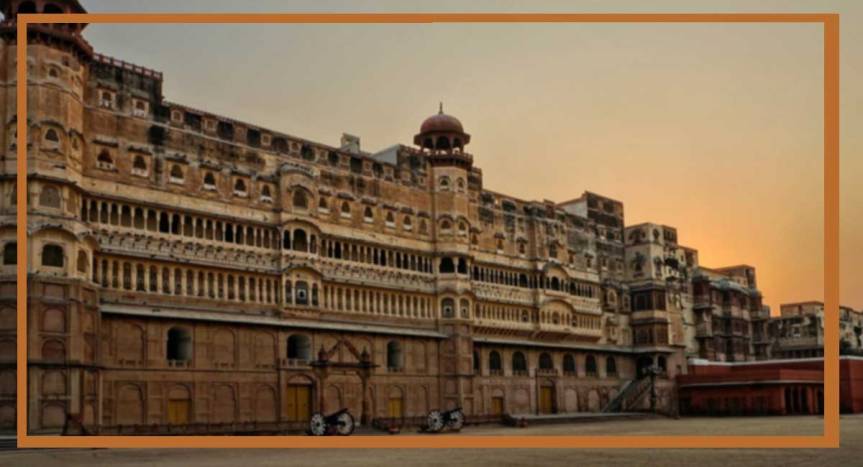
An unconquered fortress that still stands tall with pride and narrates interesting tales of glorifying past, Junagarh Fort is one of the charming places of attraction in the city. The unique blend of Mughal and Gujarati style of architecture makes this fort one of its kind. Its pleasing beauty and picturesque surroundings offer photographers a great option to capture in cameras. Inside the fort, you can visit Royal Chapel, Public Hall, Anup Mahal, Chandra Mahal, and Fort Museum.

Lalgarh Palace –

Impressive edifice with beautiful red sandstone structure is Lalgarh palace in Bikaner that highlights the blend of Rajput, Mughal, and European architectural style. This place has the true spirit of Rajasthan’s royal lifestyle. It was commissioned by Maharaja Ganga Singh in the memory of his father Maharaja Lal Singh between 1902 & 1926 and later converted as Lalgarh Palace Hotel. Places of attraction here are Sadul Museum, Ganga Golden Jubilee Museum, and Lalgarh Palace Hotel.

Laxmi Niwas Palace –

A former residence of Maharaja Ganga Singh of Bikaner, Laxmi Niwas Palace created this marvelous architecture during 1898 & 1902. The palace is comprised of an Indo Saracenic style by the British architect Sir Samuel Swinton Jacob. Its graceful red sandstone structure makes it the most attractive place in Bikaner. It is now converted into a hotel where you can book a stay for relaxing Bikaner Tours.

Rampuria Haveli –

Bikaner is widely famous for its magnanimous Havelis and grand houses that have been made with intricate carvings and jharokhas. It gives you a reminiscence of palaces themselves. Rampuria Havelis were designed by the rich Bikaner merchants. Taking a stroll in the lanes of this Haveli will teleport you to hundreds of years back.

Gajner Palace & Wildlife Reserve –

Settled on the banks of Gajner Lake, Gajner Palace is truly an architectural marvel for visitors. The impressive red sandstone structure is situated in dense forest areas and one can spot many migratory birds around the area. The stunning architectural design is among the most amazing places to visit in Bikaner for a wonderful weekend getaway.

Ganga Singh Museum –

Amongst the most famous tourist place to visit in Bikaner, Ganga Singh Museum is famous for holding the belongings of the Indus Civilization and the Gupta Dynasty. It is a paradise for Archaeological and historic buffs. Besides, there are some amazing works of pottery, painting, terracotta artwork that will give a peak to the rich Indian heritage and culture on Bikaner Tour Packages.

Prachina Museum –

Around 2000 years back, Prachina Museum came into existence and was built by the daughter of Maharaja Narendra Singhji – Siddhi Kumari. The museum displays a great collection of royal apparel, perfumes, textiles, artwork, accessories, and unique artefacts to include the portraits of Maharajas. This museum gives a sneak peek into the rich lifestyle and age-old culture of the city.

Moreover, if you have extra time to explore more, then visit top religious places. Some of the best holy shrines to visit in Bikaner are Jain Temple Bhandasar, Shri Laxminath Temple, Karni Mata Temple, Kodamdesar Temple, Ratan Bihari Temple, and Shiv Bari Temple. These would surely upgrade your overall travel experience in the city. 

Hire a Taxi From Bikaner to Jaipur with Rajasthan Cab for planning a sightseeing tour, outstation tour, or weekend getaway. We have a wide range of taxis, cars, or cabs, to choose from according to your interests and comfort. So, whenever you plan your Bikaner trip, consider a Taxi rental service with a professional driver with us.

Keywords/ Tags – cabs for bikaner tours, bikaner tour, about the bikaner sightseeing, taxi for bikaner to outstation, bikaner tour package, taxi for bikaner sightseeing,

Short Desc – Travel Bikaner Tour and know in-detail about Bikaner Sightseeing in this following blog. Discover its amazing beauty by choosing Rajasthan Cab for Bikaner Tours, Taxi for Bikaner to Outstation, or Taxi for Bikaner Sightseeing. Book Bikaner Tour package now at the best affordable rates.

About the Author – Kiran Deep Sandhu is the author of “Bikaner – Rajasthan’s hidden jewel to discover”. I am content writer having a major interest in traveling around. I have written many articles for different places and now here’s with this special blog of my favorite place Bikaner in Rajasthan. I hope you like it!

Bullying at workplace

We humans though imperfect are essentially kind, sensible, good natured creature. But deep down we are wired to be bad, blinked, idle, vain, vengeful, and selfish. There are characters that reveal the darker and less impressive aspects of human nature. One such character is bullying. Though bully may take up his character as impressive but the person who is bullied may be affected mentally, physically and psychologically. 
Bullying is common in our present day society. We see bullying or some likewise activities everywhere. There is no denying the fact that a person undermine another person to show his supremacy, be it in school or an organization. it is often subtle and hidden, profoundly affecting a substantial number of children and people of different age groups. Bully uses bullying to control behavior, personal agenda, or to fulfill his self serving motives. Bully may manifest itself into many forms. It can be physical, verbal, relational, etc. If you are the victim, the shadows of it reflect on your very face the moment you step out of your house for the office or your school. You usually start your day with pinch of anxiety in your head. Then you count down the days until the weekend or next vacation. 


A few examples of bullying include:

•targeted practical joke

•being purposely misled about work duties, like incorrect deadlines or unclear directions

•continued denial of requests for time off without an appropriate or valid reason

•threats, humiliation, and other verbal abuse

•excessive performance monitoring overly harsh or unjust criticism. 

Criticising or monitoring someone’s work is not always bullying. For example- objective and constructive criticism or disciplinary action related to workplace behavior or job performance is not considered bullying. But criticism meant to intimidate, humiliate, or single someone out without reason would be considered bullying.Bullying can be subtle. One helpful way to identify bullying is to consider how others might view what’s happening. This can depend, at least partially, on the circumstances. But if most people would see a specific behavior as unreasonable, it’s generally bullying.


Types of bullyingBullying behaviors might be:


•Verbal-This could include mockery, humiliation, jokes, gossip, or other spoken abuse.

•Intimidating-This might include threats, social exclusion in the workplace, spying, or other invasions of privacy.Related to work performance. Examples include wrongful blame, work sabotage or interference, or stealing or taking credit for ideas.

•Retaliatory-In some cases, talking about the bullying can lead to accusations of lying, further exclusion, refused promotions, or other retaliation.

•Institutional-Institutional bullying happens when a workplace accepts, allows, and even encourages bullying to take place. This bullying might include unrealistic production goals, forced overtime, or singling out those who can’t keep up.According to 2014 research from the Workplace Bullying Institute, people believed that targets of bullying were more likely to be kind, compassionate, cooperative, and agreeable.


Bullying may occur more frequently in work environments that:


•are stressful or change frequently•have heavy workloads

•have unclear policies about employee behavior

•have poor employee communication and relationships

•have more employees who are bored or worried about job security. 


Bullying can have significant, serious effects on physical and mental health.


Physical health effects of bullying

If you’re being bullied, you may:

•feel sick or anxious before work or when thinking about work. 
•have physical symptoms, such as digestive issues or high blood pressure

•have a higher risk for type 2 diabetes

•have trouble waking up or getting quality sleep. •have somatic symptoms, such as headaches and decreased appetite


Psychological effects of bullying may include:

• thinking and worrying about work constantly, even during time off.

 •dreading work and wanting to stay home.

 •needing time off to recover from stresslosing interest in things you usually like to do.

 •increased risk for depression and anxiety.

 •suicidal thoughts. 

•low self-esteem. 

•self-doubt, or wondering if you’ve imagined the bullying. 

How does bullying affect the workplace?

Workplaces with high rates of bullying can also experience negative consequences, such as:


•financial loss resulting from legal costs or bullying investigations.

 •decreased productivity and morale•increased employee absences. 

•high turnover rates.

 •poor team dynamics.

 •reduced trust, effort, and loyalty from employees. People who bully may eventually face consequences, such as formal reprimands, transfer, or job loss. But many types of bullying aren’t illegal.
When bullying isn’t addressed, it becomes easier for people to continue bullying, especially when the bullying is subtle. Bullies who take credit for work or intentionally make others look bad may end up receiving praise or being promoted.
What to do if you’re being bullied at work When experiencing bullying, it’s common to feel powerless and unable to do anything to stop it. If you try to stand up to the bully, you may be threatened or told no one will believe you. If it’s your manager bullying you, you may wonder who to tell.
First, take a moment to remind yourself that bullying is never your fault, regardless of what triggered it. Even if someone bullies you by making it seem like you can’t do your job, bullying is more about power and control, not your work ability.


Begin to take action against bullying with these steps:


•Document the bullying-Keep track of all bullying actions in writing. Note the date, the time, where the bullying took place, and other people who were in the room.•Save physical evidence-Keep any threatening notes, comments, or emails you receive, even if they’re unsigned. If there are documents that can help prove bullying, such as denied PTO requests, overly harsh commentary on assigned work, and so on, keep these in a safe place.

•Report the bullying-Your workplace may have a designated person you can talk to if you don’t feel safe talking to your direct supervisor. Human resources is a good place to start. It’s also possible to talk about the bullying with someone higher up if your supervisor is unhelpful or is the person doing the bullying.

•Confront the bully- If you know who’s bullying you, bring along a trusted witness, such as a co-worker or supervisor, and ask them to stop — if you feel comfortable doing so. Be calm, direct, and polite.

•Review work policies- Your employee handbook may outline steps of action or policies against bullying. Also consider reviewing state or even federal policies about the type of bullying you’re experiencing.

•Seek legal- Consider talking to a lawyer, depending on the circumstances of the bullying. Legal action may not always be possible, but a lawyer can offer specific advice.

•Reach out to others- Co-workers may be able to offer support. Talking to your loved ones about the bullying can also help. You can also talk to a therapist. They can provide professional support and help you explore ways to cope with the effects of bullying while you take other action.


How to help when you witness bullyingIf you witness bullying, speak up! People often say nothing out of fear they’ll become targets, but ignoring bullying contributes to a toxic work environment.
Workplace policies against bullying can help people feel safer about speaking up when they see bullying happen.


If you witness bullying, you can help by:


•Offering support-Support could involve acting as a witness if the person targeted wants to ask the bully to stop. You can also help by going to HR with your co-worker.

•Listening- If your co-worker doesn’t feel safe going to HR, they may feel better having someone to talk to about the situation.

•Reporting the incident-Your account of what happened could help your management team realize there’s a problem.

•Staying close to your co-worker, when possible- Having a supportive co-worker nearby could help reduce instances of bullying.

Bullying is a serious issue in many workplaces. While many companies have a zero-tolerance policy, bullying can sometimes be hard to recognize or prove, making it difficult for managers to take action. Other companies may not have any policies about bullying.
Taking steps to prevent workplace bullying can benefit organizations and the health of their employees. If you’ve been bullied, know you can safely take steps to combat the bullying without confronting the perpetrator. Remember to take care of your health first.

KNOW YOURSELF!

In this life race have we ever realized that somewhere we have lost ourselves. In socializing, in meeting new people, in getting involved with new identities everyday, somewhere we have lost our own identity. To achieve each and everything in life we have just lost ourselves.

The time which we spend in knowing someone for what so ever reason if we would have spent that time in acknowledging ourselves I think we would have discovered a lot ourselves. Knowing others are good in fact it is necessary to socialize but loosing your own identity is not good. We have to introspect ourselves daily.

Many times we do mistakes unknowingly and we don’t realize it and we continue doing same mistakes until someone else correct us for the same and then we feel a little embarrassed. We can prevent ourselves from such embarrassment if we everyday start introspecting. We have to understand that we are our own judge. No one knows us better than us. We are very much familiar with our own weak and strong points.

Introspecting makes you more strong. You will improve day by day. Because we are the master of our own sea. No one will help us to eradicate our shortcomings like the way the way we will do it. We have to be our own best friend!

Why bad memories are Vivid

Do you remember the time when you lost your dog who was the dearest to you or the time when you had an accident. If asked about recalling someone from your past maybe you will recall some tragic or painful memories related to them. Ever wondered why we remember the bad ones more vividly than the good ones even if the latter is more in numbers. 

We often tend to remember the bad memories and it has many psychological, physiological and evolutionary factors involved. 

We can say that humans are lovers of tragedy. We forget the happy moments very soon. They do not last for long. On the other hand, tragedy leaves a powerful impact on us. Its appeal feels eternal because our heart is affected by it very much. P.B Shelly, famous romantic era poet also quoted in his poem ‘To a Skylark’ that – “Our sweetest songs are those that tell of saddest thoughts” our best memories are from the negative memories because they have a strong impression on us. Moreover, people always try to find pleasure in tragedy. It attracts us toward it that’s why many of the greatest plays or movies in history have always tragedy involved in them. 

We have witnessed many musicians whose lives were more tragic and they created the best music inspiring from these tragedies. The audience also loved these songs because as I stated before we are lovers of tragedy. 

How memories are stored in our mind

When a memory is created it is stored in the brain in forms of neural connections of brains stimulated by proteins. Everytime we dwell in the memory or tell someone about it the connections become stronger. The memory will live with us forever if we visit it from time to time. Since the beginning people thought long memories are stable but that’s not perfectly true. Every time we revisit the connections get malleable and are subjected to differ. This means that they are not completely stable. Some memories can grow out of proportion. That’s why we see a person having a little incident with a spider in childhood can get an exaggerated phobia in their lifetime. 

Why bad is strong

Researchers have claimed that humans tend to remember the bad memories well. There can be many reasons for that. As a species we have to survive in the world and to do that we have to always evolve and learn from our mistakes. That’s why we remember the details of the bad memories so that it can be stored and used later when the same situation appears again. The lasting impact of negative memories is associated with the danger with it and our attention to the danger. We would be more attentive to a lion hiding in a garden rather than a beautiful flower in the same bushes in which the lion is hiding. We ignore the flower because it’s not dangerous compared to the lion. Also the strong memory of negatives is associated with the young age as this is the time we are in a more learning phase. As we grow old we tend to care less and focus on the positive. 

Whether it is good or bad, people have both. The ups and downs, the happiness and sorrow all are parts and parcels of life. One should always balance one’s focus between both to live the life fullest. 

The process used by every data analyst

the present world is creating data every single second ,and by analysing these footprint of data , data analyst predict the fate of any business. Behind the success and failure of any startup data played a major role. Data speaks if you understand it then you can get success every where but if you don’t understand what data actually speaks your startup, business will be failed and to understand the language of data a simple 5 step process is adopted by every data analyst. If you go through these steps then you can predict the fate of your startup today

Lets begin that process in brief
1 ask
2 prepare
3 process
4 analyse
5 share
6 act

Ask: it is the phase when a person should ask effective questions why he is starting the startup and what would be its outcome

Prepare: if he have clear picture about his startup the he should start to think what type of data would influence his startup and how he would collect it.

Process: when he have collected the data from different source then he must do processing of data because raw data has most of trashes that would deviate us from the ideal outcome

Analyse: after collecting and processing data,data should be analysed what it is telling what type of pattern you are observing in data what relationship you are getting from that data.

Share: when you have analysed data then share it with your startup partners and create strategies to achieve the ideal outcome

Act : now the final step comes when after making strategies act on them,do not change strategies if in minor losses because you have planned all the things and always collect data to verify your startegies.

Now you are a data analyst if you will apply this you would never fail in your life

Mask up India: Best alternative to reduce mass transmission

With business shutting and GDP hitting record low in decades, schools and educational institutes, malls, markets, religious institutions all being closed and normal life almost at a halt. This is definitely the worst crisis India has ever faced. Collapsed medical infrastructure has made the situation even worse.

Observing the international trends such as the two waves in Brazil, one mini wave followed by two serious waves in the UK, three waves in the USA etc, the second wave was surely expected in India as well. Nation’s health advisor has also hinted at a third wave in future with so many virus carriers in the country. 

Vaccines are the best defense against this disease but keeping in the mind population of the

Country and recent vaccine shortage it will take almost 3 years to inoculate the entire population of the country. Until then covid appropriate behaviour is the best alternative to reduce the mass transmission. It includes wearing masks, cleanliness and hygiene, frequent hand wash or using alcohol based sanitizer and maintaining social distance. 

Why mask is the key 

An independent small study in Beijing with families has shown that the efficiency of masks in the same household is 79% in preventing the transmission. Another study last year published in the “American Journal of Tropical Medicine and Hygiene” found that nations that mandated wearing masks have a lower mortality rate than the ones who did not. Many more such studies have been  published in the last year showing the world the way to reduce transmission. 

Situation in India

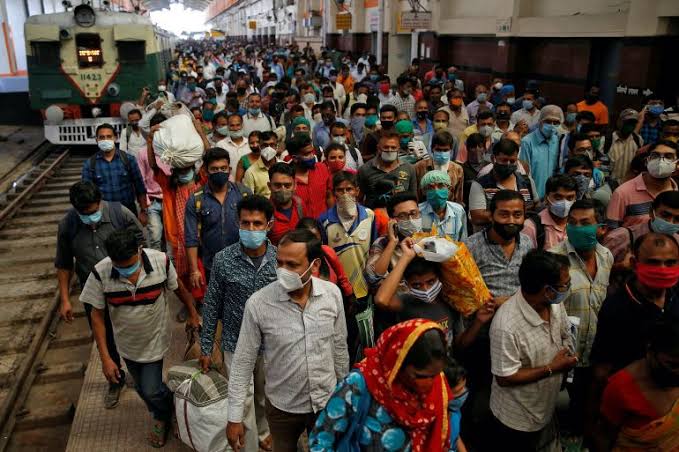
Even after the grim situation caused by the pandemic people in India are still blithe in their approach towards the virus. It is often seen people not following covid protocols, especially wearing a mask. It is generally believed by the authorities that Indians can be persuaded to wear a mask only by a lawful measure with hefty fines or punishments for non compliance. But these protocols cannot work until the public adopts them on their own wil when they see it as being in their best interests. 

How public can be persuaded to wear a mask

 A research team of Yale university doing the research in bangladesh has found that mask usage tripled when they were given away free and also some instruction by religious and community leaders. This leads to three times the usage of masks. Keeping volunteers in public 

Places to remind the people to wear a mask and give away masks to them who did not have any, showed an increase in mask usage from 13% to 40%. Another key factor was the quality of the mask. Masks need to be comfortable without compromising their filtering capacities. India has manufactured sufficient masks and has capacity to manufacture the same in future so supplies should not be an issue. Communication through the community leaders and social workers with the association of government can be the right step ahead. Addition to these creative and imaginative campaigning is needed to sensitise the public about the necessity of the mask and the right way to use it. These solutions may sound elementary but if India has to 

Stop the devastating effect of the third wave it is essential that these are considered and implemented effectively.