Managerial Unionism

Dr. Manisha Shekhawat

Abstract-

We have outlined the evolution of managerial unions in India. We have attempted to give a general picture of the boundaries of a typical managerial association. We have briefly described the managements’ reactions to the managerial association. We have examined the main causes for the formation of managerial unions. We have given a brief account of the activities of the managerial associations in general.

Keywords-

                The Evolution of Managerial Unions in India, Boundaries of Managerial Associations, Managements’ Reactions to Managerial Associations, Why Managerial Unionism?, The Activities of Managerial Unions.

Introduction-

Managers and officers in India belonging to such diverse organisations as manufacturing enterprises, commercial banks, insurance companies, research and development laboratories, electricity boards, trading corporations, merchant navy and the civil service are increasing banding themselves into collectivities of associations, which are gaining the aspects of trade unionism. The word ‘manager’ is not the only possible label for this diverse group of people. Industry employs ‘managers’, the civil service and merchant navy have ‘officer’, as do the bank and insurance companies; research institutes and laboratories employ ‘scientists and technologists’, electricity boards and sections of commercial airlines have ‘engineers’. Although called by different names, and doing varied jobs, it is quite clear that these men and women have a great deal in common. They belong to the higher echelons of organisational hierarchy. They are different from the white-collar groups (such as clerks, draftsmen, technicians, salesmen and laboratory assistants whose tasks are routine and repetitive, although non-manual) and the blue-collar employees (who are paid for exertion of physical effort). They may be simply be titled ‘managers’.

In India, collectivities/organisations of managers are popularly known as ‘officers’ associations’. The officer’s associations as well as trade unions exist to protect and advance the work interests of their members. As such, the terms ‘association’ and ‘trade union’ can be used synonymously.

The following sections cover the evolution of managerial unions in India, the reasons for the formation of managerial unions, and the activities of these unions.

The evolution of managerial unions in India-

In India, no coherent chronological account is available of the evolution of managerial unionsim, much less its spread or density. Organisations of managers appear to have been existence for decades, with associations of merchant navy officers, airline pilots and flight engineers dating back to the period around Independence.

The managerial union movement is reported to have grown and spread during the seventies, especially in the coal, steel, petroleum, engineering, chemical, textile, electronics, banking and insurance industries.

Managerial unions, like trade unions is general, suffered a minor setback towards the mid-seventies on account of national emergency. In fact, during the Janata Government regime that followed the Emergency, several officers’ associations were registered as unions under the Trade Unions Act, 1926.

In 1978, the associations of officers in the public sector witnessed a major shift in their character and direction from a rather passive and non-assertive stature to an active and assertive style. This also led to a change in the relations between these associations and the management, which became more cordial in general, though bitterness continued in several cases.

In the public sector, the managerial union movement entered a new phase in the eighties. In the year 1983, the National Confederation of Officers’ Associations (NCOA) was formed mainly to protect the interests of the officers in the Central Public Sector Undertakings (CPSUs).

The economic and industrial policies of the new Government that came to power in June 1991 have created pressures and insecurities for all public sector employees including officers. As such, the role of the NCOA has become all the more important as well as challenging. Officers/managers of giant corporations like coal, steel, oil and power sector enterprises are not members of the NCOA, but they have come closer to the NCOA through their respective industrial federations of officers/managers/executives after the introduction of the New Economic Policy in 1991.

A major development that occurred June 1992 was the formation of a new organisation called the Professional Workers’ Trade Union Centre (PWTUC) to look after the interests of the managerial and supervisory staff, officers and scientific workers. Among the major organisations that have joined together to form the PWTUC are: All Indian Bank Officers’ Confederation, NCOA, All India Life Insurance Officers’ Associations, and Council of Scientific and Industrial Research Scientific Workers’ Association. These five organisations together represent about 4.5 lakh professional workers. The most important objective of the PWTUC is security of service for the managerial and supervisory staff.

The private sector managers both in the MNCs and the family-controlled enterprises, have formed their associations. The industries in which managerial unions formed in the MNCs include pharmaceuticals, engineering, chemicals, and consumer products (Glaxo, Guest Keen Williams, General Electric). Among the indigenously owned companies which have officers’ associations are: Grasim, Tata Electric, Mafatlal Group, Kamanis, etc.

Boundaries of Managerial Associations-

It is problematic to determine the limits of association constituency of managerial associations in India. Ramaswamy (1985) descrbies the boundaries of managerial associations with the caveat that his description presents only a general picture of the boundaries of a typical managerial association, and, as such, vast differences do exist in the managerial association boundaries in different organisations or even in different enterprises within the same industry.

According to Ramaswamy, at the base the managerial associations take up from where white-collar clerical and staff unions stop. At the apex, the managerial associations would evidently leave out the top layer of managers who may not join, or be acceptable to the associations. What lies in between these two points is association territory.

      Apex (where top layer of managers are left out)

     Base (where white-collar clerical and staff unions stop)

If we turn our attention to the differences in the boundaries of the managerial associations in different organisations/industries, we may notice white-collar workers (at the base) teaming up with managers in some banks. Similarly, at the apex the reach of the managerial association varies from one organisation to another. In some commercial banks, association membership normally stops at the Regional Manager. In the Life Insurance Corporation, the membership extends a title further, with the Zonal Managers also joining the association. The steel plants and coal mines probably represent the ultimate, with the association membership reaching right up to the level of General Manager.

Managements Reactions to Managerial Associations-

  1. Managements’ response to officers;/managers’ associations in public sector have varied over time. The initial response in almost all cases was one of antagonism and hostility. In the Post-Emergency period there was change in the attitude of the managements towards managerial associations.
  2. As the managements started dealing with the managerial associations, they discovered that the association of officers/managers is not an evil force. As such, many of them gave de facto recognition to these associations and a working relationship got established between managements and managerial associations.
  3. In the private sector, the attitude of the top management towards the managerial associations was in general hostile. Although the managerial associations do continue to exist in this sector, reportedly, they are not quite comfortable with their top managements.

Why managerial unionism?

Some of the major causes for the formation of managerial unions in India are:

  1. Narrowing Wage Differentials-There is a wide-spread feeling among the managers that compared to unionised cadre of workmen they are getting a raw deal from their employers in terms of remuneration. They complain about the narrowing differentials between the emoluments of junior officers and the wages of the senior workmen.
  2. Loss of Identity-Like workers, managers too experience a loss of power, a facelessness among the changes and reorganisation of enterprises in the modern world. Many managers, especially, the junior ones have little access to information pertaining to the company.
  3. Job Insecurity-While one of the hardest things in Indian industry is to terminate the services of a worker, it is not very difficult to remove the managers from their jobs. Even in the public sector, the junior and middle level managers do not have the job security.

Under the industrial Disputes Act, 1947, the workmen enjoy job security, and they are entitled to : a) Lay-off compensation, if laid-off; b) retrenchment compensation, if retrenched: and c) some sort of statutory compensation in case the establishment is closed down or its ownership is transferred.

  1. Perceived Need for Protection from Militant Trade Unionism-As the junior and the middle level managers are responsible for translating managerial decisions into action, they are in the direct line of union fire. The unionised workmen and staff could make it difficult for the managers to take work from them due to their unions’ support and the protection they enjoy from labour legislation.
  2. Bureaucratic Culture-The bureaucratic culture which characterises the working environment of all public enterprises is another factor contributing to the emergence of managerial unionism. In these organisation, the junior and the middle level managers feel lost, as the decisions are taken unilaterally by the higher authorities or concerned Ministries.
  3. Absence of Participative Forum-The government and the managements who are so concerned with the worker’s participation in management hardly give a thought to the managers’ need to participate in management. They use the collective negotiation/bargaining that takes place between their associations and the top management as a participative forum for being associated with the management as closely as possible.
  4. Promotion Policies-The promotion policies of organisations also have had their effect on association formation. The nationalised banks have to fill by promotion three-fourths of the positions at the lowest point in the officer category. The promotion policies in some organisations have a flipside-discrimination in promotion processes; promotions not based on merit etc. Thus, the promotion or lack of it or discrimination in the promotion process has been a major source of dissatisfaction among managers, particularly, public sector managers.
  5. To be a Third Force between the Working Class and the Management-The protection of labour laws, and the privilege of a real manager, the junior and middle level managers have gone for the only option left to them, that is, the formation of the officer’s associations. They would not like to be considered as part and parcel of either of the working class or the mangement, but as a ‘third force’ between these two groups.

The Activities of Managerial Unions-

The activities of managerial associations reflect the character and personality of managerial unionism. The day-to-day activities of managerial activities may be categorised as:

  • Protection, Preservation and Improvement of Occupational Interests-The main thrust of managerial associations is on protection, preservation and improvement of the occupational interests of their members, which include, among other things, opportunities for promotions, pay revision, greivance redressal, improvement of working conditions, and introduction or enhancement of various fringe benefits. While pursuing the occupational interests, some association resort to agitational methods such as strikes, demonstrations, gheraos, displaying posters in vile and objectionable language, processions in the streets etc.
  • Welfare Activities-The welfare activities of the managerial associations, in general, include: establishment and management of cooperative societies, management of officer’s clubs and canteens, organisation of cultural, recreational and sports activities, management of educational trusts, collection of a certain amount as part of managerial association subscription and financing the same for a Group Insurance Scheme of the Life Insurance Corporation, etc.
  • Organisational Interests-One of the important activities of managerial associations is to supplemtn the efforts of the management that are aimed at professional development of manager, by was of organising seminars, and talks on various topics. Another important activity is to help the management in improving the productivity of the organisation.
  • Channel of Communication-Managerial associations are proving to be an effective channel of communication in their respective establishments. By raising the concerns of officers before the management and by presenting the views of the management to the officers (members), a managerial association operates like a bridge for two-way communication.


References-

Mamkottam, Kuriakose. 1989. “Emergences of Managerial Unionsim in India”, Economic and Political Weekly, Vol. XIV, No. 43.

Ramaswamy, E.a. 1985. “Managerial Trade Unionsim”, Economic and Political Weekly, Vol. XX, No. 21, pp. M-75-M-88

Ramaswamy, E.A. 1986. Worker Consciousness and Trade Unions, New Delhi: Oxford University Press.

Sen, Ratna. 2003. Industrial Relations in India: Shifting Paradigms. Delhi: Mamillan India Ltd.

Sharma, Baldev R. 1993. Managerial Unionism: Issues in Perspective, New Delhi: Shri Ram Centre for Industrial Relations and Human Resources.

Ramaswamy E.A. 2002. Managing Human Resources: A Contemporary Text, New Delhi : Oxford University Press.

Sinha, P.R.N., Indubala Sinha, and Seema Priyadarshini Sekhar. 2004. Industrial Relations, Trade Unions and Labour Legislation, Delhi: Pearson Education.

Wial, Howard. 1993. “The Emerging Organisational Structure of Unionism in Low-Wage Services:, Rutgers Law Review, Vol. 45, No. 3 (Spring), pp. 671-738.

RESOURCES MANAGEMENT AND PUBLIC POLICY ON NIGERIA EDUCATIONAL SECTOR: AN ISSUE FOR SUSTAINABLE DEVELOPMENT

ILIYA BAWA1, GARBA IBRAHIM2 AND HUSSAINI MOHAMMED NDAKWESU3

ABSTRACT

Within the first two decades of Independence in Nigeria Public Policies concerning education were made and there was rapid growth in educational sector in nearly every direction and at almost every level. As the sector operates in a changing environment it faces challenges such as: delays in disbursing funds, in effective management of education system. And shortages of learning resources resulted to poor quality of graduates. The data used for this study is based on secondary data, information from these sources are weighed and it was recommended that it is not possible to deliver effective education without some level of relevant resources and the resources must be drawn upon and put to judicious use to enable them increase wealth and public organizations including educational institutions should develop strategic plans as a means of enhancing results based management and efficiency in their operations.


Keywords: Education, public policy, resource, management, funds, sector.

  1. Introduction

Primary schools are the basic foundation of the educational pyramid in Nigeria (Fafunwa, 2001), meaning any serious endeavour for sustainable development in the educational sector as well as manpower training must start with the primary education. After the primary school, one is expected to pass through the secondary school. Efficient and well motivated teachers must be trained via colleges of education. Polytechnics produce technicians and technologist needed for direct employment in industries (FGN, 2000). They are to produce high and middle manpower, necessary for agricultural, industrial, commercial and economic development. Universities on the other hand, are established to advance learning in diverse disciplines; promote the development of high level manpower to meet the needs of the Nigerian economy. They are also to generate information through research and disseminate such knowledge. Universities are also established to maintain and transform cultural heritage of the country (FGN, 2000).

When policies concerning education are defined or formulated, they are supposed to be rational, strategic, backed by state resources, and action, and pursued in the best interest of the country as a whole and not that of a small group of elites in the metropolis. Education, in this context, means not just the acquisition of literacy, and numerical skills, but also the ability to pass down knowledge from one generation to another. It is a process by which values are transmitted inter-and-intra generationally. It encompasses creative thinking and action that stimulates cultural change (Theodorson and Theodorson, 1969).

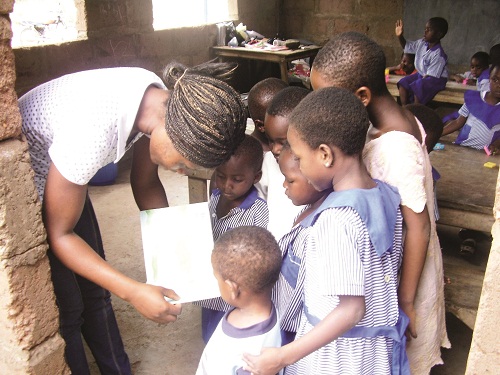
In Nigeria, within the first two decades of independence, there was rapid growth of educational sector in nearly every direction and at almost every level: primary, secondary, tertiary, science; technical; vocational; planning, administration and supervision; finance, infrastructure and educational aids; enrollment, reward and prestige. But the problem of imbalance between north and south, boys and girls, rural and urban access to education-remain persistent. The geographical imbalance in education produced its most intense competition of enrollment at all levels – primary, secondary and tertiary. This led to the rapid construction of schools and higher educational establishments. This vote for education in the first National Development Plan period (1962-1968) stood at 10.3 percent. It was among the top five targets of the plan (Ayo, 1988). But as physical structures increased, along with enrollment figures, the work force to deliver instruction and manage the institutions lagged behind. This lack of capacity made reliance on expatriate hands inevitable. This was more so for the northern Region than the rest of the country which could also not escape the temptation to hire the expatriate. The second National Development Plan (1970-1974) was to reflect the country’s growing economic confidence. It made bold declarations about building a strong and united country: a just and egalitarian society; a free and dynamic economy; a land of opportunity for all citizens; and a free and democratic society, these philosophical aspirations were declared under military rule. And education was made the numero uno on the social scale of the planned and actual public capital expenditure attracted 11.4 percent (Ayo, 1988).

By the time the Third National Development Plan (1975-1980) was launched, series of second generation universities were established. In addition, Polytechnic and Monotechnics also grew in number and spread. In just ten years Nigeria had introduced the Nigerian Enterprises Promotion Decree which led to the establishmefnt of seven new universities (at Calabar, Jos, Benin, Ife, Ibadan, Lagos and Nsukka; and become one of the biggest recruiting countries of expatriate manpower in the world. The general manpower needs of the nation were so severe that…… anyone produced by the educational system at virtually any level of learning competence is immediately employed. Scholarship of all kinds and at all levels overseas are automatically taken up (Arnold, 1977).

The National Policy on Education, published for the first time a document in 1977, this document is currently in its fourth edition. Despite series of modification, the five main goals of the national policy on education remain intact. It declared Nigeria’s philosophy of education as one that believes that:-

  • Education is an instrument for national development
  • Education fosters the worth and development of the individual…
  • Every Nigeria child shall have a right to equal educational opportunities irrespective of any real or imagined disabilities…
  • There is need for functional education for the promotion of a progressive, united Nigeria…

These goals are amplified with the declaration that “…education is the most important instrument of change” and is therefore fundamental to any revolutionary “change in the intellectual and social outlook of any society”.

Though these policy statement suggest some key points of agreement on public policy on education in Nigeria. But the economic recession of the early 1980s and the SAP that was to follow in 1986, impacted negatively on the educational sector. The state, as part of its adjustment policy, withdrew subsidy from the social sector. And education took a direct hit. The recurrent financing per student in the University declined by more than 30% while student enrollment increased by 88%, revealing a wide gap between NUC budgetary expectation and federal government allocation to the University system. Moreover, 80% (i.e 320,000) of candidates seeking JAMB admission, out of about 400,000 applicants are unable to gain a place in the University system (Moja, 2000, as cited by Abdulkarim 2013) Abdulkarim (2013) noted that the number of public universities has grown from 6 in the 1960s to 73 as at 2000 and is rapidly increasing. In addition, new universities are being established by federal, state governments, private capital and voluntary agencies. There is also expansion in number of institutions, programmes and enrollment at the technical, vocational, college of education and polytechnic levels of education. Yet the demand for post-secondary education is not relenting-even as funding has failed to corresponding improve in real terms. It is not possible to deliver effective education without some level of relevant resources. The importance of resources in the management of education cannot be over emphasized.

  1. Statement of the Problem

The education sector in Nigeria operates in a changing environment and it faces challenges such as: delays in disbursing funds, lack of teachers’ motivation, ineffective management of education system, the decline of staff quality is a consequence of obsolete research facilities. Laboratories are not well-equipped or are practically non-existent. Most primary, secondary, and tertiary institutions offer computer science courses without computer laboratories, let alone internet connectivity. Libraries have become achieves of stale, archaic and irrelevant materials. They hold out-of-date collections. These shortage of learning resources resulted to poor quality of graduates.

The researchers of this study are of the view that curriculum planning and physical expansion in these schools without adequate and sustainable management of human and material resources would definitely fail to produce the desired results.

  • Research Methodology

The data used for this research work is based on secondary data. It examines educational sector in Nigeria. The study employed exploratory research design and explored published and electronic materials, journals, seminars papers and other materials related to the study. Information from these sources are weighed in relation to the topic from which Conclusion and Recommendation are made.

  1. Literature Review

The Concept of Resources

While resources have been defined in various ways to suit various purposes, almost all definitions accept that resources are necessary tools for the creation of wealth. According to Williams (2010), the word, “resource” developed out of the Latin phrase “re surgere” literarily interpreted as: again (re) to rise (surgere), or “to rise again.” “Re surgere” developed into the French word “resource” meaning “relief or recovery” which, in turn, developed into  the English word, “resource” defined as something that can be turned to for support or help; an available supply that can be drawn upon when needed; and/or means that can be used to an advantage. Hornby (2000:999) defines resource as something that a country, an organization or an individual has and can use, especially to increase wealth; a thing that gives help, support or comfort when needed. Lynch (2004) provides a more comprehensive and detailed approach to the word by defining it to include: Useful land or minerals such as coal, or oil that exists in a country and can be used to increase its wealth; All the money, property, skills, etc. that are available and can be used when needed; Personal qualities such as courage and determination that are necessary in dealing with a difficult situation; and Books, films, pictures, etc., use by teachers and students to provide information.

According to Ochuba (2001), Resources are the basic tools necessary in the effective performance of tasks and for the growth and development of human organizations. The constitution of a resource is determined by the uses to which it can be put.  Generally, a resource  is identified  by  its  ability  to  solve  problems,  and  yield  more  wealth  when  applied  to  economic  situations.

Martin (2005), resources are classified as visible when they exist and can be quantified in the form of human beings, land, money, property, books, pictures, and so on.  Resources  are invisible  when  they  exist  in  the  form  of  skills  and  physical dexterity and can only be measured in terms of productivity levels and quality of work. It is difficult to determine who has what skill and what level of physical dexterity if tasks are not assigned to human beings. The human beings who possess the skills and the physical dexterity constitute the class of resources known as human resources. The other types  of  visible  resources  that  can  be  applied  by  human  resources  in  the  production  process  constitute material resources.

Black (2003:213) separates human capital from other human and physical resources, by describing it as: The  present  discounted  value  of  the  additional  productivity,  over  and  above  the  product  of  unskilled labor, of people with skills and qualifications. Human capital may be acquired through explicit training or on-the-job experience. Like physical capital, it is liable to obsolescence through changes in technology or tastes. Unlike physical capital, it cannot be used as collateral for loans.

Human capital is therefore consciously created through education and training. While accepting the general economic definition of land as the factor of production supplied by nature, Begg et al. (2004) believe that the quality of land can be improved by the application of human expertise. Thus a farmer is able to produce better land by applying labour to extract weeds or fertilizer to improve soil balance. Similarly, in the field of education, professionals are required in the effective manipulation of educational resources to achieve the desired balance in the production of educated labor.

According  to  Black  (2003),  the  cost  of  creating  human  capital  falls  mostly  on  individuals  or  their  families, philanthropic institutions or the state. Financial capital is a significant resource often assumed to be a part of physical capital. It is actually the basis for the procurement, utilization and maintenance of all other types of resources. Without a strong financial base, it will be  difficult  to  produce  the  right  types  of  goods  and  services  in  desirable  quantity  and  quality.  Since the  human economy is a monetary economy, the availability of  funds in any organization or institution is vital to its productive process  and  the  quality  of  its  product  and  service. Defining  finance  as  the  science  of  controlling  money,  Ogbonna (2001)  expands  his  approach  by  citing  Reich (2002)  who  saw  finance  as  a  body  of  facts,  principles  and theories dealing with the raising and using of funds by individuals, business firms, educational institutions and governments.

Ogbonna (2001) rightly deduced from Pandit’s definition that finance is the process of raising, allocating, controlling and prudently managing funds for the purpose of achieving institutional objectives. The  foregoing  analysis  clearly  shows  that  resources are  assets  only  to  those  who  can  identify  them  and effectively  employ  them  for  the  purpose  of  achieving  clearly  defined  objectives.  This is because resources alone cannot yield additional wealth. They must be drawn upon and put to judicious use to enable them to increase wealth or productivity. Thus, the prudent management of education funds involves decisions on how to procure, expand, utilize and properly account for funds directed at the achievement of education objectives in general or institutional goals in particular.

Types of Educational Resources

According to Hadar and Ziderman (2010), that which constitutes a resource in education is determined by the level of education and the type of education to be provided. The standard resources for all education types and levels are prescribed by the federal government. These include  professionally  trained  teachers  and  qualified  teaching  staff  in  all  subject  areas,  government  approved curriculum,  teaching  aids,  school  buildings  and  furniture  and  the  right  caliber  of  administrators  to  ensure  effective school  management.  The  resources  necessary  for  the  provision  of  primary  and  secondary  education  in  Nigeria  are prescribed by the national policy on education (FME, 2004). At the tertiary level, the federal government works in collaboration  with  the  Nigerian  Universities  Commission,  the  National  Board  for  Technical  Education  and  the National Commission for Colleges of Education in ensuring the provision and maintenance of standard recommended resources.

Hadar and Ziderman (2010) opined that, educational resources have been classified into four groups and include (a) physical resources such as school plants,  classrooms,  offices,  recreational  facilities  and  the  entire  school  ground;  (b)  material  resources  including instructional aids, stationeries, education plans,  objectives and prescribed methodologies; (c) human  resources (both teaching and non-teaching staff); and (d) financial resources made up of all monetary input into the education system directed towards the achievement of specified educational objectives.

Time is a resource that is highly limited in supply and critical to education, but often taken for granted by the providers of educational resources.  Time  is  a  vital complementary  resource  that  is  indispensable  in  the  effective harnessing  and  utilization  of  the  physical,  material,  financial  and  human  resources  in  the  school  system.  Ebong (2007:13) defines time as “the continuum in which events succeed one another from the past through the present, to the future.” All school system activities are carried out within a time frame which may be limited to minutes, hours, days, months or even years.  Time  mismanagement  constrains the  effective  achievement  of  the  objective  for  which  a particular educational resource is required. Effective resource management will be difficult to achieve in any school where time is disregarded.

Information,  another  vital  resource  that  complements  the  use  of  other  resources  identified  in  this  work,  is critical  in  the  effective  management  of  any  organization. Information  is  defined  as  “facts  or  details  that  tell  you something  about  a  situation,  person  or  event”  (Lynch, 2004).  Specifically, information is a service facility for applying facts or news, and law; it is a numerical measure of uncertainty of an experimental outcome (William 2010). Adequate  information  and  its  proper  management  are  central  to  effective  decision  making  (Opeke  2004).  The relevance of information as an educational resource cannot be over-emphasized. It is believed that most educational management  problems  in  Nigeria  are  traceable  to  inadequate  information  and  a  general  lack  of  proper  information management techniques (Okorosaye-Orubite, 2008; Akinwumiju and Agabi, 2008).

In  light of  the  above  analysis,  two  classes  of  resources  can  be  identified.  The  first  consists  of  concrete resources  that  can  be  physically  quantified  and  their  effect  on  education  achievement  measured  in  terms  of  their quantity  and  quality.  In  this  class  of  resources  belong  human  resources,  school  plant  facilities,  funding  (financial resources), and instructional materials. The second class of resources (of equal importance), which consists of abstract resources  such  as  time  and  information,  can  only  be measured  in  terms  of  their  effect  on  job  performance.  Good knowledge  and  the  appropriate  utilization  of  these  major  classes  of  resources  are  vital  in  the  achievement  of effectiveness in resource management in the school system, especially in the present context of global economic crises and a consistent decrease in federal monetary allocation to education. The school manager must be well informed of the existence of education resources and know when to collect and use such resources. He/she should also be able to adopt a classificatory method that is suitable to the level of education at which he/she is operating.

The Role of Resources in Educational Management

The importance of resources in the management of education cannot be over emphasized. It is not possible to deliver effective education without some level of relevant resources. This has been highlighted by various education analysts and professionals. As observed by Nchor (2008), instructional resources provide a solid basis for conceptual thinking; increase the propensity of the brain to retain information; make learning more interesting; and take care of differences that may exist among learners. Finance, as a resource, plays a crucial role in the development of education (Kosemani, 2005).  This  supports  Fadipe’s  (2000)  opinion  that  proper  funding  and  a  good  supply  of  qualified  teachers  can greatly improve the facility index of a school.

Ochuba (2001) has a view that, in addition to all these benefits, it is important to note that the quality and quantity of resources available to any education system provides a basis for the assessment of the managerial abilities of an education manager. This is because  even  the  most  resourceful  manager  requires  a  resource  base  upon  which  to  exhibit  resourcefulness.  For instance,  a  school  principal  in  a  rural  school  with unfurnished  classrooms,  a  large  enrolment,  poor  supply  of instructional materials and a grossly inadequate number of trained teachers cannot be said to have a good resource base. His counter- part in a sub-urban area, who is managing a school with a similar teacher-pupil ratio, well- furnished classrooms,  and  a  regular  and  good  supply  of  instructional  materials,  has  a  better  resource  base.  Efforts at resourcefulness may yield better results for the latter because of an improved resource base.


Human Capital Theory

In the 1960s, social scientists became interested in the studies related to the economic value of investment in education. To have right doctors, engineers, good lecturers, teachers etc. government needs to invest more than its expenditure. This view was generated by the human capital theorists’ notion that the most productive course to national development of any society lies in the advancement of its population, which is its human capital (Scott, 2000).

From this view of Human Capital theory, an educated population is a productive population; education contributes directly to the growth of the national income of the society by enhancing the skills and productive ability of employees. Human capital theorists argue that economic growth and development should only take place when technology becomes more efficient and when societies utilize human resources in the use of technology. Human capital theorists assume that improved technology leads to greater production and that employees acquire the skills for the use of technology through formal education. Thus, when societies invest in education, they invest to increase the productivity of the population.

Hence, for the purpose of this research, the Human Capital theory is used. This is because if budget is being allocated and executed well on training students and staff, it will lead to greater productivity on employees, increased the skills in their areas of specialization and also lead to efficiency at work. This had consequently drastically reduced the quest for our Human and Intellectual capital to go abroad in search of better operational environment and its adverse consequences on the economy. This can only be achieved if the learning environment is good, with good infrastructures like good classrooms, good laboratories for practical purposes and research grants are given for further trainings.

  1. Conclusion and Recommendation

Education cannot operate in a vacuum. Its success depends on its context. A friendlier context is likely to impact positively on management of the sector, which in turn will return back to the society in the form of better products of a more efficiently managed educational system. It is not possible to deliver effective education without some level of relevant resources, because the most resourceful manager requires a resource base upon which to exhibit resourcefulness. And policy problems are products of felt needs. Such needs don’t necessarily have to be everyone’s desire. But they reflect competing demands and interest. Public policy and education in Nigeria produced its own dynamics of competing demands and interests. Resources alone cannot yields additional wealth, they must be drawn upon and put to judicious use to enable them to increase wealth or productivity. Thus, the product management of education funds involves decisions on how to procure, expand, utilize and properly account for funds directed at the achievement of education objectives.

Therefore, government, both federal and state, should as a matter of national urgency, provide adequate funds for the rehabilitation of student’s hostels, classrooms, laboratories, studies, engineering workshops, water and electricity supply, teaching facilities, and funds for building of new classrooms, teaching and research facilities in the schools.

Public organizations including all educational institutions should develop strategic plans as a means of enhancing results based management and efficiency in their operations. Resource are the basic tools necessary in the effective performance of tasks and for the growth and development of human organisation, measurement of performance in a school set-up should therefore include academic excellence, land infrastructure development, discipline and school culture, stakeholder satisfaction, financial stability and excellence in non-academic activities.


References

Abdulkarim, S.B. (2013) Public Policy and Education in Post Colonial Nigeria: An Analysis of some Salient Issues. Journal of Entrepreneurship Research Volume 3 number 1, February, 2013.

Akinwumiju, J. A. and Agabi, C. O. (2008).  Foundations of school management. Port- Harcourt, Nigeria:  University of Port Harcourt Press.

Ayo, E.J. (1988) Development Planning in Nigeria. Ibadan; University press Limited.

Black, J. (2003). Dictionary of economics. New York: Oxford University Press.

Ebong, J. M. (2007).  Time  management  techniques  for the  avoidance  of  time  wasters  in  education.  Journal of Education in Developing Areas, X(1), 13-19.

Fadipe, J. O. (2000).  Utilizing  the  teaching  manpower  in  the  secondary  school  system:  A  necessary  administrative function  for  better  productivity. In S. U. Udoh & G. O.  Akpa (Eds.). Manpower for quality education in Nigeria (pp. 29-37).Ibadan: JOSL Ehindero Nig.

Fafunwa, A.B. (2001) Educational Management in Nigeria. In N.A. Nwagwu, E.T. Ehiametalor, M.A. Ogunu and N. Nwadiani (eds). Current issues in Educational Management in Nigeria (2-12). Benin city: Ambik Press.

Federal Ministry of Education Federal Republic of Nigeria, Abuja (2004). National Policy on Education (4th ed.). Lagos, Nigeria: NERDC Press.

FGN, (2000) Higher Education in the Nineties and Beyond: Report of the Commission on the Review of Higher Education in Nigeria: FGN.

Hadar, I. B. and Ziderman, A. (2010). A new model for equitable and efficient resource allocation to schools: The Israeli case.

Hadar, I. B. and Ziderman, A. (2010). A new model for equitable and efficient resource allocation to schools: The Israeli case.


Hornby, A. S. and Jonathan, C. (2000).Advanced learner’s dictionary of current English (Special price ed.). New York: Oxford University Press.

Kosemani, J. M. (2005). Education and National Character. In J. M. Kosemani (Ed.), Comparative  education: Emergent national system. Port Harcourt: Abe Publishers.

Lynch, T. D. (2004). Budget system approach. Public Administration Quarterly Journal, 13, 321–341.

Martin, L. (2005). Contracting out: A comparative analysis of local government practices. In T. D. Lynch and L. Martin (Ed.), Comparative public budgeting and financial management (pp. 225–239).New York: Dekker.

Nchor, A. N. (2008). Instructional materials and resources in Nigerian secondary schools: Problems and prospects. Akampa Journal of Education, 2, 37-42.

Ochuba, V. O. (2001). Strategies for improving the quality of education in Nigerian universities.

Ogbonna, F. C. (2001). Resourceful financial management: The way forward for the survival of university education in the 21st century. In A. U. Akubue and D. Enyi (Eds.) Crises and challenges in higher education in developing countries (pp. 26-34).Ibadan: Wisdom Publishers.

Okorosaye-Orubite, A. K. (2008).  From Universal Primary Education (UPE) to Universal Basic Education (UBE): What hope for Nigeria? In School of Graduate Studies Seminar Series, SGS Monograph No.1. Port Harcourt: University of Port Harcourt Press.

Opeke, R. O. (2004). Information consciousness as a factor in organizational decision making: The case of Ogun state ministry of education [Unpublished PhD Thesis]. University of Ibadan.

Reich, R. (2002). The work of nations. New York: Vintage Books.

Scott, J. (2000). A matter of record: Documentary sources in social research. Cambridge: Polity Press.

Thordorson, G.A and Theodorson, A.G. (1969). A modern dictionary of sociology, New York: Thomas Y. Crowell Company.

William, M. (2010). The American heritage dictionary of English language (New College ed.). Hopewell, New Jersey: Houghton Mifflin.


An Empirical Study on the application of Ergonomics Approach at Public Universities of Ethiopia with Special Reference to Adigrat University.

Tewelde Gebresslase

Abstract: It is obvious that either public or private institutions might be profit or service oriented in their nature and to achieve this; employee wellbeing should be primarily concerned. One move toward is to integrate the concepts of quality ergonomics which is the main human factors, and safety into such higher academic institutions experiences for all community that make the competitive in today’s working environments of the institutions. Literally speaking Ergonomics means the study or measurement of work therefore this paper focuses on the relationship between physical and logical environment setting and institutional performance with especial reference to Adigrat University. Hence, this paper is literature and personal observation based research article on the role of ergonomics approach of workplace in case of the stated University which is one of the third generation higher academic institutions in Ethiopia., the researcher tried to put a possible suggestions based on a practical observation on what is going practically. At the end with a proper plan of ergonomics approach the tangible and intangible costs due to unhealthy working condition could be reduced since the outcome of this paper could attract the attention of the management bodies in particular and community of the institution i.e Adigrat University in general.

 Key words: Professional safety, ergonomics, employees’ motivation, productivity, Adigrat University.

  1. Introduction:

Ergonomics is the study and means to enhance the compatibility between human beings and surrounding systems. Ergonomics satisfies some of the key needs of the operators including reduction of stress and fatigue, improvement in safety, comfort level and quality of the work life. It promotes the well-being of the operator by maintaining a safe, healthy and efficiency driven environment (Viraj Bakshi, 2016). Ergonomics is defined as the design of workplace, equipment, machine, tool, product, environment and system, taking into consideration the human’s physical, physiological, psychological capabilities and optimizing the effectiveness and productivity of work system while assuring the safety, health and wellbeing of the workers.rgonomics focuses on the work environment and items such as the design and function of workstations, controls, displays, safety devices and tools to fit the employee’s physical requirements, capabilities and limitations to ensure his/her health and well being.

Ergonomics is the study and means to enhance the compatibility between human beings and surrounding systems. Ergonomics satisfies some of the key needs of the operators including reduction of stress and fatigue, improvement in safety, comfort level and quality of the work life. It promotes the well-being of the operator by maintaining a safe, healthy and efficiency driven environment (Viraj Bakshi, 2016). Ergonomics is defined as the design of workplace, equipment, machine, tool, product, environment and system, taking into consideration the human’s physical, physiological, psychological capabilities and optimizing the effectiveness and productivity of work system while assuring the safety, health and wellbeing of the workers.

According to the collection literature for ergonomics concept the following are some of the definitions. Ergonomics is the scientific study of people and their working conditions, especially done in order to improve effectiveness (Cambridge dictionary). Ergonomics is the science of refining the design of products to optimize them for human use. (…) it is sometimes known as human factors engineering (whatis.com). Ergonomics is a science that deals with designing and arranging things so that people can use them easily and safely (Merriam-Webster Dictionary). Ergonomics is an applied science concerned with designing and arranging things people use so that the people and things interact most efficiently and safely —called also biotechnology, human engineering, human factors (Merriam-Webster Dictionary). Ergonomics is a study of capacities and limitations of mental and physical work in different settings. Ergonomics applies anatomical, physiological, and psychological knowledge (call human factors) to work and work environments in order to reduce or eliminate factors that cause pain or discomfort (business dictionary).

Although the term Ergonomics has many but mutually inclusive definitions, the following definition is taken from Peter Vink (2006) as operational meaning for this paper. Hence,   Ergonomics (or human factors) is the scientific discipline concerned with the understanding of interactions among humans and other elements of a system, and the profession that applies theory, principles, data and methods to design in order to optimize human well-being and overall system performance. Having this operational definition for Ergonomics, this paper is an empirical study on human and none human factors for unhealthy working condition and tried to put possible observations on how Ergonomics Approach for workplace could help as a solution for related problems at Public Universities of Ethiopia with Special Reference in Adigrat University.

  1. Research Rationality
S

ince human resources are the ultimate user of the workplace environment, therefore labor should consider designing and equipping the workplace setting to suit their comfort. In this case the physical and logical design of working environments has a direct impact on the healthy workplace vis-a-vise wellbeing of the workers. As Joan Burton cited in WHO Regional Office for the Western Pacific; defines a healthy workplace as follows:

 “A healthy workplace is a place where everyone works together to achieve an agreed vision for the health and well-being of workers and the surrounding community. It provides all members of the workforce with physical, psychological, social and organizational conditions that protect and promote health and safety. It enables managers and workers to increase control over their own health and to improve it, and to become more energetic, positive and contented.”

Either knowingly or unknowingly the management of one organization could follow any leadership philosophy; whatever the response of the followers. Besides to this, the management body could ignore the humanitarian aspect to maximize the organizational performance. As a result the working environment could affect negatively since the relationship between the top and lower management level could badly affect. In this regard, “It is unethical and short-sighted business practice to compromise the health of workers for the wealth of enterprises.” Evelyn Kortum, WHO (2014).

A healthy workplace can be affected through two factors which are human and non human. In this case, human factors identify what employees are being asked to do, who is doing it, and where they’re working and Non human factors identify the tangible and intangible features of the environments. According Kerm Henrikse (2010) Human factors research applies knowledge about human strengths and limitations to the design of interactive systems of people, equipment, and their environment to ensure their effectiveness, safety, and ease of use.

As Peter V. (2006) cited in Vink, (2005), participatory ergonomics is the discipline that studies how different parties should be involved in a design process. Participatory ergonomics is the adaptation of the environment to the human (that is ergonomics) together with the proper persons in question (participants). Besides, different authors also argued that “good ergonomics is good economics”. However, the concepts of ergonomics are not implemented properly. It is known that there are a number of hidden reasons why the employees who are working in Adigrat University (where the author is working) are not well satisfied in their day to day working style. Thus, it is believed to have a careful observation what is going practically and assessing to what extent the Ergonomics approach (human factors) for workplace is implementation otherwise to forward possible alternative solution for healthy, conducive and productive working environment to Adigrat University.

  1. Research Questions
  • What are the human factors for institutional performance in the university?
  • How the physical or logical working environs could influence the institutional performance of Adigrat University?
  • What are the bottlenecks against practicing ergonomic approach of workplace?
  1. Research Objective
    • General Objective

The general objective of this article is to assess the factors affecting the healthy working environs and forwarding ways of practicing ergonomics approach for workplace in Adigrat University.

  • Specific Objective
  • To determine the human factors those affect the institutional performance of the university.
  • To examine the relationship between factors of the physical/logical environment towards institutional performance.
  • To point out the major bottlenecks for practicing ergonomic approach.
  1. Institutional System Analysis

Historically, the age of modern Education in Ethiopia is almost 108 years since Emperor Menelik II opened the first modern school at Addis Ababa in 1908. Next to this, according to Alemayehu Bishaw; another important event in the expansion of modern education was the advent of the late Emperor Haile Selassie I, as Regent and Heir to the throne in 1916. He was a graduate of the first school established in Menelik II‟s palace. This foundation of higher institution also started during Emperor Haile Selassie I, with his name Haile Selassie I University (now Addis Ababa University) in 1950.

Currently, Ethiopia becomes the owner of 33 (excluding the 11 new universities to be built in second GTP period of the nation) higher academic institutions and 59 accredited Non-Government Higher Education Institutions under its Ministry of Education. Adigrat University (3rd generation) is one of the public higher academic institutions which is established in 2011.

This academic year the University has 6 colleges and one institute, 41 departments with a regular student population of more than14000 and nearly 5000 continuing education students. The total number of its academic staff has reached nearly 1000 (more than 300 of them on their further study at home and abroad). The support staff is expected to reach 1500 this academic year (www.adu.edu.et retrieved at 15/8/16).

According to Higher Education Proclamation No. 650/2009 no. 17/3, every public institution shall exercise its autonomy in ways that, at the same time, ensure lawfulness, efficiency and effectiveness, transparency, fairness, and accountability. Through this the MoE gives autonomous power to the university. That’s why different universities of the country could not have consistent institutional structure. Most of them are indifferent on their institutional structure, way of students evaluation, payment policy in which the MoE should follow up and adjust. The following is the current institutional hierarchy of Adigrat University.

As one can understand from the next hierarchy, the two vice presidents are over loaded. The majority divisions under Academic, Research and community Service vice president are colored yellow and it shows it should divided in to at least two units for research and academic purpose.


Figure 1 Current institutional hierarchy of Adigrat University

It is due to over responsibility and centralized management in these vice presidents that the majority employees complain more on lack of good governance in different semi annual meetings.  These same is true in the purchasing unit of the university that requested teaching materials could not deliver on time. Even if the university has more than 5000 students in continuing education, there is no responsible unit to overcome related issues. Hence, it is better to have such productive divisions instead of having the current bureaucracy such as quality assurance at college level. It is a symptom for its weakness campus assistant administrator under basic service unit; significant numbers of personal and institutional properties were stolen by thefts.

It is also due to lack of having a close linkage with the external community that domestic and foreign staff are suffering badly by home thefts in the town. When we see about the management system, individuals are treated as they are member of local political party rather than their merit. It is an example for that; not only for Adigrat University but also for almost higher institutions, the presidents and vice presidents are assigned from the local society rather than from any ethnic group. Not only this, directors, deans and head of center institutes of the university are assigned as they are member of local political organizations rather than through merit. This is against to article 9.2/a, of the legislation on the requirements to hold a position in the University which states as follows.

The candidate must have excellent communication and interpersonal skill and proven ability to participate successfully in a complex, highly professional organization, with demonstrated competence in leadership, motivation, collaboration and working with teams, teaching, research and community service activities relevant to the position;

Although fast physical expansion is one of the positive sides of the University, the internal environment is not well equipped rather lack of staff cafeteria and discount students hotel and entertainment service, shortage of pure water, too late of staff’s condominium.

  1. Research Methodology

It is obvious any research paper has its own methodology; this paper is also casual and descriptive by nature and it is literature and observation based. The researcher develops conceptual framework which assumed relevant to ergonomic approach. Then, after the theoretical or literal concepts are analyzed, the authors tried to see to what extent they are practicing in Adigrat University. Since the author is a permanent academic staff of the university, it is good opportunity to identify every aspects of the human factor and lastly the paper will have its own significant in enhancing institutional performance through overcoming the de-motivational factors of employees.

  1. The Theory Versus the Practice

As far as their appropriateness Hierarchy of Needs theory (Abraham Maslow) and Alderfer’s ERG theory of motivation are taken as a conceptual framework.   In this case the researcher tried to assess either these theories are practicing in Adigrat University or not; because, it is believed that these theories involves human factors relationship (ergonomics) and otherwise, these factors can related to the physical design (internal and external environmental features) and logical design (policies, working system and management philosophy…) of the institution. As to these theories the employee demands the following needs from their home and from their working institutions.

According to Maslow, we seek first to satisfy the lowest level of needs. Once this is done, we seek to satisfy each higher level of need until we have satisfied all five needs. Thus, related factors are arranged as a concept and their necessity in this case institution.

Need Home Job In Adigrat University
Physiological food water shelter and cloth Heat, air, base salary Cafeteria service or center of entertainments (for staff and students), discount business, attractive dormitory and office, on time payments and fringe benefits, pure water
Safety freedom from war, poison, violence work safety, job security, health insurance Internal (Teaching material, transport service, pleasant physical infrastructure, campus community safety), external (free fear of war, peace and stability, home) free of theft or creating risk free compound.
Belongingness family, friends, clubs teams, departments, colleague, clients, supervisors, subordinates Participative decision, decentralized management philosophy, two way communication, meritocracy of positions, feeling of ownership
Esteem approval of family, friends, community recognition, high status, responsibilities Encouragements, recognitions and moral, letting competent for higher management, confidentiality, achievement, reduce employees turnover
self-actualization education, religion, hobbies, personal growth education, religion, hobbies, personal growth Short bureaucracy of promotion, workers educational opportunity, encouraging for innovation and creativity, investigation and freedom

Table 1: Hierarchy of Needs Theory (yellow column) and author’s view (green column)

As to the human expectation, either in group or individually, it is assumed that every employee of Adigrat University needs to acquire and to satisfy these needs. According to the connotations of the hierarchy of needs theory, individual employees must have their lower level needs met by, for instance, safe working conditions, adequate pay to take care of one’s self and one’s family, and job security before they will be motivated by increased job responsibilities, status, and challenging work assignments. Despite the simplicity of application of this theory to Adigrat University, the human factors as to the ergonomics approach is not practicing.

ERG theory, developed by Clayton Alderfer, is a modification of Maslow’s hierarchy of needs. Alderfer’s theory also categorized work force needs into three categories and the related factors to these categories are summarized as follows. As one can observe from the table 1 and table 2, these theories are powerful to maximize the performance of the institution if well practiced. As to the factors for employee’s motivation, the factors could affect the institutional performance positively; because, institutional performance is the sum of departmental or individual performance.

Needs Implication To Motivating the employees


To enhance institutional performance
Existence needs Include all material and physiological desires Ø  Pay one time (load and overtime)

Ø  Avoiding bad noise and sounds

Ø  Minimize meetings

Ø  Prioritize institutional goals

Ø  Keeping clean area

Ø  Keeping quality and clean buildings and classrooms

Ø  Prioritize institutional before political goals

Relatedness needs Encompass social and external esteem; relationships with significant others v  Trust and Delegate both power and authority

v  Giving recognition and respect

v  Two way communication

v  Activity review day and celebrate success

v  Avoiding destructive informal groups

Ø  Avoid political agendas

v  Create transparency

v  Creating external relation (within outside the country)

v  Creating and encouraging social friendship among employees

v  Care about safety

·         Growth needs


Internal esteem and self actualization; these impel a person to make creative or productive effects on himself and the environment ü  Give motivational challenges

ü  Encouraging human needs

ü  Keep employees, students and stockholders well informed

ü  Know what motivates the employees

ü  Letting trained and educated/career development

ü  Avoid unproductive follow up for academic staff

ü  Encourage creativity and innovation

ü  Avoiding unnecessary bureaucracy of promotion

ü  Apply decentralized management philosophy

ü   Promote meritocracy

ü  Promote computation

Table 2: Alderfer’s theory of needs and author’s view (green column)

Literally speaking motivation is one of the forces that lead to performance. Motivation is defined as the desire to achieve a goal or a certain performance level, leading to goal-directed behavior. As the human factor affect the institutional performance, environmental factors such as having the resources, information, and support one needs to perform well are critical to determine the performance the University.

According to human resource approach for motivation people want to contribute to organizational effectiveness and are able to make genuine contributions. The organization’s responsibility is to create a work environment that makes full use of available human resources. ERG theory’s implications for managers are similar to those for the needs hierarchy; top level management of the university should focus on meeting employees’ existence, relatedness, and growth needs, though without necessarily applying the condition that, say, job-safety concerns necessarily take precedence over challenging and fulfilling job requirements. Is so, the ergonomics or human factor of the institution become realized. And it directly implies the  performance could enhance since the workplace (internal and external) become healthy and safe.

  1. Summery Suggestions

Like any changes (BPR, TQM, BSC and Kaizen) which have being implementing through time in the University, Ergonomics could also practiced. Relatively ergonomics approach for workplace highly focuses on human factor of employees. It is rational implication that if human factor of the institution got primary attention, the employees’ motivation, individual performance and then institutional performance could be maximized in Adigrt University. For this, the two theories of motivation with their respective factors are a good example which needs especial emphasize at any institutional level. For easily applicable it is summarized as follows.

Hierarchy of Needs Theory ERG theory Human Factors

(Direct impact)

Institutional Factors

(Indirect impact)

Ladder for

practicing

Ergonomics

Physiological Existence needs Ignoring humanitarian aspects Bad physical and logical design Audit Human and Institutional needs (Team work): move from individual to the overall institutional system
Safety Healthy workplace Weak security

Inside & out side

Verify logical and physical human and institutional needs’ gap (Team work)
Belongingness Relatedness needs Push factors: Bad relations Deficiency of Pool factors Re-structuring and  system Validation  (Team work)
Esteem Internal Weakness of formal groups Centralized Decision making Externalize and communication (Bottom-up) (Team work)
External Growth needs Less external competition Internal &External Competitiveness Action Realization through human development (Team work)
Self-actualization Narrow minded: focusing on minor things… Have Practical  and long lasting Vision Empowerment of the long lasting Human and institutional Achievement

Table 3: comparative of the theory and the practice in Adigrat University

The goals of ergonomics are to provide a positive working environment in which the design of equipment, work layouts and work environment matches the capabilities of people so they can lead healthy and productive lives. Thus, this indicates the application of Ergonomics starts from individual, departments then in to the institution.

According to the literal analysis and practical observation, the researcher believes to develop an alternative institutions hierarchy that could be pleasant to practice ergonomic concept in workplace of the institution. Hence, through its autonomous power from MoE, these which are ranked as too broad working units should divide or restructure in to sub-systems. In general the author needs to forward the following suggestions accordingly.

  • Presidents and vice presidents of the university should assigned merit based from all over the nation and the world since it is a national institution. Because, due to lack of diversity in ethnicity in the higher positions, meritocracy is not practicing.
  • It is recommended that the management philosophy of the university should participatory and decentralized. Tasks should fairly distribute among the institutional divisions.
  • Campus community especially students needs orientation to keep classrooms clean.
  • Supportive office materials like photo copy, papers, desks and chairs should nearly available.
  • Discounted business firms like separate cafeterias for staffs, commodity shops, and pure water and clean dormitory are mandatory for students. To do this intake capacity of the university should as to its resources.
  • Since the institution is across the border, the federal government should care and as much as possible unnecessary sounds from training of the fighters should out of the campus community.
  • The human factors should consider as institutional factors because the institution living which could grow, die like human as the employees feel discomfort.
  • The internal and external threat of theft could avoid by practicing article 7.2.9/a/ viii, of the legislation which stated “Establish contacts with external bodies (city administration, city police, nearby administration, security, and other relevant offices) that help maintenance of peaceful teaching in the campus.”
  • It is better for the employees and the institution if Ergonomics Approach of workplace could executed in collaboration with other changes or independently.

Finally, after the above suggestions are taking in to consideration it is easy to practice Ergonomics approach then after the University become benefited in reducing its tangible and intangible costs, it could easily improves its performance, quality, employees participation and creates better safety culture and healthy workplace.

Reference

Adigrat University Senate Legislation (2004 E.C) Adigrat, Ethiopia.

Alemayehu Bishaw Education in Ethiopia: Past, Present and Future Prospects: African Nebula, Issue 5, 2012 available at http://nobleworld.biz/images/5-Lasser_s_paper.pdf

Alderfer, C., & Guzzo, R. (1979, September). Life experiences and adults’ enduring strength of desires in organizations. Administrative Science Quarterly, 24(3), 347- 361. Retrieved from http://www2.johnson.cornell.edu/publications/asq/

Alderfer, Clayton P. (1972) Existence, Relatedness, and Growth: Human Needs in Organizational Settings. New York: Free Press; Available at: http://www.referenceforbusiness.com/management/Mar-No/Motivation-and-Motivation-Theory.html#ixzz4HTqkn5VC

Dickson, V., Fox C., Marshall K., Welch N., & Willis, J.(2014).”What really improves employee health and wellbeing”, International Journal of Workplace Health Management, Vol. 7.

Kerm Henrikse (…) Patient Safety and Quality: An Evidence-Based Handbook for Nurses: available at http://www.ncbi.nlm.nih.gov/books/NBK2666/

Habtemariam Markos (1970)., Amharic as the medium of instruction in primary schools in Ethiopia.‟‟ In T.P. Gorman, (ed.), Language in Education in Eastern Africa. Nairobi: Oxford University Press.

Maslow, Abraham H. (1954) Motivation and Personality. New York: Harper & Row;
Available at: http://www.referenceforbusiness.com/management/Mar-No/Motivation-and-Motivation-Theory.html#ixzz4HTqwCsrQ

Nour Eldin M. (2014) Role of Ergonomics on Sudanese higher education Institutions ICT class Rooms e-material available at http://www.ijaiem.org/Volume3Issue9/IJAIEM-2014-09-13-20.pdf

Viraj Bakshi (2016) Study to Implement Lean and Ergonomics Concepts in a Production Environment

Joan Burton (2010) WHO Healthy Workplace Framework and Model: Background Document and Supporting Literature and Practices. E-book available at http://www.who.int/occupational_health/healthy_workplace_framework.pdf

P.Vink, (2006) Positive outcomes of participatory ergonomics in terms of higher comfort and productivity

Additional visited websites

www.adu.edu.et official website of Adigrat University

www.businessdisctionary.com visited at 10/08/16

www.whatis.com visited at 12/08/16

www.Merriam-WebsterDictionary.com visited at 01/08/16


Tombstones Of The War Dead: A Spectacle of Epitaphs and Emblems


 Dr.H.Rasi,

            The Madras War Cemetery (1939-1945) is a celebration of war dead laid to rest in St. Thomas Mount in the border of Madras known for its history and heritage. The cemetery, one among the 34 of its kind in India, is meant to keep alive the memories of soldiers, sailors, and airmen–from Australia, Burma, Canada, India, New Zealand, Poland, the United Kingdom, and West Africa–who served in garrisons and died in India on their way to battle fields in far off places to fight in the Second World War on behalf of the (British) Commonwealth of Nations. They died “thousands of miles away from their hearth and home, leaving a void in their families and a trail of grief” but their mortal remains found a haven in the Madras War Cemetery.

            The cemetery in St. Thomas Mount contains 856 Commonwealth burials. Each burial is commemorated with a tombstone–813 mm tall, 375 mm broad and 75 mm wide. C. Venkatesan, in a paper presented to the Tamil Nadu History Congress and published in its Proceedings, goes into raptures when he says: “Each headstone is a moving memorial, a mound of stone, a little mount, a miniature pyramid designed to last forever”.1 The Commonwealth War Graves Commission has ensured that on each stone is engraved “the national emblem or the service or regimental badge, followed by the rank, name, unit, date of death, age, and usually a religious emblem; and at the foot, in many cases, an inscription chosen by relatives”2–in short, a resume of the profile of the warrior.

            Walking across the lawns of the cemetery, I felt I was in the presence of angels. Brave men and women sleeping in silence and solitude, the headstones executed with  immaculate elegance, the regimental emblems sculpted with amazing precision, the epitaphs chosen mostly from sacred and secular literature of a bygone era, the lovely lawn resembling a green carpet of grass, the bronze sword representing the military character of the cemetery, the rain trees, the Rangoon creepers, the Indian laburnums, the west Indian jasmine, the roses, the shrubs, and the whole cemetery bound by a ledge of Madras thorn, white clouds floating in the blue sky of St. Thomas Mount make one  feel that he is wandering across an earthly paradise, an Elysium so to speak.

            The epitaphs and the emblems are the highlights of the tombstones; I was enthralled by the former, and excited by the latter.

            The epitaphs are expressions of love, of admiration, of gratitude, and, of course, of grief and sorrow; they are the family’s attempts to communicate with the dead. The dead have been so much a part of the living , have shared so much of their thoughts, have dreamt so many of their dreams that their sudden loss devastates them. The living open their hearts for the dead in exquisite prose and poetry – and we call it epitaphs. The epitaphs are usually not more than a couple of lines but carry the marvel of moving people to tears. Never in history has so much been said in so few words.

            The emblems are drawings of the banner under which the combatants fought their battles. They are like the royal insignia of the Cheras, Cholas, and Pandyas of the Sangam age and the Pallava, Maratha and Vijayanagar kings of a later time. The emblems symbolise the traditions and values of the respective regiments, their weapons of war, their valour, the myths of their people, and the fauna and flora native to their land. The persons who sculpted the pictures in stone had imagination, were steeped in the knowledge of legend and literature, believed in the efficacy of the emblems to bless their countrymen with victory–the result is an exhibition of emblems of everlasting value.

            C.Venkatesan, a specialist in the study of cemeteries, especially war cemeteries, describes in his characteristic way the designs of the varied emblems in the Madras War Cemetery:

            Profiles of regimental symbols sculpted on the stones are lovely little pieces of art. Reliefs showing the Egyptian sphinx, fierce lions, antlers of reindeer, short swords of the Gurkhas, fast-footed couriers, gun carriages, prancing horses, flying eagles, and medieval castles have been carved with great care, understanding, and even feeling. I was particularly struck by the sculpture of the enigmatic sphinx having a lion’s body with a twisted tail and a woman’s head; only a sculptor steeped in the knowledge of Egyptian history and civilization could have created such splendid works of art.

            One tombstone carries the figure of a dragon; the representation is so frightening and it is doubtful whether the dragon known to mythology would have been this dreadful. Another shows a ram carrying a flag in its fore legs; I could see arrogance writ large in the ram’s face – arrogance arising out of the privilege given to it to carry the country’s flag. Yet another stone shows a courier running fast with what appears to be a coded message; I could see strength and stamina oozing out every inch of his muscle. Many a stone contain falcons in flight in search of prey with a beak sharper than a razor. Each of these of sculptures is a treasure, and worth a king’s ransom.

Rest in Peace:

            Many of the well wishers, as in civilian cemeteries of simple folks, are content with a recording of “Rest in Peace”3 on the epitaphs. This is prayer, this is seeking God’s intervention to grant them peace and quietitude in His kingdom. Dying is a journey into the unknown, and people are anxious that the dead should not meet with any harm in their new abode. On the surface “Rest in Peace” may appear to be simple in substance, but one can see hidden eloquence even in this unpretentious invocation: the dead should rest in silence and solitude, should rest in His arms free from the hue and cry of this turbulent and tumultuous world.

            The words Rest in Peace may have been allowed to stand alone: I find a tendency to prefix or suffix these words with some other wish. It looks as though that Rest in Peace is not given the focus that is its due.

In Memory of:

            Love is the bond between husbands and wives, sons and daughters and their fathers and mothers, brothers and sisters, and among friends. When a warrior dies in war, his loved ones are drenched in a million tears, feel a void in their life, and after a period of mourning, inscribe on the headstones the trait, the quality, the feature that impressed them most. Love is the dominant motif behind the memories projected in these monuments. Different people have different perceptions of the memories of the dead. They are either “in memory of”4, or “in lasting memory of”5, or “in loving memory of”6, or “in ever loving memory of”7; a few speak of “beautiful memories”8 and “sweet memories”9; there is atleast one which refers to “grateful memory”10; references to “glorious memories”11, “proud memories”12, “precious memories”13, and “treasured memories”14 are seen here and there; there are a couple of solemn allusions to “sacred memories” 15and “divine memories”.16

            I would not like to see much of a difference between memories and lasting memories and loving memories and ever loving memories because love is there everywhere linking people like a human chain. It seems to be a manner of writing, and there is no need to distinguish between different shades of love.

            But I admit, though grudgingly, that there may be something in speaking of “grateful memories”, “glorious memories”, “proud memories”, “precious memories”, and “treasured memories”. Some act of kindness, some deed of courage, some showing of chivalry may have touched a chord in the living, and therefore they are going a little out of the beaten track. But specific references to special acts would have been helpful to appreciate the appropriateness of adjectives, but of course there are constrains of space.

            Allusions to “sacred memory” and “divine memory” appear to be somewhat awe-inspiring, but even here I don’t see any need to consider such references as “God-connected”, because there is a belief that all the dead, especially the war dead, go to the kingdom of God, “live” in his presence, and bask in the sunshine of his grace. In this context I don’t want to be misunderstood as denigrating the memory of those who fell dead in the Second World War. I am only looking at the whole scene with an open mind, a neutral platform as it were.

I shall Remember:

            Memories are the stuff of which history and heritage are made; they are the unwritten archives, the invisible artefacts of humanity’s long trek towards freedom and honour; if they are not renewed and remembered, if they are not refreshed and “revisited”, the memorials on which they are cut would cease to convey any meaning, and would not serve the purpose they were meant to serve. Those who have commissioned the memorials have assured in the short space of the stone slabs that the dead would be “ever remembered”17, or “always remembered”18, or “proudly remembered”19. A few have undertaken to cherish their memories “not just today, but everyday”20; some have recorded that though the dead are gone, they are not forgotten.21

            The most eloquent expression of remembrance is: “At the going down of the sun, and in the morning, we will remember them”22. This is more or less a pledge, a promise to keep alive the memory of the dead. Man is at peace with himself, he is in union with god “at the going down of the sun” and “in the morning”, and these are the best moments for remembrance. But there is no need to insist that references to timings are references                     to sunset and sunrise; that kind of interpretation would be rather pedantic. The promoters of the epitaphs may have meant in all probability: everyday, preferably twice a day. A reference to 6 a.m to 6 p.m. may not have dictated their prescription.    Therefore neither time nor place need stand in the way of the living remembering the dead. What matters is the will to remember.

            Fortunately, there is no such direction regarding the place of remembrance. One need not visit a cemetery, a church, a darga to remember a dead person; one’s own home where the living and the dead lived and laughed, played together, worked and worshipped and shared whatever there was to share would do. What is required is a place where there is peace; the time recommended in the memorial is a time associated with peace.

            The discussion on remembrance can be rounded off with a reference to a remark that “God’s greatest gift is remembrance”23. By this the writer probably means that God has endowed the living with the power to remember, and among the several powers he has given him, that is the greatest gift. The faculty to remember is a faculty which can be exercised without physical strain, mental stress, paraphernalia of ritual, financial expenditure, guidance of a guru, and a host of similar constraints. This is simplicity personified and presented as a quotable quote. Though it is conceded that remembrances are reminders of the gratitude of the living to the dead, a query that calls for a response is how long remembrances shall continue. May be for a generation or two; society is in a state of flux, and the old order changeth yielding place to new; after some years the present becomes past, and fades from the thoughts of the future. The impermanence of human lives determines the impermanence of remembrances as well. The fact that remembrances cannot be carried on endlessly is brought home in the headstone of Sgt M.T. Jones of Royal Air Force: “as long as we live, we treasure his name”24. It is surprising that the question has been anticipated and answered.

God, King, and Country:

            It was in response to a call from “God, King, and Country”25 that men fought to defend freedom and honour, and it was a duty they performed with pride, and with no thoughts whether they would survive or perish in battle. The headstones inform us repeatedly that it was “duty nobly done”26, “duty fearlessly…  done”27, and “perilous path of duty”28; at least one headstone informs us that the warrior fell “a martyr to duty”29.

            The epitaphs contain evidences of supreme sacrifices: Warrant Officer J.B. Duggan of Royal Air Force and his brother Bertram,30 Gunner A. Knight of Royal Artillery and his brother William John,31 Gunner M.W. Upson of Royal Artillery and his brother Ronald Mervyn,32 Warrant Officer K. Webster of Royal Air Force and his brother Vincent,33 and Sgt A. Powrie of Royal Electrical and Mechanical Engineers and his son Ernest Peter34 all died on service. The death of two persons in the same family would make them grief stricken beyond words and consolation, and these are rare instances of supreme sacrifice in the chronicles of war anywhere in the world. The loss of Major A.C. Greene of Indian Medical Service35 whose feats of courage were mentioned in Despatches thrice should be treated as too big a tragedy for his family; there may be many more who have earned such honours and distinction. In all these cases, it is the call of duty that made them to lay their lives, and the thought of God, King and Country propelled them to new height of sacrifice.

Grief and Sorrow:

            The hurt and the pain of the loss of one whom they loved dearly, the sorrow that followed, was too much to bear for many. They were haunted by memories of “a happy face”36, “of a heart of gold”37, “of a loving smile”38. Fathers and mothers, brothers and sisters, sons and daughters were troubled by the memories of the departed, and lamented: “to the world he was one, to us he was the world”39; he was a sun in the sky, the focus of their love and affection, the hope of their future, and his death left them rudderless.

            The call to battle was abrupt and sudden; there was no time for the warrior to say goodbye to his family and friends. “He bade no last farewell, the heaven’s gates were open, a loving voice said ‘Come’”40, and he went. “No loved ones stood around him to bid a last farewell”41. What is distressing is the cry: “without farewell he left as all”42, and “without farewell he fell asleep”43. These are all moving passages, and make our heart bleed for the departed.

            The death of the warriors is not to be viewed as ordinary death; they did not die of old age, of disease, of execution, at the hand of an assassin. They died fighting for their country, for their land and people, for their right to live in peace and liberty. Many of the epitaphs would want us to remember that “(they) died so that we might live”44, that “(they) gave their life that we may live forever”45, that “for our tomorrow (they) gave (their) today”46, that “they gave their life that you may live in peace”47. Dying so that others might live is the noblest death one can imagine.

Far away from home:

            Many grieved that the graves were “in India”48, they were “far away” from England49, that they “never shall see” 50 the graves, that the families and the graves were divided by “land and sea”51. A mother cries “A foreign grave is a painful thing to a mother’s aching heart”52.  One is angry that “no flowers can I place in the grave where you lie”53. The anguish of another that her son languishes alone in India reaches us across time and distance, and makes us feel sad.

            I wish to assure parents, husbands and wives, and siblings of the dead that their beloved are not alone in India, and the 1,239,450,000 million people of India keep vigil over their graves. We would preserve the grave as among our national treasures like the sculptures of Mamallapuram, the Taj Mahal, and the St.Mary’s church in Fort.St.George.

             Please tell us the occasion, we will lay a garland on the grave, we will lit a candle on the tomb, we will say a prayer in folded hands so that they will be reborn in your midst, We will treat the War Cemetery as a place of pilgrimage.

End notes

  1. Proceedings of Tamil Nadu History Congress
  2. Annual Report of the Commonwealth War Graves Commission 2000-2001.
  3. Grave Reference: 1.A.13, 1.A.10, 1.B.10, 1.B.4, 1.C.16, 1.C.8, 1.D.12, 1.D.2, 1.F.12, 1.F.11, 1.J.11, 1.J.3, 1.J.2, 4.A.18, 4.A.17, 4.A.15, 4.B.15, 4.D.15, 4.D.13, 4.D.2, 4.E.15, 4.F.7, 5.C.14, 5.D.17, 5.D.6, 5.F.18, 6.A.10, 6.B.2, 6.D.6, 7.A.6, 8.A.5, 8.B.6, 8.B.3, 8.E.6, 8.E.4, 8.E.2, 9.C.4, 9.D.15, 9.D.11, 9.E.10, 9.E.5.
  4. Grave Reference: 1.C.13, 1.H.16, 1.L.13, 4.D.16, 4.E.16, 8.E.10, 8.F.1, 9.E.7.
  5. Grave Reference: 7.A.9, 9.A.15.
  6. Grave Reference: 1.B.6, 1.D.15, 1.D.13, 1.D.11, 1.E.4, 1.F.5, 1.G.6, 1.H.18, 1.J.14, 1.J.6, 1.K.4, 4.E.13, 4.E.7, 4.E.1, 4.F.8, 5.C.6, 5.D.5, 5.D.2, 6.A.10, 6.B.16, 6.B.12, 6.B.4, 6.D.4, 6.D.9, 7.A.4, 7.B.9, 7.B.7, 7.A.13, 8.B.16, 8.C.18, 8.F.16, 9.B.9, 9.F.7, 9.F.4.
  7. Grave Reference: 1.E.14, 1.H.7, 1.J.8, 1.K.9, 4.D.14, 8.E.2, 9.E.10, 9.E.3.
  8. Grave Reference: 1.B.16, 1.H.17, 1.H.2, 1.K.5, 7.A.2, 8.B.5, 8.D.11, 9.F.16.
  9. Grave Reference: 1.A.16, 1.E.8, 4.E.2, 8.C.14, 9.C.1, 9.D.7.
  10. Grave Reference: 1.C.14.
  11. Grave Reference: 5.C.11.
  12. Grave Reference: 1.K.6, 4.B.17, 4.F.1, 9.C.5, 9.C.1.
  13. Grave Reference: 4.C.13, 4.E.1.
  14. Grave Reference: 4.B.9, 6.C.4, 7.F.10, 9.A.2, 9.E.6.
  15. Grave Reference: 8.C.3, 9.C.8.
  16. Grave Reference: 9.B.6.
  17. Grave Reference: 1.D.17, 1.G.1, 4.E.3.
  18. Grave Reference: 1.H.6, 4.B.13, 4.D.11, 6.D.8, 7.F.8, 8.D.14.
  19. Grave Reference: 9.D.17.
  20. Grave Reference: 1.D.10, 1.K.2, 6.B.1.
  21. Grave Reference: 1.A.7, 1.H.18, 1.J.6, 4.A.18, 6.B.15, 6.B.4, 7.B.1, 9.D.18.
  22. Grave Reference: 1.A.11, 1.B.18, 1.B.12, 1.H.14, 1.K.7, 4.A.10, 4.E.6, 5.C.8, 5.E.2, 5.F.3, 6.A.5, 6.B.11, 6.D.10, 7.F.16, 7.F.3, 7.F.2, 8.C.8, 8.D.7.
  23. Grave Reference: 8.E.12.
  24. Grave Reference: 4.D.16.
  25. Grave Reference: 1.D.17.
  26. Grave Reference: 4.A.2, 4.B.10, 4.C.7, 9.B.5.
  27. Grave Reference: 4.B.18
  28. Grave Reference: 1.L.1
  29. Grave Reference: 8.B.12.
  30. Grave Reference: 6.D.12.
  31. Grave Reference: 4.C.6.
  32. Grave Reference: 7.D.9.
  33. Grave Reference: 1.L.6
  34. Grave Reference: 9.D.7; Madras War Cemetery Register, p.50.
  35. Grave Reference: 7.F.5
  36. Grave Reference: 6.A.6.
  37. Grave Reference: 1.A.13.
  38. Grave Reference: 6.D.11.
  39. Grave Reference: 4.C.9, 4.E.9, 8.D.16, 9.D.6.
  40. Grave Reference: 9.E.8.
  41. Grave Reference: 7.A.3.
  42. Grave Reference: 6.C.14.
  43. Grave Reference: 6.B.9, 8.B.17, 9.C.15.
  44. Grave Reference: 1.L.4, 4.A.18, 4.F.12, 9.B.15, 9.C.1.
  45. Grave Reference: 8.C.17
  46. Grave Reference: 1.L.6, 7.E.4.
  47. Grave Reference: 4.F.17.
  48. Grave Reference: 6.D.4.
  49. Grave Reference: 4.B.9, 4.B.4.
  50. Grave Reference: 5.B.12.
  51. Grave Reference: 8.E.18.
  52. Grave Reference: 4.F.14.
  53. Grave Reference: 1.D.9.

A Study On Success Factors Towards Rural Marketing On Non Durable Products In Thanjavur District

Dr. N.Sumathi,

Mrs.M.Elampirai,

Introduction

 The success of any company depends on its customers. There is a wide range of opportunity to sell in rural areas by these companies due to the untapped markets in those areas. Factors like pricing; advertisement, product quality etc. are involved in the success of rural marketing. The companies can become successful if they concentrate on these factors and take marketing decisions based on these factors This study explains about the success factors towards rural marketing on non durable products in Thanjavur District.

Key Words: Rural Marketing, Success Factors, Non Durable Products

Research Methodology

Review of Literature

Ms.Deepti Srivastava, Faculty of IILM Institute of Higher Education, Gurgaon, Haryana has explained about the changing paradigm in rural India in her research paper “Marketing to Rural Indi: A changing Paradigm” , APJRBM Volume 1, Issue 3 , December 2010.

Mr.B.Amarnath ,Associate Professor, Department of MBA, Sri Venkateswara University,Tirupathi, Andhra Pradesh and G.Vijayudu, Research Scholar, Sri Venkateswara University, Tirupathi, Andhra Pradesh have explained about consumer perceptions and attitudes towards branded packaged products in their research paper “ Rural Consumers’ Attitude towards Branded Packaged Food Products” in the  Asia Pacific Journal of Social Sciences, Vol III(1),Jan-June 2011.

Mr.V.V.Devi Prasad Kotni, Assistant Professor, Department of Management Studies, GVP College for Degree and PG Courses, Rushikonda, Endada, Visakhapatnam, Andhra Pradesh has done SWOT Analysis and found out the various opportunities and problems of rural markets in India in his research paper “Prospects and Problems of Indian Rural Markets” in the Zenith International Journal of Business Economics & Management Research Vol.2, Issue 3,March 2012.

Objectives of The Study

  1. To study the purchase behaviour of the rural consumers in Thanjavur District.
  2. To identify the success factors towards rural marketing on non durable products in Thanjavur District.
  3. To provide suggestions to the marketer for achieving success in the rural markets of Thanjavur District.

Sampling Methods

Sample Size: The sample size consists of 40 respondents.

Sampling Method: Simple Random Sampling is followed in this research.

Method of Data Collection:

Primary Data and Secondary data collection methods have been followed. Structured close ended Questionnaire with 22 questions has been used for this study. Secondary data has been collected from the government websites.

            Ten villages of Orathanadu Taluk, Thanjavur District namely Ambalapattu, Kannnanthangudi, Okkanadu, Paruthikottai, Pudur, Thekkur, Thelungankudikadu, Thennamanadu,Thenmandalakkottai and  Thirumangalakkottai have been selected randomly for data collection.

Research Tool: Simple Percentage Analysis has been used for this research study.

Limitations of the Study

  1. The study is conducted in the villages in and around Orathanadu Taluk, Thanjavur District.
  2. The sample size is only 40.
  3. The time taken to conduct the study is one month only.
  4. There may be bias in understanding the questionnaire by the respondents

Findings

Attributes Not preferred by rural consumers of Thanjavur District

Number of Respondents Percentage
Advertisement 2 5
Credit Facility 14 35
Discount Offer 0 0
Friends and Relatives 2 5
Brand Image 2 5
Convenience 6 15
Influence of Dealers and Agents 14 35
Total 40 100

From the above table it is found that 35% of the respondents do not prefer credit facilities provided by the shops and 35% of the respondents do not prefer the influence of dealers and agents while purchasing non durable products.

Mode of Purchase of non durable products

  Purchase at Town Purchase at Nearby Shop Purchase through agents Purchase at abroad Purchase through online shopping Total
Food Items 30 10 40
Fruits& Vegetables 28 10 2 40
Toiletaries 20 18 2 40
Edible Oil 24 16 40
Beverages 14 22 4 40

From the above table it is found that majority of the respondents purchase food items, fruits and vegetables, toiletaries and edible oil at town. Majority 22% of the respondents purchase beverages at nearby shop.

Brand is not a concern

  Number of Respondents Percentage
Food Items 12 30
Toiletaries 04 10
Edible Oil 02 05
Footwear 08 20
Brand is important 14 35
Total 40 100

From the above table it is found that majority 35% of the respondents give importance to brand for all the non durable products they purchase. 30% of the respondents do not give importance to food items they purchase.

Reasons for switching the brand

  Number of Respondents Percentage
Price 06 15
Change in the Market Trend 06 15
Habit 04 10
Promotional Strategies by companies 06 15
Non Availability of the product 14 35
Others 04 10
Total 40 100

35% of the respondents feel that they switch their brand due to non availability of the product.

Affordability per month

  <500 500-1000 1001-2000 >2000 Total
Food Items 30 10 40
Fruits& Vegetables 28 10 2 40
Toiletaries 20 18 2 40
Edible Oil 24 16 40
Beverages 14 22 4 40

From the above table it is found that the respondents spend Rs. 500 per month for product food items, fruits and vegetables, toiletaries and  edible oil . Majority 22% of the respondents spend between Rs.500 and Rs.1000 for beverages per month.

Bargaining by Consumers

  Number of Respondents Percentage
Bargain 34 85
Do not Bargain 06 15
Total 40 100

              From the above table it is found that 85% of the respondents bargain while purchasing non durable goods.

Best Advertising Technique

  Number of Respondents Percentage
Shop Display 10 25
TV Ad 22 55
Ad in Cinema Theatres
Pamplet
Wall Painting
Newspaper 08 20
Total 34 100

              From the above table it is found that majority 55% of the respondents feel that advertising in Television is the best advertising technique and 25% of the respondents feel that shop display is the best advertising technique.

Recommendation of non durable goods to friends

  Number of Respondents Percentage
Definitely not 04 10
Probably not
Not sure 02 05
Probably 18 45
Definitely 16 40
Total 40 100

              From the above table it is found that majority 45% of the respondents probably recommend and 40% of the respondents definitely recommend the non durable products they use to their friends.


Suggestions


  • From the research it is found that the respondents do not prefer credit facilities and influence of dealers and agents while purchasing non durable products. Hence the marketer can do direct selling instead of selling their products through dealers and agents.
  • It is found that majority of the respondents purchase the non durable goods in town. They do not prefer nearby shops for these purchases. The main reason for their preference in town is due availability of quality products and reduction of cost due to their bulk purchase in town. Hence if the marketer introduce new markets in the rural villages and provide the same facilities like town he can become successful.
  • Majority 35% of the respondents say that brand is very important. Hence brand is an important factor to be successful in the rural markets of Thanjavur District.
  • Majority 35% of the respondents say that they switch their brands due to non availability of the products. Hence we can conclude that these rural customers are more loyal to the brand they use. Hence creating loyalty among rural customers and making sure that the non durable products are available regularly to them.
  • Majority of the respondents afford Rs. 500 and less than Rs. 500 per month for food items, fruits and vegetables, toiletaries and edible oil. Hence packaging is an important factor for the success of the company. The company can be successful in selling the products through small packets and sachets.
  • Majority 85% of the respondents bargain while purchasing their products. Majority 35% of them always bargain and 35% of them bargain depending upon the shop they purchase. Therefore the marketer has to take steps to overcome this problem to be successful in the rural market.
  • Majority 55% of the respondents feel that Advertisement in Television is the best way of advertising. Advertisment in cinema theatres, providing pamphlets and wall painting advertisements are not preferred by the respondents. Hence the companies can reduce the expenditure towards advertising in cinema theatres, providing pamphlets and wall painting and give more importance to advertise in television.
  • Majority 45% of the respondents recommend the non durable products to their friends. Hence if the companies concentrate on satisfying the rural consumers and take steps to retain them. These satisfied consumers may recommend the non durable products to their friends.

Conclusion

         The rural consumers are influenced by various factors like quality of the products, selling and distribution techniques, packaging, branding and advertisements etc. If these factors are identified and take necessary steps the companies can become successful in selling and achieving profits.

References                      


  • S.G. Krishnamacharulu, Lalitha Ramkrishnan, Rural marketing- Text and Cases , PE Singapore , 2003.
  • Golden, S. A. R., & Regi, S. B. (2015). Satisfaction of Customers towards User Friendly Technological Services offered by Public and Private Sector banks at Palayamkottai, Tirunelveli District.International Journal of Research2(3), 775-787.
  • Neelamegham S, Marketing in India (Cases and Readings), Third edition, Vikas Publishing House Pvt. Ltd., 2000
  • Regi, S. B. S, ARG (2014).“.A DESCRIPTIVE STUDY ON THE ROLE OF CONSUMER PSYCHOLOGY AND BEHAVIOUR IN PRODUCT PURCHASING”. Indian Streams Research Journal3.
  • Regi, S. B. S, ARG (2014).“.A DESCRIPTIVE STUDY ON THE ROLE OF CONSUMER PSYCHOLOGY AND BEHAVIOUR IN PRODUCT PURCHASING”. Indian Streams Research Journal3.
  • Regi, S. B., & Golden, S. A. R. (2014). A Study On Attitude Of Employee Towards Working Environment With Special Reference To RR Pvt Ltd.Review Of Research, 2 (2), 1,5.
  • Regi, S. B., Golden, S. A. R., & Franco, C. E. (2014). A DESCRIPTIVE STUDY ON THE PROSPECTS OF E-COMMERCE IN INDIA.Golden Research Thoughts, 3 (9), 17.
  • Regi, S. B., Golden, S. A. R., & Franco, C. E. (2014). A DESCRIPTIVE STUDY ON THE PROSPECTS OF E-COMMERCE IN INDIA.Golden Research Thoughts, 3 (9), 17.
  • Kotler, Philip, Keller, Lane “Marketing Management”, Prentice Hall, (2005)
  • http:/www.populationcomission.nic.in
  • http://www.mbauniverse.com/ruralmarket.php
  • http://zenithresearch.org.in/
  • http://www.indiainfoline.com
  • http://shodhganga.inflibnet.ac.in/bitstream/10603/107364/9/09_chapter%201.pdf
  • ijarcsse.com

Awareness Among Consumers About Green Marketing In Tanjore District


 Dr M. Mary Anbunathy

  ABSTRACT

             According to the American Marketing Association, green marketing is the marketing of products that are presumed to be environmentally safe. Thus green marketing incorporates a broad range of activities, including product modification, changes to the production process, packaging changes, as well as modifying advertising.  The movement of green marketing has been expanding rapidly in the world, no exception to India particularly in Tamilnadu. Consumers’ awareness and motivational champion are the driving force in the market, they go for green marketing. Now a day the environment has been changed and the mindset of the consumers also changed go for green marketing. When compare to other countries in India, the level of awareness is lower about the green marketing like organic food and eco friendly products ect.  The Indian consumer has much less awareness of global warming issues. Initiatives from industry and the government are still ice blue. Green is slowly and steadily becoming the symbolic color of eco-consciousness in India. The growing consumer awareness about the origin of products and the concern over impending global environmental crisis there are increasing opportunities to marketers to convince consumers. With this background data have been collected to know the level of awareness’ of the consumers in Tanjore town. For the purpose of the study both primary data and secondary data have been collected and chi square test is used for testing the hypothesis. The study reveals that there is a relationship between the educational qualification and their income level of the consumers in Tanjore town.

IMPORTANCE OF THE STUDY Green marketing definitions can be a little confusing, since green marketing can refer to anything from greening product development to the actual advertising campaign itself. Going by alternative names such as sustainable marketing, environmental marketing, green advertising, eco marketing, organic marketing, all of which point to similar concepts though perhaps in a more specific fashion, green marketing is essentially a marketing message in order to capture more of the market and services that are better for the environment. There are many environmental issues impacted by the production of goods and rendering of services, and therefore there are also many ways a company can market their eco-friendly offerings. Green marketing can appeal to a wide variety of these issues such as the items can save water, reduce greenhouse gas emissions, cut toxic pollution, clean indoor air, and be easily recyclable. Now a day there is awareness among the consumers about the green products. With this back ground the study is considered as an important one.

Review of Literature

  • Merilänen, S., Moisander, J. & Personen, S. (2000). The Masculine Mindset of Environmental Management and Green Marketing. Business Strategy and the Environment, 9(3), pp. 151-162. Environmental management systems and green marketing programmes have gained increasing popularity in western market economies.  They are viewed as cost-efficient, effective and just means of tackling problems associated with the impact of economic activity on the environment.  It is argued in this article, however, that these optimistic views are based on a number of ideas, images and metaphors that retain many and centric and inadequate assumptions about self, society and nature that may be incompatible with long-term environmental protection goals.
  • Prothero, A. & Fitchett, J.A. (2000). Greening Capitalism: Opportunities for Green Community. Journal of Macromarketing, 20(1), pp. 46-56. In this paper, the authors argue that greater ecological enlightenment can be secured through capitalism by using the characteristics of commodity culture to further progress environmental goals.  The authors reject both naive ecological romanticism and revolutionary idealism on the grounds that they fail to offer any pragmatic basis by which greater environmental responsibility can be achieved.  Drawing on the now well-established theoretical tradition of post-Marxist cultural criticism, the authors offer a conceptual justification for the development and implementation of a green commodity discourse.  For this to be achieved and implemented, prevailing paradigms regarding the structure, nature, and characteristics of capitalism must be revised.  Marketing not only has the potential to contribute to the establishment of more sustainable forms of society but, as a principle agent in the operation and proliferation of commodity discourse, also has a considerable responsibility to do so.
  • Oyewole, P. (2001). Social Costs of Environmental Justice Associated with the Practice of Green Marketing. Journal of Business Ethics, 29(3), Feb, pp. 239-252. This paper presents a conceptual link among green marketing, environmental justice, and industrial ecology.  It argues for greater awareness of environmental justice in the practice for green marketing.  In contrast with the type of costs commonly discussed in the literature, the paper identified another type of costs, termed ‘costs with positive results,’ that may be associated with the presence of environmental justice in green marketing.  A research agenda is finally suggested to determine consumers’ awareness of environmental justice, and their willingness to bear the costs associated with it.

Objectives of the study

  1. To know the evaluation of green marketing
  2. To know the contribution of companies towards the green marketing
  3. To know the challenges for green marketing
  4. To know the level of awareness of consumers about the green marketing
  5. To know the attitude among the consumers towards green products.

Methodology of the study   For the purpose of the study, both secondary and primary data have been collected and analyzed. The secondary data have been collected from articles, reports and professional information concerning green marketing studies in general using the internet and academic databases.  The primary data was collected through questionnaire. The statistical methods used for the analysis are percentage analysis and chi square test

Hypotheses for the study

  • There is no significant relationship between the Income and Awareness about the green products
  • There is no significant relationship between the occupation and Awareness about the green products.
  • There is no significant relationship between the educational level and Awareness about the green products.

Evolution of Green Marketing Green marketing term was first discussed in a seminar on ―Ecological Marketing‖ organized by American Marketing Association (AMA) in 1975 and took its place in the literature. The term green marketing came into prominence in the late 1980s and early 1990s. The first wave of green marketing occurred in the 1980s. The tangible milestone for the first wave of green marketing came in the form of published books, both of which were called Green Marketing. They were by Ken Pattie (1992) in the United Kingdom and by Jacquelyn Ottman (1993) in the United States of America. According to Peattie (2001), the evolution of green marketing has three phases.

  • First phase was termed as “Ecological” green marketing, and during this period all marketing activities were concerned to help environmental problems and provide remedies for environmental problems.
  • Second phase was “Environmental” green marketing and the focus shifted on clean technology that involved designing of innovative new products, which take care of pollution and waste issues.
  • Third phase was “Sustainable” green marketing. It came into prominence in the late 1990s and early 2000concerned with developing good quality products which can meet consumers need by focusing on the quality, performance, pricing and convenience in an environment friendly way.

Characteristics of Green Products

  1. Products those are originally grown.
  2. Products those are recyclable, reusable and biodegradable.
  3. Products with natural ingredients.
  4. Products containing recycled contents and non toxic chemical.
  5. Products contents under approved chemicals.
  6. Products that do not harm or pollute the environment.
  7. Products that will not be tested on animals.
  8. Products that have eco-friendly packaging i.e. reusable, refillable containers etc.

Initiatives Taken Up By Business Organizations’ towards Green Marketing

  • Going Green: Tata’s New Mantra Tata Motors is setting up an eco-friendly showroom using natural building material for its flooring and energy efficient lights. The Indian Hotels Company, which runs the Taj chain, is in the process of creating Eco rooms which will have energy efficient mini bars, organic bed linen and napkins made from recycled paper. And when it comes to illumination, the rooms will have CFLs or LEDs. and Paper Sector. The initiatives undertaken by this top green firm in India includes two Clean Development Mechanism projects and a wind farm project that helped generate 2,30,323 Carbon Emission Reductions earning Rs. 17.40 Crore.
  • Oil and Natural Gas Company (ONGC) India’s largest oil producer, ONGC, is all set to lead the list of top 10 green Indian companies with energy-efficient, green crematoriums that will soon replace the traditional wooden pyre across the country. ONGC’s Mokshada Green Cremation initiative will save 60 to 70% of wood and a fourth of the burning time per cremation.
  • Wipro Green It. Wipro can do for you in your quest for a sustainable tomorrow- reduce costs, reduce your carbon footprints and become more efficient – all while saving the environment.
  • Wipro’s Green Machines (In India Only) Wipro Infotech was India’s first company to launch environment friendly computer peripherals. For the Indian market, Wipro has launched a new range of desktops and laptops called Wipro Greenware. These products are RoHS (Restriction of Hazardous Substances) compliant thus reducing e-waste in the environment.
  • India’s 1st Green Stadium The Thyagaraja Stadium stands tall in the quiet residential colony behind the Capital’s famous INA Market. It was jointly dedicated by Union Sports Minister MS Gill and Chief Minister Sheila Dikshit on Friday Dikshit said that the stadium is going to be the first green stadium in India, which has taken a series of steps to ensure energy conservation and this stadium has been constructed as per the green building concept with eco-friendly materials.
  • Suzlon Energy The world’s fourth largest wind-turbine maker is among the greenest and best Indian companies in India. Tulsi Tanti, the visionary behind Suzlon, convinced the world that wind is the energy of the future and built his factory in Pondicherry to run entirely on wind power. Suzlon’s corporate building is the most energy-efficient building ever built in India.
  • Tata Metaliks Limited (TML) Every day is Environment Day at TML, one of the top green firms in India. A practical example that made everyone sit up and take notice is the company’s policy to discourage working on Saturdays at the corporate office. Lights are also switched off during the day with the entire office depending on sunlight.
  • Tamil Nadu Newsprint and Papers Limited (TNPL) Adjudged the best performer in the 2009-2010 Green Business Survey, TNPL was awarded the Green Business Leadership Award in the Pulp soon replace the traditional wooden pyre across the country. ONGC’s Mokshada Green Cremation initiative will save 60 to 70% of wood and a fourth of the burning time per cremation.
  • IndusInd Bank Green banking has been catching up as among the top Indian green initiatives ever since IndusInd opened the country’s first solar-powered ATM and pioneered an eco-savvy change in the Indian banking sector.

Present trends in Green Marketing in India  Governmental Bodies are forcing Firms to become more responsible. In most cases the government forces the firm to adopt policy which protects the interests of the consumers. Competitors’ Environmental Activities pressure the firms to change their Environmental Marketing Activities.

The Future of Green Marketing There are many lessons to be learned to avoid green marketing myopia, the short version of all this is that effective green marketing requires applying good marketing principles to make green products desirable for consumers. Evidence indicates that successful green products have avoided green marketing myopia by following three important principles

  1. Consumer Value Positioning
  • Design environmental products to perform as well as (or better than) alternatives.
  • Promote and deliver the consumer desired value of environmental products and target relevant consumer market segments.
  • Broaden mainstream appeal by bundling consumer desired value into environmental products.
  1. Calibration of Consumer Knowledge
  • Educate consumers with marketing messages that connect environmental attributes with desired consumer values.
  • Frame environmental product attributes as “solutions” for consumer needs.
  • Create engaging and educational internet sites about environmental products desired consumer value.
  1. Credibility of Product Claim
  • Employ environmental product and consumer benefit claims that are specific and meaningful.
  • Procure product endorsements or eco-certifications from trustworthy third parties

Challenges of Green Marketing Implementing green marketing is not going to be an easy job. The firm has to face many problems while trading products of green marketing. Challenges which have to be faced are listed under

  • Green marketing encourages green products / services, green technology, green power / energy.
  • The firm ensures that they convince the customer about their green product, by implementing
  • Eco labeling schemes. Eco labeling schemes offer its “approval” to “Environmentally harmless” products and they are very popular in Japan and Europe. Convincing the Indian customer’s is a great challenge.
  • The profits will be very low since renewable and recyclable products and green technologies are more expensive. Green marketing will be successful only in long run.
  • Many customers may not be willing to pay higher price for green products which may affect the sales of the company.

Analysis of Primary Data

       The following table gives the socio economic back ground of the respondent those who are purchasing the green products for their use in Tiruchirapalli district.

TABLE – 2  DEMOGRAPHICAL   PROFILE OF THE RESPONDENTS
Particulars No. of the Respondent % of the respondent
Age of the respondent Up to 25yrs 18 18
  25-35yrs 39 39
  35-45yrs 17 17
  45-55yrs 15 15
  Above 55 years 11 11
  Total 100 100
Gender of the respondent Male 53 53
  Female 47 47
  Total 100 100
Education  level of the respondent Up to 12th std 12 12
  Graduate 36 36
  PG 41 41
  Professional 7 7
  Others  4  4
  Total 100 100
Marital status of the respondent Married 72 72
  Unmarried 28 28
  Total 100 100
Occupation of the respondent Student 6 6
  Housewife 27 27
  Employed 38 38
  Entrepreneur 26 26
Retired persons 3 3
Total 100 100
Monthly income of the respondent No income 4 4
  Below Rs.10000 22 22
  10001-20000 34 34
  20001-30000 27 27
  Above30000 13 13
  Total 100 100

Sources primary data

        With the help of the above table it is observed that 39% of the respondents are from the age group of 25 – 35. 53 percent of the respondents are male. 41 percent of the respondent have been completed their post graduation.72 of them are married. 38 of them are working people, of which majority of them are in private sector institutions. Majority of them are getting a monthly salary of Rs more than 10000 and less than 20000 per month.


TABLE – 2

SOURCES OF INFORMATION ABOUT THE GREEN PRODUCTS

Sl.No Particulars No. of Respondent % of Respondent
1 Friends and Relatives 36 36
2 News paper and Magazines 22 22
3 Television and Radio 9 9
4 Internet 26 26
5 others sources 7 7
  Total 100 100

              Sources primary data

       With the help of the above table, it is observed that 36 of the respondent have got the information about the green products from their friends and relatives. The major media of spreading the awareness is ward of mouth.  The web site is another media among the youngsters for getting information.


TABLE -3

 AMOUNT SPEND FOR A MONTH FOR PURCHASING THE GREEN PRODUCTS

                                                                                                          Rs in Hundreds

Sl.No Particulars No. of Respondent % of Respondent
1 Below 500 18 18
2 500 -750 27 27
3 750 – 1000 32 32
4 1000-1250 14 14
5 above 1250 9 9
  Total 100 100

             Sources primary data

With the help of the above table, it is observed that 32 percent of the respondent spending up to 1000 for their monthly purchase of green products.

TABLE -4

NATURE OFGREEN PRODUCTS PURCHASED IN A MONTH

Sl.No Particulars No. of Respondent % of Respondent
1 Organic Food items like Vegetables, Rice, Fruits etc 34 34
2 Cosmetics(soap, Shampoo ect) 47 47
3 Toiletries 9 9
4 Electricals 6 6
5 others 4 4
  Total 100 100

               Sources primary data

               With help of the above table 4 shows the purchase of type of Eco friendly products. 34% of respondents purchase organic food items like rice, vegetables, and fruits only. 47% of the respondent purchased cosmetic items and minority of them are purchased toiletries, electrical and others.

Testing of Hypotheses

  • There is no significant relationship between the Income and Awareness about the green products
  • There is no significant relationship between the occupation and Awareness about the green products.
  • There is no significant relationship between the educational level and Awareness about the green products.


                Factors                  Method Calculated value Table value(5% level significance, 12 Degree of freedom) Result
Income Awareness about the green products   42.47 21.026 Rejected
Occupation Awareness about the green products 38.96 21.026 Rejected
Educational level Awareness about the green products 28.96 21.026 Rejected


FINDINGS The findings of the study were summarizes and presented.

  • 39% of the respondents are from the age group of 25 – 35
  • 53 percent of the respondents are male.
  • 41 percent of the respondent have been completed their post graduation.
  • 72 of them are married
  • 38 of them are working people, of which majority of them are in private sector institutions.
  • Majority of them are getting a monthly salary of Rs more than 10000 and less than 20000 per month.
  • 36 of the respondent have got the information about the green products from their friends and relatives. The major media of spreading the awareness is ward of mouth. The web site is another media among the youngsters for getting information.
  • 32 percent of the respondent spending up to 1000 for their monthly purchase of green products.
  • There is a significant relationship between the Income and Awareness about the green products
  • There is a significant relationship between the occupation and Awareness about the green products.
  • There is a significant relationship between the educational level and Awareness about the green products.

Suggestions

  • Manufactures’ should concentrate to produce recyclable products, reuse of packaging and they can use energy saving equipments for production and other purpose.
  • More green products should be offered to the retailer, and then they can sell green products to the consumers.
  • Government should offer subsidies for purchasing the equipments and machinery helping in keeping environment green. The manufacturers can be offer loans from the banks to install the equipments at lower rate of interest.
  • Word of mouth and internet (social networks face book, whats app) play a vital role in promoting the awareness about the green products and the advantages of green products. The advertisement should be modified and explain in detail about the green products and then it will reach the consumers.
  • Government should make necessary for creating the awareness about the benefit of green products.

Conclusion

                   The current low levels of consumer awareness about global warming, environmental pollution the Government of India, manufacturers, and retailers need to help raise consumer consciousness. Indian manufacturers have yet to find a market for green products, even as consumers have a low awareness of them because of the insufficient efforts made by the marketers.  Overall, it is clear that the Indian consumers especially Tanjore consumers are having less awareness about the usage of green products. Now a day consumers are spending lesser amount to purchase green products. But they ready to pay more prices for the products which are causing less environmental pollution. They also prefer promotional campaign which protects the environment, and distribution channels which are not causing environmental pollution. Government, companies, consumers and other stockholders have to join hands to come out of the situation. The opinion of the retailers is green products are liked by consumers but because of poor awareness and high prices have not been fully adopted by them. As far as consumers are concerned the awareness level is increasing and has started implementing them in their normal life.  The intermediaries should include consumer’s attitude measurement programme in their marketing plan and adopt all aspects of green marketing, then only they can achieve their goal and fulfill the social responsibility of their business concern. There is a need in this situation to save our earth is  joint hands actions from Government, NGOs, Manufactures’, retailers regulators, scientific community and environmental education groups should create an awareness programmes among the consumers at regular intervals for reviving, maintaining and safeguarding the earth’s eco system.

RERFERENCES

  • Ina landau (2008) – “Gaining Competitive Advantage through Customer Satisfaction, Trust and Confidence in Consideration of the Influence of Green Marketing “Master Thesis- University of Gavle
  • Kanupriya Gupta and Rohini Somanathan (2011), – “Consumers Responses to Incentives to reduce plastic bag use: Evidence from a field experiment in Urban India” – Thesis – Delhi school of Economies., Delhi – 110 007
  • Merilänen, S., Moisander, J. & Personen, S. (2000). The Masculine Mindset of Environmental Management and Green Marketing. Business Strategy and the Environment, 9(3), pp. 151-162.
  • Oyewole, P. (2001). Social Costs of Environmental Justice Associated with the Practice of Green Marketing. Journal of Business Ethics, 29(3), Feb, pp. 239-252.
  • Polonsky, Michael Jay. 1994. “An Introduction to Green marketing” – Electronic Green Journal, 1(2)-Article 3 (1994) – Pg2
  • Prothero, A. & Fitchett, J.A. (2000). Greening Capitalism: Opportunities for Green Community. Journal of Macromarketing, 20(1), pp. 46-56
  • Regi, S. B., Golden, S. A. R., & Franco, C. E. (2014). A DESCRIPTIVE STUDY ON THE PROSPECTS OF E-COMMERCE IN INDIA.Golden Research Thoughts, 3 (9), 17.
  • Renee Wever (2009) – “Thinking about the Box – A holistic approach to a sustainable design engineering of packing for Durable consumer goods “–Thesis– Delft University of Technology – Delft, Netherland.
  • Soren Bohne and Rikke Thomson (2011) – “Influencing consumer perception of and attitudes towards CO2 neutral and biodegradable carrier bags“ – Thesis – Department of Business administration – Aarhus University.

Challenges Faced By The Select Urban Public Sector Bank Customer’s While Using Atm/ Debit Card –

A Descriptive Analysis

* S.Bulomine Regi.,

ABSTRACT

“Banking is essential, banks are not”. It is noted that, traditional bank branches (bricks and mortar) are going to vanish through innovative banking services i.e. electronic banking and plastic cards which continue to attract new users. The main objective focused in this paper is to measure the challenges faced by the customers’ using ATM/Debit Card offered by selected public sector banks i.e. State Bank of India and Canara Bank. 360 respondents were selected using purposive stratified random sampling. This paper mainly focused on the challenges faced by the customers using ATM/Debit card.

KEYWORDS: ATM, Debit Card, ATM user, Challenges, Public Sector Banks

INTRODUCTION

ATMs are now a routine part of banking transactions but when they were introduced in 1960s, they were the high- tech technology. The Automated Teller Machine (ATM) is now such a normal part of daily life that it’s strange to think it was ever cutting-edge technology. But in 1960s, when the first cash-dispensing ATM was installed at a branch of Barclays Bank in London, it was innovative and revolutionary. What’s more, over the decades, ATMs have become much more than just cash dispensers. They also allow customers to carry out a range of banking activities, including deposits and mobile phone top-ups. Given that the ATM is such a prominent feature in people’s lives, it’s important to understand its background, technical development and its capabilities. Here’s a quick introduction to the ATM and its global significance.

While the first card-accepting ATM was introduced by Barclays in London in 1968, this was not in fact the very first incarnation of the automated teller. CitiBank, then known as First National City Bank, launched a version of the ATM called the Bankograph in American branches in 1960. This machine did not let customers withdraw money but instead allowed them to pay bills without the assistance of bank staff. Moreover, Barclays’ 1968 addition was not foolproof and cards were regularly swallowed by these early ATMs.

Following these early developments, growth in North America and Western Europe was rapid. In 1969, the first machine to use magnetically encoded plastic was installed at Chemical Bank in New York, although initial take-up was slow as the running costs for these machines, known as Docutellers, outstripped the cost of hiring a human teller. However, as the modified Total Teller was introduced in the early 1970s, ATMs began spreading in banks across the two continents.

Today, ATMs have been popularised across the globe. Experts estimate that developed countries like the USA, Canada, the UK and Japan have a high concentration of ATMs per capita, while steady economic growth in India and China has meant that the number of bank machines in these countries has been growing in the last decade. However, it’s not just the number of ATMs throughout the world that has increased but also its functions. As well as withdrawing and depositing cash, modern ATMs also allow you to put credit on a mobile phone just by entering your phone number of the keypad. What’s more, some machines will let pay money into a beneficiary’s account, while others will print mini bank statements of your last few transactions.

However, as software changes, it does concern over ATM security. Today’s biggest worry for ATM industry professionals is how to maintain the security of global systems beyond the traditional advice to consumers to keep their PIN secret. The development of chip cards and Chip and Pin technology has helped to combat ATM fraud but there are still advances to be made.

STATEMENT OF THE PROBLEM

            Nowadays majority of the customers are using ATMs to withdraw cash from their account. The debit cards are used in very occasion for payments made through online, payments for purchases in shopping mall and so on. The use of ATM is increasing day-by-day, it is important to study the challenges towards use of ATM services. The customers were facing different types of problems with which ATM is directly related. Machine complexity, machine breakdown, poor quality notes, network failure, unsuitable location, forgot ATM pin number, High frequency of use, safety and security are the major problems of ATM users. Customers do not like ATMs because of impersonality, vision problem, fear of technology and reluctance to change and adopt new mode of delivery of service.


OBJECTIVES OF THE STUDY

The following are the objectives of the study:

  1. To study the socio-economic conditions of the respondents using ATM/Debit Card from select public sector banks in Tirunelveli District.
  2. To identify the challenges faced by the customers while using ATM/Debit Card from select public sector banks in Tirunelveli District.
  3. To give suggestions for the improvement of using ATM/Debit Card.

METHODOLOGY

Research design

A  research  design  is  a  plan  of  the  research  project  to  investigate  and  obtain answers  to research questions. Three types of research designs identified from the literature are exploratory, descriptive and explanatory design.[1] In  the  beginning  of  the  study, an  exploratory research  was  undertaken by an  in-depth review of literature in order to identify the research  problem,  constructs  and  to formulate hypotheses. Descriptive  research design  was  used  in  the  next  stage  of  the research for the purpose of describing the profile of the respondents and to determine the frequencies,  percentages, mean and standard  deviation  of  the  measures  and constructs used  in  the  study. Descriptive research could not explain the relationship among the variables [2] and therefore, to establish relationship and association between variables used in the study, explanatory research was used.

Survey  method  using  a  pre-structured  interview schedule was  used  for  collecting  primary data from the respondents because it offers more accurate means of evaluating information about  the  sample  and  enables  the  researcher  to  draw  inferences about  generalising  the findings  from  a  sample  to  the  population.[3]  The study  also  made  use  of secondary  data  collected  from  published  sources  such  as  records  and  reports of RBI and IRDBT, books, bank official websites, bank magazines, reports, newspapers, journals and websites.

Two banks were selected for the study and 180 customers were selected from each bank purposively those who are using innovative banking services namely ATM/Debit Card, Credit Card, Internet Banking and Mobile Banking. Two banks were selected based on IBA Banking Technology Awards 2014-2015.[4] The select banks are State Bank of India and Canara Bank which are public sector.

Sample design

Details of customers using innovative banking services (IBS) could not be obtained from the banks due to banks’ privacy issues and topic sensitivity. Therefore, the researcher decided to contact the respondents from ATM outlets of the select banks and other urban ATM outlets in the district. Simple random sampling method was adopted to select the ATM outlets and purposive sampling method was adopted to select the respondents. Customers who are using innovative banking services (IBS) visiting ATM outlets on the days of survey were selected as sample respondents. The respondents were selected after having ensured that they have account with any of the two banks and they are using all the two selected IBS. It was also ensured that the respondents have been using IBS for a minimum period of two years.

 Determination of Sample Size

Where

         Z       =       Standardized value corresponding to a confidence level of 95% = 1.96

         S       =       Sample SD from Pilot study of 60 sample = 0.484

         E       =       Acceptable Error =5% = 0.05

         Hence, Sample size = n = (ZS/E) 2

                                                = (1.96*0.484/0.05)2

                                                = 359.96

Hence, Sample Size n= 360

360 respondents who were selected for the study out of those 180 respondents are from State Bank of India and 180 respondents are from Canara Bank. The collected data were analysed with the help of SPSS 21 and AMOS. In order to obtain the score of the attitude of customers Likert Five Point Scaling Technique was used.

Results of Reliability Test Using Cronbach’s Alpha

Variables No. of Items Cronbach’s Alpha
Measuring  level of attitude of  the customers’ towards IBS 28 0.892

LIMITATIONS OF THE STUDY

Each research work is subjected to certain limitations and this study is also not an exception. The present study has the following limitations:

  • The responses for the study have been solicited from the District of Tirunelveli in Tamilnadu alone. The expectation and attitude of the customers in Tirunelveli may vary from those of the rest of the Districts in Tamilnadu and other states in India.
  • The study may suffer from the element of biasness.
  • The customers of two banks were selected for the study to study the attitude towards IBS. As a result, the generalisation of the findings of the present research has to be done with utmost care.
  • Furthermore, the sample was restricted to commercial banks. The other major banks like private, co-operative banks and foreign banks are excluded from the study.
  • The analysis of innovative banking services offered to corporate banking customers are excluded from the study.
  • No published data were available on number of customers availing all the four select services and no banks provided much data.
  • As regard users of card, no categorisation has been done such as users of classic, platinum and alike.
  • The study was restricted to urban customers only.

ANALYSIS AND INTERPRETATION

MILIEU OF THE RESPONDENTS- A DESCRIPTIVE ANALYSIS

  • Majority (61.4%) of the customers using innovative banking services (IBS) are male.
  • Majority (31.7%) of the respondents using innovative banking services (IBS) belongs to the age group of 31-35.
  • Majority (75.3%) of the customers using innovative banking services (IBS) are married.
  • Majority (45.8) of the IBS users are graduates.
  • Majority (44.7) of the respondents are employed.
  • In public sector, customers using innovative banking services (IBS) are earning above
  • Overall 78.3 per cent of the respondents are having savings account.
  • Majority (47.2%) of the respondents are having account with the bank between 2-5 years.


Problems faced by the customers while using ATM/Debit Card

         Customers are using maximum ATM/Debit Card service at the maximum in their day to day transactions. It is evident that, majority of the customers are using Debit Card up to 5 times. While using ATM/Debit Card customers are facing problems in performing their task. The below table shows the major problems faced by the customers while accessing ATM/Debit Card.

Table No. 1

Mean of Problems Faced by the Respondents while using ATM/Debit Card

ATM/DEBIT CARD Public Sector of Bank
Poor network 2.05
Lack of infrastructure 1.99
Long waiting queue 3.40
Machine out of service 2.52
Out of cash 1.81
Limited ATM centres 2.52
Unable to print statement 2.41
Letters printed in the statement disappear after few days 3.62
Card blocked 2.58
Misuse of card and frauds 2.27
Lack of confidence 2.18
Swiping is difficult 1.86
ATM centre doors are always open 3.67
Without security guards 3.44
Non-availability of CCTV  (Inside and Outside ATM centre) 2.37
Damaged Currency 2.23
Reduction of balance without cash disposal 2.36
Over/Under value of withdrawal amount 2.29
Location of ATM centre  is safety 2.56
No proper Air Conditioner 1.74
No parking  facilities in front of ATM centres 3.60
2 or more people in a single machine 3.57
Not giving proper intimation about charges 3.54
Magnetic Strip easily damaged 1.89
If misplaced, blocking card is difficult 2.29
Prompt service to get new card and PIN 3.12
Time Consuming 2.29
ATM premises are full of Receipts on the floor. 3.17
Shoppers also charging for using card 2.76

    Source: Primary Data

            Based on the mean score, public sector customers using ATM/Debit Card services are facing problems like ATM outlet doors are always open (3.67), letters in printed statement disappear after few days (3.62), no parking facilities in front of ATM outlets (3.60), two or more people tend to use a machine at a time (3.57), banks are not giving proper intimation about charges (3.54), lack of security guards (3.44) in the ATM outlets and long waiting in queue (3.40).

Inference: It is inferred that, public sector customers are facing the similar problems i.e. lack of infrastructure facilities and not proper maintenance of ATM outlets. It is evidence that, urban ATM outlets in the study area are accurately having these types of problems cited by the sample respondents.

SUGGESTIONS

  • Nowadays, there is sufficient number of ATMs but no proper facilities to access the ATM outlets like parking, shed to stay in queue, paper free ATM center, Air Conditioner, Security guards and CCTV camera in and out of ATM outlets to avoid physical attack and theft occurred in the place of ATM outlet. So, proper care should be given to maintain ATM outlets.
  • The banks should instruct the outsourcing agents to put quality paper for printing receipt. Because, the letter in the printed receipt disappear after few days.
  • The customers should follow the security guidelines given by the banks while accessing ATM/Debit Card.
  • The customers should not disclose the PIN to anybody.
  • The customers should avail ATM/Debit Card with utmost care.

CONCLUSION

Banking sector plays a vital role in the growth of economic development in India. Banking is still under evolutionary stage as it is adopting new technologies to facilitate further the customer convenience in the secured environment. IBS is becoming popular amongst customers who are familiar with the technology up graduation but it is gradually spreading to mass especially at metropolitan and urban cities. Few banks have taken an early lead by introducing technology based banking services. The study on the customers’ attitude towards innovative banking services (IBS) in banking sector reveals that customers are satisfied in some aspects and they want to continue with their respective banks. The shift from cutomerised service to personalized services is highly essential to satisfy all groups of customers. The findings of the study stress upon the importance of the security and safety expected by the customers especially in the case of innovative banking services (IBS) like ATM/Debit Card. The future of internet banking lies in offering personalized internet based services that are not only valued by their customers but are also unique to them. This would help distinguish themselves in the crowd. This would also help them evolve continuously to meet customers’ needs, capitalizing on new technology to build stronger customer relationship.

REFERENCES

  1. Eugine, F. D. C. & Regi, S. B., “Advantages and Challenges of E-Commerce Customers and Businesses: In Indian Perspective” International Journal of Research–Granthaalayah,4(3), 7-13.
  2. Golden, S. A. R. (2015). Regional Imbalance affecting quality of e-banking services with special reference to Tuticorin District-An Analysis.International Journal of Research2(3), 788-798.
  3. Golden, S. A. R., & Regi, S. B. (2014). Attitude of Rural People Towards Technology Inclusion In Banking Services At Tirunelveli District, IGJAE – Indo Global Journal Of Applied Management Science, 2(2).
  4. Golden, S. A. R., & Regi, S. B. (2014). Customer Preference Towards E- Channels Provided By State Of Bank Of India, Kongunadu College Of Arts And Science, Special Edition 1(1).
  5. Golden, S. A. R., & Regi, S. B. (2015). Satisfaction of Customers towards User Friendly Technological Services offered by Public and Private Sector banks at Palayamkottai, Tirunelveli District.International Journal of Research2(3), 775-787.
  1. http://ezinearticles.com/?A-Brief-Introduction-to-the-Automated-Teller-Machine&id=5397483
  2. http://worldwidejournals.com/paripex/file.php?val=July_2013_1374047900_e453d_54.pdf
  1. Regi, S. B., & C. Eugine Franco, “MEASURING CUSTOMERS’ ATTITUDE TOWARDS INNOVATIVE BANKING SERVICES OF PUBLIC AND PRIVATE SECTOR IN TIRUNELVELI DISTRICT” International Journal of Research – Granthaalayah, Vol. 4, No. 5: SE (2016): 58-66.
  2. Regi, S. B., & Golden, S. A. R. (2014). Customer Preference Towards Innovative Banking Practices Available In State Bank Of India At Palayamkottai.Sankhya International Journal Of Management And Technology, 3 (11 (A)), 3133.
  3. Regi, S. B., & Golden, S. A. R. (2014). Customer Preference Towards E-Channels Provided By State Of Bank Of India.
  4. Regi, S. B., and Dr.C. Eugine Franco, “MEASURING CUSTOMERS’ ATTITUDE TOWARDS INNOVATIVE BANKING SERVICES OF PUBLIC AND PRIVATE SECTOR IN TIRUNELVELI DISTRICT” International Journal of Research – Granthaalayah, Vol. 4, No. 5: SE (2016): 58-66.
  5. Regi, S. B., Golden, S. A. R., & Franco, C. E. (2014). ROLE OF COMMERCIAL BANK IN THE GROWTH OF MICRO AND SMALL ENTERPRISES.Golden Research Thoughts, 3 (7), 15.

[1] Cooper, D.R. and Schindler, P.S. (2001).  Business Research Methods (7th edition). Singapore: McGraw-Hill- Irwin.

[2] Zikmund, W.G. (2000).  Business Research Methods (6th edition). Chicago: The Dryden Press.

[3] Creswell,J.W.  (1994). Research Design: Qualitative and Quantitative Approaches. Thousand Oaks: Sage Publication

[4] http://www.iba.org.in/Documents/FINAL_AWARDS.pdf dated 10/04/2015 time 23.59 p.m

Econometric Models  to Water Use Estimation in Power Plants: An Experiential Analysis

 PERINI PRAVEENA SRI


ABSTRACT

The purpose of this paper is to examine water use estimation in hydel and thermal electric power plants in selected regions i.e. Coastal, Rayalaseema and Telangana regions of Andhra Pradesh. The study primarily focuses on the realistic fundamental premise that thermal electric and hydro electric energy generation is responsible for the largest monthly volume of water withdrawals in four seasons (i.e. summer, rainy, winter and post monsoon season) of a year. These enormous water withdrawals by these hydel and thermal power plants can have significant influence on local surface water resources. However there are very few studies of determinants of water use in hydel and thermal electric generation. Analysis of hydel and thermal electric water use data in the existing power plants clearly indicates that there is wide variability in unitary hydel and thermal electric water use within the system. The multivariate regression procedures were used to identify the significant determinants of thermal and hydel water withdrawals in various power plants i.e. five hydel and four thermal power plants. The estimated regression coefficients indicate that the best explanatory variables for the total quantity of hydel water withdrawals are storage capacity, tail water level and actual generation and thermal water withdrawals are condenser cooling and ash disposal. The unit variability of unit water usage indicates that there is significant potential for water conservation in existing power plants.

Keywords:

Thermal water withdrawals, hydel water withdrawals, storage capacity, tail water level, actual generation, condenser cooling and ash disposal.

  • INTRODUCTION

Water has become a growing source of tension especially in power sector in many parts of the World. For India hydro and thermal power projects are vital to fill in the serious electric energy shortfalls that crimp its economy. About 40 percent of India’s population is off the power grid and due to this the welfare of the economy was badly affected. The main stumbling block for this kind of worse situation are a genuine water shortage problem in India and the country’s inability to properly manage large quantities of water during rainy season has made matters worse, exposing it to any small variation in rainfall or river flow. Though the country has invested heavily on nuclear power to generate 30,000 MW and $ 19 billion to produce factories of major thermal, hydro and nuclear power stations, the electric energy shortages were very much prevalent in most parts of the country. For this the first and foremost thing is to judiciously manage the vital resource “water”. The country also planned for setting up of 20,000 MW solar power by 2020. The Government of India has an ambitious mission of Power for All By 2012. This would require an installed generation capacity of atleast 20,000 MW by 2012 from the present level of 144,564.97 MU. However the power requirement will double by 2020 to 400,000 MW. How India is able to meet this target with the on-going water shortage plight in Electricity Generation Industry is a matter of great concern. However the Electricity Generation Industry strategy should primarily focus on this invisible culprit “Water” causing huge generation losses through better water efficiency techniques and lay emphasis on technology up gradation and massive utilization of renewable sources of energy.

The purpose of this paper was to examine water use estimation at hydel and thermal electric power plants in selected regions i.e. Coastal, Rayalaseema and Telangana regions of Andhra Pradesh. The study primarily focuses on the realistic fundamental premise that thermal electric and hydro electric energy generation is responsible for the largest monthly volume of water withdrawals in four seasons (i.e. summer, rainy, winter and post monsoon season) of a year. These enormous water withdrawals by these hydel and thermal power plants can have significant influence on local surface water resources. Water use at the power station level (by fuel type) can be estimated indirectly by using multiple regression analysis. In regression models, water use relationships are expressed in the form of mathematical equations, showing water use as a mathematical function of one or more independent (explanatory) variables. The mathematical form (eg. Linear, multiplicative and exponential) and the selection of the Right hand side (RHS) or independent variables depend on the category and on aggregation of water demand represented by Left Hand side (LHS) or dependent variable.

2.0  THEORETICAL AND CONCEPTUAL REVIEW OF LITERATURE: DIFFERENT APPROACHES OF WATER USE ESTIMATION

The various studies relating to water demand for thermal power plants and its significant determinants are reviewed for explicit understanding of thermal electric energy water use. Cootner, Paul and George O Golf (1965) have build upon a systematic model for estimating water demand in conventional steam electric utility industry. They have regarded   water as a common factor input along with fuel. Here

TWD= f (Qf, Cw, EHe, CWH )

Where in TWD = Thermal water withdrawal demand,    Qf = Quantity and cost of fuel,   Cw = Cost of water,  EHe = Economics of heat exchange and recycle and  CWH= other costs of thermal power plant associated with the disposal of waste heat.

In other words the quantity of the fresh water withdrawals depends upon the above mentioned factors. In another study Wollman and Bonem (1971) found that the quantity of fresh water withdrawals for steam electric power generation depends upon (1) Thermal efficiency (with higher thermal efficiency less heat will be dissipated. Due to this smaller amount of cooling water are needed) (2) The extent to which sea or brackish water can substitute for fresh water (3) The rate of recirculation. Recirculation is a function of price of water availability. Young and Thompson (1973) in their study identified three factors that affect water use   in thermal electric energy generation. They can be listed as water pricing, change in generation, technology, price of electricity, price of substitutes used in electricity i.e. oil and gas, population and level of general economic activity. The other factors include waste and heat discharge to water and the changes in cooling technologies.

Gleick (1993) in his study reviewed the water requirement of electric energy. Taking as base of earlier studies, he estimated the consumptive water use in Electricity Generation Industry using different technologies. The system efficiency for conventional coal combustion (Once through Cooling Towers), natural gas combustion (Once Through Cooling Towers) and nuclear generation (CTs) stood at 35 percent, 36 percent and 40 percent. The estimates specifies that with the help of Once Through Cooling Technologies, the average consumptive use ranges from  1.2 m3/MWH  in case of conventional coal, for oil and natural gas consumption the average consumption use is less by 1.1 m3/MWH  , where as with cooling towers it was 2.6 m3/MWH. For nuclear power generation the average consumptive use of water with the aid of CTs was more that stood at 3.2 m3/MWH. There is a need for use of high efficient technology in cooling towers for water conservation. Electric Power Research Institute 2002, estimated the evaporation water loss from recirculating towers i.e., roughly 480 gal/MWH for a coal fired power plant. Mortenson, 2006 in his study have provided a technological breakthrough i.e. small scale tests of one technology (that uses cross-currents of ambient air for condensation) as a counteracting measure for these evaporation losses. By this technology the evaporation losses can be reduced to about 60-140 gallons/MWH (that can be applied even to hotter climates). In value terms, EPRI 2004 notified that the savings from reduction of evaporation losses will be $870,000.

There are very few studies of determinants of water use in hydel and thermal electric generation. The literature available relating to water use estimations is very few. Water use experts have to opt for estimation methods for many of the water withdrawals classes i.e. domestic, agriculture and industry because of the true fact that many legal, financial and political constraints limit for getting the hard data. For instance water withdrawals in domestic and live stock water use are usually estimated by multiplying population figures by coefficient. In case of agricultural sector, the irrigation water withdrawals are often estimated by multiplying the acreage by assumed water requirements of the crop rather than by measuring actual water pumped and applied.

Snavely (1986), explicitly details the water use data collection programs and maintaining regional data base of the Great Lakes St. Lawrence River Basin States.  The results are very much appealing indicating as how broad the range of estimation coefficient for water use can be within a geographic area with similar water availability. Mostly the estimated coefficients used for agriculture and domestic use vary by a factor of 10. The econometric studies relating to water use estimation in public supply use and thermo electric power use have the potential to explain temporal and geographic variability across USA. The aggregated water use estimates were provided by the National water Use Information Programme. These estimates primarily focus on measuring total water withdrawals (that includes annual extraction of fresh  surface water and ground water) for the period 1980-1985 to 1990-1995 in each of 48 states of USA for public supply water withdrawals , domestic, commercial, irrigation and live stock. The saline water withdrawals were estimated for industrial, mining and thermal electric categories. The public supply water withdrawals are estimated within geographical area i during year t using a set of explanatory variables that includes air temperature, precipitation, price of water, median household income and others.

Cohn et.al (1989) and Christensen et.al (2000) have used examples of such kind by using statistical techniques. The shorter time period used has the advantage of highlighting the recent trend of declining water use since the 1980 compilation. The mean withdrawal for the period (1980-1995) clearly indicates that it was 183.7 gallons per capita per day. This average water withdrawals would decrease by 7.8 gpcd, if the state GDP per capita increased by $1000. The inclusion of this state GDP captures the effects of relative volume of non residential uses (along with their ability to pay for water). The model also indicates that US was able to withdraw 17.2 gpcd, because of its surface water rights in comparison with riparian law states. The inclusion of temperature and precipitation variables also clearly shows the effect of weather on water withdrawals and can be used in normalizing water use for weather. The model indicates that average per capita demand for water in the state decreases by 2.1gallons per day per one inch increase in precipitation and vice versa i.e. water demand increases during summer months. i.e. average temperature.

Billings and Jones, 1996 employed indirect estimation of water use in urban and municipal planning using coefficient based methods. It calculates water use for commercial, residential and industrial categories. They assume constant water use rates and ignores trends i.e. changes in water use due conservation, technological change or economic forces. Mullusky et.al (1995), Wood Well and Desjardin (1995) for Washington D.C. metropolitan area have employed this water use coefficients for three categories of water users i.e. simple family homes, multiple family homes and employment water use.   Another approach of estimating National Water Use in USA includes Stratified random sampling followed by Census of Agriculture. They employed various methods of collecting data such as telephone, mail survey instruments to develop detailed country level estimates of national agricultural activities. According to Hutson et.al 2004 the thermo electric power water use refers to water that is removed from the ground or diverted from surface water sources (that includes fresh water and saline water) for use in the process of generating electricity with steam driven turbine generators. In this paper the term water withdrawals is used more often precisely. The term designates the amount of water that is extracted from natural water sources. Again it is essential to demarcate between water withdrawals and discharge as consumptive use. Water consumption is the quantity of water with drawn that is evaporated, transpired, incorporated in to crops, consumed by human or live stock.

At the end it can be said that different authors have notified different methods for estimation of water use for various uses of the economy. This paper employs multivariate models of water use for estimation of significant determinants of thermal and hydel water withdrawals.

Objectives of the paper

The objective is to determine if multiple regression models of unit hydel and

thermo electric water use have the potential

To identify significant determinants of total hydel and thermo electric water withdrawals across selected region wise power plants in AP using aggregated category wise water use estimates.

To estimate the future water withdrawals for hydel and thermal electricity generation plants expressed as cubic meters per second. (Cumecs) and cubic meters using the growth rate phenomenon.

The types of data used for estimation are monthly water withdrawals data (For surface fresh water resources)

Region level models for hydro and thermo electric water withdrawals

The potential dependent and independent variables for water withdrawals are identified for estimation purpose. Regional level data for thermal and hydel water withdrawals are more accurate data. The underlying reason being water withdrawals are usually metered.

Dependent Variable: Total Hydel Water Withdrawals

     Total Thermal Water Withdrawals

Independent Variables of Hydel Power Plant:

(a) Reservoir levels, (b) Inflows, (c) Storage capacity, (d) Evaporation losses, (e) Tail water level and (f) Gross Head

Independent Variables of Thermal Power Plant:

(a) Demineralised water, (b) Boiler Feedback, (c) Condenser Cooling (d) Ash disposal, (e) Others include colony domestic, drinking, sanitation, fire fighting, back wash filter, (f) Installed generation capacity, (g) Actual electric energy production (h) Total no. of cooling towers, (i) Water temperatures in summer, rainy and winter.

Multiple Regression analyses were performed using the data related to category wise water use in power plant, generating facility and weather conditions from month wise 1995-96 to 2008-09 data in respective thermal and hydel power plants. The effect of variables such as quantities of water used exclusively for the production of electricity i.e. Boiler feed, Demineralised water, Condenser cooling, Ash Disposal, colony domestic (Drinking, Sanitation, Fire Fighting, Back wash filter ), installed capacity generation, number of cooling towers, cooling temperature and electric energy generation on total water withdrawals of thermal power plants are explicitly analyzed. In addition to this, the effect of variables such as reservoir elevation, storage capacity, tail water level, evaporation losses, inflows, gross head, actual generation on total hydel withdrawals have also been looked in to. This paper explores the structure of power plant level aggregated water use data based on corresponding and routinely collected economic and climatic data. The purpose of this enquiry is to determine if multiple regression models have the potential to explain the temporal and climatic variability across various thermal and hydel power plants in Andhra Pradesh using aggregated water use estimates and most importantly to identify significant determinants of total water withdrawals of thermal and hydel power plants. The statistical models examined here are derived using data estimates of total water withdrawals for hydel and thermo electric power use.

Specification of Mathematical Model

WHEim = a +∑ bj Xj

                    j

Where WHEim  = Fresh water withdrawals for Hydel Electric Energy within region wise i during particular months m in a year.

     Xj is a set of explanatory variables. (Mentioned above)

WTEim = a +∑ bj Xj

                    j

WTEim = Fresh water withdrawals for Thermal Electric Energy within region wise i during particular months m in a year.

      Xj is a set of explanatory variables. (Mentioned above Coefficients a and bj can be estimated using multiple regression model.

Specification of the Econometric Model:

In Linear forms, these equations can be estimated as follows

Yt = B1+B2X2+B3X3+B4X4+B5X5+B6X6+B7X7+ µ

Model: 1 WTEim = B1+B2 CT+B3DB+B4CD+B5AS+B6WT+B7AG+µ ……… (1)

Where, WTEim = Water withdrawals for thermal electric energy in region i for particular months m.

CT = Condenser cooling (with Cooling Towers), DB = Demineralized water and Boiler Feed

CD = Colony Domestic, AS = Ash Slurries, WT= Water Temperature, AG= Actual generation

µ= random error term

Condenser Cooling: Water required for cooling hot turbines and condensers

Demineralized Water:  Water that is, free of minerals and salts. Water runs through active resin beds to remove metallic ions and filtered through sub micron filter to remove suspended impurities.

Colony Domestic: Water that is used for the purpose of colony maintenance, drinking purpose and plantation.

Ash Slurries: As coal burns, it produces carbon –di-oxide, sulphur –di-oxide and nitrogen oxides. These gases together with lighter ash are called fly ash. The electro static precipitators remove all the fly ash and are mixed with water to make in to ash slurries.

Water temperature: Recording the temperature of water during summer, rainy and winter seasons.

Actual Generation: The generation of electricity that is actually generated apart from installed generation.

Model 2: WHEim = B1+B2 RE+B3SC+B4 TW+B5GH+B6WT+B7AG+µ ……. (2)

Where WHEim= Water withdrawals for hydel electric energy in region i for particular months m.

RE = Reservoir Elevation, SC= Storage Capacity ,TW= Tail water level, El= Evaporation losses, GH= Gross Head, WT= Water Temperature, AG= Actual Generation,µ= random error term

Reservoir Elevation: This is defined as the foot of the dam. i.e. the level from which the reservoir storage level and the height of the dam are measured.

Storage Capacity: This corresponds to the flood level usually designated as the upper limit of the normal operational range, above which the spill gates come in to operation

Tail water Level:  Water immediately below the power plant. Tail water elevation refers to the level that water which can rise as discharges increase. It is measured in the feet above sea level.  1 foot = 0.305 meters.

Inflows: The inflow may be monsoonal rains or lakes, rivers. The average volume of incoming water, in unit period of time.

Evaporation Losses: Conversion of liquid to vapor state by latent heat. Water gets saturated in the form of vapor due to rise in water temperature.

Discharge: Volume of water released from power dam at a given time measured as cubic feet per second.

Gross Head: A dam’s maximum allowed vertical distance between upper stream’s surface water fore bay elevation and the down stream’s surface water (tail water) elevation at the tail race for reaction wheel dams.

Actual Generation: The amount of electricity actually generated apart from installed generation.

The collection of data includes a monthly time series data analysis during the period (1995-96 to 2008-09). Analysis of hydel and thermal electric water use data in the existing power plants clearly indicates that there is wide variability in unitary thermal and hydel electric water use within the system. The multi- variate regression  procedures were used to identify the significant determinants  of thermal and hydel water withdrawals in various power plants i.e. five hydel and four thermal power plants. The unit variability of unit water usage indicates that there is significant potential for water conservation in existing hydel and thermal electric power plants.

3.0 Approach and Methodology

 The study includes three main components. (a) A series of site visits and interviews with power plant personnel. (b) Field surveys of selected hydel and thermal power plants of Andhra Pradesh (c) The multiple regression analysis of power generation data and other associated information.

Summary of site visits: Site visits for selected five hydel namely Nagarjuna Sagar Main Power House, Nagarjuna Sagar Left Canal Power House, Nagarjuna Sagar Right Canal Power House, Srisailam Left canal power house and Srisailam right Canal Power House and four thermal namely Rayalaseema Thermal Power Plant, Kothagudaem Thermal Power Station O & M, Kothagudaem Thermal Power Station Stage V and Narla Tata Rao Thermal Power Plant have been made to assess the overall performance scenario of power plants and also to examine the extent of water irregularities .Appraisal of Power Plant Survey:  The research estimates of hydel and thermal Electric Energy water withdrawals are based upon the authenticated sources of data provided by respective hydel and thermal power plants of Andhra Pradesh Generation Corporation of India Limited. In order to transparently clarify the way that power generation officials responded to this kind of field survey in practice and to solicit information from them on factors responsible for water use at power generation facilities, site visits have been taken up.  At various Power plants several personal interviews with power plant officers helped to identify the types of onsite water uses, the measurement of these uses and provision of information on various types of cooling systems and water use procedures employed by hydel and thermal electric energy generation facilities.

The purpose of conducting a series of personal interviews with power plant officials can be listed as follows:

(a)    Scrutinize and examine the power generation water use and water withdrawals from intake (surface water) to discharge in various types of facilities.

(b)   Observing the fact that all the water with drawals (hydel and thermal) are metered.

(c)    Detailed analysis about important onsite uses of water and its significant determinants

(d)      To obtain feedback on the cooling system level of water use in power stations.

Multiple Regression Models of Water Use

The principal sources of data used in the multi variate analyses of thermal and hydel power plants are most accurate and provides a fairly comprehensive review of plant characteristics, power generation and water withdrawal details. The data in electronic format and in official records was available for the years 1996-97 to 2008-09. The weather data i.e. especially related to water temperatures during summer, rainy and winter was collected in order to examine the influence of it on total thermal and hydel water withdrawals.

At the end it can be concluded that the site visits and field surveys helped to identify important concerns about water measurement and use at thermal and hydel electric power plants. Added to this, these factors have received attention in the development of models to describe hydro and thermal electric water use. All the above mentioned information proved very much useful in the design of data analysis that was used to develop water use bench marks.

4.0 RESULTS AND DISCUSSION: ESTIMATION AND INTERPRETATION OF MODEL SPECIFICATIONS

Hydel based Electric Energy Power Plants

Model Specification I Nagarjuna Sagar Main Power House

 (Appendix table: A1)

In model 1 the estimated regression equation for total hydel water withdrawals is in the linear form as follows:

*              * *                          *

WHE = -146.238-0.080RE-0.258SC+0.350TW+0.133GH+50.67AG

                                               (-3.96)         (3.144)                      (119.87)

N= 154, R2 =0.99, f= 5543.05

  • The estimated equation indicates that the total hydel water withdrawals are inelastic with respect to storage capacity. This kind of negative relationship indicates that the hydel water withdrawals are somewhat in responsive to changes in the storage capacity. The coefficients are statistically significant at 1 % level.
  • The total hydel water withdrawals are elastic with tail water level and actual generation that hold a positive relationship. The coefficients are statistically significant at 5 % and 1 % level.
  • The t-ratio of regression coefficients is highly significant for three independent variables namely SC, TW and AG. As the t ratio value is greater than 2.58 indicates that the relation between dependent variable and independent variables observed in the sample holds good.
  • The t- ratio of regression coefficient is not at all significant for other independent variables such as reservoir elevation and gross feet, as the t- value is very small.
  • The R2 (coefficient of determination) is 0.99. It means that the independent variables tail water level, actual generation and storage capacity can explain 99 percent of variation in the dependent variable (WD) and remaining 1 percent variation is unexplained by the model. As R2 is very high, the estimated equation is considered as an equation of very good fit.
  • The overall model is statistically significant as f value is higher and more significant at 1% level. This clearly indicates that the regressors are significantly associated with dependent variable.

Model SpecificationII Nagarjuna Sagar Left Canal Power House

         (Appendix Table: A2)

*                                 *            *                    *

WHE = 1660.770-3.516RE-21.705SC+9.653TW+491.286AG+0.130EL

            (3.314)                       (4.16)        (3.84)         (15.67)

 N= 166, R2= 0.78, f = 116.22

  • The estimated regression coefficients indicate that the best independent that have significant effect are storage capacity and actual generation with significant levels at 1 % for each of independent variables.
  • The t-ratio of regression coefficients is highly significant with two independent variables namely storage capacity and actual generation. As t ratio value is greater than 2.58, it indicates that the relation between Hydel Water withdrawal and independent (SC) and (AG) observed in the sample holds good.
  • The R2 is 0.78. It means that the independent variables SC and AG can explain 78 percent variation in the dependent variable and the remaining 22 % variation is unexplained by the model. The estimated equation is considered as an equation of very good fit.
  • The overall model is statistically significant as f value is higher (116.22) and more significant at 1 % level. This indicates that the regressors SC and AG are significantly associated with dependent variable.

Model Specification III Nagarjuna Sagar Right Canal Power House 

         (Appendix Table: A3)

             *                                      *                                                     *

WHE = 6133.252+0.628 RL-58.029 SC+0.414EL+37.493TW+486.057 AG

          (7.314)                        (6.063)                                          (16.232)

N= 166, R2= 0.78, f value = 116.22

  • The estimated regression coefficients indicate that the best independent variables that have significant effect are storage capacity and actual generation with significant levels at 1 % for each of independent variables.
  • The t-ratio of regression coefficients is highly significant with two independent variables namely storage capacity and actual generation. The relation between water withdrawals and Storage capacity and actual generation in the sample holds good as the t-value is greater than 2.58.
  • The t-ratio of regression coefficients is not at all significant for other independent variables such as reservoir level, storage capacity and evaporation losses.
  • The R2 is 0.78. It means that the independent variables SC and AG can explain 78 % variation in the dependent variable and remaining 22 % variation is unexplained by the model. The estimated equation is considered as the equation of very good fit.
  • The overall model is statistically significant as f value is higher (116.22) and more significant at 1 % level. This indicates that the regressors are significantly associated with dependent variable (WD)

Model Specification IV Srisailam Left Bank Power House

                  (Appendix Table: A4)

                                                                *                          *

WHE = -2243.501-0.766RE+1.195SC+57.47AG+0.592EL+4.24TW+0.000IF

                              (-2.27)                         (18.81)                     (2.69)

N= 58   , R2= 0.96, f value = 221.872

  • The estimated regression coefficients indicate that the best independent variables that have significant effect are actual generation and tail water level with significant levels at 1 % and 10 % for independent variables.
  • The t-ratio of regression coefficients is highly significant with three independent variables namely reservoir elevation, actual generation and tail water level. The t-ratio value is greater than 1.96 value for reservoir level and greater than 2.58 value for actual generation and tail water level. This indicates that the relation between WD and independent variables AG and reservoir elevation observed in the sample holds good.
  • The t- ratio of regression coefficients is not at all significant for other independent variables such as evaporation losses and inflows.
  • The R2 is 0.96. It means that the independent variables reservoir level, actual generation and tail water level can explain 96 % of variation in the dependent variable and remaining 4% is unexplained by the model. Thus the estimated regression coefficient is considered as an equation of very good fit.
  • The overall model is statistically significant as f value is higher (221.872) and more significant at 1 % level. This indicates that the regressors AG and TW are significantly associated with dependent variable. (WD)


Model Specification V Srisailam Right Bank Power House

                   (Appendix Table: A5)

                 *                        *        *

Y = -7630.380-1.78RE+0SC+56AG+0.051EL+0.627TW+0.289GH

              (-4.199)             (-4.3)  (122.65)

  N= 138    , R2    = 0.99 and f value = 4.59

  • The estimated regression coefficients indicate that the best independent variables that have a significant effect are storage capacity and actual generation with significant levels at 1 % level each of independent variable.
  • The t-ratio of regression coefficients is highly significant with two independent variables namely storage capacity and actual generation. The t- ratio value is greater than 2.58 for SC and AG that indicates that the relation between WD and independent variables SC and AG holds good.
  • The t- ratios of regression coefficients is not at all significant for other independent variables such as evaporation losses, tail water level and gross head.
  • The R2 is 0.99. It means that the independent variables such as storage capacity and actual generation can explain 99 % variation in the dependent variable and remaining 1 % is unexplained by the model. Thus the estimated regression coefficient is considered as an equation of very good fit.
  • The overall relationship was statistically significant as f value is 4.59 and more significant at 1 % level. This indicates that the regressors SC and AG are significantly associated with WD.

Thermal based Electric Energy Power Plants

Model Specification VI Kothagudaem Thermal Power Plant O &M

      (Appendix Table: A6)

                                                     *                                                     *   

Y= -787978.047 + 1.021CC-2.130DB-12.190CD+146.699 OT +1.152 AD+4616.497 CT-817.112AG

                              (3.259)                                                        (3.841)

N= 84, R2 = 0.55, f value = 13.710

  • The estimated regression coefficients indicate that the best explanatory (independent) variables with significant effect on quantity of water with drawals per Kilowatt hour are condenser cooling with cooling towers (Natural Draft cooling system) and ash disposal with significant levels of 5 % and 1 % level.
  • The estimated equation indicates that the total thermal water withdrawals are elastic with respect to condenser cooling and ash disposal. This kind of positive relationship indicates that the thermal water withdrawals are responsive to changes in condenser cooling and ash disposal.
  • The t-ratio of regression coefficients have expected signs and is highly statistically significant for two independent variables namely condenser cooling with Natural Draft CTs and Ash Disposal. The t ratio value is greater than 2.58.
  • This indicates that the importance of technological alternatives (i.e. Condenser Cooling with natural draft CTs) is the significant determinant of water withdrawals. Next ash disposal takes second place as significant determinant of total thermal water withdrawals.
  • The t-ratio of regression coefficient is not at all significant for other independent variables such as DM and Boiler feedback, colony domestic, others (Drinking, Sanitation, Fire fighting, Back Wash Filter), cooling temperature and actual  electric energy generation.
  • The R2 is 0.55. It means that the independent variables such as condenser cooling and ash disposal can explain 55 % of variation in the dependent variable and remaining 45 % variation is unexplained by the model. The estimated equation is considered as good fit.
  • The overall model is statistically significant as f value is higher (13.710) and highly significant at 1 % level. This indicates that the regressor’s condenser cooling with Natural Draft CT’s and Ash Disposal are significantly associated with dependent variable WDs.

Model Specification VII Kothagudaem Thermal Power Station Stage V

          (Appendix Table: A7)

                                   *                *

Y= 98233.879+0.873 CC+1.186AD+0.111 DB-1688.373CT+32.019 AG

                               (20.91)       (15.247)

              N= 83, R2= 0.97, f value = 706.164

  • The estimated regression coefficients indicate that the best independent variables with significant effect on quantity of WD per million tonnes are Condenser cooling and ash disposal with significant levels at 1% level each.
  • The t-ratio of regression coefficients have expected signs and is highly statistically significant for two independent variables namely Condenser cooling with natural draft CT’s and Actual Generation. The t- ratio value is greater than 2.58. Here the significant determinant of WD’s are CC with natural draft CT’s. Next comes ash disposal as second good determinant.
  • The t- ratio of regression coefficient is not at all significant for other independent variables such as BF & DM, cooling temperature and Energy Generation.
  • The R2 is 0.97. It means that independent variables such as CC and AD can explain 97 % of variation in the dependent variable (Water withdrawal) and remaining 3 % variation are unexplained by the model. Thus the estimated equation is considered as an equation of very good fit.
  • The overall model is statistically significant as f value is higher (706.164) and highly significant at 1 % level. This indicates that the regressors condenser cooling with NDCT’s and Ash Disposal are significantly associated with Water withdrawal’s (Dependent Variable)

Model Specification VIII Rayalaseema Thermal Power Plant

          (Appendix Table: A8)

                           *

Y = 10334.674+0.745 CC+8.725 BF+0.847 AS-4.143 AG-145.408 CT

     (2.677)                (3.007)

N= 35, R2 = 0.87 and f value = 33.145

  • The estimated regression coefficients indicate that the best independent variables with significant effect on quantity of Water Withdrawal Condenser cooling with significant levels at 5%.
  • The t-ratio of regression coefficients have expected signs and is highly statistically significant for one independent variables namely Condenser cooling with natural draft CT’s .The t- ratio value is greater than 2.58. Here the significant determinant of WD’s are CC with natural draft CT’s.
  • The t- ratio of regression coefficient is not at all significant for other independent variables such as BF & DM, Ash Disposal cooling temperature and Energy Generation.
  • The R2 is 0.87. It means that independent variables such as CC can explain 87 % of variation in the dependent variable (WD) and remaining 13 % variation are unexplained by the model. Thus the estimated equation is considered as an equation of very good fit.
  • The over all model is statistically significant as f value is higher (33.145) and highly significant at 1 % level. This indicates that the regressors condenser cooling with NDCT’s are significantly associated with WD’s (Dependent Variable)

Model Specification IX Narla Tata Rao Thermal Power Plant

                     (Appendix Table: A9)

                          *                               *   

Y = 139993.709 + 1.002CC -0.863CD + 1.031 AS- 373.483 CT- 56.843 AG

                                    (1277.966)                 (19.88)

N=      R2 = 1.00, f value = 907849.564

  • The estimated regression coefficients indicate that the best explanatory (independent) variables with significant effect on quantity of water with drawals per Kilowatt hour are condenser cooling with cooling towers ( Induced l Draft cooling system) and ash disposal with significant levels of 1 % and 1 % level.
  • The estimated equation indicates that the total thermal water withdrawals are elastic with respect to condenser cooling and ash disposal. This kind of positive relationship indicates that the thermal water withdrawals are responsive to changes in condenser cooling and ash disposal.
  • The t-ratio of regression coefficients have expected signs and is highly statistically significant for two independent variables namely condenser cooling with Induced Draft CTs and Ash Disposal. The t ratio value is greater than 2.58.
  • This indicates that the importance of technological alternatives (i.e. Condenser Cooling with Induced draft CTs) is the significant determinant of water withdrawals. Next ash disposal takes second place as significant determinant of total thermal water withdrawals.
  • The t-ratio of regression coefficient is not at all significant for other independent variables such as, colony domestic, cooling temperature and actual electric energy generation.
  • The R2 is 1.00. It means that the independent variables such as condenser cooling and ash disposal can explain 100 % of variation in the dependent variable. This shows that we have accounted for almost all the variability with the variables specified in the model. The estimated equation is considered as very good fit.
  • The overall model is statistically significant as f value is higher (907849.564) and highly significant at 1 % level. This indicates that the regressor’s condenser cooling with Induced Draft CT’s and Ash Disposal are significantly associated with dependent variable WDs.

The pertinent conclusion of this study is there may be significant potential for water conservation after having identified the significant determinants of total thermal water withdrawals i.e. condenser cooling and ash disposal. The choice of explanatory variable for eg: Induced draft and natural draft technological innovation was able to address the significant changes of water withdrawals.

5.0  CONCLUSION AND RECOMMENDATION

The thermal and hydel power plants sustenance is very much under stake due to major reason of fresh water shortages in power generation. The most sophisticated technology followed in advanced countries namely Concentrated solar thermal power integrated with combined system of conventional steam plant, Fresnel Solar Collector and  Solar Flower Tower can be used as a replica even in developing countries like India though not cost effective in order to counteract the water shortage problem

REFERENCES

Benedy Kt Dziegielewski, Thomas Bik (August 2006), “ Water Use Bench Marks for Thermo Electric Power Generation” Project report, Southern Illinois University, United States

Geological Survey, 2004, USGS National Competitive Grants Program.

Gbadebo Oladosu, Stan Hadley, Vogt D.P. and Wilbanks J.J. (September, 2006), “Electricity

Generation and Water Related Constraints: An Empirical Analysis of Four South Eastern

States”, Oak Ridge National Laboratory, Oak Ridge Tennessee.

Sitanon Jesdapipat and Siriporon Kiratikarnkul, “ Surrogate pricing of water: The Case of micro Hydro –Electricity Co-operatives in Northern Thailand”.

 Xiaoying Yang & Benedy Kt Dziegielewski (February,2007), “ Water Use by Thermo Electric power plants in the United states” Journal of the American Water Resources Association, Vol 43, No.1.

“Estimating Water Use in United States: A new Paradigm for National Use Water Use Information Programme”(2002),

http://books.nap.edu/openbook.php?record_id=10484&page=95


Data Sources

Annual Report on the Working of SEBs and Electricity Departments, Planning Commission, Various Issues

Administrative Reports of Andhra Pradesh Generation Corporation of India Limited (APGENCO),Various Issues. Field Level data of selected thermal and hydel power stations authenticated  by APGENCO.

Econometric Models  to Water Use Estimation in Power Plants: An Experiential Analysis

 PERINI PRAVEENA SRI

Department of Social Science, Faculty of Economics

 Ethiopia, Aksum University

ABSTRACT

The purpose of this paper is to examine water use estimation in hydel and thermal electric power plants in selected regions i.e. Coastal, Rayalaseema and Telangana regions of Andhra Pradesh. The study primarily focuses on the realistic fundamental premise that thermal electric and hydro electric energy generation is responsible for the largest monthly volume of water withdrawals in four seasons (i.e. summer, rainy, winter and post monsoon season) of a year. These enormous water withdrawals by these hydel and thermal power plants can have significant influence on local surface water resources. However there are very few studies of determinants of water use in hydel and thermal electric generation. Analysis of hydel and thermal electric water use data in the existing power plants clearly indicates that there is wide variability in unitary hydel and thermal electric water use within the system. The multivariate regression procedures were used to identify the significant determinants of thermal and hydel water withdrawals in various power plants i.e. five hydel and four thermal power plants. The estimated regression coefficients indicate that the best explanatory variables for the total quantity of hydel water withdrawals are storage capacity, tail water level and actual generation and thermal water withdrawals are condenser cooling and ash disposal. The unit variability of unit water usage indicates that there is significant potential for water conservation in existing power plants.

Keywords:

Thermal water withdrawals, hydel water withdrawals, storage capacity, tail water level, actual generation, condenser cooling and ash disposal.

  • INTRODUCTION

Water has become a growing source of tension especially in power sector in many parts of the World. For India hydro and thermal power projects are vital to fill in the serious electric energy shortfalls that crimp its economy. About 40 percent of India’s population is off the power grid and due to this the welfare of the economy was badly affected. The main stumbling block for this kind of worse situation are a genuine water shortage problem in India and the country’s inability to properly manage large quantities of water during rainy season has made matters worse, exposing it to any small variation in rainfall or river flow. Though the country has invested heavily on nuclear power to generate 30,000 MW and $ 19 billion to produce factories of major thermal, hydro and nuclear power stations, the electric energy shortages were very much prevalent in most parts of the country. For this the first and foremost thing is to judiciously manage the vital resource “water”. The country also planned for setting up of 20,000 MW solar power by 2020. The Government of India has an ambitious mission of Power for All By 2012. This would require an installed generation capacity of atleast 20,000 MW by 2012 from the present level of 144,564.97 MU. However the power requirement will double by 2020 to 400,000 MW. How India is able to meet this target with the on-going water shortage plight in Electricity Generation Industry is a matter of great concern. However the Electricity Generation Industry strategy should primarily focus on this invisible culprit “Water” causing huge generation losses through better water efficiency techniques and lay emphasis on technology up gradation and massive utilization of renewable sources of energy.

The purpose of this paper was to examine water use estimation at hydel and thermal electric power plants in selected regions i.e. Coastal, Rayalaseema and Telangana regions of Andhra Pradesh. The study primarily focuses on the realistic fundamental premise that thermal electric and hydro electric energy generation is responsible for the largest monthly volume of water withdrawals in four seasons (i.e. summer, rainy, winter and post monsoon season) of a year. These enormous water withdrawals by these hydel and thermal power plants can have significant influence on local surface water resources. Water use at the power station level (by fuel type) can be estimated indirectly by using multiple regression analysis. In regression models, water use relationships are expressed in the form of mathematical equations, showing water use as a mathematical function of one or more independent (explanatory) variables. The mathematical form (eg. Linear, multiplicative and exponential) and the selection of the Right hand side (RHS) or independent variables depend on the category and on aggregation of water demand represented by Left Hand side (LHS) or dependent variable.

2.0  THEORETICAL AND CONCEPTUAL REVIEW OF LITERATURE: DIFFERENT APPROACHES OF WATER USE ESTIMATION

The various studies relating to water demand for thermal power plants and its significant determinants are reviewed for explicit understanding of thermal electric energy water use. Cootner, Paul and George O Golf (1965) have build upon a systematic model for estimating water demand in conventional steam electric utility industry. They have regarded   water as a common factor input along with fuel. Here

TWD= f (Qf, Cw, EHe, CWH )

Where in TWD = Thermal water withdrawal demand,    Qf = Quantity and cost of fuel,   Cw = Cost of water,  EHe = Economics of heat exchange and recycle and  CWH= other costs of thermal power plant associated with the disposal of waste heat.

In other words the quantity of the fresh water withdrawals depends upon the above mentioned factors. In another study Wollman and Bonem (1971) found that the quantity of fresh water withdrawals for steam electric power generation depends upon (1) Thermal efficiency (with higher thermal efficiency less heat will be dissipated. Due to this smaller amount of cooling water are needed) (2) The extent to which sea or brackish water can substitute for fresh water (3) The rate of recirculation. Recirculation is a function of price of water availability. Young and Thompson (1973) in their study identified three factors that affect water use   in thermal electric energy generation. They can be listed as water pricing, change in generation, technology, price of electricity, price of substitutes used in electricity i.e. oil and gas, population and level of general economic activity. The other factors include waste and heat discharge to water and the changes in cooling technologies.

Gleick (1993) in his study reviewed the water requirement of electric energy. Taking as base of earlier studies, he estimated the consumptive water use in Electricity Generation Industry using different technologies. The system efficiency for conventional coal combustion (Once through Cooling Towers), natural gas combustion (Once Through Cooling Towers) and nuclear generation (CTs) stood at 35 percent, 36 percent and 40 percent. The estimates specifies that with the help of Once Through Cooling Technologies, the average consumptive use ranges from  1.2 m3/MWH  in case of conventional coal, for oil and natural gas consumption the average consumption use is less by 1.1 m3/MWH  , where as with cooling towers it was 2.6 m3/MWH. For nuclear power generation the average consumptive use of water with the aid of CTs was more that stood at 3.2 m3/MWH. There is a need for use of high efficient technology in cooling towers for water conservation. Electric Power Research Institute 2002, estimated the evaporation water loss from recirculating towers i.e., roughly 480 gal/MWH for a coal fired power plant. Mortenson, 2006 in his study have provided a technological breakthrough i.e. small scale tests of one technology (that uses cross-currents of ambient air for condensation) as a counteracting measure for these evaporation losses. By this technology the evaporation losses can be reduced to about 60-140 gallons/MWH (that can be applied even to hotter climates). In value terms, EPRI 2004 notified that the savings from reduction of evaporation losses will be $870,000.

There are very few studies of determinants of water use in hydel and thermal electric generation. The literature available relating to water use estimations is very few. Water use experts have to opt for estimation methods for many of the water withdrawals classes i.e. domestic, agriculture and industry because of the true fact that many legal, financial and political constraints limit for getting the hard data. For instance water withdrawals in domestic and live stock water use are usually estimated by multiplying population figures by coefficient. In case of agricultural sector, the irrigation water withdrawals are often estimated by multiplying the acreage by assumed water requirements of the crop rather than by measuring actual water pumped and applied.

Snavely (1986), explicitly details the water use data collection programs and maintaining regional data base of the Great Lakes St. Lawrence River Basin States.  The results are very much appealing indicating as how broad the range of estimation coefficient for water use can be within a geographic area with similar water availability. Mostly the estimated coefficients used for agriculture and domestic use vary by a factor of 10. The econometric studies relating to water use estimation in public supply use and thermo electric power use have the potential to explain temporal and geographic variability across USA. The aggregated water use estimates were provided by the National water Use Information Programme. These estimates primarily focus on measuring total water withdrawals (that includes annual extraction of fresh  surface water and ground water) for the period 1980-1985 to 1990-1995 in each of 48 states of USA for public supply water withdrawals , domestic, commercial, irrigation and live stock. The saline water withdrawals were estimated for industrial, mining and thermal electric categories. The public supply water withdrawals are estimated within geographical area i during year t using a set of explanatory variables that includes air temperature, precipitation, price of water, median household income and others.

Cohn et.al (1989) and Christensen et.al (2000) have used examples of such kind by using statistical techniques. The shorter time period used has the advantage of highlighting the recent trend of declining water use since the 1980 compilation. The mean withdrawal for the period (1980-1995) clearly indicates that it was 183.7 gallons per capita per day. This average water withdrawals would decrease by 7.8 gpcd, if the state GDP per capita increased by $1000. The inclusion of this state GDP captures the effects of relative volume of non residential uses (along with their ability to pay for water). The model also indicates that US was able to withdraw 17.2 gpcd, because of its surface water rights in comparison with riparian law states. The inclusion of temperature and precipitation variables also clearly shows the effect of weather on water withdrawals and can be used in normalizing water use for weather. The model indicates that average per capita demand for water in the state decreases by 2.1gallons per day per one inch increase in precipitation and vice versa i.e. water demand increases during summer months. i.e. average temperature.

Billings and Jones, 1996 employed indirect estimation of water use in urban and municipal planning using coefficient based methods. It calculates water use for commercial, residential and industrial categories. They assume constant water use rates and ignores trends i.e. changes in water use due conservation, technological change or economic forces. Mullusky et.al (1995), Wood Well and Desjardin (1995) for Washington D.C. metropolitan area have employed this water use coefficients for three categories of water users i.e. simple family homes, multiple family homes and employment water use.   Another approach of estimating National Water Use in USA includes Stratified random sampling followed by Census of Agriculture. They employed various methods of collecting data such as telephone, mail survey instruments to develop detailed country level estimates of national agricultural activities. According to Hutson et.al 2004 the thermo electric power water use refers to water that is removed from the ground or diverted from surface water sources (that includes fresh water and saline water) for use in the process of generating electricity with steam driven turbine generators. In this paper the term water withdrawals is used more often precisely. The term designates the amount of water that is extracted from natural water sources. Again it is essential to demarcate between water withdrawals and discharge as consumptive use. Water consumption is the quantity of water with drawn that is evaporated, transpired, incorporated in to crops, consumed by human or live stock.

At the end it can be said that different authors have notified different methods for estimation of water use for various uses of the economy. This paper employs multivariate models of water use for estimation of significant determinants of thermal and hydel water withdrawals.

Objectives of the paper

The objective is to determine if multiple regression models of unit hydel and

thermo electric water use have the potential

To identify significant determinants of total hydel and thermo electric water withdrawals across selected region wise power plants in AP using aggregated category wise water use estimates.

To estimate the future water withdrawals for hydel and thermal electricity generation plants expressed as cubic meters per second. (Cumecs) and cubic meters using the growth rate phenomenon.

The types of data used for estimation are monthly water withdrawals data (For surface fresh water resources)

Region level models for hydro and thermo electric water withdrawals

The potential dependent and independent variables for water withdrawals are identified for estimation purpose. Regional level data for thermal and hydel water withdrawals are more accurate data. The underlying reason being water withdrawals are usually metered.

Dependent Variable: Total Hydel Water Withdrawals

     Total Thermal Water Withdrawals

Independent Variables of Hydel Power Plant:

(a) Reservoir levels, (b) Inflows, (c) Storage capacity, (d) Evaporation losses, (e) Tail water level and (f) Gross Head

Independent Variables of Thermal Power Plant:

(a) Demineralised water, (b) Boiler Feedback, (c) Condenser Cooling (d) Ash disposal, (e) Others include colony domestic, drinking, sanitation, fire fighting, back wash filter, (f) Installed generation capacity, (g) Actual electric energy production (h) Total no. of cooling towers, (i) Water temperatures in summer, rainy and winter.

Multiple Regression analyses were performed using the data related to category wise water use in power plant, generating facility and weather conditions from month wise 1995-96 to 2008-09 data in respective thermal and hydel power plants. The effect of variables such as quantities of water used exclusively for the production of electricity i.e. Boiler feed, Demineralised water, Condenser cooling, Ash Disposal, colony domestic (Drinking, Sanitation, Fire Fighting, Back wash filter ), installed capacity generation, number of cooling towers, cooling temperature and electric energy generation on total water withdrawals of thermal power plants are explicitly analyzed. In addition to this, the effect of variables such as reservoir elevation, storage capacity, tail water level, evaporation losses, inflows, gross head, actual generation on total hydel withdrawals have also been looked in to. This paper explores the structure of power plant level aggregated water use data based on corresponding and routinely collected economic and climatic data. The purpose of this enquiry is to determine if multiple regression models have the potential to explain the temporal and climatic variability across various thermal and hydel power plants in Andhra Pradesh using aggregated water use estimates and most importantly to identify significant determinants of total water withdrawals of thermal and hydel power plants. The statistical models examined here are derived using data estimates of total water withdrawals for hydel and thermo electric power use.

Specification of Mathematical Model

WHEim = a +∑ bj Xj

                    j

Where WHEim  = Fresh water withdrawals for Hydel Electric Energy within region wise i during particular months m in a year.

     Xj is a set of explanatory variables. (Mentioned above)

WTEim = a +∑ bj Xj

                    j

WTEim = Fresh water withdrawals for Thermal Electric Energy within region wise i during particular months m in a year.

      Xj is a set of explanatory variables. (Mentioned above Coefficients a and bj can be estimated using multiple regression model.

Specification of the Econometric Model:

In Linear forms, these equations can be estimated as follows

Yt = B1+B2X2+B3X3+B4X4+B5X5+B6X6+B7X7+ µ

Model: 1 WTEim = B1+B2 CT+B3DB+B4CD+B5AS+B6WT+B7AG+µ ……… (1)

Where, WTEim = Water withdrawals for thermal electric energy in region i for particular months m.

CT = Condenser cooling (with Cooling Towers), DB = Demineralized water and Boiler Feed

CD = Colony Domestic, AS = Ash Slurries, WT= Water Temperature, AG= Actual generation

µ= random error term

Condenser Cooling: Water required for cooling hot turbines and condensers

Demineralized Water:  Water that is, free of minerals and salts. Water runs through active resin beds to remove metallic ions and filtered through sub micron filter to remove suspended impurities.

Colony Domestic: Water that is used for the purpose of colony maintenance, drinking purpose and plantation.

Ash Slurries: As coal burns, it produces carbon –di-oxide, sulphur –di-oxide and nitrogen oxides. These gases together with lighter ash are called fly ash. The electro static precipitators remove all the fly ash and are mixed with water to make in to ash slurries.

Water temperature: Recording the temperature of water during summer, rainy and winter seasons.

Actual Generation: The generation of electricity that is actually generated apart from installed generation.

Model 2: WHEim = B1+B2 RE+B3SC+B4 TW+B5GH+B6WT+B7AG+µ ……. (2)

Where WHEim= Water withdrawals for hydel electric energy in region i for particular months m.

RE = Reservoir Elevation, SC= Storage Capacity ,TW= Tail water level, El= Evaporation losses, GH= Gross Head, WT= Water Temperature, AG= Actual Generation,µ= random error term

Reservoir Elevation: This is defined as the foot of the dam. i.e. the level from which the reservoir storage level and the height of the dam are measured.

Storage Capacity: This corresponds to the flood level usually designated as the upper limit of the normal operational range, above which the spill gates come in to operation

Tail water Level:  Water immediately below the power plant. Tail water elevation refers to the level that water which can rise as discharges increase. It is measured in the feet above sea level.  1 foot = 0.305 meters.

Inflows: The inflow may be monsoonal rains or lakes, rivers. The average volume of incoming water, in unit period of time.

Evaporation Losses: Conversion of liquid to vapor state by latent heat. Water gets saturated in the form of vapor due to rise in water temperature.

Discharge: Volume of water released from power dam at a given time measured as cubic feet per second.

Gross Head: A dam’s maximum allowed vertical distance between upper stream’s surface water fore bay elevation and the down stream’s surface water (tail water) elevation at the tail race for reaction wheel dams.

Actual Generation: The amount of electricity actually generated apart from installed generation.

Selected power plants in three regions of Andhra Pradesh

Power Plant by

Fuel Type

Rayalaseema Region Telangana Region Coastal Region
Thermal Rayalaseema Thermal Power Plant .Kothagudaem Thermal Power Station  O & M


.Kothagudaem Thermal Power Station Stage V

 Narla Tata Rao Thermal Power Plant
Hydel Nagarjuna Sagar Main Power House


Nagarjuna Sagar Left Canal Power House


Nagarjuna Sagar Right Canal Power House

Srisailam Left canal power house


Srisailam right Canal Power House


The collection of data includes a monthly time series data analysis during the period (1995-96 to 2008-09). Analysis of hydel and thermal electric water use data in the existing power plants clearly indicates that there is wide variability in unitary thermal and hydel electric water use within the system. The multi- variate regression  procedures were used to identify the significant determinants  of thermal and hydel water withdrawals in various power plants i.e. five hydel and four thermal power plants. The unit variability of unit water usage indicates that there is significant potential for water conservation in existing hydel and thermal electric power plants.

3.0 Approach and Methodology

 The study includes three main components. (a) A series of site visits and interviews with power plant personnel. (b) Field surveys of selected hydel and thermal power plants of Andhra Pradesh (c) The multiple regression analysis of power generation data and other associated information.

Summary of site visits: Site visits for selected five hydel namely Nagarjuna Sagar Main Power House, Nagarjuna Sagar Left Canal Power House, Nagarjuna Sagar Right Canal Power House, Srisailam Left canal power house and Srisailam right Canal Power House and four thermal namely Rayalaseema Thermal Power Plant, Kothagudaem Thermal Power Station O & M, Kothagudaem Thermal Power Station Stage V and Narla Tata Rao Thermal Power Plant have been made to assess the overall performance scenario of power plants and also to examine the extent of water irregularities .Appraisal of Power Plant Survey:  The research estimates of hydel and thermal Electric Energy water withdrawals are based upon the authenticated sources of data provided by respective hydel and thermal power plants of Andhra Pradesh Generation Corporation of India Limited. In order to transparently clarify the way that power generation officials responded to this kind of field survey in practice and to solicit information from them on factors responsible for water use at power generation facilities, site visits have been taken up.  At various Power plants several personal interviews with power plant officers helped to identify the types of onsite water uses, the measurement of these uses and provision of information on various types of cooling systems and water use procedures employed by hydel and thermal electric energy generation facilities.

The purpose of conducting a series of personal interviews with power plant officials can be listed as follows:

(a)    Scrutinize and examine the power generation water use and water withdrawals from intake (surface water) to discharge in various types of facilities.

(b)   Observing the fact that all the water with drawals (hydel and thermal) are metered.

(c)    Detailed analysis about important onsite uses of water and its significant determinants

(d)      To obtain feedback on the cooling system level of water use in power stations.

Multiple Regression Models of Water Use

The principal sources of data used in the multi variate analyses of thermal and hydel power plants are most accurate and provides a fairly comprehensive review of plant characteristics, power generation and water withdrawal details. The data in electronic format and in official records was available for the years 1996-97 to 2008-09. The weather data i.e. especially related to water temperatures during summer, rainy and winter was collected in order to examine the influence of it on total thermal and hydel water withdrawals.

At the end it can be concluded that the site visits and field surveys helped to identify important concerns about water measurement and use at thermal and hydel electric power plants. Added to this, these factors have received attention in the development of models to describe hydro and thermal electric water use. All the above mentioned information proved very much useful in the design of data analysis that was used to develop water use bench marks.

4.0 RESULTS AND DISCUSSION: ESTIMATION AND INTERPRETATION OF MODEL SPECIFICATIONS

Hydel based Electric Energy Power Plants

Model Specification I Nagarjuna Sagar Main Power House

 (Appendix table: A1)

In model 1 the estimated regression equation for total hydel water withdrawals is in the linear form as follows:

*              * *                          *

WHE = -146.238-0.080RE-0.258SC+0.350TW+0.133GH+50.67AG

                                               (-3.96)         (3.144)                      (119.87)

N= 154, R2 =0.99, f= 5543.05

  • The estimated equation indicates that the total hydel water withdrawals are inelastic with respect to storage capacity. This kind of negative relationship indicates that the hydel water withdrawals are somewhat in responsive to changes in the storage capacity. The coefficients are statistically significant at 1 % level.
  • The total hydel water withdrawals are elastic with tail water level and actual generation that hold a positive relationship. The coefficients are statistically significant at 5 % and 1 % level.
  • The t-ratio of regression coefficients is highly significant for three independent variables namely SC, TW and AG. As the t ratio value is greater than 2.58 indicates that the relation between dependent variable and independent variables observed in the sample holds good.
  • The t- ratio of regression coefficient is not at all significant for other independent variables such as reservoir elevation and gross feet, as the t- value is very small.
  • The R2 (coefficient of determination) is 0.99. It means that the independent variables tail water level, actual generation and storage capacity can explain 99 percent of variation in the dependent variable (WD) and remaining 1 percent variation is unexplained by the model. As R2 is very high, the estimated equation is considered as an equation of very good fit.
  • The overall model is statistically significant as f value is higher and more significant at 1% level. This clearly indicates that the regressors are significantly associated with dependent variable.

Model SpecificationII Nagarjuna Sagar Left Canal Power House

         (Appendix Table: A2)

*                                 *            *                    *

WHE = 1660.770-3.516RE-21.705SC+9.653TW+491.286AG+0.130EL

            (3.314)                       (4.16)        (3.84)         (15.67)

 N= 166, R2= 0.78, f = 116.22

  • The estimated regression coefficients indicate that the best independent that have significant effect are storage capacity and actual generation with significant levels at 1 % for each of independent variables.
  • The t-ratio of regression coefficients is highly significant with two independent variables namely storage capacity and actual generation. As t ratio value is greater than 2.58, it indicates that the relation between Hydel Water withdrawal and independent (SC) and (AG) observed in the sample holds good.
  • The R2 is 0.78. It means that the independent variables SC and AG can explain 78 percent variation in the dependent variable and the remaining 22 % variation is unexplained by the model. The estimated equation is considered as an equation of very good fit.
  • The overall model is statistically significant as f value is higher (116.22) and more significant at 1 % level. This indicates that the regressors SC and AG are significantly associated with dependent variable.

Model Specification III Nagarjuna Sagar Right Canal Power House 

         (Appendix Table: A3)

             *                                      *                                                     *

WHE = 6133.252+0.628 RL-58.029 SC+0.414EL+37.493TW+486.057 AG

          (7.314)                        (6.063)                                          (16.232)

N= 166, R2= 0.78, f value = 116.22

  • The estimated regression coefficients indicate that the best independent variables that have significant effect are storage capacity and actual generation with significant levels at 1 % for each of independent variables.
  • The t-ratio of regression coefficients is highly significant with two independent variables namely storage capacity and actual generation. The relation between water withdrawals and Storage capacity and actual generation in the sample holds good as the t-value is greater than 2.58.
  • The t-ratio of regression coefficients is not at all significant for other independent variables such as reservoir level, storage capacity and evaporation losses.
  • The R2 is 0.78. It means that the independent variables SC and AG can explain 78 % variation in the dependent variable and remaining 22 % variation is unexplained by the model. The estimated equation is considered as the equation of very good fit.
  • The overall model is statistically significant as f value is higher (116.22) and more significant at 1 % level. This indicates that the regressors are significantly associated with dependent variable (WD)

Model Specification IV Srisailam Left Bank Power House

                  (Appendix Table: A4)

                                                                *                          *

WHE = -2243.501-0.766RE+1.195SC+57.47AG+0.592EL+4.24TW+0.000IF

                              (-2.27)                         (18.81)                     (2.69)

N= 58   , R2= 0.96, f value = 221.872

  • The estimated regression coefficients indicate that the best independent variables that have significant effect are actual generation and tail water level with significant levels at 1 % and 10 % for independent variables.
  • The t-ratio of regression coefficients is highly significant with three independent variables namely reservoir elevation, actual generation and tail water level. The t-ratio value is greater than 1.96 value for reservoir level and greater than 2.58 value for actual generation and tail water level. This indicates that the relation between WD and independent variables AG and reservoir elevation observed in the sample holds good.
  • The t- ratio of regression coefficients is not at all significant for other independent variables such as evaporation losses and inflows.
  • The R2 is 0.96. It means that the independent variables reservoir level, actual generation and tail water level can explain 96 % of variation in the dependent variable and remaining 4% is unexplained by the model. Thus the estimated regression coefficient is considered as an equation of very good fit.
  • The overall model is statistically significant as f value is higher (221.872) and more significant at 1 % level. This indicates that the regressors AG and TW are significantly associated with dependent variable. (WD)


Model Specification V Srisailam Right Bank Power House

                   (Appendix Table: A5)

                 *                        *        *

Y = -7630.380-1.78RE+0SC+56AG+0.051EL+0.627TW+0.289GH

              (-4.199)             (-4.3)  (122.65)

  N= 138    , R2    = 0.99 and f value = 4.59

  • The estimated regression coefficients indicate that the best independent variables that have a significant effect are storage capacity and actual generation with significant levels at 1 % level each of independent variable.
  • The t-ratio of regression coefficients is highly significant with two independent variables namely storage capacity and actual generation. The t- ratio value is greater than 2.58 for SC and AG that indicates that the relation between WD and independent variables SC and AG holds good.
  • The t- ratios of regression coefficients is not at all significant for other independent variables such as evaporation losses, tail water level and gross head.
  • The R2 is 0.99. It means that the independent variables such as storage capacity and actual generation can explain 99 % variation in the dependent variable and remaining 1 % is unexplained by the model. Thus the estimated regression coefficient is considered as an equation of very good fit.
  • The overall relationship was statistically significant as f value is 4.59 and more significant at 1 % level. This indicates that the regressors SC and AG are significantly associated with WD.

Thermal based Electric Energy Power Plants

Model Specification VI Kothagudaem Thermal Power Plant O &M

      (Appendix Table: A6)

                                                     *                                                     *   

Y= -787978.047 + 1.021CC-2.130DB-12.190CD+146.699 OT +1.152 AD+4616.497 CT-817.112AG

                              (3.259)                                                        (3.841)

N= 84, R2 = 0.55, f value = 13.710

  • The estimated regression coefficients indicate that the best explanatory (independent) variables with significant effect on quantity of water with drawals per Kilowatt hour are condenser cooling with cooling towers (Natural Draft cooling system) and ash disposal with significant levels of 5 % and 1 % level.
  • The estimated equation indicates that the total thermal water withdrawals are elastic with respect to condenser cooling and ash disposal. This kind of positive relationship indicates that the thermal water withdrawals are responsive to changes in condenser cooling and ash disposal.
  • The t-ratio of regression coefficients have expected signs and is highly statistically significant for two independent variables namely condenser cooling with Natural Draft CTs and Ash Disposal. The t ratio value is greater than 2.58.
  • This indicates that the importance of technological alternatives (i.e. Condenser Cooling with natural draft CTs) is the significant determinant of water withdrawals. Next ash disposal takes second place as significant determinant of total thermal water withdrawals.
  • The t-ratio of regression coefficient is not at all significant for other independent variables such as DM and Boiler feedback, colony domestic, others (Drinking, Sanitation, Fire fighting, Back Wash Filter), cooling temperature and actual  electric energy generation.
  • The R2 is 0.55. It means that the independent variables such as condenser cooling and ash disposal can explain 55 % of variation in the dependent variable and remaining 45 % variation is unexplained by the model. The estimated equation is considered as good fit.
  • The overall model is statistically significant as f value is higher (13.710) and highly significant at 1 % level. This indicates that the regressor’s condenser cooling with Natural Draft CT’s and Ash Disposal are significantly associated with dependent variable WDs.

Model Specification VII Kothagudaem Thermal Power Station Stage V

          (Appendix Table: A7)

                                   *                *

Y= 98233.879+0.873 CC+1.186AD+0.111 DB-1688.373CT+32.019 AG

                               (20.91)       (15.247)

              N= 83, R2= 0.97, f value = 706.164

  • The estimated regression coefficients indicate that the best independent variables with significant effect on quantity of WD per million tonnes are Condenser cooling and ash disposal with significant levels at 1% level each.
  • The t-ratio of regression coefficients have expected signs and is highly statistically significant for two independent variables namely Condenser cooling with natural draft CT’s and Actual Generation. The t- ratio value is greater than 2.58. Here the significant determinant of WD’s are CC with natural draft CT’s. Next comes ash disposal as second good determinant.
  • The t- ratio of regression coefficient is not at all significant for other independent variables such as BF & DM, cooling temperature and Energy Generation.
  • The R2 is 0.97. It means that independent variables such as CC and AD can explain 97 % of variation in the dependent variable (Water withdrawal) and remaining 3 % variation are unexplained by the model. Thus the estimated equation is considered as an equation of very good fit.
  • The overall model is statistically significant as f value is higher (706.164) and highly significant at 1 % level. This indicates that the regressors condenser cooling with NDCT’s and Ash Disposal are significantly associated with Water withdrawal’s (Dependent Variable)

Model Specification VIII Rayalaseema Thermal Power Plant

          (Appendix Table: A8)

                           *

Y = 10334.674+0.745 CC+8.725 BF+0.847 AS-4.143 AG-145.408 CT

     (2.677)                (3.007)

N= 35, R2 = 0.87 and f value = 33.145

  • The estimated regression coefficients indicate that the best independent variables with significant effect on quantity of Water Withdrawal Condenser cooling with significant levels at 5%.
  • The t-ratio of regression coefficients have expected signs and is highly statistically significant for one independent variables namely Condenser cooling with natural draft CT’s .The t- ratio value is greater than 2.58. Here the significant determinant of WD’s are CC with natural draft CT’s.
  • The t- ratio of regression coefficient is not at all significant for other independent variables such as BF & DM, Ash Disposal cooling temperature and Energy Generation.
  • The R2 is 0.87. It means that independent variables such as CC can explain 87 % of variation in the dependent variable (WD) and remaining 13 % variation are unexplained by the model. Thus the estimated equation is considered as an equation of very good fit.
  • The over all model is statistically significant as f value is higher (33.145) and highly significant at 1 % level. This indicates that the regressors condenser cooling with NDCT’s are significantly associated with WD’s (Dependent Variable)

Model Specification IX Narla Tata Rao Thermal Power Plant

                     (Appendix Table: A9)

                          *                               *   

Y = 139993.709 + 1.002CC -0.863CD + 1.031 AS- 373.483 CT- 56.843 AG

                                    (1277.966)                 (19.88)

N=      R2 = 1.00, f value = 907849.564

  • The estimated regression coefficients indicate that the best explanatory (independent) variables with significant effect on quantity of water with drawals per Kilowatt hour are condenser cooling with cooling towers ( Induced l Draft cooling system) and ash disposal with significant levels of 1 % and 1 % level.
  • The estimated equation indicates that the total thermal water withdrawals are elastic with respect to condenser cooling and ash disposal. This kind of positive relationship indicates that the thermal water withdrawals are responsive to changes in condenser cooling and ash disposal.
  • The t-ratio of regression coefficients have expected signs and is highly statistically significant for two independent variables namely condenser cooling with Induced Draft CTs and Ash Disposal. The t ratio value is greater than 2.58.
  • This indicates that the importance of technological alternatives (i.e. Condenser Cooling with Induced draft CTs) is the significant determinant of water withdrawals. Next ash disposal takes second place as significant determinant of total thermal water withdrawals.
  • The t-ratio of regression coefficient is not at all significant for other independent variables such as, colony domestic, cooling temperature and actual electric energy generation.
  • The R2 is 1.00. It means that the independent variables such as condenser cooling and ash disposal can explain 100 % of variation in the dependent variable. This shows that we have accounted for almost all the variability with the variables specified in the model. The estimated equation is considered as very good fit.
  • The overall model is statistically significant as f value is higher (907849.564) and highly significant at 1 % level. This indicates that the regressor’s condenser cooling with Induced Draft CT’s and Ash Disposal are significantly associated with dependent variable WDs.

The pertinent conclusion of this study is there may be significant potential for water conservation after having identified the significant determinants of total thermal water withdrawals i.e. condenser cooling and ash disposal. The choice of explanatory variable for eg: Induced draft and natural draft technological innovation was able to address the significant changes of water withdrawals.

5.0  CONCLUSION AND RECOMMENDATION

The thermal and hydel power plants sustenance is very much under stake due to major reason of fresh water shortages in power generation. The most sophisticated technology followed in advanced countries namely Concentrated solar thermal power integrated with combined system of conventional steam plant, Fresnel Solar Collector and  Solar Flower Tower can be used as a replica even in developing countries like India though not cost effective in order to counteract the water shortage problem

REFERENCES

Benedy Kt Dziegielewski, Thomas Bik (August 2006), “ Water Use Bench Marks for Thermo Electric Power Generation” Project report, Southern Illinois University, United States

Geological Survey, 2004, USGS National Competitive Grants Program.

Gbadebo Oladosu, Stan Hadley, Vogt D.P. and Wilbanks J.J. (September, 2006), “Electricity

Generation and Water Related Constraints: An Empirical Analysis of Four South Eastern

States”, Oak Ridge National Laboratory, Oak Ridge Tennessee.

Sitanon Jesdapipat and Siriporon Kiratikarnkul, “ Surrogate pricing of water: The Case of micro Hydro –Electricity Co-operatives in Northern Thailand”.

 Xiaoying Yang & Benedy Kt Dziegielewski (February,2007), “ Water Use by Thermo Electric power plants in the United states” Journal of the American Water Resources Association, Vol 43, No.1.

“Estimating Water Use in United States: A new Paradigm for National Use Water Use Information Programme”(2002),

http://books.nap.edu/openbook.php?record_id=10484&page=95


Data Sources

Annual Report on the Working of SEBs and Electricity Departments, Planning Commission, Various Issues

Administrative Reports of Andhra Pradesh Generation Corporation of India Limited (APGENCO),Various Issues. Field Level data of selected thermal and hydel power stations authenticated  by APGENCO.

APPENDIX TABLES

Table: A1: Nagarjuna Sagar Main Power House

Variables Entered/Removed  
Model Variables Entered Variables Removed Method  
1 acutal_generation, tail_water_level, Reser_elevation, Gross_feet, Storage_capacitya . Enter  
a. All requested variables entered.    
b. Dependent Variable: water_discharge_cums  
Model Summary  
Model R R Square Adjusted R Square Std. Error of the Estimate  
1 .997a .995 .995 512.92868  
a. Predictors: (Constant), acutal_generation, tail_water_level, Reser_elevation, Gross_feet, Storage capacity  
ANOVAb
Model Sum of Squares df Mean Square F Sig.
1 Regression 7291771208.745 5 1458354241.749 5543.053 .000a
Residual 38675087.446 147 263095.833    
Total 7330446296.191 152      
a. Predictors: (Constant), acutal_generation, tail_water_level, Reser_elevation, Gross_feet, Storage capacity
b. Dependent Variable: water_discharge_cums      
 

Coefficientsa

 
Model Unstandardized Coefficients Standardized Coefficients t Sig.  
B Std. Error Beta  
1 (Constant) -146.238 1555.816   -.094 .925  
Reser_elevation -.080 .093 -.012 -.865 .389  
Storage capacity -.258 .065 -.091 -3.966 .000  
tail_water_level .350 .111 .031 3.144 .002  
Gross_feet .133 .094 .026 1.419 .158  
acutal_generation 50.669 .423 1.041 119.869 .000  
a. Dependent Variable: water_discharge_cums        

Table: A 2 Nagarjuna Sagar Left Canal Power House

Variables Entered/Removedb  
Model Variables Entered Variables Removed Method  
1 evaporation, energe_bus, twl_ft, storage capacity, reservior_levela . Enter  
a. All requested variables entered.    
b. Dependent Variable: water_drawals  
Model Summary  
Model R R Square Adjusted R Square Std. Error of the Estimate  
1 .864a .747 .739 2350.84646  
a. Predictors: (Constant), evaporation, energe_bus, twl_ft, storage capacity, reservior_level  
 

ANOVAb

Model Sum of Squares df Mean Square F Sig.
1 Regression 2626964399.664 5 525392879.933 95.068 .000a
Residual 889763133.646 161 5526479.091    
Total 3516727533.310 166      
a. Predictors: (Constant), evaporation, energy bus, twl_ft, storage capacity, reservior_level  
b. Dependent Variable: water_drawals        
Coefficientsa  
Model Unstandardized Coefficients Standardized Coefficients t Sig.  
B Std. Error Beta  
1 (Constant) 1660.770 501.102   3.314 .001  
reservior_level -3.516 3.411 -.157 -1.031 .304  
storage capacity -21.705 5.219 -.538 -4.159 .000  
twl_ft 9.653 2.510 .394 3.846 .000  
energy bus 491.286 30.765 .987 15.969 .000  
evaporation .130 .508 .015 .255 .799  
a. Dependent Variable: water_drawals        

Table: A3 Nagarjuna Sagar Right Canal Power House

Model Variables Entered      
1 generation bus, reservior_level, evaporation, storage capacity, tailwaterlevela      
b. Dependent Variable: water_drawals

Model Summary

 
Model R R Square Adjusted R Square Std. Error of the Estimate  
1 .885a .784 .777 3767.05581  
a. Predictors: (Constant), generation bus, reservior_level, evaporation, storage capacity, tailwaterlevel  
ANOVAb
Model Sum of Squares df Mean Square F Sig.
1 Regression 8246365913.182 5 1649273182.636 116.222 .000a
Residual 2270513515.133 160 14190709.470    
Total 10516879428.315 165      
a. Predictors: (Constant), generation bus, reservior_level, evaporation, storage capacity, tailwaterlevel  
b. Dependent Variable: water_drawals        
Coefficientsa  
Model Unstandardized Coefficients Standardized Coefficients t Sig.  
B Std. Error Beta  
1 (Constant) 6133.252 838.604   7.314 .000  
reservior_level .628 7.571 .016 .083 .934  
storage capacity -58.029 9.570 -.832 -6.063 .000  
Evaporation .414 .810 .027 .511 .610  
Tailwaterlevel 37.493 21.598 .263 1.736 .084  
generation bus 486.057 29.945 1.045 16.232 .000  
a. Dependent Variable: water_drawals        

Table:  A4 Srisailam Left Canal Power House

Variables Entered/Removedb  
Model Variables Entered Variables Removed Method  
1 inflow, Reservoir, evaporat, Actual generation, Tail water, storage_capacitya . Enter  
a. All requested variables entered.    
b. Dependent Variable: water_withdra  
Model Summary  
Model R R Square Adjusted R Square Std. Error of the Estimate  
1 .981a .963 .959 1454.18057  
a. Predictors: (Constant), inflow, Reservoir, evaporat, Actual generation, Tail water, storage capacity  
                                                                                   ANOVAb  
Model Sum of Squares df Mean Square F Sig.  
1 Regression 2815082375.894 6 4.692E8 221.872 .000a  
Residual 107846697.597 51 2114641.129      
Total 2922929073.491 57        
a. Predictors: (Constant), inflow, Reservoir, evaporat, Actual generation, Tail water, storage capacity    
b. Dependent Variable: water_withdra          
Coefficientsa
Model Unstandardized Coefficients Standardized Coefficients t Sig.
B Std. Error Beta
1 (Constant) -2243.501 2527.275   -.888 .379
Reservoir -.766 .337 -.239 -2.272 .027
storage capacity 1.195E-6 .000 .000 .004 .997
Actual generation 57.476 3.055 .953 18.814 .000
evaporat .592 .939 .081 .631 .531
Tail water 4.237 1.572 .248 2.695 .010
inflow .000 .002 -.017 -.339 .736
a. Dependent Variable: water_withdra        

Table: A5 Srisailam Right Canal Power House

Model Variables Entered Variables Removed Method  
1 Gross head, Tailwaterlevel, actual generation, Evaporation, storage, Reservoir . Enter  
a. All requested variables entered.    
b. Dependent Variable: water withdrawals  
 

Model Summary

Model R R Square Adjusted R Square Std. Error of the Estimate
1 .998a .995 .995 631.39218
a. Predictors: (Constant), Gross head, Tailwaterlevel, actual generation, Evaporation, storage, Reservoir

ANOVAb  
Model Sum of Squares df Mean Square F Sig.  
1 Regression 1.099E10 6 1.832E9 4.596E3 .000a  
Residual 5.222E7 131 398656.090      
Total 1.105E10 137        
a. Predictors: (Constant), Gross head, Tailwaterlevel, actual generation, Evaporation, storage, Reservoir  
b. Dependent Variable: water withdrawals        
Coefficientsa
Model Unstandardized Coefficients Standardized Coefficients t Sig.
B Std. Error Beta
1 (Constant) -7630.380 1817.341   -4.199 .000
Reservoir -.178 .322 -.027 -.553 .581
storage .000 .000 -.068 -4.288 .000
actual generation 56.314 .459 1.022 122.651 .000
Evaporation .051 .139 .005 .365 .716
Tailwaterlevel .627 .334 .059 1.874 .063
Gross head .289 .320 .036 .904 .368
a. Dependent Variable: water withdrawals      

Table: A6 Kothagudaem Thermal Power Plant O &M

Variables Entered/Removedb  
Model Variables Entered Variables Removed Method  
1 energy generation , cooling temp, DM Water & Boiler Feed back , Ash Disposal , Condenser Cooling , Colony domestic , (Drin, Sani, Firefigh, Backwarhfiler) a . Enter  
a. All requested variables entered.    
b. Dependent Variable: Total water consumption  
 

Model Summary

 
Model R R Square Adjusted R Square Std. Error of the Estimate  
1 .747a .558 .517 289298.132  
a. Predictors: (Constant), energy generation , cooling temp, DM Water & Boiler Feed back , Ash Disposal , Condenser Cooling , Colony domestic , (Drin, Sani, Firefigh, Backwarhfiler)  
ANOVAb  
Model Sum of Squares df Mean Square F Sig.  
1 Regression 8.032E12 7 1.147E12 13.710 .000a  
Residual 6.361E12 76 8.369E10      
Total 1.439E13 83        
a.     Predictors: (Constant), energy generation , cooling temp, DM Water & Boiler Feed back , Ash Disposal , Condenser Cooling , Colony domestic , (Drin, Sani, Firefigh, Backwarhfiler)  
       
Coefficientsa
Model Unstandardized Coefficients Standardized Coefficients t Sig.
B Std. Error Beta
1 (Constant) -787978.047 1.334E6   -.591 .557
Condenser Cooling 1.021 .313 .551 3.259 .002
DM Water & Boiler Feed back -2.130 5.717 -.038 -.373 .710
Colony domestic -12.190 15.642 -.250 -.779 .438
(Drin, Sani, Firefigh, Backwarhfiler) 146.699 201.477 .467 .728 .469
Ash Disposal 1.152 .300 .409 3.841 .000
cooling temp 4616.497 10000.955 .039 .462 .646
energy generation -817.112 1096.318 -.295 -.745 .458
a. Dependent Variable: Total water consumption      

Table:  A7 Kothagudaem Thermal Power Plant Stage V

  Variables Entered/Removedb  
  Model Variables Entered Variables Removed Method  
  1 Energy Generation, ASH DIS-POSAL (MT), Cooling Temperature , Boiled Feed and DM plant Regeneration, COOLING TOWER MAKEUP        (MT)a . Enter  
  a. All requested variables entered.    
  b. Dependent Variable: TOTAL CONS.  (MT)  
  Model Summary  
  Model R R Square Adjusted R Square Std. Error of the Estimate  
  1 .989a .979 .977 64726.513  
  a. Predictors: (Constant), Energy Generation, ASH DIS-POSAL (MT), Cooling Temperature , Boiled Feed and DM plant Regeneration, COOLING TOWER MAKEUP        (MT)  
 

ANOVAb

Model Sum of Squares df Mean Square F Sig.
1 Regression 14792454121098.932 5 2958490824219.786 706.164 .000a
Residual 322593153570.889 77 4189521474.947    
Total 15115047274669.820 82      
a. Predictors: (Constant), Energy Generation, ASH DIS-POSAL (MT), Cooling Temperature , Boiled Feed and DM plant Regeneration, COOLING TOWER MAKEUP        (MT)
b. Dependent Variable: TOTAL CONS.  (MT)      
  Coefficientsa  
  Model Unstandardized Coefficients Standardized Coefficients t Sig.  
  B Std. Error Beta  
  1 (Constant) 98233.879 76676.230   1.281 .204  
  COOLING TOWER MAKEUP        (MT) .873 .042 .577 20.912 .000  
  ASH DIS-POSAL (MT) 1.186 .078 .484 15.247 .000  
  Boiled Feed and DM plant Regeneration .111 .978 .003 .114 .910  
  Cooling Temperature -1688.373 2158.260 -.014 -.782 .436  
  Energy Generation 32.019 115.619 .005 .277 .783  
  a. Dependent Variable: TOTAL CONS.  (MT)          

Table: A 8 Rayalaseema Thermal Power Plant

  Variables Entered/Removedb  
  Model Variables Entered Variables Removed Method  
  1 Cooling Temp, Ash slurry, Actual Generation, Power Generation, Boiler feed, Condenser cooling, BCWa . Enter  
  a. All requested variables entered.    
  b. Dependent Variable: Water consumption  
  Model Summary  
  Model R R Square Adjusted R Square Std. Error of the Estimate  
  1 .934a .873 .846 1324.085  
  a. Predictors: (Constant), Cooling Temp, Ash slurry, Actual Generation, Power Generation, Boiler feed, Condenser cooling, BCW  
  ANOVAb  
  Model Sum of Squares df Mean Square F Sig.  
  1 Regression 3.487E8 6 5.811E7 33.145 .000a  
  Residual 5.084E7 29 1753200.788      
  Total 3.995E8 35        
  a. Predictors: (Constant), Cooling Temp, Ash slurry, Actual Generation, Power Generation, Boiler feed, Condenser cooling, BCW  
Coefficientsa
Model Unstandardized Coefficients Standardized Coefficients t Sig.
B Std. Error Beta
1 (Constant) 10334.674 3861.078   2.677 .012
Condenser cooling, BCW .745 .248 .432 3.007 .005
Boiler feed 8.725 4.628 .244 1.885 .069
Ash slurry .847 .501 .230 1.692 .101
Power Generation -.595 .388 -.138 -1.532 .136
Actual Generation -4.143 5.478 -.077 -.756 .456
Cooling Temp -145.408 94.141 -.109 -1.545 .133
a. Dependent Variable: Water consumption        

Table : A 9 Narla Tata Rao Thermal Power Plant

  Variables Entered/Removedb  
  Model Variables Entered Variables Removed Method  
  1 Energy Generation, Condenser cooling & BCW (KL), Cooling Temperature , Ash slurry water (KL), Colony Domestic (KL)a . Enter  
  a. All requested variables entered.    
  b. Dependent Variable: Totalwaterconsumption  
  Model Summary  
  Model R R Square Adjusted R Square Std. Error of the Estimate  
  1 1.000a 1.000 1.000 50290.302  
  a. Predictors: (Constant), Energy Generation, Condenser cooling & BCW (KL), Cooling Temperature , Ash slurry water (KL), Colony Domestic (KL)  
ANOVAb
Model Sum of Squares df Mean Square F Sig.
1 Regression 11480277367590772.000 5 2296055473518154.000 907849.564 .000a
Residual 42994946072.977 17 2529114474.881    
Total 11480320362536844.000 22      
a. Predictors: (Constant), Energy Generation, Condenser cooling & BCW (KL), Cooling Temperature , Ash slurry water (KL), Colony Domestic (KL)
b. Dependent Variable: Totalwaterconsumption      
  Coefficientsa  
  Model Unstandardized Coefficients Standardized Coefficients t Sig.  
  B Std. Error Beta  
  1 (Constant) 139993.709 137540.088   1.018 .323  
  Condenser cooling & BCW (KL) 1.002 .001 .987 1277.966 .000  
  Colony Domestic (KL) -.863 .584 -.001 -1.476 .158  
  Ash slurry water (KL) 1.031 .052 .018 19.879 .000  
  Cooling Temperature -373.483 3763.081 .000 -.099 .922  
  Energy Generation -56.843 138.469 .000 -.411 .687  
  a. Dependent Variable: Totalwaterconsumption