Science, Technology and Innovation (STI) Collaboration in OIC Countries


Ang Kean Hua1

1. Department of Science and Technology Studies, Faculty of Science,

University of Malaya, 50603 Kuala Lumpur, Malaysia.

Abstract

There is a grave need nowadays to increase institutional and international STI collaboration. Countries are now seeking opportunities to work together not only to cut down the cost but most importantly to learn from each other. This paper attempts to analyses current stance of STI collaboration among OIC member states. First section will present a brief introduction, followed by the importance of STI collaboration in the second section. The roles of several influential actors in shaping the direction of STI cooperation in the Islamic world will be discussed in section 3. The next section talked about recurring issues that hinder the progress of STI co-operation and broad recommendations to reinvigorate scientific and technological collaboration among OIC will be proposed in the fifth section.

Keywords: Science, Technology, Innovation, Collaboration, OIC

1. Introduction

Science, technology, and innovation (STI) collaboration is in fact not an uncommon or a new activity within scientific world. During the epoch of Golden Islamic Civilization, scholars and scientists travelled to and fro various countries and institutions to exchange views, study under well-learned teachers, and to make joint observations or researches. The European Renaissance was accompanied by similar trend where international collaborations were frequently established through numerous scientific communities or projects. During those periods, STI collaboration is regarded as highly significant in advancing science and technology understanding.

With the establishment of the Organization of the Islamic Cooperation (OIC), interest in joint STI activities in the Islamic world is rekindled in accordance to the organisation’s aim to promote collectiveness and cohesion among Ummah. However, OIC is not alone in recognising the importance of global engagement in STI. For instance, in 2000, a review of Canada’s role in international science and technology was published and among its recommendations include the establishment of a special fund for international cooperative research (PMSEIC, 2006). The same strategy was echoed as well by United Kingdom who is aspired to become the ‘partner of choice’ for scientific collaboration in the future (GSIF, 2006).

1.1 The Need for STI Collaboration

Growing interest in international STI collaboration may be driven by various reasons. For example, STI collaboration is inevitable for Muslim countries if they wish to catch-up within this competitive knowledge-based economy. Gaining comparative advantage against other countries relies on how well researchers perform STI activities both individually and collaboratively. In addition, collective effort in the area of STI is imperative among OIC countries either to solve their inherent problems or to achieve common goals. Poverty, diseases, and other social wellbeing issues within OIC cannot be accomplished merely by a single country’s effort. The need for STI collaboration among OIC states is also very much driven by the deficiency of resources. Hiring sufficient qualified STI personnel or financing scientific projects may be beyond the capacity of a least developed country and thus cooperation from other OIC countries or organizations especially those with capital and human resources are required.

1.2 Existing STI Organizations and Collaborative Efforts in OIC

Royal Society in their 2010 report entitled ‘A new golden age? The Prospects for Science and Innovation in the Islamic World’ asserted that greater international outreach and collaboration is essential in order for the OIC members to enjoy the advancement of STI. For this purpose, various efforts have been conceived both at institutional and individual levels and some of the major progressions are discussed in the following.

COMSTECH

OIC through Standing Committee on Science and Technological Cooperation (COMSTECH) has acted as the umbrella body in promoting intra-OIC STI cooperation. COMSTECH is established during the Third Summit Islamic of OIC held in Saudi Arabia in January 1981 with the aim to strengthen the individual and collective capacity of OIC member states in science and technology through mutual cooperation, collaboration, and networking of resources (COMSTECH, 2012). Table 1 highlighted some of the programmers that have been implemented by COMSTECH to fulfill its main objective.

Table 1: Programmed under COMSTECH

Programmed

Details

Inter Islamic Network (IIN)

IINs act as the focal institutions that aim to bring together scientists from all OIC countries to work on selected STI niche. To date, there are 13 IINs across OIC – 9 of them are active in status while the remaining 4 are currently suspended by the Executive Committee.

Visiting Scientists Program

Launched in 1998 to provide financial assistance to researchers desirous of visiting Centres of Excellence in OIC member states to conduct joint research or to deliver lectures in the selected fields of STI.

COMSTECH-TWAS Program for Young Scientists

COMSTECH and the Academy of Sciences for the Developing World (TWAS) is established in response to the needs of promising young researchers in OIC countries, particularly those attached to institutions that are lacking appropriate research facilities.

COMSTECH-IFS Program

COMSTECH collaborates with the International Foundation for Science (IFS) to support research project of importance to meeting the development needs of the OIC member states.

Source: COMSTECH

COMSTECH is also responsible in governing another OIC organisation named Science, Technology and Innovation Organization (STIO). STIO, following its approval during the 34th Islamic Conference of Foreign Ministers in May 2007, is envisaged to be the implementation organ of the COMSTECH with Iran, Pakistan, Saudi Arabia, and Syria are considered as the founding members. After six years of establishment, 20 OIC countries have declared their membership to STIO (Osama, 2013). STIO is mandated, among others, to promote regional and international cooperation, coordination, and to encourage activities in the fields of STI between member states, with the view to elevate the level of STI and human capital in the OIC (COMSTECH, n.d).

ISESCO

Islamic Educational Scientific and Cultural Organization (ISESCO) was formally established in 3rd May 1982 after its approval during the Third Islamic Summit Conference held in Makkah Al-Mukarramah on 25-28 January 1981. To enhance collaboration in STI, ISESCO and its subsidiary organs particularly ISESCO Centre for Promotion of Scientific Research (ICPSR) has implemented various programmes – all of which aimed to coordinate individual scientists, research institutions, and centres of excellence in the member states so that they can establish effective scientific liaison among them. ‘Resource Sharing’, ‘Capacity Building (Scientist Training)’, and ‘Reducing Brain Drain’ are amongst the top priorities of ISESCO and ICPSR (ISESCO, n.d.).

In addition, the importance of collaboration is also addressed in ISESCO’s Three-Year Action Plan and Budget for the Years 2013-2015. In the plan, ISESCO is aspired to espouse a new perspective where the Islamic countries cooperation and its executive mechanisms will be translated into integrated programmes and projects that address fundamental issues and propose radical and effective solutions (ISESCO, n.d.).

ISTIC

The trend is reinforced with the establishment of the International Science, Technology, and Innovation Centre for South-South Cooperation (ISTIC) in 2008. The creation of ISTIC under the aegis of UNESCO is a follow up of the Doha Plan of Action which has been adopted by the Head of States and Government of the Group of 77 and China, during the meeting in Doha, Qatar in June 2005 on the occasion of the Second South Summit of the Group of 77 (ISTIC, 2010). With the aims to be an international platform for countries of the G77 and the OIC to collaborate in STI, ISTIC focuses on STI policy for development, capacity building, and collaborative initiatives that leverage existing networks (Day and Amran, 2011).

University-University or University-Research Institutions Nexus

Efforts to bolster STI co-operations are not solely restricted to international governing bodies nowadays. Bilateral agreement between higher educations and public research institutions across OIC countries often served as a mechanism for promoting co-operation in STI as well. In recent development for instance, Malaysia and Mozambique agreed in August 2012 to promote cooperation in joint research, development, and design projects that will include exchange of research findings, scientists and specialists, conferences, courses, and exhibitions (MOSTI, 2012). MOSTI further affirmed that under the agreement, a joint committee on STI cooperation will be established to determine priority areas, plan, coordinate, and monitor their collaboration in STI, and consider proposals for further cooperation. It is also reported that among the projects Mozambique is strongly interested in the establishment of an Industrial Scientific Research Council and a Lim Kok Wing University in Mozambique.

Collaboration in International Scientific Publications

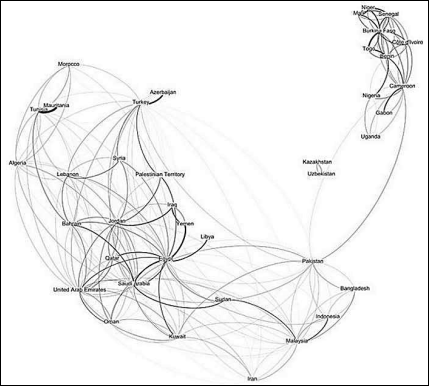
Co-authorship of scientific publications has always been used as one of the most common indicators to evaluate the pattern of global STI collaboration. Plume (2011) in his article, for example, dealt with the issue of collaborative pattern among OIC countries based on their jointly authored scientific papers from 2004 to 2008 and eventually a collaboration map amongst OIC members is developed as part of his findings. Relationship between two countries is represented by their proximity with each other and the lines that connecting them (see figure 1). Countries that enjoy collaborative efforts are grouped together while those that do not are placed further apart. Meanwhile, the lines that run clockwise out of a country reflect the total output that is produced in partnership with the targeted countries – the thicker the lines, the stronger their collaborative ties and vice versa. For example, Malaysia shared a strong collaborative effort with Indonesia as indicated by their proximity on the map. However, the thick line running clockwise from Indonesia to Malaysia denotes that the nexus is stronger for Indonesia than for Malaysia (note that the line running clockwise from Malaysia to Indonesia is thinner).

Figure 1: Collaboration Map between selected OIC Countries from 2004-2008
clip_image002

Source: Plume (2001)

In addition, Plume (2011) also highlighting one critical point in his article that is scientific collaboration is frequently driven by the efforts and personalities of individual researchers, and not by governmental or international scientific organizations. This deduction was drawn upon the case of Pakistan and Cameroon where 34 out of 45 jointly authored papers among the two nations were written by Professor Muhammad Iqbal Choudhary from the University of Karachi and other co-authors from the University of Yaounde I.

2. Recurring Issues in the Islamic World

Despite many concerted efforts to encourage it, there is a unanimous acknowledgement that STI coordination is functioning rather poorly among OIC members (Hashmi, 1983; Mehmet and Moneef, 2006; Osama, 2010). STI collaboration is not a constant endeavour and this has widened the scientific and technological gap, not only between the developed countries, but also among Muslim countries themselves. As a result, there are only nine out of 57 OIC members that can be categorised as Scientifically Developing Countries (SDCs), followed by 14 Scientifically Aspiring Countries (SACs) and 34 Scientifically Lagging Countries (SLCs) which include 20 OIC’s least developed countries (Naim, 2010).

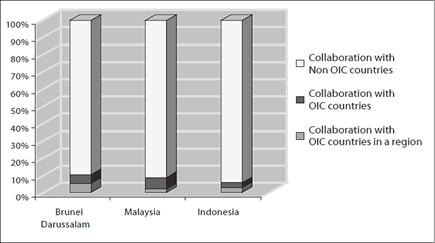
Figure 2: Percentage Collaboration with OIC and Non-OIC
clip_image004

Source: Naim and Atta-Ur-Rahman (2009)

Lack of collaboration among researchers in OIC countries is also highlighted in a study by Naim and Atta-ur-Rahman (2009). They pointed out two visible trends of research collaboration; scientist in OIC countries on average publish 80-90 per cent of all papers in collaboration with scientists in developed countries while only about 10-20 per cent of research papers are published in collaboration with scientists in other OIC countries. For example, in South East region, a total of 17,921 research papers were collectively contributed by the three OIC countries, Malaysia, Brunei Darussalam, and Indonesia during 1998 – 2007 where Malaysia leads with 70 per cent of the total number followed by Indonesia (28 per cent) and an insignificant contribution by Brunei Darussalam (Naim and Atta-ur-Rahman, 2009). The pattern of research collaboration in the region is similar to that observed in other regions with majority of the inter-institutional collaborative papers were published with scientists in developed countries. Only 1.3 to 5.4 per cent of the total papers were published in collaboration with scientists in OIC countries.

There are numbers of reasons associated with the meagre level of cooperation and coordination among the Islamic countries in the area of STI. Some of them, as argued by Osama (2010), are caused by insufficient research fund and lack of political power. Some of the issues impinging the development of STI collaboration in OIC countries are discussed further in this section.

Among the most acute impediment that is faced by OIC countries is the scarcity of qualified STI personnel. Figure 3 indicates that OIC member countries, on average, fall well behind the world average in terms of researchers per million people; 457 vs. 1,549, respectively (SESRIC, 2012). The gap is much larger when compared to the European Union that has an average of 4,651 researchers per million. Large disparity among OIC member states is also observed – Tunisia has 3,240 researchers per million inhabitants while Niger has merely 10 (SESRIC, 2012). Insufficient numbers of STI personnel in OIC countries affect science and technological activities such as research and this condition will eventually limit the prospect of STI collaborations in OIC.

Figure 3: Researcher per Million People

clip_image006

Source: SESRIC (2012)

The lack of capacity to train adequate STI workforces is further worsened with the continuous outflow of skills to other nations. Countries such as Malaysia have been struggling over the past few years to retain and to attract back their talents. The World Bank (2011) estimated about one million Malaysians diaspora are currently working and/or residing in all over the world. The numbers of émigrés’ is reported to have quadrupled over the last three decades and Singapore alone absorbs 57 percent of the entire diaspora, with most of the remainder residing in Australia, Brunei, United Kingdom and United States (World Bank, 2011). Some of the factors which influence their decisions to migrate include better economic prospects, greater opportunities for learning and research (better research infrastructures, research grants, research students etc.), and a progressive cultural environment for innovation, business start-up, and self-employment in the country of destination (OECD, 2002; Millard, 2005, quoted by Naim, 2010).

Another major hurdle facing OIC scientific smart-partnership is the availability of funding as mentioned earlier in this section. Financial support for scientific activities is relatively limited if not completely lacking in some South-South countries (Osama, 2008) including those in OIC and this impedes the feasibility of any collaborations. Current report pertaining to global R&D expenditures shows that the OIC countries account for only 2.1% of the world total Gross Expenditures on R&D (GERD) (see Figure 4). Without ample funds, multi- or trans-national collaboration in STI is hardly viable especially for the least developed economies.

Figure 4: GERD percentage of the World

clip_image008

Source: SESRIC (2012)

Lack of political power and commitment among OIC member states present another counter-productive attitude which will subsequently compromise any cooperative endeavours. During its chairmanship of the OIC between 2003 and 2007, Malaysia has proposed Vision 1441H, a strategic policy recommendations to revitalise Islamic countries. Among designated action plan to meet its vision is by fostering S&T collaboration among OIC nations. Every members is inspired not only to pursuit research partnership in the emerging technologies such as nanotechnology but also to share their own expertise – for example, petroleum engineering for Malaysia or water desalination for Middle East countries – through joint projects among interested parties (Vision 1441H, 2003). However, the plan is transpired to be in vain and Malaysia has expressed disappointment about the lack of commitment among OIC states (Day and Amran, 2011).

Finally, COMSTECH and STIO are also seen by the experts as being merely rhetoric in addressing the issues of STI development in Islamic countries. Professor Atta-ur-Rahman, COMSTECH’s former Coordinator-General, deemed COMSTECH to be a failure in boosting cooperation among OIC members (Sawahel, 2013). He asserted that resolutions agreed by members are not followed up by any real action. Other central figures also blame both COMSTECH and STIO for the status quo in OIC’s STI collaboration. Dr. Mohammed Ali Mahesar, incumbent Assistant Coordinator-General of COMSTECH proclaimed that the present problematic situation in OIC’s science and technological progress deserves urgent action and not hollow slogans by both parties (Sawahel, 2013).

3. The Way Forward

Ensuring OIC’s STI collaboration prospers is one of the most profound organisational and political challenges facing the scientific community in OIC. Below are some broad recommendations that are highly relevant to OIC’s condition.

1. Creating the political will and financial support for STI collaboration is a high priority. Political force is a powerful tool to determine a country’s strategic policies and action plans.

2. Joint ventures among universities, research institutes, or companies within OIC member countries in research intensive sectors should be encouraged towards more effective and cost efficient R&D investments. OIC countries may also take advantage of R&D spill-overs by rapidly learning about new technologies developed in other countries and improving them, or by importing technological goods and services from their trade partners.

3. It is imperative to learn from other’s success. In this connection, intra-OIC networking opportunities could be facilitated through projects, similar to the Framework Programmes of the European Union, to support research and technological development in the Islamic world and to promote joint research initiatives among the member countries (SESRIC, 2012). One of the main objectives of the Framework Programme is to make Europe the leading world forum for science and technology by supporting co-operation between industries, research centres, and public authorities both across the EU and with the rest of the world (Europa, 2010).

4. Encouraging and facilitating scientists’ mobility across regions is crucial in the process of internationalisation of scientific community. By engaging one another, OIC’s scholars and scientists will be able to benchmark themselves by learning best practices and consequently improve the quality of STI personnel.

4. Conclusion

In developing and harnessing STI collaborations, it is vital for the Islamic world to adapt to new situations in a rapidly changing world and to react positively in response to the advancement of STI. Problems within OIC’s collaboration must be handled wisely to prevent negative interferences. Development plans, programmes and policies in the OIC member countries should also be geared to improve the effectiveness of existing collaborative programmes. At the same time, OIC should start building new smart-partnership and networks both intra-OIC and outside OIC blocks. On the whole, collaboration between countries in the Islamic world is important if OIC is to benefit from STI. The needs and strengths of STI key actors i.e. governments, academia, industries, and societies should be integrated and taken into considerations in order to optimise the outcome of any collaborative efforts.

Reference

Azmi D. (2013). High-speed brain drain?. The Star Online. Retrieved from:

http://thestar.com.my/columnists/story.asp?file=/2013/3/3/columnists/contradictheory/12769860&sec=contradictheory

COMSTECH. (2012). Retrieved from: http://comstech.org/default.aspx

COMSTECH. (n.d.). Brief Report on Science, Technology and Innovation Organization (STIO).

Retrieved from: http://www.comstech.org/docs/14thGA/STIO_Report%20(English).pdf

Day, N. and Amran Muhammad. (2011). Malaysia: The Atlas of Islamic-World Science and

Innovation Country Case Study No. 1.

Europa. (2010). Retrieved from:

http://europa.eu/legislation_summaries/research_innovation/general_framework/i23026_en.htm

Global Science and Innovation Forum. (2006, October). A Strategy for International

Engagement in Research and Development [PDF document]. Retrieved from: http://www.dti.gov.uk/files/file34726.pdf

ISESCO. (n.d.). Retrieved from:

http://www.isesco.org.ma/index.php?option=com_k2&view=item&layout=item&id=56&Itemid=83&lang=en

MOSTI. (2012). Malaysia and Mozambique Sign MoU on Science and Technology Cooperation.

Retrieved from:

http://www.mosti.gov.my/index.php?option=com_content&view=article&id=2469%3A16-august-2012-malaysia-and-mozambique-sign-mou-on-science-a-technology-cooperation-&catid=133%3Anews-highlights&Itemid=446&lang=en

Naim, S. T. K. (2010). OIC Member States – The Road to a Knowledge Economy [PDF

Document]. Retrieved from http://www.visbdev.net/visbdev/fe/Docs/Contrasting_Innovation_Systems

Naim S. T. K and Atta-ur-Rahman. (2009). Mapping Scientific Research in Member States of

The Organization of Islamic Countries. Retrieved from:

http://unesdoc.unesco.org/images/0018/001831/183175e.pdf

Osama A. (2013, April 14). Islam Analysis: Do or die for OIC science cooperation. SciDev.Net.

Retrieved from: http://www.scidev.net/en/science-and-innovation-policy/opinions/islamanalysis-do-or-die-for-oic-science-cooperation.html

Osama A. (2010, September 7). Islam Analysis: Promoting Scientific Collaboration. SciDev.Net.

Retrieved from: http://www.scidev.net/en/opinions/islam-analysis-promoting-scientific-collaboration.html

Osama, A. (2008, May 14). Opportunities and Challenges in South-South Collaboration.

SciDev.Net. Retrieved from: http://www.scidev.net/en/policy-briefs/opportunities-and-challenges-in-south-south-collab.html

Plume, A. (2011). A Rebirth of Science in Islamic Countries? Research Trends. Retrieved from:

http://www.researchtrends.com/issue21-january-2011/a-rebirth-of-science-in-islamic-countries/

Royal Society. (2010, June). A new golden age? The Prospects for Science and Innovation in the

Islamic World [PDF Document]. Retrieved from: http://royalsociety.org/uploadedFiles/Royal_Society_Content/policy/publications/2010/4294971224.pdf

Sawahel, W. (2013, February 25). Islam States Under Fire for ‘Empty Promises’ on Science. SciDev.Net. Retrieved from: http://www.scidev.net/en/news/islamic-states-under-firefor

empty-promises-on-science-1.html

Sawahel, W. (2012, September 2). New Islamic Collaboration on Higher Education and

Research. University World News. Retrieved from: http://www.universityworldnews.com/article.php?story=20120901091940778

SESRIC. (2012). Current Stance of Science and Technology in OIC Countries [PDF document].

Retrieved from: http://www.sesrtcic.org/files/article/436.pdf

The World Bank. (2011). Malaysia Economic Monitor: Brain Drain [PDF Document]. Retrieved

<

p align=”justify”>from: http://www.wds.worldbank.org/external/default/WDSContentServer/WDSP/IB/2011/05/02/000356161_20110502023920/Rendered/PDF/614830WP0malay10Box358348B01PUBLIC1.pdf

Corporate Social Responsibility: An Analysis of Challenges and Prospects in India


Razdha Parveen

Abstract

The world is looking at India as it embarks on a new phase in its journey towards being a global economic powerhouse. Make in India’ is the global campaign launched by the Hon’ble Prime Minister, Shri Narendra Modi, to attract Business Houses from around the world to invest and manufacture in India. In this initiative, Corporate Social Responsibility is the commitment of business to contribute to sustainable economic development, working with employees, their families, the local community and society at large to improve their quality of life. But In India, the CSR managers face number of challenges in managing CSR activities. Many companies assume that corporate social responsibility is a peripheral issue for their business; and customer satisfaction is more important for them. They imagine that customer satisfaction is now only about price and service, but they fail to point out on important changes that are taking place worldwide that could blow the business out of the water. The change is named as corporate social responsibility which is an opportunity for the business. It is in this backdrop that this paper attempts to analyze how corporate sector is playing its social responsibility in India, what issues and challenges are faced by companies’ managers, and what is the prospects through which they could meet their social responsibility.

Key Words: CSR, Society, Stakeholders, Issues & Challenges, and Prospects.

Introduction:

Corporate social responsibility may be considered as the most long standing concept in the area and has been used by business and the academia for more than fifty years. In 1960 Keith Davis suggested that social responsibility refers to businesses’ decisions and actions taken for reasons at least partially beyond the firm’s direct economical or technical interest. Corporate social responsibility (CSR) refers to the problems that arise when corporate enterprise casts its shadow on the social scene, and the ethical principles that ought to govern the relationship between the corporation and society. In recent years, the term corporate social performance (CSP) has emerged as an inclusive and global concept to embrace corporate social responsibility, responsiveness and the entire spectrum of socially beneficial activities of businesses (Carroll, 2008). Society and business, social issues management, and corporate accountability are just some of the terms that describe the phenomena related to corporate social responsibility in society. Corporate social responsibility is the firm consideration of, and response to, issues beyond the narrow economic, technical and legal requirements of the firm (Crane, et al, 2008).

In other words, Corporate Social Responsibility (CSR) is a concept whereby companies integrate social and environmental concerns in their business operations and in their interaction with their stakeholders on a voluntary basis. Today, there is a growing perception among enterprises that sustainable business success and shareholder value cannot be achieved solely through maximizing short-term profits, but instead through market-oriented responsible behaviour. Socially responsible initiatives by entrepreneurs have a long tradition. The attempt to manage it strategically and to develop instrument for this are the recent initiatives in CSR. Broadly speaking, CSR delineates the relationship between business and the larger society. Hence, CSR can be defined as a concept whereby companies voluntarily decide to respect and protect the interest of a broad range of stakeholders and to contribute to a cleaner environment and a better society through active interaction with all. CSR is the voluntary commitment by business to manage its role in society in a responsible way. It is the commitment of business to contribute to sustainable development working with employees their families, the local communities in societies at large to improve their quality of life. The World Business Council for Sustainable Development (WBCSD) defines CSR as ‘the commitment of business to contribute to sustainable economic development, working with employees, their families, the local community and society at large to improve their quality of life’. Thus, CSR is an umbrella concept including a variety of theories and practices which recognise the social and environmental responsibilities of corporations, as well as those companies are responsible for the behaviour of others with whom they do business (Patil & Sharma, 2009).

Salient Features of CSR:

The salient features of CSR are the essential features of the concept that tend to be reproduced in some way in academic or practitioner definitions of CSR. The following features capture the main thrust of CSR; however the meaning and relevance of CSR vary according to organizational and national context:

Voluntary: CSR is concerned with voluntary activities that go beyond those prescribed by the law. Many companies are by now well used to considering responsibilities beyond the legal minimum.

Internalizing or managing externalities: Externalities are the positive and negative side effects of economic behaviour that are borne by others but are not taken into account in a firm’s decision making process and are not included in the market price for goods and services. Pollution is typically regarded as a classic example of an externality since local communities bear the costs of manufacturers actions.

Multiple stakeholder orientation: CSR involves considering a range of interests and impacts among a variety of different stakeholders other than just shareholders.

Alignment of social and economic responsibilities: The balancing of different stakeholder interests leads to a fourth surface. This feature has prompted much attention to the business care for CSR, namely how firms can benefit economically from being socially responsible.

Practices and values: CSR is clearly about a particular set of business practices and strategies that deal with social issues; but for many people it is also about something more than that namely a philosophy or set of values that underpins these practices.

Beyond philanthropy: In some regions of the world, CSR is about more than just philanthropy and community projects but about the entire operations of the firm (i.e. its core business functions) upon society (Crane, et al, 2008).

Corporate Social Responsibility (CSR) in India:

Corporate Social Responsibility is not a new concept in India, however, the Ministry of Corporate Affairs, Government of India has recently notified the Section 135 of the Companies Act, 2013 along with Companies (Corporate Social Responsibility Policy) Rules, 2014 “hereinafter CSR Rules” and other notifications related thereto which makes it mandatory (with effect from 1st April, 2014) for certain companies who fulfil the criteria as mentioned under Sub Section 1 of Section 135 to comply with the provisions relevant to Corporate Social Responsibility. As mentioned by United Nations Industrial Development Organization (UNIDO), CSR is generally understood as being the way through which a company achieves a balance of economic, environmental and social imperatives (“Triple-Bottom-Line- Approach”), while at the same time addressing the expectations of shareholders and stakeholders (http://finance.bih.nic.in/Documents/CSR-Policy.pdf).

Issues & Challenges of CSR:

The role of corporations in society is clearly on the agenda. Hardly a day goes by without media reports on corporate misbehaviour and scandals or more positively on contributions from business to wider society. Corporations have clearly started to take up the challenge. This began with the usual suspects such as companies in the oil, chemical and tobacco industries. As a result of media pressure, major disasters, and sometimes governmental regulation, these companies realized that propping up oppressive regimes, being implicated in human rights violations, polluting the environment, or misinforming and deliberately harming their customers are few examples, were practices that had to be reconsidered if they wanted to survive in society in the present time. Even in a country like India, companies such as Tata can pride themselves on more than a hundred years of responsible business practices, including far-reaching benevolent activities and community involvement (Crane, et al, 2008).

It is important for CSR strategies to become central to business strategy and part of the long-term planning process. Stakeholders are questioning more on CSR initiatives of the companies today. They are challenging the companies’ decisions-making in this direction. It has become imperative to incorporate stakeholders’ views. In India, the CSR managers face number of challenges in managing CSR activities. The biggest problem is of lack of budget allocations followed by lack of support from employees and lack of knowledge as well. Lack of professionalism is another problem faced by this sector. Small companies do not take adequate interest in CSR activities and those which undertake them fail to disclose it to the society. In the process they lose out on people and their trust in them. Media can come up with strong support for informing the people at large about the CSR initiatives taken up by the companies. It can sensitize population and also make them aware of the benefits of CSR to them. However, media is not doing enough in this regard. The failure of the government to come up with statutory guidelines to give a definite direction to companies taking up CSR activities, in terms of size of business and profile of CSR activities also results into few companies practicing CSR concept adequately.

Many companies think that corporate social responsibility is a peripheral issue for their business; and customer satisfaction is more important for them. They imagine that customer satisfaction is now only about price and service, but they fail to point out on important changes that are taking place worldwide that could blow the business out of the water. The change is named as social responsibility which is an opportunity for the business. Some of the drivers pushing business towards CSR include:

The Shrinking Role of Government: In the past, governments have relied on legislation and regulation to deliver social and environmental objectives in the business sector. Shrinking government resources, coupled with a distrust of regulations, has led to the exploration of voluntary and non-regulatory initiatives instead.

Demands for Greater Disclosure: There is a growing demand for corporate disclosure from stakeholders, including customers, suppliers, employees, communities, investors, and activist organizations.

Increased Customer Interest: There is evidence that the ethical conduct of companies exerts a growing influence on the purchasing decisions of customers.

Growing Investor Pressure: Investors are changing the way they assess companies’ performance, and are making decisions based on criteria that include ethical concerns. The Social Investment Forum reports that in the US in 1999, there was more than $2 trillion worth of assets invested in portfolios that used screens linked to the environment and social responsibility.

Competitive Labour Markets: Employees are increasingly looking beyond paychecks and benefits, and seeking out employers whose philosophies and operating practices match their own principles. In order to hire and retain skilled employees, companies are being forced to improve working conditions.

Supplier Relations: As stakeholders are becoming increasingly interested in business affairs, many companies are taking steps to ensure that their partners conduct themselves in a socially responsible manner. Some are introducing codes of conduct for their suppliers, to ensure that other companies’ policies or practices do not tarnish their reputation.

Lack of Community Participation in CSR Activities:

There is a lack of interest of the local community in participating and contributing to CSR activities of companies. This is largely attributable to the fact that there exists little or no knowledge about CSR within the local communities as no serious efforts have been made to spread awareness about CSR and instill confidence in the local communities about such initiatives. The situation is further aggravated by a lack of communication between the company and the community at the grassroots.

Need to Build Local Capacities:

There is a need for capacity building of the local non-governmental organizations as there is serious dearth of trained and efficient organizations that can effectively contribute to the ongoing CSR activities initiated by companies. This seriously compromises scaling up of CSR initiatives and subsequently limits the scope of such activities (http://www.wbiworldconpro.com/uploads/canada-conference-2013/manageme nt/13701684 44_430-Sonam.pdf).

Challenges to CSR Initiatives in India:

CSR initiatives face many challenges in India and are often seen as deterrent to even the best intentioned plans. The most important ones are described here:

Lack of Community Participation in CSR Activities: Often, the communities who are the intended beneficiaries of a CSR program show less interest which will affect their participation and contribution. Also, very little efforts are being made to spread CSR within the local communities and instill confidence in the people. The situation is further aggravated by inadequate communication between the organization and the community at the grassroots level.

Need to Build Local Capacities: There is a need to build the capacities of the local non-governmental organizations. Many NGOs are not adequately trained and equipped to operate efficiently and effectively as there is serious dearth of trained and efficient organizations that can effectively contribute to the ongoing CSR activities initiated by companies. This seriously compromises efforts to scale CSR initiatives and consequently limits the scope and outcome of a company’s CSR initiatives.

Issues of Transparency: Lack of transparency is one of the key issues. There is a perception that partner NGOs or local implementation agencies do not share adequate information and make efforts to disclose information on their programs, address concerns, assess impacts and utilize funds. This perceived lack of transparency has a negative impact on the process of trust building between companies and local communities, which is a key to the success of any CSR initiative.

Lack of Consensus: There is a lack of consensus amongst local agencies regarding CSR project needs and priorities. It results in lack of consensus which often results in duplication of activities by corporate houses in their areas of their intervention. The consequence results in unhealthy competitiveness spirit among local implementing agencies, which goes against the necessity to have rather than building collaborative approaches on important issues. This factor limits organization’s abilities to undertake impact assessment of their initiatives from time to time. (file:///C:/Users/mohdsaqlein/Downloads/9788132216520-c1.pdf).

Key Learning Issues:

Corporate Competitiveness, as addressed by strategic management, is a subject rarely discussed in the context of corporate social responsibility. However, unless all strands of corporate responsibility are brought together under a common management framework, CSR and its sustainability will remain a peripheral activity and its impact is likely to remain well below required levels to achieve the Millennium and related goals. Corporate Governance must establish the legal framework which will protect a company’s stakeholders, the relative emphasis being dependent on national models. CSR is aimed at extending the legal requirements to promote ethical practice, philanthropy and social reporting to satisfy stakeholder concerns. Corporate sustainability must focus on the long-term economic and social stakeholder expectations both by optimizing their sustainability performance and by participating in networks with governments, NGOs and other stakeholders. Such an arrangement will significantly enhance the capacities of all stakeholders and lead to faster and more sustainable development. Business ethics and social accountability are important bridges between CSR and corporate governance. Investor demands, philanthropy and corporate citizenship provide a common ground for CSR and corporate sustainability. Performance stability and fair globalization are important aspects both in strategic management and corporate sustainability. Competition policy and regulation affects strategic management and corporate governance; but it also has key issue for strategic management and governance strategy. Specifically, a company must adequately safeguard against and specifically in terms of reputation risks to its reputation. The Parameters for CSR Initiatives are

Civil Society Strengthening: Capacity for strong performance in the community is the foundation for lasting social benefits. Worldwide, civil society is an important social and economic force with the potential to create a more free, fair and just global order. The collective nature of civic action helps to ensure that the interests of all citizens including women, the poor and other marginalized groups are adequately weighed by public institutions that make policy and allocate resources. Many civil society organizations (CSOs) face common challenges that limit their effectiveness namely, the ability to manage human and financial resources, weak advocacy abilities, and insufficient management ability to scale up promising innovations and results to achieve wider impact.

Performance Management:

It is necessary to measure the outcomes to distinguish success from failure. Thus, managing for results is central to the global revolution in public management and aid effectiveness. Strong performance monitoring systems help to sharpen strategy and learning, improve communications with stakeholders, help ensure that resources are focused on key results, and promote accountability. Yet these systems are often impractical and out of alignment with organizational skills and incentives. Thus, the focus areas for performance management are:

· An acceptable Performance Management Systems designed for a given project, which will identify key result areas, monitor implementing performance management systems for specific projects and programs to reinforce program performance, learning and accountability, encourage learning, and enforce accountability and objectively measure outcomes.

· Building Capacity for Performance Management: All stakeholders must be enabled and their capacities enhanced at both organizational and individual levels, to meet the goals of the CSR initiative building performance management capacity for entire organizations, including international donors and local partners such as governments and civil society organizations. file:///C:/Users/mohdsaqlein/Downloads/978 8132216520-c1.pdf..13

The Prospects of CSR:

The current trend of globalization has made the firms realize that in order to compete effectively in a competitive environment they need clearly defined business practises with a sound focus on the public interest in the markets:

· Firstly, the increase in competition among the multinational companies to gain first mover advantage in various developing countries by establishing goodwill relationships with both the state and the civil society is ample testimony to this transformation.

· Secondly, in most of the emerging markets, the state has a duty of protecting the interests of the general public and thus gives preference to companies which take care of the interests of all the stakeholders.

· Thirdly, emerging markets have been identified as a source of immense talent with the rising levels of education. For example, the expertise of India in churning out software professionals and China in manufacturing has now become internationally renowned. In order to draw from this vast talent pool coming up in developing countries, companies need to gain a foothold in these markets by establishing sound business practices addressing social and cultural concerns of the people. It has been observed that consumers consider switching to another company’s products and services, speak out against the company to family/friends, refuse to invest in that company’s stock, refuse to work at the company and boycott the company’s products and services in case of negative corporate citizenship behaviours.

· Fourthly, firms all over the world are beginning to grasp the importance of intangible assets, be it brand name or employee morale. Equity created in a company’s reputation or brand can easily be harmed or even lost particularly for companies whose brand equity depends on company reputation. Reputation is built around intangibles such as trust, reliability, quality, consistency, credibility, relationships and transparency, and tangibles such as investment in people, diversity and the environment. Only firms that have gained the goodwill of the general public and are ideal corporate citizens will be to develop these intangible assets into strategic advantages. CSR can be an integral element of a firm’s business and corporate-level differentiation strategies.

· Fifthly, CSR is an important factor for employee motivation and in attracting and retaining top quality employees as well. Innovation, creativity, intellectual capital and learning are helped by a positive CSR strategy.

· Sixthly, better risk management can be achieved by in-depth analysis of relations with external stakeholders. Given the increase in cross border business relationships and the threat of cross-border litigation, boards have to consider the risk management standards of business partners, and even suppliers. CSR also helps in compliance with regulation and the avoidance of legal sanctions, while the building of relationships with host governments, communities and other stakeholders can enhance a company’s reputation and credibility and be important with regard to its future investment decisions.

Hence, Companies can set a network of activities to be taken up in a consortium to tackle major environmental issues. It would also provide an opportunity to learn from each other. Everyone in the organization needs to recognize their own role in promoting CSR. Companies should provide wider professional development activities. Training, conferences and seminars could be organized by companies to disseminate and generate new knowledge and information in this sector. A strong budgetary support would definitely help to grow this sector and research related to respective industry would enhance their organizations contribution further. Government regulations which are supporting in this direction could attract more response from organizations. All this would also lead to benchmark CSR activities. Companies need to involve their stakeholders in order to build meaningful and long term partnerships which would lead to creating a strong image and brand identity. It is also suggested to review existing policies in order to develop more meaningful visions for the companies and broaden their contributions to reach to local communities (http://ww w.ijbmi.org/papers/Vol(1)1/C112229.pdf).

In this age of globalization, Corporations and business enterprises are no longer confined to the traditional boundaries of the nation-state. In the last 20 years, multinational corporations (MNCs) have played an influential role in defining markets and consumer behavior. The rules of corporate governance have also changed. Reactions to this change have been varied. On the one hand, globalization and liberalization have provided a great opportunity for corporations to become globally competitive by expanding the production base and market share. On the other hand, the conditions that favored their growth also placed these companies in an unfavorable light. Laborers, marginalized that favored their growth also placed these companies in an unfavorable light. Laborers, marginalized consumers, environmental and social activists protested against the unprecedented (and undesirable) predominance of multinational corporations. The revolution in communication technology and the effectiveness of knowledge based economics threw up a new model of business and corporate governance. Growing awareness of the need for ecological sustainability paved the way for a new generation of business leaders concerned about the community response and environmental sustainability. Corporate Social Responsibility (CSR) is, essentially a new business strategy to reduce investment risks and maximize profits by taking all the key stake holders into confidence. The new generation of corporations and the new economy entrepreneurs recognize the fact that social and environmental stability are two important prerequisites for the long-term sustainability of their markets. From the eco- social perspective, corporate social responsibility is both a value and a strategy to ensure the sustainability of business. For the new generation of corporate leaders, optimization of profit is the key, is more important than its maximization. Hence there is a noticeable shift from accountability to shareholders to accountability to all stakeholders for the long-term success and sustainability of the business. Stakeholders include consumers, employees, affected communities and shareholders, all of whom have the right to know about the corporations and their business. This raises the important issue of transparency in the organization (file:/// C:/Users/mohdsaqlein/Downloads/9788132216520-c1.pdf).

Conclusion:

To conclude, the new CSR provisions in India are not a case of government abrogating its responsibility to the private sector. The estimated annual amount of CSR spending by corporate judged in context of total social sector spending by the government is just around two per cent of what listed companies would have spent after applying the criteria under Section 135. Rather, the new CSR provisions should be looked at as an effort by the government to make the corporate sector play a complementary role in meeting the broader society goal of encompassing development. Under the new CSR rules, the flexibility given to the companies in choosing and monitoring the projects is likely to promote efficiency and effectiveness in project implementation without the CSR Rules coming into serious conflicts with the primary objective of shareholder value maximization of companies. Social and economic incentives seem to have been well balanced in the new CSR rules and one can hope that the corporate sector will willingly lend a helping hand to the government in contributing to the inclusive growth of the nation.

REFERENCES:

1. Patil, V. T. & Sharma, S. (2009). Corporate Social Responsibility and Human Rights. Delhi: Authors Press.

2. Crane, A. et al (2008). Corporate Social Responsibility: Readings and Cases in a Global Context. ed. New York: Routledge.

3. Carroll, A. (2008). The Pyramid of Corporate Social Responsibility: Toward the Moral Management of Organizational Stakeholders. In Crane, A. et al. Corporate Social Responsibility: Readings and Cases in a Global Context. ed. New York: Routledge.

4. (http://finance.bih.nic.in/Documents/CSR-Policy.pdf).

5. (http://www.wbiworldconpro.com/uploads/canada-conference-2013/management/13 70168444_430-Sonam.pdf).

6. (file:///C:/Users/mohdsaqlein/Downloads/9788132216520-c1.pdf).

7. (http://www.ijbmi.org/papers/Vol(1)1/C112229.pdf).

About the Author:

Ms. Razdha Parveen is pursuing Ph.D. in the Department of Sociology, Aligarh Muslim University, Aligarh since March 2013. She is also availing Junior Research Fellowship under the scheme of UGC (JRF-UGC). Her research topic is “Imprisonment and Health: A Study of the Women Inmates of Selected District Jails of Western Uttar Pradesh”.


[*] Research Scholar, Department of Sociology, Aligarh Muslim University, Aligarh: 202002.

A risk-factor-based analytical approach for integrating occupational health and safety into workplace risk assessment


Ahmed Abou Elmaati, Gehan Raafat, Gihan Hosny

Division of Environmental Health, Department of Environmental Studies, Institute of Graduate Studies and Research, University of Alexandria, P.O.Box 832, Alexandria, Egypt.

2Department of Occupational Health, High Institute of Public Health, University of Alexandria, Alexandria Egypt.

Key words; Occupational health & safety; qualitative and quantitative risk analysis; Physical hazards; risk assessment.

Abstract

The chief goal of an occupational health and safety program, OHS, in a facility is to prevent occupational injury and illness by anticipating, recognizing, evaluating, and controlling occupational health and safety hazards. The underlying study presented a systematic approach for the evaluation of OHS risks and proposed a new procedure based on the number of risk factors identified and their relative significance in an Electrical Power Station, Alexandria, Egypt. Qualitative and quantitative risk assessment was utilized as a systematic approach. A risk factor concentration along with weighting of risk factor categories as contributors to undesirable events of different hazards were used in the analytical hierarchy process multi-criteria comparison model. A case study is used to illustrate the various steps of the risk evaluation approach and the quick and simple integration of OHS at an early stage of a project. The approach allows continual reassessment of criteria over the course of the project or when new data are acquired. It was thus possible to differentiate the OHS risks from the risk of drop in quality over the different project activities.

1. Introduction

Excluding occupational health and safety (OHS) from project management is no longer acceptable. Numerous industrial accidents have exposed the ineffectiveness of conventional risk evaluation methods as well as negligence of risk factors having major impact on the health and safety of workers and nearby residents. Lack of reliable and complete evaluations from the beginning of a project generates bad decisions that could end up threatening the very existence of an organization. Industrial accidents continue to cause human suffering, capital losses, environmental destruction and social problems [1]. In recent years, accidents in construction and industry have occurred in spite of rigorous management of projects and robust occupational health and safety (OHS) management systems in all phases of project lifecycle [2]. The explosion of a power plant in the start-up phase while testing a gas line in a populated region (43,000 inhabitants) of Connecticut (USA) on February 7, 2010 was reminiscent of a series of similar industrial accidents over the decades in terms of gravity and consequences [3]. In most cases, investigation into causes of accidents revealed failure in identification and evaluation of impending risks. In general, risk is evaluated in terms of its consequences with respect to project performance and rarely in terms of human suffering. Smallwood, 2004, confirmed that quality, planning and costs are the parameters given the greatest consideration [4].

Industrial work is risky in many economic sectors, in particular the construction industry [4,5], chemical plants [6],nuclear power plants [7] and the mining industry [8]. Safety and health problems can result from any of several groups of causes, which disparity from one industry to another. The high level of risk in the construction industry is explained by the nature and characteristics of building work, low educational level of workers, lack of safety culture and communication problems [4,5]. In the mining sector, increasing numbers of subcontractors working in mines, the emergence of new mining ventures and recognition of small-scale mining pose new confrontation to the practice of risk control [8]. The most effective way to improve OHS performance is to identify and eliminate hazards at the source [9]. Risk identification and assessment thus become primary tasks that are part of hazard prevention. Risk analysis is the foundation of the risk management process and presents several challenges [10,11]. OHS has not always been a preoccupation of process engineers. Incentives for integrating OHS risk management into engineering have been discussed recently. These include enactment, awareness of the importance of protecting workers and in some cases tangible potential to increase profitability and remain competitive [12-14].

Health, Safety and Environment (HSE) is a management responsibility which follows the company’s line organization in divisions and projects. It will be run in such a way that health and safety are promoted for all employees, a safe and helpful working environment is provided, and the environment and property are protected.(16)

Because of the importance of applying rules targeting better achievement of health and safety, the present study will focus on evaluating HSE, as will be described in Sidi Krir Power Station that is located on the Mediterranean cost at distance about 29 km west of Alexandria. The company started its activity in 1999 by steam plant. It consists of two units; the capacity of each is 320 MW. It represents the most important company in producing electrical power in Alexandria. The company is operated by 1200 workers. The aim of the underlying study is to present a new systematic approach for the evaluation of OHS risks and proposes a new procedure based on the number of risk factors identified and their relative significance in Sidi Krir Power Station.

2. MATERIALS AND METHODS

The underlying study has been performed in Sidi Krir Power Station to examine the application of a systematic approach for evaluation of OHS risks and propose a procedure for calculation of risk factors to identify their relative significance, through the following general tools:

2.1. Study design and local ethical approval;

2.2. Risk identification and qualitative risk assessment;

2.3. Quantitative risk assessment;

2.3.1. Accident analysis

2.3.2. Measurement of time weighted average of physical hazards

2.4. Characterization of the assessed risks and evaluation of their probability and severity to calculate the probable risk factors for the measured physical hazards in order to evaluate the level of practicability of each risk.

2.2. Risk identification and qualitative risk assessment

2.2.1. Employees’ perception for hazard identification

Employees’ perception for physical hazard identification was collected utilizing a self-structured predesigned questionnaire. The questions were designed to cover the following sections; general information to include personal data; Workers awareness for different topics of pollution; the impacts of pollutants such as noise, heat stress, dust, gas vapors, etc….on workers’ health; the diagnosed workers’ health problem that impair their productivity; participation in previous occupational safety training programs; workers’ perception on the impact of training courses on increasing their environmental awareness; and the impact of occupational diseases on workers. The study involved 100 workers from the company whom were selected randomly for two purposes.

2.2.2. Walk through observational survey

Hazard identification was performed through walk through exhaustive safety checklist in order to accomplish the fore mentioned objectives. The checklist was predesigned, pre-tested and finalized before data collection. The safety checklist were divided into the following sections; general information to include review plan and safety of workers in the company; health and safety plan in the company; emergency communication procedures; periodic inspection of tools and equipment on the workers’ health; inspection of personal protective equipment; occupational safety training programs; and inspection of the safety measures in the work environment.

Almost, all sections were close-response ones pertaining to assess the opinion and perception towards environmental protection measures and regulations, to identify the impacts of regular monitoring of work environment, drinking and waste waters, in addition to traffic control measures, and periodic waste treatment on occupational health and safety.

2.3. Quantitative risk assessment

Quantitative risk assessment was performed through reviewing reported accident and measuring time-weighted averages of physical hazards; noise, heat stress and illumination in different work places with different activities to determine the levels of exposure and quantify the risk factors for each depending on severity and probability of hazards [16,17].

2.3.1. Noise:

Noise was measured, using Sound Level Meter (Bruel & Kjaer sound level meter, type 2250 and calibrator, type 4231). It was dependent on transfer of sound energy to electrical energy and this energy measured by decibel (dbA). The noise type may be continuous noise (machinery and equipment), intermittent (hammers) or white noise (at the start of the steam boilers). The levels were analyzed and compared to documented permissible levels either locally or internationally.

2.3.2. Heat Stress:

Heat stress was measured, using wet bulb globe thermometer /Heat Stress Monitor. It was calculated by temperature radiation, the degree of wet thermometer and the degree of dry thermometer. Heat stress in workplace can be recognized by the human sense of heat and humidity, which increase the sense of heat together (Humidex). It was transferred by plug, convection currents and radiation. Results were compared to documented permissible levels.

2.3.3. Light:

Light was measured, using Lux Meter. It depends on theory called photoelectric cell that can be transformed by the light falling on the cell to electric currents which differs in severity depending on the intensity of the light falling on them. It is natural energy spread in all direction in straight lines in the form of waves. It may be direct, semi direct or indirect light. Levels of light were compared to documented permissible levels.

3. RESULTS AND DISCUSSION

This study was conducted in Electric Power Station to evaluate risk factors using qualitative and quantitative risk assessment to improve the acceptability of each risk and support the decision-making process within the company [16,17].

The qualitative risk assessment utilized employees’ perception toward the recognized risks and walk through checklist for hazard identification (data not shown). The-quantitative risk assessment comprised measurement of time weighted averages of frequent physical hazards.

3.1. Levels of occupational noise

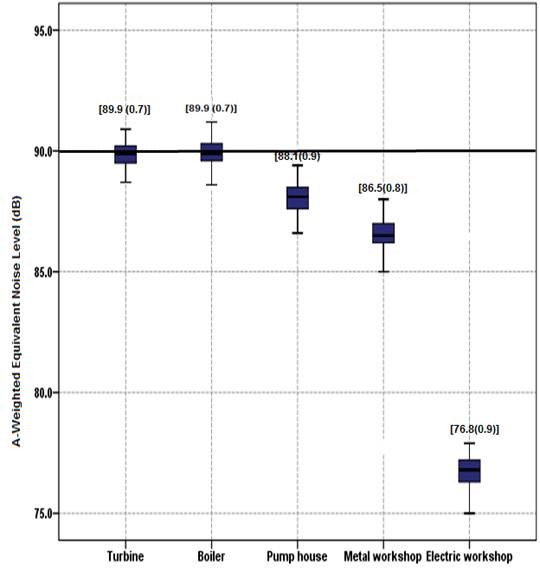
A-weighted equivalent noise levels during one month of normal work activities were measured with a total of 24 measurements daily. The measurements were conducted so that they covered all workplaces (turbine, boiler, pump house, metal, and electrical workshops). Data entry and analysis was performed using Microsoft Excel 2010software. Table (1) shows the measured noise levels. The levels of noise varied from 75 to 92 dbA in different compartments of the company. Comparing the results of the current study with permissible levels documented by National Radiological Protection Board (NRPB) [18] and by Egyptian Environmental Law, 9/2009 [19], it is clear that the power station has some risky levels for noise. One-Sample Kolmogorove-Smirov Z Test revealed highly significant noise levels’ variable (p <0.05, C.I. =95%), as shown in Figure (1). Therefore, this variable did not follow normal distribution (non-parametric). Hence; the data was expressed as [median (Inter Quartile Range IQR)]. The time-weighted noise levels at turbine and boiler were equal [89.9(0.7)]. They were higher than pump house [88.1(0.9)], metal [86.5(0.8)], and electric [76.8(0.9)] workshops (Figure 3.2). They were lower than the threshold limit values (TLV=90 dB) stated in the Egyptian Environmental Law No 9-2009 and its Executive regulation of the Prime Minister Decision No 1095-2011. Kruskal-Wallis Test revealed significant differences of time-weighted equivalent noise levels in different work areas (p<0.05; C.I. =95%). Mann-Whitney test disclosed significant differences in noise levels among the five work areas (p<0.05; C.I. =95%).

Table (1) illustrates the noise risk factors at each work area. It is clear from the table that the noise has fifteen low acceptable risk factors (<60, 60-70, and 70-80 dB), three medium unacceptable high (>90 dB), six unacceptable high (70-80, 80-90, >90 dB), and one unacceptable very high-risk factors (80-90 dB). The risk factor of one and two (low acceptable) was observed at turbine, boiler, pump house, metal and electrical workshop at (<60 dB) and (60-70 dB). These locations required remedial actions as advising engineers and techniques of the code of practice for the safe use of turbine in the power plant, in addition to the application of the site inspection program to ensure compliance. The risk factor of three and four (acceptable low) was recorded at 70-80 dB in turbine, boiler, pump house, and metal workshop. It needs corrective actions like doing a pre-event assessment of what could generate noise and the development of a Noise Management Plan that is compliant with the Environmental Protection Act, and the plan must be provided to the site manager. Risk factors of five to nine (unacceptable medium) were reported in pump house, metal and electrical workshops. It requires a reduction of workers’ exposures by using personal protective equipment PPE. Risk factors of 10-19 (unacceptable high) were noted at 70-80dB in electrical workshop, 80-90dB, and >90dB in turbine and boiler. These risks can be managed by reduction of noise emissions at the source checking that the equipment within the structure’s safety management plan (periodic maintenance). The very high unacceptable risk factor (>19) occurred only in the pump house at 80-90 dB. It needs the substitution of noisy equipment by engaging a licensed electrician to make changes to the existing power supply.

The simulation illustrates the use of the proposed approach, which ranks risks as a function of their impact in terms of undesirable events as noise. In the example studied, the calculation allowed us to differentiate the OHS risks from the risk of drop in quality. For the paired comparisons of the identified risk factors, levels of noise can be controlled by: substitution of high noise equipments; good maintenance to equipments; application of sound reduction materials; regulation of exposure time among workers according to laws; and ensure use of personal protective equipments [17].

3.2. Levels of occupational heat Stress

Table (2) illustates the heat stress risk factors in each work area. The highest heat stress risk factor (nine) was encountered at 28-30°C in heater turbines I & II, and in boiler. These locations required remedial actions as advising engineers and techniques of the code practice for the safe use of heater turbine in the power plant. In addition, site inspection program must be applied to ensure compliance. The lowest acceptable risk factor (one) was observed at the four work areas. The risk factor of three and four (acceptable low) was recorded at (28-30, 30-32.2 °C) in the four work area.

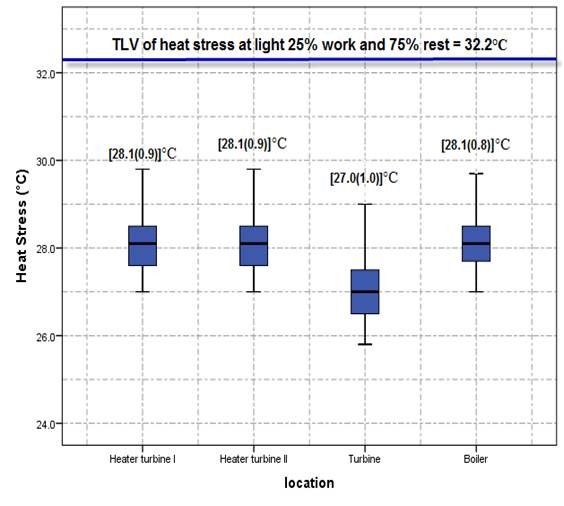
One-Sample Kolmogorove-Smirov Z Test revealed highly significant differences in levels of heat stress (p <0.05, C.I. =95%). Data was expressed as median; Inter Quartile Range, IQR. The heat stress at heater turbine I and heater turbine II were equal [28.1(0.9)]. They were higher than that at turbine and boiler [27(1)], (Figure 2). They were lower than the threshold limit values of heat stress of easy 25% work and 75% rest (TLV=32.2 °C) stated in the Egyptian Environmental Law No 9-2009 and its Executive regulation of the Prime Minister Decision No 1095-2011, annex-9 [19]. Kruskal-Wallis Test revealed highly significant variation of heat stress in different work areas (p<0.05; C.I. =95%). Mann-Whitney test disclosed significant differences in heat stress among the heater turbines I & II, and turbine; as well as among turbine and boiler (p<0.05; C.I. =95%).

The risk factor of one to four (low acceptable) requires corrective actions of developing an “Extreme Weather Policy” and “Contingency plan” in Heater turbine I. In addition, monitoring the weather as related to the work plan should be conducted in the early or late hours of the day. The risk factor of five to six needs corrective actions of ensuring the presence of a responsible person for heat stress services on site. The risk factor of seven to nine (medium unacceptable) necessitates the use of “pre event assessment” for the amount of water available on or close to the site. Moreover, ordering a drinking water fountain or arranging to give bottled water away to the workers for free is necessary [20].

The range of heat stress from 26 to 30 °C is the most common range in the four compartments of the company. Comparing the results of the current study with permissible levels [20] and by Egyptian Environmental Law, 9/2009 [19], it is clear that the power station has some rise levels for heat stress in light work and exposure time (4-6 hours), (as illustrated in Table 2) like heater turbine unit II(29.4 Co) and boiler unit (30 Co). Nature of risk factor to most of these locations considers low risk factor and few it considers medium risk factor. Comparing the results of the current study with permissible levels documented by classes of probability of heat stress, (as shown in Table 2.3), and Classes of severity of heat stress, (as shown in Table 2.4). So cautions should be taken to control levels of heat stress and its health impacts; levels of heat stress can be controlled by: a worker may not be made to work precautionary supervision when exposed to high temperature levels; if any worker is exposed for a period of one continuous or intermittent hour during two working hours to working conditions of extreme temperature in excess of 26.18 centigrade for men and 24.58 centigrade, one or more of cooling methods shall be used to ensure that the worker’s internal temperature does not rise above 38 centigrade [21]; acclimatizing the worker to the temperature over a period of six days by exposing him/her to 5% of the daily exposure period on the first working day then increasing the period of exposure by 10% a day until it reaches 100% on the sixth day [22]; a worker who is absent himself for a period of nine days or more after the acclimatization process or who falls ill for a period of four consecutive days must be re-acclimatized over a period of four days by being exposed to 50% of the daily exposure period on the first day and an additional 20% a day thereafter so as to reach 100% exposure on the fourth day [23]; scheduling work so that jobs exposed to high temperatures are slotted into coolest periods of the day and scheduling short rest breaks at least once every hour to enable workers to drink a saline solution. Each worker shall be given a minimum of 2 liters of potable water in which 0.1% salt is dissolved (without giving salt pills), and the water supply must not be further than 60 meters from the workers [21].

3.3. Levels of occupational illumination

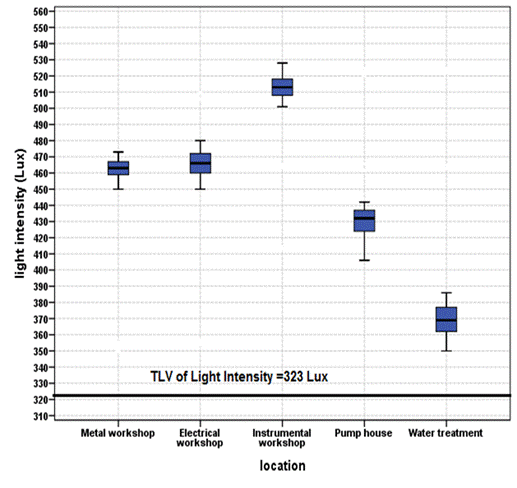
Table (3) presents the light intensity risk factors in work areas with tasks require medium accuracy in details (TLV=323 luxes) [24]. There were five high unacceptable risk factors, two of which were within the metal workshop, two in the electrical workshop, and one in the water-treatment unit. So, the proposed corrective actions must be doing a pre-event assessment of what could generate light intensity and the development of a Light intensity management plan that is compliant with the Environmental Protection Act, and the plan must be provided to the site manager. It is required to take appropriate precautions to avoid diffusion of glare and reflected light. There were five medium unacceptable risk factors, of which two in the instrumental workshop, two in the pump house, and one in the water-treatment unit. In addition, there were fifteen low acceptable risk factors distributed all over the work areas.

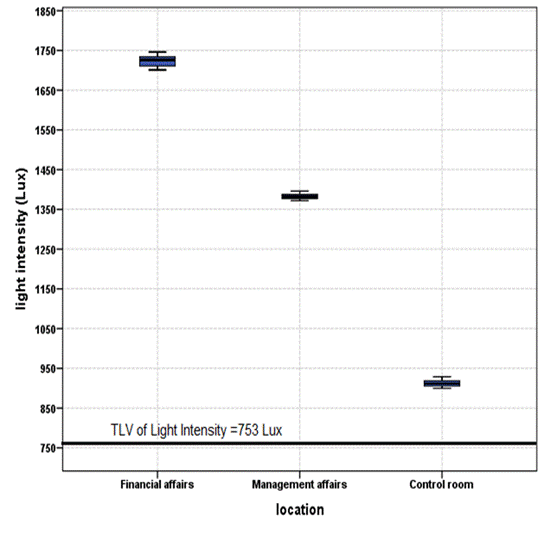
Table (3) illustrates the light intensity risk factors in work areas with tasks require accuracy in details (TLV=753 luxes) [25]. The table declares that the light intensity had one high unacceptable risk factor in control room that needs corrective actions of wear personal protective equipment such as special glasses for welding and cutting and avoid the great disparity in the distribution of light in places converged. Eliminate this risk by checking that the different lightings in the site with the structures safety management plan; administer this control by doing a pre event assessment of the lighting available on or close to the site. It had seven medium unacceptable risk factors, three at each of financial and management affaires, which requires remedial actions of proper lighting for the type of work that is being practiced, whether natural or artificial lighting and allow to homogenous distribution of light in the workplace. It had also seven low acceptable risk factors distributed among the three work areas.

One-Sample Kolmogorove-Smirov Z Test revealed highly significant differences in light intensity (p <0.05, C.I. =95%). The data was expressed as median; Inter Quartile Range, IQR. The light intensity at the instrumental workshop [513(10) lux] was higher than that at metal and electrical workshops [466(12) lux], pump house [432(13) lux], and water treatment [369(15) lux] (Figures 3&4). They were higher than the threshold limit values (TLV=323 lux) stated in the Decision of Minister of Manpower and Immigration No 211-2003. Kruskal-Wallis Test revealed significant variations of light intensity in different work areas (p<0.05; C.I. =95%). Mann-Whitney test disclosed significant differences in light intensity among the instrumental workshop, metal and electrical workshops, pump house, and water treatment (p<0.05; C.I. =95%). Furthermore the light intensity at financial affairs was equal [1726(23)]. They were higher than that in the management affairs [1382(11)], and control room [912(13)] (Figure 3). They were higher than the threshold limit values (TLV=753 lux) stated in the Decision of Minister of Manpower and Immigration No 211-2003. Kruskal-Wallis Test revealed highly significant variation of light intensity in different work areas (p<0.05; C.I. =95%). Mann-Whitney test disclosed significant differences in light intensity among the financial affairs, management affairs, and control room (p<0.05; C.I. =95%).

4. Conclusion

The underlying risk evaluation approach was conducted as quick and simple integration of OHS at an early stage of a project. The approach allows continual reassessment of criteria over the course of the project or when new data are acquired and it is able to overcome the difficulties of current tools in the manufacturing industry. The proposed approach is based on known techniques and tools, such as multi-criteria analysis techniques (e.g. analytic hierarchy process), expert judgment and the analysis of accidents and incidents. The analytic hierarchy process is selected to minimize the inconsistencies in expert judgments and to support approaches that use mixed qualitative–quantitative assessment data.

5. REFERENCES

1- Duijm, N.-J., Fi6vez, C., Gerbrec, M., Hauptmanns, U., Konstandinidou, M.,

2008.Management of health, safety and environment in process industry. Safety Science 46,908-920.

2- Makin, A’M., Winder, C., 2008′ A new conceptual framework to improve the

application of occupaiional health and safety management systems’ Safety Science

(46),93s-948.

3- Li, L.,Wei-dong, 2., Li-ciu,F., 2009. Life-cycle risk management and accident analysis of major construction projects. In: First International Conference on Information Science and Engineering, IEEE ,pp’ 43714373′

4- Smallwood, J .J., 2004. The Influence of engineering designers on health and safety

during construction. Journal of South A’frican Institution of civil Engineering 46

(1), 2-8.

5- Fung, L-W.-H., Tam, V.-W.-Y., Lo, T.-Y., Lu, L.-L;-H., 2010. Developing a risk

assessment model for construction safety. International Journal of Project Management, 1-8.

6- Vemero, F., Montanari, R., 2010. Persuasive techniques in the interface of a high risk chemical plant production place management system. Cognition’ Technology & Work 12 (l), 51-60.

7- young, H., 2005. Identification of high risk evolution and compensatory actions in

online risk assessment. Proceedings of the American Nuclear Society-International Congress on Advances in Nuclear Power Plants 6,3484-3489 ‘

8- Hermanus, M.A., 2007. Occupational health and safety in mining-status’ new. developments, and concern. The Journal of the Southern African Institute of Mining and MetallurgY 107 (8), 531-538.

9- Glickman, T.s., white, S.C., 2007. Safety at the source: green chemistry’s impact on supply chain management and risk. International Journal of Procurement Management 1 (l-2), 227 -237.

10- Liu, Z., Guo, C., 2009. Study on the risk management of construction supply chain’

In: EEE/INFORMS International Conference for Service Operations’ Logistics and Informatics (SOLI) , pp’ 629-632.

11- Hagigi, M., Sivakumar, K., 2009. Managing diverse risks: an integrative framework. Journal of International Management (l 5), 286-295.

12- Hassim, M.H., Hurme, M., 20l0.Inherent occupational health assessment during process research and development stage. Journal of Loss Prevention in the Process Industries 23, 127-138.

13- Zachartassen, S., Knuis”n, 5.,2002. Systematic Approach to Occupational Health and Safety in the Engineering Phase of offshore Development Projects, Experiences from the Norwegian Petroleum Activity. Society of Petroleum Engineers Inc SPE 73881, pp. 246-249.

14- Sonnemans, P.J’M., Korvers, P’M’W’, Brombacher’ A’C” 2002′ How safety investments increase performance: A practical case. Annual Reliability and Maintainability Symposium, 120-126.

15- Hernandez B., Martin A., Ruiz C., Hidalgo C. (2010). The role of place identity and place attachment in environmental protection laws. Environmental Psychology, 30: 281-288.

16- Fera, M., Macchiaroli, R. (2009). Proposal of a qualitative–quantitative assessment model for health and safety in small and medium enterprises. WIT Transactions on the Built Environment, 117–126.

17- Larson, Ch. D., Forman, Er. H., 2007. Application of analytic hierarchy process to select scope for video logging and noise pavement condition data collection. Journal of the Transportation Research Board (1990), 40–47.

18- National Radiological Protection Board (NRPB). (1993). Restrictions on human exposure to static and time varying electromagnetic fields and radiation. Documents of NRPB; 4:8-69.

19- Egyptian Environmental Law (EEL), 9/2009. Maximum permissible levels inside places of productive activities.

20- Pioro IL., Duffey RB. (2007). Risk assessment of heat transfer and hydraulic resistance at supercritical pressures in power engineering applications. ASME Press, New York

21- Hatch TF. (1973). Design requirements and limitations of a single-reading heat stress meter Am. Ind. Hygiene Assoc. J., 34 : 66–72.

22- Parikh DJ., Pandaya CB. (1976). Applicability of the WBGT index of heat stress to work situations in India Indian J. Med. Res., 64 : 327–335.

23- Ramsey JD., Chai CP. (1983). Inherent variability in heat-stress decision rules Ergonomics, 26 : 495–504.

24- ANSI. (1996). Recommended practice for photo biological safety for lamps –Risk group classification and labeling ANSI/IESNARP-27.3.96 ISBN 087995 140 0.

25- Graz H, Kelbitsch N, Kenny P. (2003). Guidelines on Health, Well-being and Stress Prevention in Work with Multicultural and Marginalised Groups. OMEGA Health Care Centre, Graz,

Table (1): Noise risk factors in the company at different workplaces (Turbine, Boiler, Pump house, Metal workshop, and Electrical workshop).

Location

Noise range

No.a

S(P) b

S(S) c

RF d

P-value

Nature of risk factor

Acceptability

Proposed actions f

Turbine

<60 dB (138)

0

1

1

1

<0.05b

Low

Acceptable

1

60-70 dB (139)

0

1

2

2

Low

Acceptable

1

70-80 dB (140)

0

1

3

3

Low

Acceptable

2

80-90 dB (141)

1956

3

4

12

high

Not acceptable

4

>90 dB (142)

1592

2

5

10

high

Not acceptable

4

Boiler

<60 dB (138)

0

1

1

1

<0.05b

Low

Acceptable

1

60-70 dB (139)

0

1

2

2

Low

Acceptable

1

70-80 dB (140)

0

1

3

3

Low

Acceptable

2

80-90 dB (141)

1897

3

4

12

high

Not Acceptable

4

>90 dB (142)

1672

2

5

10

high

Not acceptable

4

Pump house

<60 dB (138)

0

1

1

1

<0.05b

Low

Acceptable

1

60-70 dB (139)

0

1

2

2

Low

Acceptable

1

70-80 dB (140)

0

1

3

3

Low

Acceptable

2

80-90 dB (141)

3447

5

4

20

Very high

Not acceptable

5

>90 dB (142)

0

1

5

5

medium

Not Acceptable

3

Metal workshop

<60 dB (138)

0

1

1

1

<0.05b

Low

Acceptable

1

60-70 dB (139)

0

1

2

2

Low

Acceptable

1

70-80 dB (140)

8

1

3

3

Low

Acceptable

2

80-90 dB (141)

3459

4

4

16

high

Not acceptable

4

>90 dB (142)

0

1

5

5

Low

Acceptable

2

Electrical workshop

<60 dB (138)

0

1

1

1

<0.05b

Low

Acceptable

1

60-70 dB (139)

0

1

2

2

Low

Acceptable

1

70-80 dB (140)

3476

4

3

12

high

Not acceptable

4

80-90 dB (141)

8

1

4

4

Low

Acceptable

2

>90 dB (142)

0

1

5

5

medium

Not Acceptable

3

aNo. Total numbers of noise readings during a month.

b S(P); the score of the probability

c S(S) ; the score of the severity

d RF; the risk factor

f Proposed actions: 1;Administer this control by advising engineers and techniques of the Code of Practice for the Safe Use of Turbine in Power Plant. Site inspection to ensure compliance. 2; Administrate this control by doing a pre event assessment of what could generate noise and the development of a Noise Management Plan that is compliant with the Environmental Protection Act. Plan has been provided to site manager. 3; Eliminate the risk by using personal protective equipments. 4; Eliminate this risk by checking that the equipment is within the structure’s safety management plan. 5; Eliminate the hazard by engaging a licensed electrician to make changes to the existing power supply.

Table (2): Heat Stress risk factors in the company at different work areas (Heater turbine I, Heater turbine II, Turbine, and Boiler).

location

Heat Stress range

No.a

S(P) b

S(S) c

RF d

P-value

Nature of risk factor

Acceptability

Proposed actions f

Heater turbine I

<26 0C (148)

0

1

1

1

<0.05b

Low

Acceptable

1

26 -28 0C (149)

1671

2

2

4

Low

Acceptable

1

28 -30 0C (150)

2431

3

3

9

Medium

Not acceptable

4

30 -32.2 0C (151)

10

1

4

4

Low

Acceptable

2

>32.2 0C (152)

0

1

5

5

Medium

Not acceptable

3

Heater turbine II

<26 0C (148)

0

1

1

1

<0.05b

Low

Acceptable

1

26 -28 0C (149)

1670

2

2

4

Low

Acceptable

1

28 -30 0C (150)

2432

3

3

9

Medium

Not acceptable

4

30 -32.2 0C (151)

7

1

4

4

Low

Acceptable

2

>32.2 0C (152)

0

1

5

5

Medium

Not acceptable

3

Turbine

<26 0C (148)

38

1

1

1

<0.05b

Low

Acceptable

1

26 -28 0C (149)

3502

4

2

8

Medium

Not Acceptable

4

28 -30 0C (150)

212

1

3

3

Low

Acceptable

1

30 -32.2 0C (151)

3

1

4

4

Low

Acceptable

2

>32.2 0C (152)

0

1

5

5

Medium

Not Acceptable

3

Boiler

<26 0C (148)

0

1

1

1

<0.05b

Low

Acceptable

1

26 -28 0C (149)

1696

2

2

4

Low

Acceptable

1

28 -30 0C (150)

2430

3

3

9

Medium

Not acceptable

4

30 -32.2 0C (151)

25

1

4

4

Low

Acceptable

2

>32.2 0C (152)

0

1

5

5

Medium

Not Acceptable

3

a No. Total numbers of heat stress readings during a month.

b S(P); the score of the probability

c S(S) ; the score of the severity

d RF; the risk factor

f Proposed actions: 1; Administrate this control by developing an Extreme Weather Policy and Contingency plan in Heater turbine I. Control the hazard by providing sun screen and making shade available. Monitor the weather and plan for work to be conducted in the early or late hours of the day; 2; Administrate this control by developing an Extreme Weather Policy and Contingency plan in site. Control the hazard by providing sun screen and making shade available. Monitor the weather and plan for work to be conducted in the early or late hours of the day; 3; Administrate this control by ensuring responsible service site of heat stress and security on site; 4; Administer this control by doing a pre event assessment of the amount of water available on site or close to the site. Order a drinking fountain or arrange to give bottled water away for free.

Table (3): Light intensity risk factors in the company at different workplaces.

Location

Light intensity range

No.a

S(P) b

S(S) c

RF d

P-value

Nature of risk factor

Acceptability

Proposed actions f

Metal workshop

<323 lux (158)

1651

2

5

10

<0.05b

High

Not acceptable

4

323-400 lux (159)

2001

3

4

12

High

Not acceptable

5

400-500 lux (160)

0

1

3

3

Low

Acceptable

1

500-753 lux (161)

0

1

2

2

Low

Acceptable

1

>753 lux (162)

0

1

1

1

Low

Acceptable

1

Electrical workshop

<323 lux (158)

1613

2

5

10

<0.05b

High

Not acceptable

4

323-400 lux (159)

1911

3

4

12

High

Not acceptable

5

400-500 lux (160)

0

1

3

3

Low

Acceptable

1

500-753 lux (161)

0

1

2

2

Low

Acceptable

1

>753 lux (162)

0

1

1

1

Low

Acceptable

1

Instrumental workshop

<323 lux (158)

0

1

5

5

<0.05b

Medium

Not Acceptable

3

323-400 lux (159)

0

1

4

4

Low

Acceptable

2

400-500 lux (160)

0

1

3

3

Low

Acceptable

1

500-753 lux (161)

3444

4

2

8

Medium

Not Acceptable

3

>753 lux (162)

0

1

1

1

Low

Acceptable

1

Pump house

<323 lux (158)

0

1

5

5

<0.05b

Medium

Not Acceptable

3

323-400 lux (159)

0

1

4

4

Low

Acceptable

2

400-500 lux (160)

30

1

3

3

Low

Acceptable

1

500-753 lux (161)

3416

4

2

8

Medium

Not Acceptable

3

>753 lux (162)

0

1

1

1

Low

Acceptable

1

Water treatment

<323 lux (158)

0

1

5

5

<0.05b

Medium

Not Acceptable

3

323-400 lux (159)

0

1

4

4

Low

Acceptable

2

400-500 lux (160)

3475

4

3

12

High

Not acceptable

5

500-753 lux (161)

8

1

2

2

Low

Acceptable

1

>753 lux (162)

0

1

1

1

Low

Acceptable

1

Financial affairs

<753 lux (158)

0

1

5

5

<0.05b

Medium

Not Acceptable

7

753-800 lux (159)

1686

2

4

8

Medium

Not Acceptable

7

800-900 lux (160)

2447

3

3

9

Medium

Not Acceptable

7

900-1000 lux (161)

10

1

2

2

Low

Acceptable

6

>1000 lux (162)

0

1

1

1

Low

Acceptable

6

Management affairs

<753 lux (158)

5

1

5

5

<0.05b

Medium

Not Acceptable

7

753-800 lux (159)

1699

2

4

8

Medium

Not Acceptable

7

800-900 lux (160)

2417

3

3

9

Medium

Not Acceptable

7

900-1000 lux (161)

7

1

2

2

Low

Acceptable

6

>1000 lux (162)

0

1

1

1

Low

Acceptable

6

Control room

<753 lux (158)

33

1

5

5

<0.05b

Medium

Not Acceptable

7

753-800 lux (159)

3521

4

4

16

High

Not acceptable

8

800-900 lux (160)

308

1

3

3

Low

Acceptable

6

900-1000 lux (161)

7

1

2

2

Low

Acceptable

6

>1000 lux (162)

0

1

1

1

Low

Acceptable

6

a No. Total numbers of light intensity readings during a month.

b S(P); the score of the probability

c S(S); the score of the severity

d RF; the risk factor

f Proposed actions: 1; Eliminate this risk by checking that the different lightings in the site with the structures safety management plan; 2; Eliminate this risk by ensuring that all light weigh equipment is adequately weighted or harnessed. Administer the control by monitoring light prior and during the event; 3; Eliminate this risk by checking that the different lightings in the site with the structures safety management plan; 4; Administer this control by doing a pre event assessment of the lighting available on or close to the site; 5; Administer this control by doing a pre event assessment of the amount of lighting required in Instrumental workshop. 6; Eliminate this risk by checking that the different lightings in the site with the structures safety management plan; 7; Administer this control by doing a pre event assessment of the amount of lighting required in Management affairs; 8; Administer this control by doing a pre event assessment of the lighting available on or close to the site.

clip_image002

Figure (1): A-weighted equivalent noise levels at different work areas within the Power Station.

clip_image004

Figure (2): Heat Stress levels at different workplace areas within the Power Station.

clip_image006

Figure (3): Light intensity levels at different workplace areas (Metal workshop, Electrical workshop, Instrumental workshop, Pump house, and Water treatment) within the Power Station.

clip_image008

<

p align=”justify”>Figure (4): Light intensity levels at different workplace areas (Financial affairs, Management affairs, and Control room) within the Power Station.

A CASE STUDY OF THE BURDEN OF CARE AMONG CAREGIVERS OF HIV/AIDS PATIENTS IN JOS PRISON, NIGERIA

BY

UGWUOKE, KELVIN ABUCHI

PSYCHOLOGICAL SERVICES UNIT

MAXIMUM SECURITY PRISON

JOS, PLATEAU STATE

AND

NIMYEL REMMIKAT

DEPARTMENT OF GENERAL AND APPLIED PSYCHOLOGY

UNIVERSITY OF JOS

PLATEAU STATE, NIGERIA

ABSTRACT

This study investigated the burden of care among caregivers of people living with HIV/AIDS in Jos prison. Emphasis was placed on the challenges that caregivers face in providing care and health services to prisoners who are living with HIV/AIDS. The study employed a case study research method to investigate the subject matter. The purposive sampling technique was used to select 15 caregivers who were used for this study. The Zarit Burden Inventory (Zarit, Reever and Bach-Peterson, 1980) and a structured interview schedule were used to collect data for this study. Results showed that the caregivers burden were severe. Also, the study found out that lack of health facilities, qualified health professionals, logistics among others are some of the challenges that caregivers face. Recommendations were made on how to ameliorate the burden of care among caregivers of prisoners living with HIV/AIDS.

Key words: Burden, care, prisoners, caregivers, HIV/AIDS, patients.

Introduction

In Nigeria and many parts of the world, HIV/AIDS has become a very serious public health concern, and has posed a challenge to the world at large. According to Asuquo, Adejumo, Etowa and Adejumo (2013), AIDS has become one of the greatest public health challenges of our time. It is estimated that globally over 35 million people are living with HIV at the end of 2014 with the vast majority of these people living in sub-Saharan Africa (World Health Organisation-WHO, 2014). In Nigeria, over 3.4 Million people representing 2.7 percent are presently living with the virus, with a greater number of them in the age range of 15 and 49 years (UNAIDS, 2015).

According to UNDOC (2007), about 668,000 people are incarcerated in sub-Saharan Africa with South Africa having the highest prison population of 157,402 people incarcerated. Other African countries have high prison population, though West African countries have the lowest prison population. According to the Nigerian prisons Service 2014 statistics report, there are about 55 Million prisoners in Nigerian prisons, and about 95% of them are in the age range of 18 to 49. Therefore, it can be said that the prison population in Nigeria is vulnerable to HIV/AIDS. A prevalence of 8.7 % had been previously reported among Nigerian prison inmates in (Iwoh, 2004). According to a Survey of some prisons in Nigeria, there is a seemingly high level of homosexual activities among prison inmates in Nigerian prisons (Olayide, 2001). This sexual behaviour may be as a result of the lack of conjugal visits for the inmates. Hence, most prisoners discharge their sexual energies through homosexuality. Again, homosexual activities among inmates occur either voluntarily because of lack of other ways of channeling sexual energies, or through threats and coercion (Joshua and Ogboi 2008).

Prisoners living with HIV/AIDS are often confronted with the problem of lack of liberty, poor health care system in the prison, poor feeding and sanitation, stigmatization, amongst others. The stigma associated with HIV/AIDS makes many prisoners reluctant to admit they are infected or seek care, and can make health workers reluctant to provide care (WHO, 2006). For AIDS patients in prison, caregiving is not always available from their families and friends. Most often the care for AIDS patients in prisons falls on prison staff and fellow inmates (Olenja, 1999). This poses enormous responsibilities, stress and burden primarily on the staff and inmates of the prison. Furthermore, the prisoner who has AIDS has to deal with the burden related to the illness and also with the stigma surrounding it. AIDS patients in prison and their caregivers will have to contend with the stigma surrounding HIV infection and management (Kalondo, 1996). Stigma often leads to social isolation and loneliness not only for AIDS patients in prison, but also for their caregivers who are prison staff and inmates. According to Casaux and Reboredo (1998), this further adds on their burden of care for the prisoner with the chronic and lethal condition such as AIDS. Again, HIV/AIDS dramatically increases the burden on health services, especially since most victims are young adults who otherwise would require little health care. At the same time, stress and AIDS-related deaths among health care personnel reduce the number of health workers available to care for patients (Ainsworth and Over, 1997).

According to Asuquo et al., (2013), HIV/AIDS patients are faced with social, physical, psychological and emotional problems which often increase the level of burden of caregivers and portray them as targets of HIV-related prejudice and discrimination. There is a widespread of stigmatization against people living with HIV/AIDS and this causes them social problems. Stigmatization limits the social ability of people living with HIV/AIDS. Case studies indicate that the burden of care increases with the impairment in functional activities and the duration of care and a significant correlation exist between the number of caregiving tasks and caregivers burden (Asuquo, et al., 2013).

Theoretical Background

The present study adopted the coping theory for this study. Fineman (1984), stress is a state of tension felt in the presence of an object or a task that is perceived as presenting a challenge to a person’s safety or self-esteem. Stress emanates from perceived discrepancy between environmental demands and the person’s ability to meet those demands; hence presenting psychological, emotional and even physical distress. Therefore, many people have coping techniques against stress such as denial of stress or avoidance of stress depending on the sources of stress. Coping attempts either to reduce the demands of the stress, to reduce the effects of the stress, or to help the person change the way he or she thinks about the demand of the stress. It could be stimulus-directed coping, where an attempt is made to eliminate or ameliorate the initial sources of the stress reactions; or cognitive coping which involves changing the way the stressor is perceived; or response directed coping which involves the reduction of the magnitude of the stress response. For caregivers of AIDS patients both the internal factors such as knowledge and external factors such as finance and friends are necessary to help them cope with stressful events (Kangethe, 2009).

The increased burden on caregivers of AIDS patients in prison may develop feelings of anger, grief, loneliness, burnt-out and resentment, which may lead to poor quality of care and ill health of the caregivers. This is typical in caring for patients with AIDS who may be in the terminal stage of HIV infection. HIV/AIDS in prison is a growing concern and information emanating from prisons in Nigeria indicates that there are large numbers of HIV-infected prisoners; hence the prison population is at-risk. The present study will investigate the plight of caregivers of HIV/AIDS patient in Jos prison, and the challenges faced by the caregivers. This will provide information which will be used to formulate evidenced based interventions in prisons, so as to reduce the challenges faced by the caregivers.

METHODOLOGY

This study was conducted in the Maximum Security Prison, Jos, Plateau state, Nigeria. The prison is a convict prison that holds all classes of prisoners and has a capacity of 1149 inmates. As at the time this study was conducted, there were 766 inmates locked up in the prison with 19 (2.48%) of them living with HIV/AIDS.

The study participants were medical staff working in the Clinic of the prison. A purposive sampling technique was used to select the caregivers who are health professional from diverse fields: nurses, community health workers, psychologists and social workers. All these health professionals had been involved in care giving of prisoners living with HIV/AIDS. About 15 participants who were working in units that cater for HIV/AIDS participated in the study. Permission was sought from the authority of the Nigerian Prisons Service to conduct the study, of which approval was given. The participants were debriefed, and informed consents were obtained following full description of the purpose of the study.

The study adopted a case study research design and data was obtained through structured interview and the Zarit Burden Interview (Zarit, Reever and Bach-Peterson, 1980). A 7-item structured interview was used to elicit information from the participants. The interview sought for the challenges the caregivers faced in the course of caring for AIDS patients in prison. During the interview schedules with the participants, follow-up questions were asked for clarification and better understanding.

The Zarit Burden Interview (ZBI) was used to measure caregiver burden. It is a 22-item, self-report questionnaire that evaluates the caregiver’s health condition, psychological well-being, finances, and social life in the context of the caregiver-patient relationship. Responses are on a 5-point Likert-type scale ranging from 0 (never) to 4 (nearly always), and item scores are summed to obtain a total score that ranges from 0 to 88. Higher scores indicate greater levels of caregiver burden. The following categories have been developed to identify little to severe caregiver burden: 0-20 indicates little or no burden, 21-40 reflects mild to moderate burden, 41-60 moderate to severe burden, and 60-88 severe levels of burden (Zarit et al., 1980). This instrument has been previously used on Nigerian subjects by Yusuf, Nuhu and Akinbiyi (2009), hence, there is no need for revalidation of the instrument.

RESULTS

Socio-demographic Characteristics of the Participants

The socio-demographic data of the participants is represented in the table below:

Table 1: Demographic Characteristics of Participants

Characteristics

Frequency

Percentage (%)

SEX

Male

Female

RELIGION

Christianity

Muslim

Others

PROFESSIONAL QUALIFICATION

SSCE/Diploma/NCE

RN/BSC

MSC

MARITAL STATUS

Single

Married

Widowed

Divorced

AGE

18-35

36-49

50-above

BURDEN OF CARE

No Burden

Mild

Moderate

Severe

6

9

12

3

3

10

2

2

12

1

0

4

10

1

0

1

2

12

40

60

80

20

20

67

13

13

80

7

0

26

67

7

0

7

13

80

Total

15

100

Source: Field study, 2015

Table 1 shows that the majority 9 (60%) respondents were female, 10 (67%) in the age range of 36 – 49 years. Twelve representing 80% were Christians by religion, and about 80% (12) were married, while 67% (10) had a first degree and/or are qualified nurses. The table also shows that from the scores of the participants in the Zarit Burden Inventory (ZBI), 12 participants representing 80% have severe burden.

Challenges of caregivers

From the interview conducted, the following challenges were highlighted by the respondents:

1. Lack of health facilities: When asked about their challenges, 12 (80%) out of the 15 participants listed the lack of health facilities as their major challenge. Though, there is 10-bed clinic in Jos prison, there are little or no equipments for the management of prisoners living with AIDS. They are not equipped with Anti-retroviral drugs for the management of AIDS patients; hence, they have to make referral to other hospitals outside the prison. The following excerpt from the in-depth interviews with the Officer in Charge of the Prison clinic of Jos prison revealed some challenges which they go through as a consequence of this;

“We are faced with the constraints of health equipments. Normally, we are supposed to screen every admitted inmate, but we are not provided with the testing kits and other materials that aid us in that regard. Infact, we have to seek external support from APIN in Jos University Teaching Hospital, as well as the Plateau State Specialist Hospital, in the area of testing and anti-retroviral drugs.” (The Superintendent of Prison in-charge of the Prison Clinic)

The lack of medical facilities has impeded the effective management of prisoners living with HIV/AIDS in the prison, as it has increased the burden of care of these caregivers. Though, the caregivers are doing well in the areas of counselling/psychotherapy and rendering orientation to the inmates on how to live positively with the illness, the lack of medical equipments and drugs has greatly affected their burdens negatively.

2. Lack of professional Medical personnel: This is another challenge facing the caregivers. Only 15 medical personnel are working in the prison clinic. They are to attend to the 19 HIV/AIDS patient and over 850 others. With a ratio of one medical personnel to attend to about 50 inmates, the caregivers are burnt out in the long run. The prison clinic is bereft of a medical doctor. Only four registered nurse, two (2) Psychologists, one (1) social worker and a handful of community health worker. This is grossly inadequate in a large prison like this.

3. Lack of Logistics: The movement of inmates to attend clinic in referral hospital is usually hampered by the lack of logistics. The prison clinic has no ambulance to convey inmates to and fro clinics outside the prison. The following excerpt from the officer whose schedule is to take the AIDS patients to and fro clinic reveals that funds are not provided for this purpose;

“One of the major challenges I have is logistics problem. Often times, I usually use my hard earned salary to pay for logistics to and fro JUTH where we normally get drugs and screen our patients. The government has not provided us with ambulance or any form of logistics. Hence, I have to compromise by using my salary to pay for transportation fare to and from JUTH.”

4. Poor remuneration: Most of the health workers interviewed complained of poor remunerations. They are not paid their allowances, and other entitlements as at when due. 14 of the participants complained that they have not been promoted in the past 12 years. The Superintendent of Prisons in charge of the prison clinic stated that:

“I have not been promoted since 2002. I have remained on this rank since 2002. My colleagues who are my contemporaries have all been promoted ahead of me. I feel bad for this because I have no record of indiscipline. This predicament is none of my fault!”

5. Lack of funding: Thirteen (13) of the respondents pointed out that the medical unit and the Nigerian prisons Service as a whole suffers from poor funding. They complained of lack of proper funding from government, as they have to depend on Non-governmental organisations and other charity groups for some of their needs.

Discussion of Results

The findings of this study have revealed some information about the burden of care among caregivers of prisoners living with HIV/AIDS in Nigeria prisons. It has been able to expose the loopholes in the Nigerian prisons system that impedes the handling of inmates living with the illness.

From the foregoing, results show that caregivers of HIV/AIDS patients in prison are faced by a myriad of challenges which bug down their operations. From table 1 above, 80 percent of the participants scored very high on the Zarit Burden Inventory, showing a severe burden of care. This may be due to the challenges they face in the course of providing care. From the analysis above, it is clear that the caregivers work under very stressful conditions. Hence, their severe burden of care.

The results also revealed the challenges faced by the caregivers. They include the lack of facilities for the provision of healthcare and services to the prisoners. They are left to compromise on certain needs. They go to extremes to fund some of the needs from their personal earnings. This is a serious challenge. The respondents also complained of the lack of logistics, lack of funding, and poor remunerations. All these may have contributed to the high scores in the Zarit Burden Inventory.

Finally, the result revealed that the prison clinic is bereft of medics. From the results, about 15 medical personnel are to attend to over 750 inmates; a ratio of one personnel to more than 50 inmates. This is grossly inadequate. The results also exposed the fact that the prison clinic has not medical doctor attached to it. These causes a great deal of burden on the available caregivers, making them exposed to more stress. The findings of this study has gone a long way to provide information on the abnormalities happening behind the four walls of Jos prison, and by extension, other prisons in Nigeria.

Conclusion/ Policy implications

The ability to provide quality care for HIV/AIDS prisoners requires caregivers that are endowed with professional skills. HIV infers death to many irrespective of retroviral drugs used and caregivers are well aware of the seriousness of this deathly disease. Therefore, the level of burden of caregivers caring for prisoners living with HIV/AIDS increases due to some challenges which are the lack of medical facilities, lack of funding, lack of medical professionals, poor remuneration, among others.

Consequent upon these, the following recommendations are made for the effective healthcare of prisoners living with HIV/AIDS in Nigeria.

1. The Nigerian Prisons Service should, as a matter of urgency, recruit more medical staff. Increasing the number of healthcare personnel in the prison will reduce their workload and lessen the level of burden.

2. All the prison clinics and sick bays in Nigeria should be made provided with antiretroviral drugs and other kits that will help in the testing and treatment of the prisoners living with HIV/AIDS.

3. Routine and periodic and HIV testing and counselling services should be introduced in prisons nationwide. This will identify HIV positive inmates early and further enroll them into care and support before advanced stages of the disease.

4. The level of knowledge on HIV and AIDS is low in Jos prison, so intensive and correct information on HIV /AIDS should be routinely made available to all inmates by introducing a well-designed HIV / AIDS information, education and communication sessions in prisons at least twice a year so as to increase their knowledge base on HIV and AIDS.

5. Prisons in Nigeria should be properly funded to meet up with their mandates of reformation, rehabilitation and reintegration of the legally interned.

RFERENCES

Ainsworth, M. and Over, C. (1997) Confronting AIDS: Public Priorities in a Global Epidemic.

Oxford: Oxford University Press for the World Bank (1997).

Asuquo, E. F., Adejuno, P., Etowa, J., and Adejumo, A. (2013) Fear of HIV Susceptibility

Influencing Burden of Care Among Nurses in South-East Nigeria. World Journal of AIDS, 2013(3): 231-238.

Casaux, M., and Reboredo, G. (1998). Empowerment of Patients with HIV Infection, Family and

Social Networks for Better Assistance and Quality of Life for all of them. XII International Conference on AIDS, Abstract Book 12, 249, abstract no. 24268.

Fineman, S. (1984) Social Work: Stress and interventions. USA: Gower Publishers.

Kangethe, S. (2009) Critical Coping Challenges Facing Caregivers of Persons Living with HIV/AIDS

and other Terminally Ill Persons: The Case of Kanye Care Program, Botswana. Indian Journal of palliative care, 15 (2): 115-121.

Iwoh, I. (2004). “HIV/and the Workplace: Preventing Low Productivity among Personnel of

Nigerian Prison Service.” Paper Presented at the 15th International Conference on AIDS, Bangkok, Thailand.

Kalondo, D. (1996). Care counseling model provides support in resource poor families. XI

International Conference on AIDS, Abstract Book, abstract no. Mo.D.233.

Joshua,I .A & Ogbo,J.S (2008) Sero-prevalence of Human Immunodeficiency Virus. SWJ: 17-19

Olayide, A. (2001). HIV/AIDS in Nigeria: The Policy and Policies 3-13.

Olenja, J.M. (1999). Assessing community attitude towards home-based care for people with

AIDS (PWAs) in Kenya. Journal of Community Health, 24(3), 187-99.

United Nation Office on Drugs and Crime (UNODC-2007). HIV and prisons in sub-Saharan Africa:

Opportunities for Action. Vienna.

UNAIDS (2015). AIDS Epidemic Update: December 2000. Geneva: UNAIDS and WHO.

WHO (2014), “Global Health Observatory (GHO),” Federal Ministry of Health (FMOH).

WHO (2006), “Global Monitoring Framework and Strategy for the Global Plan towards the

Elimination of New HIV Infections among Children by 2015 and Keeping Their Mothers

Alive (EMTCT): IATT M&E WG M&E Working Group of the Interagency Task Team on the Prevention and Treatment of HIV Infection in Pregnant Women, Mother, and Children.”

Zarit, S. H., Reever, K. E., and Bach-Peterson, J. (1980) “Relatives of the Impaired Elderly:

<

p align=”justify”>Correlates of Feelings of Bur- den,” Gerontologist, Vol. 20, 1980, pp. 649-655.

The Role of Linguistics in Literary Texts

Mustafa Wshyar Abdullah AL-Ahmedi

Lecturer at Koya University – Koya, Erbil/ Iraq

There will not be any kind of literature if there is not a language. That is a language which creates literature and with its features helps it to be more interesting. Richard Eyre; English director (in Kermode 2001: 4) says, “The life of the plays is in the language”. It will become more powerful if more structures of linguistics are applied. For instance, there is someone who would like to be in a situation of criminal investigation, but it is impossible for him to inter such a place. He might be able to get a quite clear picture, by the help of linguistic features, for what he dreams about through following a piece of literature.     Being familiarized with linguistics would let people to understand literature in a better way. They would also think about it in a more critical way and engage to the depth of the meaning.

Some people would argue that the only thing would be talked about is the sense of literature which comes from the heart of a poet, novelist or playwright. They might say it is not very important to analyze linguistic aspects in a piece of work. Toolan (2003) claims that sentences are making a context just like a house which should be made of bricks, posts, beams and so on. But that is not all the work; it is not possible to build a house by bringing that stuff only. They should be bounded in a variety of ways. That is the same situation in a text; sentences should be linked together in a linguistic way. This sentence construction should be in a system that would lead audience or readers to be more attracted. Using various sentence structures, for example, avoids them from being uninterested. Almost everyone wants to see something different. Repetition is often not desired by human beings. Leech and Short (2007) argue that it is not possible to understand the language of literature without a proper understanding of how ordinary language works. There are many linguistic terms which can be used to make the message more meaningful, such as: semantics, parallelism, graphology and the like.

Additionally, spelling is also used as a method to make an impact. It is often used to convey the message as it occurs in the reality. It is significant to remember that spelling does not represent any existing dialect phonetically. Sometimes, when a writer represents an Irish man to an English reader, he may try to use a different kind of spelling to indicate Irish pronunciation, because audience always wants to see something which is so close to the reality. If he represents an Irish man to an Irish reader, he will not need to use this technique because it would be clear for the reader who is represented and he would not be interested in such a change (Traugott and Pratt, 1980).

Consequently, the branches of linguistics which are preferred to be used in different types of literature vary. One branch might be more effective in poetry than novel. It can be clearly recognized by writers that which one is more powerful for the type of the work they do. For instance, the system of graphology is generally favored by poets rather than novelists (Simpson, 1997). The different parts of speech may also be used to make different influences. Hebron (2004) explains that parallelism is used to make rhetorical effects. They all are being used to make a piece of work more interesting and effective because those who these works are created for want them attractive.

Parts of speech have a very significant and main role in literature. Each of them has a function which is not less valuable than other one. Hebron (2004) shows that noun phrases are usually used to create parallelism. He (2004:58) demonstrates, “Verbs are the engines of English”. That means verbs have an essential place in English language. They are the main functions in this language and make an action which does the main part of a movement or an activity.

Those who are familiarized with the rules and techniques of linguistics can think about literature more critically. They usually analyze, evaluate and judge about a piece of literature. It is much more pleasurable for them than others who have not any linguistic background. The reason is being more challenged in the action which they are doing. It is not something simple for them; they see it as a precious device. So, it makes them think and they become a judge. At the end of the process, they can find themselves in the center of the actions. They would feel like a character in the play, novel or poem. Simpsons (1997) supports this argument in which he says that psycholinguistics has a great influence on the reading process. Those who have a background of this science, which is a branch of linguistics, can read differently. They would be able to analyse and evaluate a piece of text. It is possible for them to understand the depth meaning of the text which is not the same as the surface one. In contrast, some others, who have no knowledge about it, may read it with less emotion and sense. Short (1996) says that he has never seen beyond the front desk of a police station, but he is quite familiar, through reading novels, watching plays and movies, with being arrested, interviewed and put in cells. This is called schemata. He expects something through his experience which comes from watching and reading.

In conclusion, the study of language can make the study of literature more valuable. It gives it a better prestige. The analysis and evaluation would be stronger and more effective. It has been shown how different parts of speech are being chosen for different types of literature and to make different effects. Those with some knowledge of linguistics may see literature more enjoyable. Their thinking would differ than others and it would be more thoughtful. They can expect or imagine something which they have never seen before. That is what the study of linguistics can offer the study of literature. It targets to help those who are interested in literature to be more critical and to have a good understanding for it, to obtain what they want through following it.

References:

  • Hebron, M. (2004). Mastering the Language of Literature. Hampshire: PALGRAVE MACMILLAN.
  • Kermode, F. (2001). Shakespeare’s Language. London: Penguin Books, p. 4.
  • Leech, G. and Short, M. (2007). Style in Fiction: A Linguistic Introduction to English Fictional Prose. (2nd). Harlow: Longman.
  • Short, M. (1996). Exploring the Language of Poems, Plays and Prose. Harlow: Longman.
  • Simpson, P. (1997). Language through Literature: An Introduction. London: Routledge.
  • Toolan, M. (2003). Language in Litterature (2nd). London: Hodder Headline Group.
  • Traugott, E. C. and Pratt, M. L. (1980). Linguistics for Students of Literature. New York: Harcourt Brace Jovanovich.


A STUDY TO ANALYSES THE CAUSES OF EMOTIONAL ABUSE AGAINST WORKING WOMEN IN PUNJAB PAKISTAN

Amjad Rehman Asghar, Dr. Yasir Nawaz Manj, Hassan Ali, Saif Ahmad Malik

1Department of Rural Sociology, Faculty of Social Sciences, University of Agriculture, Faisalabad-38040, Pakistan.

Department of Sociology, Faculty of Social & Behavioral Sciences, University of Sargodha, Pakistan.


Abstract

Women in Pakistan live in a world, which is structured by strict religious, family and tribal customs. They are subjected to discrimination and violence on a daily basis. Pakistan’s interpretation of Islam views women as needing protection that ultimately results in their oppression physically, mentally and emotionally. Women in Pakistan are facing various forms of violence, discrimination and inequality in almost every aspect of life. Therefore, the present study is to analyses the causes of emotional abuse against working women: in Punjab, Pakistan. A cross sectional study was carried out both in private and public departments. Multistage sampling technique was used for the collection of data. A sample of 300 respondents was taken from 8 districts of two divisions of Punjab Faisalabad and Sargodha from both public and private sectors. The major objective of the study was to explore the socio-cultural and economic factors of emotional abuses among working women and to identify the reasons of emotional abuse among working women at work place. The study has found that the female who are doing jobs in government sector were facing more emotional abuse as compared to public sector.  The finding of the study 70% of the working women were in the opinion that culture is the responsible for the weaker position of the women. 74% of the working women were in the view that gender inequality is the base of low status of the women in a society. It is need to modify the behavior of male regarding women media can play a vital role in this regarding. The government should take necessary steps to make the legislation and suggest harsh punishment to the abusers.

Keywords: Emotional Abuse, Working Women, Socio-Cultural Values, Economic Aspect

Introduction

Women in Pakistan live in a world, which is structured by strict religious, family and tribal customs. They are subjected to discrimination and violence on a daily basis. Pakistan’s interpretation of Islam views women as needing protection that ultimately results in their oppression physically, mentally and emotionally. Women in Pakistan are facing various forms of violence, discrimination and inequality in almost every aspect of life. Violence against women in many fields is often not conceived as a violation of human rights but rather as a normal aspect of lives of Pakistani people. They live in an atmosphere of fear, and their lives are guaranteed in exchange for obedience to social norms and traditions. Because of this fear and sense of being inferior, imposed by the traditional thoughts of a male dominated society, women are suffering immensely especially in their homes (Fikree and Jafarey, 2004).

Psychological abuse, also referred to as emotional abuse or mental abuse, is a form of abuse characterized by a person subjecting or exposing another to behavior that may result in psychological trauma, including anxietychronic depression, or post-traumatic stress disorder. Such abuse is often associated with situations of power imbalance, such as abusive relationshipsbullying, and abuse in the workplace (Maguire and Daniel, 2007).

Rates of reported emotional abuse in the workplace vary, with studies showing 10% 24%and 36%of respondents indicating persistent and substantial emotional abuse from coworkers (Keashly and Jagatic, 2003).

It is also found that males and females commit “emotionally abusive behaviors” in the workplace at roughly similar rates. In under develop parts of the world women were more likely to engage in workplace bullying, such as name calling and that the average length of abuse was 16.5 months (Hansen et al., 2006).

Cultural and Structural Violence and Abuse against Women: Violence against women is a worldwide problem because it includes half of the humanity. Women all over the world face multiple forms of violence just because of being women. There are many cultural and structural causes which provide sound basis for the continual perpetuation of violence against women all over the world (Holmvall & Francis, 2007).

 Objective

The main objective of the research is to identify the causes of emotional abuse against working women at work place.

 Methodology

Study Area at glance

The Universe of the present study was comprised of Punjab province.  Punjab is the most developed and populous province of Pakistan with approximately 56% of the country’s total population.

 Research Design

An exploratory study was conducted with 300 females working in public and private offices in the different parts of the Punjab province Pakistan. The key objective of this survey was to analyze the causes of emotional abuse against working women.

 Selection of Study area and Sample

A cross-sectional survey was carried out from Punjab province. Punjab is the most populated province of Pakistan, with 86084,000 people in 2005. Punjab province is comprised of eight divisions. Multistage sampling technique was used. Two divisions, Faisalabad and Sargodha were selected randomly out of eight divisions. One district in each division was selected randomly. District Faisalabad and district Sargodha selected randomly. 150 working women were selected in each district conveniently from public and private sectors.

 Tool for Data Collection

For the collection of the data, the single instrument was used to gather data.  A structured questionnaire was used as a tool of data collection in the field for research.

 Data Analysis: Data were analyzed by using SPSS 16.0.

 Results and Discussions

Table 1

Distribution of the respondents about social factors affecting emotional abuse on Working Women

Statement Strongly agree Agree Somewhat Disagree Strongly disagree
F % F % F % F % F %
Do you bear emotional abuse due to job insecurity? 68 22.7 85 28.3 40 13.3 47 15.7 60 20.0
Do you think that abuser at workplace knows my weakness of potential job loss? 28 9.3 97 32.3 40 13.3 87 29.0 48 16.0
Do you think being less experienced also makes me vulnerable to emotional abuse? 58 19.3 96 32.0 78 26.0 29 9.7 39 13.0
Do you think that due to the scarcity of the jobs women have to show the patience of abusive behavior of the counterpart? 88 29.3 105 35.0 28 9.3 50 16.7 29 9.7
Do you think that private sector have more chance and opportunities to victim and being abusive as compare to government? 85 28.3 101 33.6 49 16.3 50 16.3 15 5.0
Do you think that in every institution women have to bear the abusive behavior of their counterpart 75 25.0 107 35.7 59 19.7 59 19.7 00 00

It is important to note why most women’s face emotional abuse in organizations and what steps advocates working to stop violence against women should do to deter violence like emotional abuse.22.7 percent females strongly agree that they bear emotional abuse due to job insecurity, 28.3 percent agree and 20.0 percent strongly disagree with this statement. 9.3 percent strongly agree and 32.3 percent agree that abuser at workplace knows weakness of potential job loss. 19.3 percent research participants think being less experienced also makes me vulnerable to emotional abuse while one-fourth, 26.0 percent remained almost neutral over this statement.

More than one-third that is 35.0 percent women opined that due to the scarcity of the jobs women have to show the patience of abusive behaviour of the counterpart. Only 9.7 percent strongly disagreed with this idea. More than one-fourth research respondents, 28.3 percent strongly agree that private sector have more chance and opportunities to victim and being abusive as compare to government while 33.6 percent agreed to this opinion. Only 16.3 percent disagree. 25.0 percent strongly agreed and 35.7 percent agreed with the statement “in every institution women have to bear the abusive behaviour of their counterpart”.

Table 2

Percentage distribution of the respondents with regard to their perception about Cultural Characteristics and emotional abuse on working women


Statement Strongly agree Agree Neutral disagree Strongly disagree
F % F % F % F % F %
Did you ever face emotional abuse at work place? 99 33.0 92 30.7 40 13.3 50 16.7 19 6.3
Do you think that at work males try to create psychological problems for you? 140 46.6 132 44.0 00 00 59 19.7 69 23.0
Do you think that it is in nature of male to abuse the women? 77 25.66 154 51.3 00 00 40 13.3 29 9.7
Do you feel that culture is responsible for my weaker position in society? 47 15.7 163 54.3 00 00 60 20.0 30 10.0
Would you like to fight for rights if culture does not hinder? 111 37.0 140 46.6 00 00 29 9.7 20 6.7
Do you think that submissive position of women in society makes vulnerable to abuse? 29 9.7 125 41.7 88 29.3 39 13.0 19 6.3
Do you think that gender inequality is based on low status of women in society? 78 26.0 145 48.3 00 00 57 19.0 20 6.7
Do you follow the instructions of family about the behavior in society? 69 23.0 193 64.3 00 00 29 9.7 9 3.0
Do you think consider importance of gender, sect, or caste 39 13.0 108 36.0 38 12.7 76 25.3 39 13.0
Do you think current social status of women in society is appropriate? 20 6.7 9 3.0 79 26.3 95 31.7 97 32.3
Do you think it is the obligation of every woman to bear men’s abuse? 9 3.0 19 6.3 40 13.3 127 42.3 105 35.0
Do you think to abuse the women is culturally accepted in our society? 85 28.3 97 32.2 29 9.7 70 23.3 19 6.3
Women victimization is the fate of women 19 6.3 69 23.0 30 10.0 116 38.7 66 22.0
Women marginalized role is not a big issue of the society 29 9.7 77 25.7 30 10.0 135 45.7 29 9.7
Male dominancy leads to development 67 22.3 49 16.3 39 13.0 69 23.0 76 25.3
There is a possibility that next generation will be free to choose their profession. 107 35.7 126 42.2 39 13.0 9 3.0 19 6.3

Data exhibited that 33.0 percent females strongly agree and 30.7 percent agree that they have faced emotional abuse at workplace. 13.3 percent respondents remained neutral.16.7 percent disagree and 6.3 percent strongly disagree with this statement. A majority i.e. 46.6 percent females strongly agree while 44.0 percent agree that at work males try to create psychological problems for them.19.7 percent disagree and nearly one-fourth, 23.0 percent strongly disagree with it. These results show that men are prone to create psychological problems for women. Is it in the nature in males to abuse the women? Data depicted that 25.6 percent females gave answer “yes” it is. A huge majority of 51.3 percent females agree to this statement. Only 13.3 percent disagree with this statement. A majority of 69.0 percent respondents doubt in nature of males. They think that it is in nature of male to abuse the women. Only 9.7 percent disagree to this opinion.

Culture is an important aspect of a society. Culture influences the people living in a societal set up. 15.7 percent respondents of this study strongly feel that culture is responsible for women weaker position in society. A huge majority that is 54.3 percent agree with it. Only 20.0 percent respondents disagree with this statement. Almost 37.0 percent females like to fight for right if culture does not hinder. An un-ignorable majority of percent agree with this opinion. 9.7 percent respondents remain disagree.9.7 percent strongly agree and 41.7 percent agree that submissive position of women in society makes them vulnerable to abuse.29.3 percent respondents remain neutral but 13.0 percent respondents disagree with this statement.

Gender equality is, first and foremost a human right. Women are entitled to live in dignity and in freedom from want and from fear. 26.0 percent women strongly agree that gender inequality is based on low status of women in society. Nearly half i.e. 48.3 percent agree to this idea. About one-fourth i.e. 23.0 percent women strongly admit that they follow the instructions of family about the behavior of the society.13.0 percent women think that the gender, sect or caste is important 36.0 percent also consider it true. 6.7 percent females are completely accepting that current social status of women in society is appropriate.32.3 percent also reply that it is true.31.7 percent disagree with this statement.3.0 percent females think that it is the obligation of every woman to bear men`s abuse.6.3 percent also agree while 13.3 percent remain neutral.42.3 percent disagree and 35.0 strongly disagree to this statement.

 Hypothesis 1

Higher the age of the respondents, higher will be the understanding with emotional abuse

Table 3

Association between age of the respondents and understanding with emotional abuse

Age of the respondents Emotional abuse Total  
Yes No Confused  
18-27 101 8 13 122
46.1% 15.1% 46.4% 40.7%
28-37 100 36 10 146
45.7% 67.9% 35.7% 48.7%
More than 38 18 9 5 32
8.2% 17.0% 17.9% 10.6%
Total 219 53 28 300
100.0% 100.0% 100.0% 100.0%

Chi-Square Test

  Value DF Asymp. Sig. (2-sided)
Pearson Chi-Square 20.331a 4 .000
Likelihood Ratio 22.211 4 .000
Linear-by-Linear Association 5.882 1 .015
N of Valid Cases 300    

Table 3 presents the association between age of the respondents and their understanding with the emotional abuse. Chi-square value shows a high-significant association between age of the respondents and their understanding with emotional abuse. Gamma value shows a positive relationship between the variables. It means high age respondents had more understanding with emotional abuse as compared to low age respondents. So the hypothesis “Higher the age of the respondents, higher will be the understanding with emotional abuse” is accepted.


Conclusions

The conclusions based on the present research study is most of the respondents were literate. Three fourth of respondents who participated in study were government employees. One-third majority of research participants think that religion provides domination to men over women. A majority of women that is a bit less than half strongly believe, culture provides domination to men over women. Research participants strongly agree that women can play the role at work place as men. The findings clearly show that women believe they can be better decision makers. Emotional abuse at work males try to create psychological problems for them. Results show that men are prone to create psychological problems for women. About one-fourth majority of women who participated in study strongly admit that they follow the instructions of family about the behavior of the society. A reasonable majority of women support egalitarian society in this society. It shows an improvement in awareness about their rights. So the government should realize and make people to realize the importance of women empowerment. The importance of female education must be spread through different channels of awareness so that they can avoid exploitation and violence imposed by patriarchy. There should be implementation of law of tort and easement to reduce the emotional abuse.

 References

Fikree, F. F., Jafarey, S. N., Korejo, R., Khan, A., & Durocher, J. M. (2004). Pakistani Obstetricians’ Recognition of and Attitude towards Domestic Violence Screening. International Journal of Gynaecology and Obstetrics, 87, 59-65.

Hansen, A., Hogh, A., Persson, R., Karlson, B., Garde, A., &Orbaek, P. (2006).Bullying at work, health outcomes and physiological stress response.Journal of Psychosomatic Research, 63-72.

Holmvall, C. and Francis, L. (2007) How Rude: Incivility in the Workplace Hurts More than Just Feelings. The Workplace Review, pp. 16-20.

Keashly, L., &Jagatic, K. (2003). By any other name: American perspectiveson workplace bullying. In S. Einarsen, H. Hoel, D. Zapf, & C. Cooper (Eds.), Bullying and emotional abuse in the workplace: International perspectives in research and practice (pp. 31–61). London: Taylor Francis.

Maguire, J., & Ryan, D. (2007). Aggression and violence in mental health services: categorizing the experiences of Irish nurses. Journal of Psychiatric & Mental Health Nursing, 14(2), 120-127.


Issues of Tribes in India: Education and Health

Maqsoodah Akhter* & Rubeenah Akhter**

* Department of Sociology, Devi Ahilya Vishwavidyalaya, Indore, (M.P).

** Department of Economics, Devi Ahilya Vishwavidyalaya, Indore, (M.P).


Abstract: The Scheduled Tribe population represents one of the most economically impoverished and marginalized groups in India. With a population of more than 10.2 crores, India has the single largest tribal population in the world. The tribes of India constitute 8.6 per cent of the total population of the country. Health and education, the primary agents of transformation towards development. The aim of this paper is to analyse the status of health and tribal education with literacy rate. The analysis is based on secondary data of Census of India, 2011.

Key Words: Tribes, Education, Literacy, Health, transformation

INTRODUCTION

India is a home to a large variety of indigenous people. The Scheduled Tribe population represents one of the most economically impoverished and marginalized groups in India. With a population of more than 10.2 crores, India has the single largest tribal population in the world. The tribes of India constitute 8.6 per cent of the total population of the country (Census 2011). They belong to 645 groups, each group vastly different from the other from ethnic and cultural stand points. In fact it is this mosaic like canvass of the tribal population that contributes greatly to the country’s diversity. Distributed all over the country the tribes practise a variety of economic activities ranging from gathering forest produce to hunting and gathering and shifting cultivation to manufacturing and selling handicrafts. Despite their practice of divergent economic activities the tribal economy can be described as subsistence economy and their role in the modern industrial activity is found to be minimal.

A tribe is viewed, developmentally or historically, as a social group existing before the development of, or outside, states. A tribe is a distinct people, dependent on their land for their livelihood, which are largely self-sufficient, and not integrated into the national society. It is perhaps the term most readily understood and used by the general public.

Education is one of the primary agents of transformation towards development. Education is in fact, an input not only for economic development of tribes but also for inner strength of the tribal communities which helps them in meeting the new challenges of life. It is an activity, or a series of activities, or a process which may either improve the immediate living conditions or increase the potential for future living. It is the single most important means by which individuals and society can improve personal endowments, build capacity levels, overcome barriers, and expand opportunities for a sustained improvement in their well-being. Professor Amartya Sen recently emphasized education as an important parameter for any inclusive growth in an economy. So, education is an important avenue for upgrading the economic and social conditions of the Scheduled Tribes. Literacy and educational attainment are powerful indicators of social and economic development among the backward groups in India. Currently, the tribes lag behind not only the general population but also the Scheduled Caste population in literacy and education. This disparity is even more marked among Scheduled Tribe women, who have the lowest literacy rates in the country (Maharatna, 2005). The male-female gap in literacy and educational attainment among the scheduled tribes is significant. Education, especially in its elementary form, is considered of utmost importance to the tribals because it’s crucial for total development of tribal communities and is particularly helpful to build confidence among the tribes to deal with outsiders on equal terms. Despite the sincere and concerted efforts by the government for the overall development of the scheduled tribes, they are still far behind in almost all the standard parameters of development. They are not able to participate in the process of development, as they are not aware of most of the programmes and policies made for their upliftment. This is mainly due to the high incidence of illiteracy and very low level of education among the tribal people. Hence, the educational status of the scheduled tribes and
the role of governance in this direction are highly essential. It is well known that the educational background of tribes is very discouraging as compared to the rest of the population.

In spite, of their educational problems, tribal people are facing health problems also. Health problems prevalent in tribal areas include endemic infectious diseases like malaria, tuberculosis, and diarrhoeal diseases, apart from mal-nutrition and anaemia. What is worrying is that the prevalence of chronic diseases such as hypertension and diabetes mellitus, hitherto rare in these populations, is rising, and stroke and heart disease are now the leading causes of death. Some of the highest rates of tuberculosis in the country have been reported from the Sahariya tribe of Madhya Pradesh. Similarly, deaths due to malaria occur disproportionately among tribals. So, education and health are the important avenues for upgrading the economic and social conditions of the Scheduled Tribes.

Review of Literature

Singh, et al (1996) writes in an article on Health status of Tribals in India, the popular image of the tribals in India being healthy and happy has been formed on the basis of disinformation spread by anthropological studies glorifying and romanticizing the Nobel savage image of the tribals and their way of life permeated with singing, dancing and drinking. But the empirical studies on the health of the tribals have reported high prevalence of disease and malnutrition. A review of the studies on the health of the tribals, including those done by Jabalpur ICMR Regional Medical Research Centre, Nutrition Foundation of India, and Post-Graduate Department of Psychology, Ranchi University, has concluded that tribal population has a very low health-nutrition status which is due to their rural, illiteracy and poverty. Eleven surveys, covering a total sample of 6051 cases, collected in Chota Nagpur and Santal Paragana region of Jharkhand, Bihar have reported very low level of knowledge, attitudes and practice in relation to physical and mental health, diet and nutrition, family planning and child care, health habits, and physical conditions of living. Rani, M (2000) observed in her study that due to the language barrier the tribal children are unable to establish communication link with the teacher and thus leading to the termination of their education in some point or the other. Vaidyanathan and Nair, (2001) suggested that teacher motivation contributes more to teaching – learning process than teacher competence. Nair, P. (2007) has given importance on non-formal education in tribal areas particularly to reach out to the hardest-to reach group of children in remote areas. NFEs therefore target children who are drop-outs from the formal system of education. This non-formal method provides room for innovations and injects flexibility to a rigid system in terms of organization, teaching method, content, target group of learners and evaluation procedures. Sedwal, M. and Kamat, S. (2008) focused on issues related to Scheduled Castes and Scheduled Tribes-groups which are recognised for affirmative action within the Constitution of India. Abdul Raheem, A. (2011) explained that education as an important parameter for any inclusive growth in an economy and the policies have to focus on inclusive rather than divisive growth strategies.


OBJECTIVES

  1. To analyse the education problems of the tribals.
  2. . To analyse the health problems of the tribals.
  3. To suggest suitable measures for transformation of Tribals towards economic development.

RESEARCH METHODOLOGY

Research methodology means using the scientific methods of investigation and analyse the phenomenon. No research work can be undertaken unless we adopt a proper research methodology. For the present research work, the scientific method has been followed which consists various stages such as formulation of the research problems, allocation of data, analysis of data, interpretation and presentation of the findings.

SOURCES OF DATA

Keeping in view the objectives of study, the data collection was carried out at secondary levels. The secondary data was collected from various secondary sources such as Journals, Magazines, Censuses, Economic and Political Weekly, Research Papers.

Status of Tribal Population in India

The tribal population constitutes a majority in the north-eastern states of Mizoram and Lakshadweep (94.4 per cent), Meghalaya (86.1per cent), and Nagaland (86.5per cent). The states with no Scheduled tribe groups are Punjab, Chandigarh, Haryana, Delhi and Pondicherry. India has total tribal population of 10.43 crores (Table-1) which is 8.6 per cent (Table-2) of total population of India as per 2011 census.

Table-1 Scheduled Tribe population and decadal change by residence in 2011


Scheduled Tribe population 2011


Decadal change 2001-2011

Total Rural Urban Total Rural Urban
 

104,281,034


93,819,162


10,461,872


23.7


21.3


49.7

Source – Census of India, 2011

During 2001 and 2011, the decadal change in the scheduled tribe urban population is 23.7 per cent where as it is 49.7 per cent in urban area and 21.3 per cent in rural area. The urban India has only 2.8 per cent ST population but Rural India has 11.3 per cent ST population. (Table-2)

Table-2   Percentage of Scheduled Tribes to total population in India: 2001-2011

Percentage of ScheduledTribes

2001

Percentage of Scheduled Tribes 2011


Total Rural Urban Total Rural Urban
8.2 10.4 2.4 8.6 11.3 2.8

Source – Census of India, 2011

Literacy Trends of Tribes in India

Literacy is an important indicator of development among tribal groups. The trend of literacy of tribes in India from 1961 to 2011 is shown in table-3. The percentage of literacy of tribes was only 8.54 per cent in 1961 which has increased to 63.1 per cent in 2011. But female literacy of tribes is only 54.4 per cent compared to male literacy of 71.7 per cent. During the post-Independence period, the Indian government implemented legislation and allocated funds to facilitate access to enrolment in primary education (grades I-V) in India. As a
result, both literacy rates and gross enrolment ratios of boys and girls across the general population have increased substantially during the past 50 years.

Table- 3 Literacy Trends of Scheduled Tribes in India from 1961 to 2011(in Per cent)

Year Male Female Total
1961 13.83 3.16 8.54
1971 17.63 4.85 11.39
1981 24.52 8.05 16.35
1991 40.65 18.19 29.60
2001 59.17 34.76 47.10
2011 71.70 54.4 63.1

Source: National Commission for SCs & STs, Fifth Report & Census, 2011

Problems of Tribal Education

There are many critical issues and problems in the field of tribal education. They are as follows:

  1. Medium of Language

Language is one of the important constraints of tribal children which prevents them access to education.

  1. The Location of the Village

The physical barriers create a hindrance for the children of a tribal village to attend the school in a neighbouring village.

III.   Economic Condition

 The economic condition of tribal people is so poor that they do not desire to
spare their children or their labour power and allow them to attend schools.

  1. Attitude of the parents

As education does not yield any immediate economic return, the tribal parents prefer to engage their children in remunerative employment which supplements the family income.

  1. Teacher Related Problems

In the remote tribal areas the teacher absenteeism is a regular phenomenon and this affects largely the quality of education.

  1. Lack of Proper Monitoring

Proper monitoring is hindered by poor coordination between the Tribal Welfare Department and School Education Department.

Health status

  • High level of consanguineous marriages leading to defects in the race and hereditary diseases.
  • High prevalence of sickle cell anaemia and other genetic diseases o High fertility rates, low institutional delivery rates.
  • Higher maternal mortality and infant mortality compared to national average.
  • Inadequate immunization status.
  • High prevalence on malnutrition- stunting and underweight- especially among preschool children.
  • Communicable and Tropical diseases like malaria, and parasitic diseases widespread.
  • Increasing burden of non-communicable diseases like diabetes mellitus.
  • Kyasannur Forest Disease (KFD) is a looming threat to forest tribes with occasional deaths.
  • Health care facilities absent or lacking in terms of infrastructure, personnel, finance, accessibility and availability.
  • Poor hygiene and sanitation
  • Lack of emphasis on mainstreaming their traditional systems of medicine
  • Poor health seeking behaviour.

Suggestions
Some suggestions for improvement of tribal education are as follows

  1. a) Literacy campaign – Proper awareness campaign should be organized to create the awareness about the importance of education. Extensive literacy campaign in the tribal dominated districts may be undertaken on a priority basis to literate the tribal.
  2. b) Attitude of the tribal parents – The attitude of the tribal parents toward education should be improved through proper counselling and guidance.
  3. c) Relevant study materials in local languages – All study materials should be supplied in local languages of tribes.
  4. d) Appointment of Local teachers and female teachers – It is suggested to appoint more tribal teachers and female teachers in the tribal areas. The ecological, cultural, psychological characteristics of tribal children should be considered carefully by the teachers in tribal areas.
  5. e) Stipends and various scholarships – Since higher education among the tribes is less, special ST scholarships should be provided to the tribal students perusing higher education, particularly in medical, engineering, and other vocational streams.
  6. f) Residential schools – More residential schools should be established in each states and districts and extended up to PG level in tribal areas.
  7. g) Social security- Social security of students, especially of adolescent girls is of great concern in residential schools.
  8. h) Proper Monitoring – Higher level officials should check the functioning of schools frequently relating to the teaching methods, working hours, and attendance registers.

References

Abdul Raheem, A. (2011) Education for the Economically and Socially Disadvantaged Groups in India: An Assessment Economic Affairs Vol. 56 No. 2 June 2011 (Page 233-242)

Jha, J., Jhingran, D. (2002), Elementary Education for the Poorest and Other Deprived Groups, Centre for Policy Research. New Delhi.

Lal, M. (2005), Education-The Inclusive Growth Strategy for the economically and socially disadvantaged in the Society

Nair, P. (2007), “Whose Public Action? Analyzing Inter-sectoral Collaboration for Service Delivery: Identification of Programmes for Study in India.”International Development Department, Economic and Social Research Council.February.

Singh, A.K. and Jabbi M.K. (1996) (Eds) Status of tribals in India: Health, Education and employment, Har Anand, New Delhi.

Sedwal, M. &Sangeeta, K.(2008) Education and Social Equity with special focus on Scheduled Castes and Scheduled Tribes in Elementary Education,NUEPA, New Delhi.

Sujatha, K. (2002) Education among Scheduled Tribes. In Govinda, R. (ed.), India Education Report: A Profile of Basic Education. New Delhi: Oxford University Press.

Department of Women and Child development (1995), Ministry of HRD GOI: Fourth World Conference on Women, Beijing.

Government of India, (1961), Report of the Scheduled Areas and Scheduled Tribes Commission (Chairman –U.N.Dhebar).

Technology incorporate for Nano-Transistor

Ms. Sheetal Rana

sheetal.varsha@gmail.com

Department of Electrical Engineering, V.J. T.I Matunga,

Mumbai, Maharashtra, India


Abstract –

In this paper, the major research efforts for nano-electronics by studying proposed technologies for replacing the transistor is consider.  The limitation of conventional transistor has been demonstrated and new advance technology is proposed. The electronics industry is dependent on the ever-decreasing size of lithographic transistors; this scaling cannot be continuously undefined. Nano-electronics (circuits components are built with the scale of 10nm) seem to be the most promising Technology to lithographic based Transistor. Scaling of transistor gate lengths will be limited by off-state leakage current. Future transistor scaling will require the incorporation of new device structures, Carbon nano tube Field effect transistor (CNTFET) is one of the most promising device. In this paper technique to adjust the threshold voltage (Vt) of CNTFET and off state leakage current (IOFF) has been discussed. The symmetric CNTFET has been adopted due to its inherent robustness to short-channel effects and improved current drive capability. Advantages of using alternative channel materials to facilitate scaling are mentioned.

DESIGN OF HIGH PERFORMANCE BAUGH WOOLEY MULTIPLIER USING COMPRESSORS

*T.MOUNIKA                     **MR.T.SAMMAIAH                   ***MR.G.BABU


                *Pg Scholor Dept Of Ece Vaagdevi College Of Engineering Warangal

**Asso Professor Dept Of Ece Vaagdevi College Of Engineering

*** Asso Professor Dept Of Ece Vaagdevi College Of Engineering


Abstract

A multiplier is one of the key hardware blocks in most digital and high performance systems such as FIR filters, digital signal processors and microprocessors etc. With advances in technology, many researchers have tried and are trying to design multipliers which offer either of the following- high speed, low power consumption, regularity of layout and hence less area or even combination of them in multiplier. Thus making them suitable for various high speed, low power, and compact VLSI implementations. However area and speed are two conflicting constraints. So improving speed results always in larger areas. So here we try to find out the best trade off solution among the both of them.To achieve speed improvements Baugh Wooley Multiplication technique used for signed multiplication Generally as we know multiplication goes in three basic steps. Partial product generation, reduction and final stage is addition. Hence in this paper we have first tried to design different adders and compare their speed and complexity of circuit i.e. the area occupied. And then we have designed Wallace tree multiplier then followed by Conventional, proposed Wallace multipliers and have compared the speed and Power consumption in both of them.

Optimization Techniques for Low Power VLSI Design

Kavya R

PG Student [VLSI Design and Embeded Systems], Dept. of ECE, Sri Jayachamarajendra College of Engineering, Mysuru, Karnataka, India


Dr. S.Gayatri

Assistant Professor, Dept. of, ECE

Sri Jayachamarajendra College of Engineering,

Autonomous under VTU, Mysore, Karnataka, India

Abstract– With shrinking technology, as power density (measured in watts per square millimetre) is raising at an alarming rate, power management is becoming an important aspect for almost every category of design and application. Reducing power consumption and over all on chip power management are the key challenges in deep sub micro meter nodes due to increased complexity.


Power management needs to be considered at very early design stages. Also low-power techniques should to be employed at every design stage, from RTL (Register Transfer Level) to GDSII. This survey paper describes the various strategies, methodologies and power management techniques for low power VLSI circuits. Future challenges that must be met by designers to designs low power high performance circuits are also discussed. State-of-the-art optimization methods at different abstraction levels that target design of low power digital VLSI circuits are surveyed.

Keywords— Optimization, low power, power dissipation, power management