Circular economy and sustainability

Iceclog: Profitable shift to Circular Economy for Manufacturers ...

The industrial revolution and the rise of a capitalistic society have, in a short period of time, changed our planet and our lives. Overconsumption stands at the foundation of modern society and has brought along climate change and its string of environmental hazards and social issues. Overpopulation and growing demand for goods result in mind-boggling volumes of waste as well as air, soil and water pollution with high negative impacts on human and ecosystem health.

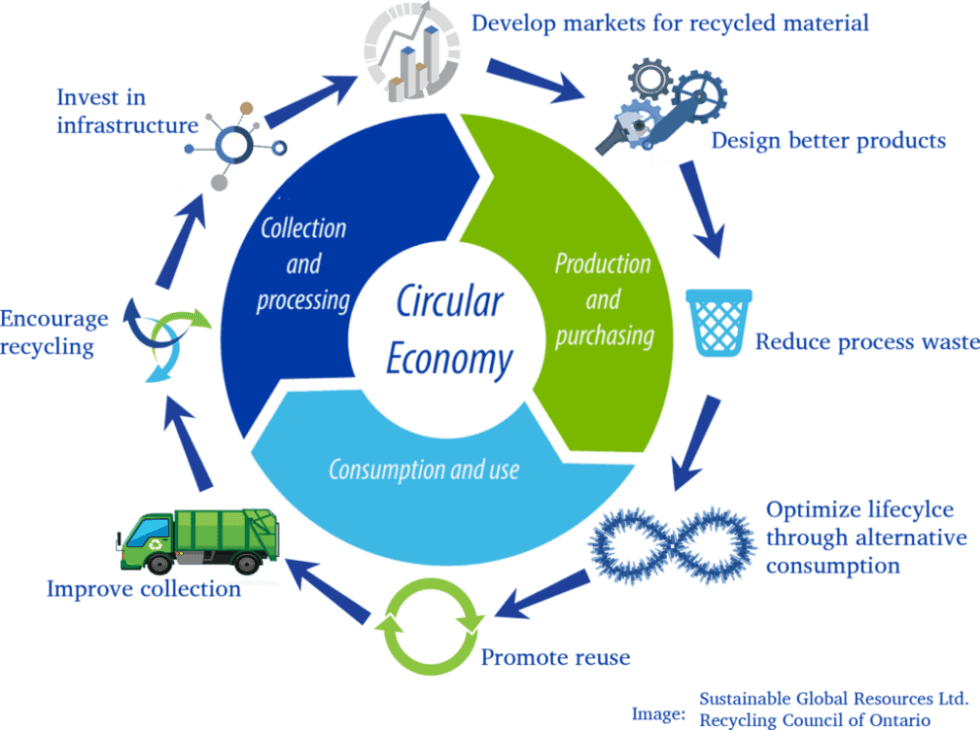
A circular economy works quite differently. Products and services in a circular economy are designed in a way that allows them to be reused, either in the biological or technical cycles. All products are manufactured in a way so they can be disassembled and materials will either be broken down by nature or returned to production. Biological material therefore consists of non-toxic, clean feeds and technical materials are designed to be a resource to be used industrially again. The goal is to throw nothing away and to reduce the need for purchasing new commodities, while production and transportation is best achieved with renewable energy.

The circular economy is a markedly different way to do business, forcing companies to rethink everything from how to design and manufacture products to their relationships with customers. One of the biggest differences is the customer’s role. The focus is no longer on consumption, but instead on the use of a function. This places different demands on the business community to build long-term relationships in their business models. The advantage is that companies benefit from each other’s success in this cascade of different cycles.

It also brings new opportunities in infrastructure, energy and production in their adaption to fit the circular economy model. Some business models are easier than others to begin with, such as the leasing of products instead of buying (everything from jeans to trucks), companies which collect and renovate their own products and then sell them in the store in a separate department or peer-to-peer models. Companies will find new ways to extend the life of products or components, to find value in the waste, or the design of circular use.

In the end it is all about encouraging the next generations to think and design in a sustainable way as well as using circular business systems to build a better future.

Health facilities in life support

There is constant fear among the frontline health workers in India that the system is under severe stress and can crumble anytime in the middle of the covid-19 pandemic. India is a country that spends just over 1% of its GDP in health infrastructure. Hundreds of people lining up from different parts of the country outside hospitals like AIIMS, RML, GTB etc. is testament to our governments failing to provide affordable basic healthcare facilities to people. Even before the pandemic hit the country, there was 82% shortage of specialists and professionals in all government hospitals. Same goes for lab technicians, nurses and pharmacists.

Now, the covid-19 pandemic has tested and even defeated the health facilities of countries that provide the best healthcare in the world. Even in countries like Italy, Spain, United States and France; hospitals were continuously running out of staff, beds, oxygen cylinders, ventilators, medicines and many other essentials. There was a severe shortage of doctors, nurses and other medical staff to attend the admitted patients and then treatment was eventually handed out in priority basis.

Image
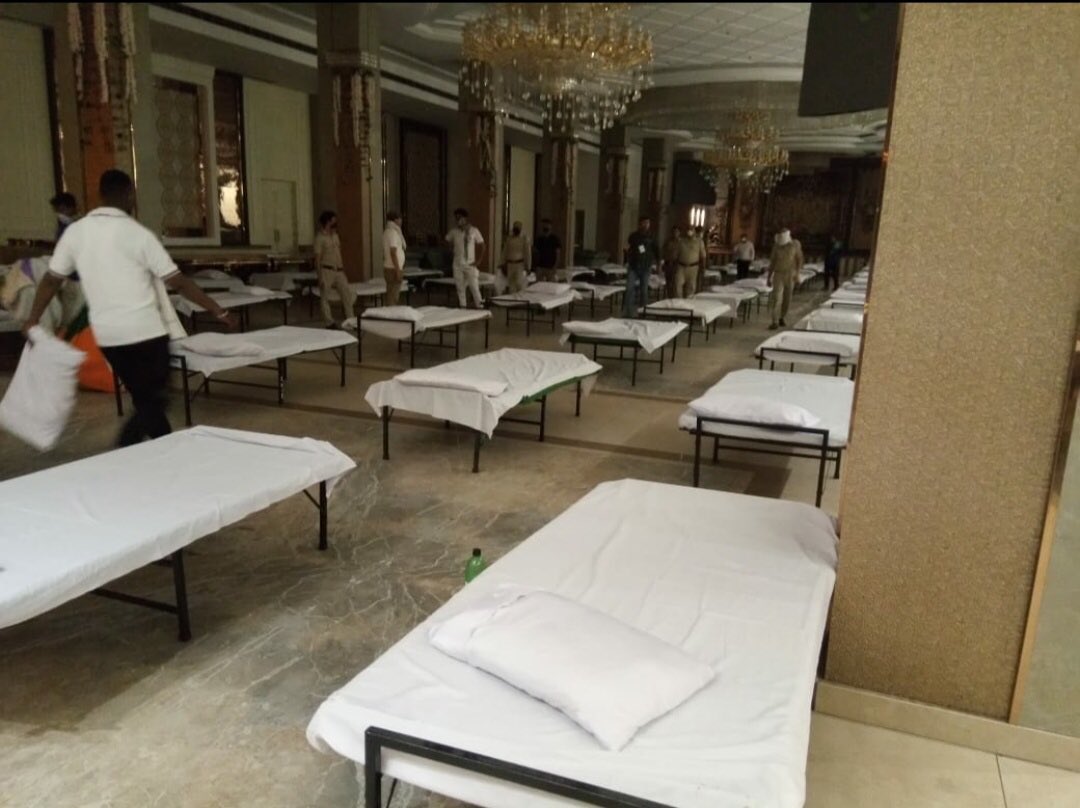
Wedding halls in Delhi being converted into corona isolation wards

Now consider the nightmare scenario India is currently in. Already the number of positive cases are rising exponentially with no signs of slowing down or even flattening. The ICUs and general wards of Delhi and Mumbai hospitals are almost full. Patients are being denied admission and treatment even for the most serious cases.  There are harrowing reports of people struggling to get a hospital bed including many grieving relatives saying that their loved ones died at the doorsteps of hospitals. In some cases, people even visited 6-7 hospitals and were still denied admission citing non availability of beds.

Nearly 70% beds vacant in COVID-19 hospitals run by Delhi govt, private facilities almost full
Patients waiting for their admission in a hospital in Delhi

And the misery persists even after death. Dozens of grieving men and women keep waiting outside hospitals throughout the day to identify the bodies of their loved ones who died due to COVID-19. Bodies are pilling up in hospital wards. There are chilling visuals of dead bodies left unattended by the hospital staff along with the patients. The relatives are handed over wrong bodies and patients are dangling out of their beds. These sights are becoming increasingly common in government hospitals all across the country.

After receiving hundreds of public interest litigations and taking suo moto cognizance after looking at numerous reports of gross violations of human rights, the high courts and the Supreme Court have come down heavily on central and state governments. The Supreme Court said that the situation is “horrendous” with respect to the handling of Covid-19 patients in Delhi, the capital city, and that the patients are being treated “worse than animals”. The court also slammed the Delhi government on mishandling of the situation and asked them why do the patients have to undergo such pathetic conditions in the hospitals. The situation is more or less the same in the rest of the country too. In Maharashtra, the state which has the maximum number of coronavirus cases, the high court had to direct the government to conduct more tests and increase the number of beds. Many doctors and health experts have said that Mumbai, the financial capital of India, has less than 30 ICU beds remaining.

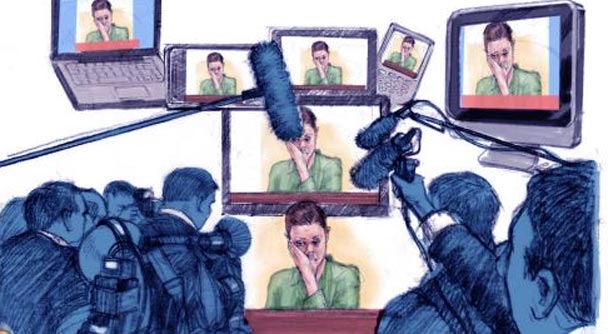
Should media play the role of judge and jury?

There have been numerous cases where the media has succeeded in bringing about change. It is a powerful influencer as it speaks directly to the public and can shape opinions. The Jessica Lal murder case is a strong example. The accused, Manu Sharma, was the son of Vinod Sharma, a wealthy and influential Congress MP from Haryana. Sharma tried to use his power to manipulate the case and did succeed initially by destroying evidence and turning witnesses hostile. The Delhi High Court was forced to acquit Sharma on grounds of lack of evidence. The acquittal resulted in a huge backlash throughout the nation which was helped on by the media. Jessica Lal’s sister, in an interview with Daily News and Analysis, said, “The media proved to be an extremely powerful force that came to our aid…It was the power of the media that enabled us to get justice. Had it not been for the media, people would have never known about how a family is being denied justice”.

However in another case, the media faced a lot of criticism. In the Ayushi Talwar murder case, Dr. Rajesh and Nupur Talwar were portrayed as guilty of the murder of their daughter and their servant, even though there was no such statement by the police and no conclusive evidence available. Media plays a vital role in moulding the opinion of the society and it is capable of changing the whole viewpoint through which people perceive various events. The media can be commended for starting a trend where the media plays an active role in bringing the accused to hook.

What critics of media trail say?

The Law Commission in its 200th report, Trial by Media: Free Speech versus Fair Trial under Criminal Procedure (Amendments to the Contempt of Courts Act, 1971), recommended a law to debar the media from reporting anything prejudicial to the rights of the accused in criminal cases, from the time of arrest to investigation and trial.

The media cannot be granted a free hand in the court proceedings as they are not some sporting event. Everyone has a right to free and fair trail and the media cannot take this away even from people accused of most heinous crimes.

The right to fair trial has not explicitly been made a fundamental right. That does not mean that it is a less important right. More than a legal right, it is basic principle of natural justice that everyone gets a fair trial and an opportunity to defend oneself. The commission believed that biased reporting by media publications have a  prejudicial impact on the suspects, accused, witnesses and even judges and in general on the administration of justice. This is criminal contempt of court, according to the commission; and for that laws should be made to impose reasonable restrictions on freedom of speech.

What the media says?

This is really a grey area and laws can be used to gag the media unnecessarily. Governments accused of corruption will try to suppress the truth during trial if media is not allowed to report on cases of misgovernance, corruption etc. It is true that contempt of court is a ground for restricting the freedom of speech, but the media has not tried to lower the dignity of the judiciary by exposing loopholes of the investigation and the prosecution. And if judicial decisions also appear to be arbitrary, they must be subjected to ruthless scrutiny. It will be dangerous to gag the press in the name of contempt of court. If the appellate court feels that the media publicity affected fair trial, it can always reverse the decision of the lower court.

Instead of a law gagging media, there should be a self-regulatory body with sufficient punitive powers. The existing bodies of PCI and NBA are merely organizations that can give out a warning but cannot take any action. They should be given more powers so that they can punish media organizations that break rules and conduct unfair media trials.

We are finding it difficult to manage our waste.

Who is responsible for clearing Capital's garbage mountains ...
A garbage mound in New Delhi

Mountains of waste being generated as a by-product of economic development is taking a serious toll on the environment. Because of rapid urbanization, the country is looking at massive waste management challenge. Nearly 400 million urban residents in living in 8000 towns and cities produce 62 million tons (MT) of solid waste annualy. Out of 62MT, only 42 MT is collected and even out of 43 MT, only 11.9MT is recycled or treated and rest goes to landfill sites or garbage mounds.

Uncontrolled dumping, is the major waste disposal method in India, and is also a major source of disease. In Mumbai, 12% of total solid waste is burned either openly on the streets or in landfills, a practice that releases black carbon, dioxins and carcinogenic furans.

A CSE survey data shows that 70-80 percent of India’s wastewater ends up in water bodies. No proper sanitation facilities, frequent, uncontrolled discharge of wastewater and industrial discharges are the major causes of water-borne diseases, especially in India’s densely populated slum areas and ghettoes. Findings show that out of 816 municipal sewage treatment plants (STPs) listed across India only 522 work. So out of 62000 million liters of Sewage generated, only 18,883 gets treated and the rest is discharged into the water bodies.

Sewage water pollution - refused directly into water basins
Sewage being discharged into water bodies

According to State of India’s Environment 2019 data, the country also recorded a 56 % increase in hazardous-waste generating industries between 2009 and 2017. These industries are also not complying with rules and regulation set by the authorities. A recent joint study by The Associated Chambers of Commerce of India (ASSOCHAM) says that that nearly 74.6 lakh tons of hazardous waste is generated in India.

The lack of infrastructure for scientific disposal and recycling of hazardous waste has caused severe environmental damage. There are only 17 disposal facilities in India with both secured landfills and modern scientific incinerators. States like Karnataka, Kerala, Punjab and Orissa do not have safety regulations and infrastructure to safely recycle and dispose hazardous waste. Workers who collect hazardous waste are exposed to its dangerous chemical nature, resulting in them contracting severe diseases. They do not have modern equipment, are poorly trained and not paid well.

‘True Cost of Sanitation’, a report of economic cost of sanitation released in 2015, stated that India lost near 106.7 Billion from its GDP. Poor sanitation has impacts on the society and the economy. It causes fatal diseases and also gives rise to related losses in productivity due to sickness and increased healthcare costs from caring for the sick.

High time we prioritize female literacy!

Why do Indian girls outperform boys in school, year after year?

Greater female literacy and education is recognized across the world as a powerful contributor to women’s empowerment. India has seen significant increase in the overall literacy rates from 18% in 1950s to about 74% in the last decade. However, there is huge gender disparity in literacy that is prevalent in India. While the literacy rate for men is at 80% it is just at 64% for females. Compared with the rest of the world female literacy rate is just at 60% which is 22% less than the global average.

Low literacy rate hinders women’s participation in the workforce which is an important factor for demographic transition (from high to low mortality and fertility rates). According to a 2017 study, lower infant mortality rates have been directly linked to higher education levels of the mothers as can be seen from a regional breakdown of female literacy rates in India. Kerala, the state with the highest female literacy rate (92%), has the lowest infant mortality rate of 10, whereas Bihar and UP with the lowest female literacy rate of 53% and 59% respectively has a high infant mortality rate, 177.5 and 141.2 respectively.

India falls short in female literacy - The Hindu
Female Literacy Rate of poorer countries is much higher than India

Women’s education also had a greater impact on family planning as observed in Bangladesh. Bangladeshi women show high level of awareness of family planning matters and a much higher use of contraceptives than in India. This has led to a dramatic reduction of fertility in a very short period. No comparable changes can be observed in India. This has happened because 88% of women are literate in Bangladesh as compared to 64% in India. The gains in female education has led to an increase participation of women in the workforce whereas in India female employment has gone backwards from 37% in 2005 to 29% in 2009.

If we want to become 5 trillion economy by 2022 we will have to educate our female population and going by the current progress rate, universal literacy can only be achieved by 2060. It is high time that we work collectively to educate our females and not be shy to ask for help from our neighbors who are performing better than us in bringing gender equality.

Our kids are hungry

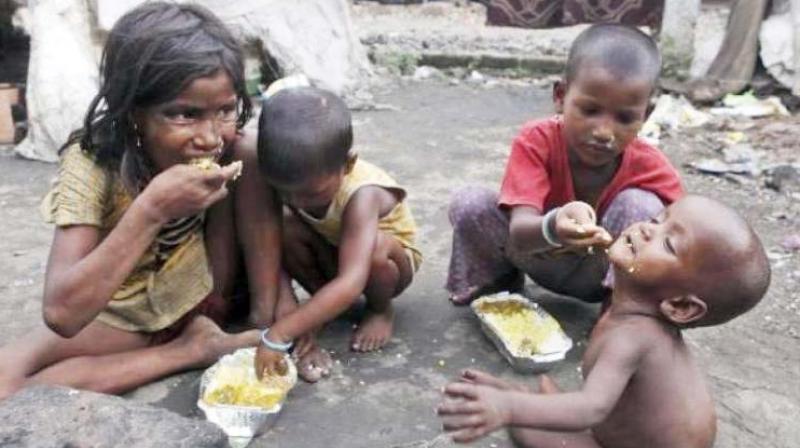
Malnutrition ravages India's children

According to Global Nutrition Report 2018, India has one third of the world’s population of underfed or malnourished kids. World Health Organization defines malnutrition as deficiencies, excesses or imbalances in a person’s intake of energy and/or nutrients. It can cause stunting (low height for age), wasting (low weight for height), underweight (low weight for age) and micronutrient deficiencies or insufficiencies (a lack of important vitamins and minerals).

Findings by UNICEF’s The State of the World’s Children 2019 report reveal that malnutrition was the cause of 69% children dying before the age of five. Every second child in India is suffering from malnutrition. This is shocking as India is ironically the world’s 2nd largest growing economy. After the economic reforms of 1991, India has seen GDP growth of above 6% every year. India also has the world’s largest program of combating malnourishment. There are many central and state run schemes that provide ration to the extremely vulnerable section. India also has one of the largest public distribution system for grains. Yet, national and international reports and studies regularly highlight child deaths due to malnutrition in India. In this domain, India has fallen behind the poorest countries of Sub-Saharan Africa and South East Asia like Nigeria, Pakistan, Indonesia and others despite having a higher GDP rate and per capita income.

Malnutrition is further complicated in India where social inequality plays a very important role. A girl child is more likely to be malnourished than a boy child in a family. Similarly, a lower cast child is more likely to be undernourished than an upper cast child. The situation is grimmer in poorer states like Uttar Pradesh, Assam, Bihar and Odisha. The effect of child malnutrition has directly resulted in neonatal disorders, severe respiratory infections and diarrheal diseases in children.

Such findings raise questions about the efficiency of various schemes like Child Development Scheme(1975), National Nutrition Policy(1993), Mid-Day Meal Scheme(1995) and National Food Security Act(2013)  launched by the government to combat malnutrition. A country that produces three billionaires every month should be ashamed that 3000 of its kids die of hunger every day.

Coronavirus has put our education in coma

FUTURE SHOCK: 25 Education trends post COVID-19, Marketing & Advertising  News, ET BrandEquity

Till now coronavirus has claimed more than 400,000 lives and has shattered the world economy. Most of the countries are presently in economic slowdown. In India, data from Centre For Monitoring Indian Economy shows that 122 million people lost their jobs because of coronavirus, a majority of them being migrant laborers. But another disturbing phenomenon is that our schooling and higher education is in a limbo.

UNESCO says that more than 67% of global school-going population has been affected by covid-19. In India, schools have remained closed ever since the countrywide lockdown was announced on March 24th. Even after the lockdown was lifted, a survey suggested that 92% of the parents didn’t want to send their kids to schools. Education has certainly taken a major hit during lockdown. Government and private schools have started online classes where teachers are handing out assignments and other tasks virtually but this is not a substitute to classroom teaching. Also, students of economically weaker sections do not have access to these facilities and they are missing out on lectures and study material provided by the teachers.

Higher education has also suffered a lot in this pandemic. Final year students have been hit hard by the covid-19 situation and hence, they are uncertain about their future. Campus placements of many college students have been cancelled or stopped. This is because of various companies going bankrupt or closing operations & laying off employees. First and second year students have missed out on a lot of classes and almost an entire semester. Many students have said that they are in depression and are feeling unproductive. PhD students are not able to access libraries for their research work.

Coronavirus has forced shut our educational institutions and it looks like they will remain so until the virus is gone. State and Central government should work overtime to curb the spread of virus so that our students can go back to their schools and colleges. They should also invest and expand their technology that facilitates online leaning so that education does not take a hit in times of crisis like these. They should also make sure that education is accessible to the most vulnerable sections of the society.

One India, One Education Board?

CBSE or ICSE or IGCSE or IB or State Board - The right choice ?

Over the past few years, a number of education boards have come up in India, each with its own syllabus and grading system. This has happened because education falls in the tertiary list and is the shared responsibility of the centre as well as of the states. CBSE, CISCE and NIOH are the central boards with CBSE having the maximum number of affiliated schools. There are various state boards like Bihar and UP Board, Kerala Boards, Assam Boards and many others. Some of the top schools in India are also affiliated to international boards like IB and Cambridge International.

All these education boards have their own pros and cons. While one can argue that the syllabus for sciences are more or less the same, it differs a lot when it comes to social sciences and literature. State boards give more preference to vernacular languages and local history whereas the central and international boards have fondness towards English and other foreign languages. The history taught in CBSE focuses on pan India topics like freedom struggle, ancient empires, world wars etc. India is a diverse country with an equally diverse population and this justifies the existence of so many education boards. However the problem arises when students from all these boards apply for higher education in colleges of universities like the Delhi University.

Delhi University has cutoffs for admissions into most of the streams from English to Journalism. These cutoffs are based on marks scored by a student in their respective board exams. Bihar and UP boards are difficult and have stricter marking scheme as compared to CBSE or Kerala Board. ICSE board is tougher still. So, a student scoring 98% in CBSE might have the same aptitude as a student scoring 82% in Bihar board. The one scoring 98% will clear the high cutoffs of the colleges of Delhi University. An inequality also exists within the boards, as students from state boards are considered inept as compared to students coming from ICSE or CBSE. Parents are also confused and often feel pressurized to send their kids to CBSE or ICSE affiliated school, assuming that these schools provide better education. The rich can easily afford these schools but the poor cannot, resulting in further deepening of the inequalities. So even education has not remained the great leveler that it once was.

It is high time that the governments, intellectuals, teachers and civil societies come together and brainstorm ideas so that they can come up with a solution for all these issues. Let’s hope that the draft National Education Policy 2019 recognizes and addresses these concerns.

Boomers spreading fake news

We have all received WhatsApp messages in our family groups that are usually forwarded by the older members of our family claiming that coronavirus is caused by eating non vegetarian foods or banging utensils generates positive energy that destroys coronavirus and other such absurd things. Of course these are examples of fake news and are recognized as such, easily by a millennial or Gen z but not so by our parents, uncles, aunts or the boomer generation.

Study: Older Republicans Likelier To Spread Fake News On Facebook 01/11/2019
Older people more likely to spread fake news

The dynamics between age and misinformation are being studied by various researchers in the field of communication. In fact several studies have found that adults over the age of 65 are more likely to fall for fake news than younger adults. Studies in Princeton and NYU found that older people do spread fake news, but they were not the source. Them being late adopters of technology and new to internet and social media might be one of the reasons that they are gullible and believe anything they see on the internet.

Researches should further attempt to find out as to why boomers fall to fake news and look for solutions to curb the spread of misinformation. It’s time that Facebook, Whastapp, Twitter and other social media platforms should carry out their own research and take effective measures. Meanwhile, it is up to us to make sure that older adults are not sharing fake news. We should provide them with sources through which they can fact check what they have shared. We should teach them how to identify and flag a fake message.

Our older generation helped us make sense of the real world and now it is up to us to guide them through the virtual world.

We have always been cruel and greedy

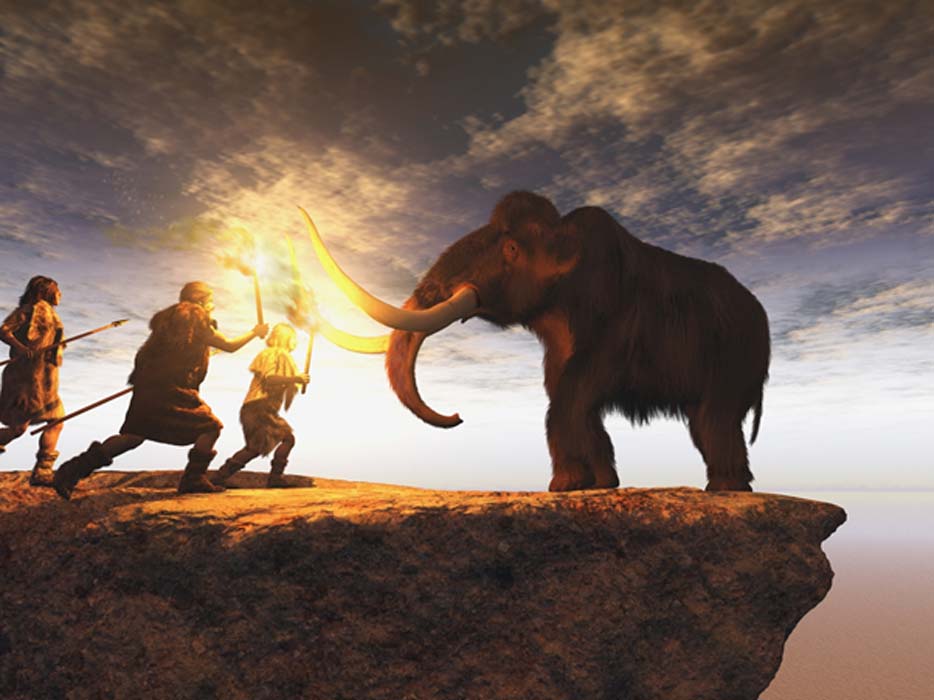
New Discovery Shows Prehistoric Humans May Have Hunted Mammoths to  Extinction | Ancient Origins
Homo Sapiens hunting mammoth- Shutter Stock

We are shocked and horrified to hear the news about a pregnant elephant who died in Kerala after ingesting firecracker laced pineapple. From wildlife activists, artists, and celebrities to career politicians, all have expressed their solidarity and regret over the animal’s tragic and cruel death. The issue of course has been polarized by people with vested interests and an entire state is blamed for the killing of the elephant.

However, amongst these noisy accusations and blame game, we have forgotten the real reason behind all these problems, which is human greed. Ever since we, the homo sapiens, spread from Africa to other continents we have wiped out species like mammoth, mastodon, saber-tooth tigers, and many other species by hunting them for food and other resources. The extinction of species has carried on to this day so much so that we had to reserve special areas like wildlife reserve and sanctuaries for the conservation of animals and plants. We are even credited to the wipeout of other human species like the Neanderthals. If you find it hard to believe just remember that we fought two world wars and evidence of ethnic cleansing is aplenty in Myanmar, Iraq, Syria, and other conflict-ridden areas because of our greed and inability to share resources.

Data tabled in Indian parliament shows that there has been a rise in man-animal conflict all over India. According to environment ministry, elephants and tigers were responsible for maximum human deaths from 2014-2017. But can we really blame them? It is us who have encroached on their forest lands in the name of development. We have cleared forests for farming, construction of houses, industries, and various other activities. Chunks of reserved areas are handed over to mining companies, often illegally for our never-ending need for resources. These same resources are needed to make our fancy vehicles, gadgets, beautiful houses, generating 24-hours electricity and many other comforting things that we take for granted.

After taking away their homes, we play the innocent victim and remain clueless as to why the animals venture beyond their borders. And then, we comfortably tweet from our homes, regretting the death of one elephant.