Serum Institute asked to revise protocol for Covid-19 vaccine clinical trial

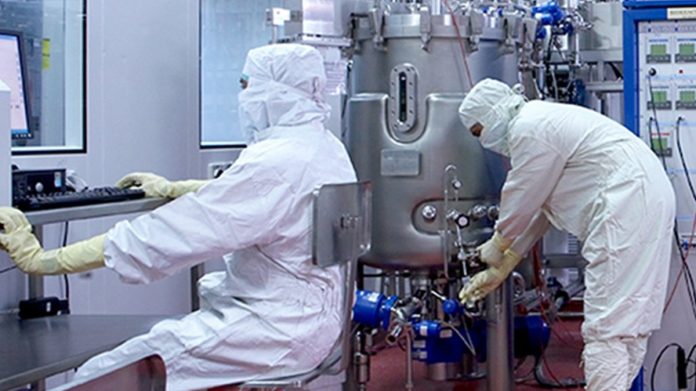
A  Central Drugs Standard Control Organisation (CDSCO) expert panel has sought clarifications from Serum Institute of India (SII) over its application to the Drugs Controller General of India (DCGI) seeking permission for conducting phase 2 and 3 human clinical trials of the Oxford vaccine candidate for COVID-19, official sources said on Wednesday. The CDSCO has advised the Serum Institute of India (SII) to submit a revised protocol to perform the clinical trials in India for potential Covid-19 vaccine.

The move comes when the Subject Expert Committee evaluated the submitted protocol by SII. The Subject Expert Committee (SEC) on COVID-19 which held its meeting on Tuesday deliberated on the application by SII and asked the Pune-based firm to revise its protocol for the phase 2 and 3 clinical trials, besides seeking some additional information. On Wednesday evening, SII submitted a revised protocol for conducting the trials to the DCGI. The firm plans to start phase 2 and 3 human trials in India in August. The domestic pharma giant has partnered with AstraZeneca for manufacturing the Oxford vaccine candidate for highly infectious disease Covid-19.

“The company on Tuesday was asked to clearly define phase 2 and phase 3 part of the protocol and resubmit their application for evaluation by the SEC,” an official source said. The panel also recommended that the proposed clinical trial sites be distributed across India, the source said. “They also have not given justification for the proposed enrolment of 1,600 subjects during the trial,” the source added. Additional Director, Government Affairs, SII, Prakash Kumar Singh said, “We have submitted our revised protocol to DCGI office today evening for further action by SEC and DCGI.” 

The SII which has partnered with AstraZeneca for manufacturing the Oxford vaccine candidate for COVID-19 had submitted its application to the DCGI on Friday, seeking permission for conducting the phase 2 and 3 trials of the potential vaccine ‘Covidshield’.”According to the application, it would conduct an observer-blind, randomized controlled study to determine the safety and immunogenicity of ‘Covishield’ in healthy Indian adults. The firm said that around 1,600 participants of more than 18 years would be enrolled in the study,” a source had said.  A Lancet medical journal report has stated that a vaccine candidate developed at the University of Oxford has shown encouraging results and it appears to be “safe, well-tolerated, and immunogenic. Initial results of the first two-phase trials of the vaccine conducted in five trial sites in the UK showed it has an acceptable safety profile and homologous boosting increased antibody responses, the source said.

To introduce the vaccine, SII, the world’s largest vaccine maker by the number of doses produced and sold, has signed an agreement to manufacture the potential vaccine developed by the Jenner Institute (Oxford University) in collaboration with British-Swedish pharma company AstraZeneca. On the partnership with AstraZeneca, Serum Institute of India CEO Adar Poonawalla had said, “Serum Institute of India has entered a manufacturing partnership with AstraZeneca to produce and supply 1 billion doses of the COVID-19 vaccine being developed by Oxford University.”

These vaccines will be for India and middle and low-income countries across the world (GAVI countries), he had said. Last week, Oxford University announced the satisfactory progress with the vaccine, making it one of the leading ones among the dozens of vaccine candidates being developed around the world. The clinical trials of a potential Covid-19 vaccine on humans began in April. There was no immediate response from SII when ANI contacted them to make their version.

National Education Policy 2020

The Union Cabinet on Wednesday approved the new National Education Policy (NEP) with an aim to introduce several changes in the Indian education system – from the school to college level. A single regulator for higher education institutions, multiple entries and exit options in degree courses, discontinuation of MPhil programs, low stakes board exams, common entrance exams for universities are among the highlights of the policy.  Speaking to reporters, Union minister Prakash Javadekar said the changes are important as the policy, which was framed in 1986 and revised in 1992, had not been revised since then.

The NEP 2020 aims at making “India a global knowledge superpower”.The new academic session will begin in September-October – the delay is due to the unprecedented coronavirus disease (Covid-19) outbreak – and the government aims to introduce the policy before the new session kicks in. The committee — which suggested changes in the education system under the NEP — was headed by former ISRO chief K Kasturirangan. The NEP was drafted in 1986 and updated in 1992. The NEP was part of the election manifesto of the ruling Bhartiya Janta Party (BJP) ahead of the 2014 elections.

Either one of the mother tongue or the local/regional language will be the medium of instruction up to Class 5 in all schools, the government said Wednesday while launching the National Education Policy 2020. Among other changes in the revision of the NEP, last done over three decades ago, is the extension of the right to education to cover all children between three and 18 years of age. The policy also proposes vocational education, with internships, for students from Class 6, a change to the 10+2 schooling structure, and a four-year bachelor’s program. NEP 2020 will bring two crores, out-of-school children, back into the mainstream, the government has claimed. Prime Minister Narendra Modi tweeted saying he “wholeheartedly welcomed” the policy, which he called a “long due and much-awaited reform in the education sector”.

In a bid to ramp up digital learning, a National Educational Technology Forum (NETF) would be created. “E-courses will be developed in eight regional languages initially and virtual labs will be developed,” Amit Khare, Higher Education Secretary, said. Top 100 foreign colleges will be allowed to set-up campuses in India. According to the HRD Ministry document, listing salient features of policy, “such (foreign) universities will be given special dispensation regarding regulatory, governance, and content norms on par with other autonomous institutions of India.” Standalone Higher Education Institutes and professional education institutes will be evolved into multi-disciplinary education. “There are over 45,000 affiliated colleges in our country. Under Graded Autonomy, Academic, Administrative and Financial Autonomy will be given to colleges, on the basis of the status of their accreditation,” he further said.

Here are the important points in the National Education Policy 2020:

  1. The mother tongue or local or regional language is to be the medium of instruction in all schools up to Class 5 (preferably till Class 8 and beyond), according to the policy. Under the NEP 2020, Sanskrit will be offered at all levels and foreign languages from the secondary school level. 
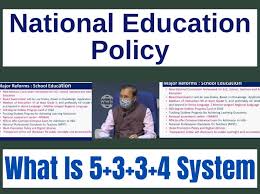
  2. The 10+2 structure has been replaced with 5+3+3+4, consisting of 12 years of school and three of Anganwadi or pre-school. This will be split as follows: a foundational stage (ages three and eight), three years of pre-primary (ages eight to 11), a preparatory stage (ages 11 to 14), and a secondary stage (ages 14 to 18). According to the government, the revised structure will “bring hitherto uncovered age group of three to six years, recognized globally as a crucial stage for the development of mental faculties, under school curriculum”.
  3. Instead of exams being held every year, school students will sit only for three – at Classes 3, 5, and 8. Assessment in other years will shift to a “regular and formative” style that is more “competency-based, promotes learning and development, and tests higher-order skills, such as analysis, critical thinking and conceptual clarity”.
  4. Board exams will continue to be held for Classes 10 and 12 but even these will be re-designed with “holistic development” as the aim. Standards for this will be established by a new national assessment center – PARAKH (Performance Assessment, Review, and Analysis of Knowledge for Holistic Development).
  5. The policy, the government has said, aims at reducing the curriculum load of students and allowing them to become more “multi-disciplinary” and “multi-lingual”. There will be no rigid separation between arts and sciences, between curricular and extra-curricular activities and between vocational and academic stream, the government said.
  6. To that end, the policy also proposes that higher education institutions like the IITs (Indian Institute of Technology) move towards “holistic education” by 2040 with greater inclusion of arts and humanities subjects for students studying science subjects, and vice versa.
  7. The NEP 2020 proposes a four-year undergraduate program with multiple exit options to give students flexibility. A multi-disciplinary bachelor’s degree will be awarded after completing four years of study. Students exiting after two years will get a diploma and those leaving after 12 months will have studied a vocational/professional course. MPhil (Master of Philosophy) courses are to be discontinued.
  8. A Higher Education Council of India (HECI) will be set up to regulate higher education; the focus will be on institutions that have 3,000 or more students. Among the council’s goals is to increase the gross enrolment ratio from 26.3 percent (2018) to 50 percent by 2035. The HECI will not, however, have jurisdiction over legal and medical colleges.


The Cabinet also approved changing the name of the HRD ministry to the education ministry.

ART OF FIGHT

Indian martial arts refers to the fighting systems of the Indian subcontinent. A variety of terms are used for the English phrases “Indian martial arts”, usually deriving from Dravidian sources. While they may seem to imply specific disciplines (e.g. archery, armed combat), by Classical times they were used generically for all fighting systems. Among the most common terms today, śastra-vidyā, is a compound of the words śastra (weapon) and vidyā (knowledge). Dhanurveda derives from the words for bow (dhanushya) and knowledge (veda), the “science of archery” in Puranic literature, later applied to martial arts in general. The Vishnu Purana text describes dhanuveda as one of the traditional eighteen branches of “applied knowledge” or upaveda, along with shastrashastra or military science. A later term, yuddha kalā, comes from the words yuddha meaning fight or combat and kalā meaning art or skill. The related term śastra kalā (lit. weapon art) usually refers specifically to armed disciplines. Another term, yuddha-vidyā or “combat knowledge”, refers to the skills used on the battlefield, encompassing not only actual fighting but also battle formations and strategy. Martial arts are usually learnt and practiced in the traditional akharas.

While it is only a theory as of now, Shaolin Kung Fu could be of Indian origin. It has been found in many historical scripts of the Gupta period, but still said as Bodhidharma third son of a king from pallava dynasty in southern India is founder of shaolin and kung-fu.

HISTORY

Antiquity (pre-Gupta)

An Indus valley civilization seal show two men spearing one another in a duel which seem to be centered on a woman. A statue of a spear thrower was also excavated from an Indus valley site.

Dhanurveda, a section found in the Vedas (1700 BCE – 1100 BCE) contains references to martial arts. Indian epics contain the earliest accounts of combat, both armed and bare-handed. Most deities of the Hindu-Buddhist pantheon are armed with their own personal weapon, and are revered not only as master martial artists but often as originators of those systems themselves. The Mahabharata tells of fighters armed only with daggers besting lions, and describes a prolonged battle between Arjuna and Karna using bows, swords, trees, rocks and fists. Another unarmed battle in the Mahabharata describes two combatants boxing with clenched fists and fighting with kicks, finger strikes, knee strikes and headbutts.

The oldest recorded organized unarmed fighting art in the Indian subcontinent is malla-yuddha or combat-wrestling, codified into four forms in the Vedic Period. Stories describing Krishna report that he sometimes engaged in wrestling matches where he used knee strikes to the chest, punches to the head, hair pulling, and strangleholds. Based on such accounts, Svinth (2002) traces press-ups and squats used by Indian wrestlers to the pre-classical era.

Classical period (3rd to 10th centuries)

Like other branches of Sanskrit literature, treatises on martial arts become more systematic in the course of the 1st millennium AD. Vajra-musti, an armed grappling style, is mentioned in sources of the early centuries AD. Around this time, tantric philosophers developed important metaphysical concepts such as kundalinichakra, and mantra.

The Sushruta Samhita (c. 4th century) identifies 107 vital points on the human body of which 64 were classified as being lethal if properly struck with a fist or stick. Sushruta‘s work formed the basis of the medical discipline ayurveda which was taught alongside various martial arts. With numerous other scattered references to vital points in Vedic and epic sources, it is certain that Indian subcontinent‘s early fighters knew and practised attacking or defending vital points.

Around 630, King Narasimhavarman of the Pallava dynasty commissioned dozens of granite sculptures showing unarmed fighters disarming armed opponents. This is similar to the style described in the Agni Purana.

Middle Ages (11th to 15th centuries)

Kalaripayat had developed into its present form by the 11th century, during an extended period of warfare between the Chera and Choladynasties. The earliest treatise discussing the techniques of malla-yuddha is the Malla Purana (c. 13th century), unlike the earlier Manasollasa which gives the names of movements but no descriptions. The Italian traveller Pietro Della Valle wrote of cane-fighting in southern India. According to Pietro, it was the custom for soldiers to specialise in their own particular weapon of expertise and never use any other even during war, “thereby becoming very expert and well practised in that which he takes to”.

WEAPONS & ARTS

A wide array of weapons are used in the Indian subcontinent, some of which are not found anywhere else. According to P.C. Chakravati in The Art of War in Ancient India, armies used standard weapons such as wooden or metal-tipped spears, swords, thatched bamboo, wooden or metal shields, axes, short and longbows in warfare as early as the 4th century BC. Military accounts of the Gupta Empire(c. 240–480) and the later Agni Purana identify over 130 different weapons.

The Agni Purana divides weapons into thrown and unthrown classes. The thrown (mukta) class includes twelve weapons altogether which come under four categories, viz.

  • yantra-mukta: projectile weapons such as the sling or the bow
  • pāṇi-mukta: weapons thrown by hand such as the javelin
  • mukta-sandarita: weapons that are thrown and drawn back, such as the rope-spear
  • mantra-mukta: mythical weapons that are thrown by magic incantations (mantra), numbering 6 types

These were opposed to the much larger unthrown class of three categories.

  • hasta-śastra or amukta: melee weapons that do not leave the hand, numbering twenty types
  • muktāmukta: weapons that can be thrown or used in-close, numbering 98 varieties
  • bāhu-yuddha or bhuja-yuddha: weapons of the body, i.e. unarmed fighting

The duel with bow and arrows is considered the noblest, fighting with the spear ranks next, while fighting with the sword is considered unrefined, and wrestling is classed as the meanest or worst form of fighting. Only a Brahmins could be an acharya (teacher) of sastravidya, Kshatriya and vaishya should learn from the Acharya, while a shudra could not take a teacher, left to “fight of his own in danger”.

Over time, weaponry evolved and India became famous for its flexible wootz steel. The most commonly taught weapons in the Indian martial arts today are types of swords, daggers, spears, staves, cudgels, and maces.

Weapons are linked to several superstitions and cultural beliefs in the Indian subcontinent. Drawing a weapon without reason is forbidden and considered by Hindus to be disrespectful to the goddess Chandika. Thus the saying that a sword cannot be sheathed until it has drawn blood. It was a mother’s duty to tie a warrior’s sword around his waist before war or a duel. In addition, she would cut her finger with the sword and make a tilak on his head from a drop of her blood. Weapons themselves were also anointed with tilak, most often from the blood of a freshly-decapitated goat (chatanga). Other taboos include looking at one’s reflection in the blade, telling the price or source of acquisition, throwing it on the ground or using it for domestic purposes.

Staffplay (Lathi khela)

Stick-fighting (lathi khela) may be taught as part of a wider system like Gatkasilambam or on its own. In the Kama Sutra the sage Vātsyāyana enjoins all women to practice fighting with single-stick, quarterstaff, sword and bow and arrow in addition to the art of love-making. The stick (lathi in Prakrit) is typically made of bamboo with steel caps at the ends to prevent it from splintering. Wooden sticks made from Indian ebony may also be used. It ranges from the length of a cudgel to a staff equal to the wielders height. The stick used during matches is covered in leather to cushion the impact. Points are awarded based on which part of the body is hit. Techniques differ from system to system, but northern styles tend to primarily use only one end of the staff for attacking while the other end is held with both hands.

Southern styles like also make use of this technique but will more often use both ends of the staff to strike. The latter is the more common method of attacking in the eastern states and Bangladesh, combined with squatting and frequent changes in height.

Spearplay

Yudhishthira is said to be a master in spearplay warfare in Mahabharata, while Shalya was also noted to be an excellent warrior in the field of spearplay. Also according to Indian Hindu myths, Kartikeya, the son of Lord Shiva, is said to be skilled in spear-fighting, by holding his divine spear called Vel. The Indian spear is typically made of bamboo with a steel blade. It can be used in hand-to-hand combat or thrown when the fighters are farther apart. Despite primarily being a thrusting weapon, the wide spearhead also allows for many slashing techniques. By the 17th century, Rajput mercenaries in the Mughal army were using a type of spear which integrated a pointed spear butt and a club near the head, making it similar to a mace. On the other hand, the longer cavalry spear was made of wood, with red cloth attached near the blade to prevent the opponent’s blood from dripping to the shaft. The Marathas were revered for their skill of wielding a ten-foot spear called bothati from horseback. Bothati fighting is practiced with a ball-tipped lance, the end of which is covered in dye so that hits may easily be confirmed. In solo training, the spear is aimed at a pile of stones. From this was eventually developed the uniquely Indian vita which has a 5 feet (1.5 m) length of cord attached to the butt end of the weapon and tied around the spearman’s wrist. Using this cord the spear can be pulled back after it has been thrown.

Archery (Dhanurvidya)

Archery is noted to be one of the noblest form of defense within Indian cultural heritage. As mentioned in Vedic literature, the bow and arrow is the most applauded weapon among Kshatriyas. Siddharta Gautama was a champion with the bow, while RamaArjunaKarnaBhishmaDrona and Ekalavya of the epics were all said to be peerless archers.

Dhanurveda is an ancient treatise on the science of archery. It describes the practices and uses of archery, the craft of bow and arrow making, training of the army, and enumerates the rules of engagement. The treatise also discusses martial arts in relation to the training of warriors, charioteers, cavalry, elephant warriors, infantry etc. It was considered as a sin to shoot a warrior from the back and fight more than one warrior at a time. The bow used in the Vedic period were called danush, and were described in detail in the Vedas. The curved shape of the bow is called vakra in the Artha Veda. The bowstring was called jya, and was strung only when needed. An arrow was called an iṣu, and a quiver was called an iṣudhi which was slung on the back. Archers wore a hastaghna, which was an arm guard or shield usually worn on the left forearm and was used to protect the wearer from friction caused by the bowstring.

dhanushkara was a bowyer, or the profession of bow crafting and arrow making, and it had become a regular profession by the early Vedic period. Others called jyakara specialized in making bowstrings.

Composite bows made of horn, sinew, and wood were invented in the Asian Steppes and would have been an integral part of the armory of the Aryan people. As in other civilizations such as the Hittites and Persians, the use of composite bows coincides with chariot warfare. Additionally the smaller size was of the compound bow would have made it preferable on mounted warfare.

A type of Indian longbow was five to six feet long and fired a long cane arrow with metal or bone arrow heads. The Cretan chronicler Nearchus who accompanied Alexander the Great into India, had noted that the warriors would use a bamboo bow, which had to rest on the ground and steady with the feet to draw to its full length. The arrow fired from this bamboo bow could penetrate any armor used in antiquity. The Indian long bows were described as the height of their users by Arrian, and Deccan bows in 1518 as “long like those of England”.

Traditional archery is today practiced mainly in the far northern states of Ladakh and Arunachal. One sport which has persisted into the present day is thoda from Himachal Pradesh, in which a team of archers attempt to shoot blunt arrows at the legs of the opposing team.

INFLUENCE

With expansion of Indosphere cultural influence of Greater India, through transmission of Hinduism in Southeast Asia and the Silk Road transmission of Buddhism leading to Indianization of Southeast Asia through formation of non-Indian southeast Asian native Indianized kingdoms which adopted sanskritized language and other Indian elements such as the honorific titlesSanskritised naming of peopleSanskritised naming of placesSankritised institutional mottosSanskritised educational institute names, as well as adoption of Indian martial artsIndian architectureIndian music and dancetraditional Indian clothing, and Indian cuisine, a process which as been also aided by the ongoing historic expansion of Indian diaspora. The martial arts influenced by the Indian martial arts include AngamporaAnkamBokatorEskrimaKrabi krabongKbachkun Dambong-VengKhmer traditional wrestlingPencak SilatSilambamSilatThaing (Burmese)Võ thuật Bình Định, etc.

International Tiger day

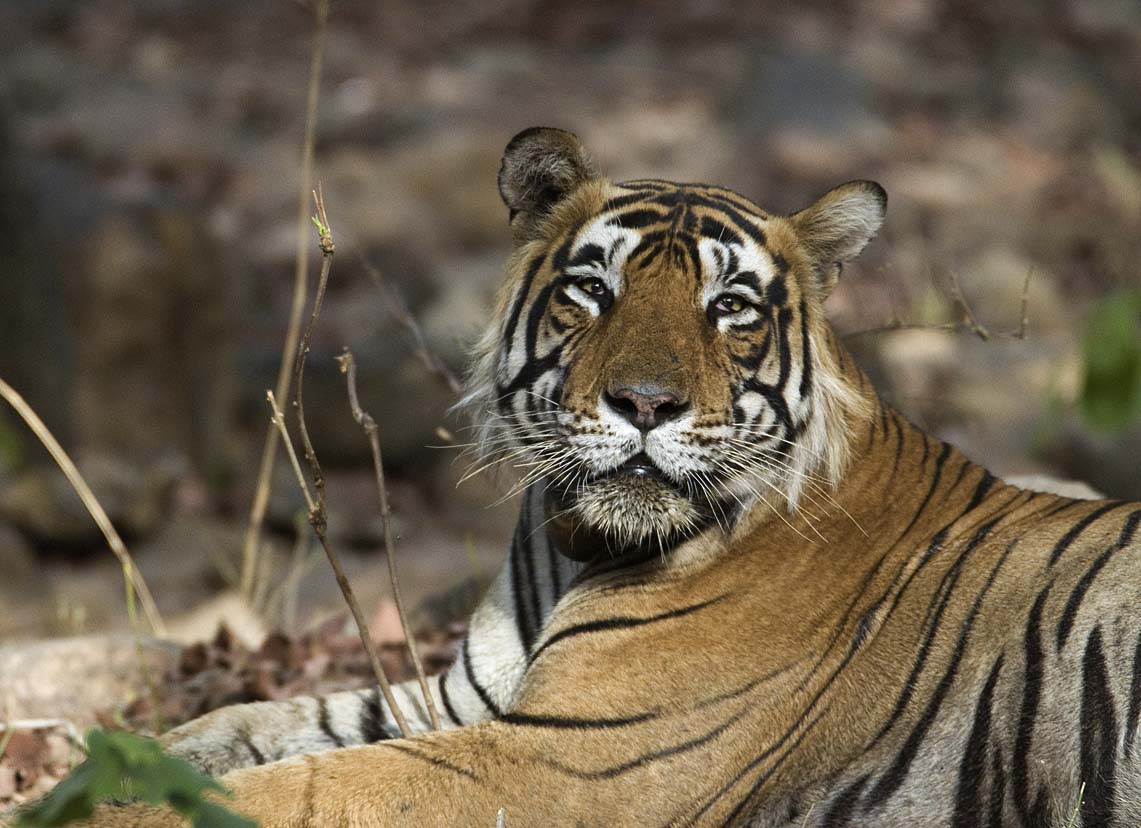
The Tiger is one of the largest cat in the world. Having black and orange strips with beautifully marked face makes his distinctive and amazing image. To aware the people about tiger conservation, 29th July is celebrated as a International Tiger day. The motive of this day is to spread the awareness to save the Tigers and their habitates. There are plathora of issues are facing by tigers across the world. Some of the issues include poaching, conflict with humans, and habitat loss. Only around seven percent of the historical range of a tiger is still intact today. That is an incredibly small and worrying numbers. A lot of people are not aware about these major losses but a little knowledge and through spreading awareness can make them aware and it leads to protection the lives of Tigers and their habitates

DESERTIFICATION

Loss of land

PATTIKONDA:29/02/2020.

Desertification is a type of land degradation in drylands which biological productivity is lost due to natural processes or induced by human activities whereby fertile areas become increasingly more arid. It is caused by a variety of factors, such as through climatic changes and through the over exploitation of lands through human activity.Desertification is a significant global ecological and environmental with far-reaching socio-economic and political consequences.

Serious and extensive land deterioration is the causes for desertification.SAHARA DESERT is the most effected area. The impact of global warming and human activities are presented in the Sahel. In this area the level of desertification is very high compared to other areas.Another major area that is being impacted by desertification is the GOBI Desert.South America is another area affected by desertification, as 25% of the land is classified as drylands. In Mangolia, around 90% of grassland is considered vulnerable to desertification by the UN.  In India, The THAR affected most of lands.

Causes

The immediate cause is the loss of most vegetation.. This is driven by a number of factors, alone or in combination, such as drought, climatic shifts, tillage for agriculture, overgrazing and deforestation for fuel or construction materials.one of the most common causes is overgrazing.Overpopulation is one of the most dangerous factors contributing to desertification.climatic changes is likely a major contributing factor in the desertification process. . The continuous use of the land rapidly depletes the nutrients of the soil causing desertification and pesticide smay deplects its ph value.

The Effects of desertification is Sand and dust storms.There has been a 25% increase in global annual dust emissions between the late nineteenth century to present day. Food security: Global food security is being threatened by desertification and o er population.Vegetation patterning:landscape may progress through different stages and continuously transform in appearance.Desertification is decreasing the amount of sustainable land for agricultural uses but demands are continuously growing.

Lossing nature lives.

Due to Desertification, The world losses its habitat.They also suffer from poor economic and social conditions.This situation is exacerbated by land degradation because of the reduction in productivity.Agriculture is a main source of income for many desert communities. The increase in desertification in these regions has degraded the land.This has negatively impacted the economy and increased poverty rates.Planting more trees – the roots of trees hold the soil together and help to reduce soil erosion from wind and rain.

  1. Planting more trees – the roots of trees hold the soil together and help to reduce soil erosion from wind and rain.
  2. Improving the quality of the soil – this can be managed by encouraging people to reduce the number of grazing animals they have and grow crops instead.
  3. Control of population and overgrazing. These are reduction factors of Desertification.

Benefits Of Reading News Online

From a busy schedule to getting time for reading news is way important for each one of us. By reading news, I implied that not just reading newspapers but also while searching on the internet or downloading a mobile application. Reading news online is easier for those who cannot have enough time to read newspapers or to listen to the news on television or radio. However, the point is reading news online is also beneficial for a daily basis schedule. If you’re running late to class or work but you would like to require a glance at the news, you almost certainly aren’t getting to make a visit to the shop for the newspaper once you can check out the web edition directly. As another bonus, online newspapers are excellent at bringing the large news of the day to the focus of the web site, which suggests you don’t need to search for the items you would like to read. During this fast-paced world, people don’t want to spend time fumbling through a print newspaper to seek out a piece of writing once they can look for and find it online during a matter of seconds.

Online news refers to that news that can be read over the internet using computers, laptops, and mobiles. It is a debatable topic whether it’s good or bad as some people still prefer to read the newspaper and that is the reason why one should know the advantages and disadvantages of online news. If the question arises why one should read the news online as if they can have access to television or newspapers or etc? Then the answer to the question as follows:

  1. Reading news online can be easily accessible with updated news. While busy in your work, you can just go through the app or any other online website to check out the latest news according to your own preferences.
  2. People can have this access at any place or at any time. No matter where ever you are stuck whether in traffic or any meeting and etc. You always have access to updated news.
  3. The Internet is a great source of learning which implies a great source of providing all the latest news. Just visiting to the website or any news channel or newspaper websites you like the most on the internet.
  4. It is free of cost. Rather than paying for a newspaper you can simply search online for the updated news which is definitely free of cost.
  5. One can also get information about past news. If you had skipped some important news than you can easily search for it on any search engine while just typing the topic about the news.
  6. Enrich our knowledge.
  7. Updated news helps us to stay connected with the world.
  8. Most people also read news online so that they could improve their vocabulary and enhance some language skills.
  9. Being a responsible citizen, reading news online makes people a larger part of the conversation like in debates as they will be updated regularly.
  10. People are able to read about various news that includes sports, entertainment, politics, science, etc. Also, they can have access to them online anytime or anywhere.

To conclude, the benefits of reading news online are easier with all the updated information. As the internet is the most popular source of information and used worldwide that’s why reading news online is a good source of knowledge that every person can have access to. Without being charged for reading news online is the most valuing benefit of it. Also, the internet is being used by approx. 90% of the people worldwide which automatically defines the perfect use of reading news online. Hence, it not only saves money but also saves the time of the people just by reading the updated heading of a particular story. The news is something which we all read and the majority of people all over the world have the habit of reading and taking an update about news first thing in the morning but with technology, online news has come into existence.

Sushant Singh Rajput’s father files FIR against actor’s friend for abetting suicide

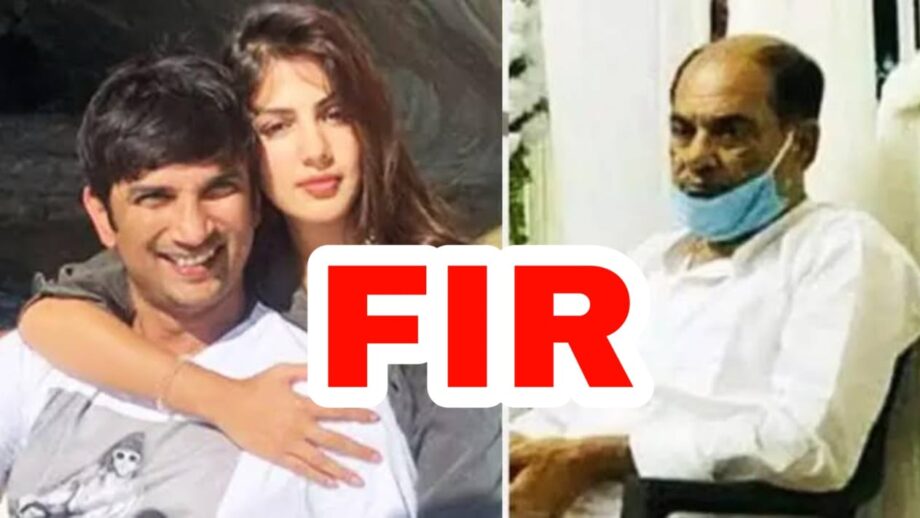
A major development in the Sushant Singh Rajput’s suicide case, the late actor’s father has filed an FIR against Rhea Chakraborty and five other people for abetment of suicide and a string of other charges. Bihar Police has reached Mumbai and has sought Mumbai Police’s help in investigating the case.

According to sources, Rhea Chakraborty, who was reportedly Sushant’s girlfriend, used his credit cards on a Europe tour, sacked one of his bodyguards, and even has stakes in the late Bollywood actor’s company.  According to the latest reports, a four-member team has reached Mumbai and is discussing Sushant’s case with Mumbai Police. Bihar Police have asked for women constables from Mumbai Police for help in the investigation. Interestingly, this development has come weeks after Rhea Chakraborty had called for a CBI investigation into Sushant’s death, tagging Union Home Minister Amit Shah in a post on Instagram. Before claiming that she had received rape and death threats on social media over Sushant’s death, the Bollywood actress explained that she “only wanted to understand what prompted him to take the step”.

“My son was at the peak of his acting career till May 2019. During that period, Rhea and her relatives developed an acquaintance with my son, under a deliberate conspiracy, so that Rhea could establish herself in the film industry and with an eye on Sushant’s wealth… He was later made to rent a house that was haunted, and that had an impact on my son,” Rajput’s father, K K Singh, has said in the FIR. The FIR has been filed under IPC Sections 306 (abetment of suicide), 341 (wrongful restraint), 342 (wrongful confinement), 380 (theft in dwelling house), 406 (criminal breach of trust) and 420 (cheating). The Patna Police are enquiring about the statements of 38 persons, including Bollywood directors Mahesh Bhatt, Sanjay Leela Bhansali, and Aditya Chopra, which were recorded by the Mumbai Police.

Quoting the lawyer ANI shared, “FIR registered now as a family was in shock & Mumbai Police wasn’t registering FIR, but forcing them to give names of big production houses & get them involved. Sushant’s father has expressed his inability to go to Mumbai to fight the case due to his health issues. Therefore, the case was filed in Patna.

Rhea had earlier requested home minister Amit Shah to initiate a CBI investigation in Sushant’s death case. The Chehre actor addressed Sushant as her boyfriend for the first time in her post.

Sushant passed away on June 14 and till now close to 40 people have been interrogated as part of the ongoing investigation. Meanwhile, Maharashtra chief minister Uddhav Thackeray has said that the state government will initiate a CBI probe in Sushant Singh Rajput’s death case if needed. Lok Janshakti Party president Chirag Paswan talked to Thackeray over the phone on the matter. Earlier, Rhea Chakraborty had requested Home Minister Amit Shah for a CBI inquiry into Sushant’s untimely demise. “Respected @amitshahofficial sir, I’m Sushant Singh Rajputs girlfriend Rhea Chakraborty, it is now over a month since his sudden demise. I have complete faith in the government, however, in the interest of justice, I request you with folded hands to initiate a CBI inquiry into this matter. I only want to understand what pressures prompted Sushant to take this step.” Apoorva Mehta heads Karan Johar’s production house and was called in by the police to record his statement. Karan Johar is also reportedly likely to be called in by the Mumbai police to record his statement in the case related to the investigation of Sushant Singh Rajput’s death. Kangan Ranaut, who has expressed her willingness to co-operate during the investigation, will also be recording her statement soon.

The actor’s death has also made waves in political circles with Lok Janshakti Party chief Chirag Paswan writing to Maharashtra Chief Minister Uddhav Thackeray, saying “On behalf of every Bihari, I urge you to conduct a fair inquiry into the matter so that no talented person is victimized in future due to factionalism and nepotism in Bollywood.” Sushant Singh Rajput made his Bollywood debut in 2013 with the movie – “Kai Po Che”. He was appreciated for his performance in the 2015 movie “Detective Byomkesh Bakshy!”, “MS Dhoni: The Untold Story”, “Sonchiriya” and “Chhichhore”.His death led to a deluge of tribute and recriminations on social media involving the Hindi film industry, which has been battling allegations of nepotism and cliques. “Dil Bechara”, his last movie that was released online on Friday on Disney+ Hotstar, has drawn praise from critics.

SUBSTITUTES FOR THE BANNED CHINESE APPS

The central government of our country took a very massive and bold decision on 24th, July, by banning 59 Chinese apps including Tiktok, Share it, Xender and many more. In a press release, the government said, ” the applications are engaged in activities, prejudicial to sovereignty of India, defence of India, security of state and public order.” The ban has been imposed under section 69A of the Information Technology Act read with relevant provisions of the Information Technology rules,2009, it said. Some of the apps which are banned are very random and aren’t that useful, but there were some apps which were very helpful and useful to the people of every age. Below is the list of the apps which you can use instead of the apps which are banned by the government.

SHARE ALL : Share All is the Indian substitute for the Chinese file transfer app “Share It”. According to its makers, ” This is app requires no active internet connectivity, can share files or data irrespective of their size and no no cable is required.

DUBSMASH : Dubsmash is a very great substitute if you are looking for an alternative for Tiktok. Dubsmash is a German based application, launched in November 2014. One of the first apps of its kind, Dubsmash was very popular initially, garnering over 50 million downloads from users in 192 countries. The app allows users to record videos of themselves lip-syncing to various audio clippings. The app is available in 20 different languages, including Hindi.

GOOGLE CHROME : UC Browser can get substituted by Google Chrome.Google Chrome mostly comes pre- installed in many android mobile phones. It supports dark mode and gets a dedicated lite mode for saving on data consumption. Plus, it lets you save and sync your accounts, passwords and payment methods across all your devices.

MICROSOFT OFFICE LENS : Cam Scanner was one of the most useful apps which got banned, but there are various options which you can select if you are looking for a similar app. Microsoft office lens lets you scan all kinds of documents and export them to word or powerpoint directly.

AJIO : Shein was a very eminent brand in India because of the clothes they offered but as it is one of the apps on the list which got banned by the central government, Ajio comes to the rescue. Ajio is a multi-branded platform that helps you to get amazing options to chose from clothes, that are stylish and perfectly affordable. The best thing about Ajio is the collection, that you will only get from the Indian manufactures.

International Tiger Day

“Let us keep the tigers in jungles & not in history, save tigers”

Global Tiger Day, often called International Tiger Day, is an annual celebration to raise awareness for tiger conservation, held annually on 29 July. It was created in 2010 at the Saint Petersburg Tiger Summit. In the summit, governments of tiger-populated countries vowed to double the tiger population by 2022. Almost a decade has passed since then. The goal of the day is to promote a global system for protecting the natural habitats of tigers and to raise public awareness and support for tiger conservation issues. According to the WWF experts Darren Grover,  the world had lost around 97 percent of wild tigers in the last 100 years. Currently, only 3,000 tigers are left alive compared to around 100,000 Tiger a century ago.  Many international organizations, including the World Wildlife Fund (WWF), the International Fund for Animal Welfare (IFAW), and Smithsonian Conservation Biology Institute (SCBI), are also involved in the conservation of the wild tigers.

“The roar is rare.”

The awe-inspiring tiger is one of the most iconic animals on Earth. The tiger population across the world dropped sharply since the beginning of the 20th century but now for the first time in conservation history, their numbers are on the rise. Union Minister for Environment, Forests and Climate Change, Prakash Javadekar, on Tuesday, released the detailed Status of Tigers Report 2018. According to the report, released on the eve of Global Tiger Day, tigers were observed to be increasing at a rate of 6 percent per annum in India from 2006 to 2018. In good news for India, Environment Minister, Prakash Javadekar on Tuesday said, the country “has 70 percent of world’s tiger population”, after releasing a report on tiger census ahead of International Tiger Day on July 29. 

There are a number of different issues that tigers all around the world face. There are a number of threats that are driving tigers close to extinction, and we can do our bit to make sure that we do not lose these incredible creatures. Some of the threats that tigers face include poaching, conflict with humans, and habitat loss.  Poaching and the illegal trade industry is a very worrying one. This is the biggest threat that wild tigers face. Demand for tiger bone, skin, and other body parts is leading to poaching and trafficking. This is having a monumental impact on the sub-populations of tigers, resulting in localized extinctions. We often see tiger skins being used in home decor. Moreover, bones are used for medicines and tonics. This has seen illegal criminal syndicates get involved in the tiger trade in order to make huge profits. It really is a worrying industry. In fact, it is thought to be worth 10 billion dollars per annum in the United States alone. This is why we need to support charities and work hard to put an end to poaching and the illegal trade of tiger parts. While this represents the biggest threats to tigers, there are a number of other threats as well. This includes habitat loss. Throughout the world, tiger habitats have reduced because of access routes, human settlements, timber logging, plantations, and agriculture. In fact, only around seven percent of the historical range of a tiger is still intact today. That is an incredibly small and worrying amount. This can increase the number of conflicts between tigers, as they roman about and try to locate new habitats. Not only this, but genetic diversity can reduce because it can cause there to be inbreeding in small populations.

Since the tiger is an “umbrella species”, its conservation enables the conservation of their entire ecosystems. Several studies have shown that Tiger reserves harbor new species, which are found practically every year. Tiger reserves have also improved the water regimes in regions where they are located, improving groundwater tables and other water bodies, thus contributing favorably to the climate. This year marks the tenth International Tiger Day. On International Tiger Day, several countries discuss issues related to tiger conservation and also try to amass funds for wildlife preservation. Moreover, many celebrities also pitch in for International Tiger Day and try to spread awareness about the conditions of tigers using their massive social media presence. India is especially important for International Tiger Day 2020 as the country currently has 75% of all tigers on the planet. A lot of people are not aware of these threats, and so spreading the knowledge can help to make sure that we all do our bit to ensure that the tiger’s future is a fruitful one. There will be a lot of videos, infographics, and interesting pieces of content going around that you can share with others.

“Tiger is a symbol of Beauty, Bravery, Strength and Nationality. So Save the Tiger, Save the Nation’s Pride.”

S-400 missile to China

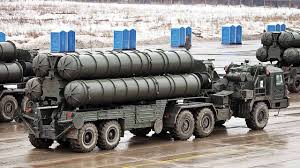
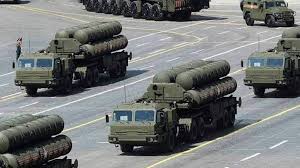
The S-400 Triumf, previously known as the S-300PMU-3, is an anti-aircraft weapon system developed in the 1990s by Russia’s Almaz Central Design Bureau as an upgrade of the S-300 family. It has been in service with the Russian Armed Forces since 2007. Considered to be the most advanced missile defense system in the world, the S-400 ‘Triumf’ system is capable of destroying targets at a distance of up to 400 kilometers and a height of up to 30 kilometers.

In 2017, the S-400 was described by The Economist as “one of the best air-defense systems currently made”, and Siemon Wezeman of Stockholm International Peace Research Institute (SIPRI) said it “is among the most advanced air defense systems available.” China, Saudi Arabia, Turkey, India, and Qatar expressed their appreciation for the S-400 system, and China was the first foreign buyer to make a government-to-government deal with Russia in 2014.

Amid a global uproar against China – coronavirus, a military standoff with India, Hong Kong, Taiwan, and the South China Sea, US – in just the past six months, Moscow has now announced the suspension of S-400 surface-to-air missile systems to Beijing, with the resumption of deliveries yet to be ascertained.

Russia has announced the suspension of S-400 surface-to-air missile systems to China and said the resumption of further deliveries is yet to be ascertained. Citing Chinese newspaper Sohu, UAWire reported, “This time, Russia announced the postponement of the delivery of missiles for the Chinese S-400 system. To a certain extent, we can say that it is for the sake of China. Getting a gun is not as easy as signing an invoice after receiving a weapon.” “They say that the work on delivering these weapons is quite complicated. While China has to send personnel for training, Russia also needs to send a lot of technical personnel to put the weapons into service,” Sohu said.

Post-Russia’s announcement, China has reportedly said that Moscow was forced to make such a decision as it “is worried that the delivery of S-400 missiles at this time will affect the anti-pandemic actions of the People’s Liberation Army and does not want to cause trouble to China.” In 2018, China received the first batch of S-400 missile, a military-diplomatic source told Russia`s TASS news agency. Meanwhile, it should be noted that the suspension comes merely days after Russia had accused China of espionage, despite the two nations sharing considerably good relations over the years. This assertion had come up after Russian authorities had found the president of its St Petersburg Arctic Social Sciences Academy, Valery Mitko handing over classified material to the Chinese intelligence.